KLEBBA HOUSE ROLLS

Inspired by the traditional Parker House Rolls, this is the recipe Phil’s Mom used to make every Thanksgiving. Phil keeps a bunch of recipes handwritten in small cards, held inside an acrylic box that is very likely older than his grownup kids. I learned to love and cherish that little box of recipes because they were all part of his childhood, teenage, and hippie years. His past.

KLEBBA HOUSE ROLLS
(from Louise Wilhelmina Klebba)

One 1/4-ounce package active dry yeast
1 + 1/4 cup warm water
1/2 cup sugar
4 tbs unsalted butter, melted and cooled
1 large egg, lightly beaten
1/2 tsp salt
4 cups all-purpose flour, or more if needed

Make the dough. In a stand mixer mix the yeast with the water, sugar, butter, egg and salt.

Fit it with the dough hook, and add the flour in two increments, kneading it at low-speed. Knead the dough for about 4 minutes, until smooth. Remove from the mixer, transfer to a buttered bowl, cover and let it rise until doubled, about 2 hours.

Roll the dough with a rolling pin, cut in circles with a 3-inch biscuit cutter. Place over a baking sheet lined with parchment paper and let it rise again for 1 to 1.5 hours. Brush with melted butter before baking at 375F for 15 minutes or until golden. Brush again with butter as soon as they are out of the oven.

ENJOY!

to print the recipe, click here
Comments: The traditional Parker House Rolls are shaped differently, they are shaped as rounds, then flattened and folded. I used the method that Phil’s Mom used, which is different, so if you want to check how it was originally made, read this article. I am so glad I made them with very minor modifications from Phil’s family recipe. In those days there was no instant yeast, so the whole method was slightly more convoluted. Most important thing, our Thanksgiving meal this year had a touch of loving memories from a distant past. And that made me very very happy.

ONE YEAR AGO: Root Vegetable Clafoutis

TWO YEARS AGO: Oreos Dressed for the Holiday Season

THREE YEARS AGO: Peppermint Wreath Macarons

FOUR YEARSAGO: Cornish Hens with Yogurt-Mace Marinade

FIVE YEARS AGO: Cookies for the Holidays – Gingerbread

SIX YEARS AGO: Incredibly Simple Times Four

SEVEN YEARS AGO: White Chocolate and Raspberry Mousse Cake

EIGHT YEAR AGO: Panettone Time!

NINE YEARS AGO: Pistachio Creme Brulee

TEN YEARS AGO: Fast and Furious Bison Chili

ELEVEN YEARS AGO: In My Kitchen, December 2014

TWELVE YEARS AGO: Braised Fennel with Saffron and Tomato

THIRTEEN YEARS AGO: Revenge of the Two Derelicts

FOURTEEN YEARS AGO: Grilling Ribbons

FIFTEEN YEARS AGO: Peppery Cashew Crunch

SIXTEEN YEARS AGO: Baked Shrimp and Feta Pasta

THE NUOVVA PAN, MY NEW SOURDOUGH TOY

I admit it. I didn’t try to resist the temptation to buy this pan. It was too adorable and I needed it in my life. Today I share my very first adventure with the Nuovva double Dutch oven (click here for ordering info).

The pan is available in several colors, but my heart was set on this gorgeous red version. It is almost exactly 16 inches, so unless your oven is really small, you should have no issues using it.

DUET OF SOURDOUGH BOULES
(from The Bewitching Kitchen)

580g bread flour
20g whole-wheat flour
420g water
11g salt
85g starter (I used stiff, at about 75% hydration)

Mix all ingredients in the bowl of a KitchenAid type mixer fitted with the dough hook. Knead gently for about 4 minutes (first or second speed maximum).

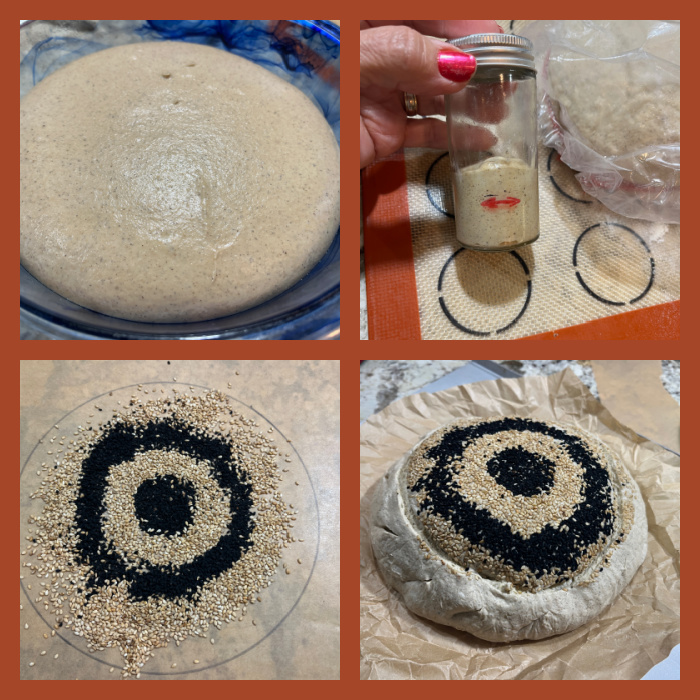
Transfer dough to a lightly oil bowl and do a bulk fermentation with 4 folds made 45 minutes apart. Before you start the fermentation , remove a very small amount of dough to a small glass container (like those that hold spices), and mark where the level of the dough is with a permanent marker. Keep that at room temperature to monitor fermentation.

After the last folding cycle, keep an eye on the fermentation using the small vial. Ideally you want to let the dough ferment until it is double in size. Depending on the day, temperature of your kitchen, it might take 8 hours or more. Be patient, it will pay off.

Once bulk fermentation is over, divide the dough in two equal parts, shape them as two small balls and place in a floured banetton. Place in the fridge overnight.

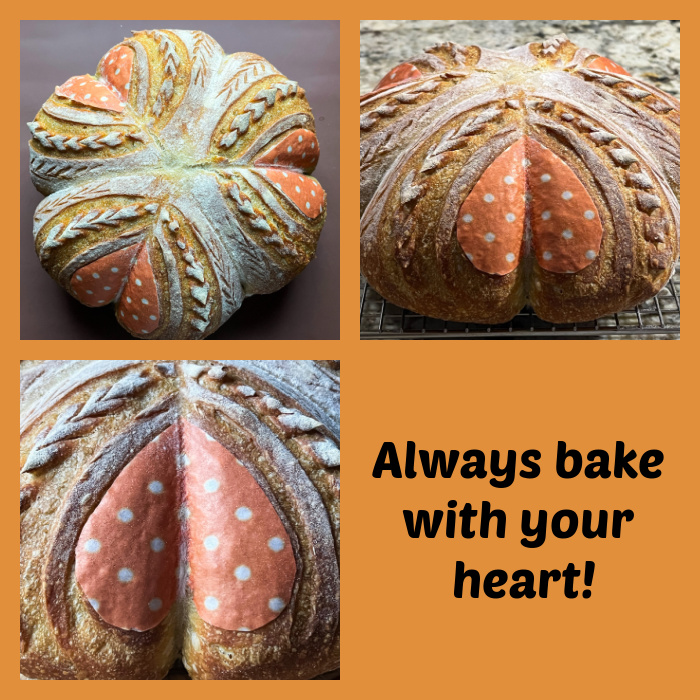
Next day, freeze the dough for 30 minutes in the banetton, to make it easier to score later. Invert the dough on the paper liner, place in the loaf pan, you can invert it over 3 strings if you like to make a pumpkin/flower shape. Score in any way you want, or use a stencil.

Close the pan and bake at 450F for 30 minutes. Remove the lid, and allow the bread to bake further for another 15 minutes or so. I found that the surface of the bread was not browning enough so after 40 minutes I removed them from the pan and let them bake for additional 10 minutes over the rack, outside of the pan.

Let it cool completely before slicing.

ENJOY!

to print the recipe, click here

Comments: Cannot tell you how much we loved these loaves! They look adorable and baked perfectly side-by-side in the pan. I will be using it often. The loaves would be perfect for a dinner party, a sure way to impress your guests.

Did I need another sourdough toy? Probably not.
Am I happy I got it? OH, YEAH!

ONE YEAR AGO: November Cookie Round-up

TWO YEARS AGO: Pumpkin Shaped Soft Pretzel Rolls

THREE YEARS AGO: Cod Coconut Curry

FOUR YEARS AGO: The Best Ever Eggplant Parmigiana

FIVE YEARS AGO: Roasted Butternut Squash and Grapes with Maple Pomegranate Glaze

SIX YEARS AGO: A Really Big Announcement

SEVEN YEARS AGO: Stir-Fried Chicken in Sesame-Orange Sauce

EIGHT YEARS AGO: Monday Blues

NINE YEARS AGO: A New Way to Roast Veggies

TEN YEARS AGO: Two Takes on Raspberries

ELEVEN YEARS AGO: Spice Cake with Blackberry Puree

TWELVE YEARS AGO: Own Your Kitchen with Cappuccino Panna Cotta

THIRTEEN YEARS AGO: Chicken Parmigiana, the Thriller

FOURTEEN YEARS AGO: Wild Mushroom Risotto

FIFTEEN YEARS AGO: Tartine Bread:  Basic Country Loaf 

SIXTEEN YEARS AGO:  Pugliese Bread

BAKING WITH THE HEART

This is the time to focus on everything we are grateful for.
Cook with love, bake with love. Share. Repeat.

DRAGON FLOWER SOURDOUGH LOVE
(from The Bewitching Kitchen)

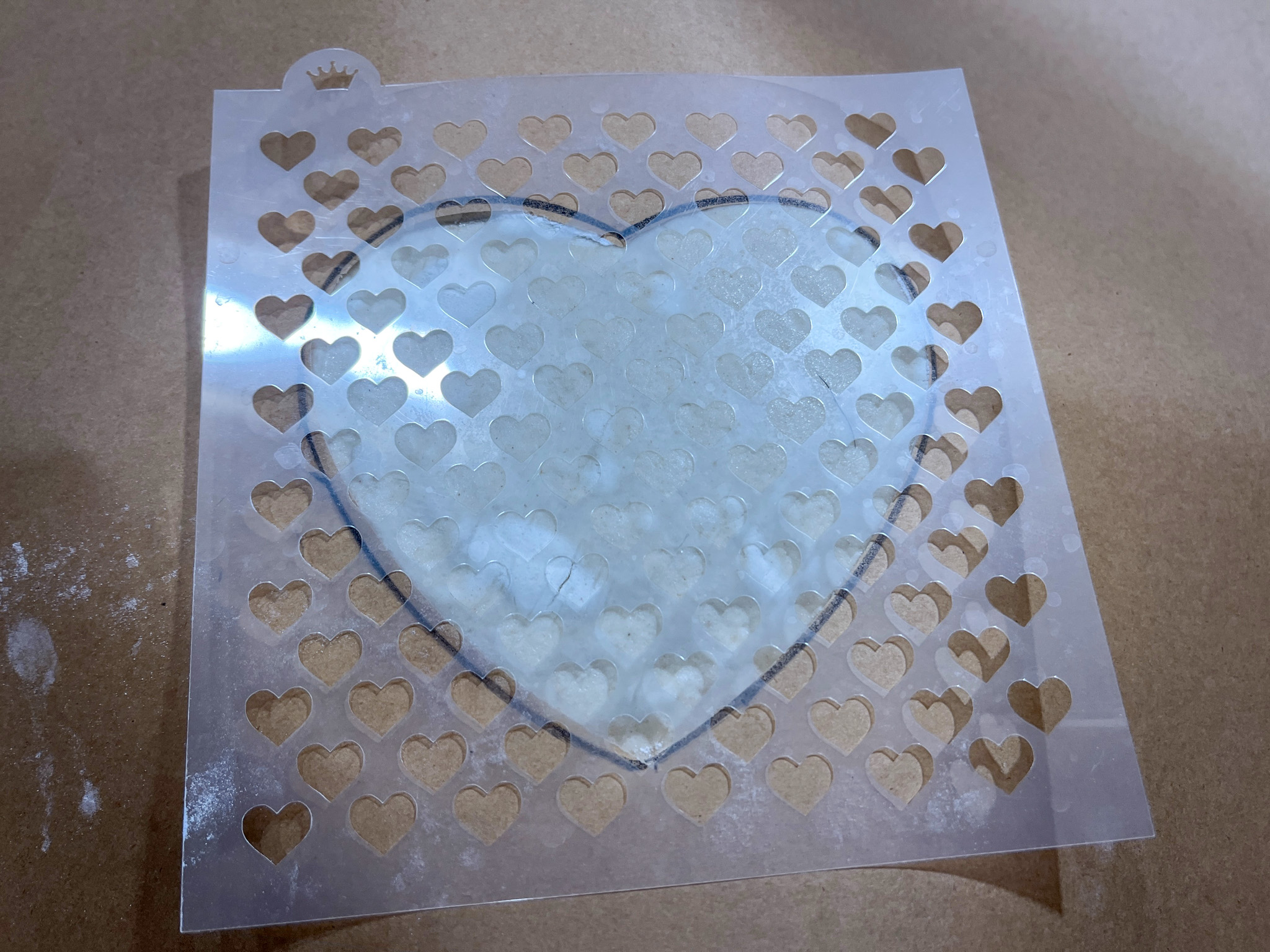
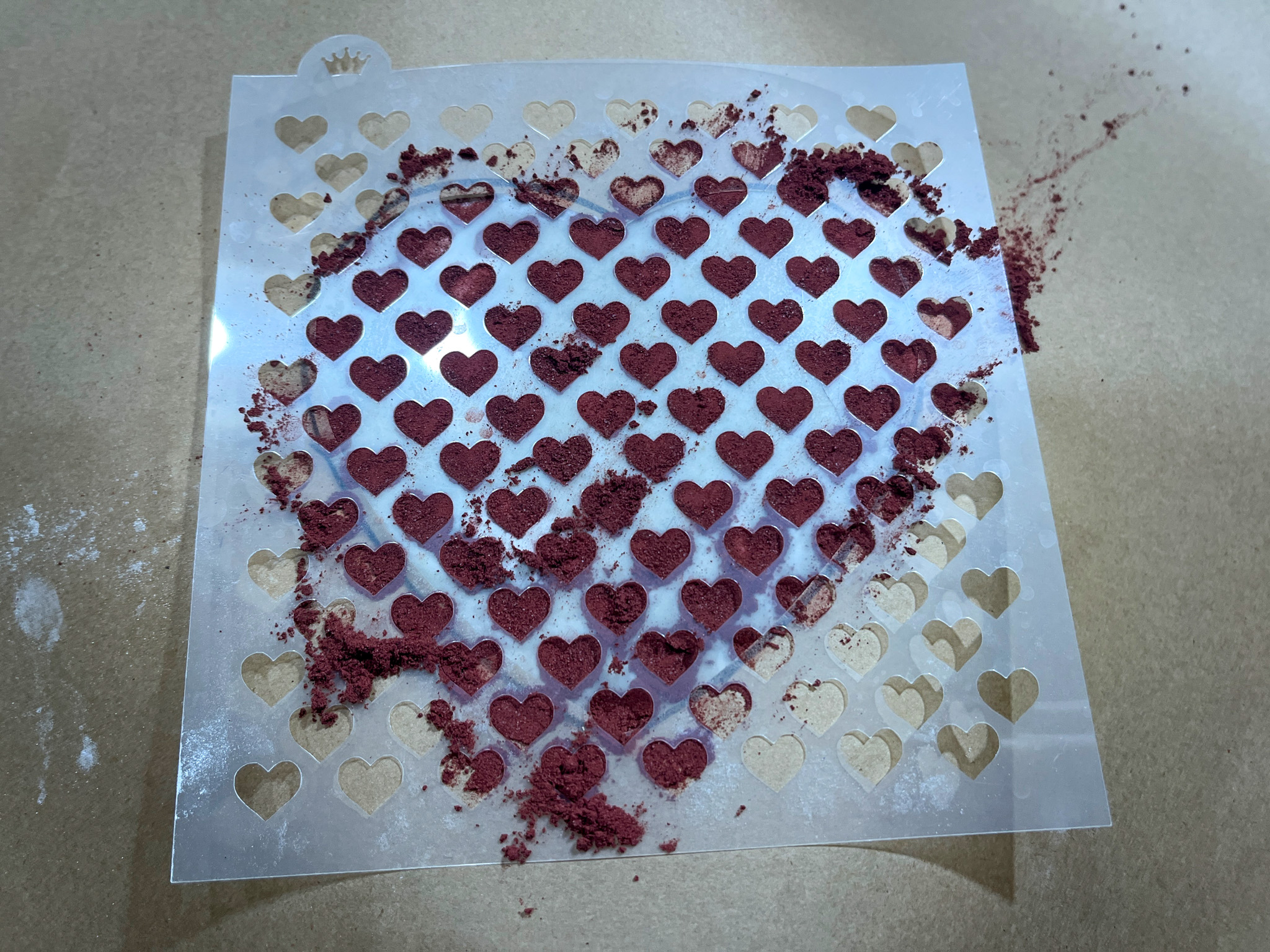
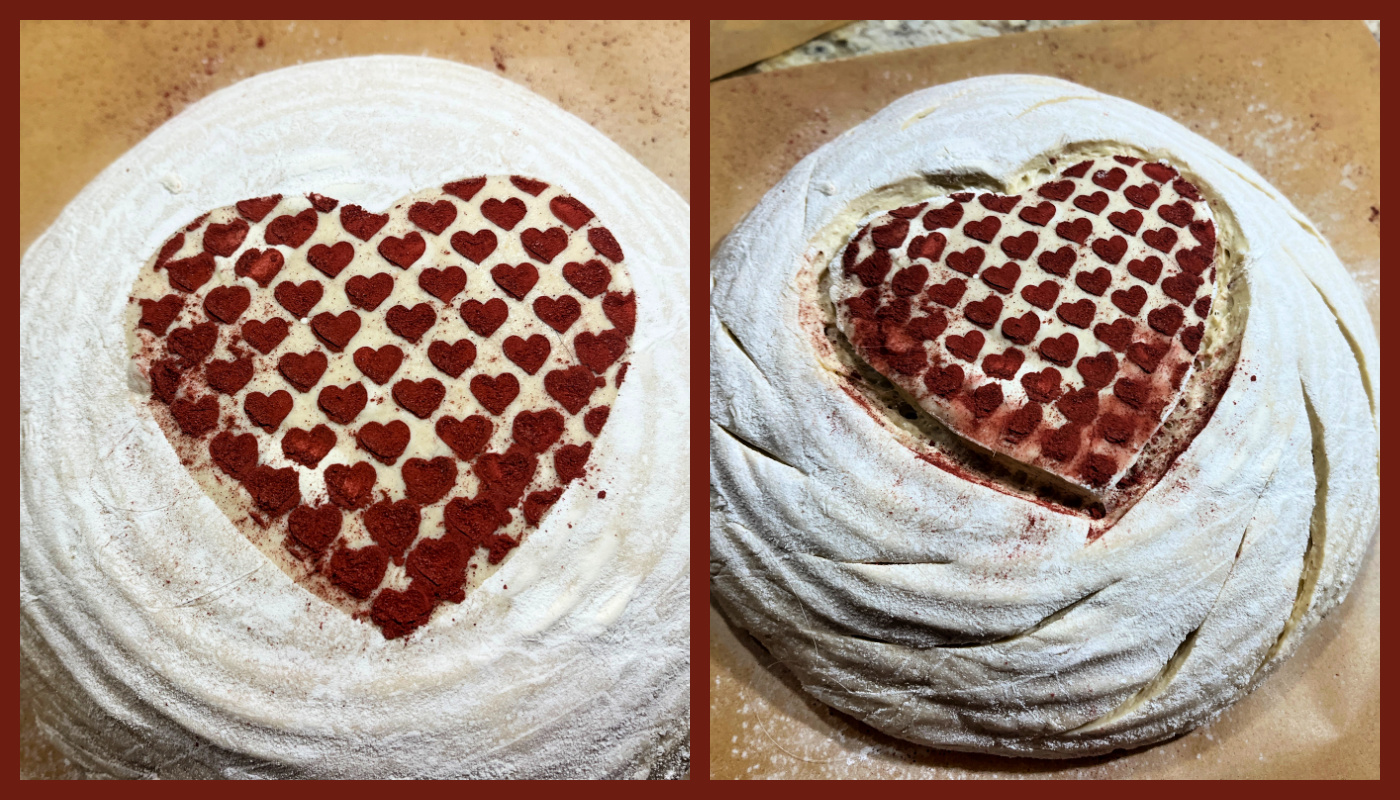
STENCIL from Sourdough Fever, available HERE

480g bread flour
20g spelt flour
16g dragon flower powder
10g salt
350g water
75g sourdough starter (70-100% hydration)

Make the levain mixture about 6 hours before you plan to mix the dough. It should be very bubbly and active.

When you are ready to make the final dough, place the water in the bowl of a KitchenAid type mixer and dissolve the starter in it, mixing with a spatula briefly, then add the two types of flour, the Dragon flower powder and the salt. Turn the mixer on with the hook attachment and knead the dough for 4 minutes at low-speed all the time. If the dough is too sticky, add a maximum of 1/4 cup flour, you want the dough to start clearing the sides of the bowl, but still be sticky at the bottom.


Remove from the machine. Get a small piece of dough and place in a little glass container to follow fermentation (optional, but highly recommended). Transfer the dough to a container lightly coated with oil, cover lightly with plastic wrap and allow it to ferment for 2 hours, folding every 30 minutes or so. After the fourth folding cycle, let the dough sit at room temperature until doubled in size, following the progress in the small amount of dough removed.

Shape the dough as a ball, and place, seam side up, in a lightly floured banetton. Place in the fridge overnight, from 8 to 12 hours or even longer, if you prefer.

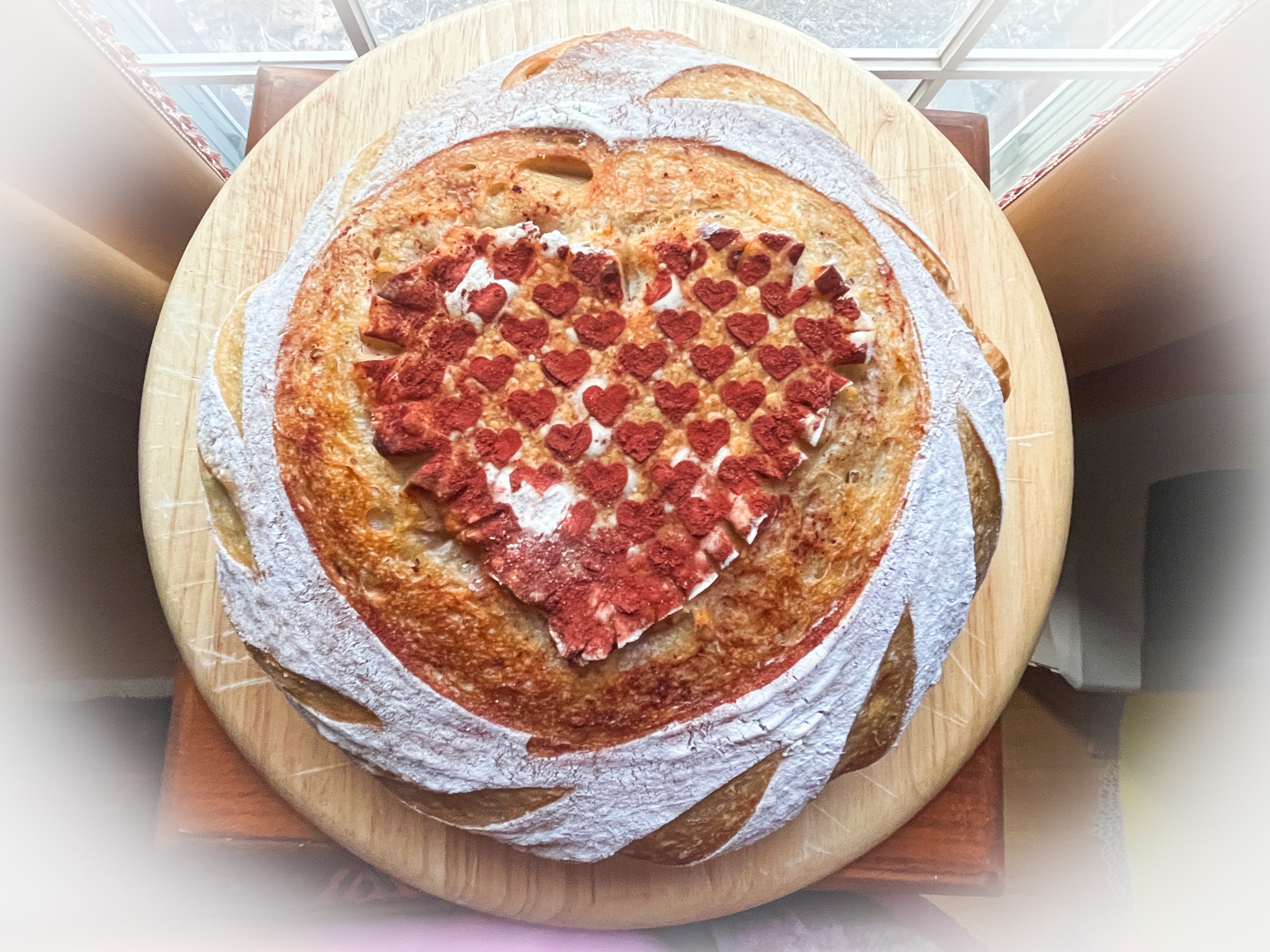
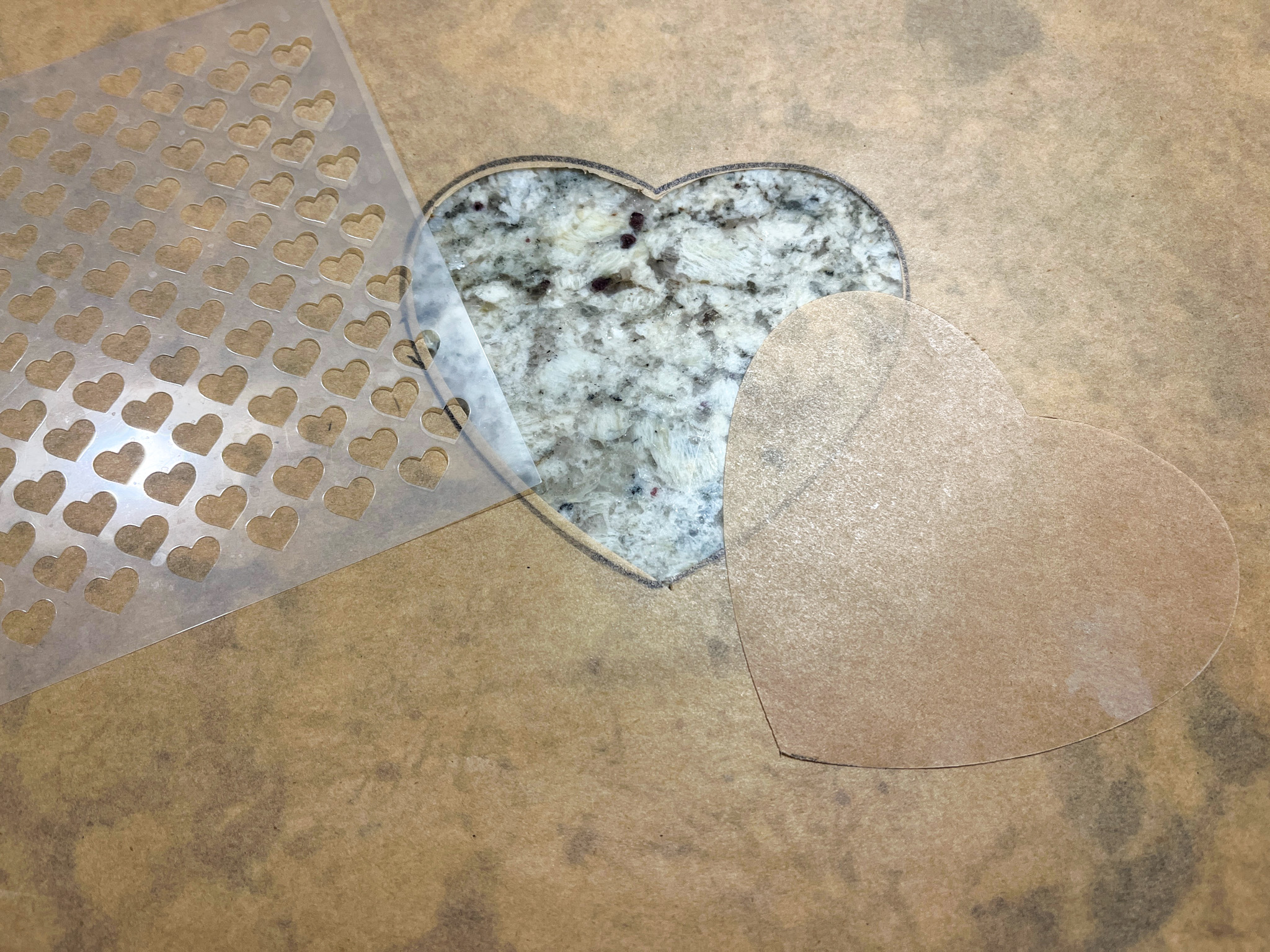
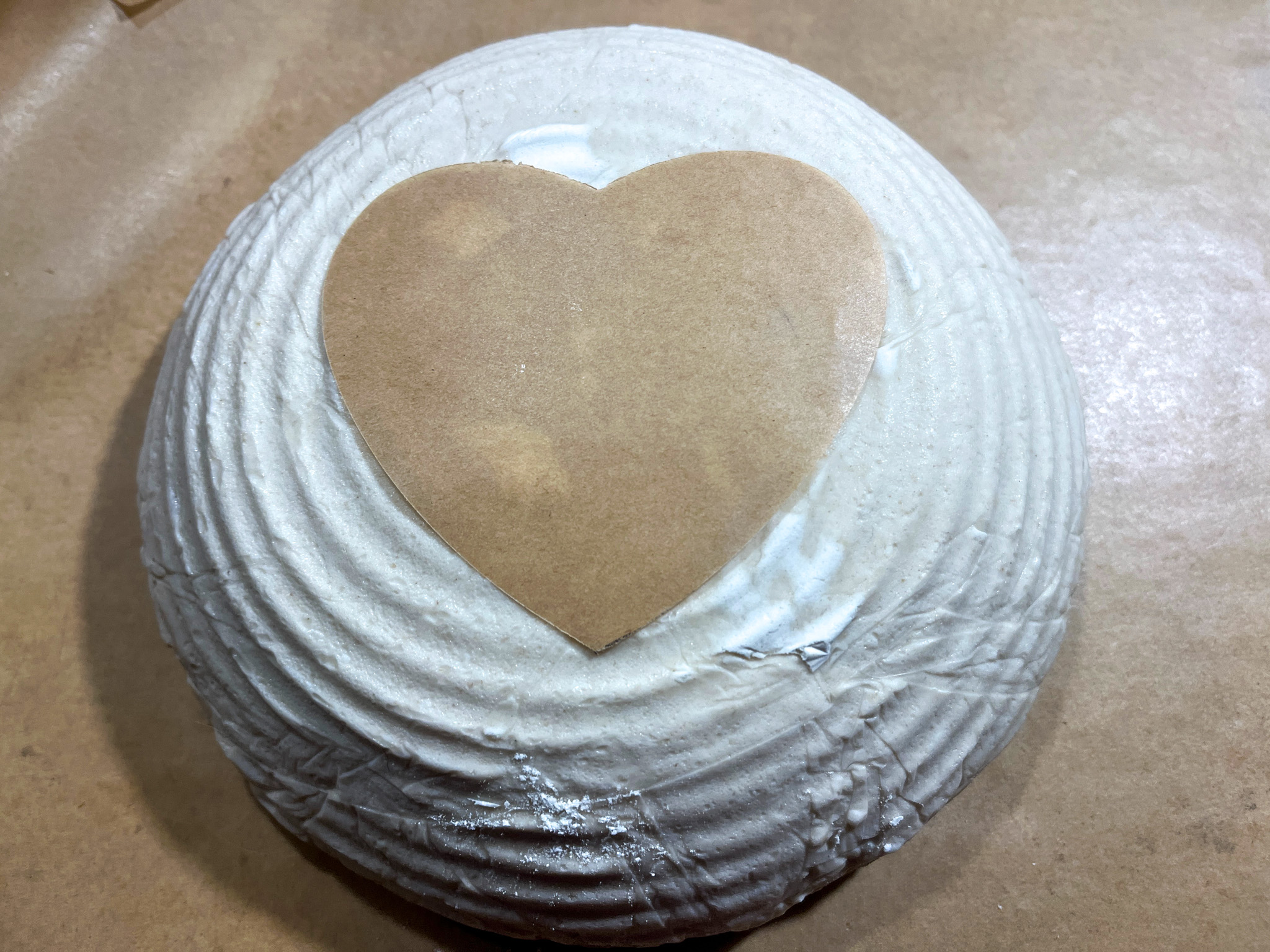
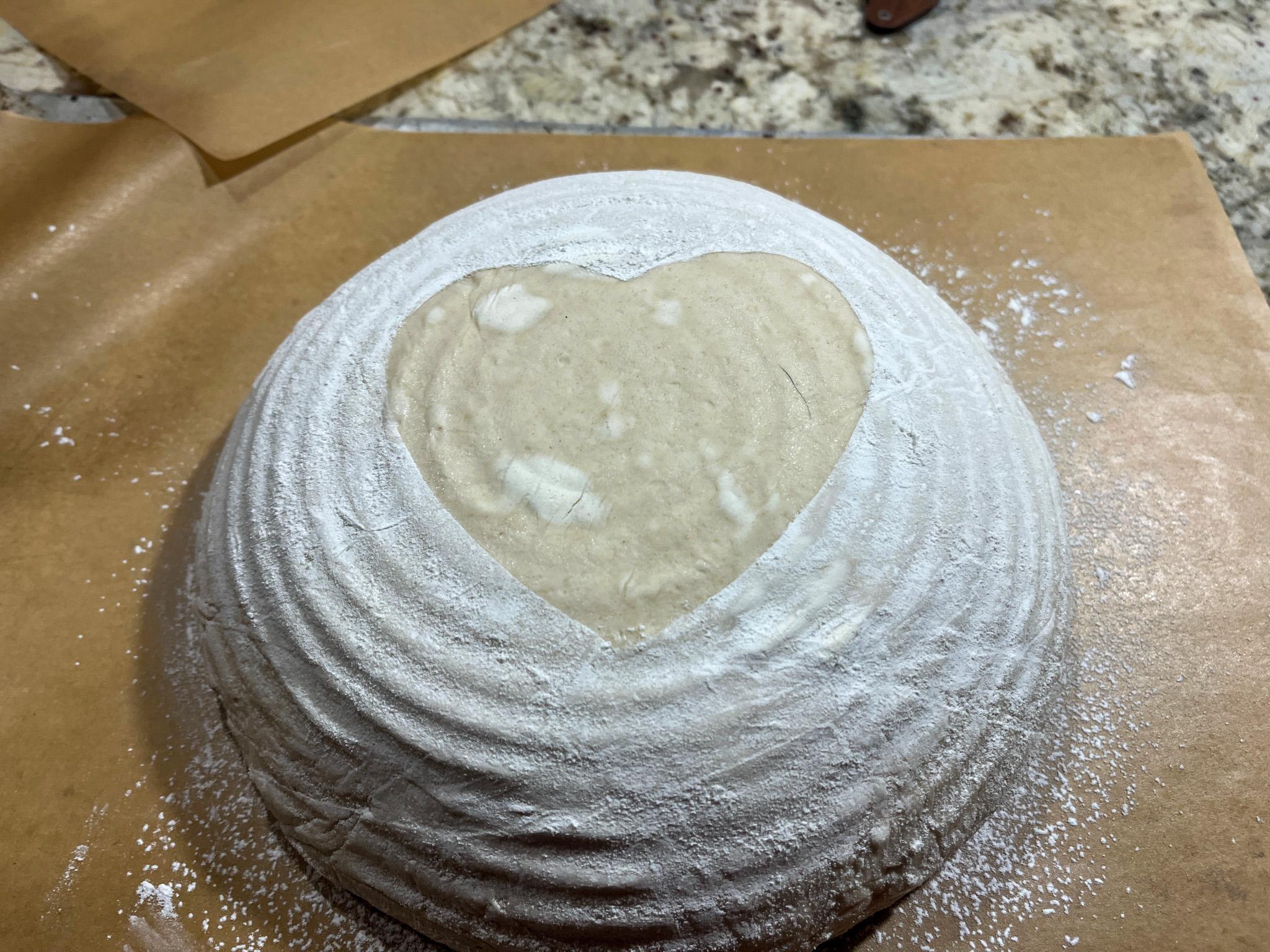
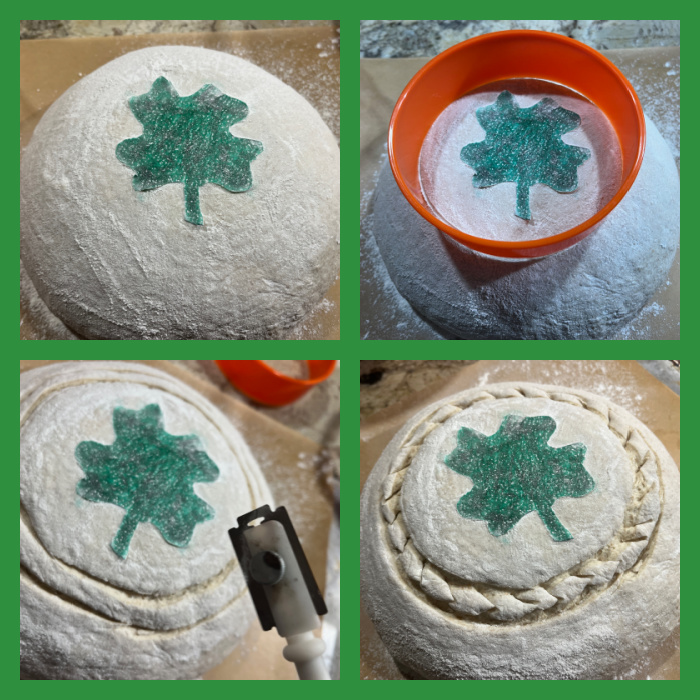
Next morning, heat the oven to 450F. Invert the dough over parchment paper, carefully place the stencil on top, and dust with flour. Make sure to rub the flour well into the design, a small brush is helpful. Lift the stencil and place the dough in a Dutch oven.

Bake at 450F for 45 minutes, preferably covered for the first 30 minutes to retain steam. Cool completely over a rack before slicing.

ENJOY!

to print the recipe, click here


Comments: This is actually my second loaf with the Dragon flower powder, the first one was beautifully pink inside, but this turned out marbled and light. Cannot quite figure it out, it was the same exact formula and method. Oh, well. Still absolutely delicious, no change in flavor, maybe the crumb has slightly more moisture, the bread is a bit more tender than a sourdough without the powder.
.

Moving on, I share a series of cookies that center on a message of love….


Royal icing lavender base; details in piping consistency white. Fondant rose detail.

.


Scalloped edge heart cookie. Iced in two tones of Dusty Rose. Details in piping consistency gray.

.


Dusty Rose for the base icing. Details in dark Dusty Rose, piping consistency, same for bead border.

.


Inspired by a little reel I saw on Facebook. Shape cut by hand. Iced in two stages, wet on wet details, and piping consistency dark Dusty Rose. Fondant for the detail at the bottom.

.


Two-toned heart. Once again using Dusty Rose as the main color. Details piped in white. White pearls for bling.

.

.


Stencil + Air-brushing over cookies iced with pure white.

.


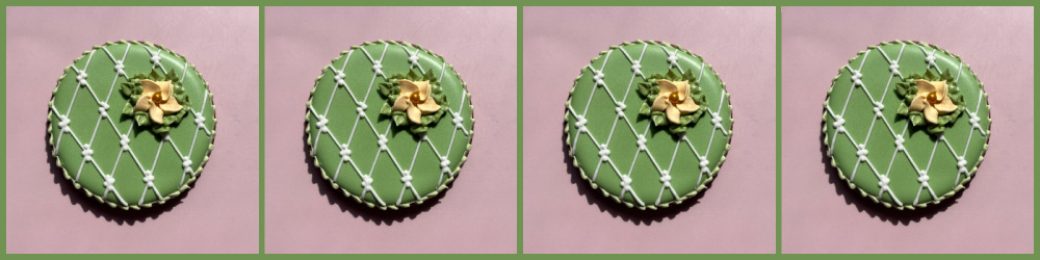
For a different take, a little pastel green. Details in piping consistency white.

I hope you enjoyed this little round-up of love in baking format. And don’t forget, always follow your heart!

ONE YEAR AGO: Fall-Inspired Vanilla Cupcakes

TWO YEARS AGO: Bake it Better with a Friend

THREE YEARS AGO: Bison a la Mode de Bourgogne

FOUR YEARS AGO: Masala Mashed Potatoes

FIVE YEARS AGO: Lessons from Tanya: Sugar Cookie Silhouettes

SIX YEARS AGO: Cherry-Chipotle Chicken Thighs

SEVEN YEARS AGO: White Chocolate Mini-Mousse with Sugared Cranberries

EIGHT YEARS AGO: You Say Ebelskiver, I say Falafel

NINE YEARS AGO: Happy Thanksgiving!

TEN YEARS AGO: Two Takes on Raspberries

ELEVEN YEARS AGO: Spice Cake with Blackberry Puree & The Global Pastry Review

TWELVE YEARS AGO: Own Your Kitchen with Cappuccino Panna Cotta

THIRTEEN YEARS AGO: Chicken Parmigiana, the Thriller

FOURTEEN YEARS AGO: Wild Mushroom Risotto

FIFTEEN YEARS AGO: Tartine Bread:  Basic Country Loaf 

SIXTEEN YEARS AGO:  Pugliese Bread

.

.

SPIDER WEB SOURDOUGH LOAF

And three small changes in my overall sourdough approach… I will save those for the comments, check it out in case you are interested. But first things first, the method to make a scary good sourdough bread in the comfort of your kitchen…

SPIDER WEB SOURDOUGH LOAF
(from The Bewitching Kitchen)

410g bread flour
275g water
8g salt
75g starter (I used stiff, at about 75% hydration)

Mix all ingredients in the bowl of a KitchenAid type mixer fitted with the dough hook. Knead gently for about 4 minutes (first or second speed maximum).

Transfer dough to a lightly oil bowl and do a bulk fermentation with 4 folds made 45 minutes apart. Before you start the fermentation , remove a very small amount of dough to a small glass container (like those that hold spices), and mark where the level of the dough is with a permanent marker. Keep that at room temperature to monitor fermentation.

After the last folding cycle, keep an eye on the fermentation using the small vial. Ideally you want to let the dough ferment until it is double in size. Depending on the day, temperature of your kitchen, it might take 8 hours or more. Be patient, it will pay off.

Once bulk fermentation is over, shape the dough and place in a floured banetton. Place in the fridge overnight.

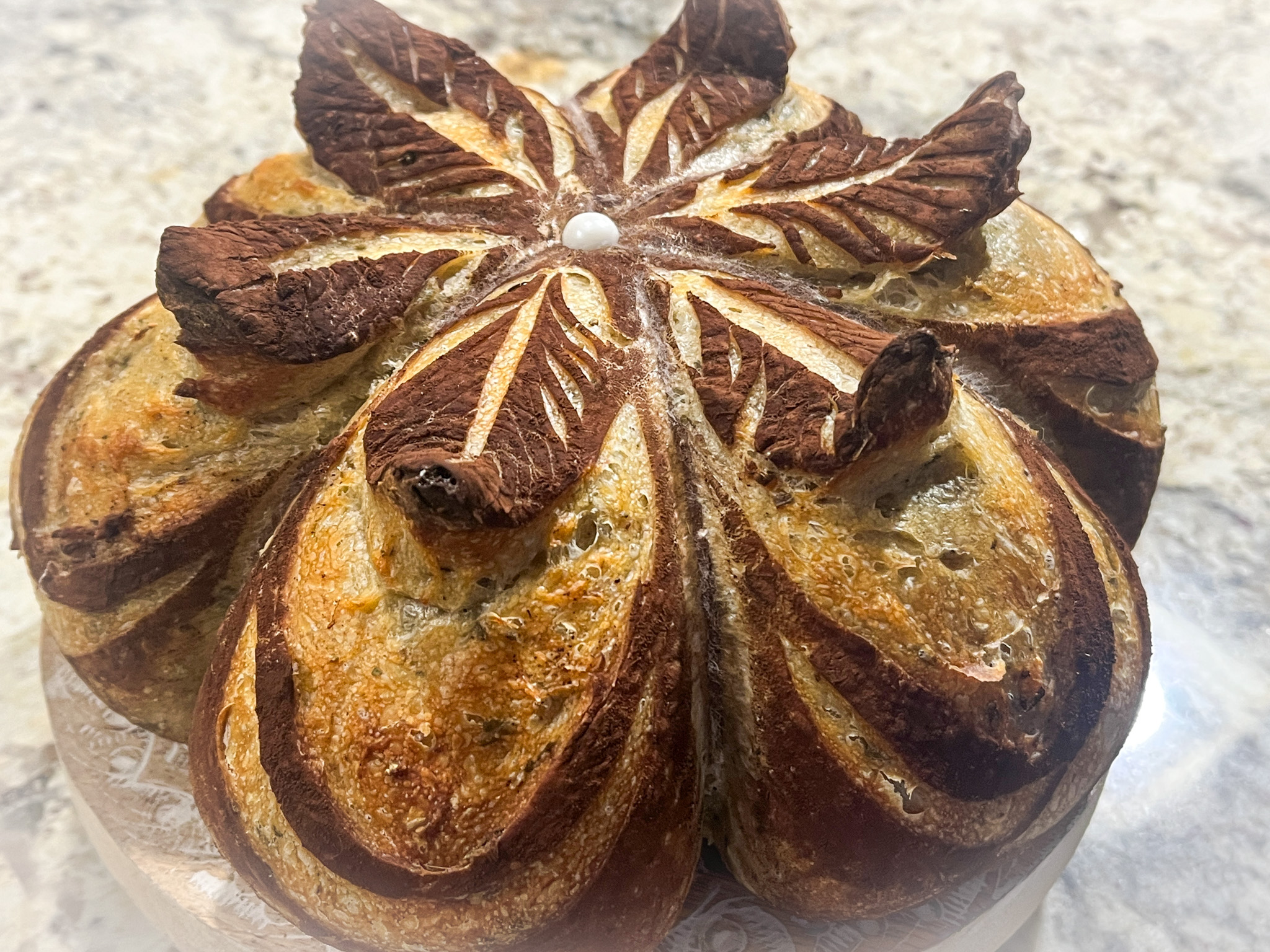
Next day, freeze the dough for 30 minutes in the banetton, to make it easier to score later. Invert the dough on the paper liner, place in the loaf pan. Add cocoa powder on the surface and score the pattern of a spider web.

Place small cubes of ice on the four corners of the pan, sliding the ice cubes between the metal pan and the paper liner. Place an inverted pan on top to act as a lid, and bake at 450F for 30 minutes. Remove the top pan, and allow the bread to bake further for another 15 minutes or so.

If when you remove the bread from the pan the bottom seems a little soggy, place it back in the oven over a rack and bake for 5 minutes outside of the pan.

Let it cool completely before slicing.

ENJOY!

to print the recipe, click here

.

Pan liners available here

Loaf pans similar to these ones. I have a set of four, could not find the exact match. But they are 9 x 5 (inches).

.

Comments: I’ve been playing quite a bit with my default recipe for sourdough and the main change is that I now prefer to use a stiff sourdough starter to make my dough (sourdough starter from my fridge + 80g flour + 60g water, for a 75% hydration level). I like the way it handles, I like that it stays at maximal height for longer time than the 100% hydration version. In some bakes I have reduced the hydration to 60% – in this case the starter almost behaves like a dough that you can knead to mix – but after talking with my friend Philip, who recently also got into stiff starters, I settled for 75%. The good news is that I don’t need to adjust anything in the recipe, I can use my formula with the exact same amount of stiff versus loose starter. The difference in the amount of total flour is negligible and does not affect the outcome.

My second change is following the fermentation
with a small amount of dough removed once I mix it.

It turns out that I never bothered doing that, and yes, my bread was usually pretty good, no problems, but I had some inconsistencies from loaf to loaf that were hard to explain. It turns out that I always left the dough for 5.5 hours in bulk fermentation and after monitoring my dough with this method, I realize that in most cases I was cutting it a bit short. What I love about this simple detail is that I now wait until it doubles or almost doubles, shape the dough and retard in the fridge. It is really fun to see how it is quite sluggish in the first few hours and then in the last 90 minutes or so it gets going at a faster pace. No need to buy special gadgets that monitor the fermentation under controlled temperature. A simple little glass vial is all you need…

And finally, the third change is that I now freeze the dough for 30 minutes before inverting it out of the banetton and doing the scoring. Especially when doing more intricate designs, freezing the surface helps a lot. If you are just slashing the dough with two crossed lines, no need to freeze, but anything that requires a bit of more time you will notice a huge improvement.

And let the countdown to Halloween begin!

ONE YEAR AGO: Halloween Almond Cookies

TWO YEARS AGO: Miso-Honey Chicken Thighs

THREE YEARS AGO: Raw Zucchini and Chickpea Salad with Tahini Yogurt

FOUR YEARS AGO: Black Tahini Shortbread Cookies

FIVE YEARS AGO: A Fruitful Trio (of Macarons)

SIX YEARS AGO: Halloween Entremet Cake

SEVEN YEARS AGO: Pork with Prunes, Olives and Capers

EIGHT YEARS AGO: Kansas Corn Chowder

NINE YEARS AGO: Impossibly Cute Bacon and Egg Cups

TEN YEARS AGO: Pulling Under Pressure

ELEVEN YEARS AGO: Cooking Sous-vide: Two takes on Chicken Thighs

TWELVE YEARS AGO: Miso Soup: A Japanese Classic

THIRTEEN YEARS AGO: On my desk

FOURTEEN YEARS AGO: A must-make veggie puree

FIFTEEN YEARS AGO: Vegetarian Lasagna

SIXTEEN YEARS AGO:  Brazilian Pão de Queijo

BRAIDED SOURDOUGH

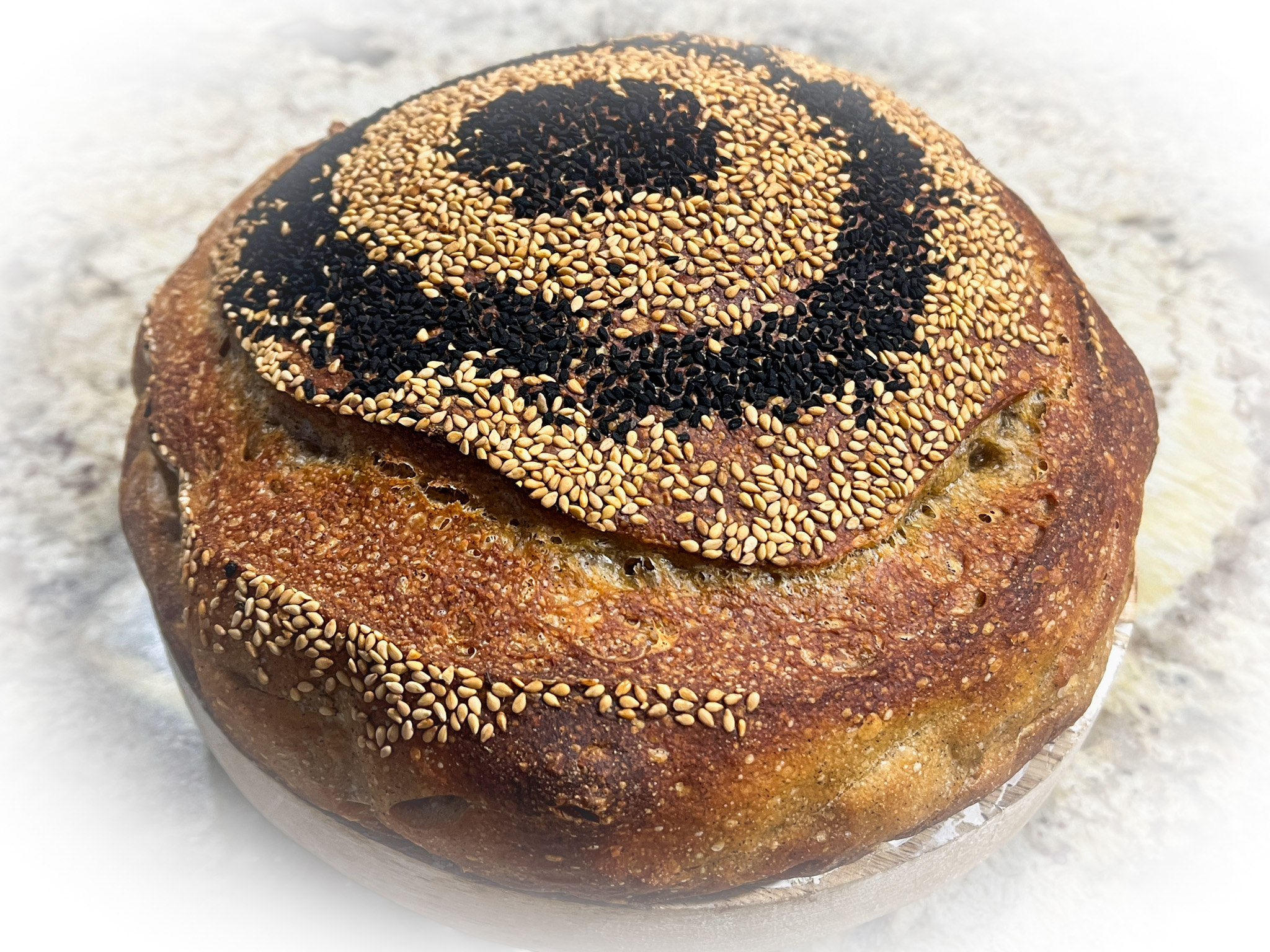
First things first, credit goes to Sophia, an amazing sourdough baker I found by accident looking at pictures on Instagram. If you like to gild the lily as far as baking bread is concerned, definitely look at her page on IG (click here). She is also super helpful and I am grateful for the feedback she gave me when I had some issues trying to reproduce her masterpieces. Without further ado, my first braided sourdough inspired by one of her many creations.

For this version, I used my default formula for sourdough, but increased the total flour to 700g, so that I separated it in 400g (main bread), and 300g (for four strands with 75g each). Looking back, I did not need so much dough for the braid, but I was worried and did not want to take risks. Do your math, scale any recipe you are fond of and go from there.

I always allow my bulk fermentation to go for about 5 hours at room temperature and then shape and retard in the fridge overnight. So that’s what I did: fermented the whole 700g at room temperature, divided into two portions, shaped one as a boule and kept the 300g in another container, waiting to be twisted next morning, still cold from the fridge.


Each twist will have two strands, one covered in black sesame seeds, one left plain. I could have done a better job with the amount of seeds to be more homogeneous over the dough, but it is hard to get it all right on the first time… It is also important to twist both ropes to the same extent, in my case one had more twists than the other.

Of course, you can do a real braid with three strands, and I intend to go for it in the near future. No matter the little boo-boos, I love the way this bread turned out.

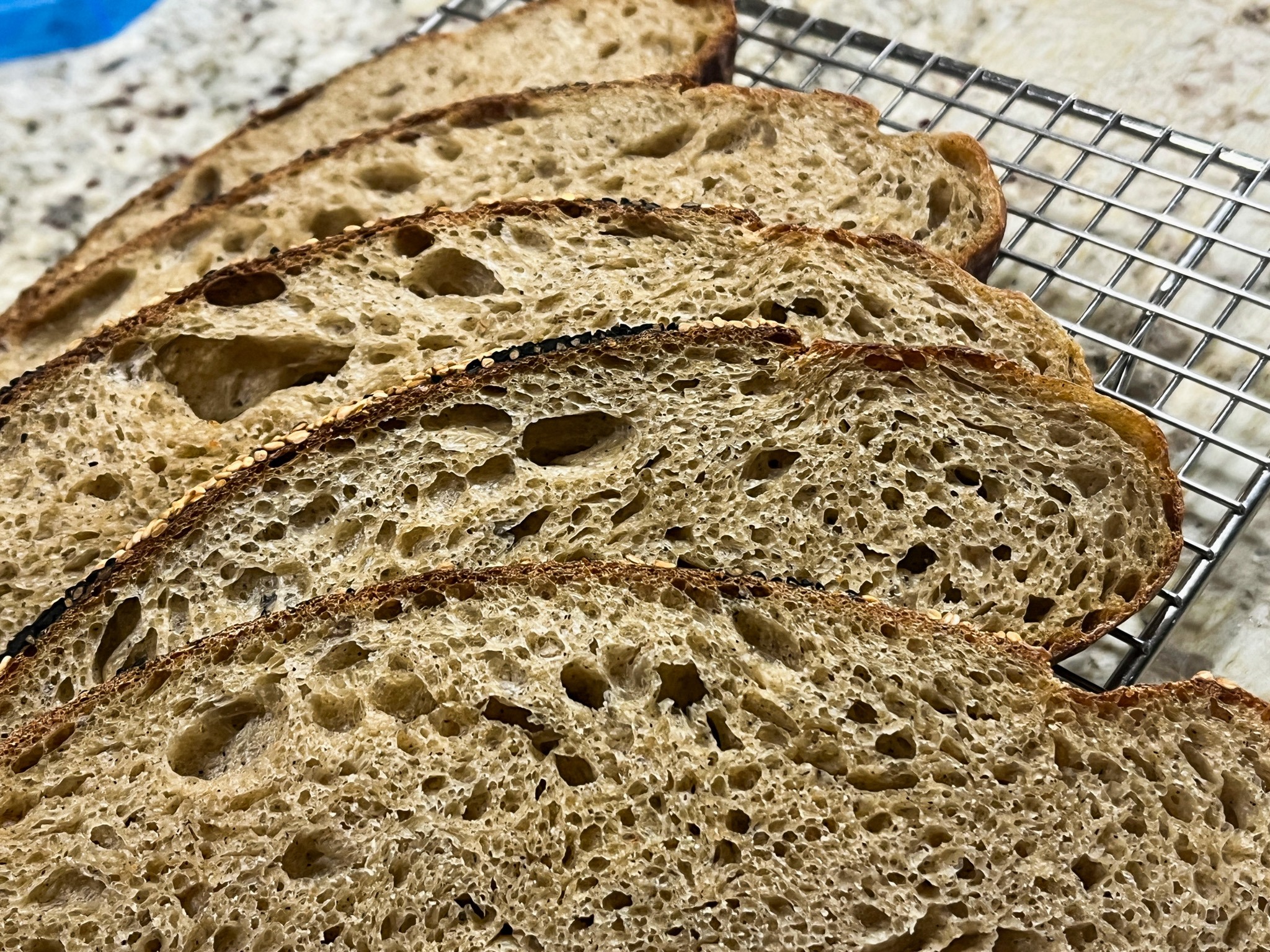
The crumb will be a little tighter than normal, because the rope will prevent full expansion, but that is not a serious problem…

.


Make sure to visit Sophia’s page, and be ready to get seriously inspired!

ONE YEAR AGO: German Chocolate Macarons

TWO YEARS AGO: Dressing up the Oreo Cookie

THREE YEARS AGO: OMG Roasted Sweet Potatoes

FOUR YEARS AGO: Air-Fried Eggplant Raita

FIVE YEARS AGO: Turkey-Pumpkin Roulade with Cider Sauce

SIX YEARS AGO: Strawberry-Vanilla Mini-Cakes

SEVEN YEARS AGO: Bourbon-Glazed Pork Tenderloin with Pea Pesto

EIGHT YEARS AGO: Chocolate Chip Cookies from Naturally Sweet

NINE YEARS AGO: Little Bites of Paradise

TEN YEARS AGO: Maple-Glazed Pumpkin Bread

ELEVEN YEARS AGO: In My Kitchen, October 2014

TWELVE YEARS AGO: Grilled Steelhead Trout

THIRTEEN YEARS AGO: Brown Butter Tomato Salad

FOURTEEN YEARS AGO:  Spelt and Cornmeal Rolls

FIFTEEN YEARS AGO: Roasted Potato and Olive Focaccia

SIXTEEN YEARS AGO: Multigrain Bread Extraordinaire