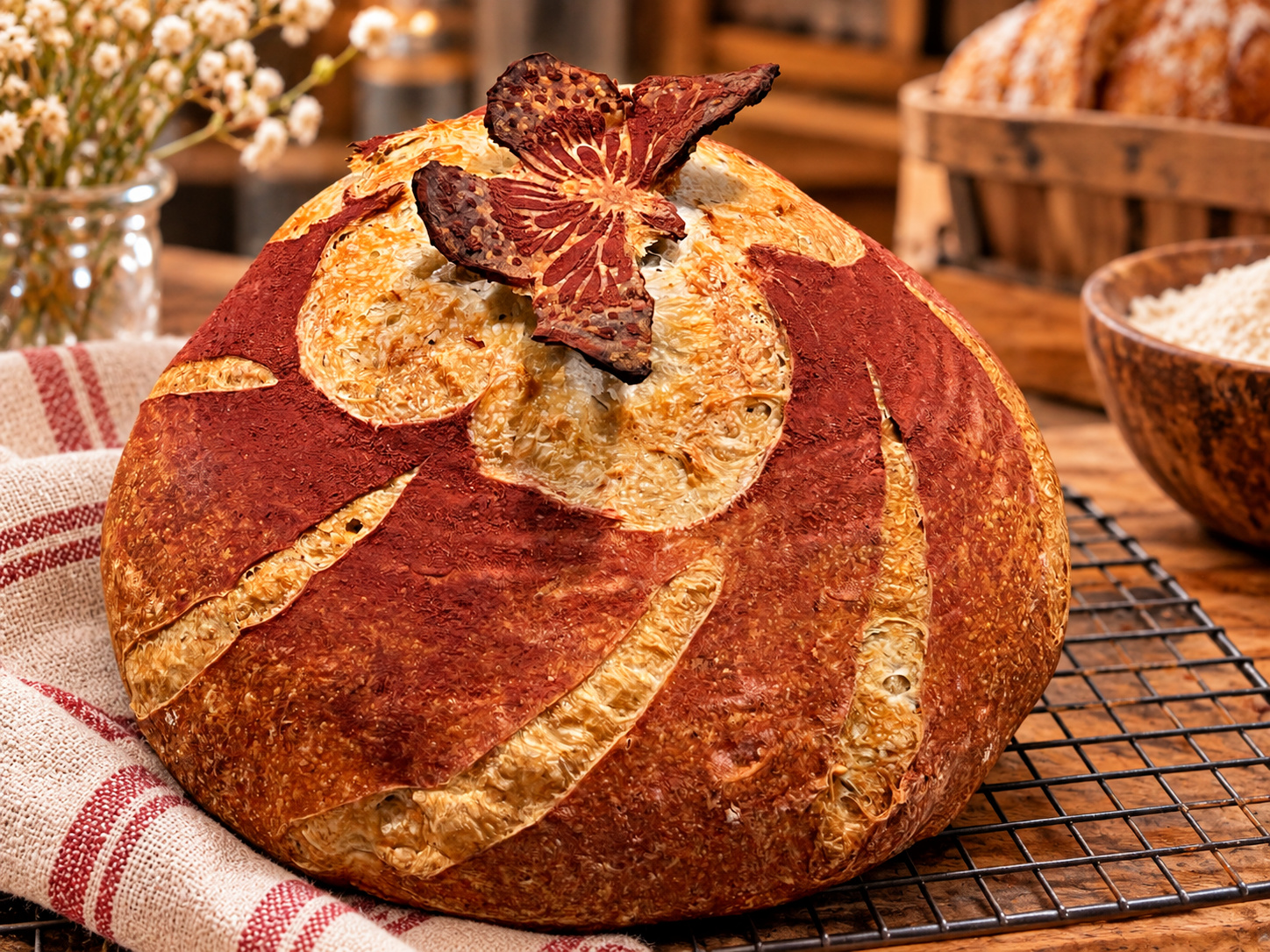
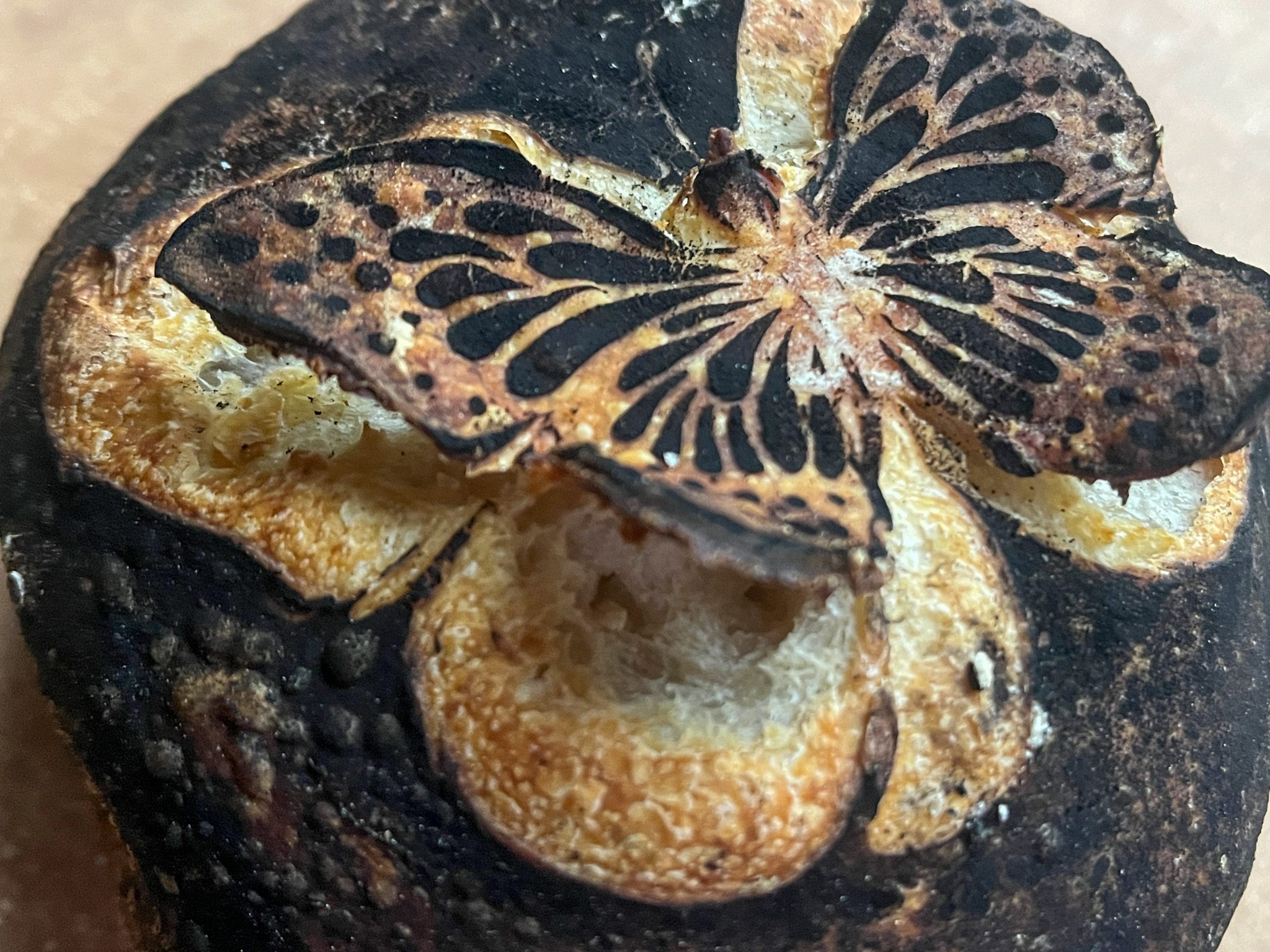
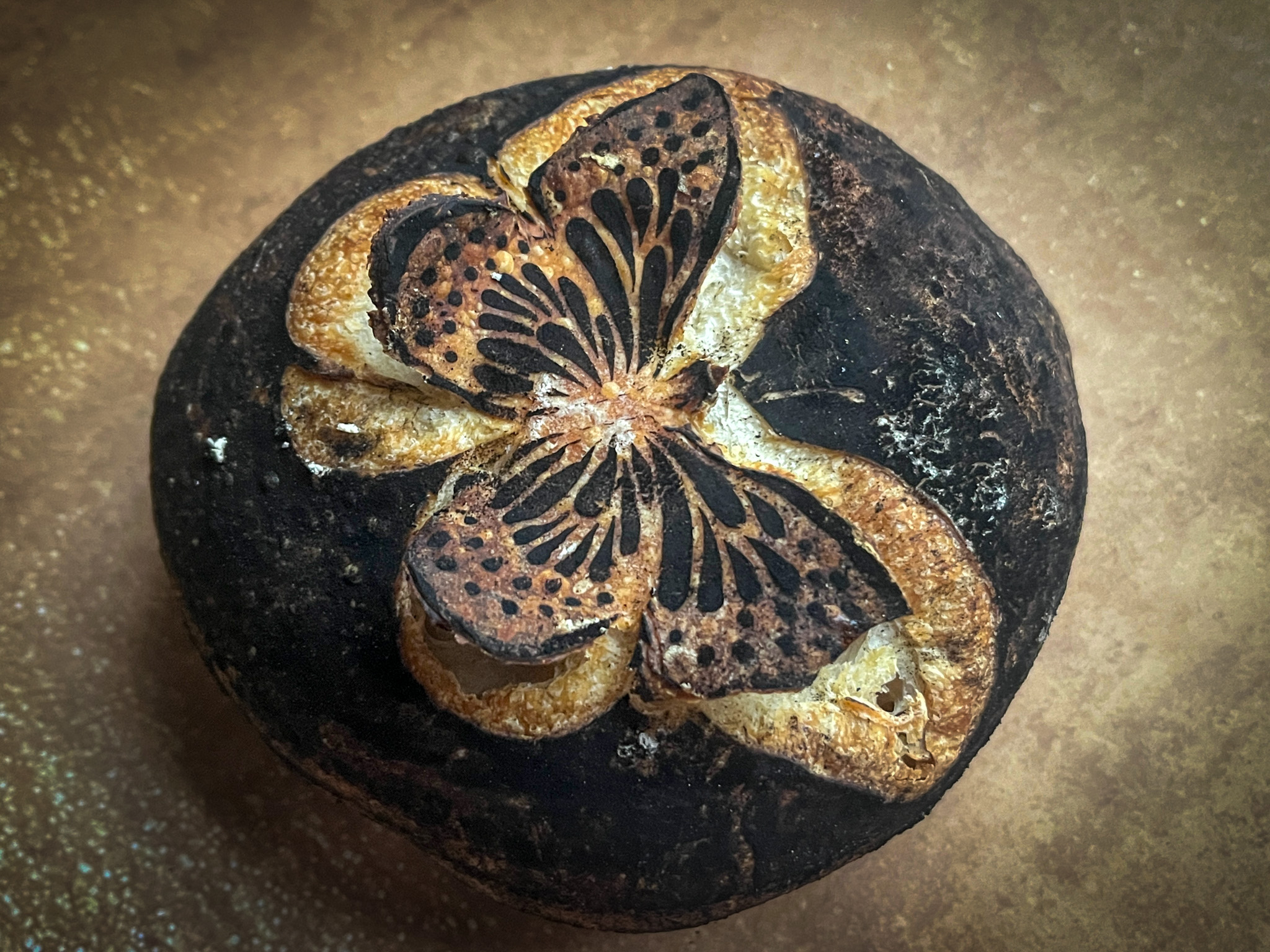
As I mentioned in my post from yesterday, I am back to share a detailed video of the method to make the floating butterfly, this time in a large boule format. The process is separated in two videos, made in real time. I go over some of the struggles of the past and how they got solved. Apparently I also talk to my bread, which I only realized when I watched it. Oh, well.
VIDEO #1
And the second video, shorter, shows the scoring for maximal lift, made after the bread is baked for 7 minutes.
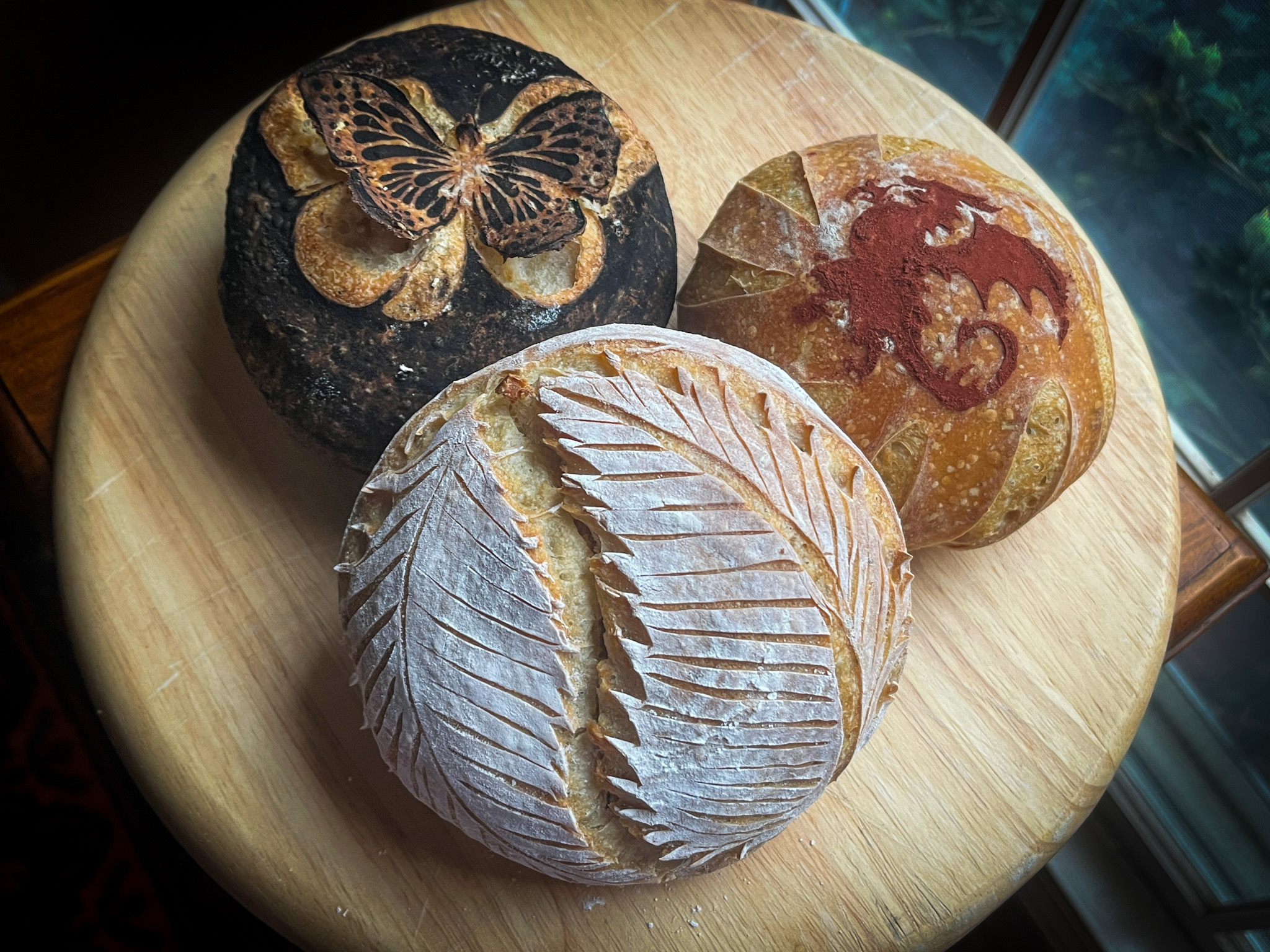
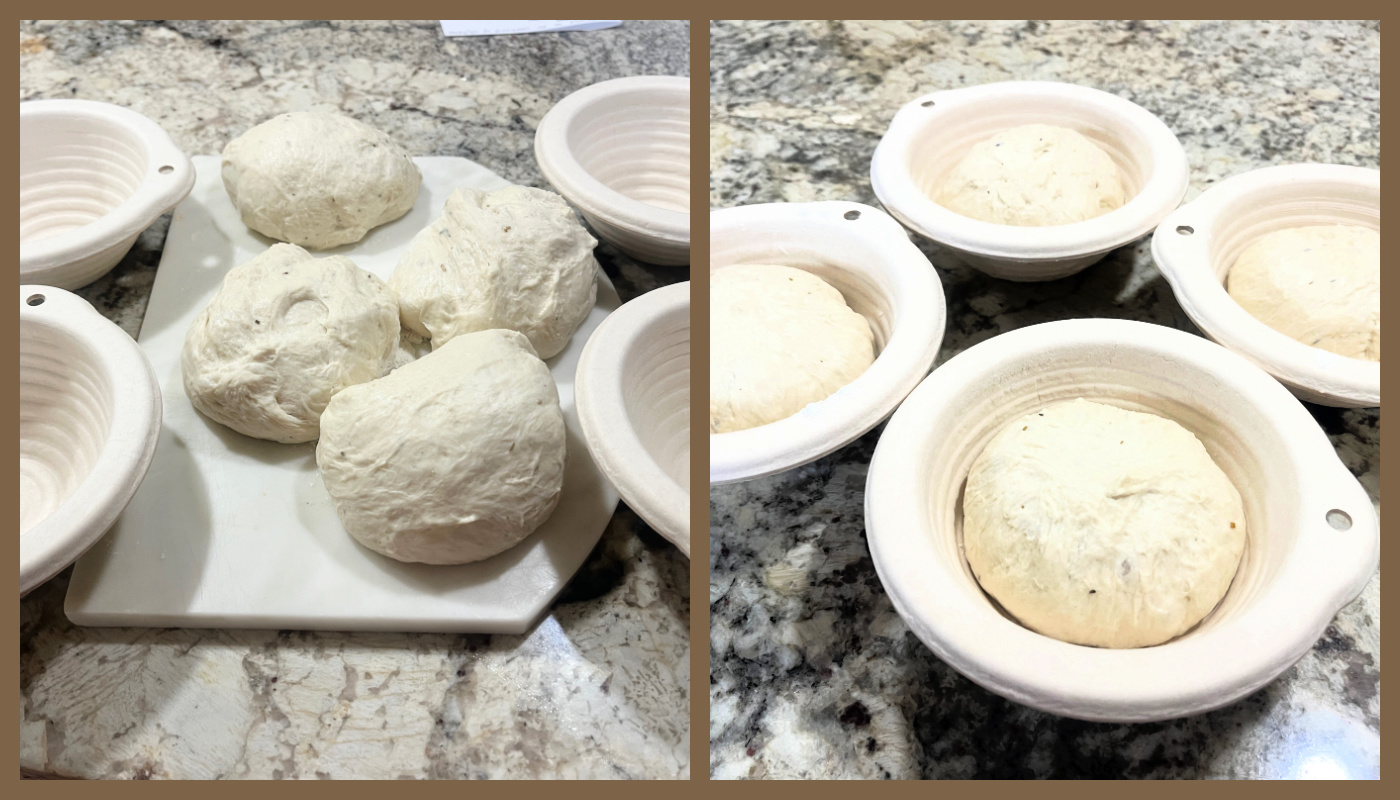
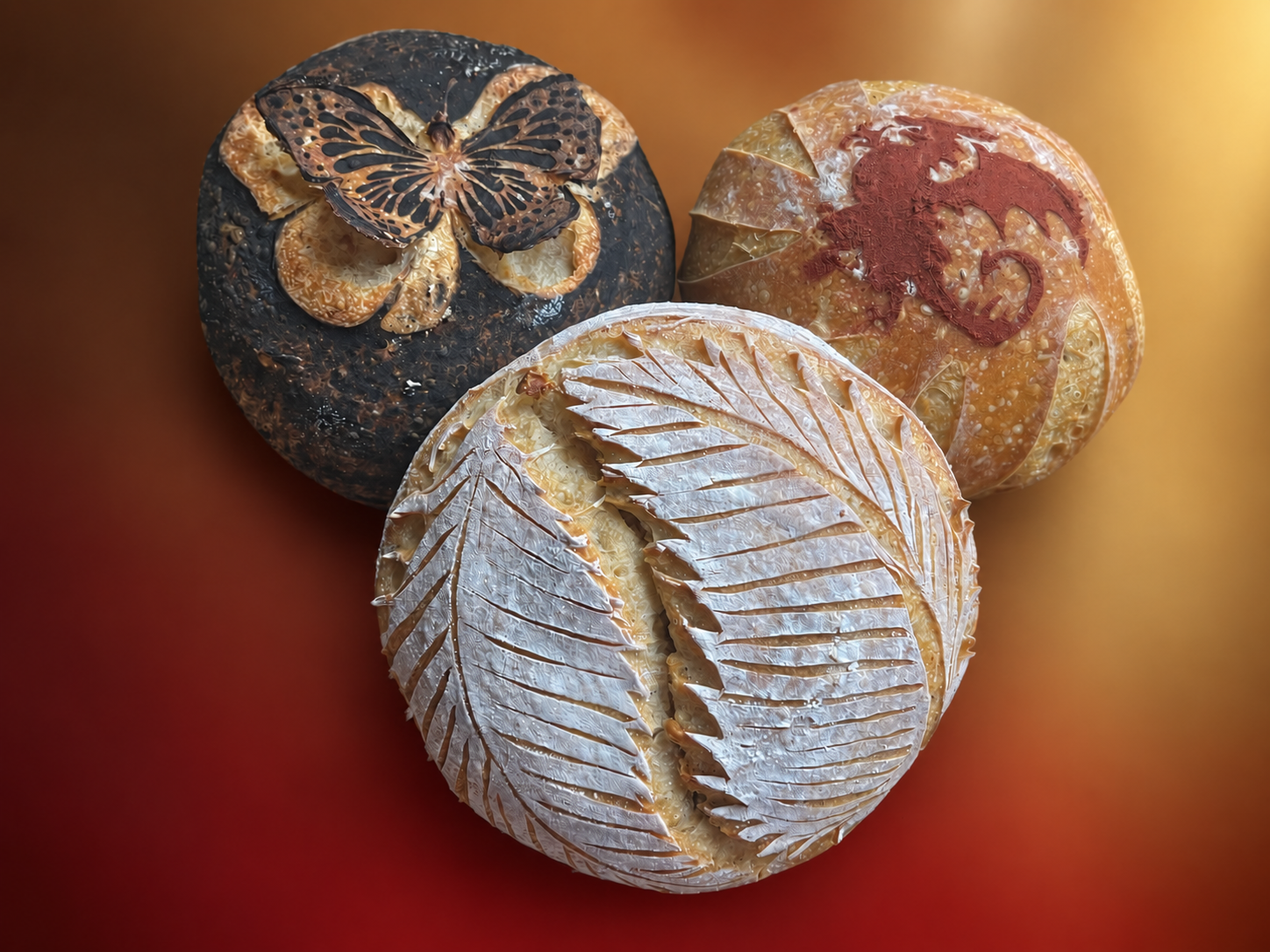
Baking small breads is a great way to practice different decorative designs starting with a single batch of dough. That’s exactly what I am sharing with you today. My default recipe, using 500g of total flour gave exactly 4 little balls with 230g total dough each. The bannetons I used were bought on eBay. As far as I can tell, they are not available anymore, but I found the same kind at Evil Empire (click here), although you do have to buy a set with way too many…
After overnight in the fridge, I froze them still in the banneton for 30 minutes to facilitate scoring and working with the stencils. I start with my favorite, the floating butterfly…
.
THE FLOATING BUTTERFLY
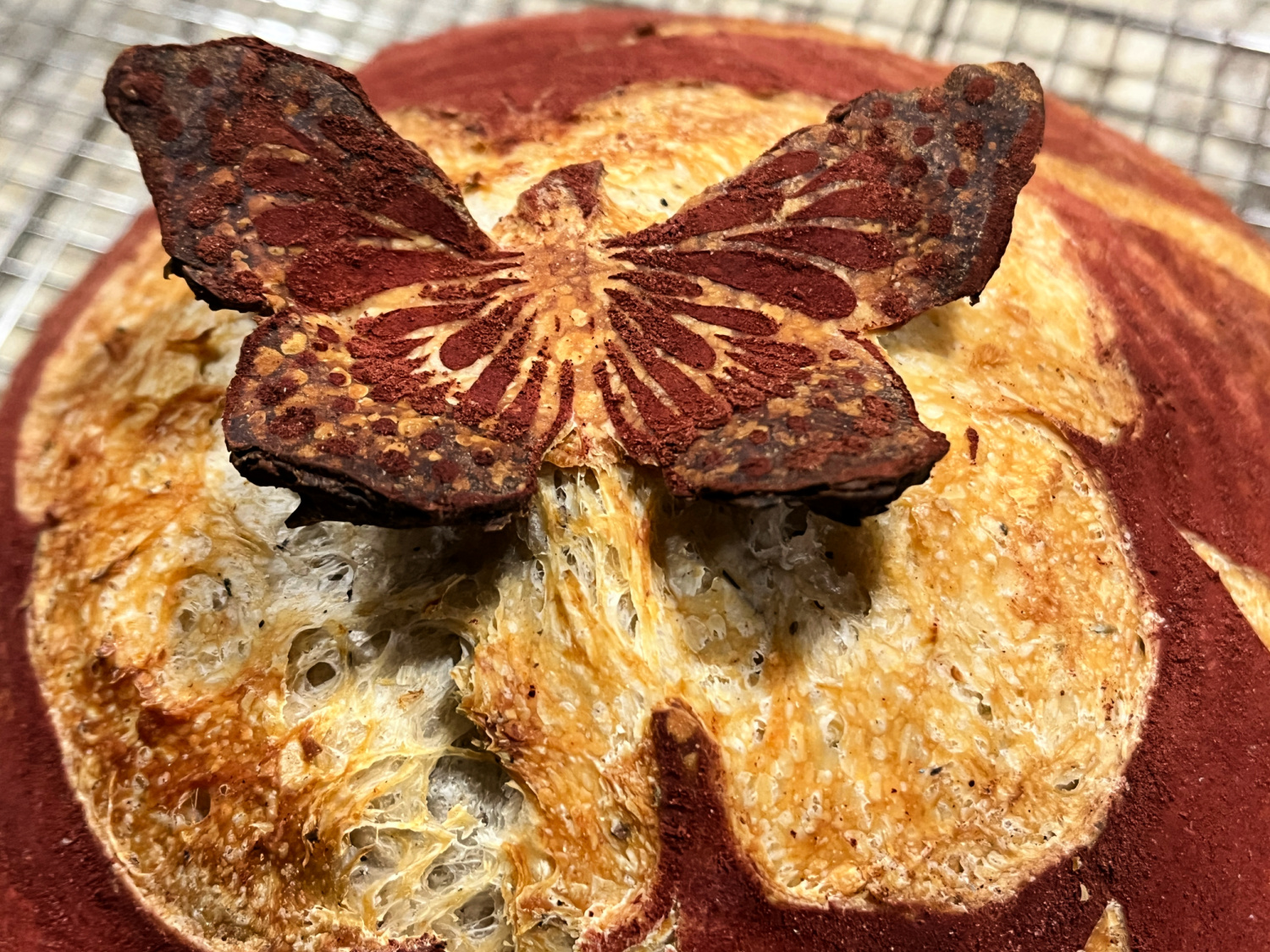
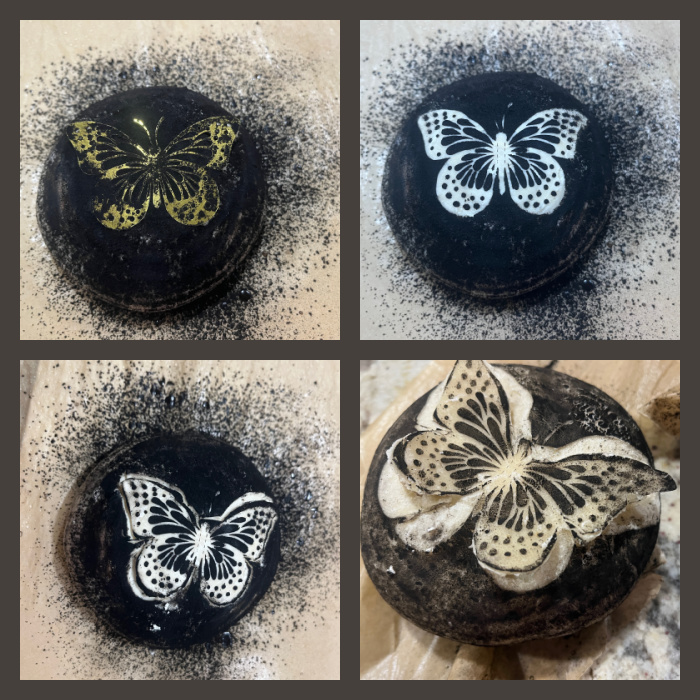
For this design, I rubbed the bread with back cocoa powder, and used a thin metallic stencil that I got recently (click here, it is part of a big series of stencils sold together in a bundle). After gently lifting the stencil, I cut around the edge of the butterfly, and lifted that area a bit. Baked for 7 minutes covered in a 450F oven, then carefully removed the bread from the oven and made the cuts deeper, adding a small ball of parchment paper on the four corners of the wings where I hoped for more lift. You can see the process below. The bottom right picture is what it looked like after 7 minutes in the oven, when I put the little balls underneath the wings. If you’d like a more detailed visual explanation, I will have a blog post exclusively about this type of decoration in a day or two. Stay tuned!
The bread was covered again, baked for additional 8 minutes covered, then 15 more minutes uncovered. Since it is a small loaf, it bakes faster, but the best approach is to check the internal temperature, aiming for 205-210F. As soon as it comes out of the oven, remember to remove the little balls of paper, or they will glue to the bread. I’ve had a lot of struggle to make this method work, finally realized that one very important thing is the material of the banneton you use for the proofing after shaping. The best ones for this type of scoring are wood pulp bannetons. They dry the skin of the dough much more efficiently. I was using a plastic wrap to facilitate removing the dough after overnight proofing, and that was the reason for all my disasters. The plastic did not allow the dough to dry, so there was no way to slice it nicely. Finally I changed to wood pulp, skipped the layering of plastic wrap, and things started to work better, not only for lifted designs, but scoring the bread in general. Keep that in mind if you are into decorating your bread.
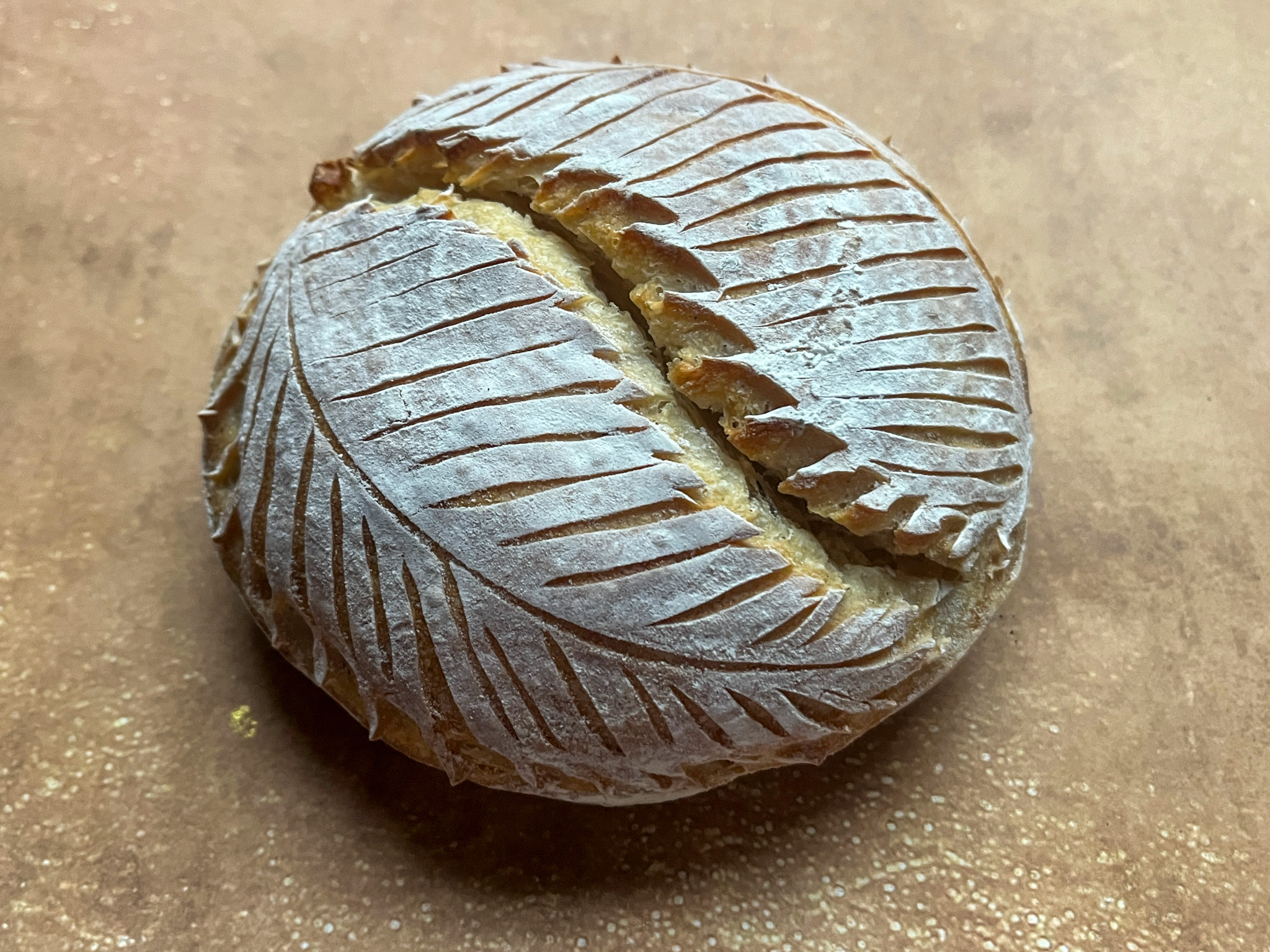
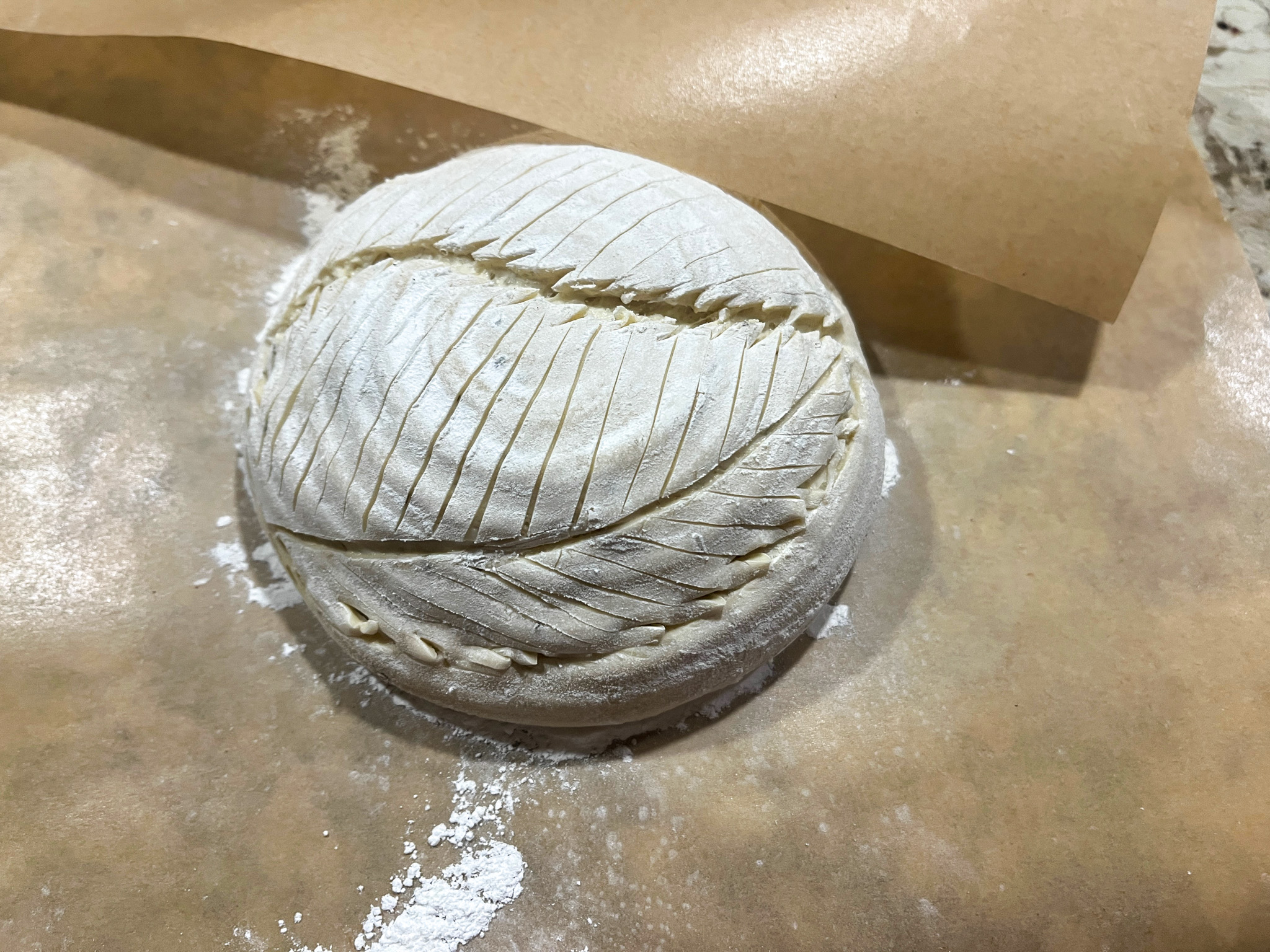
YIN AND YANG LEAF DESIGN
This design requires just a razor blade and scissors, very simple and quite effective. Again, I froze the dough for 30 minutes before inverting it out of the banneton and proceeding with the scoring.
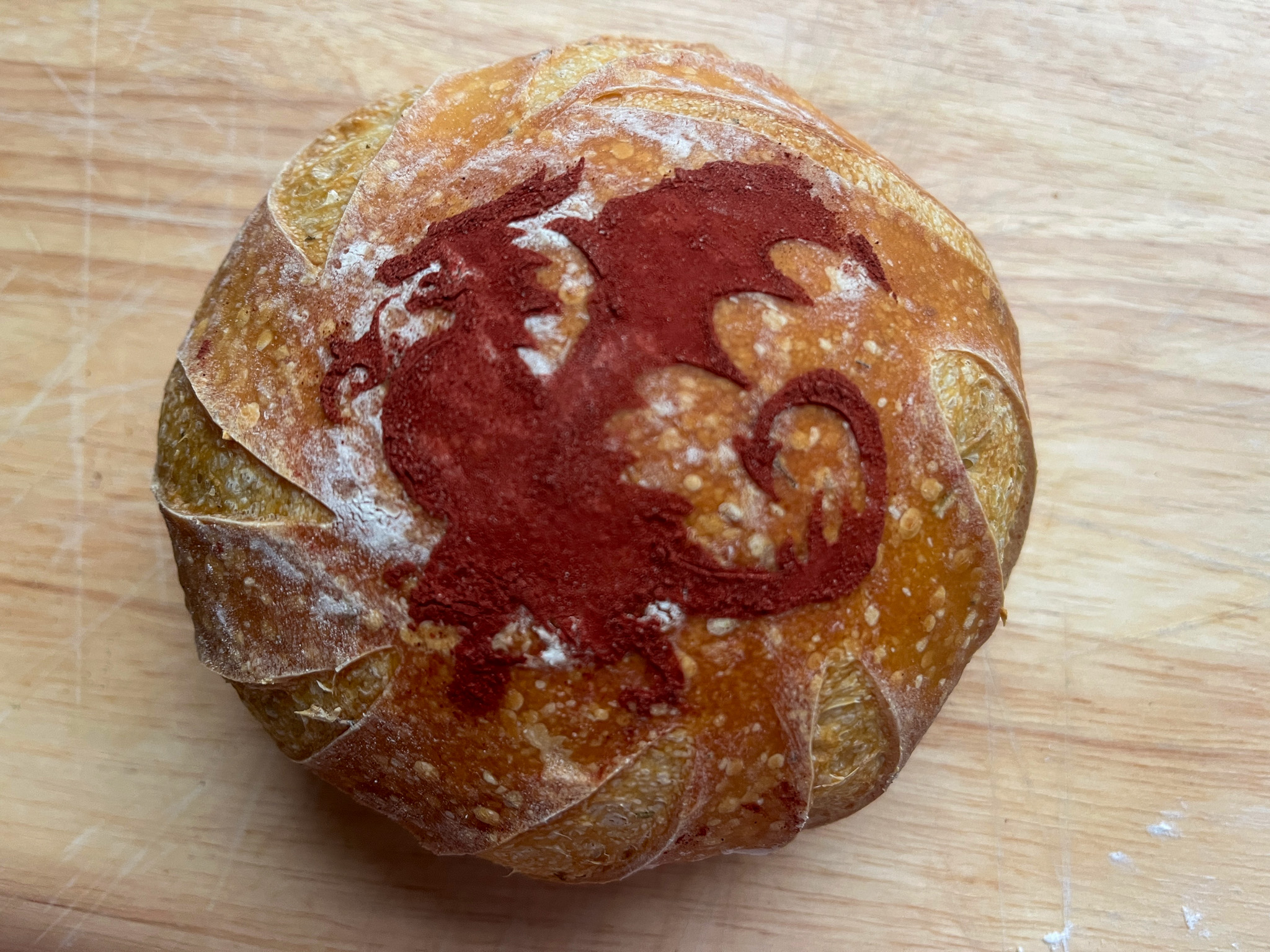
GAME OF THRONES SOURDOUGH
The simplest of the three, all I did was freeze the dough, wet the surface very lightly with a spray bottle, set the dragon stencil on top, and rub red yeast powder. Lift the stencil gently and make some cuts around it. Baked at 430F, covered for 15 minutes, uncovered for 15 more minutes.
You maybe noticed I started with 4 small boules of dough but you only see three baked breads. At first I thought I could bake two at a time, but it was not feasible. One of them sat at room temperature after scoring, it deflated pretty badly and it ended up as bread for croutons. Oh, well. Live and learn!
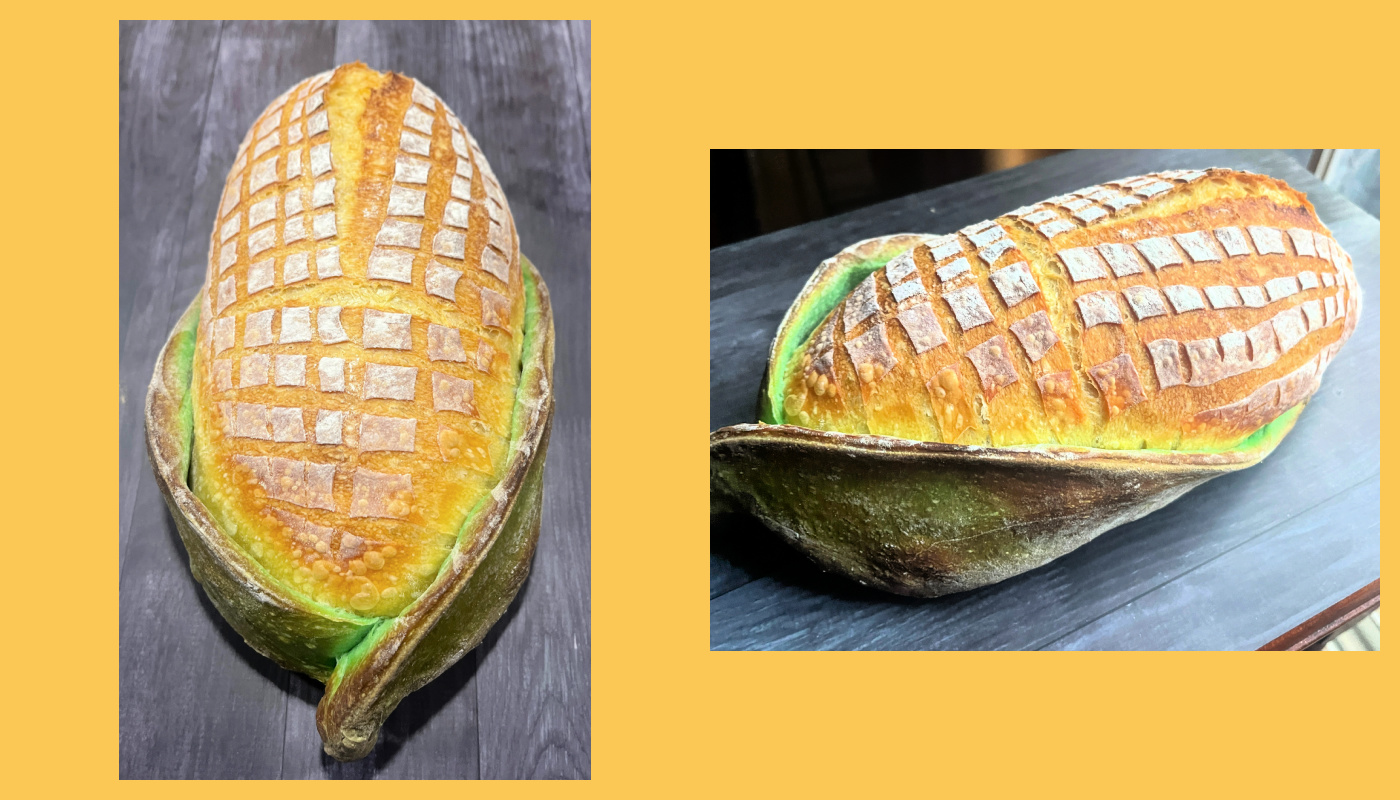
I’ve been flirting with making this bread for a while, finally took a deep breath and did it! It was a lot easier than I anticipated. The idea and basic formula came from a super creative baker I follow on Instagram, and you can marvel at all her stuff clicking here.
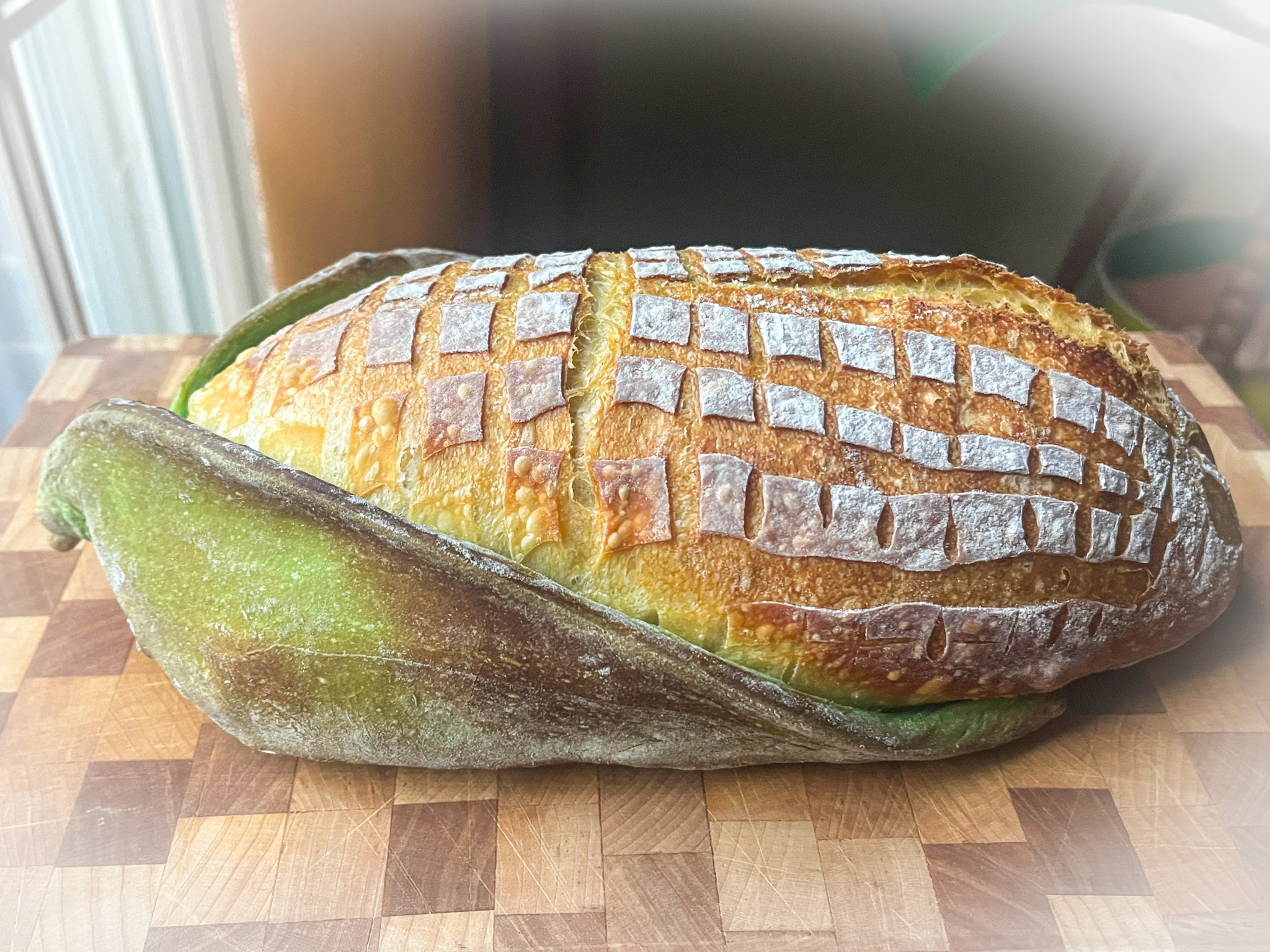
EAR OF CORN SOURDOUGH BREAD (slightly modified from crumbofherown)
for main dough: 265g bread flour 170g water 65g active starter (mine was at 60% hydration) 6g salt 2 tiny drops yellow food coloring
for green dough (you will use only half of it for the husk) 160g flour 85g water 30g starter 3g salt two tiny drops of green food coloring
Start by making the main dough, adding first the water to the bowl of a KitchenAid type mixer, and diluting the yellow color in it. Add all other ingredients, mix with the dough hook for about 4 minutes. Transfer to an oiled bowl, and ferment at room temperature folding 4 times at 45 minute intervals.
Make the green dough, exactly the same way. It will be lower in hydration, so it won’t be as smooth as the other dough. Place in a small, oiled bowl, and ferment at room temperature. Do minimal kneading every time you fold the yellow dough.
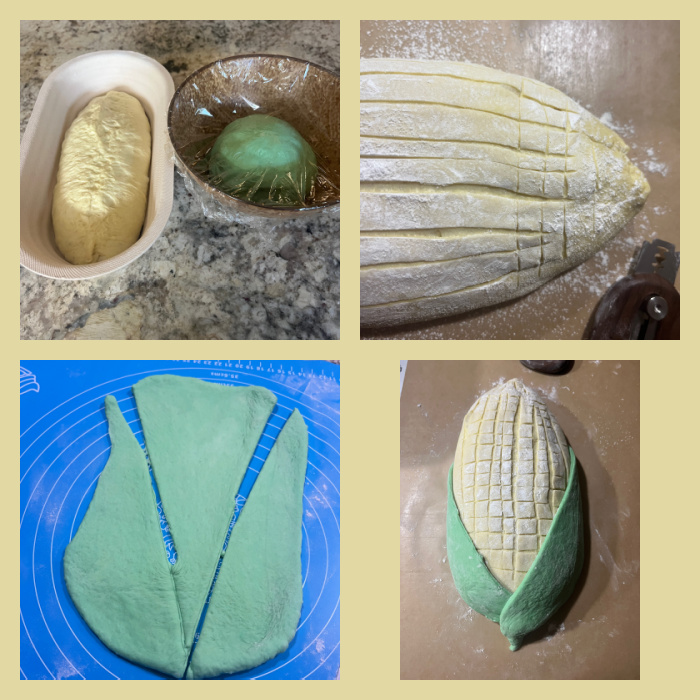
After about 8 hours of mixing the dough, form the yellow dough as a batard, and place in a banneton. Leave the green dough in the bowl and place both components in the fridge overnight.
The next morning, the yellow dough out was gently shaped/pushed each batard into more of a corn-cob shape without completely reshaping the dough. I scored lengthwise first, then added horizontal scores across the entire loaf to create the individual kernels.
For the husks, I rolled the green dough out into a rectangle and cut out triangles. I placed the triangles over the yellow cob, folded the tips down, and added a small piece of green dough at the base for the stem.
I baked these individually at 450°F with the lid on for 23 minutes, then 425°F with the lid off for 8 minutes. If the green dough gets too much brown color, protect it with aluminum foil.
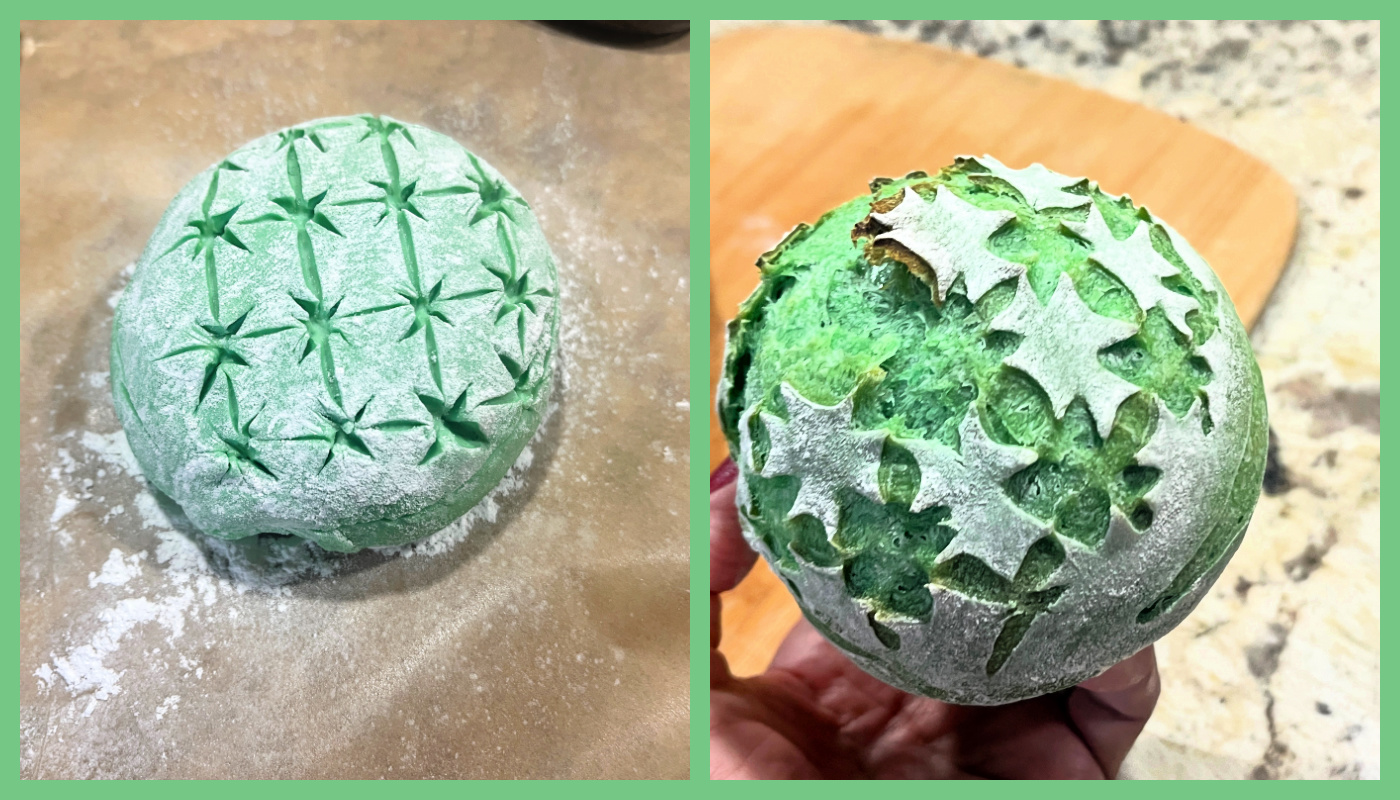
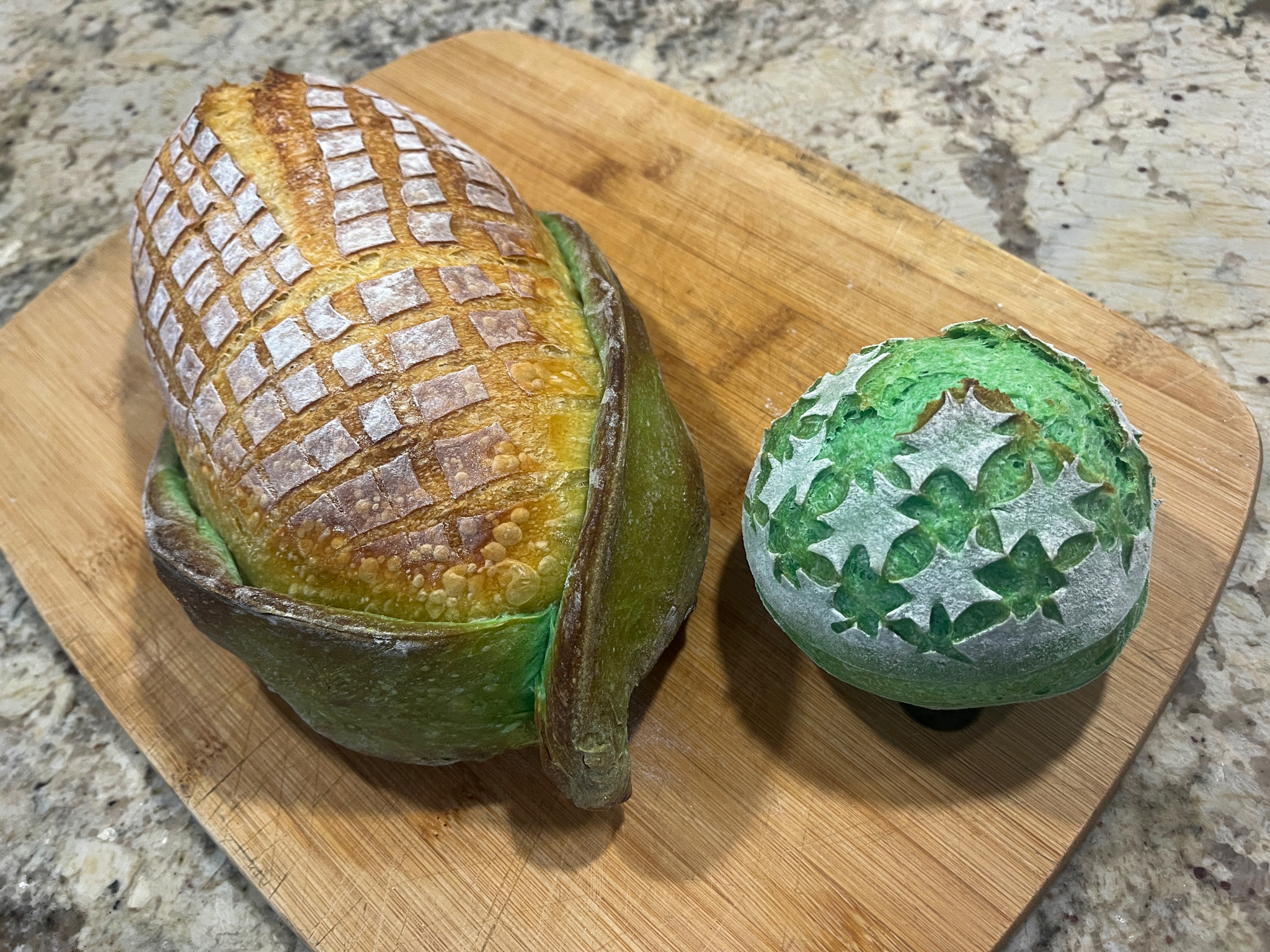
Comments: I have used food coloring in bread dough before, but had not added to the water before mixing. That makes all the difference in the world! Mixing the color once the dough is formed can be very tricky, and time consuming. Adding to the water makes it incorporate in the dough like a dream… The green dough will resist rolling at first, just allow it to rest a bit so the gluten relaxes, and continue trying. I did not want to make a very small amount of dough, so I used the full recipe. With the leftover dough I made a tiny little boule, scored it and baked after the big bread was out of the oven.
So there they are, my two babies, ready to be enjoyed! I am definitely going to play with this concept, it was quite straightforward to make, although I was a bit scared to try it at first.
I hope you visit @crumbofherown site on IG, it is quite amazing everything she does with sourdough in terms of shaping and adding colors. I want to try many different versions… So many breads, so little time!
I had a blast making this bread, which I improvised beginning to end, including the decoration on top. I have a few ideas to adjust the design for a next adventure, but I am quite happy with the way this one turned out.
MARBLED SWEET POTATO SOURDOUGH (from The Bewitching Kitchen)
500g bread flour 350g water 10g salt 75g sourdough starter (at 60 to 100% hydration) 25g sweet potato powder (I used this one)
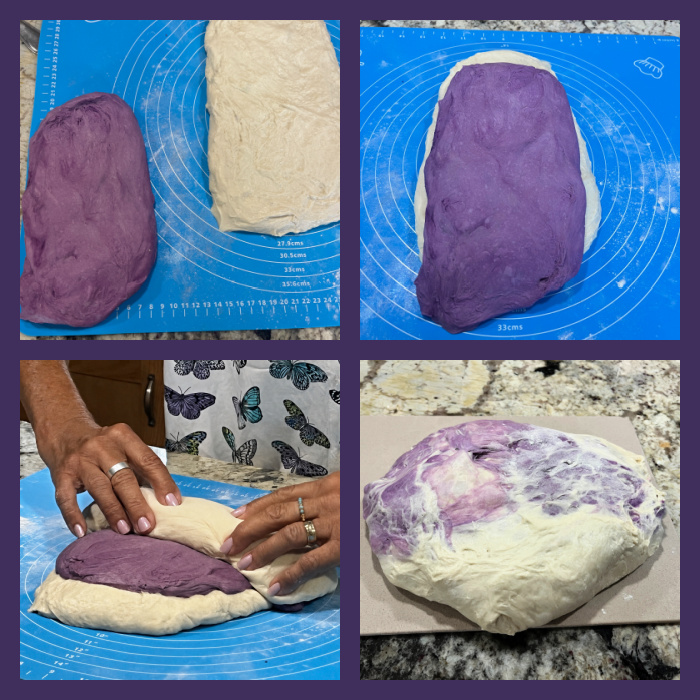
Mix all ingredients except the sweet potato powder in the bowl of a KitchenAid type mixer fitted with the dough hook. Knead gently for about 3 minutes (first or second speed maximum). Weigh the dough, and remove approximately 1/3 of the amount to a smaller bowl. Continue kneading the white portion for another minute. Transfer to an oiled bowl. Place the smaller portion of the dough back into the mixer bowl, add the sweet potato powder and knead for another minute. You will probably have to knead by hand to incorporate the powder well into the dough, but no need to worry too much about it. Transfer that dough to a smaller, oiled bowl. Bulk ferment both portions folding them at every 45 minutes. Do that for 3 cycles, so the fermentation will last for about 2 hours and 15 minutes.
Forty five minutes after the last folding, stretch both doughs as a rectangle, ad place the purple on top of the white. Roll them together. Allow to ferment for another 90 minutes, with very gentle coil folds, twice, again, at 45 minute intervals.
Once bulk fermentation is over, shape the dough as a oblong loaf and place in a banneton. Move it to the fridge, covered, and leave it there overnight.
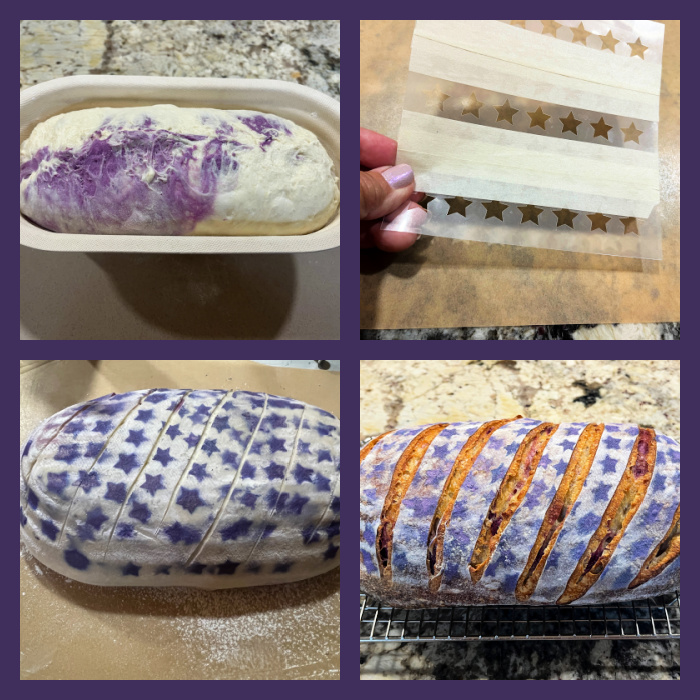
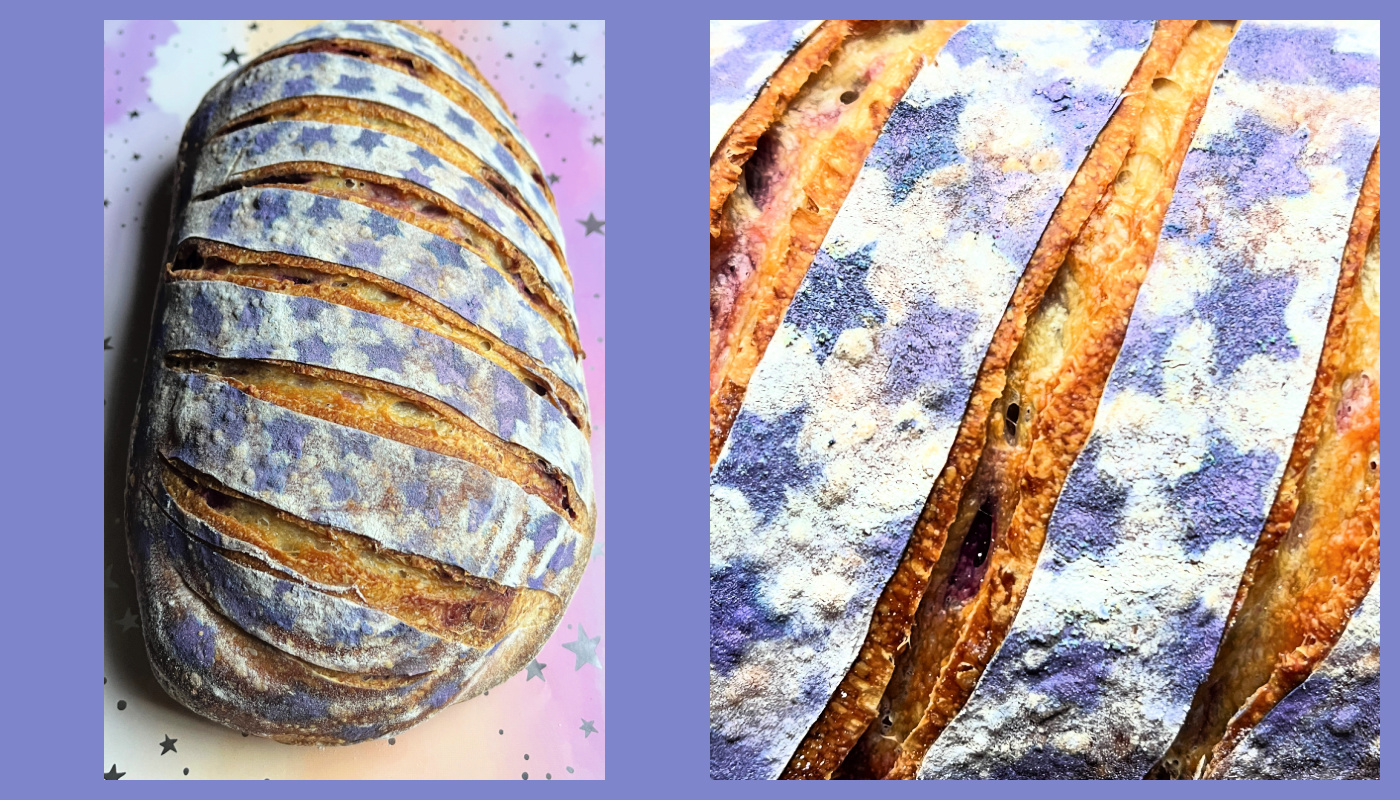
Next day, freeze the dough for 30 minutes in the banetton, to make it easier to score later. Invert the dough on a paper liner, rub a fine layer of Thai rice flour, and decorate with slashes or if you want to add a pattern, use an air-brush and a stencil to do so.
Bake in a Dutch oven with the lid on at 450F for 30 minutes, open and allow the bread to brown for a further 15 minutes. Depending on the decoration chosen, you can do a deeper scoring at 7 minutes into baking.
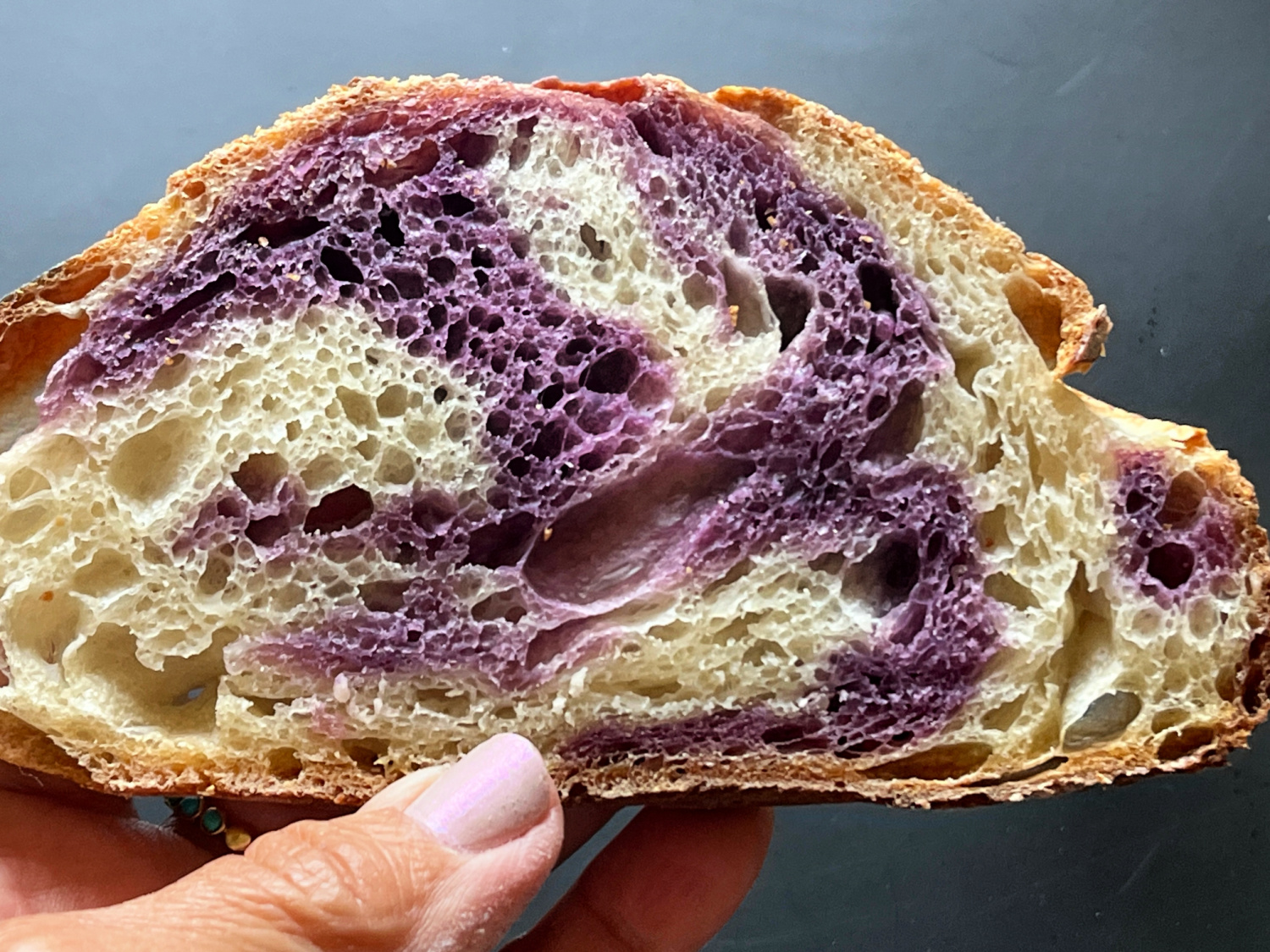
Comments: When marbling sourdough, I like to mix the two colors at least 2 hours into the bulk fermentation. At that point the dough is nice to work with, has some “strength” and you can easily stretch and manipulate. Once that is done, two more cycles of folding help the colors mingle, but be gentle, that’ s why I change to coil folds instead of full folding. You can check youtube for the way to do coil folding, but the name is pretty self-explanatory.
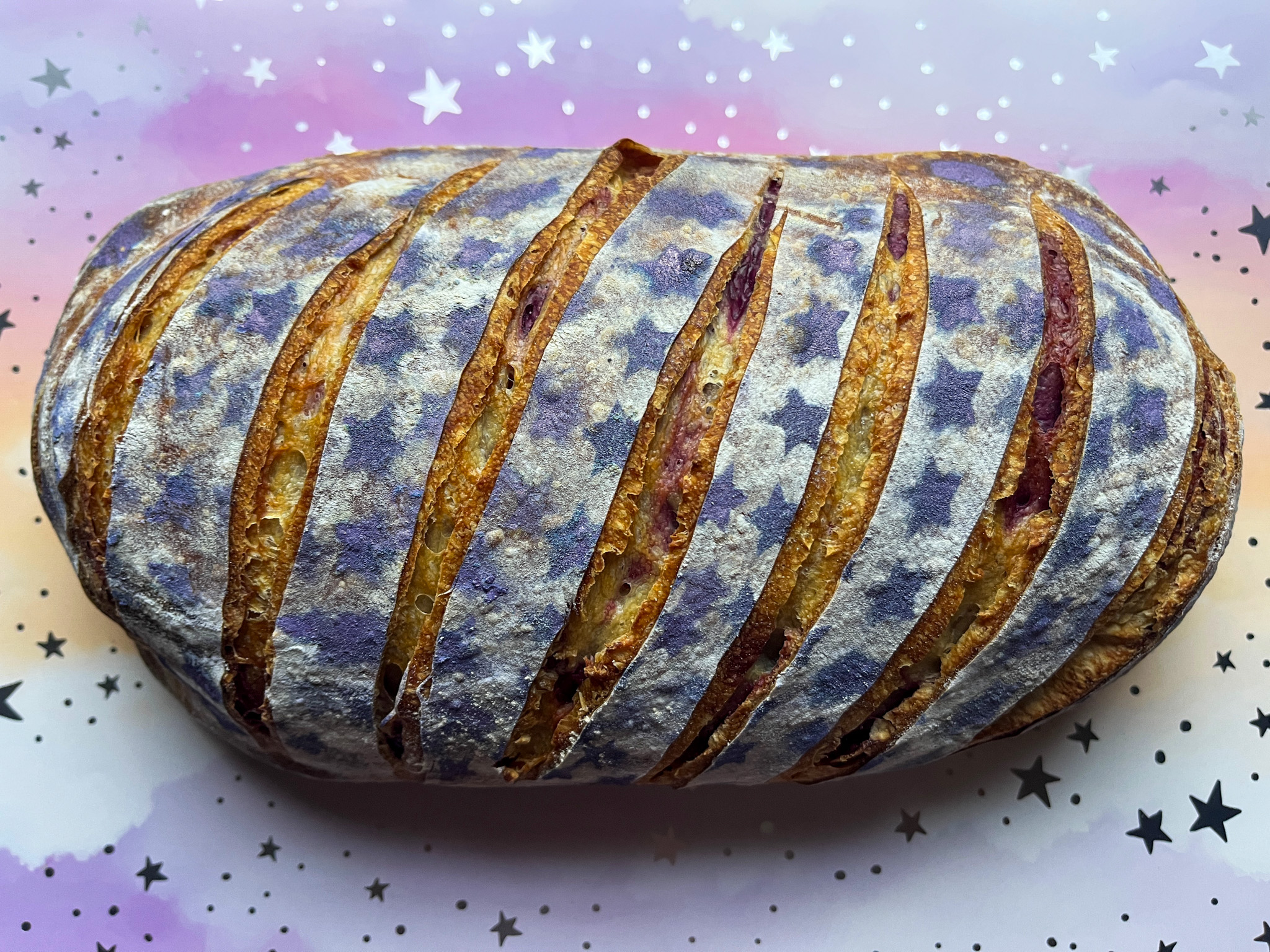
I used purple luster powder mixed with vodka in my air-brush, and a stencil that did not really have randomly placed stars, so I covered parts of it and arranged rows of stars all over. A few parallel cuts and into the oven it went…
Of course, the crucial moment is slicing this baby, and hoping for a nice marbling effect inside… What do you think? Did I get it right?
If anyone is curious, the flavor of the bread is not changed by the sweet potato powder. It does change slightly the texture of the dough, but once it is all fermented for several hours, it acts pretty much like a single-color batch does. I hope you give this method a try, you can use butterfly pea flower powder, beet powder (make sure to add some vitamin C to keep the red color), or even charcoal powder for a black and white version.
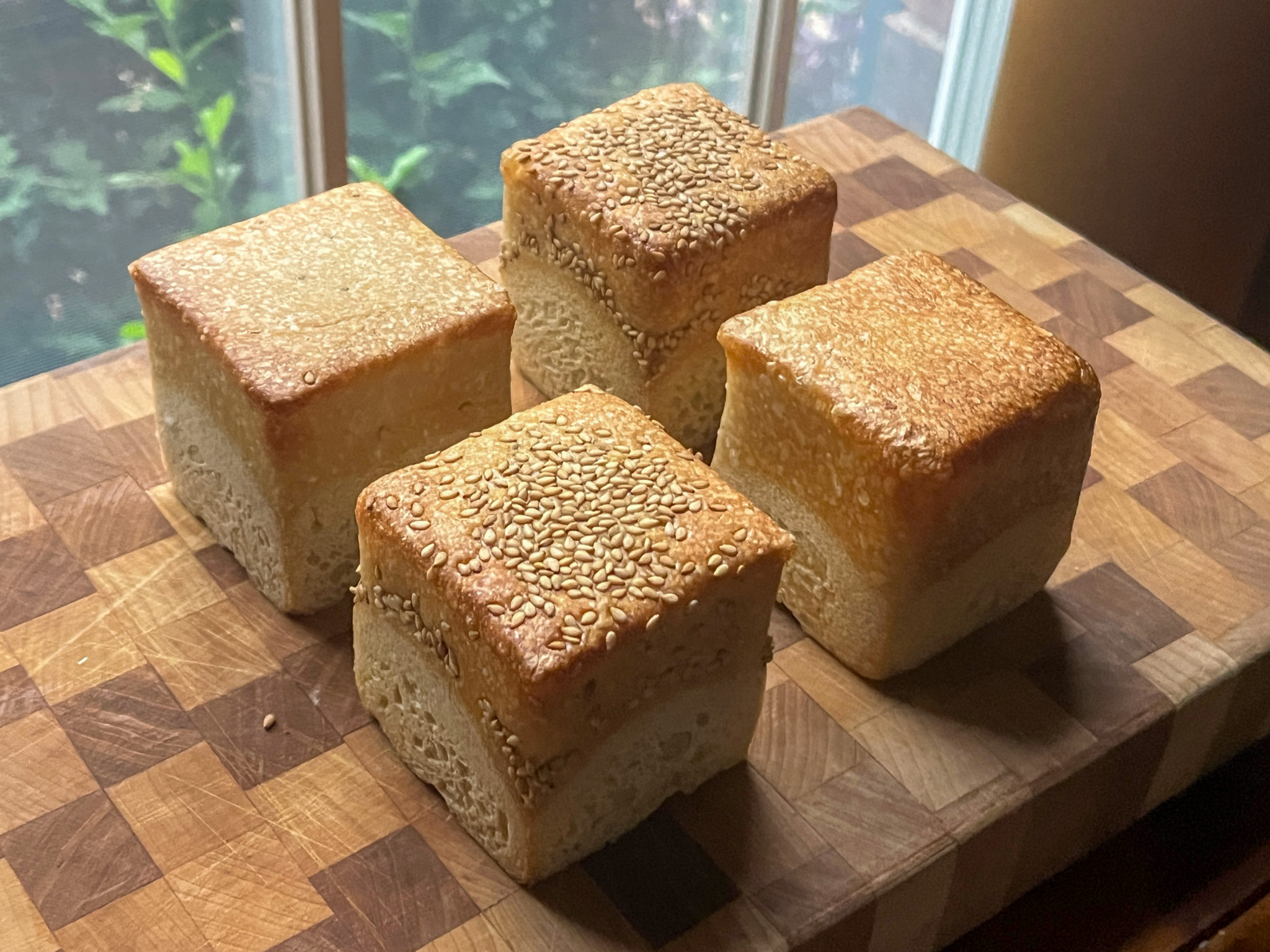
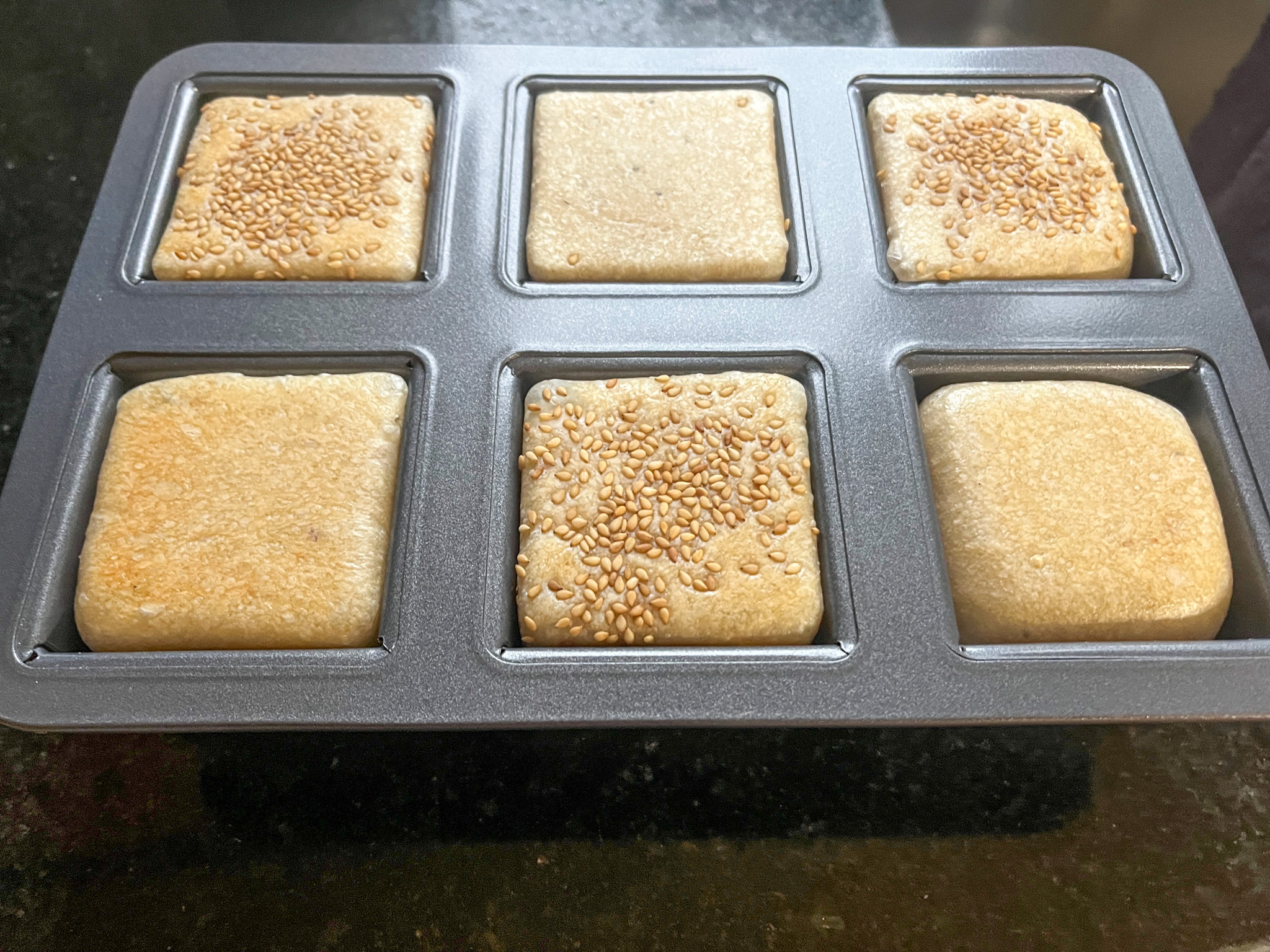
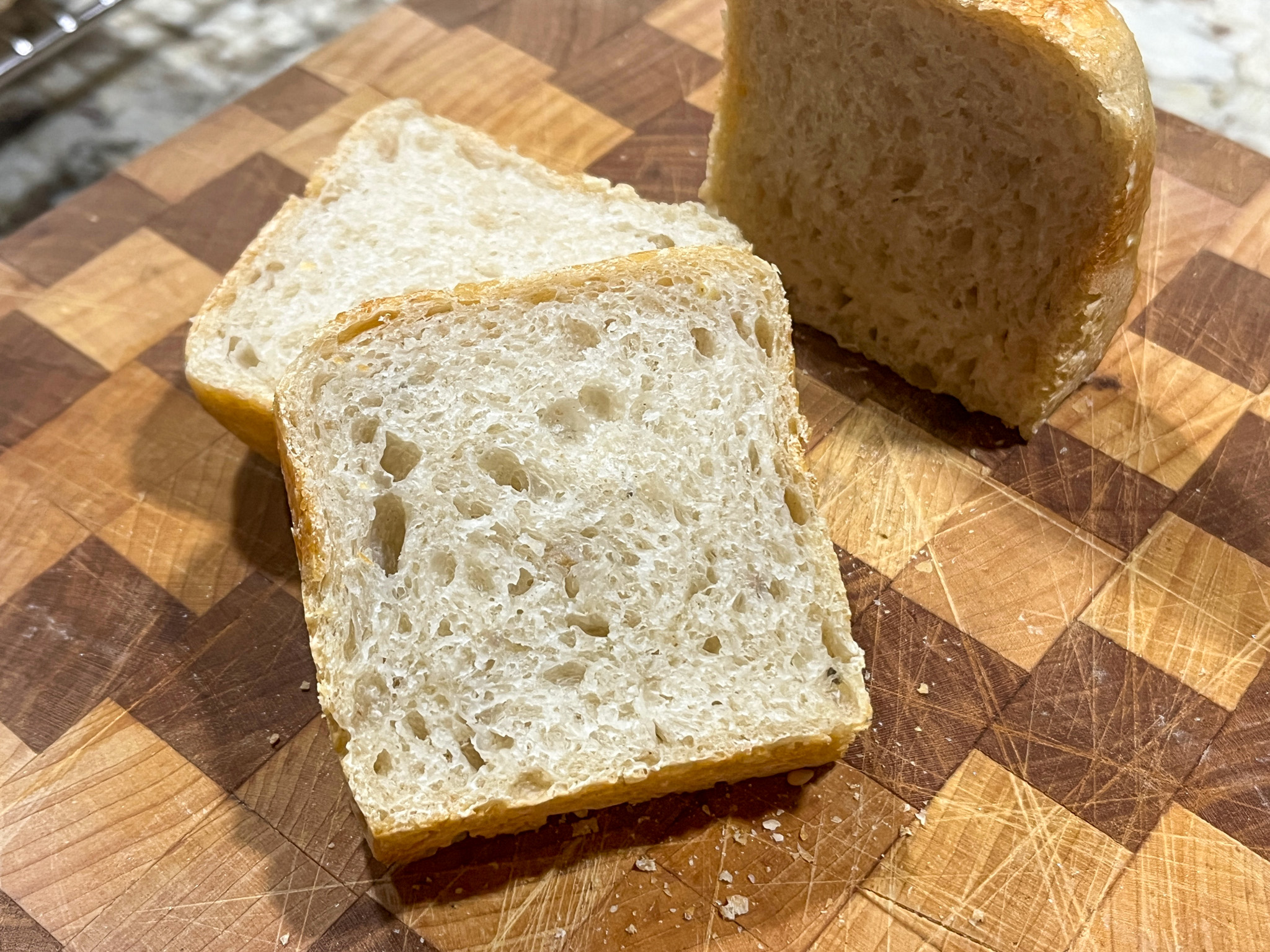
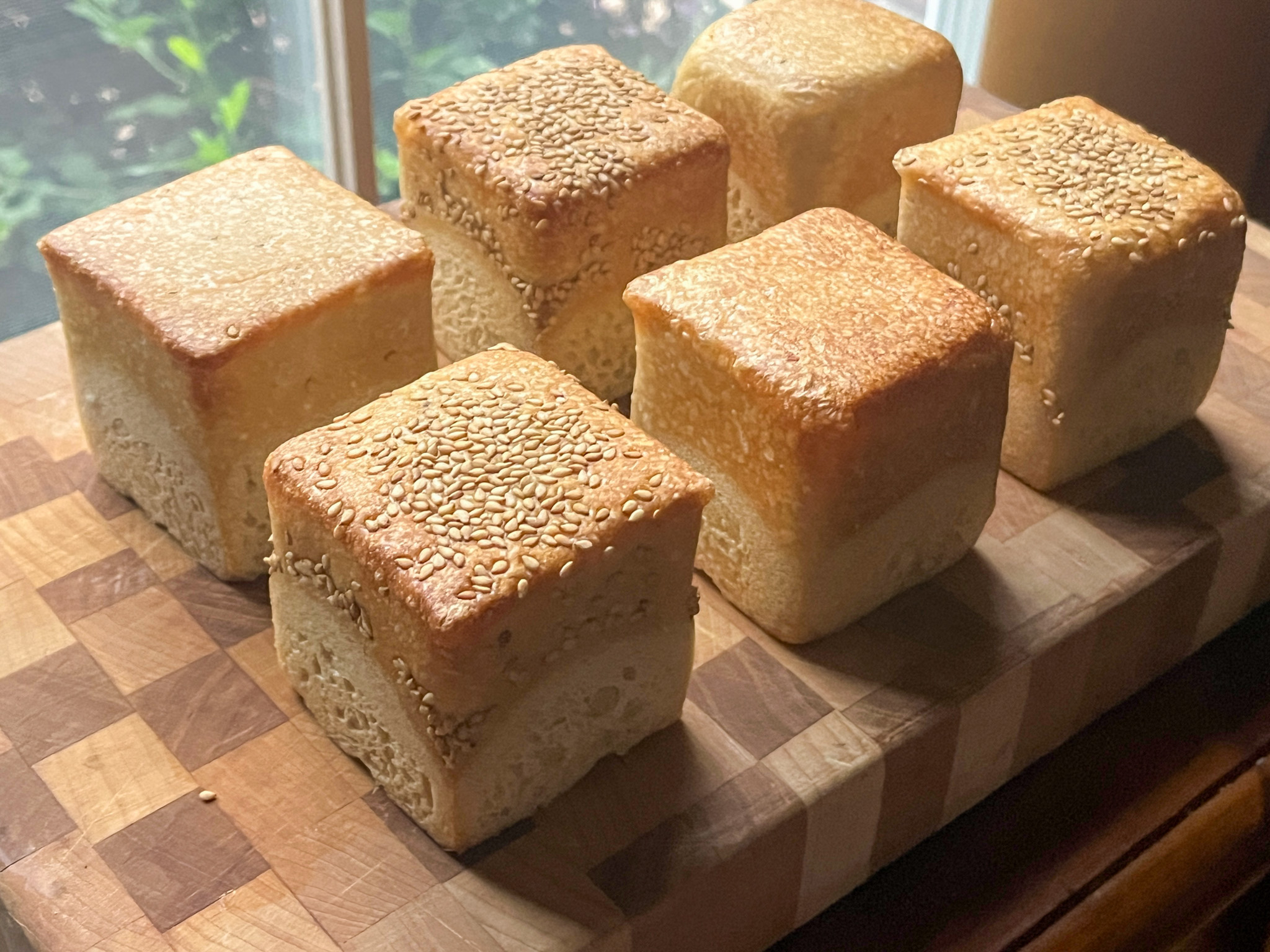
The idea of baking sourdough in closed containers so that they retain that exact shape is not new and not mine either, you can check Elaine using a larger cube pan (click here), or in her book The Sourdough Bible. In fact, back in 2020, I shared a recipe for a bread made in a loaf tin that takes that concept into a pretty exotic path (click here to learn all about it). In today’s post, I went a little smaller using a pan that in theory is more appropriate for cakes, but I am thrilled with the way these baby cubes turned out. Needless to say, the husband requested these to go “on regular repeat”. I have no objection to that!
LITTLE SOURDOUGH CUBES (from The Bewitching Kitchen)
300g bread flour (I used Bob Mill’s Artisan Bread Flour) 215g water (for 72% hydration) 30g Super 10 Blend from King Arthur (click here) 8g salt 50g starter (at 80 to 100% hydration, your choice) sesame seeds to sprinkle on the dough (optional)
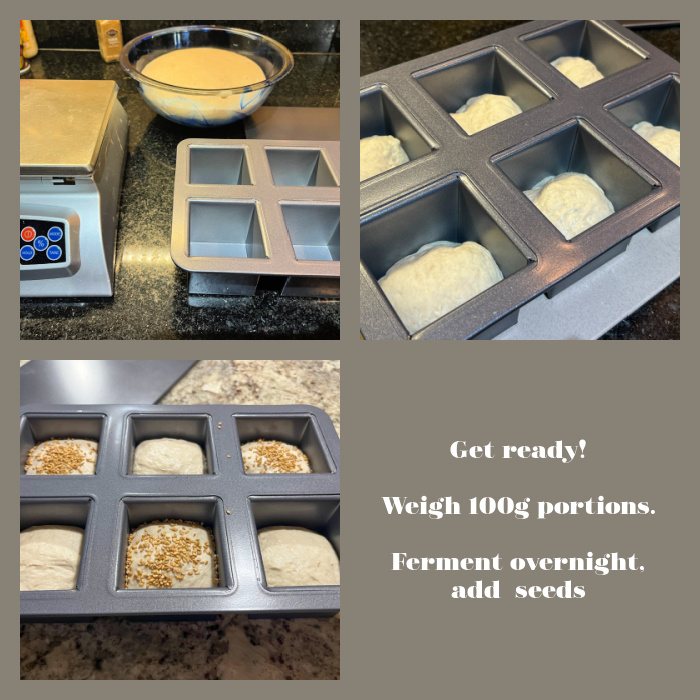
Mix all the ingredients in a KitchenAid type mixer. On second-to-lowest speed, mix the dough for about 4 minutes, then remove to a slightly oiled bowl. Proceed with bulk fermentation with folds at roughly ever 45 minutes. Do 4 to 5 total folds, then allow it to ferment at room temperature until almost doubled in size. Portion small balls of dough weighing 90 to 100g each. Place inside the cavities of your mini cube pan. I used this one. Cover the pan with plastic wrap and refrigerate overnight.
Next morning, turn the oven to 400F. Sprinkle toasted sesame seeds on top of the dough, close the pan and bake for 20 minutes. Remove the lid, bake for 5 more minutes, then carefully take the pan out of the oven, flip the little breads and place them on a rack back in the oven to give uniform color on the sides. This step is optional but I think it gives a better final product, with a more pleasant crust all over.
Comments: I wanted to have a dough that would be almost exactly 600g total in weight, so that I could make six cubes. I wasn’t sure it 100g would be too much or not enough, but decided it was a nice round number to start experimenting. You can definitely play with the hydration level, as the bread is contained, you won’t have issues adding more water, so next time I might go to 75% or even higher.
Some of my cubes were slightly lighter than 100g, maybe 92g. You can see that in some the shape was not totally straight, as if the dough failed to fully expand the whole volume of the cavity. It’s not a serious problem, but if you use the exact same pan, aim for 100 to 105g per space.
They are adorable and delicious! As the husband said, the only problem is that once you start eating, you lose a bit the perspective of how much bread am I really consuming? It is easy to keep going because the slices are so small… I wanted to make croutons, but the cubes were gone next day. I will have to make more soon and save one or two cubes to cut croutons and freeze. It think that will be a perfect use for this bread.