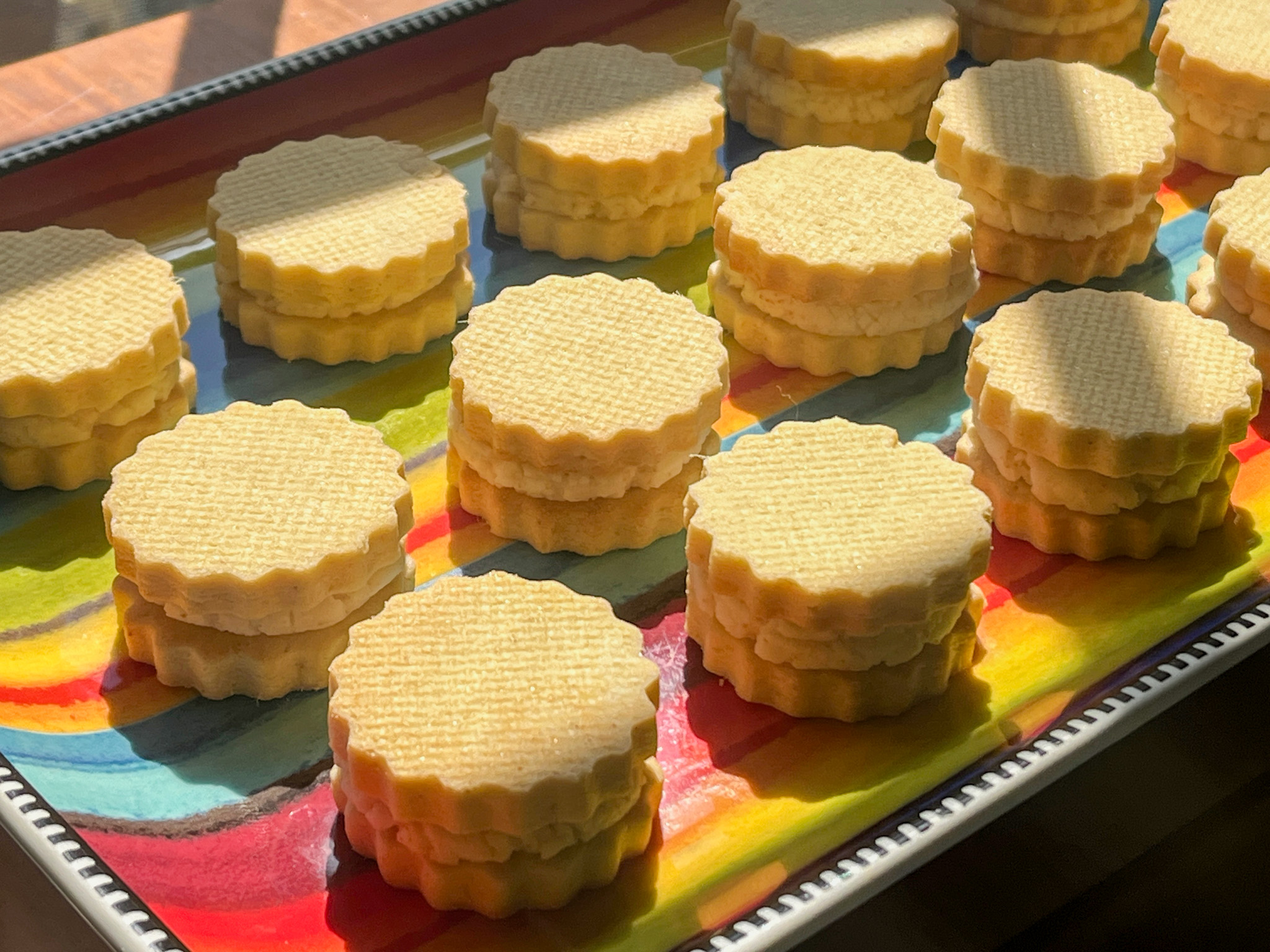
I saw these adorable tartlets on Instagram, fell in love and could not wait to try and make them myself. I invite you to follow Joyce, she is a wonderful baker, endless source of inspiration.
for the dough: 1¾ cups flour ½ cup sugar 1 tsp baking powder 1 egg, room temperature 1 egg yolk, room temperature ½ cup + 2 tbsp butter, room temperature
for the filling: 1 cup Nutella
In a bowl mix the flour, sugar and baking powder, add the egg, yolk and butter and bring the dough together. Wrap and chill for 30 minutes.
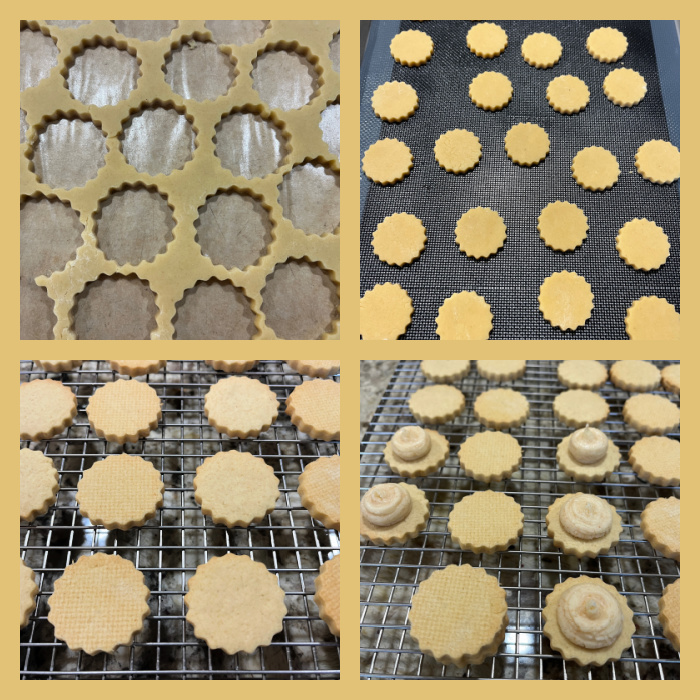
Roll the dough and cut circles, place them in a muffin pan. Fill with hazelnut spread. Cut sunflower shapes from the remaining dough using a cookie cutter and place on top.
Comments: To make these tartlets, I used two special gadgets: this set of baking pan from Evilcakegenius and this cookie cutter from PME. The dough was a pleasure to work with, I had no issues to roll, shape and cut the top shape.
It does get soft quickly, so you need to work with it while still cold and try to be fast, but if at any moment things get out of control, stick everything in the fridge for 10 minutes. Make sure to chill the cut daisy tops before moving them around, and be gentle, use a thin spatula to help you out.
I did not cut the center out as Joyce did, because I forgot. So I just improvised a little decoration on top instead. I intend to make them again in the near future, as they were a big hit. However, I might use a shallower tartlet format because they were truly super rich with the Nutella filling. Maybe a smaller version will work even better. Keep that in mind. One last thought, after Eha’s comment on the problems of Nutella and palm oil, I realize that not only there is a palm-free alternative, but I do have it in my pantry and it is pretty delicious: Soom spread, available here. You can avoid palm oil, but it is almost impossible to avoid the Amazon Evil Empire (sigh). .
These could easily fit into the Incredibly Simple category, but the outcome will make you seem like the most accomplished baker ever!
MERINGUE LOLLIPOPS (from The Bewitching Kitchen)
2 large egg whites 1/8 teaspoon cream of tartar Pinch of salt 1/2 cup granulated sugar (100g) 1 teaspoon vanilla extract pink and turquoise gel color
Position two oven racks towards the center of the oven and heat the oven to 200ºF. Cover a large baking sheets with parchment paper aside.
To the bowl of a stand mixer fitted with a whisk attachment, add the egg whites, cream of tartar, and salt. Begin mixing on low speed gradually increasing to medium. Once the egg whites start to become frothy, about 30 seconds, slowly add the granulated sugar in three portions, continuing to whisk. Once all the sugar is incorporated, add the vanilla.
The meringue is done once the sugar has fully dissolved and it has a thick texture that holds a nice peak, about 10 to 15 minutes. Separate the batter in three portions, dye 1/3 pink, 1/3 turquoise, leave 1/3 plain. You are aiming for a pastel tone, so use just a small amount, preferably adding the color with the tip of a toothpick.
Transfer the meringue as three lines side by side on a plastic wrap. Roll the wrap like a sausage and insert into a large piping bag fitted with 1M tip. Lay small sticks (oven-safe) on the parchment paper and pipe swirls over the sticks. Immediately add decorative sprinkles.
Bake for 1 hour to 1h and 30 minutes. Turn the heat off and leave the lollipops in the oven for another hour to fully dry. They will lift easily from the paper once they are fully cool.
Comments: Meringue recipes are a lot more forgiving than many people imagine. The ratio of sugar to egg whites will determine how dry the meringue will turn out, but also the amount of time you bake it influences that outcome. You can start – if you want to do it by weight – with 1 part of egg whites to 2 parts of sugar – although my version used slightly higher amount of sugar. It all works in the end. If you prefer a softer bite, use less sugar and bake for a shorter amount of time. It is important to dry them fully so that they can be handled without any sticky moisture on the surface.
And the cuteness level of meringue on a stick? Impossible to beat!
If you are a lemon lover, this post is for you. A fantastic five-layer cake, deliciously chewy cookies, baby little “pies”, and a posset. Let’s start with the cake, maybe my favorite of this series, courtesy of Helen Fetcher, my beloved baking guru…
for the lemon filling, to be made the day before: 4 large egg yolks 1 ¼ cups water 1 ¼ cups granulated sugar (250 grams) ⅓ cup cornstarch (45 grams) ½ teaspoon table salt 3 tablespoons unsalted butter (45 grams) 1 tablespoons lemon zest (from 1 large lemon)
for the cake: 3 large egg yolks 1 cup sour cream (225 grams) 1 teaspoon vanilla extract 3 cups sifted cake flour (300 grams) 1 ½ cups granulated sugar (300 grams) 1 tablespoon 1 teaspoon baking powder 2 tablespoons lemon zest (from 2 large lemons) ¾ cup unsalted butter, softened (170 grams)
for the lemon buttercream: 1 pound powdered sugar 1 cup lemon fillng ¼ cup butter, softened (60 grams or 4 tablespoons)
Make the lemon filling: Whisk everything together in a medium size sauce pan. Stirring constantly, bring to a boil and boil for 1 minute. Transfer to a storage container, cover the top of the filling with plastic wrap and let come to room temperature. Store in the fridge for 2 days. or at least overnight to firm up.
Make the cake: Heat the oven to 350°F. Line a half sheet pan with parchment paper and spray the paper only. Try not to spray the sides. If you do, wipe them with a paper towel. Set aside.
In a small bowl, whisk together the egg yolks, ¼ cup sour cream and vanilla. In the bowl of a mixer, combine the dry ingredients and mix on low for 30 seconds to blend. Add the softened butter and remaining ¾ cup sour cream. Mix on low until moistened. Then increase the speed to medium and beat for 1 ½ minutes. Add the egg mixture in three additions, beating on medium 30 seconds each time, scraping down as necessary.
Dollop the batter in the half sheet pan. Using and offset spatula, spread it out evenly. Bake for 20 to 22 minutes until a tester comes out clean. Place on a cooling rack until cold. At this point, it can be frozen in its pan well wrapped. Or you can refrigerate and continue assembling the cake later. It is easier to deal with layered cakes when they are very cold, so keep that in mind.
Make the lemon buttercream: Add all the ingredients to a mixing bow. Beat on low to bring together. Raise the speed to medium and beat until smooth. Raise it again to high and beat for 5 or more minutes until light and smooth with no grittiness from the powdered sugar.
Visit Helen’s site for a clear visualization on how to cut the cake to obtain 5 equal layers and one extra that will be processed for crumbs. You will use 1/4 cup of lemon filling spread over the layers, and then frost the cake with the buttercream, glueing cake crumbs to the sides and making a pattern with a cake comb on top. If desired, add some piped buttercream with a 1M tip or another one of your preference. Allow the cake to to sit in the fridge for a few hours before slicing.
Comments: I urge you to visit Helen’s site to get the detailed step-by-step photos. Helen makes the most complex bakes feel simple and approachable. This cake is spectacular, and the use of cake crumbs glued to the sides makes frosting a lot less stressful. It is incredibly lemony. Thank you, Helen!
⅔ cup (150g) salted butter, softened 1 cup plus 2 tbsp (225g) granulated sugar 2 tablespoon lemon zest 1 large egg room temperature 1 large egg yolk room temperature 1 tablespoon (15ml) lemon juice 1 teaspoon (5ml) pure vanilla extract 2 cups (284g) all-purpose flour ¾ teaspoon baking soda ½ teaspoon baking powder ee notes in above FAQ section for baking powder quantity alternatives) ¼ teaspoon salt
Combine soft butter, sugar and lemon zest in a large bowl and use a stand mixer fitted with the paddle attachment, scraping down the sides of the bowl as needed.
Scrape down the sides and bottom of the bowl, then add the egg and mix until well incorporated. Add egg yolk, vanilla and lemon juice then mix until smooth and creamy.
Combine flour, baking soda, baking powder and salt in a medium bowl and whisk to blend evenly. Add the dry ingredients to the bowl with the butter mixture and fold it in until evenly incorporated. The dough will be soft but not sticky at this point.
Cover the bowl and refrigerate the dough for 2 hours.
Heat the oven to 350°F. Line two large cookie sheets with parchment paper. Make the lemon sugar. Combine sugar and lemon zest in a small bowl and rub it together until the sugar smells fragrant.
Use a cookie scoop to portion dough and roll into smooth balls. Roll the balls of dough in the sugar so they are evenly coated.
Place dough balls on the lined baking trays spacing them 3 inches apart and bake for 9-11 minutes until lightly golden on the edges and still slightly soft in the middle.
Comments: These cookies are addictive, they have a super clean and bright citric flavor, and perfect texture. I made them on a Wednesday and donated two days later, so I tried one to make sure it was still ok, and had to exercise self-control to keep my taste-test to a single cookie. Make them, and you can thank me later!
x
BABY LEMON IMPOSSIBLE PIES recipe can be found here
Those are simple to make, and a lot of fun to serve and enjoy… Not quite sure why they are called “pies” but whatever you call them, they won’t disappoint.
LEMON POSSET
LEMON POSSET (from The Bewitching Kitchen)
2 cups heavy whipping cream 2/3 cup granulated sugar 5 Tbsp lemon juice blueberries, optional for serving
In a small saucepan, heat the cream and sugar, stirring to dissolve the sugar. Bring to a boil, then adjust the heat so it doesn’t boil over and keep it at a medium boil for 5 minutes.
Remove the pan from the heat and stir in the lemon juice, then set aside to cool for 15 minutes. Strain the mixture through a fine mesh sieve set over a large measuring cup with a pouring lip. Divide the mixture between 6 ramekins, filling them about 3/4 of the volume.
Refrigerate for at least 4 hours or until fully set, then top with blueberries, if you like.
Early December, 2025. The husband sends me a text with a link and the words: we should make this. I agreed we definitely should. And so “we” did. Let me just add that this was quite likely one of the best desserts “we” ever made. I don’t say this lightly.
for the meringue discs: 4 large egg whites (122 grams) ⅛ teaspoon cream of tartar 1 + ⅓ cups (240 grams) granulated sugar
For the mocha cremeux: 4½ ounces milk chocolate, chopped into ½-inch pieces (about 1 cup) ¼ teaspoon fine sea salt 4 egg yolks (63 grams) 1 tablespoon cornstarch 2 teaspoons instant coffee ¾ cup whole milk
for the chestnut topping: ⅓ cup (60 grams) brown sugar Pinch of fine sea salt 1⅓ cups (200 grams) chopped canned or vacuum-packed chestnuts 1 tablespoon unsalted butter, softened
for the whipped cream: 1 cup (233 grams) heavy cream ½ cup (112 grams) mascarpone cheese, softened ¼ cup (30 grams) powdered sugar 2 teaspoons vanilla extract
Make the meringues: Heat the oven to 225 degrees and line two large baking sheets with parchment paper. On one sheet of parchment, trace a 7-inch-wide circle and a 6-inch-wide circle. On the other sheet of parchment, trace a 4-inch-wide circle and a 2½-inch-wide circle. Flip the parchment papers upside down so the marks are underneath.
Place the egg whites in the bowl of a stand mixer fitted with the whisk attachment. Using an electric mixer, whisk the egg whites until frothy, 30 to 60 seconds. Add the cream of tartar, then, with the mixer on medium-high, gradually add the granulated sugar, 1 tablespoon at a time. Continue to beat until glossy and stiff peaks form, scraping down the bowl once or twice, 10 to 15 minutes. Spoon about 1 ½ cups (175 grams) of meringue into the 7-inch circle and, using circular movements with the back of a large spoon, shape a 1-inch-deep divot in the middle. Use the remaining meringue to fill the smaller circles, spreading about ½ cup (70 grams) into the 6-inch circle, ¼ cup (30 grams) into the 4-inch circle, and about 2 tablespoons (10 to 15 grams) into the 2½-inch circle. These three remaining meringues should be about ½ inch thick and fairly flat for neat stacking once baked.
Bake meringues for 1½ hours, until crisp and dry to the touch. Turn off the oven and leave the meringues inside with the door slightly ajar until completely cool, at least 2 to 3 hours but overnight if possible.
Meanwhile, make the mocha crémeux: Combine the milk chocolate and salt in a small bowl and set alongside the stove, along with an empty medium heatproof bowl. Whisk together the egg yolks, cornstarch and instant coffee in a small heavy-bottomed saucepan until smooth. Gradually whisk in the milk. Take care to make sure it’s well combined, giving extra attention to the edges of the pan as you whisk.
Cook over medium heat, whisking continuously, until the mixture comes to a gentle boil and thickens to a pudding-like consistency, 2 to 3 minutes. Turn the heat down to low and whisk rapidly as the mixture gently simmers for 30 seconds longer. Immediately turn off the heat and whisk in the milk chocolate and salt until the chocolate is melted and the mixture is glossy. Immediately pour the crémeux into the heatproof bowl and cover with plastic wrap or parchment paper directly against the surface to prevent a skin from forming. Once cool to the touch, transfer to the fridge to chill completely and set, about 2 hours minimum.
Make the chestnut topping: Combine the brown sugar, salt and ½ cup water in a small saucepan. Bring to a boil and cook for 1 minute, then turn off the heat and leave to cool for about 10 minutes. When the sugar syrup has cooled, blitz the cooked chestnuts in the food processor for about 30 seconds, until finely ground, then slowly pour in the cooled sugar syrup while the motor is running. Blend until completely smooth, 1 to 2 minutes, scraping down the sides of the food processor bowl as necessary. Add the butter and blend until incorporated. The purée needs to be smooth and soft enough to pipe easily without breaking. If the chestnut mixture doesn’t seem smooth, pass it through a fine-mesh sieve. Set aside until ready to use.
When you are ready to assemble, make the whipped cream: In a large bowl, whip the cream, mascarpone, powdered sugar and vanilla until very stiff peaks form, about 1 minute. To build the dessert, place the 7-inch meringue onto a serving plate. Using an offset spatula, spread a thin layer of whipped cream (½ cup) across the base, pushing it up and over the sides of the meringue so it slightly overhangs the sides. Give the mocha crémeux a quick stir, then dollop it into the hollow (it should fill it completely), smoothing it level with the cream.
Place the 6-inch meringue disk on top, pressing gently. Spread a thick layer of whipped cream over the meringue and top with the 4-inch disk. Repeat with another generous layer of whipped cream, then add the smallest disk. Finish with a final helping of the remaining whipped cream, shaping it into a conical peak with an offset spatula. Chill the Mont Blanc in the fridge for about 1 hour, until the cream has firmed up enough to support the chestnut strands you’ll add on top (be sure to give it a wide berth in the fridge).
When the Mont Blanc has finished chilling, transfer chestnut cream to a piping bag fitted with a 2-millimeter-wide round tip. Starting from just above the overhang of cream at the base of the Mont Blanc, pipe the chestnut strands horizontally around the Mont Blanc, gradually working your way upward to cover the “mountain” completely with several layers of chestnut strands to create the look of a craggy mountain.
Store the Mont Blanc in the fridge until ready to serve: 2 to 4 hours is best, but up to 24 hours.
Comments: This was a complete, total labor of love, but I am so glad Phil suggested this recipe for our Christmas meal. I must tell you that the recipe is perfectly written, instructions were flawless and everything worked exactly as it should have. The baker was in Nirvana.
The photo above makes the dessert look huge, in fact it is 7 inches in diameter at the bottom, largest dimension. We had it on Christmas and also next day and loved each bite. Truly spectacular, the layers of meringue turn into one entity with the whipped cream, the chestnut cream is absolutely perfect and matches well with the chocolate coffee cremeaux at the bottom. Super rich, I won’t lie. But for a special occasion, you cannot ask for a better option.
I would love to re-visit this dessert turning it into a small, individual portion, make maybe 4 for a dinner party. That would be perfect. Speaking of perfection….
Final thoughts: Make the meringue discs the day before. Make the chocolate cremeux the day before. Then on the day of serving this beauty, just whip the cream and make the chestnut topping. I tried to use the special grass piping tip to make the ribbons, but it worked much better with a simple round open tip, about 2mm wide. Having my little turntable was a huge help. You can see it in action in this post from my past.
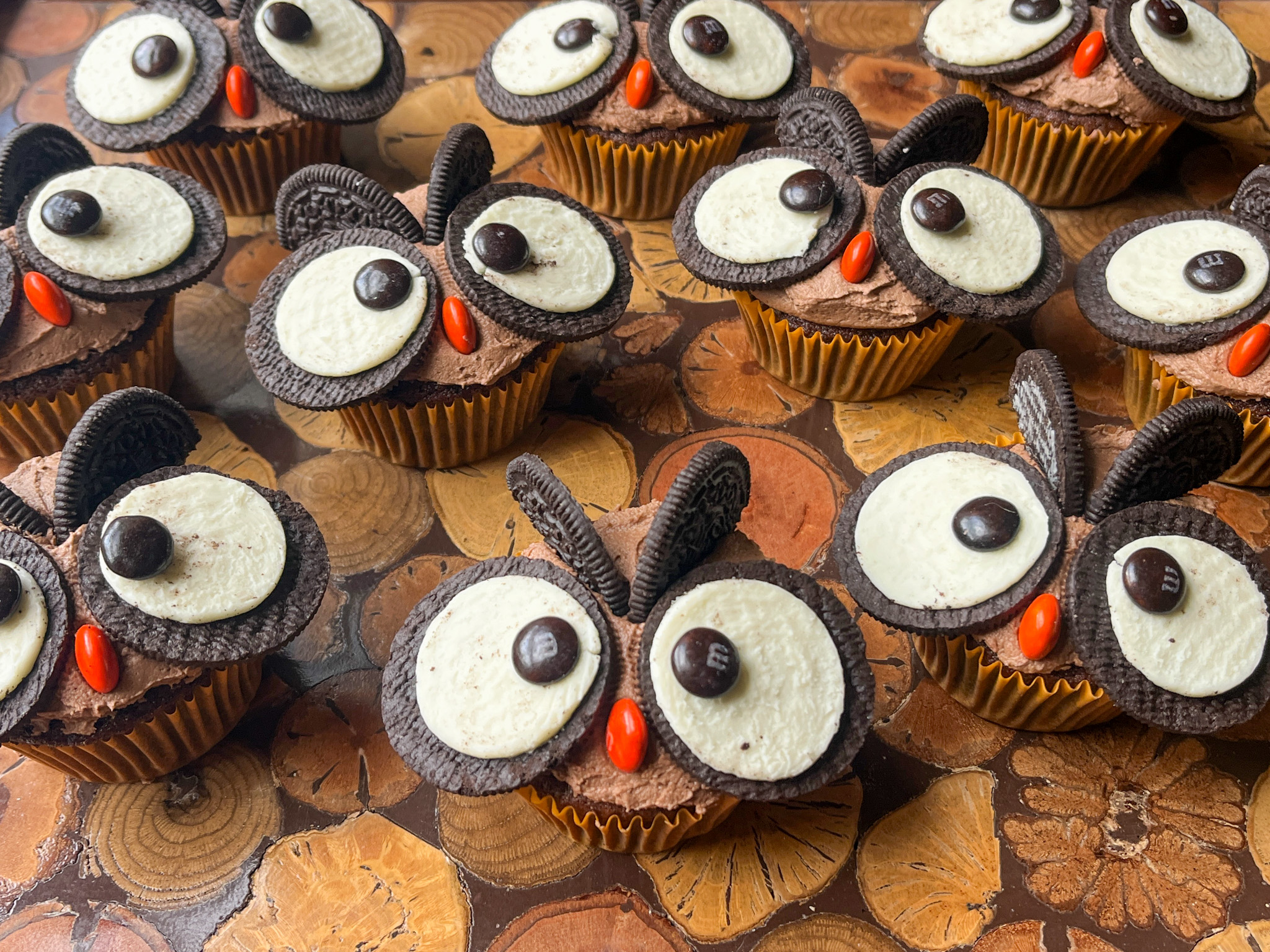
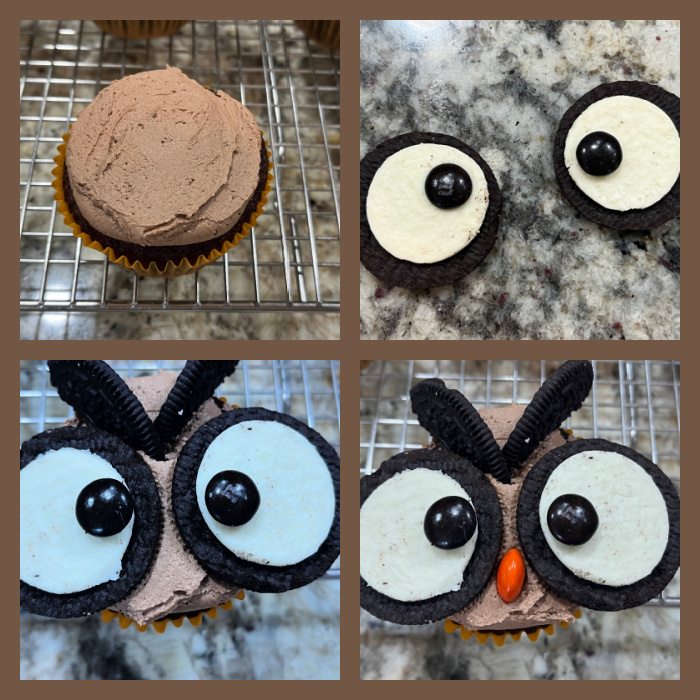
Four ways to use Oreos in your baking, starting with my favorite of this set…
The Melting Witch Chocolate Cookie
I cannot take credit for this cute idea, but I modified it slightly from what was published in this site.
For the cookie, I used my default recipe with a touch of chipotle pepper and cinnamon (click here). For the hat, I used Hershey’s kisses, but gave it an additional coat with Candy Melts dark chocolate, to make it match the color of the Oreo underneath. Then all you need to do is flood the cookie with Electric Green icing, immediately add the half Oreo cookie and the pretzel stick. Once that sets, pipe the broom detail, and glue the Hershey kiss on the Oreo. You are done!
.
STRAWBERRY OREO LITTLE BALLS
OREO STRAWBERRY BALLS (from The Bewitching Kitchen)
24 Oreo cookies 90g strawberry cream cheese, at room temperature 200g white chocolate 30g grape seed oil fat-soluble dye, pink and red
Place the Oreos and cream cheese in the bowl of a food processor and process until it starts to form a dough.
Form little balls using about 20g of Oreo dough. Place them in the freezer for 1 hour.
Melt the chocolate gently in a microwave at 50% power, together with the oil. Whisk gently from time to time. Separate a small amount to dye red. Dye most of the batch pink.
Remove the Oreo balls from the freezer, and gently but quickly dip each one in the melted chocolate (ideally at about 100F), using a toothpick or medium-size wooden stick. Place upright to set. Drizzle the red chocolate all over for decoration. Remove the stick and place on paper cups to serve.
If desired, spray a little Diamond dust or pink luster powder over them.
These are nothing short of amazing… For the full recipe, please visit the site where I originally found them (click here). One cookie will feed a family of four, so to speak… But absolutely worth the calories!
.
CHOCOLATE-COVERED OREOS
I do these often, as I like to include a small batch in my donation box of Friday. Two ways to decorate them for the Halloween season. On the left, ghosts made with candy melts, just a drop on parchment paper, then pull the shape with a gloved finger. Add eyes. Done! On the right, chocolate transfer sheets. Sweet and simple!
I hope I convinced you to go out and buy a big package of Oreos, so you can have some fun in your own kitchen…