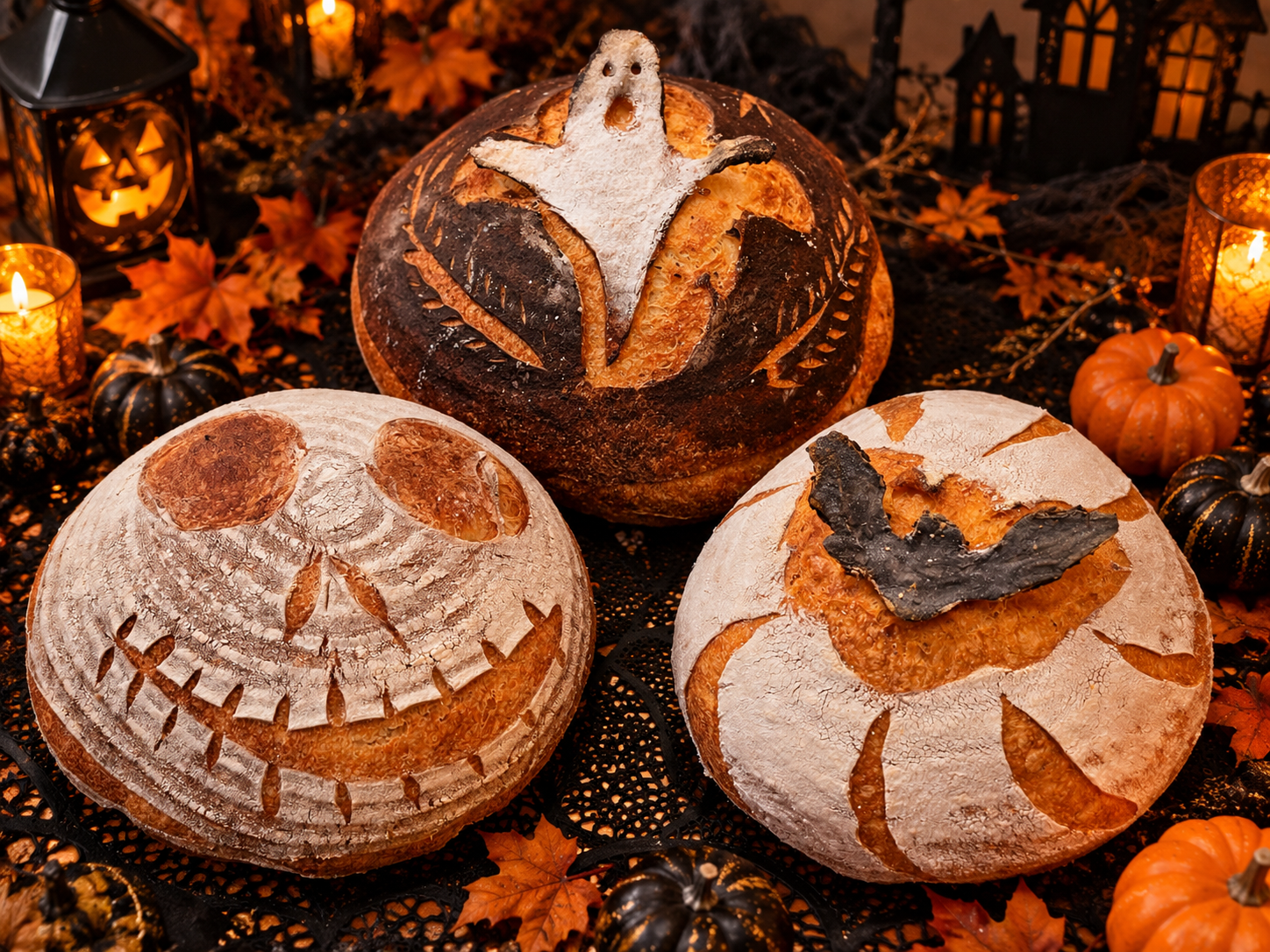
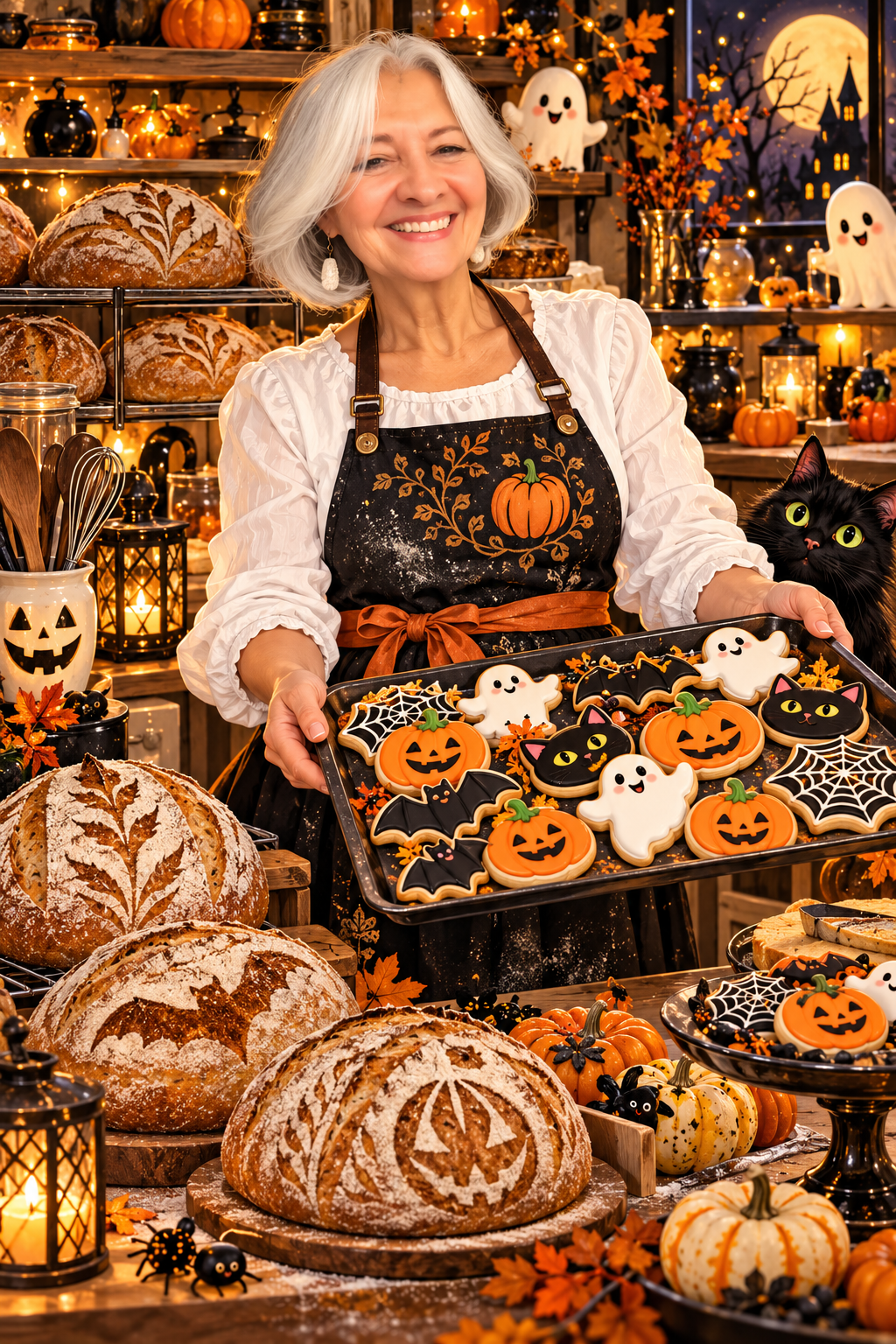
I confess to having way too much fun making breads with a Halloween twist… All formulas were pretty basic, although the ghost one contained semolina flour (I used this basic recipe). The other two were my default recipe that you can find here).
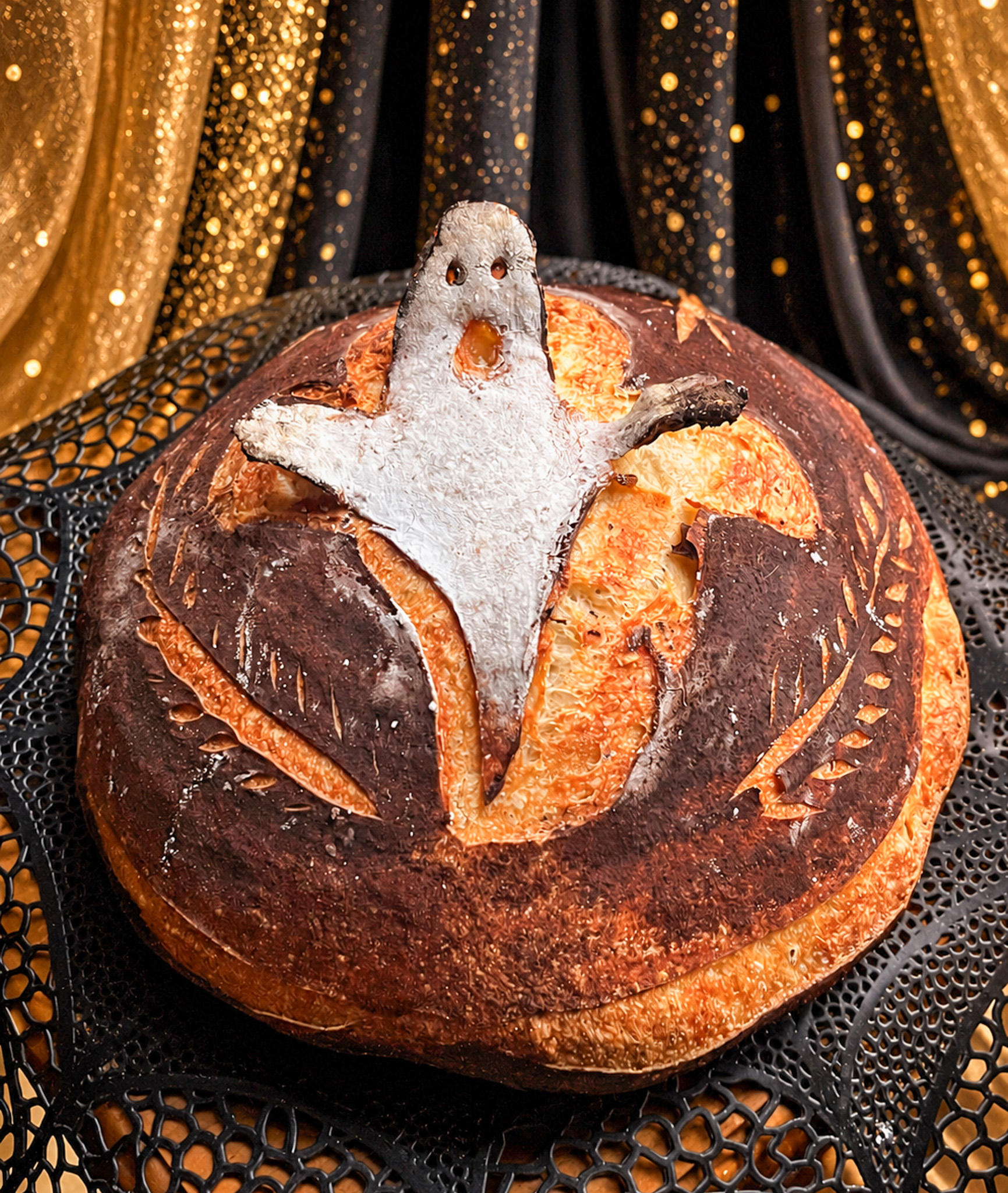
FLOATING GHOST SOURDOUGH
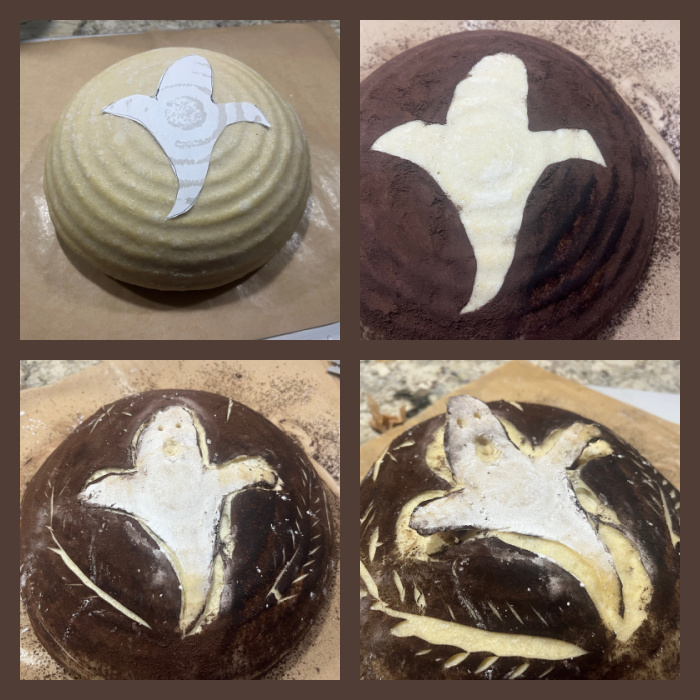
My favorite of this series, I made a little improvised stencil with regular printer paper, so that I could have two contrasting colors, black for the background and white for the ghost. I re-inforced the scoring after 7 minutes of baking, and added paper bits to get the lift.
.
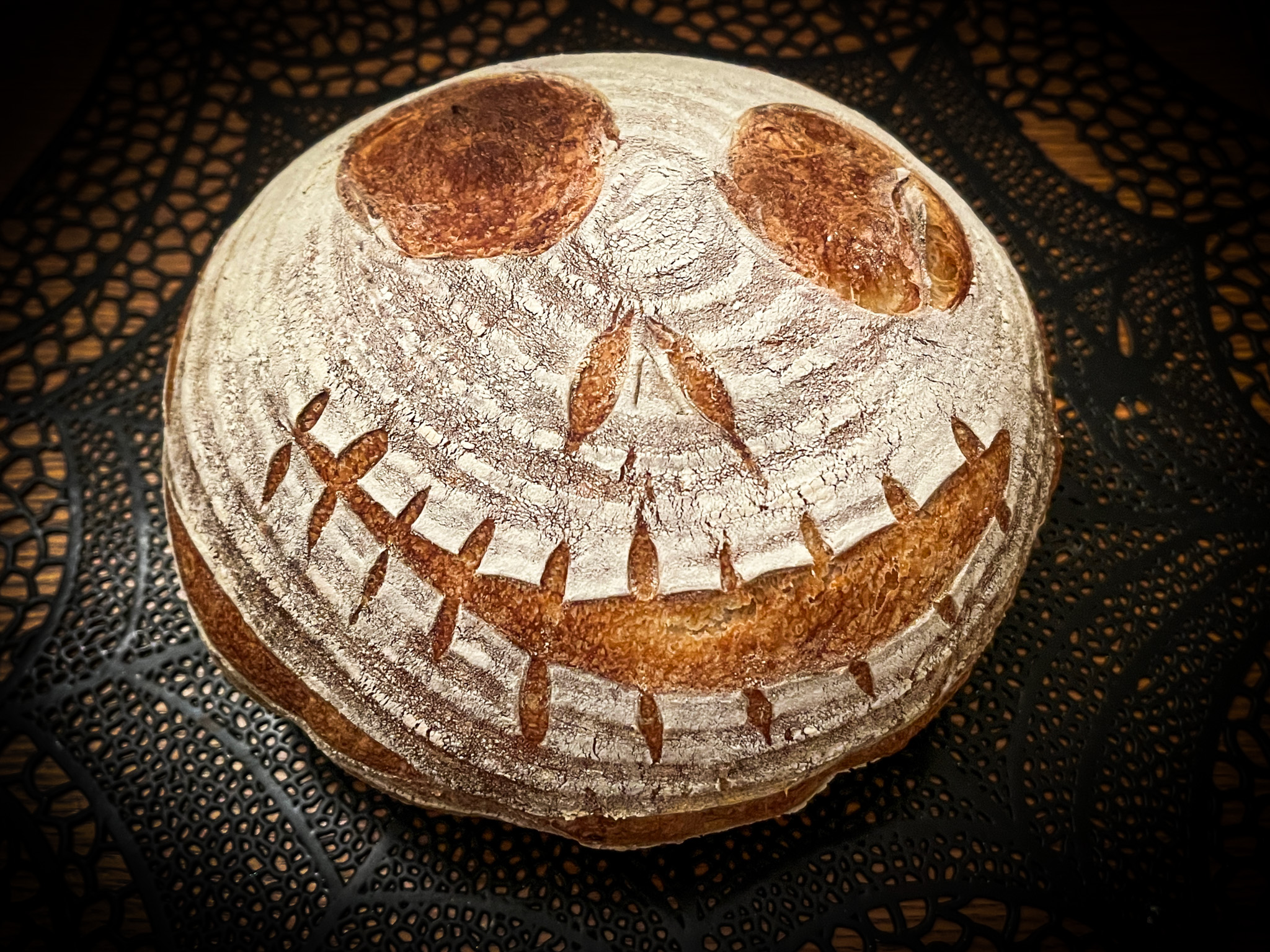
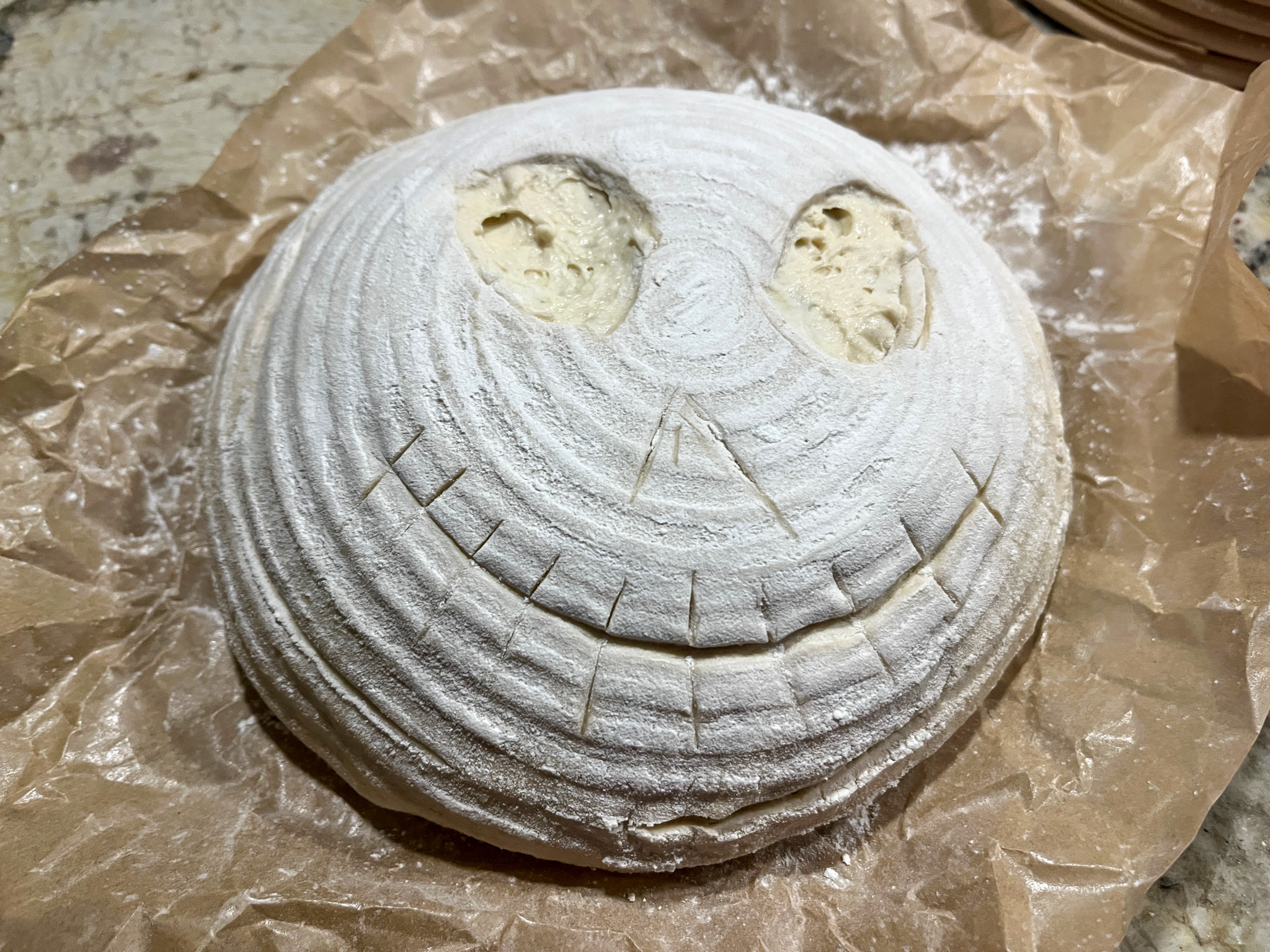
JACK SKELLINGTON SOURDOUGH
The crooked smile was not intentional, but I do love that it happened… Very simple to bring this guy to “life”, just score the overall design, and make sure to remove the top layer of dough from the eyes for the best scary effect.
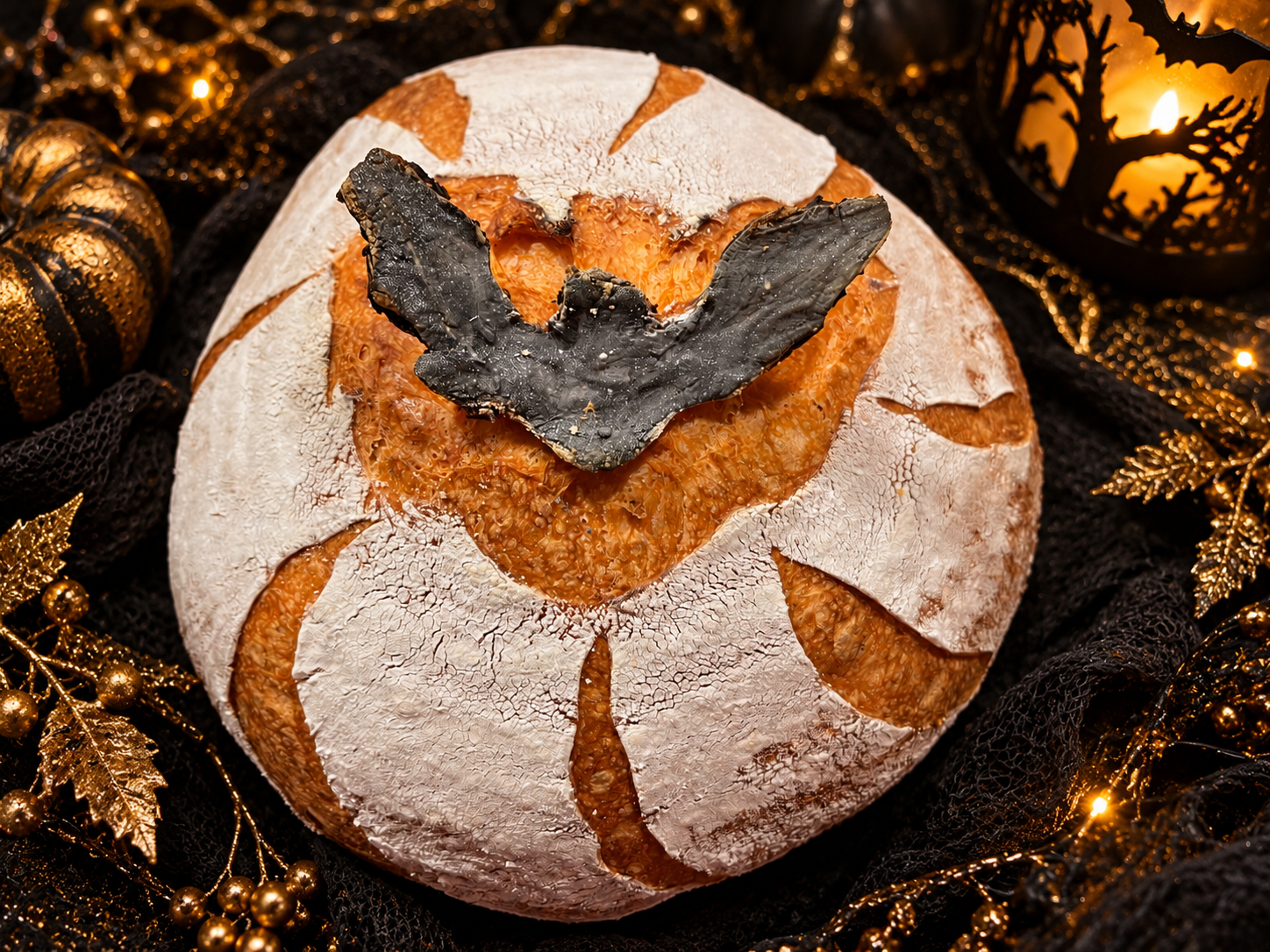
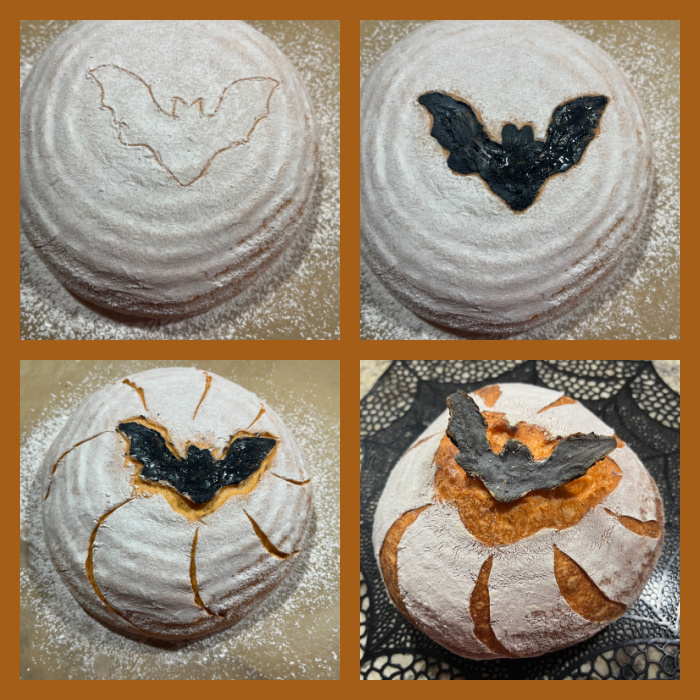
THE FLOATING BAT
I tried this design twice, first time was a complete fail. I am not totally satisfied with this version, but at least it got some resemblance of a bat ready to take off and scare people. I used black luster powder mixed with vodka to paint the creature. And a few bits of paper under the wings once the bread was in the oven for 7 minutes to get the lift.
I hope by now you are very, very scared….
Perhaps I am also having too much fun with ChatGPT…….
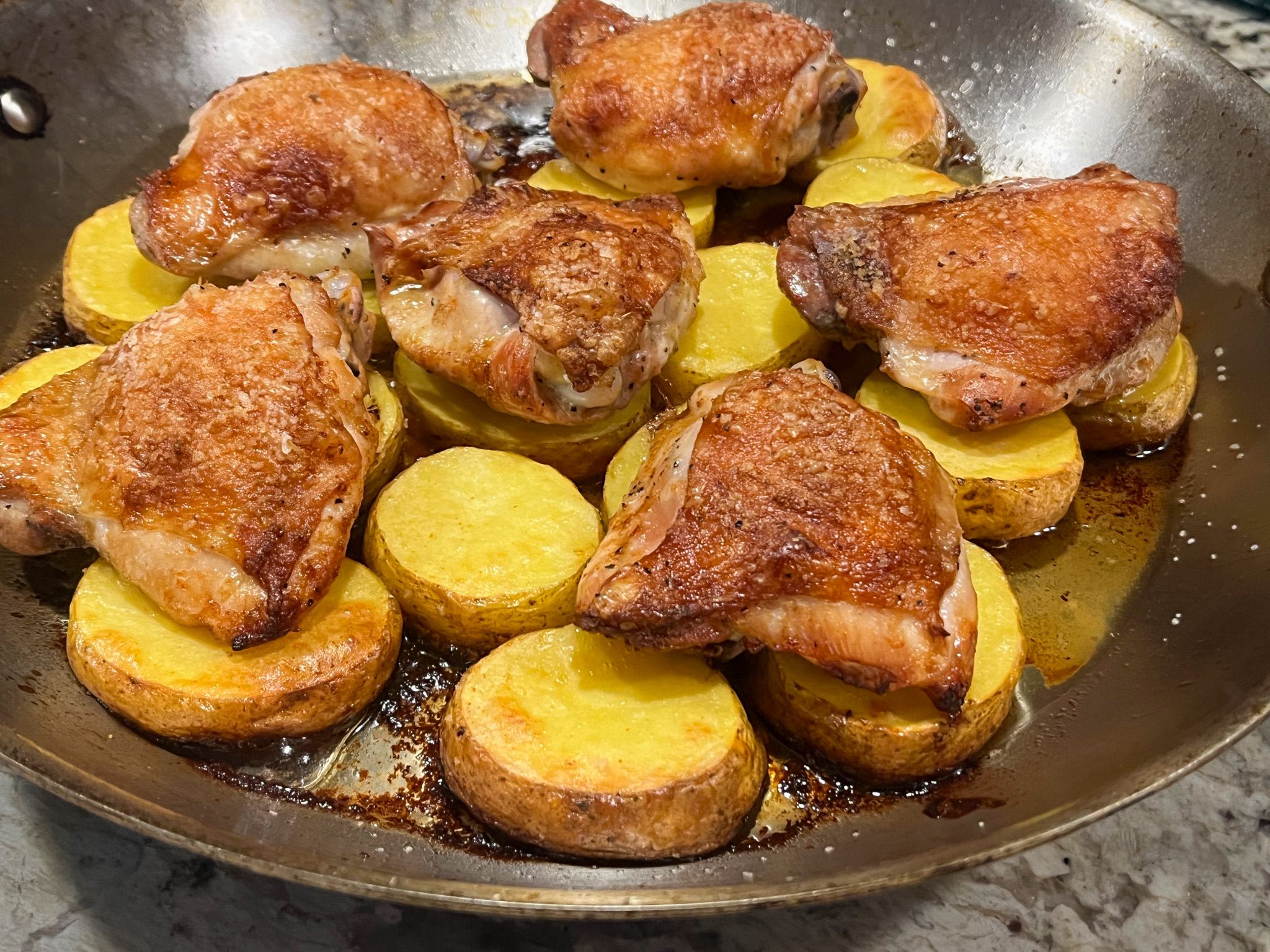
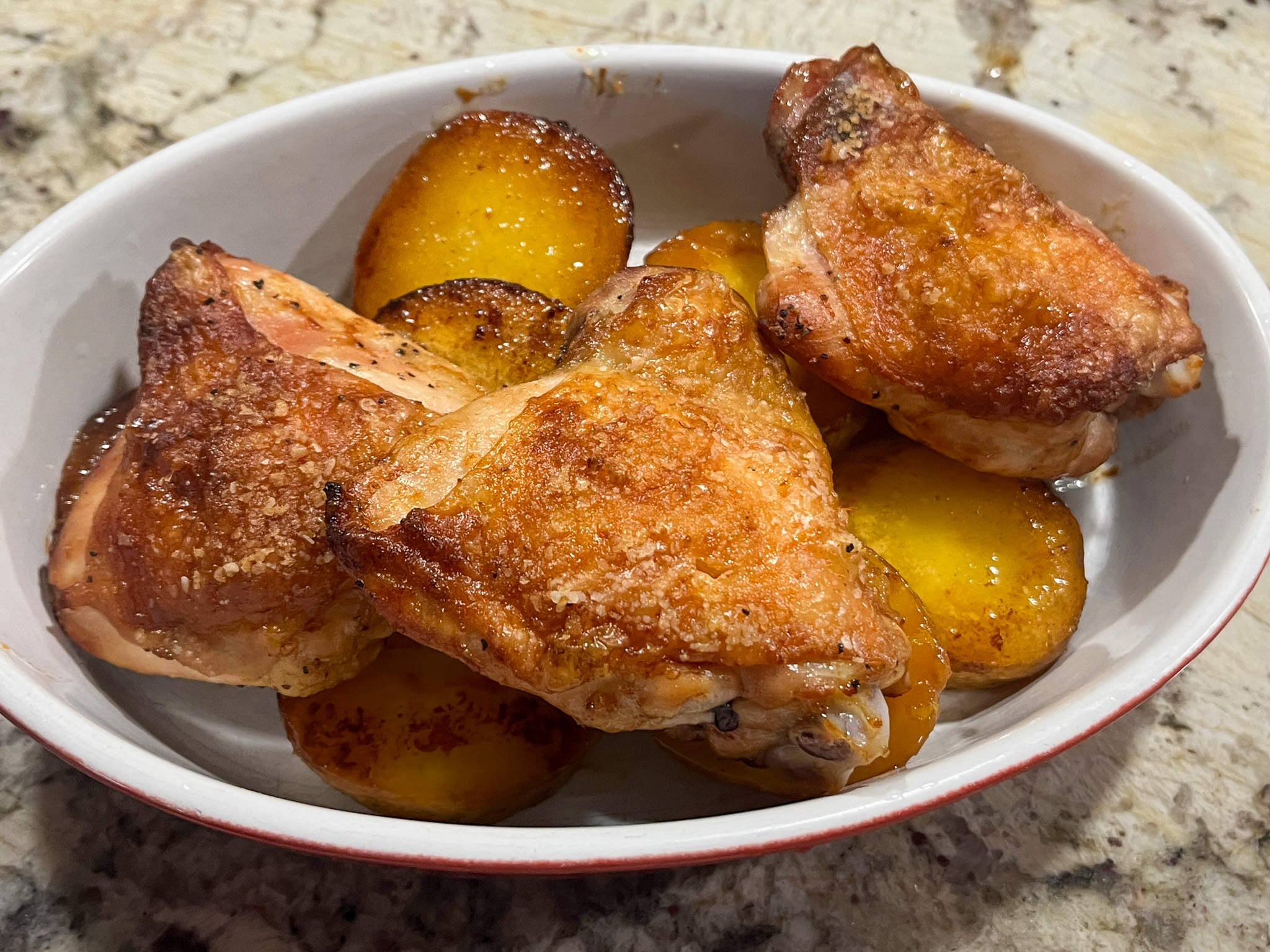
This was superb, I highly recommend you give this recipe a try. Contrary to what I normally do, the chicken was roasted at high temperature, but still turned out tender and juicy. The potatoes were incredibly tasty, maybe the best component of the dish. Inspired by a Milk Street version, but I modified it quite a bit.
PERUVIAN-STYLE CHICKEN THIGHS AND POTATOES (inspired by Milk Street)
3 tablespoons extra-virgin olive oil, divided ½ cup Lager beer 2 tablespoons soy sauce 2 tablespoons red wine vinegar 1 tablespoon smoked paprika 2 teaspoons ground cumin salt and ground black pepper 6 bone-in, skin-on chicken thighs Yukon Gold potatoes, unpeeled, sliced into ½-inch rounds, enough to cover the surface of your skillet
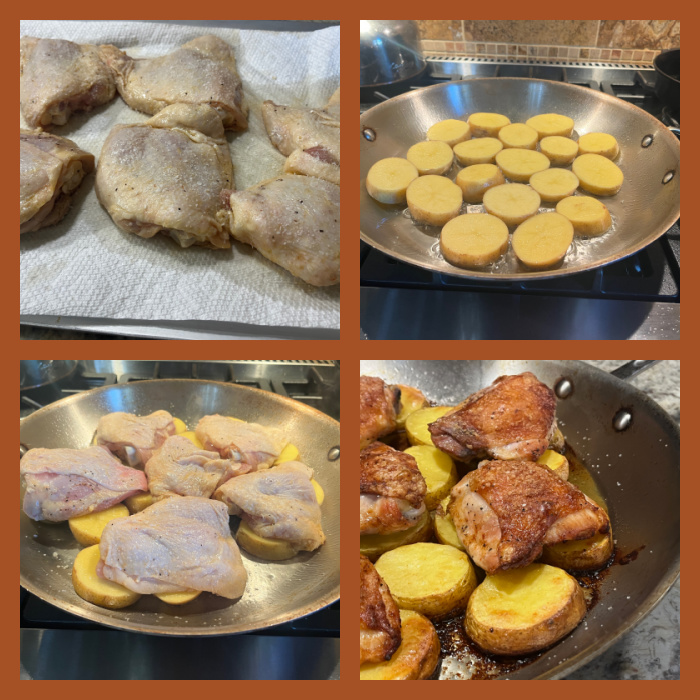
Make a marinade by mixing in a bowl: 2 tablespoons oil, the beer, soy sauce, vinegar, cumin, 1 teaspoon salt and 2 teaspoons pepper. Add the chicken and turn to coat. Place in a large ziplock bag, close and refrigerate for several hours (I marinated for 4 hours), massaging the pieces of chicken a few times during this period.
Heat the oven to 450°F. Remove the chicken from the marinade; discard the marinade. Pat the chicken dry and season lightly with salt.
In a 12-inch oven-safe skillet over medium-high, heat the remaining 1 tablespoon oil until very hot. Add the potatoes in an even layer and cook until lightly browned at the edges, 2 to 3 minutes. Place the chicken skin side up on top of the potatoes. Transfer the skillet to the oven and roast until the chicken is deeply browned and the thickest part of the leg quarters reach 175°F, about 50 minutes.
Remove the pan from the oven, let rest for about 10 minutes, then transfer the chicken and potatoes to a serving platter.
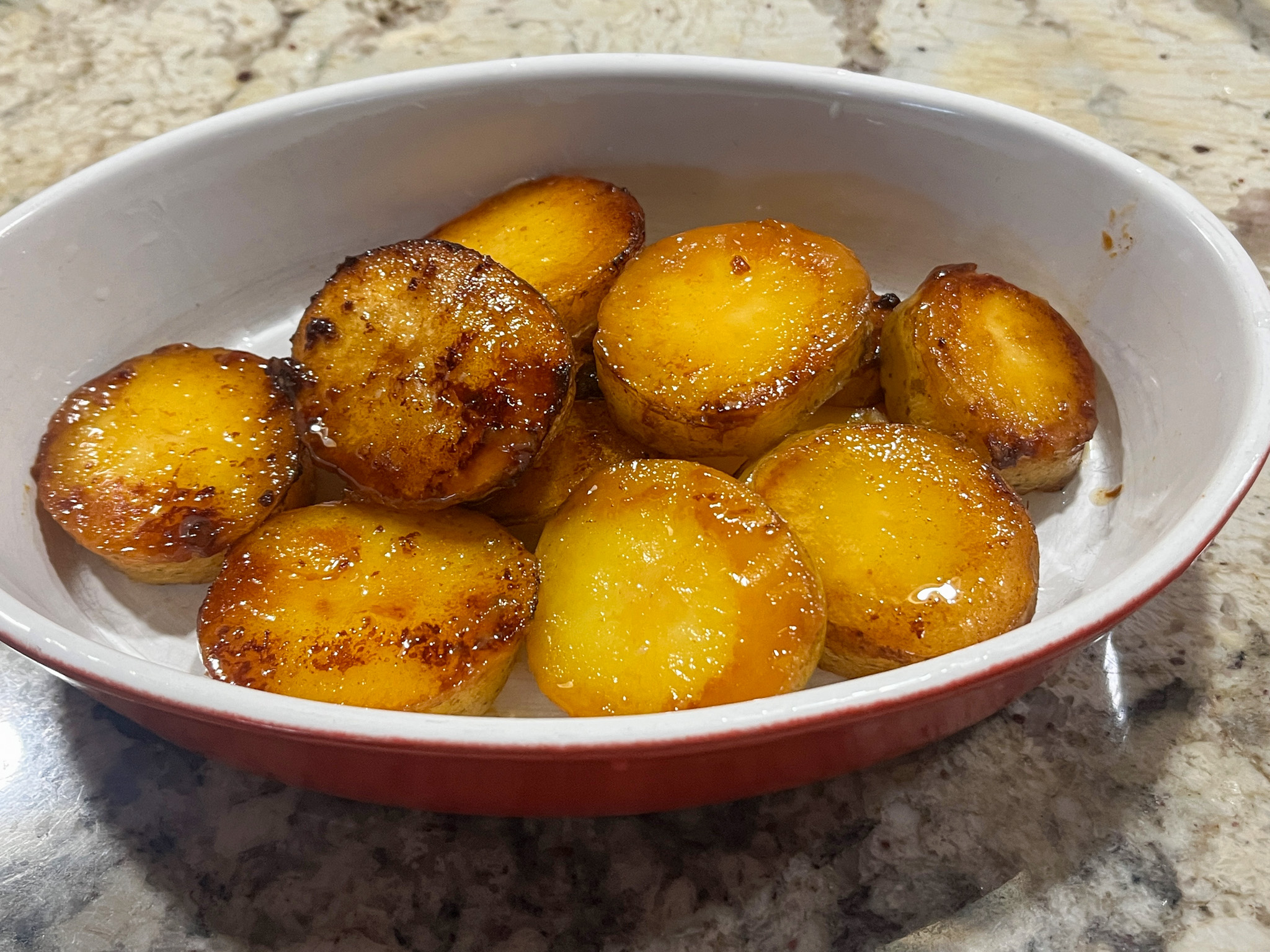
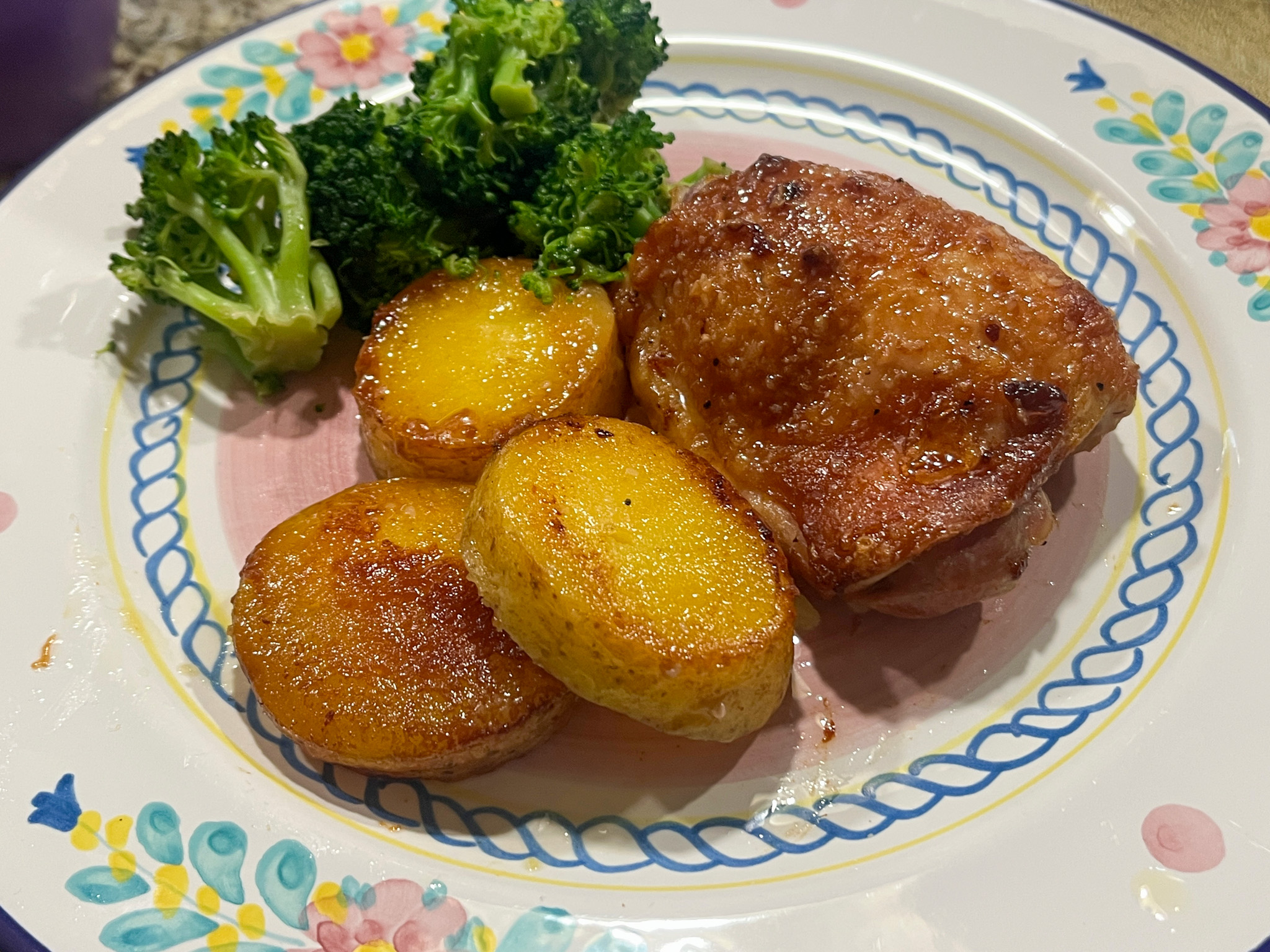
Comments: Yet another recipe that goes straight into our regular rotation, we are hooked! I brought the skillet to the table, but when I do it again, I will definitely transfer everything to a serving platter because… LOOK AT THE POTATOES when you flip them to reveal the side that was in contact with the pan:
Absolute perfection, the fat from the chicken transfer its taste to the potatoes, they turned brown but super moist and tender. I would eat just that for dinner and be a happy camper…
Plus, it is so simple to make, you can even marinate it the day before, the longer the better. I can hardly wait to make it again. And again…
Almost every week I try to donate a batch of cupcakes to the homeless meal in town. This post includes four recent bakes that celebrate the season of Fall and Scary. Because in this bewitching kitchen, we love both vibes…
The fall inspired cupcakes were this basic recipe with 1 tsp pumpkin spice mixture incorporated in the batter. The Halloween cupcakes were chocolate, using this recipe. The frosting for all of them was a straightforward American buttercream, recipe available in this post.
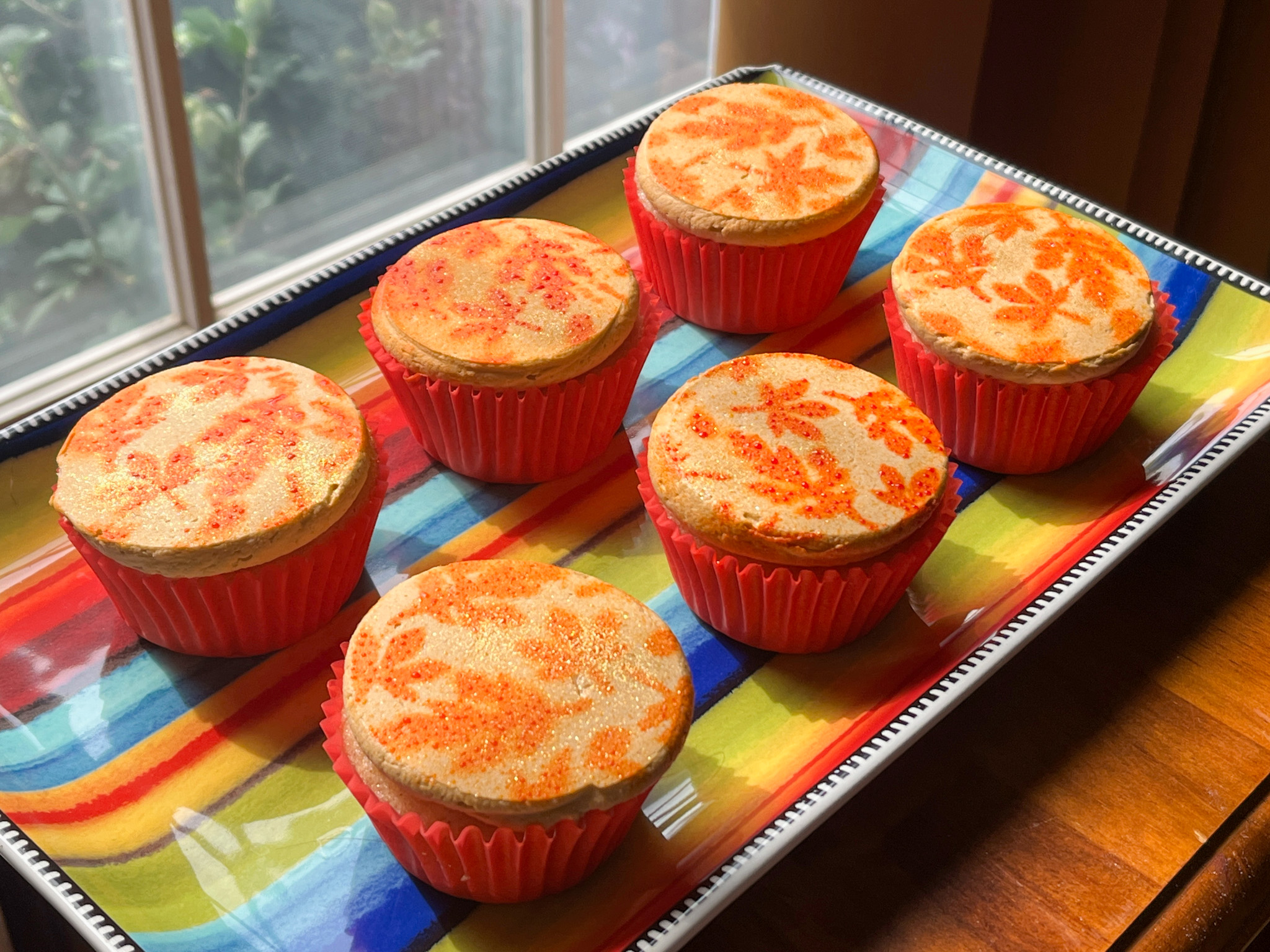
FALL LEAVES CUPCAKES
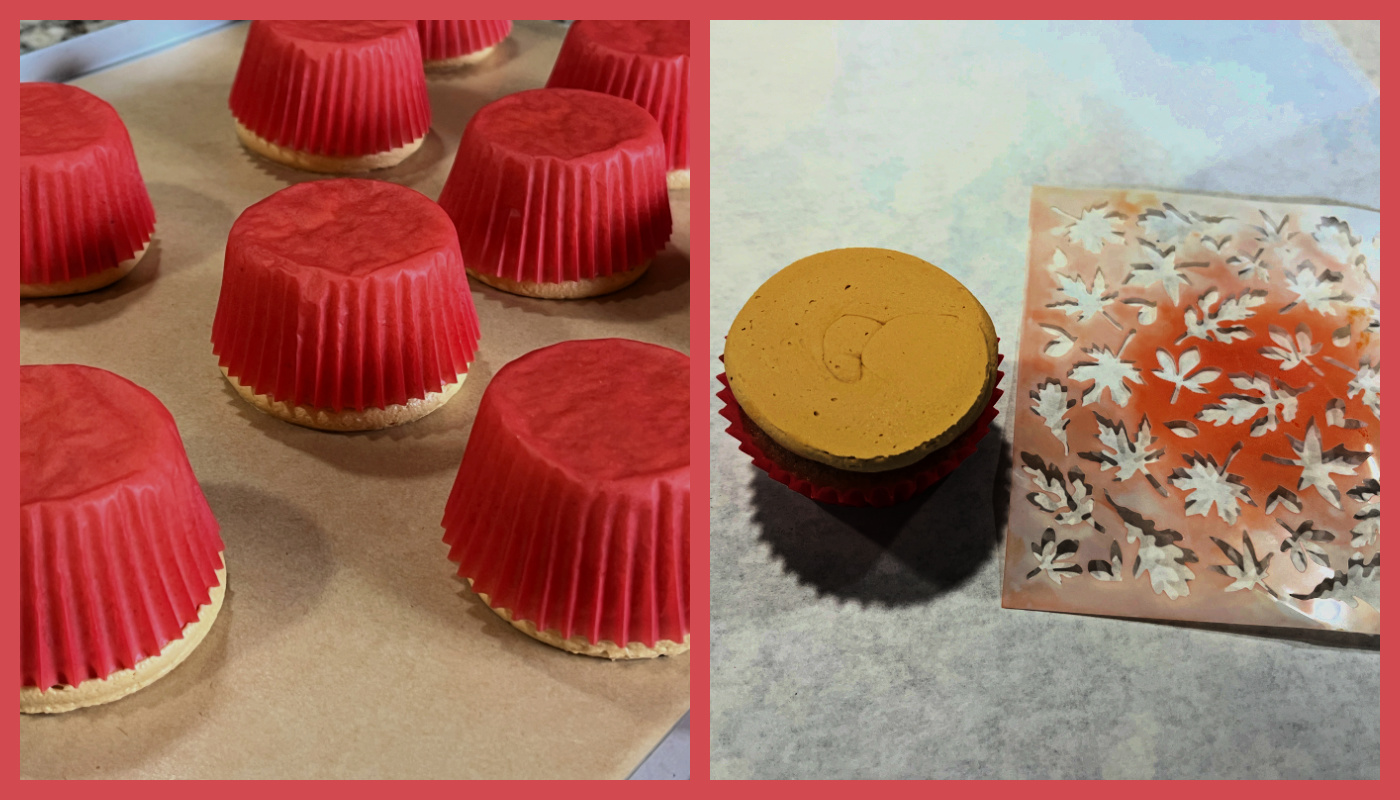
My first time trying to decorate cupcakes with a stencil and air-brushing. . It is quite simple, you frost the cupcakes with a blob of vanilla buttercream, and lay them upside down on parchment paper, flattening the surface. Place in the freezer for 10 to 15 minutes. Remove them, carefully lift them right side up, place the stencil over the still frozen surface, and airbrush it.
.
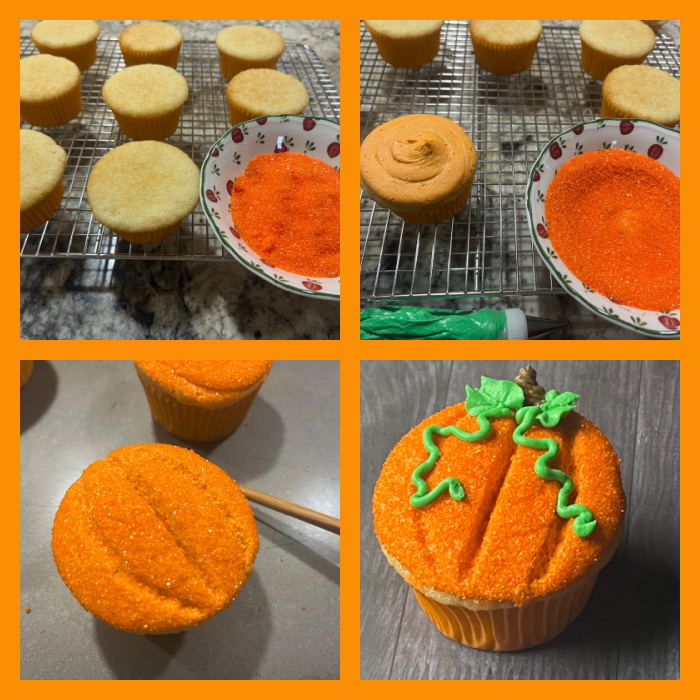
PUMPKIN SHAPED CUPCAKES
I loved making this design. Frost the cake with orange dyed buttercream, immediately shower it with orange sanding sugar, and use a chospstick to make indentations in the shape of a pmpkin. Add details with green buttercream and a small round piping tip.
.
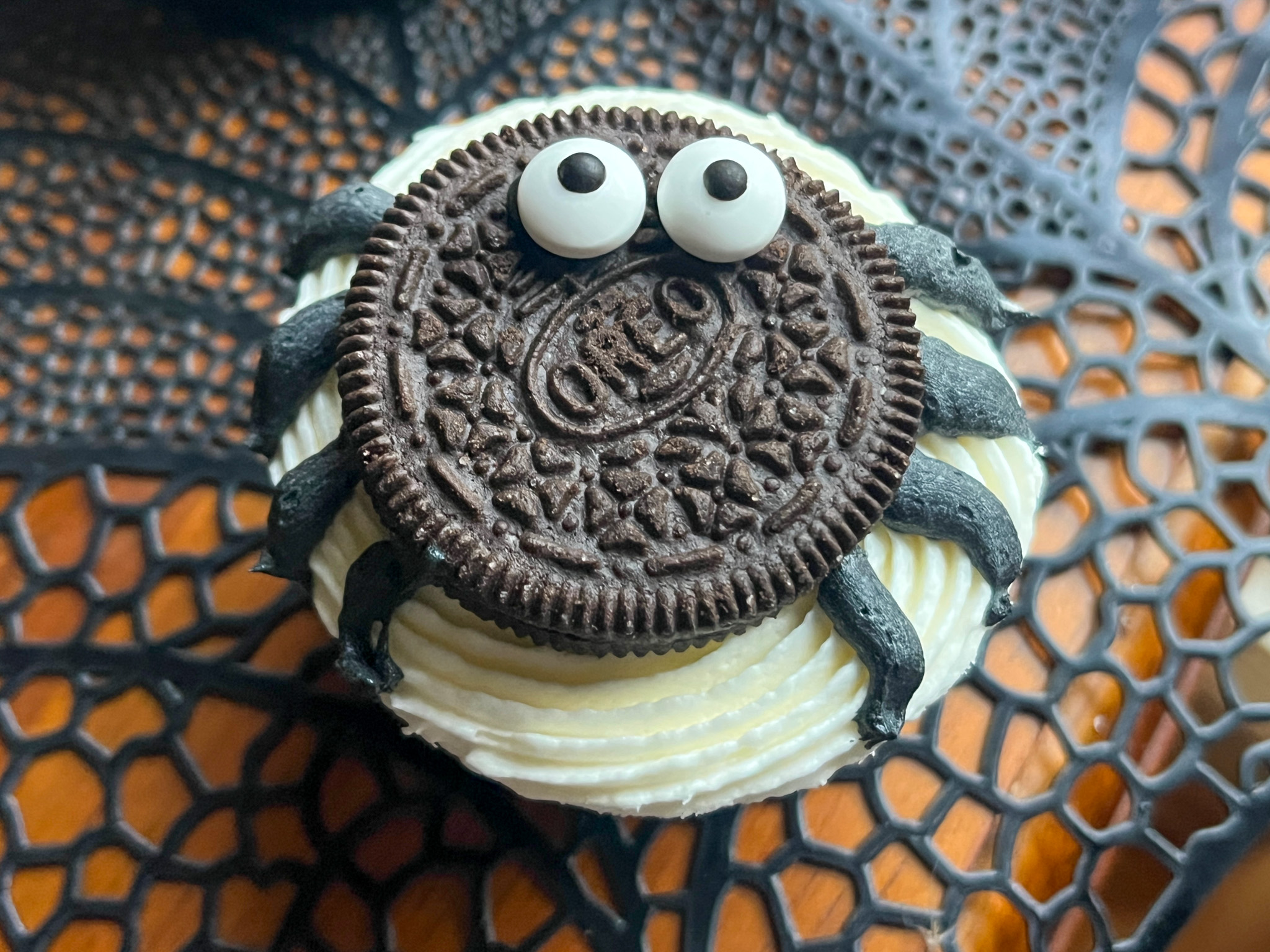
SPIDER CUPCAKES
Aren’t they the scariest and sweetest? Super easy design. You need white buttercream to frost the surface using a large French style piping tip. A small amount of black buttercream for the details. Little store bought candy eyes, and Oreo cookies. Once you have all these items, it is pretty straightforward: frost, place Oreo, add details, glue eyes.
.
LITTLE GHOSTS CUPCAKES
Compared to all other cupcakes, these have little frosting. All you need is white buttercream, first with a large open piping tip, the a small tip for the little arms. Candy corn for the addd cuteness and a very small amount of black frosting for the eyes and mouth.
I hope this post will inspire you to bake some cupcakes before Halloween comes and goes…
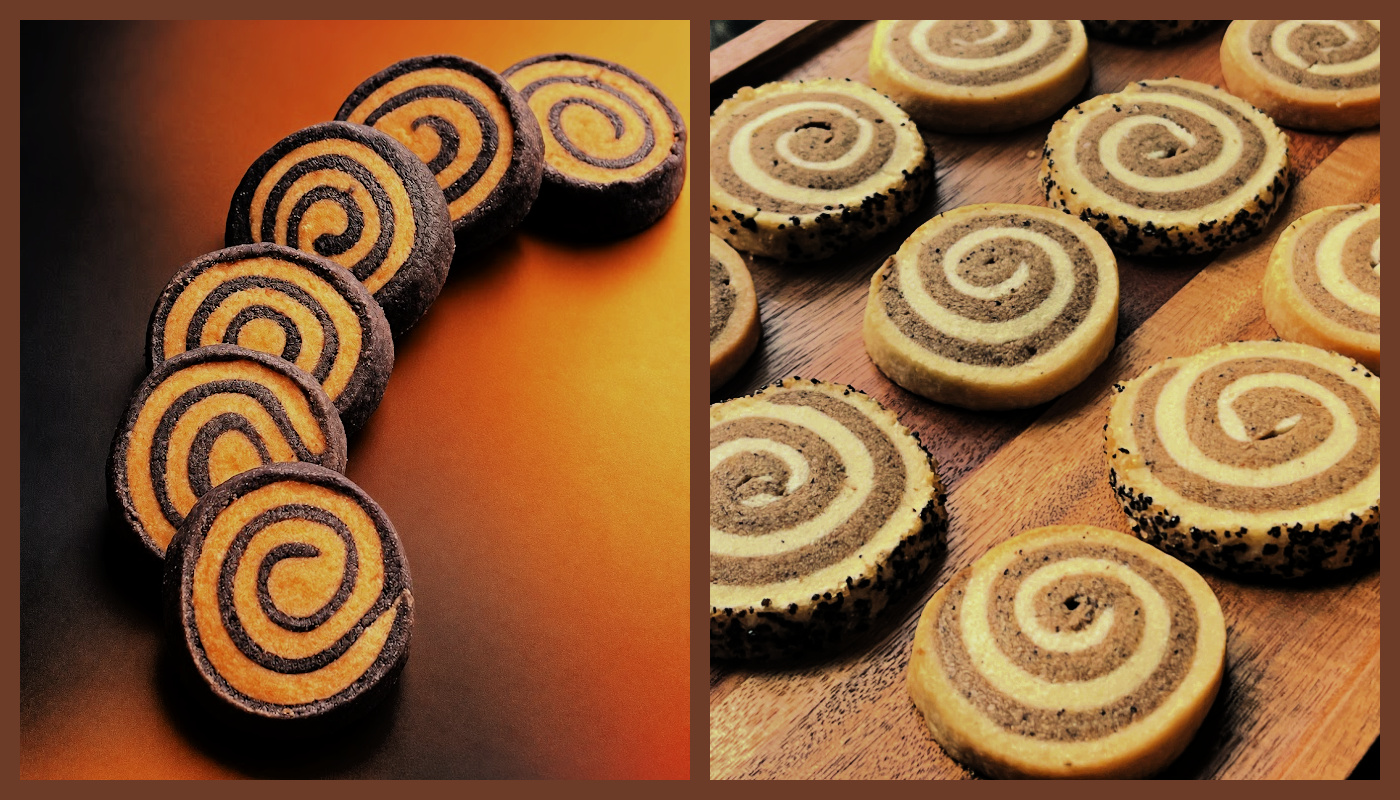
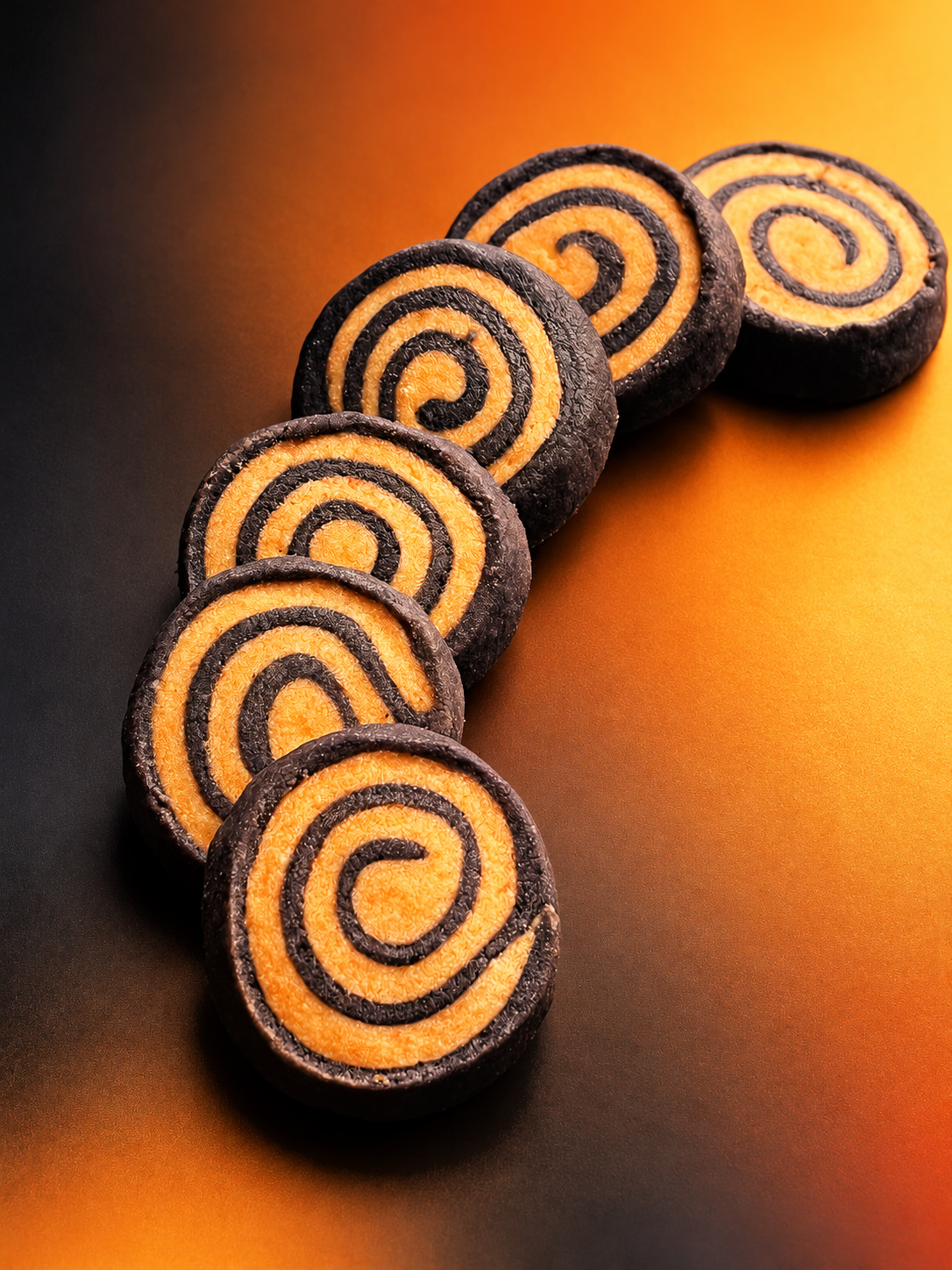
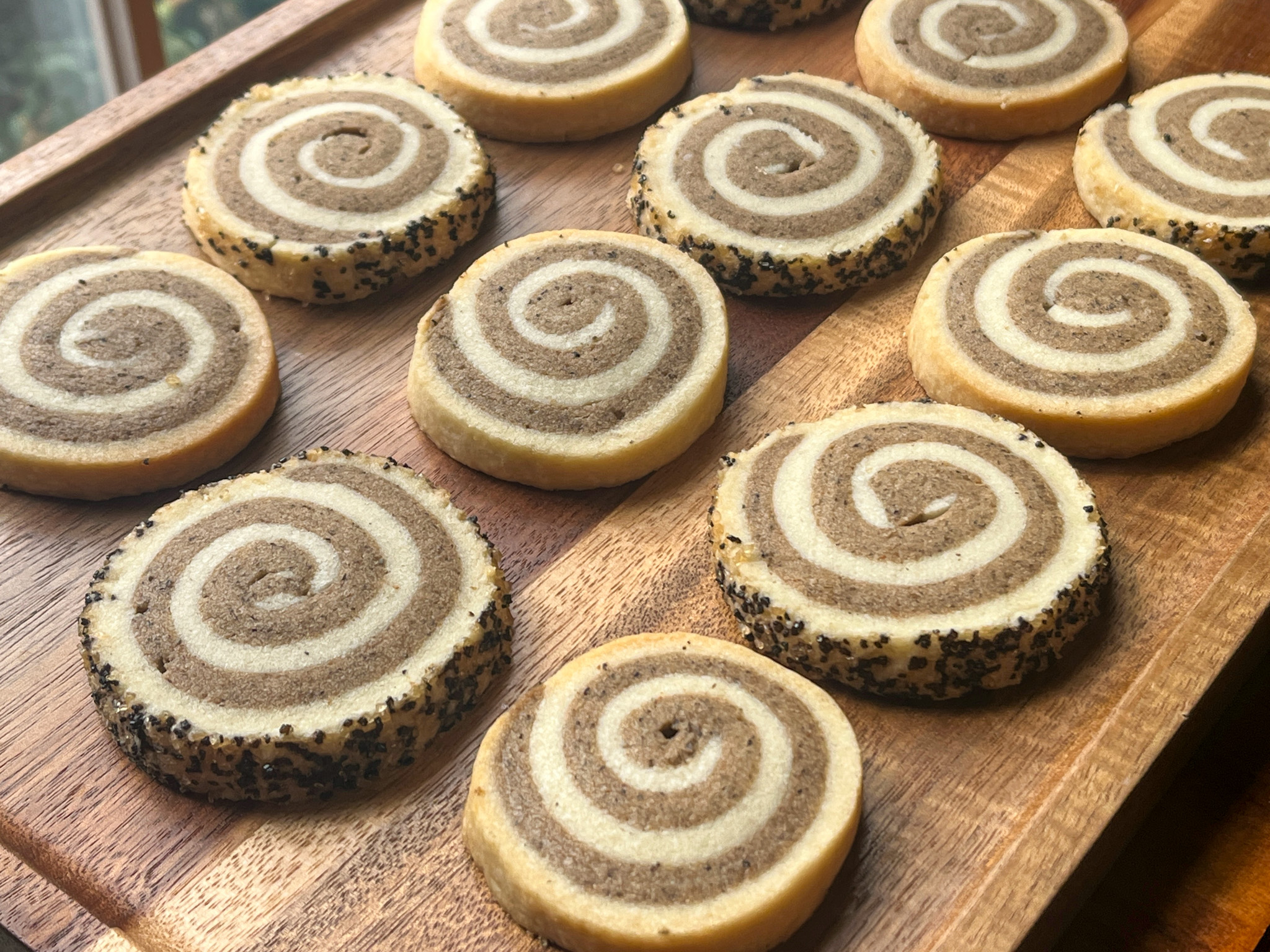
Pinwheel cookies are a lot of fun to make, but if you want them to look really nice, precision is key. Rolling both colors of dough to the same extension and similar thickness, although you can also make one dough slightly thicker for a different final look. The first one is quite appropriate for Halloween. I flavored it with black sesame and orange.
BLACK SESAME AND ORANGE PINWHEEL COOKIES (from The Bewitching Kitchen)
1 cup unsalted butter, at room temperature 1/2 cup powdered sugar 1 tsp orange emulsion (I used LorAnn) 1/2 tsp kosher salt 2 cups flour 1 tsp black sesame seed powder dissolved in 1 tablespoon warm water orange and black food gel dye
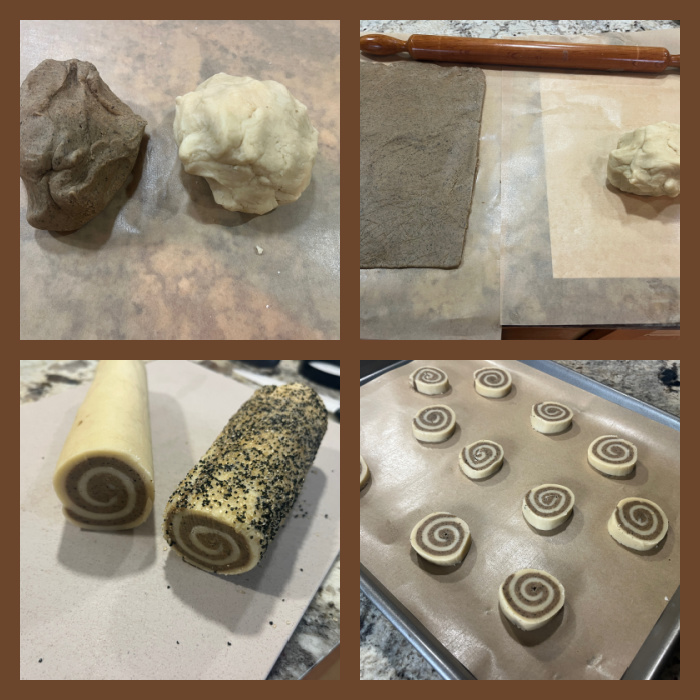
Cream the butter, powdered sugar and salt using a KitchenAind type mixer for a couple of minutes. Add the orange emulsion, mix until combined. Add the flour and salt, mix until almost fully combined. Divide the dough exactly in two and add to one half the orange dye, a few drops. To the second half, add the dissolved sesame paste and a few drops of black food gel. Form each dough as a rectangle and place in the fridge for 10 minutes.
Roll each dough into roughly 8 x 11 inches – that is about the size of a regular sheet of printer paper, so I like to place a sheet underneath the parchment paper to visualize the dimension to roll it. Stack both doughs with parchment paper separating them and place in the fridge for 30 minutes.
Remove from the fridge, place the dark dough over a clean piece of parchment, add the orange dough on top of it. Make sure both doughs are properly aligned, and trim the edges if needed. Refrigerate, cover with plastic wrap for 30 minutes. Remove from the fridge and roll the dough as a sausage, starting at the longest edge. Wrap with plastic and refrigerate at least one hour.
Heat the oven to 350F. Cut 1/4 inch slices of the dough, place over parchment paper on a baking sheet. Bake for 15 to 18 minutes, until set and slightly darker at the edges. Cool completely on a rack. Cookies keep well for a few days stored in a closed container at room temperature.
Use the same exact dough, but flavor it with vanilla extract. For the darker dough, add 2 teaspoons cocoa powder dissolved in 1 tablespoon warm water.
Comments: You can roll the dough over cocoa nibs before slicing the cookies, but I did not like that effect very much, so I did only half of it that way. These cookies have a delightful crumbly texture, and are not very sweet, as the black sesame and the cocoa powder cut the sugar intensity a bit. This basic formula can be used for countless flavors and color combinations, of course. I hope you give it a try!
How do you feel about rye flour? I love the taste, but don’t particularly enjoy working with it, as the dough handles in a completely different way from those made with regular wheat flour. Today I share two sourdough recipes that call for rye, the first one quite heavily, the second as a small component of the bread. Both are quite substantial and very flavorful.
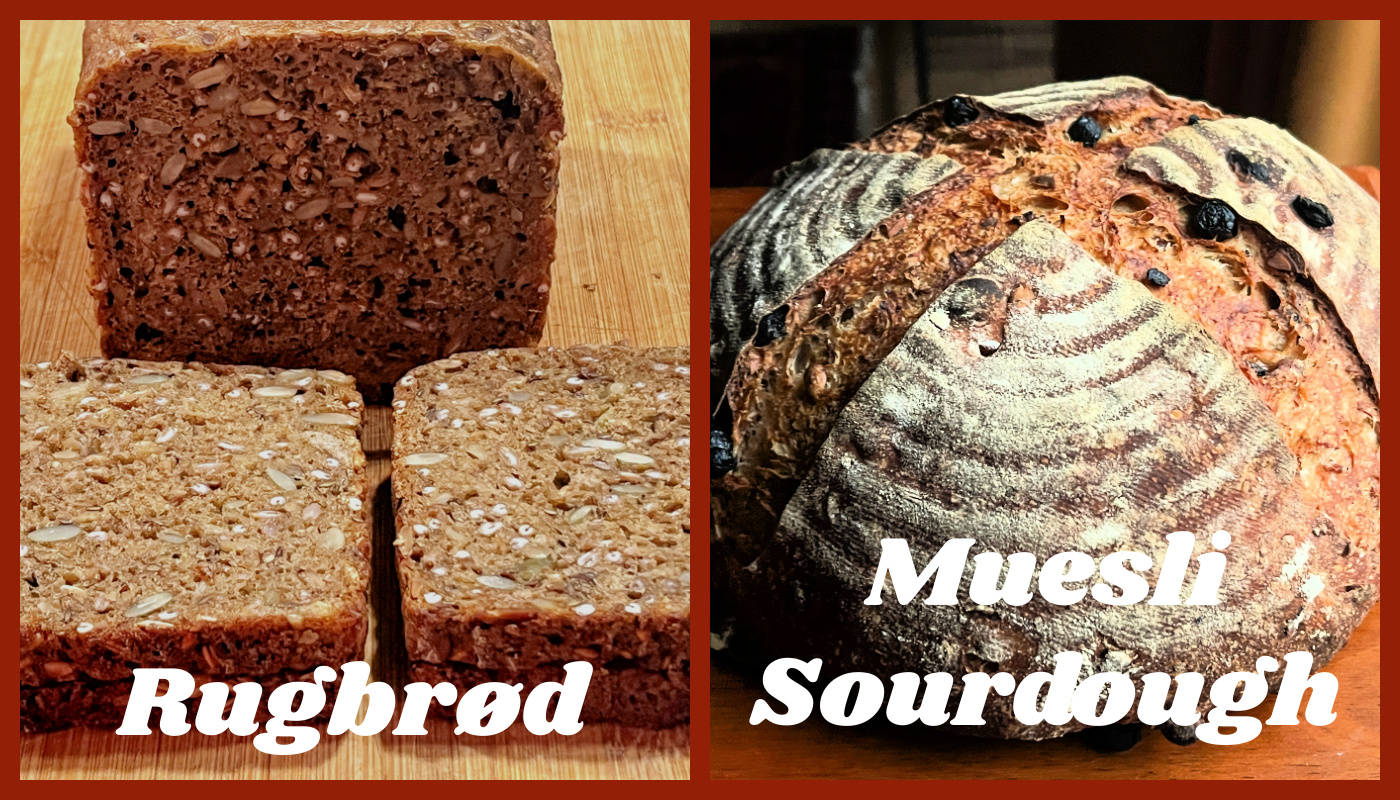
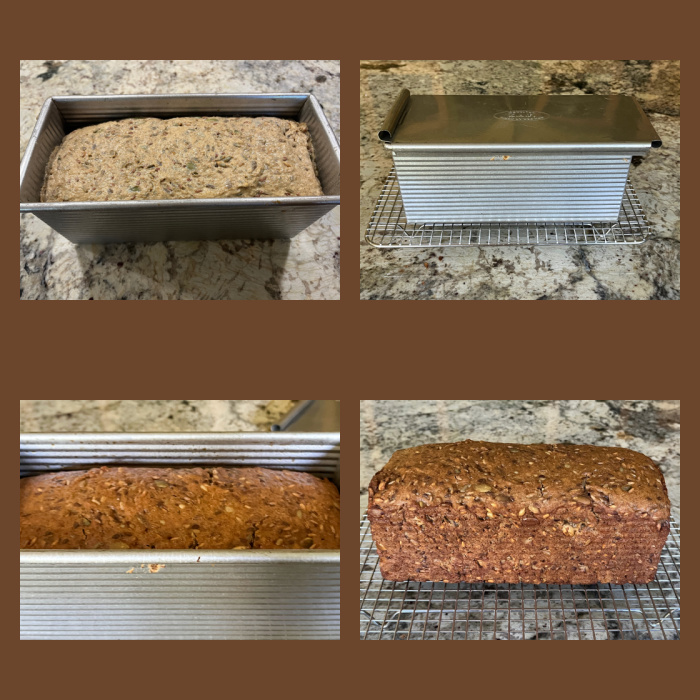
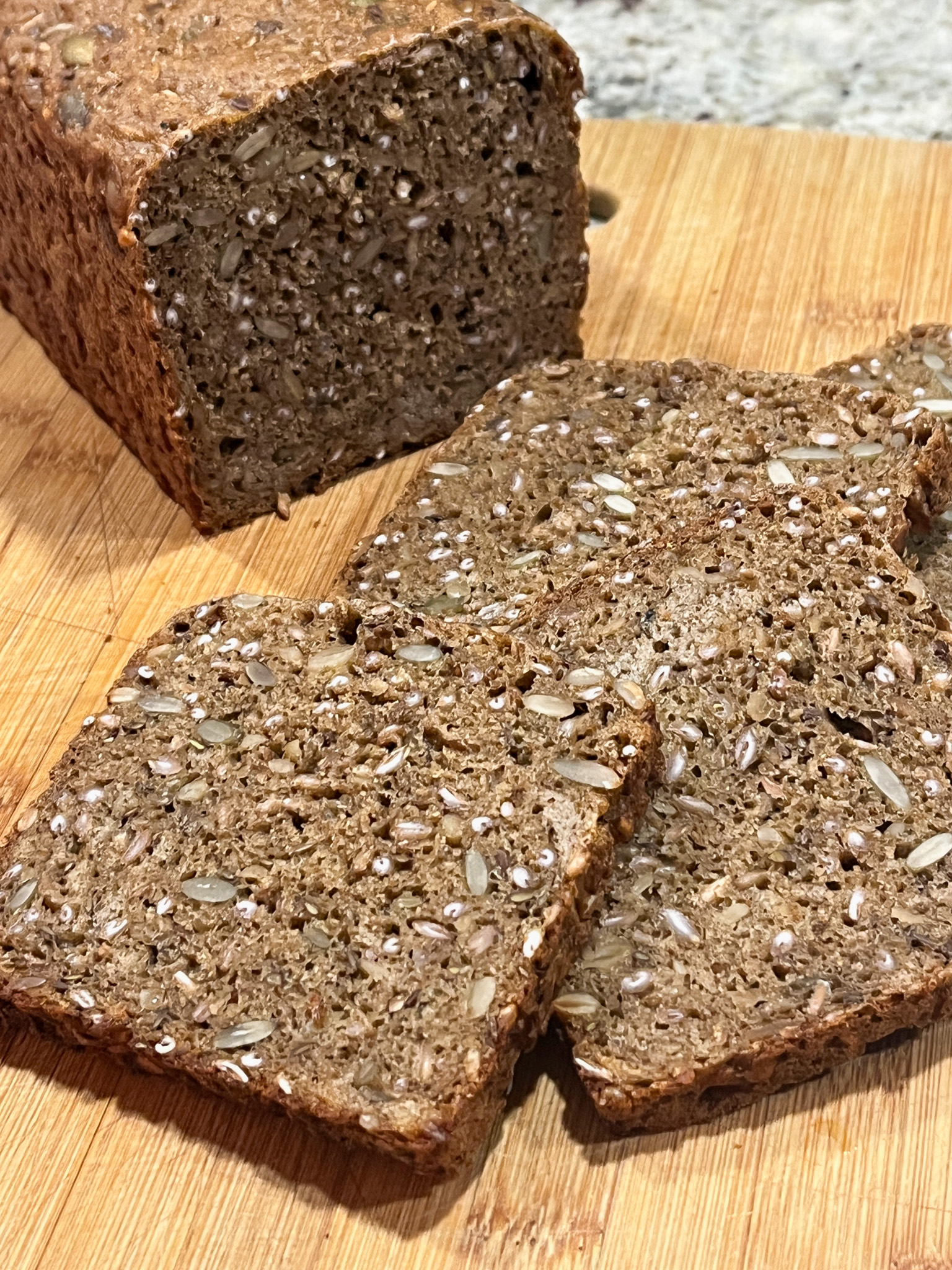
I cannot share the recipe for Rugbrød, but you can find it in Sourdough Everything, a book just published by Rachel Pardoe, aka Sourdough Enzo of Instagram fame. I’ve been following her for a long time, and was thrilled to see she wrote her first cookbook. I bookmarked quite a few recipes, but started with Rugbrød (Danish Rye) because it is one of my all-time favorites. Plus, it can be a bit intimidating to make, as rye flour is a major component.
The bread takes a seed soaker made the day before, with rye berries, sunflower, pumpkin and flaxseeds. The starter is made with rye flour, also the day before. It is a slow process, and I advise you to remove a small portion of the dough and place in a small vial to follow fermentation. This is something I’ve been doing regularly for about a year and I feel a lot more confident about when to move the bread from room temperature to fridge for the overnight proof. The bread was absolutely delicious, and kept well at room temperature for several days, although we ended up slicing and freezing, like we always do.
I will definitely bake more from Rachel’ book in the near future. If you are into sourdough scoring and decorations, the last chapter of her book goes over many of the techniques she often shows on her Instagram page, including painting, which is something that I am still a bit tentative when I give it a try. Her henna-painting on a 3D design is breathtaking, but I need to get mentally ready to go for it. Might take me a very long time (sigh).
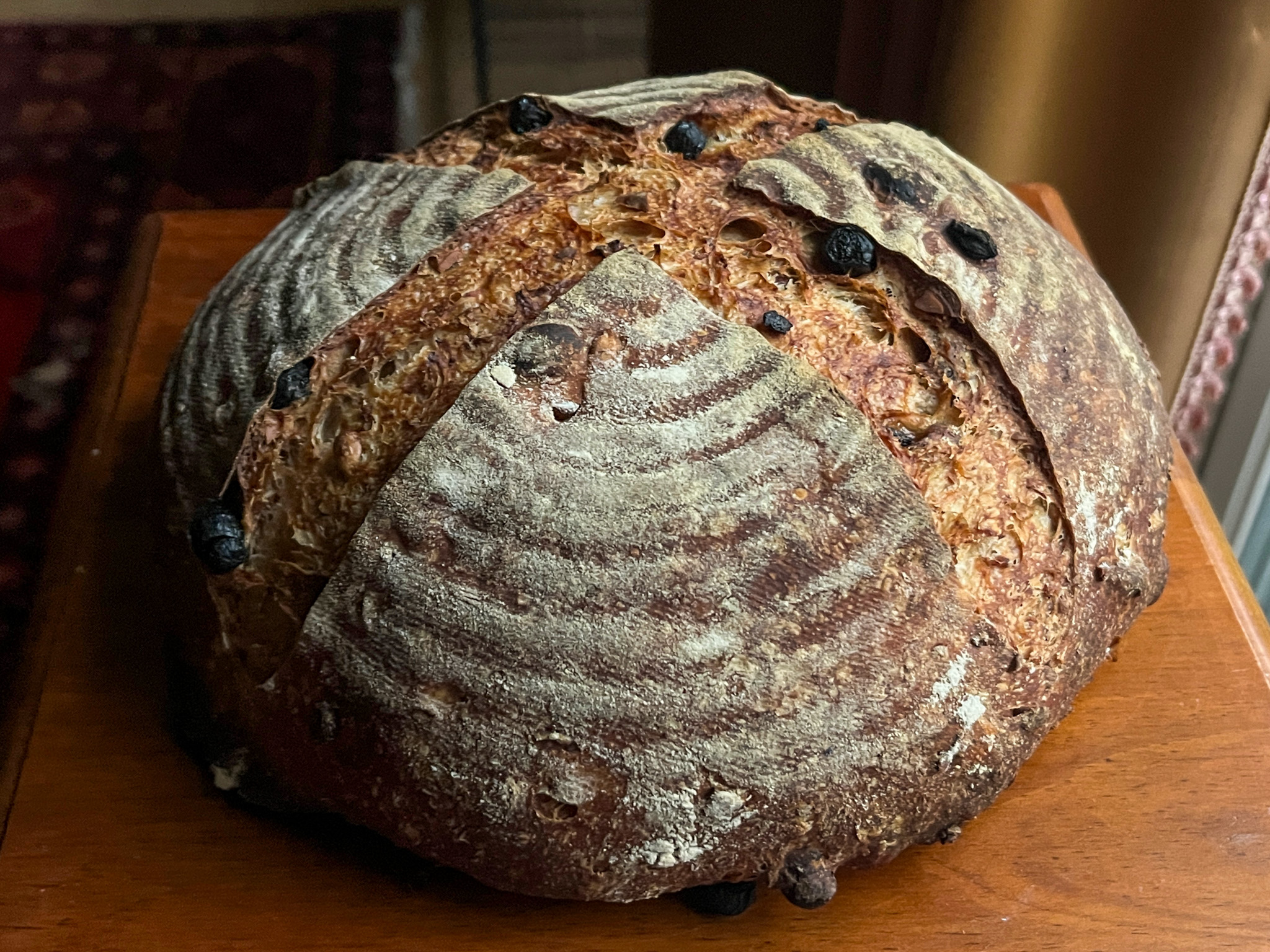
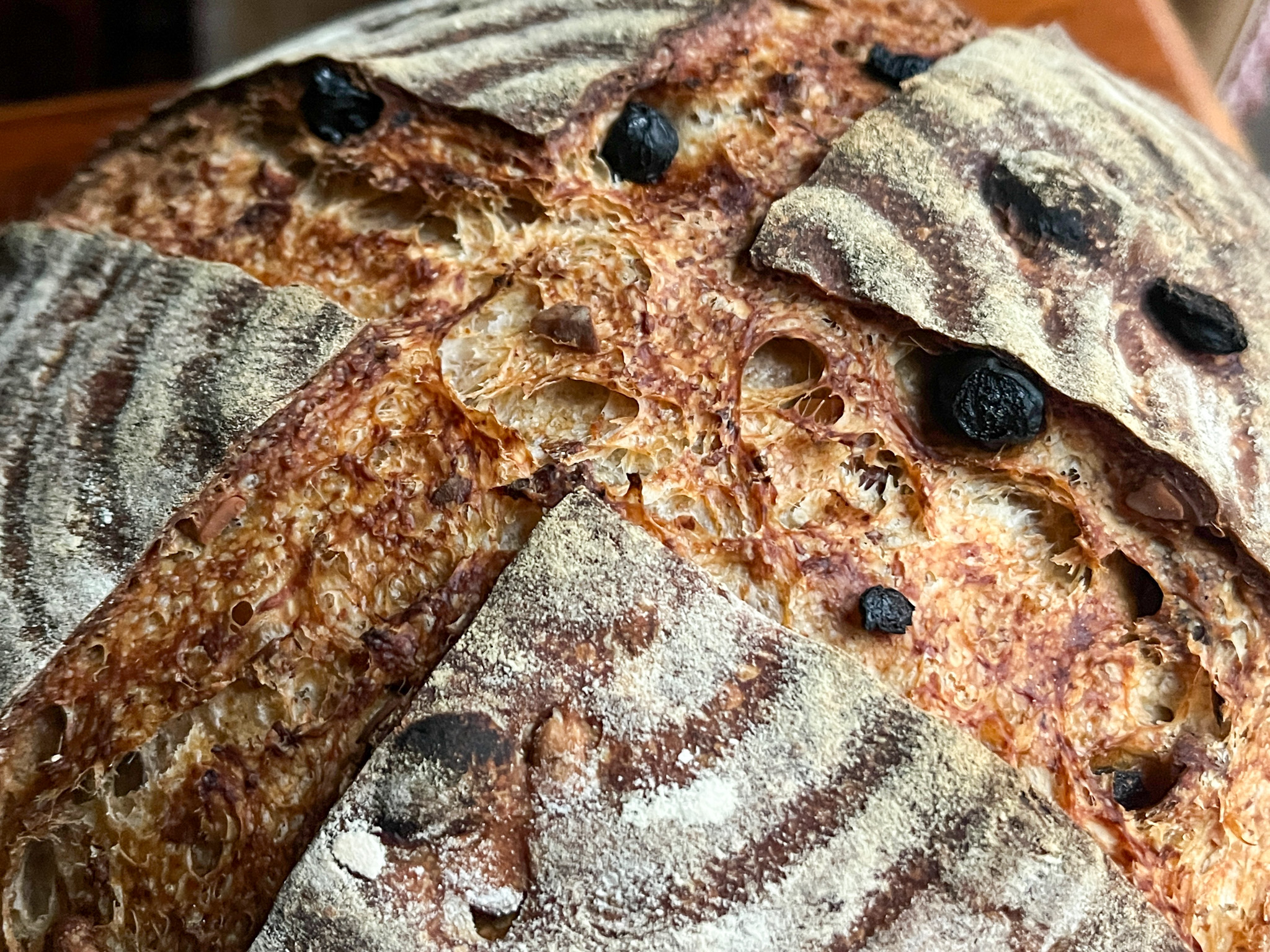
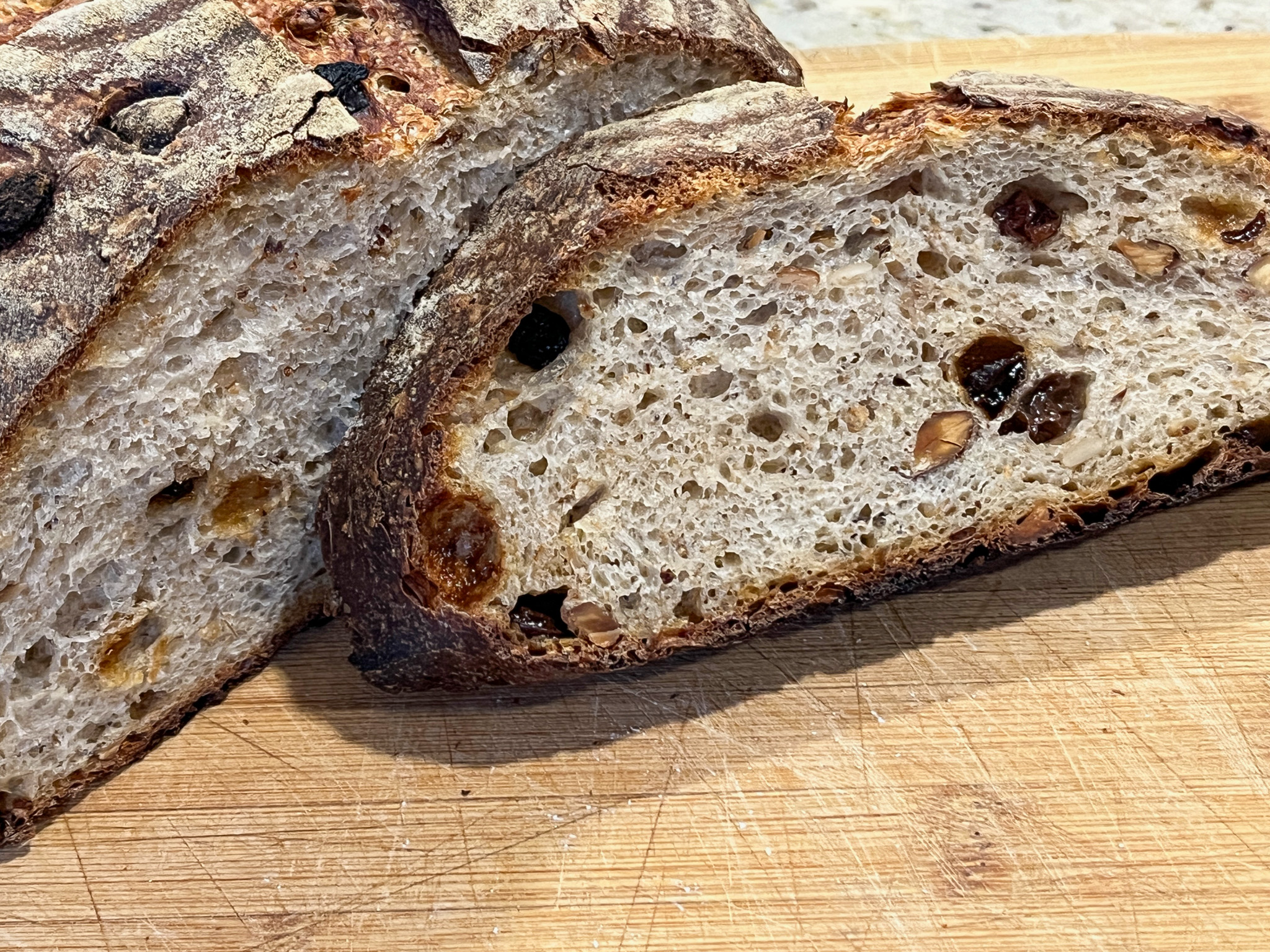
Moving on, I share a recipe that was inspired by an European bread brought to my attention by my friend Margie. She actually went through the trouble of translating it from German to English for me, and I made it as written but I think the difference between European ingredients and American made it a bit too dense. So I adapted it and ended up with a bread that the husband already said “has to be in our regular rotation”. It turned out truly delicious and rye flour is a small but important component.
MUESLI, ALMOND AND RAISINS SOURDOUGH (from The Bewitching Kitchen)
Makes: 1 large loaf Total flour: 500 g Rye: 20% Hydration: approximately 78%
for the main dough: 400 g strong bread flour 100 g whole rye flour 100 g active sourdough starter, 80%% hydration 360 g water (divided in 330g + 30g) 10 g fine sea salt 1 tablespoon honey
Inclusions: 80 g muesli 60 g whole almonds, roughly chopped 60g raisins 80 g boiling water
The day before making the bread: Toast the almonds on a 350F oven for about 7 minutes. Leave it at room temperature. Prepare the muesli soaker: pour 80 g boiling water over the muesli. Stir well, cover and let stand for 1 hour. Move to the fridge overnight.
Make the dough next day: mix the bead flour, rye flour, 330g of the water, and leave it undisturbed for 30 minutes. Add the starter (100g), honey, salt and remaining 30g water. Mix by hand or with the dough hoiok in a KitchenAid type mixer on los-speed for about 3 minutes.
Genty spread the dough as a rectangle. Add the muesli (do not drain), almonds and raisins, and fold the inclusions as best as you can without worrying too much, it will all incorporate as the fermentation proceeds. Bulk fermentation will be about 6 hours, with folding every thirty minutes for the first two hours (four cycles of folding). You can follow the rate of fermentation by removing a small amount of dough into a vial. Aim for about 75% increase in volume, mine took a litle more than 6 hours total.
Pre-shape as a round loaf. Wait 15 minutes, do the final shaping. Place in a banneton, and move to the fridge until next morning. My dough stayed 14 hours in the fridge before baking at 450F for 30 minutes covered, then 20 more minutes uncovered.