CHEDDAR & JALAPEÑO SOURDOUGH + COOKBOOK REVIEW

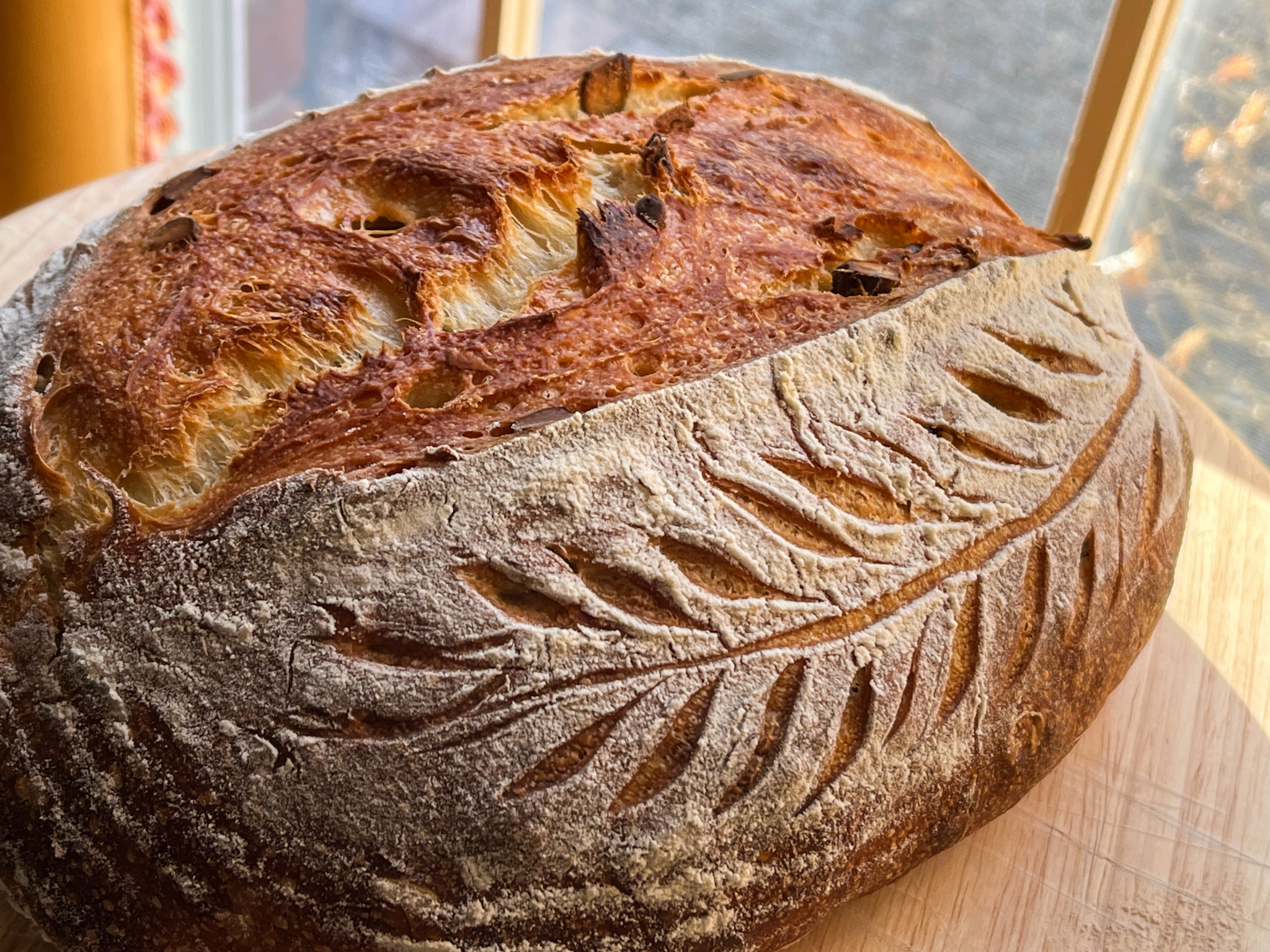
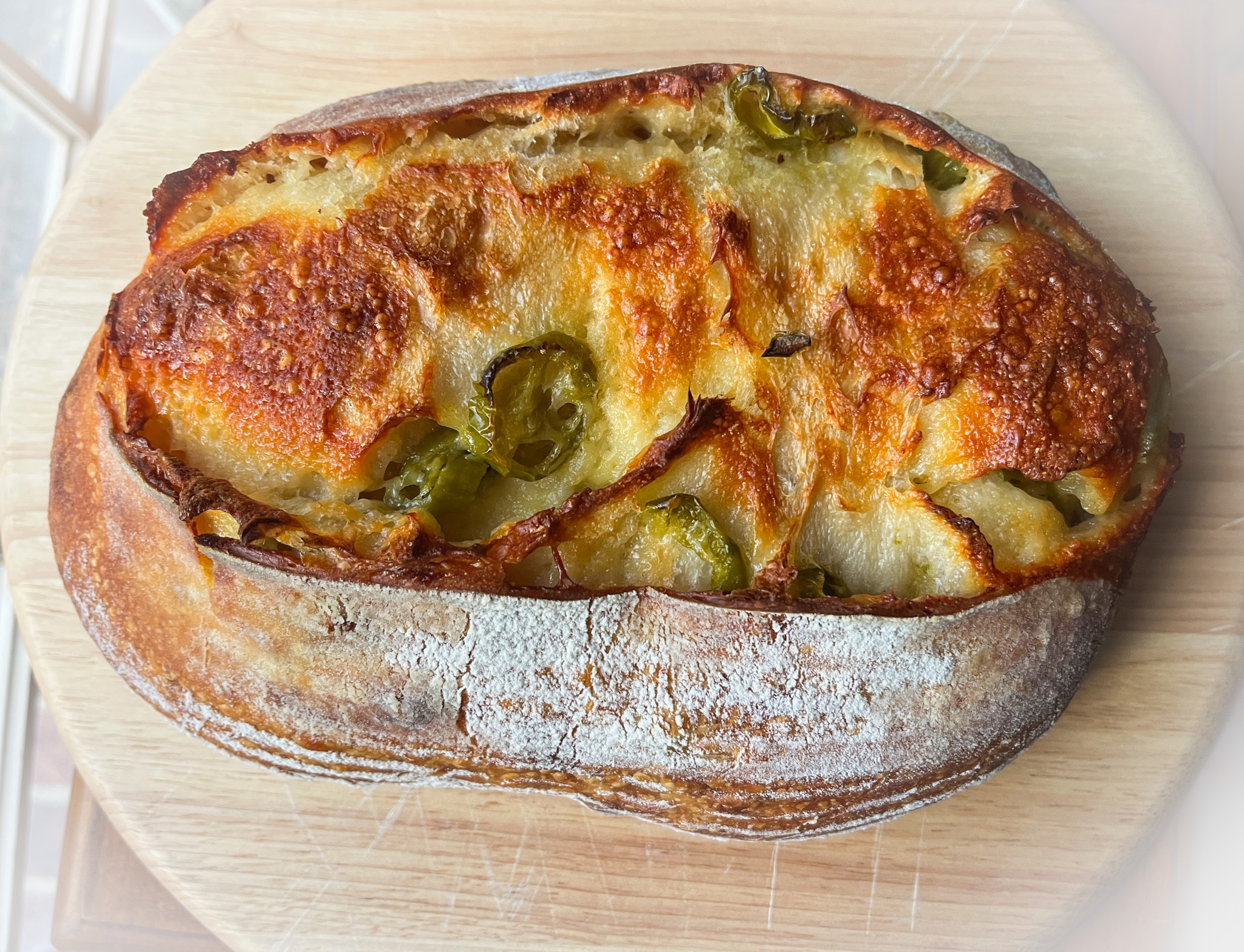
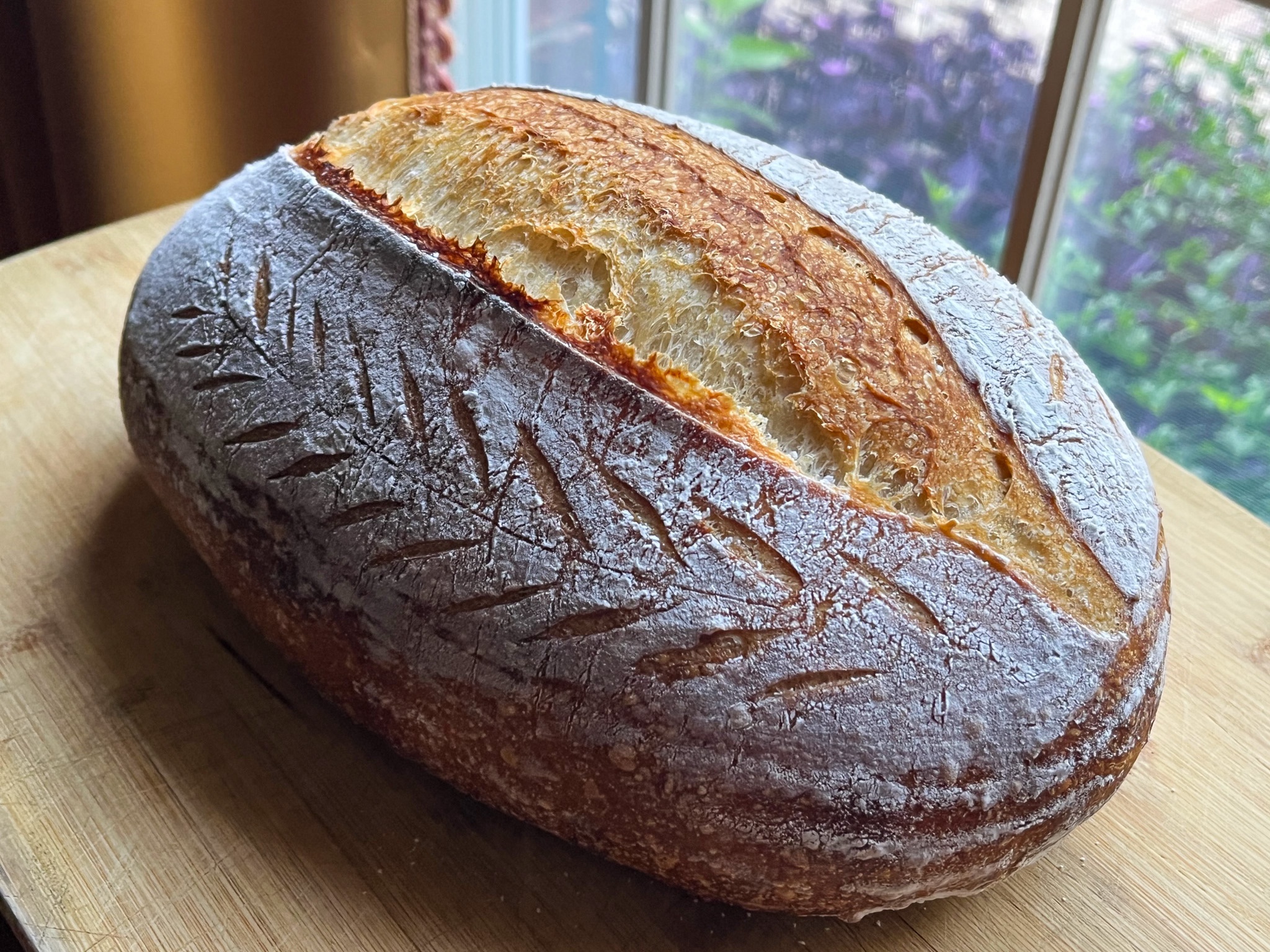
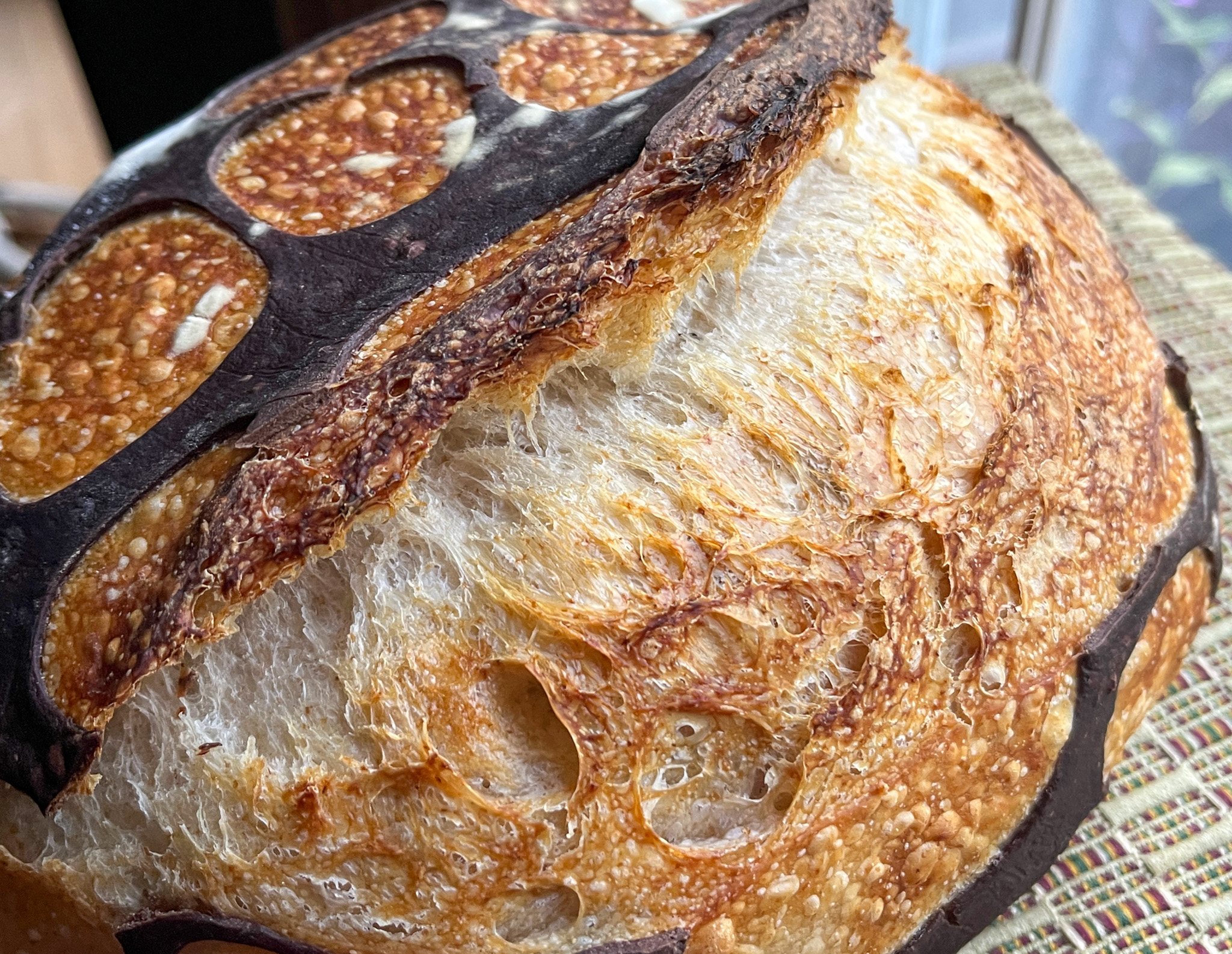
I am beyond excited about this blog post because not only it features one of the very best sourdough breads I’ve ever baked, but it allows me to review Elaine Boddy’s FOURTH cookbook (click here to order The Sourdough Bible), published just a couple of weeks ago. Without further ado, take a look at this beauty!

CHEDDAR AND JALAPEÑO SOURDOUGH BREAD
(printed with permission from Elaine Boddy’s The Sourdough Bible)

50 g (¼ cup) starter
350 g (1½ cups) water
500 g (4 cups) strong white bread flour, plus more for dusting
7 g (1 tsp) salt, or to taste (I used 10g)
Filling 200 g (1 cup) grated cheese
100 g (¾ cup) sliced jarred jalapeños, well drained (I used 80g)

In a large bowl, roughly mix together all the dough ingredients. Cover and leave the bowl on the counter.
After 2 hours, perform a set of pulls and folds on the dough. Cover and leave once again.

After 1 hour, perform two more sets of pulls and folds. Cover the bowl again and leave it on the counter after each set. Leave to proof until the dough has doubled in size. Once doubled, place the bowl of dough, covered, in the fridge for at least 1 hour.

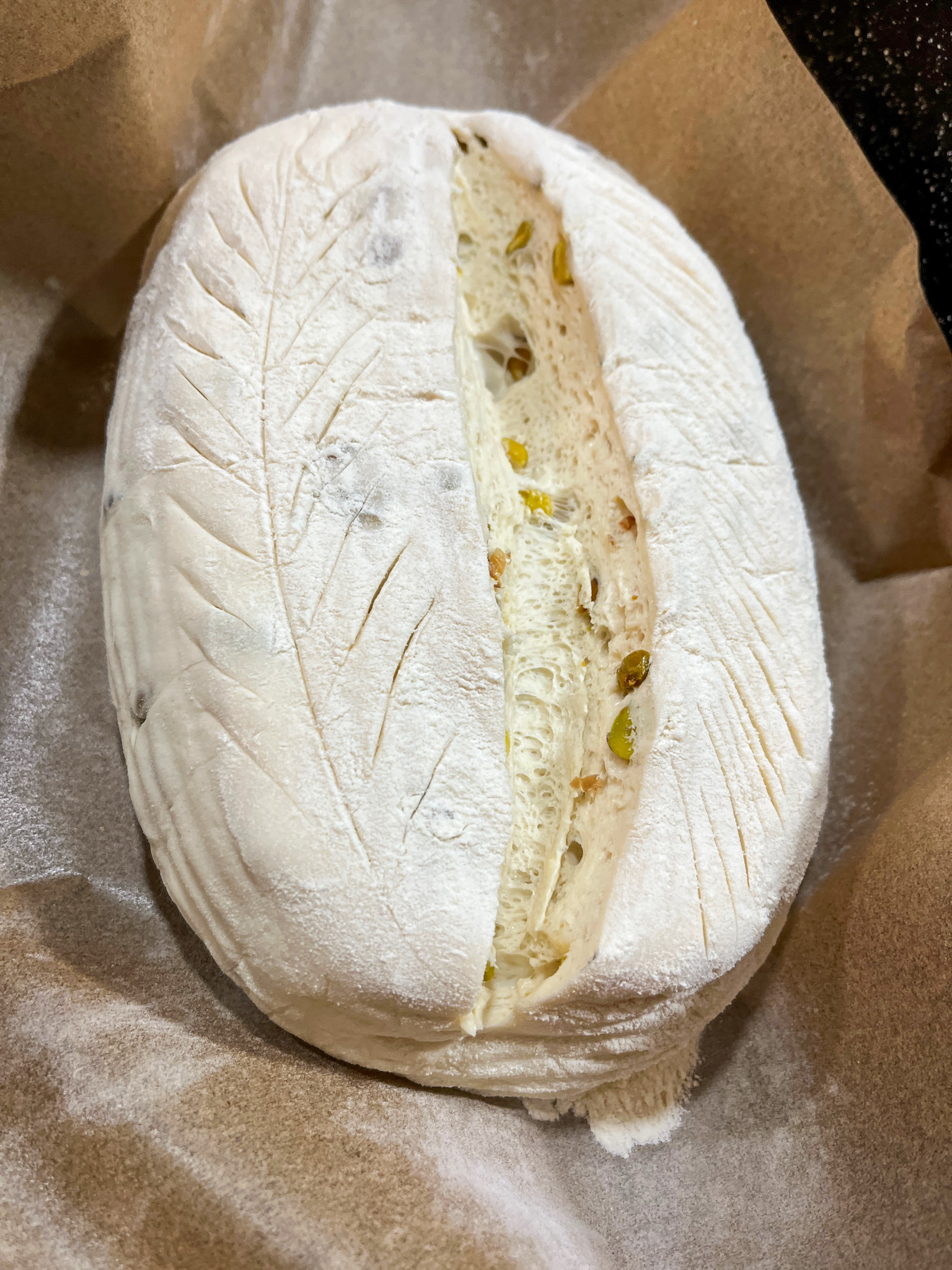
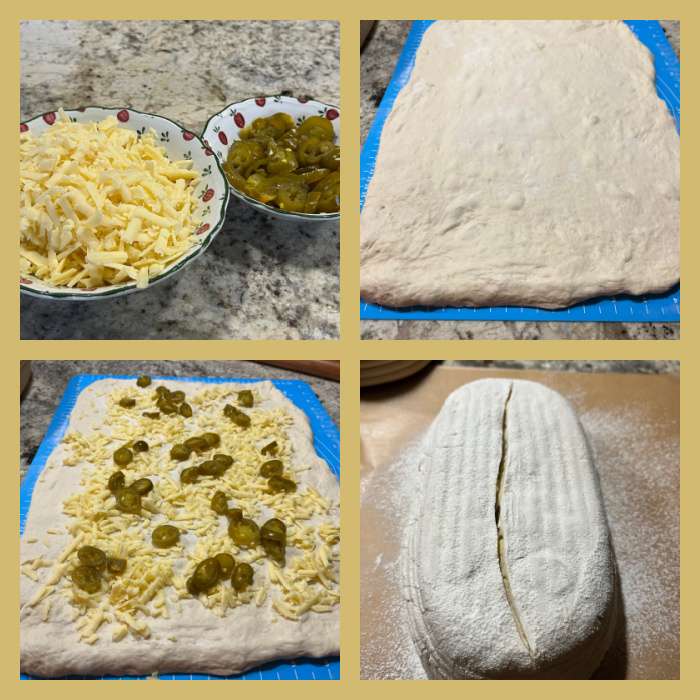
Sprinkle flour over your kitchen counter. Ease the risen dough from the bowl onto the counter. Use your fingertips to push out the dough, until it becomes an 18 x 12–inch (46 x 30–cm) rectangle and an even thickness all over. The dough will want to pull back as you stretch it; continue to pull it gently, being careful not to make holes in the dough. Sprinkle the cheese and jalapeños filling evenly over the stretched dough. Roll up the dough from one of the shorter edges toward the other to make an even roll of dough. Lift the dough and place it, smooth side down, in the banneton. Cover, and refrigerate for at least 3 hours to proof again. Transfer the cold dough to your lined pan, and score it.

If you’ve chosen to preheat your oven, heat to 425°F (220°C) convection or 450°F (230°C) conventional. Bake at the above temperatures for 50 to 55 minutes from preheated. Or, if baking from a cold start, bake for 55 to 60 minutes. Remove from the oven and pan, and allow to cool fully before slicing.

ENJOY!

to print the recipe, click here

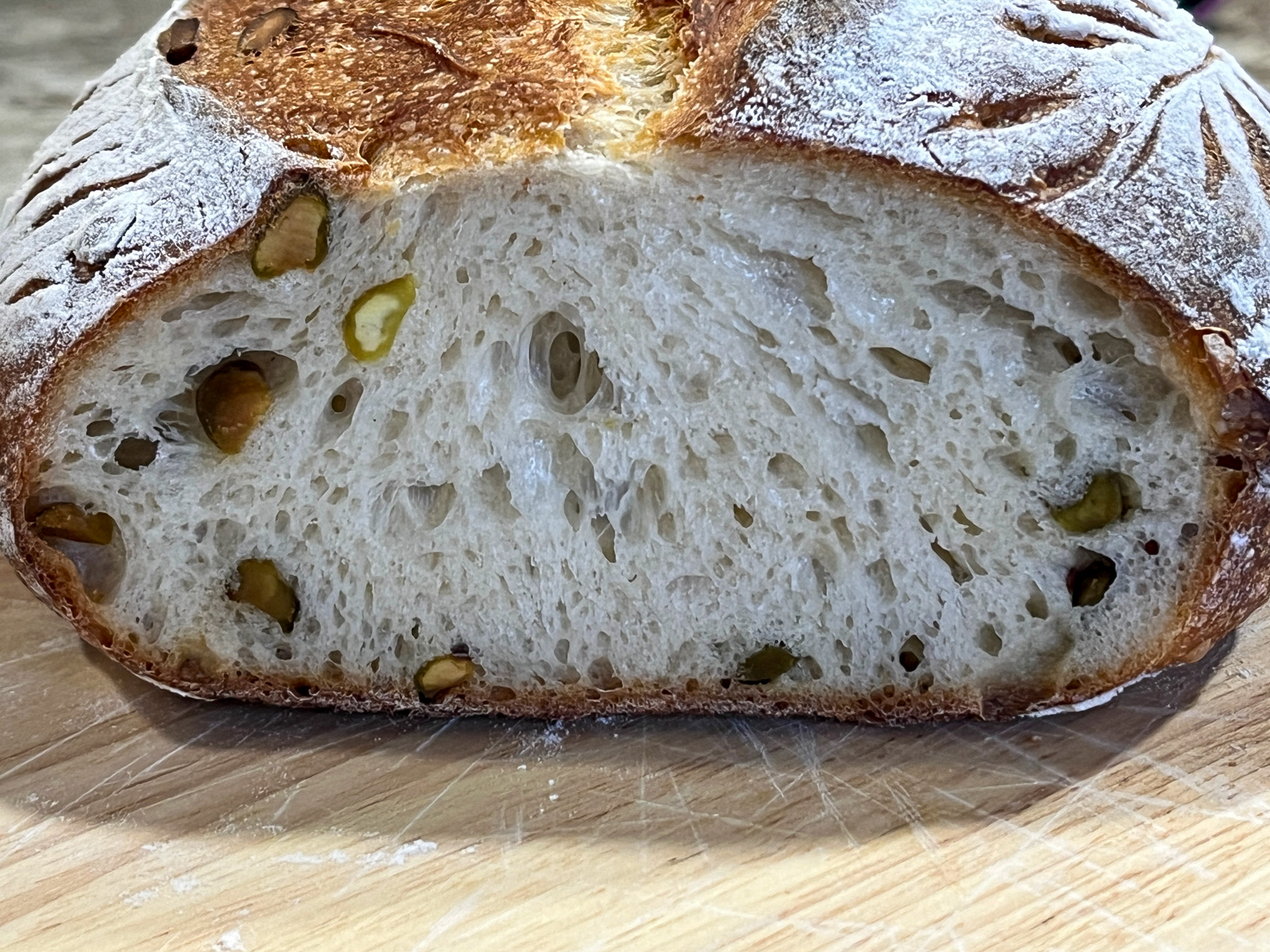
Comments: If you’ve never mixed a sharp cheese with pickled jalapeños and invited them both for a little sourdough party, you are missing quite important things in life. It is a brand new year, do what is RIGHT! The bread is simply outstanding, I normally exercise restraint when consuming bread, but I will admit I had zero power against this baby.

The level of spice was just right for us, I used slightly less than Elaine did, about 20% less. Use the sharpest, best Cheddar you can find. The color of the crust is enough to make a grown up cry in anticipation of great things to come.

The bread uses the method of lamination to incorporate the goodies, although as Elaine says, you could conceivably just add everything as you mix the dough. She is always making sure you can go the simple route if so desired. That brings me to her masterpiece, The Sourdough Bible.


THE SOURDOUGH BIBLE

I adore the cover! So modern, and unusual, incredibly stylish… But what really matters is what’s inside, so let’s take a tour together.

The book is divided in three parts. Part I will explain simply everything about making a starter, keeping it alive and using it to make dough. If you know someone who flirts with the idea of embracing sourdough baking but feels insecure, this book is the best gift ever. Anyone will be able to produce a healthy sourdough starter using her detailed explanation. Even if you are an experienced sourdough baker, you will find great tips and suggestions in this section of the book, like how to use different flours, swap the water for other liquids, laminate, add seeded crusts. Wonderful source of information.

Part 2 is where all the recipes will be. It starts with her MASTER RECIPE, which is the essence of all her breads. The master recipe is like a canvas that she uses to create more complex variations, not only in flavor, but shape. This section of the book has a huge number of photos of the process involved in each bread, beautiful shots, on a blue background that makes the white dough shine. A pleasure for the eyes, and dense with info and details.

Here are some of the recipes included that made my mouth water: Whole Grain Spelt and Poppy Seed Loaf, Beer and Mixed Grains Loaf, Rye and Caraway Loaf, Cheese and Jalapeño Loaf (featured today), Chocolate and Chili Loaf (OMG, must absolutely make this one), Cranberry and Hazelnut Loaf, just to name a few.

Her series of mini-loaves is wonderful, starting with her Master Baby Loaf, and moving on to Whole Grain Spelt and Seeds, Cumin and Carrot Loaf, and other tasty options to make a small loaf, great if you don’t have a huge family, or if you just want to experiment with new flavors.

Moving on, she introduces breads that are baked in a loaf pan, starting once again from her Master Sandwich Loaf Recipe, and adding complexity as new ingredients are added. Enriched Brioche-Style Loaf, Potato Water Spelt Loaf, Cheese and Chipotle Ketchup Babka (Sally faints!) are some examples included. Have I mentioned the photos are gorgeous?


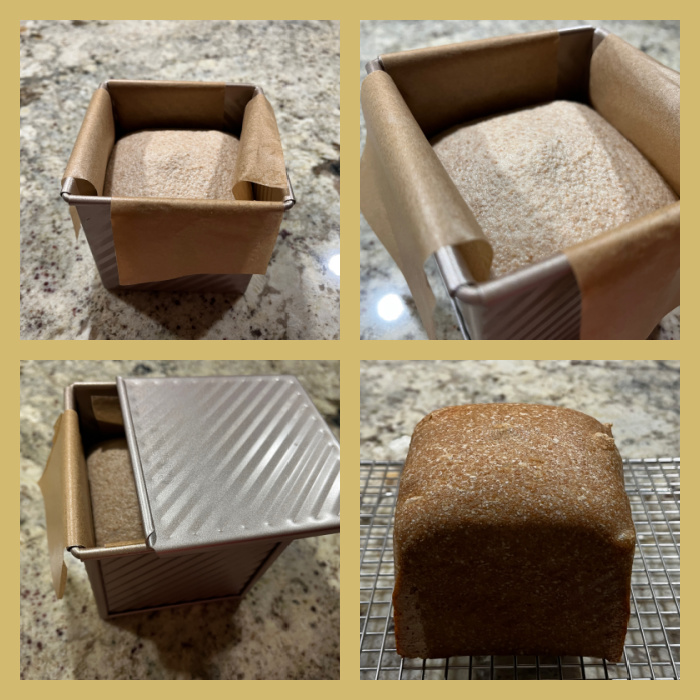
This tiny little bread is made in a mini-pan with the shape of a cube. I am soooo totally in love with it, the flavor was outstanding, and what a fun bread to make…

This one is her Whole Grain Spelt Cube Loaf. Several other recipes using this pan with or without a lid are waiting for you, so place an order for her book, if you haven’t yet already. For instance, you can use the cube pan to make a Chocolate-Filled Vanilla Swirl Loaf, or a Banana Walnut Swirl Loaf. All adorable… What are you waiting for?

Focaccia: Amazing collection of goodies. From the master recipe she creates Red Onion and Chive Focaccia, and playing with small versions she shares Blue Cheese and Fig Baby Focaccia, so cool for a dinner party. In another departure of shaping, you will find Wedge Rolls, a super clever way to deal with a batch of sourdough. My favorite of this section is the Seeded Wedge Rolls, for sure. I need to bake a batch.

Yet another creative way to play with the concept of bread, Elaine makes a series of “Snug Rolls” , in which goodies are incorporated by lamination and the rolls treated as you would a cinnamon roll type bake. Garlic Butter, Cinnamon Rolls, Cheese and Caramelized Onion Jam are some examples of “snug rolls” in this part of The Sourdough Bible.

Maybe you rather have your rolls kiss gently instead of hug together? Go for her series of “Round Rolls” that features Herby Za’atar is there… Whole Grain and Chocolate Hot Cross Buns, both called my attention right away.

Flatbread and Pizza comes next, from the Master Recipe to variations such as Herb and Parmesan Flatbreads, Spinach and Goat Cheese Pizza, Pomegranate Molasses Roasted Vegetables Flatbread.

If you think Bundt pans cannot bake sourdough bread, think again. Elaine puts them to great use, making showstopper loaves with all sorts of flavor and flour combinations. Chocolate Orange Loaf, Cheese and Pickle (I am sure we would LOVE this one!) and, ready for this? A COOKIE LOAF! Just amazing…

This part of the book closes with recipes using discard sourdough, and my favorite is the Uzbek flatbread, as I have those gadgets and love putting them to use. Crepes, Chocolate Chip Rye Pancakes, Everything but the Bagel Crackers are other examples.

We arrived at the final, Part 3 of the book. This section covers Tips and Tricks for Mastering Sourdough. No matter your level in brea baking, it is a great source of information, but beginners in particular will benefit from it. Essentially every single question a person might have about sourdough baking is covered in this chapter. A must-read.

I have every one of Elaine’s books, but I will have to say she outdid herself with The Sourdough Bible… it is a must-have for anyone interested in sourdough baking, and the best source for beginners because it offers a simplified, straightforward approach to sourdough, without unnecessary complications and endless, rigid rules. Go have fun in the kitchen, bake great sourdough bread, let Elaine be your guide!

ONE YEAR AGO: La Buche de Noel

TWO YEARS AGO: Incredibly Simple Apple Carpaccio

THREE YEARS AGO: Chocolate-Cherry Miroir Cake, A Vegan Showstopper

FOUR YEARS AGO: Bee Happy Honey Macarons

FIVE YEARS AGO: Episode 7 of Great American Baking Show, Canapes, Opera Cake and Running out of Gas

SIX YEARS AGO: Raspberry Ganache Macarons

SEVEN YEARS AGO: Pain au Chocolat

EIGHT YEARS AGO: Two Unusual Takes on Roasted Veggies

NINE YEARS AGO: Kadoo Boranee: Butternut Squash Perfection

TEN YEARS AGO: Creamy Broccoli Soup with Toasted Almonds

ELEVEN YEARS AGO:
 Fennel and Cheddar Cheese Crackers

TWELVE YEARS AGO: A Festive Pomegranate Dessert

THIRTEEN YEARS AGO: My First Award!

FOURTEEN YEARS AGO: A Message from WordPress

FIFTEEN YEARS AGO: Turkish Chicken Kebabs
FALL LEAVES PANCH PURAN SOURDOUGH


PANCH PURAN SOURDOUGH
(from the Bewitching Kitchen)

500g bread flour
350g water
75g starter at 100%
9g salt
1 tsp pinch puran spice mix

Make the levain mixture about 6 hours before you plan to mix the dough. It should be very bubbly and active.

When you are ready to make the final dough, place the water in the bowl of a KitchenAid type mixer and dissolve the starter in it, mixing with a spatula briefly, then add the flour, salt and spice mixture. Turn the mixer on with the hook attachment and knead the dough for 4 minutes at low-speed all the time. You will notice the dough will gain quite a bit of structure even with just 4 minutes in the mixer. Remove from the machine, and transfer to a container lightly coated with oil, cover lightly with plastic wrap and allow it to ferment for 4 hours, folding every 45 minutes or so. Because the dough is already a bit developed from the initial time in the mixer, you should get very good structure after 3 and a half hours, or even sooner than that.


After four hours bulk fermentation, shape the dough as a ball, and place, seam side up, in a lightly floured banetton. Leave at room temperature one hour, and then place in the fridge overnight, from 8 to 12 hours.


Next morning, heat the oven to 450F.Place a parchment paper on top of the dough, a flat baking sheet, and invert the dough, flipping it out of the banneton. Flour the surface of the dough, score with a razor blade, and bake at 450F for 45 minutes, preferably covered for the first 30 minutes to retain steam. Cool completely over a rack before slicing.

ENJOY!

to print the recipe, click here

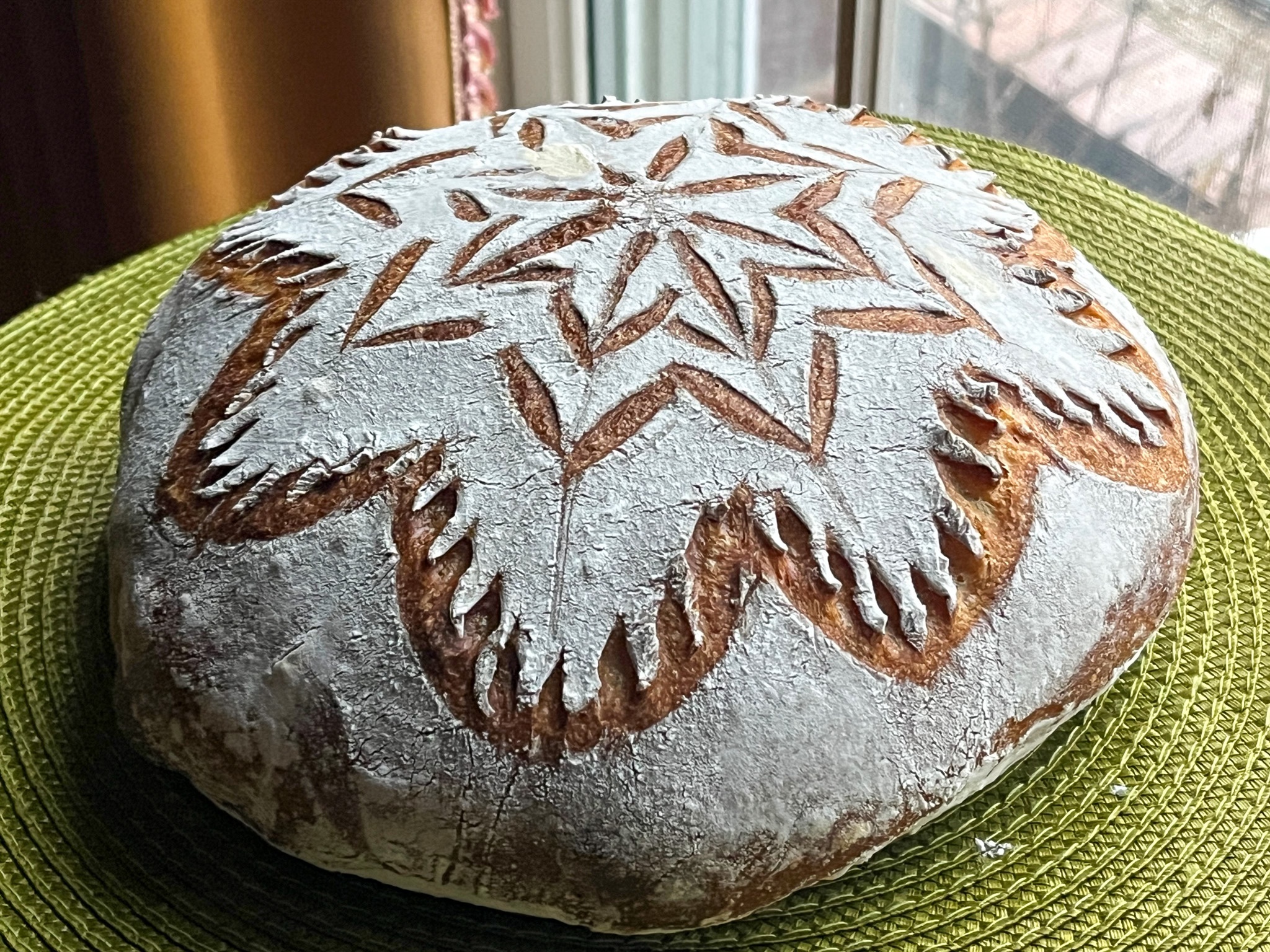
Comments: I love the yin-yang feel of this design which is quite popular for batard-shaped loaves, you can see examples everywhere in social media. Coupling razor blade with small scissors is all you need to get this simple look going.

Before I leave, let me share a few more designs of the recent past…


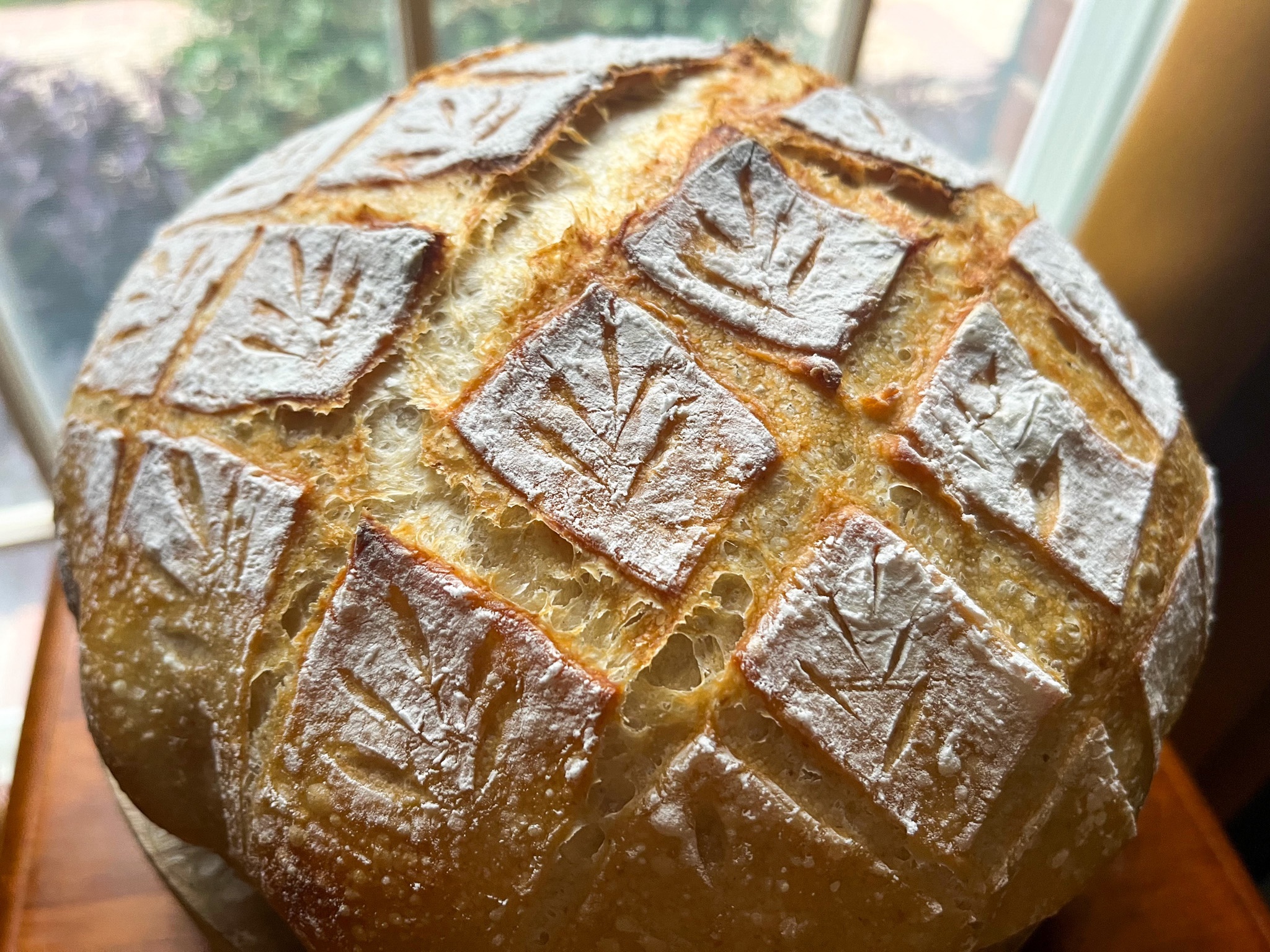
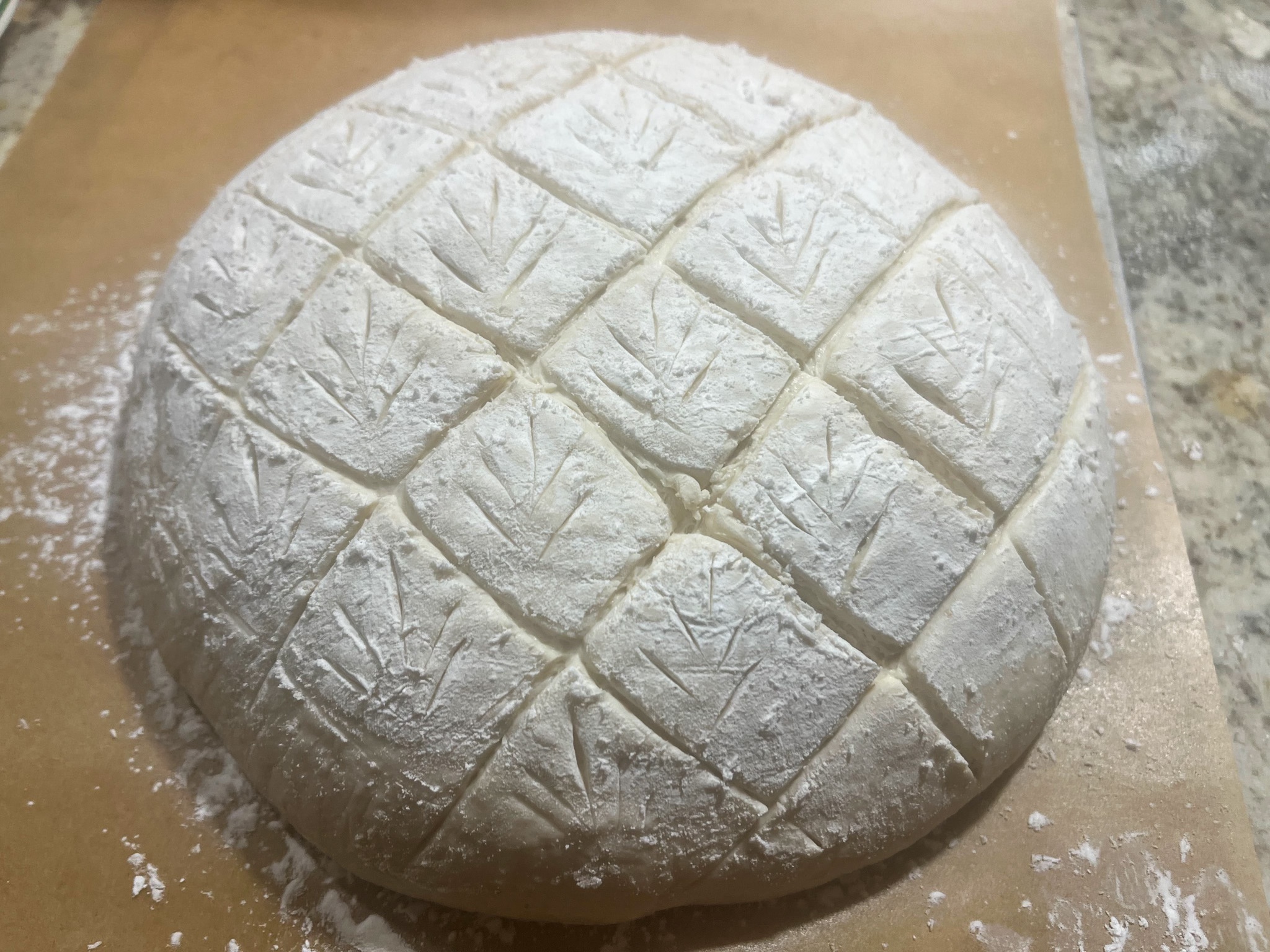
For the above look, a very simple grid is the initial scoring, then just a few extra touches in the center of each square.

.

Another batard shape that is super simple and effective, relying on a central deep cut and a few decorating light touches with the blade…

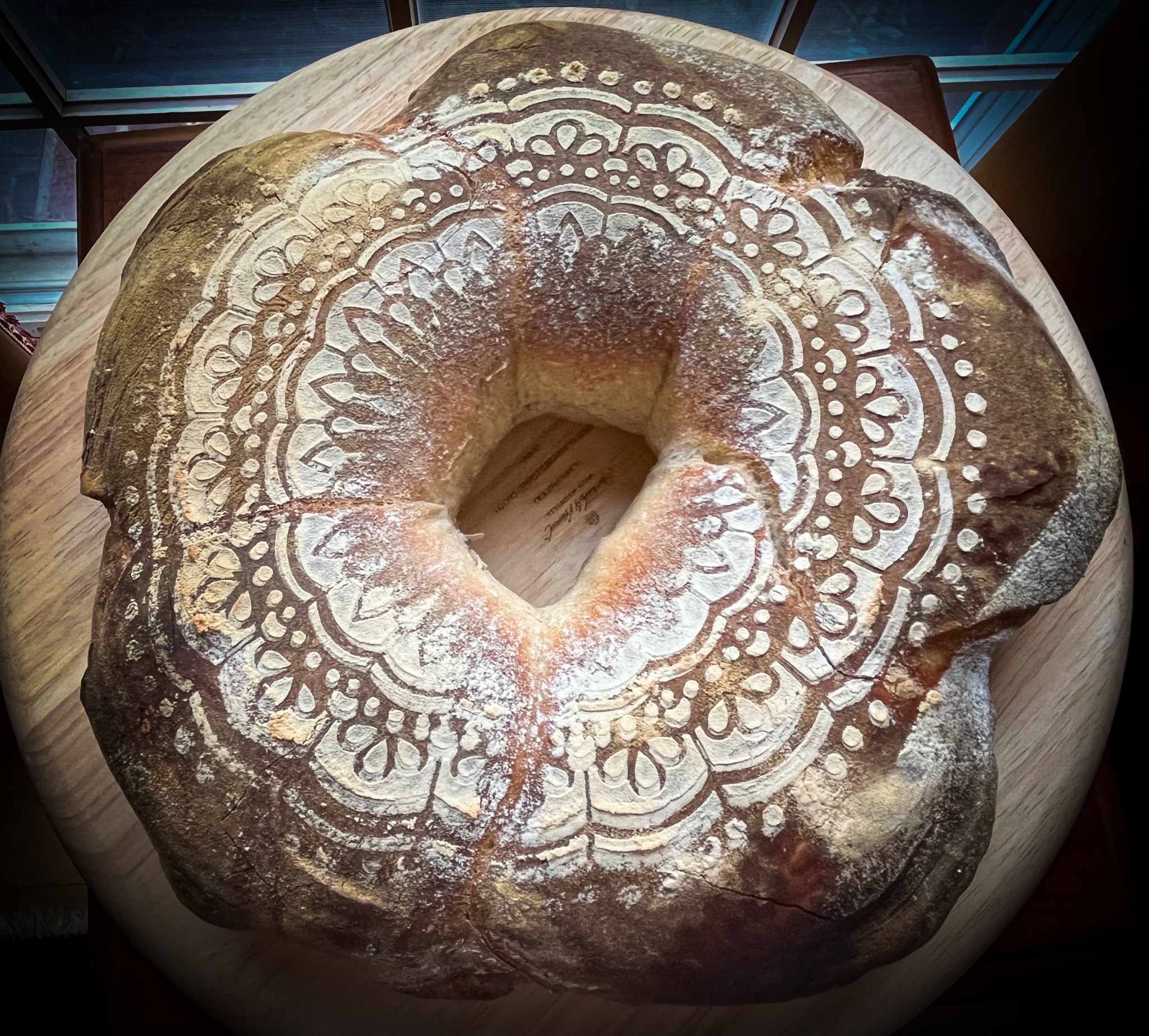
A little stencil adventure…

And a festive scoring coupled with a slightly heavier coating with tapioca flour…

That’s all for now, folks, stay tuned for more soon!

ONE YEAR AGO: Farro with Chickpeas and Spinach

TWO YEARS AGO: Bison a la Mode de Bourgogne

THREE YEARS AGO: Masala Mashed Potatoes

FOUR YEARS AGO: Lessons from Tanya: Sugar Cookie Silhouettes

FIVE YEARS AGO: Cherry-Chipotle Chicken Thighs

SIX YEARS AGO: White Chocolate Mini-Mousse with Sugared Cranberries

SEVEN YEARS AGO: You Say Ebelskiver, I say Falafel

EIGHT YEARS AGO: Happy Thanksgiving!

NINE YEARS AGO: Two Takes on Raspberries

TEN YEARS AGO: Spice Cake with Blackberry Puree & The Global Pastry Review

ELEVEN YEARS AGO: Own Your Kitchen with Cappuccino Panna Cotta

TWELVE YEARS AGO: Chicken Parmigiana, the Thriller

THIRTEEN YEARS AGO: Wild Mushroom Risotto

FOURTEEN YEARS AGO: Tartine Bread:  Basic Country Loaf 

FIFTEEN YEARS AGO:  Pugliese Bread

LA COURONNE LYONNAISE, TWO WAYS

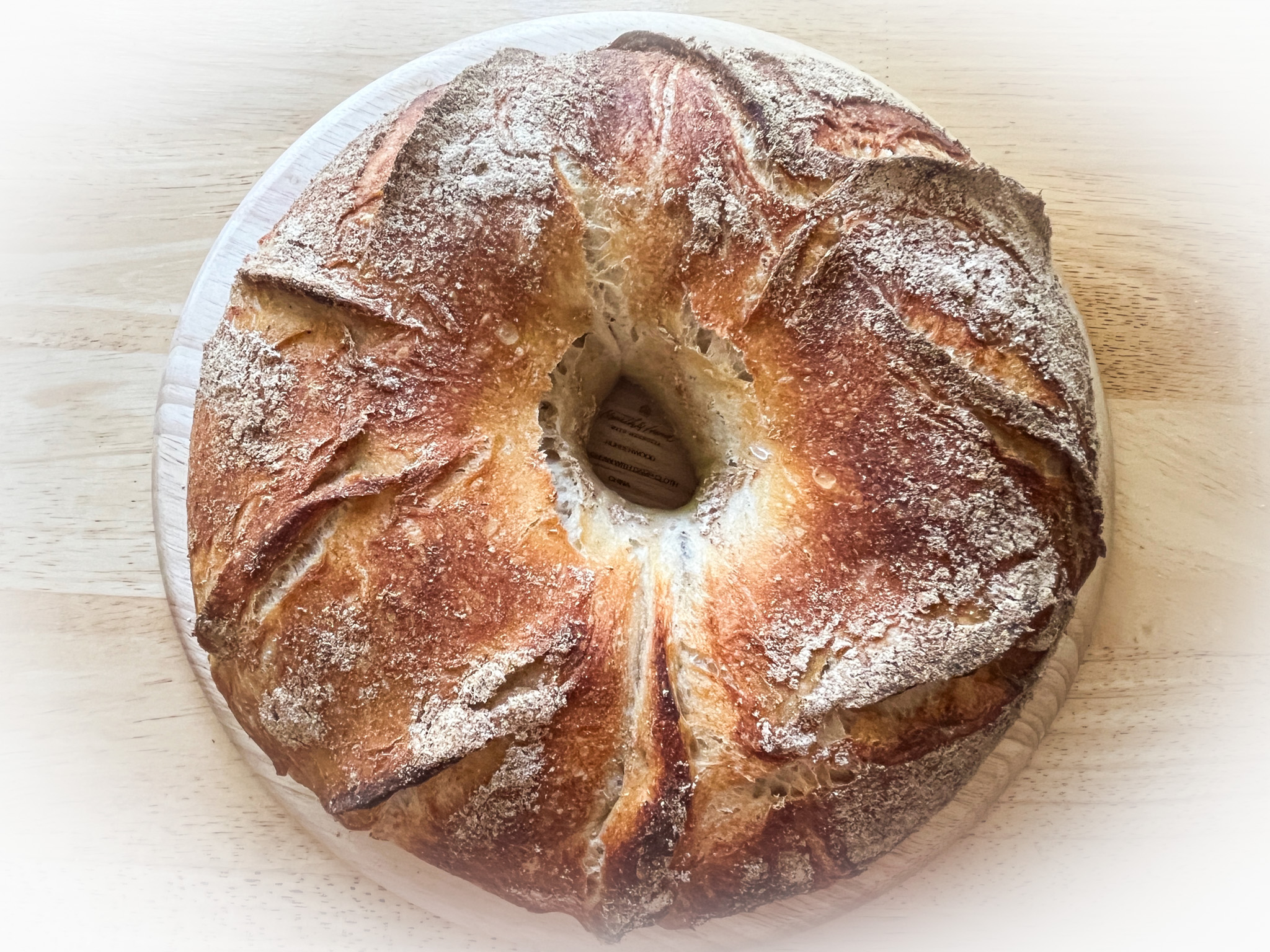
This bread originates in Lyon, and is shaped as a crown, therefore the name “couronne”. However, there are several ways to gild this lily. I am sharing two methods, the first one worked exactly the way I hoped, the second I consider a work in progress. So, yes, I will be back, hopefully with improvements on the second version…

.

METHOD ONE
A SIMPLE COURONNE


LA COURONNE LYONNAISE
(adapted from Henri-Luc’s blog)

530g bread flour
10g salt
160g sourdough starter at 100% hydratioin
300g water
rye flour for dusting

Mix sourdough starter in water and whisk to distribute well. Add bread flour and salt, incorporate either by hand or with a KitchenAid type mixer fitted with a hook dough for a few minutes. Proof at room temperature for 4 to 5 hours with folds at every 45 minutes.

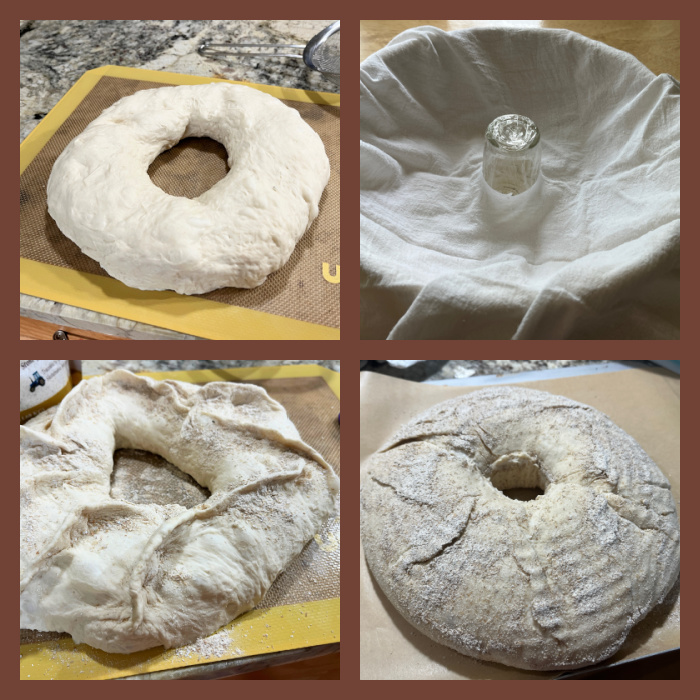
Prepare your round banetton to proof a crown, by placing a small glass or plastic container in the center. Cover with a cloth and flour it lightly with rye flour.

Pre-shape the dough as a round ball. Allow it to relax for 15 minutes. Make a hole in the center (traditionally bakers use their elbow, do what you feel is right…). Enlarge the whole until you get to the size of your round banetton. Now grab some rye flour with your fingers and pinch a series of alternating straight lines on the surface. Pinch the dough well to make a super sharp line of dough raising up. Then flour the surface lightly again and invert the dough on the banetton. Side with the ridges should go down. Proof at room temperature for 2 hours. Place a parchment paper on top, invert the bread over it and slide into the hot oven right away.

Bake at 450F over a stone with steam for 20 minutes, then remove the steam (I used a large roasting pan inverted over the stone as a lid). Bake for 20 to 25 minutes longer. If the bread darkens too much cover it with foil. Internal temperature should be around 210F.

Cool completely before slicing.

ENJOY!

to print the recipe, click here

Comments: This was such a fun bread baking adventure! I loved making the ridges and the way they gave the bread that incredibly nice rustic look once it baked. Make sure to use rye flour to dust the surface, it is going to make a big difference if you skip it. White flour won’t have the same effect.

.

METHOD TWO
COURONNE WITH FLAPS

The flaps were a big flop. What can I say? The real beautiful version would have them all lifted up from the surface of the bread, mine stayed more or less glued to the surface. This was my second attempt, the first one was worse, so you won’t be seeing that (wink, wink). The shaping is quite a bit more elaborate. You form pieces of dough that are about 200g in weight, then roll a flap coming out of it, and roll the ball into it. Place to proof with the flap down, open side to the edge of the banetton. Before closing the flap over the ball of dough, a little olive oil is used to brush the edge, so the dough won’t stick and will instead lift during baking. Pictures below give you a general idea of the shaping method.

I had several issues, including the fact that 200g per ball of dough was probably too much. I will revise the whole thing and try again, because I really REALLY want to make it work right. I love the stencil decoration made right before baking (I will share info on the stencil and banetton in my upcoming In My Kitchen post, on October 1st).

I hope you enjoyed this post, and maybe you can give this method a try. If you get your flaps not to flop, let me know your secret!

ONE YEAR AGO: Have a Heart

TWO YEARS AGO: Chocolate-Hazelnut Tartlets

THREE YEARS AGO: Turkey Taco Salad

FOUR YEARS AGO: Cheese and Pesto Emmer Roll-ups and Elaine’s Cookbook Review

FIVE YEARS AGO: Mango-Hazelnut Entremet Cake

SIX YEARS AGO: Lebanese Lentil Salad and a Cookbook Review

SEVEN YEARS AGO: Cottage Loaf

EIGHT YEARS AGO: Sourdough Loaf with Cranberries and Walnuts

NINE YEARS AGO: Sichuan Pork Stir-Fry in Garlic Sauce

TEN YEARS AGO: Our Green Trip to Colorado

ELEVEN YEARS AGO: Ditalini Pasta Salad

TWELVE YEARS AGO: Celebrate Wednesday with a Thai Seafood Curry

THIRTEEN YEARS AGO:  Post-workout Breakfast

FOURTEEN YEARS AGO: Semolina Barbecue Buns

FIFTEEN YEARS AGO: Lavash Crackers

SOURDOUGH BUBBLE BREAD

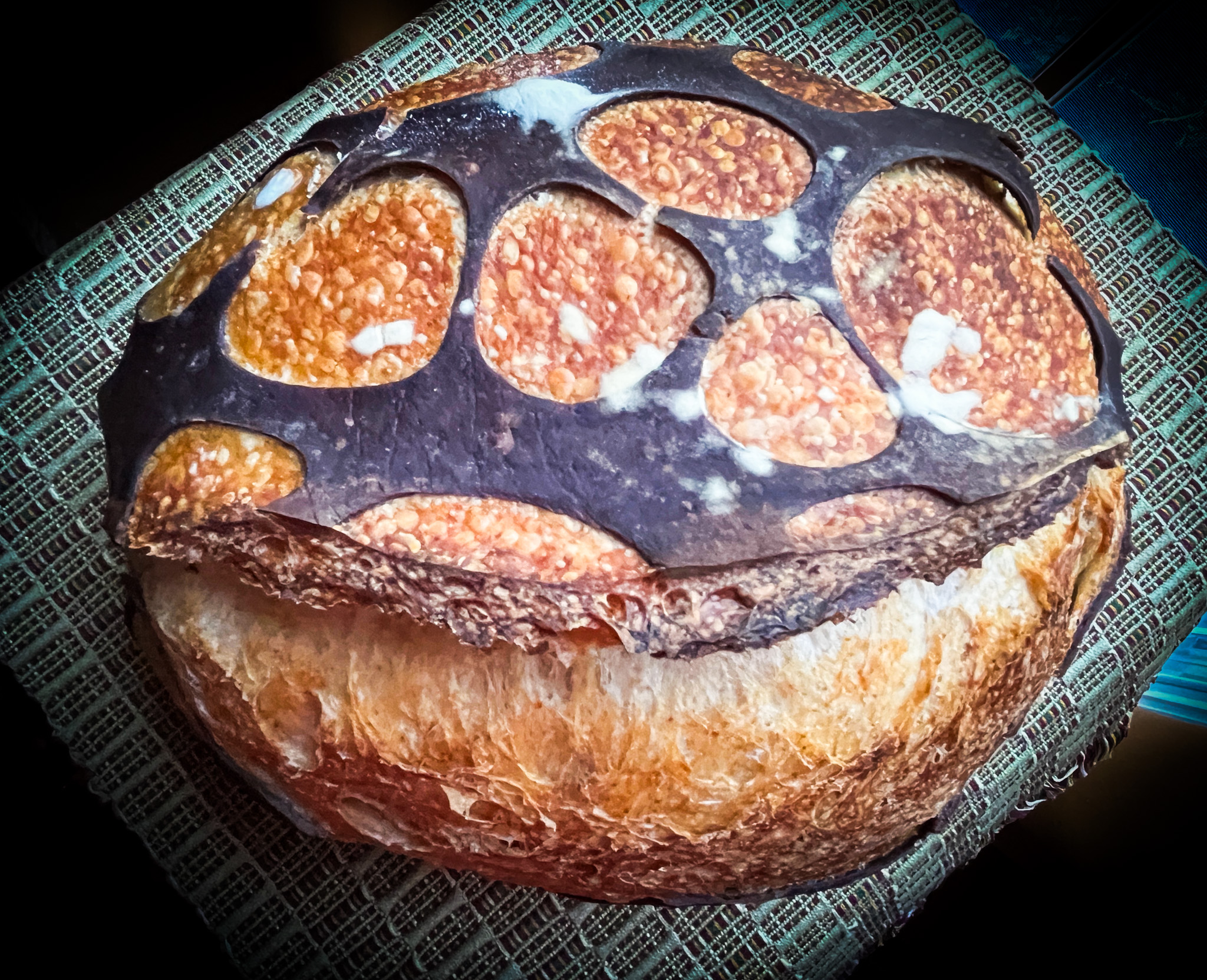
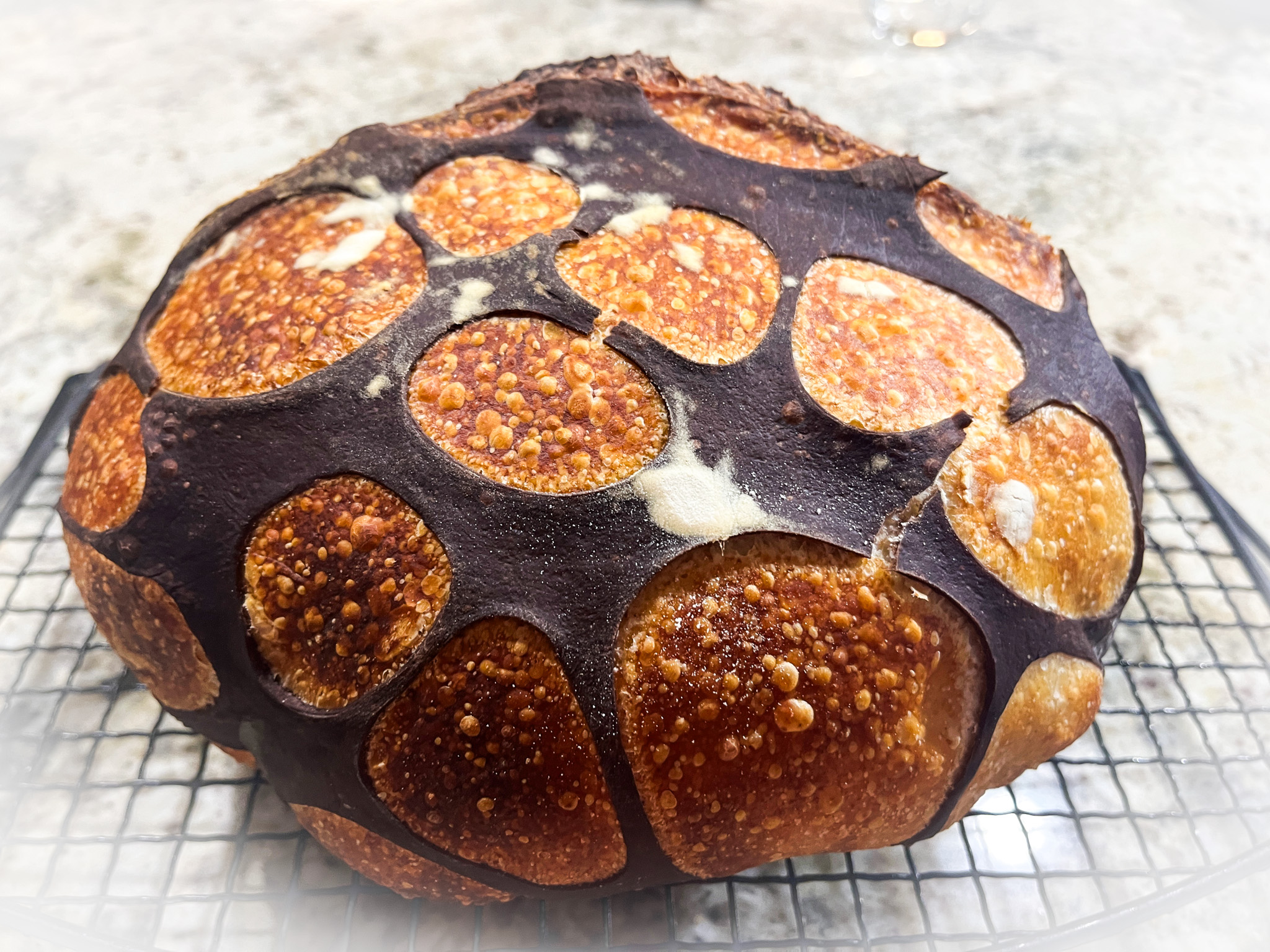
This is my third attempt at covering sourdough with a thin layer of a cocoa-dyed wrap. I stumbled by accident on a youtube site that got me lost for a while in the many possibilities of sourdough fun. She does incredibly beautiful loaves, pushing the envelope with gilding the lily. This is my first adventure following her overall method. The Bubble Bread.

Contrary to my usual method, which I consider simple and straightforward, this one involved autolysis, adding the starter and salt at different stages, and a lamination step. I followed her recipe to a T, although I opted for making only one loaf instead of two. The real game changer was the way she handled the cocoa-dyed dough. That is a must!

SOURDOUGH BUBBLE BREAD
(slightly modified from Hungry Shots)

for the main dough:
88g sourdough starter (100% hydration)
388g bread flour
50g spelt flour
270g water
9g salt

for the cocoa-wrap:
85g discarded sourdough
85g all-purpose flour
30g water
7g cocoa powder

Mix water with the two types of flour until combined. Leave at room temperature, covered, for one hour. Add the starter and mix until combined. Leave for 1 hour at room temperature. Add the salt and mix by kneading gently for about 4 minutes until incorporated. Leave at room temperature for 1 hour.

Spray a little water on your countertop and place the dough over it. Do a set of stretch and folds, and let it proof for one more hour at room temperature.

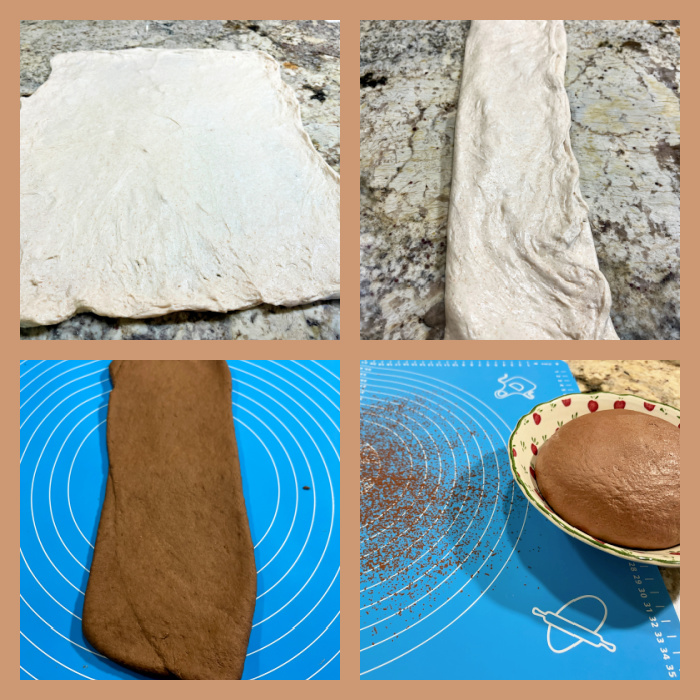
Laminate the dough (you can watch her youtube video if you have never done it). Allow it to rest for 90 minutes. Right after lamination, make the cocoa-dyed dough by mixing all the ingredients and kneading until fully smooth. To help with flexibility of the dough, roll it thinly with a rolling pin, fold it, and knead it again. Make sure the dough is very smooth and pliable before you form is into a ball and let it ferment at room temperature until you are ready to cover the dough with t.

Go back to the main dough: Do three sets of gentle foil colds (watch her video for details). Do the first one, wait 30 minutes to do the second one, 1 hour to do the third one. One hour after the third coil fold is done, you are ready to shape the dough and cover it with the cocoa wrap.

Roll out the cocoa dough to an extension that allows you to wrap the whole bread. Cut circles of different sizes with a cookie cutter. Shape the main dough as a batard (or round if you prefer), cover it with the cocoa dough, and place in the banneton. Proof for 30 minutes at room temperature, then place in the fridge overnight.

Next morning, heat oven to 450F. Invert the dough over parchment paper, make a deep slice off-center, and bake covered in a Dutch oven for 30 minutes, remove the cover and bake for 20 minutes more. Allow it to cool completely before slicing.

ENJOY!

to print the recipe, click here

.

Comments: This was so much fun to make! I have tried to cover sourdough with a dark wrap using the pie lattice cutter, but I did not care for the way it turned out (see it on this post of my past). However, the key is making the dough extensible enough, and that is achieved by thorough kneading, rolling, kneading again. If you go through the process, your outcome will be much better.

I would cut holes of different sizes next time, some a lot smaller, like she did, but this time I was a bit too anxious and nervous about the whole thing, so I kept is simple. Used only two sizes of circles. I could not take pictures of the wrapping of the dough, as I was alone in the house and it was impossible to do it on my own, but her videos show it all in great detail. Check the bubble bread video here.

The bread had amazing oven-spring, particularly considering that the wrapped dough constrains it quite a bit. As to the crumb, it was very moist and tender, in fact the husband professed it to be his very favorite of this year! Can you say mission accomplished?

I am not convinced that the lamination and coil-folding are absolutely necessary to bake this type of bread, but definitely the handling of the cocoa dough will be key. I hope you give this method a try, it is so cool to see the outcome when you get that lid open after 30 minutes!

ONE YEAR AGO: Watermelon Salad

TWO YEARS AGO: Kashmiri Chicken Thighs

THREE YEARS AGO:  A Vegan Trilogy

FOUR YEARS AGO: The Mystifying Hurricane Roll

FIVE YEARS AGO: Pop-Tarts with Strawberry Balsamic Jam

SIX YEARS AGO: Ptichye Moloko, a Russian Dessert

SEVEN YEARS AGO: Cheesy Low-Carb Zucchini Tarts

EIGHT YEARS AGO: Blogging Hiatus

NINE YEARS AGO: Apricots, Three Ways

TEN YEARS AGO: Up Close and Personal with Kale

ELEVEN YEARS AGOBlack Berry Cherry Sorbet

TWELVE YEARS AGO: Asparagus Pesto

THIRTEEN YEARS AGO: Chocolate and Chestnut Terrine

FOURTEEN YEARS AGO: Under the spell of lemongrass

FIFTEEN YEARS AGO: Greens + Grapefruit + Shrimp = Great Salad!


COCOA LATTICE SOURDOUGH

I consider this a work in progress, but for a first time using this technique, I am happy with it. You can use pretty much any formula you like, but go for a minimum of 500g total flour, as you will be removing 150g of dough to make the lattice. To cut the lattice, consider getting this gadget. You can always try to cut it by hand, but I imagine that would be quite tricky… at least for me!

COCOA LATTICE SOURDOUGH
(from The Bewitching Kitchen)

400g white bread flour
150g whole wheat
80g sourdough starter at 100% hydration
9 g salt
360g water (I had to add flour as I mixed the dough, it was too sticky)
30g cocoa powder (see comments about it in the method description)

After mixing the dough in the Kitchen Aid for 4 to 5 minutes as I normally do, I went through a series of folding/kneading at 45 minutes intervals for a total of 5 cycles. At that point, I removed 150g of the dough and added the cocoa powder, kneading it into the dough, as best as I could. Not all the amount was incorporated, but the dough was dark enough.

The main dough was shaped as a boule and placed in the fridge overnight. The dark, smaller portion was covered with plastic wrap and also placed in the fridge. Next morning the dark dough was rolled as thinly as possible and cut with the pie lattice gadget. That was carefully placed on top of the main dough right before baking. Keep in mind that the moment the lattice touches the dough you won’t be able to move it and adjust it.

The bread was baked at 450F for 30 minutes covered, and 15 minutes without a lid. Slice after completely cool.

ENJOY!

to print the recipe, click here

Comments: The picture above was my first attempt at rolling the lattice, and it was too thick, it barely opened at some parts. So I gathered that dough and rolled it again. Try to go as thinly as possible, which was not very easy, the gluten tends to put up a fight. I definitely want to do it again, using other colors, but mainly making sure to roll the lattice thinner. Wish me luck! Why don’t you try it also and let me know how it goes for you? 😉

We did not detect any particular cocoa taste on the bread. The dark part gets a different texture, almost like a cracker. We both loved it… Stay tuned for more lattice adventures in the bread world!
.

ONE YEAR AGO: Pistachio Sugar Cookies, the Uzbek Way

TWO YEARS AGO: Carrots and Zucchini Stir-Fry with Peanut Sauce

THREE YEARS AGO: Cookie Therapy, Anyone?

FOUR YEARS AGO: The Quasi-Vegan Quiche

FIVE YEARS AGO: Not Quite Moqueca

SIX YEARS AGO: Roasted Butternut Squash with Cashew Nuts

SEVEN YEARS AGO: Mississippi Roast and the Open Mind

EIGHT YEARS AGO: Walnut-Raisin Bran Muffins

NINE YEARS AGO: A Star is Born!

TEN YEARS AGO: Chestnut Flour Sourdough Bread

ELEVEN YEARS AGO: Kinpira Gobo and Japanese Home Cooking

TWELVE YEARS AGO: Walnut Sourdough

THIRTEEN YEARS AGO: Thai Chicken Curry

FOURTEEN YEARS AGO: Zen and the art of risotto