CAKES TO CELEBRATE EASTER


I am thrilled to share these because they were my first cakes frosted using my electric turntable, a wonderful gift from my hubby last month (check it out at my last In My Kitchen post). Amazing how much easier it was to get a smooth frosting! Without further ado, here is the first cake, fully dressed for an Easter Party.

.

VANILLA-ALMOND CAKE WITH RASPBERRY FILLING
(from The Bewitching Kitchen)

345 grams (3 cups) cake flour
2 teaspoons)baking powder
½ teaspoon baking soda
½ teaspoon salt
226 grams (2 sticks) unsalted butter, softened
375 grams (1 + 3/4 cups) granulated sugar
2 teaspoons vanilla extract
1 teaspoon almond extract
160 grams egg whites (about 5 eggs)
170 grams (¾ cup) sour cream
170 grams (¾ cup) whole milk
Swiss meringue buttercream for frosting
seedless Raspberry jam for filling

Prepare three 6-inch round cake pans lining them with parchment and spraying with baking spray.

Heat oven to 350F.

Sift together the cake flour, baking powder, baking soda and salt. Reserve. Mix the sour cream and milk together, making sure they are at rom temperature and well incorporated. Reserve.

n the bowl of a stand mixer fitted with the paddle attachment, combine the butter and sugar. Cream together on medium speed until very light and fluffy, about 5 minutes. Stop the mixer and scrape down the sides and bottom of the bowl halfway through mixing. Slowly pour in the egg whites while the mixer continues running.

Alternate adding the dry ingredients into the bowl in three additions with the milk/sour cream mixture in two additions, starting and ending with the dry ingredients. Mix on medium speed between additions until almost fully incorporated. Finish mixing by hand with a spatula.

Transfer the batter into the prepared pans. Bake for about 25 minutes, until a tester comes out clean or with just a few moist crumbs attached. Cool the cakes in their pan completely on a cooling rack before turning out of the pan.

SWISS MERINGUE BUTTERCREAM

Basis formula: 1X egg whites + 2X sugar + 2X butter

For the three layer 6-inch cake I started with 200g egg whites. The magic is all in the temperature control.

Start by dicing your butter and placing at room temperature for at least a couple of hours before making the buttercream. The reason for that is the closer the temperature of the egg whites/sugar and the butter match each other, the smoother the whole preparation will go. All problems with Swiss meringue buttercream happen when there is a sharp difference between those temperatures.

Mix sugar and egg whites and whisk well, then over a bain-marie bring them to 140 F minimum. I take it to 149F because I find it makes a nicer emulsion to work with. Place in a KitchenAid type mixer fitted with the whisk attachment and whisk on high speed for about 10 minutes. You want a stiff meringue.

Most recipes will tell you that it will be enough to bring the mixture to room temperature level, or not feeling warm if you touch the bowl. However, if you measure the temperature inside the bowl you will notice it will probably still be at mid 90’s Fahrenheit, way above the butter that is waiting to be incorporated.

My advice is to turn the mixer off and walk away. Come back in 10 minutes, give it a 20 sec mix, check, the temperature. Still a bit too high? Walk away and repeat the process. I find that if the egg white mixture is around 80F it will be ok to incorporate with the butter, which might be around 72F or so.

Now start incorporating the butter with the mixer running, you can squish it with your fingers as you drop them to help incorporate even better. Once all the butter is added, whisk at high speed for a couple of minutes, change to the paddle attachment and mix for another couple of minutes to smooth out air bubbles.

Two problems might happen if the temperature was not a real good match: buttercream will be grainy (butter too cold), or soupy (meringue too hot). Both can be fixed by either warming the bowl (hair-dryer works great), or placing it in the fridge for 15 minutes and whisking again. Contrary to popular belief, Swiss meringue is not that tricky and can always be salvaged even if it looks like Armageddon in a bowl.

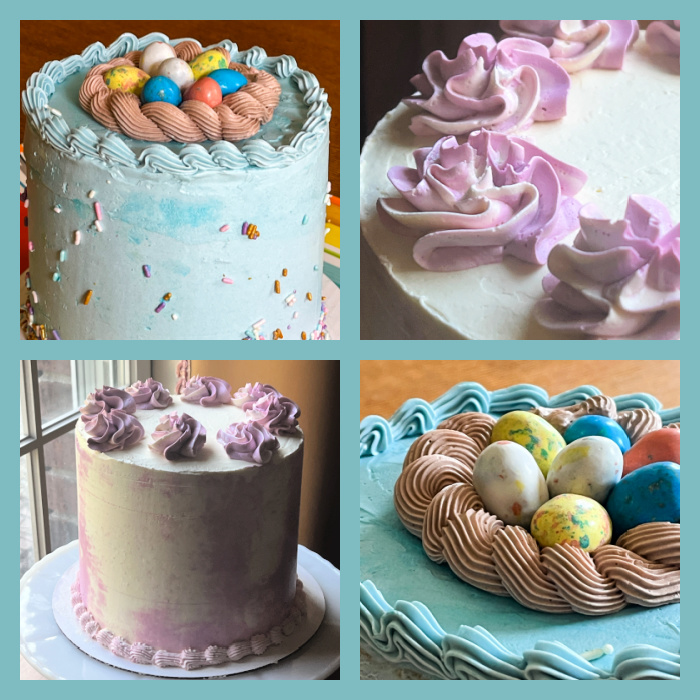
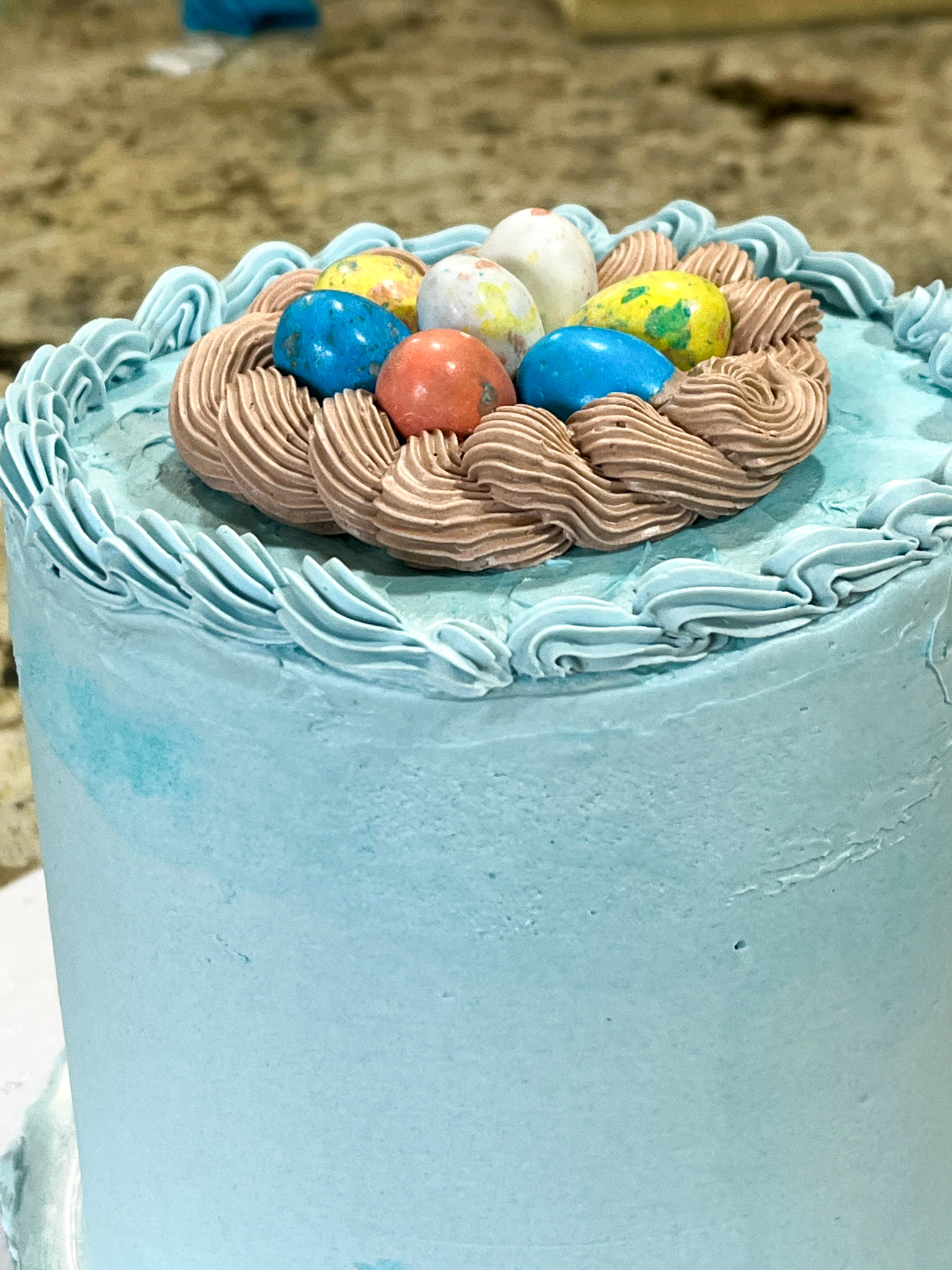
For the layers I added a circle of white buttercream on the perimeter of the cake, filled the center with raspberry jam, and repeated that for the upper layer. I crumb coated with white frosting, then dyed most of the buttercream with Sky Blue (just a couple of drops), and the tiniest amount of black to mute the tone. A small portion was dyed brown for the nest. Malted chocolate eggs and sprinkles finished the decor.

ENJOY!

to print the recipe, click here

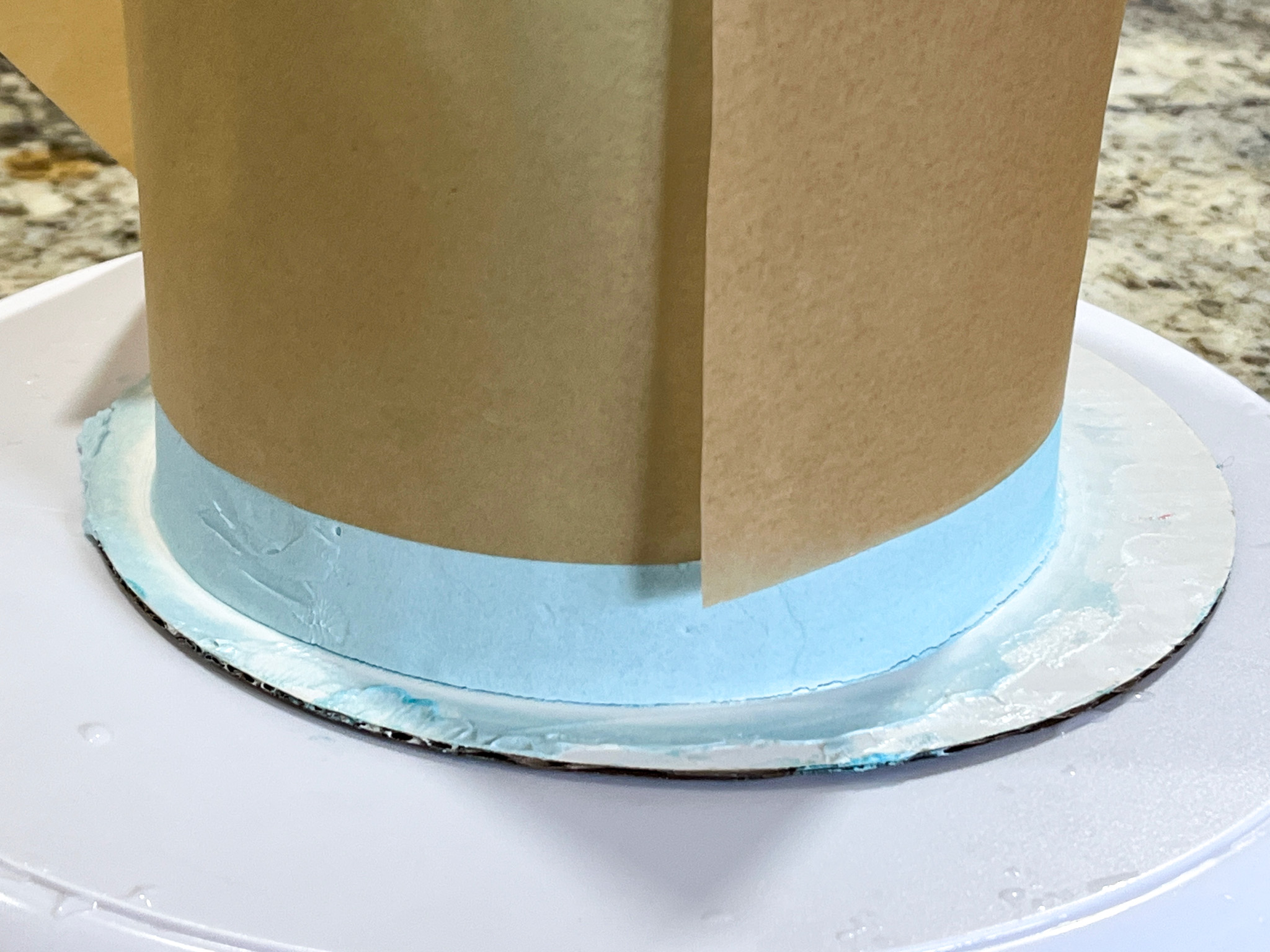
Comments: This is pretty much like a wedding type cake, very white because you omit using egg yolks. It is delicate and moist, truly one of my favorites for layered cakes. I adapted the recipe from versions that call for more sugar, I prefer the cake a little less sweet. Sugar is important for structure so there is a limit of how much you can reduce, but this formula works great. My rookie mistake was to use parchment paper to add the sprinkle border at the bottom, and it took me so long to do it, that the buttercream warmed up and the paper got stuck at places. All my hard work to get the smooth surface was a bit compromised, but nothing that strategically placed sprinkles would not fix!

Feedback on the cake was wonderful, I cannot show you the cut cake as I dropped it whole and it was cut later in the evening. But I hope it looked ok inside…

Moving on…

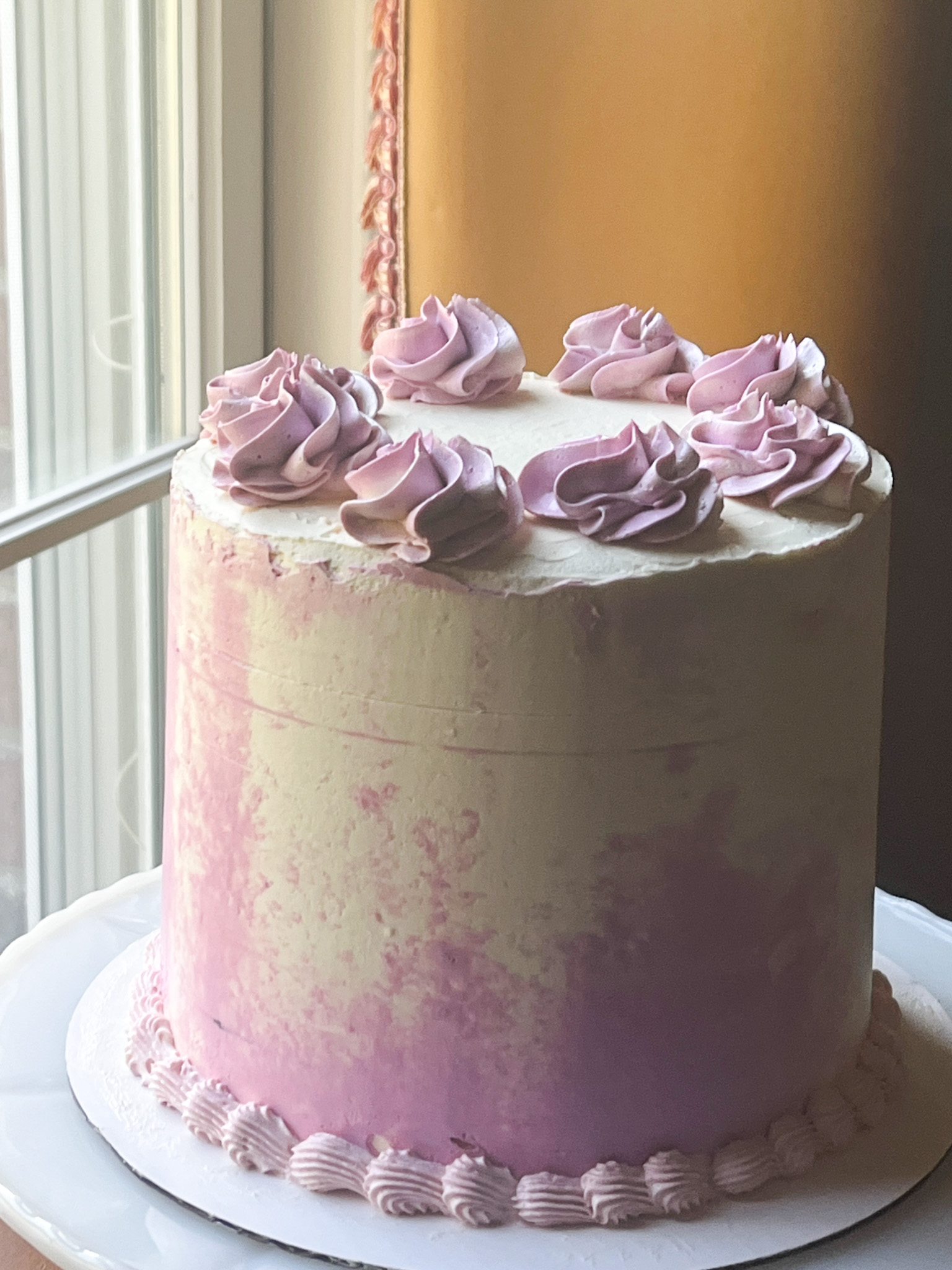
LEMON POPPY SEED LAYERED CAKE WITH BLACKBERRY FILLING

I cannot share this recipe because it is copyrighted from a very interesting book called “I’LL BRING THE CAKE” by Mandy Merriman. It is unusual in the sense that all cakes start from a boxed mix, but they are heavily doctored. If you are totally against boxed mixes, the book is not for you, but I wanted to give those a try and her cakes are quite delicious.

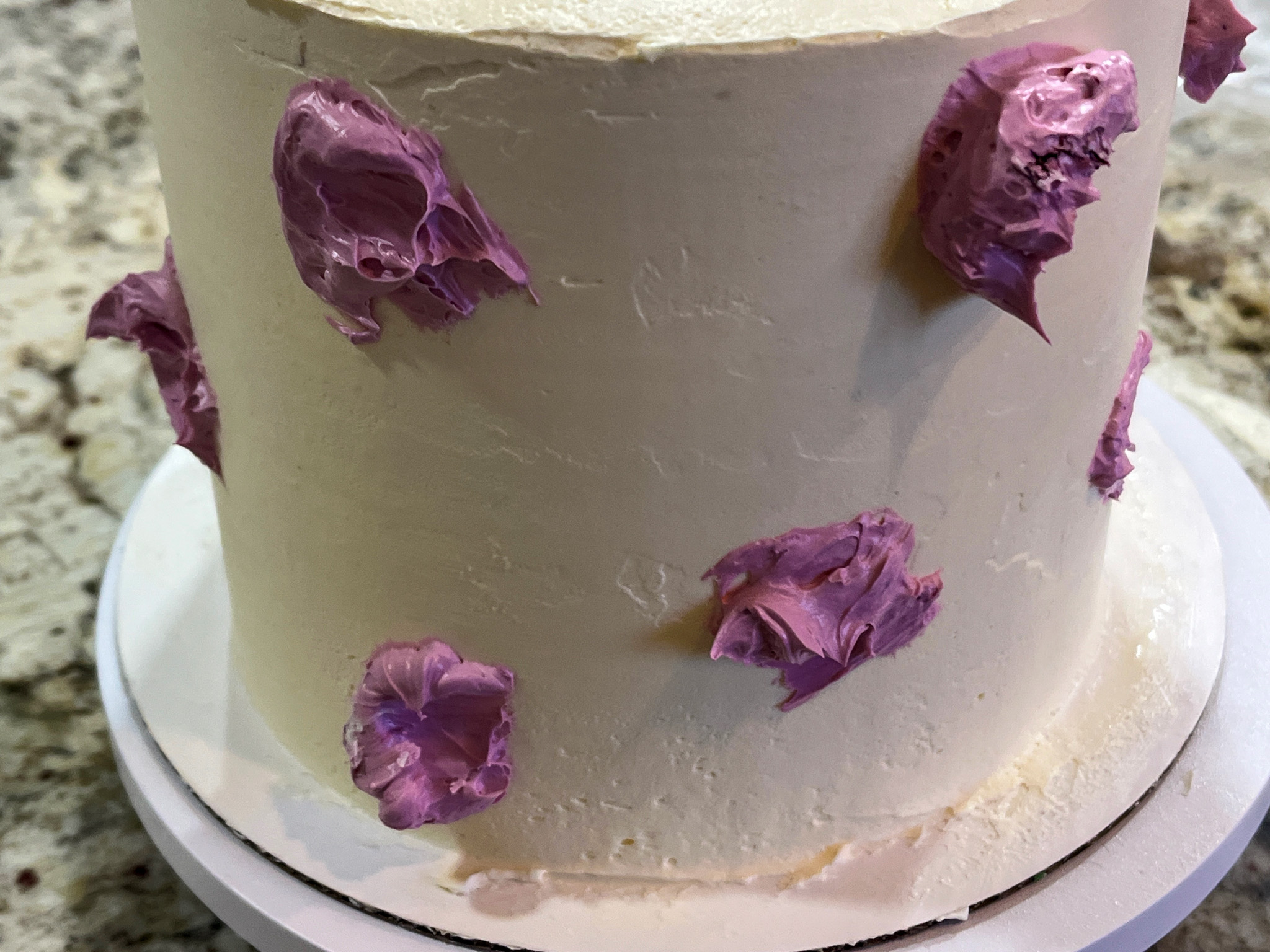
This was my very first cake using the turntable, and I opted for a watercolor effect, which started by adding blotches of darker color all over the frosted cake.

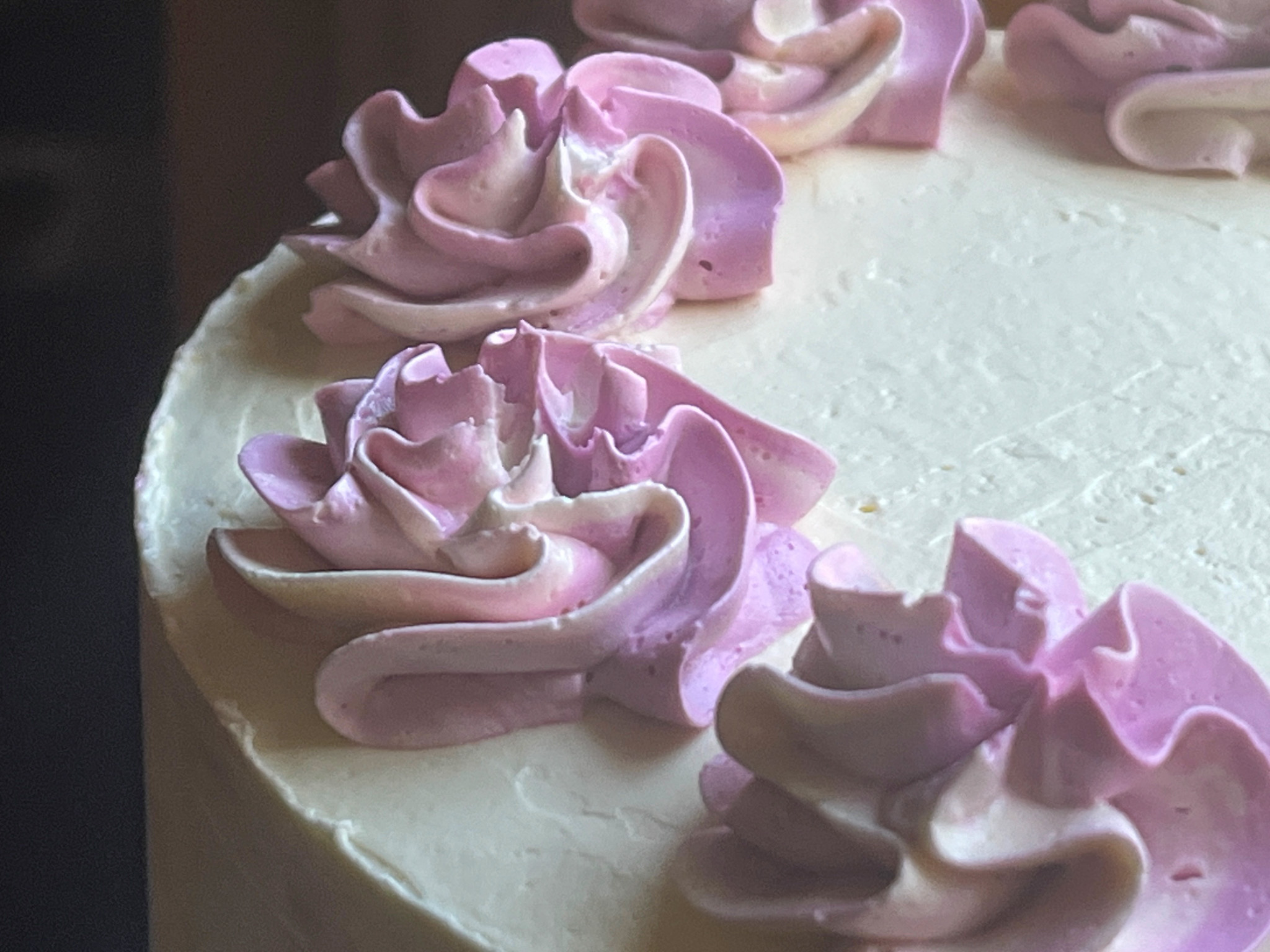
Then you just turn the cake and allow the color to mingle with the background until you are satisfied. For the decorations on top I mixed the white with the mauve-dyed buttercream and used the trusty 1D tip for rosettes.

I hope you found some inspiration for your Easter festivities with this post!

ONE YEAR AGO: Flower Stencil Sourdough

TWO YEARS AGO: Happy Easter!

THREE YEARS AGO: Mini-Blueberry Cakes

FOUR YEARS AGO: Wood Plank Cookies, Learning from the Best

FIVE YEARS AGO: OMG Spinach Pies

SIX YEARS AGO: Avgolemono Soup, My Way

SEVEN YEARS AGO: Sourdough Chocolate Twist Bread

EIGHT YEARS AGO: Dan Lepard Times Three

NINE YEARS AGO: Turkey Portobello Burger

TEN YEARS AGO: Raspberry Ricotta Cake

ELEVEN YEARS AGO: In My Kitchen, April 2014

TWELVE YEARS AGO: Whole-Wheat Pasta with Lemony Tomatoes and Spinach

THIRTEEN YEARS AGO: Blood Orange Duck: A work in progress

FOURTEEN YEARS AGO: Grilled Mahi-mahi with citrus marinade

FIFTEEN YEARS AGO: Memories of Pastéis

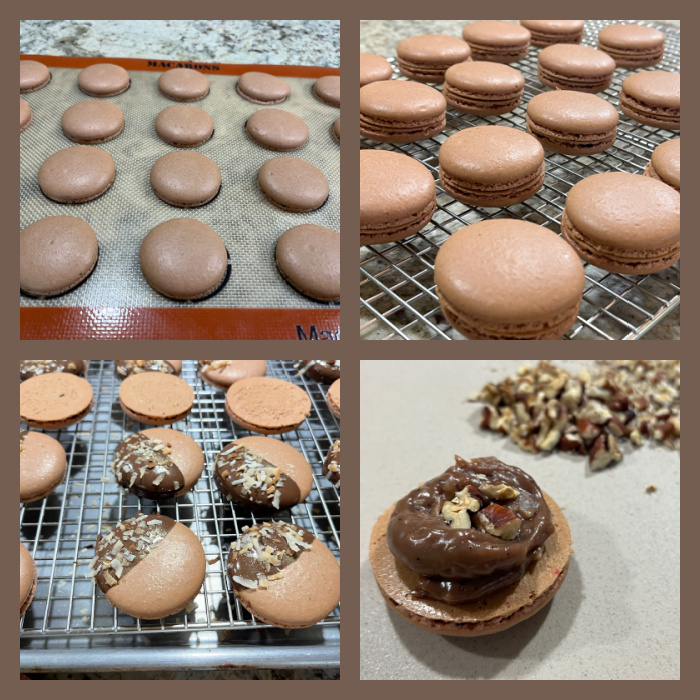
GERMAN CHOCOLATE MACARONS

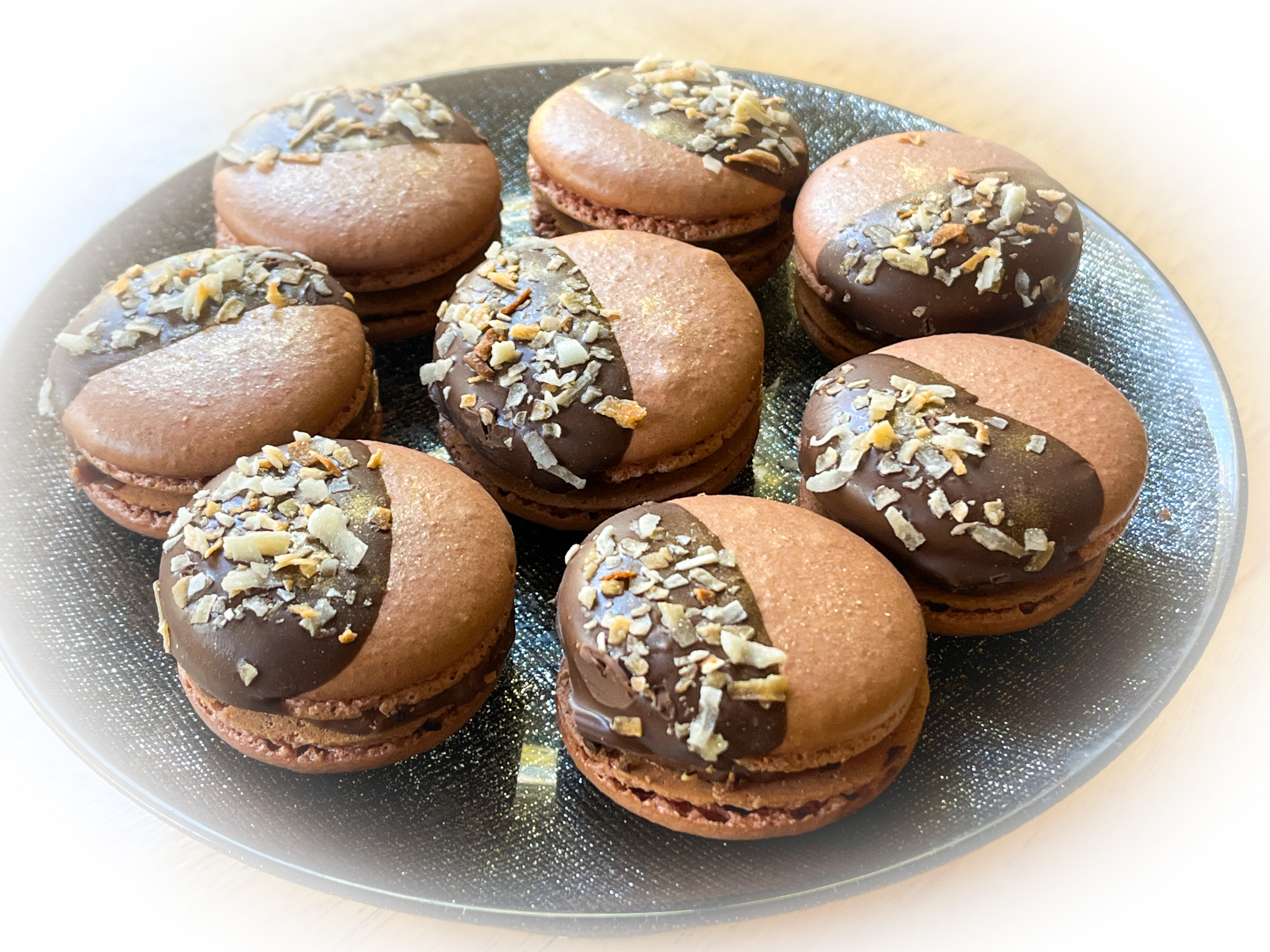
These were made with a colleague from our department in mind, it was a big Birthday for our IT wizard who is also a lover of German Chocolate Cake. I decided to make a filling that started as a brigadeiro would, but with coconut for good measure. Some toasted pecans in the center. And a coating with chocolate. Gold luster powder to add the mandatory bling, as if you don’t sparkle on a Birthday there is something wrong with you!


GERMAN CHOCOLATE MACARONS
(from the Bewitching Kitchen)

For the shells:
200g powdered sugar
115 g almond flour, preferably super fine
115 g egg whites at room temperature (approx. 4 eggs)
1/8 tsp of cream of tartar (optional)
100 g granulated sugar
¼ tsp vanilla paste or extract
brown and a tiny bit of red gel food color

Line 3 heavy baking sheets with parchment/baking paper or Silpat mats. Layer the powdered sugar and almond flour in a food processor. Pulse until the mixture looks like fine meal, about 12 pulses. Pass through a sieve and transfer to a small bowl or to a sheet of parchment/baking paper. Set aside.

Place the egg whites and cream of tartar in the bowl of a stand mixer fitted with the whisk attachment. Make sure that the bowl and the whisk are impeccably clean. Starting on medium speed, whip the whites with the cream of tartar until they look like light foam. The whites should not appear liquid. The foam will be light and should not have any structure.

Slowly rain in the granulated sugar in five additions, trying to aim the stream between the whisk and the side of the bowl. Turn the speed up to high. Continue to whip the meringue until it is soft and shiny. It should look like marshmallow creme (marshmallow fluff). Add the vanilla. Whip the egg whites until the mixture begins to dull and the lines of the whisk are visible on the surface of the meringue. Check the peak. It should be firm. Transfer the whites to a medium bowl, add the gel color.

Fold in the almond flour mixture in two increments. Paint the mixture halfway up the side of the bowl, using the flat side of a spatula. Scrape the mixture down to the center of the bowl. Repeat two or three times, then check to see if the mixture slides slowly down the side of the bowl. Put the mixture in a piping bag fitted with your choice of piping tip (round, ¼ or ½ inch in diameter or 6 – 12 mm). Pipe circles. Slam each sheet hard four to six times on the counter/worktop. Let the unbaked macarons dry until they look dull but not overly dry. Drying time depends on humidity. In a dry climate, the macarons can dry in 15 to 20 minutes; in a humid climate, it can take 35 to 40 minutes.

While the macarons are drying, heat the oven to 300 F. Bake one sheet at a time on the middle rack. Check in 11 minutes. If the tops slide or move (independently of the ‘feet’ when you gently twist the top), then bake for 2 to 3 more minutes. Check one or two. If they move when gently touched, put them back in the oven for 1 to 2 more minutes until they don’t move when touched. Let the macaroons cool for 10 minutes before removing from the pan. The macarons should release without sticking.

Assemble the macarons: find two macarons similar in size and add a good amount of filling to the bottom of one of them. Place the other on top and squeeze gently to take the filling all the way to the edge. Store in the fridge for 24 hours for perfect texture.

For the filling:
1 can condensed milk
1 tablespoon butter
1/4 cup shredded unsweetened coconut
1 tbsp cocoa powder
toasted pecans, chopped fine
melted dark chocolate or candy melts
toasted sweetened coconut
golden luster spray (optional)

Before filling the shells, melt chocolate or candy melts and dip ONE shell that will be the top half way into it. Immediately sprinkle toasted coconut on top.

Make a “brigadeiro” mixture by adding condensed milk, butter, cocoa powder and coconut to a sauce pan. Heat in medium heat constantly stirring until the mixture releases from the bottom of the pan. Transfer to a bowl and let it cool, but do not refrigerate. You can pipe it on the shells if it is still slightly warm, but not too hot.

Add a circle of coconut brigadeiro to a bottom shell, sprinkle a little bit of pecans in the center. Cover with the decorated and fully set top shell. Spray gold luster if you like. Place shells in the fridge overnight.

ENJOY!

to print the recipe, click here

Comments: I normally prefer not to add cocoa to the shells, just to the filling, because macarons are finicky enough and sometimes “stuff happens” when you add cocoa. I had never used brigadeiro to fill them, and from the feedback I got, it worked quite well. I did not have a macaron but tried the brigadeiro mixture and that is one good tasting brigadeiro, I might repeat it and roll it like the traditional stuff.

ONE YEAR AGO: Dressing up the Oreo Cookie

TWO YEARS AGO: OMG Roasted Sweet Potatoes

THREE YEARS AGO: Air-Fried Eggplant Raita

FOUR YEARS AGO: Turkey-Pumpkin Roulade with Cider Sauce

FIVE YEARS AGO: Strawberry-Vanilla Mini-Cakes

SIX YEARS AGO: Bourbon-Glazed Pork Tenderloin with Pea Pesto

SEVEN YEARS AGO: Chocolate Chip Cookies from Naturally Sweet

EIGHT YEARS AGO: Little Bites of Paradise

NINE YEARS AGO: Maple-Glazed Pumpkin Bread

TEN YEARS AGO: In My Kitchen, October 2014

ELEVEN YEARS AGO: Grilled Steelhead Trout

TWELVE YEARS AGO: Brown Butter Tomato Salad

THIRTEEN YEARS AGO:  Spelt and Cornmeal Rolls

FOURTEEN YEARS AGO: Roasted Potato and Olive Focaccia

FIFTEEN YEARS AGO: Multigrain Bread Extraordinaire

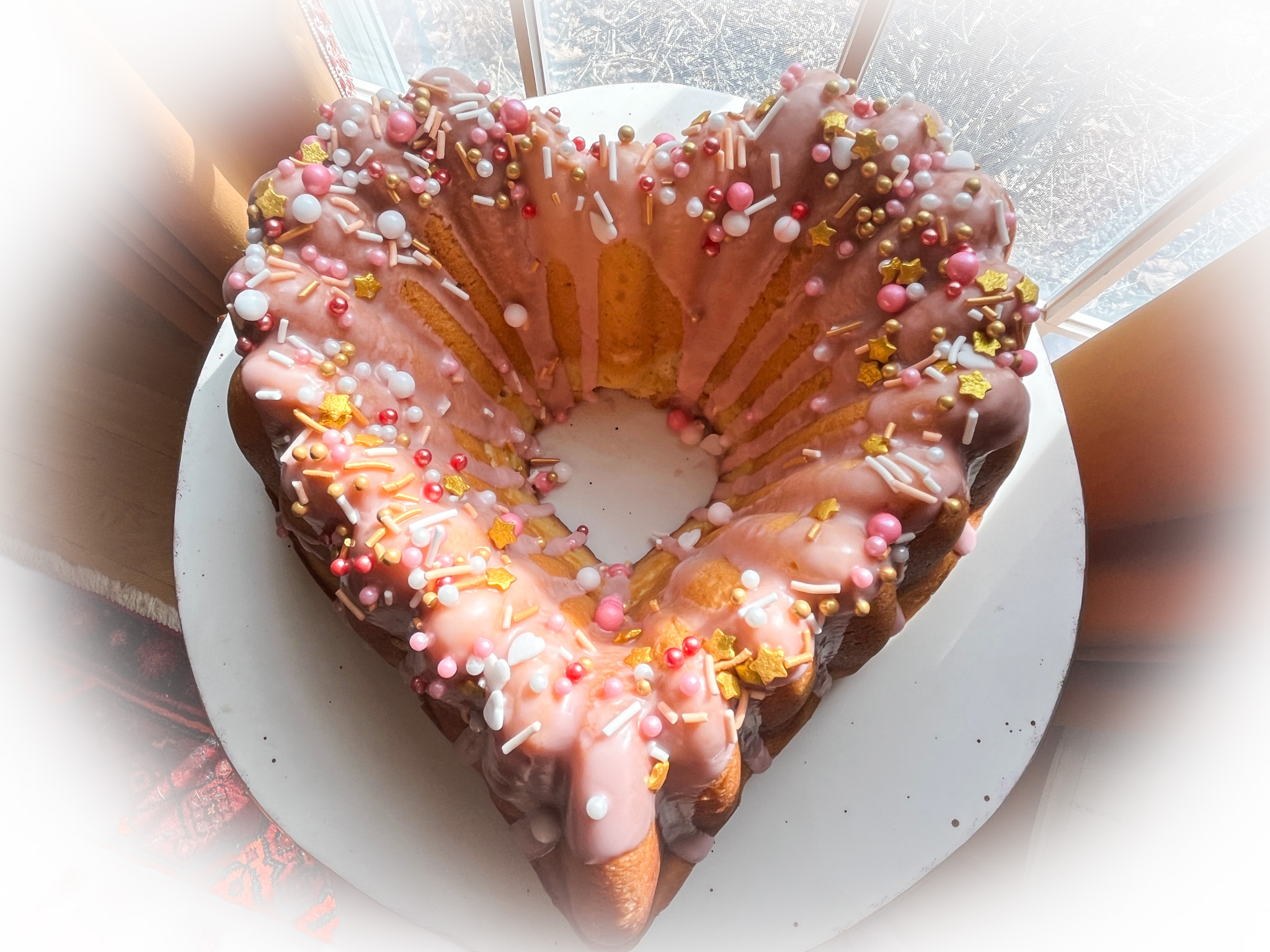
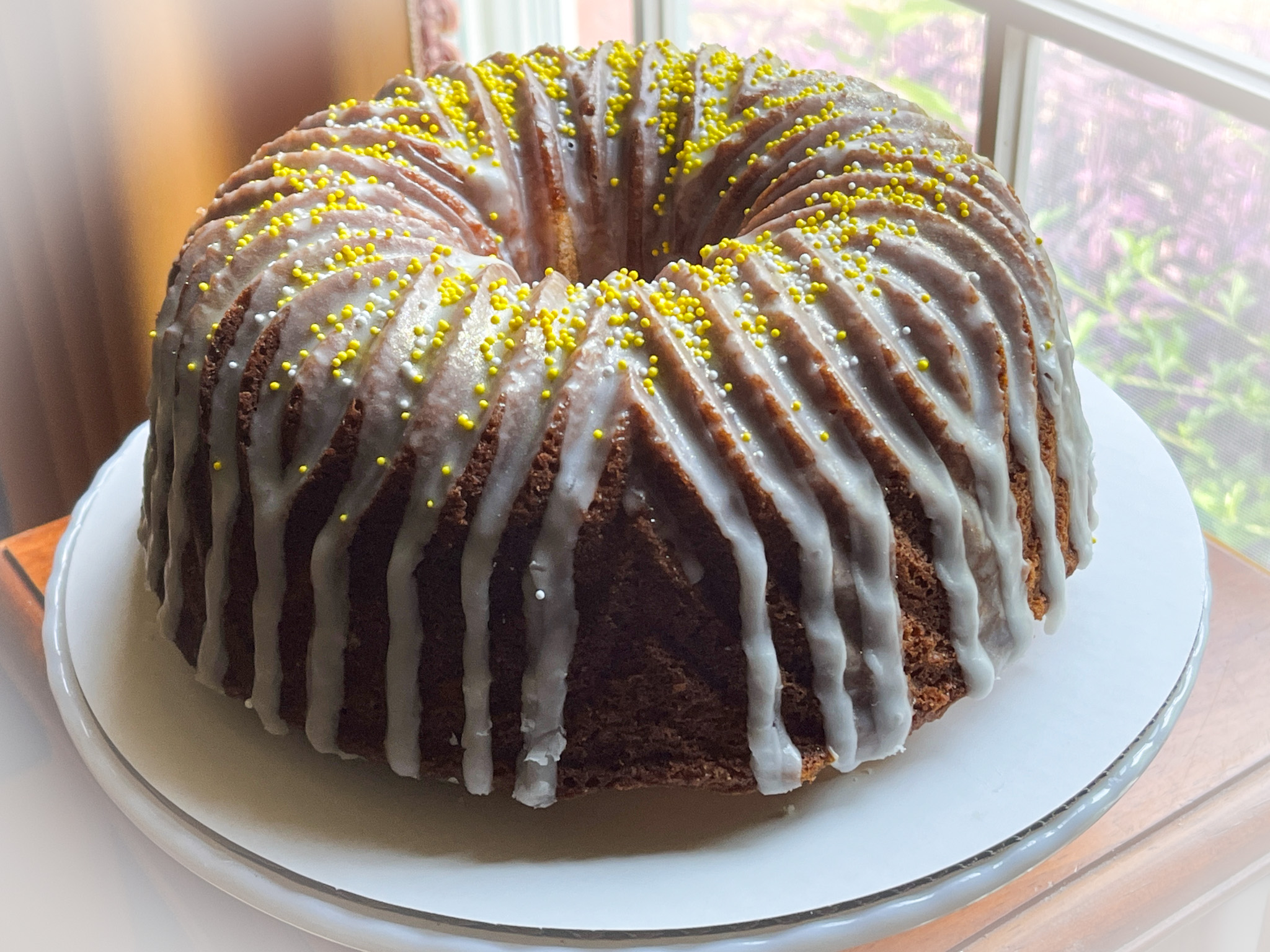
LEMON BUNDT CAKE, A REAL WINNER

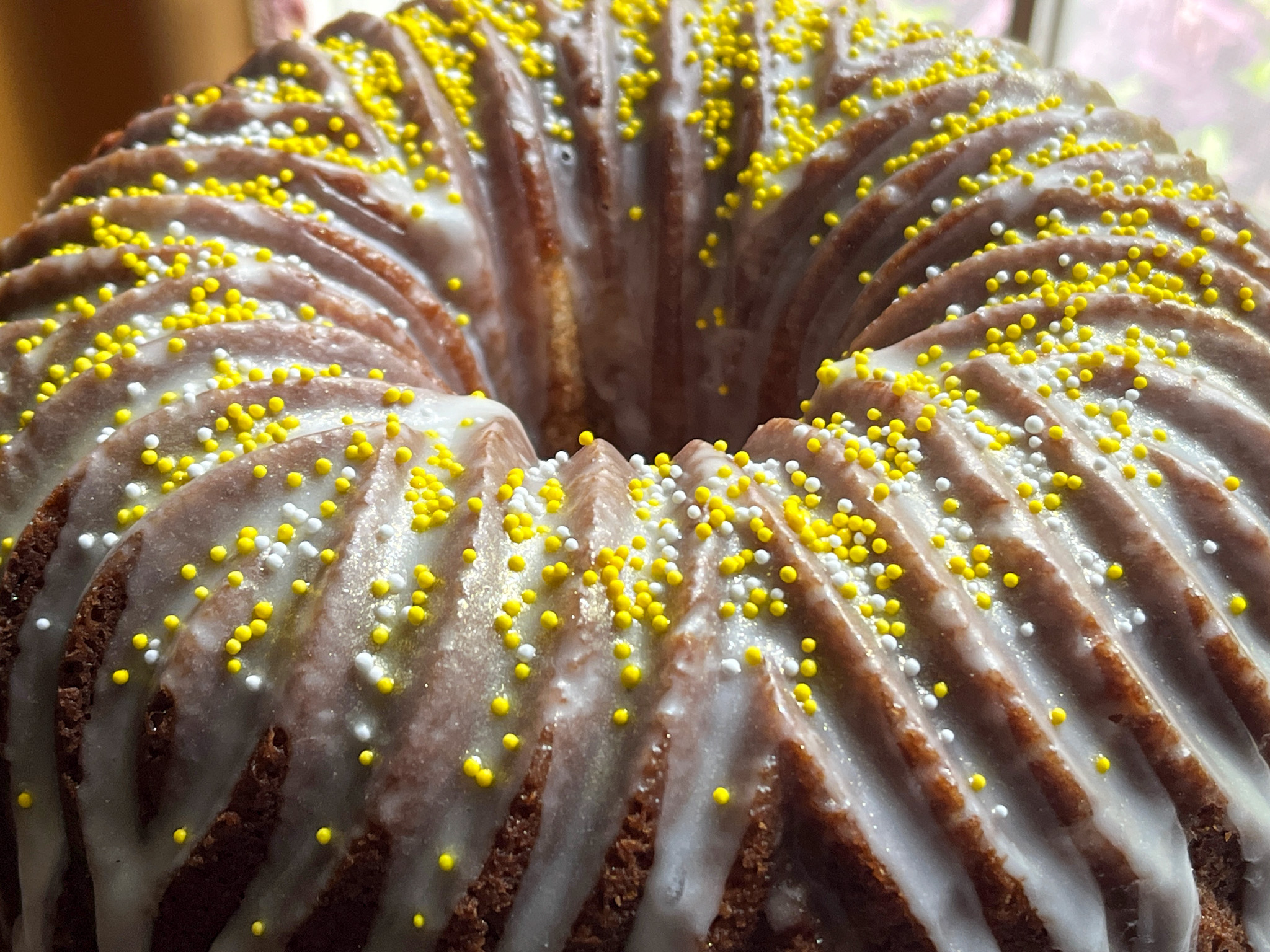
Lemon Cakes can be a bit tricky as far as flavor goes. I have made a cake from a super reputable source that promised to deliver the most intense, most lemony flavor coupled with a moist and tender cake. It was tremendously convoluted, a ton of work and to be absolutely honest with you, the America’s Test Kitchen version delivered it all for 1/10 of the trouble. Which is saying a lot, as they are known for never cutting corners.


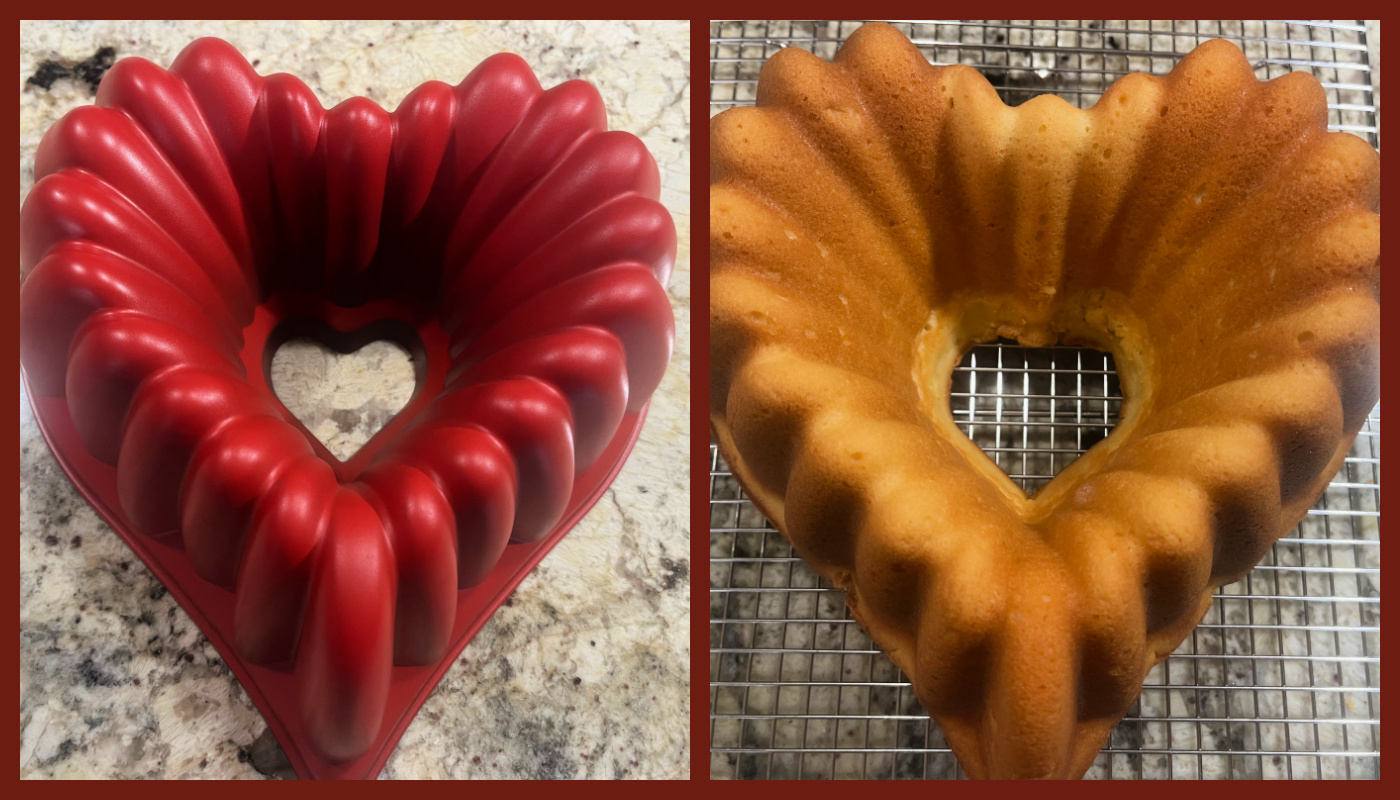
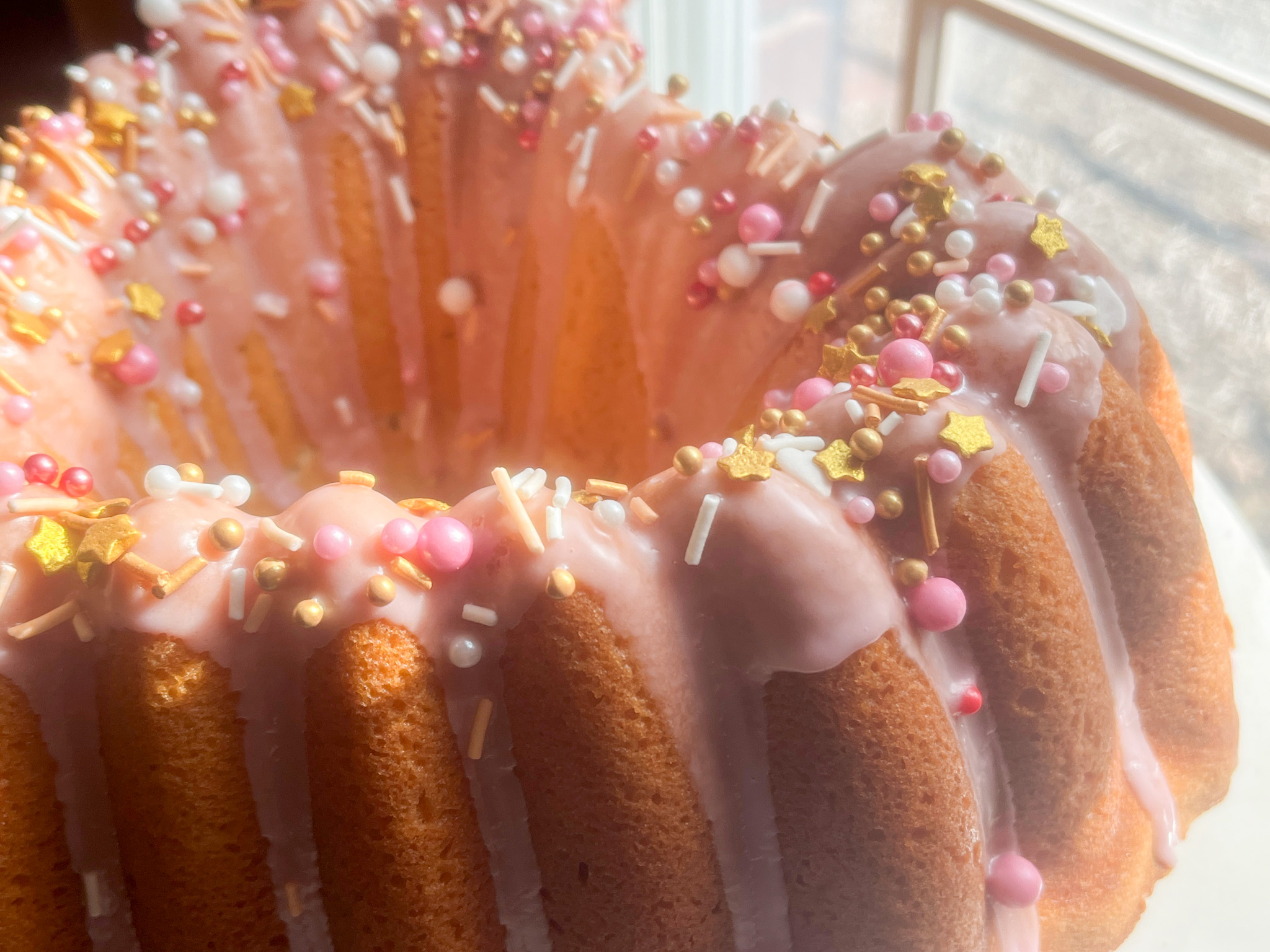
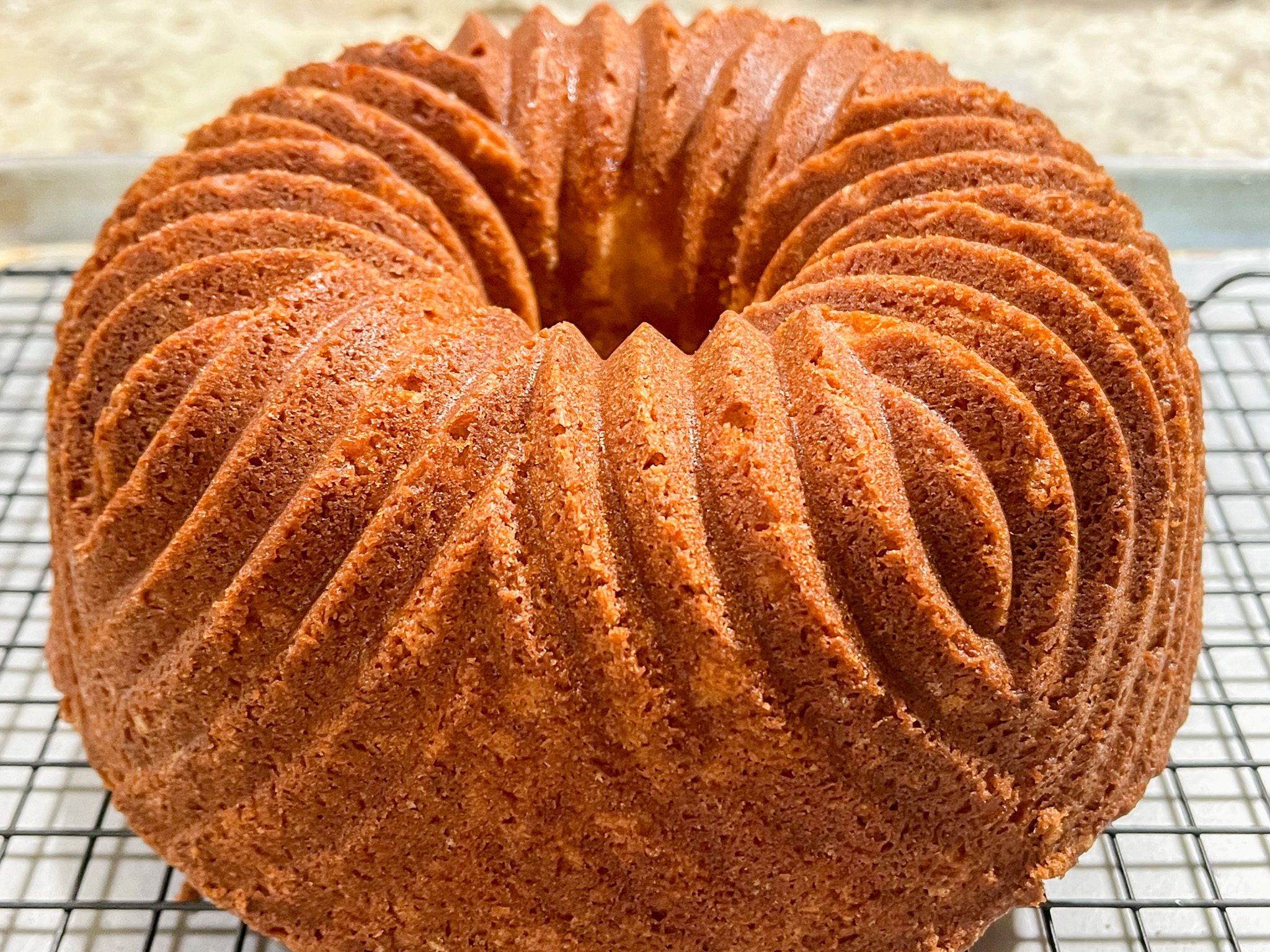
They are super strict about copyright issues, and rarely reply to requests asking permission to publish their recipes, however I was able to find this one online. If you’d like to make this deliciously lemony cake, pay a visit to this site. No difference from the recipe found in The Perfect Cake (2018), a cookbook I highly recommend. To bake this particular version, I used the Bavaria Bundt pan from Nordicware, but any pan with 10 to 12-cup capacity will do the job. I just love the way they un-mold like a dream!

When I make a Bundt cake, I donate it whole, so I cannot share a picture of the crumb, but I’ve had excellent feedback about this baby. In fact, I’ve made it three times already, using different Bundt pan shapes. Always a winner!

ONE YEAR AGO: Aji-Amarillo Roasted Chicken Thighs

TWO YEARS AGO: Karen’s Quick Shrimp Fried Rice

THREE YEARS AGO: OMG Peanut Butter Bars

FOUR YEARS AGO: Kansas Sunflower Seed and Black Walnut Macarons

FIVE YEARS AGO: Curry Turmeric Sourdough

SIX YEARS AGO: Black Olive Tapenade and Deviled Eggs

SEVEN YEARS AGO: Blueberry Crumble Coffee Cake

EIGHT YEARS AGO: Fresh Strawberry Yogurt Bundt Cake

NINE YEAR AGO: Quinoa Salad with Red Grapes and Avocado

TEN YEARS AGO: Strawberry Coffee Cake

ELEVEN YEARS AGO: Lemon-Poppy Seed Muffins

TWELVE YEARS AGO: Mascarpone Brownies

THIRTEEN YEARS AGO: Salmon Tacos

FOURTEEN YEARS AGOCinnamon Turban Bread

FIFTEEN YEARS AGO: Summertime Gratin

HELEN FLETCHER’S PINEAPPLE KOLACHE

I am going to say something quite daring, so here it goes: this might very well be the best thing I’ve baked in a whole year! If you follow my blog, you probably know I am quite fond of Helen’s recipes, because not only they always work, but her explanations are crystal clear, and make you comfortable to try something even if it seems complex or out of your skill level. I had never made kolache, but following the method described in this post, I had no issues. They turned out fantastic! Check her post for all sorts of variations for the filling, or go with the one I chose: pineapple. Tart, bright, fresh, perfect contrast with the slightly sweet bread dough. A winner. I promise you.

PINEAPPLE KOLACHE
(from Helen Fletcher’s Pastries Like a Pro)

for the pineapple filling:
1 cup well drained crushed pineapple
⅓ cup sugar
1 teaspoon potato starch or cornstarch
1 teaspoon lemon juice
1 tablespoon melted butter

Whisk together the sugar and potato starch or cornstarch. Combine all ingredients in a small pan and bring to a boil over medium heat. Boil for 1 minute. Cool completely. Refrigerate until needed.

for the dough:
½ cup butter (1 stick, 114 grams)
½ cup sugar (100 grams)
1 teaspoon salt
1 cup sour cream (225 grams)
2 teaspoons instant yeast
½ cup lukewarm water
2 eggs
4 cups all purpose flour (560 grams)

Cut the butter into pieces and place in a small saucepan along with the sugar and salt. Heat until the butter is melted. Remove from the heat and let it sit until it is lukewarm. Add the sour cream. Whisk it into the butter mixture. Add eggs and yeast, whisk them in. Lastly, add the water. Transfer to the bowl of a mixer. Add the flour and, beat until it comes together.  Knead in the machine for 3 minutes, turning after about 1 ½ minutes as the dough will adhere to the top of the dough hook and not get beaten.  The dough will be very soft and more of a batter.

Place it in a greased bowl or container, cover with plastic wrap and allow it to rise until doubled, about 2 ½ hours. After it has risen, punch it down, re-cover it and refrigerate overnight so the butter can firm up. 

for shaping and baking:
Refrigerated dough
1 egg, well beaten
pineapple filling

Line three baking sheets with parchment.  Set aside. Punch the dough down if risen and divide the dough in half (585 grams each).  Shape each piece into a rectangle.  Wrap each piece in plastic wrap and refrigerate for 10 to 15 minutes. Remove one piece of dough from the refrigerator and roll it out so it is ½ inch thick.  The dough will be very firm. With a 3″ cookie cutter (or whatever size you want) cut out rounds and place them on the parchment about 1 inch apart.  Repeat with the second piece of dough.  Reroll and cut additional rounds. Cover them with tea towels and allow to rise until almost doubled.

Preheat the oven to 375°F. With your fingers, make a deep well in the rounds about ½ inches in from the edge of the dough but do not go through the dough.  Start by making a hole in the center. Expand the well by pressing the dough down. Brush the top edges of the Kolache with the beaten egg. Fill the wells with 1 to 1 ½ tablespoons of filling.  Bake on a double pan for about 20 minutes for the 3″ size until the top of the dough is well browned.  Reduce the time for smaller pastries.

Makes about 20 – 3″ rolls with re-rolling the dough.

ENJOY!

to print the recipe, click here

Comments: I highly recommend you visit Helen’s site to get her step-by-step photos and instructions, especially if you’ve never made enriched bread dough. The dough is very nice to work with, a bit sticky, but I urged the temptation to add more flour and all ended well in the end. I was intrigued by the pineapple filling because I rarely use pineapple in baking, but it was much better than I expected. I made the filling the day before, right after mixing the dough and placing it in the fridge for overnight proofing. Next day the whole thing was a breeze, just rolled the dough, cut circles, filled and baked. I donated them all, but sampled one for “quality control”. It was hard to stop, but I exercised herculean self-control.

Helen, cannot thank you enough for so many great recipes I’ve made from your site!

ONE YEAR AGO: Blood Orange and Cranberry Mini-Cakes

TWO YEARS AGO: Simnel Cupcakes

THREE YEARS AGO: Oat and Sesame Seed Sourdough

FOUR YEARS AGO: Moroccan Turkey Pie with Olive Oil Crust

FIVE YEARS AGO: Another Twisted Sister of the Shepherd’s Pie 

SIX YEARS AGO: Cashew Chicken, My Way

SEVEN YEARS AGO: Two Deliciously Simple Salads

EIGHT YEARS AGO: In My Kitchen, April 2016

NINE YEARS AGO: Spring has Sprung with Suzanne Goin

TEN YEARS AGO: Chai Brownies

ELEVEN YEARS AGO: Pomegranate-Molasses Glazed Carrots

TWELVE YEARS AGO: Braised Brisket with Bourbon-Peach Glaze

THIRTEEN YEARS AGO: The Real Vodka Sauce

FOURTEEN YEARS AGO: Spring Rolls on a Spring Day