WALNUT SOURDOUGH

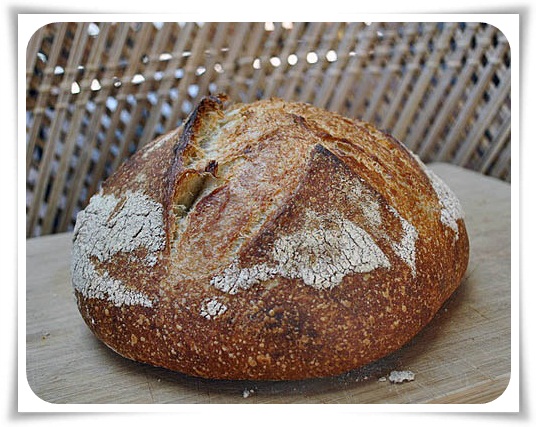
Recently, this post over at Fig Jam and Lime Cordial made all the 11 bread recipes on my “to make soon list” run away in a panic, as Celia’s sourdough demanded to be baked right away!   Walnuts, spelt flour, plus a very active sourdough starter.  I simply could not wait to try it. Celia is such an accomplished baker that she throws a recipe together as if it’s nothing, and her breads turn out spectacular every single time.  I am a lot more insecure, so I asked her to virtually hold my hand and guide me through my take on her method.  Success! We loved the bread, it is rich, dense but not to the point of feeling heavy.  Outstanding with Roquefort cheese,  confirming the magical combination of walnuts with blue type cheeses. Unbeatable! And, let’s not forget the many benefits of walnuts… read a nice article about it here.

WALNUT SOURDOUGH BREAD
(adapted from Fig Jam and Lime Cordial)

150 g sourdough starter (at 166% hydration)
300 g water
300 g bread flour
200 g whole wheat flour
100 g walnuts, lightly toasted
9 g sea salt

Toast the walnuts in a 400 F oven just until fragrant.  Cut in pieces, not too small. Reserve.

Place the water in a bowl, add the sourdough starter and mix to dissolve.  Add the flours, mix to form a shaggy mass, and let the dough rest for 20 minutes.  Add the salt and knead the dough in the bowl a few times to incorporate it.  Let the dough rest for 30 minutes, add the walnuts and incorporate them in the dough by gently kneading it.   Let the dough rise for 2 more hours, folding twice at 45 and 90 minutes.   Thirty minutes after the last folding cycle, form the bread in the shape of your choice, place in a floured banetton or other appropriate container, and let it rise for 3 to 4 hours at room temperature, depending on how active your sourdough starter is.  The dough is ready to bake when it is not quite doubled in size, but feels airy when you gently poke the surface.

Invert the dough on parchment paper, score the surface with a sharp blade, and place in a 450F oven to bake with initial steam.  Total baking time will be about 40 minutes, I baked my loaf under an inverted roasting pan previously filled with water and emptied, so that some water stays clinging to its sides.  I removed the roasting pan after 25 minutes, and bake the loaf uncovered until done.    Internal temperature should be higher than 200 F.

Allow the bread to completely cool before slicing through.

ENJOY!

to print the recipe, click here

Comments:  In typical Sally-fashion, what I thought was a bag of spelt flour in my freezer turned out to be teff flour.  After frantically inspecting every single spot of the two freezers we own, I gave up and modified the recipe to use regular whole-wheat flour instead (triple sigh).  If you have spelt, use it 50/50 with the regular flour (for the amount of this recipe, that would be 250 g of each flour).

The 166% hydration might sound strange, but  keep in mind that it’s the hydration you obtain when feeding your starter by volume instead of weight and using equal amounts of flour and water (for instance 1 cup of each).  Very convenient, many bakers adapt their recipes to this level of hydration because it makes it a lot easier to keep the starter, no  need to use a scale. I was more of a 100% hydration lady, but must say I loved the way the more liquid starter performed and was so easy to mix with the dough.

For this type of bread, I don’t like to cut the walnuts too small, but if you prefer them to be less obvious in the crumb, go ahead and finely dice them.   Toasting before incorporating in the dough is optional, but I usually go for it.

Celia, thanks for yet another inspiring recipe, and for your help with the method.   I am counting on you to hold my hand again as I take a walk on the dark side (aka cake baking ;-)). 

  I am submitting this post to Susan’s Yeastspotting.

ONE YEAR AGO: Thai Chicken Curry

TWO YEARS AGO: Zen and the Art of Risotto

Add to FacebookAdd to DiggAdd to Del.icio.usAdd to StumbleuponAdd to RedditAdd to BlinklistAdd to TwitterAdd to TechnoratiAdd to Yahoo BuzzAdd to Newsvine

A SOURDOUGH EXPERIMENT

Would you like to bake bread with wild yeast, but the thought of   keeping a starter is too intimidating?  If that’s the case, I urge you to read this great post by Joanna, from Zeb Bakes. She will make you feel absolutely at ease with keeping the starter going, minimizing your work and the use of flour. She will also show you a simple schedule to bake bread on a weekly basis.  Awesome read! Sourdough baking made simple and easy, as it should be.

Now, time for some fun with it.  Remember the proofing bread box I gave myself for Christmas?   Well, I put it to the test, by making a batch of sourdough bread and dividing the dough in two.  Half went into the cozy environment of the box (78 F), half stayed outside in my kitchen kept (at this time of the year) at around 70F.  The recipe I chose for such a ground-breaking experiment comes from a great baker, who blogs at Breadcetera.  You can learn a ton of stuff from him, make sure to bookmark his site and visit often.   He developed this technique called “double flour addition,”  with the goal of maximizing the amount of air bubbles trapped in the dough from the very beginning of mixing.  These tiny air bubbles, created by whisking the very loose mixture of flour and water, later generates the pockets of air that every baker searches for in this type of rustic loaf.

SOURDOUGH BREAD WITH DOUBLE FLOUR ADDITION
(from Breadcetera)

680 g bread flour
90 g whole wheat flour
455 g water
15 g salt
300 g sourdough starter (at 100% hydration)

Combine the flours in a large bowl and lightly mix them with a whisk.

Add the water and the sourdough starter to the bowl of a Kitchen Aid mixer, and use the whisk attachment to work them together at the lowest speed for a minute or so.  At this point, you only need to combine them and have the starter dispersed through the water.    Add just 75g of the flour mixture, and increase the speed of the mixer to level 3. Whisk until the mixture seems quite aerated (about 3 to 4 minutes).

Remove the whisk attachment and place the dough hook in place. Add the rest of the flour, and knead for a couple of minutes, until the flour forms a shaggy mass.  Cover the bowl with plastic wrap and let it rest for 20 to 30 minutes.

Sprinkle the salt over the dough, and mix on speed 3 for 6 minutes.  Place the dough in an oiled bowl, cover and let it ferment for 2 hours, without any folding or kneading.  Divide the dough in two equal pieces, and lightly give it a round shape.   Let it rest for 15 minutes for the gluten to relax,  and do a final shaping, creating surface tension by pulling the sides of the dough up as you gather it all in the “boule” shape.   Place the balls of dough, seam side up, in a floured round container (such as a brotform), cover with plastic, and let it ferment for 3 hours at 78 F.

Invert the dough on a peel, score, and bake at 425 F for 40 minutes, with steam during the first 15 minutes.  Let it completely cool before slicing.

ENJOY!

to print the recipe, click here

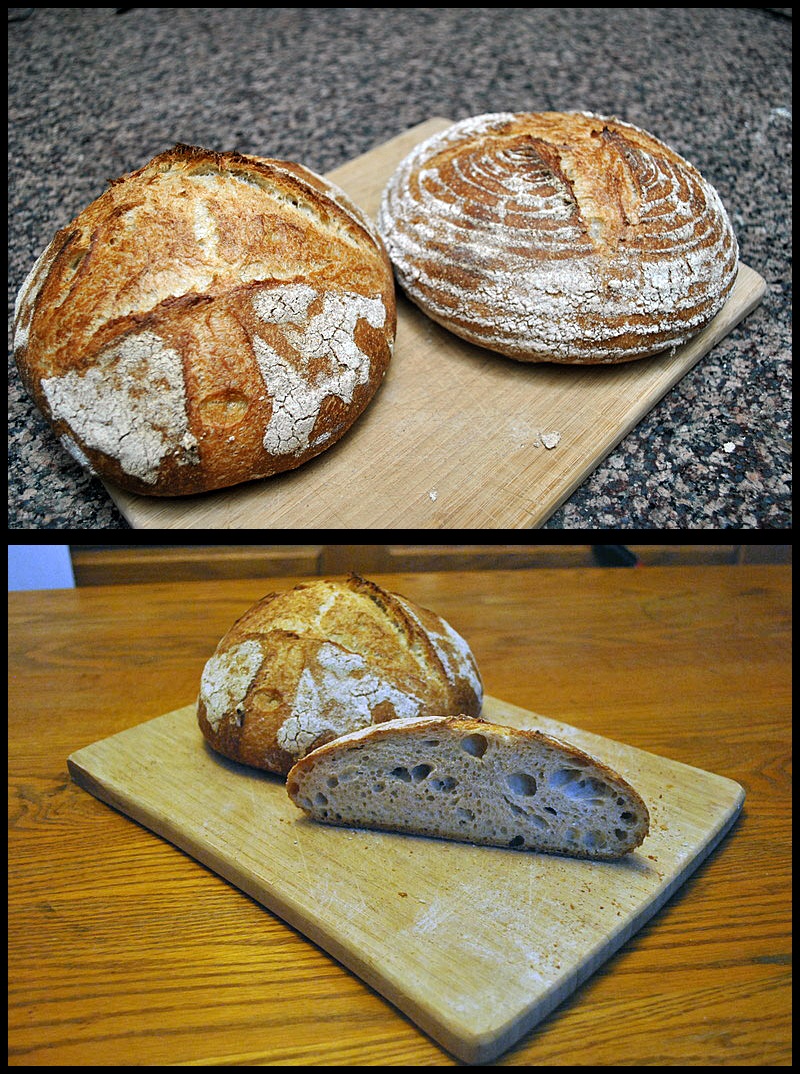
For my experiment, I divided the dough in two right before the first fermentation, and placed one half in the proofing box.   That dough stayed in the box until baking time, the other one stayed over the kitchen table, protected from drafts.  The difference in the dough itself was pretty dramatic, but I could not get a picture that was good enough to show it. However, once the bread was baked, the one from the proofing box had much better oven spring, the other one was a bit on the flattish side.   Both were delicious, and the crumb had a nice structure, but one bread looked a lot “healthier.”   Here they are…

You can see that the taller bread, with a more round shape, had better oven spring, bursting through the slashing with greater power. Sorry, no photos of the crumb, we froze that baby for later and by the time we got to enjoying it, I forgot to grab the camera.


The bread proofing box not only optimizes the temperature, but also provides the correct amount of humidity, thanks to the small dish that sits at the bottom of the box, with some water in it.  No need to worry about a skin forming on the loaf in the final proofing, no need to use plastic to cover it.  A very well designed machine, that is getting constant use in our home.

I am submitting this post to Susan’s Yeastspotting

ONE YEAR AGO: Shrimp and Fennel Casserole

TWO YEARS AGO:  Tuscan Bread

Add to FacebookAdd to DiggAdd to Del.icio.usAdd to StumbleuponAdd to RedditAdd to BlinklistAdd to TwitterAdd to TechnoratiAdd to Yahoo BuzzAdd to Newsvine

A GUEST BLOG FEAST!

I am thrilled to invite you to read my first post as a guest blogger over at Feastie.com!

Jessica contacted me and told me I could write a blog on any type of recipe, which immediately launched me into a hyperventilation fit.  Since one of the things that calms me down is bread baking, I opted for a sourdough.  Easy decision. Which bread to make was a lot more complicated, as at any given time I might have 20 breads on my  “to bake soon” list.   😉

I chose a sourdough boule that would be appropriate for a feast!   Curious?  Click here for the article and the recipe…

This bread will be submitted to Susan’s Yeastspotting event, my first submission of 2012!

Jessica (and Valerie), thanks so much for the opportunity to contribute to your site!

Just a sunset…. a Maui sunset… 

SAN FRANCISCO SOURDOUGH

Talk about an American classic!  The sourness of this bread is quite unique,  but not everyone is fond of it.  For some, it’s a little excessive, but I happen to love it.  In fact, I’ve considered buying a commercial SF sourdough starter  to try and mimic this bread at home.  However,  the fact that soon that population would change by incorporating yeast and bacteria present in our own environment, made me reluctant to go for it.   Sure, it would be nice to bake a few loaves with a “close to the original” taste, but then I’d be left babying three starters instead of the two I own… and I already take care of way too many strains of bacteria in the lab!  😉

Browsing through the pages of “Bread Alone,” I spotted a recipe for San Francisco Sourdough, and almost did not pay attention to it, thinking that it would involve the authentic starter.  Nope.  Daniel Leader developed his own recipe for it, coaching a regular starter into a slightly increased level of acidity, resulting in a bread that, according to him, would be very  close to the original.

SAN FRANCISCO SOURDOUGH
(from Daniel Leader’s Bread Alone)

for the poolish
4 oz starter (mine was at 100% hydration)
4 oz bread flour
4 oz water

for the dough
8 oz water
all the poolish
13.5 to 16 oz bread flour
1/2 Tbs salt

Make the poolish the day before you want to bake the bread, by combining all the ingredients in a small bowl and leaving at room temperature for 24 hours, preferably from 74 F to 80 F, covered with plastic wrap.

Next day, pour the water at room temperature in the bowl of a KitchenAid, mixer, and add the poolish, breaking it up gently with a wooden spoon, and stirring until dissolved.  Add about 1 cup (5 oz)  of the total flour and the salt, and stir until combined.   Place the dough hook in, keep adding the rest of the flour (you may not need all of it), and knead for about 12 minutes at the second speed of the machine.

Remove the dough to a slightly floured surface, knead it by hand a few times, place it in an oiled bowl, cover loosely with plastic wrap, and let it rise for 2.5 hours, with quick cycles of folding after 45 minutes and 1 hour and 30 minutes. After the second folding cycle, leave the dough undisturbed for the final 60 minutes of bulk fermentation.

Place the risen dough over a slightly floured surface, and without de-flating it too much, form it into a ball.  Let it rise 45 minutes.  Shape the dough as a boule or any other shape you prefer, place it in an appropriate container for the final rise, and leave it at room temperature for 1 hour.

Bake it in a pre-heated 450 F, with steam, for a total of 45 minutes, decreasing the temperature to 425 F after 10 minutes of baking.  If using a cover to create steam, remove the cover after 30 minutes.    Let it cool over a rack for a couple of hours before slicing it.

ENJOY!

to print the recipe, click here

My main modification of the recipe was to include two folding cycles after kneading in the KitchenAid because I felt the dough lacked structure and strength.   I used regular, supermarket bread flour, so it’s possible that it behaved differently from the book’s description.   For the most part, I tend to bake my breads with regular bread flour, not going out of my way to find the one with “a touch of germ,”, or “harvested during Spring, under a full moon.”    😉

Did the bread deliver the promise in the taste department?  YES!  When I tried a piece all by itself to get the real taste of the crumb, it immediately hit me as VERY similar to a San Francisco sourdough, so if you live hundreds of miles away from the Bay Area and develop a craving for that bread, this recipe will soothe you.

A more authentic shape would  be a torpedo type loaf, but I have a weakness for round bread, so that’s how I shaped mine.  Round, oblong, it doesn’t really matter. It hit the spot.  Awesome bread!

I am submitting this post to Yeastspotting

ONE YEAR AGOA Real Oscar Winner  

TWO YEARS AGO: Pane Siciliano

Add to FacebookAdd to DiggAdd to Del.icio.usAdd to StumbleuponAdd to RedditAdd to BlinklistAdd to TwitterAdd to TechnoratiAdd to Yahoo BuzzAdd to Newsvine

WHEAT GERM & SAGE SOURDOUGH BREAD

Another example of a recipe that blew the doors of the competition once I spotted it at The Fresh Loaf forum. They highlighted this bread on their front page, since it is so unique and gorgeous. My starter was eagerly waiting for a chance to shine, I had wheat germ in the freezer, the only departure from the original recipe was the use of sage instead of rosemary.   Not for gastronomic preference, but because a “certain dog” – who used to wander the streets of Hollywood – destroyed our rosemary plant. The dog has a good lawyer, and is presently free on bail.


TOASTED WHEAT-GERM AND SAGE SOURDOUGH
(adapted from Ross’ recipe at The Fresh Loaf Forum)

150 g starter (white, 80% hydration)
335 g  water
490 g bread flour
20 g toasted wheatgerm
2 Tbs  fresh sage leaves, finely chopped
9 g  salt
Mix all ingredients, except the salt, until they form a shaggy mass, no need to worry with kneading yet.   Let it rest undisturbed for 40 minutes at room temperature.

Place the dough on a lightly oiled surface,  open flatten it out slightly, sprinkle the salt all over, and knead a few times to distribute the salt.  Place the dough in an oiled bowl, cover, let it sit for 1 hour.    Knead by stretching and folding a few times –  it will feel very smooth and easy to fold – put back in the bowl and let it rise 1 hour.   Repeat the stretch and fold one more time, cover the dough and let it rise for 2 hours and 20 minutes.

Form the dough into a ball, place it in a floured banetton type container, cover it and place in the fridge overnight.

Remove from the fridge 1 hour and 30 minutes before baking.  Bake in a 450F oven, using your favorite method to generate steam.  After 20 minutes, reduce the temperature to 425F, and bake for a total of 40-45 minutes. If you baked the bread covering with a roasting pan, remove the cover after 30 minutes.

Let it cool for at least 2 hours before slicing.

ENJOY!

to print the recipe, click here

What a delicious loaf of bread this one turned out to be!  I used very little sage because it is such a strong-tasting herb, so its flavor was barely noticeable.  This bread would be great at a Thanksgiving dinner.  The wheat germ lends a bit of moisture to the crumb, allowing it to last longer than your regular sourdough.

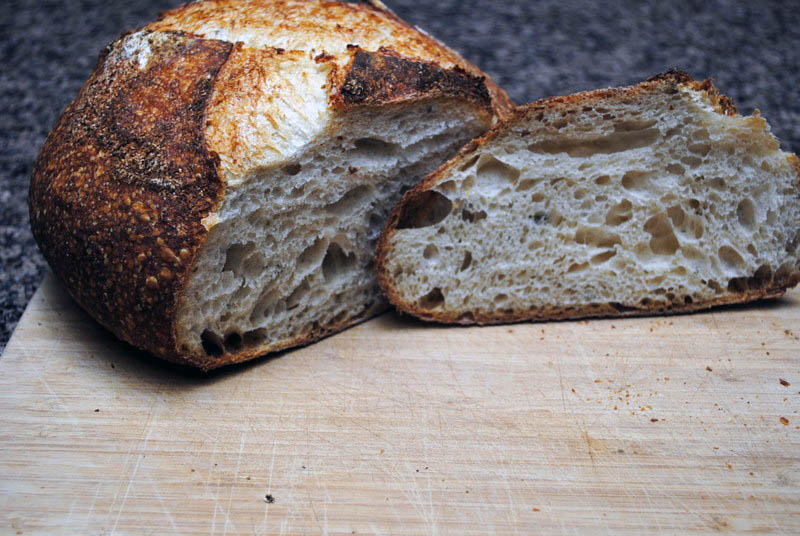
The crust, hearty and crunchy, was covered with those tiny blisters that make the baker very happy.  Inside, the crumb was open, airy, and light. Cannot ask for much more than that…  😉

I am submitting this post to Susan’s Yeastspotting, please make sure to stop by and marvel at her weekly display of breads. I know my Friday is not complete without it!

ONE YEAR AGO: Polenta-Crust Tomato Loaf

TWO YEARS AGO: Watermelon Granita

Add to FacebookAdd to DiggAdd to Del.icio.usAdd to StumbleuponAdd to RedditAdd to BlinklistAdd to TwitterAdd to TechnoratiAdd to Yahoo BuzzAdd to Newsvine