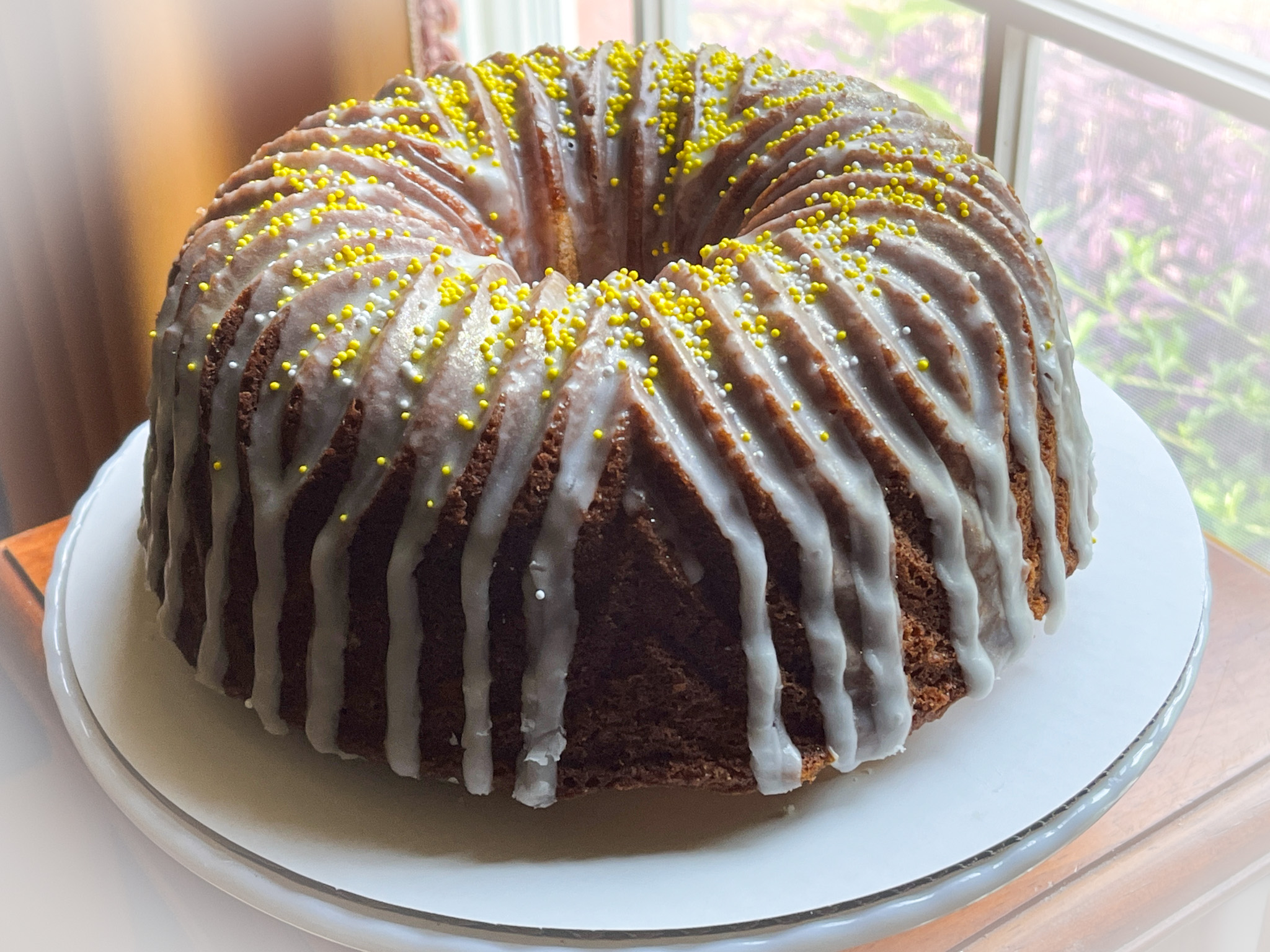
LEMON LAYER CAKE WITH DULCE DE LECHE FILLING

This post is dedicated to my friend Margie
(she will understand why).

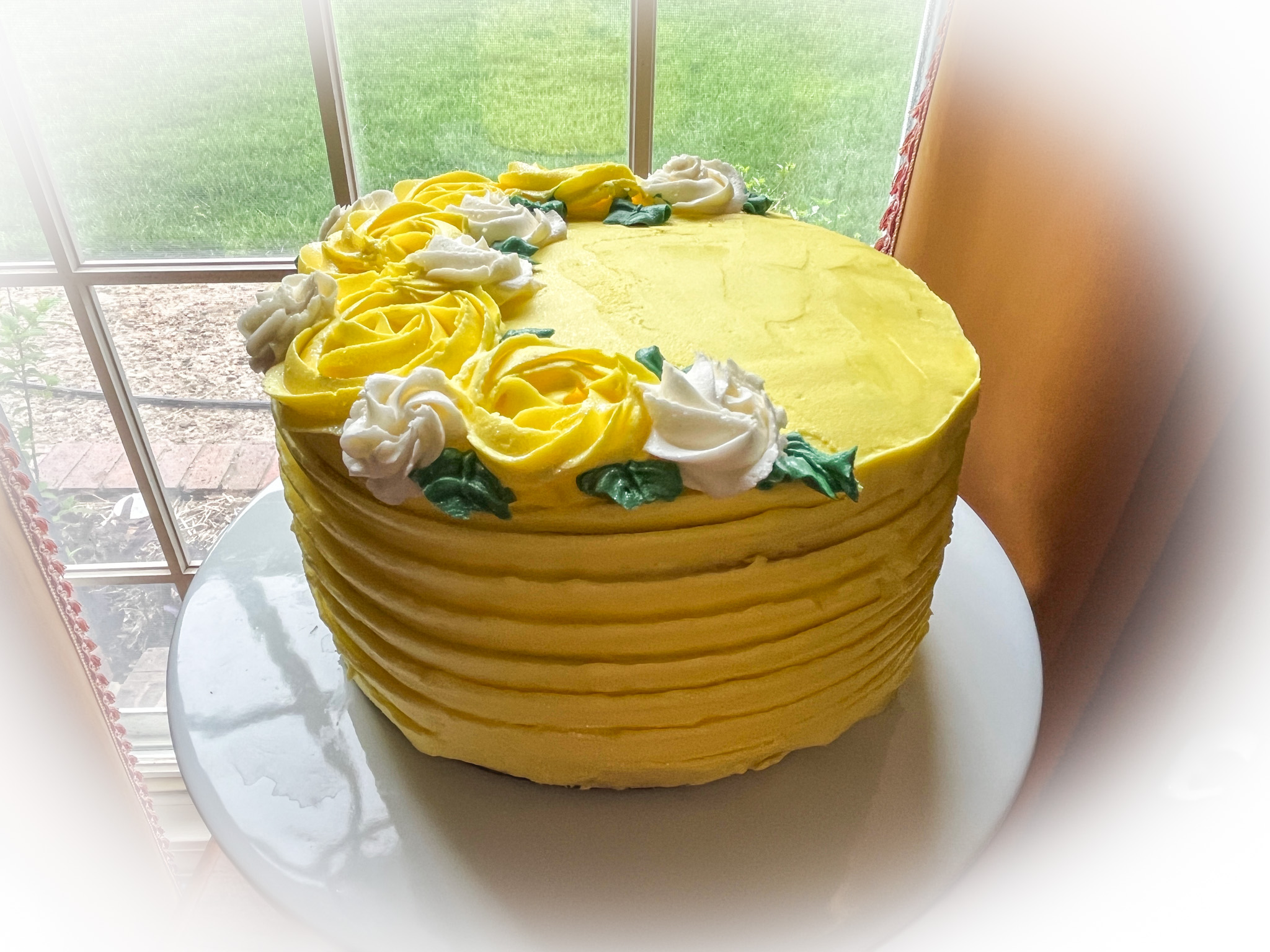
I’ve been making layer cakes every other week to donate on Fridays. A couple of weeks ago I was trying to decide which cake flavor to make and my beloved husband told me “I’ve got one for you!” He then showed me a recipe published in the New York times. It sounded really good and I decided to go for it except that I changed the filling and the frosting. Layers had store-bought dulce de leche and I used Swiss meringue buttercream as the frosting because I’ve been having so much fun making it. The cake turned out with the springtime feel I was hoping for and I heard that everybody loved it. A win-win situation for sure!


LEMON LAYER CAKE WITH DULCE DE LECHE FILLING
(adapted from The New York Times)

¾ cup/170 grams unsalted butter, softened
3 cups/385 grams all-purpose flour
2 cups/400 grams granulated sugar, divided
3 medium lemons
1½ cups/360 milliliters whole milk
2 teaspoons baking powder
½ teaspoon baking soda
1½ teaspoons kosher salt
¼ cup/60 milliliters neutral oil (I used grapeseed)
4 large eggs, at room temperature

1 can of La Lechera dulce de leche (you won’t use the full amount)

1 recipe for Swiss meringue buttercream, starting with 400g butter (details here)

Heat oven to 325 degrees. Spray three (8-inch) cake pans with baking spray and line each with parchment paper.

Make the cake: Add 350 grams of the granulated sugar to the bowl of a stand mixer fitted with the paddle, then zest the lemons directly into the sugar. Use your fingers to rub the zest into the sugar until it looks moist and sandy.

Juice the zested lemons into a small bowl. Transfer ¼ cup of juice to a large measuring cup and stir in the milk. Let it sit while you prepare the rest of the cake, reserving the remaining juice for the lemon syrup.

To the bowl with the lemon sugar, add the flour, baking powder, baking soda and salt, and mix on low to combine. Add the softened butter to the bowl all at once. Mix on low until the butter is evenly distributed and the mixture looks sandy. Add the oil and eggs to the measuring cup with the milk mixture and mix with a fork to combine. With the mixer on low, slowly stream in the milk mixture. When the batter is moistened, stop the mixer and scrape the bottom and sides of the bowl to ensure there aren’t any dry pockets. Adjust mixer speed to medium and mix for 1 minute more. Divide the batter among the prepared pans, spread evenly and tap the pans on a countertop to release any large air bubbles.


Bake the cakes until slightly risen and a toothpick inserted in the center comes out clean, 20 to 25 minutes. Set the pans on a wire rack and let the cakes cool for about 15 minutes. Then, run a thin knife along the edges of the pan and carefully turn the cakes out onto the rack to cool completely.

While the cakes cool, make the syrup: Measure ¼ cup lemon juice from the remaining reserved juice. Combine the juice and the remaining 50 grams sugar in a small saucepan and bring to a boil over medium-high, stirring occasionally. Cook until the sugar has dissolved, then pour into a heat-safe container to cool.

Make the Swiss meringue buttercream. Reserve 1/3 of the amount without any dye. That will be used as a crumb layer and for the white flowers. Dye a small amount green for the leaves. Dye the rest of the batter yellow.

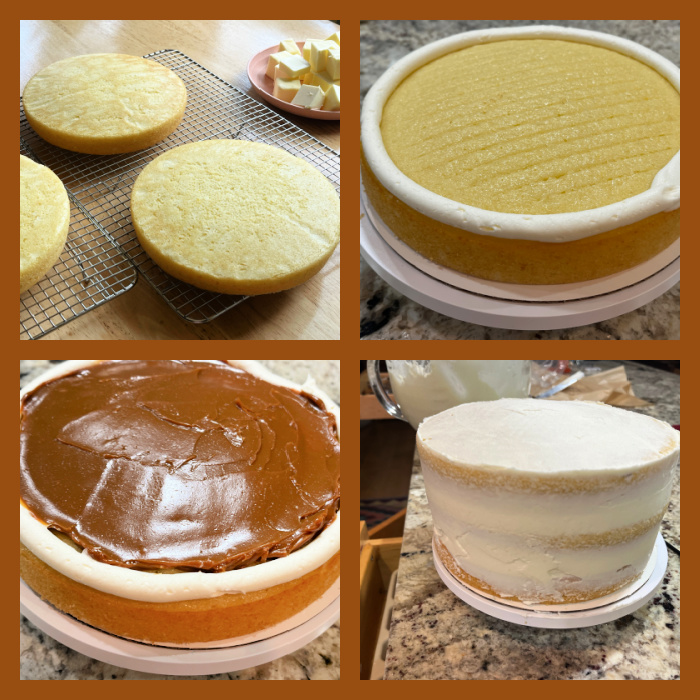
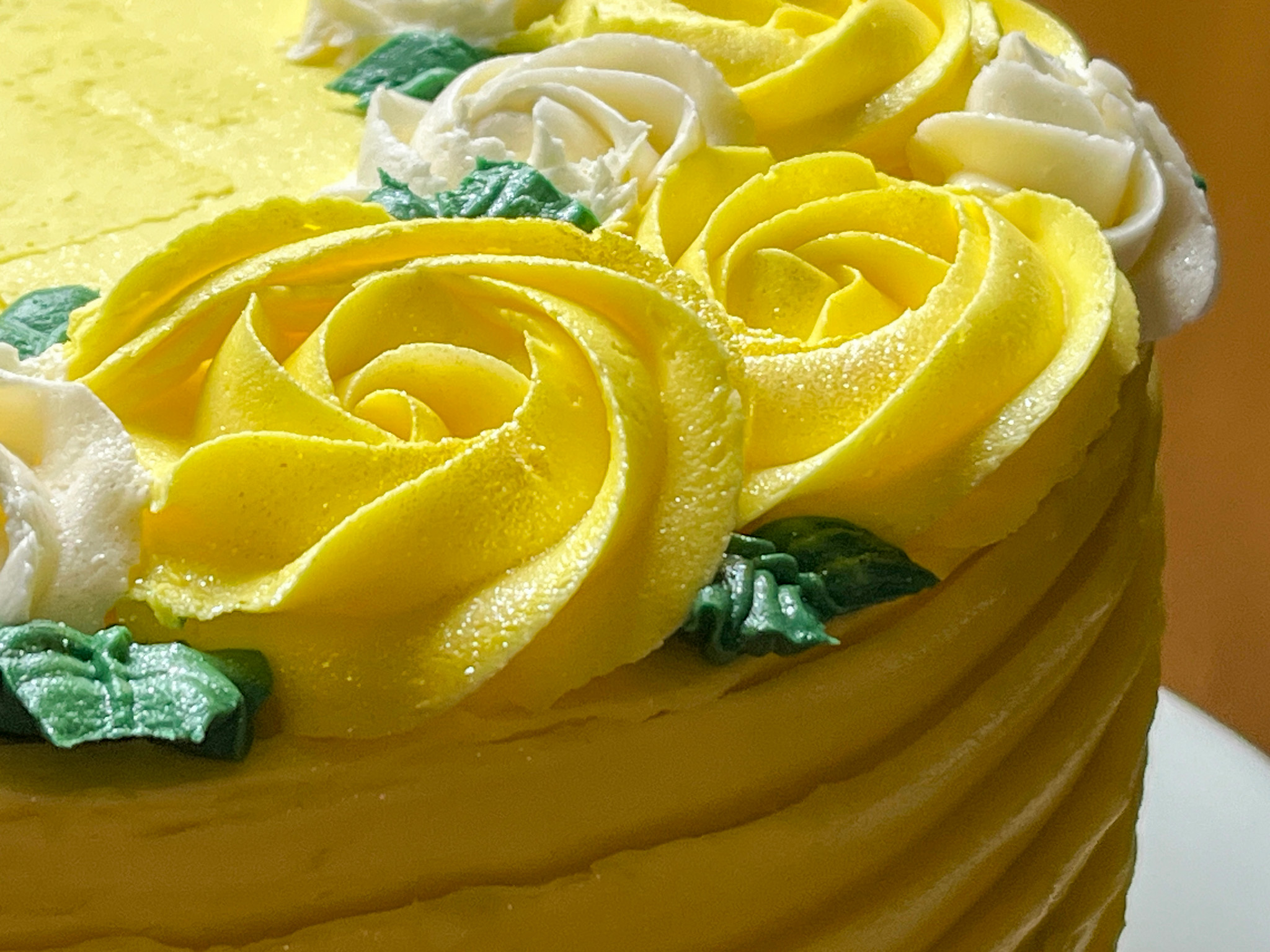
Assemble the cake: Place one layer of cake onto a serving plate, top side up. Brush the cake with lemon syrup. Spread dulce de leche over the top of the cake. Repeat with the second layer on top of the filling, top side down, and press gently. Add the final layer. Brush the cake with syrup, then cover the top and sides of the cake with a thin layer of frosting. Refrigerate until firm, about 30 minutes. Frost the cake with yellow buttercream, add details on the sides wiht a comb if so desired. Pipe roses and leaves. A little pumping of gold luster powder is optional but nice…

ENJOY!

to print the recipe, click here
Comments: The layers baked like a dream, flat and beautiful. Cake smelled amazing, I really wish we could have sampled a small slice. Oh, well… I used my little electric turntable to frost it and again loved the process. Makes life very easy. Thank you, Phil! Your gifts are always perfect! The only thing I would change if I was to make this cake again, is use a lighter green for the leaves. Well, there is one more thing I would change. I would actually brush the layers with the lemon syrup instead of forgetting all about it and staring at the syrup sitting at the countertop next to the fully frosted cake.

.

If you have a special occasion to celebrate now that Spring is in full swing, think about this cake…

ONE YEAR AGO: A Duet of Springtime Macarons

TWO YEARS AGO: Fiesta Bakes for Cinco de Mayo

THREE YEARS AGO: Thai-Meatballs Over Wilted Bok-Choy

FOUR YEARS AGO: Asparagus with Gunpowder Masala

FIVE YEARS AGO: The Home Bakers Collective, April Project

SIX YEARS AGO: Asian-Style Eggplant Meatballs

SEVEN YEAR AGO: Uzbek Flatbread

EIGHT YEARS AGO: First Monday Favorite – Black Sesame FOUR

NINE YEARS AGO: Chocolate Orange Mini-Cakes

TEN YEARS AGO: In My Kitchen, May 2015

ELEVEN YEARS AGO: P90X3, a Review of Tony Horton’s Latest Fitness Program 

TWELVE YEARS AGO: Pasta and Mussels in Saffron Broth

THIRTEEN YEARS AGO: Triple Chocolate Brownies

FOURTEEN YEARS AGO: Shanghai Soup Dumplings

FIFTEEN YEARS AGO: Bite-sized Chocolate Pleasure

LEMON BUNDT CAKE, A REAL WINNER

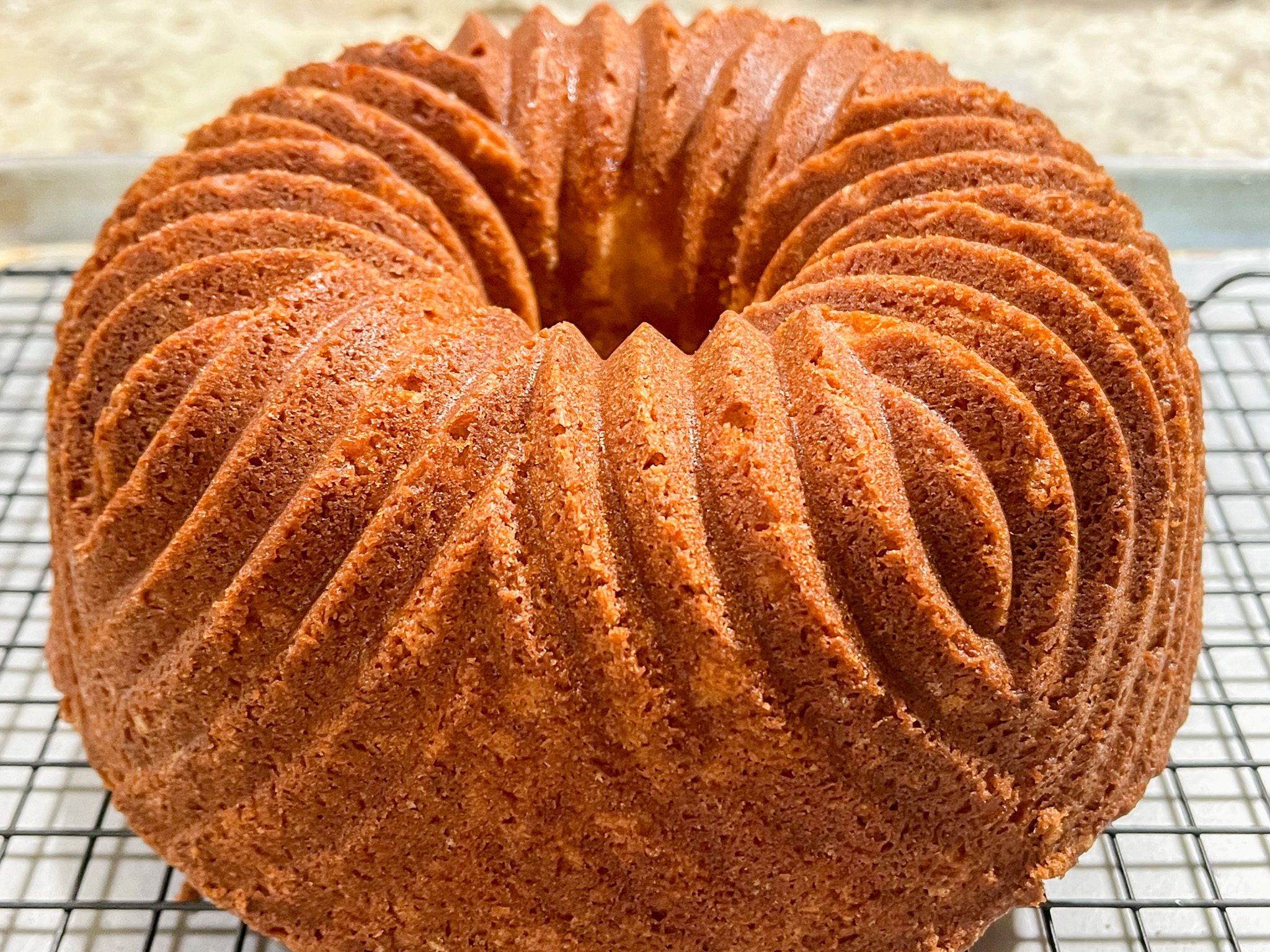
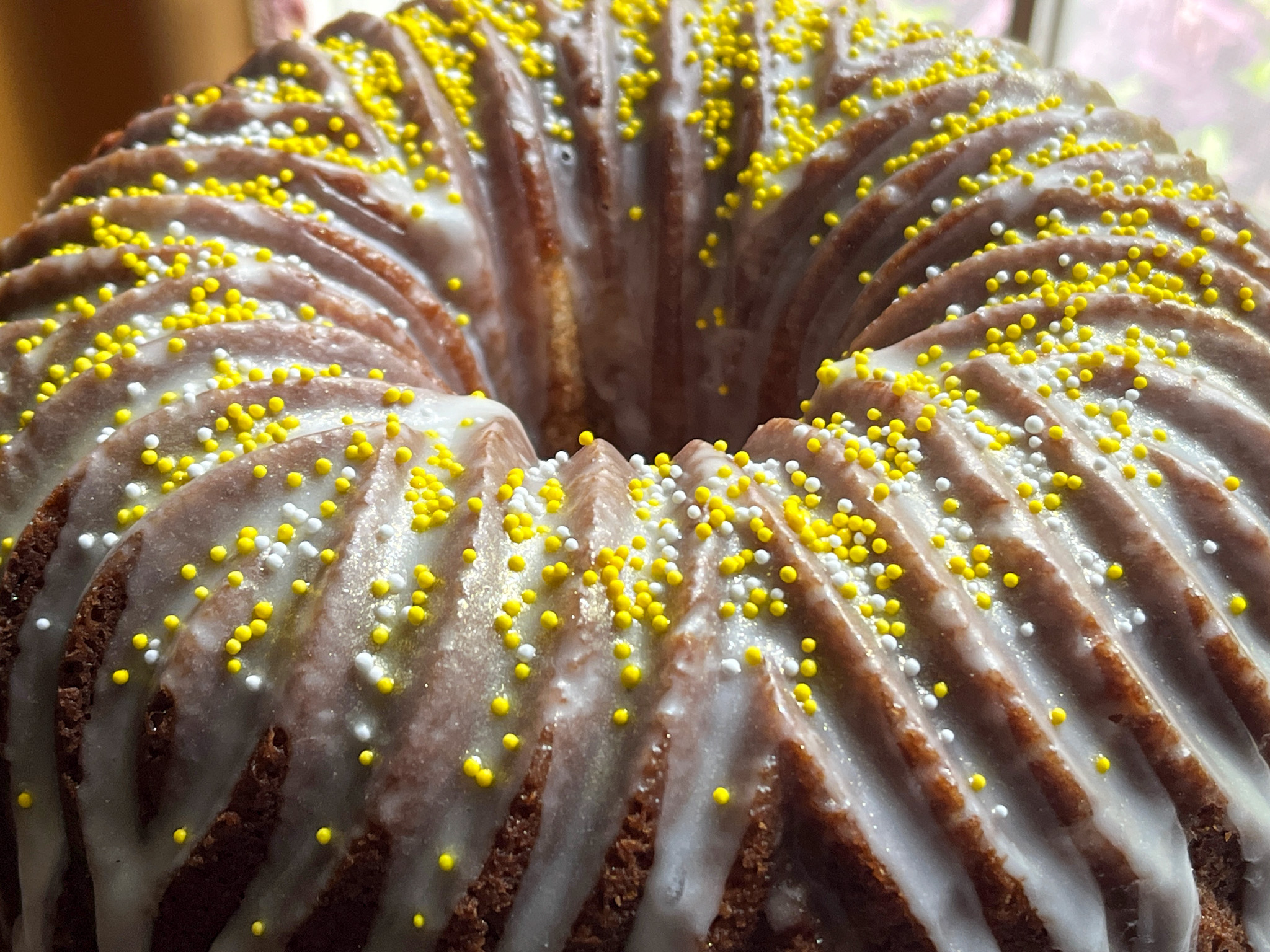
Lemon Cakes can be a bit tricky as far as flavor goes. I have made a cake from a super reputable source that promised to deliver the most intense, most lemony flavor coupled with a moist and tender cake. It was tremendously convoluted, a ton of work and to be absolutely honest with you, the America’s Test Kitchen version delivered it all for 1/10 of the trouble. Which is saying a lot, as they are known for never cutting corners.


They are super strict about copyright issues, and rarely reply to requests asking permission to publish their recipes, however I was able to find this one online. If you’d like to make this deliciously lemony cake, pay a visit to this site. No difference from the recipe found in The Perfect Cake (2018), a cookbook I highly recommend. To bake this particular version, I used the Bavaria Bundt pan from Nordicware, but any pan with 10 to 12-cup capacity will do the job. I just love the way they un-mold like a dream!

When I make a Bundt cake, I donate it whole, so I cannot share a picture of the crumb, but I’ve had excellent feedback about this baby. In fact, I’ve made it three times already, using different Bundt pan shapes. Always a winner!

ONE YEAR AGO: Aji-Amarillo Roasted Chicken Thighs

TWO YEARS AGO: Karen’s Quick Shrimp Fried Rice

THREE YEARS AGO: OMG Peanut Butter Bars

FOUR YEARS AGO: Kansas Sunflower Seed and Black Walnut Macarons

FIVE YEARS AGO: Curry Turmeric Sourdough

SIX YEARS AGO: Black Olive Tapenade and Deviled Eggs

SEVEN YEARS AGO: Blueberry Crumble Coffee Cake

EIGHT YEARS AGO: Fresh Strawberry Yogurt Bundt Cake

NINE YEAR AGO: Quinoa Salad with Red Grapes and Avocado

TEN YEARS AGO: Strawberry Coffee Cake

ELEVEN YEARS AGO: Lemon-Poppy Seed Muffins

TWELVE YEARS AGO: Mascarpone Brownies

THIRTEEN YEARS AGO: Salmon Tacos

FOURTEEN YEARS AGOCinnamon Turban Bread

FIFTEEN YEARS AGO: Summertime Gratin

LEMON GANACHE MACARONS AND ROYAL ICING TRANSFERS

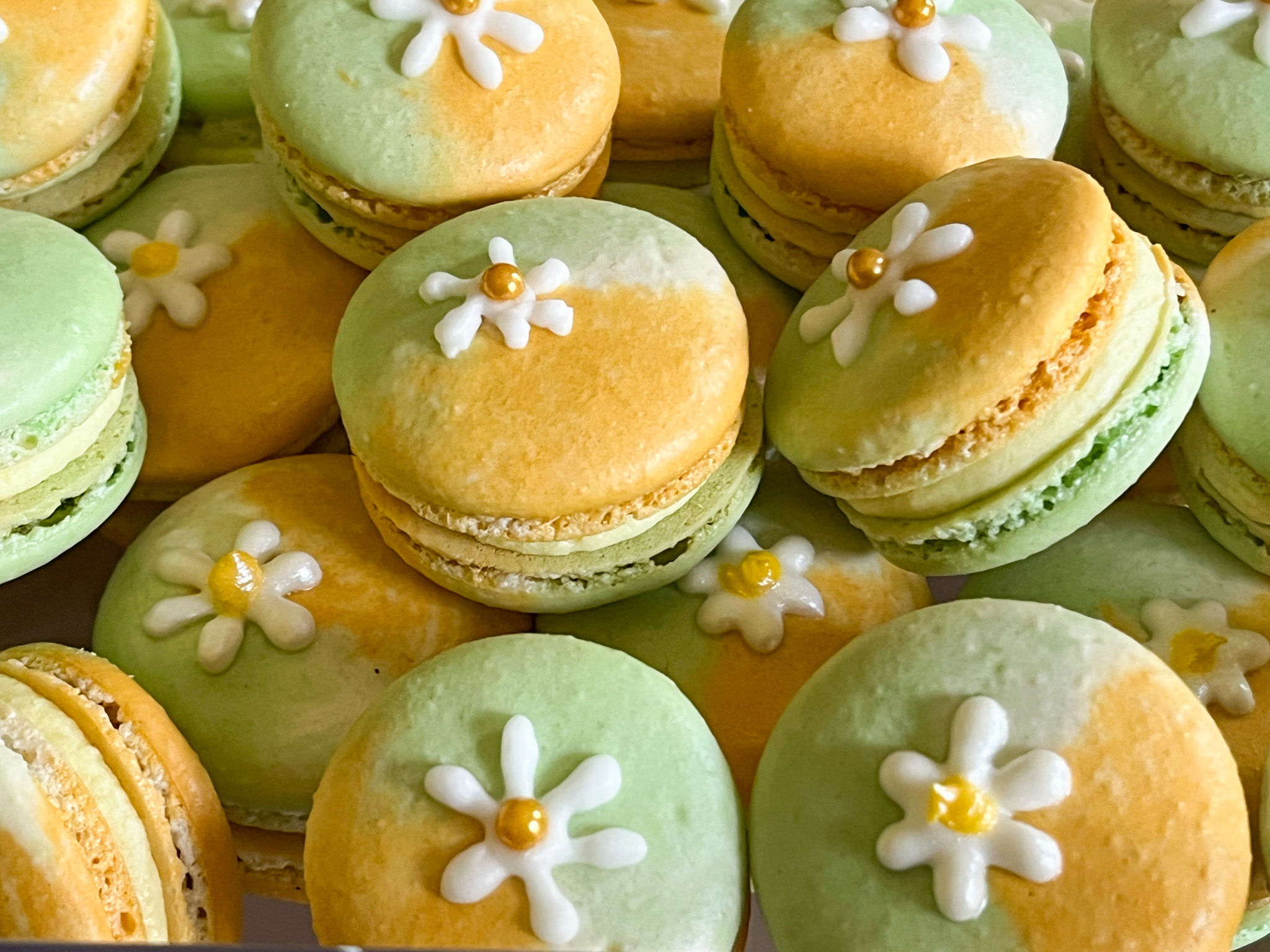
Super thrilled by this technique! I saw it on Instagram shared by the wonderful Melinda (see her page here). Basically she used Royal icing transfers right on the piped shells before crusting, and they stand well during baking, do not affect the shells and don’t get burned in the oven either. This opens up so many possibilities of decorating, and also makes it super easy. Once the macs are baked, they are already dressed up for party!


The recipe used for the shells is my default that you can find here. Simply divide the batter in three portions and dye one portion with yellow, one with green and one you can leave plain. Bake as normally, but right after piping and banging the pan to release bubbles, place your Royal icing transfer on top.

LEMON GANACHE FILLING
(from the Bewitching Kitchen)

250g white chocolate, chopped very finely
75g heavy cream
zest of one lemon
1 tablespoon lemon juice
1/4 tsp lemon emulsion (optional, I used LorAnn)

Place the chocolate in a bowl. Heat the heavy cream until almost boiling, pour over the chocolate. Let it sit for 5 minutes, whisk gently. If needed, place in the microwave for a minute at 50% power. Once the chocolate is melted, add the lemon zest and juice, and the lemon emulsion, if using. Whisk gently again, then place in the fridge for an hour or so.

Once the ganache is set, you can whip it with a handheld blender or use as it is. If you decide to whip the ganache, make sure not whip for too long or it will go grainy and hard. Use caution here.

Fill the macaron shells, and let them mature in the fridge overnight before serving.

ENJOY!

to print the recipe, click here

I don’t think I will ever get tired of baking macarons!

.

ONE YEAR AGO: Fresh Dill and Feta Sourdough

TWO YEARS AGO: Marinated Chickpeas with Slow-Roasted Red Peppers

THREE YEARS AGO: Passionfruit Millionaire’s Shortbread

FOUR YEARS AGO: Chai-Mango Rosette Macarons

FIVE YEARS AGO: Common Table, Something New in My Life

SIX YEARS AGO: The Daisy, a Bread with Brioche Alter-Ego

SEVEN YEARS AGO: Pork Tenderloin, Braciole Style

EIGHT YEARS AGO: Raspberry Buckle

NINE YEARS AGO: Seafood Gratin for a Special Dinner

TEN YEARS AGO: Cooking Sous-Vide: Sweet and Spicy Asian Pork Loin

ELEVEN YEARS AGO:  Farewell to a Bewitching Kitchen

TWELVE YEARS AGO: In My Kitchen. June 2012

THIRTEEN YEARS AGO: Goodbye L.A.

FOURTEEN YEARS AGO: 7-6-5 Pork Tenderloin

KAREN’S BRAIDED LEMON BREAD WITH BLACKBERRIES

She posted. I read the post while away on a trip. Could not wait to get home to bake it. As far as enriched bread goes, you cannot get much better than this. Think brioche loaded with a tangy lemon cream and luscious blackberries. As I said, cannot get much better. THANK YOU, KAREN!

BRAIDED LEMON BREAD WITH BLACKBERRIES
(from Karen’s Kitchen Stories)


For the Sponge:
3 ounces warm water (95 to 105 degrees F)
1 teaspoon sugar
1 1/2 teaspoons instant yeast
30 grams unbleached all purpose flour

For the Final Dough:
All of the sponge
85 grams vanilla yogurt, room temperature (I used plain and added 1/2 tsp vanilla)
56 grams softened unsalted butter
1 large egg, beaten
50 grams sugar
1 teaspoon salt
1 teaspoon vanilla
300 grams unbleached all purpose flour
one beaten egg for the egg wash
pearl sugar for topping (optional, but nice)

For the Filling:
85 grams cream cheese, at room temperature
25 gram sugar
29 grams sour cream (I used creme fraiche)
1 tsp lemon juice
15 grams all-purpose flour
100 grams lemon curd
Handful of blackberries


Combine the sponge ingredients in a small bowl, stir, and cover with plastic wrap. Let it sit for 15 minutes.
In your stand mixer bowl, combine the sponge, yogurt, butter, egg, sugar, salt, vanilla, and flour. Mix with the dough hook for about 8 minutes. Place the dough in an oiled dough rising bucket or bowl, cover, and allow to rise for one to two hours, until doubled (mine took 2 hours and 30 minutes).

Mix the cream cheese, sugar, sour cream, lemon juice, and flour until smooth. Cover and set aside.
Line a cookie sheet with parchment paper. Place the risen dough not the parchment, and press or roll it into a 10 inch by 15 inch rectangle. Mark the dough lengthwise into thirds by pressing a ruler into the dough. Spread the cream cheese mixture onto the middle third, leaving about an inch uncovered at the top and the bottom. Spread the lemon curd on top of the cream cheese mixture. Top with the blackberries.

Cut the outer sides into strips. Cut off the strips from the four “corners” of the dough, leaving a flap at the top and bottom. Fold up the bottom flap and fold the strips over the filling alternating in a braid pattern. Fold the flap over the top before finishing the braid. Cover loosely with oiled plastic wrap.
Preheat the oven to 360 degrees F.


Let the dough rise for about 45 minutes. When the dough is ready, brush it with the egg wash and sprinkle it with the sugar. Bake for 25 to 30 minutes until a deep golden brown. Cool on a cooling rack for at least 20 minutes. Slice and serve.

ENJOY!

to print the recipe, click here

Comments: Make sure to stop by Karen’s post because her pictures and explanations are very detailed and will help you with the shaping. The dough is a pleasure to work with, as enriched doughs always seem to be. You can make the filling while the dough rises, and use store-bought lemon curd to make your life easier. Next time I will add more blackberries, I was afraid they would contribute too much moisture and leak too much, but that was not the case.

This basic method can be used for savory breads, or use different sweet fillings. Karen has a lot of suggestions in her article, so pay her a visit.

ONE YEAR AGO: Bulgur-Pork Tomatillo Platter

TWO YEARS AGO: Baking through the blogosphere

THREE YEARS AGO: Chickpea Burgers, Vegan and Delicious

FOUR YEARS AGO: Macarons with Ganache Noisette

FIVE YEARS AGO: Quiche with Asparagus and Fennel

SIX YEARS AGO: Fakebouleh

SEVEN YEARS AGO: Yellow Squash Soup

EIGHT YEARS AGO: Grilled Chicken with Tamarind and Coconut Glaze

NINE YEARS AGO: Chicken-Apricot Skewers

TEN YEARS AGO:  Asparagus Quiche

ELEVEN YEARS AGO: Two-stage Pea and Prosciutto Risotto

TWELVE YEARS AGO: Mellow Bakers: Corn Bread

YOGURT TART

Not too long ago I was browsing the internet searching for entremet cakes, and stumbled on a site that was new to me: Cooking Me Softly, hosted by Arianna, a chef from Italy. All I can say is that I had a very hard time moving away from the computer. Her concoctions are things of complete beauty, her flavor combinations unique and her presentation style superb. Not only she shares detailed recipes, but also short videos with the crucial stages of preparation. Basically, her site is culinary gold for those into patisserie. She blogs in Italian, but I can follow most of it closely enough to get the important points. Or so I hope. I fell in love with her Yogurt Tart the moment I first saw it, and could not wait to try and make it. The use of semi-spheres of mousse on top of the tart? Genius.

YOGURT TART
(slightly modified from Cooking Me Softly)

for Sablé Breton:
80 g egg yolks
100 g granulated sugar
125 g very soft butter
125 g pastry flour
2 g salt
5 g baking powder
grated lemon peel (1 lemon)
MyCryo cocoa butter (optional)

for white chocolate ganache:
340 g Lindt white chocolate
85 g heavy cream

for yogurt mousse:
120 g full-fat Greek yogurt
30 g granulated sugar
15 g of lemon juice, sieved
240 g fresh cream
6 g gelatin, 200 bloom
18 g cold water for gelatine hydration

for decoration:
small meringues
Gold dust
sprinkles of choice

Make the cookie base. In a Kitchen Aid type mixer, whisk the yolks with sugar and lemon zest until pale. Replace the whisk with the leaf beater, add the sifted flour with baking powder, salt, and then the butter. Mix well until creamy.  Place in a piece of plastic wrap, form as a disc and refrigerate for 8 hours.

Roll between two sheets of parchment paper to 1 mm thickness an put in the fridge for another hour, as you heat the oven to 350 F.

Cut a disc of dough with a 20 cm ring (7 + 3/4 in), and bake inside the ring for 20 to 25 minutes. Remove from the oven, and while still hot sprinkle MyCryo over the surface. Allow it to cool completely. Before continuing with assembling, place the base inside the ring and add a band of acetate around it so that the ganache will be poured nicely on top. I like to use a ring that is adjustable, so that I can tighten it better around the base. Often the base shrinks a little during baking.

Make the chocolate ganache. Melt the chocolate gently in the microwave or in a double boiler. Heat the cream to simmering (about 175 F). Add to the chocolate in three additions, whisking gently to fully incorporate the chocolate and the cream.  Reserve. Cool to about 90F before pouring into the cool base. Place in the fridge to cool completely and then in the freezer overnight.

Make the yogurt mousse. Hydrate the gelatin in the water indicated in the recipe. Heat part of the yogurt with the sugar to about 140 F.  Melt the gelatin heating gently for a few seconds in the microwave (do not boil it). Add the melted gelatin to the warm yogurt/sugar mixture.

Add the lemon juice, the remaining cold yogurt and mix. Whip the cream to the consistency of melted ice cream, and fold gently into the yogurt base. Spoon the mousse into a piping bag (no need for a piping tip) and fill half-sphere molds (3.4 and 5 cm in diameter), smoothing the surface well. Put in the fridge to cool and then freeze overnight.

Assemble the tart. Remove the base with chocolate ganache from the freezer, place in a serving tray and remove the acetate. Arrange the mousse spheres of different diameters over the ganache. Decorate with mini-meringues plain and painted with gold spray. Put in the fridge for about 6 hours to allow the ganache to soften and the mousse to thaw.

ENJOY!

to print the recipe, click here

Comments: I truly enjoy making desserts that involve multiple components particularly because they can be made in advance and wait in the freezer or fridge. Finishing the dessert then is easy and fun (assuming it all worked well in the previous steps). For this preparation, Arianna’s video was very helpful, as the Sable Biscuit is quite a bit softer than I anticipated. Watching how she handled it was key to succeed. Also make sure you make the dough the day before you intend to bake it, it needs those 8 hours in the fridge. Another important point is the white chocolate ganache: you need it to be firm enough to slice and hold its shape. Arianna uses a specific brand of chocolate that would be a bit of a hassle for me to find. Using her proportions with the Lindt bar, the ganache ended up way too loose, so I made another batch using a 4:1 ratio chocolate to cream. You can probably get by with a 3.5:1, but not much less than that.

My schedule went like this: I made the biscuit dough on a Friday evening, baked it Saturday morning and made the mini-meringues, the chocolate ganache and the mousse on Saturday afternoon. Once the ganache cooled enough I spread it over the biscuit base and froze it. Sunday afternoon I un-molded the frozen mousse spheres, sprayed some of the meringues with edible gold color, and assembled the tart.

The only issue I had was the golden stars used for decoration. The ones in contact with the ganache held their shape well, but the yogurt mousse (probably due to its acidity) melted the stars within an hour or so.

The flavors were quite amazing, as the sweetness of the white chocolate ganache stood well to the bright flavor of the yogurt mousse. The biscuit base had excellent texture, even if I overbaked it slightly. It was hard to see it inside the ring, next time I’ll be more careful.

Arianna has a cookbook published online and I could not resist getting my copy. It is absolutely amazing, you can get it with a click here.  The name is just too clever: Aria di Dolci. Loved it! Keep in mind it is in Italian, so you need to have some level of understanding of the language.


ONE YEAR AGO: Grilled Lamb-Stuffed Pita Bread

TWO YEARS AGO: Elderflower Macarons

THREE YEARS AGO: A Duet of Sorbets

FOUR YEARS AGO: Sobering Peach Sorbet

FIVE YEARS AGO: Spiralizer Fun

SIX YEARS AGO: Beer-Marinated Grilled Skirt Steak

SEVEN YEARS AGO:  Secret Recipe Club: Corn Chowda

EIGHT YEARS AGO: Page-A-Day Calendar (Pits and Chief 5 minutes of fame…)

NINE YEARS AGO: Home Sweet Home (our beloved Pits in one of his last photos)

TEN YEARS AGO: Marbled Rye