MINCEMEAT PIES: WHEN THE THIRD TIME IS A CHARM

If you don’t live in the UK, the idea of mincemeat pie as a dessert item sounds very unappealing, to put it mildly. The thought of having ground meat encased in pastry after dinner? Or with your afternoon tea? But, of course, we should all know better. Mincemeat, a delicacy that dates back to the 15th century  is a mixture of dried fruits, spices, some alcohol like wine or brandy, and traditionally beef suet or venison. Modern versions use other types of fat, I made mine with butter. Since I had never tried or even seen a mincemeat pie in person, I was a bit nervous about making them, but decided to take it as a technical challenge. Then I proceeded to bake one catastrophic batch, one reasonably ok but not great, and finally a third version that I was happy with. No, not all in the same day, I have not fully lost it yet. I share what I learned from this self-imposed challenge in the comments. 

MINCEMEAT PIES
(adapted from Irish Times and  Nancy Birtwhistle)

Makes 10 to 12 little pies, depending on how thin you are able to roll the pastry.

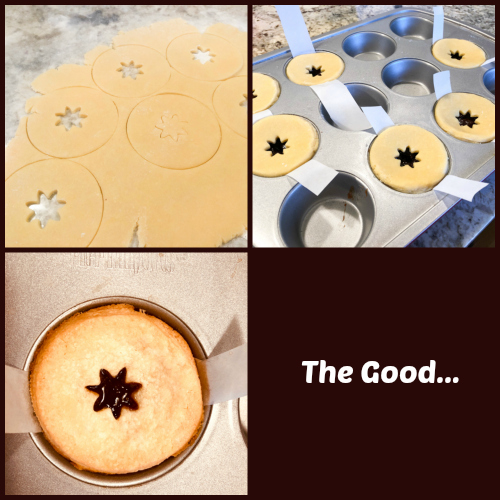
Prepare your muffin pan:  place a thin strip of parchment paper inside each hole, to facilitate removal of the pies after baking).

for the mincemeat filling:
200g raisins
50g dried apricots, finely diced
50g dried cherries, finely diced
120g brown sugar
120g unsalted butter
70ml sherry
Finely grated zest of 1 large orange
1 tsp cinnamon
1/8 tsp nutmeg
pinch of ground cloves

Combine the fruit with the sugar, butter, sherry, orange zest, and spices  in a saucepan and put on a gentle heat for a few minutes until the butter melts and the fruit softens slightly in the buttery syrup. Bring to a gentle simmer and simmer until it gets thick, with not much liquid floating in the surface.  Cool and use to fill the little pies.

for the pastry:
310g  all purpose flour
30g powdered sugar
pinch of salt
170g butter (chilled and cut in small cubes)
3 egg yolks mixed with very cold water to make a volume of 6 tablespoons

Heat the oven to 375F.

Put the flour, sugar and salt in food processor then add the butter and process until the butter is in small pieces. With the motor running add the mixture of egg yolks and cold water. Stop the mixer before the pastry forms a ball, remove it from the processor and gently bring it all together with your hands over plastic wrap. Shape into a flat disc and leave it in the fridge for 30 minutes.

Roll out the pastry to a thickness of about 3mm. I like to do it in between two plastic sheets (I cut the four sides of a  large ziplock bag leaving just the bottom part attached, open it and roll the pastry inside it). Cut out circles with a  9 cm (about 3.5 inches) round cookie cutter.  Place them carefully inside the prepared muffin cups. Cut out 7 cm (a little less than 3 inches) lids which should fit right over the top. Use a small star shaped or round cookie cutter to make a hole in the middle of the pastry lids.

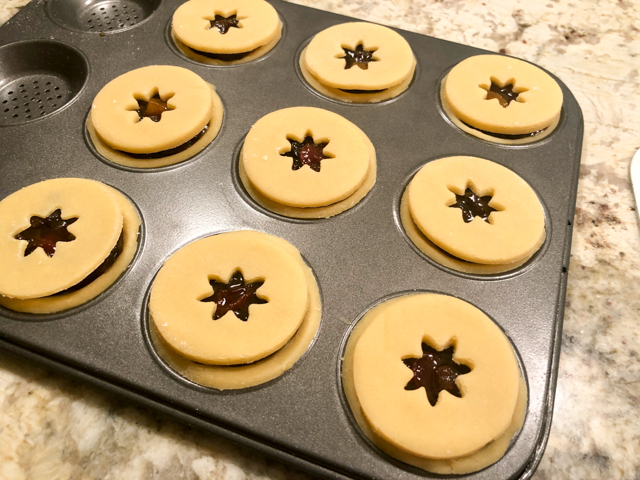
Fill each base with the mincemeat, brush a little water on the edges of the pastry and gently lay the top over. No need to apply pressure, and no need to brush the top with egg wash. Bake for about 25 minutes until the mince pies are light golden. Allow to cool slightly before removing them from the muffin cups. Dust the mince pies with icing sugar.

ENJOY!

to print the recipe, click here

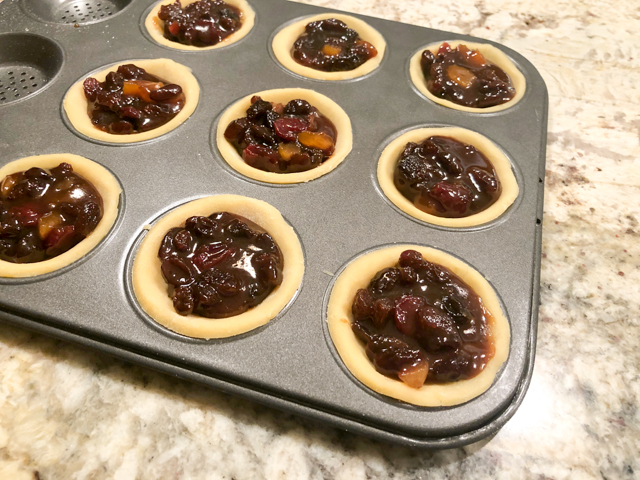
Comments: The mincemeat. You can find it in jars, and you can find it in little boxes to be reconstituted with water. I bought a small box, followed the instructions to bring it to life, and tried a taste. No way I would add that to my pies. Maybe the brand was not the greatest? I don’t know. But I advise you to make your own or get a brand that is recommended by some very experienced mincemeat pie baker.  If you make the filling, keep in mind that you’ll need to simmer it down to the point that it gets thick, with not too much liquid floating around. And that each little pie should not be filled to the top. Which brings me to mistake #1.

The picture above shows my very first batch in the making. Instead of a muffin tin, I used a little tart pan, with a very small volume, which I filled to the top. Not a wise move. But then, there was also mistake #2.

I added the top, and it was not the right size, it should have been slightly bigger in diameter to fully cover the bottom.  I won’t share a picture of these babies after baking, because not only the filling exploded through the edges and the top, but the mismatch between pastry bottom and top made them quite sad to look at. Paul Hollywood would have dragged me out of the tent while mumbling “how could you? how could you?”  Undeterred, next day I rolled my sleeves up and tried again.

My second batch seemed quite a bit more promising. I matched bottoms and tops with the precision of a NASA engineer, but still committed two major sins. First, the filling was obviously too liquid so it bubbled all over the top. Second, I forgot to add paper strips to the bottom of the muffin tin, which made removing them from the pan a real nail-bitter of a task. One broke into pieces right in front of my eyes. Much to the delight of certain pups that happened to be circling around the kitchen. Mincemeat? Did you say mincemeat?

I cannot bring myself to show you what the pies looked like after baking – the best way to describe is a micemeat crime scene – even after a dust storm of powdered sugar, you can see the stains of filling over the top.

Chef Sherry Yard was right when she kept telling us that powdered sugar covers a multitude of sins, but still, I wanted to get it right. Next day I took a deep breath and started by simmering down the mincemeat filling, until it was really thick and luscious. Cooled it down, made more pastry dough, and baked them at a lower temperature, 375F.  Worked like a charm!

They baked perfectly in about 25 minutes, no bubbling over, and the paper strip trick (thank you, Nancy) worked like a dream, I could remove them one at a time without any problem.


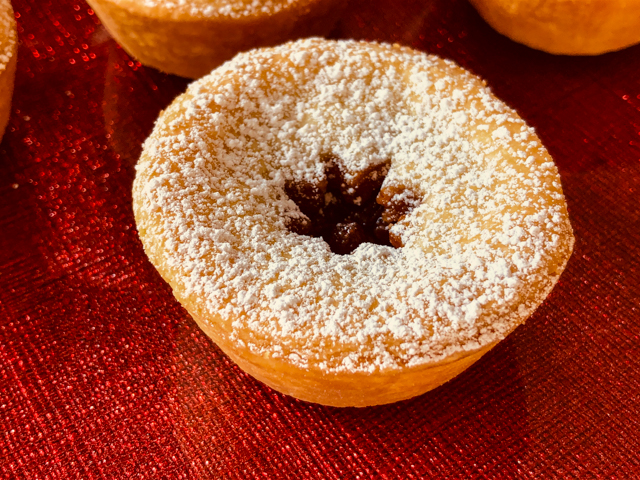
Of course, a little powdered sugar makes a little pie even nicer!

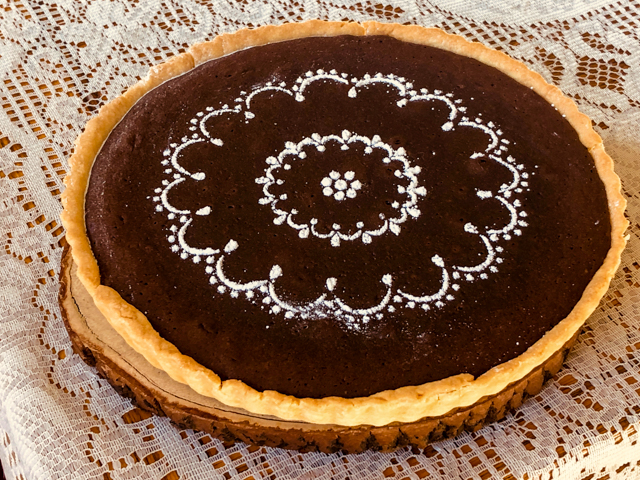
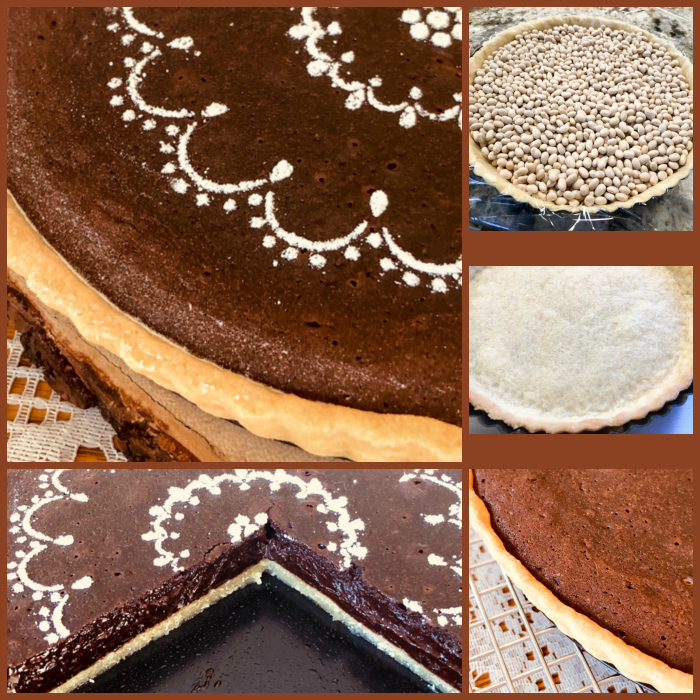
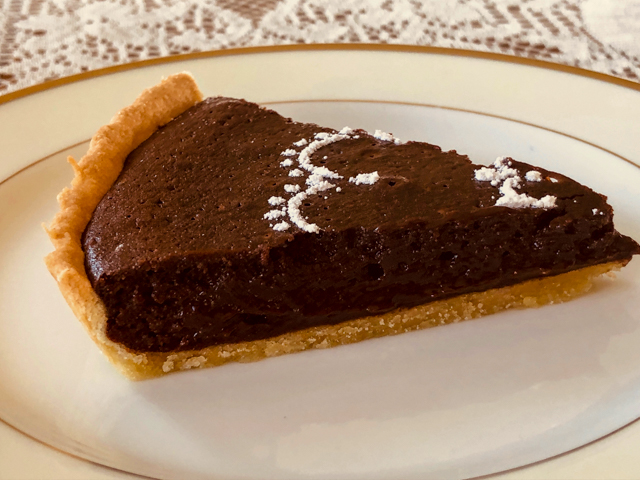
So there you have it, my friends. It took me three attempts to get this bake right, but I am glad I kept trying, because it is much easier to tweak things when you have all the issues fresh in your mind. I loved the filling and the texture of the pastry, which was also very easy to work with.  Can I say one more time thank you, Nancy? Since on my third attempt I made just a few pies, I used the leftover dough to make a chocolate tart, and it turned out quite tasty too. You will see it in the blog soon, I promise.


ONE YEAR AGO: Shibari Bread]

TWO YEARS AGO: Incredibly Simple Times Four – January 2018 

THREE YEARS AGO: Two Salads and a Blog Award!

FOUR YEARS AGO: When Three is Better than Two

FIVE YEARS AGO: Somebody Stop Me!

SIX YEARS AGO: Zucchini Pasta with Cilantro-Cashew Pesto

SEVEN YEARS AGO: Bran Muffins, Take Two

EIGHT YEARS AGO: Brown Butter Chocolate Chip Cookies

NINE YEARS AGO: Mogo Mojo

TEN YEARS AGO: Slow-Roasted Chicken Thighs: an Ice-Breaker

BRAZILIAN PAO DE MEL

In case you’ve missed my big announcement:
12 days to showtime!

Want to say it as a native? Pay attention to the nasal sound of PÃO… and repeat after me…

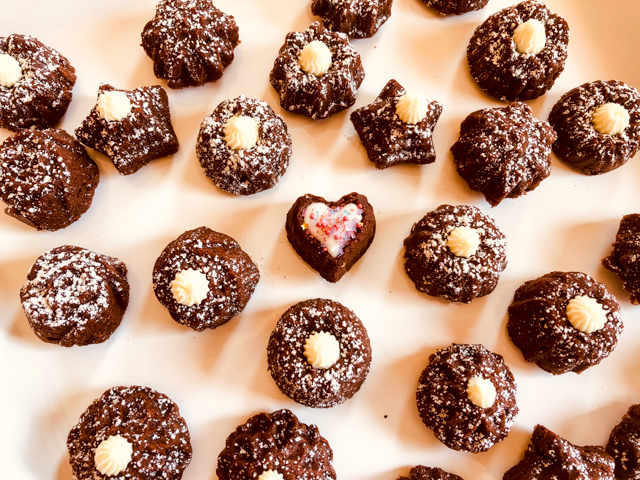
Pão de mel translates literally as “honey bread.” However, it is definitely not a bread, and honey might not be the first flavor that comes to mind once you take your first bite. I admit the name is misleading, but I am thrilled to share this recipe with you, because it is a real classic in my home country. It has flavors I adore (that ginger, spicy thing), enclosed in a nice chocolate shell. The ones I grew up with were a bit on the dense side. My family had no tradition of baking, so I only had pão de mel that you get in stores, wrapped in plastic for who knows how long. This version is so good, very soft, tender, sweet and spicy. I made two kinds, the traditional, covered with a shell of chocolate, and a little departure from the classic, in bundt shape. You decide which one you like best.

PÃO DE MEL
(from the Bewitching Kitchen, adapted from several sources)

1 egg
250mL whole milk
90 g  sugar
270 g honey
30 g butter, melted and cooled
240 g all purpose flour
7 g baking soda
1 teaspoon baking powder
1 tablespoon ground cinnamon
1/4 teaspoon salt
½ teaspoon of nutmeg
1/4 tsp ground cloves
3 tablespoons cocoa powder (Dutch process is fine)

for the filling;
dulce de leche (store bought or homemade)

for covering:
tempered bittersweet chocolate, about 500 g

Mix the egg with milk, sugar, honey and butter in a large bowl. Whisk well. In another bowl, stir in the remaining dry ingredients and sift them slowly over the egg mixture in three portions, stirring well after each addition until a smooth, homogeneous mixture is formed.  Place batter in fridge for 15 minutes.

In the meantime, turn the oven on at 360 F. If using non-stick mini cake pans, you don’t need to do anything. Otherwise grease and flour the pans lightly.  Ideally you need a 6 cm round tin (a bit less than 2.5 inches). Pour the batter halfway through the tin, do not fill more than half.  Bake for 15 to 20 minutes. Unmold the still warm rolls and let them cool completely on a rack. Cut them in half and stuff each with the dulce de leche.

Temper chocolate and cover each little pao de mel.

Alternatively, bake the batter in mini bundt pans, fill the central hole with dulce de leche and decorate with a drizzle of tempered chocolate. Mini bundt pans will take slightly longer to bake. Cool them in the mold before unmolding.

ENJOY!

to print the recipe, click here

Comments: If you want to make your own dulce de leche, there are many methods to do so. Pressure cooker, slow oven, even the microwave. I opted for sous-vide and must say it was perfect. Simply pour the contents of 1 can of condensed milk into a bag, seal it and cook it at 185F for 12 to 16 hours. When the time is up, simply cut the bag and pour the contents into a container. Into the fridge ready for any dulce de leche emergency.

Homemade dulce de leche is a real treat, I highly recommend you give it a try, but of course, the canned product will work well too. Pão de mel can be frozen for a couple of months without the filling and chocolate covering. You can also simplify the process and skip the filling. The simplified version is actually more common to buy in Brazil. But normally, when people make them at home, they go the extra mile. A very sweet mile, if you ask me.

Which version was better, classic or mini-bundt? I honestly have a hard time deciding. The mini-bundt is a lot easier to make because once you un-mold the little cakes the hard work is done. You can conceivably even get by without tempering chocolate, just melting it gently and drizzling it all over. But of course, the traditional version is the one that brings fond memories of my past. It’s your turn now, make both and let me know what you think…

For those interested:  this is the pan I used to bake the cakes. I love it!

ONE YEAR AGO: Stir-Fried Chicken in Sesame Orange Sauce

TWO YEARS AGO: Monday Blues

THREE YEARS AGO: A New Way to Roast Veggies

FOUR YEARS AGO: Two Takes on Raspberries

FIVE YEARS AGO: Spice Cake with Blackberry Puree

SIX YEARS AGO: Own Your Kitchen with Cappuccino Panna Cotta

SEVEN YEARS AGO: Chicken Parmigiana, the Thriller

EIGHT YEARS AGO: Wild Mushroom Risotto

NINE YEARS AGO: Tartine Bread:  Basic Country Loaf 

TEN YEARS AGO:  Pugliese Bread

GIANT COOKIE MEETS MOUSSE

…and the Entremet Cookie is born! I cannot take credit for it, so before I even start talking about this delicious dessert, let me thank Maxime, from Empreintesucree.fr.  She is a professional pâtissière who shares very detailed recipes of her beautiful productions. If you are a bit intimidated by entremet type cakes, this one is an excellent starting point, especially if you simplify the decoration steps (see comments). I guarantee it will still impress your guests.

ENTREMET COOKIE
(slightly modified from Empreintesucree.fr)

for the cookie base:
80 g butter (at room temperature)
65 g muscovado sugar
a pinch of salt
1 egg (55 g)
120 g all purpose flour
2 g baking powder
90 g dark chocolate mini chips

for the chocolate cream:
1 egg yolk
10 g of sugar
100 g heavy whipping cream
38 g dark chocolate (I used Lindt 70%)

for the dark chocolate buttercream:
6 Tablespoons unsalted butter, softened
290 g confectioners’ sugar
90 g unsweetened cocoa powder
1/3 cup whole milk
2 teaspoons vanilla extract
1/4 teaspoon salt

for the chocolate mousse:
180 g Caramelia chocolate (or milk chocolate of  your choice) of milk chocolate
250 g heavy whipping cream

for the chocolate velvet spray (optional)
120 g milk chocolate (I used Caramelia)
80 g of cocoa butter

for decoration:
golden stars
chocolate Crispearls

Suggested timeframe: make cookie two days before serving time and freeze it. The day before serving make the mousse, and the chocolate cream. Assemble the cake and save the cream in fridge until cake is un-molded.  On serving day make the chocolate buttercream, and the chocolate spray suspension (if using).

Make the cookie base. Heat the oven to 350 F. Cover a cookie sheet with parchment paper  and place over it a 20 cm ring. Reserve.

In the bowl of a KitchenAid type mixer, cream the butter with the brown sugar and salt. Add the egg and mix again, then sift the flour with the baking powder and mix gently.  Add the mini chocolate chips, and spoon the batter inside the ring. (It is easier to just pour the batter over the parchment paper eye-balling the dimension, then sit the ring on top and use an off-set spatula to carefully spread it uniformly inside the ring).

Bake for about 15 minutes, until the edges start to get some color. Remove from the oven, and – using oven mitts – immediately make circles with the ring, which will make the cookie base shrink a little bit, as it is still hot. You just want to have the cookie a tiny bit smaller than the ring, so that the mousse will cover the edges fully.  Allow the cookie to cool completely before placing it in the freezer.

Make the chocolate cream.  Whisk the sugar and the egg yolk in a small bowl. In parallel, heat the cream in a small saucepan. Pour the cream over the sugar/yolk mixture to temper it, then transfer everything back to the saucepan. Cook the custard over low heat until 180 F.  Pour the cream over the chocolate until it is slightly melted and mix with a spatula.  Place a plastic film in contact with the cream and reserve it in the refrigerator. When ready to assemble, place in piping bag with a plastic adaptor and have two round piping tips ready, of different sizes.

Make the chocolate mousse. Melt the Caramelia chocolate gently in a double boiler.  Bring one third of the cream, about 80 g to a simmer in a saucepan. Pour the hot cream over the melted chocolate and mix with a spatula until fully smooth. Whip the remaining whipping cream until it gets the consistency of melted ice cream.  Pour half of the cream on your milk chocolate mixture and mix gently with a spatula. Add the remaining cream and mix again until you get a perfectly smooth chocolate whipped cream.

Assemble the dessert. Stretch a piece of plastic wrap on the 20cm circle ring, pulling it well to stretch it nicely.  Flip your circle over a baking dish that fits in your freezer and place a strip of acetate film on the inside to facilitate un-molding later. Pour all the mousse into the circle, then smooth roughly. Take the cookie out of the freezer and push it upside down into the foam (the smooth side of the cookie up). The mousse should be flush with the cookie, smooth over what is needed. Reserve the dessert in the freezer overnight.

Make the dark chocolate buttercream. In the bowl of a stand mixer fitted with the paddle attachment, beat the butter on medium speed until it is smooth. Turn the speed to slow, add the icing sugar and cocoa powder and beat until combined. Pour the milk and vanilla extract then add the salt and continue beating until well combined. Increase the speed to high and beat the frosting for a couple of minutes. Place in a piping bag fitted with a 1M tip or another star-shaped tip of your choice.

Make the chocolate suspension for velvet effect.  Melt milk chocolate and cocoa butter in a double-boiler. Filter and place the mixture into the tank of your sprayer. Temperature should be 98 F. Un-mold your dessert and immediately spray the chocolate on it. Ideally, do this inside a dishwasher with racks removed. Decorate the cake with the cream and buttercream, add sprinkles of your choice. Leave in the fridge to thaw for at least one hour before serving.

ENJOY!

to print the recipe, click here

Comments: Well, I do realize that it seems a bit of a stretch to post this recipe as simple and then come up with quite a few components to make it. As I mentioned, you can simplify it quite a bit. For instance, you can skip the two different types of piped decoration and do a drizzle of melted dark chocolate all over it. That would work well. A shower of golden sprinkles for fun and a bit of a dressed up look. The velvet spray is also optional. I find it fun to do, though, and it helps me deal with guilty feelings of having a sprayer sitting in the basement just for my patisserie adventures. It’s nice to put it to use.

On that note, three things are worth mentioning. First, you must strain the melted chocolate + cocoa butter before pouring it in the sprayer. If you look at my photo above, you’ll notice how much stuff gets retained in the sieve. That could conceivably clog the sprayer and you don’t want that at all. Second, if you are using a regular paint sprayer for chocolate work, the container is large, so what works very well is to place a much smaller plastic cup inside, so that you don’t need to make a huge amount of chocolate suspension. I used an empty Benecol container. And third, do the spraying inside an empty dishwasher, because it is a messy process and all you need to do after is turn the dishwasher on.

We took this cake to a dinner party at a friend’s home, so I snapped the pictures with my cell phone very quickly. I admit they are not prize-winning shots. At any rate, everybody raved about the dessert. The cookie component goes very well with the creamy mousse, and it had just the right thickness, don’t try to make it thinner because it won’t work the same way. I loved the contrast of the sharp cocoa buttercream with the milk chocolate cream and mousse, but the cake can shine with only one of the piped toppings.

Maxime, thanks for a lovely recipe, I am thinking of many variations in the future.

ONE YEAR AGO: The Brazilian Battenberg

TWO YEARS AGO: Salzburg Sourdough

THREE YEARS AGO: If I had One Hour

FOUR YEARS AGO: Apple Cinnamon Oatmeal Cake

FIVE YEARS AGO: Sourdough Rye Bread with Flaxseeds and Oats

SIX YEARS AGO: Apricot-Raspberry Sorbet: A farewell to Summer

SEVEN YEARS AGO: Marcela’s Salpicon

EIGHT YEARS AGO: Pork Kebabs

NINE YEARS AGO: Fondant au Chocolat

TEN YEARS AGOGot Spinach? Have a salad!


YOGURT TART

Not too long ago I was browsing the internet searching for entremet cakes, and stumbled on a site that was new to me: Cooking Me Softly, hosted by Arianna, a chef from Italy. All I can say is that I had a very hard time moving away from the computer. Her concoctions are things of complete beauty, her flavor combinations unique and her presentation style superb. Not only she shares detailed recipes, but also short videos with the crucial stages of preparation. Basically, her site is culinary gold for those into patisserie. She blogs in Italian, but I can follow most of it closely enough to get the important points. Or so I hope. I fell in love with her Yogurt Tart the moment I first saw it, and could not wait to try and make it. The use of semi-spheres of mousse on top of the tart? Genius.

YOGURT TART
(slightly modified from Cooking Me Softly)

for Sablé Breton:
80 g egg yolks
100 g granulated sugar
125 g very soft butter
125 g pastry flour
2 g salt
5 g baking powder
grated lemon peel (1 lemon)
MyCryo cocoa butter (optional)

for white chocolate ganache:
340 g Lindt white chocolate
85 g heavy cream

for yogurt mousse:
120 g full-fat Greek yogurt
30 g granulated sugar
15 g of lemon juice, sieved
240 g fresh cream
6 g gelatin, 200 bloom
18 g cold water for gelatine hydration

for decoration:
small meringues
Gold dust
sprinkles of choice

Make the cookie base. In a Kitchen Aid type mixer, whisk the yolks with sugar and lemon zest until pale. Replace the whisk with the leaf beater, add the sifted flour with baking powder, salt, and then the butter. Mix well until creamy.  Place in a piece of plastic wrap, form as a disc and refrigerate for 8 hours.

Roll between two sheets of parchment paper to 1 mm thickness an put in the fridge for another hour, as you heat the oven to 350 F.

Cut a disc of dough with a 20 cm ring (7 + 3/4 in), and bake inside the ring for 20 to 25 minutes. Remove from the oven, and while still hot sprinkle MyCryo over the surface. Allow it to cool completely. Before continuing with assembling, place the base inside the ring and add a band of acetate around it so that the ganache will be poured nicely on top. I like to use a ring that is adjustable, so that I can tighten it better around the base. Often the base shrinks a little during baking.

Make the chocolate ganache. Melt the chocolate gently in the microwave or in a double boiler. Heat the cream to simmering (about 175 F). Add to the chocolate in three additions, whisking gently to fully incorporate the chocolate and the cream.  Reserve. Cool to about 90F before pouring into the cool base. Place in the fridge to cool completely and then in the freezer overnight.

Make the yogurt mousse. Hydrate the gelatin in the water indicated in the recipe. Heat part of the yogurt with the sugar to about 140 F.  Melt the gelatin heating gently for a few seconds in the microwave (do not boil it). Add the melted gelatin to the warm yogurt/sugar mixture.

Add the lemon juice, the remaining cold yogurt and mix. Whip the cream to the consistency of melted ice cream, and fold gently into the yogurt base. Spoon the mousse into a piping bag (no need for a piping tip) and fill half-sphere molds (3.4 and 5 cm in diameter), smoothing the surface well. Put in the fridge to cool and then freeze overnight.

Assemble the tart. Remove the base with chocolate ganache from the freezer, place in a serving tray and remove the acetate. Arrange the mousse spheres of different diameters over the ganache. Decorate with mini-meringues plain and painted with gold spray. Put in the fridge for about 6 hours to allow the ganache to soften and the mousse to thaw.

ENJOY!

to print the recipe, click here

Comments: I truly enjoy making desserts that involve multiple components particularly because they can be made in advance and wait in the freezer or fridge. Finishing the dessert then is easy and fun (assuming it all worked well in the previous steps). For this preparation, Arianna’s video was very helpful, as the Sable Biscuit is quite a bit softer than I anticipated. Watching how she handled it was key to succeed. Also make sure you make the dough the day before you intend to bake it, it needs those 8 hours in the fridge. Another important point is the white chocolate ganache: you need it to be firm enough to slice and hold its shape. Arianna uses a specific brand of chocolate that would be a bit of a hassle for me to find. Using her proportions with the Lindt bar, the ganache ended up way too loose, so I made another batch using a 4:1 ratio chocolate to cream. You can probably get by with a 3.5:1, but not much less than that.

My schedule went like this: I made the biscuit dough on a Friday evening, baked it Saturday morning and made the mini-meringues, the chocolate ganache and the mousse on Saturday afternoon. Once the ganache cooled enough I spread it over the biscuit base and froze it. Sunday afternoon I un-molded the frozen mousse spheres, sprayed some of the meringues with edible gold color, and assembled the tart.

The only issue I had was the golden stars used for decoration. The ones in contact with the ganache held their shape well, but the yogurt mousse (probably due to its acidity) melted the stars within an hour or so.

The flavors were quite amazing, as the sweetness of the white chocolate ganache stood well to the bright flavor of the yogurt mousse. The biscuit base had excellent texture, even if I overbaked it slightly. It was hard to see it inside the ring, next time I’ll be more careful.

Arianna has a cookbook published online and I could not resist getting my copy. It is absolutely amazing, you can get it with a click here.  The name is just too clever: Aria di Dolci. Loved it! Keep in mind it is in Italian, so you need to have some level of understanding of the language.


ONE YEAR AGO: Grilled Lamb-Stuffed Pita Bread

TWO YEARS AGO: Elderflower Macarons

THREE YEARS AGO: A Duet of Sorbets

FOUR YEARS AGO: Sobering Peach Sorbet

FIVE YEARS AGO: Spiralizer Fun

SIX YEARS AGO: Beer-Marinated Grilled Skirt Steak

SEVEN YEARS AGO:  Secret Recipe Club: Corn Chowda

EIGHT YEARS AGO: Page-A-Day Calendar (Pits and Chief 5 minutes of fame…)

NINE YEARS AGO: Home Sweet Home (our beloved Pits in one of his last photos)

TEN YEARS AGO: Marbled Rye

CHOCOLATE TARTLETS WITH HONEY CARAMEL FILLING

Care to find out what’s my latest obsession? Afternoon Tea Cookbooks. Most are not available as Kindle books, so I tend to be very selective when inviting one into our home. Reviews must be absolutely stellar, and pictures must be included for most (if not all) recipes. One book that made the cut is Afternoon Tea At Home, by Will Torrent. It is absolutely wonderful. As I was browsing through its pages and trying to decide what to make first from it, I had this crazy idea and immediately acted on it. Handed the book to Phil and said “Here, pick a recipe, any recipe, and I’ll make it.”  I call that Self-Inflicted Technical Challenge. He needed less than 2 minutes. Of course, the recipe he chose involved a crust, a caramel filling, tempering chocolate, and using transfer sheets to decorate it. Me and my big mouth. When will I ever learn?

CHOCOLATE TARTLETS WITH HONEY CARAMEL FILLING
(adapted from Afternoon Tea at Home)

for the crust:
200g all-purpose flour
150g butter, cut in pieces, cold
90g powdered sugar
60g almond flour
20g cocoa powder
pinch of salt
4 egg yolks

for the filling:
1 cup (320 g) honey
½ cup (120 ml) heavy cream

¼ cup (60 ml) sweetened condensed milk
¼ cup (85 g) corn syrup
pinch of salt
2 tablespoons unsalted butter 

for the topping:
1 cup heavy cream
3 tablespoons powdered sugar (or to taste)
1 tablespoon skimmed dry milk
100g tempered dark chocolate
12 sugar bees

Make the crust: Put the flour and butter in the bowl of a Kitchen Aid mixer and mix until the butter gets into crumbs, coated by the flour. In a separate bowl mix the sugar, almond flour, cocoa powder and salt. Add this mixture to the butter/flour, mix on very low-speed to combine (you want to avoid developing gluten). When it is almost fully combined, add the egg yolks and again mix very gently.  Form a dough, flatten it, wrap in plastic and place in the fridge for 1 hour.

Turn the dough onto a floured surface and roll out to 1/8 inch thick. Cut 12 rounds that will fit a muffin pan, coming all the way to the sides. Chill in the fridge for at least 30 minutes before blind-baking at 325 F.  I like to use plastic wrap to enclose rice or pie weights, it is safe to bake at this temperature, as long as the plastic does not touch the metal surface of the tin. Bake for 10 minutes, remove the weight, and bake for 5 to 10 more minutes. The tartlets must be fully baked, as no more cooking will take place.  Cool in the pan.

Make the filling: Combine the honey,  cream, condensed milk, corn syrup, and salt in a saucepan. Stir over medium heat until the mixture reaches 240F. Remove from the heat and stir in the butter. Divide among fully blind baked shells and allow to cool to room temperature. 

Make the chocolate decoration. Temper the chocolate according to your favorite method. Spread over the transfer sheet (make sure to use the correct side of the sheet!), let it set for a few minutes, then stamp circles the exact size of the top of the tartlets. Once fully set, gently peel the chocolate off the transfer sheet. Marvel at the design, pat yourself on the back.

Make the whipped cream. Beat the heavy cream with sugar and powdered milk until it forms medium peaks, transfer to a piping bag with a simple round piping tip.

Assemble the tartlets. When the crusts are cold, fill them with the caramel, place in the fridge to speed cooling a bit. Once the surface is set, gently place the chocolate decoration on top. Pipe the whipped cream, and set a little sugar bee on top.

ENJOY!

to print the recipe, click here

Comments: This recipe, originally called Beehive Tarts, comes from David Girard, Head Pastry Chef from The Dorchester. I kept the crust and the chocolate decorations, but changed the filling and the topping. The filling was a honey caramel thickened with gelatin, but I worried that it would not set up enough to be neatly sliced in half. Since I take my bakes to the department, I prefer to offer a larger number of small portions, so more colleagues can enjoy them.  For this reason, I used a caramel adapted from a recipe I made a couple of years ago.  As for the topping, in the book he uses lemon curd (it did give a nice yellow color very cute with the little bee sitting next to it), but I love the combination of chocolate, caramel and whipped cream. I stabilized the whipped cream with powdered milk, a trick I learned from Anna Olson. It does stabilize it very well and is super simple to do, but I prefer the taste of whipped cream stabilized with gelatin (I will talk about it in the very near future).

The chocolate disc decoration… Tempering chocolate is the number one culinary task that gives me hyperventilation. So many failures, it’s not even funny. Somehow this time things worked beautifully in the microwave/seeding method. Two basic changes in my approach: I grated the chocolate finely instead of keeping it in chunks, and used a microwave-safe plastic bowl instead of Pyrex, in very short cycles of heating, not more than 10 seconds at a time. I kept 1/4 of the chocolate grated at room temperature to use as “seed.”  Then I stirred, and stirred, and stirred some more, monitoring the temperature very carefully.  Once the chocolate was tempered, it was spread over the transfer sheet. I tried my best to do it as uniformly as possible.

At that point, I waited for the chocolate to start setting, but did not allow it to fully harden. You have a good window of several minutes to work, no need to panic. You could panic, of course, but it’s not mandatory. Then using a cookie cutter, I pressed into the chocolate, and lifted the disc. That is what I call a rookie’s mistake. If you use this technique, press the cookie cutter, forming the edges as sharply as possible, but do not lift the disc yet. Wait until it is fully set. That will ensure that the pattern will efficiently transfer. My first discs clearly showed some variability in the pattern, weak at some spots, well-defined in others. But for a first time, I am pretty happy with the way it turned out.  The sugar bees? I bought them from amazon.  If you have artistic inclinations, you could make some with fondant, or modeling chocolate. I cringe to imagine what my bees would look like if I attempted to make them from scratch. Rotten mangos? Pineapples after a wild boar stampede?  Neither option would look right.

But the heart of the matter is: can Sally bake without drama? Sometimes yes, but not always. After I took the photos for the post, I placed my cute tartlets in a tray to take them to the fridge, where they would sit until Monday morning. A very unfortunate bump of my hand on the shelf of the fridge, and they slid off the tray, one fell all the way to the floor, some tumbled inside the fridge… Can you feel the pain? At first I thought they were all ruined, but luckily enough most were ok after I shaved off a bit of broken crust  here and there. I had to discard a few bees that were messed up when they got shoved into a puddle of whipped cream. I also had to remove all the cream very carefully, clean the tops and decorate them again. The tartlet that fell to the floor? You can guess who swallowed it before I could do anything to prevent that from happening. Yes, there was chocolate. Yes, he was totally fine and quite pleased with that twist of canine fate.  Never a dull moment, folks. Never a dull moment.

The tartlets are quite decadent, the little bees have a melt in your mouth texture, not hard as rock sugar. I was pleasantly surprised. Obviously you can skip that component, without compromising the dessert. I just felt like going the extra mile, because the person who requested the recipe deserves only the best…

ONE YEAR AGO: Zucchini Soup with Tahini

TWO YEARS AGO: Black Sesame Macarons

THREE YEARS AGO: Fine Tuning Thomas Keller

FOUR YEARS AGO: Cauliflower Tortillas

FIVE YEARS AGO: Majestic Sedona, Take Two

SIX YEARS AGO: Secret Ingredient Turkey Meatballs

SEVEN YEARS AGO: Swedish Meatballs and Egg Noodles

EIGHT YEARS AGO: Italian Easter Pie

NINE YEARS AGO: Black Olive Bialy