HOEGAARDEN BEER BREAD

I don’t regret that many things in my life, but if I could go back to the period  that I lived in Paris, I’d take some time to travel to Belgium.   I was so close to that beautiful country, but never saw it in person… it’s a shame and it’s sad. Plus, I’ve never met a person from Belgium who wasn’t super-nice!  All my Belgium friends have a great sense of humor, a great appreciation for the fun side of life, and many positive things to say about their home country, that excels in so many things.  Two of their special delicacies are chocolates and beer!  The very best of both are produced in small quantities and not exported,  but some excellent Belgium beer makes it all the way to the US, examples being Chimay, Leffe,  and Hoegaarden, the latter of which is a beer that brings fond memories of my days as a single woman in Paris…   😉

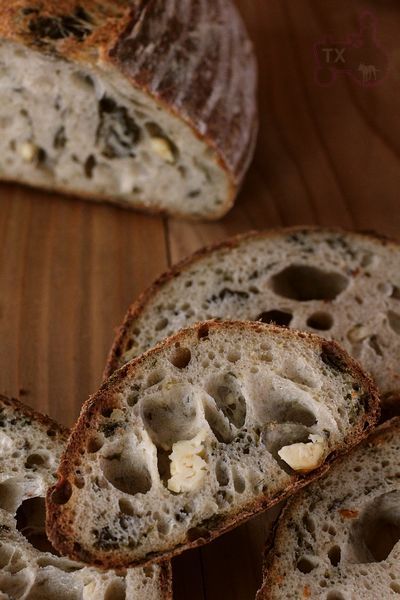
I don’t drink beer anymore, but I still like to cook with it, or include it in  breads- for a quick flash back, click here.  So, when I saw this post not too long ago, I changed all my baking plans for the weekend, to accommodate a little Hoegaarden sourdough, and take the Bewitching Kitchen on a virtual trip to Belgique!

HOEGAARDEN BEER BREAD
(adapted from Fab Food Blog)

For the sponge:
120 g 100% hydration sourdough starter
60 g bread flour
45 ml Hoegaarden white beer

For the final dough:
235 g bread flour
65 ml Hoegaarden white beer
40 ml lukewarm water
1 tsp salt
1 tsp fennel seeds
3 tsp fresh rosemary, chopped

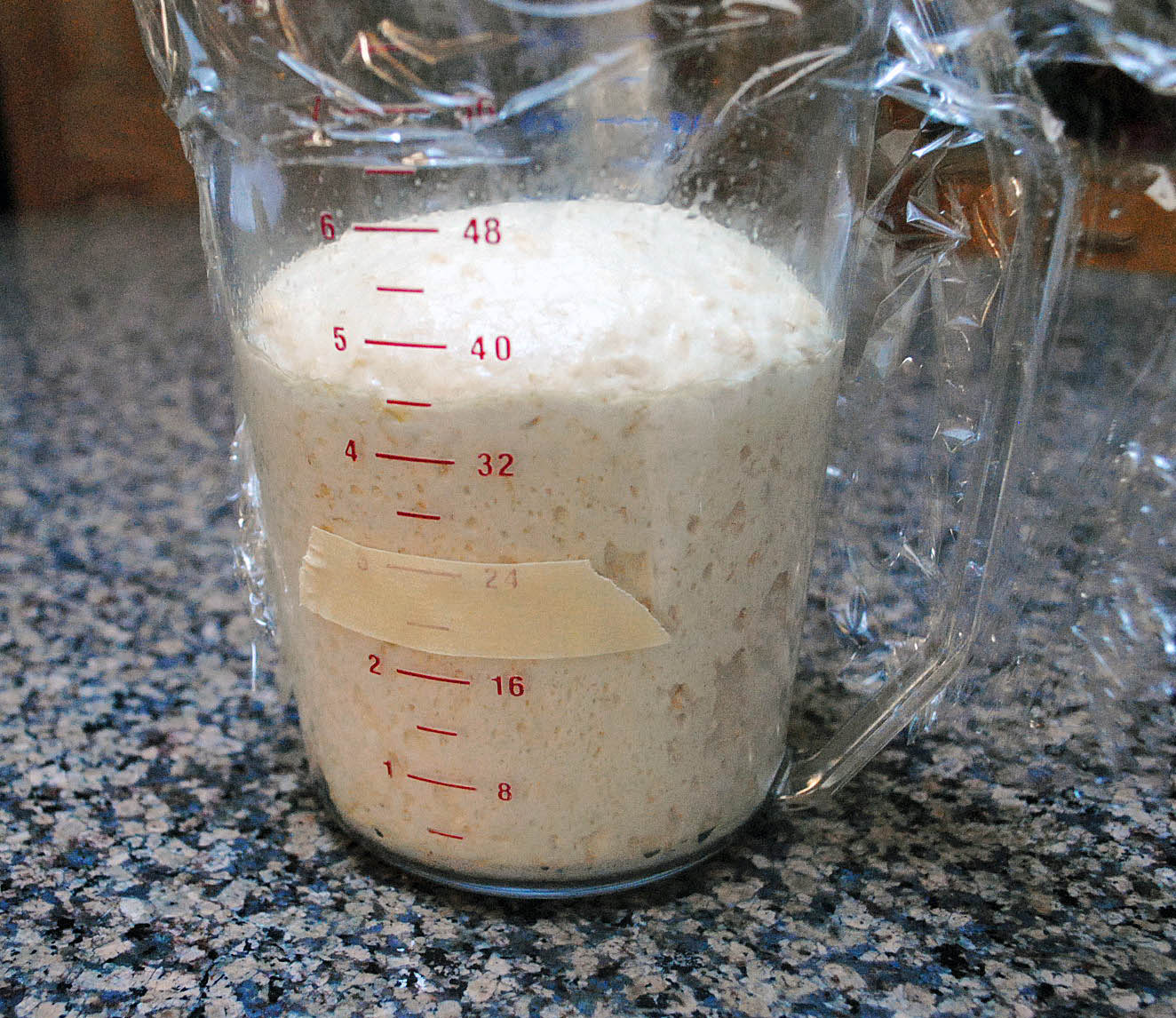
Mix all the ingredients for the sponge in a small bowl, mix well and leave it overnight at room temperature.  It should be very bubbly and more than double in size.  If it rises too much and collapses, it’s fine.

Next morning, place the sponge, flour, beer and water in a large bowl. Mix for a few minutes until barely combined, then let it sit for 20 minutes undisturbed. Add the salt, fennel seeds, and rosemary, and mix by gentle kneading.  Let the dough rise for 30 minutes,  knead again (20 seconds cycle),  let the dough rise for about 40 minutes.  Do one more cycle of quick kneading  and let the dough rise for another 40 minutes.  Knead one final time and let the dough rise undisturbed for 1.5 to 2 hours, until almost doubled in size.  Shape as a ball, and place with the seam side  up inside a well floured banetton type container.

Let it rise undisturbed for 2 hours.  Heat the oven to 450 F with baking stones or tiles inside. Invert the dough on the tiles, quickly score the surface, and bake with initial steam. If covering the dough, remove the cover after 30  minutes, reduce the temperature of the oven to 425 F and bake for 10 to 15 minutes more, until golden brown.    Cool for at least 1 hour before slicing.

ENJOY!

to print the recipe, click here


Comments: 
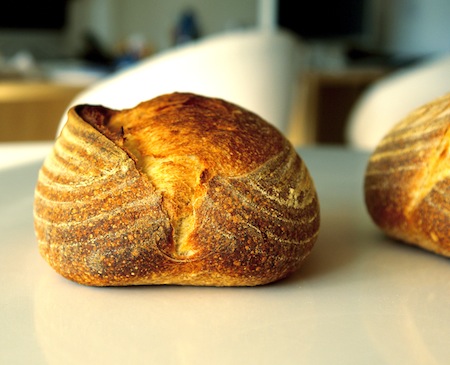
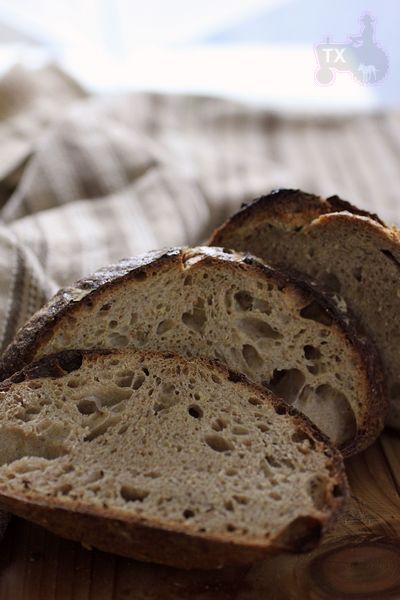
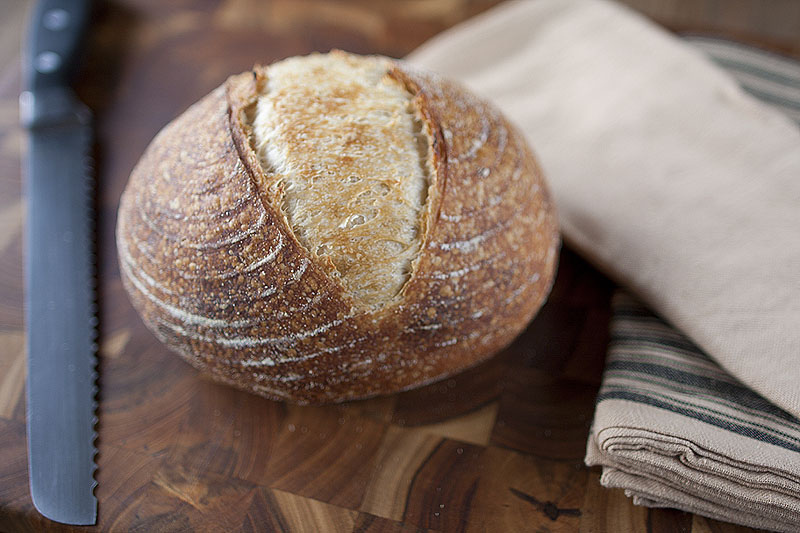
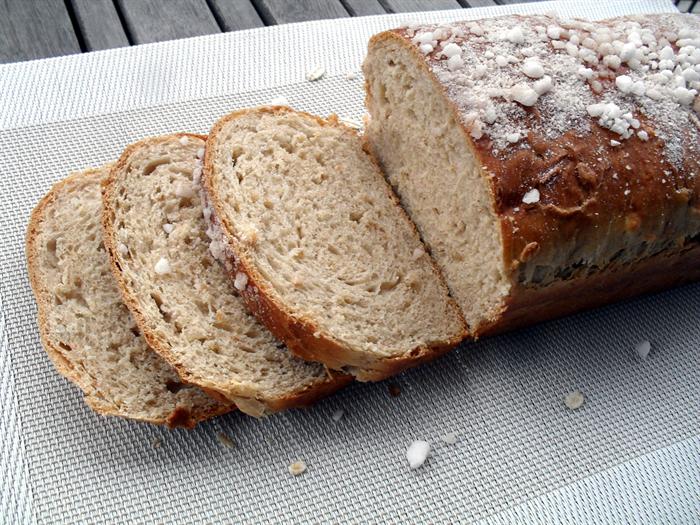
This recipe makes a  small boule, so if you want to serve it in a dinner party for several people, consider doubling the recipe and baking two loaves.  The bread smells wonderful during baking, and fennel is the dominant flavor.   As to the beer, it would be interesting to bake two loaves side by side, substituting water for beer in one of them – I imagine that there will be a slight difference in sourness and complexity of flavor, but it’s hard to know for sure with the competing taste of fennel and rosemary (which, by the way, I increased a bit from the original posted recipe).   In my experience, fresh rosemary has a tendency to lose its punch once it’s incorporated in bread dough, so I now use it with more abandon.

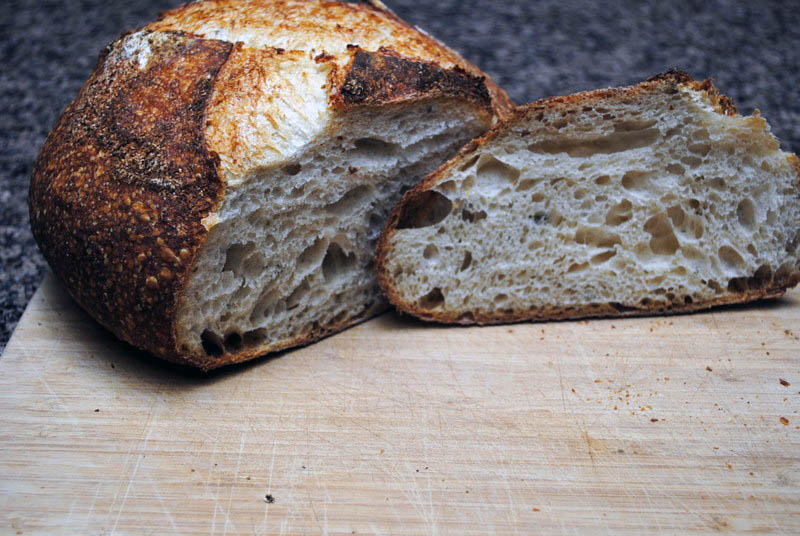
Fennel lovers:  pair this delicious bread with some hearty Italian type sausage, for a double-fennel kick…   Don’t like fennel?  Simply omit it, the bread will still be delicious with a nice crust and moderately open crumb.

I am submitting this post to Susan’s Yeastspotting event… stop by and visit her weekly showcase of breads.

ONE YEAR AGO: Ancho-Chile Marinade: Pleased to meat you!

TWO YEARS AGO:  The Handmade Loaf (the book that got me into sourdough baking!)

Add to FacebookAdd to DiggAdd to Del.icio.usAdd to StumbleuponAdd to RedditAdd to BlinklistAdd to TwitterAdd to TechnoratiAdd to Yahoo BuzzAdd to Newsvine

PANE DE CASA & CROSTINI

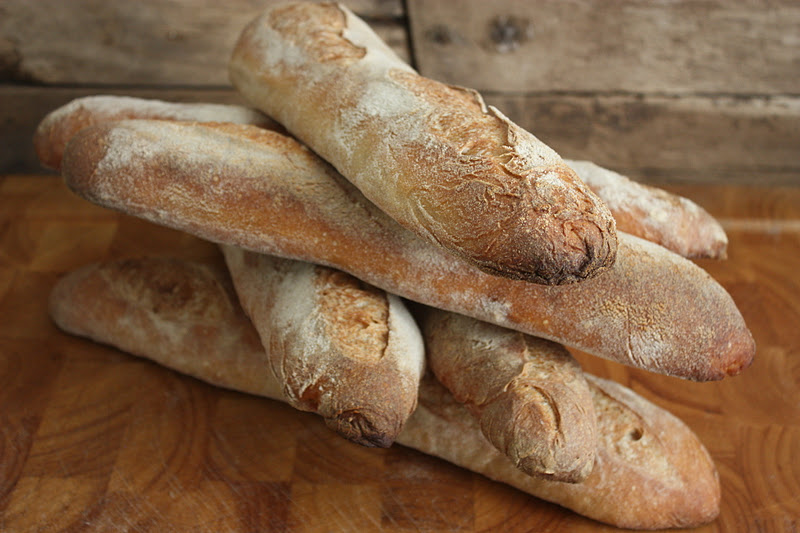
We were invited for a dinner party last Saturday, and I asked the hostess if I could take some homemade bread. Keep in mind that she had just returned from Paris and would be serving us, her lucky guests, an assortment of cheeses brought straight from the City of Light.  My mind was already set on this great post by Celia with a step-by-step tutorial for making her “pane de casa,” a variation of ciabatta. It seemed like a perfect option for the occasion.  Celia experimented and optimized a recipe that includes semolina flour in the dough with great success!  All I had to do was to follow in her footsteps…  😉

CELIA’s PANE DE CASA
(from Celia, Fig Jam and Lime Cordial blog)

500g (3½ cups) bakers/bread flour
500g (3½ cups) fine semolina (durum wheat) flour
7g (1¾ teaspoons) dried/instant yeast (or one sachet)
18g (2¾ teaspoons) fine sea salt
750g (3 cups) fridge cold water
rye flour, for dusting

In a large mixing bowl, whisk together the flours, yeast and salt.
Add the cold water, and mix the ingredients together to form a sticky dough. Really squelch the mix through your fingers until evenly combined. Scrape off your hand and cover the bowl with a towel. Allow to rest for 15 minutes.

Give the dough a quick knead in the mixing bowl – after the short rest time it will have relaxed a little. Just fold it over itself a dozen or so times, and then scrape your hand off again and cover the bowl with plastic wrap. Allow to prove until well risen – this might take up to three hours depending on your kitchen conditions. In our kitchen the dough was ready in a little over 2 hours. It should be very airy and full of bubbles, almost fully doubled in size.

Heat the oven to 480 F (220 C). If you are using pizza stones, place them on the racks to heat up, and tear off four sheets of parchment paper. If you do not have pizza stones, line a couple of baking trays with parchment.

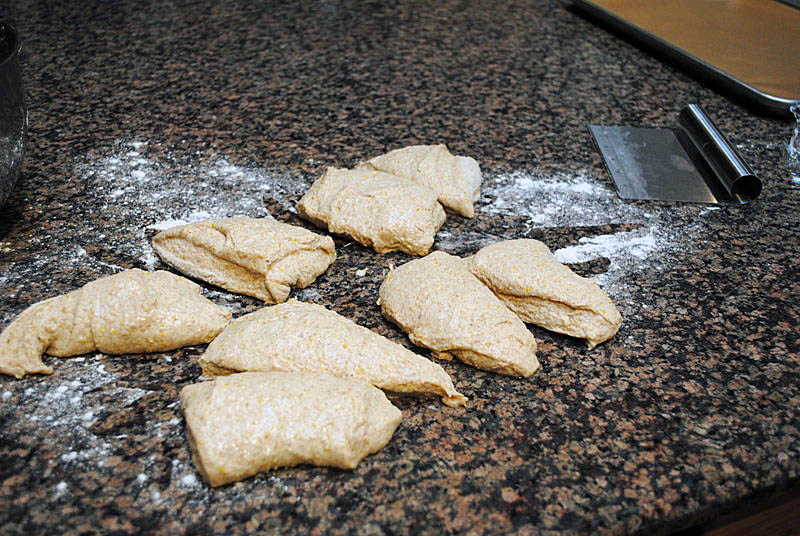
Heavily dust the bench and your hands with rye flour, then scrape the dough out gently – be careful not to knock all the air out of it. Fold the top of the dough into the middle, and then fold the bottom over to enclose it, forming a long rectangle. Keep your hands well dusted with rye flour, and use your scraper if necessary to help you handle the dough. Dust the top of the dough with more rye flour, then using your scraper, cut the dough into four roughly equal pieces. Dust your hands again with rye flour. Pick each piece of dough up by the ends, give it a little stretch, and then place it on a sheet of parchment to go onto the pizza stones, or onto the lined baking tray.

Spray the top of each loaf with a little water. Turn the oven down to 425 F (220 C) and put the loaves in to bake for 20 minutes. Then rotate the loaves (if you’re baking on stones, remove the parchment now) or the oven tray, and lower the heat to 350 F (125 C). Bake for a further 15 minutes, or until the loaves are crusty and hollow-sounding when tapped.

To make the crostini:
1/4 cup olive oil
pinch of dried herbs of your choice (I used herbes de Provence)

Mix the olive oil with the herbs.  Once the bread is completely cold (or next day), cut it in slices 1/4 inch thick. Brush the oil very lightly on both sides of the bread, and grill each side until nice marks form.  Give each slice a slight turn  after a couple of minutes to produce a crisscross pattern.

ENJOY!

to print the recipe, click here

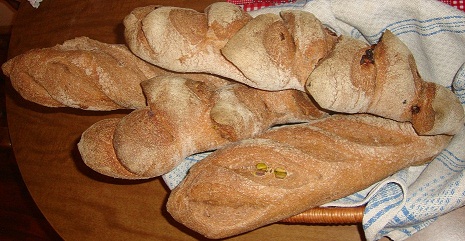
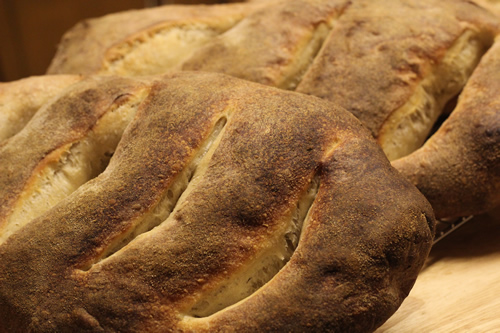
Comments:  As you can see in the photo, two of my loaves ended up lighter and the crust opened almost as if the bread had been scored (it had not). Those were baked exactly as Celia did, spraying a little water on the surface.  The other loaves were baked under an inverted roasting pan previously filled and empty of hot water to generate steam in the initial 20 minutes of baking.   The difference in the crust was quite amazing!   For this type of bread, I prefer the ones baked uncovered.  Their taste was very similar, and so was their crumb structure.

In theory, crostini is simply a toasted bread and could be made in the oven, but for me nothing beats the taste and texture provided by grilling.  The use of herbs is optional, I made half of our crostini plain, so we could have some flexibility with the different cheeses.

This is a wonderful bread, with a beautiful yellowish tint due to the semolina, that also makes it last longer than regular ciabatta. Even if you are a novice in bread baking, with Celia’s detailed instructions and photos, you’ll be able to bake it without problems.

I am submitting this post to Susan’s Yeastspotting

ONE YEAR AGO: Down-Home Dig-in Chili

TWO YEARS AGO: Cinnamon Rolls

Add to FacebookAdd to DiggAdd to Del.icio.usAdd to StumbleuponAdd to RedditAdd to BlinklistAdd to TwitterAdd to TechnoratiAdd to Yahoo BuzzAdd to Newsvine

SPICY KALAMATA SOURDOUGH

I cannot think of a better way to re-open the Bewitching Kitchen than a loaf of sourdough bread!  My sourdough starter was refreshed the day before we left L.A., and a small amount came with us in the car.  One more refreshment once we arrived, and I was back in business. Instead of using a recipe from a book, I adapted a basic formula, adding three ingredients that remind me of our times in L.A.

1. Kalamata olives, because we went through countless bottles of the very affordable and delicious  Trader Joe’s pitted Kalamatas.  We brought a bottle with us, it will be a sad day when it’s finished now that we don’t have a Trader Joe’s 3 miles from home.

2. Red pepper flakes, because quite a few of our friends in L.A. were heavy into hot and spicy food (and drinks!).  The more we hang out with them, the more we got into pepper ourselves.

3. Fresh rosemary,   because it grew wild around our neighborhood.  In fact, on our second week in L.A., I was staring at a huge plant near our house, when the owner of the home came out and said hello.  I asked, in disbelief – “Is this rosemary”?  – she smiled, and told me to get some whenever I wanted, as evidently the plant was threatening to overtake her property!  😉

So, here is my take on a sourdough to bring a little of L.A. into our kitchen.


SPICY KALAMATA SOURDOUGH
(from the Bewitching Kitchen)

200g (ml) water at room temperature
142g  sourdough starter (at 100% hydration)
1/4 tsp instant yeast
280g bread flour
85g dark rye flour
9 g salt
3/4 cup kalamata olives (cut in half)
1 tsp red pepper flakes
2 Tbs fresh rosemary leaves, chopped

Dissolve the starter and the instant yeast in the water in a large bowl.  Add the flour, mix to incorporate (or use a Kitchen Aid type mixer for a couple of minutes on low speed), then cover with a plastic wrap and allow it to sit for 20 minutes undisturbed.

Sprinkle the salt on top, and mix by gentle kneading or with the mixer for a few more minutes.  Once the salt is incorporated, add the olives, red pepper, and rosemary, and knead by hand or with the mixer (again in low speed).

Let the dough rise for 3 hours, with quick kneading cycles at 40 min, 1h 20 min, and 2 hours (timing is pretty flexible, no need to pay too close attention to it).  Shape the dough into a round, place in a banetton or other appropriate container with the seam up.  Let it rise for 3 hours, until almost doubled in size, and with an airy feeling as you gently press the surface of the dough.

Bake in a 450F oven,  covered for the first 30 minutes, then uncover and lower the temperature to 425F for the remaining time.  If you have a favorite method to create steam, use it in the initial baking. I prefer to use a roasting pan previously filled with water, emptied of the water and quickly inverted on top of the loaf as my steam source.

Let the bread completely cool on a rack before slicing.

ENJOY!

to print the recipe, click here

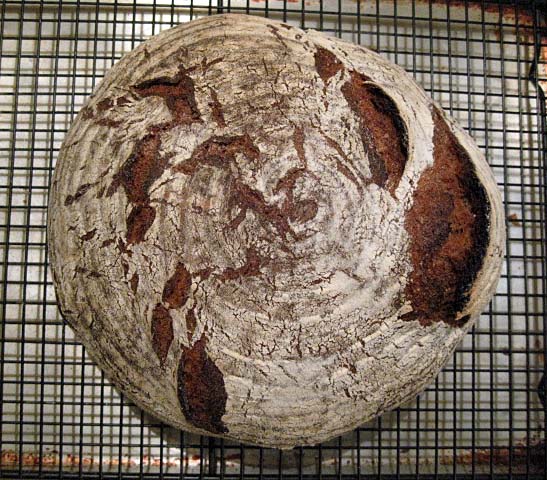
Comments:  Wild yeast purists, forgive me, because I cheated.  Yes, I admit, I added commercial yeast to this bread.  It turns out that I baked it the day after arriving home, and my schedule for that day was a bit iffy.  I wanted to make sure the bread would be ready to bake before too late.  Also, I was hoping for a crumb  a little more tight, to use the bread for sandwiches, so I proofed a little less and reduced the number of kneading cycles.


The bread has intense olive flavor, and a nice hint of heat every now and then.   The rosemary flavor was not as strong as I had hoped for,  so next time I’ll increase that amount.   A delicious bread, fantastic as an open face sandwich with a slice of ham, cheese, tomato slices, and a run under the broiler.

I am submitting this post to Susan’s Yeastspotting event…

and you can also see it on Tastespotting

Add to FacebookAdd to DiggAdd to Del.icio.usAdd to StumbleuponAdd to RedditAdd to BlinklistAdd to TwitterAdd to TechnoratiAdd to Yahoo BuzzAdd to Newsvine

BUTTERMILK CLUSTER

One of the English expressions that puzzles me the most is “easy as pie.”  That’s because I don’t see anything easy about making the dough,  rolling it out, and mastering the finishing touches that result in a gorgeous pie.  But, I promise  that this bread is  a cinch to make, and much, much easier than pie!  It quickly comes together,  so you can wake up on a sunny Sunday morning and make this bread in time for  brunch.

BUTTERMILK CLUSTER
(adapted from The Fresh Loaf Forum)

Makes 12 to 18 rolls, depending on size

6 to 6 1/2 cups (750 grams) bread  flour
1/2 tablespoon salt
1 envelope (2 1/2 teaspoons)  instant yeast
1 tablespoon warm water
2 cups buttermilk
1 tablespoon honey

Glaze:
1 egg beaten with 1 teaspoon water

Topping:
1-2 tablespoons seeds (poppy, sesame) or grains (cracked wheat, rolled oats)

Combine the flour and salt in a large bowl. Combine the warm water and yeast in a small cup and allow to proof for 5 minutes.

Pour the yeast, buttermilk, and honey into the flour mixture and mix to form a shaggy mass. Let the dough rest for 15 minutes, then do a 10-20 seconds kneading.  Cover the dough with plastic film, and let it rest for 15 minutes. Repeat the minimal kneading two more times, at 30 and 45 minutes, then let the dough rise for another 45 minutes undisturbed or until almost doubled in size (total bulk fermentation will be  about 90 minutes).

Divide the dough into 12 to 18 pieces. Shape each piece into a neat ball and place in a round dish or spring-form pan close together.

When all of the rolls are in the pan, cover again with plastic and set aside to rise again for 45 minutes to an hour. Meanwhile, preheat the oven to 425.

Uncover the rolls and brush gently with the egg wash. Sprinkle on the grain topping. I used sesame seeds.

Bake for approximately 30 minutes, until the rolls are firm and spring back when tapped.

ENJOY!

to print the recipe, click here

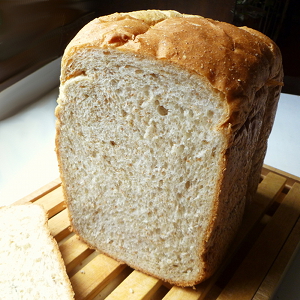
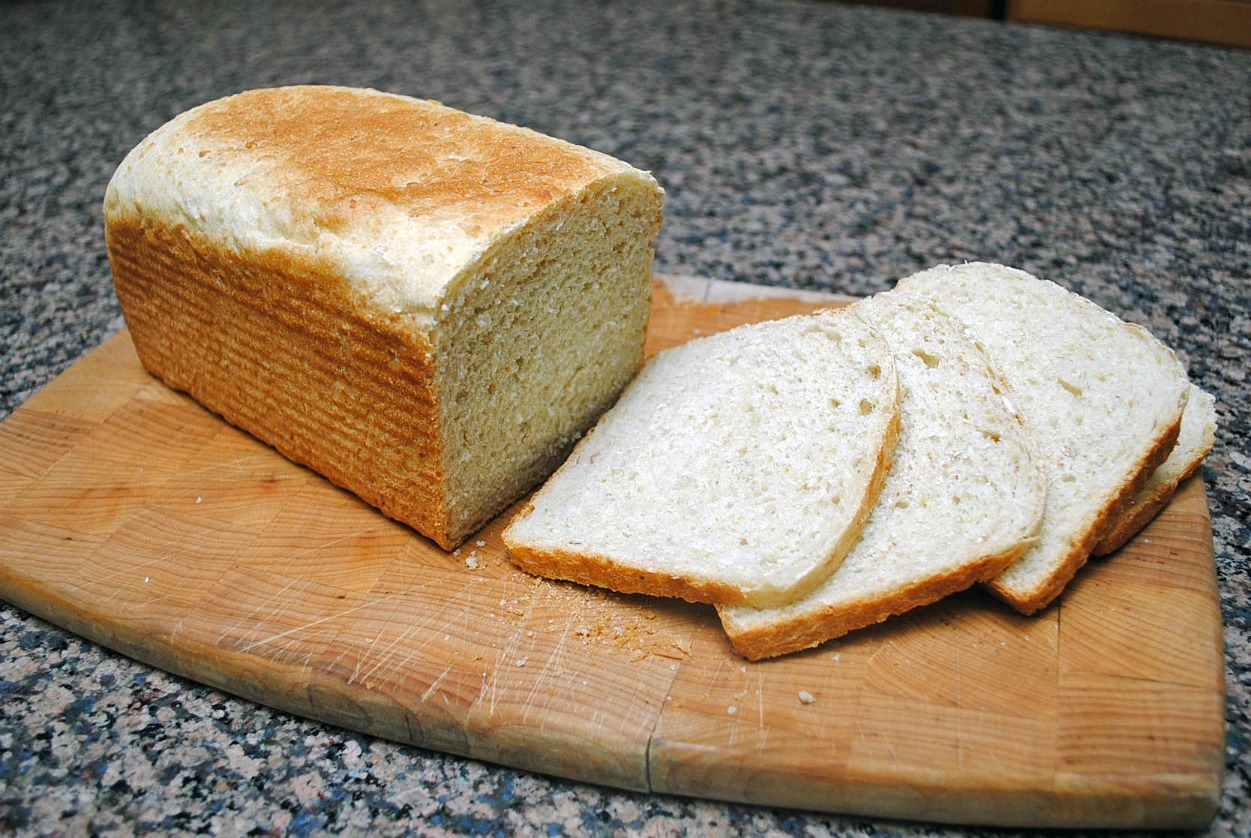
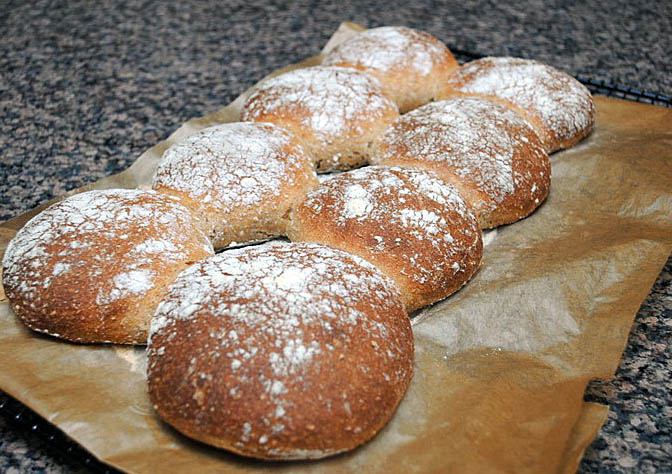
Comments:  I didn’t have a springform pan, and my smaller round cake pan could only fit 11 of the dough balls.   So, I shaped the leftover dough as a small loaf and baked it separately.


As I munched on these soft, springy rolls I kept thinking about Thanksgiving dinner :  they are perfect for that occasion, so keep them in mind. Thanksgiving is such a busy cooking day, and this recipe is so easy  that it will be something to give thanks for.  😉

Something strange and unexpected happened to the individual loaf I baked.  I sliced it, then placed on the kitchen counter to wrap in plastic and freeze.  But,  I forgot about it for a couple of hours and when I went to search for it, it was gone!   My beloved husband was not around, and one of the dogs is too short to reach the counter, which left two possibilities:

1. I have a double-personality disorder and the “other me” has no self-control.

2. The “other dog” knows how to get the most of those long skinny legs.

I guess we know which one it was (sigh).

I am sending this to Susan’s Yeastspotting

ONE YEAR AGO:  Grilled Lettuce Salad   (you’ve got to try it!)

Add to FacebookAdd to DiggAdd to Del.icio.usAdd to StumbleuponAdd to RedditAdd to BlinklistAdd to TwitterAdd to TechnoratiAdd to Yahoo BuzzAdd to Newsvine

A FOCACCIA EXPERIMENT

A few months ago I followed an interesting discussion at The Fresh Loaf forum, in which a member (Kevin) made a mistake while scaling up a recipe (I can relate to that too well, by the way) and ended up with one of the best focaccias he’d ever made!  Being a very experienced baker, he made several batches of the same recipe, to convince himself that the small alteration in the method was indeed responsible for the outcome.  It all comes down to holding back some of the water (and the salt) in the recipe, and adding it a little later to the dough.  The rationale behind doing it was actually discussed a few years ago by Steve in his blog “Breadcetera” – check it out by clicking here.

I was anxious to try this variation in my favorite, default recipe, and this past weekend I finally had a chance to perform this important experiment.

DOUBLE-HYDRATION FOCACCIA
(inspired by The Fresh Loaf Forum)

2 cups lukewarm water, divided
2 tsp active dry yeast
4 cups unbleached bread flour
3 tsp salt
2-3  tsp olive oil
2 T chopped fresh rosemary
1 tsp kosher salt

Measure 1 + 1/2 cup of  water in a large bowl, sprinkle yeast over water and stir until dissolved. Using a strong wooden spoon mix 2 cups of flour until smooth, about 2 minutes. Add the remaining 2 cups of flour, and knead with your hands (inside the bowl is fine), until the dough forms a very shaggy mass. Cover the bowl with plastic wrap and let it sit at room temperature for 20 minutes.

Dissolve the salt in the remaining 1/2 cup of (lukewarm) water.  Add it to the dough, and mix with your hands using a squishing/kneading motion.  Do not be alarmed by the look of the dough at this point.   Slowly the water and salt will find their way into the mixture.  Once it all seems incorporated, cover the bowl and let it rise undisturbed for 1 hour and 20 minutes.   The dough will be very bubbly at this point.

Heat the oven to 450F. Lightly oil a 9 x 13 inch baking sheet. Pour the dough onto the sheet,  brush the surface with 2 tsp olive oil. Dip your fingers in cold water or olive oil and make indentations all over the dough, working to stretch the dough as you go.  Brush the surface with another teaspoon of olive oil, sprinkle with rosemary and  salt.

Place in the oven and bake for about 20 minutes, until golden brown. Cool on a wire rack and….

ENJOY!

to print the recipe, click here

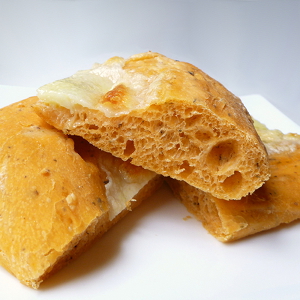
Comments:  Compared to the regular recipe, this focaccia rose a lot more, had a more airy crumb, and a softer crust.  If you like to use focaccia to made a sandwich, a panini-type production, this recipe is perfect for it.  However, to make a proper comparison,  I must wait until we get home.  With a large oven, I will be able to make two batches, bake them at the same time and draw a clear conclusion.   So, stay tuned.  June is not too far away.  (I say that with mixed feelings,  it won’t be easy to say goodbye to Los Angeles… )

I am submitting this post to Susan’s Yeastspotting, a must-visit site for all lovers of bread…

and, I am also joining a fun blog party, hosted by Alyssa from Cupcake Apothecary:  “A Themed Bakers Sunday.”   This week the theme is a favorite of mine: Bread!   Check out all the other entries and vote for your favorite!

ONE YEAR AGO: Pierre Nury’s Bougnat (awesome recipe!)

Add to FacebookAdd to DiggAdd to Del.icio.usAdd to StumbleuponAdd to RedditAdd to BlinklistAdd to TwitterAdd to TechnoratiAdd to Yahoo BuzzAdd to Newsvine