SPELT AND CORNMEAL ROLLS

Rustic, toothsome, flavorful, and if all that wasn’t enough, these rolls are a cinch to make.  In a classic Dan Lepard’s approach, the recipe calls for minimal kneading, and because they are baked as small rolls, shaping is  a breeze.  The rolls also freeze quite well,  individually wrapped, then placed in a low oven to come back to that freshly baked feel.

Per Mr. Lepard’s request,  I won’t post the full recipe.  But you can find it in the database of “The Guardian”  through a quick jump here.

I will, however, give you a quick outline of how this recipe comes together….

The cornmeal needs to be soaked in boiling water for a few minutes, once you do that, all ingredients – soaked cornmeal, spelt flour, water, honey, and yeast – are added to a large bowl, mixed quickly, and left standing for 10 minutes.

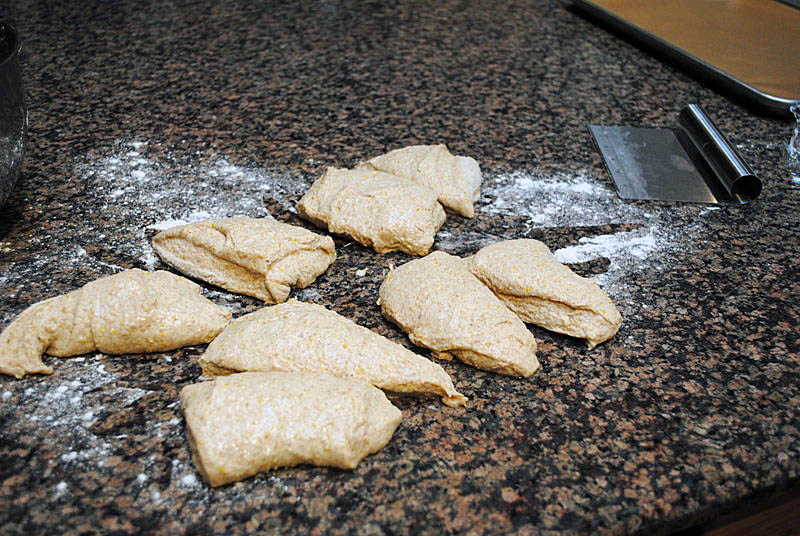
A kneading cycle of 30 seconds, a 20-minute rise (yes, that fast…), and you are ready to divide and conquer… rather, divide and shape in 8 rolls.

After shaping, they rest on a baking sheet lined with parchment paper and dusted with flour.  Only 45 minutes to go before baking time!

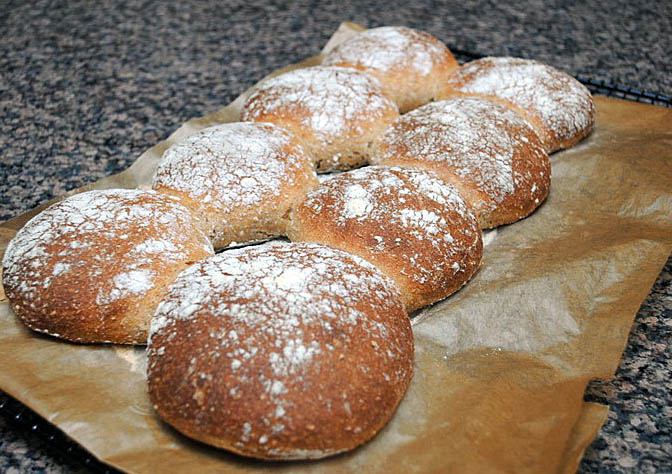
Once they bake, they will more or less join together, let them cool this way, breaking them apart at serving time.

Adorable little rolls, dense, but in a good way… 😉  We enjoyed them in  sandwiches – smoked turkey & provolone,  ham, cheese, tomato & pesto sauce – but also as plain small bites with our dinner of roast chicken. They will certainly be a favorite in your home too!

I am submitting this post to Susan’s Yeastspotting event…

ONE YEAR AGO: Roasted Potato and Olive Focaccia (another Dan Lepard recipe, another winner!)

TWO YEARS AGO: Salmon Curry

Add to FacebookAdd to DiggAdd to Del.icio.usAdd to StumbleuponAdd to RedditAdd to BlinklistAdd to TwitterAdd to TechnoratiAdd to Yahoo BuzzAdd to Newsvine

WHEAT GERM & SAGE SOURDOUGH BREAD

Another example of a recipe that blew the doors of the competition once I spotted it at The Fresh Loaf forum. They highlighted this bread on their front page, since it is so unique and gorgeous. My starter was eagerly waiting for a chance to shine, I had wheat germ in the freezer, the only departure from the original recipe was the use of sage instead of rosemary.   Not for gastronomic preference, but because a “certain dog” – who used to wander the streets of Hollywood – destroyed our rosemary plant. The dog has a good lawyer, and is presently free on bail.


TOASTED WHEAT-GERM AND SAGE SOURDOUGH
(adapted from Ross’ recipe at The Fresh Loaf Forum)

150 g starter (white, 80% hydration)
335 g  water
490 g bread flour
20 g toasted wheatgerm
2 Tbs  fresh sage leaves, finely chopped
9 g  salt
Mix all ingredients, except the salt, until they form a shaggy mass, no need to worry with kneading yet.   Let it rest undisturbed for 40 minutes at room temperature.

Place the dough on a lightly oiled surface,  open flatten it out slightly, sprinkle the salt all over, and knead a few times to distribute the salt.  Place the dough in an oiled bowl, cover, let it sit for 1 hour.    Knead by stretching and folding a few times –  it will feel very smooth and easy to fold – put back in the bowl and let it rise 1 hour.   Repeat the stretch and fold one more time, cover the dough and let it rise for 2 hours and 20 minutes.

Form the dough into a ball, place it in a floured banetton type container, cover it and place in the fridge overnight.

Remove from the fridge 1 hour and 30 minutes before baking.  Bake in a 450F oven, using your favorite method to generate steam.  After 20 minutes, reduce the temperature to 425F, and bake for a total of 40-45 minutes. If you baked the bread covering with a roasting pan, remove the cover after 30 minutes.

Let it cool for at least 2 hours before slicing.

ENJOY!

to print the recipe, click here

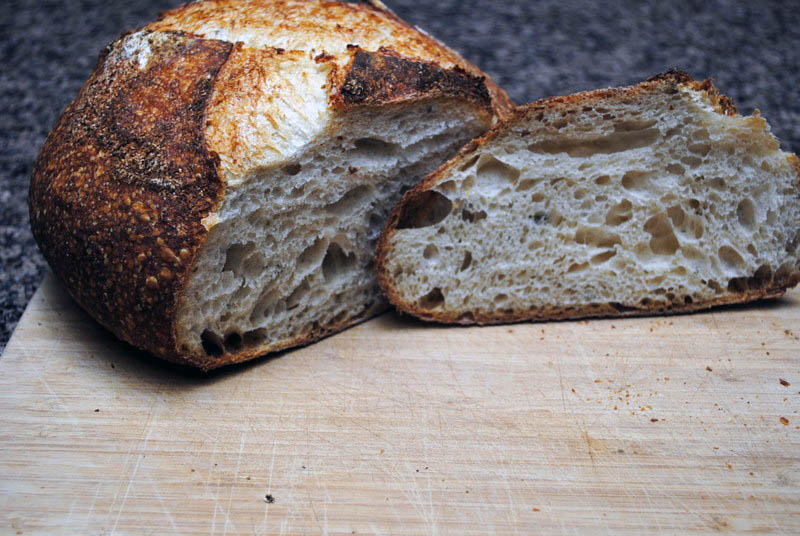
What a delicious loaf of bread this one turned out to be!  I used very little sage because it is such a strong-tasting herb, so its flavor was barely noticeable.  This bread would be great at a Thanksgiving dinner.  The wheat germ lends a bit of moisture to the crumb, allowing it to last longer than your regular sourdough.

The crust, hearty and crunchy, was covered with those tiny blisters that make the baker very happy.  Inside, the crumb was open, airy, and light. Cannot ask for much more than that…  😉

I am submitting this post to Susan’s Yeastspotting, please make sure to stop by and marvel at her weekly display of breads. I know my Friday is not complete without it!

ONE YEAR AGO: Polenta-Crust Tomato Loaf

TWO YEARS AGO: Watermelon Granita

Add to FacebookAdd to DiggAdd to Del.icio.usAdd to StumbleuponAdd to RedditAdd to BlinklistAdd to TwitterAdd to TechnoratiAdd to Yahoo BuzzAdd to Newsvine

FIVE GRAIN SOURDOUGH BREAD

Before I even start talking about last weekend’s bread, I urge you to visit Joanna’s blog to see her wonderful article about one of my favorite bread baking books, Bread.  Her post is a  must-read for anyone who might feel intimidated by  Hamelman’s masterpiece.  Great job, Joanna!

After the cracked wheat sandwich bread, our cravings for bread with grains incorporated in the dough only intensified.  As usual, on Thursday evenings I start considering the possibilities for baking in the weekend, so I grabbed Hamelman’s book, and opened it at random.  To my delight, the recipe on that particular page read: Five Grain Levain.  Seemed too fitting to ignore.  Plus, for a sourdough bread, the recipe could not be much simpler, the secret behind its simplicity lying in the use of commercial yeast to speed up fermentation.   All I had to do the day before was soak the grains, and give a final feeding to my starter.

FIVE GRAIN LEVAIN
(adapted from Hamelman’s Bread)

for the liquid levain
4 oz bread flour
5 oz water
2 Tbs mature sourdough starter

for the grains mixture
1.5 oz cracked rye
1.5 oz flaxseeds
1.2 oz sunflower seeds
1.2 oz oats
6.5 oz boiling water
1/2 tsp salt

for the final dough
8 oz bread flour
4 oz whole-wheat flour
4.2 oz water
1/2 Tbs salt
1/2 tsp instant yeast
all soaker prepared
all liquid starter prepared

Prepare the liquid levain 12 to 16 hours before you plan to start the dough.  Let it stand at room temperature, preferably around 70 F.  When you make the levain, prepare the grains too, by pouring boiling water over the grains and the salt in a small bowl.  Leave at room temperature.

Make the dough by adding all the ingredients into the bowl of a KitchenAid type mixer, knead on first speed for 3 minutes, then increase the speed to the second level and mix for 5 minutes.  Place the dough in a slightly oiled bowl, cover, and let it ferment for 1.5 hs, folding the dough on itself three times after 45 minutes to increase elasticity.

Shape the dough as a boule or batard, place in a banetton or appropriate container of your choice, and let it rise for 1 hour.

Bake at 460 F for 40 to 45 minutes, generating steam in the beginning, by either covering the dough with an inverted roasting pan, or adding ice cubes to an empty pan at the bottom of your oven.   Allow it to cool completely before slicing.

ENJOY!

to print the recipe, click here

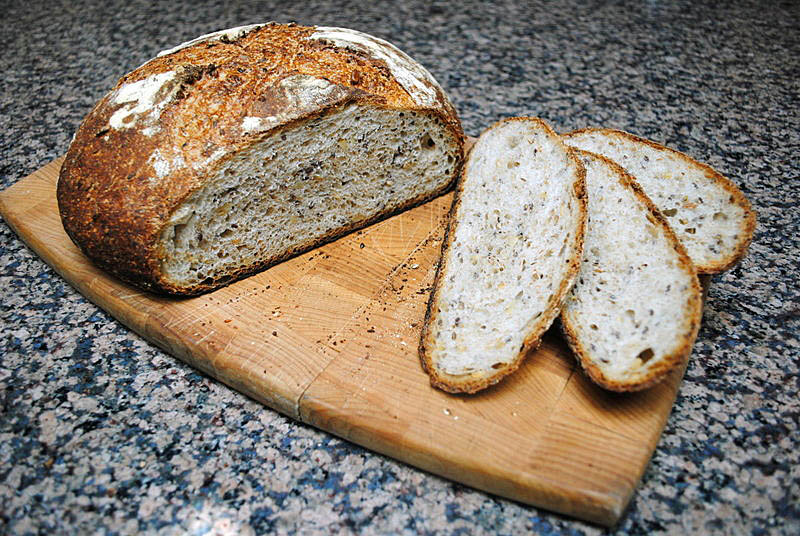
Comments:   This loaf of bread lasted 5 days, and held up pretty well up to its end.  Usually, after the second day we opt for toasting, but this particular loaf was good enough with a very brief warming in our electric oven.  We kept it at room temperature over the cutting board with the cut side down, and sliced only what we were going to consume right away.  It goes well with pretty much anything, from ham to turkey, jam to peanut butter, or butter with paper thin slices of radishes and a little sea salt… delicious!

I am submitting this post to Susan’s Yeastspotting event…

ONE YEAR AGO: The Nano-Kitchen

TWO YEARS AGO:  Kaiser Rolls

Add to FacebookAdd to DiggAdd to Del.icio.usAdd to StumbleuponAdd to RedditAdd to BlinklistAdd to TwitterAdd to TechnoratiAdd to Yahoo BuzzAdd to Newsvine

CRACKED-WHEAT SANDWICH BREAD

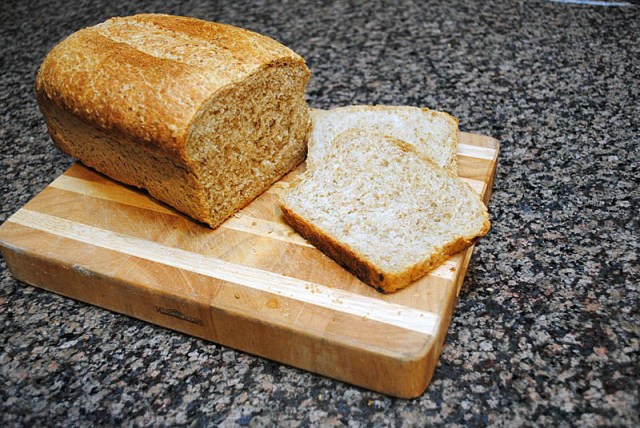
My original idea was to do a sourdough cracked-wheat bread, I had the recipe printed out, and my starter going. Woke up on Saturday bright and early, in great spirits to attack the preparation. Surprise number 1: recipe called for a whole-wheat starter. Mine wasn’t. Surprise number 2: recipe suggested an overnight fermentation in the fridge before baking, but I absolutely had to start and finish the bread on the same day.   Not sure how many times in my life I’ve made the mistake of NOT reading a recipe carefully enough before baking day, and/or before shopping for ingredients  (sigh). Plan B had to be set in place, and quickly.  I found a recipe for cracked-wheat bread with a very interesting technique: spreading a dry mixture of flour, sugar and yeast over a fermenting “sponge”, forming a sort of a protective blanket over it.  All of a sudden my Saturday was bright again, and the best was that the bread turned out fantastic!

CRACKED-WHEAT SANDWICH BREAD
(adapted from The Bread Bible, by Rose Levy Beranbaum)

To make the sponge:
1/2 cup bread flour (78 g)
1/2 cup  whole wheat flour (72 g)
3/4 tsp instant yeast (2.4 g)
1/2 tbsp sugar (6.2 g)
1 tbsp nonfat dry milk (8 g)
1 tbsp agave nectar (20 g)
1 cup plus 2 tbsp  water at around 80F (266 g)

Flour mixture for topping the sponge:
2 cups bread flour (312 g)
1/2 tbsp sugar (6.2 g)
1/4 tsp instant yeast (0.8 g)

For the final dough:
1/2 cup cracked-wheat
1/2 cup  boiling water
1 tbsp vegetable oil
1 + 3/4 tsp salt
1 tbsp melted butter

In a medium bowl combine the sponge ingredients and whisk until very smooth, about 2 minutes, trying to incorporate as much air as possible as you stir.

 In another medium bowl, whisk together the flour mixture ingredients. Sprinkle on top of the sponge to cover it completely. DO NOT MIX TOGETHER. Cover tightly with plastic wrap and allow it to ferment for 1-4 hours at room temperature. The longer you allow it to ferment, the better. I fermented mine for 2 hours.

Place the cracked-wheat in a small bowl and pour the boiling water over it. Cover with plastic wrap and allow to sit in the water until all the water is absorbed, about 1 hour.

With your stand mixer, add the bulghur  and the oil  to the bowl and then add the dough and starter. Mix with the dough hook on low speed for a couple of minutes, until no dry bits remain, but do not overmix.  Cover with plastic wrap and allow the dough to rest for 20 minutes. Sprinkle on the salt and knead the dough on medium speed for 12  minutes. The dough should be very elastic  but still slightly moist.

Scrape the dough into a  greased container. Lightly spray or oil the top of the dough. Cover with lid or plastic wrap and let it rise until doubled in size, 1 to 2 hours (mine took 90 minutes).  Scrape the dough onto a floured surface and press down very gently to form a rectangle, don’t try to get all the air out of it. Give it a business letter fold, turn it 90 degrees and do another business letter type fold. Smooth the edges and return the folded dough to the bowl.  Cover, and rise until doubled, 1 to 1.5 hours (mine took only 45 minutes).

Turn the dough onto a lightly floured surface and shape it as a loaf.  Place into oiled loaf pan. Cover loosely with oiled plastic wrap and let it rise until the center is about 1 inch higher than the rim of the pan.

Preheat the oven to 350 degrees for 30 minutes before baking. Place oven rack at the lowest shelf and place baking stone on top. Place a sheet pan on the floor of the oven and  have some ice cubes handy.

Once the dough has risen, brush the top with the melted butter, then cut a 1/2″ deep slash down the middle of the dough. Quickly set the load pan on the baking stone. Take a 1/2 cup of ice cubes and quickly throw them onto the sheet pan. Bake for 45-55 minutes, until golden brown and the internal temperature is 200 F.  Remove pan from oven, remove bread from pan and set on wire rack. Brush with remaining melted butter. Let it cool completely (yeah, right… 😉 before eating.

ENJOY!

to print the recipe, click here

Comments:  Cracked-wheat (an ingredient similar, but not exactly the same as bulghur, for a nice explanation click here), gives this bread a perfect texture, and just the right amount of ‘grain-feel’.  You can substitute bulghur if you have trouble finding cracked wheat.

It is a very easy dough to handle, as most of the kneading is done with a mixer. It would be possible to knead by hand, but it would take a lot longer and you must develop the gluten fully to get the right texture – go for the Kitchen Aid, is my advice.   It is fun to make, the photos below show the sipping of the fermenting sponge after 1.5 hours, the addition of cracked-wheat, and the amazing first rise, probably due to the temperature in our home these days.
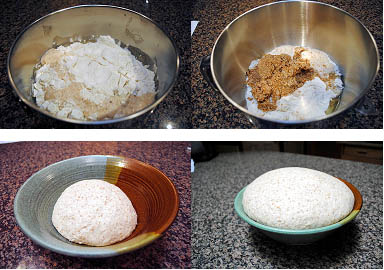
If you make this bread during warm weather, as soon as you shape the dough  start heating your oven, because mine took only 35 minutes to fully rise. You don’t want to risk overproofing, so that the bread will still rise during baking. Catch it around this stage, brush it with butter, slash the top and place it in the oven.

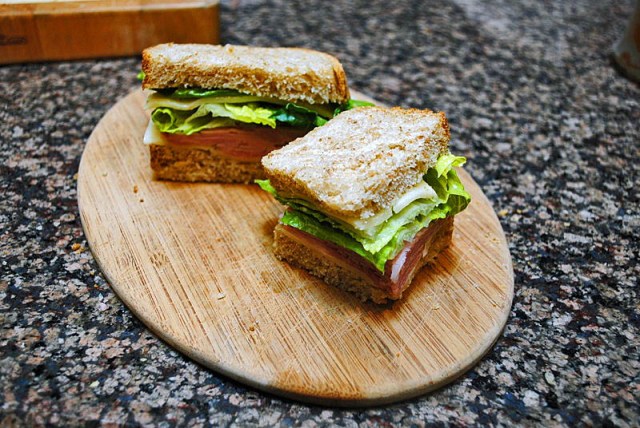
Sandwiches with cheese, ham, lettuce, a light touch of mustard were absolute heavenly!

I’m submitting this post to Susan’s Yeastspotting event…  Nice to be able to join that party after what seemed like too long a break!  😉

ONE YEAR AGO:  Au Revoir, My Bewitching Kitchen (hard to  believe it’s been one year already!)

TWO YEARS AGO: Teriyaki Chicken Thighs

Add to FacebookAdd to DiggAdd to Del.icio.usAdd to StumbleuponAdd to RedditAdd to BlinklistAdd to TwitterAdd to TechnoratiAdd to Yahoo BuzzAdd to Newsvine

A TALE OF TWO CRUMPETS

I’ve wanted to make crumpets from scratch for the longest time! I love the fact that they are full of tiny holes, smoother and creamier than regular bread, perfect to slather with butter or jam, or top with a poached egg and indulge…   Recently  I took a major step in the right direction, by getting crumpet rings (remember?).  And tried not one, but two recipes, one leavened by sourdough starter, and the second a more authentic version, with commercial yeast and baking soda.  Both methods produced completely different types of crumpets, and I favored the non-sourdough version.  I know, who could imagine that?   😉
                                                      (click to enlarge)

TRADITIONAL CRUMPETS
(From Andy’s blog at The Fresh Loaf forum)

250 g bread flour
5 g salt
15 g yeast
275 g water
0.75 g bicarbonate of soda
70 g water

Add the flour and the salt to the bowl of an electric mixer, and mix on first speed for a minute.  Dissolve the yeast in lukewarm water.  Combine the yeast with the flour/salt and beat on first speed for 2 minutes.  Scrape the bottom and the sides of the bowl, and beat on second speed for 6 minutes.   Cover the bowl and let it sit on a warm place for 1 hour.

Heat a griddle to 390F (200 C).  Dissolve the bicarbonate in the cold water and mix this solution to the batter.  Use right away, pouring a small amount of batter in well greased crumpet rings.   Cook for about 8 minutes on the first side, until bubbles form and the batter seems almost dry on top.   Remove the rings – carefully, they are hot! – and flip the crumpets, cooking for no more than 2 minutes on the second side.   Cool on a rack, and enjoy!

to print the recipe, click here

SOURDOUGH CRUMPETS
(from The Sourdough Companion)

Preferment
125 g all purpose flour
175 g water
12.5 g sourdough starter

Batter
125 g all purpose flour
175 g milk
300 g preferment (all the amount made)
5 g salt
5 g bicarbonate of soda

Make the preferment and let it sit at room temperature for 12 to 24 hours.

Next day, mix all the ingredients for the batter, and let if sit for 4 hours undisturbed at room temperature.  Heat a griddle to 390 F (200 C).  Pour small amounts of the batter in greased crumpet rings, and cook for 8 minutes on the first side, remove the rings carefully, and flip them to cook on the second side for a couple of minutes.  Cool on a rack, and enjoy…

to print the recipe, click here

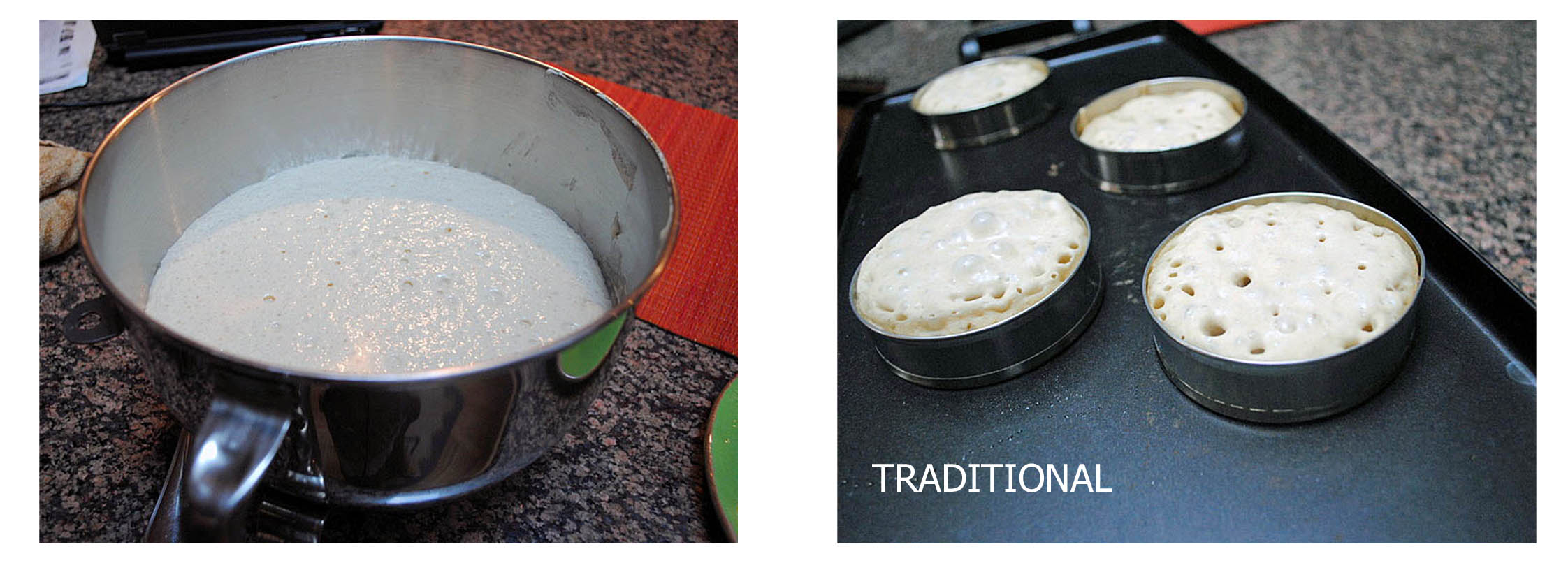
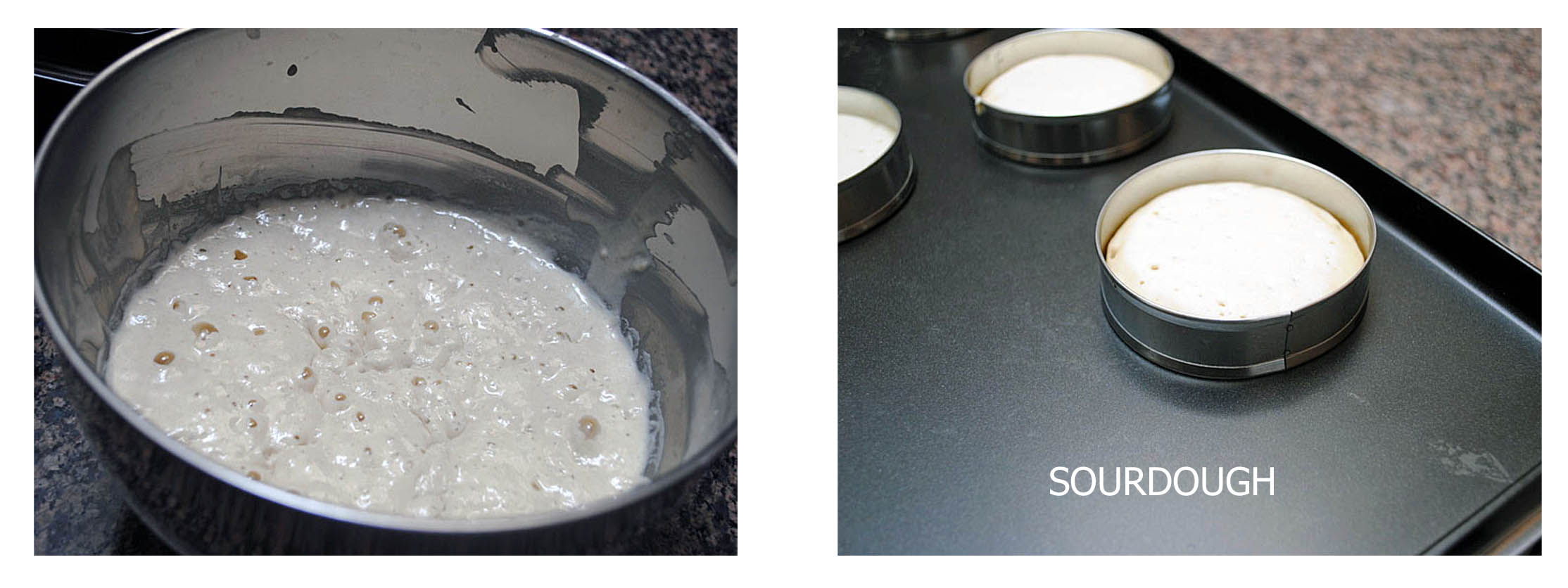
Comments:  Both recipes are pretty straightforward, with little hands-on time required. The traditional method allows you to have crumpets ready in about 1.5 hours, versus a little over 4 hours for the sourdough variation (not counting the pre-ferment prepared the day before).   The next sets of photos give you an idea of how different the batters looked right before cooking, and how the authentic version gave a more hole-y texture in the crumpets already during cooking.

A few pointers for success:

1. Do not fill the rings more than halfway, because if you do, the holes will close when you flip the crumpets.  It is tempting to add more batter, but resist the urge to do so.  Also, it will be harder to cook them through if they are too thick.

2. Do not cook them on a griddle that is too hot, or you will have a hard crust at the bottom and the crumpets won’t cook uniformly. Better to keep a lower temperature and cook longer.

3. Do not cook the second side longer than 2 minutes, or you might end up with an English muffin!   😉

4. Grease the rings again for each batch of crumpets, so that they are easily removed.  Crumpets are fragile, if they stick to the ring their shape can be compromised.

5. The rings are hot, and stay hot for a while once you remove them from the griddle.  It is easy to forget about it as the second batch gets going (sigh).

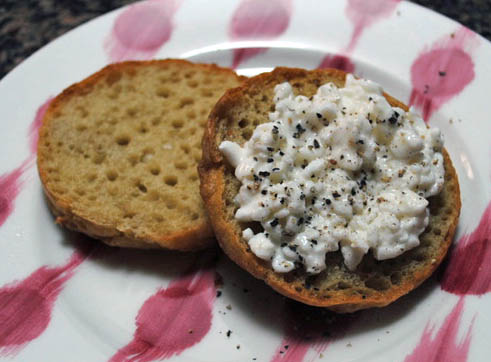
In my second attempt – the traditional recipe – things worked a lot better, and even the crumpets that were a bit too thick and “lost the holes” on the surface after flipping, revealed a wonderful crumb structure…

You don’t need rings to cook English muffins because they hold their shape well, but they are a must-have for crumpets.  You can of course improvise using empty, clean cans of appropriate diameter.  This would be a fun weekend project, kids would love to help you out…

I am submitting this post to Susan’s Yeastspotting

ONE YEAR AGO: Sweet Emergency

TWO YEARS AGO: The Bread We Love

Add to FacebookAdd to DiggAdd to Del.icio.usAdd to StumbleuponAdd to RedditAdd to BlinklistAdd to TwitterAdd to TechnoratiAdd to Yahoo BuzzAdd to Newsvine