Valentine’s Day is just about here! Today I share a few ideas to sweeten up this special weekend… Make sure to visit my cookie blog tomorrow for a series of cookies that celebrate love. And now, let’s get started, shall we?
.
x
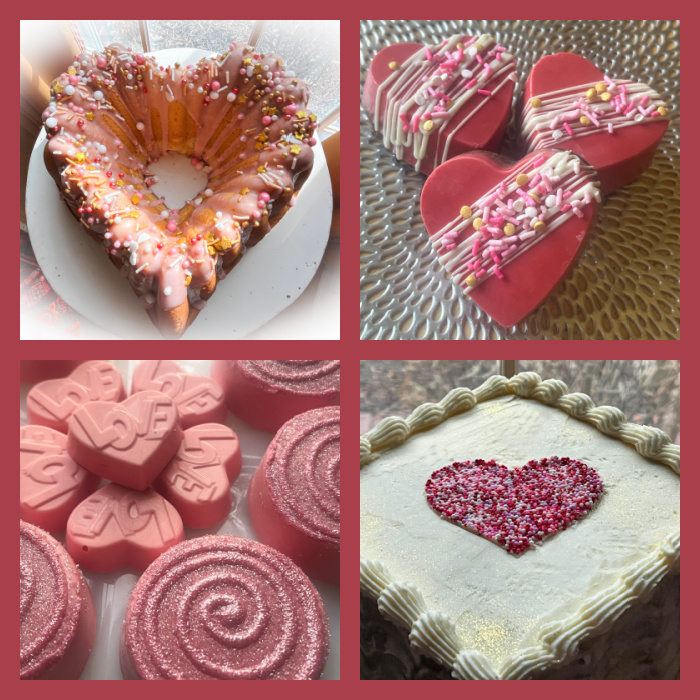
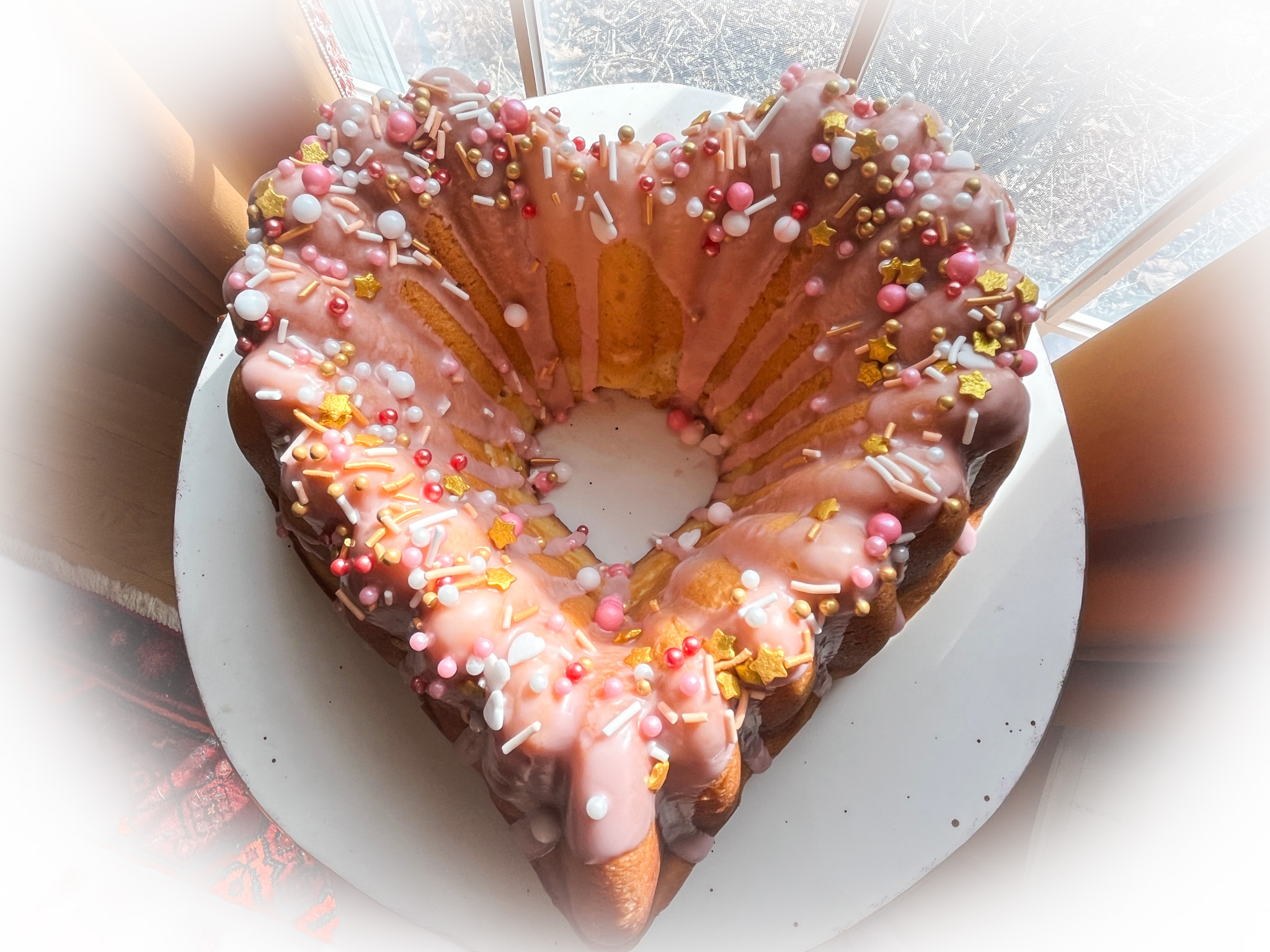
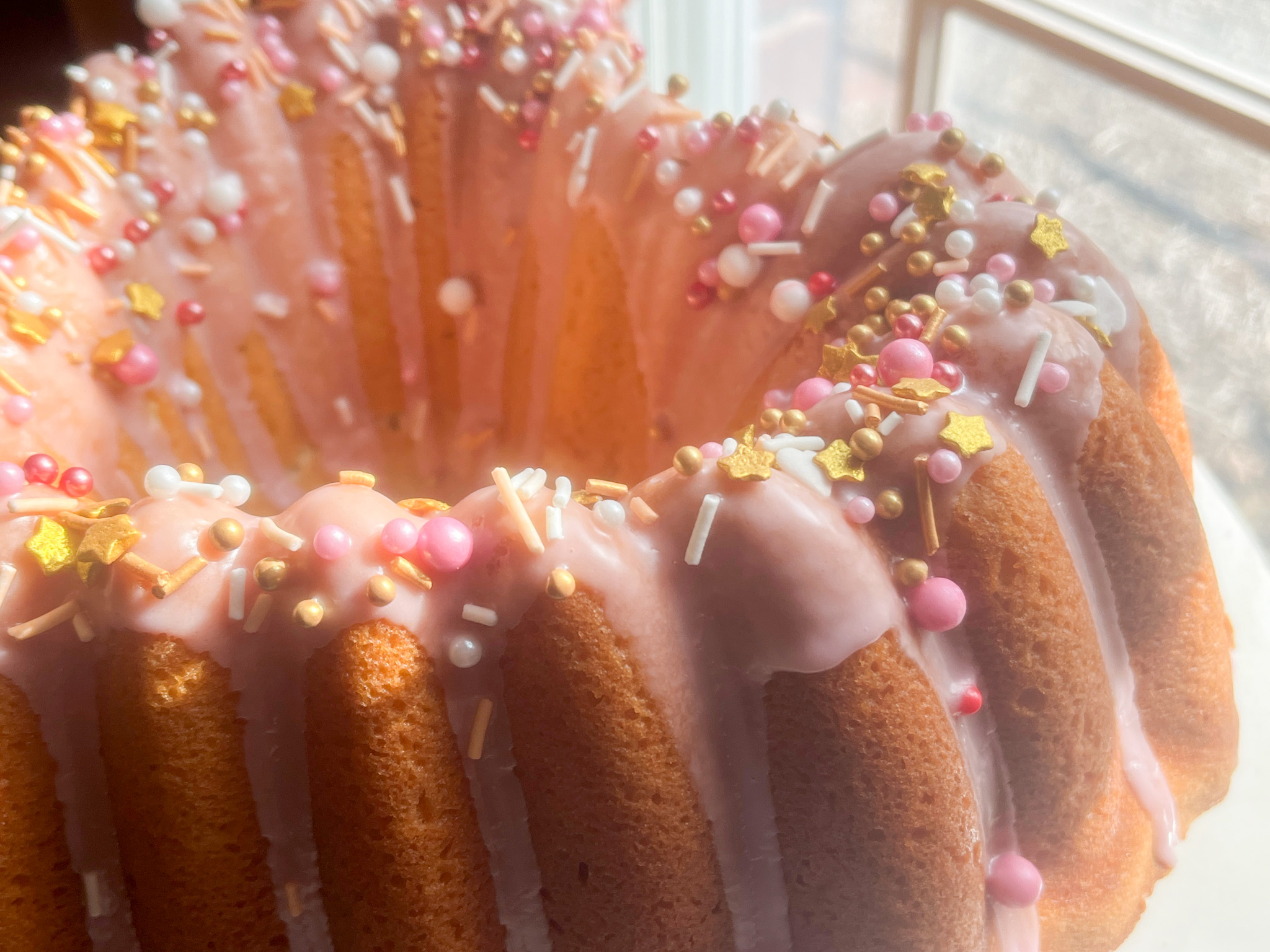
I open this post with a Vanilla Pound Cake with Hibiscus Glaze
VANILLA POUND CAKE WITH HIBISCUS GLAZE (from The Bewitching Kitchen)
for the cake: 3 sticks (339g) unsalted butter, softened (room temperature) 8 oz Cream Cheese, at room temperature (one regular package) 2 + 1/2 cups (500g) sugar 1 tsp salt 2 tsp vanilla paste or extract 6 Eggs, at room temperature 3 cups (375g) flour
for the glaze: 3 tablespoons hibiscus tea 200g powdered sugar squeeze of lemon juice
Heat oven to 325F.
Cream butter, cream cheese and sugar with hand mixer until light and fluffy. Pound cakes do not contain leavening agent, so make sure to work the butter until fluffy. Add salt and vanilla, beat well. Add eggs one at a time, mixing after each addition. Gradually mix in the three cups of flour.
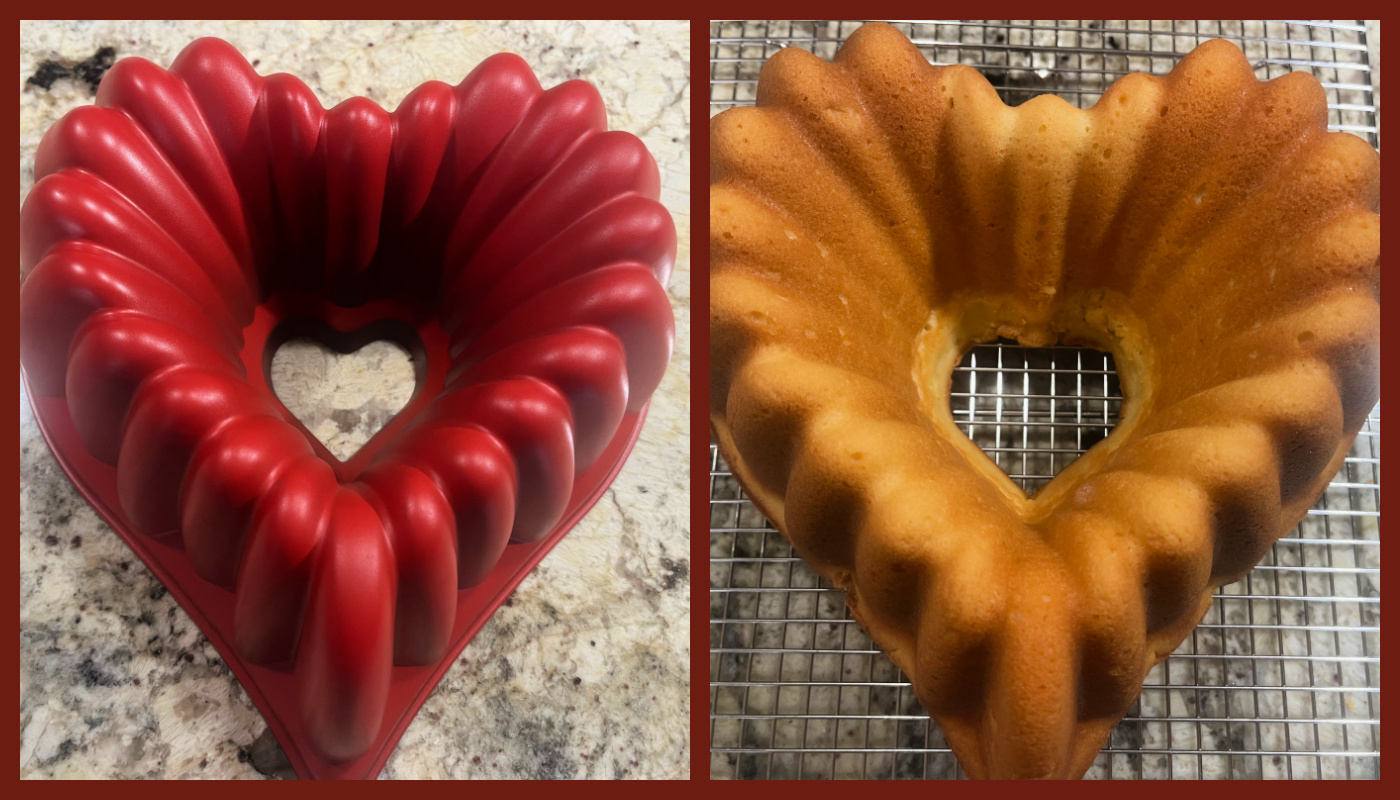
Pour into well greased bundt pan. Bake for about 90 minutes, covering with foil if the top gets too brown before a toothpick inserted in the center comes out clean.
Wait for 15 minutes before un-molding over a rack. Let the cake cool completely, then make a glaze whisking all the ingredients. Pour the glaze over the cake, decorate with sprinkles, if desired.
Comments: The Bundt pan I used is this one. Any cake will look good with a simple dusting of powdered sugar, but I decided to go with a light glaze and sprinkles.
x
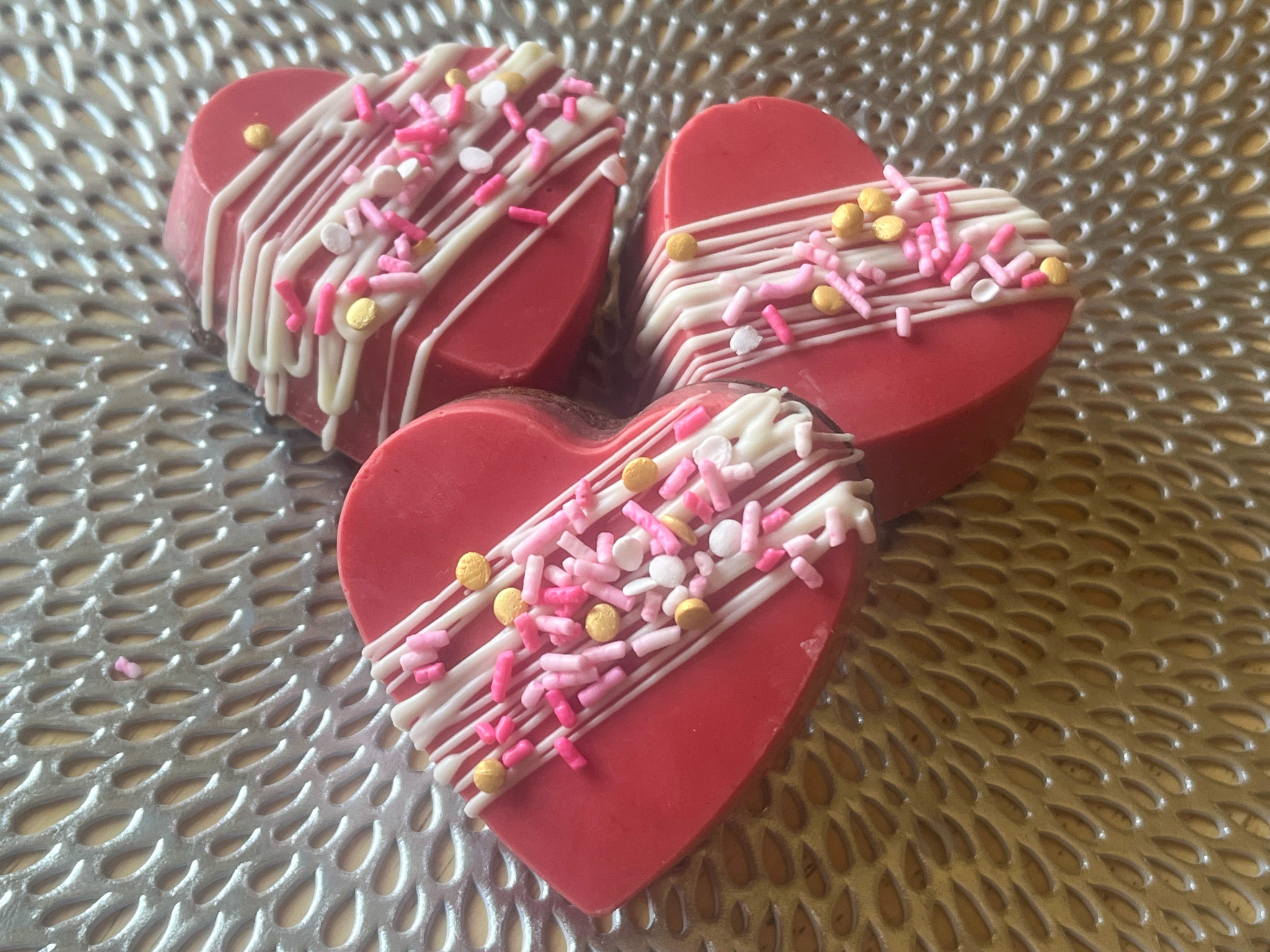
CHOCOLATE-COVERED BROWNIE HEARTS
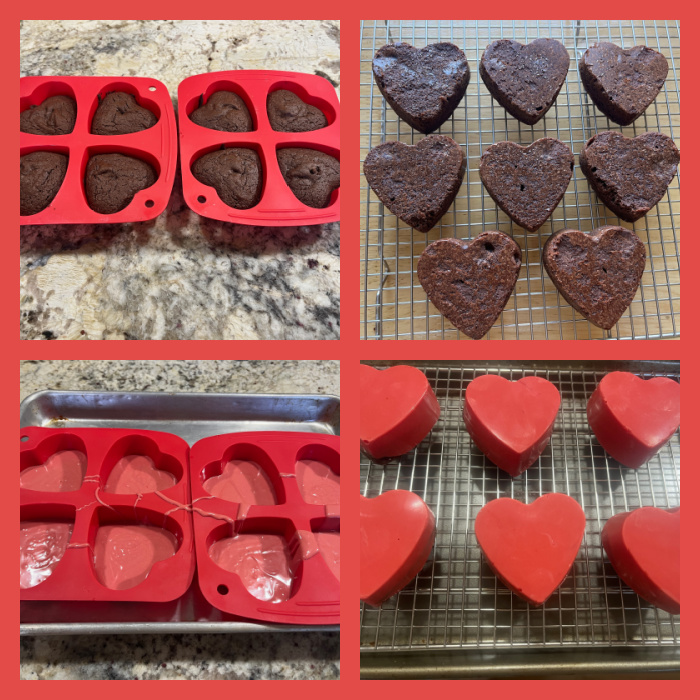
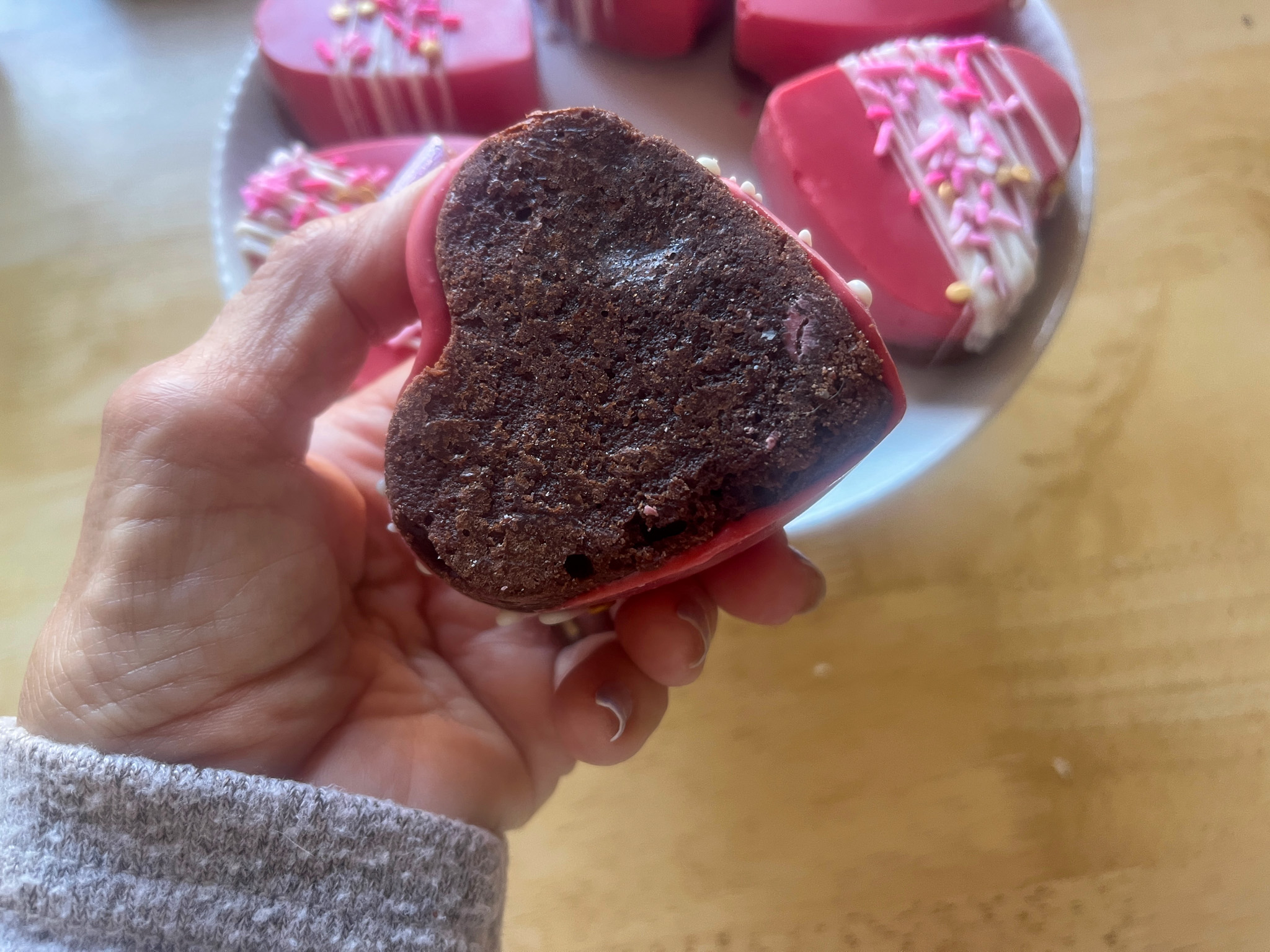
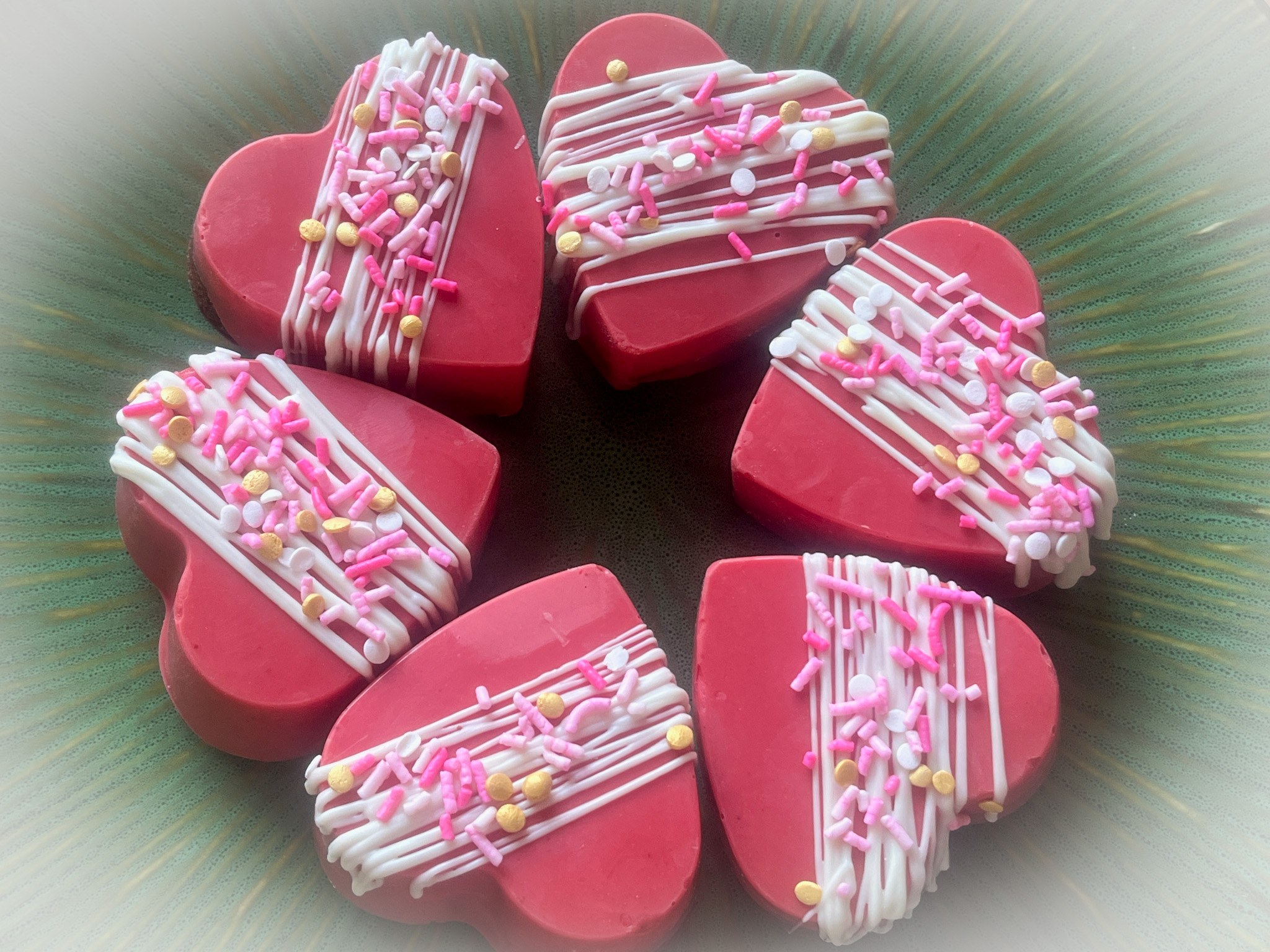
If your heart is set on chocolate, but you don’t feel like a simple tray of brownies, here is a very cute idea… Bake the brownies in a heart-shape silicone mold, then use the same mold to coat each piece in chocolate (I went with compound chocolate dyed red). I used these molds to bake and coat the brownies. And my favorite recipe for the little cakes (check here).
When you bake the brownies, the bottom side, that touches the mold, will be super flat. You can flip them when you coat and place the non-flat side touching the chocolate. That will end up smooth, so both sides of your little cakes will be nice and flat.
So the process goes like this: bake the brownies, cool them completely in the mold. Freeze for 10 minutes to make sure the brownie will be nice and firm. Remove cakes. Wash the mold, dry well. Melt compound chocolate in the color of your choice, add a layer to the bottom of the mold and immediately insert the cake back. Push gently all the way down. Make sure you see the chocolate coming up a bit around the edges, no need to come all the way to the top. Freeze for 15 minutes. Un-mold, and decorate.
Once they are coated, you can pipe a drizzle of melted chocolate and add sprinkles.
.
.
x
CHOCOLATE-COVERED OREOS
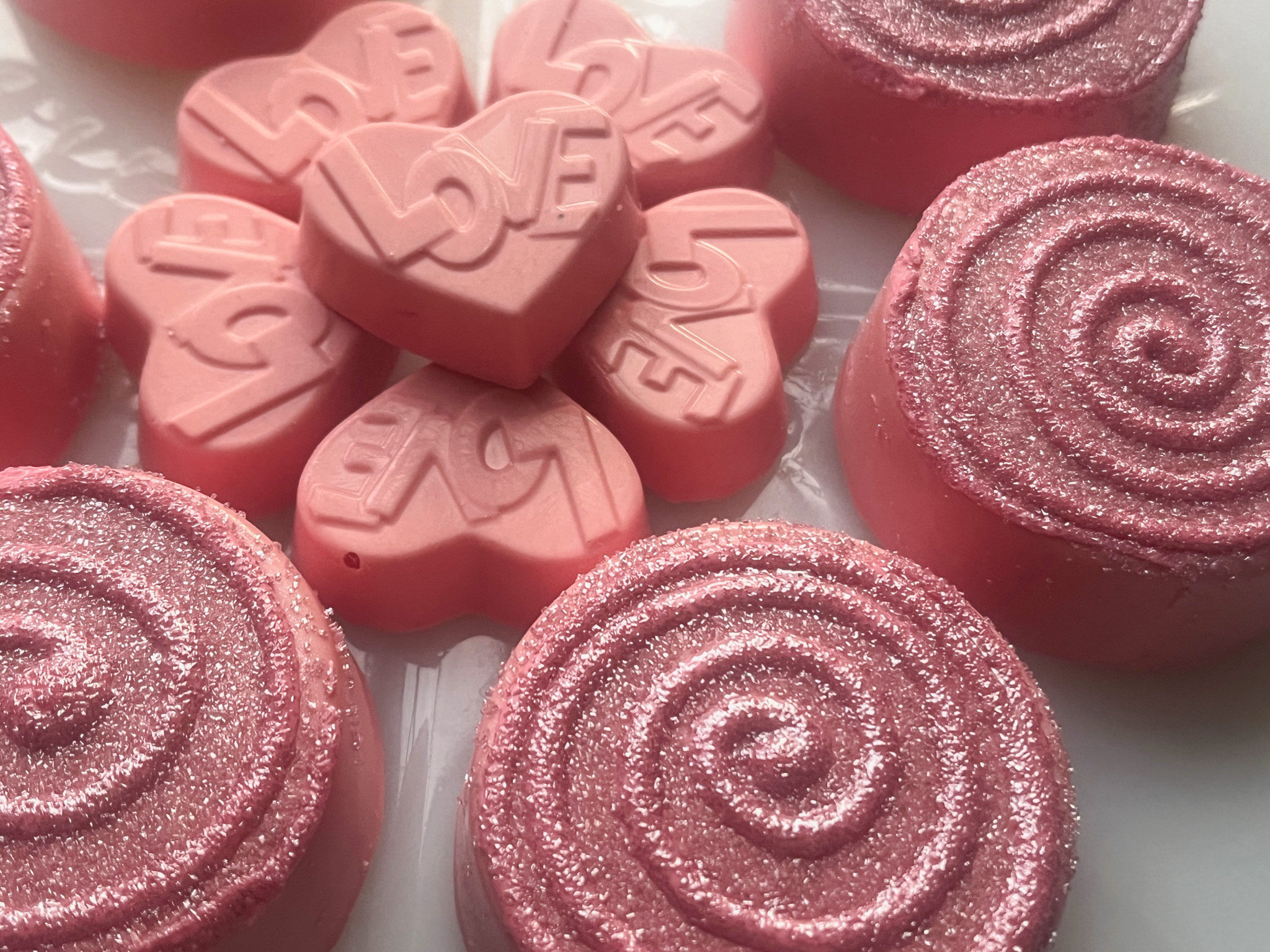
No need for recipe, just a little festive decoration, made with Royal icing and sanding sugar. Leftover melted chocolate was used to form little hearts using this mold.
x
VALENTINE’S SQUARE CAKE
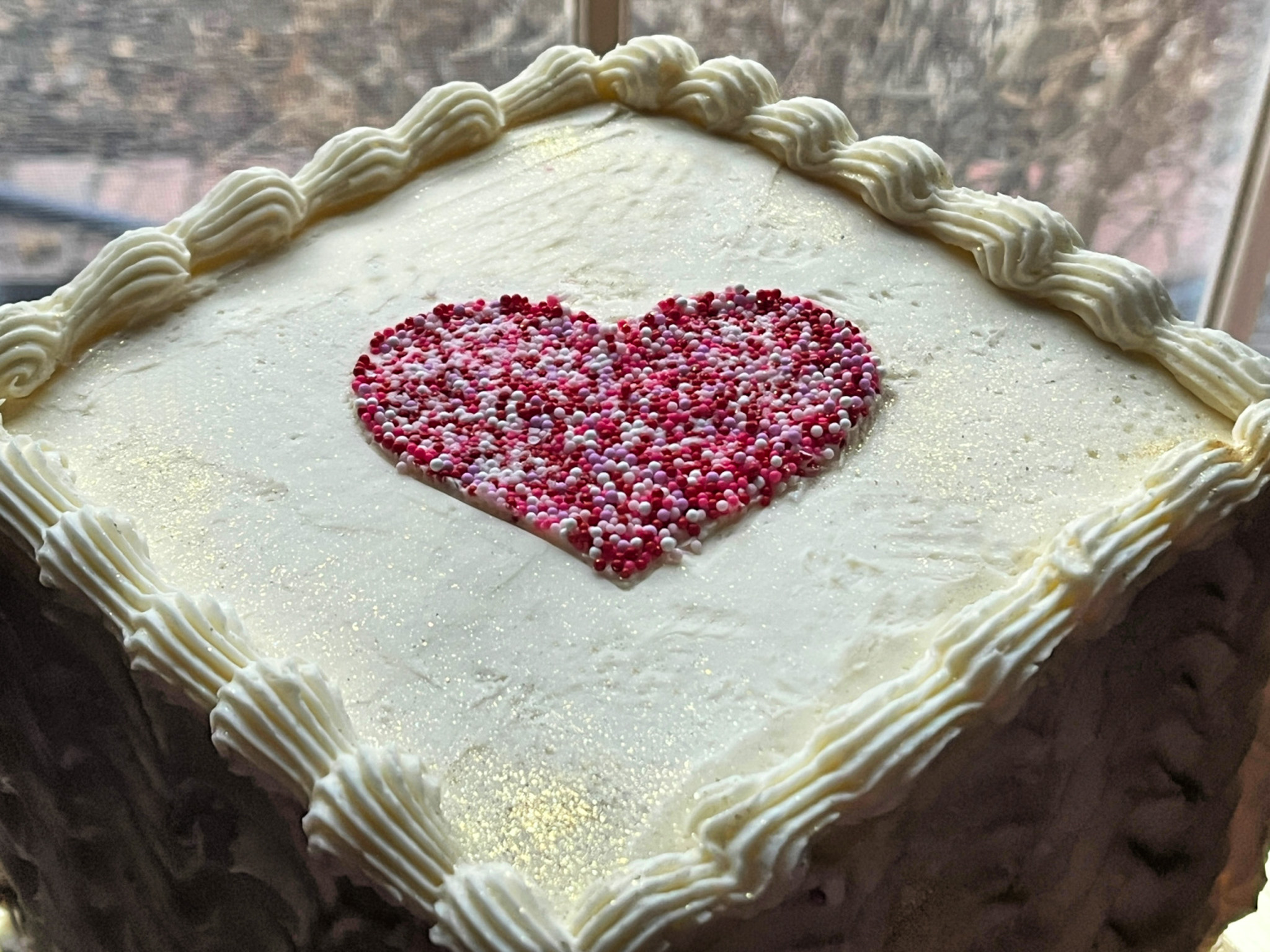
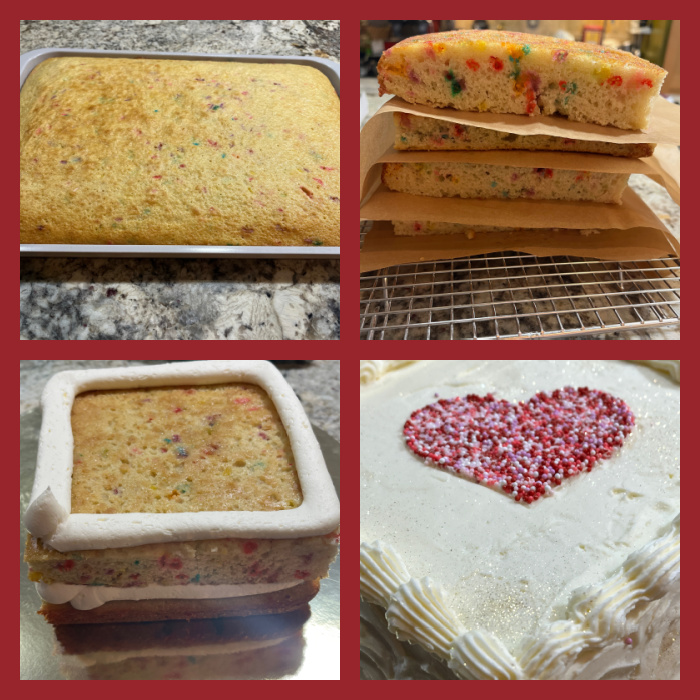
I cannot share the recipe, as it is copyrighted. Published as Sunny Sprinkle Layer Cake, it is in a great book by Molly Gilbert called Sheet Pan Sweets. I baked it in a half-sheet pan, then cut 4 squares to make the layers, used a simple American Buttercream to frost it. It was not easy to frost smoothly a square cake, but oh, well. What does not kill you, makes you stronger.
.
I wish you a wonderful weekend, no matter where you stand on the festivities of February 14th!
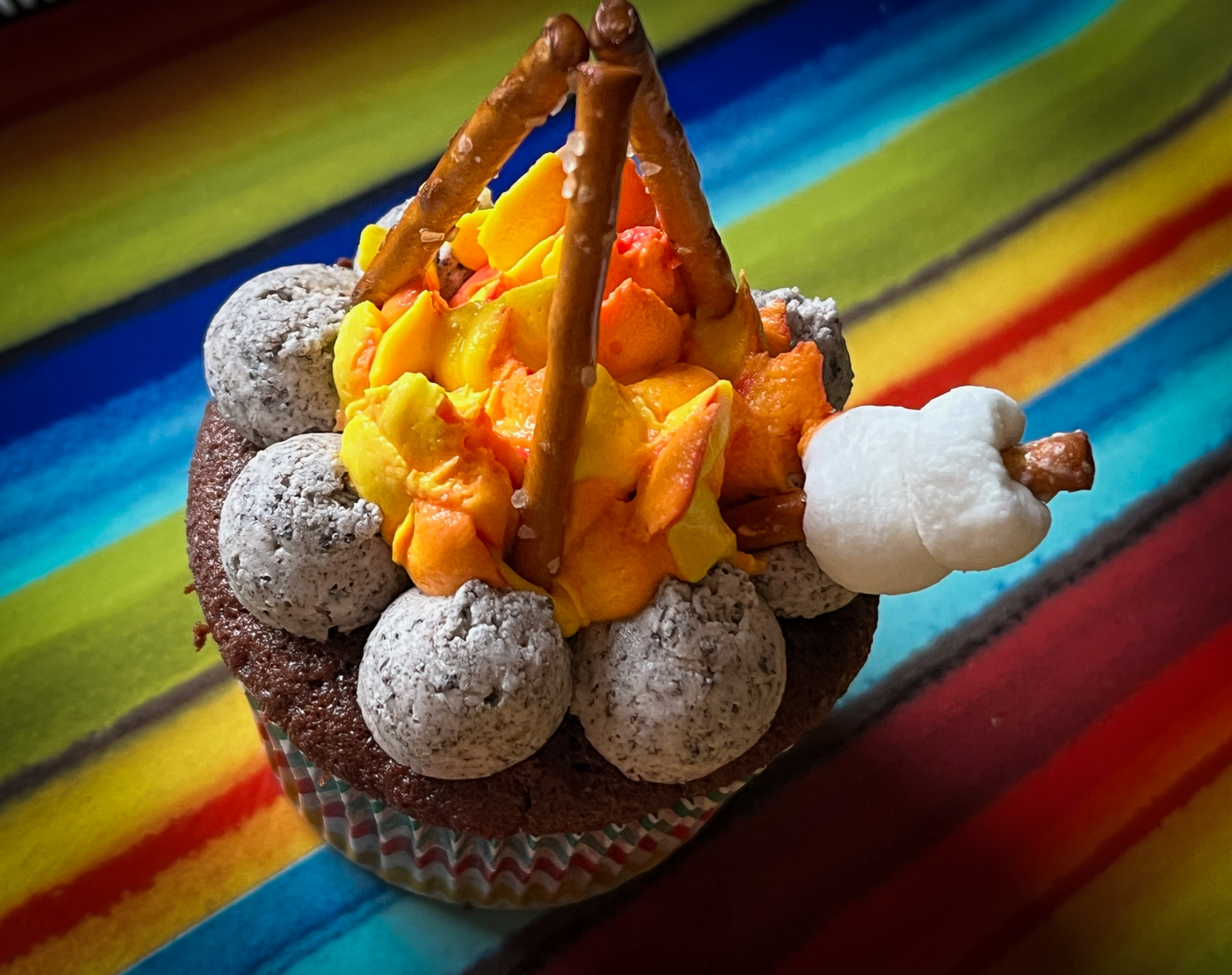
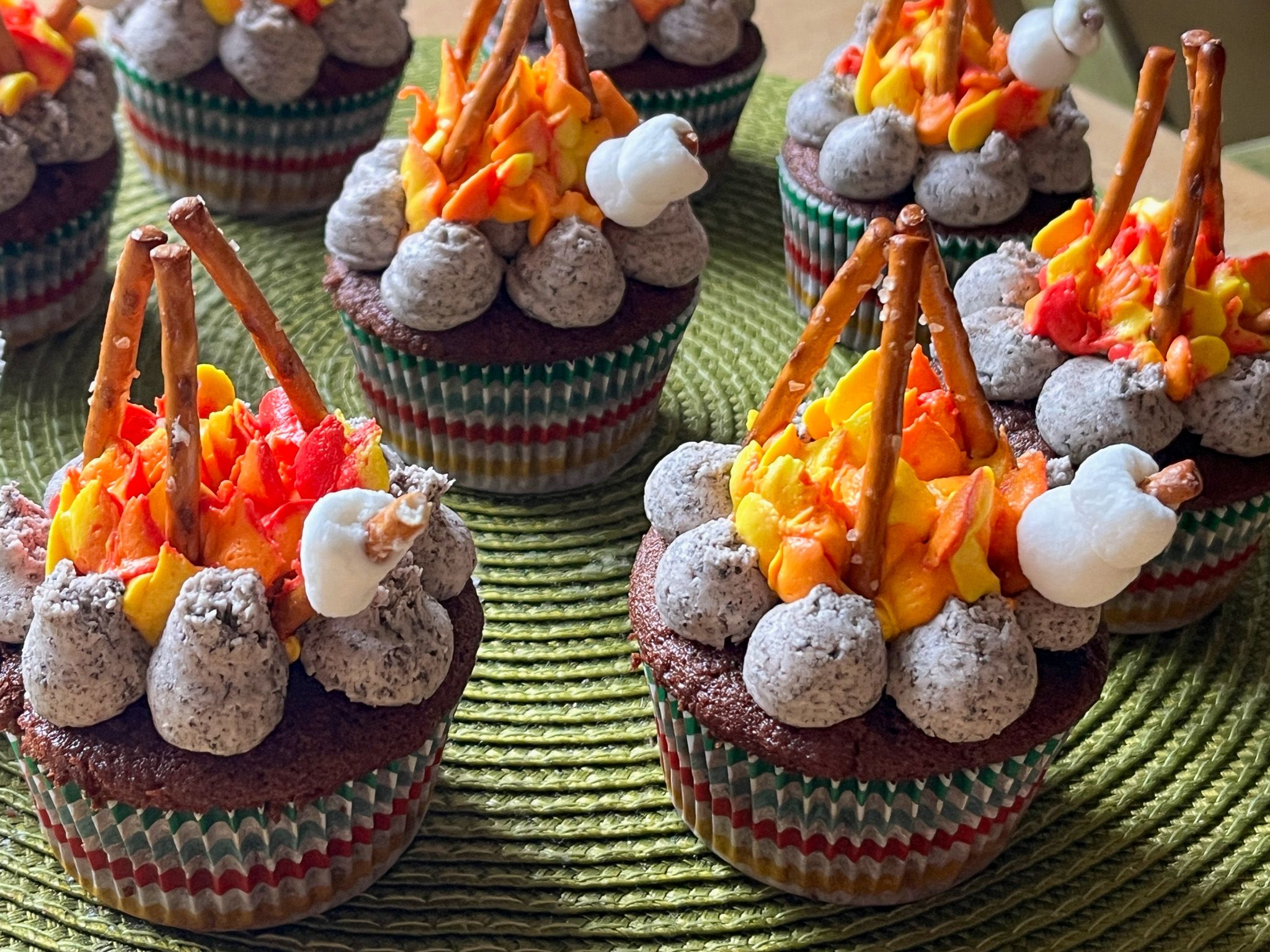
I cannot take credit for the design, it is from a cookbook I highly recommend: Cupcakes for Any Occasion, by Rachel Lindsay (click here to order it). She used lemon cupcakes for her version, I opted for chocolate, going for a reverse creaming method that is so simple and easy to bake.
CAMPFIRE CHOCOLATE CUPCAKES (inspired by Rachel Lindsay)
for 10 cupcakes: 100g all-purpose flour 25g unsweetened cocoa powder 140g white sugar 1/4 tsp salt 50g unsalted butter, room temperature, soft 1 large egg 120ml milk 1 tsp vanilla extract 1 + ½ tsp baking powder
for the buttercream: 226g butter, very soft 452g powdered sugar 1 tablespoon heavy cream (or more to adjust consistency) 1 tsp vanilla extract pinch of salt 6 Oreo cookies, crushed fine orange, red and yellow food gel coloring Pretzel sticks (four per cupcake) mini marshmallows (1 to 2 per cupcake)
Heat oven to 350F. Prepare a muffin type pan with cupcake liners.
Whisk the milk, egg and vanilla extract in a small bowl. Reserve.
Whisk the flour, baking powder, cocoa powder, salt, butter and sugar into the stand mixer bowl with the paddle attachment. Mix on a medium speed until all the butter looks like small pieces of sand. Add half the milk mixture, mix to incorporate until smooth. Give it a final minute mixing in high-speed. Add the rest of the milk, and whisk until fully smooth.
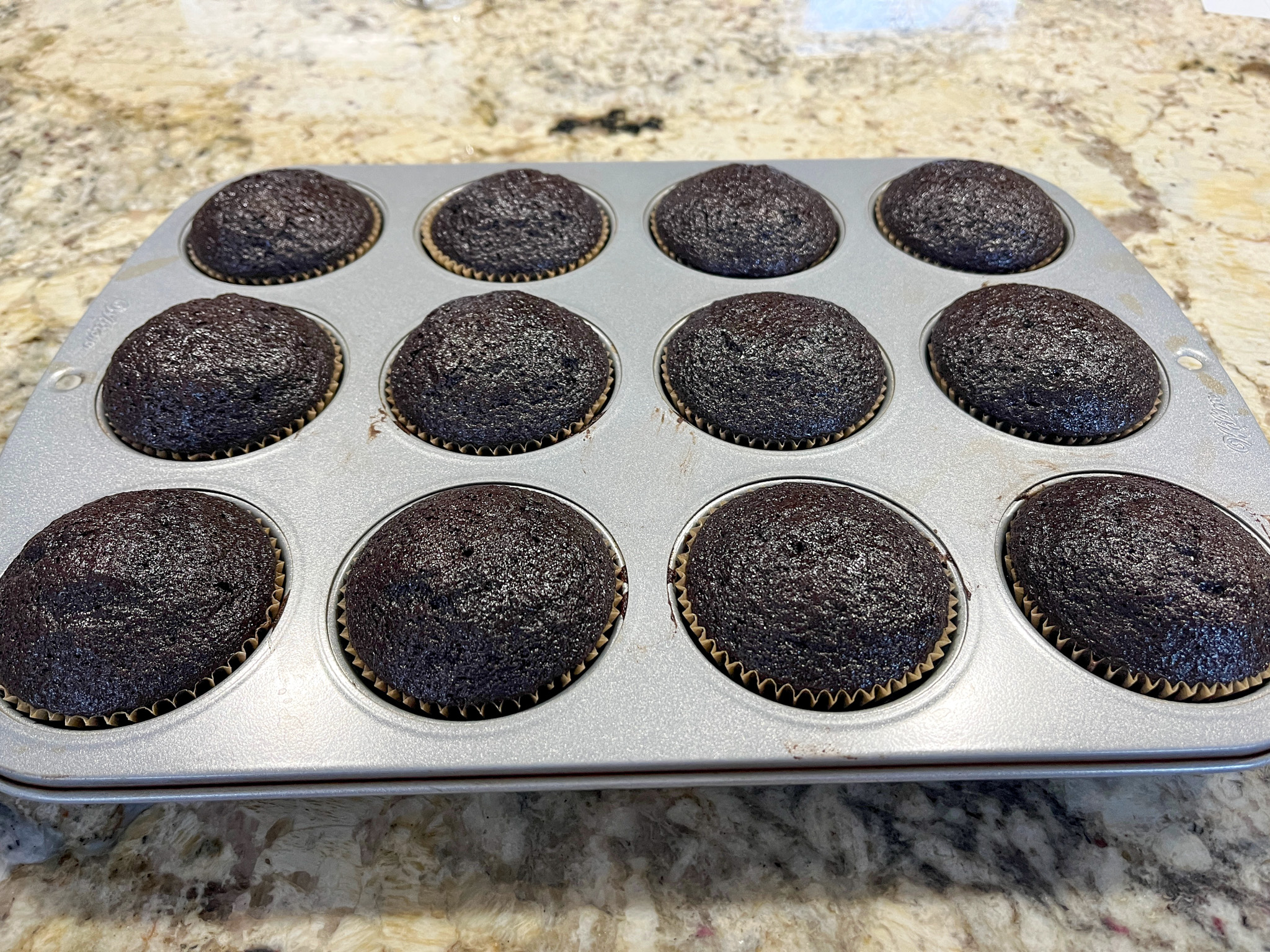
Add to the lined pan, a little more than half full. These cupcakes rise a lot. Bake until a toothpick comes clean, about 16 minutes. Let cool completely before icing.
Make the buttercream. Whisk the butter in high speed for five minutes. Add half the powdered sugar, mix at medium-speed until fully smooth. Increase speed to high for 30 seconds. Add the other half of the sugar, pinch of salt, vanilla and heavy cream. Whisk in medium to high-speed until smooth. Adjust consistency if needed.
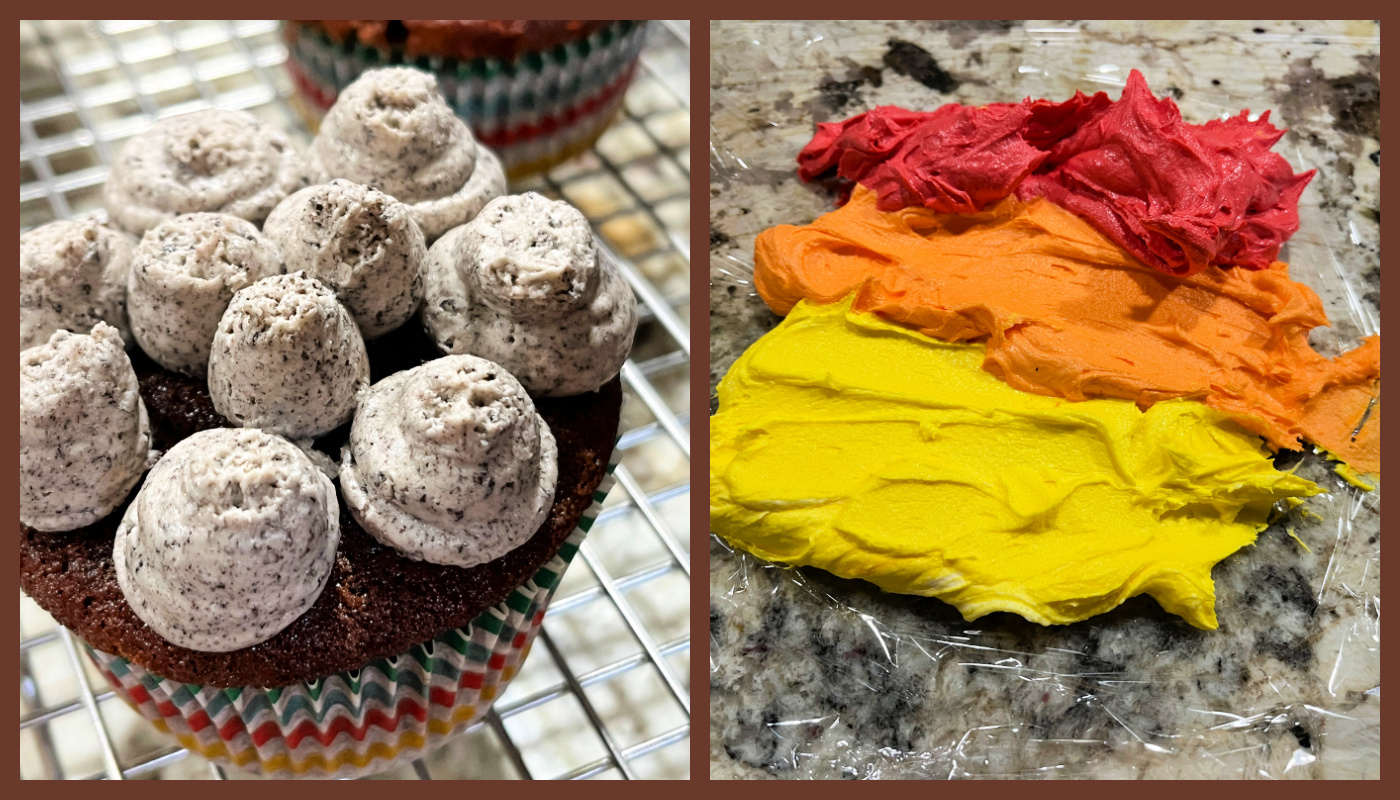
Keep half of the buttercream in the mixer. Add to it the Oreo crumbs. Transfer that to a piping bag fitted with a round tip. Divide the rest of the buttercream (around 110g portions) to smaller bowls. Dye each portion red, yellow and orange. Place them over plastic wrap as straight lines side by side. Make a sausage with that plastic wrap and insert into a piping bag fitted with a medium size leaf tip.
Decorate the cold cupcakes first with “stones”, using the Oreo buttercream. Add “flames”, stick Pretzels to make the decorations, using small marshmallows for additional touch.
Comments: I love the way the addition of Oreo cookies make the buttercream perfect to mimic stones. That could come in handy for Halloween designs in the future. I made a little mistake and used Pretzel sticks to insert the marshmallows, but in the cookbook she advises using toothpicks, and they will work a lot better, so keep that in mind if you want to try these. I am so happy with the way they turned out!
One extra bit of advice: when you pipe the “rocks”, smooth the surface with a brush to make them more round and smooth. I did not do that to some of them, and wish I had. Once the buttercream hardens you cannot quite smooth things out.
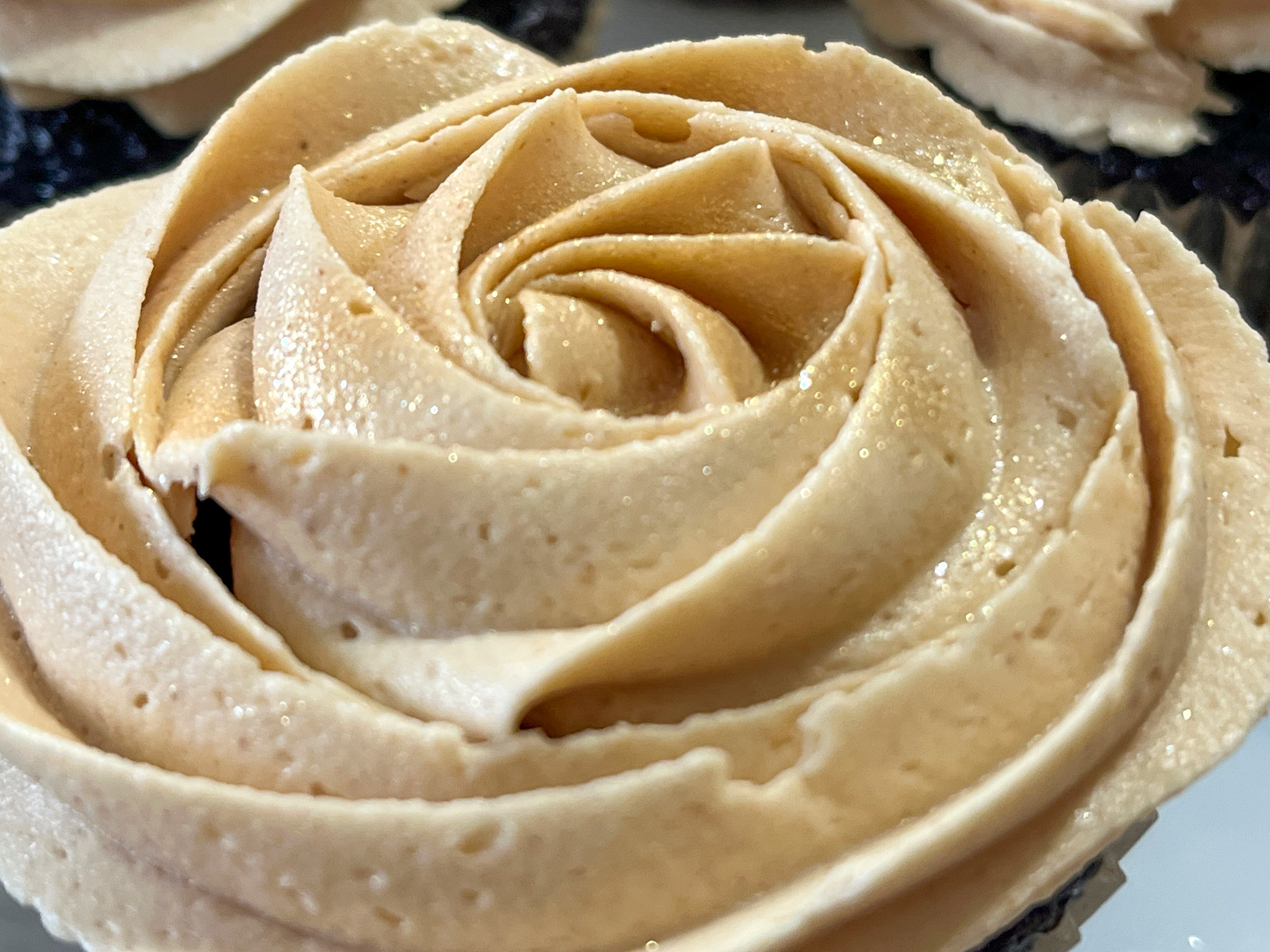
CHOCOLATE CUPCAKES WITH PEANUT BUTTER FROSTING (from The Bewitching Kitchen)
120 grams (1 cup) all-purpose flour 50 grams (1/2 cup + 2 Tablespoons) natural cocoa powder 225 grams (1 + 1/8 cups) granulated sugar 1 teaspoons baking powder 1/2 teaspoon baking soda 1/2 tsp Kosher salt 85 grams (about 1/2 cup) grapeseed oil 2 large eggs, room temperature 2 teaspoons vanilla extract 75 grams (1/3 cup) milk, room temperature 170 grams (3/4 cup) very hot water
Makes 12 cupcakes. Use paper liners in your pan.
Heat oven to 350F.
In a large mixing bowl, add the flour, cocoa powder, granulated sugar, baking powder, baking soda and salt. Whisk very well to fully combine the dry ingredients.
Add the oil into the mixing bowl and mix on medium speed with a hand mixer until well combined. Add the eggs and vanilla extract to the bowl and continue mixing until smooth.
With the mixer still running, slowly pour in the milk and then the hot water. Continue mixing until everything is evenly incorporated, the batter will be super thin, do not worry about it. Place the batter in cupcake pan and bake until toothpick inserted in the center comes clean. This will take 20 to 25 minutes, but check a couple of minutes earlier. Cool completely before frosting.
PEANUT BUTTER FROSTING
113 grams (1/2 cup) unsalted butter, room temperature 175 grams (1/2 cup) smooth peanut butter (Jiffy works great) 210 grams (1 + 3/4 cup) powdered sugar 1 teaspoons vanilla extract 1/4 teaspoon kosher salt 2 to 3 tablespoons of milk to adjust consistency
In the bowl of a stand mixer fitted with a paddle attachment, beat the butter and peanut butter on medium speed for about a few minutes, until fluffy. Scrape down the sides and bottom of the bowl.
Add the powdered sugar and salt into the mixing bowl and start mixing on low until the sugar starts to combine with the butter. Turn the mixing speed up to medium-high and beat for about 3 minutes until the mixture is light and fluffy. Mix in the vanilla extract. Add milk to adjust the consistency. If not using immediately you can refrigerate for several days. Bring back to room temperature and whip again before using to frost the cakes.
Use a piping tip like Wilton 1M if you like to make a rose pattern on top. Spraying gold is optional but nice…
Comments: I love this cake recipe so much because it is simple, straightforward and always works. You can use hot coffee instead of hot water, but I tend to simplify it and just grab water from the tap, as hot as I can get it. I know many people prefer Swiss buttercream frosting but I donate the cupcakes and not knowing how long they will sit waiting, I rather use a sturdier buttercream, which is also much simpler to prepare. If you are a peanut butter/chocolate lover, this cupcake is for you!
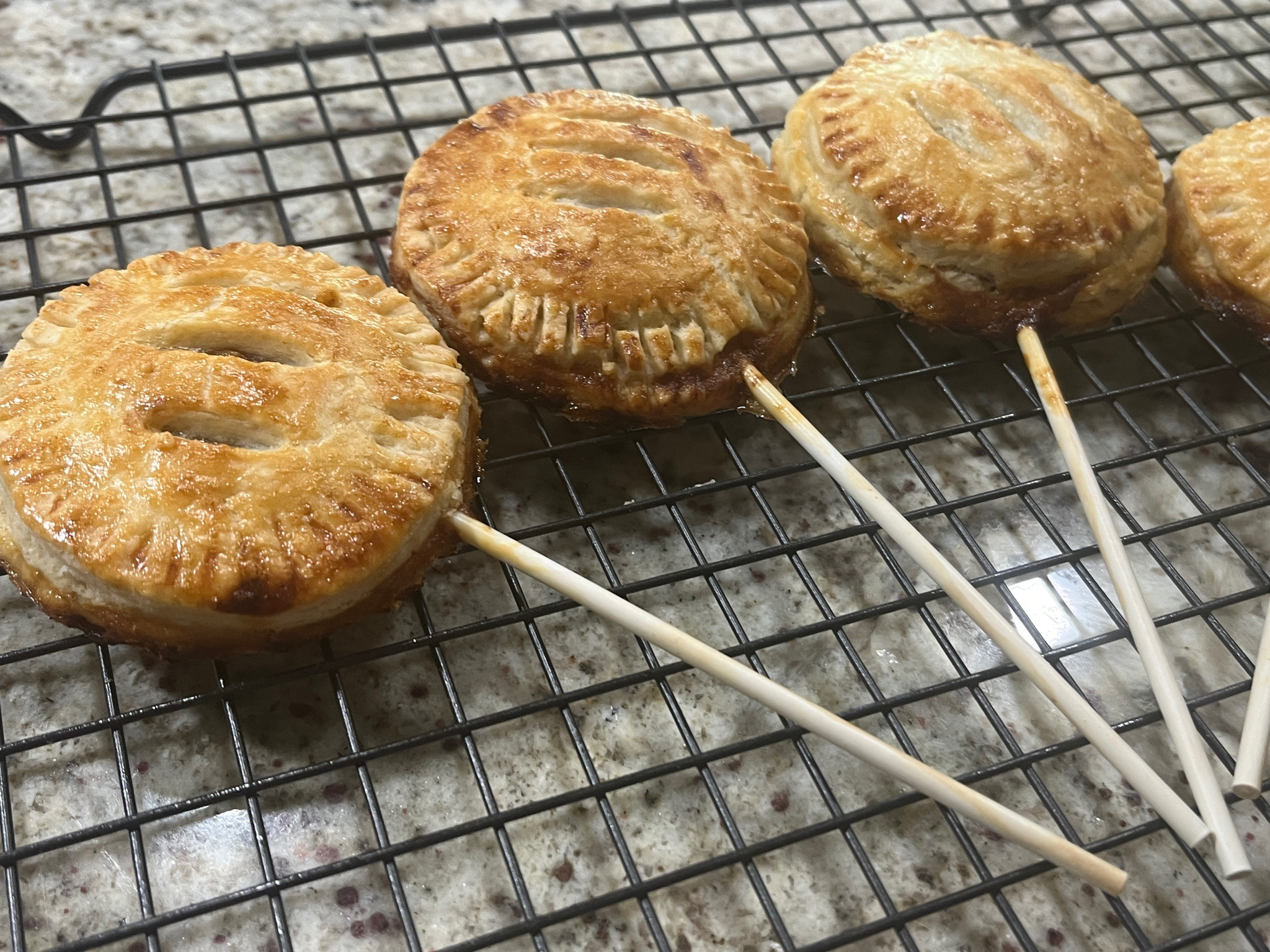
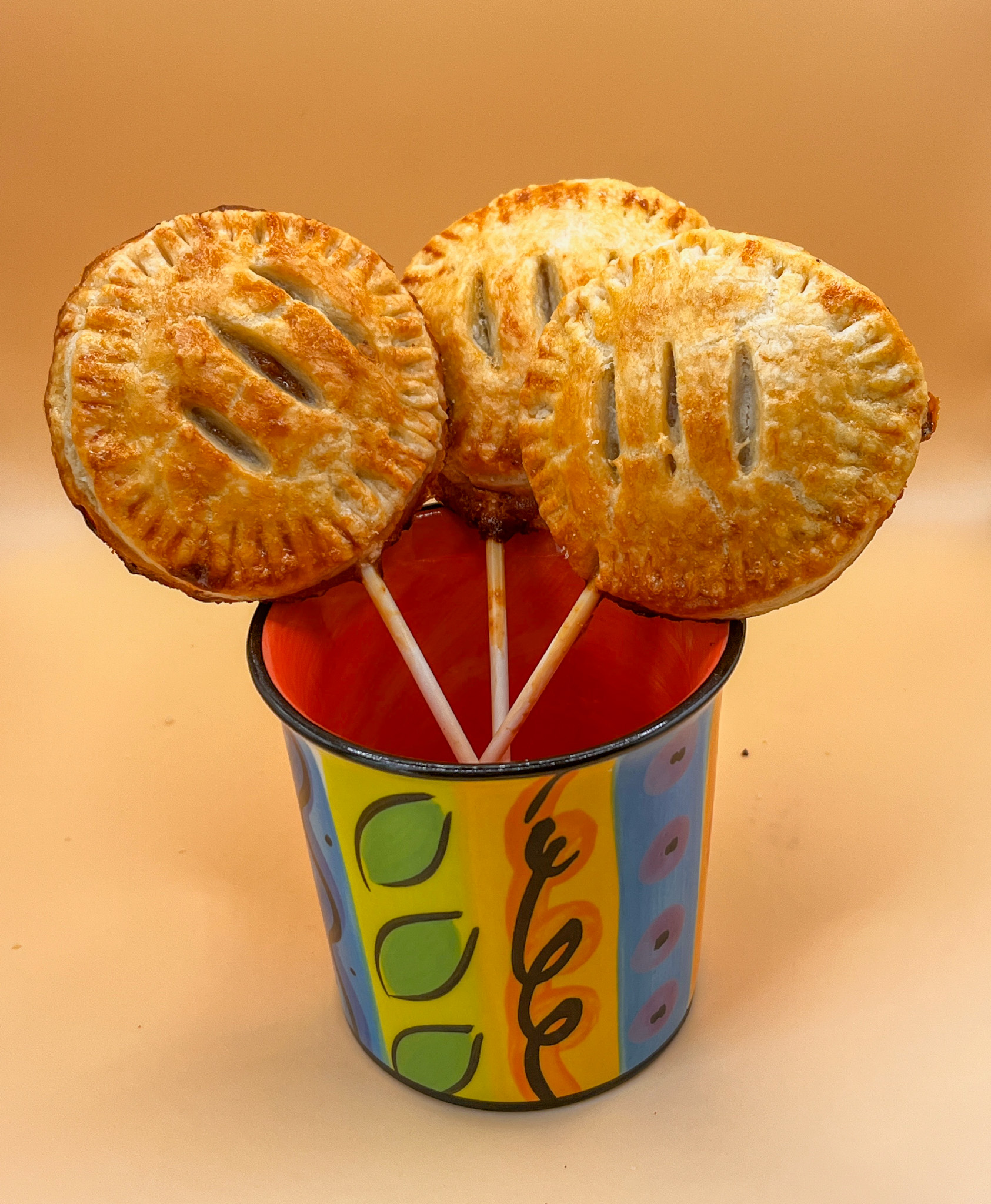
What a completely fun concept! Bake a pie, but make it small. Really small. And don’t forget to get a stick going, for that pop experience… The idea comes from Cook’s Desserts Illustrated (available at amazon.com), which is a must-have for any baker out there. I cannot publish the exact recipe and method from the book, but let me share the overall process.
Get your favorite, preferably all-butter pie crust recipe, roll it out thin, and cut 3 inch rounds…
Transfer half of the rounds to a large rimmed baking sheet, add a stick to it, and one tablespoon of the filling of your choice (I used apple butter + cream cheese, as suggested in the book).
Freeze that for 10 minutes, then brush egg wash on the edges and add the second set of pie rounds on top. Crimp the edges, cut small slits with a sharp knife, brush with more egg wash…
and bake them at 375F for about 25 minutes…
You can conceivably use any filling but make sure it is not too wet. Keep in mind these are to be enjoyed just holding on the stick, no plate, nothing. You don’t want to have filling running all over the place. It is such a cute concept, and perfect to share! I hope you’ll give this method a try soon…
March, 2003. While living in Paris we took a few days break in Lisbon where we met a couple of great friends from the US who were vacationing in Europe (Sally waves hello to M & V). It was also a trip to celebrate our 3rd wedding anniversary. Portugal, the home country of my maternal grandparents, was a place I had always wanted to visit. The country is charming, people absolutely adorable, and the food? The food does not get the respect and admiration it deserves, in my opinion. As it is mandatory for anyone visiting Lisbon, we stopped by the birth place of Pastéis de Belém, also known as Pastéis de Nata. You can read all about it here.
But first, would you like to say it as a native? let’s try it…
When you bite into your first one, the skies open, angels start singing, and you wonder how would you ever leave Portugal and that indescribable pleasure behind. Yes, they are that wonderful. For almost 15 years I’ve been dreaming of making them at home, even though I am fully aware they would not compare to the original ones. Then I watched an episode of the latest season of The Great British Bake Off, and pastéis de nata were requested as one technical challenge. Sally said to herself… if they can do it, perhaps I could too?
for the dough:
2 cups minus 2 tablespoons all-purpose flour (227 grams)*** (see my notes)
1/4 teaspoon sea salt (1 gram)
3/4 cup plus 2 tablespoons cold water (208 ml)
8 ounces unsalted butter (2 sticks), room temperature, stirred until smooth
for the custard:
3 tablespoons all-purpose flour (23 grams)
1 1/4 cups milk (297 ml), divided
1 1/3 cups granulated sugar (264 grams)
1 cinnamon stick
2/3 cup water (158 ml)
1/2 teaspoon vanilla extract (3 ml)
6 large egg yolks, whisked
for the garnish:
confectioners’ sugar
cinnamon
Make the dough: In a stand mixer fitted with a dough hook, mix the flour, salt, and water until a soft, pillowy dough forms that pulls away from the side of the bowl, about 30 seconds. I needed to add quite a bit more flour than the recipe called for, at least 1/4 cup more, perhaps more.
Generously flour a work surface and pat the dough into a 6-inch square using a pastry scraper. Flour the dough, cover with plastic wrap, and let it rest at room temperature for 15 minutes. Roll the dough into an 18-inch square. As you work, use the scraper to lift the dough to make sure the underside isn’t sticking to your work surface.
Brush the excess flour off the top of the dough, trim any uneven edges, and, using a small offset spatula, dot and then spread the left 2/3 portion of the dough with a little less than 1/3 of the butter being careful to leave a 1 inch plain border around the edge of the dough. Neatly fold the unbuttered right 1/3 of the dough (using the pastry scraper to loosen it if it sticks) over the rest of the dough. Brush off any excess flour, then fold over the left 1/3 of the dough.
Starting from the top, pat down the dough with your hand to release any air bubbles, and then pinch the edges of the dough to seal. Brush off any excess flour. Turn the dough 90° to the left so the fold is facing you. Lift the dough and flour the work surface. Once again roll it out to an 18-inch square, then dot the left 2/3 of the dough with 1/3 of the butter and smear it over the dough. Fold the dough as directed in the previous steps.
For the last rolling, turn the dough 90° to the left and roll out the dough to an 18-by-21-inch rectangle, with the shorter side facing you. Spread the remaining butter over the entire surface of the dough. Using the spatula as an aid, lift the edge of dough closest to you and roll the dough away from you into a tight log, brushing the excess flour from the underside as you go. Trim the ends and cut the log in half. Wrap each piece in plastic wrap and chill for 2 hours or preferably overnight.
Make the custard: In a medium bowl, whisk the flour and 1/4 cup milk until smooth. Bring the sugar, cinnamon, and water to a boil in a small saucepan and cook until an instant-read thermometer registers 220°F (100°C). Do not stir.
Meanwhile, in another small saucepan, scald the remaining 1 cup milk. Whisk the hot milk into the flour mixture. Remove the cinnamon stick and then pour the sugar syrup in a thin stream into the hot milk-and-flour mixture, whisking briskly. Add the vanilla and stir for a minute until very warm but not hot. Whisk in the yolks, strain the mixture into a bowl, cover with plastic wrap, and set aside. The custard will be thin.
Assemble and bake the pastries: Place an oven rack in the top third position and heat the oven to 500°F. Remove a pastry log from the refrigerator and roll it back and forth on a lightly floured surface until it’s about an inch in diameter and 16 inches long. Cut it into scant 3/4-inch pieces. Place 1 piece pastry dough, cut side down, in each well of a nonstick 12-cup mini-muffin pan (2-by-5/8-inch size). Allow the dough pieces to soften several minutes until pliable.
Have a small cup of water nearby. Dip your thumbs in the water, then straight down into the middle of the dough spiral. Flatten it against the bottom of the cup to a thickness of about 1/16 inch, then smooth the dough up the sides and create a raised lip about 1/8 inch above the pan. The pastry sides should be thinner than the bottom. Fill each cup 3/4 full with the slightly warm custard. Bake the pasteis until the edges of the dough are frilled and brown, about 8 to 9 minutes.
Remove from the oven and allow the pasteis to cool a few minutes in the pan, then transfer to a rack and cool until just warm. Sprinkle the pasteis generously with confectioners’ sugar, then cinnamon and serve. Repeat with the remaining pastry and custard.
Comments: I will not lie to you, this is a labor of love. It is time-consuming, and the first time you make it, you’ll feel quite insecure about each step. Did I roll out the pastry thin enough? Is the butter melting too much into the dough? And the insecurities get more intense when it comes time to shape each little shell, because it’s a bit of an unusual process. After rolling the pastry as a long sausage, small bits are cut cross-wise and placed in each mini-muffin tin, like this:
Then, very gently you will push down with the finger right in the center of the cylinder, making the pastry stretch to the sides. Instructions tell you to make the base thicker than the sides. That is easy to understand but not that easy to achieve. Plus, the idea is to work as quickly as possible so the butter won’t melt with the heat of your fingers. If you do it perfectly right, after baking the base of the pastry should show a nice rolling pattern.
Not quite there yet… but I guess not too bad…
The amazing thing is that I did two batches of these Portuguese delicacies, two days in a row. Why? Because I am married to Phil. Puzzled? Let me explain. A dialogue, that happened as we arrived home from work, went more or less like this:
“What are you going to do with all this leftover custard in the fridge?
I have no clue, maybe pour over some fruit? You can have it, by the way…
(A bit of a pause)
Why don’t you make a second batch of pastéis de nata?
(pause due to sheer shock)
Are you totally out of your mind? Do you realize what it takes to make these?
C’mon, it cannot be that bad…
(my reply was not fit to print)
Ok, ok, OK, I get it.. BUT what if I help you? We make it together, how about that?
And that’s how a second batch of Pastéis de Nata was made after work on a weeknight. He did help me, first sitting by the countertop making small conversation as I prepared the dough, and then shaping a batch of shells. He even made a little video while I was working hard with dough and butter. I guess he got bored! 😉 Anyway, here is the mercifully short video.
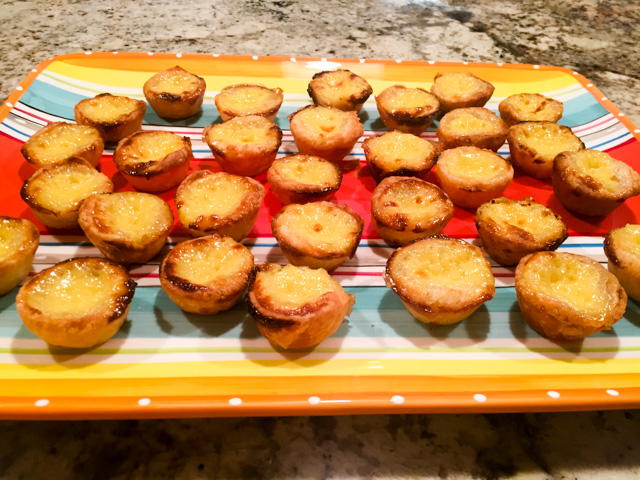
Even though they turned out very delicious, there is room for improvement. I guess baking them closer to the heat source would be better, ideally you want them all to have the very dark spots I showed you in the first photo. Interestingly enough, those had been baked in my small electric oven, where the tray was placed a lot closer to the top heating element. That’s something to keep in mind if you try them yourself. I also made a small batch with commercial puff pastry, and must admit home-made from scratch turns out a lot better. Something about the way the custard and the shell join in a more homogeneous way. The store-bought puff pastry had a harsher texture. Still, if that’s the only option for you to bake a batch of Pastéis de Nata, go for it. It will still be amazing, I promise. I must stress again the fact that as written, the recipe from Leite’s Culinaria posed me problems. I find that the amount of flour called for has got to be wrong. Maybe it has to do with the brand he’s used, but keep that in mind. You need a dough that you can work comfortably with.
Hard to believe that my first encounter with Pastéis de Nata was almost 15 years ago!
Getting ready to leave for our anniversary dinner, in a restaurant with great seafood and live “fado”, a music that speaks straight to the human soul.
I hope you enjoyed my adventure with this delicacy of my past. I am so glad I finally decided to go for it. Now I need to face another dream of mine, éclairs. Stay tuned!







 Bewitching Kitchen