LENTILS AND RADICCHIO? YES, PLEASE!

I bet many of my readers will consider clicking away from the blog right now, because… lentils? Not the most popular item in the pantry. Radicchio? Not the veggie that jumps into the grocery cart of most shoppers. Both together? Thanks, but no thanks. Can I ask you to trust me on this? Actually it’s not even me you should trust, but someone with a lot more gastronomic fame: Melissa Clark. And credit should actually go to my beloved husband who not only found the recipe but made it for our dinner. So basically I am  giving to charity from other people’s wallets. But hey, I am the resident blogger. So there!

LENTIL SOUP WITH RADICCHIO SLAW
(adapted from Melissa Clark)

for topping:
half a radicchio head, thinly sliced
drizzle of olive oil
lemon juice to taste
1 avocado, diced very small
salt and pepper to taste
for soup:
3 tablespoons olive oil
1 shallot, chopped
1 tablespoon tomato paste
1 teaspoon ground cumin
¼ teaspoon kosher salt, more to taste
¼ teaspoon ground black pepper
1 quart chicken or vegetable broth
2 cups water
1 cup green lentils
1 large carrot, peeled and diced
Juice of 1 lemon, more to taste
3 tablespoons chopped fresh cilantro

Make topping and reserve in fridge by mixing all ingredients together in a small bowl.

Make the soup: In a large pot, heat 3 tablespoons oil over high heat until hot and shimmering. Add onion and garlic, and sauté until golden, about 4 minutes. Stir in tomato paste, cumin, salt, black pepper and sauté for 2 minutes longer.

Add broth, 2 cups water, lentils and carrot. Bring to a simmer, then partially cover pot and turn heat to medium-low. Simmer until lentils are soft, about 30 minutes. Taste and add salt if necessary.  Using an immersion or regular blender or a food processor, purée half the soup then add it back to pot.  

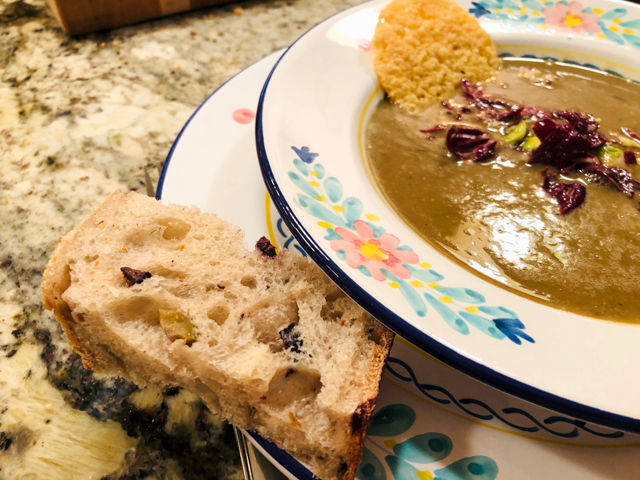
Stir in lemon juice and cilantro. Serve soup and add a generous amount of radicchio slaw on top.

ENJOY!

to print the recipe, click here

Comments: This soup was excellent served with a mixed olive sourdough (recipe published not too long ago in the blog, click here if you’ve missed it). I find it a bit hard to decide if the topping made the soup or if it would shine as brightly on its own. A perfect combination. We had leftover radicchio slaw, and found ourselves munching on small amounts once our bowls of soup were appropriately empty. Next day we improvised a full salad with the other half of the radicchio head, adding a bunch of goodies we had in the fridge.

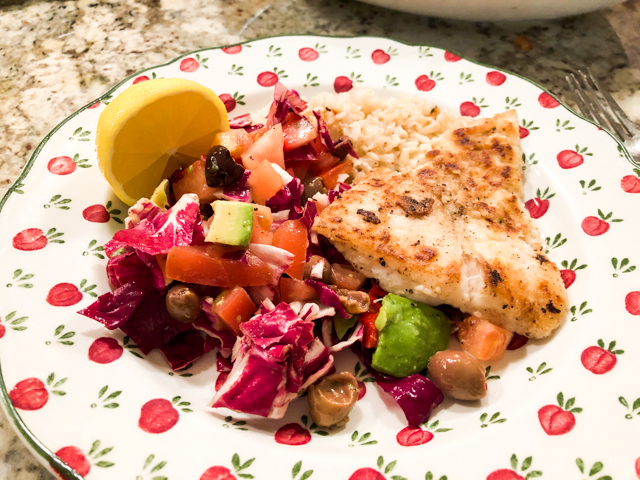
We mixed radicchio, tomatoes, olives, and avocados together. Dressing was kept simple again, olive oil and lemon juice, right before serving we added a tiny touch of white balsamic vinegar. OMG this was good. Later on we decided that capers would have been perfect, and of course some feta cheese or other sharp cheese of your choice.


Simple dinner… Red snapper, a little rice and this tasty salad… 

The secret with radicchio is to allow it to sit with the dressing for a little while, or warm it up very very briefly to soften the leaves. But that is another method that I intend to share in the near future. The great thing about this preparation is that leftovers keep very well in the fridge for 24 hours. My lunch next day was this salad with a fried egg, sunny side up. I was a happy camper.

ONE YEAR AGO: Tres Leches Cake

TWO YEARS AGO: The Joys of Grating Squash

THREE YEARS AGO: Auberge-Pecan Walnut Bread

FOUR YEARS AGO: Gluten-free and Vegan Raspberry Bars

FIVE YEARS AGO: Lasserre, a French Classic

SIX YEARS AGO: Sourdough Bread with Walnuts and Dates

SEVEN YEARS AGO: Braised Brisket with Bourbon-Apricot Glaze

EIGHT YEARS AGO: The Real Vodka Sauce

NINE YEARS AGO: Pork Tenderloin and Blue Cheese


CARROT CAKE MACARONS

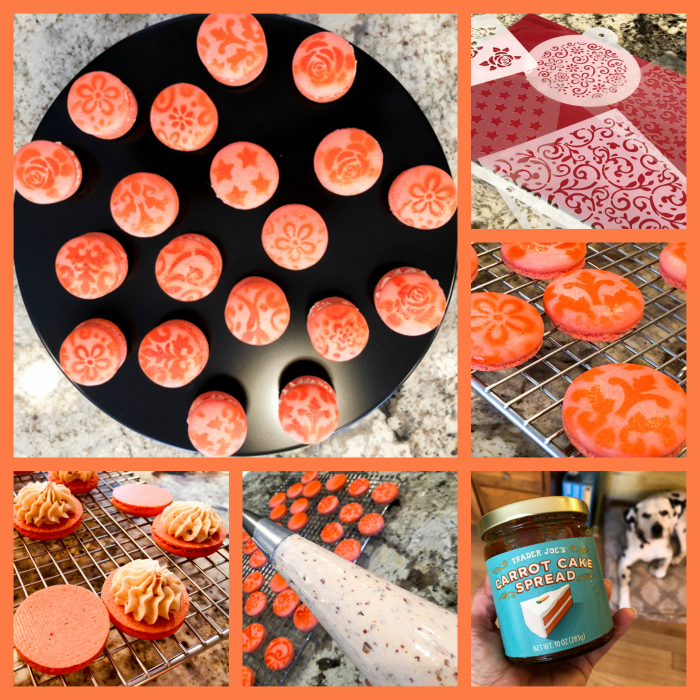
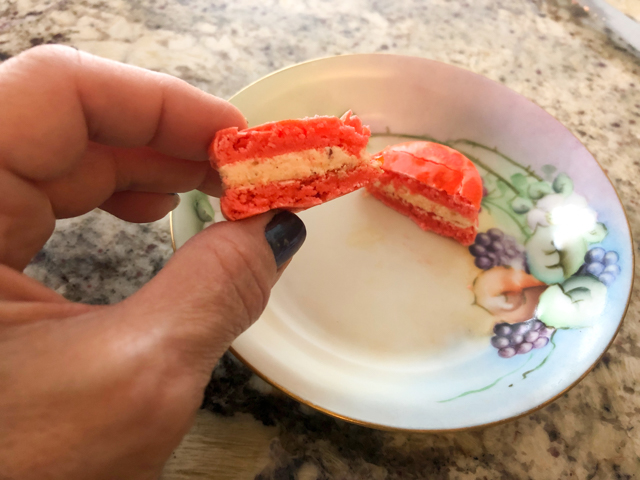
You read that right. Carrot Cake Macarons. I am a member of a Facebook group for Macaron-Baking-Addicts and a couple of months ago a very experienced baker raved about them. I am usually not that wild about store-bought products, but for some reason that recipe intrigued me enough to make me go for it. The product in question is a Carrot Cake Spread by Trader Joe’s. I added it as the main flavoring for a simple Swiss Meringue Buttercream, and that was the filling for coral-tone macarons. Living Coral, the Pantene color of 2019. I had to try and match it, just because macarons are by definition a celebration of color. At least in my mind they are…

CARROT CAKE MACARONS
(from the Bewitching Kitchen)

for the shells:
150 g almond flour
150 g powdered sugar
56 + 56 g egg whites
40 g water
150 g granulated sugar, super fine
1/4 tsp vanilla extract
gel food dye (2 parts red, 1 part yellow, 1 part pink)

for the Swiss meringue buttercream filling:
3 large egg whites, room temperature
1/2 cup sugar
2 sticks unsalted butter, softened but still cool, cut into 1/2-inch pieces
pinch salt
3 to 4 tablespoons carrot cake spread 

Make the shells: Add the almond flour and the powdered sugar to the bowl of a food processor and pulse it 10 to 12 times. You want to have it fine but not allow the oil in the almonds to seep out and turn it into a paste.  Immediately sieve it on a large bowl and reserve.

To a small bowl, add half of the egg whites (56 g), then add the food dyes and vanilla. Mix until it is all well incorporated, the dye sometimes resists mixing homogeneously into the egg white.

Now comes the fun part. You will add the other half of the egg whites to the bowl of a mixer and the granulated sugar and water into a small saucepan. Have an instant thermometer ready. Start beating the egg white in slow-speed, as you turn the heat and start bringing the sugar syrup to a boil, without stirring (this is important, or you risk crystallizing the sugar and having to start all over). When the sugar starts boiling, increase the mixer to medium-speed. You want it to be at the stage of soft peaks by the time the syrup reaches 244 F. Once that happens, slowly drizzle the syrup into the egg white-sugar, as you continue beating. Beat until the temperature cools down to around 115F, no need to bring it down all the way to room temperature. You don’t want to have a very stiff meringue at this point, or it will be too hard to incorporate into the almond flour.

The second fun part starts now, the famous macaronage. Add the dyed egg white and the meringue on top of the almond flour and mix gently but decisively. If you have never made macarons before, I advise you to watch some videos on youtube to familiarize yourself with the proper macaronage. You want the batter to flow from the spatula and form a figure eight on the surface as you allow it to drip, but it should not flow too rapidly. If you spoon some batter on parchment paper, it should smooth out in about 30 seconds or so.  Once you get to the right stage, fill a piping bag fitted with the piping tip of your choice (I like a 1/2 inch opening), and pipe on parchment paper or Silpat.

Bang the baking sheet a few times to release air bubbles, and allow it to dry at room temperature for 30 minutes or until the surface feels dry to the touch.

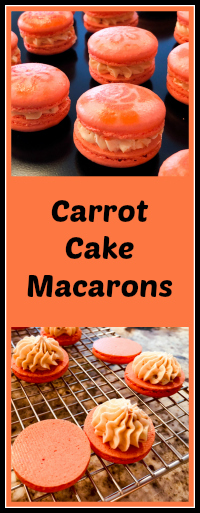
Bake at 300F for 10 to 12 minutes. Cool before peeling off the baking sheet. Decorate either before filling them or after, depending on the type of decoration you choose. I used an air-brush and stencils (see my composite picture), with the color Sunset Orange from Chefmaster.

 Make the filling. Place the egg whites and the sugar in a large metal mixing bowl set above a pot of simmering water. Whisk the mixture until the sugar melts and the mixture becomes warm and very thin in consistency, reaching a temperature of around 160F. 

Transfer the contents to a Kitchen Aid bowl and whisk on high-speed until stiff peaks form. Now, change the whisk to the paddle beater, add the butter and salt, mixing on low-speed.  Add the butter piece by piece and keep mixing. When the butter seems to be all incorporated, even if it looks a little curdled, increase the speed to high. The mixture will become smooth and totally creamy within a few minutes. 

Add the carrot cake spread and mix on low-speed. Taste and add more if you feel like it. Put the mixture in a piping bag fitted with an open star piping tip and fill your macarons.

Place them in the fridge overnight and bring to room temperature 15 minutes before serving.

ENJOY!

to print the recipe, click here

Comments: If you’ve been following my blog for a while, you know I have a lot of macaron recipes. They always involve the French meringue method because it is so simple and it has always worked for me. I had issues with the Italian meringue and several batches were a failure, but I know that many bakers find them better in terms of texture and reproducibility. Basically because the Italian meringue is much more stable and is less affected by humidity in the environment.

My main goal in macaron baking is maximize the proportion of feet, because I like them with bigger feet and a plump shell, so I like to try different methods and compare how they work for me. The Swiss meringue method should happen eventually, although for the time being I intend to play with the current recipe a few more times.  I am happy that this batch worked perfectly. The main thing I changed was adding the food dye to one half of the egg white component, and add that to the almond flour together with the Italian meringue. In the past, I followed recipes that instructed you to add the egg white to the almond flour first, forming a thick paste and allowing that to sit while the meringue is prepared. I found that this approach makes it pretty tough to incorporate the meringue and probably negatively affected the macaronage step that follows.

The filling. O. M. G. These macarons will be so unique, different from any macaron you’ll ever have, I guarantee it. It is sweet, perhaps sweeter than most fillings I enjoy, but it has that spicy characteristic of carrot cakes, the cinnamon-clove mixture, that breaks the sweetness a bit. If you don’t have a Trader Joe’s around, the product is available through amazon. The texture was perfect, no hollows, and with a nice “macaron-chew.”  I will play with this method on my next mac-adventure, that will involve more than one color of batter. Let’s hope that the stars will align properly at the time…

ONE YEAR AGO: Soup Saturday: Say Goodbye to Winter

TWO YEARS AGO: Manchego and Poblano Soup

THREE YEARS AGO: A Smashing Pair

FOUR YEARS AGO: Spinach and Mushroom Stuffed Pork Tenderloin

FIVE YEARS AGO: Crispy Chickpea and Caper Spaghetti

SIX YEARS AGO: Spring has Sprung!

SEVEN YEARS AGO: Chickpea and Fire Roasted Tomato Soup

EIGHT YEARS AGO: Double Asparagus Delight

NINE YEARS AGO:  Sun-dried Tomato and Feta Cheese Torte


RAINBOW CARROTS WITH ROSE HARISSA

Giving credit where credit is due, I saw this recipe over at Eats Well with Others, and made it that same evening. I did not have pomegranate seeds at the time, so I used diced mango as a sweet component. We loved it so much I made it again a few days later, this time pomegranate seeds were involved, and I can tell they are a must here. Because I used rainbow carrots, there was not that much contrast of color, but their tiny bursts of sharpness and fresh flavor contribute a lot to the sweetness of the carrots. This will certainly be a regular appearance in our meals, at least for as long as I can get my hands on the amazing ingredient that is rose harissa. Thank you, Joanne!

RAINBOW CARROTS WITH ROSE HARISSA
(inspired by Eats Well with Others)

1 pound carrots of several colors
2 tbsp olive oil
2 tbsp rose harissa
1 tbsp pomegranate molasses
1 tsp cumin seeds
1 tsp salt
lemon juice to taste
½ cup pomegranate seeds
fresh cilantro to decorate (optional)

Heat oven to 450F.
.
Peel the carrots and cut into batons. In a large bowl, mix together the olive oil, harissa, cumin, pomegranate molasses, and salt.  Add the carrots to the bowl and toss well to combine. Spread on a parchment-lined baking sheet and roast for 20 minutes, or until starting to caramelize and become tender.

Remove from the oven, add some lemon juice and  sprinkle with pomegranate seeds. Decorate with cilantro leaves, if so desired.

ENJOY!

to print the recipe, click here

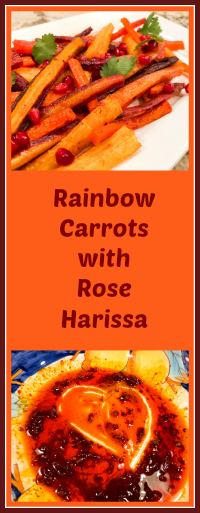
Comments: I am absolutely in love with this dish. I had to wait a long time to get rose harissa, since it was shipped all the way from England, so I get very protective of my bottle and always wonder if I should really use it in this or that preparation. Well, this one is definitely worth getting that couple of tablespoons from My Precioussssss.  My love for this sauce should be quite clear from the composite photo above… It is not really hot, it’s intense and complex, with a very subtle floral component from the rose. The more I use it, the more I love it. Which means soon it might be time to cave and place another order for it. Either that or emigrate to UK.

ONE YEAR AGO: Deviled Eggs go Green

TWO YEARS AGO: Tiramisu

THREE YEARS AGO: Pulled Pork, Slow-Cooker version

FOUR YEARS AGO: The Pie of the Century

FIVE YEARS AGO: Bon Bon Chicken

SIX YEARS AGO: Leaving on a Jet Plane

SEVEN YEARS AGO: A Pearfect Drink

EIGHT YEARS AGO: Ming Tsai Under Pressure

NINE YEARS AGO: Paris, je t’aime!


A SOURDOUGH QUARTET

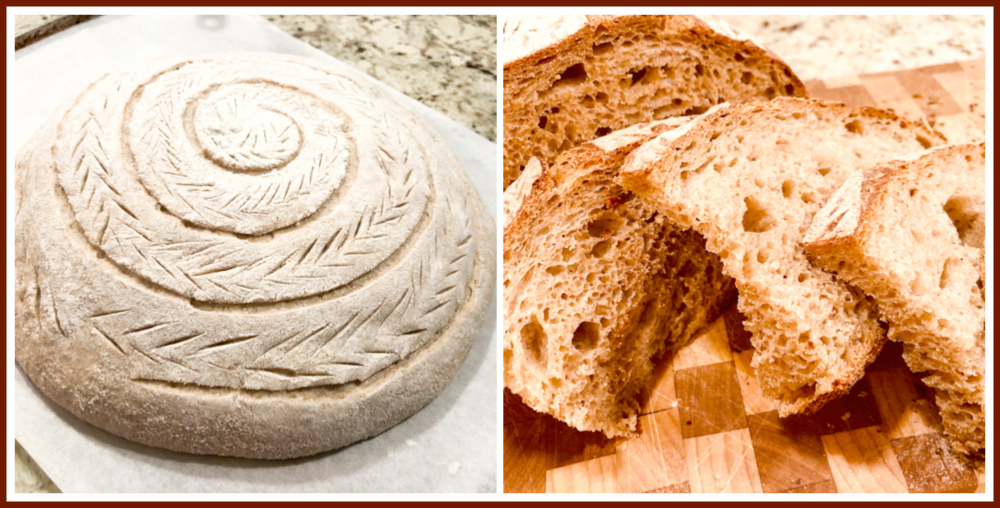
Today I share four different ways to play with sourdough… Different amounts of whole-wheat flour, different ways to slash and decorate it, and a version studded with a mixture of Kalamata and green olives that was probably the winner with the resident bread taster.
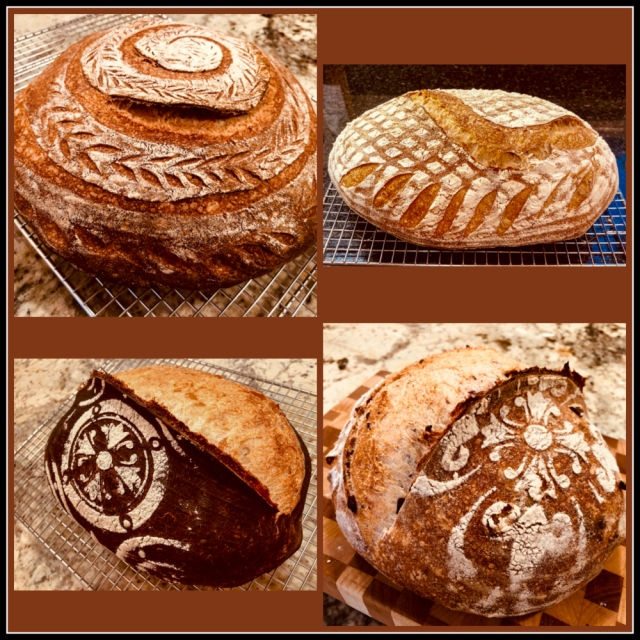
First, a loaf that pushes the level of whole-wheat a bit higher than I normally go for. I am calling it 50:50 sourdough, for obvious reasons
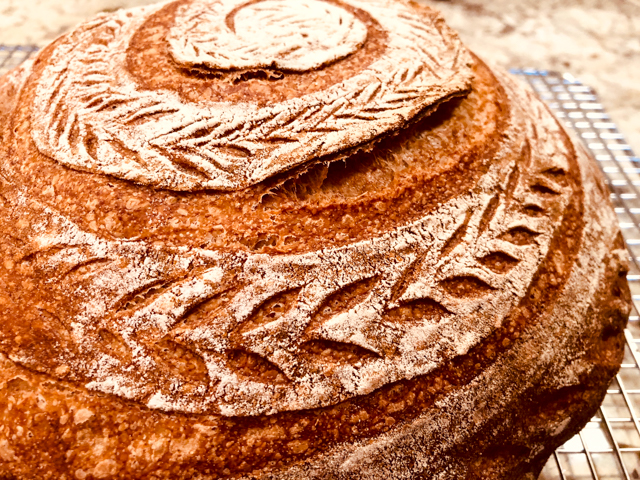
50:50 SOURDOUGH
(from the Bewitching Kitchen)

100 g active sourdough starter at 100% hydration
390g water
250g whole-wheat flour
250g bread flour
10g salt

Dissolve the starter in the water in a large bowl, mixing well until it is well-dispersed. Add the flours and salt, mix with your hands or with a wooden spoon until it forms a shaggy mass.

After 20 minutes, do a minimal kneading, about 10 times or so until the dough becomes smooth. You will now allow the dough to ferment for 4 hours at room temperature, folding the dough every 40 minutes, and keeping it covered with plastic. You don’t have to be precise, but allow the full four hours fermentation to take place.  You can do foldings at 40 min, 1h 20 min, 2 hs, 2 hs 40 min, 3 hours 20 min. After that final kneading, leave the dough undisturbed for 40 minutes more, then proceed to shape as a round (or a batard, if you prefer).

Place inside a banetton well dusted with flour and keep it in the fridge overnight, from 8 to 12 hours.

Next morning, heat the oven to 450F.

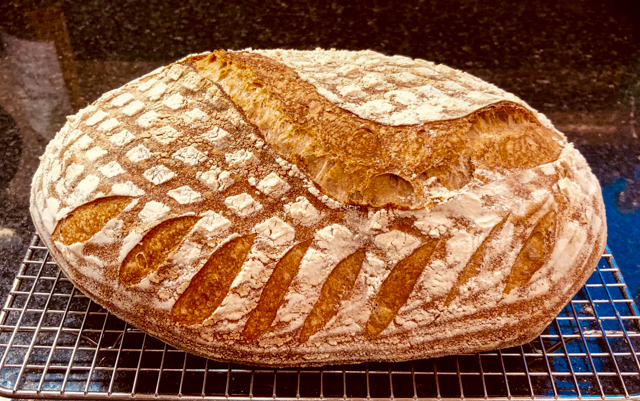
Invert the dough on a piece of parchment paper and lightly, very lightly coat it with flour, then rub all over the surface with the palm of your hand. Score the pattern of your choice.

Bake at 450F for 45 minutes, preferably covered for the first 30 minutes to retain steam.  Cool completely over a rack before slicing.

ENJOY!

to print the recipe, click here
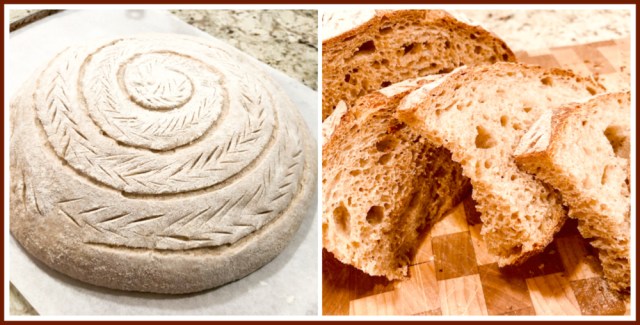
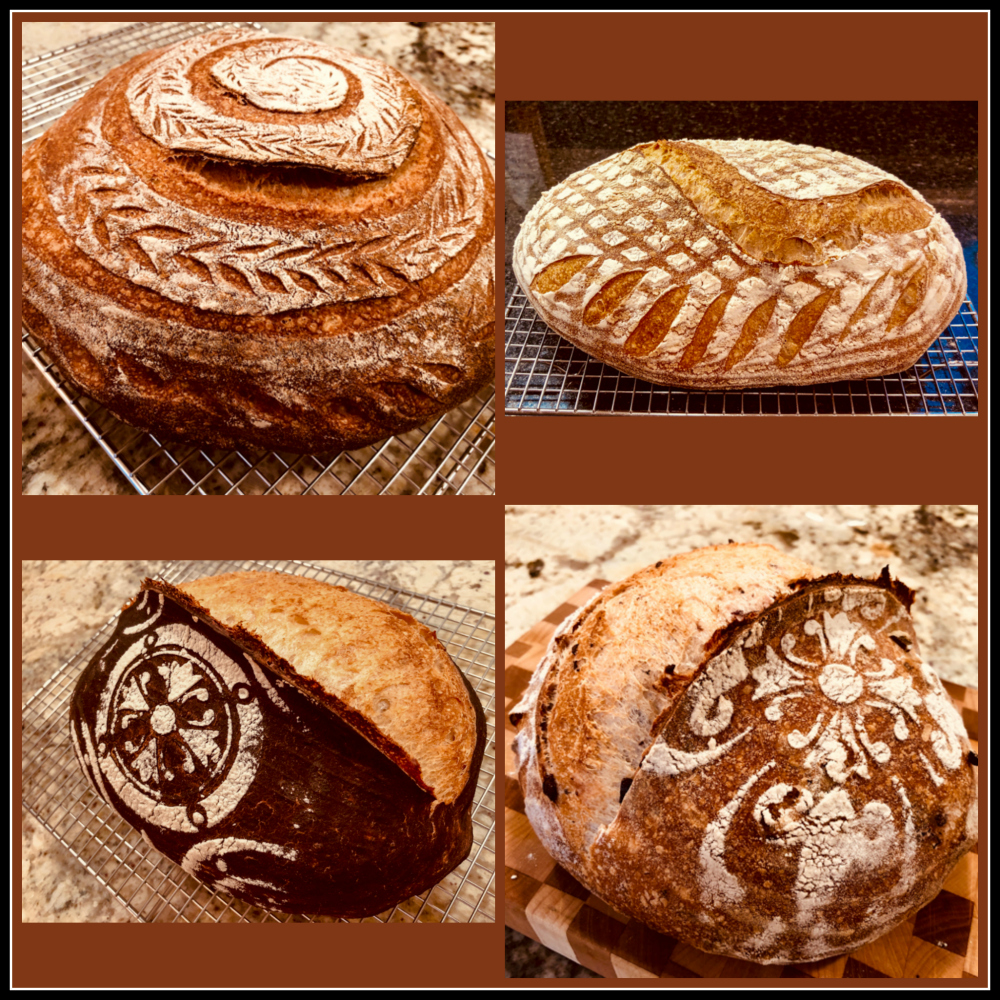
Comments: The amount of whole-wheat flour in this bread makes it hearty and quite filling. I kept the hydration level of the final dough at 78%, because it makes it easier to slash the surface. If the hydration is too high, it’s a lot harder to get a pattern going.  I started from the center and drew a little spiral, not too deep but deep enough to coach the bread into opening a bit. Then I use a brand new razor blade to form the design inside the spiral.  I really liked the way it turned out, and the crumb was more open than I expected.

Next, a very similar formula, but lowering the level of whole-wheat a little bit.
70:30 SOURDOUGH
(from the Bewitching Kitchen)

100 g active sourdough starter at 100% hydration
400g water
350g bread flour
150g whole-wheat flour
10g salt

Dissolve the starter in the water in a large bowl, mixing well until it is well-dispersed. Add the flours and salt, mix with your hands or with a wooden spoon until it forms a shaggy mass.

After 20 minutes, do a minimal kneading, about 10 times or so until the dough becomes smooth. You will now allow the dough to ferment for 4 hours at room temperature, folding the dough every 40 minutes, and keeping it covered with plastic. You don’t have to be precise, but allow the full four hours fermentation to take place.  You can do foldings at 40 min, 1h 20 min, 2 hs, 2 hs 40 min, 3 hours 20 min. After that final kneading, leave the dough undisturbed for 40 minutes more, then proceed to shape as a batard (or a round, if you prefer).

Place inside a banetton well dusted with flour and keep it in the fridge overnight, from 8 to 12 hours.

Next morning, heat the oven to 450F.

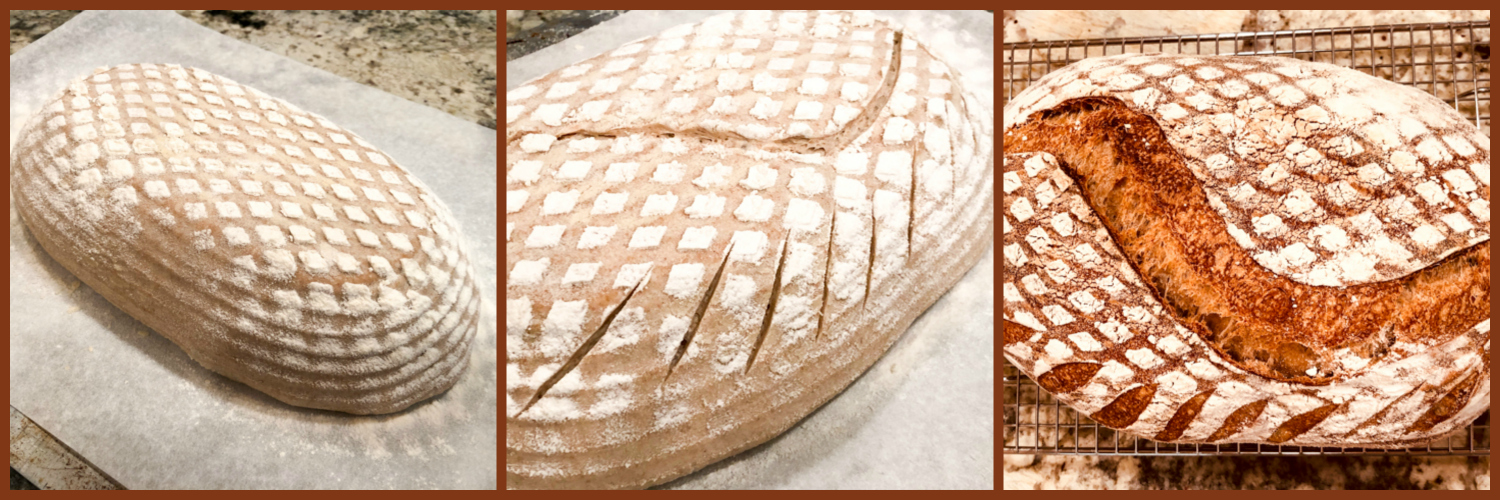
Invert the dough on a piece of parchment paper and brush off all the flour stuck from the banetton to keep it as clean as possible. Place the stencil of your choice on top of the bread, shake some all-purpose flour, lift the stencil carefully. Slash the bread in a way that will be compatible with the design. You need to cut one or more reasonably deep slashes to coach the bread to open in those spots.

Bake at 450F for 45 minutes, preferably covered for the first 30 minutes to retain steam.  Cool completely over a rack before slicing.

ENJOY!

to print the recipe, click here
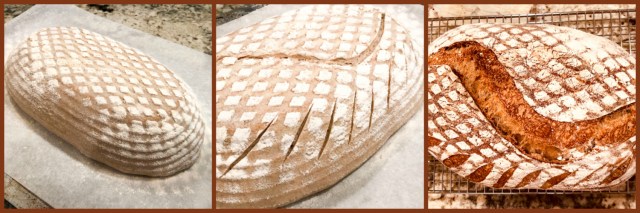
Comments: The overall technique remained the same, but the reduction in the proportion of whole-wheat makes the bread considerably lighter not only in color but also in taste. Since the slashing was going to be a lot simpler and the main decoration would come from the stencil, I increased the hydration a little bit to 80%.

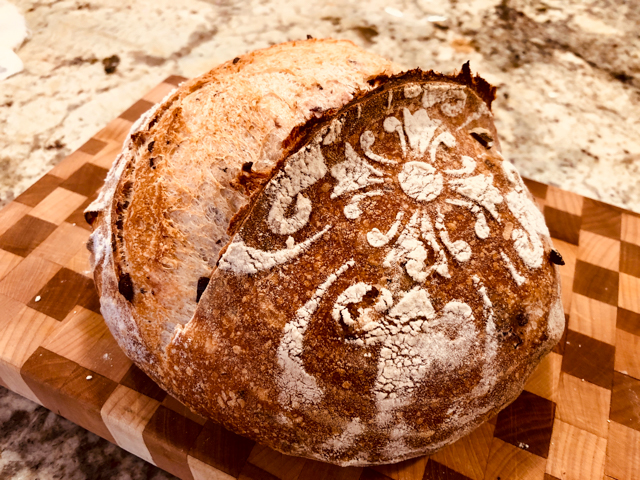
Next, comes a loaf with even less whole-wheat in the formula, but made more special thanks to the inclusion of a good amount of olives, both Kalamata and green. I had never mixed two kinds of olives in the same loaf, and I can tell you this will be happening again soon. Phil decided this might very well be his favorite bread of 2019. It turned out divine, even if I say so myself.
MIXED OLIVES SOURDOUGH
(from the Bewitching Kitchen)

50 g active starter
380 g  water
470 g  bread flour
30 g whole-wheat flour
9 g fine sea salt
150 g pitted green and kalamata olives, chopped
1 tsp Herbes de Provence

Dissolve the starter in the water in a large bowl, mixing well until it is well-dispersed. Add the flours and salt, mix with your hands or with a wooden spoon until it forms a shaggy mass.

After 20 minutes, do a minimal kneading, about 10 times or so until the dough becomes smooth. You will now allow the dough to ferment for 4 hours at room temperature, folding the dough every 40 minutes, and keeping it covered with plastic. On your first folding cycle, add the mixture of olives. You can do foldings at 40 min, 1h 20 min, 2 hs, 2 hs 40 min, 3 hours 20 min. After that final kneading, leave the dough undisturbed for 40 minutes more, then proceed to shape as a round (or a batard, if you prefer).

Place inside a banetton well dusted with flour and keep it in the fridge overnight, from 8 to 12 hours.

Next morning, heat the oven to 450F.

Invert the dough on a piece of parchment paper and brush off all the flour stuck from the banetton to keep it as clean as possible. Place the stencil of your choice on top of the bread, shake some all-purpose flour, lift the stencil carefully. Slash the bread in a way that will be compatible with the design.

Bake at 450F for 45 minutes, preferably covered for the first 30 minutes to retain steam.  Cool completely over a rack before slicing.

ENJOY!

to print the recipe, click here
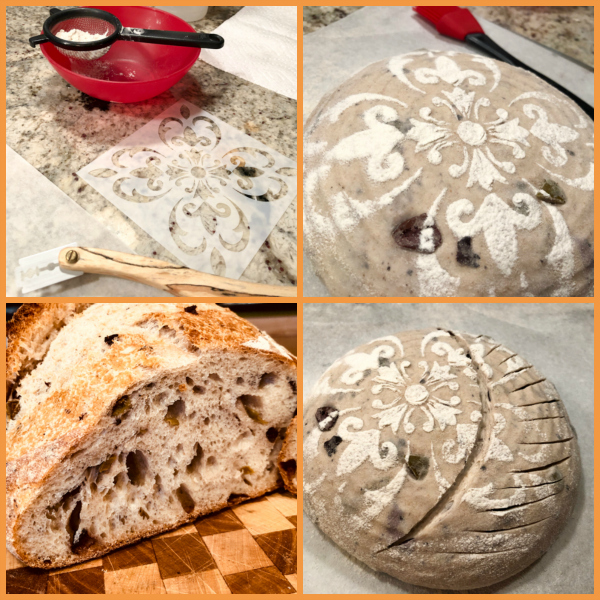
Comments: A light crumb due to the smallest proportion of whole-wheat (only 6%), and a hydration of 76% bumped a little bit due to the water content of the olives. The presence of the olives also made me reduce slightly the amount of salt.

Hard not to use superlatives to describe this bread. Green olives are definitely under-appreciated and I admit to this sin. Of course the Kalamatas bring a lot of flavor and moisture, but there is definitely a lot more happening through the slightly sharper nature of the humble green creatures. I did not pay close attention to the ratio of the olives in the mix, but I think it was pretty close to 50:50.  The crumb turned out pretty open and very moist, difficult to eat only one slice, and it went well with pretty much anything we paired it with, including a nice lentil soup made by the husband.

To get the best effect of a stencil design made with white flour, start with the bread inverted from the banetton and delicately but thoroughly brush off any residual flour that might have stayed glued to the surface. Then sprinkle the white flour over the stencil of your choice. If the bread has any flour on the surface, the design won’t be as evident after baking. The other thing to keep in mind is that you need to try and avoid the bread from opening right in the middle of your design. The best way to avoid that is to make a deep slash coaching the dough to open where you want it to. You can never be 100% sure it will work, but that’s your best bet. You can see how I dealt with it on the composite picture above.

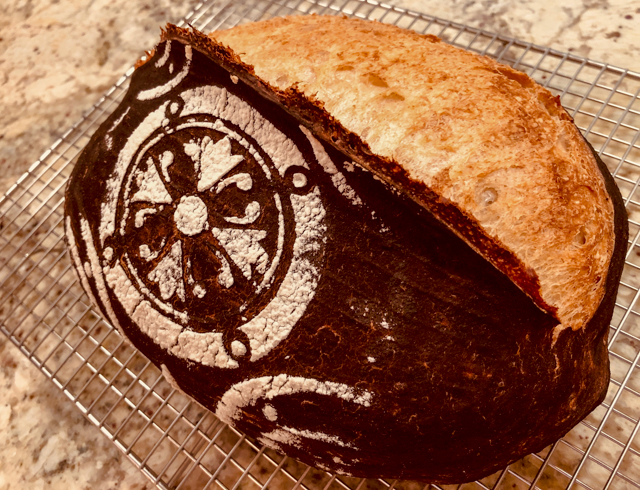
Finally, I share a bread that used the exact same formula of the previous one, but no olives. In this case, my main goal was to do a white-on-black stencil design. Some bakers use charcoal powder, I decided to go with black cocoa powder, the kind that is used to bake Oreo type cookies.
BLACK COCOA SOURDOUGH
(from the Bewitching Kitchen)

50 g active starter
380 g  water
470 g  bread flour
30 g whole-wheat flour
10 g fine sea salt

water and black cocoa powder to form a thin paste

Dissolve the starter in the water in a large bowl, mixing well until it is well-dispersed. Add the flours and salt, mix with your hands or with a wooden spoon until it forms a shaggy mass.

After 20 minutes, do a minimal kneading, about 10 times or so until the dough becomes smooth. You will now allow the dough to ferment for 4 hours at room temperature, folding the dough every 40 minutes, and keeping it covered with plastic. You can do foldings at 40 min, 1h 20 min, 2 hs, 2 hs 40 min, 3 hours 20 min. After that final kneading, leave the dough undisturbed for 40 minutes more, then proceed to shape as a round (or a batard, if you prefer).

Place inside a banetton well dusted with flour and keep it in the fridge overnight, from 8 to 12 hours.

Next morning, heat the oven to 450F.

Invert the dough on a piece of parchment paper and brush off all the flour stuck from the banetton to keep it as clean as possible. Make a paste with cocoa powder (preferably dark) and water. Brush the surface of the bread with it, then immediately place the stencil of your choice on top of the bread, shake some all-purpose flour, lift the stencil carefully. Slash the bread in a way that will be compatible with the design.

Bake at 450F for 45 minutes, preferably covered for the first 30 minutes to retain steam.  Cool completely over a rack before slicing.

ENJOY!

to print the recipe, click here
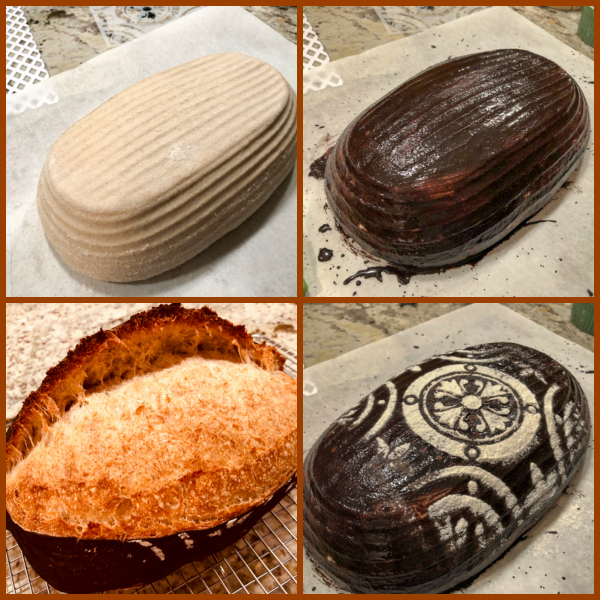
Comments: The goal for this bake was to play with a new stenciling technique. After the shaped dough is inverted out of the banetton, simply make a little paste of cocoa powder and water, liquid enough to brush with a silicone brush, but not too soupy.  Then, add the stencil on top and dust with all-purpose flour.  I imagine other colors could be used. Beet powder, sweet potato powder, butterfly pea powder…  I am not sure the red color of beet powder would be preserved during baking, I tried using it in the dough once, and the result was a brownish color with very little to do with my expectations. Worth giving it a try, I am sure. Even if it turns brown, could be still a nice contrast with the white pattern of the stencil. I should mention that there is absolutely no taste of cocoa in the baked bread.

The bread had absolutely amazing oven spring, which in a way messed up the design a little, but a baker should never complain of too much oven spring, since that can upset the Gods of the Sourdough and result in failure after failure for months to come. Yeah, I am a scientist. Very pragmatic. But I try to keep a sense of humor.

Final remarks: these loaves use a very simplified method.  I did not do autolyse, and did not bother adding the salt later, it all went into the dough at the same time. As you can see from the photos, I got enough oven spring and a nice crumb using these shortcuts. Also, I never bother waiting for the shaped bread to sit at room temperature before baking, or keeping the oven at 450F for an hour before baking. Some bakers insist those steps are important for a good bake. They are not. Once the oven reaches temperature, my cold, shaped bread goes in. It amazes me that people would waste so much energy heating up an oven to very high temperature for a long time before baking their loaves. Trust me, it is not at all necessary.
ONE YEAR AGO: When bad things happen to good people

TWO YEARS AGO: Sweet Potato “Hummus”

THREE YEARS AGO: Cauliflower Crust Pizza

FOUR YEARS AGO: Silky Rutabaga Puree

FIVE YEARS AGO: Bon Bon Chicken: Light and Spectacular

SIX YEARS AGO: Red Wine Sourdough Bread with Cranberries

SEVEN YEARS AGO: Award-Winning Sourdough Baguettes

EIGHT YEARS AGO: Country Rye (Tartine)

NINE YEARS AGO: Penne a la Vechia Bettola


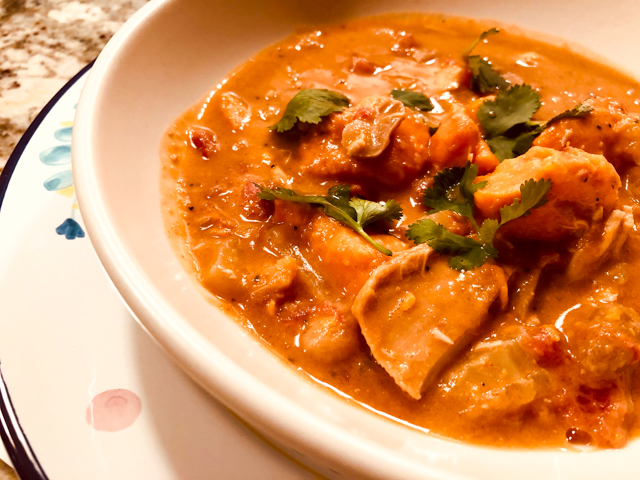
AFRICAN PEANUT STEW WITH SMOKED TURKEY

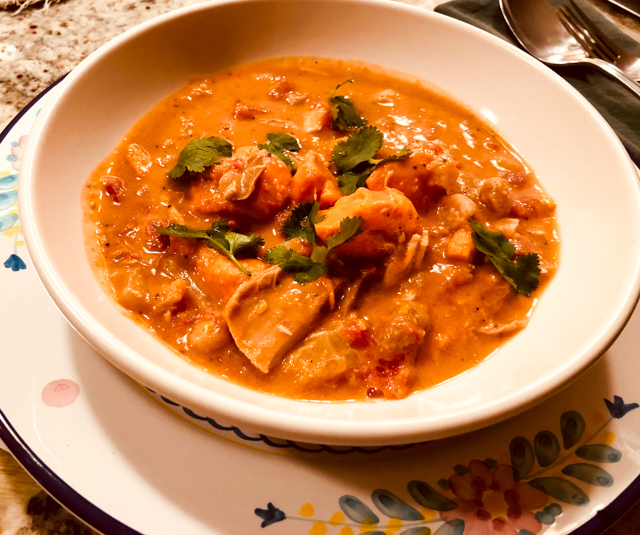
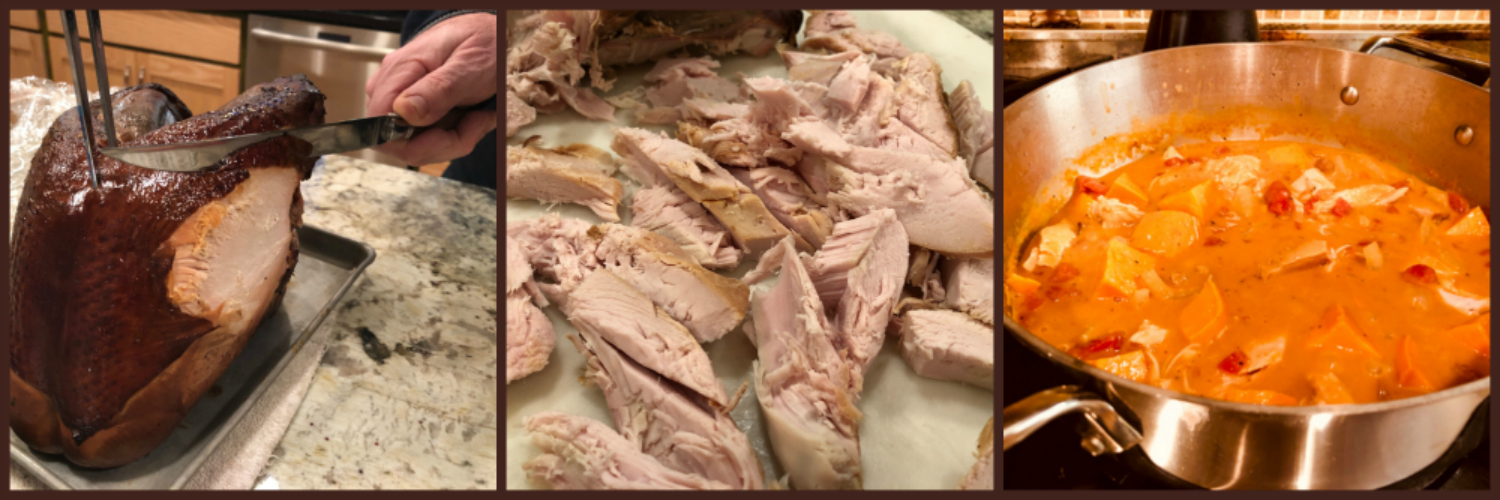
Fact: I’ve had this recipe waiting since 2005 when a friend raved about it. I know that for sure because I was cleaning files in my computer and stumbled on this folder of “must make recipes.” with a date of May 2005. Fourteen years. Talk about taking my sweet time. To make things even more interesting, I did not include the recipe, but something that at the time seemed enough for me to retrieve it. Mean Chef’s Favorite Chicken Peanut Stew.  Anyway, to make a long story short, I have no idea which recipe he was referring to, but found a bunch of possibilities online and from that I came up with this version that turned out absolutely blog-worthy. I used turkey breast that we smoked ourselves, but you can go with the more authentic version that calls for chicken thighs.

AFRICAN PEANUT STEW WITH SMOKED TURKEY
(from the Bewitching Kitchen, adapted from several sources)

1/2 turkey breast, smoked (or 4 chicken thighs, bone-in, skinless)
2 Tablespoons olive oil
1 small fennel bulb, thinly sliced
1 piece of ginger, minced (about 2 tsp)
salt and pepper
2 sweet potatoes, cut in large pieces
3 cups chicken stock
1 can small diced tomatoes (I used Muir Glen, about 15 ounces)
1/2 cup smooth peanut butter
1/2 cup roasted peanuts
2 tsp ground coriander

Heat the olive oil in a large pan. If using chicken thighs, brown them well on all sides, seasoning with salt and pepper as you go, and adding more oil if needed. Remove the chicken to a bowl as you work with the other ingredients.

Add the fennel pieces and the ginger to the pan, a touch more of salt and pepper, saute until fragrant.  Add the sweet potatoes, stir a few times, then add the chicken stock, stirring the contents to release any bits stuck to the pan.

Add the tomatoes, peanut butter, peanuts, and coriander, mix well to combine. If using chicken thighs, add them now. Cover the pan and cook for about one hour at gentle heat, until chicken is cooked through.  If using smoked turkey (or any type of pre-cooked poultry), cook the sweet potatoes until tender, then add the pieces of meat and simmer everything together for 10 minutes or so.

If using chicken thighs, when they are tender, remove the pieces, shred the meat, discard the bones. Add the meat back to the stew and simmer it all together for 10 minutes. Adjust seasoning, add cilantro right before serving.
.

SMOKED TURKEY BREAST

1 turkey breast, bone-in
1 (64-oz.) bottle apple cider
3/4 cup kosher salt
1/2 cup sugar
1/4 cup apple cider vinegar
2 rosemary sprigs
10 fresh sage leaves
1 hickory wood chunk
1 black walnut wood chunk

Make the brine in advance to give it time to cool completely. Bring cider all ingredients up to wood chunks to a boil in a large stockpot. Reduce heat to medium, and simmer, stirring occasionally, until salt and sugar are fully dissolved. Cool completely.

Place turkey in brine; cover and chill for 12 hours.

Heat smoker to 250 F. Place wood chunks receptacle. Remove turkey from brine, and dry with paper towels. Smoke turkey, maintaining temperature inside smoker between 225° and 250°, for around 4 hours or until a meat thermometer inserted into thickest portion registers 165°. 

ENJOY!

to print the recipe, click here

Comments: I know most people do not have an electric smoker, but please don’t let that prevent you from trying this recipe, go for chicken thighs and it will be equally delicious. I must say, however, that the stuff that we smoke at home is so much better than anything bought at the store, that it makes the investment worth it. Salmon is the best example, but turkey comes a close second. I would not dream of making this stew using store-bought smoke turkey. It is way too harsh and intense, with a very dry texture. In this dish we can detect some hint of smoke in the background but it is subtle and delicate.

We both thought that this would be a perfect recipe for Thanksgiving for two or four people. You know, when roasting the whole bird seems like unnecessary trouble. It has the perfect combination of flavors. Add some sage instead – or in addition to – coriander, and you will be all set with a great meal for that special holiday of November. I intend to remind my readers about it when the time comes… but first, there is a lot of Spring and Summer to enjoy and I CANNOT WAIT.

ONE YEAR AGO: First Monday Favorite Feb 2018

TWO YEARS AGO: First Monday Favorite Feb 2017

THREE  YEARS AGO: Overnight Coffee Cake

FOUR YEARS AGO: Zucchisagna: A Twist on a Classic

FIVE YEARS AGO: Night and Day

SIX YEARS AGO: Farro Salad with Roasted Leeks

SEVEN YEARS AGO: Watercress Salad

EIGHT YEARS AGO: Carrot and Sweet Potato Puree’

NINE YEARS AGO: Croissants: Paris at home on a special day