MANGO HAZELNUT ENTREMET CAKE

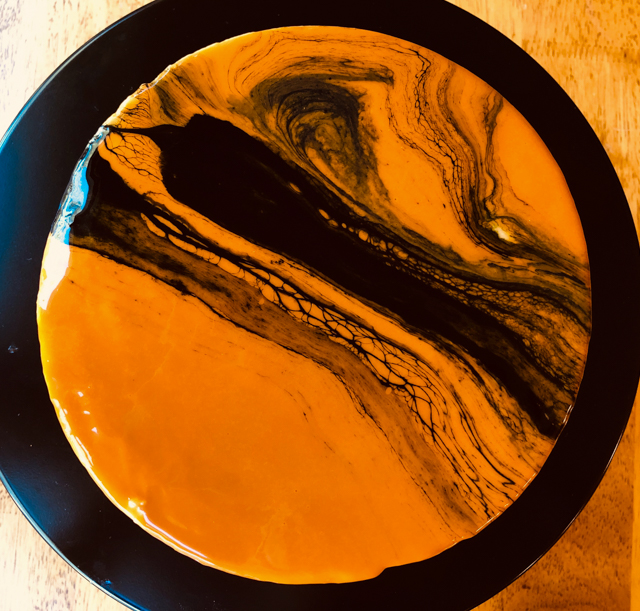
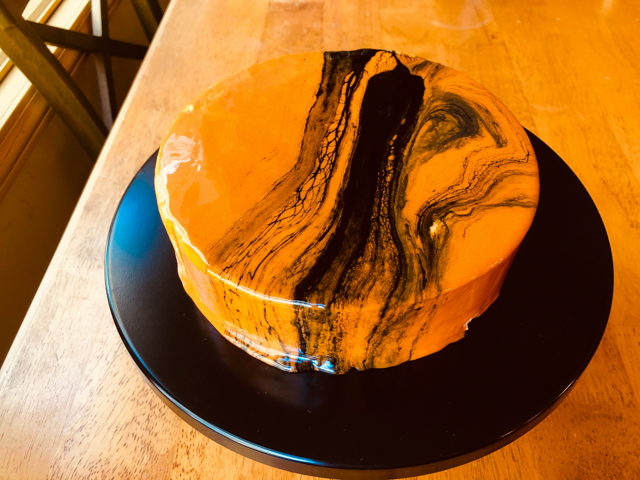
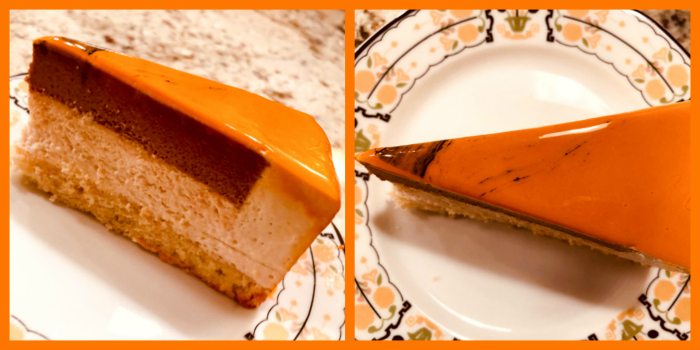
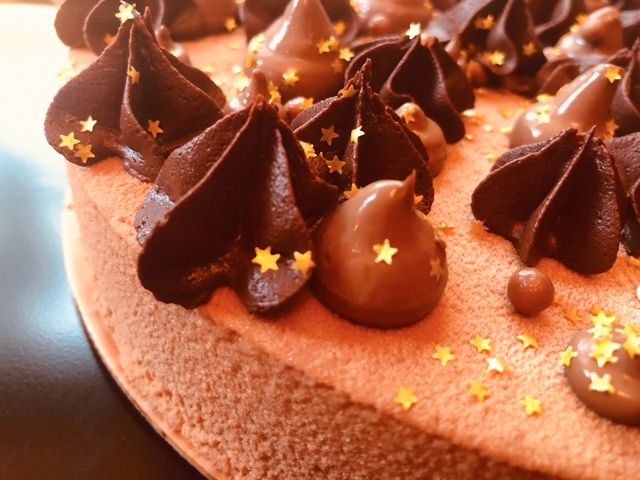
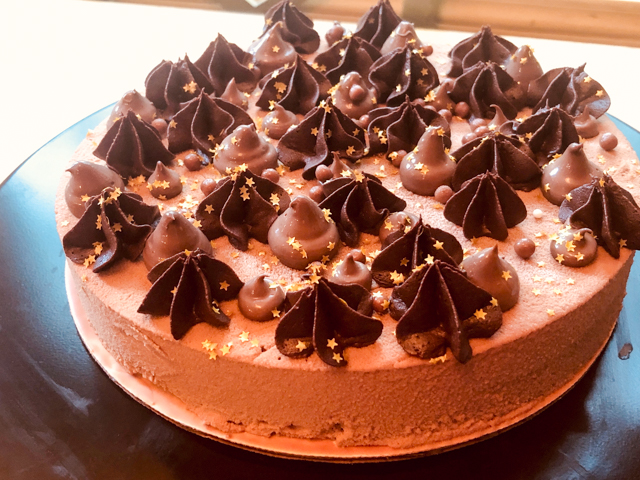
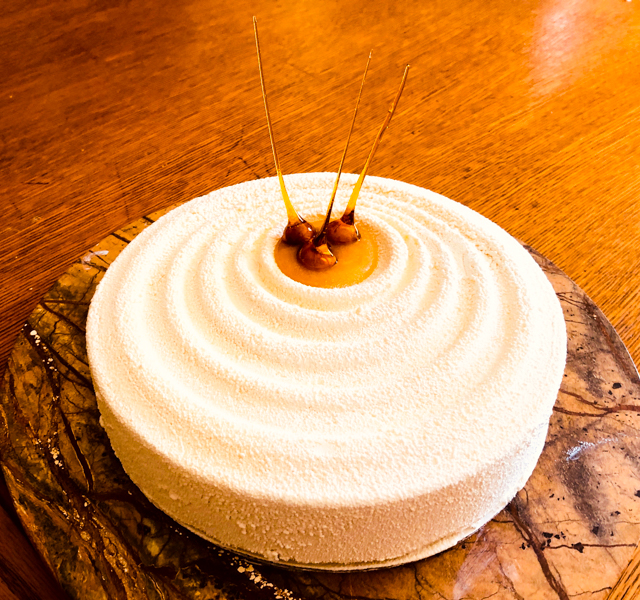
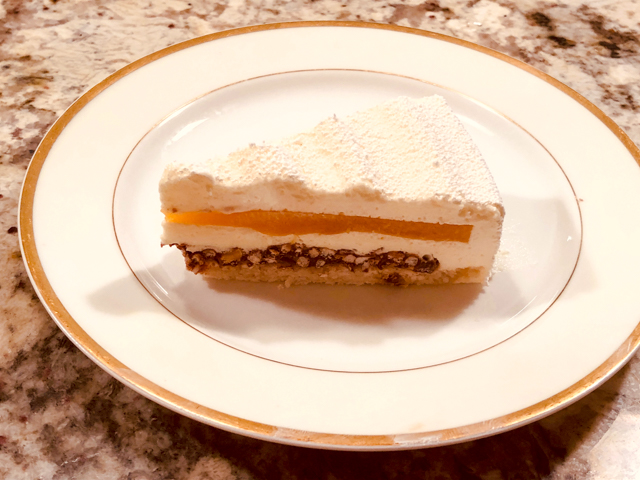
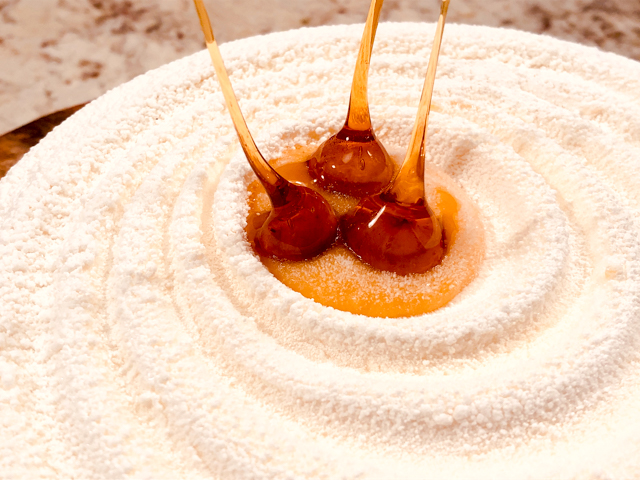
It’s been a while since I made what is probably my favorite type of dessert. As far as entremet goes, this is a reasonably simple example, with a single insert in the center (mango gelée) and only two components in the base, a hazelnut dacquoise and a crunchy chocolate layer. I used the Silikomart Vague mold, I love its design and how easy it is to remove the frozen cake for final decoration, which involved chocolate spray and a few caramel-coated hazelnuts.

MANGO HAZELNUT ENTREMET CAKE
(from the Bewitching Kitchen)

For the hazelnut dacquoise:
75 g egg whites, at room temperature
50 g sugar
70 g hazelnut flour (I processed toasted hazelnuts)
50 g sugar
20 g all-purpose flour

Heat oven to 350F.

Beat the egg whites (with whisk attachment) until you can see a trail forming as the beater moves through them. Add the sugar slowly and beat until firm peaks form, but do not overbeat or it will get grainy (and ruined).  Add the hazelnut flour mixed with remaining 50 g of sugar and the flour, folding delicately. Pour or pipe the mixture in a circle about 8-in diameter over parchment paper. Cook for about 10 minutes, let it cool on a rack, while still a bit warm cut a circle of the exact dimension of the mold you’ll use to make the dessert (if using Vague mold, that will be 20 cm or 7 and 3/4 in).

For the mango insert:
150 g mango puree (I used frozen mango chunks)
25 g sugar
5 g gelatin in sheets (230 Bloom)

Soak the gelatine cut into pieces in cold water for 10 minutes.

Bring the puree together with the sugar to 120F, add the drained gelatin, mix and pour in a 6-inch ring, covered on the bottom with film and placed on a tray. Remove a small amount (about 2 tablespoons) for the decoration on top.

for the chocolate-crisp:
113 g Lindt milk chocolate with hazelnuts
10 g pistachio paste (or add 2 tsp coconut oil)
10 g puffed quinoa (or rice crisps cereal, or crumbled corn flakes)

Toast the puffed quinoa in a 350F oven for a few minutes, until fragrant. Melt the chocolate gently and mix it with the toasted quinoa and the pistachio paste. Spread as a thin circle on parchment paper, with dimensions a bit bigger than the bottom of the dessert mold.  Once it cools slightly,  cut it to fit exactly on top of the hazelnut dacquoise (20cm or 7 and 3/4 in).

For the white chocolate mousse:
175 g whole milk
35 g sugar
70 g egg yolks
7 g gelatin in sheets
175 g white chocolate
1/4 tsp vanilla paste
350 g cream

Soak the gelatin in cold water for 10 minutes. Break up the chocolate and place it in a bowl with the vanilla paste.

Bring the milk to a simmer in a saucepan. Whisk the egg yolks and sugar by hand in a bowl, pour over a bit of the simmering milk to temper it, then transfer the whole mixture to the pan and bring the temperature to 180F. Remove from heat, add the squeezed gelatin, pour into the bowl with the chocolate and emulsify using an immersion blender or a whisk. Make sure it is all very well combined and smooth. Allow it to cool.

Meanwhile whip the heavy cream to a consistency of melted ice cream. When the custard is around body temperature or just a bit warmer, fold the cream into it. Pour about 1/3 of the mixture into the Vague mold , place the frozen mango insert, pour chocolate mousse almost to the top, allowing just enough room for the crunchy chocolate layer and the dacquoise.  Add them, and fill any gaps on the sides with mousse. Wrap with plastic and freeze overnight.

for the chocolate spray:
300 g white chocolate
200 g cocoa butter

Melt together and place in sprayer at 90 F (I use a normal paint sprayer dedicated to chocolate only).

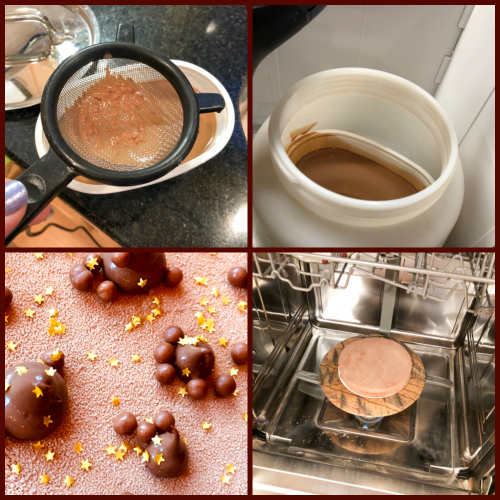
Turn out the frozen cake and spray immediately with a light coating of white chocolate suspension.  Melt the reserved mango gelatin very gently, and spoon some in the center of the mold. Keep in the fridge for at least 4 hours before serving. Decorate with caramel-coated hazelnuts.

ENJOY!

to print the recipe, click here
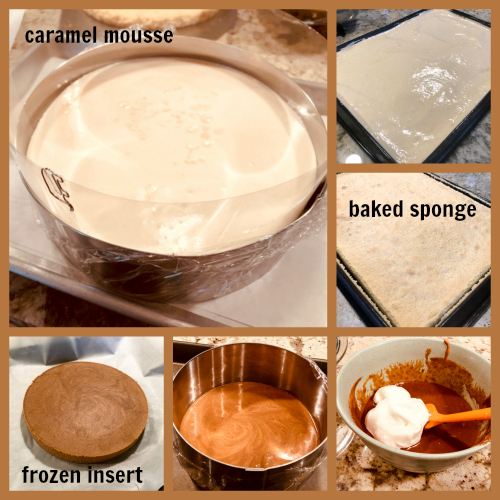
Comments: I am very happy with the flavors and textures of this baby. The tricky part of this type of dessert is assembling it, because it’s a process that is a bit “in the dark”, so to speak. With a regular layered cake, you can visualize the layers well, because you either bake them individually or cut slices from a bigger cake. As the cake is assembled, it is also easier to judge how much filling to add so that the layers end up as uniform as you want them to be. In mousse cakes like this one, it becomes a bit of a guessing game. For instance, how much to allow the insert to sink in, how to make sure it is properly leveled,  how to prevent large air bubbles to form, or to make sure the sides are smooth.  Small details can go wrong, but you may not realize until unmolding the frozen cake next day. Talk about cake-anxiety…  😉

You can see that part of the mango insert got a little wavy. That happened because when I first made the insert and set it in the fridge overnight, the pan got a bit tilted and I had to melt the layer again and re-freeze it, not an ideal situation. Lesson learned.  It is crucial to have space in your freezer that allows all components to lay flat and absolutely leveled.

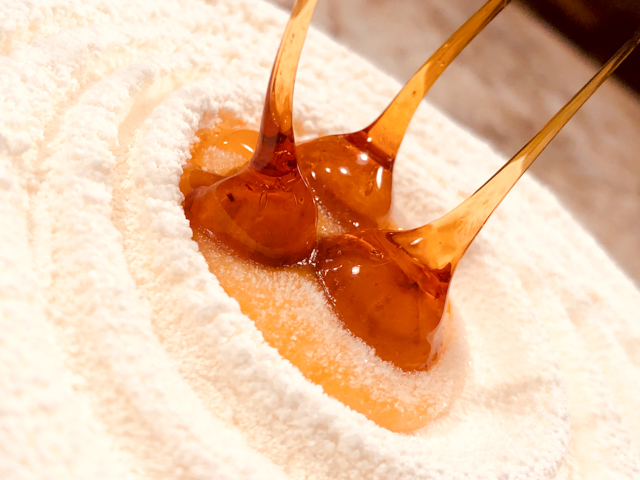
The most fun part? Making the hazelnut with the pointy caramel bits. I followed the method described in Martha Stewart’s site, and it worked like a charm. My only advice is that you make more hazelnuts than you need. Some end up cracking as you stick the skewer, so it’s better to start with more. Also, some might roll a bit as the caramel drips compromising the shape of the drip. It is very important to let the caramel rest before coating the hazelnuts, but once it reaches the right viscosity, you must work fast. It is possible to re-warm the caramel briefly to continue using it, but it’s a bit of a hassle. I prefer to hit that magical point and work with it right away.

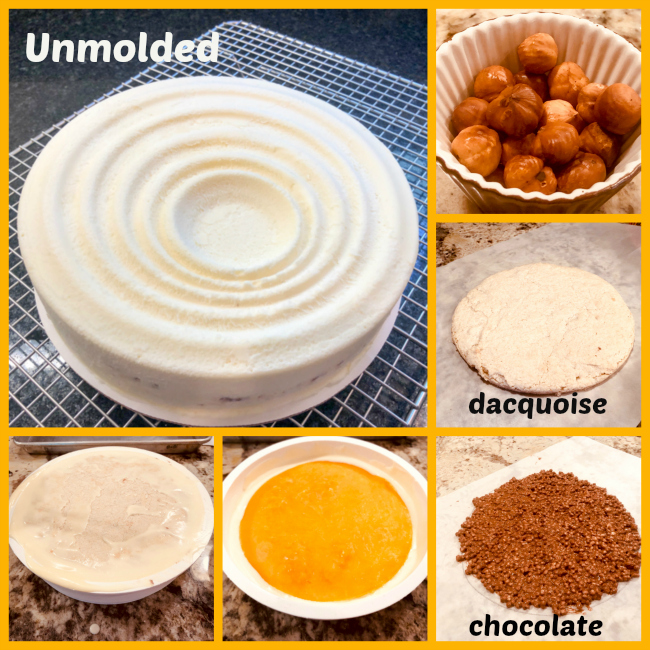
Finally, don’t let the lack of a Silikomart mold stop you from making this dessert. A simple ring or springform pan will work, as long as you have a second ring with smaller diameter to form the insert. And the velvet coating is also optional (although you can also buy a spray can with the suspension ready to use; be ready for sticker shock!). The surface is very smooth to start with (see the large photo in the composite picture), so you could leave it as it is, or melt some white chocolate and drizzle it all over the top, in a Pollock-manner.  You could dye the chocolate orange and then add the hazelnuts here and there.

ONE YEAR AGO: Lebanese Lentil Salad and a Cookbook Review

TWO YEARS AGO: Cottage Loaf

THREE YEARS AGO: Sourdough Loaf with Cranberries and Walnuts

FOUR YEAR AGO: Sichuan Pork Stir-Fry in Garlic Sauce

FIVE YEARS AGO: Our Green Trip to Colorado

SIX YEARS AGO: Ditalini Pasta Salad

SEVEN YEARS AGO: Celebrate Wednesday with a Thai Seafood Curry

EIGHT YEARS AGO:  Post-workout Breakfast

NINE YEARS AGO: Semolina Barbecue Buns

TEN YEARS AGO: Lavash Crackers


THE BEWITCHING KITCHEN TURNS 10! (AND A GIVEAWAY)

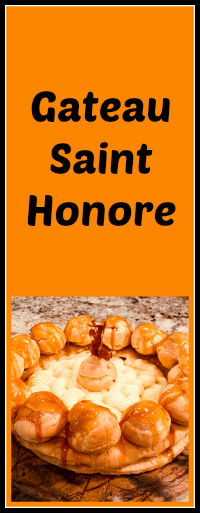
Ten years. I have a hard time even finding what to say. It is true that I tend to stick with routines, but I’m a bit surprised not only that I’ve reached the 10 year mark, but that I still love food blogging. More now than ever, actually. My interest in baking has a lot to do with it, obviously, but it goes beyond that. I like the feeling of having formed a community of readers, many of them food bloggers also, who always cheer me up with comments, feedback and inspiration. Ten years. More than 1,200 posts. It blows my little mind. To celebrate the occasion, a cake is obviously needed. It had to be special. I chose a cake I’ve been in love with for my whole life, but felt a bit intimidated until now to make it from scratch. Gateau Saint-Honore, a true classic in French patisserie. Light it is not, but festive? Festive is its middle name.

GATEAU SAINT-HONORE
(from Helen Fletcher’s Pastries like a Pro)

Lightened Pastry Cream
2 teaspoon gelatin
1 + 1/2 tablespoons cold water
2 + 2/3 cup milk, hot
8 egg yolks
1 cup sugar (200 grams)
6 tablespoons flour (60 grams)
2 teaspoons vanilla extract
1 cup heavy cream

Soften the gelatin in the water and set aside. Whisk the egg yolks and sugar together in a non-reactive saucepan.  Whisk in the flour.  Add the milk slowly, whisking well and scraping the corners of pan with a rubber spatula to make sure all of the egg yolk mixture is incorporated.

Place over medium heat and, stirring constantly, bring to a boil.  Boil for 1 minute, stirring constantly.  Remove from the heat and add the vanilla.  Tear the gelatin into small pieces and stir it into the hot liquid (there is no need to liquefy it, the heat of the mixture will do this for you).  Pour into a storage container, cover the surface with plastic wrap, poke a few holes in it and refrigerate overnight to chill.

Slightly whisk the pastry cream to soften it.  Whip the cream to stiff peaks.  Fold into the pastry cream.  The mixture is ready to pipe.

Basic Choux Pastry
1/2 cup water
4 tablespoons butter (60 grams)
1/4 teaspoon salt
3/4 cup sifted bread flour (100 grams)
3 whole eggs
1 + 1/2 tablespoons beaten egg (about half of a beaten egg)

Heat the oven to 400 degrees. Prepare two baking sheets with parchment paper. Draw a 10 inch circle on one piece of parchment. Set aside.

Combine the water, butter and salt in a small, heavy saucepan.  Heat until the butter is melted and bring to a rapid boil. Add all the flour at once and stir rapidly until a large ball of dough forms that cleans the bottom and sides of the pan.With the pan still over heat, mash and flatten the panade with a spoon against the bottom of the pan.

Stir, bringing the bottom of the mixture to the top. Continue turning the panade and mashing it for 1 full minute. Remove the mixture from the heat and flatten it again in the bottom of the pan. Cool for 5 minutes. Place the panade in a food processor or the bowl of a mixer fitted with a paddle. Add the eggs and beaten egg. Process or mix until completely blended and a smooth paste forms.

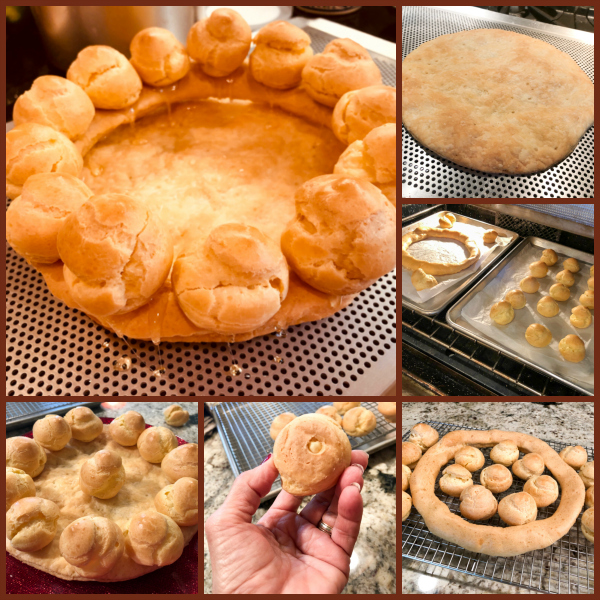
At this point, gently wad up the parchment and soak in warm water for 5 to 7 minutes.  When finished, gently shake off some of the water, but not all of it.  Place on the baking sheet.  Fit a pastry bag with a #8 plain tip and fill the bag with the choux paste.  Pipe the choux paste on the inside of the circle. With the remaining paste pipe 20 walnut size puffs onto the second baking sheet after soaking it also. With a wet finger, lightly press down the pointy tops so they are round.

Bake for 25 minutes or until a deep golden brown. Cool completely.

Pate Brisee
3/4 cup sifted all-purpose flour (85 grams)
1/3 cup sifted cake flour (35 grams)
1/2 teaspoon salt
7 tablespoons butter, cut in small pieces and refrigerated (105 grams)
2 tablespoon beaten egg
1 teasoon lemon juice
2 tablespoons ice water

Heat oven to 375 degrees. Line a baking sheet with parchment paper.

In a processor bowl fitted with the steel blade, combine the flours and salt; process briefly to mix.   Add the butter and place in a circle over the flours. Pulse until the butter is cut into large pieces.

Mix the egg, lemon juice and ice water. Pour over the flour/butter mixtureand pulse until it lumps together in its about the size of peas. Do not over-procress and especially don’t let it form a ball.  Pour it out onto a work surface lightly dusted lightly with flour and push together into a ball. Form into a thick disc.

Wrap in plastic wrap and refrigerate for at least 30 minutes before rolling. Roll into a round about 11 inches. Trim the dough into a 10 1/2 inch round. Place on a parchment lined baking sheet, dock with a fork and refigerate about 30 minutes or until it is firm. Bake for 20 to 25 minutes until golden, firm and crisp. Cool completely.

Assembling the cake.
Place the pate brisee base on a 10 inch round.   Set aside. Fit a pastry bag with a #2 plain tip. Make a hole in the bottom of each puff with a toothpick or cake tester. Enlarge it so the pastry tip will fit inside the puff.  Fill the bag with pastry cream and pipe the cream into the puffs.  Clean the bottom off so no cream oozes out.   Set aside. Reserve the remaining pastry cream.

Make the caramel below.

Caramel
1/2 cup water
2 cups sugar

Place the water in a small saucepan. Add the sugar. Bring to a boil. Wash down the sides of the pan with a brush dipped in cold water. Boil the syrup hard until it just starts to color. At this point you must work quickly.  The syrup will continue to color as you work. With a spoon dipped in the hot caramel, drizzle caramel around the edges of  the pate.

Quickly place the choux paste ring on top of the base. Working quickly and carefully, dip the bottom of the small puffs in the caramel and attach them to the top of the choux ring.  Quickly and very, very carefully dip the bottom of a small puff in the caramel and place it on the ring. Continue until the ring is covered with puffs.

Finishing the Gateau St. Honore
1/4 cup water
1 cup sugar

Place in a small saucepan.  Prepare as above for the Caramel.  However, this time take it to a dark amber. Cool for 30 to 40 second and Immediately spoon it over the puffs.

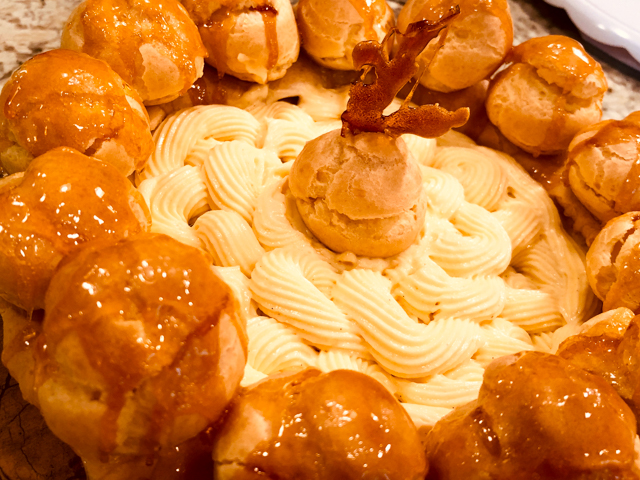
Fill the inside of the ring halfway up with pastry cream.Fit a pastry bag with a #8 open star tip and fill with the remaining pastry cream. Pipe large swirls over the pastry cream. Refrigerate for a few hours before serving.

ENJOY!

to print the recipe, click here

Comments: I wanted to use a tried and true recipe from an author I trust. Helen Fletcher’s recipes never disappoint me. Keep in mind that there are quite a few variations of this amazing gateau. For starters, the base can be either laminated dough or a pate brisee. The former is obviously a lot more involved, and the method changes also, because when using laminated dough the whole thing is baked together at the same time – the ring and usually additional inner circles (think of them as a maize) piped over the base. They add a bit more pastry component under the creamy topping. When using pate brisee, the ring is baked separately and later “glued” to the base with caramel.  For my first attempt, I opted for pate brisee.  I made it in a particular weekend in which I went into crazy baking mode. It was…  intense to say the least. So pate brisee it was.

The traditional cream is a Chibouste, patisserie cream lightened up with what is essentially a meringue. That was how the cake was designed back in 1847 in the bakery at Rue St Honore in Paris. I used whipped cream, following Helen’s recipe.  It is – if you can believe it – a bit richer. But a 10th blog anniversary does not come often.  You do need something to lighten up the patisserie cream, otherwise the dessert would feel quite heavy and dense. Plus, you cannot really pipe “cream pat” (yeap, we are besties).

It is now full disclosure time. If you’ve been around my blog for a while, you should know that rarely patisserie stuff goes in smooth-mode with Sally.  Take a look at the central choux puff. It is bald. I had saved the sexiest of them all for the center stage, and of course that was the one who did not get the final caramel glaze.  I howled in shock when I noticed. But having been through a few ordeals with the preparation of the caramel, I could not bring myself to make more to coat just that one. Plus, I thought that some spun sugar carefully placed all over it would look nice and hide its nakedness.  Spun sugar.  Do you see ANY spun sugar on my gateau? No you do not. (pause to sob). I tried. I tried four times. I followed youtube instructions, I used thermometers, I burned fingers. The only thing spun was my brain. The mess in the kitchen? Unreal. I managed to come up with some abstract caramel thingie to stab on decorate the naked puff, and pretended that was my intention from the beginning. So I now desperately need to conquer the spun. I lose battles. But I refuse to lose the war.

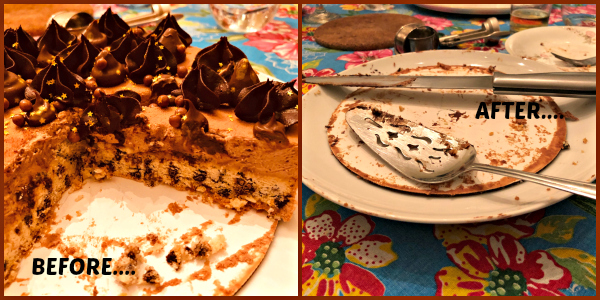
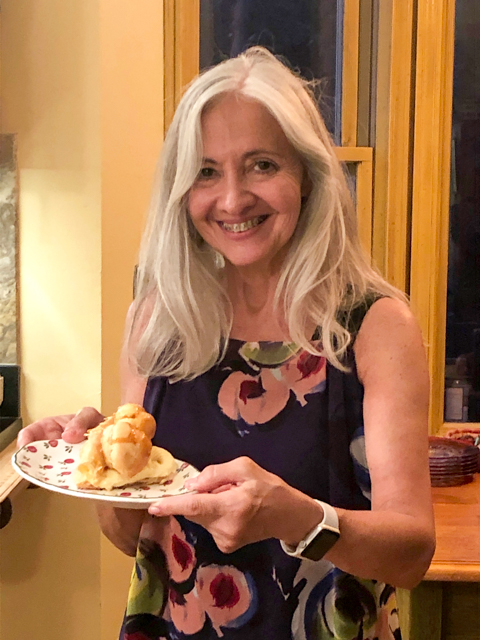
Decoration messed up or not, it did not matter. The picture below shows all that was left from the cake by the time a get-together for some Tesla-afficcionados was over. The cake was delicious, even if I say so myself. It is of course, very rich, but it feels light and airy, not sure how that is even possible, having witnessed the amount of eggs, butter, and sugar involved. Let’s call it a French Miracle.

And now for the giveaway… It is a wonderful book that I believe will have even patisserie-phobes grabbing a whisk and marching to the kitchen with a big confident smile. The title says it all: Patisserie Made Simple. And it delivers what it promises.

I love this book, and if you would like a copy, I will enter you in the giveaway if you leave a comment. No matter where you live, I will ship it to you if you win it. I will reveal the winner on June 30th.

I want to thank all  who  enjoy hanging out here in this virtual spot, and invite you to follow with me as I start my  second decade of food blogging. Ten years… oh, my!

ONE YEAR AGO: The Bewitching Kitchen turns 9!

TWO YEAR AGO: The Bewitching Kitchen turns eight!

THREE YEARS AGO: The Bewitching Kitchen Turns Seven!

FOUR YEARS AGO: Bewitching Kitchen Turns Six!

FIVE YEARS AGO: The Bewitching Kitchen turns Five!

SIX YEARS AGO: The Bewitching Kitchen turns Four!

SEVEN YEARS AGO: The Bewitching Kitchen Turns Three! 

EIGHT YEARS AGO:  The Bewitching Kitchen turns Two!

NINE YEARS AGO:  Bewitching Birthday!

TEN YEARS AGO: Welcome to my blog!


COMMON TABLE, SOMETHING NEW IN MY LIFE

It is quite obvious that I love to bake. From cakes to cookies, from bread to pies, I love it all. Last year I got a lot more serious about my hobby, as I went through the process of screening for the Great American Baking Show (you can read about it here, in case you missed it).  When that did not materialize I kept searching for an outlet for my baking, something that would keep me focused on it and help me improve. It took a bit long, but I’ve finally found it: Common Table, a meal for homeless people organized by volunteers and churches from our town.  They serve meals a few times each week, I’ve been taking my bakes on Fridays. It is the most rewarding and satisfying thing I’ve done in a while. I enjoy everything about it, planning what to take, baking, and finally delivering my bakes in the meal room, at 17:45hs, when folks are starting to arrive. I had no idea so many people rely on this type of charity to get by. Probably the only chance they have for a decent meal. I feel lucky to be able to help.

I share today the recipe I took on my first participation (April 26th) and after that a list of what I’ve made so far.  It would be pointless to blog on each of them, unless I wanted my blog to turn into a baking site at the expense of general cooking, which is not my intention.

COCONUT TRES LECHES CAKE
(adapted from this recipe)

for the cake:
1 cup all-purpose flour (130 g)
1-1/2 teaspoon baking powder
1/4 teaspoon salt
5 whole eggs, at room temperature
1 cup sugar, divided (215 g)
1 teaspoon vanilla
1/3 cup milk (82 g)

for soaking after baking:
6 oz coconut milk (1/2 can, well-shaken)
1 can sweetened, condensed milk
1/4 cup heavy cream

for the icing:
1 pint heavy cream
3 Tablespoons Sugar

Heat oven to 350 degrees. Spray a 9 x 13 inch pan liberally until coated. Combine flour, baking powder, and salt in a large bowl. Separate eggs.

Beat egg yolks with 3/4 cup sugar on high-speed until yolks are pale yellow. Stir in milk and vanilla. Pour egg yolk mixture over the flour mixture and stir very gently until combined.

Beat egg whites on high-speed until soft peaks form. With the mixer on, pour in remaining 1/4 cup sugar and beat until egg whites are stiff but not dry. Fold egg white mixture into the batter very gently until just combined. Pour into prepared pan and spread to even out the surface.

Bake for 35 to 40 minutes or until a toothpick comes out clean. Turn cake out onto a rimmed platter and allow to cool.

Combine condensed milk, coconut milk, and heavy cream in a small pitcher. When cake is cool, pierce the surface with a fork several times. Slowly drizzle all but about 1/3 cup of the milk mixture—try to get as much around the edges of the cake as you can.

Allow the cake to absorb the milk mixture for 30 minutes. I actually allowed it to sit in the fridge overnight, lightly covered with aluminum foil. To ice the cake, whip the heavy cream with the sugar until thick and spreadable.

Spread over the surface of the cake, you might not need all the amount made, but a thick layer of icing should be your goal. Decorate cake if you like, with toppings of your choice. Cut into squares and serve.

ENJOY!

to print the recipe, click here

Comments: I chose this cake for my first contribution to Common Table because it was by far the most popular cake I’ve ever made to our department. I was curious about adding a hint of coconut to it, and when I tried a bit of the cake trimmings, I knew it was going to be another winner.  It was very well-received in that meal. If you like Tres Leches, try this version, you won’t be disappointed.

And now, let me share the bakes I’ve made since then…

Millionaire’s Shortbread Bars
(May 3rd)


Raspberry-Rose Petit Fours
(May 10th)


Chocolate Cake Pops

(May 17th)


Chocolate Raspberry Celebration Cake
(a smaller version of this one)

(May 24th)

Chocolate Blood Orange Curd Cake
(May 31st)


Come to think of it, it’s clear I’ve been playing the chocolate tune quite strongly…
Must add a bit more variety from now on.
😉

ONE YEAR AGO: The Daisy, a Bread with Brioche Alter-Ego

TWO YEARS AGO: Pork Tenderloin, Braciole Style

THREE YEARS AGO: Raspberry Buckle

FOUR YEARS AGO: Seafood Gratin for a Special Dinner

FIVE YEARS AGO: Cooking Sous-Vide: Sweet and Spicy Asian Pork Loin

SIX YEARS AGO:  Farewell to a Bewitching Kitchen

SEVEN YEARS AGO: In My Kitchen. June 2012

EIGHT YEARS AGO: Goodbye L.A.

NINE YEARS AGO: 7-6-5 Pork Tenderloin


CHOCOLATE CELEBRATION CAKE

If you are a serious chocolate lover and have a special occasion coming up – a birthday, anniversary, or a dinner party for dear friends – this cake is for you. All components can be made in advance if you prefer, although I would advise you to bake the decorative Jaconde layer on the day you intend to assemble the cake. It is a very delicate component, I would be a bit worried about keeping it in the freezer or fridge for a while. Raspberries mellow the overall sweetness in a nice way.

CHOCOLATE CELEBRATION CAKE
(inspired by many sources)

for the decorative layer:
50 g butter
56 g powdered sugar
60 g egg whites
56 g all-purpose flour
25 g cocoa powder

Mix the butter and sugar in a Kitchen Aid type mixer with the paddle attachment until creamy. Add the egg whites very slowly, a little at a time. Clean the sides of the bowl often. Add the flour and cocoa powder and gently mix on very low-speed. Spread on a silpat or parchment paper using a spatula. Aim at a very thin layer. Using a comb, make diagonal stripes removing the paste, exposing the paper underneath.  Freeze for 10 minutes (or longer, overnight is fine)

for the Jaconde layer:
65 g powdered sugar, sifted
36 g all-purpose flour
65 g almond flour (or ground almonds)
100 g whole eggs
120 g egg whites
30 g granulated sugar
75 g unsalted butter, melted and cooled

Heat the oven to 400 F. Add powdered sugar, flour and almond meal to the bowl of a mixer. Mix gently to incorporate them.  Add the eggs and beat on high-speed for about 5 minutes, until very fluffy. Reserve.

Make a meringue with the egg whites and sugar, bringing it to soft peaks. Start with the egg whites in the mixer on low-speed, increase to medium, once you see a trail forming as the mixer is going, start adding the sugar slowly.  Once you get to soft peaks, stop. Over-beating the meringue will make it hard to incorporate it in the cake batter.  Gently fold the meringue on the egg-flour mixture that you reserved.  Add a bit of the mixture to the bowl with melted butter, mix gently. Pour that into the cake batter and gently fold.

Remove the design from the freezer, pour the batter over it, trying to level it as best as you can with an off-set spatula. You want to keep the air incorporated in the batter, so be gentle. Run the spatula just over the surface, you don’t want to risk disturbing the pattern underneath it.

Bake for 12 to 14 minutes. You need to start noticing a little browning on the surface, but not much. If you notice the edges getting crunchy, remove from the oven. Let it cool before proceeding. Invert on a flat surface covered with parchment paper, and remove the paper that held the design during baking.  Reserve.

for the chocolate cake:
55 g  unsalted butter; plus more for the pans
230 g egg yolks
140 g granulated sugar
15 g cocoa paste, chopped
80 g cake flour
35 g cocoa powder
190 g egg whites
Pinch of cream of tartar
A pinch of salt
30 g granulated sugar

Heat the oven to 350 F. Prepare the cake pans by lining them with parchment paper. Grease just the center of the paper.

Place the egg yolks in the bowl of the stand mixer fitted with the whisk attachment, and mix on medium speed while gradually pouring the 140 g sugar. Once all the  sugar is added, increase speed to high and whisk until it forms a ribbon (this will take several minutes, keep going, there is no risk of over-beating egg yolks).

While the egg yolk mixture is mixing, melt the butter in a small saucepan; remove from the heat. Add the cocoa paste, stir gently until fully melted. Reserve to cool slightly. Sift together the flour and cocoa powder; set aside on a piece of parchment paper to make it easier to add to the mixer bowl later.

In a clean mixer bowl, combine the egg whites, cream of tartar, and salt and mix on high speed. When the whites are foamy, slowly add the 30 g (about 2 tablespoons) granulated sugar, and then whip to medium-stiff peaks.  At this point you do not want to risk over-beating the whites, because they will be tough to incorporate with the cake batter if they are over-beaten. If in doubt, beat less rather than more.

Fold the butter and cocoa paste mixture and one-third of the dry ingredients into the egg yolk mixture until barely combined. Continue folding in the dry ingredients in two more additions, stopping just before the dry ingredients are incorporated. Add one-third of the meringue and fold until just combined. Then pour the barely-mixed chocolate mixture into the remaining meringue and fold until the batter is almost homogenous, but do not overmix.

Evenly divide the batter between the cake pans and bake for about 25 minutes, until the top springs back when pressed lightly. Allow to cool to room temperature before inverting and removing from the pans.

for the cremeux filling:
2 g sheet gelatin
300 ml heavy cream
70 g  egg yolks,
45 g granulated sugar
Pinch of table salt
115 g  chocolate (preferably 70% cocoa)
fresh raspberries

Put 10 g (2 teaspoons) cold water in a small bowl. Use scissors to the gelatin sheet into small pieces so they fit inside the bowl. Submerge the gelatin in the water; set aside to bloom.

Combine the cream, yolks, sugar, and salt in a saucepan, and stir well to combine. Cook the mixture on medium-high heat, stirring constantly with a whisk at first and then switching to a spatula. Continue cooking, stirring constantly, until the mixture reaches 158-162 F, then immediately remove it from the heat. Add the gelatin and stir until it is completely dissolved.

Put the chocolate into a large bowl. Pour the hot cream mixture over the chocolate; let sit for a minute to melt the chocolate. Whisk to combine, then use an immersion blender to emulsify completely. Refrigerate, without a lid, and allow to set fully for several hours. You can make it the day before.

for the buttercream frosting:
150g softened butter
400g icing sugar
200ml heavy cream
150g dark chocolate (melted, and cooled slightly)
4 tbsp cocoa powder
golden sprinkles for decoration (optional)

Combine the butter and icing sugar in the bowl of a Kitchen Aid mixer fitted with the paddle beater. Beat until well combined, adding the cream slowly once the mixture starts to be homogeneous.  Add the melted dark chocolate and the cocoa powder then beat vigorously until smooth and workable. Place in a piping bag fitted with the tip of your choice, I used Wilton 1M.

Assembling the cake: Place the cake on a board over a rotating cake support. Add a ring of chocolate buttercream around the edge of the cake to retain the filling. Place a good amount of chocolate cremeux  covering the cake layer, then add fresh raspberries. Place the second cake (cut side up) on top, press gently. Spread a thin layer of chocolate buttercream on top and sides. Now very carefully measure the height of the cake.

Cut the Jaconde layer to be just a tad taller than the cake when rolled around it. You should have more than enough to go around the cake using two pieces of Jaconde. For an 8-inch cake, you need about 25 inches total, so cut one layer as big as you can, and use a smaller portion to fill the gap. Press gently to make sure it glues well to the side of the cake. Don’t forget, the pattern should face the outside of the cake (yes, stuff happens).

Pipe decorative stars all over the top with the buttercream, sprinkle with golden stars, if that suits your taste. Refrigerate for several hours before slicing.

ENJOY!

to print the recipe, click here

Comments: I enjoy the process of making decorated Jaconde, but let me be brutally honest: it is messy. I don’t care how neat of a cook you are, it will be messy. You need the pattern to go all the way outside the parchment paper, because it is best to maximize the area of cake with good, solid pattern on it. At least for my skill level, boo-boos happen here and there. The pattern must be frozen before adding the cake on top, so make sure you have space in your freezer to lay a baking sheet flat with the paper on top.

I’ve made a patterned Jaconde in the past, but with a stencil. Having used this method now, I believe the stencil is easier, because it is hard for the comb to remove the batter efficiently. Sometimes I had to spread the batter with the spatula and pass the comb twice or three times until I got a nice, clean surface underneath. By doing that, it’s hard to get stripes that are identical in width. The end result will be a bit more rustic, just keep that in mind. Nothing wrong with rustic. Right? I thought so.

The cake is obviously very rich and feels pretty decadent, a small slice will be enough. I thought it was very delicious, the buttercream does not taste overly sweet. A few little tweaks could be considered for a next version: the pattern could be red to reflect the fruit inside, and in addition to fresh raspberries in the filling, I would add a spread of raspberry jam on the cake before spooning in the cremeux. Finally, perhaps adding a few fresh raspberries in the middle of the piped frosting could be cute, making the piped stars to be similar in size to the berries. The golden star-shaped sprinkles? They stay in any version, I am quite fond of them.


ONE YEAR AGO: Incredibly Simple Times Four, May 2018

TWO YEARS AGO: Tangential Quiche with Asparagus and Fennel

THREE YEARS AGO: Fakebouleh

FOUR YEARS AGO: Yellow Squash Soup

FIVE YEARS AGO: Grilled Chicken with Tamarind and Coconut Glaze

SIX YEARS AGO: Chicken-Apricot Skewers

SEVEN YEARS AGO:  Asparagus Quiche

EIGHT YEARS AGO: Two-stage Pea and Prosciutto Risotto

NINE YEARS AGO: Mellow Bakers: Corn Bread


A BRAZILIAN HUMMINGBIRD

Hummingbird Cake is a classic concotion quite common in Southern regions of the US. Today I share with you my Brazilian take on this classic, which I am calling Beija-Flor Cake. As you may have guessed, Beija-Flor is Portuguese for hummingbird. A three-layer cake very moist with banana, mango, and passion fruit, with a bit of texture given by Brazil nuts. Everyone loved it, including the resident critic, grandson and son of fantastic bakers, the man I married 19 years ago.  He actually said (and I should have captured it in a video) that the frosting was as good as his Grandma’s.  My heart missed 3 beats in a row. Obviously, I am very happy with this bake!

BEIJA-FLOR CAKE
(from the Bewitching Kitchen, inspired by this recipe)

recipe is enough for 4 cakes,  only 3 cake layers were used for the final dessert)

1 + 1/4 cup chopped Brazil nuts
3 cups (370g) all-purpose flour
1 teaspoon baking soda
1 and 1/2 teaspoons mixed spice (or use cinnamon plus a touch of cloves)
1/2 teaspoon salt
1 cup mashed banana
1 cup mango coarsely pureed
½ cup passionfruit pulp
3 large eggs, at room temperature
1/2 cup grapeseed oil
1 cup (200g) packed brown sugar
3/4 cup (150g) granulated sugar
1 teaspoons vanilla paste   

Heat the oven to 300°F. Spread Brazil nuts onto a lined baking pan. Toast for 8 minutes. Remove from the oven. Turn oven up to 350°F, then grease and lightly flour four 6-inch cake pans.

Whisk the flour, baking soda, mixed spice and salt together in a large bowl. Whisk the rest of the cake ingredients in a medium bowl. Pour wet ingredients into dry ingredients and whisk until completely combined. Fold in the nuts. Spread batter evenly between the 4 prepared cake pans. Bake for 25-30 minutes or until a toothpick inserted in the center comes out clean.

Remove cakes from the oven and allow to cool completely in the pans set on a wire rack. Once completely cooled, remove cakes from pan and level the tops off if necessary to make them completely flat.

CREAM CHEESE FROSTING
(adapted from Sweet Bake Shop)  

2 cups (450 g) unsalted butter, room temperature
½ cup (110 g) cream cheese, softened
5½ cups (700 g) confectioners’ sugar
1 teaspoon pure vanilla extract
2 to 3 drops yellow and orange gel food dye
¾ cup yellow and orange sprinkles

In the bowl of a stand mixer fitted with the paddle attachment, beat together the butter and cream cheese on medium speed until smooth.

With the mixer running on low-speed, slowly add the confectioners’ sugar. Add the vanilla, then turn the mixer up to medium speed and beat until light and fluffy, about 2 minutes. Stop the mixer and scrape down the sides and bottom of the bowl, then beat again on medium speed again for a few seconds. Use immediately or store in the fridge for a couple of days.

CAKE ASSEMBLY:  Place 3/4 cup frosting in a small bowl and dye it yellow. Place 3/4 frosting in another small bowl and dye it orange. Prepare two small piping bags (with no icing tips) containing the two colors, each in one bag. Carefully cut the tips with scissors, and place them delicately in a larger piping bag fitted with a 1M tip or any other tip of your choice. Make sure the opening of both bags are at the same distance of the 1M tip. Test that both colors are coming out together. Reserve.  Add sprinkles to the rest of the frosting that was not dyed.

Place the first cake on a board, cut side up.  Add a layer of frosting with sprinkles. Add another cake on top, cut side up.  Spread a bit more frosting, top with the final cake, cut side down (this makes sure that the top will be smooth and leveled).  Add a thin layer of frosting and refrigerate the cake for 30 minutes, or place in the freezer for about 10 minutes to set the frosting.

Frost the cake, top and sides, then use the two-color frosting to pipe decorative swirls on the bottom and top.  Refrigerate and bring to room temperature 30 minutes before serving.

ENJOY!

to print the recipe, click here

Comments: Hummingbird Cake originated in Jamaica, containing banana and pineapple as the main flavors, plus pecans and spices such as cinnamon and cloves. It is normally covered with cream cheese frosting. I wanted to make a version with Brazilian flavors, so I used mangos and passionfruit. I kept the banana component since I imagined it would be important in the texture of the cake.  Brazil nuts seemed a natural choice, and with that in mind, my “Beija-Flor Cake” was born. In the composite below, you can see that the cake is not as massive as it might seem.  It is not a small cake, but definitely not humongous. See the little yogurt bottle next to it for perspective.

Traditionally, Hummingbird Cakes have a homey, rustic look which I find quite appealing, but I wanted to try something a bit different, and opted for a smooth frosting with yellow and orange sprinkles to reflect the fruits used in the cake. A small amount of sprinkle-free frosting was dyed in the same two colors and used for piping. The frosting is very easy to make and much more forgiving to spread than a classic buttercream, so if you are absolutely paranoid about a bit afraid of frosting a cake, this is a very good starting point.

My apologies for not showing the picture of a slice. We cut one slice to “test-taste” it the evening before, but the first slice never cuts too well. We took the cake to the department next morning, and I completely forgot all about it. By the time I got to the mail room hoping to snap a picture, it was too late. It was a big hit with our colleagues and graduate students. I liked how moist and flavorful it turned out, but in my opinion the passionfruit flavor was not prominent enough. Next time I will skip the banana, and maybe stick with two fruits only, for instance mango and passionfruit. Those are the ideas floating in my mind for a new version. The frosting will stay exactly the same.  A total winner, that will show up again in future bakings. You can count on that.

ONE YEAR AGO: A Cookbook Review

TWO YEARS AGO: Air-Fried Carrots, Two Ways

THREE YEARS AGO: Sweet Potato Crust Quiche

FOUR YEARS AGO: Chicken Thighs with Artichokes and Capers

FIVE YEARS AGO: Pea Pancakes with Herbed Yogurt

SIX YEARS AGO: Mushroom Stroganoff

SEVEN YEARS AGO: Tomato Sourdough

EIGHT YEARS AGO: Gamberetti con rucola e pomodori

NINE YEARS AGO: Flirting with Orzo