Levain Bread with Caramelized Onions

I am beyond excited about this bread for three reasons: first, it is….. it is…. (drum roll)….. my own recipe!!!! Second, I am entering it in a “Bread Contest” launched by Jackie, from Pham Fatale.   I hope you will have a moment to visit her site on October 1st to see all breads and vote for your favorite.  Third, I am submitting it for this week’s Yeastspotting, my third contribution to Susan’s event.

Of course, for the most part a “new recipe”, is an oxymoron, because almost all are variations on previous themes, and this bread is no exception. I played around with a basic sourdough formula that I’ve used countless times (from Hamelman’s Bread). It uses wild yeast as the sole leavening agent.   I put my very own 1.5 year old starter to work (I call him Mr. Dan), together with white and spelt flour, plus caramelized onions and a small amount of goat cheese in the dough, to balance the sweetness of the onions. I can’t thank Jackie enough for this contest, that gave me a big push to create a bread recipe; I look forward to seeing all the entries.

onionloaf

LEVAIN BREAD WITH CARAMELIZED ONIONS
For the caramelized onions:
2 medium yellow onions, sliced very thin
large pinch of salt
1 T olive oil

For the bread:
330g bread flour
45g spelt flour
185g mature liquid starter
185g filtered water, at room temperature
1 + 1/4 tsp sea salt
85g caramelized onions, cut in small pieces
20g goat cheese, cut in small chunks

Caramelize the onions by sauteeing the slices in olive oil with the salt until they are dark golden. Sautee them slowly over low heat, stirring from time to time to prevent burning. It took me about 40 minutes.  Don’t  rush this process.  Drain the onions of excess oil on a sieve, then cool them and cut into pieces.

Refresh your starter two to three times over the previous couple of days to make sure it’s very active. Do the last refreshment 8 hours before making the dough.

Add all the ingredients (except onions and cheese) to the bowl of an electric mixer and mix on first speed for 3 minutes. Check the hydration: if too sticky add a little more bread flour. Mix for 3 minutes more on second speed. Add the onions and cheese, and mix until incorporated. At this point, depending on the amount of moisture in your onions, you might have to correct the hydration. My dough needed almost 2 full tablespoons of flour.

Place the dough in a bowl coated with a spray of olive oil, allow it to ferment for 2.5 hours, folding the dough at 45 minutes, 1.5 hours, and 2 hours and 15 minutes. After the last folding, wait for 15-20 minutes and form a “boule”. Place it in a banetton or other recipient of your choice, and retard it in the fridge for at least 8 hours. (You can see pictures of how to fold the dough in one of my previous posts)

Remove the dough from the fridge and allow it to sit at room temperature for about 2 hours. Bake it at 430F for 45-50 minutes. A clay pot is perfect for this kind of bread. Place it  in the cold oven, when the oven is ready,  remove the lid (with oven mittens) and quickly dump the dough inside, make a couple of quick slashes, and close the lid.   After 30 minutes, remove the cover  to brown the crust. Internal temperature should be at least 200F.

Place it on a rack to cool for 2 hours before slicing. (I know this isn’t easy, but it’s essential to avoid a gummy crumb).

ENJOY!


jump for more photos and final comments

BBA#19: MARBLED RYE

loafready

After a bunch of nice breads in the BBA challenge, it was bound to happen.  Let’s just say that I have “issues” with this recipe.  In practice, it was not too different from the previous assignment (light whole wheat bread), except that such rye-containing doughs should not be kneaded very long, or they become gummy.

For Marbled Rye you prepare two batches of dough, one that gets a darker color from  the addition of caramel coloring or coffee. I chose coffee.  The first thing that I noticed was that my darker dough was not dark enough, but at that point it was too late and I couldn’t do anything, as the texture seemed perfect. I took a deep breath and moved on.

double_opt

I formed the loaf, placed it in the pan, and it rose beautifully….

risen1

I recommend accepting Reinhart’s advice and shaping it free-form. My pan was not big enough, and the bread ended up with a boxy shape.   But, the most important thing for a marbled rye, is the marbling!  Which  in my case didn’t exist.  It just wasn’t there, it wasn’t anywhere!

withbook

I’m accepting names for my fiasco, which tasted pretty good, if that’s any consolation…  “Blobbed Rye”, “Faint Marbled Rye on Drugs”, “Drunk Baker’s Marbled Rye”…

blobby

With my self-confidence bruised, I will move on.

Nineteen breads down, twenty-four to go….

Please make sure you check the other bakers who already made this bread, and did a much better job than me:

Carolyn and Joe from Two Skinny Jenkins

Deborah, from Italian Food Forever

Mags, from The Other Side of Fifty

Oggi, from I Can do That

Txfarmer, with her gorgeous website in Chinese

Paul, from Yumarama Artisan Bread

BBA#18: LIGHT WHOLE WHEAT BREAD

cover
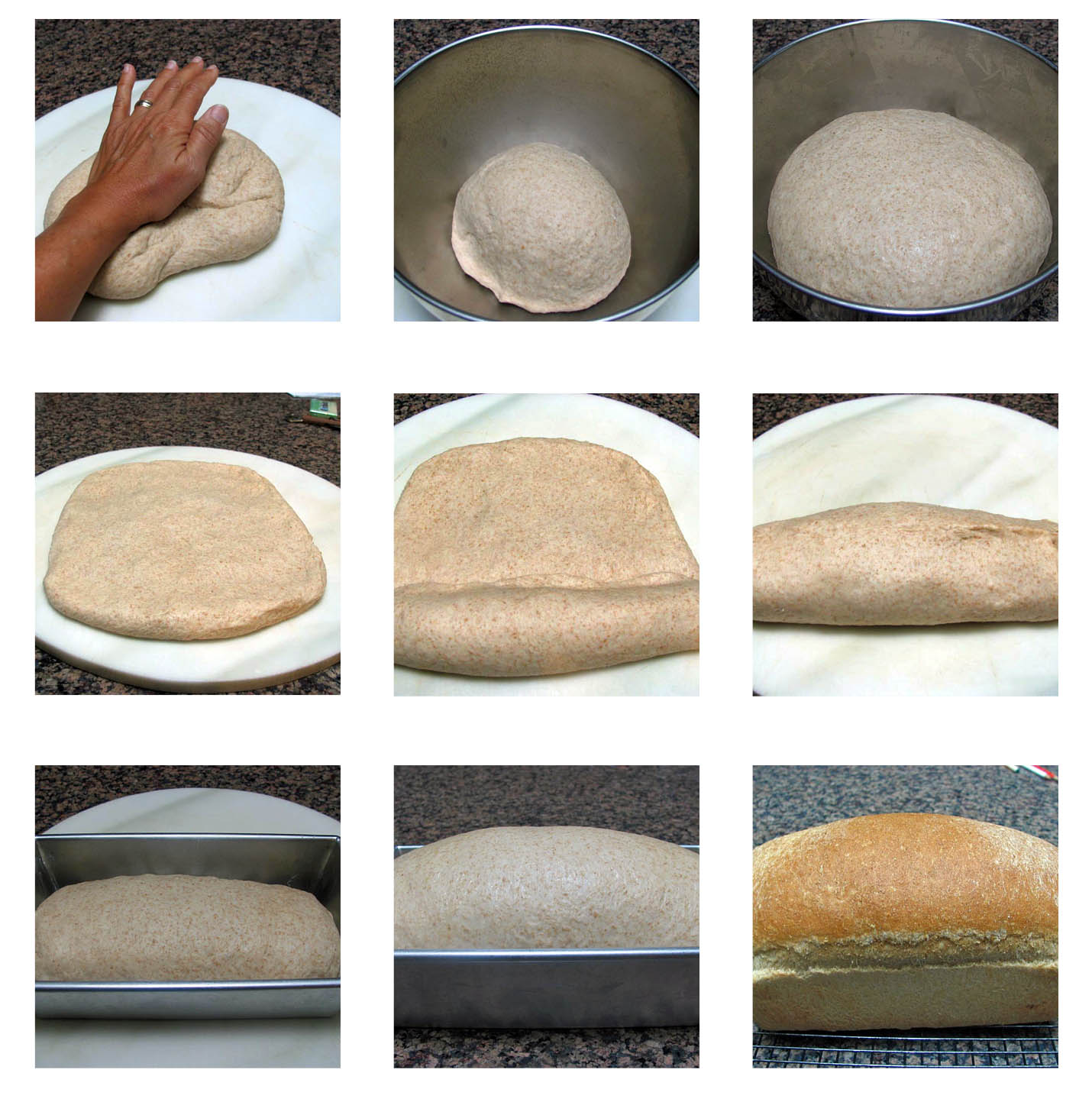
Unlike the other breads in the “challenge“,  I’ve made this one many times. It is in fact our default sandwich bread, that I bake on weekends and slice and freeze for later in the week.

It’s a straightforward recipe, with white and whole-wheat flours, dry milk, a little sugar, butter, and commercial instant yeast.  Knead it until smooth, allow it to rise and shape it as a loaf; let it rise another time and bake it.  Really, easy as pie!

I made it  for the first time after reading this post at Smitten Kitchen. She expressed my feelings exactly: a person who loves good bread and enjoys cooking (that would be me, and I am sure many of you, who read food blogs… 😉 ), cannot possibly settle for what is sold at grocery stores as sandwich bread.

As I explained before, we can’t post the full recipe, but if you’d like to make a great sandwich-style bread at home, that freezes extremely well, look no further, grab the book, open to page 181 and give it a try…

composite2

You can follow the adventures of folks baking ahead of me through the challenge by clicking these links:
Carolyn and Joe, from  Two Skinny Jenkins
Deb, from Italian Food Forever
Oggi, from I can do that
Phyl, from Of Cabbages and King Cakes
Paul, from The Yumarama Artisan Bread Blog
Maggie, from The Other Side of Fifty

Eighteen breads down, twenty-five to go!
(I wonder if Peter Reinhart is still watching our adventures… 😉

BBA#17: LAVASH CRACKERS

ready1

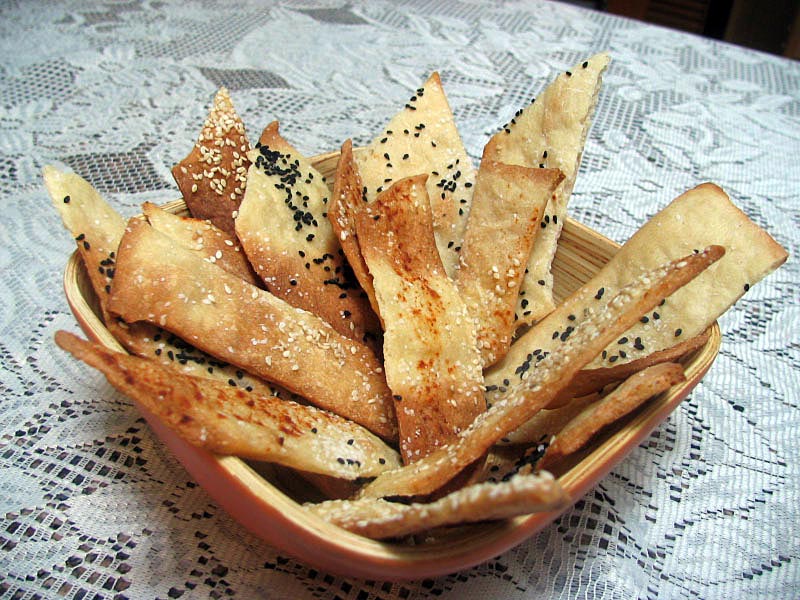
BEWARE: THESE ARE ADDICTIVE!!!

Now that I finished this recipe, let me say that as I began I was not too enthusiastic about it.  I tried to make Ak-Mak-style crackers before, using an internet  recipe, and I was unhappy.  Not only was it a lot of work, but they had nothing to do with my favorite cracker.

But, a challenge is challenge, so I took a deep breath, grabbed the flour and went for it!  Thanks to the advice of those who are ahead of me, I knew that rolling a thin dough was important, or else the potential crackers would become pita bread.  Not that there’s anything wrong with pita, but…. pita is not a cracker.

Here you see the beginning of the process, a simple dough (53% hydration) made with flour, honey, oil, salt and instant yeast. Again, I did not bother kneading it to death. After incorporating the ingredients into a ball, I allowed it to sit for 15 minutes, then folded it a few times until it got smooth. From that point, I followed the recipe as written.  In 90 minutes, it was ready to roll out.

triosmall

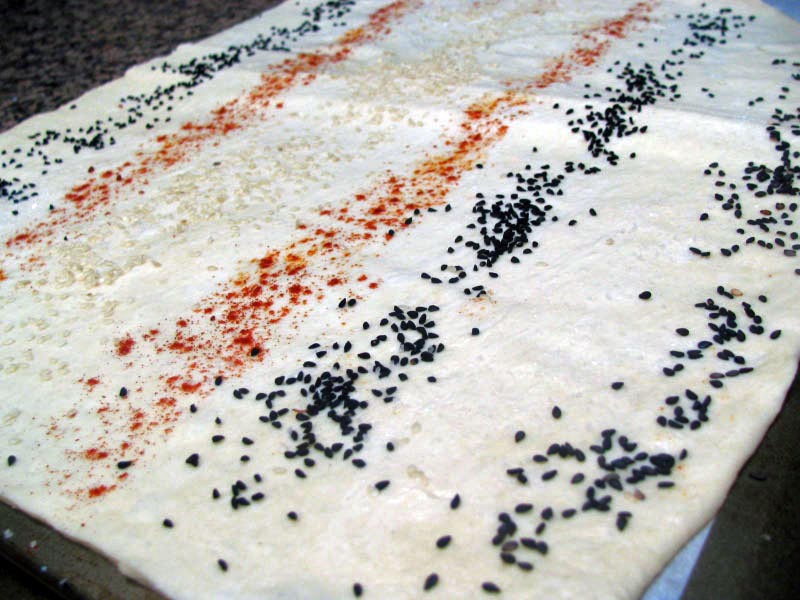
Make sure that you roll it as thinly as possible without tearing the dough. I found it very forgiving, with no problems to roll out, although it was a bit tricky to lift into the baking sheet.  To decorate the dough I used nigella seeds (which I bought here), black sesame seeds, smoked paprika, and coarse salt.

seedsondough

Into the oven it went… As you bake it, keep an eye on it, because if your rolling is uneven, some parts might darken faster than others. It happened to  me, but I broke the darker parts away and allowed the rest of the sheet to stay in the oven longer. This approach worked quite well.

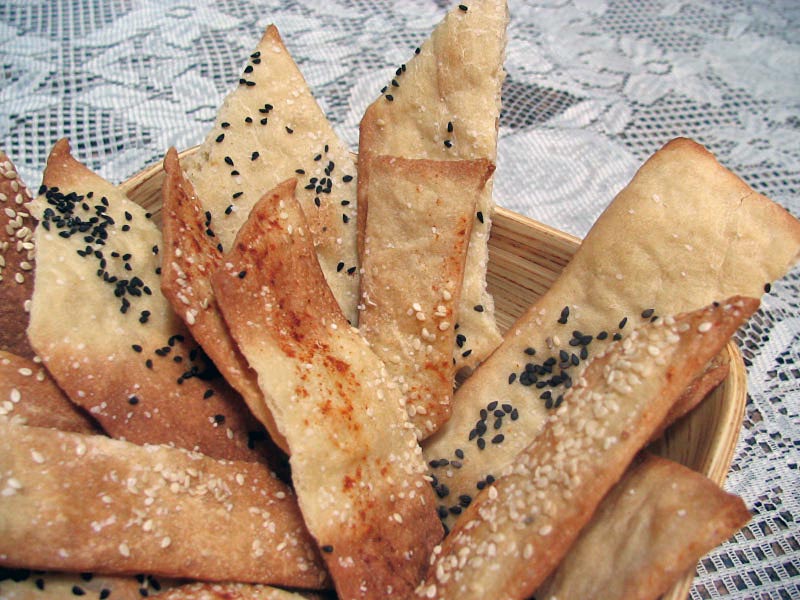
As they cooled down, I decided to try one. Then another. Then another. My beloved husband was not expected back home for at least 3 more hours, and the deepest proof of my love for him was this bowl with many crackers still inside.

crackersready

See some of the happy bakers who made the lavash crackers before me:

Carolyn and Joe from Two Skinny Jenkins
Texas Farmer from Sina.blog (Blog in Chinese, amazing photos!)
Phyl from “Of Cabbages and King Cakes”
Deborah from “Italian Food Forever”
Oggi, from “I can do that”

BARM BREAD

IMG_2236

IMG_2246

This is my second submission to Yeastspotting

The recipe for this traditional wheat bread from England comes from Dan Lepard’s book  “The Handmade Loaf”, that I mentioned before. I’ve made quite a few  breads  from it, and at first this one seemed a little too involved,  because it required not only a levain (sourdough starter), but also a barm .  But, I was inspired to try it after reading a wonderful post about it.

Lepard  came up with a nice strategy to duplicate the barm at home by taking  a bottle-conditioned beer, and adding to it a small amount of your own  levain.  It’s a simple bread once  the barm is ready and bubbly…

To make the barm….
IMG_2216

125g Chimay beer (or other beer containing live yeast)
25g bread flour
2 tsp white levain (commercial or made from scratch)

Heat the beer to 160F, remove from the heat and quickly add the flour. Transfer to a bowl and allow it to cool to 68F, then add your white levain. Leave it at room temperature overnight or until it is very bubbly (my barm fermented for 30 hours).

Waiting for it to cool to 68F….
IMG_2219

To make the bread dough…

ingredientslabel

75g barm
125g water at room temperature
250g bread flour
3/4 tsp fine sea salt

Mix the barm in a large bowl with the water to completely dissolve it, then add the flour and salt. Mix it all with your hands;  it will be pretty shaggy and you will doubt that it will ever become smooth…. don’t worry, just let the dough sit there for 10 minutes, covered.
IMG_2224

Now follow this timeline, kneading for 10 to 15 seconds (yes, seconds) at each timepoint:

10 minutes / 20 minutes / 30 minutes / 1 hour / 2 hours /3 hours / 5 hours

at the 30 minute timepoint the dough will already be quite smooth…
IMG_2230

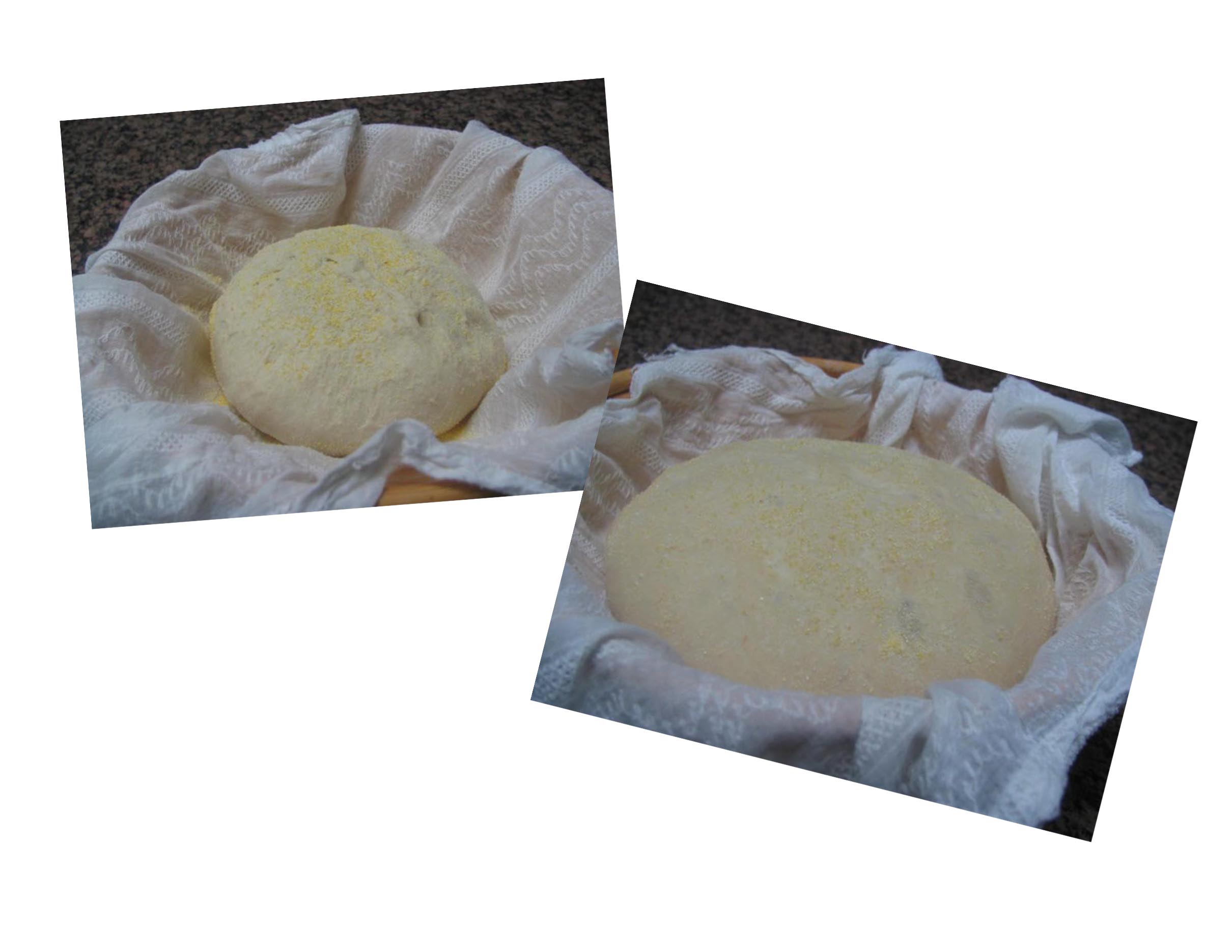
After 5 hours, knead it briefly again, allow the dough to relax for 10-20 minutes, and  shape it into a  “boule” (see one method here).  Gently transfer it to your vessel of choice for the final rise (about 4 hours) before baking. I used a banetton lined with a fine cloth, sprinkled with cornmeal.
beforeafter

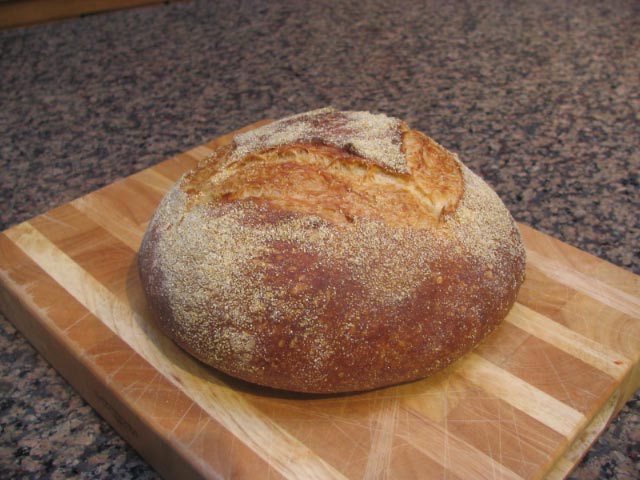
The bread will rise to 1.5X  its initial volume; when you press it gently with a finger, it should feel airy and light. I baked mine in a clay pot at 430F for 30 minutes covered, and for 15 additional minutes with the lid off.

IMG_2241

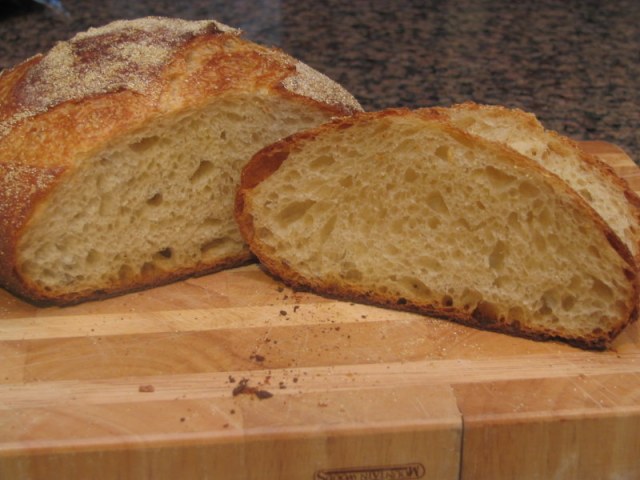
This bread is a winner in every way:  flavor, crust and crumb texture, and looks. The beer gives it a subtle sourness completely different from a regular sourdough, made with levain only. It is a perfect match for a ham sandwich, or to go along a hearty soup or salad.  I kept thinking about split pea soup while munching on the bread. I’ll definitely make it again, with different beers and flour mixtures, as advised in Lepard’s book.

jump for more comments….

Continue reading