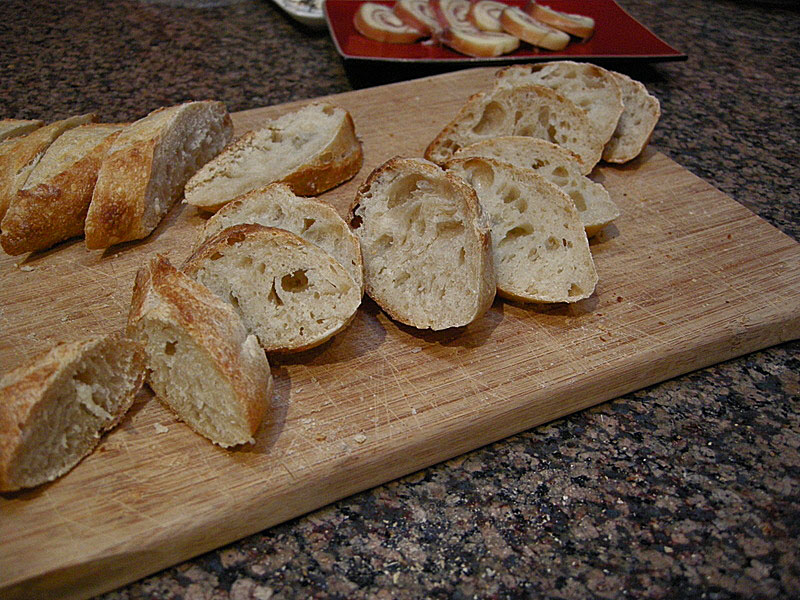
TARTINE BREAD: BASIC COUNTRY LOAF

Since Tartine arrived in the mail weeks ago in the nano-house, I’ve counted the days to Thanksgiving week, knowing we would be in Oklahoma for a little while, where Arthur, my youngest sourdough starter, awaited me in the freezer since our last visit.  We arrived from the airport close to midnight, but before I went to bed I woke Arthur up and fed it with warm filtered water, and a nice helping of flour.  Two more days of tender loving care, and he was ready, all bubbly and active…

For the Basic Country Loaf, the starter must be prepared with a 50/50 proportion of white and whole wheat flour.  When we left for Los Angeles, all my flour went into the garage freezer for long term storage, and to my despair, here’s what I found: garbanzo, teff, barley, potato, corn, spelt, and  three kinds of white flour, but no regular whole wheat!  Undeterred, I decided that spelt would be a good substitute.  The bread turned out as one of the best loaves ever baked in the Bewitching Kitchen (those are my husband’s words, not mine…), so trust me: spelt flour rocks.

BASIC COUNTRY LOAF
(adapted from Chad Robertson’s Tartine Bread)

For the starter:
50g  spelt flour
50g white flour
100g/ml water at 78-80F
1 Tbs active sourdough starter

For the dough:
375g/ml water at approximately 80F (divided in 350g + 25g)
100 g starter (you won’t use the full amount made)
450g white flour (good quality all purpose is fine)
50g spelt flour
10g salt

In a large bowl, mix 350g of warm water with the starter (100g of it), and mix to dissolve. Add both types of flour, mix until all flour is mixed with water, without large dry bits present.  Let the dough rest for 25 to 40 minutes.

Add the salt and the rest of the water (25g), and incorporate by pressing the dough with your fingers. Fold the dough a few times, until if forms a homogeneous mass, but don’t try to knead it.  Leave it in the bowl, folding it again a few times – no need to remove it from the bowl – every 30 minutes, for the first two hours (you will be making 4 series of folds during this period).  After the last folding cycle, let the dough rest undisturbed for another full hour, for a total of 3 hours of “bulk fermentation.”

Remove the dough from the bowl and shape it gently as a ball, trying to create some surface tension (for a tutorial, click here).  Let it rest for 20 minutes, then do a final shaping, by folding the dough on itself and rotating it.  If you have a banneton, rub it with rice flour, line it with a soft cloth sprinkled with rice flour, and place the dough inside it with the seam-side up. If you don’t have a banneton, any round container – like a colander – will do. Let it rise for 3 to 4 hours at room temperature.  Twenty minutes before baking time, heat the oven to 450F.

Cut a piece of parchment paper that will completely cover a pie baking dish and place it on top of the banneton containing the bread dough.   Carefully invert the banneton  over the parchment paper, using the pie plate to support the dough.  The cloth will probably be sticking to the dough, so carefully peel it off.  Score the bread, and place the pie pan over baking tiles in the pre-heated oven.

Bake for about 45 minutes, covered during the first 20 minutes, remove the cover for the final 25 minutes.

Let the loaf cool completely on a rack before devouring it, and pay close attention to its music as it cools…  It will sing for you…

ENJOY!

to print the recipe, click here


Comments:   I gave you a very summarized version of the recipe. In the book, the instructions cover 11 pages, and every word is worth reading.   Plus, there are step by step photos that will guide you through the kneading and shaping of the loaf, and an extensive description on how to generate steam in a home oven.  His method of choice is what I’ve been using for months, but thanks to discussions over at The Fresh Loaf Forum, I went down a daring route and tried something a little unusual:   I placed my dough, after the final rise, over a COLD non-stick pie baking pan, lined with parchment paper.   The cold pan made it very easy to score the bread, without worrying about the 450-500F oven environment. Once the dough was scored, I transferred the pan to the oven,  over pre-heated tiles, and immediately covered it with a large roasting pan that had been previously filled with hot water.   I dump the water and invert the roasting pan, still moist, over the pie pan + dough, covering them completely.    Twenty minutes later, I removed the roasting pan, and finished baking the bread uncovered until it turned a deep golden brown.

The main advantage of the pie pan, is that it provides some support for the bread to rise up, and the fact that it works without pre-heating makes life a lot easier.   I have quite a few burn scars on my arms and hands in the quest for the perfect loaf of bread… 😉      The crust developed as nicely as any of my breads baked on a pre-heated pan, and the oven-spring of this “boule” was exceptional, as I barely had to touch it to place it inside the oven. Minimal handling = maximal preservation of gas in the dough = great oven spring.

This is all you will need to use my method for baking the bread (plus a sheet of parchment paper):

Very few things in the kitchen bring me as much happiness as baking a nice loaf of sourdough bread. The Country Loaf from Tartine Bread was my best welcome home ever!  We fly back to LA tomorrow, but I’m already looking forward to my next “homecoming bread.”  The Olive variation, maybe?   Sesame?  Country Rye?   Stay tuned: March is not too far away…  😉

I am thrilled to submit this bread to Susan’s  Yeastspotting.

ONE YEAR AGO: Pugliese Bread

Add to FacebookAdd to DiggAdd to Del.icio.usAdd to StumbleuponAdd to RedditAdd to BlinklistAdd to TwitterAdd to TechnoratiAdd to Yahoo BuzzAdd to Newsvine

CIABATTA, A CLASSIC ITALIAN BREAD

I’ve made it before during the Bread Baker’s Apprentice Challenge, but was not very happy with the way it turned out.   Hard to believe that it took me 17 months to bake another batch, but time tends to fly by me.   November?  Are we in November already?  What happened to 2010, that started just the other day?   😉

Ciabatta, take two: the recipe from  “The Italian Baker” calls for a mixture of flour, water, and yeast made the day before (the “biga“), and used as part of the final dough.  A total fermentation time of 3 hours allowed us to have the bread in time for lunch, as it bakes very quickly, less than 25 minutes.   I am quite pleased with this recipe, I suppose that it would work even better in a real oven, but my Breville rose to the challenge!

CIABATTA
(from The Italian Baker)

for biga:
1/8 tsp active dry yeast
1 cup + 1 Tbs water at room temperature
1 + 1/4 cup all purpose flour (165 g)

Dissolve yeast in water, add the flour and form a sticky dough.  Leave it covered at room temperature for 16 to 24 hours.

for the final dough:
2.5 Tbs milk
1/2 tsp active dry yeast
5.5 ounces water (1/2 cup + 1.5 Tbs)
1/2 T olive oil
1 cup biga (250 g)
250 g all purpose flour
1/2 Tbs salt (7.5 g)

If kneading in a mixer, stir the yeast in the milk  and let it stand for  a  couple of minutes in the bowl.  Add the water, oil, the biga, and mix to incorporate, dissolving the biga in the liquid. Add the flour and salt, and mix at low speed for a couple of minutes.   Change to the dough hook and knead 2 minutes at low speed, and 2 minutes at medium speed.  Finish kneading by hand on a well-floured surface, but adding as little extra flour as possible.

Place the dough in an oiled bowl, cover, and leave at room temperature for 1 hour and 15 minutes.  Divide the dough, which will be very soft and bubbly, in two equal pieces.  Place each half on a well floured piece of parchment paper, and shape each as a cylinder, keeping the seam side down.  Stretch it gently to give the ciabatta overall shape (a rectangle of 10 x 4 inches), and use the tip of your fingers to make deep dimples all over the dough. Cover with a damp towel and let them rise for 1.5 to 2 hours.

Bake in a pre-heated 425 F oven, spraying the bread with water three times in the first 10 minutes.   Total baking time should be 20 to 25 minutes.   Cool the loaves on a rack, and…

ENJOY!

to print the recipe, click here

Comments:  Carol Field advises against kneading this dough by hand, because it is very hard not to add more flour to prevent it from sticking.  However, if you are familiar with the way a high hydration dough behaves,  go ahead and give it a try.  Keep in mind that the less extra flour you add, the better.   She also keeps the seam side up during rising, which forces her to invert the dough on the baking sheet (or stone).  I prefer to shape them seam-side down, then transfer them gently to the oven with the parchment paper still underneath. I think that this method minimizes deflating the dough.

We enjoyed our ciabatta with mozarella and ham for lunch, and at dinner it complemented spaghetti with meatballs that shall be the subject of a post in the very near future (they were AWESOME!)…

I am submitting this post to Susan’s Yeastspotting event…

ONE YEAR AGO: Lamb Stew with Parsnips, Prunes and Chickpeas

Add to FacebookAdd to DiggAdd to Del.icio.usAdd to StumbleuponAdd to RedditAdd to BlinklistAdd to TwitterAdd to TechnoratiAdd to Yahoo BuzzAdd to Newsvine

SOUR CREAM SANDWICH BREAD

A simple but delightful sandwich bread, made with white flour, commercial yeast, and a bit of sour cream to provide a mildly tangy note, and a moist and tender crumb.   If you are baking under challenging conditions (that is, in a small oven), watch out for quite  an impressive oven spring: the bread might touch the heating element on top and… you don’t want that to happen.  Protect it with aluminum foil if needed.     The recipe comes from the one and only Dan Lepard, you can find it here.

SOURCREAM SANDWICH BREAD
(from Dan Lepard, published at The Guardian)

General method:
Sour cream is mixed with water, a little salt and sugar, and yeast.  Bread flour is added to form a sticky dough.

Dan uses minimal kneading, just 10 seconds every 10 minutes over half an hour, then the dough rises for 1 hour.

After shaping as a loaf, place in a pan and allow it to rise for 60 to 90 minutes.  The bread is baked in a 390F oven for about 45 minutes.

(for the detailed recipe, and printable version, click here)

Comments:  This is a great  recipe for those times in which you want a simple loaf for day-to-day sandwiches.  A slice, slightly toasted, with cottage cheese, salt and pepper, is a perfect way to start the day, next to a steaming cup of green tea.  Or, if you prefer to play on my husband’s team, make it a thin spread of blackberry preserves,.  Either way, Dan Lepard came up with yet another winner!

I am submitting this post to Susan’s Yeastspotting

ONE YEAR AGO: Pasta with Zucchini Strands and Shrimp

PANMARINO

For reasons that escape me,  that might just justify seeking professional help, I bought another cookbook.   Worse yet, it was another bread book.  Considering that my present situation is far from optimal for bread baking, I wonder if even the best therapists are good enough to help me.  However, in my defense,   Carol Field’s  “The Italian Baker” is wonderful!   It covers breads from all over the country, always with some background information on their origins and detailed instructions on their preparation, using manual kneading, a mixer, or the food processor.   The book doesn’t have photos, just simple drawings.  In another cookbook this approach might bother me, but in this case I don’t mind being without pictures, because the richness of the text compensates for their absence. Carol’s descriptions make me want to bake every recipe in her book – which includes almost 100 breads!

PANMARINO (ROSEMARY BREAD)
(adapted from Carol Field)

2 tsp active dry yeast
1/2 cup warm water
1/2 cup milk, at room temperature
4.5 T olive oil
1.5 to 2 T fresh rosemary leaves, chopped fine (or 3/4 T dried)
10 g salt
450 g all purpose flour
1 tsp coarse sea salt for sprinkling over the bread

Mix the warm water with the yeast in a large bowl, wait for a few minutes until it gets bubbly. Stir the milk and oil with the paddle blade. Add the rosemary leaves, flour, and salt to the bowl. Mix gently until the flour is moistened, change to the dough hook and knead on low speed for 5 minutes. Remove the dough and knead by hand for a couple of minutes.

Place the dough inside an oiled bowl, cover, and let it rise at room temperature until doubled, about 1.5 hours. Carefully remove from the bowl, shape into a ball, and let it rise for 45 to 55 minutes, but don’t allow it to double in size.

As you wait for the final rise, heat the oven to 450F. Slash the bread with a razor blade forming an asterisk on top, then sprinkle coarse salt inside the cuts. Bake 10 minutes with steam, reduce the oven temperature to 400F and bake for 35 minutes more. Remove the bread to a rack to cool, and don’t cut it for at least one hour.

ENJOY!

to print the recipe, click here

Comments: Carol says this is one of her favorite breads because its simple preparation allows her to have it at the table almost at the spur of the moment.  Although you could make it with dry rosemary, I urge you to use fresh, and go for the maximum amount recommended.  The flavor is not at all overpowering, and the pleasant hint of rosemary  makes this bread a good match for many types of sandwiches.  We enjoyed it in sandwiches of thinly sliced flank steak, grilled medium rare, and didn’t even add any cheese.   But of course, a little burrata on top and a quick run under the broiler will satisfy your most hedonistic inclinations.

The detail of sprinkling coarse salt in the slashes is pure genius!  Every once in a while you get this extra punch of  flavor, as the salt enhances the herbal tone of the bread.  Perfect.

I am submitting this post to Susan’s Yeastspotting event…

ONE YEAR AGO: A Classic Roast Chicken (the most popular post in the Bewitching Kitchen, recipe from Ad Hoc)

Add to FacebookAdd to DiggAdd to Del.icio.usAdd to StumbleuponAdd to RedditAdd to BlinklistAdd to TwitterAdd to TechnoratiAdd to Yahoo BuzzAdd to Newsvine

36 HOUR SOURDOUGH BAGUETTES

Over the past two and a half years I became comfortable baking rustic breads  using wild yeast.  The baguette, however, gave me lesson after lesson in humility. Baguettes are deceptively simple to prepare, but if you seek a bread with Parisian quality, then each step of preparation must be flawless: bulk fermentation, shaping, final proofing, and baking.  I’ve tried many recipes, but they never quite matched the superb baguettes of the 7th Arrondisement, where we used to live.

That all changed during our recent trip home.  I was looking forward to baking a  sourdough bread in our own kitchen, and decided on sourdough baguettes.  I followed the detailed instructions of TxFarmer, one of the most accomplished bakers of The Fresh Loaf Forum, and voila‘,  the baguettes from my own oven were just the way I’d hoped for…


TxFARMER’s 36 HOUR SOURDOUGH BAGUETTES

(recipe found at The Fresh Loaf forum)

150 g very active sourdough starter (at 100% hydration)
425g all purpose flour
300g cold water
10g salt

Mix water and flour into a lumpy mass, cover and place in the fridge for 12 hours.

Remove from the fridge, add the starter and salt to the dough, and mix until distributed. The dough will be very sticky, but you should resist the temptation to add more flour. Allow it to rise at room temperature for 2 to 3 hours, kneading by the “stretch and fold method” every 30 minutes. The dough may rise about 30% of its total volume. Place the dough covered in the fridge for 24 hours.

Remove the dough from the fridge and let it warm up for 1 to 2 hours – you want it to rise but not get overly bubbly, because that will make shaping very tricky later. Divide the dough in four pieces, taking care not to deflate it too much. Place each piece over floured parchment paper, and let it relax for 40 minutes.

Shape each one as a baguette (for a nice tutorial, click here), proof for 30 to 50 minutes, and bake with initial steam at 460 F for 25 minutes.

Let it completely cool before slicing.

ENJOY!

to print the recipe, click here

Comments: When Txfarmer described this recipe as “everything I know in one bread,”  she meant it. She baked multiple batches to perfect it, and made it clear that you need a good “feel” for the dough to get good results. That’s why the initial stretch and fold cycle varies from 2 to 3 hours, depending on the ‘strength” (gluten development) of your dough. The final rise at room temperature will also change depending on the temperature of your kitchen, and how much “lift” the starter provided during the 24 hour fermentation in the fridge. If you are new to bread baking, particularly using wild yeast, all these variables are intimidating. But if you’ve baked your share of sourdough breads, then consider making a batch of these baguettes, which taste incredibly good! The crumb is open, the taste surprisingly mellow, with an almost “sweet” component, hard to imagine in a sourdough.

You may have noticed that my individual baguettes ended with different types of crusts. The difference lies in how I generated steam during baking. Two baguettes were baked with an inverted roasting pan (sightly wet) on top: they developed a nice, shiny crust, with a “caramel” color. The other two baguettes were baked in a perforated pan, with steam coming from water poured in a cast iron pan placed at the bottom of the oven. Their crust is less shiny, but they had more oven spring. My favorite method is the inverted roasting pan, but it has a major drawback: I can only bake one baguette at a time.

If you dream of perfecting baguettes at home, you MUST try TxFarmer’s recipe. Many bakers already did, and raved about it (check the discussion at The Fresh Loaf Forum by clicking here).

I am submitting this post to Susan’s Yeastspotting event…

This slideshow requires JavaScript.

ONE YEAR AGO: Potato and Leek Braise

Add to FacebookAdd to DiggAdd to Del.icio.usAdd to StumbleuponAdd to RedditAdd to BlinklistAdd to TwitterAdd to TechnoratiAdd to Yahoo BuzzAdd to Newsvine

receita em portugues na proxima pagina