IN MY KITCHEN, JUNE 2012

Following Celia’s tradition at Fig Jam and Lime Cordial,  I share with you what’s been going on in our kitchen these busy days. It seems like yesterday, but in fact I published my first “In My Kitchen” almost one year ago!  Now, 11 months and 5 posts later, a bittersweet moment:  this will be the last one to come from our Okie home.  A new bewitching kitchen is waiting for us in the  “Little Apple“,  and I cannot wait to share it with you in the near future!

In my kitchen…
KIND, our favorite cereal bar! We tried it for the first time while living in Los Angeles, and were thrilled to find its many  flavors, all delicious, in a special store here in town.  They are moist and satisfying, with a perfect combination of flavors.  My favorite is the mango-macadamia, super tasty!

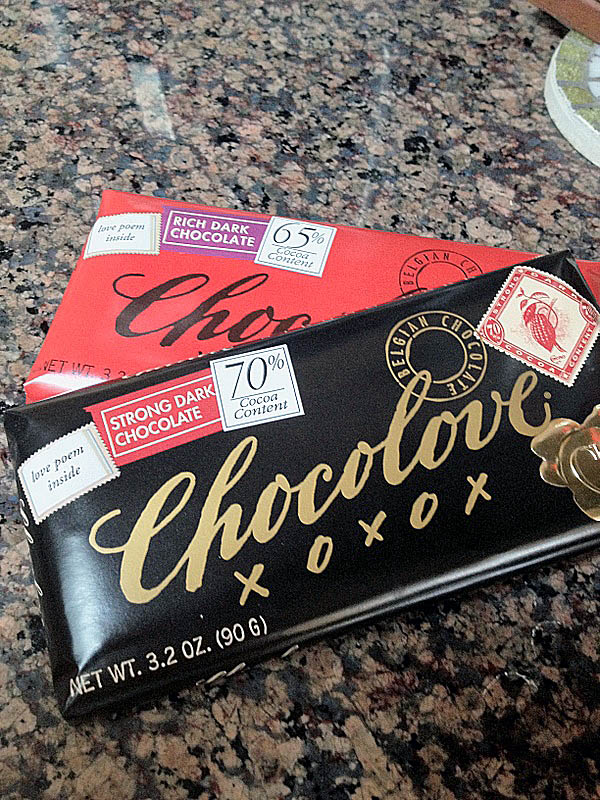
In my kitchen…We always have some type of dark chocolate hanging around.  Phil loves to nibble on a little piece with his coffee, and his passion for chocolate is highly contagious: I find myself more and more dependent of a small piece before going to bed.   This brand, Chocolove, is a new favorite, with a very smooth finish. To make it even better, it is a fair-trade product.
In my kitchen…
A bottle of sorghum  molasses. For a few months now, it seems to me that every cooking magazine I open has one or two recipes using sorghum.  I finally found it and brought it home.   Hopefully, when my life gets a little less frantic, I’ll be able to try one of the recipes in my “sorghum folder”.  😉   If you want to know more about it, click here.

In my kitchen…
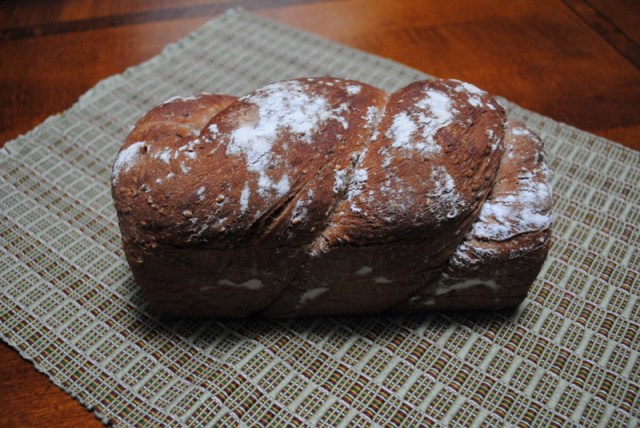
A new way to shape a loaf of bread, following a braided method from “How to Make Bread”, from Emmanuel  Hadjiandreou.  This particular recipe is his multigrain bread, substantial but not too heavy.

In my kitchen…   So many gifts!

Two Korean wooden dolls, given to us by a former undergraduate student,  they live near our kitchen, and love to watch us cooking.  They get along quite well with their Brazilian clay friends, a gift from our friend (and amazing cook) Anita.


In my kitchen….
A very special gift from our graduate student Vy,  who was recently in New York and brought back a bag of chocolate disks from Jacques Torres.
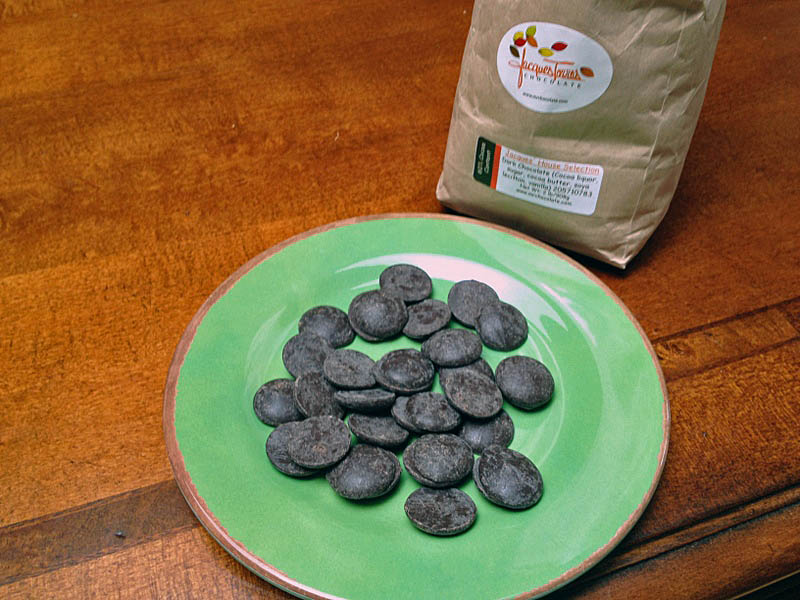
Here is what they look like.  These babies make fantatic chocolate chip cookies,  I promise to post the recipe in the near future.    It will be worth the wait… 😉

In my kitchen….
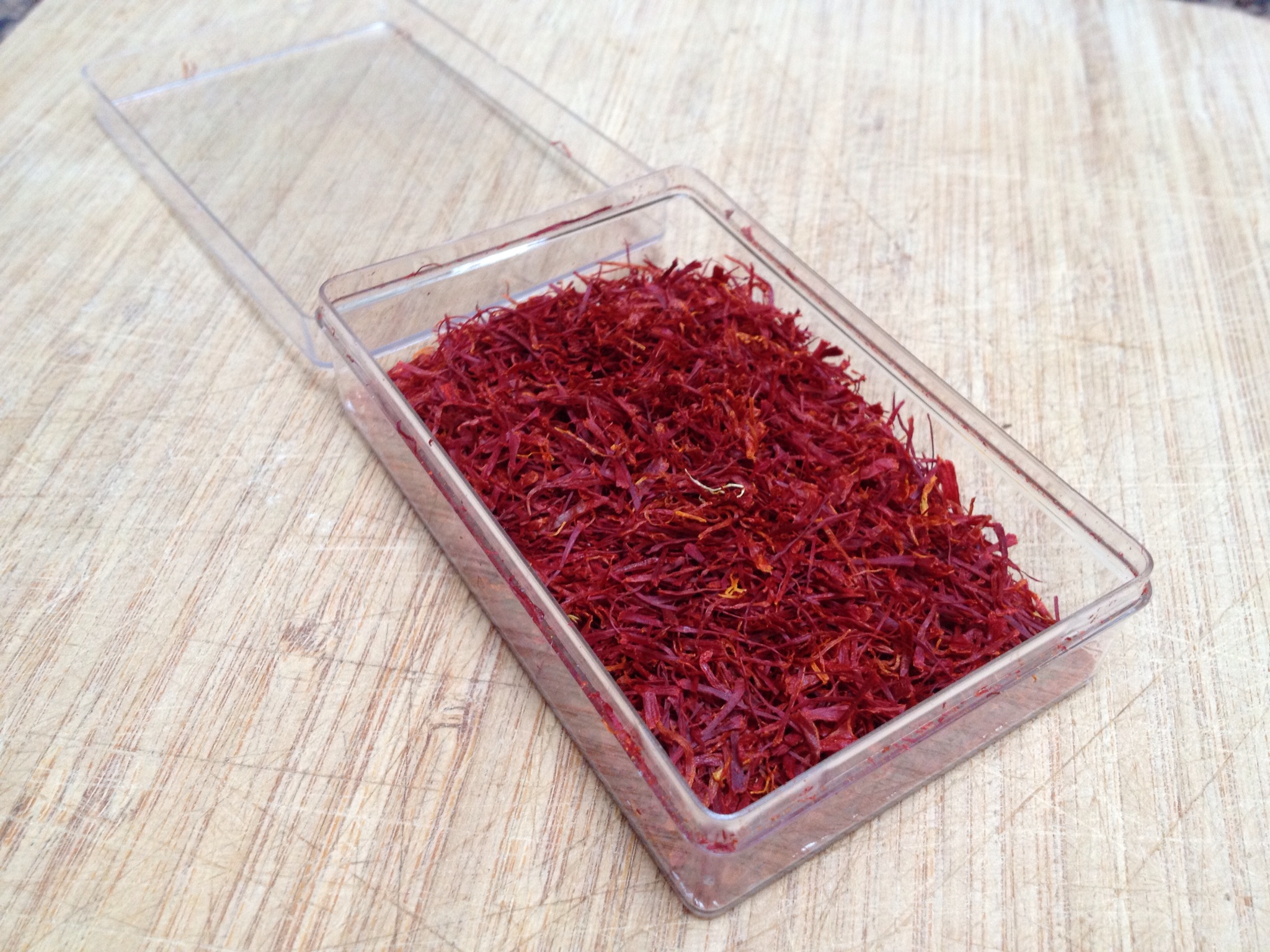
Have you ever seen this amount of saffron? And I mean, great, authentic saffron!  Talk about a special gift!   I am lucky enough to have a friend who travels to Saudi Arabia once a year, and he surprised me with this incredible load of saffron.  When the box arrived, I could smell the saffron through the box and the double wrapping of paper!    And, if that wasn’t special enough, he also included in the package a bag of…
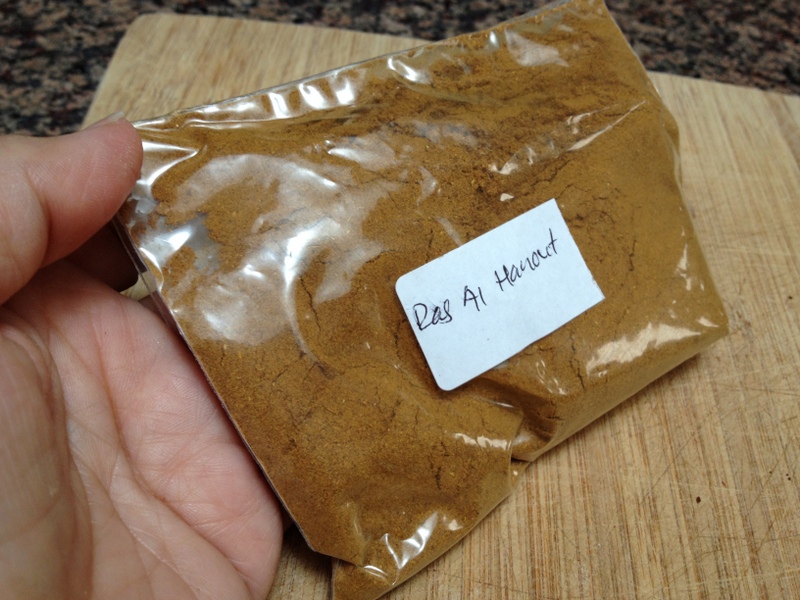
Ras El Hanout!  One of the few spices I didn’t have in my cabinet!  Am I lucky or what?  No doubt in my mind I have the most amazing friends!

and finally, in my kitchen….
A very well-behaved dog, who never begs for food, but makes sure his eyes are as sad as he can possibly make them while Phil and I are enjoying a nice dinner…   😉

ONE YEAR AGO:  Goodbye L.A.  (one full year,and  a new goodbye on our horizon!)

TWO YEARS AGO: 7-6-5 Pork Tenderloin

Add to FacebookAdd to DiggAdd to Del.icio.usAdd to StumbleuponAdd to RedditAdd to BlinklistAdd to TwitterAdd to TechnoratiAdd to Yahoo BuzzAdd to Newsvine

BAKED COCONUT & “THE BRAZILIAN KITCHEN”

Or, you can call it as Brazilians do: Cocada de Forno

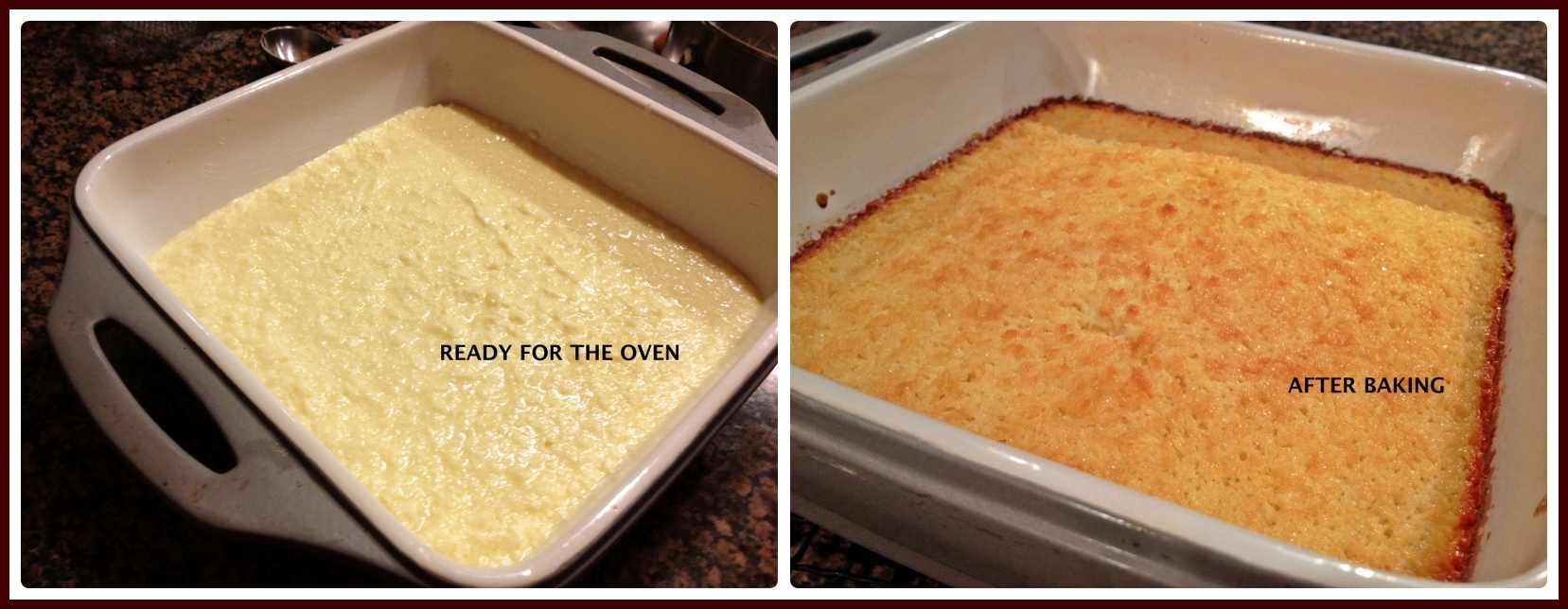
I am very excited to share this recipe, because it’s a very traditional Brazilian delicacy, one that brought me fond memories.  Full disclosure: as a child, I wasn’t too wild about coconut, the texture and the way the shredded pieces got into my teeth distracted from its flavor.  Thankfully I grew out of that phase, and now embrace  the fruit’s unique flavor and texture with the appreciation it deserves.  Cocada is a popular street food, sold in markets and coffee joints as small  pieces wrapped in a paper napkin.  You can take a look at them here.   This version, from the book “The Brazilian Kitchen“,  will produce a softer version, to be spooned out of a baking dish, or – if baked a little longer, as I did – a sort of blondie with intense coconut flavor.  Absolutely perfect for a spring or summer day, it might very well bring a blast of sunshine to your deepest winter.

COCADA DE FORNO (BAKED COCONUT)
(published with permission from Chef Leticia Schwartz)

8 Tbs butter (1/2 cup), at room temperature
1/2 cup granulated sugar
3 eggs
1/3 cup coconut milk
1/3 cup sweetened, condensed milk
1 Tbs rum (optional)
1 + 1/2 cups grated coconut (unsweetened)
2 Tbs all-purpose flour, sifted

Heat the oven to 350F. Lightly grease a 24-oz baking dish with butter or cooking spray.

Place the butter and the sugar in the bowl of an electric mixer fitted with the paddle attachment, and beat them together at medium speed until creamy, about 5 minutes.  Add the eggs, one at a time, and continue to mix.  Scrape the sides of the bowl after each addition.

Add the coconut milk, the condensed milk, and the rum (if using), and continue to mix until well blended (about one more minute).  Add the coconut and mix until incorporated.   Fold the flour with a rubber spatula, and spread the batter into the prepared baking dish.  You can make the batter ahead of time, keeping it in the fridge for up to 2 days.

Bake in the 350 F oven until the top looks golden brown, the edges are set, but the center is slightly jiggly, about 20 minutes (or if you prefer a firmer consistency, bake until set, 30 to 35 minutes). Remove it from the oven and let it rest for 10 minutes.  Serve with a scoop of lemon sorbet for a magical experience…

ENJOY!

to print the recipe, click here

About The Brazilian Kitchen“:    As you may remember, I’ve been on a self-induced cookbook-starvation-diet lately.  I bought this book as a gift for a dear friend, and had it at my bedside table for a few days.  I knew I had to say goodbye to it, but Leticia’s writing and her recipes were so enticing that I decided to photocopy some (many) pages.  Well, I didn’t have to:  Phil  ordered  one for me!  So, that explains how a person fully resolved not to buy cookbooks still manages to increase her collection… 😉

I could not be happier with my gift!  Leticia  covers many of my favorite Brazilian recipes, some of which I’ve featured in the blog: moqueca, chicken soup, black beans, pao de queijo, and brigadeiros.  Speaking of brigadeiros, she includes three recipes for them:  the traditional chocolate, and two tasty departures from the classic, coconut and pistachio brigadeiros.  Dreamy delight…

You will also find recipes for many other Brazilian classics:  acaraje (bean fritters),  xim xim de galinha (chicken, shrimp, peanut and cashew stew), vatapa‘ (fish puree with coconut milk),  quindim (coconut custard cake).

But, what  I like the most about “The Brazilian Kitchen”  is that Leticia goes beyond the classics, and brings very creative dishes to the table, like “caipirinha risotto”, a playful take on the great Italian dish,  using the ingredients of Brazil’s signature drink: pinga and lime juice.

Want some more teasers?  Red pepper and Brazil nut pesto, sole with coconut ginger sauce, tilapia with acai’ sauce, dulce de leche molten cake,  Passion fruit cannoli… many wonderful temptations to cook and enjoy!

If you are curious about Brazilian cooking, this book is a must-have, so help the economy with a click... And, if you want to see Chef Leticia in action (she is also a great teacher!)  jump here for a demonstration on making cod fritters.

Leticia, thank you for allowing me to publish your recipe, and I look forward to your next cookbook!

ONE YEAR AGO: Two-Stage Risotto

TWO YEARS AGO: Life is a matter of taste    (and I still miss you, David Rosengarten!)

Add to FacebookAdd to DiggAdd to Del.icio.usAdd to StumbleuponAdd to RedditAdd to BlinklistAdd to TwitterAdd to TechnoratiAdd to Yahoo BuzzAdd to Newsvine

THE SECRET RECIPE CLUB: ASPARAGUS QUICHE

The last Monday of each month arrives faster and faster, proving that Einstein got it right with his Theory of Relativity of time and space.  How else could we explain that I joined the SRC just a little while ago, blinked my eyes twice, and here I am, on my seventh post?

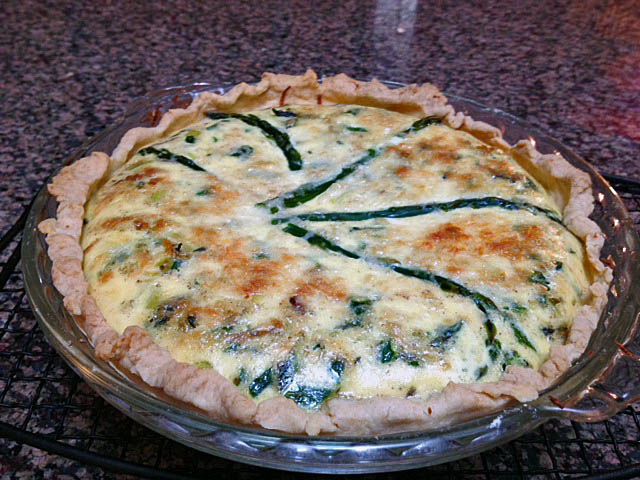
I had a complete blast with this month’s assignment: The Culinary Enthusiast!  A catchy blog name, by the way. Kelley lives in Chicago with her husband and a dog-child called Maddy, who gets to enjoy the many treats she cooks. See similarities between our households?   😉  Kelley has very creative recipes, and it took me a few days of “stalking” before I settled on my choice.   Asparagus Quiche.   Perfect for the season, perfect to remember Paris, perfect for a romantic weekend dinner.

SPRING ASPARAGUS QUICHE
(adapted from The Culinary Enthusiast)

1 recipe for pie crust (I used this one)
1 leek (white and light green parts only), halved and thinly sliced
salt and ground black pepper
1/2 bunch (about 1/2 pound) asparagus, tough ends removed, thinly sliced
3 asparagus stalks, trimmed and left whole (optional)
4 slices bacon, cut in large dice
4 large eggs
1 + 1/4 cups half-and-half
Ground nutmeg
1 cup shredded Parmesan cheese (4 ounces)

Prepare the crust of your quiche, using the recipe of your choice.  Roll it out to cover your pie plate.  Prick the surface with a fork a few times, cover the bottom with aluminum foil, and place dried beans to keep the crust down during pre-baking.   Bake in a 400 F oven for 15 minutes, carefully remove the foil, place it back in the oven for 10 minutes more.   Remove from the oven, and reserve.

Bring the oven temperature down to 325 F, placing a rack in the lowest position.  In a large skillet, cook bacon until crispy.  Set aside on a paper towel lined plate, allow it to cool, and crumble into smaller pieces.  Reserve bacon grease in pan and add the leeks, cook for a few minutes, until softened.  Add the asparagus pieces, season with salt and pepper. Cook until the asparagus is crisp/tender, maximum 6 minutes. Let the mixture cool down.

In a large bowl, whisk together eggs, half-and-half, 1/2 teaspoon salt, teaspoon pepper, and a pinch of nutmeg. Place pie crust on a rimmed baking sheet. Sprinkle with half of the cheese; add the asparagus/leek mixture, top with crumbled bacon. Pour egg mixture on top, add the remainder of the cheese.

If you want to decorate the quiche with asparagus stalks, cook them slightly in a microwave for a minute, then place carefully on top.

Bake until center of quiche is just set, 50 to 60 minutes, rotating sheet halfway through. Let stand 15 minutes before serving.

ENJOY!

to print the recipe, click here

My main modification of the recipe was to pre-bake the crust, because I’ve had problems with the crust getting too soggy when I omitted that step.  I also did not use potatoes in the filling, but I know it would be awesome with them too!

As far as quiche goes, Phil and I had the perfect example at a small, unassuming place in Paris, called “Bistrot du Papa”.  Don’t go through the trouble of googleing it, it no longer exists.  We were in considerable distress when we attempted to go back on our last visit, only to find an Italian restaurant in its place.  Ever since enjoying that masterpiece, I tried to make it at home a couple of times, the traditional quiche Lorraine, but my versions had very little to do with the bistrot’s.

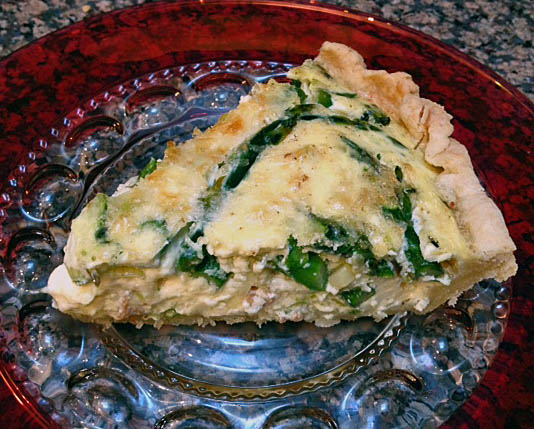
I must say this asparagus quiche was by far the best I’ve made!  Will I ever hit “Bistrot du Papa” level?  Quite unlikely.  They have a different type of cream, a different type of bacon, and then there’s the Parisian aura, hard to duplicate at home.  Oh, well…   We should have stopped there once a week for the duration of that magical sabbatical year!

We’ll always have Paris…
(great scene from Casablanca, 1942)

Kelley, thanks for a great recipe that brought the best gastronomical memories to our table!

Check out the other recipes in this month’s roundup  by clicking on the cute blue frog at the end of this post.

ONE YEAR AGO:  Spring Pasta

TWO YEARS AGO: Ice Cream Melts for Mango


Add to FacebookAdd to DiggAdd to Del.icio.usAdd to StumbleuponAdd to RedditAdd to BlinklistAdd to TwitterAdd to TechnoratiAdd to Yahoo BuzzAdd to Newsvine


SUPERMAN

As I’ve mentioned before, my fitness guru is Tony Horton, and I’ve been using his P90X system for 3  years.   I’m about to finish his awesome new series, P90X2, with only one workout left to do (yeaaaaah!).

I’d like to highlight one particular exercise in his routine, called Superman.  It’s already present in the original series, but in the X2 version it gets a little harder: instead of short 10 second intervals of the posture, you try to hold it for a full 45 seconds.  As the weeks go by, the idea is to raise your legs and arms higher, or add resistance by holding a bar.

I am sure Tony Horton would appreciate my own take on it, as it adds a bit more flexibility to the range of motion in the upper arms.   Normally, I get the added resistance from both sides, but due to the nature of the gadgets I had  available, this time the right side of my body got some extra attention!

ENJOY!

BLACK OLIVE SOURDOUGH BREAD

Inspired by a bread from Hamelman (Olive Levain), which I’ve made a few times in the past, I improvised on the basic sourdough method from Emmanuel Hadjiandreou and his “How to Make Bread“, that I recently blogged about.  You want this bread to deliver real big olive flavor, so keep the olives in large pieces, you can even leave some whole (but pitted, of course! 😉

BLACK OLIVE SOURDOUGH
(adapted from Emmanuel Hadjiandreou)

400 g (3 + 1/2 cups) bread flour
10 g (2 tsp) salt
200 g (3/4 cup) warm water
300 g (1 + 1/2 cups) sourdough starter (100% hydration)
4-5 ounces black olives (preferably Kalamata, pitted and chopped in large pieces – roughly 1 cup, loosely packed)

Add into one bowl the flour and the salt.   This is your dry mixture.

In another, larger bowl, mix the  water and the sourdough starter. This is  your wet mixture.

Add the dry mixture to the wet mixture and mix until it all comes together. Cover with a plastic wrap and let it stand for 10 minutes.  After 10 minutes, add the pieces of olives and knead the dough in the bowl, by pulling one portion of the dough from the side and pressing it down in the middle.  Repeat it turning the bowl slightly at each kneading, doing this kneading motion about 8 times and covering the full circumference of the ball of dough. The whole process should take about 20 seconds.   Cover the dough again and leave it resting for 10 minutes.

Repeat this kneading cycle three more times, 10 minutes apart.  Cover the bowl and let it rest for one hour.

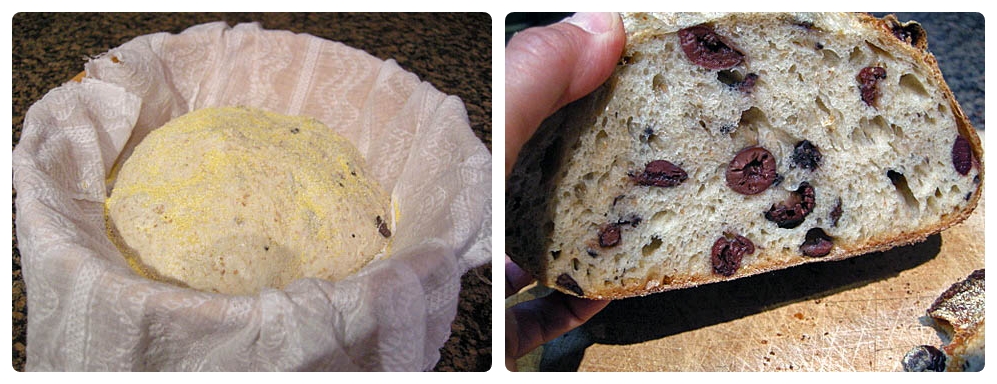
Turn the dough onto a floured surface, and shape it  as a round ball,  coat the surface lightly with cornmeal or rice flour, and place it in a suitable container for the final rise.  Let the dough rise until doubled in size, which should take from 3 to 6 hours, depending on how active your starter was.

Heat the oven to 475 F, and have your method to generate steam ready.   Slide the bread on a parchment paper or a wooden peel, slash it, and place it in the oven.  I like to bake it over tiles, and place an inverted roasting pan moist with hot water over it for about 30 minutes, then remove it.   Once the bread is in the oven, reduce the temperature to 425 F.  Bake for a total of 40 minutes, or until the internal temperature is over 200F.

Let the bread cool completely before slicing.

ENJOY!

to print the recipe, click here

Comments:  I confessed before that I am a kalamata-cheerleader,  so this bread is obviously a favorite of mine.  I already have a spicy kalamata sourdough in the blog,  but in this version I took a minimalist approach and used only olives, nothing else.

Don’t worry if when you start kneading the dough, the pieces of olive insist on poking out, just let them be.   In the end, they will find their perfect spot in the crumb.   Try not to squish the pieces too much as you fold or knead the dough.

I used cornmeal to coat the surface of the bread during proofing, because I ran out of rice flour, but in the end it turned out pretty good, the cornmeal gave the bread an interesting golden hue, and did a good job releasing the proofed bread from the banetton.

I am sending this post to Susan’s Yeastspotting, make sure you stop by to get inspired by all the baking going on this past week…   😉

ONE YEAR AGO: Buttermilk Cluster

TWO YEARS AGO: Farfalle, Farfalle

Add to FacebookAdd to DiggAdd to Del.icio.usAdd to StumbleuponAdd to RedditAdd to BlinklistAdd to TwitterAdd to TechnoratiAdd to Yahoo BuzzAdd to Newsvine