THE BEST SOURDOUGH RECIPE

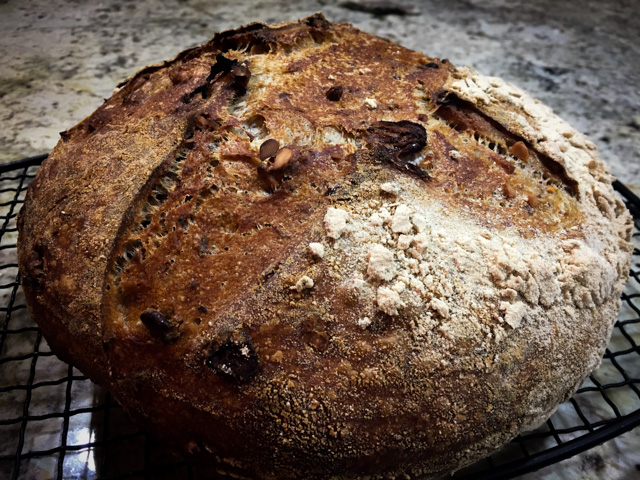
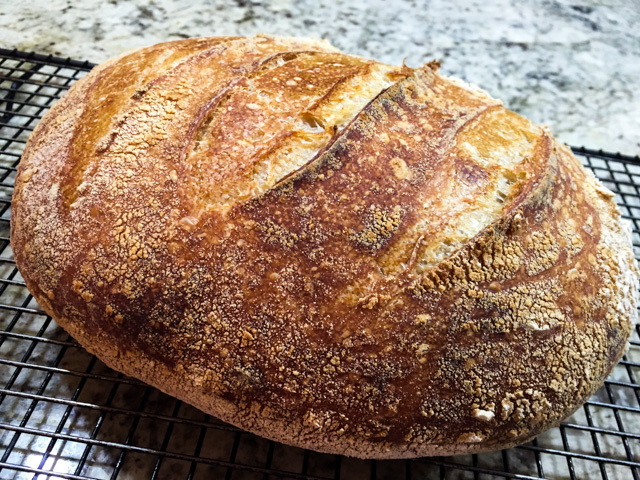
Bread bakers are a very passionate bunch. The passion can become obsessive, particularly once you get into baking with wild yeast and slowly reach that snobbish point of view that baking with commercial yeast is “for sissies.”  Granted, I am not that snobbish, but I admit that once you start down the wild path, it’s hard to turn back.  The flavor of bread leavened with wild yeast is more complex, and the whole process a lot more elusive, therefore so much more fun! Some days your bread will be spectacular, others not so much, even when everything seems to be the same.  Last month I stumbled onto this post by a super passionate baker named Maurizio.  Of course,  a post entitled My Best Sourdough Recipe got my attention right away, and what I found inside was a very detailed picture-loaded tutorial of the making and baking of a superb sourdough loaf. If you are new to bread baking, then dive into his article, read it carefully, and go to work.  I am sharing with you just the basic recipe, but insist that you should visit his site for the full details. He’s got a ton of great bread recipes! In fact, just as I type this post, I have another recipe from his site undergoing its bulk proof. One hint: it has walnuts…  Are you in love yet?  What if I say it has a particularly tasty dry fruit too?

😉

Best Sourdough2


MAURIZIO’S BEST SOURDOUGH RECIPE
(slightly modified from The Perfect Loaf blog)

for the liquid levain starter:
(make 12 hours before making the dough)
35 g liquid starter (at 100% hydration)
35 g whole wheat flour
35 g bread flour
70 g water

for the final dough:
402 g white bread flour
37 g whole wheat flour
375 g water at about 90 degrees F (divided, 350 g + 25 g)
9 g sea salt
75 g levain (made as above)

Build the liquid levain 10 to 12 hours before you want to make your final dough. Leave it at room temperature (around 72 F).

Next morning, mix flour and  350 g of water very well in a bowl and cover. Ensure all dry flour is hydrated. Leave it to autolyse for 1 hour.  Add the levain with the reserved water and hand-mix it into the dough until it is very well incorporated.  Leave it 30 minutes at room temperature, or if you have a proofer, set it to 78 F and keep the dough at this temperature all the way through. After 30 minutes, add the salt, and mix well.

After the salt is incorporated perform folds for about 2-3 minutes in the bowl. Grab under one side, pull up and over to the other side, then rotate the bowl a bit and repeat. Do this about 30 times or so (it goes fast and easy). At the end the dough should still be shaggy, but it will be a little more smooth and will slightly start to hold itself together more in the bowl. Now you are ready to start bulk fermentation.  If your home is at 78 to 82 F, bulk fermentation should last 4 hours.

During fermentation, do 6 sets of stretch and folds, the first three at 15 minute intervals (it will take you to 45 minutes of bulk fermentation), the last three at 45 minute intervals (by the time you do the last one you will be at 3 hours, with a final hour in which the dough is left undisturbed). If your dough is too “weak”, seeming to lack structure, add one more cycle of folding after 30 minutes and leave the dough undisturbed for another hour.

Lightly shape the dough into a round, cover with inverted bowl or moist towel, and let rest for 20 minutes.  After 20 minutes remove the towel or bowl and let the dough rest 5 more minutes exposed to air. This step helps dry out the dough just a bit so it’s not too sticky during shaping.  Lightly flour the top of your dough rounds and flour the work surface. Shape into a batard or boule. Place in a banneton very well floured, leave it at room temperature for about 20 minutes, then retard in the refrigerator  for 15-16 hours.

Heat oven at 500ºF. Bake 20 minutes at 500ºF with steam, and an additional 25-35 minutes at 450ºF, until done to your liking. Cool completely on a rack before slicing.

ENJOY!

to print the recipe, click

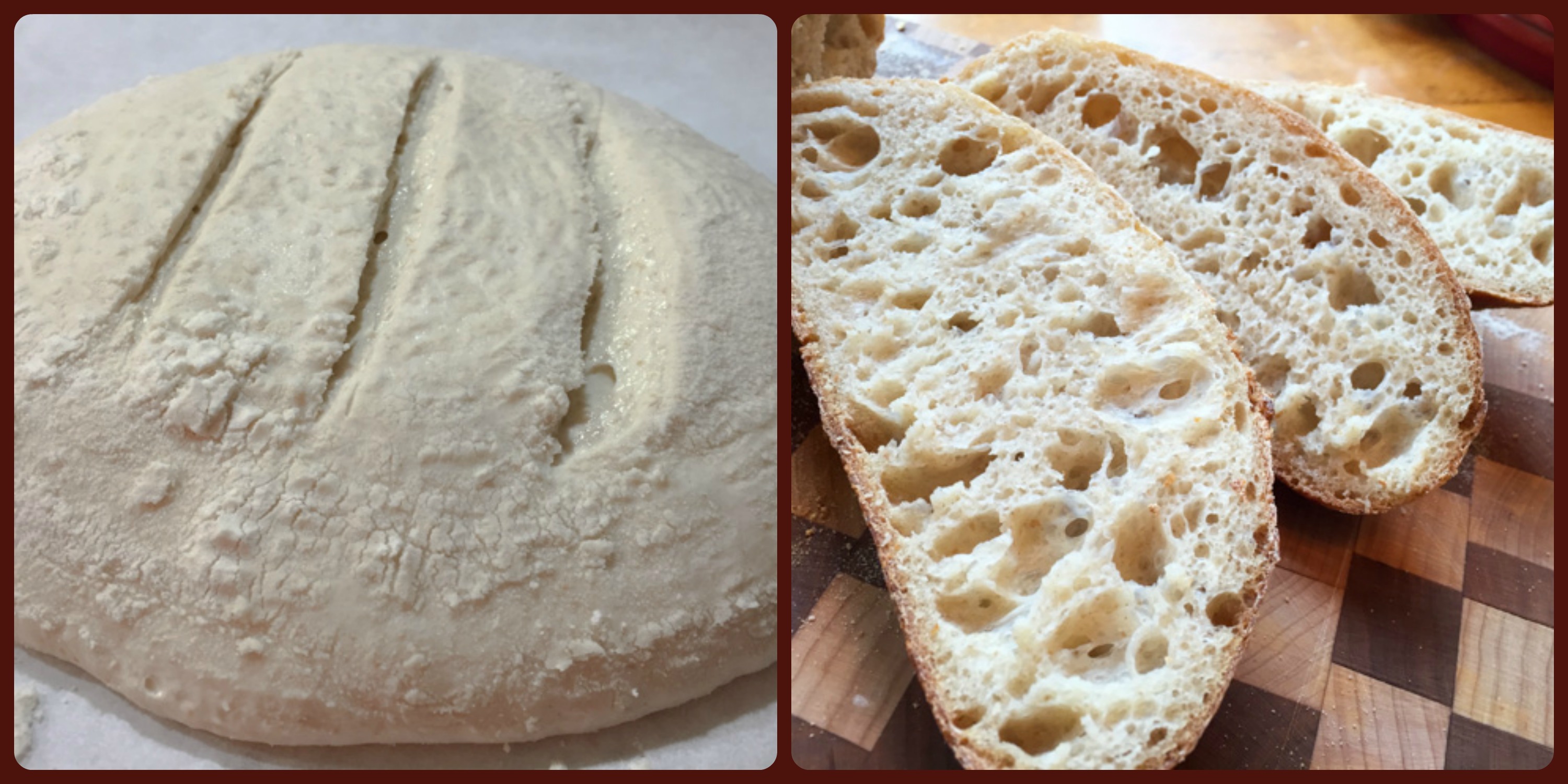
sourdoughcomp
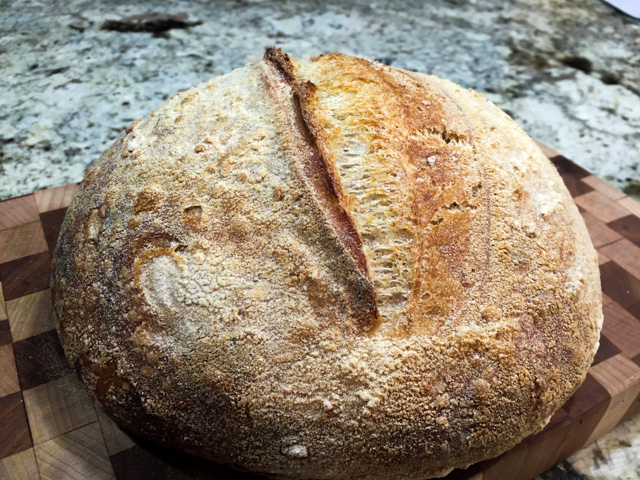
I made this bread a day before our dear friends from Brazil arrived for their visit. They loved it, and were actually quite interested in the process of sourdough baking. So, I decided to refresh my starter and make a second loaf with them, this time shaping it as a round loaf instead of slightly oblong. The second loaf, much to my delight, had even better oven spring…

best sourdough boule

That loaf traveled all the way with us to Colorado, and made our first evening in Silverthorne quite special… nothing like a nice loaf of  bread to make you feel home and cozy….

So, is it the best sourdough recipe ever? I think the best bread recipes are the ones that work consistently and fit your schedule well. It also helps to have a method that is easy to follow, so that by the time you make it for the third or fourth time, it becomes second nature. I don’t have the exact same flours Maurizio used, so every time I baked this bread I felt that as written the formula had a tad too much water.  It was hard – for my level of technique with the folding – to obtain good gluten structure. Once I held back a little of the water the dough turned out perfect, it had more “muscle”, which ultimately gives a better oven spring and crumb structure.  You will have to play with it a little. I published the recipe the way it worked best for me.

The schedule is perfect for my style of baking. I can start mixing the dough early in the morning on a Saturday or Sunday, by 3pm maximum it is in the fridge and I don’t need to think about it until next day. I am usually up at 5am, so I can turn the oven on and have the bread ready before it’s time to go to work, if I made the dough on a Sunday. So, all things considered, it is a GREAT recipe that I intend to use often and play with to add goodies to the dough. Walnuts, seeds, cheese, olives, herbs… you just wait and see!

ONE YEAR AGO: Two Appetizers for those who like it hot

TWO YEARS AGO: Baked Ricotta, Take Two

THREE YEARS AGO: Pumpkin Uncanned

FOUR YEARS AGO: Pork Ragu

FIVE YEARS AGO: Friendly Kuri Squash

SIX YEARS AGO: Celery and Apple Salad


KEN FORKISH’S PAIN AU BACON

PainAuBacon2It’s been a while since I baked a loaf of sourdough bread. A quick browse through my archives proves this sad turn of events: October 13th was my last adventure in the Land of the Wild Yeast. But, with so much going on, trips, busy schedule, I was forced to let my starter sleeping in the freezer a lot longer than I expected.  Finally, the second weekend of December shaped up as a perfect opportunity to resume bread baking. The weekend schedule seemed flexible enough – just a cocktail party Saturday night – and the perfect weather to crank the oven up all the way to 450 F.  Sometimes a tropical being is forced to find positive aspects in outside temperatures falling below 60 F.  I sat down next to our fireplace with quite a few of my bread cookbooks, and went through the very elaborate process of choosing which recipe to work on.  Keep in mind that if I have to dress up for a party, my outfit is decided in 5 minutes, accessories included. But choosing a sourdough bread takes me hours. And I mean  hours  in the strict sense of the term, in which 1 hour equals 360 seconds.  After intense mental struggle, I picked a winner from Ken Forkish’s book “Flour Water Salt Yeast“.   It was worth all the pacing back and forth, the many stick-it notes, and the snide remarks of the husband asking if I needed another couch to spread some more cookbooks. Very uncalled for. Obviously, I can only endure this type of treatment because I am an easy-going, serene, and forgiving human being. PainAuBacon1PAIN AU BACON
(recipe reprinted with permission from Ken Forkish)

Makes one loaf.

for the levain:
50 g mature active sourdough starter
200 g unbleached all-purpose flour
50 g whole wheat flour
200 g lukewarm water

for the final dough:
432 g unbleached all-purpose flour
8 g whole wheat flour
343 g water (warmed to about 90 degrees F)
10 g fine sea salt
250 g (about 1/2 pound) bacon, fried to crispy, and then crumbled
1 T reserved bacon fat
108 g of the levain
.
Mix the levain ingredients in a medium bowl, cover with plastic wrap, and let sit for about 10 hours, until bubbly. In a large bowl mix the flours and water by hand until just incorporated. Cover and let it rest for 20 to 30 minutes (that is the autolyse step).
.
Sprinkle the salt all over the flour mixture, then add the levain.  Using wet hands to prevent the dough from sticking, mix the dough by pinching it to distribute the salt. Cover and rest for 10 minutes.
.
Spread the bacon fat over the dough and add the crumbled bacon. Using the pincer method alternating with folding, mix all of the ingredients in the bucket. Cover the dough with plastic wrap, and let it sit for 30 minutes. In the next 2 hours, stretch and fold the dough 4 times, every 30 minutes. Cover and let rest at room temperature for 12 hours, until about tripled in volume.

Gently shape the dough into a loose boule. Flour a banneton,  shape the dough into a medium tight ball and place it seam side down into the proofing banneton. Cover with oiled plastic wrap. Let the loaves proof for about 4 hours, depending on the room temperature.

About 45 minutes before baking, heat the oven to 475 degrees F with an empty covered Dutch oven placed on the middle rack.

Remove the Dutch oven from the oven and remove the lid. Place a piece of parchment over the banneton with the proofed bread inside, and a flat baking sheet over it. Flip the dough over, remove the basket, and place the shaped boule in the Dutch oven using the parchment to help move it. The paper can stay in during baking.  Cover the Dutch oven and place it in the hot oven.  Wet the lid of the Dutch oven, and quickly use it to cover it. Alternatively, you can use your own favorite method to generate steam during baking.

Bake covered for 30 minutes, and then uncover it and bake it for 15 to 20 minutes more, until the interior of the bread reaches 205 to 210 degrees F and the bread is a deep brown.

Cool on a rack completely before devouring it…

ENJOY!

to print the recipe, click here
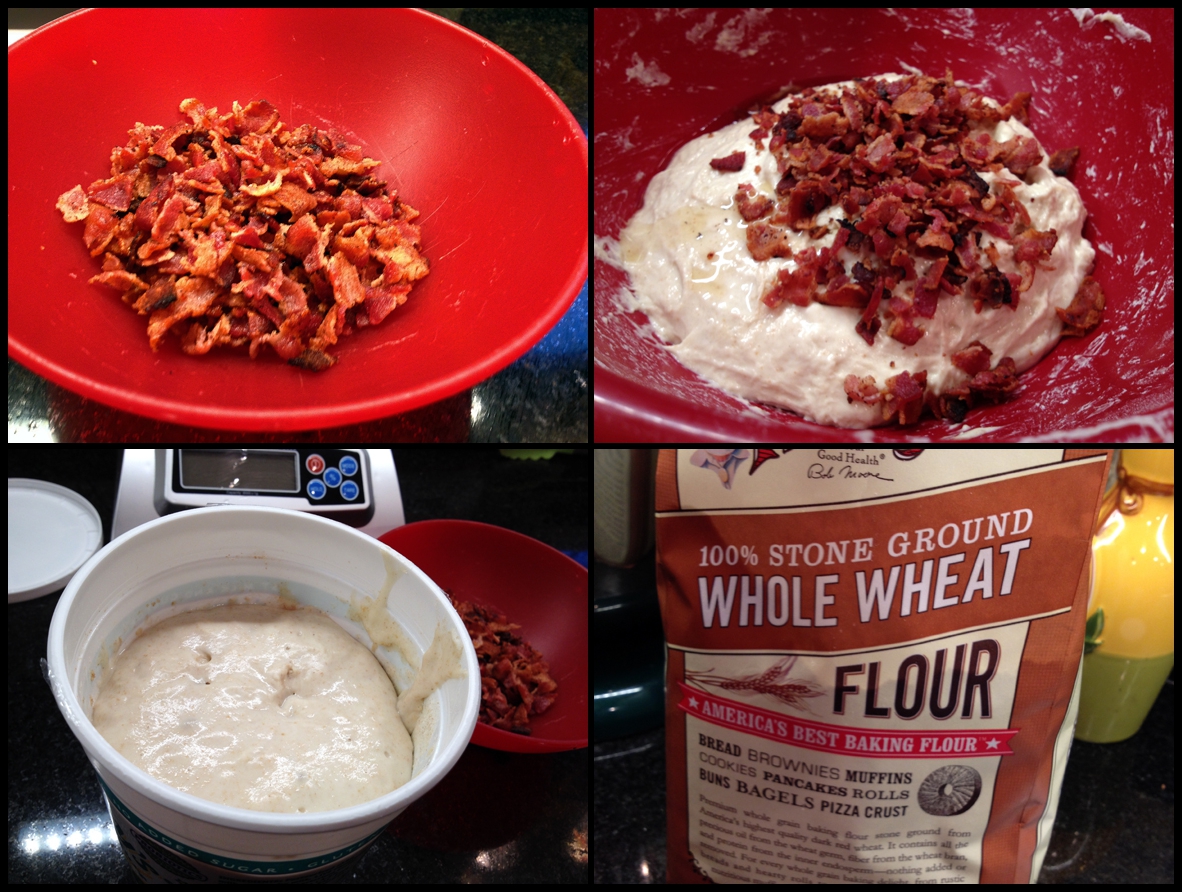
composite1

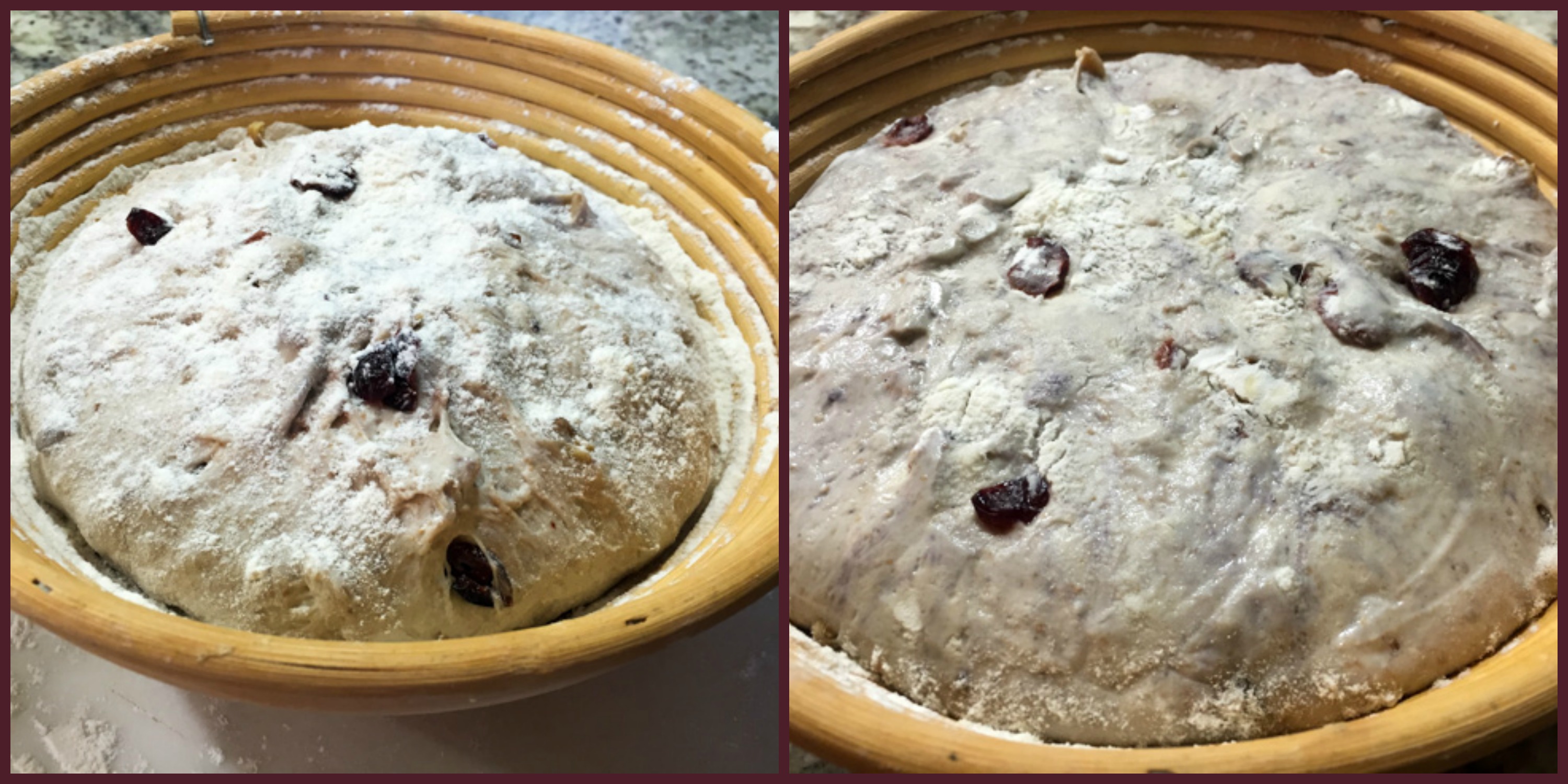
Comments:  After such a long time away from my starter, I get a little anxious when baking a loaf like this.  I was particularly worried about leaving the dough to ferment at room temperature for 12 hours, something I had never done before.  But, the dough behaved exactly as Ken mentioned in the book.  Take a look at these couple of shots:

Before…
Before

After…
After

A very nice, soft, bubbly dough, quite easy to work with and shape as a boule.
Proofing

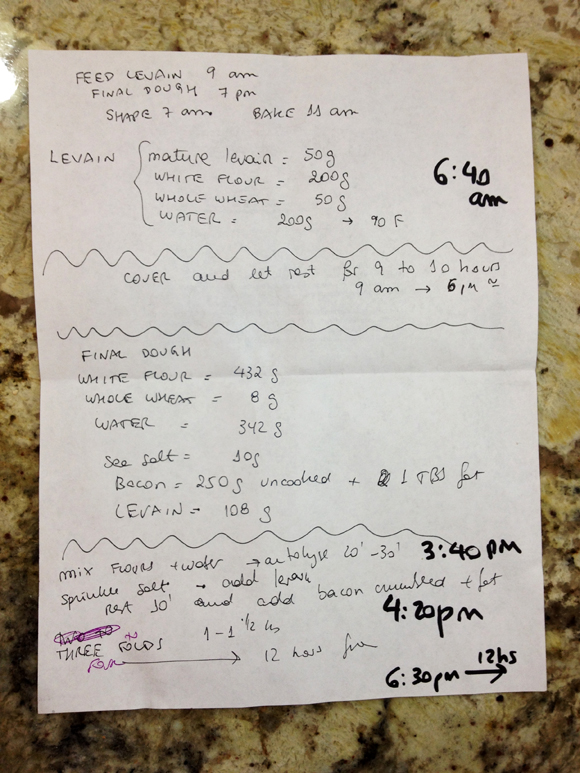
One of the things I love about Ken’s book, is that he offers a sample timeframe for all recipes. Just for fun, I include my notes, prepared the night before. On top you see his suggestion of timing, and as I move along, I jot down my actual timing, adapted to fit my schedule. If you have the book, you may notice I actually halved the recipe to make a single loaf instead of two.

Notes(click to enlarge, if so desired)

The subtle smell of bacon while the bread baked was wonderful!  I made this bread especially to share with my youngest stepson and our great friends from Oklahoma who were coming to visit us the following weekend. So, the bread cooled completely over a rack, rested for a day, and the following morning I sliced it and froze the slices, in small packages.  It is a perfect way to have bread as good as freshly baked at a moment’s notice.

Here is the mandatory crumb shot…
CrumbShot

And the slices on their way to the freezer…

Bagged

This was a superb loaf of bread!  In fact, when we served it – alongside a hearty pasta with Bolognese sauce – it was hard to believe that bacon was the only ingredient added. It tasted very complex, almost as if a mixture of nuts were also incorporated into the dough. Salty, spicy, and smoky at the same time.

Ken, thank you for allowing me to publish the recipe for one of the most flavorful loaves of bread I ever made!I am submitting this post to Susan’s Yeastspotting event…

HAPPY HOLIDAYS, EVERYONE!

maracujaDad and son enjoying a nice passion fruit “caipirinha”…

ONE YEAR AGO: Carrot and Cumin Hamburger Buns

TWO YEARS AGO: Potato Galettes a l’Alsacienne & Book Review

THREE YEARS AGO: Caramelized Carrot Soup

FOUR YEARS AGO: Miso-Grilled Shrimp

FIVE YEARS AGO: Pain Poilane


SESAME AND FLAXSEED SOURDOUGH

This  loaf of bread was made on a whim on a busy weekend mainly devoted to the lab. Tired of refreshing my starter and putting it back in the fridge, I decided that – no matter what – we would be having home-made bread on Super Bowl Sunday.  I had to cheat, though. The dough got spiked with some commercial yeast to speed up fermentation. Let’s hope the Wild Yeast Gods will have mercy on me…  😉
boule1

SESAME AND FLAXSEED SOURDOUGH
(inspired by Hamelman’s Bread)

Starter mix:
2.4 oz bread flour
3 oz water at room temperature
1 Tablespoon mature sourdough culture

Soaker:
1.5 oz flax seeds (about 1/4 cup)
1/2 cup water at room temperature

final dough:
12 oz bread flour
1.6 oz rye flour
2 oz sesame seeds, toasted
5.7 oz water
10 g salt
all the soaker
4.8 oz starter mix (you will have a small amount left)
1/2 teaspoon active dry yeast

Prepare the levain build 12-18 hours before making the final dough. Mix all ingredients and leave in a covered container at room temperature.  At the same time, make the soaker placing the flax seeds with water in a small bowl.  The seeds will expand quite a bit, so use a bowl that will allow that to happen without overflowing.

Next morning, make the final dough by mixing all the ingredients together in the bowl of a KitchenAid type mixer.  Mix on lowest speed for a couple of minutes.  Check the hydration level, adjust if necessary.  Increase speed to medium-low (level 3 of a KitchenAid), and mix for 3 to 4 minutes.

Let the dough ferment in a lightly oiled bowl for 2 and half hours, folding the dough twice at 50 minutes interval. After 2.5 hours, shape the dough as a ball and place in a suitable container for the final proofing.   My bread was ready to bake in 2 hours and 45 minutes.

Bake in a 450 F oven for 45 minutes. If baking covered to generate steam, remove the cover after 30 minutes.  Cool completely before slicing.

ENJOY!

to print the recipe, click here

composite

Whenever I bake a loaf of bread, I go into full scrutiny mode. I stare at the crust,  inspect the edge of the slashing,  and look for small blisters on the surface.  Then, after patiently waiting for the bread to cool,  I cut a slice and start the convoluted process of analyzing the crumb.  Phil knows better and allows me this important “bread-introspection” time before reaching to grab a piece. But, once he senses the green light, it never fails:  “This is good bread”.  Really, this bread is awesome!”   It gives me a thrill… I know he means it, and it puts all my bread scrutiny into perspective.   For instance, I had to stop beating myself up because the holes in the crumb did not organize into the pyramidal shape I love so much.  Oh, well… This is good bread.

IMG_1434
The flax seeds are visible, of course, but the sesame more or less disappears in the crumb. However, the flavor is there beyond any shadow of a doubt, and complements very well the small amount of rye and the hint of sourness.  Everyone watching the Super Bowl loved this loaf, some even preferred to turn the back to the TV and concentrate on it.  😉

Buck2

I am submitting this post to Susan’s Yeastspotting….

ONE YEAR AGO: Green Beans with Miso and Almonds

TWO YEARS AGO: Saturday Morning Scones

THREE YEARS AGO: White Bread

SOURDOUGH MINI-ROLLS

Those who follow my baking adventures know that my favorite type of bread is a sourdough boule, medium to large size.  For some odd reason, when I want to bake small rolls, I always opt for recipes that use  commercial yeast, and result in a softer, more buttery bread.  That is now changed.  I used one of my favorite basic sourdough recipes to bake 6 small rolls, shaped exactly like a large one, and similarly scored.   They turned out so good, I might switch to this type of format for a while. Plus, each roll can be frozen for later, brought to room temperature for a few minutes, then placed in a very low oven (250 F) for 15 minutes or so.  Perfect bread whenever you feel like it!  😉
mini1

SOURDOUGH MINI-ROLLS
(adapted from Hamelman’s Bread)

for starter mixture (make 12 hours in advance)
100 g bread flour
80 g rye flour
110 g water
40 g active sourdough starter (at 100% hydration)

for the bread:
all sourdough made as above
700 g bread flour
20 g rye flour
470 g water
15 g salt

Prepare your sourdough mixture about 12 hours before making the dough.  Heat the water slightly in a microwave until it is lukewarm, and place it in the bowl of a KitchenAid type mixer.  Add the sourdough into the water and mix with your hands to dissolve it. Add both flours, and mix at low-speed until the ingredients form a shaggy mass.

Cover the bowl and let the dough rest for 20 minutes.   Sprinkle the salt over, turn the mixer back on low-speed and knead for about 4 minutes.  Transfer the dough to an oiled bowl and let it rise for about 2 and a half hours, folding the dough every 50 minutes. For a more detailed explanation on folding, click here. You will do a first folding cycle at 50 minutes, another one at 1 hour and 40 minutes, then leave it undisturbed for additional 50 minutes, for a total of 2 and a half hours fermentation.

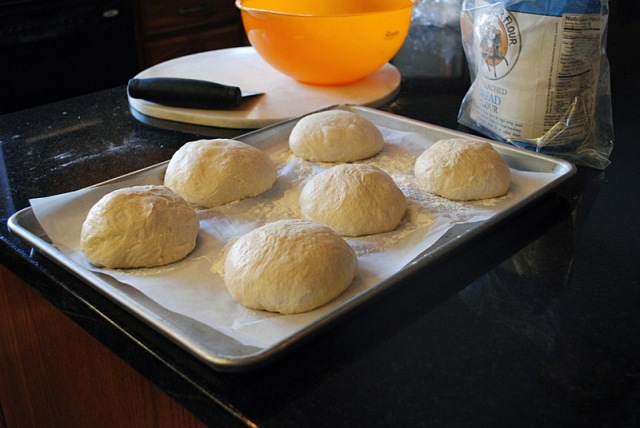
Heat your oven to 450 F. Divide the dough in 6 equal pieces.   Shape each one as a small boule.  Place over floured parchment paper on a baking sheet, flour the surface lightly and cover.  Allow the rolls to proof for 45 minutes.  Score the surface,  and bake for 25 minutes (with initial steam) or until golden brown and the internal temperature over 205 F.   Cool completely on a rack.

ENJOY!

to print the recipe, click here

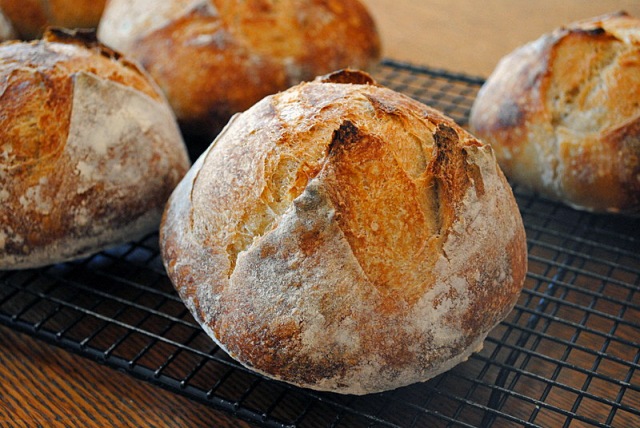
risingComments:  Depending on the method of steam you use for your oven, these rolls can be a breeze to bake.  I decided to use my usual method of inverting a damp roasting pan over the rolls, and to do that I needed to bake three rolls at a time.  Let’s say it was a bit too convoluted and the second batch was slightly over-proofed.  Next time I might just go for a less complicated method, and use a baking pan with hot water at the bottom of the oven.  Whatever method you choose, the steam provides a nicer crust.
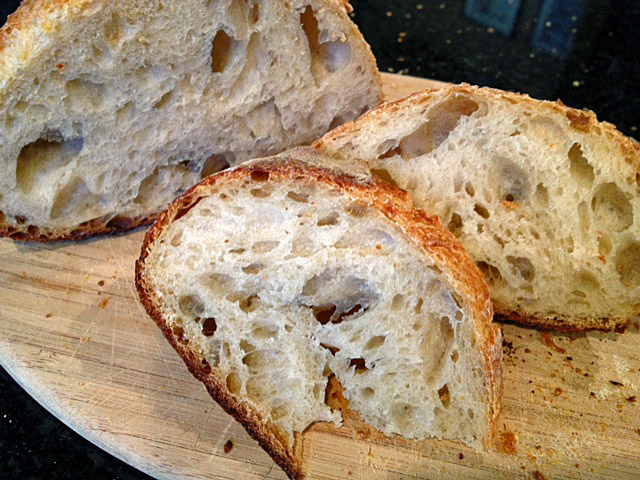
The crumb was moist and creamy, the way we like it, and the crust reminded us of the fantastic baguettes we used to enjoy while living in Paris…  What’s not to like?   😉
crumb

I am submitting this post to Susan’s Yeastspotting

ONE YEAR AGO: Do you eat your books?

TWO YEARS AGO: Mediterranean Skewers

THREE YEARS AGO Fettuccine with Shrimp, Swiss Chard, and Tomatoes

OCTOBER 16: WORLD BREAD DAY!

Six years ago, Zorra started an event called “World Bread Day“. Bakers from all over the world would bake a loaf of bread and blog about it.  This year I am thrilled to participate and chose my favorite type of bread to join the party.  The recipe comes from a very nice book, Artisan Baking, written by Maggie Glezer.  A country French-style loaf called Essential’s Columbia.   The formula comes from George DePasquale, from Seattle’s Essential Baking Company.

The perfect Sunday starts with a batch of sourdough starter all puffed up from getting fed 12 hours earlier.  Before I even have my morning capuccino, the kitchen still dark, I look at my ingredients waiting, and get all excited anticipating the thrill of getting a nice loaf of bread from our oven.   It does help a lot to weigh it all the night before, all you have to do is heat the water in the microwave for 30 seconds or so,  and you are ready to go…

In Glezer’s book, this bread is listed as “advanced”, but it’s actually quite simple to prepare.  It calls for all purpose flour, bread flour, whole wheat, and a little rye.  Also in the formula a small amount of toasted wheat germ, and barley malt syrup.   It uses a very firm starter, probably the firmest I’ve ever seen in a recipe, it is actually more like a dough that ferments for 12 hours and then is incorporated in the mixture of flours, salt, and water.    A very slow and long fermentation, with the help of my bread proofing box.  Amazing how the two banettons fit just right inside!

After shaping, the oblong loaf proofed for 3 hours, and the round one for almost 4 hours, as I could not bake them at the same time.  Not much difference in the crumb, which was a bit surprising to me. I expected the round loaf to have a slightly more airy inner structure.  But bread is bread,  its temperamental nature one of the things I love the most about it.

I could not find a way to contact Maggie Glezer to get her official ok to publish the full recipe, but it is available online in a couple of blogs, so you can find it.  But the book is a must-have for anyone with a passion for wild yeast, so consider providing that little boost on the economy.

My batard shaping was a little better than usual, but still needs improvement… gotta keep going at it!

The perfect Sunday ends with a couple of loaves resting on the counter….

and the perfect Monday starts with a small gift to the Department!   😉

I am submitting this post to Susan’s Yeastspotting…    and I invite you to visit the roudup of breads at Zorra’s site!

ONE YEAR AGO: The US Listeria Outbreak 2011

TWO YEARS AGO: 36 Hour Sourdough Baguettes

THREE YEARS AGO: October 16 is World Bread Day