VANILLA-CHAI CUPCAKES

A celebration of Fall in cupcake format… Decorated with tiny tuile cookies, in the shape of maple leaves.

VANILLA-CHAI CUPCAKES
(from The Bewitching Kitchen)

makes 10 cupcakes

120g all-purpose flour
150g granulated sugar
50g butter, unsalted and at room temperature
1 large egg
140mL milk
1 1/2 tsp baking powder
1/4 tsp salt
1/2 tsp vanilla paste or extract
1 tsp chai powder (or make a spice mix of your liking

Heat the oven to 350F and line a cupcake pan with paper baking cups.

Put the flour, baking powder, sugar, salt and butter cut in small pieces in the bowl of a KitchenAid type mixer fitted with the paddle attachment. Mix on medium-low until the butter is in very small pieces, almost like sand. 

Whisk the egg with the milk, vanilla and chai powder, and add slowly to the mixer running in low-speed. Once it is almost smooth, increase the speed to high for a couple of minutes, scraping the bottom of the bowl once. 

Stop the mixer and make sure the batter is fully smooth, mixing by hand with a spatula. Add batter to lined pan, filling half-way full only. Bake for 15 to 18 minutes, until a toothpick comes out clean when inserted in the center.
Leave cool completely before decorating.

For the tuile cookies:
20g egg whites
20g melted butter
20g granulated sugar
20g all-purpose flour

Mix all ingredients and whisk well. Make sure butter is liquid but not too warm. Spread over your template, lift the template gently. Bake at 375F for 5 to 7 minutes, until fully cooked. Air-brush if you like, draw the details with a fine tip pen.

For the buttercream, use this recipe, starting with 226g of butter. Separate in two batches, dye one light brown, leave the other plain. Spoon tow lines of icing over a plastic wrap, make a little sausage and insert in a piping bag fitted with 1M tip. Ice the cookies when fully cool, add sprinkles and the tuile decorations.

ENJOY!

to print the recipe, click here


Comments: These cupcakes are wonderful for Fall, particularly if you make the maple leaf decorations. You can also use fondant or modeling chocolate with a silicone mold, but I was anxious to try my hands at the template I had sitting in my drawer for a while. I have not found it where I bought, it is out of stock, but you can see it here.

The Chai powder is a great ingredient, I’ve been using it in cookies, macarons, and now on cupcakes. Available in the place that sells it all (click here), and that I keep trying to fight against but don’t have enough will power, apparently.

ONE YEAR AGO: Marbled Travel Cake, Brigadeiro Style

TWO YEARS AGO: Thai Carrot and Sweet Potato Soup

THREE YEARS AGO: Vanilla Mini-Cakes with Honey Pears

FOUR YEARS AGO: Buttermilk Roast Chicken

FIVE YEARS AGO: Cauliflower and Sweet Potatoes in Yogurt-Curry Sauce

SIX YEARS AGO: Panettone, Wild-Yeast Version

SEVEN YEARS AGO: Turkey Chili Under Pressure

EIGHT YEARS AGO: Tiramisu Macarons

NINE YEARS AGO: Cider Mini-Cheesecakes with Caramel Sauce

TEN YEARS AGO: Rustic Ciabatta and Mini-Meatloaves

ELEVEN YEARS AGO: Green Rice

TWELVE YEARS AGO: Potato-Crusted Italian Mini-Quiches

THIRTEEN YEARS AGO: Beetroot Sourdough for the Holidays

FOURTEEN YEARS AGO: Cod Filet with Mustard Tarragon Crust

FIFTEEN YEARS AGO: Soba Noodles: Light and Healthy

SIXTEEN YEARS AGO: Potato-Rosemary Bread

CAKES TO CELEBRATE EASTER


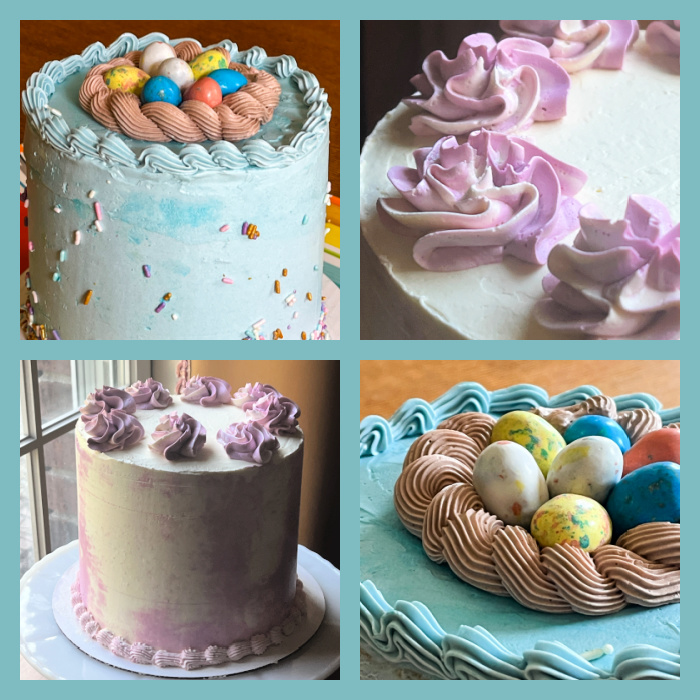
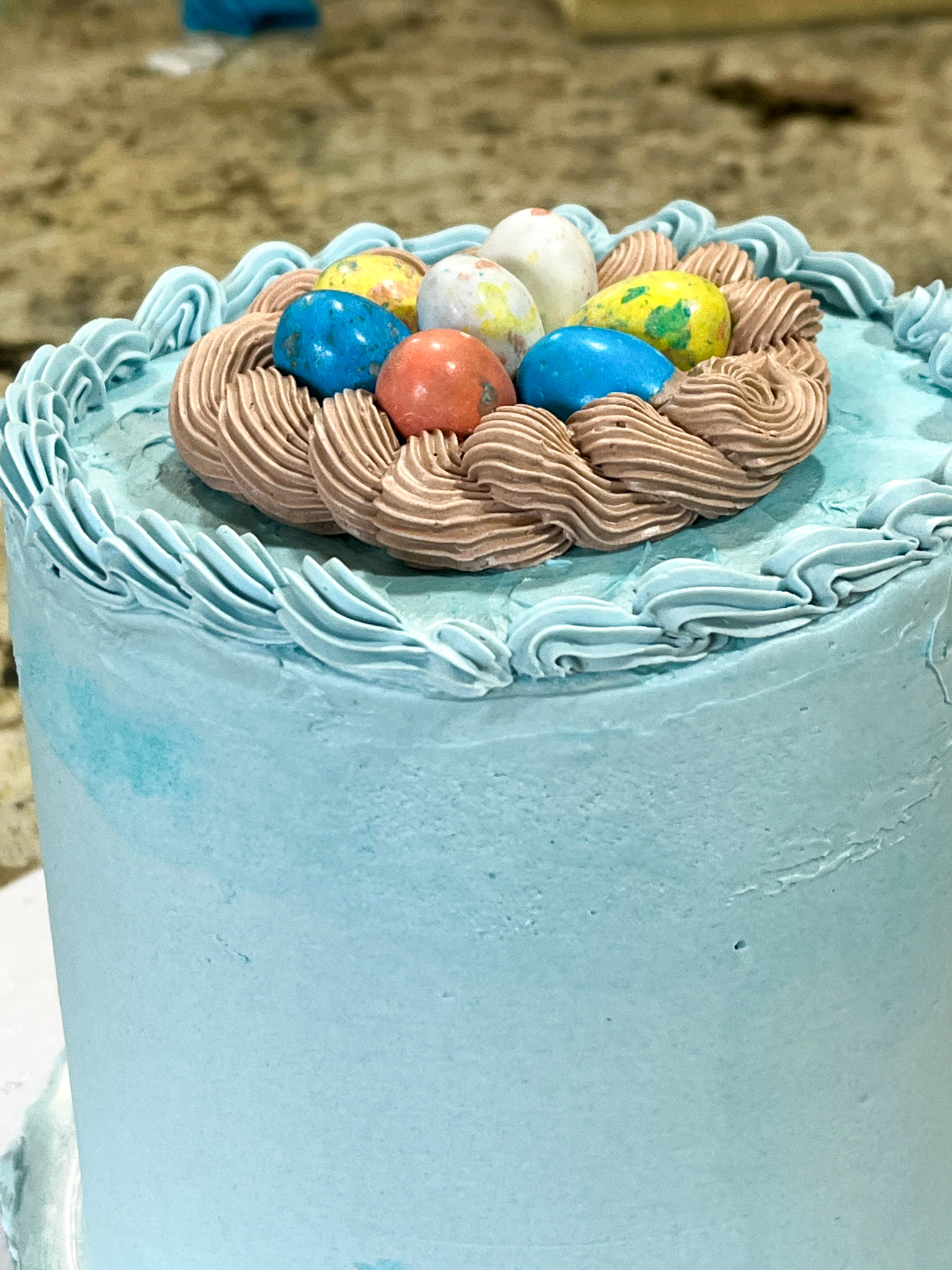
I am thrilled to share these because they were my first cakes frosted using my electric turntable, a wonderful gift from my hubby last month (check it out at my last In My Kitchen post). Amazing how much easier it was to get a smooth frosting! Without further ado, here is the first cake, fully dressed for an Easter Party.

.

VANILLA-ALMOND CAKE WITH RASPBERRY FILLING
(from The Bewitching Kitchen)

345 grams (3 cups) cake flour
2 teaspoons)baking powder
½ teaspoon baking soda
½ teaspoon salt
226 grams (2 sticks) unsalted butter, softened
375 grams (1 + 3/4 cups) granulated sugar
2 teaspoons vanilla extract
1 teaspoon almond extract
160 grams egg whites (about 5 eggs)
170 grams (¾ cup) sour cream
170 grams (¾ cup) whole milk
Swiss meringue buttercream for frosting
seedless Raspberry jam for filling

Prepare three 6-inch round cake pans lining them with parchment and spraying with baking spray.

Heat oven to 350F.

Sift together the cake flour, baking powder, baking soda and salt. Reserve. Mix the sour cream and milk together, making sure they are at rom temperature and well incorporated. Reserve.

n the bowl of a stand mixer fitted with the paddle attachment, combine the butter and sugar. Cream together on medium speed until very light and fluffy, about 5 minutes. Stop the mixer and scrape down the sides and bottom of the bowl halfway through mixing. Slowly pour in the egg whites while the mixer continues running.

Alternate adding the dry ingredients into the bowl in three additions with the milk/sour cream mixture in two additions, starting and ending with the dry ingredients. Mix on medium speed between additions until almost fully incorporated. Finish mixing by hand with a spatula.

Transfer the batter into the prepared pans. Bake for about 25 minutes, until a tester comes out clean or with just a few moist crumbs attached. Cool the cakes in their pan completely on a cooling rack before turning out of the pan.

SWISS MERINGUE BUTTERCREAM

Basis formula: 1X egg whites + 2X sugar + 2X butter

For the three layer 6-inch cake I started with 200g egg whites. The magic is all in the temperature control.

Start by dicing your butter and placing at room temperature for at least a couple of hours before making the buttercream. The reason for that is the closer the temperature of the egg whites/sugar and the butter match each other, the smoother the whole preparation will go. All problems with Swiss meringue buttercream happen when there is a sharp difference between those temperatures.

Mix sugar and egg whites and whisk well, then over a bain-marie bring them to 140 F minimum. I take it to 149F because I find it makes a nicer emulsion to work with. Place in a KitchenAid type mixer fitted with the whisk attachment and whisk on high speed for about 10 minutes. You want a stiff meringue.

Most recipes will tell you that it will be enough to bring the mixture to room temperature level, or not feeling warm if you touch the bowl. However, if you measure the temperature inside the bowl you will notice it will probably still be at mid 90’s Fahrenheit, way above the butter that is waiting to be incorporated.

My advice is to turn the mixer off and walk away. Come back in 10 minutes, give it a 20 sec mix, check, the temperature. Still a bit too high? Walk away and repeat the process. I find that if the egg white mixture is around 80F it will be ok to incorporate with the butter, which might be around 72F or so.

Now start incorporating the butter with the mixer running, you can squish it with your fingers as you drop them to help incorporate even better. Once all the butter is added, whisk at high speed for a couple of minutes, change to the paddle attachment and mix for another couple of minutes to smooth out air bubbles.

Two problems might happen if the temperature was not a real good match: buttercream will be grainy (butter too cold), or soupy (meringue too hot). Both can be fixed by either warming the bowl (hair-dryer works great), or placing it in the fridge for 15 minutes and whisking again. Contrary to popular belief, Swiss meringue is not that tricky and can always be salvaged even if it looks like Armageddon in a bowl.

For the layers I added a circle of white buttercream on the perimeter of the cake, filled the center with raspberry jam, and repeated that for the upper layer. I crumb coated with white frosting, then dyed most of the buttercream with Sky Blue (just a couple of drops), and the tiniest amount of black to mute the tone. A small portion was dyed brown for the nest. Malted chocolate eggs and sprinkles finished the decor.

ENJOY!

to print the recipe, click here

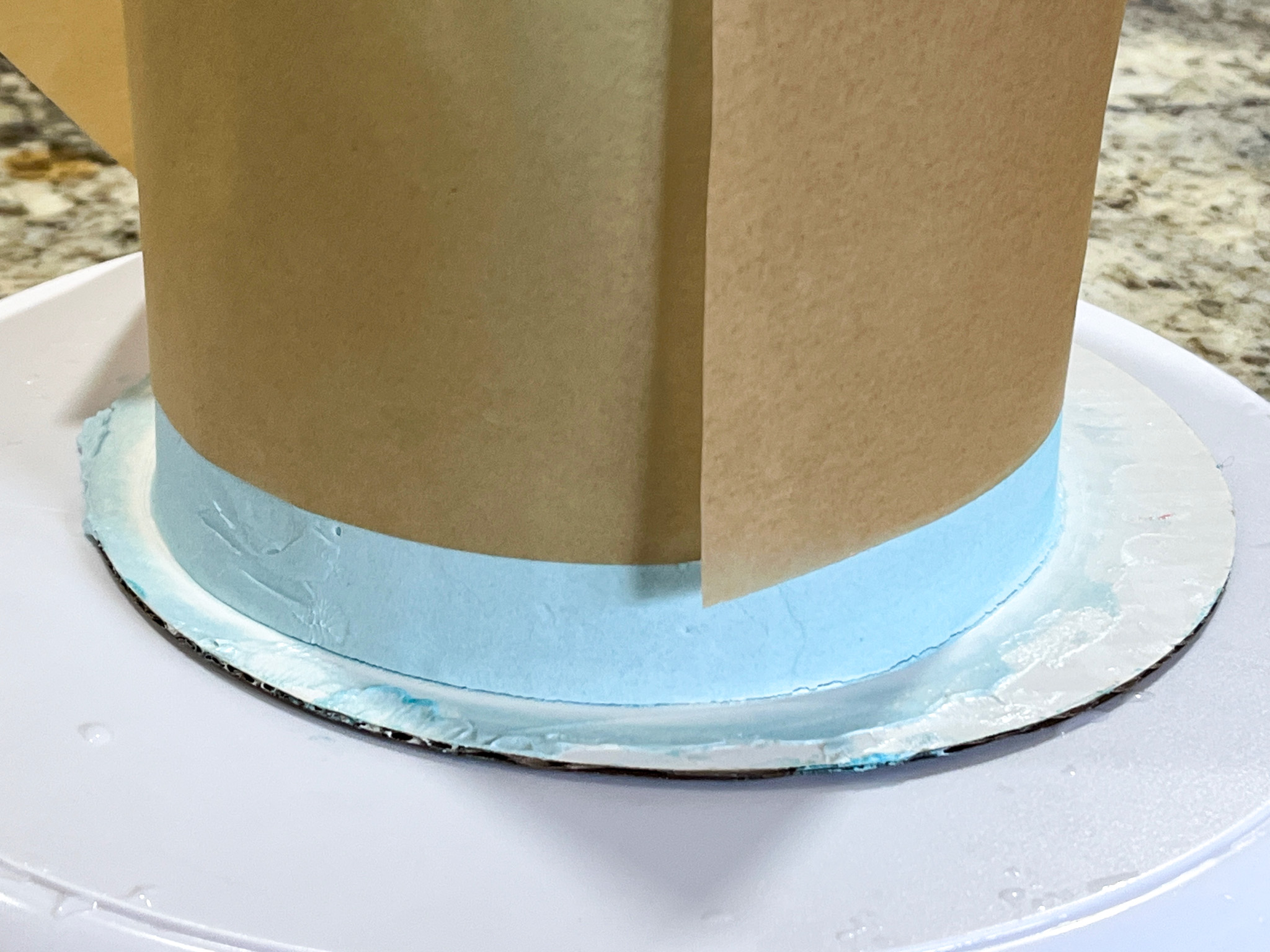
Comments: This is pretty much like a wedding type cake, very white because you omit using egg yolks. It is delicate and moist, truly one of my favorites for layered cakes. I adapted the recipe from versions that call for more sugar, I prefer the cake a little less sweet. Sugar is important for structure so there is a limit of how much you can reduce, but this formula works great. My rookie mistake was to use parchment paper to add the sprinkle border at the bottom, and it took me so long to do it, that the buttercream warmed up and the paper got stuck at places. All my hard work to get the smooth surface was a bit compromised, but nothing that strategically placed sprinkles would not fix!

Feedback on the cake was wonderful, I cannot show you the cut cake as I dropped it whole and it was cut later in the evening. But I hope it looked ok inside…

Moving on…

LEMON POPPY SEED LAYERED CAKE WITH BLACKBERRY FILLING

I cannot share this recipe because it is copyrighted from a very interesting book called “I’LL BRING THE CAKE” by Mandy Merriman. It is unusual in the sense that all cakes start from a boxed mix, but they are heavily doctored. If you are totally against boxed mixes, the book is not for you, but I wanted to give those a try and her cakes are quite delicious.

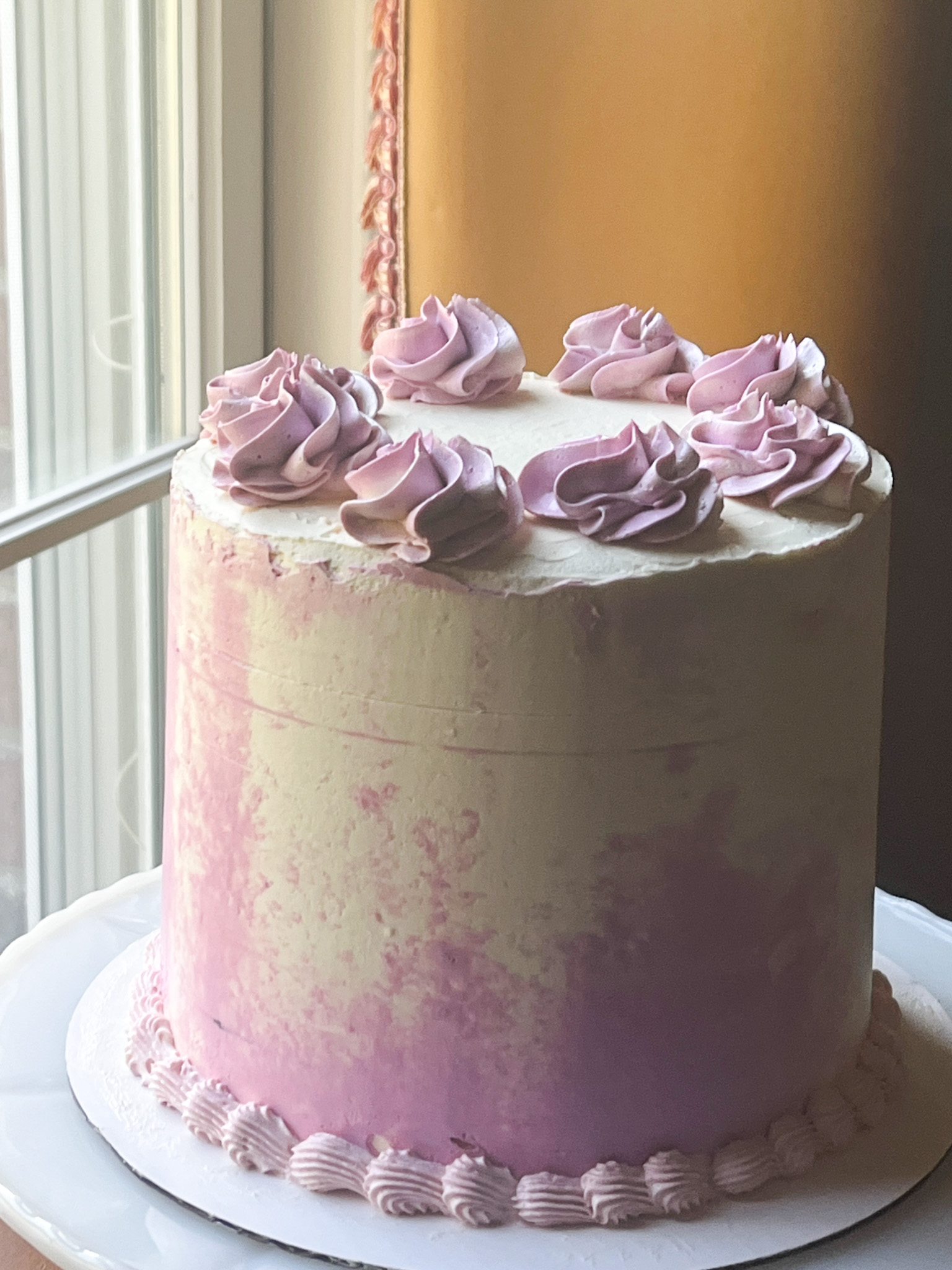
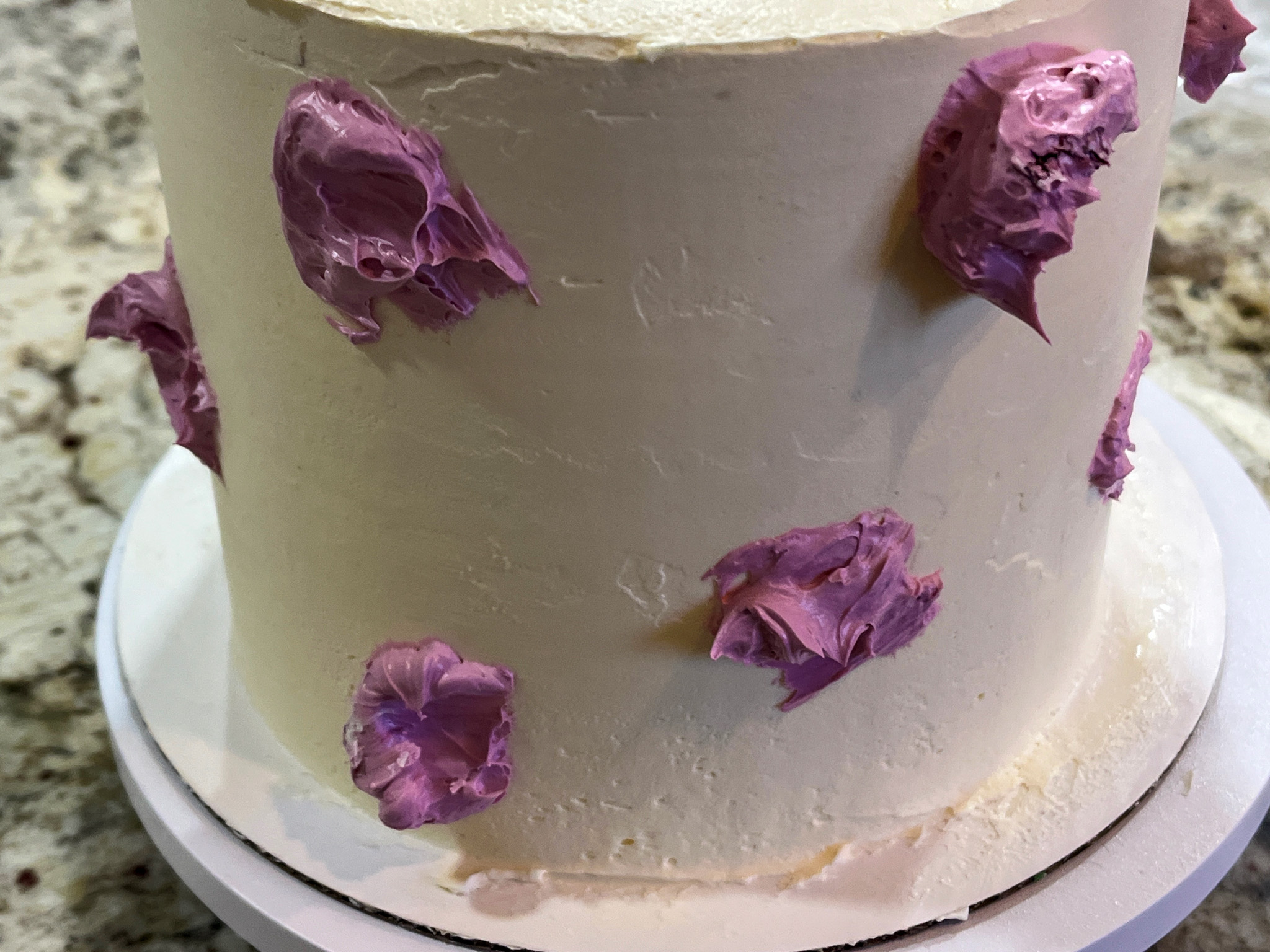
This was my very first cake using the turntable, and I opted for a watercolor effect, which started by adding blotches of darker color all over the frosted cake.

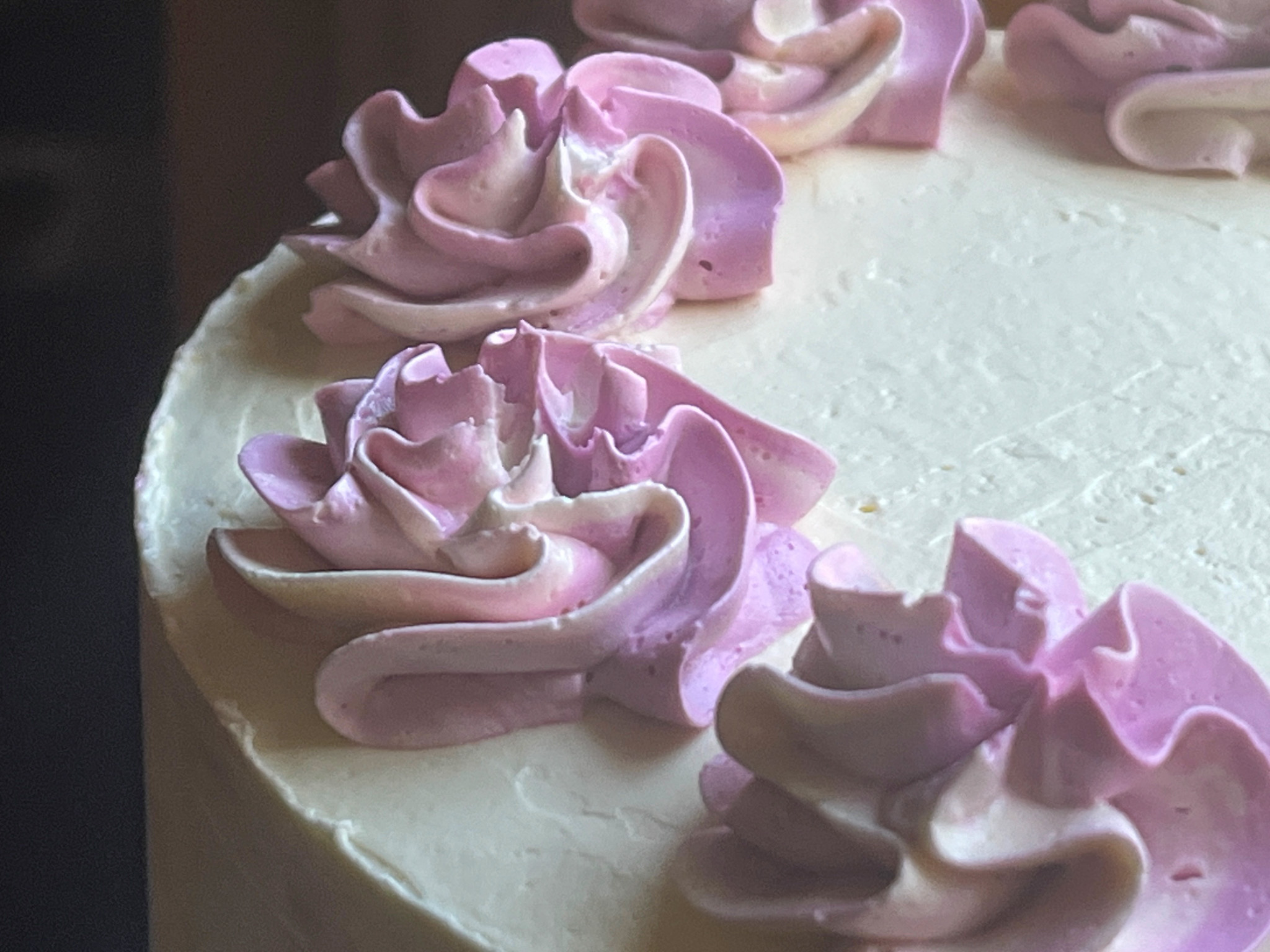
Then you just turn the cake and allow the color to mingle with the background until you are satisfied. For the decorations on top I mixed the white with the mauve-dyed buttercream and used the trusty 1D tip for rosettes.

I hope you found some inspiration for your Easter festivities with this post!

ONE YEAR AGO: Flower Stencil Sourdough

TWO YEARS AGO: Happy Easter!

THREE YEARS AGO: Mini-Blueberry Cakes

FOUR YEARS AGO: Wood Plank Cookies, Learning from the Best

FIVE YEARS AGO: OMG Spinach Pies

SIX YEARS AGO: Avgolemono Soup, My Way

SEVEN YEARS AGO: Sourdough Chocolate Twist Bread

EIGHT YEARS AGO: Dan Lepard Times Three

NINE YEARS AGO: Turkey Portobello Burger

TEN YEARS AGO: Raspberry Ricotta Cake

ELEVEN YEARS AGO: In My Kitchen, April 2014

TWELVE YEARS AGO: Whole-Wheat Pasta with Lemony Tomatoes and Spinach

THIRTEEN YEARS AGO: Blood Orange Duck: A work in progress

FOURTEEN YEARS AGO: Grilled Mahi-mahi with citrus marinade

FIFTEEN YEARS AGO: Memories of Pastéis
FAYE PALMQVIST AND MINI-LOAF CAKES

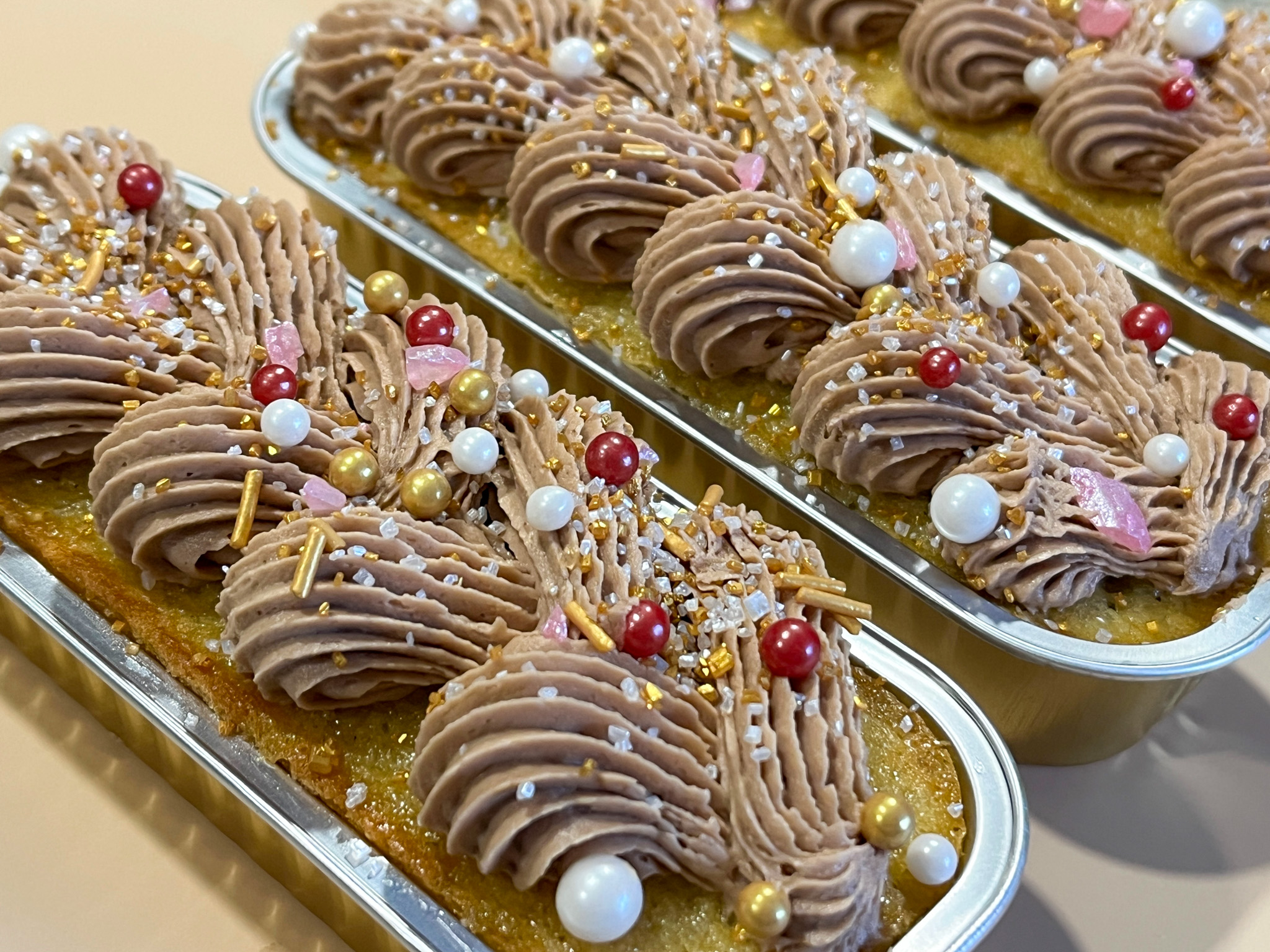
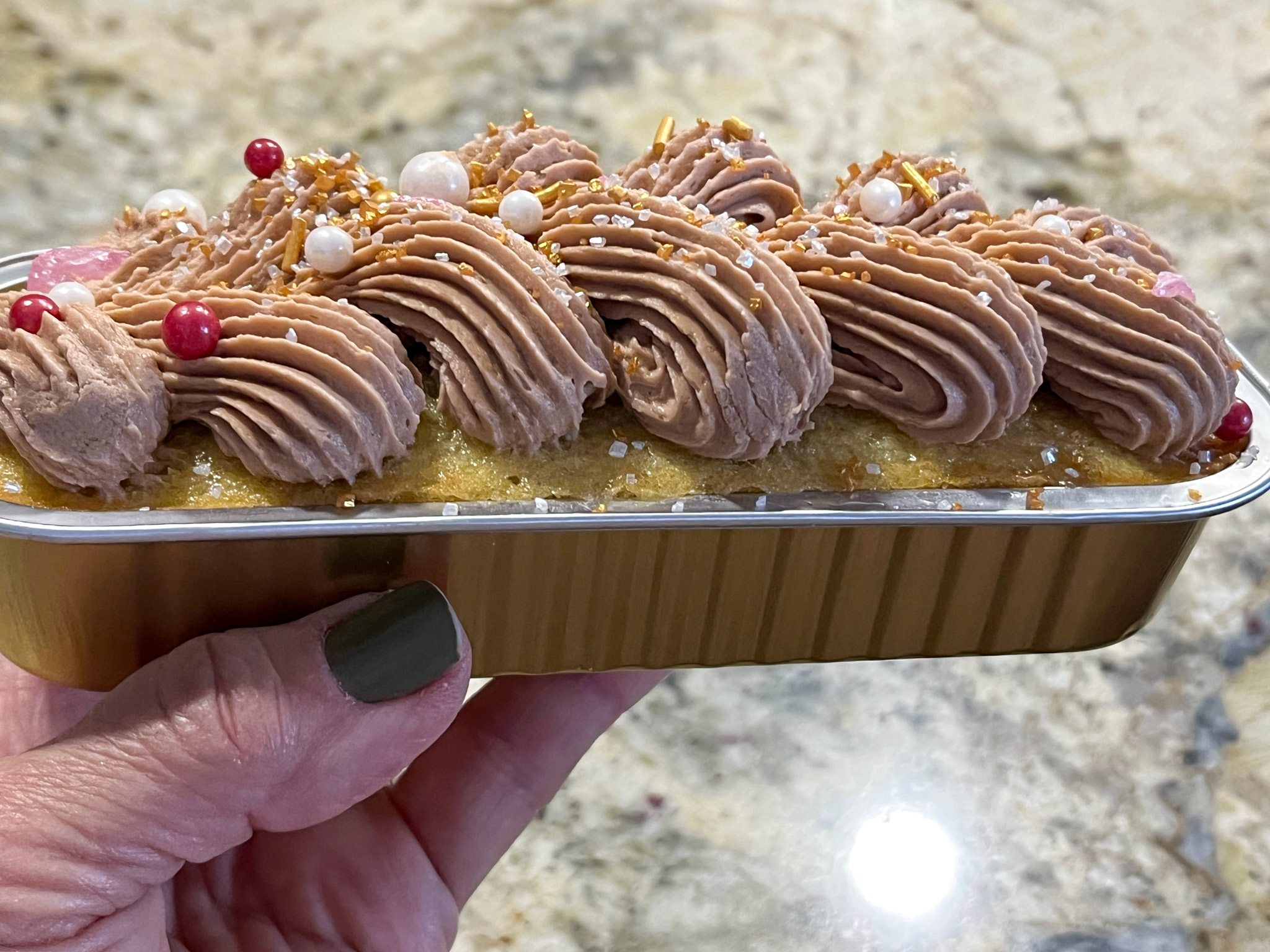
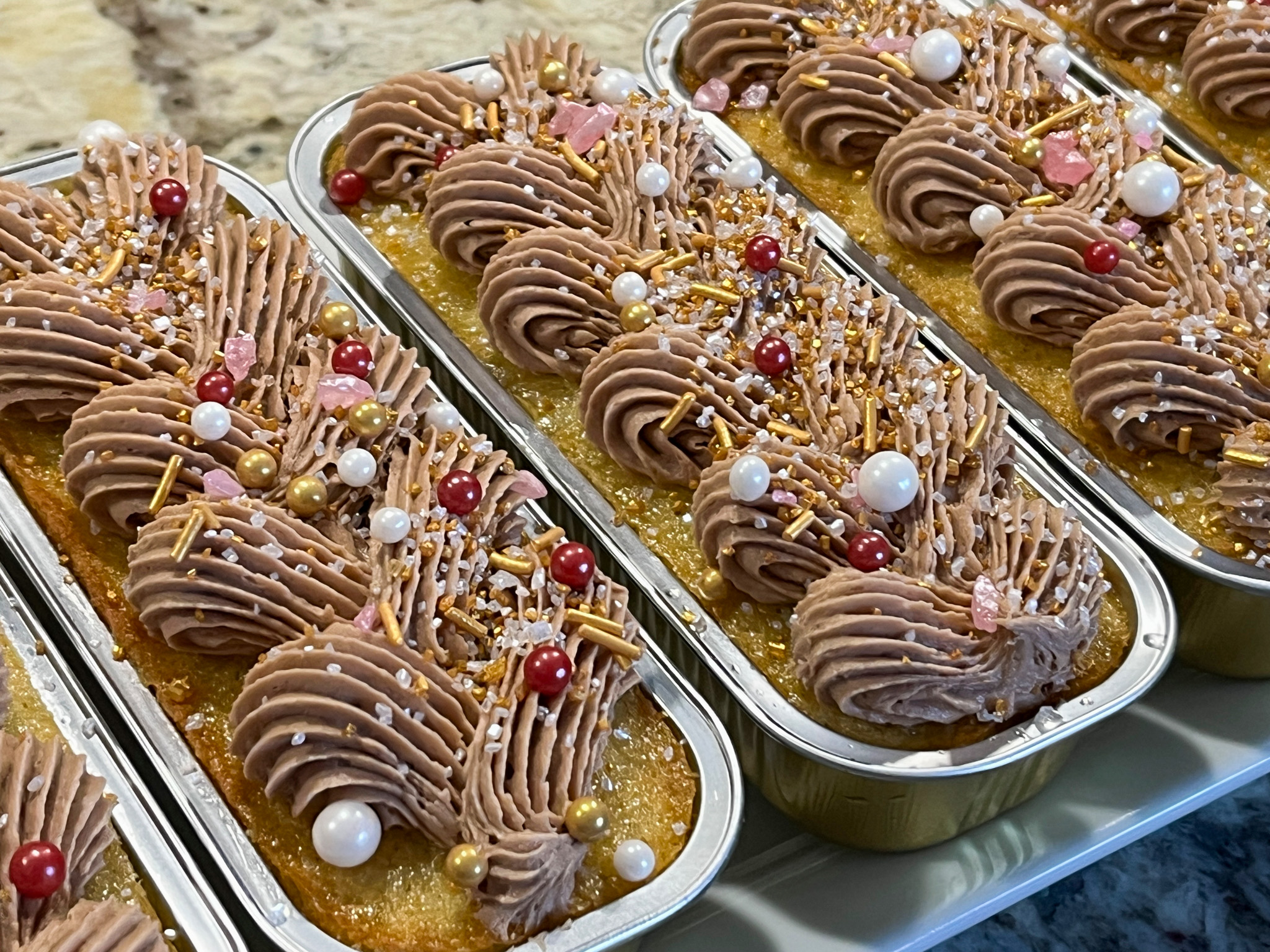
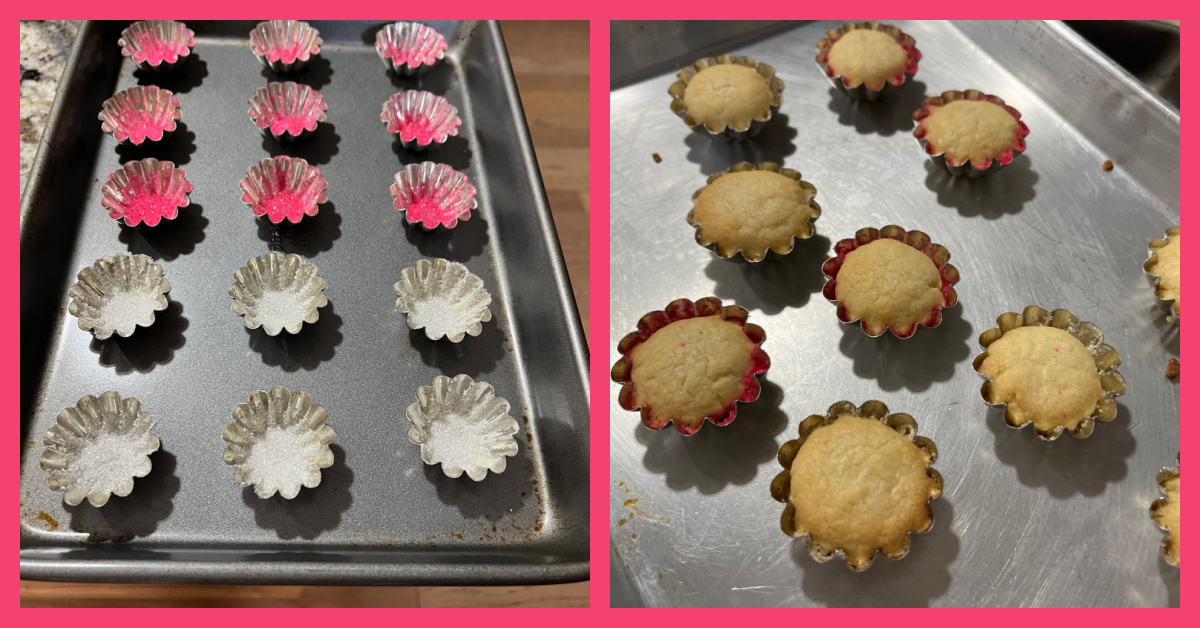
Today I want you to meet (at least virtually) a very special baker, Chef Faye Palmqvist. She hosts a group on Facebook that is geared towards advanced baking, often involving one of her specialties, mini-loaf cakes. They are elegant, unique, and she sure knows how to make them ultra special. You can visit and join her group for free, clicking here. Without further ado, here is my batch of Vanilla Cake following her recipe perfectly adapted for the mini-loaf environment, with a slight twist on her Swiss Meringue Buttercream, incorporating Nutella into it.

I cannot share the recipe, as it is copyrighted from her cookbook, available in her website. But her method produces flawless cakes that bake perfectly in the little aluminum tins (like these ones).

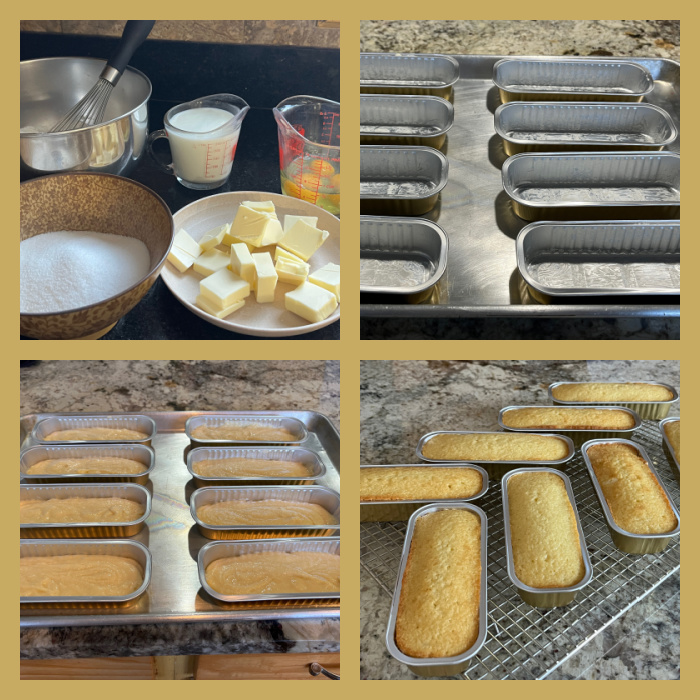
Below, the prep work and the pans before and after baking.

I used one of her methods to pipe the buttercream that I find quite attractive and was suprisingly easy to accomplish!

I hope you join her Facebook group to profit from her knowledge and meet other baking aficionados. On Tuesdays, she posts a feature where you can ask any question about baking, other days are dedicated to professional baking – advice on selling, advertising, stuff like that. And she often encourages members to share pictures of their bakes, so it is a friendly and warm spot in the internet. I feel that is what we all need right now.

ONE YEAR AGO: For the Love of Broccoli

TWO YEARS AGO: Spanakopita, Crackers and the Adventure of Phyllo Dough

THREE YEARS AGO: Chicken Noodle Soup

FOUR YEARS AGO: Floral Chocolate Stick Cookies

FIVE YEARS AGO: Sally’s Spicy Mango and Coconut Macarons

SIX YEARS AGO: Bouillabaise for a Chilly Evening

SEVEN YEARS AGO: Bergamot-Cherry Macarons

EIGHT YEARS AGO: Roasted Veggies with Queso Cotija Dressing

NINE YEARS AGO: Creamy Broccoli and Mushroom Casserole

TEN YEARS AGO: Maple Walnut Biscotti

ELEVEN YEARS AGO: Barley Risotto with Peas

TWELVE YEARS AGO: Oatmeal Fudge Bars

THIRTEEN YEARS AGO: Cauliflower Steaks

FOURTEEN YEARS AGO: Soft Spot for Chevre

FIFTEEN YEARS AGO: Quick sun-dried Tomato Crostini

THREE ADORABLE COOKIES

.

COOKIE #1

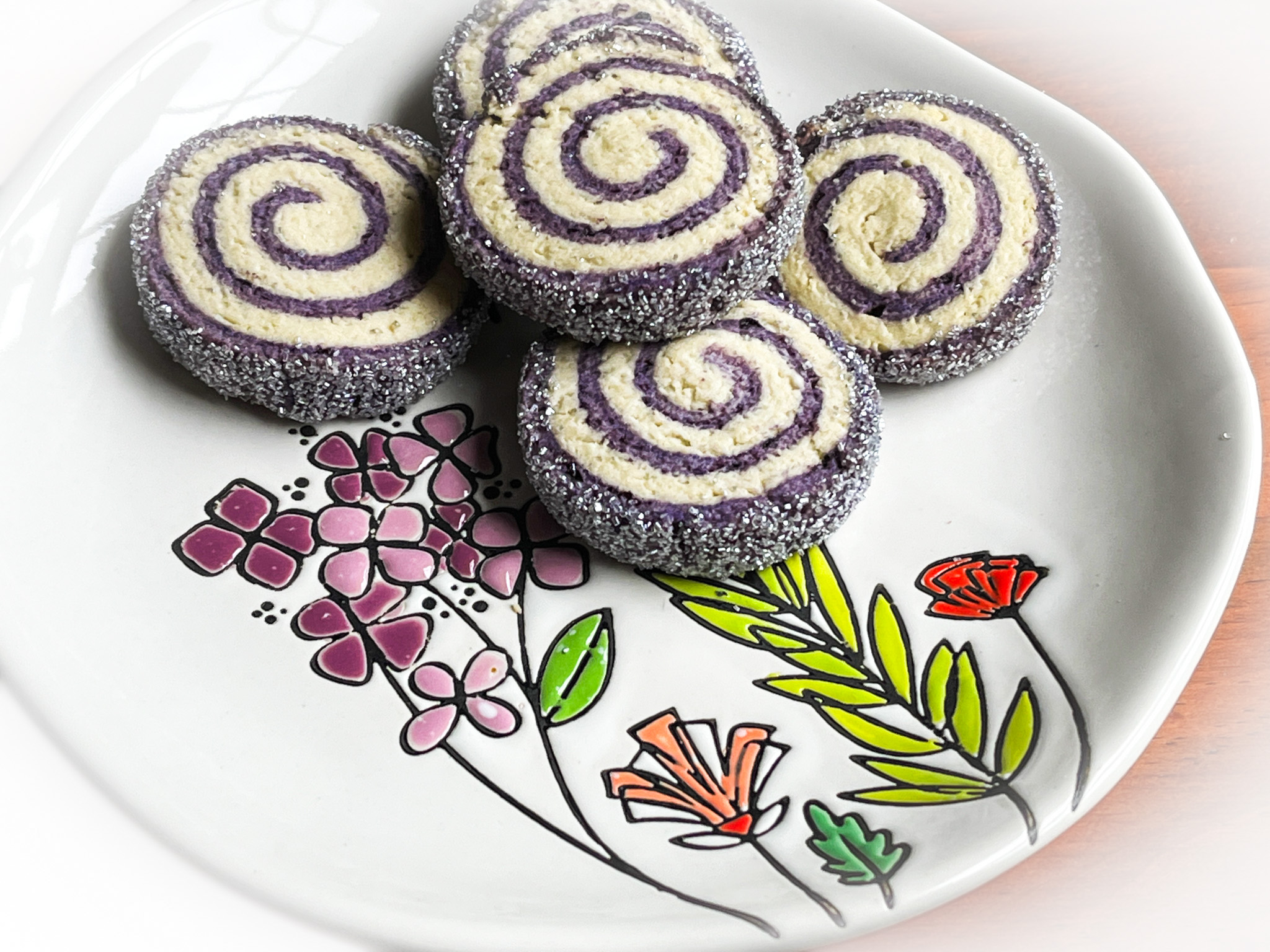
VANILLA ELDERFLOWER PINWHEEL COOKIES
(from The Bewitching Kitchen)

2¼ cups (282 g) all-purpose flour
¼ teaspoon salt
7 tablespoons (98 g) unsalted butter, room temperature
3/4 cup (80 g) powdered sugar
1 large egg, room temperature
1 tablespoon (12.5 g) vanilla sugar
1 tablespoon elderberry powder (like this one)
tiny amount of purple food gel dye, if needed
white coarse sanding sugar

In a medium bowl, sift together the flour and salt; set aside.

In the bowl of a stand mixer fitted with the paddle attachment, beat the butter and powdered sugar together on medium-high until light and fluffy. With the mixer on low, add the egg and vanilla, mix to combine, and then scrape down the bowl using a rubber spatula. Add the flour mixture and use a rubber spatula to mix until well combined.

Divide the dough in half, add elderberry powder and food gel dye to one half, and mix until fully incorporated. Divide both halves of the dough in half again so you end up with two equal portions of vanilla dough and two equal portions of elderberry dough.

On a lightly floured work surface, roll each portion of dough out to a roughly 8-x-10-inch (20-x-25-cm) rectangle. Place a purple dough rectangle on top of a vanilla rectangle and use a rolling pin to gently press them together. Repeat with the other rectangles of vanilla and elderberry dough. Starting with the shorter side, roll the rectangles of dough into logs. Tightly wrap the two logs in plastic wrap and refrigerate for at least 1 hour and preferably overnight.

Heat the oven to 350°F. Line two baking trays with parchment paper or perforated silicone baking mats. Remove a cookie log from the refrigerator and let it warm up for a few minutes at room temperature. Roll on sanding sugar to coat the surface. Using a sharp knife, cut each log into ¼-inch slices. Place on the prepared baking trays and bake for 10 to 12 minutes, or until golden. Repeat with the remaining dough.

ENJOY!

to print the recipe, click here


Comments: Depending on the brand of your elderberry powder, you might not need the food gel dye. I used a very small amount, delivered with a toothpick. The sanding sugar coating is optional but I think it adds a lot to the overall look of the cookie.

.

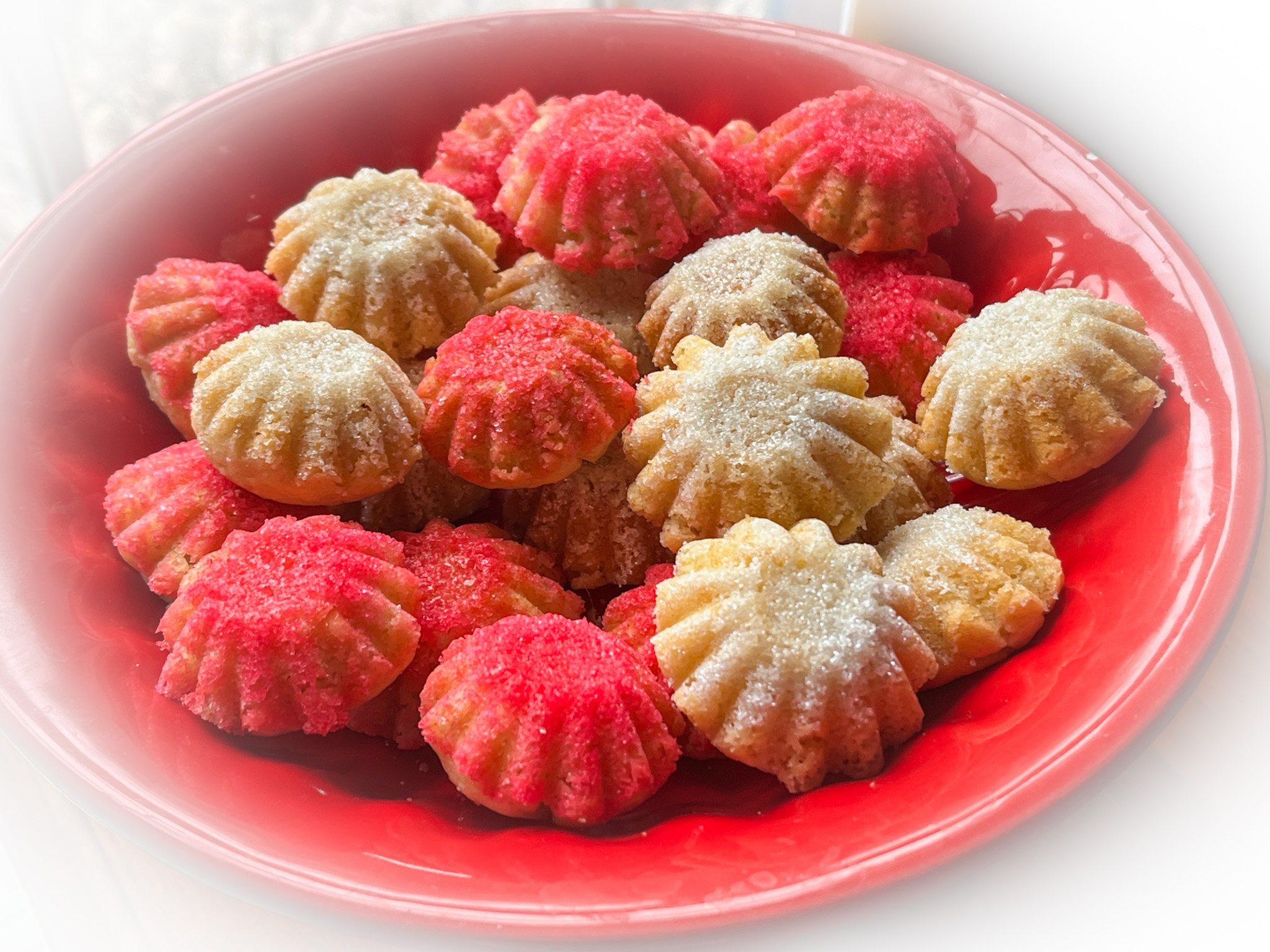
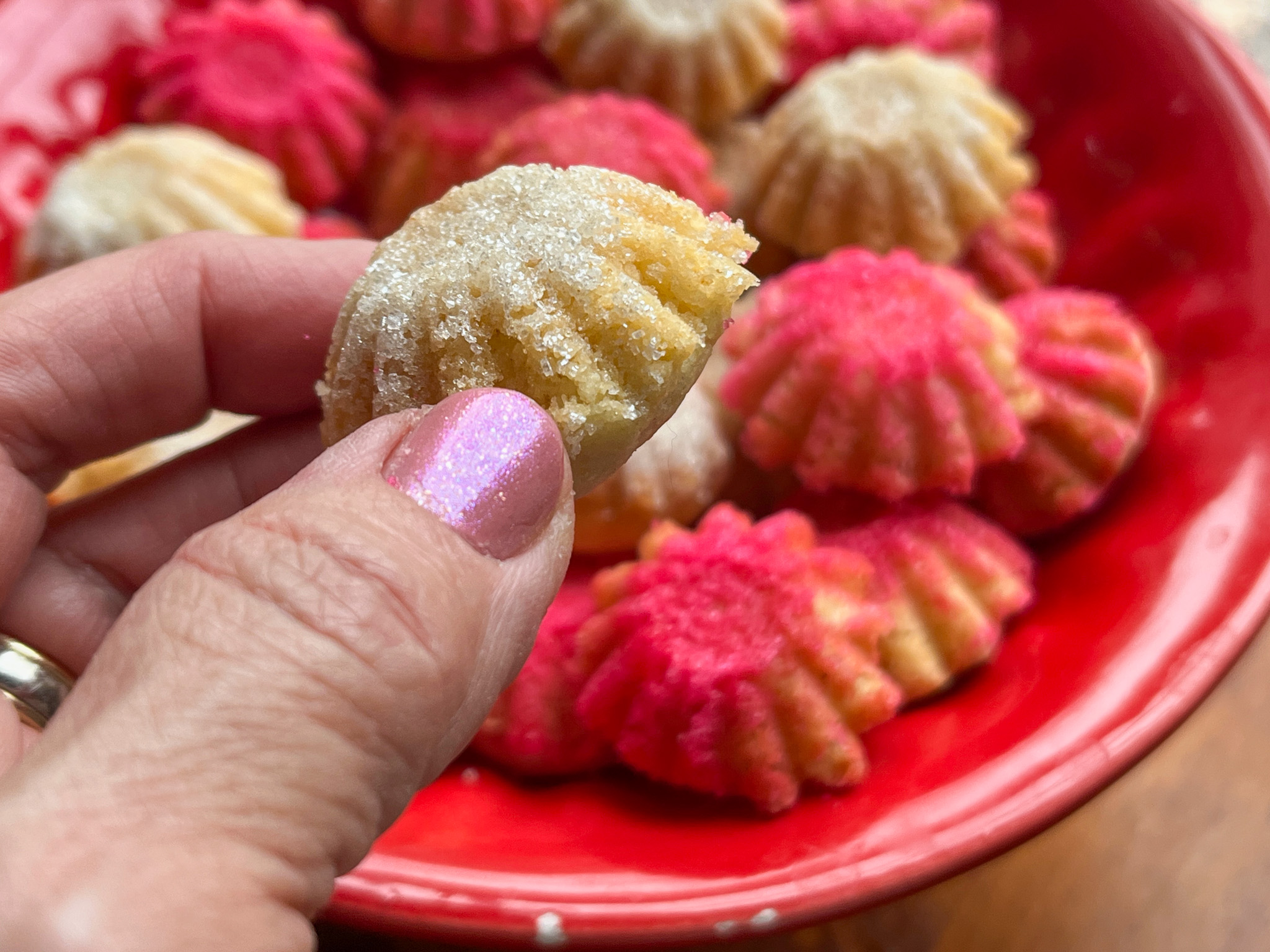
TARTLET MOLDED COOKIES
(adapted from The Art of the Cookie)

200g all-purpose flour
1 teaspoon baking powder
½ teaspoon salt
1/2 cup (113g) unsalted butter, at room temperature
150g granulated sugar
1/2 large egg (whisk and add about half, no need to be too precise)
1 teaspoons vanilla extract
1 tablespoon heavy cream
softened butter to coat tins
pink, red and white sanding sugar

In a bowl, whisk together the flour, baking powder, and salt. In a large bowl, using an electric mixer on medium-high speed, beat the butter and sugar until light and fluffy, 2—3 minutes. Add the egg, cream and vanilla and beat on low speed until the egg is completely incorporated. Beating on low speed, slowly add the flour mixture and continue to beat until almost incorporated.

Press the dough into a disc, wrap tightly in plastic wrap, and refrigerate until firm, at least 1 hour or up to overnight.

Coat the tartlet tins of your choice with softened butter using a brush. Shower them with sanding sugar to form a layer at the bottom and edges. Place the tins on a baking sheet. Press a ball of dough in the tin, filling each 3/4 of the volume. Bake at 350F until set but not getting too much color, 15 to 18 minutes. Let the cookies sit in the tartlets for five minutes then remove gently using a small spatula if needed to help. Tapping the tins should work fine. Careful, they stay hot for a while.

ENJOY!

to print the recipe, click here

Comments: Those are just adorable indeed. Best consumed the same day, but if you keep them tightly closed in a container they will be ok next day. Probably any cookie recipe will work, make sure to make it a little softer than usual for cutout cookies, that’s why the heavy cream is a good addition. Chocolate dough could be great, I intend to give it a try soon.

.


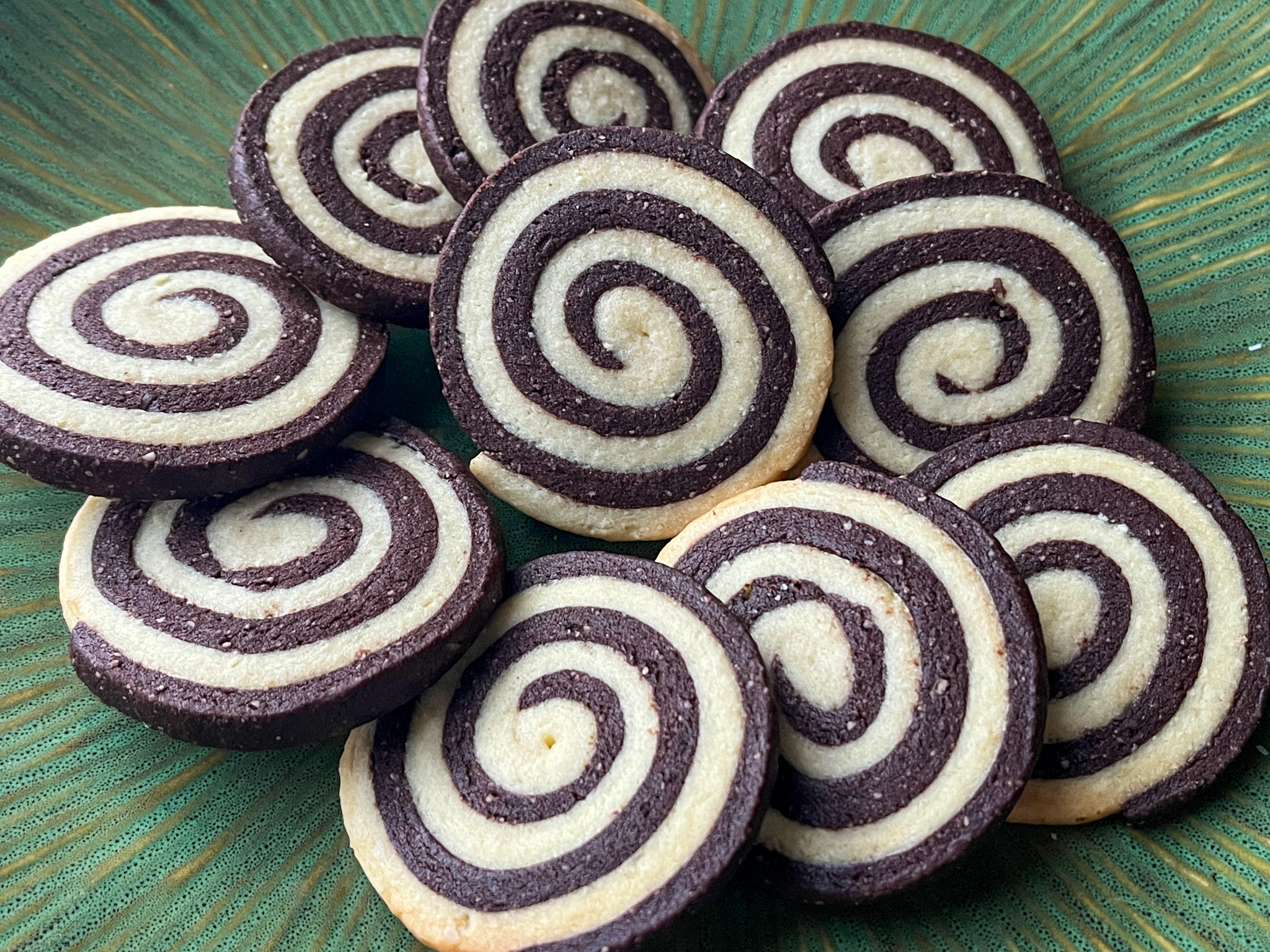
CHOCOLATE AND ORANGE PINWHEELS

You’ll get a perfect swirl using Matt Adlard’s technique! I can’t share the recipe, you need to be part of his BAKE IT BETTER club, which is easy to do with a click here. Totally worth it!

ONE YEAR AGO: Ube Sourdough, Two Ways

TWO YEARS AGO: Brown Butter Dulce de Leche Cookie Cups

THREE YEARS AGO: Chicken Poblano Tortilla Soup

FOUR YEARS AGO: Kung Pao Chicken

FIVE YEARS AGO: Galette de Rois

SIX YEARS AGO: Sous-Vide Overnight Oatmeal

SEVEN YEARS AGO: A Valentine’s Day Opera

EIGHT YEARS AGO: Incredibly Simple Times Four

NINE YEARS AGO: Walnut-Cranberry Sourdough Bread

TEN YEARS AGO: Ottolenghi in Brazil?

ELEVEN YEARS AGO: Roasted Winter Vegetables with Miso-Lime Dressing

TWELVE YEARS AGO: 2012 Fitness Report: P90X2

THIRTEEN YEARS AGO: Caramelized Bananas

FOURTEEN YEARS AGO: Roasted Lemon Vinaigrette

FIFTEEN YEARS AGO: Whole Wheat Bread

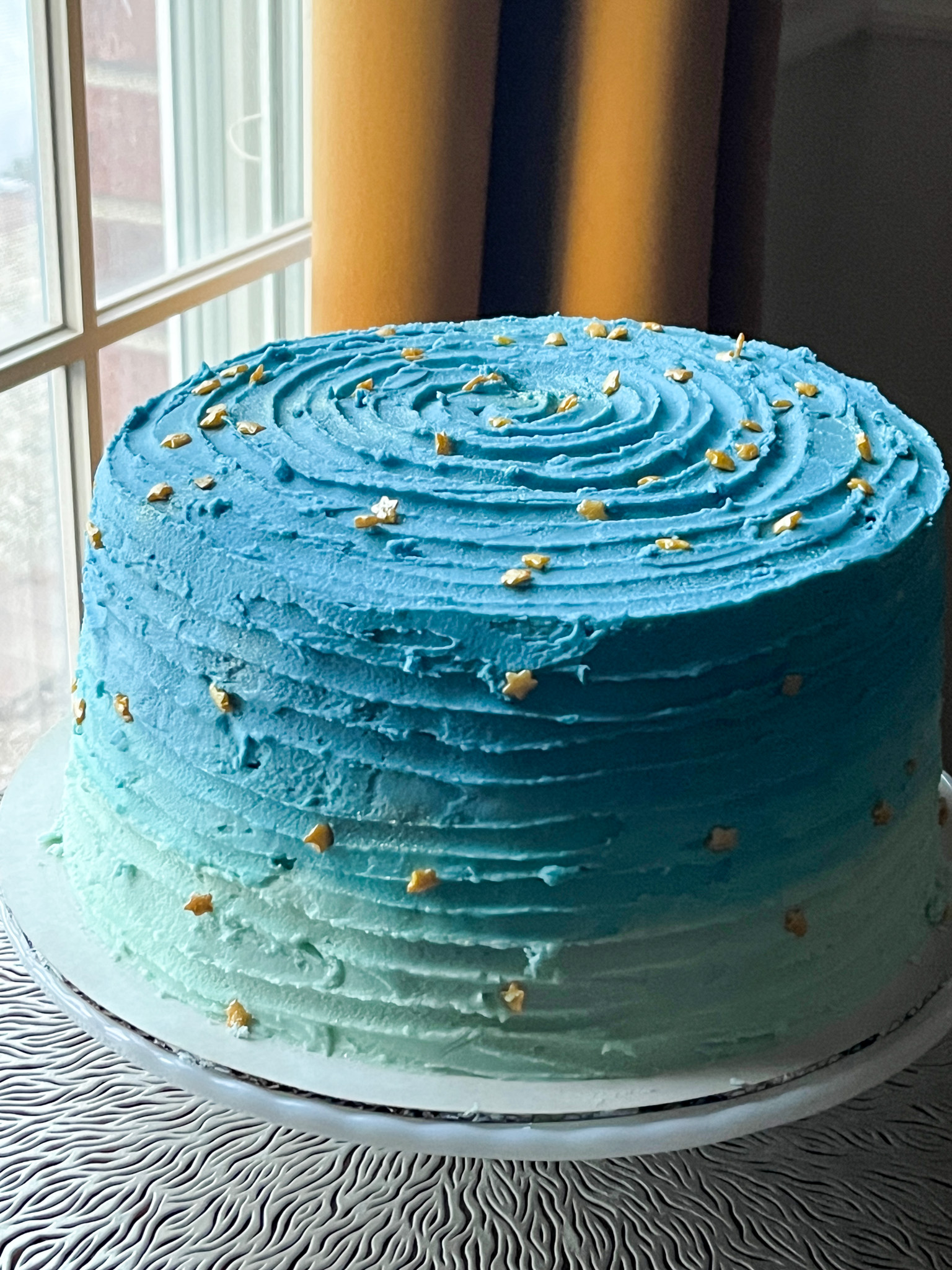
NIGHT SKY OMBRÉ CAKE

Inspiration from this cake came from a book I’ve had for many years: Cake Decorating for Beginners, by Rose Atwater. It is a wonderful book, full of cute ideas, some pretty simple, some a bit more involved. I love ombré style cakes, having done some in the past.


NIGHT SKY VANILLA CAKE WITH CHOCOLATE GANACHE FILLING
(inspired by Rose Atwater)

for the cake:
1 +1/2 cups whole milk 
1/4 cup heavy whipping cream 
2 + 1/2 cups all-purpose flour 
1 cup cake flour 
2 teaspoons baking powder 
1 cup (2 sticks) unsalted butter, at room temperature
2 + 1/2 cups sugar
½ teaspoons salt 
2 tsp buttery vanilla emulsion (from Lorann) 
3 large eggs

Heat the oven to 325 degrees. Grease and flour three 8 x 2 inch round cake pans, line bottom with parchment paper. Reserve.

In a small bowl, mix together the milk and heavy cream. In a medium bowl, sift together the two types of flour and baking powder. Set aside. Cream the butter using a stand mixer and the paddle attachment on medium speed until it’s soft and light, about 2 minutes. Add the sugar and salt and mix until the mixture is light in color and fluffy, about 2 minutes. Add the vanilla, and mix until just combined. Add the eggs, one at a time, mixing for 20 seconds after each egg, scraping down the sides of the bowl as needed.

Turn the mixer speed to low, then add one-third of the flour mixture and mix until just combined. Add half of the milk mixture and mix until just combined, then add another third of the flour mixture. Repeat with the remaining milk and flour mixtures. Divide the batter between the prepared pans and spread it out evenly. Bake for 35 to 40 minutes, until a toothpick or cake tester inserted into the center of each cake comes out clean.

for the ganache filling:
230g dark chocolate, cut in pieces
240g heavy cream

Heat cream until simmering, pour over chocolate in a large bowl. Allow to sit for 5 minutes than whisk gently until smooth. Let it cool for 15 minutes then place in the fridge for 90 minutes. Use a hand held mixer to whip the ganache until lighter and fluffier. Use to fill the two layers of the cake. 

for the frosting:
1 cup (2 sticks) unsalted butter, at room temperature
1 cup vegetable shortening
2 teaspoons pure vanilla extract
3 to 4 tablespoons milk
¼ teaspoon salt
2 pounds (approximately 8 cups) powdered sugar
food gel dye, Americolor Royal Blue and Diamond Black

In a large bowl, use a stand mixer with the paddle attachment, and beat together the butter, shortening and vanilla until smooth and creamy.

Add 2 tablespoons of the milk, the salt, and half the powdered sugar and mix just until combined. Scrape down the sides of the bowl. On low speed, gradually add in the remaining sugar. Add more milk as needed to achieve the desired consistency.

Divide the frosting in three bowls, and one drop of blue to the first bowl, two drops to the second, and 2 drops blue + 1 drop black in the last. 

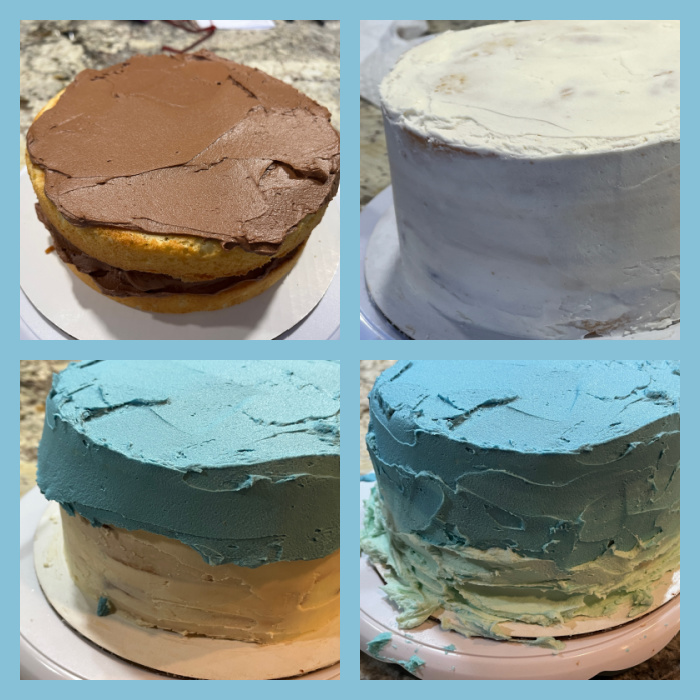
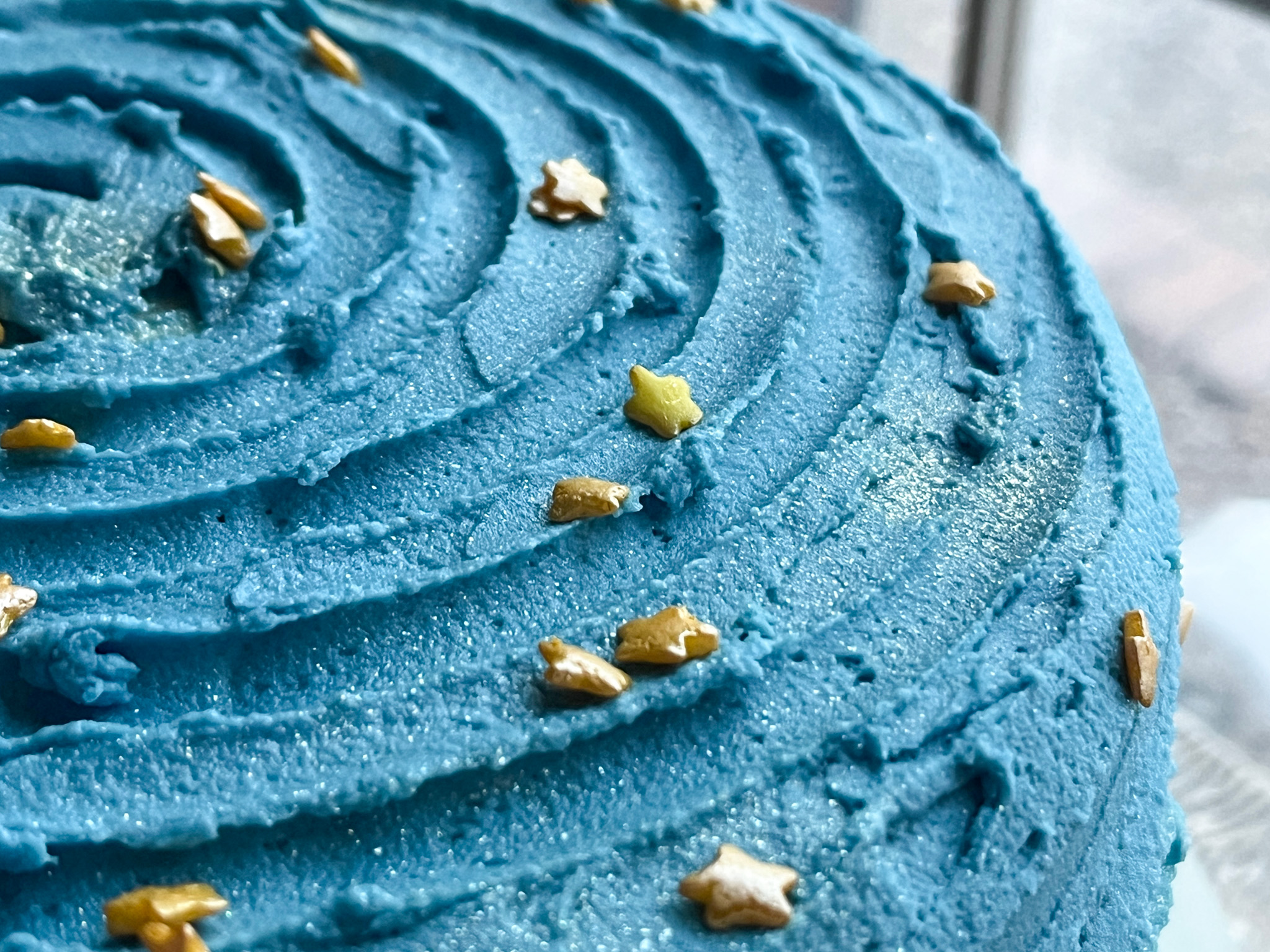
Assemble the cake: Place the first cake on a board, add ganache as a smooth layer on top. Place second cake over ganache, repeat the process. Add last round of cake and press gently. Frost with a thin layer of frosting in the lightest color (or do it before adding any dye to the buttercream). Let the cake cool in the fridge for an hour or more. Frost with the dyed buttercream: cover the top and 1/3 of the height from top to bottom with the darkest color of blue. Add the medium tone to the second third of the cake, and the lightest color to the bottom. Use a scraper to smooth the layers. Add texture with a little spatula as you turn the cake. Add star sprinkles.

ENJOY!

to print the recipe, click here

Comments: I wish I could report on taste and looks as it was sliced, but I donated the cake whole, so my fingers are crossed that the recipients liked it… At any rate, it is hard to go wrong with vanilla and chocolate ganache, right? The buttercream is simple to prepare and crusts nicely in case it needs to sit for hours at room temperature. I love the effect of the different colors. Of course, I had to add some gold dust because I cannot help it… I bet you are not surprised!

ONE YEAR AGO: Veronica Gowan, The Macaron Queen!

TWO YEARS AGO: Almond Raspberry Sandwich Cookies

THREE YEARS AGO: Cole-Slaw with Almond Dressing

FOUR YEARS AGO: Busy Bee Sugar Cookies

FIVE YEARS AGO: Mincemeat Pies, when the third time is a charm

SIX YEARS AGO: Shibari Bread]

SEVEN YEARS AGO: Incredibly Simple Times Four – January 2018 

EIGHT YEARS AGO: Two Salads and a Blog Award!

NINE YEARS AGO: When Three is Better than Two

TEN YEARS AGO: Somebody Stop Me!

ELEVEN YEARS AGO: Zucchini Pasta with Cilantro-Cashew Pesto

TWELVE YEARS AGO: Bran Muffins, Take Two

THIRTEEN YEARS AGO: Brown Butter Chocolate Chip Cookies

FOURTEEN YEARS AGO: Mogo Mojo

FIFTEEN YEARS AGO: Slow-Roasted Chicken Thighs: an Ice-Breaker