THE TABATIERE


Lately I’ve been playing with different, fun ways to slash sourdough boules. One thing led to another, I found myself buying a Craftsy online lesson by Ciril Hitz called The Baker’s Guide to Artisan Bread Shaping.  One of the breads that caught my eye was The  Tabatière,  a classic French style bread (from the region of Jura), shaped to resemble a purse used to hold cigarettes. Talk about traditional bread baking, this is it.  I got so excited about this recipe that I pushed all other blog posts to the side to share it with you right away.

The formula of the bread is actually quite simple, you can use any dough you like, as long as it’s more on the firm side to stand the shaping. For instance, for two small loaves, mix about 1kg dough at 65% hydration.  Roughly that would be 600g flour (you can use a mixture of white with a touch of whole wheat or spelt), 390 g water, 12 g of salt, 3 g of  yeast. Once the bread goes through the bulk fermentation, preferably in the fridge, you can divide it in two, pre-shape them as a ball, then proceed with the final shaping.  You can also follow this recipe that calls for a pre-ferment instead, making a single Tabatiere with it instead of two. Again, the most important here is the hydration level to be kept more or less at 65%. 

IT ALL STARTS WITH THE DOUGH….

Each ball more or less 500g of dough at 65% hydration. Any combination of flours you like.
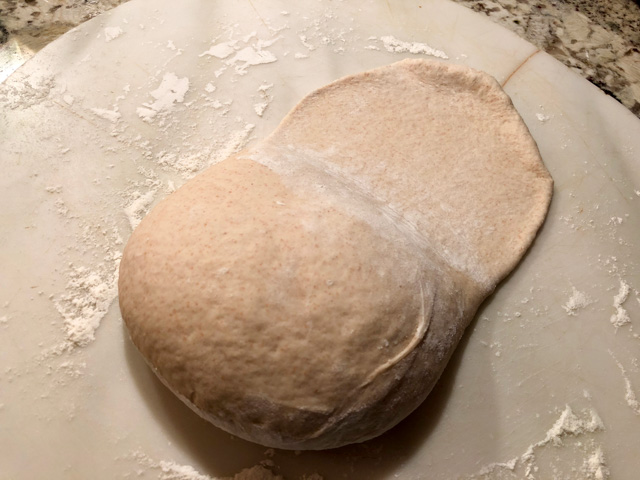
Now place your rolling-pin on the top third of the dough, and roll it to form a flap. You want it to be large enough to cover the whole extension of the other 2/3 of the dough. That’s getting there, but not quite…
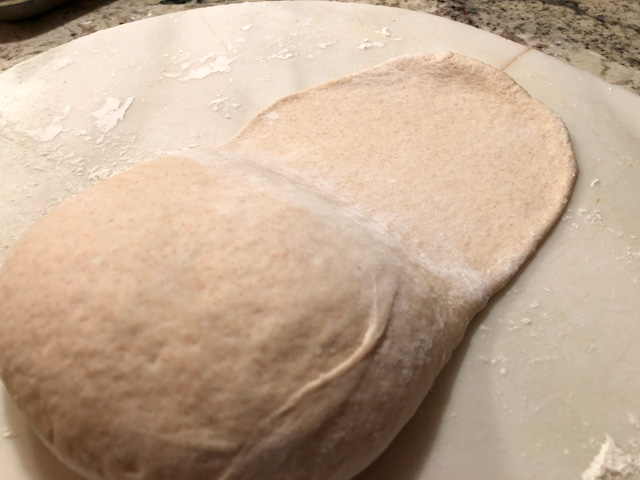
Yes, that’s more like it!
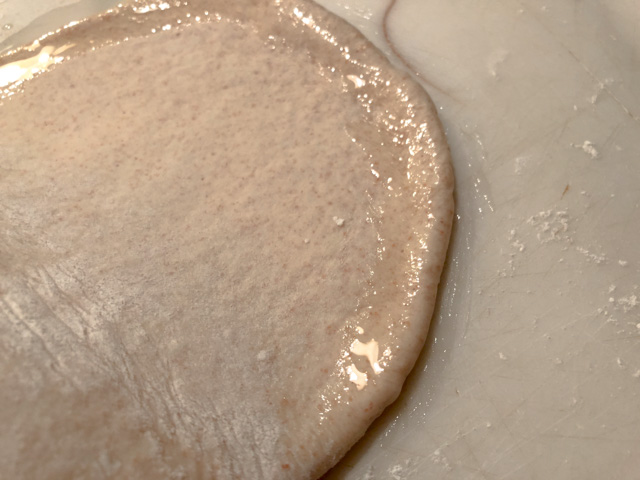
Once it’s the correct size, brush a little olive oil right on the edge, so that the flap will not glue to the ball of dough, and once in the oven, it will be more open.

This composite photo hopefully shows you how the whole process is done.
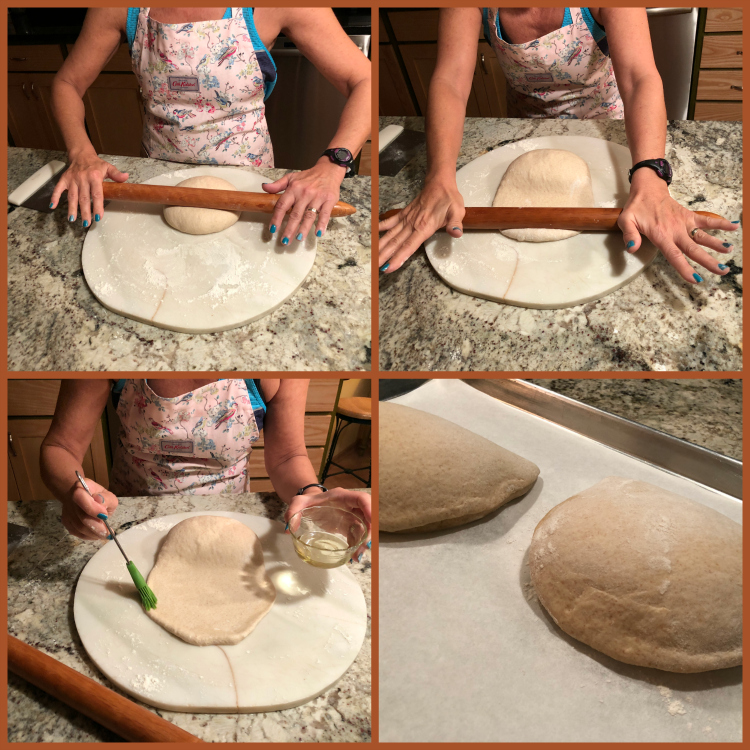
Once the little “purse” is shaped, let the bread rise for 90 minutes at room temperature. Next, give it a nice sprinkle of flour, rubbing it gently on the surface. And with a decisive frame of mind, but keeping in mind that you do not want to cut all the way through the flap you covered the bread with, slash it.  You can use any pattern you like, but this one is considered the most authentic. Slash from the bottom to the top.
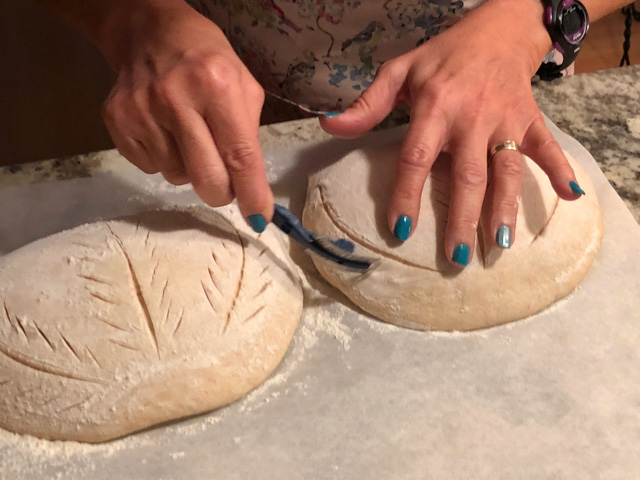
There, the beauty is ready for the oven!
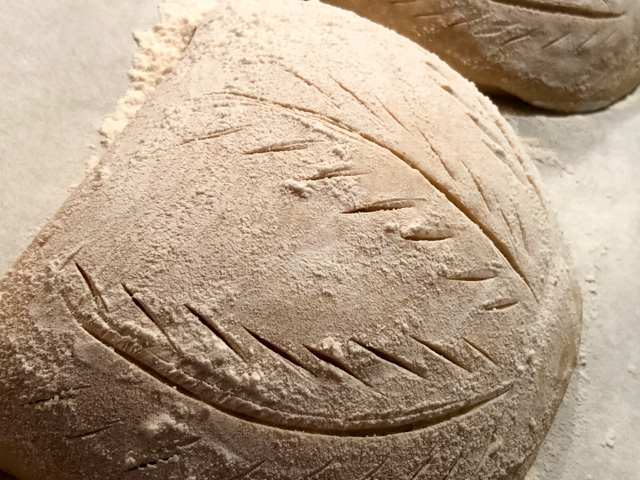
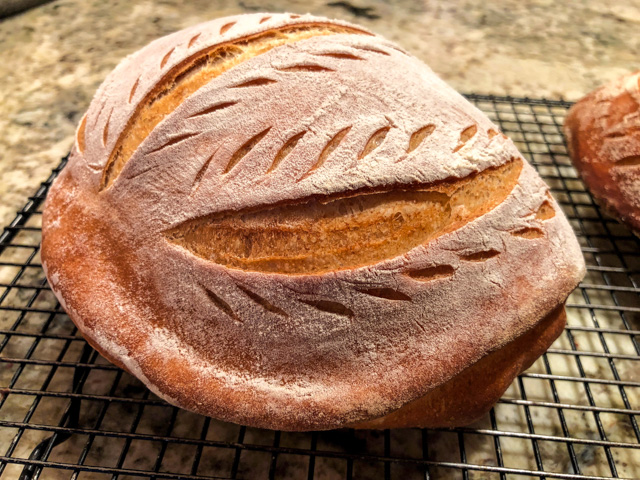
You can bake it in a covered Dutch oven with a moistened lid to generate steam, or use any other method you like.  I baked the two loaves at the same time, one using the Dutch oven, the other using a clay cloche from Emile Henry.  The outcome was quite different, as you can see below
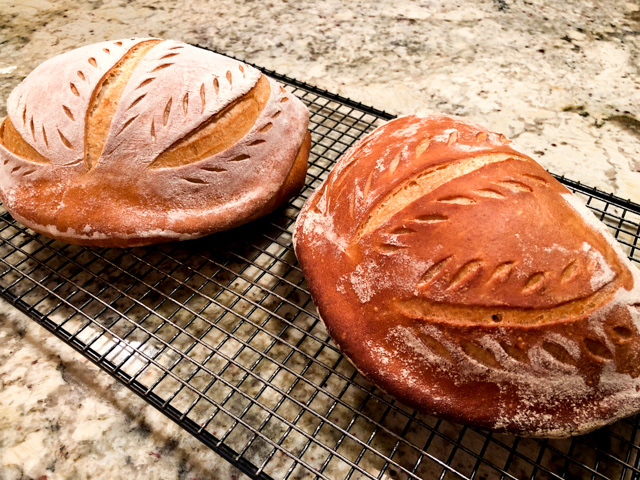
The top one was baked in the clay cloche so the dusting of flour stayed nicely on the surface. The second loaf, under additional steam, had the flour pretty much baked into it, generating a darker crust.They are different, I have a hard time deciding which one I liked the most. It was good to know, though, that baking in the clay cloche worked quite well.
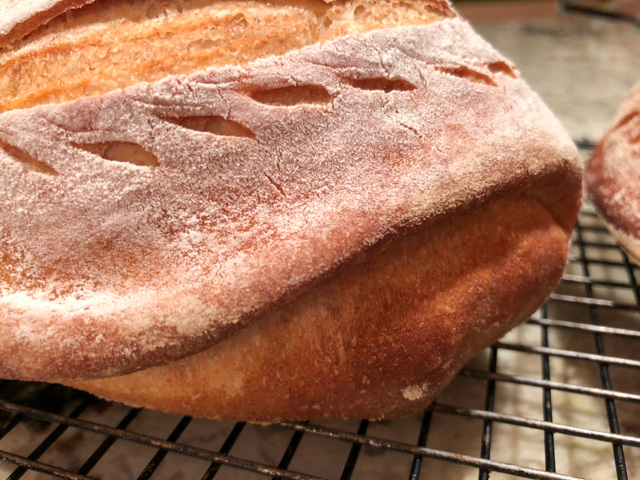
The “lip” of the purse could have lifted a little more, I suppose I should have stretched it thinner and maybe added a bit more olive oil, but overall I’m happy with the way it turned out.
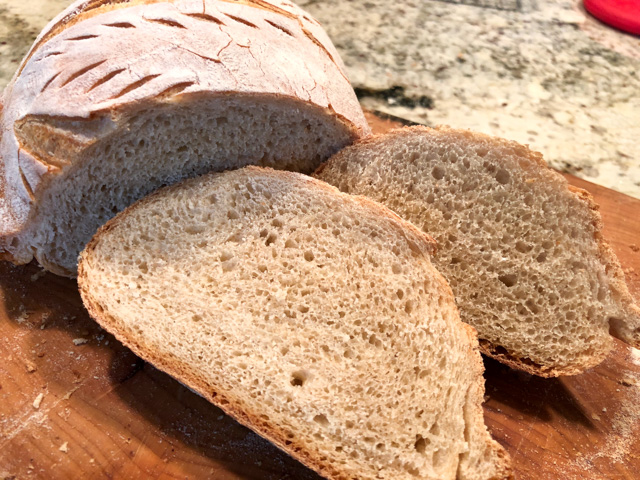
The crumb is more on the tight side of the spectrum, as expected from a bread with low hydration level.  I am quite curious about the possibility of using a sourdough formula for the Tabatière; I might experiment with it in the near future.

I cannot recommend Craftsy classes highly enough.  This particular lesson from Ciril Hitz is simply outstanding!  From baguettes to very sophisticated bread shapes (Sun Dial is unreal), you will learn to bake them all. Clear instructions, pretty much in real-time. Brilliant!

If you are into bread baking, consider getting this online class. Worth every second. And no, I do not make a single penny from your purchase. As with everything else on my blog, I only recommend it if I absolutely love it.

Add to FacebookAdd to DiggAdd to Del.icio.usAdd to StumbleuponAdd to RedditAdd to BlinklistAdd to TwitterAdd to TechnoratiAdd to Yahoo BuzzAdd to Newsvine


ONE YEAR AGO: Curry Turmeric Sourdough

TWO YEARs AGO: Brigadeiros de Morango

THREE YEARS AGO: Feta-Stuffed Turkey Meatloaf

FOUR YEARS AGO: Artichoke-Saffron Souffle

FIVE YEARS AGO: Cinnamon-Wreath

SIX YEARS AGO:
  Yeastspotting 11.11.11

SEVEN YEARS AGO:
 Oven-baked Risotto

EIGHT YEARS AGO:
  Potato-Roquefort Cakes with Ripe Pears
SaveSave

SaveSave

SaveSave

SaveSave

SaveSave

SaveSave

SaveSave

SaveSave

SaveSave

SaveSave

SaveSave

SaveSave

SaveSave

ELAINE’S SOURDOUGH BOULE


The recipe for this bread, also known as 500 g overnight sourdough,  is beyond tried and true. My dear friend Elaine has been baking this very recipe for years, probably at least twice every week, if not more often. Her very detailed blog post about it can be found here. You can also marvel at her slashing skills, which inspired me to become more adventurous. Remember?

When you bake bread on a regular basis, it is nice to have a formula that is not overly complicated, one you can do it almost without effort. This is it. Of all sourdough breads I’ve baked, this is the one that I will go back to when I want a great loaf of bread, pure with regular bread flour, just that delicious sourdough tang, and a crumb that has the type of texture I enjoy. Some holes, but not a bread sieve. And add to that great crust too. All bases are covered.

Here is a simplified overview of the recipe. First, you need a bubbly sourdough starter, at 100% hydration, that is 50:50 flour to water ratio.

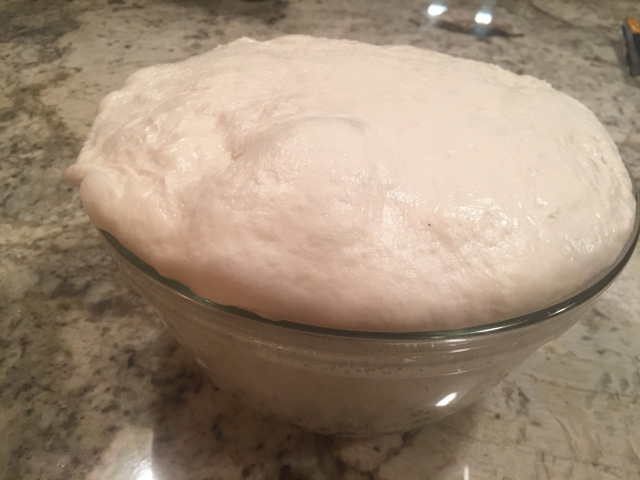
You’ll use 150 g of your bubbly sourdough and mix it with 285 g water, 500 g bread flour, and 9 g of salt. Incorporate it all with your hands, no need to work very hard.  Leave it for 30 minutes at room temperature, then knead it by folding a few times.  Let the dough proof at room temperature overnight. Mine was ready to walk outside and greet the world…

Pour the dough gently out on a floured surface, shape it.
Let it sit for 30 minutes, while you heat the oven to 450 F.
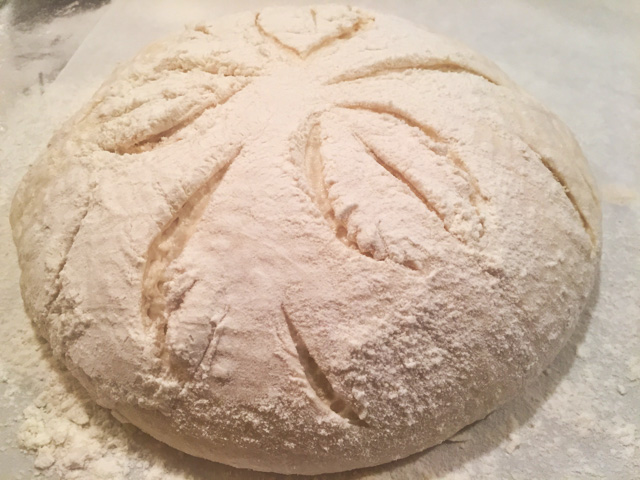
Slash it with enthusiasm…

Bake for 45 minutes, leaving the bread covered for the first 30 minutes, generating steam whichever way you like.
I use the moistened lid of a Dutch oven.

To view the detailed recipe, visit Elaine’s site.

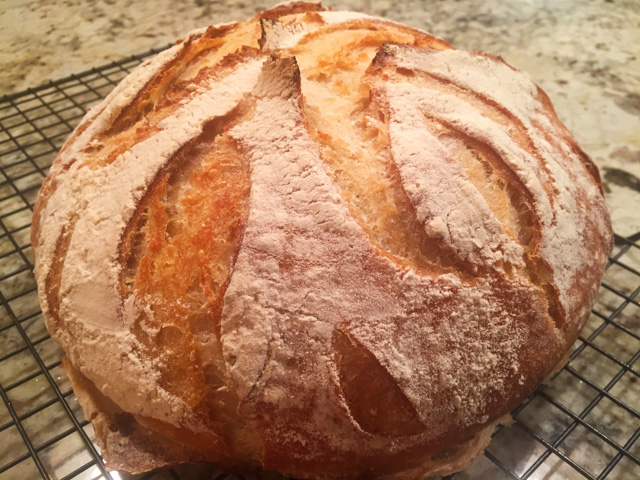
I loved this recipe so much, that I baked it twice in the same week, so that we had enough bread for a bunch of golfing buddies that visited us.  On my second time around, I went for a wheat-stalk design, but the bread had a mind of its own…
Still, it’s fun to try different patterns.

The goal… a few wheat stalks decorating the bread….

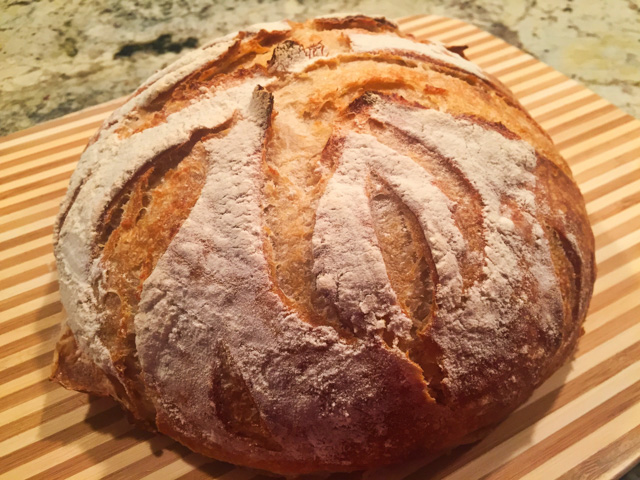
The outcome…  not exactly a wheat stalk, but it’s always nice to see a strong oven spring in action!

I can hardly wait to bake again, and try new slashing patterns on the bread.  For the wheat stalk, I think the key is to either omit the central slash of the stalk, or make it very delicate and shallow. Must practice…

Elaine, thanks for bringing sourdough baking back to my routine,
you are a constant source of inspiration!

ONE YEAR AGO: Zucchini, Lemon and Walnut Cake

TWO YEARS AGO: Paleo Energy Bars

THREE YEARS AGO: Pecan-Crusted Chicken with Honey Mustard Dressing

FOUR YEARS AGO: Mozzarella Stuffed Turkey Burgers

FIVE YEARS AGO:  Cashew Chicken Lettuce Wraps

SIX YEARS AGO: Clay-pot Pork Roast

SEVEN YEARS AGO: Panmarino

EIGHT YEARS AGO: A Classic Roast Chicken

SaveSave

SaveSave

SaveSave

SaveSave

SaveSave

SaveSave

SALZBURG SOURDOUGH

So many months without baking a single sourdough bread! The problem is we don’t eat a lot of bread. One bake lasts us for a long time, as after enjoying a couple of slices, the rest goes straight to the freezer. But I am still quite passionate about bread baking, and have a list of recipes I intend to try. They just sit and wait, poor things. Like this one, from Discovering Sourdough Part II, by Teresa Greenway. In theory, you need a specific sourdough strain from Austria, but I used my good American sourdough, born 9 years ago in Oklahoma, and headed to his teenage years in Kansas. I am sure Teresa will forgive me. But, did you know you can actually buy many sourdough starters from all over the world? Pretty amazing. Take a look at this site. Of course, over a long period of time a sourdough might change and incorporate yeast and bacteria from the new environment, but it’s fun to start from a pure culture born in some exotic, distant place. In the site, they actually dispute the claim that cultures change, but until I see solid scientific evidence it’s all a bit in the air (pun intended).


SALZBURG SOURDOUGH
(printed with permission from Teresa Greenway)
(I modified slightly to make a single loaf and use my preferred method of baking)

1 cup Austrian sourdough starter at 166% hydration  (9 oz)
3/4 cups water  (6 oz)
3 oz  evaporated milk
0.6 oz  rye flour
14 oz bread flour
2 teaspoons salt

Mix all ingredients, except salt, just until incorporated and then allow the dough to rest for 20 minutes (autolysis).

After autolysis, add salt and mix dough on low-speed for about 2 minutes. Then let the dough bulk ferment (first rise) for 6 hours or until doubled. Fold it once each hour during the six-hour bulk fermentation. After bulk fermentation, place the dough onto a lightly floured surface and knead enough to gather into a ball.  Shape it into the general shape you wish and then allow the dough to rest for 5 – 10 minutes (bench rest). After benching shape loaves into their final shapes and put them into the proofing baskets, pans, or couche. Cover the dough with plastic bag and refrigerate overnight.

In the morning, allow the dough to final proof for 2 – 3 hours (whenever the dough looks about 1 ½ times its size and is spongy) then turn dough out on peel and slash, cover with roasting lid moistened with water, and bake in a 425F degree oven for 30 minutes. Alternatively, use your favorite method to generate initial steam. After 30 minutes, remove roasting lid, turn down the oven to 400F degrees and continue baking for about 10-15 more minutes, turning halfway for even browning. Bread is done when the internal temperature reaches 200-205F.

Take out loaf and cool on a rack.

ENJOY!

to print the recipe, click here


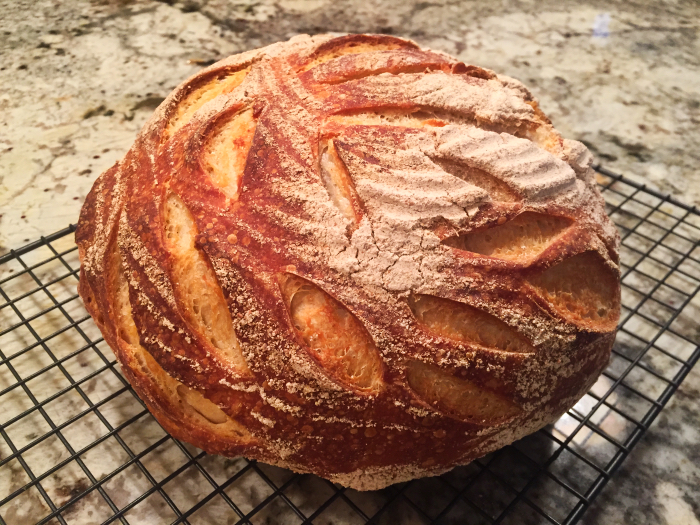
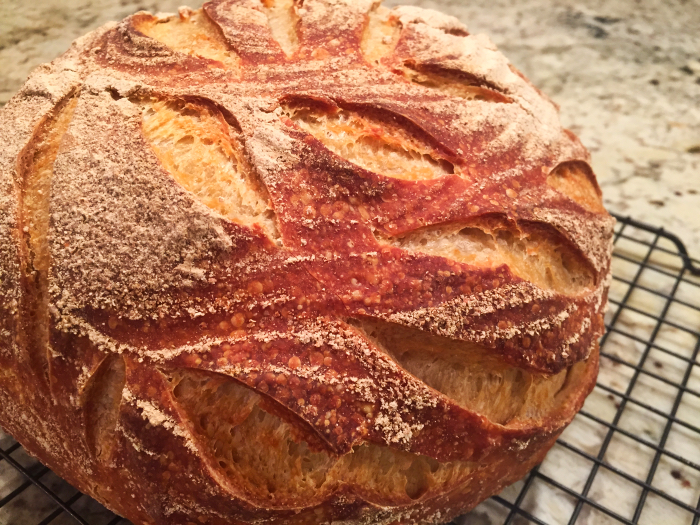
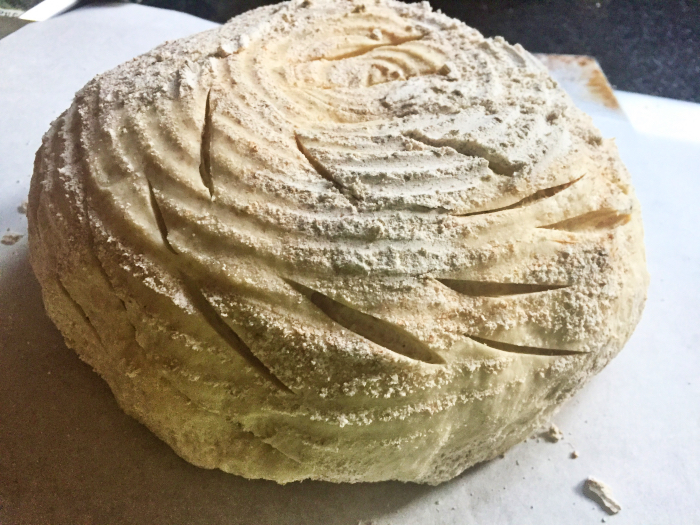
Comments: Inspired by my friend Elaine,  I decided to be a bit more daring and creative with the slashing. Elaine always comes up with amazing patterns on her bread. So I took a deep breath and went at it with a razor blade. I love the way the bread turned out, and intend to keep practicing, as the slashes on top were not exactly the way I wanted.

My sourdough ended up quite assertive this time – it was hibernating in the fridge for a very long time, so I refreshed it and fed it daily for a full week before making the bread. Not sure if that affected the level of acidity, but it was really good. Teresa’s recipes all call for 166% hydration, which is easily translated into equal volumes of flour and water. It is easy because you won’t even need a scale to keep the starter going, simply pick your desired volume, and mix half and half.  I refreshed it using 1/2 cup water and 1/2 cup flour. It ends up close enough to 166% hydration. For the final starter, I just made a bit more than needed for the bread, so I could keep it for the next baking adventure.

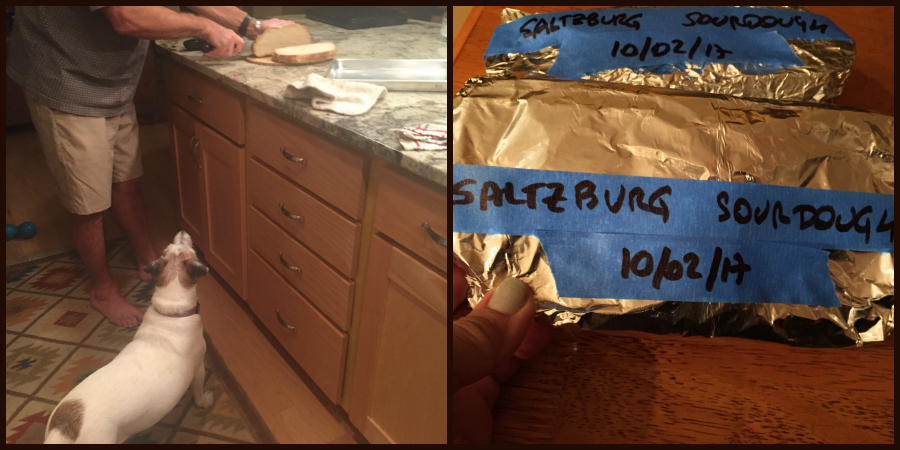
And once again, we have great bread stored in our freezer, although some members of our home hoped that one or two slices would fall to the floor instead… Or at least a few crumbs…

Teresa, thanks for giving me permission to publish this great recipe!


ONE YEAR AGO: If I had One Hour

TWO YEARS AGO: Apple Cinnamon Oatmeal Cake

THREE YEARS AGO: Sourdough Rye Bread with Flaxseeds and Oats

FOUR YEARS AGO: Apricot-Raspberry Sorbet: A farewell to Summer

FIVE YEARS AGO: Marcela’s Salpicon

SIX YEARS AGO: Pork Kebabs

SEVEN YEARS AGO: Fondant au Chocolat

EIGHT YEARS AGOGot Spinach? Have a salad!

SaveSave

SaveSave

SaveSave

SaveSave

SaveSave

COTTAGE LOAF, MY VERY OWN TECHNICAL CHALLENGE

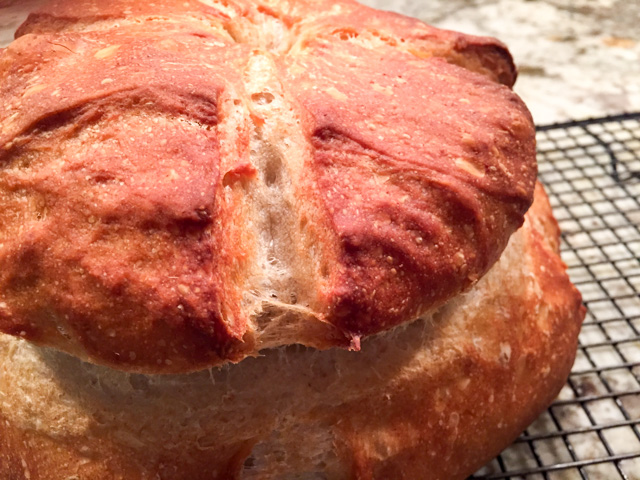
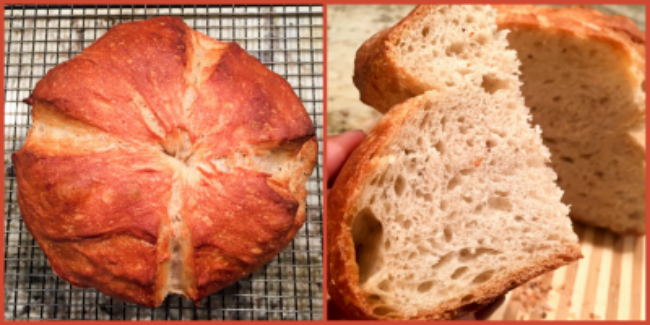
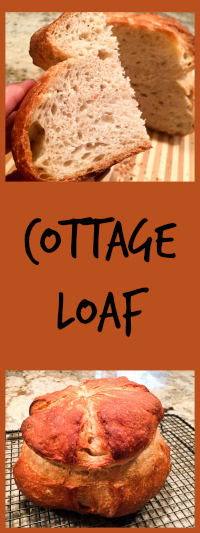
Many years ago, I baked a bread called “Cottage Loaf” for a wonderful friend of ours, who was born and raised in England. I had never heard about it, never seen or tasted this special bread that elicited fond memories in our friend. Come to think of it, pretty naive of me to try and bake a special loaf having zero knowledge about it. I was so nervous about the shaping – it involves dividing the dough in two unequal portions, balancing the smaller one on top of the bigger one, so I completely forgot to slash it before baking, as you can see with a jump to my old post.  Seven and a half years went by (!!!), I never attempted it again. To my surprise, last week’s episode of The Great British Bake Off featured that very bread of my past as the technical challenge.  I simply had to go for it, particularly after witnessing so many talented bakers having all sorts of issues with the challenge. Not because they lack skills, mind you. But because the instructions given in the show for every technical challenge are pretty minimal. One of the contestants had his top loaf collapse into the lower one, and in despair he said “my dough ate itself!” I could feel his pain…  Anyway, without any more tangential talk, here is my Cottage Loaf. Too bad we now live 312 miles away from our friend Glenn. I suspect he would enjoy a slice or two…

COTTAGE LOAF
(adapted from Celia’s blog) 

(recipe in metrics at the end of the post)

Pre-ferment:
140g all-purpose flour
140g bread flour
1/2 tsp sea salt
1/2 tsp instant yeast
170g water

Mix the two kinds of flour, salt, and yeast in a bowl. Add the water, mix briefly and let it rest for 10 minutes. Knead the dough briefly, allow it to rise for 1 hour at room temperature, then stick it in the fridge overnight.

Final dough:
All the preferment
225g bread flour
45g rye flour
3/4 tsp sea salt
1 tsp instant yeast
170g water, at room temperature

Remove the pre-ferment from the fridge 1 hour before making the dough, cutting it into pieces to speed up warming up to room temperature. Place in a large bowl. Cut it into pieces with a knife or pastry cutter, and place them in a large mixing bowl.

Add the water and yeast, and stir together, then add the flours and salt. Combine everything into a shaggy mass, allow it to sit for 20 minutes undisturbed. Let the dough rise for 90 minutes, folding the dough at 20 and 45 minutes. Dough should rise not more than double its original size.

Weigh the dough (it should be around 900g), divide in two pieces (600g and 300g each), form each piece into a tight round. Allow them to sit for 15 minutes at room temperature, then coat the large ball with a little olive oil, cut a cross on top. Cut a cross on the bottom part of the smaller ball, and place it on top of the large one.

Now insert your finger or chopsticks in the center of the round, going almost all the way to the bottom, opening the whole outwards slightly to join both loaves. Allow them to rise for 10-15 minutes more before baking.

Slash the dough all around cutting through both levels. Place the bread in a the oven (430F), cover it with an inverted roasting pan moist with hot water, bake it for 30 minutes, uncover and allow it to bake for another 15 minutes (if top layer is browning too much, protect it with aluminum foil). If you don’t have a roasting pan large enough to cover the dough, follow the baking method explained here.

Allow to completely cool on a rack before slicing through.

ENJOY!

to print the recipe, click here

Comments: I was so happy with this baking adventure! I haven’t baked a loaf of bread in many months, my poor sourdough starter is totally neglected. This bread – that takes a simple pre-ferment made the day before – was a nice way to warm me up for more baking ahead. All things considered, it is not a difficult recipe. The bulk rise of 90 minutes is followed by simple shaping, less than 30 minutes more and into the oven it goes.  Once again I used a 600 g to 300 g ratio of lower ball to upper ball, but I think that 650:250 could work even better, more stability for the upper component. Keep that in mind if you try it. Cutting a cross on top and bottom before joining the two balls is very important to ensure they will stay glued during baking, probably a step that was not included in the instructions for GBBO contestants.

I think my technical challenge went very well. At least our judge Paula Hollywood seemed pleased with it… If you are ready for some serious silliness, click on the video. At your own risk…

Please note Bogey circling around from the get go, and Buck getting up the moment he hears the knife in action… Oscar? He rather not have anything to do with so much non-sense going on in the kitchen. What a fun killer!

😉

Pinning is caring, go ahead and pin away!

NOTE ADDED AFTER PUBLICATION:  

Measurements in cups:
For the pre-ferment, mix 1 cup all-purpose flour to
1 + 1/3 cup bread flour. To that add 3/4 cup water

For the final dough: 1 + 1/2 cups of regular flour, 3/8 cup rye flour, and 3/4 cup water

ONE YEAR AGO: Pork Ribs: Sticky, Spicy and Awesome

TWO YEARS AGO: Sobering Peach Sorbet

THREE YEARS AGO: Buttermilk-Blueberry Breakfast Cake

FOUR YEARS AGO: Silky Cauliflower Puree with Almond Milk


SEVEN YEARS AGO:
 Popeye-Pleasing Salad
.
EIGHT YEARS AGO: Summer’s Finale

SaveSave

SaveSave

SaveSave

SaveSaveSaveSave

SaveSave

SaveSave

SaveSave

SaveSave

SaveSave

SaveSave

SaveSave

SaveSave

SaveSave

SaveSave

KOUIGN-AMANN, FIGHTING FIRE WITH FIRE

When life shakes you down hard, cooking becomes iffy, at least for me. Being sick with the worst cold in 25 years didn’t make it any easier. From Brazil, apart from a very heavy heart, I brought a virus, one that clearly was a brand new acquaintance. I had to fight it from scratch from an immunological point of view. And my beloved was hit  too. We were in horrible shape for a week.  Anything you set yourself to do seems to demand a lot more energy. Simple tasks drain you. And a lot will go wrong. Like a tomatillo sauce, poured down the garbage disposal, much to my despair. Still puzzled by that one, as it was a recipe from a very reputable source. Only possible explanation, I grabbed a mutant jalapeno pepper with off-the-chart capsaicin levels. Trust me on that one. I love pepper, being the Daughter of my Dad. That thing could scare all three dragons from the Game of Thrones into hiding. Liquid lava.  But, after that fiasco, I decided to grab the bull by the horn and go for the kill. I would make something more involved than dumping things in a blender. I would make a concoction that has been sitting on my list of culinary goals for a long time. I would tackle Kouign-Amann.

OVERVIEW OF THE RECIPE
(from Sugar Rush, a great cookbook!)

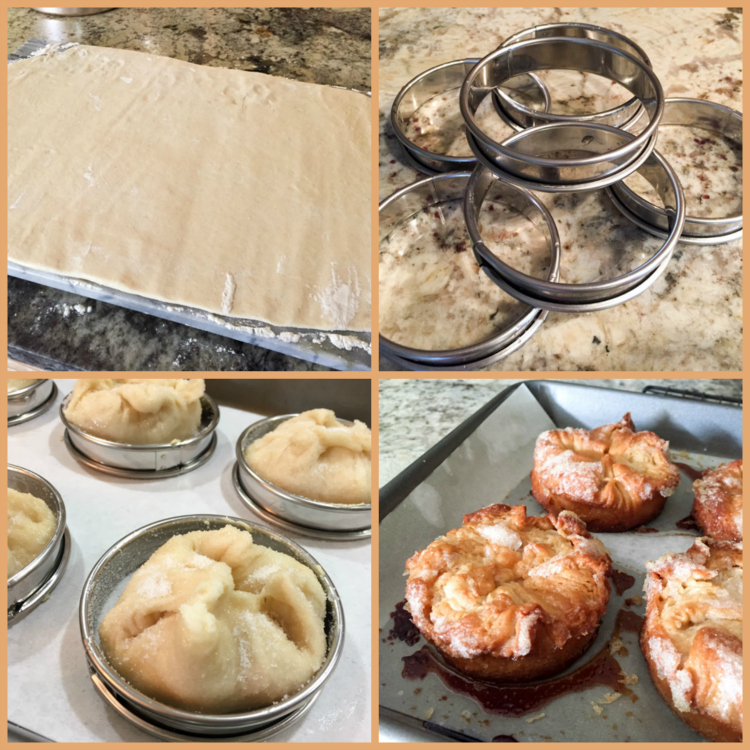
First you make a simple dough from flour, a little yeast, salt, and a little butter. That goes into the fridge to rest from a couple of hours to overnight.  You will also make a slab of butter with a precise dimension and cool it until firm.

Then, the dough is rolled out, the cold layer of butter placed on one side, and the dough folded in the usual puff pastry making technique. A few differences, though: only four folds are needed. Sugar gets sprinkled over the dough before each fold. No lengthy refrigeration between folds, because you do not want the sugar to melt into the dough. That’s about it. After four folds the dough is refrigerated for only 10 minutes, then rolled out and 4 inch squares are cut to form the individual pastries. They sit for 45 minutes before baking so that the yeast has a chance to work its magic.

They are best baked in rings, although muffin tins can be used. They are baked for longer than you would expect, so that the sugar gets really dark. And utterly delicious.

I did not ask permission to publish the recipe, but my friend Karen has made a beautiful batch in the past, and the recipe is available on her site. She also talks about the origin of this interesting pastry from Brittany.

recipe available here

Comments: This one goes to the OMG files. With honors, with a red carpet rolled out for its entrance. My gosh, this is good. This is so good it should probably be illegal. Think of a croissant, but with sugary caramelized bites in between the layers. A croissant that married a muffin and had a beautiful baby. It won’t crumble into buttery pieces in your mouth. It is actually a lot more sturdy, with the butter tamed by sugar. Oh, yeah. Butter tamed by sugar. Perverse, isn’t it? If you low-carb, if you keto, if you Paleo, this is not for you. But let me tell you one thing. Life is short. The pleasure you’ll have by biting into one of these babies is worth a little restraint for a few days. A few more push-ups, one more mile on the treadmill. There. I hope I made my case.

Add to FacebookAdd to DiggAdd to Del.icio.usAdd to StumbleuponAdd to RedditAdd to BlinklistAdd to TwitterAdd to TechnoratiAdd to Yahoo BuzzAdd to Newsvine

ONE YEAR AGO: In My Kitchen, Yin and Yang

TWO YEARS AGO: Chocolate Toffee Banana Bread

THREE YEARS AGO: In My Kitchen, June 2014

FOUR YEARS AGO:  Strawberry Frozen Yogurt

FIVE YEARS AGO: Baked Coconut and “The Brazilian Kitchen”

SIX YEARS AGO: Honey-Glazed Chicken Legs

SEVEN YEARS AGO: French-Style Rolls


SaveSave