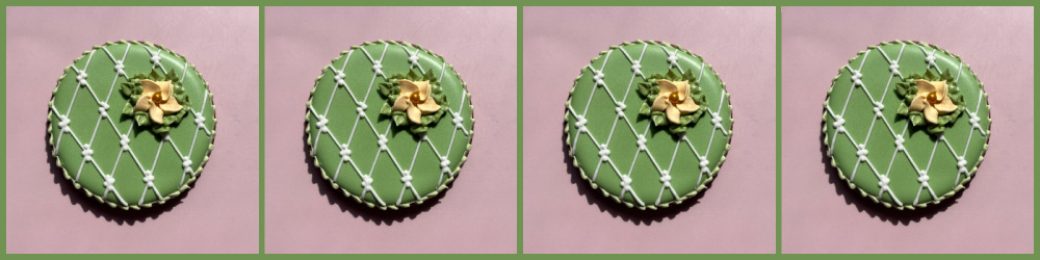
366 DAYS

Today it’s been one full year since a bright star left us. I’ve lived long enough to witness plenty of unfairness in life, plenty of horrible things happening to wonderful people. But your story was particularly sad and tough and difficult to witness. Little things pop up in my mind. The way you moved your head to get that incredibly beautiful hair out of the way as you worked on your bench right there by mine. You walking around the lab with headphones singing (probably a bit louder than you imagined) those beautiful songs you were soon going to perform on stage. Your laughter that involved your whole body. Not very many people laugh like that. I think about you a lot, and I think about your Mom and Dad a lot too. I am not sure how a parent survives the loss of a child. I hope they find some comfort in knowing you’ve touched the lives of many.

Dr. Aritri Majumdar, December 2018

(comments are shutdown for this post)

A DUET OF CHOCOLATE BONBONS

I am sure we all agree that social isolation is not easy. I enjoy being home and if I had my choice would rather stay in than go out on a Friday or Saturday night. A perfect evening for us is being cozy at home, cooking together, and just taking it easy. However, there’s something about being forced to stay home, the stress of associating going out with the danger of catching COVID-19 that makes it all pretty draining. Parents of young kids and teenagers have it a lot harder than we do. Those at risk of losing their jobs have it a lot harder than we do. Essential workers, particular those who work at hospitals? Same. So I feel almost guilty admitting that social isolation allowed me to try new things and expand my horizons in baking. Can you call chocolate bonbons baking? Well, not quite but close enough. I’ve always been fascinated by bonbons but too afraid to try. Until very recently, that is.  I share with you my two first adventures.

CHOCOLATE BONBONS WITH SALTED CARAMEL FILLING

Recipe from Matt Adlard, at Bake it Better

Huge thank you to Matt because his tutorial (freshly uploaded this month in his online class, see members area on link above) allowed me to make some nice bonbons on my very first attempt. I cannot share his recipe and many helpful tips, but here is a little overview.

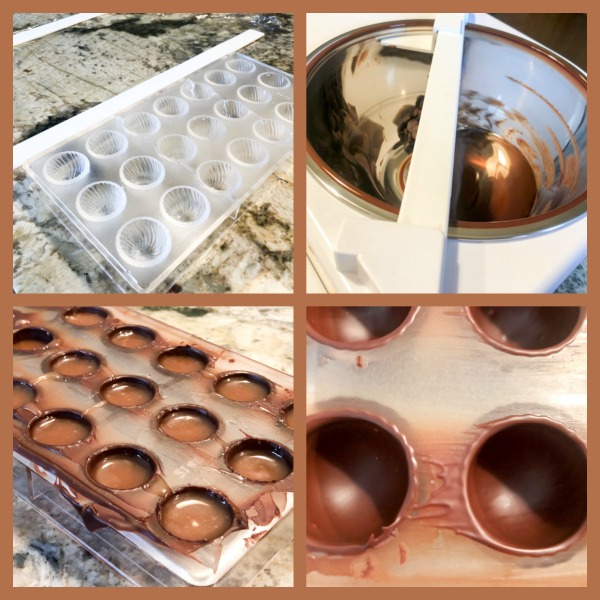
I used Callebaut 54% couverture chocolate… and tempered 400g in my little machine, using that to coat a semi-spheric mold with decorating ridges.

I used Matt’s recipe for salted caramel, and poured it into the tempered shells after they set for about 1 hour at room temperature. A little more chocolate was tempered and used to close the semi-spheres, and the whole tray set at room temperature for 24 hours. They un-molded beautifully next day, and we loved the combination of salted caramel with the semi-sweet chocolate.

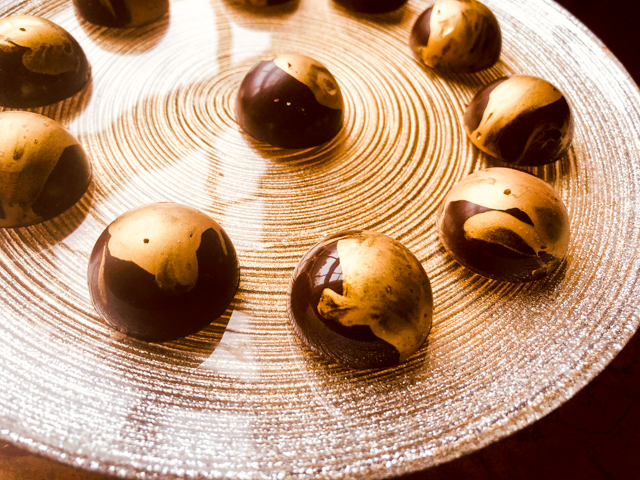
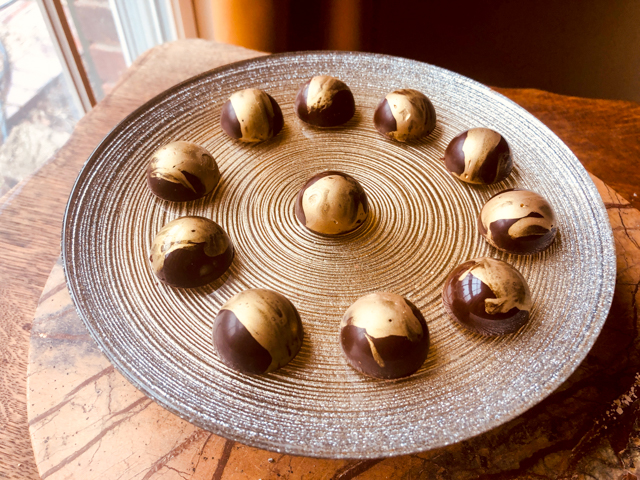
On my second attempt, I wanted some gold color on the surface and after reading a few recipes, went with a technique of finger-painting gold luster mixed with alcohol.

CHOCOLATE BONBONS WITH TONKA BEAN GANACHE FILLING
(from the Bewitching Kitchen)

for the gold coating:
2 tsp golden pearl dust
2 to 3 tsp Everclear or lemon extract
for the shells:
350 g Callebaut couverture chocolate 54%
for the filling:
65g Callebaut chocolate 54%
1 small tonka bean, grated
70mL + 170mL heavy cream, divided

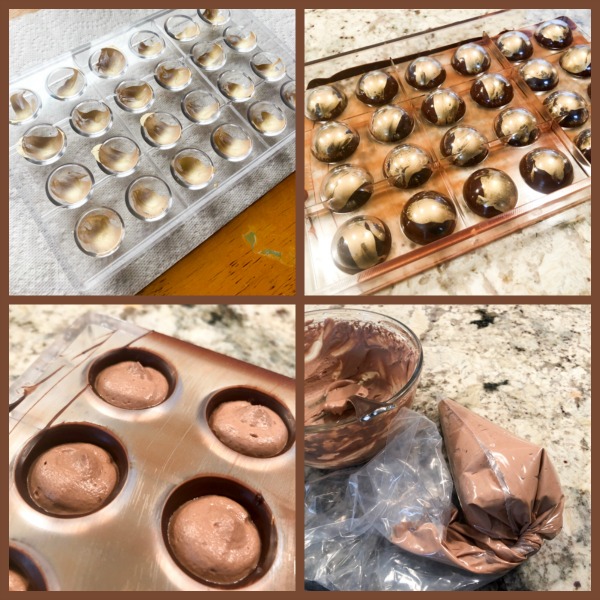
Mix the gold luster powder with alcohol in a very small bowl. Dip a gloved finger into the emulsion and quickly smear it inside each little semi-sphere, smooth mold. Allow the alcohol to evaporate sitting at room temperature while you temper the chocolate

Temper the chocolate using your favorite method and coat the gold-decorated molds. Leave them at room temperature for one hour.

Make the tonka bean ganache. Heat 70mL heavy cream to simmering, grate the tonka bean, mix with the simmering cream. Close the lid, let it sit for a few minutes. Bring to simmering again and add to the chocolate in a bowl. After a couple of minutes, whisk the chocolate gently until it dissolves smoothly. Add the remainder of the heavy cream, mix well and cool for an hour or so. Whip the ganache and use it to fill the semi-spheres.

Let the open shells sit for 12 hours or overnight, then temper 100g of chocolate and cover the shells with it. Before you cover it, it is a good idea to heat the bottom of the spheres with a hair dryer to gently melt a bit the edge, that provides a nice tight closure of the base and prevents leaking of the filling later. Let the bottoms crystalize for a few hours if possible, then un-mold them by banging the mold with a lot of authority showing it who is boss. Most chocolates will be well-behaved and jump off beautifully. Some might need some choice words of encouragement. It is a fun process, I swear!

ENJOY!

to print the recipe, click here

Comments: My gold painting did not turn out like I imagined. The gold dust I used is really quite potent and I should have applied a bit less. Maybe flickering the emulsion as little dots would have worked better. But it’s the kind of thing you learn by doing.  Also I used two different methods to temper the chocolate. To cover the shells I used my little tempering machine. Then, whatever was left from that messy step I gathered, melted again and since I only needed a small amount (100g), I used Mycryo to temper manually.   I also opted for an alternative way to cover the spheres. I cut a piece of acetate the exact size of the bottom of the mold, spread the tempered chocolate over it and laid that on the spheres. Then I used a spreader to press it hard, leaving the acetate in place until the chocolate crystalized. However, I made a few little mistakes (chocolate was a bit too cold when I finally laid it on top of the spheres), and I scraped the bottom of the mold too soon and took away some of the beautiful shine that bottom layer had.  I hope to fix all these little boo-boos on my next adventure.

Special thanks go to my friend Nancy, who has been pushing me to try and make bonbons for over a year now. I am slow, but finally caved. And she was also the inspiration behind the tonka bean ganache, which is amazing. Cuts the sweetness of the chocolate in a very nice way. She is a fantastic patissière, with a unique sense of elegance and beauty in everything she makes. I am lucky to have her as a source of constant inspiration. Check her instagram page with a click here.

Enjoyed the post?  Grab a pin…. 


ONE YEAR AGO: Chocolate Tartlets with Honey-Caramel Filling

TWO YEAR AGO: Zucchini Soup with Tahini

THREE YEARS AGO: Black Sesame Macarons

FOUR YEARS AGO: Fine Tuning Thomas Keller

FIVE YEARS AGO: Cauliflower Tortillas

SIX YEARS AGO: Majestic Sedona, Take Two

SEVEN YEARS AGO: Secret Ingredient Turkey Meatballs

EIGHT YEARS AGO: Swedish Meatballs and Egg Noodles

NINE YEARS AGO: Italian Easter Pie

TEN YEARS AGO: Black Olive Bialy

SMOKED PORK TENDERLOIN WITH ROASTED PARSNIPS

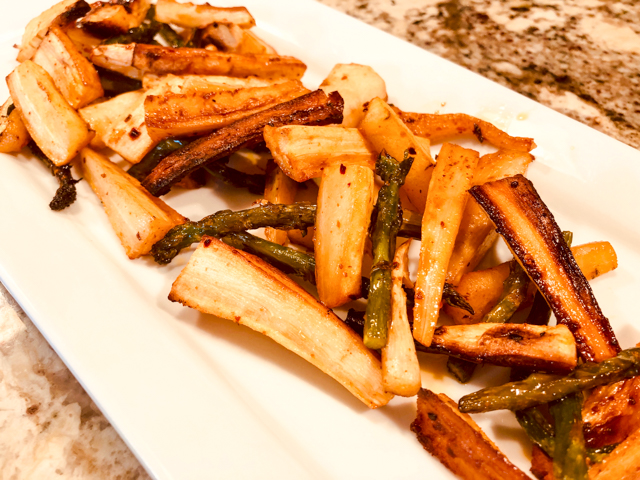
You know those dinners you think might turn out pretty tasty and they go on to blow your mind in the deliciousness department? This was it. I had never smoked a pork tenderloin, but it sounded like a simple, new way to enjoy one of our favorite cuts of meat. Parsnips are the classical example of under-rated root veggie, but paired with maple syrup and harissa? Yes, please. Great dinner, and thanks to social isolation quite doable any day of the week.

SMOKED PORK TENDERLOIN
(from the Bewitching Kitchen)

1 pork tenderloin, silverskin removed
olive oil to rub, about 2 Tablespoons
coarsely crushed peppercorns, about 1 Tablespoon
1 Tablespoon turbinado sugar
salt to taste
applewood for smoking

Mix the peppercorns and sugar in a small bowl. Dry the meat well. Rub with olive oil, then coat with a small amount of the spice mixture. Season with salt to taste.

Place in smoker set at 225 F with a small amount of applewood chips. Smoke for 3 hours.

Let it sit for 10 minutes, tented with foil. Slice the meat and serve.

ENJOY!

to print the recipe, click here

ROASTED PARSNIPS WITH MAPLE AND HARISSA
(from the Bewitching Kitchen)

Parsnips, peeled and cut in steak-fries style
4 Tablespoons olive oil
1 Tablespoon maple syrup
1/2 tsp Rosey Harissa (or substitute smoked paprika + harissa or other seasoning of your choice)
Salt to taste
(asparagus are optional)

Heat oven to 425F. Make a spice mixture with the olive oil, maple and Rosey Harissa or another seasoning of your choice.

Coat the pieces of parsnips with the mixture. Add to a roasting pan covered with aluminum foil, season with salt. Add a splash of water to the pan, cover with aluminum foil and roast for 20 minutes. Remove foil, add asparagus (if using), mix well and roast for 20 minutes more, until veggies are nicely browned.

ENJOY!

to print the recipe, click here

Comments: The Rosey Harissa spice has been on my list of things to try for a long time. I don’t even remember where I read about it for the first time, it’s been a while. I finally caved and ordered a bottle (it is a bit pricey), but I’m glad I did. It conveys a similar flavor of my recent passion (Ottolenghi’s Rose Harissa paste), but because it is dry, you can use it in different ways and it can sit in your pantry for a longer time. Smells wonderful.

The meat was tender, juicy, and with a nice hint of smoke. It went perfectly well with the roasted veggies.  I had some leftover asparagus sitting in the fridge, so I roasted with the parsnips, but you can omit that or even add other root veggies, just keep in mind their roasting times. Sweet potatoes, butternut squash, turnips, they would all work great.

I know not everyone has a smoker, so you can do a similar preparation cooking the pork tenderloin in the oven, after searing it on the stove top. Use smoked paprika to season it, and you will be on your way for a delicious meal.

ONE YEAR AGO: Fresh Take on Farro with Roasted Veggies

TWO YEARS AGO: Secret Recipe Club Reunion 2018

THREE YEARS AGO: Parsnip and Tomato Soup

FOUR YEARS AGO: A Retro Dessert

FIVE YEARS AGO: Cauliflower Tortillas: Going low-carb and loving it!

SIX YEARS AGO: Clementines in Cinnamon Syrup

SEVEN YEARS AGO: In My Kitchen, April 2013 

EIGHT YEARS AGO: Thrilling Moments

NINE YEARS AGO: Maple-Oatmeal Sourdough Bread

TEN YEARS AGO: Pork Trinity: coffee, mushrooms, and curry

SPRINGTIME MACARONS BAKE-ALONG


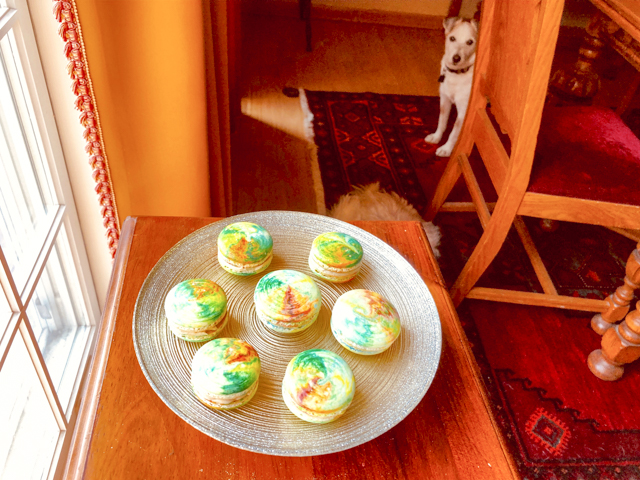
If ten years ago someone would tell me I would be hosting a video tutorial on how to make French macarons, I would roll on the floor laughing. Literally. Somehow, that is actually happening. Mind-blown. Here’s the full story behind it. Back in June last year I joined a Facebook group called Great British Bake Off Fans“, hosted by Christine and Caroline. The group currently has about 20 thousand members, and every once in a while opens to accept new participants, by invitation only. They often host “bake-alongs.”  One baker posts a detailed video of a recipe, and members can bake from Friday through Sunday, posting their results and asking questions if they run into trouble.  Much to my surprise (and with the obvious hyperventilation starting right after I said yes), they asked me to host a macaron-baking video. The big party will take place this Friday. My video (which includes unfortunate footage of yours truly with meringue glued to her chin), is available right now on youtube, thanks to the hard work of Caroline, who edited my 10 short videos, added text, music, and a few well-deserved jokes here and there.

Some steps are omitted from the video, for instance the time the shells rest after piping. I cannot imagine me trying to entertain you with short stories for 30 minutes. And for that I am sure you are grateful. I should warn you that the sound could have been a bit louder. It was my first time doing it, and I now believe a microphone of some kind would be appropriate. I had to place the cell phone a bit far away to get good coverage of a larger area and that compromised the sound a bit. But thanks to Caroline adding text to the video, I think you can get by. Just set your volume to the highest and I hope it will work for you.

SPRINGTIME MACARONS
(adapted from Colette Christian’s recipe)

For the shells:
200g  Icing/powdered sugar (1 ⅔ cups)
115 g Ground Almonds/Almond Meal (1 + scant ¼ cup)
115 g egg whites at room temperature (approx. 4 eggs)
1/8 tsp of cream of tartar (optional)
100 g granulated sugar (½ cup)
¼ tsp vanilla paste or extract
drops of gel food color of your choice (optional)

Line 3 heavy baking sheets with parchment/baking paper or Silpat mats. Layer the powdered/icing sugar and ground almonds/almond meal  in a food processor. Pulse until the mixture looks like fine meal, about 12 pulses. Pass through a sieve and transfer to a small bowl or to a sheet of parchment/baking paper. Set aside.

Place the egg whites and cream of tartar in the bowl of a stand mixer fitted with the whisk attachment. Make sure that the bowl and the whisk are impeccably clean. Starting on medium speed, whip the whites with the cream of tartar until they look like light foam. The whites should not appear liquid. The foam will be light and should not have any structure.

Slowly rain in the granulated sugar in five additions, trying to aim the stream between the whisk and the side of the bowl. Turn the speed up to high. Continue to whip the meringue until it is soft and shiny. It should look like marshmallow creme (marshmallow fluff). Add the vanilla. Whip the egg whites until the mixture begins to dull and the lines of the whisk are visible on the surface of the meringue. Check the peak. It should be firm. Transfer the whites to a medium bowl.

Fold in the ground almond/almond meal mixture in two increments. Paint the mixture halfway up the side of the bowl, using the flat side of a spatula. Scrape the mixture down to the center of the bowl. Repeat two or three times, then check to see if the mixture slides slowly down the side of the bowl. Add drops of gel color and mix them briefly with a toothpick. Put the mixture in a piping bag fitted with your choice of piping tip (round, ¼ or ½ inch in diameter or 6 – 12 mm).   If you don’t have a macaron mat, draw circles on baking/parchment paper about 2inches/5cm in diameter & turn the paper over before placing on the baking sheets.  Pipe shells, I like to count numbers in my head and use the same count for each shell so they end up similar in size.

I pipe inside the circles to about 1 ¾ inches/4.5cm but you can go to 1 ½ inches (3.8cm) & the macarons will spread & fill the circle while drying.

Slam each sheet hard four to six times on the counter/worktop. Let the unbaked macarons dry until they look dull but not overly dry. Drying time depends on humidity. In a dry climate, the macarons can dry in 15 to 20 minutes; in a humid climate, it can take 35 to 40 minutes.

While the macarons are drying, heat the oven to 300 F (150 C/130C Fan oven/Gas Mark 2). Bake one sheet at a time on the middle rack. Check in 11 minutes. If the tops slide or move (independently of the ‘feet’ when you gently twist the top), then bake for 2 to 3 more minutes. Check one or two. If they move when gently touched, put them back in the oven for 1 to 2 more minutes until they don’t move when touched.   Let the macaroons cool for 10 minutes before removing from the pan.  The macarons should release without sticking.

Assemble the macarons: find two macarons similar in size and add a good amount of filling to the bottom of one of them. Place the other on top and squeeze gently to take the filling all the way to the edge.  Store in the fridge for 24 hours for perfect texture.

ENJOY!

to print the recipe, click here

A FEW IMPORTANT NOTES BEFORE YOU START

  1. If you want to add solid color instead of the swirls, add GEL FOOD DYE about 1 minute after you finished incorporating all the granulated sugar in the meringue, at the same time that you add the vanilla extract (or other flavoring of your choice). Stop the machine, lift the whisk and add the color right at the bottom of the whisk, this way it goes smoothly into the batter and will not get splashed everywhere.
  2. If you have almond flour that has been laying around for a while, it is a good idea to dry it in a very low oven before using. You can do that the day before. Just add the flour to a baking sheet (over parchment paper) and place in a 250F oven for 20 to 30 minutes. Let it cool completely and use. Humidity is a big enemy of macarons, so if my almond flour has been open for more than a month, I do that just as added precaution.
  3. Hollows. DO NOT worry about them. For the most part they will “fill” once you add the filling and place in the fridge. Particularly in your first batches, don’t worry about perfection. They happen, and they almost always go away through maturation.
  4. Every oven is different. It took me many batches of macarons to figure out the best placement of the rack and the temperature of the oven. Once you are comfortable making the batter, you can play with all the conditions and figure out the perfect environment to bake yours. In my case it is 300F with the rack slightly under the center of the oven. One tray at a time. No convection. Your oven might behave in a different way. You can make several small trays and tweak the baking as you go, writing down your results. Just like in a lab!
  5. Contrary to many other baking goodies, macarons will not be hurt if you open the oven to check on them. In fact, Pierre Hermé, the Macaron King, recommends opening the door of the oven to allow some steam (therefore moisture) to be released. I sometimes open the oven at around 6 minutes to look at the little feet forming. And then again at the 11 or so minute mark to check for doneness.
  6. For different ideas to decorate the macs, I invite you look at a few of my posts. I love doing drizzles with candy melts and adding sprinkles (see this post). If you have an air-brush system and stencils, you can have a ton of fun with it (see this post). You can keep it simple and just add sprinkles to the shells right after piping (see this post). You can dye different colors of batter to the piping bag for a nice effect, although I would do that only after you are more comfortable with making them (see Coffee Caramel macarons in this post). You can cut shapes using candy melts and glue to the shells (see this post).  For a very elegant and incredibly simple effect, use a fan brush and pearl dust with vodka or lemon extract (see this post)
  7. Fillings. Over the years I’ve published many posts on macarons using all kinds of fillings. I suggest you go to my  INDEX PAGE  and look at the Macaron category for ideas. If you want to keep it super simple for your first time, open a jar of your favorite store-bought jam and use it. Absolutely nothing wrong with it.

I will be ready to answer your questions during the bake-along, and I hope you will have fun in your kitchen!  See you then….

Caroline, thank you so so much for all the work you put into editing the video, and Christine, you know how much I love the site that you created and turned into a cozy, friendly, wonderful spot in the blogosphere.

ONE YEAR AGO: Macarons for a Little Princess

TWO YEARS AGO: Gilding the Sourdough Loaf

THREE YEARS AGO: Lolita Joins the Bewitching Kitchen

FOUR YEARS AGO: Cashew Cream Sauce

FIVE YEARS AGO: Blood Orange Margaritas

SIX YEARS AGO: Smoked Salmon Appetizer

SEVEN YEARS AGO: Clementine Cake

EIGHT YEARS AGO: Springtime Spinach Risotto

NINE YEARS AGO: The end of green bean cruelty

TEN YEARS AGO: Torta di Limone e Mandorle


HOT CROSS BUNS

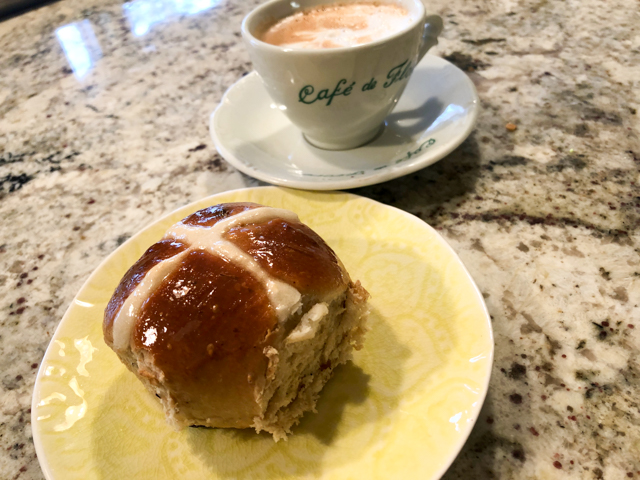
Until this year, I’ve been a Hot Cross Bun virgin, as I had never even tasted one. They did not exist in Brazil as I was growing up, but are very popular in many places of the world, United Kingdom, USA, Australia, New Zealand. They are usually served on Good Friday, to mark the end of Lent. They are marked with a cross to represent the Crucifixion of Jesus, and contain spices that were said to be used to embalm his body. Some point their origin to the year 1361 in a monastery in St Albans, England. But that is debatable. What is not debatable is how delicious they are, and how much I regret having waited so long to make them.

HOT CROSS BUNS
(very slightly modified from Global Bakes)

for the buns:
180 mL milk warmed to 110 degrees F
1 tsp granulated sugar
2 1/2 tsp active dry yeast (I used osmo-tolerant yeast)
100 grams light brown sugar
2 Tablespoons greek yogurt, at room temperature
70 grams (5 Tablespoons) unsalted butter, at room temperature
2 eggs, at room temperature
1 tsp salt
1/2 tsp ground cinnamon
1/2 tsp ground cardamom
1/4 ground nutmeg
1/4 tsp ground allspice
460 grams all-purpose flour, divided
40 g dried figs, finely minced)
100 g raisins
zest of 1 large orange

for the flour cross:
3 tablespoons flour
1/8 tsp baking powder
2 tablespoons cold water

for the glaze:
3 tablespoons milk
3 tablespoons sugar

Make the Buns
Whisk together the warm milk, yeast, and granulated sugar in the bowl of your stand mixer fitted with a dough hook.  Allow to sit for 5 minutes until yeast becomes frothy.

Add to the bowl the brown sugar, butter, yogurt, eggs, salt, cinnamon, nutmeg, allspice, cardamom and 125 grams (1 cup) of the flour. Beat on low speed for 30 seconds or stir by hand. Scrape down the sides of the bowl with a rubber spatula, then add the remaining flour, the dried fruit, and the orange zest. Beat on medium speed until the dough comes together and pulls away from the sides of the bowl, about 2 minutes. The dough should be a little sticky and soft. If it’s too sticky and not pulling away from the sides of the bowl, mix in additional flour 1 Tablespoon at a time just until it comes together and pulls away from the sides of the bowl. Knead in the machine for about 4 minutes in low-speed, then transfer the dough to a greased bowl and allow it to ferment for 2 hours at room temperature.

Butter a 9×13 inch baking pan.  When the dough is ready, punch it down to release the air. Weigh the dough and divide it into 15 roughly equal pieces (my pieces were 77g each).  Shape each piece into a smooth ball, pinching it on the bottom to seal. Arrange in prepared baking pan. Cover shaped rolls and place in the fridge overnight.

Remove the shaped buns from the fridge and let them sit at room temperature for 2 hours. Heat the oven to 350°F.  Whisk the cross ingredients, adjusting consistency with water or flour so that it is thick enough to form a stable design. Spoon paste into a piping bag. Pipe a line down the center of each row of buns, then repeat in the other direction to create crosses.

Bake for 20-25 minutes or until golden brown on top, rotating the pan halfway through. If you notice the tops browning too quickly, loosely tent the pan with aluminum foil. Five minutes before they are done, make the glaze by boiling milk and sugar until sugar is fully dissolved and the glaze thickens slightly.

When they buns are baked, remove from the oven and immediately brush with the warm glaze. Allow to cool slightly and enjoy still warm or at room temperature.

ENJOY!

to print the recipe, click here

Comments: Tanya was my source of inspiration, she actually made those for the first time also this year, and I just tagged along. I did not have many different kinds of dried fruits in our pantry, so I used just raisins and dried Mission figs. The whole batch went to the homeless meal that happened to fall exactly on Good Friday, but Phil and I decided to share one because I really had to know how they taste.

I loved it! The bread is soft, reminds me a bit of a cinnamon roll, but not as decadent.  I like the addition of baking powder to the flour paste, which I saw in Celia’s blog post of years ago. I think it makes it a bit lighter.
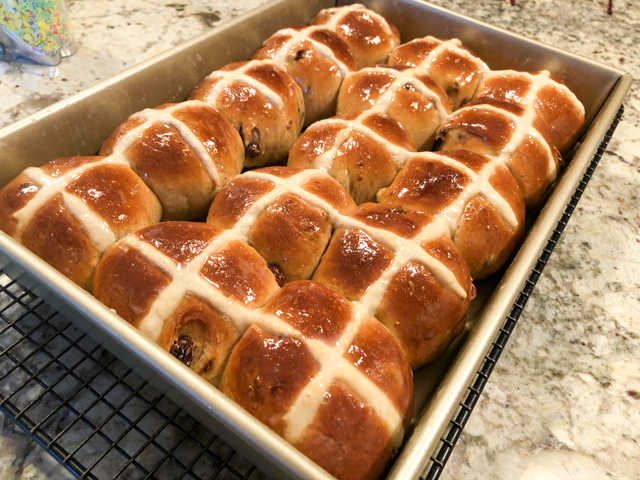
Making them was a very nice, trouble-free process (discreet knock on wood, don’t want to upset the baking gods, as I intend to make macarons in the near future).  I hope you give Tanya’s recipe a try, in her site you can see how to do it in a single day.

Thank you Tanya (globalbakes.com), for your constant inspiration!  Stay safe, stay healthy, stay home… and let’s bake!
ONE YEAR AGO: Avgolemono Soup, My Way

TWO YEARS AGO: Sourdough Chocolate Twist Bread

THREE YEARS AGO: Dan Lepard Times Three

FOUR YEARS AGO: Turkey Portobello Burger

FIVE YEARS AGO: Raspberry Ricotta Cake

SIX YEARS AGO: In My Kitchen, April 2014

SEVEN YEARS AGO: Whole-Wheat Pasta with Lemony Tomatoes and Spinach

EIGHT YEARS AGO: Blood Orange Duck: A work in progress

NINE YEARS AGO: Grilled Mahi-mahi with citrus marinade

TEN YEARS AGO: Memories of Pastéis