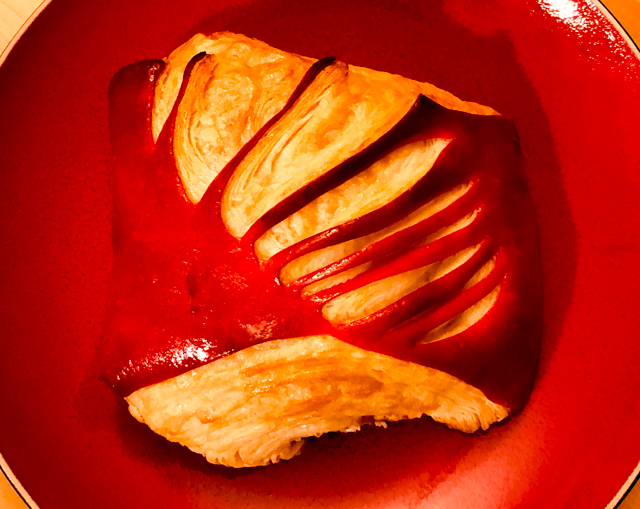
WHEN LIFE GIVES YOU EYE-OF-THE-ROUND

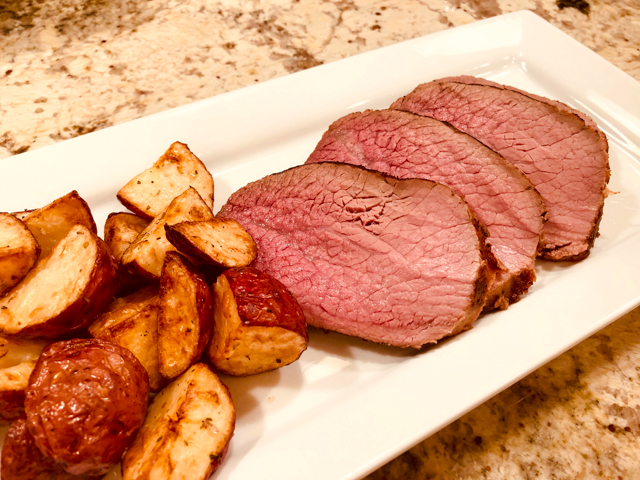
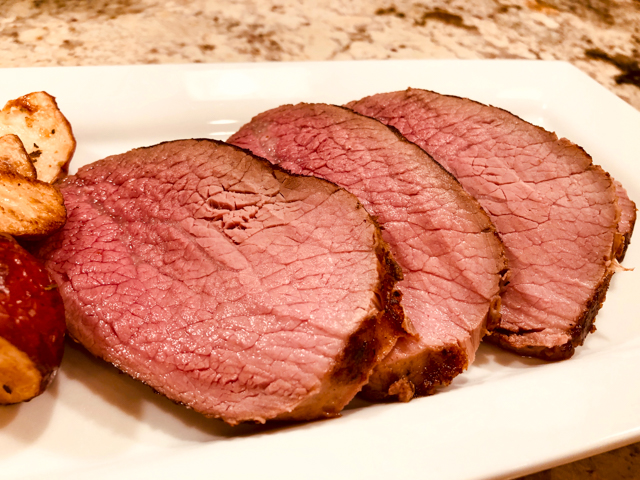
Make it play the tenderloin role! I am over the moon with this preparation, sous-vide turns a very cheap and often neglected cut of meat into Dinner Royalty. There are other methods to achieve the same outcome. America’s Test Kitchen uses a very low oven and careful monitoring of the temperature in the center of the meat using a probe thermometer that stays inside throughout the cooking time. I made their version before attempting this one. What I dislike about their recipe (sorry, ATK), is that you just don’t know how long it is going to take, so dinner plans get a bit iffy. With this method, no worries. Set the temperature, place the meat in the water-bath, and you can finish it in mere minutes on the stove top. Brilliant, just brilliant.

EYE OF THE ROUND SOUS-VIDE
(adapted from Anova Culinary)

3lbs eye of round beef roast
1/3 cup mustard
2 Tbsp vegetable oil
1.5 Tbsp black pepper
1.5 Tbsp kosher salt

Set a water bath to 131F.

Season beef liberally with salt and pepper. Cover beef with yellow mustard massaging it well all over the surface.

Heat a cast iron pan over medium-high heat with 1Tbsp vegetable oil.
Once pan is hot, sear beef on all sides until golden brown. Remove from pan, place in a bag suitable for sous-vide cooking. You can seal using vacuum or use water displacement. Place in water bath, cook for 24 hours.

Remove meat from bag, and heat a cast iron pan on medium-high with 1 tablespoon oil. Once hot, quickly sear beef on each side until golden brown (about 1 minute per side). Once done, place on a plate to rest for a few minutes.

Slice the beef into 1/2 inch slices.

ENJOY!

to print the recipe, click here

Comments: In the original recipe at Anova, they include additional steps for making a sauce. I was not interested in making it that particular evening, so I kept it super simple. But please check their site, it is a wonderful way to serve it.


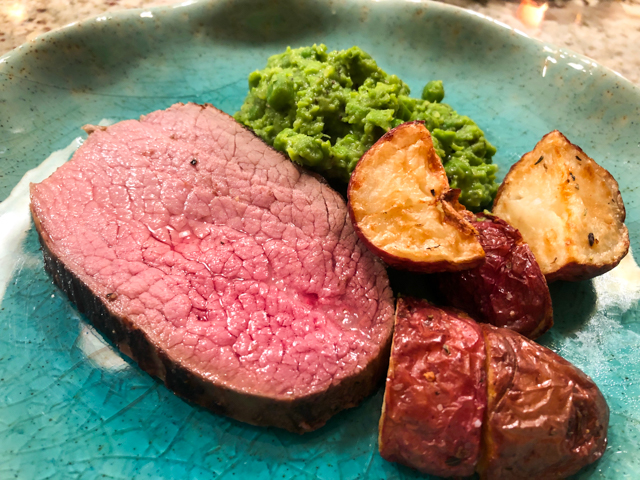
We enjoyed it with air-fried small potatoes, and broccoli puree. Leftovers were my lunch for three days in a row, just briefly warmed over a non-stick pan with a touch of olive oil. If you enjoy roast beef served cold in sandwiches, just make sure to slice whatever is left very thinly, if you have an electric knife (I don’t) put it to use.

ONE YEAR AGO: Carrot Cake Macarons

TWO YEARS AGO: Soup Saturday: Say Goodbye to Winter

THREE YEARS AGO: Manchego and Poblano Soup

FOUR YEARS AGO: A Smashing Pair

FIVE YEARS AGO: Spinach and Mushroom Stuffed Pork Tenderloin

SIX YEARS AGO: Crispy Chickpea and Caper Spaghetti

SEVEN YEARS AGO: Spring has Sprung!

EIGHT YEARS AGO: Chickpea and Fire Roasted Tomato Soup

NINE YEARS AGO: Double Asparagus Delight

TEN YEARS AGO:  Sun-dried Tomato and Feta Cheese Torte


SUNSHINE ON MY SHOULDERS!


I got a blog award!  And like sunshine it made me very very happy… Thank you so much, Dorothy (from New Vintage Kitchen), it took me a while to compose this post, but better late than never! Life has been slightly hectic, but now that I am for the most part laying in the sun in Hawaii, it seems like the perfect opportunity to say a big thank YOU!

The Sunshine Blogger Award is given by bloggers to peers who they feel are creative, positive, and inspiring while spreading sunshine to the blogging community.

Rules for the Sunshine Blogger Award

  1. Thank the blogger(s) who nominated you and link back to their blog.
  2. Answer the 11 (or so) questions the blogger asked you.
  3. List the rules and display the Sunshine Blogger Award in your blog post.
  4. Nominate 11 (or so) new bloggers & their blogs. Do leave a comment on their blog to let them know they received the award and ask your nominees 11 (or so) new questions.

Being the rebel that I am, I must say that I will not nominate 11 bloggers, so my apologies for that, I hope it’s ok. But here are the answers to the questions Dorothy asked in her nomination

  1. Describe your blog and why you started it. My blog is almost 11 years old and it started just to join my passion for writing and cooking. I like to keep it varied, but over the past couple of years there has been a clear increase in baking.
  2. Favorite time of day to write? I don’t have a preferred time, usually I write my posts in the weekend or evenings.
  3. Music while you write? If so, what? No music. I don’t listen to music while I write or cook. If Phil has music on in the background, it does not bother me, but I never set anything to play.
  4. Do you carry a notebook or use notes on phone or tablet to jot things down when out of the house? No.
  5. What inspires you the most in regards to your writing? First, the recipe I will be featuring. It all goes around it. But I avoid excessive text before the recipe, I find it too distracting.
  6. Have you ever dreamed you could fly? No.  I guess I am a very boring person… No music, no notebooks, no flying… what’s wrong with me?
  7. What was the last book you read and did you like it? Man’s Search for Meaning. A difficult, disturbing read but I adored it.
  8. What superpower do you wish you had? Time travel (with 100% safe return to present).
  9. Dark or milk chocolate? Both. Plus white.
  10. Is there a question you wish you were asked? Nothing in particular comes to my mind.

A few more words about blogging. I have perhaps a bit over 3 thousand subscribers to the site, but I doubt that more than 20% of those come and read what I post. I never had a blog post, pinterest or instagram entry go viral. But every time I hit “publish” on a post I feel the same thrill of 11 years ago when it all started. I guess that is what keeps me going. Being nominated for an award by someone who pays attention to my writing and leaves me comments and so much encouragement? That is special. That warms my heart.

THANK YOU, DOROTHY!


TWELVE YEARS OF SOURDOUGH BAKING

March 11th, 2020
Twelve years of sourdough and 60 years alive and kicking!

The other day I found a little notebook with handwritten notes about the very beginning of my sourdough days, when I did not have a blog yet. No photos, just remarks about what to avoid, what to improve, the favorite recipes. The notebook is 12 years old, the age of my oldest starter, Dan. I wish I knew how many loaves I’ve baked over these years. What I realize is that I streamlined the process quite a bit, and now settled on a timeframe that works perfectly for me. Mix the dough around 4pm, shape and refrigerate around 9pm and bake next morning, straight from the fridge, into a cold Dutch oven type container, sitting on parchment paper. No more arm burns trying to deal with a screaming hot pan. Sometimes I throw a bit of water or an ice cube inside the pan, sometimes I forget and the fact that the pan is covered tightly with a lid seems to generate enough moisture for a nice crust. In this post, I share two loaves in which I played with color, razors and scissors. I also modified slightly how I mix the dough, and must say that I love the effect it has on the overall “strength” of the crumb. Purists, prepare to be disappointed.
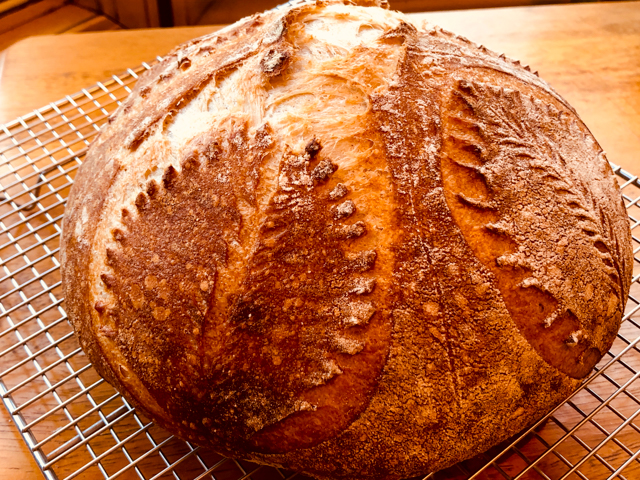

SALLY’S SCISSORHANDS SOURDOUGH
(from the Bewitching Kitchen)

110g sourdough starter at 100% hydration
380g water
50g whole-wheat flour
450g bread flour
10g salt

Make the levain mixture about 6 hours before you plan to mix the dough. It should be very bubbly and active.

When you are ready to make the final dough, place the water in the bowl of a KitchenAid type mixer and dissolve the sourdough in it, mixing with a spatula briefly, then add all flours and salt.  Turn the mixer on with the hook attachment and knead the dough for 4 minutes at low-speed all the time. You will notice the dough will gain quite a bit of structure even with just 4 minutes in the mixer. Remove from the machine, and transfer to a container lightly coated with oil, cover lightly with plastic wrap and allow it to ferment for 4 hours, folding every 45 minutes or so. Because the dough is already a bit developed from the initial time in the mixer, you should get very good structure after 3 and a half hours, or even sooner than that.

After four hours bulk fermentation, shape the dough as a ball, and place, seam side up, in a lightly floured banetton. Place in the fridge overnight, from 8 to 12 hours.

Next morning, heat the oven to 450F.

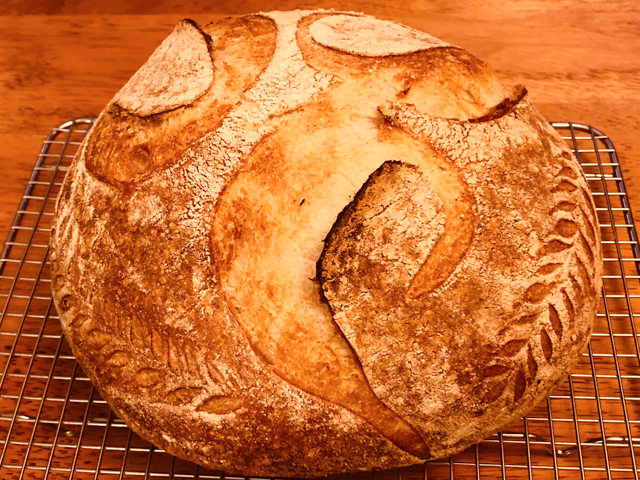
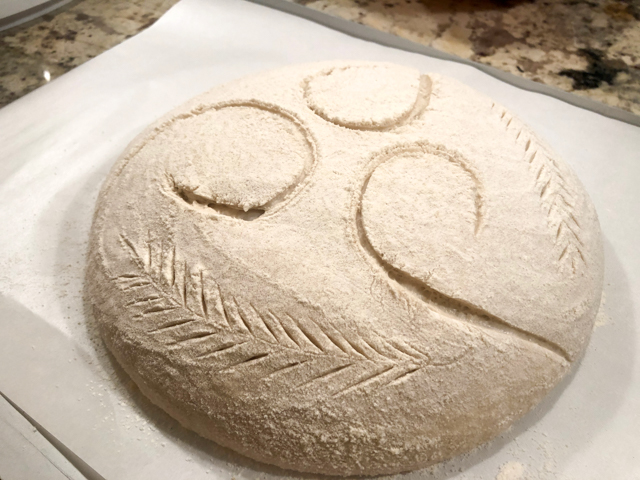
Invert the dough on a piece of parchment paper and lightly, very lightly coat it with flour, then rub all over the surface with the palm of your hand. Use a string to make four lines to mark regions of the bread to facilitate drawing the patters. Use a new razor blade to slash the dough in a leaf pattern, one leaf per quadrant. Then, with very small scissors, clip the outside lines of the leaves. Decorate the inside region with more razor blade slashes.

Bake at 450F for 45 minutes, preferably covered for the first 30 minutes to retain steam. You can generate additional steam by spraying the inside of the lid with water before closing the pan.  Cool completely over a rack before slicing.

ENJOY!

to print the recipe, click here
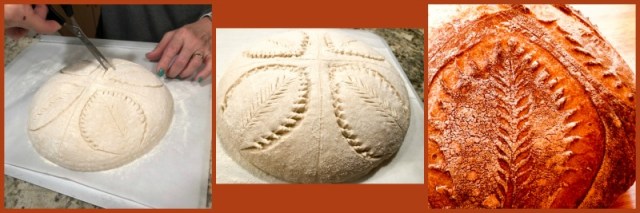
Loved scoring the bread with scissors! I cannot take credit for it, just noticed a few breads like that in instagram feeds and pinterest, and decided to give the technique a try. I think I could have been a bit more assertive, but to tell you the truth, after I butchered Paul Hollywood’s Cob Loaf in front of the cameras because of excessive enthusiasm, I became slashing-shy. I need some more time to recover and find my mojo.

Moving on…  A similar sourdough loaf with two additions: peanut butter and butterfly pea flower powder. I was so thrilled by the taste and looks of this bread, I cannot wait to bake another loaf.

NUTTY BUTTERFLY PEA FLOWER SOURDOUGH 
(from the Bewitching Kitchen)

110g sourdough starter at 100% hydration
380g water
50g whole-wheat flour
450g bread flour
1 Tablespoon butterfly pea flower powder
1/8 cup peanut butter (crunchy or smooth)
10g salt

Make the levain mixture about 6 hours before you plan to mix the dough. It should be very bubbly and active.

When you are ready to make the final dough, place the water in the bowl of a KitchenAid type mixer and dissolve the starter and the peanut butter in it, mixing with a spatula briefly, then add the flours, and salt. Turn the mixer on with the hook attachment and knead the dough for 4 minutes at low-speed all the time. You will notice the dough will gain quite a bit of structure even with just 4 minutes in the mixer. Remove from the machine, and transfer to a container lightly coated with oil, cover lightly with plastic wrap and allow it to ferment for 4 hours, folding every 45 minutes or so. Because the dough is already a bit developed from the initial time in the mixer, you should get very good structure after 3 and a half hours.

After four hours bulk fermentation, shape the dough as a ball, and place, seam side up, in a lightly floured banetton. Place in the fridge overnight, from 8 to 12 hours.

Next morning, heat the oven to 450F.

Invert the dough on a piece of parchment paper and lightly, very lightly coat it with flour, then rub all over the surface with the palm of your hand. Use a new razor blade to slash the dough in a decorative pattern.

Bake at 450F for 45 minutes, preferably covered for the first 30 minutes to retain steam. You can generate additional steam by spraying the inside of the lid with water before closing the pan.  Cool completely over a rack before slicing.

ENJOY!

to print the recipe, click here
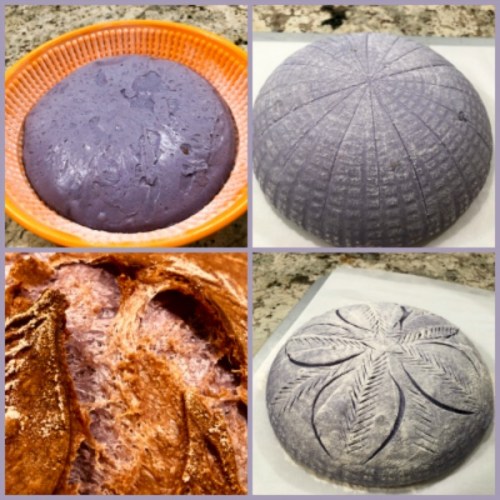
Comments: I was a bit worried when the dough showed such intense blue color, but it gets quite a bit mellowed down during baking. The other thing that amazed me about the bread was the peanut smell during baking, very noticeable and pleasant. The idea of using a nut butter came from my friend, Bread Baker Queen, Elaine. She’s been doing it quite often with great results (check her post here) and I finally had a chance to do it myself. The additional fat in the peanut butter changes the texture of the crumb quite a bit. Try it, you might fall in love with it too.

Someone was very intrigued by the color of the loaf. Keep in mind that the blue color is lost on the crust as it gets dark in the oven, so don’t panic thinking that the blue was somehow ruined. Once you slice it, you’ll have a big smile in your face.

Did I say I was going to share two breads today? Well, here’s one more, same recipe as the first, but no scissors. Just some swirls.


I find  sourdough baking one of the most flexible and forgiving methods to make bread. When you use commercial yeast, things happen so fast, you need to be around and on top of it from beginning to end. Once you get a system in place for the slow approach of wild yeast, you will never look back.

As this post is published, we will be in Oahu, enjoying a double celebration trip, 20 years of our wedding anniversary and my Birthday. I feel lucky and grateful for so much. Having the blog to share recipes and thoughts, and friends that make it so special, is the icing on my Birthday cake. THANK YOU!
ONE YEAR AGO: Rainbow Carrots with Rose Harissa

TWO YEARS AGO: Deviled Eggs go Green

THREE YEARS AGO: Tiramisu

FOUR YEARS AGO: Pulled Pork, Slow-Cooker version

FIVE YEARS AGO: The Pie of the Century

SIX YEARS AGO: Bon Bon Chicken

SEVEN YEARS AGO: Leaving on a Jet Plane

EIGHT YEARS AGO: A Pearfect Drink

NINE YEARS AGO: Ming Tsai Under Pressure

TEN YEARS AGO: Paris, je t’aime!
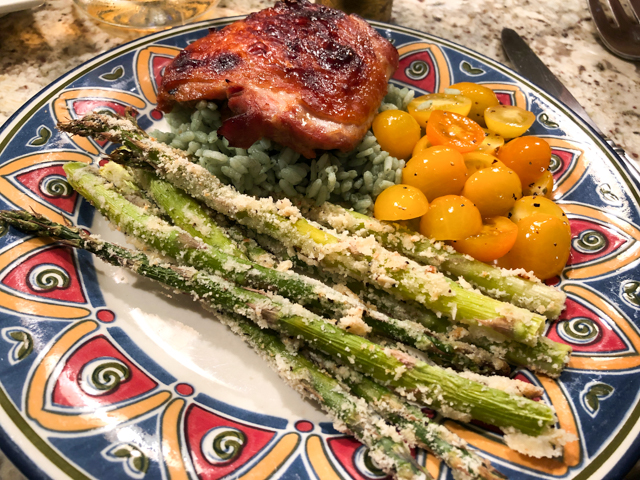
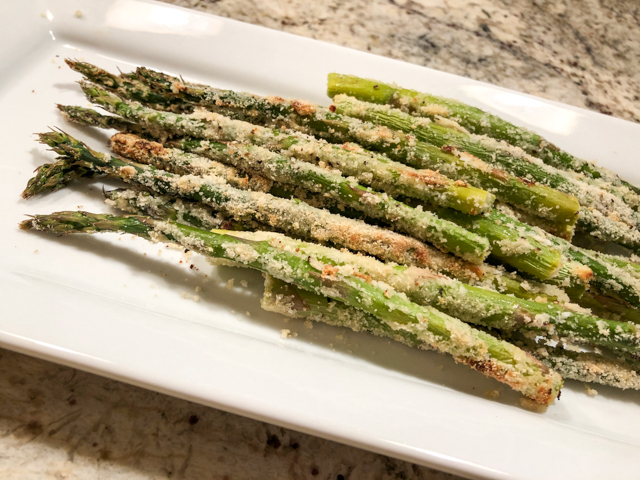
INCREDIBLY SIMPLE: CRUNCHY ASPARAGUS

For a few years I’ve been blogging on recipes that are almost too simple to call as such (see them all here), but tasty enough to sit side by side in a blog with more elaborate concoctions. Normally I like to wait until I have several “incredibly simple” items to share in a single post, but spring is almost here, asparagus season is knocking at the door, and this recipe was too good to keep it a secret for much longer. I made it three times in two weeks. The delicate crunch on these babies? I am seriously in love.

INCREDIBLY SIMPLE CRUNCHY ASPARAGUS
(from the Bewitching Kitchen)

a bunch of asparagus, tough ends removed
olive oil
lemon juice
salt & pepper
Herbes de Provence
1/3 cup almond meal

Heat oven to 425 F.

Mix enough olive oil and lemon juice (half and half) to give enough liquid to coat the asparagus well.  Add salt, pepper, Herbes de Provence to the mixture, eye-balling is totally fine.

Place the asparagus on a tray, pour the seasoned olive oil mixture over them, and move to coat well.

Place the almond meal in a separate tray, drop the asparagus coated in olive oil over it, move gently to make the almond meal stick to the surface.

Arrange them on a single layer on a baking dish covered with parchment paper or aluminum foil. Roast for 12 minutes, shaking them a bit halfway through.

ENJOY!

to print the recipe, click here

Comments:  Really hard to imagine a simpler recipe. Well, of course, you can omit the almond meal coating and still get excellent roasted asparagus that way. But this very minor additional step sends this side dish to a whole other level of deliciousness.

Change things around by using other spices, although you risk masking the flavor of the veggie itself. Still, if you are in the mood for it, add cayenne, smoked paprika, sumac (oh, that would be great), play with the whole concept and make it yours. Whatever you do, do not omit the lemon juice.

ONE YEAR AGO: A Sourdough Quartet

TWO YEARS AGO: When bad things happen to good people

THREE YEARS AGO: Sweet Potato “Hummus”

FOUR YEARS AGO: Cauliflower Crust Pizza

FIVE YEARS AGO: Silky Rutabaga Puree

SIX YEARS AGO: Bon Bon Chicken: Light and Spectacular

SEVEN YEARS AGO: Red Wine Sourdough Bread with Cranberries

EIGHT YEARS AGO: Award-Winning Sourdough Baguettes

NINE YEARS AGO: Country Rye (Tartine)

TEN YEARS AGO: Penne a la Vechia Bettola


BICOLOR CROISSANT AND PAIN AU CHOCOLAT


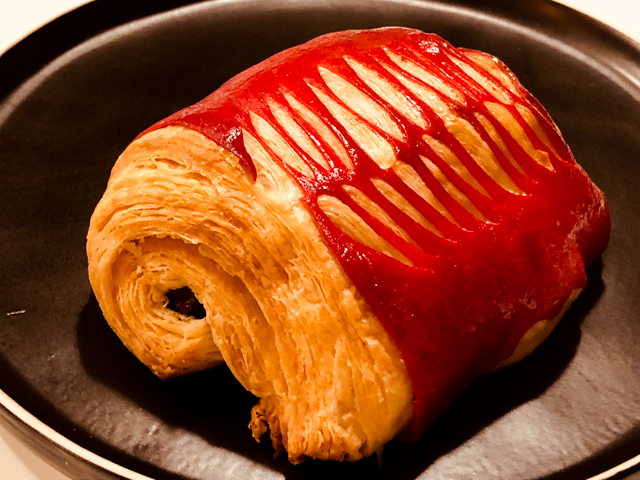
For the past few months, I could not get bicolor croissants and their close cousins – pain au chocolat – out of my mind. As you may already know, I tend to get obsessed about things. That means that two bad batches in a row did not prevent me from trying again. They were heavy and doughy, with almost no lamination.  You probably won’t find a detailed recipe in cookbooks, but youtube videos (some not in English) promise to show you how to succeed in a home setting. Keep in mind that for the most part, these are made in patisseries by bakers who have those incredibly efficient rolling machines (sheeters) at their disposal.  Fear not, I am ready to share a recipe and a method that worked well for me. My main advice: do not rush it. This is not the type of recipe to try and adapt for a tent-baking situation. Take your time. Keep the dough and yourself cool at all times.

BICOLOR CROISSANTS & PAIN AU CHOCOLAT
(adapted from many sources)

for main dough:
490g all-purpose flour
36g sugar
10g osmo-tolerant yeast (or regular instant  yeast, same amount)
16g salt
300g full-fat milk
70g butter, melted and cooled
for butter block:
340g butter cut in pieces, cold
(unsalted Land O’Lakes *see comments)
35g flour

Batons of chocolate
1 egg for egg wash
simple syrup (water and sugar, equal amounts by weight, dissolved by boiling and cooled)

Make the dough the day before.  Add all ingredients except butter to the bowl of a KitchenAid type mixer with a dough hook. Process for about 3 minutes, then add the butter, and mix for about 4 minutes longer, at low-speed. The dough should feel smooth and elastic.

Remove from the machine, knead by hand a few times, place in a bowl coated with a little butter, cover and leave at room temperature for 1 hour. Remove 110g of dough and add a few drops of red gel dye. Wearing gloves, knead the color into the dough, adding more if necessary. It will take a little while, the color will resist mixing at first. Make sure it is totally incorporated throughout the little ball of dough.  Reserve both doughs in separate bowls, covered, and place in the fridge overnight.

Make the butter block. Add cold butter and flour to the bowl of a KitchenAid type mixer fitted with the mixing blade. Process for about 2 minutes. Make an envelope for the butter using parchment paper. Fold 24-inch length of parchment in half to create a 12-inch rectangle. Fold over 3 open sides of rectangle to form 8-inch square, creasing the folds very firmly.  Unfold parchment envelope, add the butter/flour and refold the envelope. Roll gently until the butter is uniform in thickness and forms a perfect 8-inch square.  Refrigerate 30 minutes.

Roll the main dough (with no color) over a lightly floured surface to a rectangle about 9 x 16 inches, so that you can set the butter square in the center and fold the top and bottom parts over it, with a seam in the exact middle of the butter square. Gently glue the open sides of the dough so that the butter is all cozy inside. Turn the dough so that the seam is vertical now, perpendicular to you.  Roll again to the same general dimension (9 x 16 inches).  Make the first fold: divide the dough in three pieces (eye-balling is fine). Bring the top third down, and the bottom third up, in what is known as the envelope fold. Place the folded dough in the fridge covered with plastic for 45 minutes, transfer to the freezer for 20 minutes.

Roll the dough again to the same dimension (9 x 16 inches). Make the second fold, exactly like you did the first. Place the folded dough in the fridge, covered with plastic for 45 minutes, transfer to the freezer for 20 minutes.

Roll the dough again to the same dimension (9 x 16 inches). Make the third and final fold. Bring the top part down and the bottom part up to almost meet at the center, leaving a small space between the edges, so that you can fold the dough right there in the center.  That is known as the “book-fold.”  Refrigerate for 1 hour and freeze for 20 minutes.

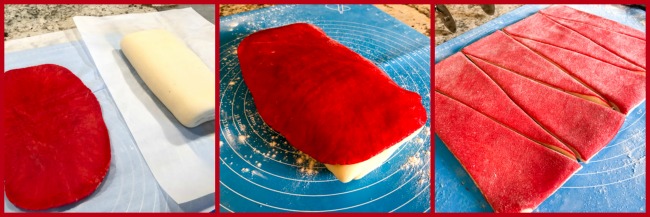
While the dough cools, it’s time to roll out the red dough. You need to make it thin and a little bigger than the dimension of the folded white dough, so that it sits on top of it. When the dough is out of the freezer, moisten it very lightly with water, place the rolled out red dough on top, and gently roll them both together (you can flip the dough to place the red one at the bottom after rolling a few times).

Roll both doughs together to a final dimension of 9 by 20 inches. Ideally, roll slightly bigger than that, then cut neatly to that final dimension. If for some reason some parts near the edges do not have the red dough on it, do not worry. Just proceed with cutting the pieces, it will not hurt the final look.

I used half the dough to make croissants and half to make pain au chocolat.  To make the croissants, I cut a 9-inch square from the dough and eye-balled triangles from it. With the rest of the dough I cut rectangles that were about 3 1/2 by 4 1/2 inches.  Shape croissants and enclose two chocolate batons per pain au chocolat, placing the red dough at the bottom in both cases.

Right after shaping the pain au chocolat, make parallel cuts with a razor blade on the red dough to expose the plain dough underneath. Some scraps from the dough I used to shape as a little flower. Allow the shaped pastries to proof for 2 and a half to 3 hours.

Heat the oven to 350F (higher temperatures will affect the red color).  Brush the pastries very lightly with egg wash, and place them in the freezer for 15 minutes to allow the butter to solidify a bit. Bake for 30 to 35 minutes. Cool on a rack. If desired, brush the surface with a simple syrup while they are still hot for a little shine.

ENJOY!

to print the recipe, click here

Comments: I used all-purpose flour and American butter, not the fancy 82% or higher fat butter than many recipes recommend. American butter has slightly more water, it resists better the rolling and pounding without incorporating into the dough, and it laminates well too. Particularly with the two-color dough, I felt it gave a lighter and better laminated final product. European butter made the croissants doughy and a lot of butter leaked during baking. It is possible that I need to improve my technique before using a higher fat butter with the two-color dough. If it works well for you, go for it. Freezing the dough before baking is a nice additional step that I learned in Artful Baker and decided to incorporate in the recipe. 

In theory, there are two ways to incorporate the red dough on the plain one. You can do what I did, or you can roll both doughs to the final dimension (9 by 20 inches) and place the red on top at that time. I tried both ways, and prefer the method I shared here. It is quite tricky to roll the red dough by itself as a large sheet and it is not as efficiently “glued” to the main dough since you simply place it on top and proceed to cutting the pieces. I should also mention that Philip, Baker Extraordinaire, makes a colored dough that does not contain yeast and it works very well. Check his method here. I am going to try that next time.

On shaping. As you roll the croissants or the little pain au chocolat, it is important to make it tight, by stretching a bit, generating tension as you roll. I was a bit worried about the layer of red dough and got too gentle with the shaping, so the pain au chocolat was not as tight as it should have been. Most were already unrolling during proofing. So that is definitely a detail to keep in mind.

Overall I am pretty happy with these babies. My previous attempts were  heavy and dense, with no open structure at all inside.  These had a nice crumbly crust, good butter flavor (even using American butter), and felt pretty light when handled. All I need to do next is optimize the shaping. And perhaps explore a different color scheme… Orange? Black?

ONE YEAR AGO: Lemon-Blueberry Entremet Cake

TWO YEARS AGO: Walk Strong3: A review of Jessica Smith’s latest workout program

THREE YEARS AGO: Pork Medallions with Black Berry Compote

FOUR YEARS AGO: Indian-Spiced Chicken with Chickpeas and Spinach

FIVE YEARS AGO: Curry Cardamon Cookies

SIX YEARS AGO: In My Kitchen, March 2014

SEVEN YEARS AGOBoeuf Bourguignon for a Snowy Evening

EIGHT YEARS AGO: Chickpea Salad

NINE YEARS AGO: Soft Spot for Chevre

TEN YEARS AGO: Roasted Onion and Asiago Cheese Miche