LA COURONNE LYONNAISE, TWO WAYS

This bread originates in Lyon, and is shaped as a crown, therefore the name “couronne”. However, there are several ways to gild this lily. I am sharing two methods, the first one worked exactly the way I hoped, the second I consider a work in progress. So, yes, I will be back, hopefully with improvements on the second version…

.

METHOD ONE
A SIMPLE COURONNE
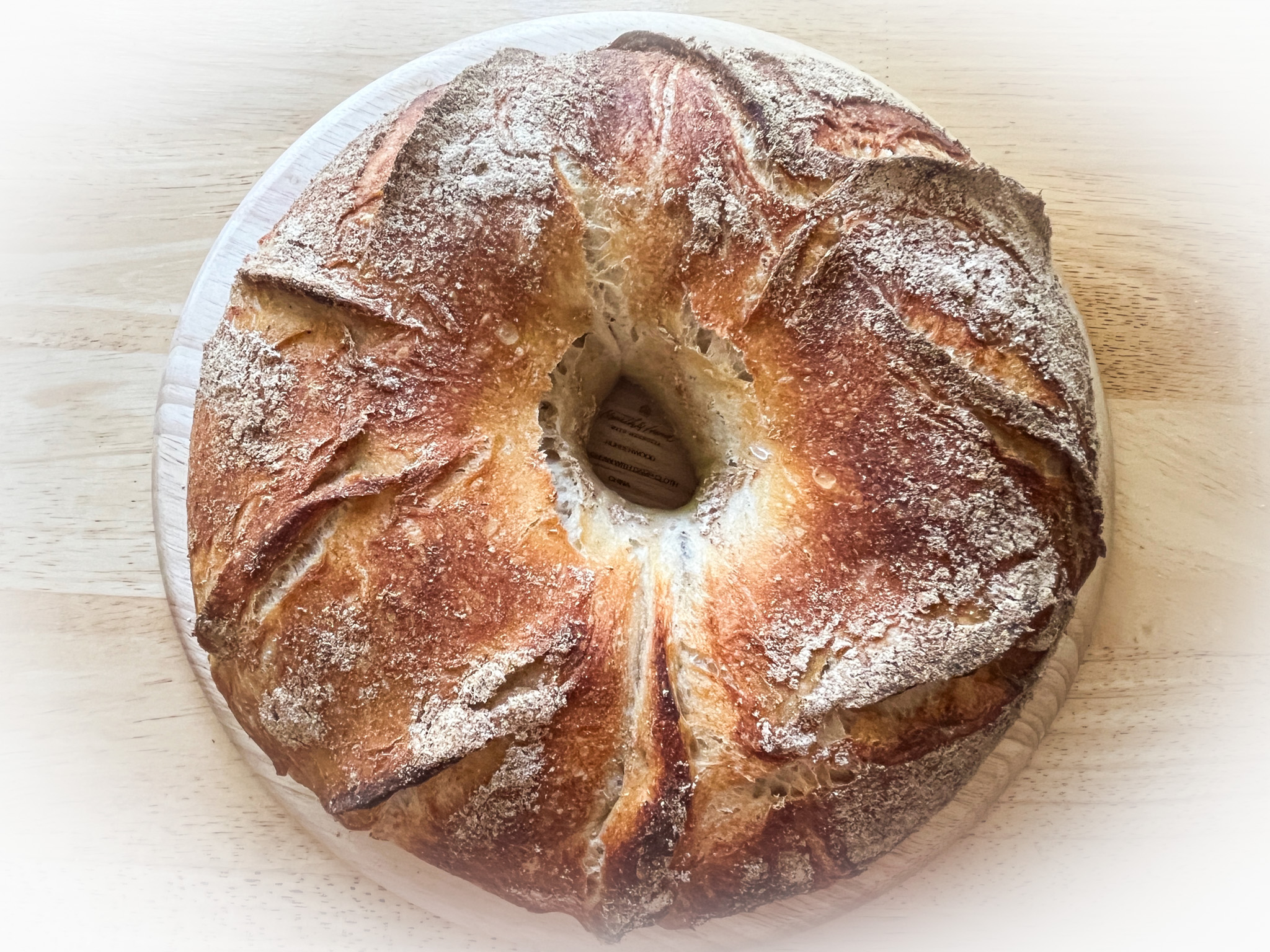


LA COURONNE LYONNAISE
(adapted from Henri-Luc’s blog)

530g bread flour
10g salt
160g sourdough starter at 100% hydratioin
300g water
rye flour for dusting

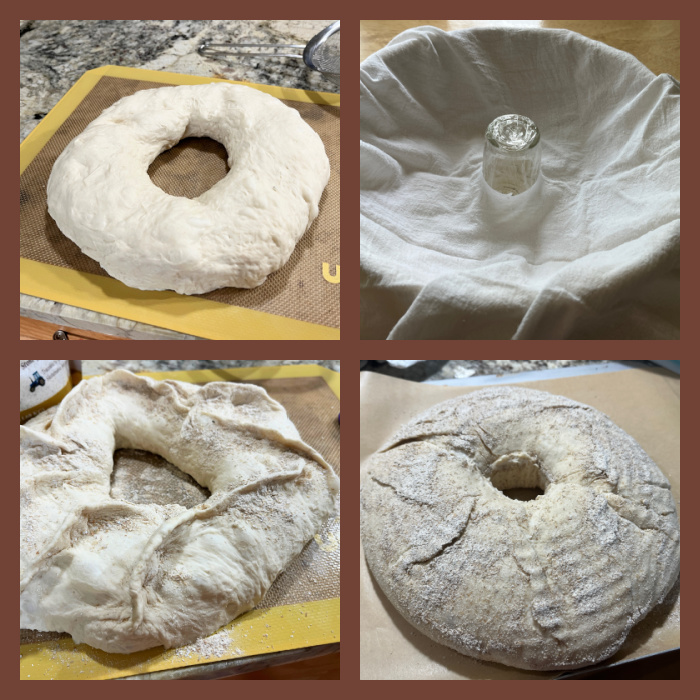
Mix sourdough starter in water and whisk to distribute well. Add bread flour and salt, incorporate either by hand or with a KitchenAid type mixer fitted with a hook dough for a few minutes. Proof at room temperature for 4 to 5 hours with folds at every 45 minutes.

Prepare your round banetton to proof a crown, by placing a small glass or plastic container in the center. Cover with a cloth and flour it lightly with rye flour.

Pre-shape the dough as a round ball. Allow it to relax for 15 minutes. Make a hole in the center (traditionally bakers use their elbow, do what you feel is right…). Enlarge the whole until you get to the size of your round banetton. Now grab some rye flour with your fingers and pinch a series of alternating straight lines on the surface. Pinch the dough well to make a super sharp line of dough raising up. Then flour the surface lightly again and invert the dough on the banetton. Side with the ridges should go down. Proof at room temperature for 2 hours. Place a parchment paper on top, invert the bread over it and slide into the hot oven right away.

Bake at 450F over a stone with steam for 20 minutes, then remove the steam (I used a large roasting pan inverted over the stone as a lid). Bake for 20 to 25 minutes longer. If the bread darkens too much cover it with foil. Internal temperature should be around 210F.

Cool completely before slicing.

ENJOY!

to print the recipe, click here
Comments: This was such a fun bread baking adventure! I loved making the ridges and the way they gave the bread that incredibly nice rustic look once it baked. Make sure to use rye flour to dust the surface, it is going to make a big difference if you skip it. White flour won’t have the same effect.

.

METHOD TWO
COURONNE WITH FLAPS
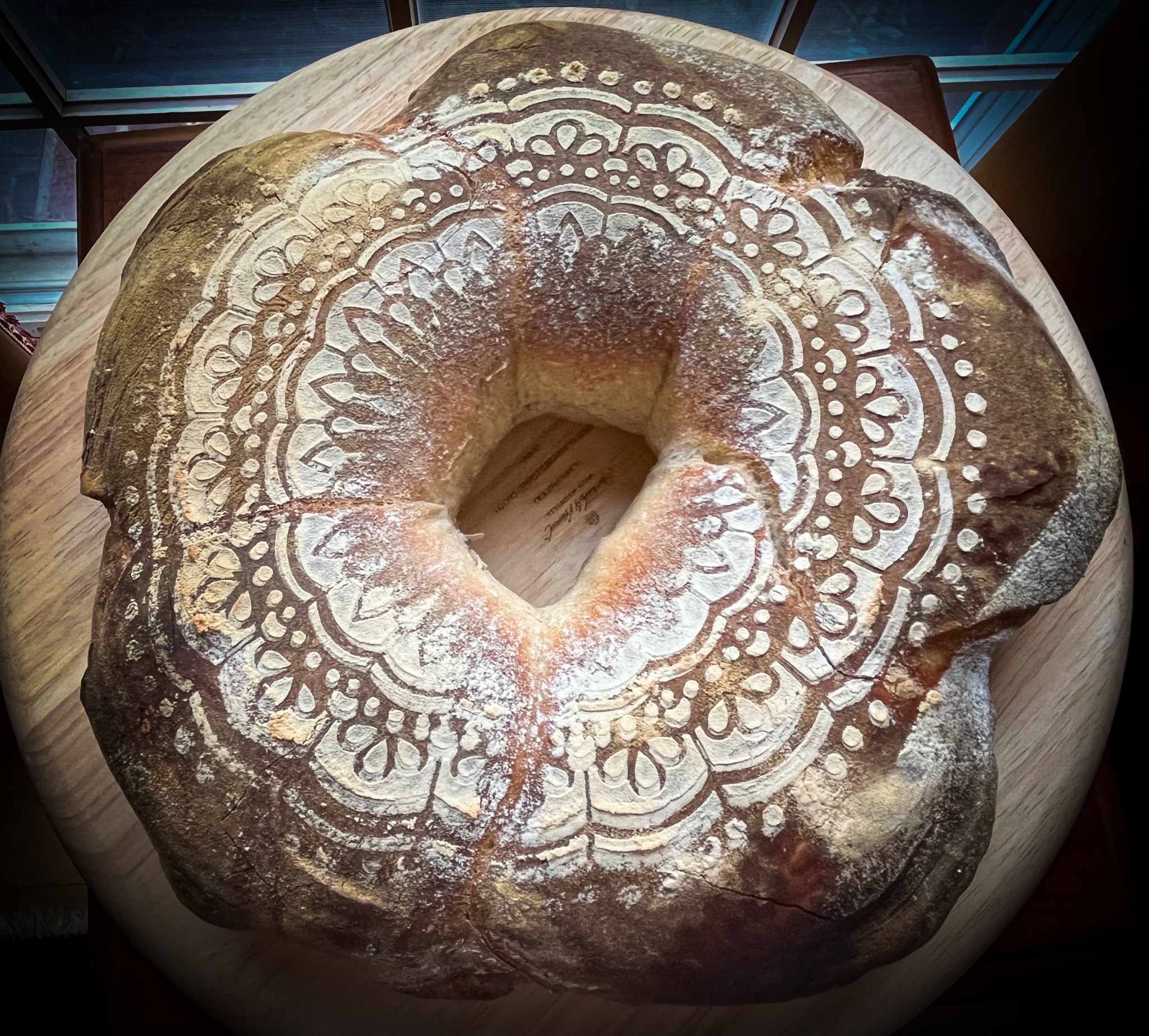
The flaps were a big flop. What can I say? The real beautiful version would have them all lifted up from the surface of the bread, mine stayed more or less glued to the surface. This was my second attempt, the first one was worse, so you won’t be seeing that (wink, wink). The shaping is quite a bit more elaborate. You form pieces of dough that are about 200g in weight, then roll a flap coming out of it, and roll the ball into it. Place to proof with the flap down, open side to the edge of the banetton. Before closing the flap over the ball of dough, a little olive oil is used to brush the edge, so the dough won’t stick and will instead lift during baking. Pictures below give you a general idea of the shaping method.

I had several issues, including the fact that 200g per ball of dough was probably too much. I will revise the whole thing and try again, because I really REALLY want to make it work right. I love the stencil decoration made right before baking (I will share info on the stencil and banetton in my upcoming In My Kitchen post, on October 1st).

I hope you enjoyed this post, and maybe you can give this method a try. If you get your flaps not to flop, let me know your secret!

ONE YEAR AGO: Have a Heart

TWO YEARS AGO: Chocolate-Hazelnut Tartlets

THREE YEARS AGO: Turkey Taco Salad

FOUR YEARS AGO: Cheese and Pesto Emmer Roll-ups and Elaine’s Cookbook Review

FIVE YEARS AGO: Mango-Hazelnut Entremet Cake

SIX YEARS AGO: Lebanese Lentil Salad and a Cookbook Review

SEVEN YEARS AGO: Cottage Loaf

EIGHT YEARS AGO: Sourdough Loaf with Cranberries and Walnuts

NINE YEARS AGO: Sichuan Pork Stir-Fry in Garlic Sauce

TEN YEARS AGO: Our Green Trip to Colorado

ELEVEN YEARS AGO: Ditalini Pasta Salad

TWELVE YEARS AGO: Celebrate Wednesday with a Thai Seafood Curry

THIRTEEN YEARS AGO:  Post-workout Breakfast

FOURTEEN YEARS AGO: Semolina Barbecue Buns

FIFTEEN YEARS AGO: Lavash Crackers

IL PANE DE VINCENZA

Funny how things work… I’ve been baking sourdough for 17 years, and all of a sudden I stumble on something new to me, something that mesmerizes me and makes me want to drop everything and give it a try. I stumbled by complete accident on the blog of Vincenza, which is written in Italian, but thanks to my Portuguese speaking, I can navigate without too many issues. Vincenza is a fantastic baker, from cakes to bread and macarons. Photography is also one of her hobbies, and her site definitely reveals that right away. This is my first attempt at making one of her recipes (Semolina Bread with Turmeric Lattice). I consider it a work in progress, as some improvement is needed with my handling of the lattice, but isn’t that what life is all about? Setting goals and having fun trying to reach them?

SEMOLINA SOURDOUGH WITH TURMERIC LATTICE
(from La Torte de Cenzy’s blog)

for the main dough:
320 g of double milled semolina flour
80 g bread flour
80 g sourdough starter at 100% hydration
280 g water
8 g salt
for the lattice:
300 g bread flour
150 g water
30 g sourdough starter
5 g salt
Turmeric to taste (I used 1/2 tsp)


In the bowl of a KitchenAid type mixer add the waters flours, and sourdough starter, mix with the dough hook until the flour is incorporated in the water. Let the dough rest for 1 hour, covered.

Sprinkle the salt over the surface and knead until very smooth, about 5 minutes. Transfer the dough to a slightly oiled bowl and make a set of folds. Allow the dough to bulk ferment for a total of 4 hours, folding the dough every 30 minutes for the first two hours. If the dough is too loose, give it another one or set of folds during that period.

Shape the dough as a batard and place it in a banneton with the seam up. Leave it at room temperature for 1 hour. At this point, make the turmeric dough by mixing all ingredients by hand in a bowl. Knead it very well to make it elastic and pliable, then cover the dough and keep it at room temperature overnight.

The following morning, roll out the turmeric dough and with a wheel make many strips that will have to be coupled two by two and with them form a basket weaving placed on a sheet of parchment paper. Cut flowers with a cookie cutter, making sure to flour the cutter well.

Turn on the oven to 450F.

Remove the main dough from the fridge, turn it over a sheet of parchment paper, so that the smooth side is up. ake the string from the fridge and turn it over on a sheet of parchment paper, spray it with a little water and cover the bread, turning the prepared lattice over on it and making it adhere well. Glue the flowers with a bit of water on one edge of the bread. Cut a deep incision along the entire side of the bread, off-center and immediately place it in a Dutch oven, cover, bake for 30 minutes, remove the cover and bake for additional 15 to 20 minutes. Cool completely before slicing.

ENJOY!

to print the recipe, click here

Comments: I was a little scared of making the lattice, but it was not bad at all. I used my roller cutter fully closed, so that the strips would be as narrow as it allows, but you can always use a ruler and cut it with a pizza cutter gadget. Make sure to flour the surface so that the rolling action will separate the strands efficiently. Make the lattice using sets of two strips, and the hard part is done. Well, maybe not quite. The toughest thing to me was adding it to the bread without abusing them (dough and lattice) too much. I did not do a good job on my first attempt, and the bread collapsed quite a bit due to my handling.

You can see it is lopsided and a bit deflated. Still, I am thrilled that somehow the lattice looked ok and the bread turned out delicious!

A few days later I used a similar method with a red dough (I used food gel color, because I was hoping for a real bright red, but feel free to go for natural agents like beet or sweet potato powder). I decided to proof the lattice with the main dough, and the result is totally different, it gets baked flat instead of raised.

I prefer the first look, but I will need to tweak the way I handle the lattice to avoid disturbing the dough too much. Still, the technique has so much potential, I am thinking braids could be fun to try too… So many breads, so little time!

.

Vincenza, thank you so much for your advice and help as I tried to mimic your gorgeous bake!

ONE YEAR AGO: Gruyere Cheese Biscuits

TWO YEARS AGO: Incredibly Simple Korean Chicken Thighs

THREE YEARS AGO:  Zucchini with Quick-Pickled Vegetables and Peanut Sauce

FOUR YEARS AGO: Nha Benta (Brazilian candy)

FIVE YEARS AGO: The Best, The Very Best Hummus

SIX YEARS AGO: Chicken Katsu

SEVEN YEARS AGO: Whole-Lemon Marinade: Long Overdue

EIGHT YEARS AGO: Tomato and Cucumber Salad with Almond Vinaigrette

NINE YEARS AGO: Eggplant Tomato Stacks

TEN YEARS AGO: The Couscous that Wasn’t

ELEVEN YEARS AGO: Apple-Cinnamon Bread

TWELVE YEARS AGO: Blueberry Galette

THIRTEEN YEARS AGO: In My Kitchen, August 2011

FOURTEEN YEARS AGO: Journey to a New Home

FIFTEEN YEARS AGO: Friday Night Dinner

FOR THE LOVE OF GAUDI

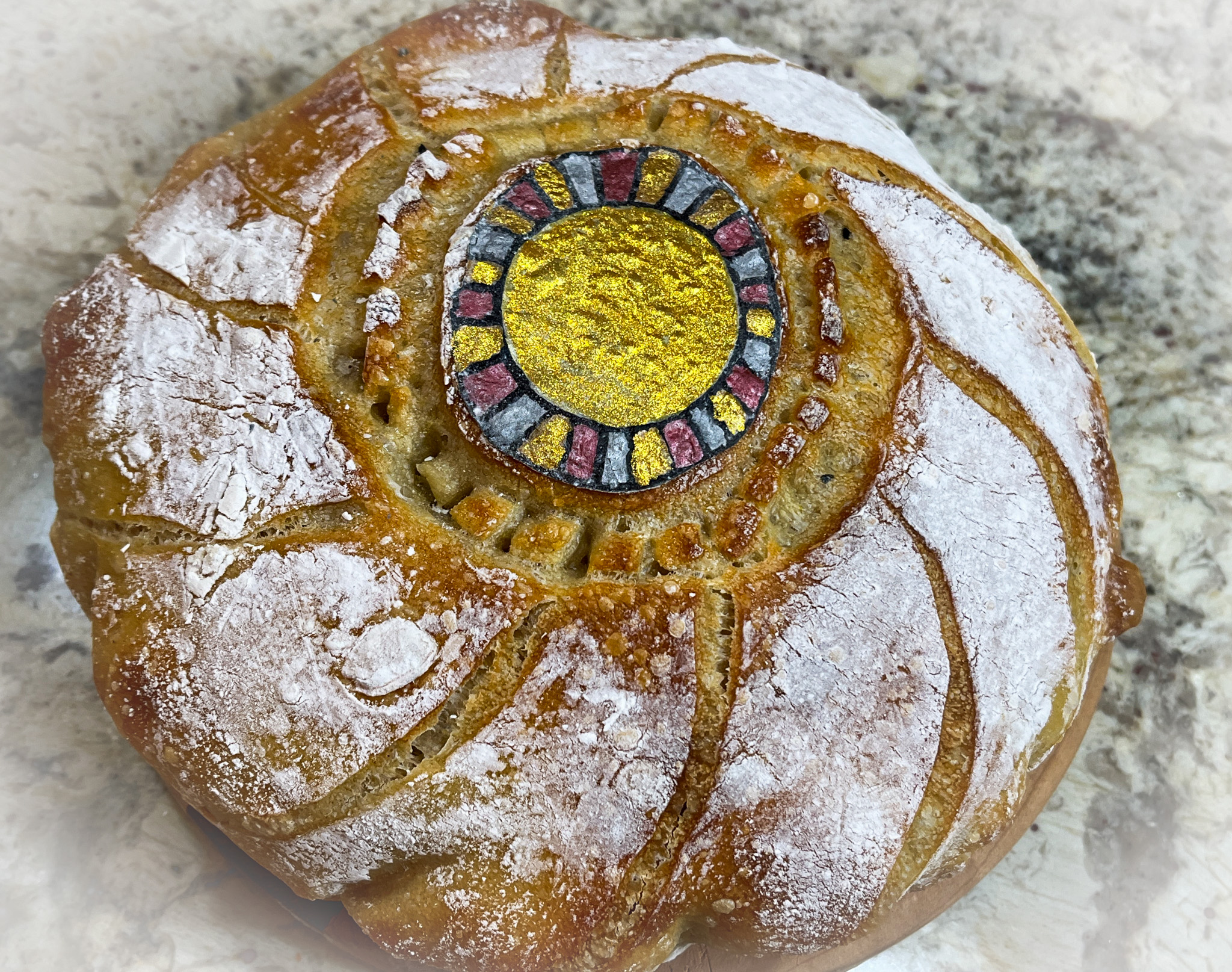
We just came back from a 2-week trip to France and my first time ever in Spain. We drove from Avignon to Arles and then to Barcelona and stayed there for a few days enjoying the company of great friends… Although I was familiar with Gaudi’s work, visiting Basilica de la Sagrada Familia and Casa Batlló were two experiences I will never ever forget. Today I celebrate Gaudi with a little sourdough bread.

GAUDI-LOVE SOURDOUGH BREAD
(from The Bewitching Kitchen)

Basic formula:
475g bread flour
25g rye flour
10g salt
1/2 tsp Baharat spice mix
75g sourdough starter at 100% hydration
350g water

Make the levain mixture about 6 hours before you plan to mix the dough. It should be very bubbly and active.

When you are ready to make the final dough, place the water in the bowl of a KitchenAid type mixer and dissolve the starter in it, mixing with a spatula briefly, then add the two types of flour, salt and spices. Turn the mixer on with the hook attachment and knead the dough for 4 minutes at low-speed all the time. You will notice the dough will gain quite a bit of structure even with just 4 minutes in the mixer. Remove from the machine, and transfer to a container lightly coated with oil, cover lightly with plastic wrap and allow it to ferment for 4 hours, folding every 45 minutes or so. Because the dough is already a bit developed from the initial time in the mixer, you should get very good structure after 3 and a half hours, or even sooner than that.

After four hours bulk fermentation, shape the dough as a ball, and place, seam side up, in a lightly floured banetton. Leave at room temperature one hour, and then place in the fridge overnight, from 8 to 12 hours.

Next morning, heat the oven to 450F.

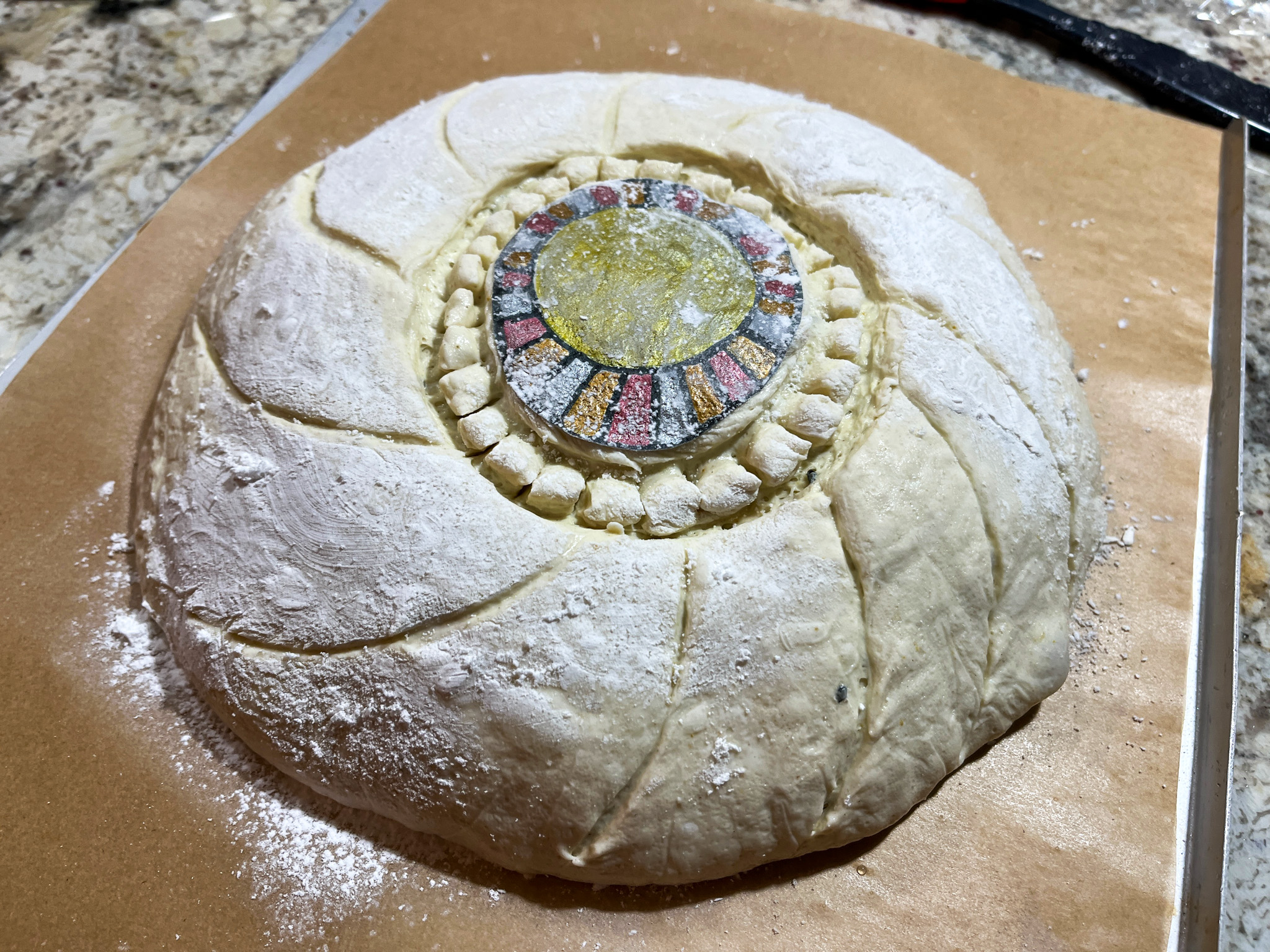
Place a parchment paper on top of the dough, a flat baking sheet, and invert the dough, flipping it out of the banneton. Slightly wet the top of the dough and place your wafer paper decoration on top. Flour the surface and score a little pattern with a razor blade.

Bake at 450F for 45 minutes, preferably covered for the first 30 minutes to retain steam. Cool completely over a rack before slicing.

ENJOY!

to print the recipe, click here

Comments: The picture above shows the inspiration for the design, artwork he included as a decorative panel above a door in Casa Batlló. I used wafer paper and food safe pens in metallic tones to make a similar design. I hope Gaudi would not get too mad at me…

After baking, I thought the colors of the design faded slightly, so I painted them again once the bread cooled completely.

Wafer paper is fast becoming my favorite way to decorate bread… To see a couple of examples from my past, click here (butterfly) and here (polka dot).

ONE YEAR AGO: Hello There, Cupcake!

TWO YEARS AGO: Two Deliciously Refreshing Cucumber Salads

THREE YEARS AGO: Grilled Shrimp with Parsley Oil over Black Rice Noodles 

FOUR YEARS AGO: Chicken Shawarma, the Easiest Way

FIVE YEARS AGO: Marshmallow Macarons

SIX YEARS AGO: Mango-Lime Macarons

SEVEN YEARS AGO: Honey-Glazed Sriracha Meatballs

EIGHT YEARS AGO: Slow-cooker Braised Lamb Shanks

NINE YEARS AGO: How about some coffee with your steak?

TEN YEARS AGO: Celebrate Wednesday with a Spiral Kick

ELEVEN YEARS AGO: Carrot Flan with Greens and Lemon Vinaigrette

TWELVE YEARS AGO: Granola Bars

THIRTEEN YEARS AGO:  Awesome Broccolini

FOURTEEN YEARS AGO:  A Twist on Pesto

FIFTEEN YEARS AGO: Ciabatta: Judging a bread by its holes

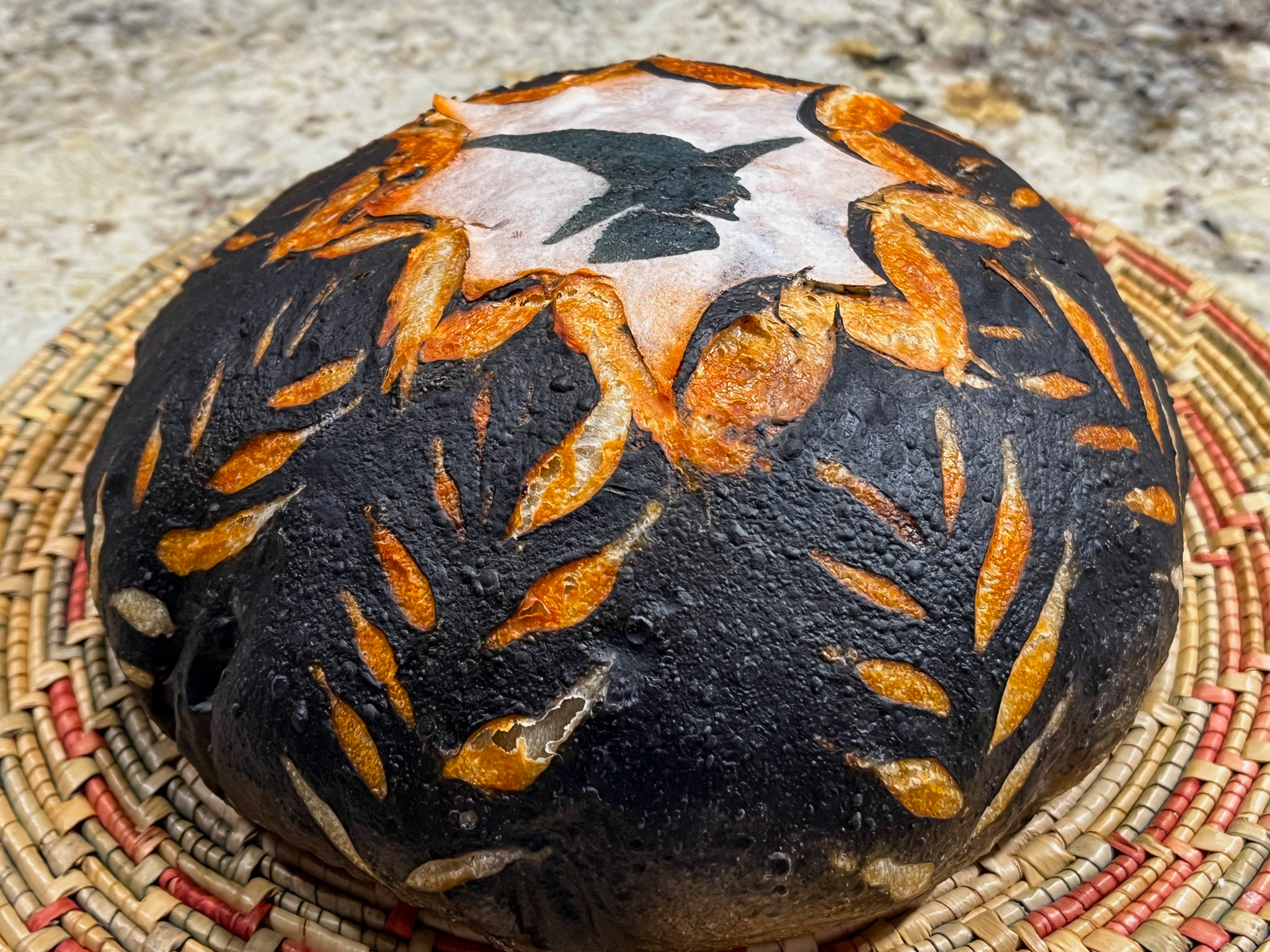
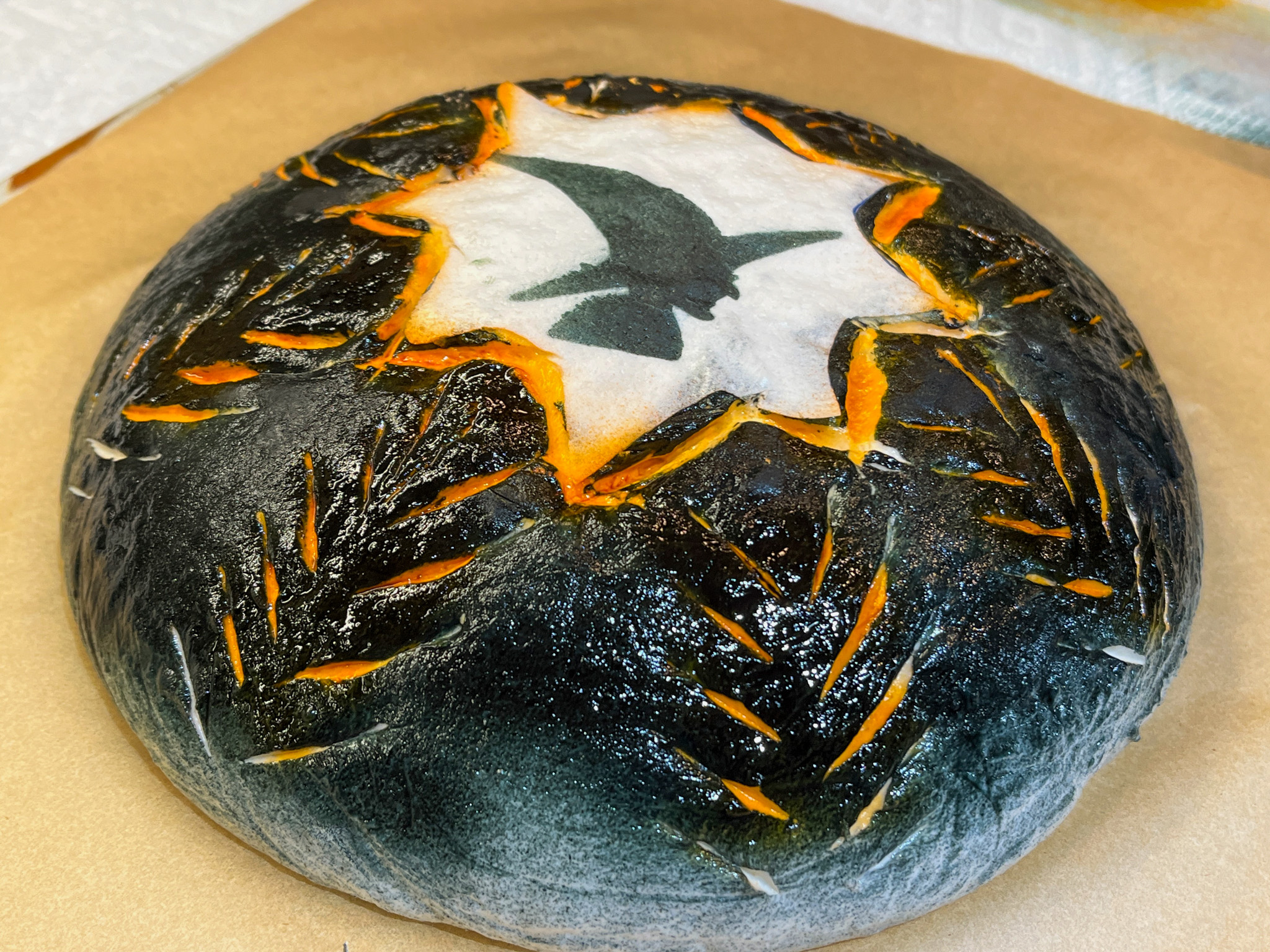
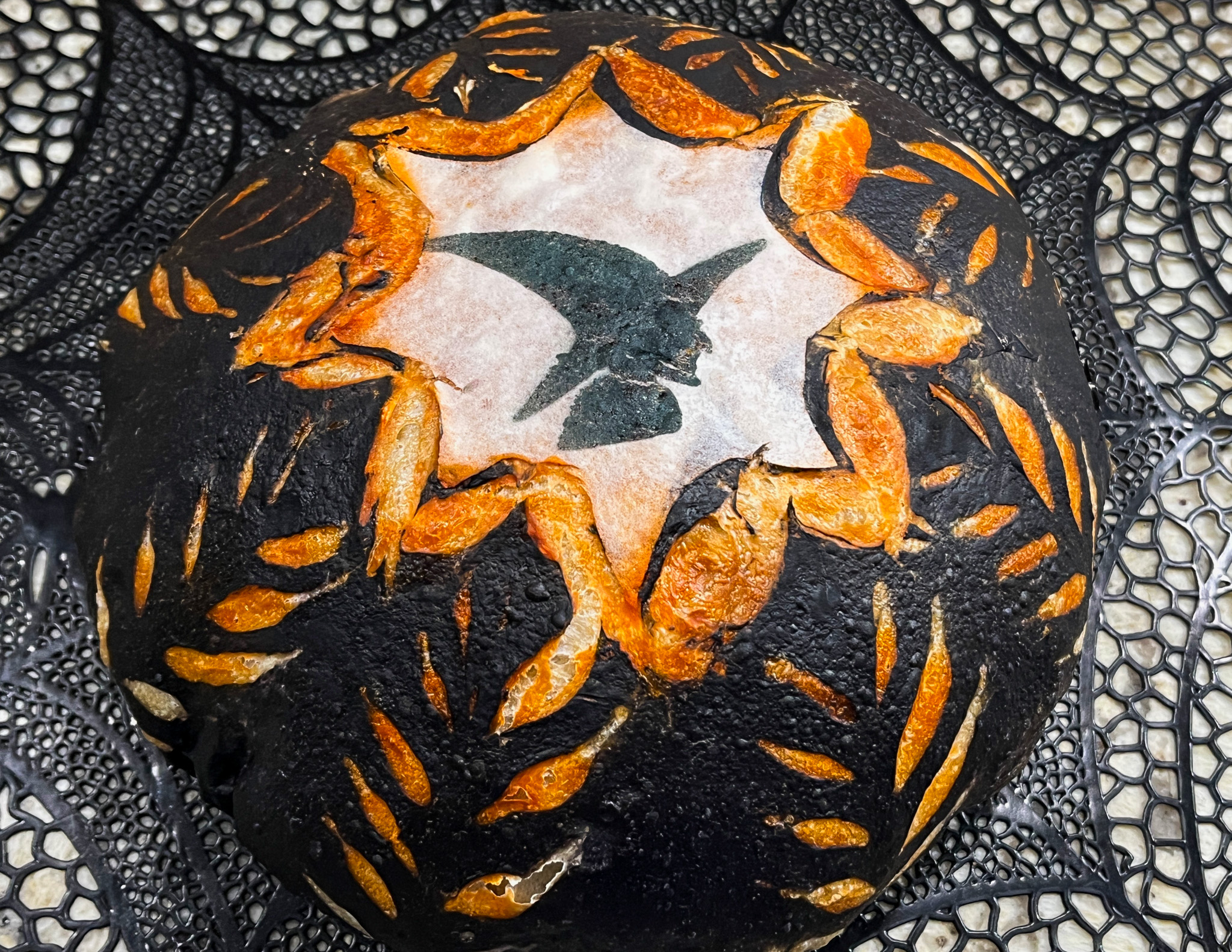
IT’S SOURDOUGH, WITCHES!

Once again I put a little wafer paper to work for some bewitched sourdough bread. I used just a basic recipe with my default method described many times in this blog of mine (click here). I lowered the hydration a bit to try to control the expansion of the design (for 500g total flour I used 335g water).

I was inspired by a Halloween bread from Kelsey (@3catsandapig) to come up with my design.
She is an incredibly talented bread artist.

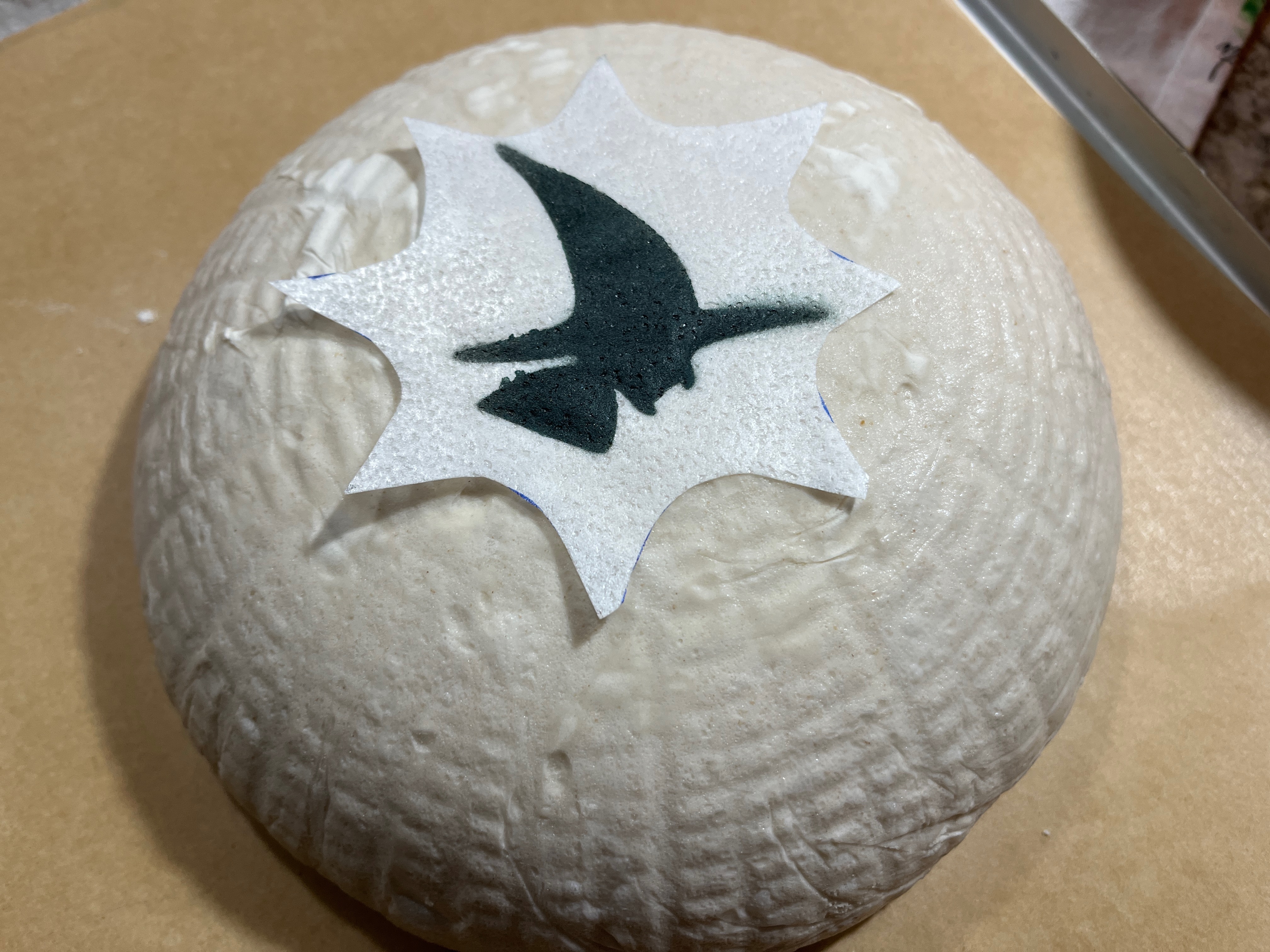
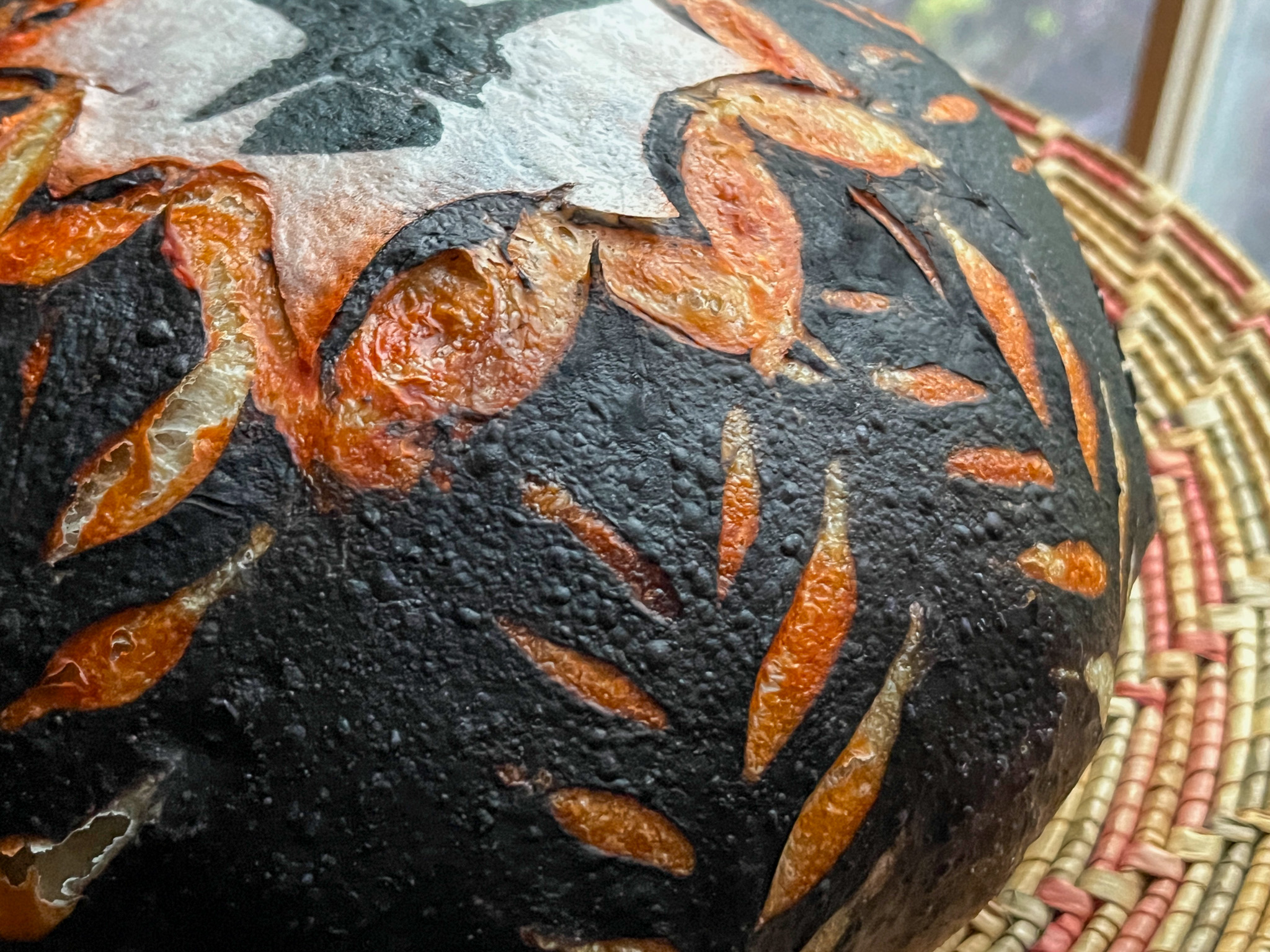
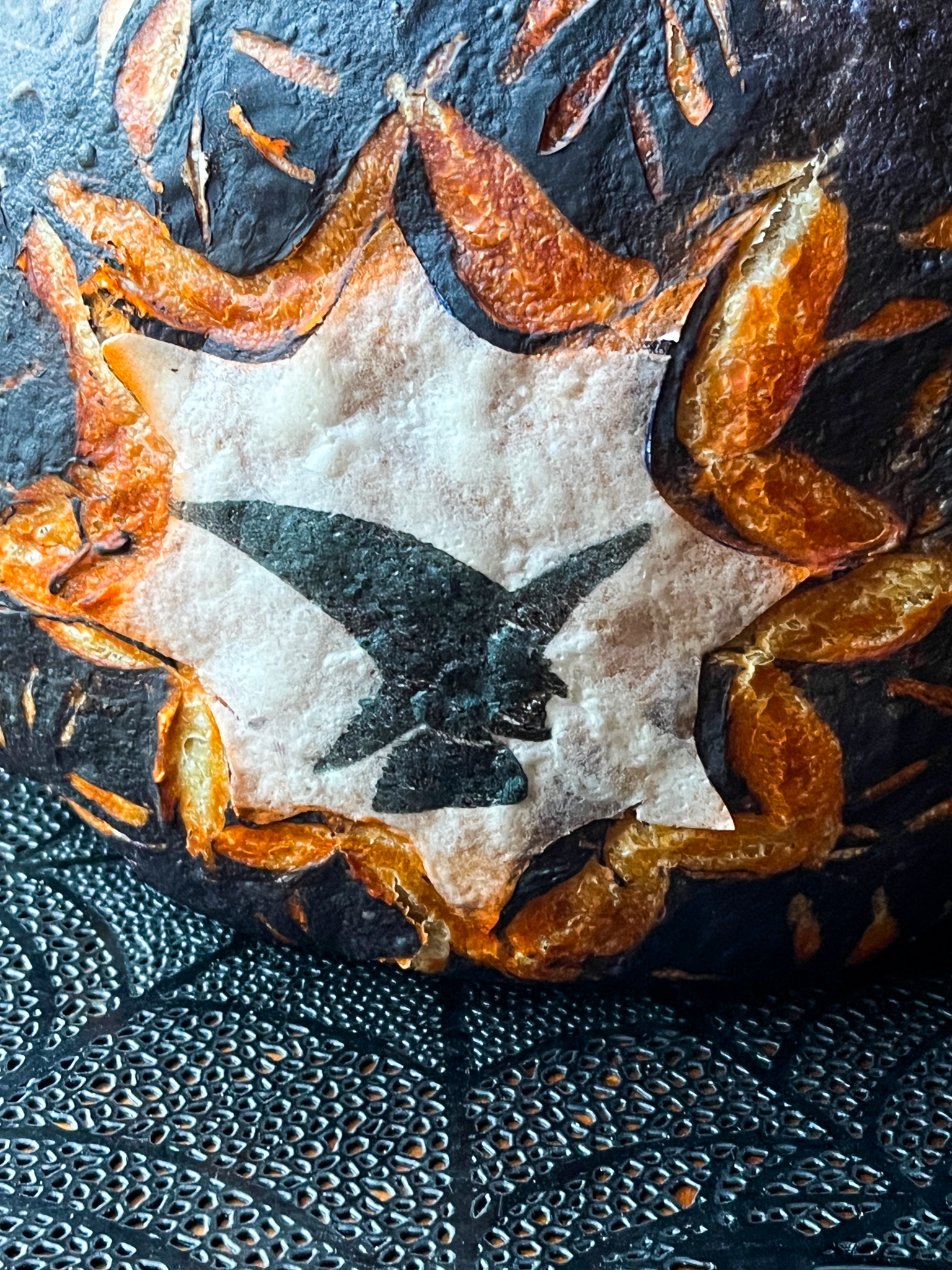
It all starts with cutting the wafer paper in the spider web shape, and painting a little witch’s design (I used a stencil and air-brushing). Make sure to cut the wafer paper shape twice, as you will use one of them to cover the dough as you either rub cocoa powder or air-brush with black all over. Then you will peel that off and place a clean one on that spot, proceeding with the scoring around it.

After covering the surface with black, score the design with a razor blade, and then immediately spray some orange (or red) air brush color in the cuts. That will give a nice contrast, but of course you can omit this step.

Bake the bread normally, I do 30 minutes with the lid on, and 15 minutes without the lid. Allow it to cool completely before slicing.

I find that air-brushing the whole surface makes the crust a bit soft, so depending on how you like your bread, rubbing with cocoa powder or charcoal might be better. What I dislike about those options is that they rub off on your hands as you cut the bread later. But it is not a big deal, really.

.

ONE YEAR AGO: Raw Zucchini and Chickpea Salad with Tahini Yogurt

TWO YEARS AGO: Black Tahini Shortbread Cookies

THREE YEARS AGO: A Fruitful Trio (of Macarons)

FOUR YEARS AGO: Halloween Entremet Cake

FIVE YEARS AGO: Pork with Prunes, Olives and Capers

SIX YEARS AGO: Kansas Corn Chowder

SEVEN YEARS AGO: Impossibly Cute Bacon and Egg Cups

EIGHT YEARS AGO: Pulling Under Pressure

NINE YEARS AGO: Cooking Sous-vide: Two takes on Chicken Thighs

TEN YEARS AGO: Miso Soup: A Japanese Classic

ELEVEN YEARS AGO: On my desk

TWELVE YEARS AGO: A must-make veggie puree

THIRTEEN YEARS AGO: Vegetarian Lasagna

FOURTEEN YEARS AGO:  Brazilian Pão de Queijo

POLKA DOT LOVE SOURDOUGH

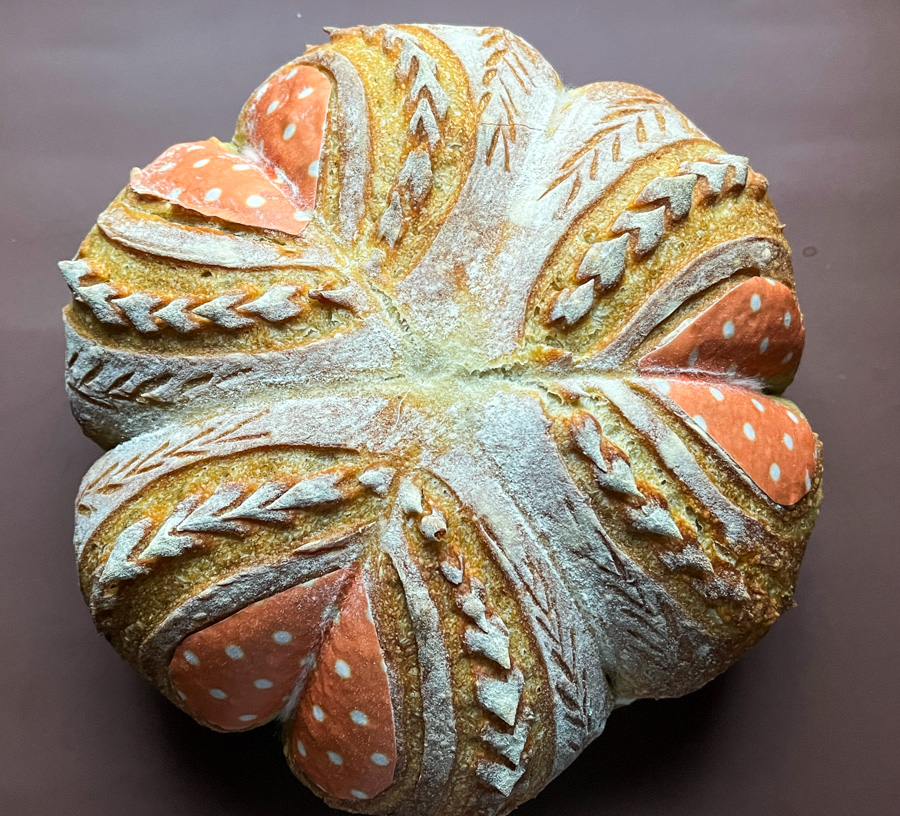
Once again I played with wafer paper to decorate sourdough bread, but this time I coupled it with a few strings to generate a cute shape, often used to turn the bread into pumpkin shape, but I opted for a more romantic outcome… Nothing personal against pumpkins, I do love them and honored them in the past (click here).

Start by cutting wafer paper in small heart shapes…. You will need three, and three long strings that you should rub very lightly with oil to facilitate removing later.

Place the strings equally spaced over the proofed dough, flip the dough over parchment paper, and tie the strings on the top, trying to hit the center as closely as possible. Gently insert the paper, coat the surface with flour and score the bread in any design you like. I used the Sonic blade and small scissors, as I often do.

Bake as you normally do, I keep the lid for 30 minutes and remove it for a final 15 minutes, all at 450F. Remove the strings, and allow the bread to cool completely before slicing.

You can use different patterns for the small hearts, or cut plain wafer paper and paint it yourself.

It is really amazing how well the colors in the wafer paper stay pretty much unchanged with baking, much better than air-brushed or gel colors. I hope you give this technique a try and have as much fun with it as I am having…

ONE YEAR AGO: Plum Sorbet

TWO YEARS AGO: Grilled Chicken with Sesame Roasted Carrots

THREE YEARS AGO: Let’s Get Spooky!

FOUR YEARS AGO: Miso and Sesame Roast Chicken with Revelation Quinoa

FIVE YEARS AGO: Incredibly Simple Times Four

SIX YEARS AGO: Parsnip, Coconut and Lemongrass Soup

SEVEN YEARS AGO: In My Kitchen, October 2016

EIGHT YEARS AGO: Paleo Moussaka

NINE YEARS AGO: In My Kitchen, October 2014

TEN YEARS AGO: In My Kitchen, October 2013

ELEVEN YEARS AGO: Bourbon and Molasses Glazed Pork Tenderloin

TWELVE YEARS AGO: Crimson and Cream Turkey Chili

THIRTEEN YEARS AGO: Taking a break from the nano-kitchen

FOURTEEN YEARS AGO: Chocolate Chip Cookies