SOURDOUGH BUBBLE BREAD

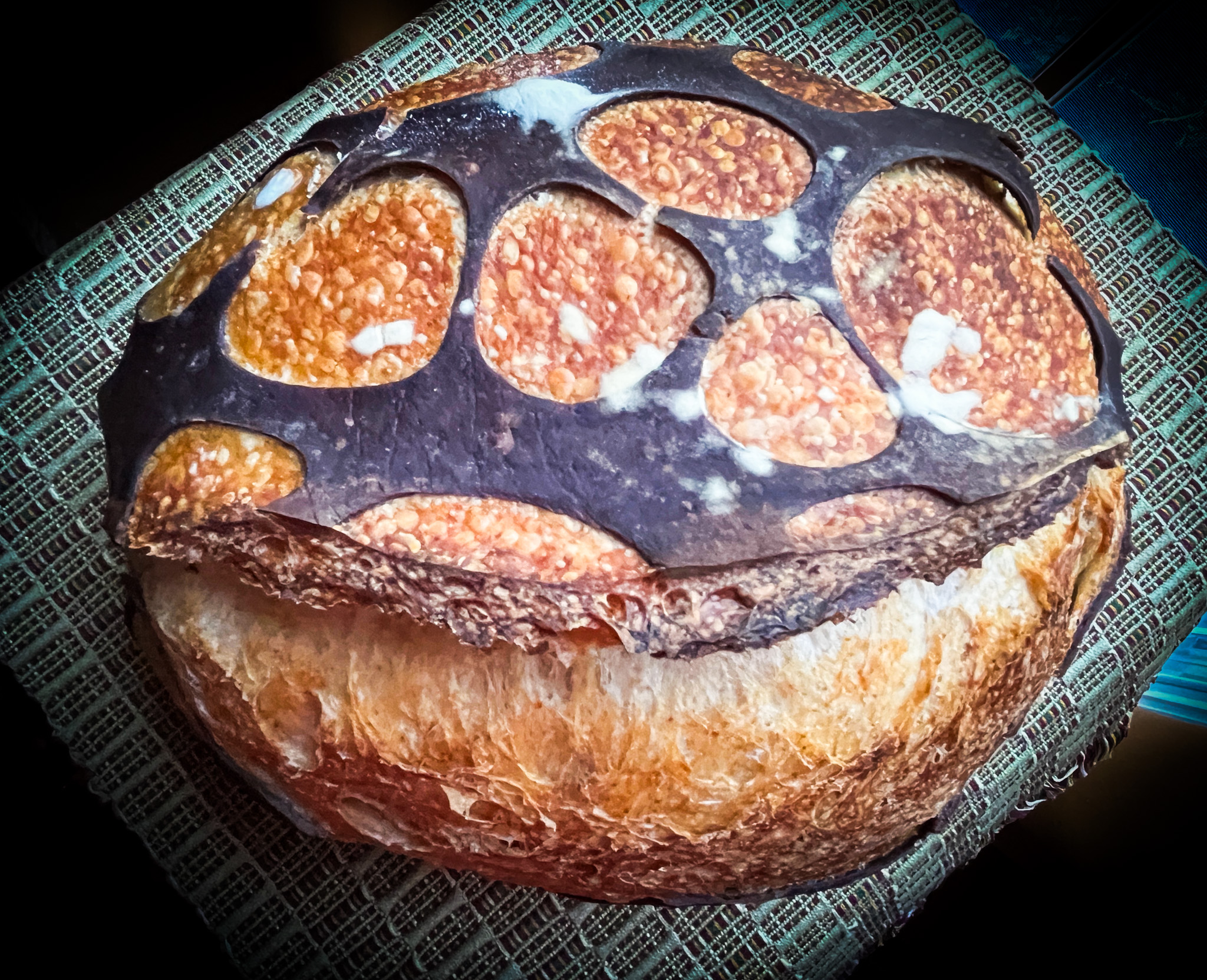
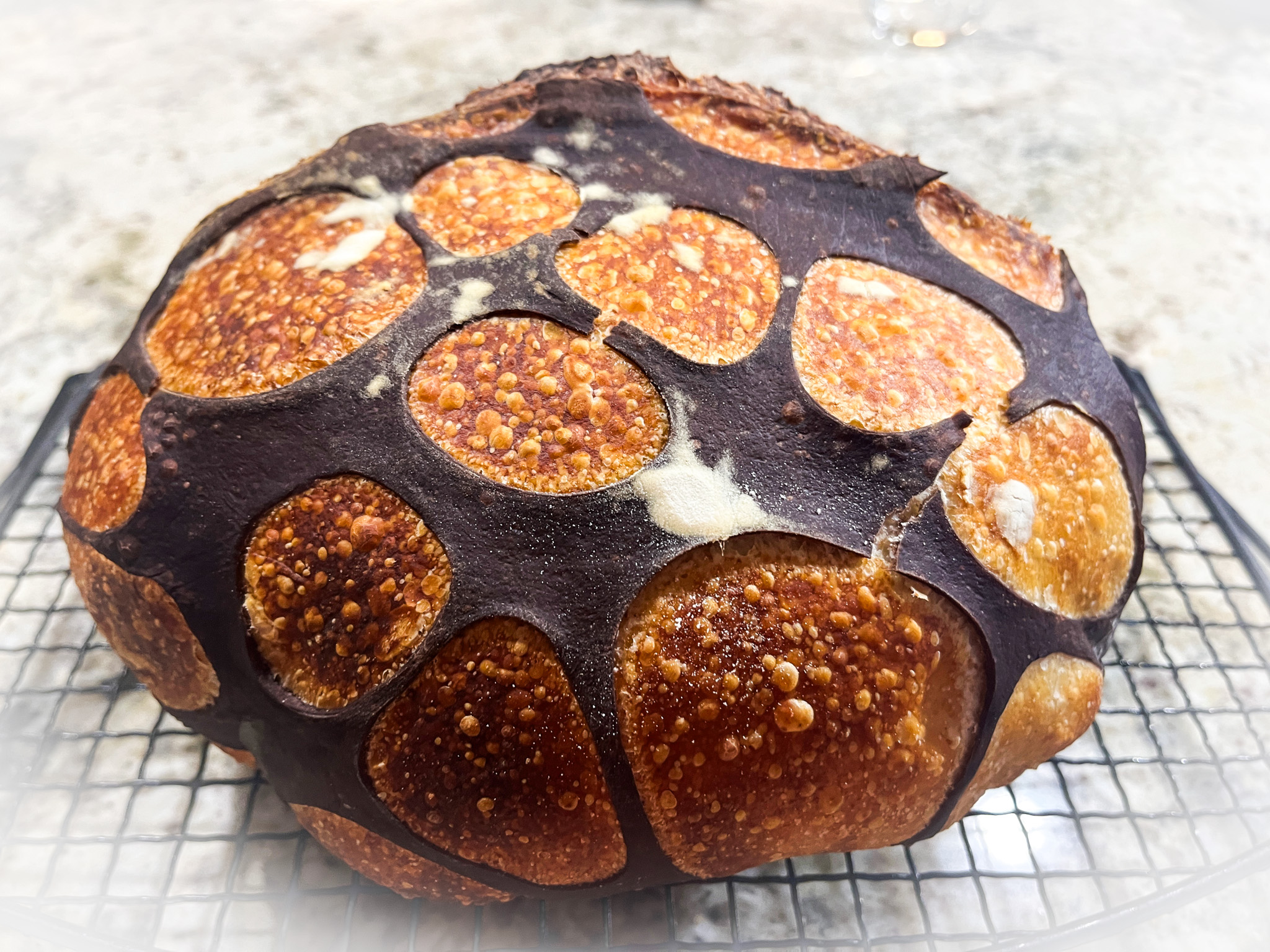
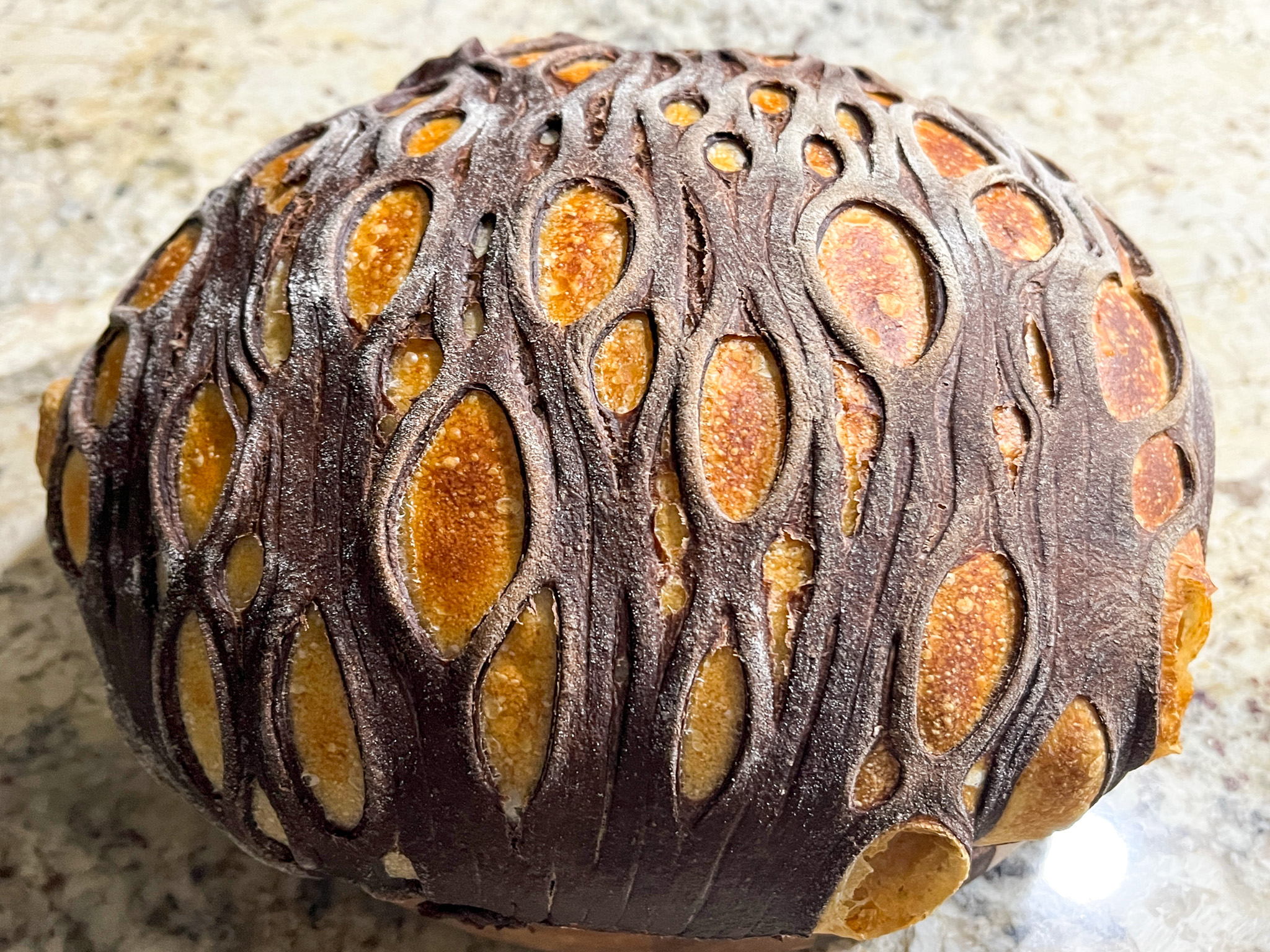
This is my third attempt at covering sourdough with a thin layer of a cocoa-dyed wrap. I stumbled by accident on a youtube site that got me lost for a while in the many possibilities of sourdough fun. She does incredibly beautiful loaves, pushing the envelope with gilding the lily. This is my first adventure following her overall method. The Bubble Bread.

Contrary to my usual method, which I consider simple and straightforward, this one involved autolysis, adding the starter and salt at different stages, and a lamination step. I followed her recipe to a T, although I opted for making only one loaf instead of two. The real game changer was the way she handled the cocoa-dyed dough. That is a must!

SOURDOUGH BUBBLE BREAD
(slightly modified from Hungry Shots)

for the main dough:
88g sourdough starter (100% hydration)
388g bread flour
50g spelt flour
270g water
9g salt

for the cocoa-wrap:
85g discarded sourdough
85g all-purpose flour
30g water
7g cocoa powder

Mix water with the two types of flour until combined. Leave at room temperature, covered, for one hour. Add the starter and mix until combined. Leave for 1 hour at room temperature. Add the salt and mix by kneading gently for about 4 minutes until incorporated. Leave at room temperature for 1 hour.

Spray a little water on your countertop and place the dough over it. Do a set of stretch and folds, and let it proof for one more hour at room temperature.

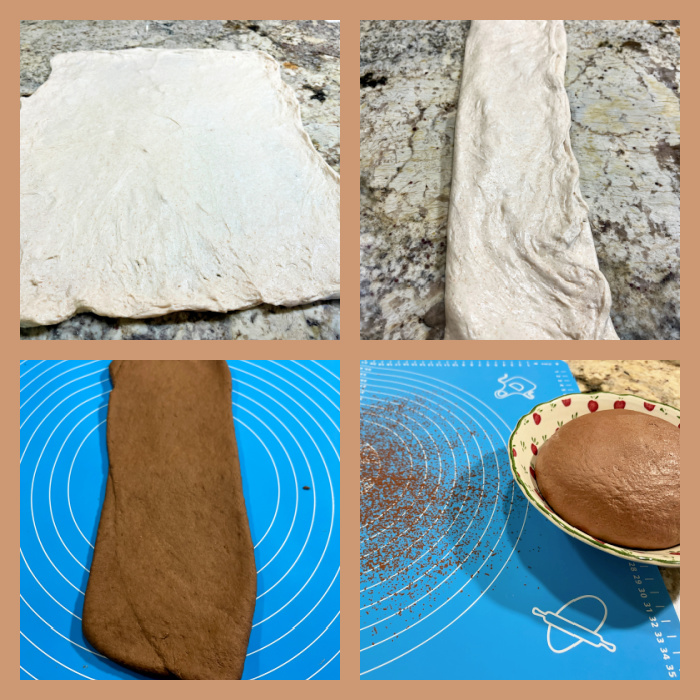
Laminate the dough (you can watch her youtube video if you have never done it). Allow it to rest for 90 minutes. Right after lamination, make the cocoa-dyed dough by mixing all the ingredients and kneading until fully smooth. To help with flexibility of the dough, roll it thinly with a rolling pin, fold it, and knead it again. Make sure the dough is very smooth and pliable before you form is into a ball and let it ferment at room temperature until you are ready to cover the dough with t.

Go back to the main dough: Do three sets of gentle foil colds (watch her video for details). Do the first one, wait 30 minutes to do the second one, 1 hour to do the third one. One hour after the third coil fold is done, you are ready to shape the dough and cover it with the cocoa wrap.

Roll out the cocoa dough to an extension that allows you to wrap the whole bread. Cut circles of different sizes with a cookie cutter. Shape the main dough as a batard (or round if you prefer), cover it with the cocoa dough, and place in the banneton. Proof for 30 minutes at room temperature, then place in the fridge overnight.

Next morning, heat oven to 450F. Invert the dough over parchment paper, make a deep slice off-center, and bake covered in a Dutch oven for 30 minutes, remove the cover and bake for 20 minutes more. Allow it to cool completely before slicing.

ENJOY!

to print the recipe, click here

.

Comments: This was so much fun to make! I have tried to cover sourdough with a dark wrap using the pie lattice cutter, but I did not care for the way it turned out (see it on this post of my past). However, the key is making the dough extensible enough, and that is achieved by thorough kneading, rolling, kneading again. If you go through the process, your outcome will be much better.

I would cut holes of different sizes next time, some a lot smaller, like she did, but this time I was a bit too anxious and nervous about the whole thing, so I kept is simple. Used only two sizes of circles. I could not take pictures of the wrapping of the dough, as I was alone in the house and it was impossible to do it on my own, but her videos show it all in great detail. Check the bubble bread video here.

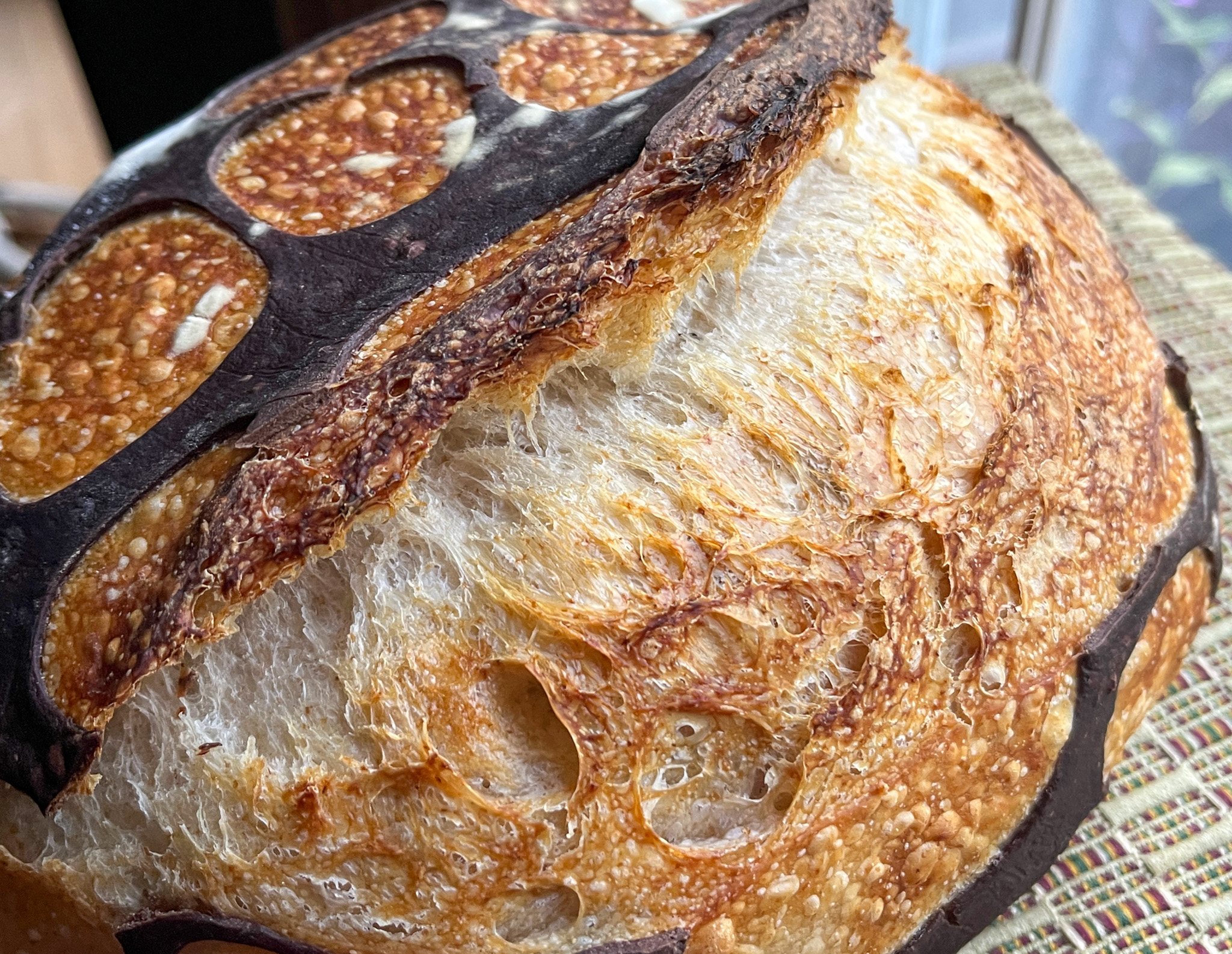
The bread had amazing oven-spring, particularly considering that the wrapped dough constrains it quite a bit. As to the crumb, it was very moist and tender, in fact the husband professed it to be his very favorite of this year! Can you say mission accomplished?

I am not convinced that the lamination and coil-folding are absolutely necessary to bake this type of bread, but definitely the handling of the cocoa dough will be key. I hope you give this method a try, it is so cool to see the outcome when you get that lid open after 30 minutes!

ONE YEAR AGO: Watermelon Salad

TWO YEARS AGO: Kashmiri Chicken Thighs

THREE YEARS AGO:  A Vegan Trilogy

FOUR YEARS AGO: The Mystifying Hurricane Roll

FIVE YEARS AGO: Pop-Tarts with Strawberry Balsamic Jam

SIX YEARS AGO: Ptichye Moloko, a Russian Dessert

SEVEN YEARS AGO: Cheesy Low-Carb Zucchini Tarts

EIGHT YEARS AGO: Blogging Hiatus

NINE YEARS AGO: Apricots, Three Ways

TEN YEARS AGO: Up Close and Personal with Kale

ELEVEN YEARS AGOBlack Berry Cherry Sorbet

TWELVE YEARS AGO: Asparagus Pesto

THIRTEEN YEARS AGO: Chocolate and Chestnut Terrine

FOURTEEN YEARS AGO: Under the spell of lemongrass

FIFTEEN YEARS AGO: Greens + Grapefruit + Shrimp = Great Salad!


COCOA LATTICE SOURDOUGH

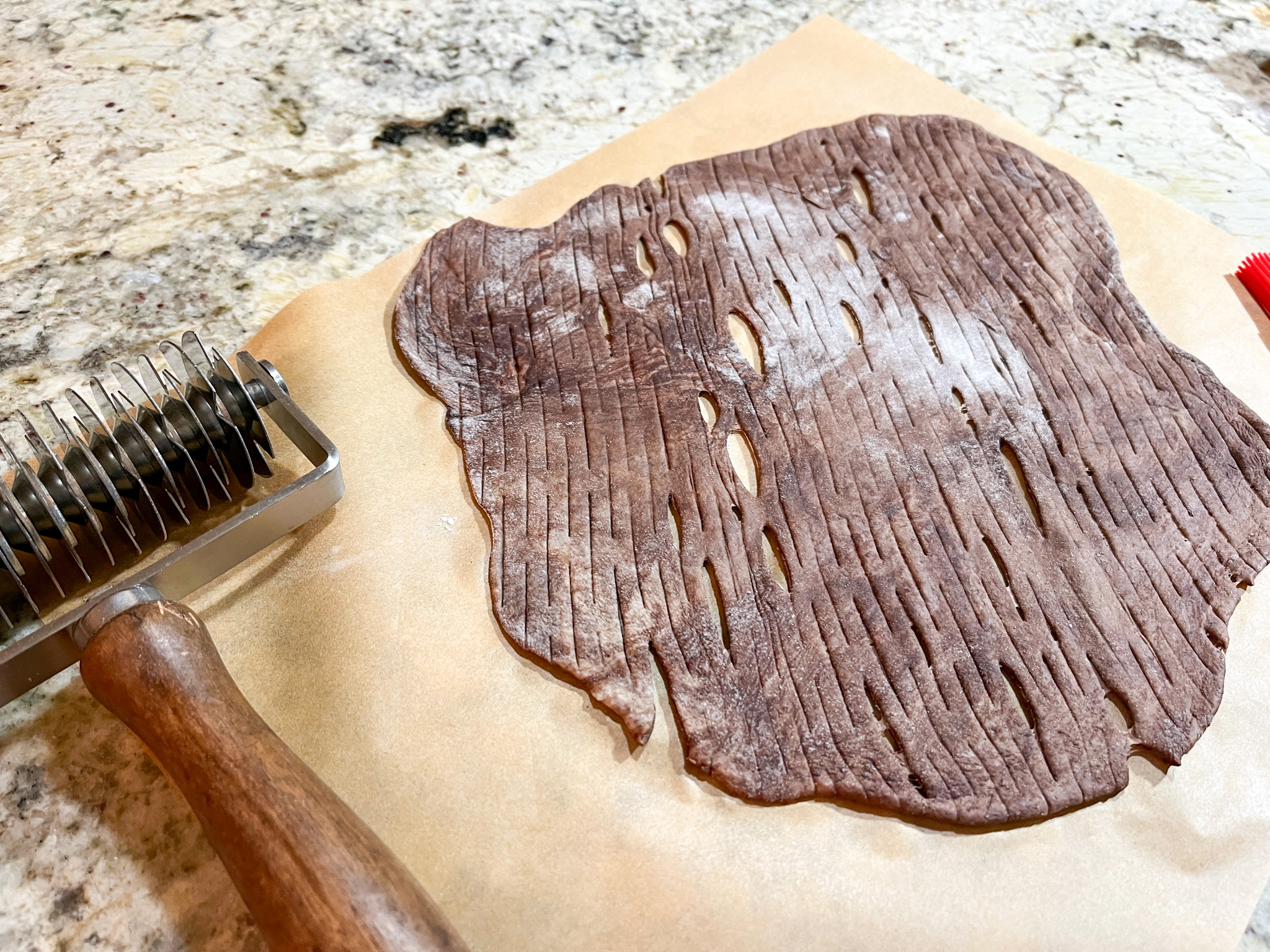
I consider this a work in progress, but for a first time using this technique, I am happy with it. You can use pretty much any formula you like, but go for a minimum of 500g total flour, as you will be removing 150g of dough to make the lattice. To cut the lattice, consider getting this gadget. You can always try to cut it by hand, but I imagine that would be quite tricky… at least for me!

COCOA LATTICE SOURDOUGH
(from The Bewitching Kitchen)

400g white bread flour
150g whole wheat
80g sourdough starter at 100% hydration
9 g salt
360g water (I had to add flour as I mixed the dough, it was too sticky)
30g cocoa powder (see comments about it in the method description)

After mixing the dough in the Kitchen Aid for 4 to 5 minutes as I normally do, I went through a series of folding/kneading at 45 minutes intervals for a total of 5 cycles. At that point, I removed 150g of the dough and added the cocoa powder, kneading it into the dough, as best as I could. Not all the amount was incorporated, but the dough was dark enough.

The main dough was shaped as a boule and placed in the fridge overnight. The dark, smaller portion was covered with plastic wrap and also placed in the fridge. Next morning the dark dough was rolled as thinly as possible and cut with the pie lattice gadget. That was carefully placed on top of the main dough right before baking. Keep in mind that the moment the lattice touches the dough you won’t be able to move it and adjust it.

The bread was baked at 450F for 30 minutes covered, and 15 minutes without a lid. Slice after completely cool.

ENJOY!

to print the recipe, click here

Comments: The picture above was my first attempt at rolling the lattice, and it was too thick, it barely opened at some parts. So I gathered that dough and rolled it again. Try to go as thinly as possible, which was not very easy, the gluten tends to put up a fight. I definitely want to do it again, using other colors, but mainly making sure to roll the lattice thinner. Wish me luck! Why don’t you try it also and let me know how it goes for you? 😉

We did not detect any particular cocoa taste on the bread. The dark part gets a different texture, almost like a cracker. We both loved it… Stay tuned for more lattice adventures in the bread world!
.

ONE YEAR AGO: Pistachio Sugar Cookies, the Uzbek Way

TWO YEARS AGO: Carrots and Zucchini Stir-Fry with Peanut Sauce

THREE YEARS AGO: Cookie Therapy, Anyone?

FOUR YEARS AGO: The Quasi-Vegan Quiche

FIVE YEARS AGO: Not Quite Moqueca

SIX YEARS AGO: Roasted Butternut Squash with Cashew Nuts

SEVEN YEARS AGO: Mississippi Roast and the Open Mind

EIGHT YEARS AGO: Walnut-Raisin Bran Muffins

NINE YEARS AGO: A Star is Born!

TEN YEARS AGO: Chestnut Flour Sourdough Bread

ELEVEN YEARS AGO: Kinpira Gobo and Japanese Home Cooking

TWELVE YEARS AGO: Walnut Sourdough

THIRTEEN YEARS AGO: Thai Chicken Curry

FOURTEEN YEARS AGO: Zen and the art of risotto

FLOWER STENCIL SOURDOUGH

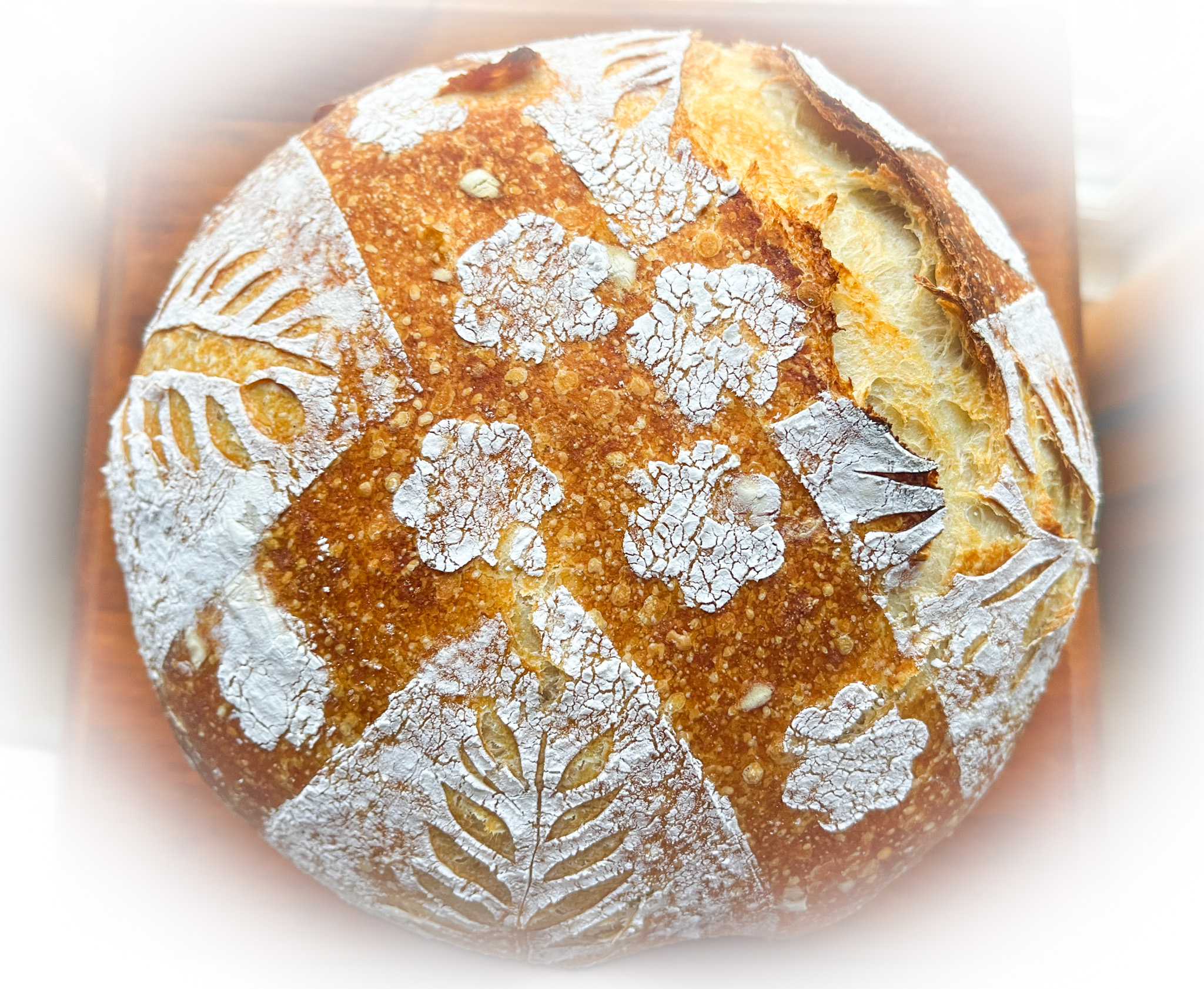
Inspired by great bakers who share their work on Instagram, this is my version of sourdough decorated with wafer paper made into stencil thanks to a paper puncher. A special thank you to my friend Dorothy for bringing wonderful baking ideas to my radar…

You can use any bread recipe you like, mine was a very simple formula (480g bread flour; 20g whole wheat flour; 75g sourdough starter at 100% hydration; 350g water; 10g salt). Use the method described here.

To decorate the bread, you will need a paper puncher like one from this set. Cut two strips of wafer paper and punch the design. Make it in a way that they can criss-cross and keep the design flowing (I actually used scissors to make final adjustments. Once your bread is ready to bake, lay the wafer paper on top, dust with flour (I like to use tapioca flour for that), gently pull the paper out, and score some pattern with a razor blade. Bake as you normally do. Steps are shown below.

The possibilities are of course endless! You can paint the flowers, use different shapes to make your stencil, add it to batard shaped bread, so many things to try…

ONE YEAR AGO: Happy Easter!

TWO YEARS AGO: Mini-Blueberry Cakes

THREE YEARS AGO: Wood Plank Cookies, Learning from the Best

FOUR YEARS AGO: OMG Spinach Pies

FIVE YEARS AGO: Avgolemono Soup, My Way

SIX YEARS AGO: Sourdough Chocolate Twist Bread

SEVEN YEARS AGO: Dan Lepard Times Three

EIGHT YEARS AGO: Turkey Portobello Burger

NINE YEARS AGO: Raspberry Ricotta Cake

TEN YEARS AGO: In My Kitchen, April 2014

ELEVEN YEARS AGO: Whole-Wheat Pasta with Lemony Tomatoes and Spinach

TWELVE YEARS AGO: Blood Orange Duck: A work in progress

THIRTEEN YEARS AGO: Grilled Mahi-mahi with citrus marinade

FOURTEEN YEARS AGO: Memories of Pastéis\

HAPPY EASTER TIMES THREE!

Sourdough, Chocolate-Covered Oreos and Macarons for you today…

.

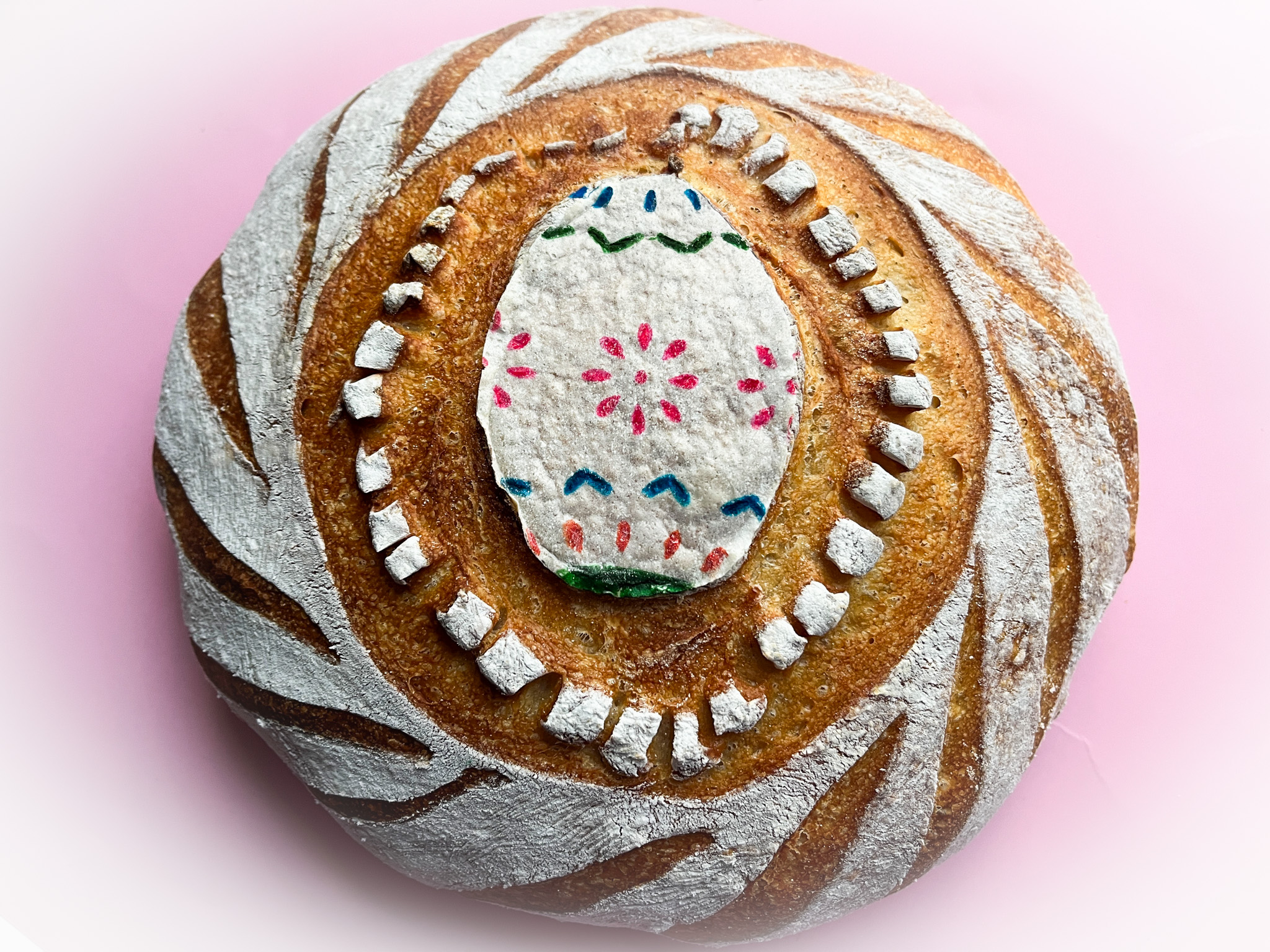
For this sourdough boule, I made a decoration using wafer paper and food safe pens, with a little stencil to help me out. Then a bit of scoring with my Sonic blade, and into the oven it went…


I love how the colors stayed during baking, it was my first time using food pens, until now I have relied on colors designed for air-brushing.

.

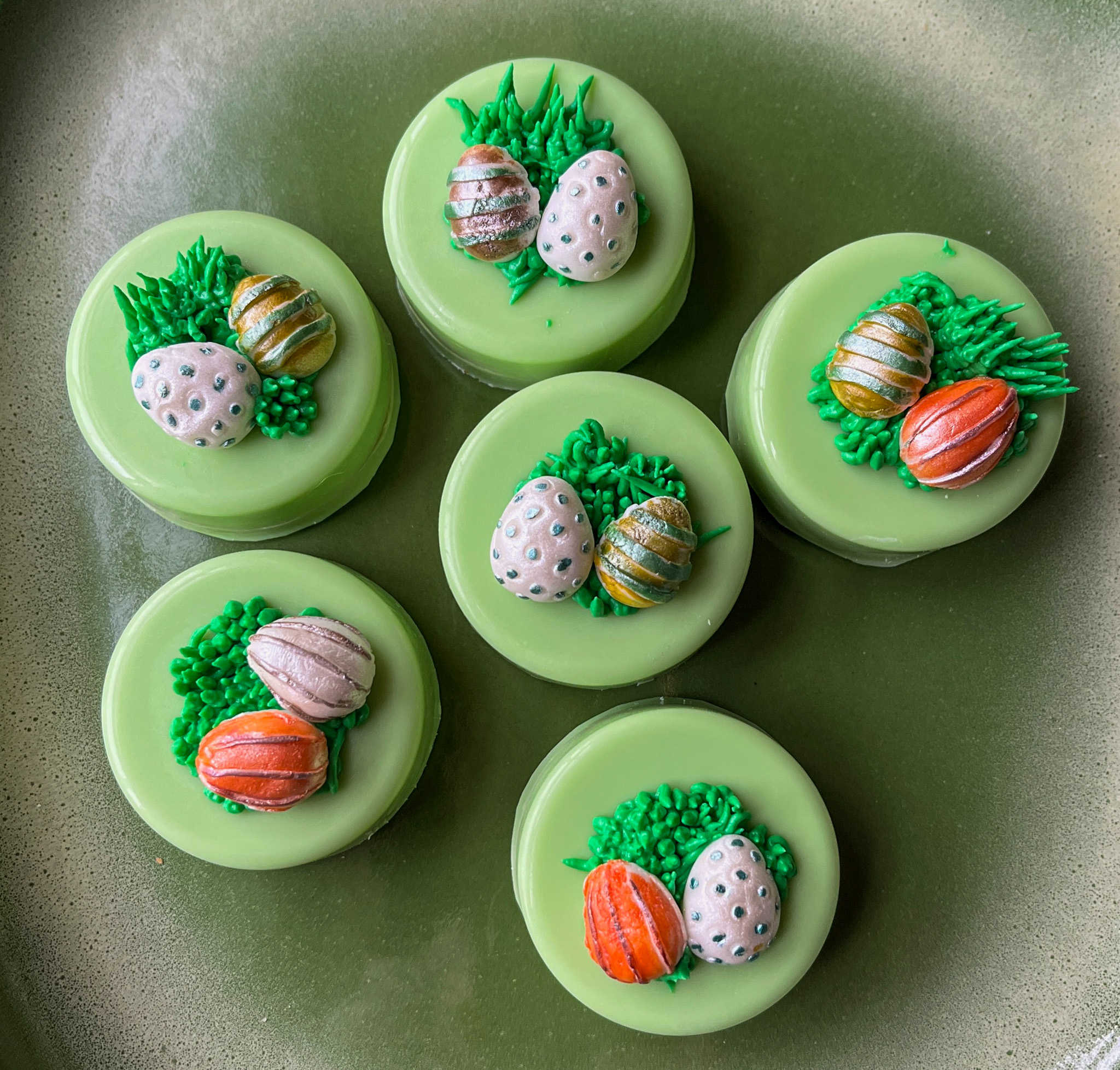
HAPPY EASTER CHOCOLATE-COVERED OREOS

I had so much fun with these! First, I made fondant decorations as little Easter eggs, and used a new set of food pens to paint them (they will be featured in my upcoming In My Kitchen post). Then I dyed white compound chocolate with oil-based green food color, and covered the Oreos. Once that set, I used thick Royal icing and a grass tip as the base to glue the eggs on the surface.


This is the full batch, donated on Good Friday…

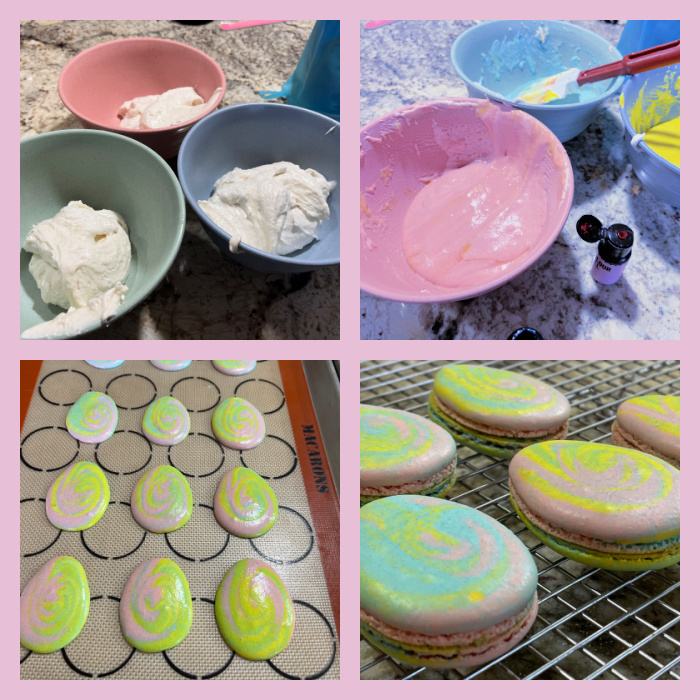
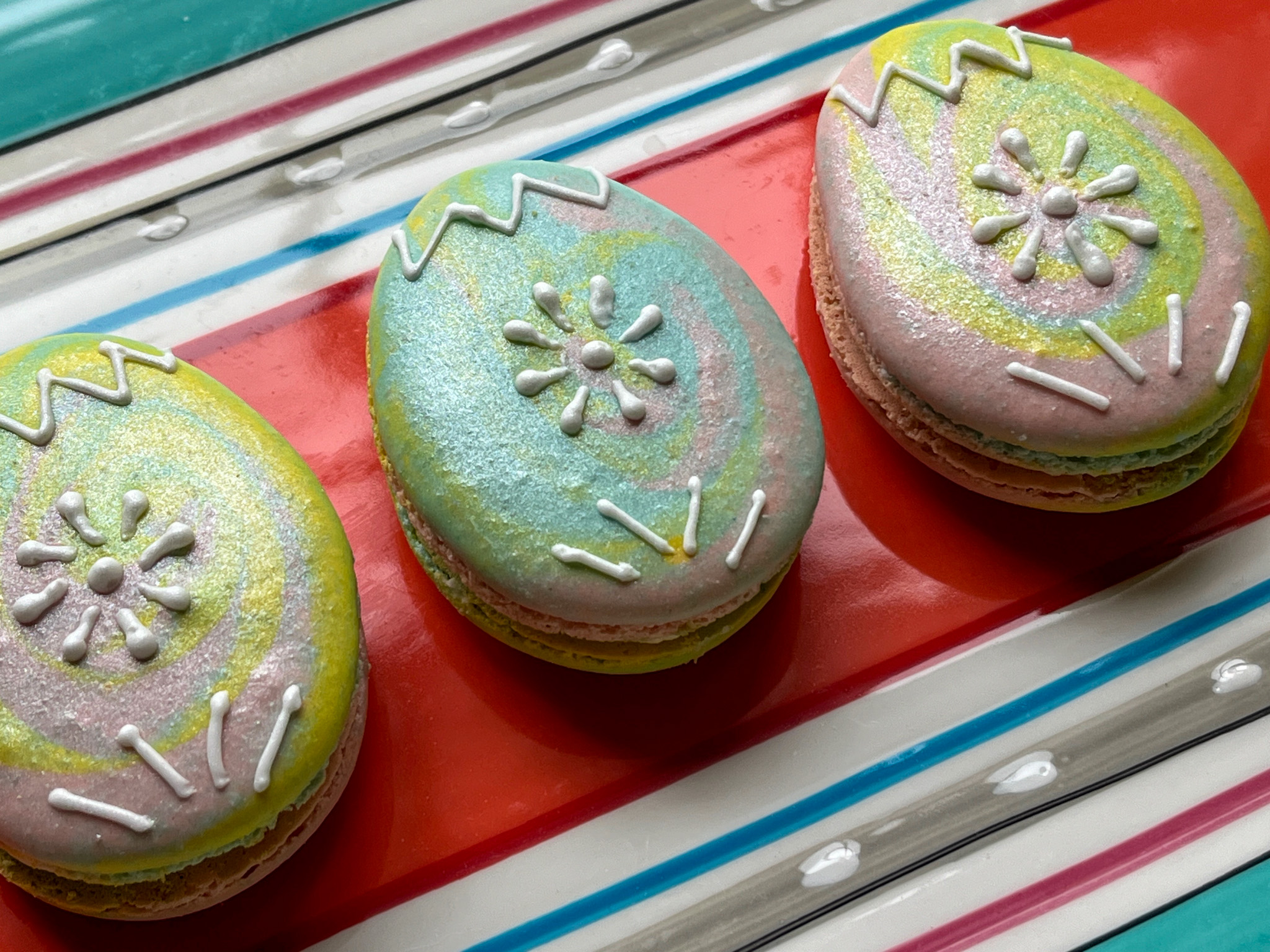
EASTER EGG LEMON MACARONS
(recipe as published here, filling as published here)


Sometimes a bake goes exactly the way I plan. It is rare, but it happens. These macarons turned out this way. I used a mixture of three colors (yellow, pink and blue), added them to the same piping back to get a tie-dye effect. After baking the details were piped with Royal icing, and in some I added sparkling sugar right away. Most were left plain, and got just a little spray with PME luster for some shine. That step is optional. They look nice without it.

I hate to pick favorites, but I must say of the three bakes I shared today, these macs might very well be the winners for me!

I hope you enjoyed this trilogy of bakes… The macaron design can be used on regular round macarons, piping flower shapes for a springtime version, so keep that in mind. I might just have to re-visit the method soon!

ONE YEAR AGO: In My Kitchen, Spring 2023

TWO YEARS AGO: In My Kitchen, April 2022

THREE YEARS AGO: In My Kitchen, April 2021

FOUR YEARS AGO: In My Kitchen, April 2020

FIVE YEARS AGO:  In My Kitchen, April 2019

SIX YEARS AGO: In My Kitchen, April 2018

SEVEN YEARS AGO: First Monday Favorite

EIGHT YEARS AGO: In My Kitchen, April 2016

NINE YEARS AGO: Spring has Sprung with Suzanne Goin

TEN YEARS AGO: Chai Brownies

ELEVEN YEARS AGO: Pomegranate-Molasses Glazed Carrots

TWELVE YEARS AGO: Braised Brisket with Bourbon-Peach Glaze

THIRTEEN YEARS AGO: The Real Vodka Sauce

FOURTEEN YEARS AGO: Spring Rolls on a Spring Day

UBE SOURDOUGH, TWO WAYS


Back in December last year I had a lot of fun playing with ube, the Filipino ingredient that was new to me. Today I share two ways to make sourdough bread incorporating ube. The basic recipe is the same, but in the first version I substituted some of the flour with ube powder. The second version incorporates 1/4 tsp ube extract in the dough. The one with the ube powder got a super light purple tone and the texture and structure of the bread was slightly different from a regular sourdough. If you are looking for color impact, definitely go with ube extract. A little goes a long way, and the taste is very mild.

UBE SOURDOUGH, TWO WAYS
(from the Bewitching Kitchen)

480g white bread flour
20g ube powder
10g salt
350g water
75-90g sourdough starter at 100% hydration

Make the levain mixture about 6 hours before you plan to mix the dough. It should be very bubbly and active.

When you are ready to make the final dough, place the water in the bowl of a KitchenAid type mixer and dissolve the starter in it, mixing with a spatula briefly, then add the flour, ,ube powder and salt. Turn the mixer on with the hook attachment and knead the dough for 4 minutes at low-speed all the time. You will notice the dough will gain quite a bit of structure even with just 4 minutes in the mixer. Remove from the machine, and transfer to a container lightly coated with oil, cover lightly with plastic wrap and allow it to ferment for 4 hours, folding every 45 minutes or so. Because the dough is already a bit developed from the initial time in the mixer, you should get very good structure after 3 and a half hours, or even sooner than that.

After four hours bulk fermentation, shape the dough as a ball, and place, seam side up, in a lightly floured banetton. Leave at room temperature one hour, and then place in the fridge overnight, from 8 to 12 hours.

Next morning, heat the oven to 450F.

Place a parchment paper on top of the dough, a flat baking sheet, and invert the dough, flipping it out of the banneton. Flour the surface of the dough, add the stencil and air-brush if so desired. Score with a razor blade.

Bake at 450F for 45 minutes, preferably covered for the first 30 minutes to retain steam. Cool completely over a rack before slicing.

FOR VERSION #2
Use 500g bread flour and add 1/4 tsp ube extract to the dough, following the same method to prepare and bake the bread.

ENJOY!

to print the recipe, click here

Comments: You will notice that the crumb is tighter than usual for a sourdough, and also the color purple is super subtle, quite light.  Version #2, with ube extract got a lot more color.


I used a different method to decorate it, with oats to form little flowers and black sesame seeds in the center. Just wet the surface of the dough a little bit and that acts like a glue.

It was a bit time-consuming to do, so I ended up forming just 4 little flowers. Maybe next time I can go for full-coverage…

The crumb was open and super purple!

So, if you like to play with this ingredient, I would recommend the extract, because I felt the dough was quite affected in its structure when some of the flour (therefore gluten) was removed and replaced with the powder. Also, the color that the extract provides is quite spectacular and stayed unchanged with baking. Flavor is very subtle.

ONE YEAR AGO: Brown Butter Dulce de Leche Cookie Cups

TWO YEARS AGO: Chicken Poblano Tortilla Soup

THREE YEARS AGO: Kung Pao Chicken

FOUR YEARS AGO: Galette de Rois

FIVE YEARS AGO: Sous-Vide Overnight Oatmeal

SIX YEARS AGO: A Valentine’s Day Opera

SEVEN YEARS AGO: Incredibly Simple Times Four

EIGHT YEARS AGO: Walnut-Cranberry Sourdough Bread

NINE YEARS AGO: Ottolenghi in Brazil?

TEN YEARS AGO: Roasted Winter Vegetables with Miso-Lime Dressing

ELEVEN YEARS AGO: 2012 Fitness Report: P90X2

TWELVE YEARS AGO: Caramelized Bananas

THIRTEEN YEARS AGO: Roasted Lemon Vinaigrette

FOURTEEN YEARS AGO: Whole Wheat Bread