THE WHEAT BERRY TRANSMOGRIFICATION

A post dedicated to “The Big Bang Theory” fans… 😉

Wheat berries are an amazing ingredient. You can use them for breakfast, desserts, salads, risotto-type dishes, you can add them to soups and stews.  Since I am always searching for side dishes to incorporate in our menu, wheat berries are a great alternative to give some rest to the usual suspects: rice, pasta, and couscous.  The other day I was feeling adventurous, and decided to create my own recipe for them.  Problems started right away.  A search on my cookbooks and online sources left me surprised (and quite puzzled) at the many different methods used to cook the grain.  Some people swear you must soak them overnight. Some insist you need a pressure cooker. I threw caution to the wind, didn’t soak them, didn’t invite the pressure cooker to play, but simply cooked them in salted water as if preparing pasta.  It took a little over 1 hour to get them the way I wanted: tender but not mushy.  After that, I incorporated them with two veggies I adore, and… side dish mission accomplished!
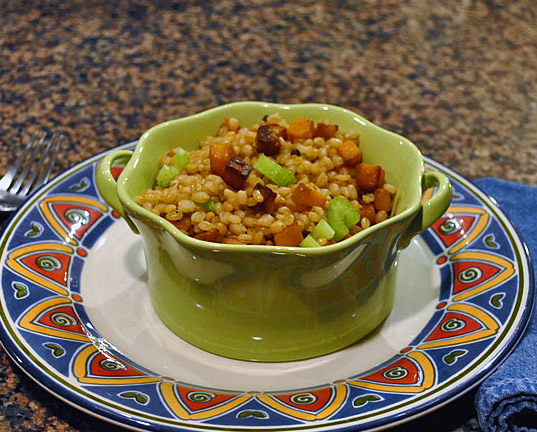
WHEAT BERRIES WITH BUTTERNUT SQUASH AND CELERY
(from the Bewitching Kitchen)

1 cup wheat berries
1 medium butternut squash, cut in medium dice
olive oil
salt and pepper
smoked paprika
1 large celery stalk, cut in slices

Heat the oven to 420F.

Cook the wheat berries in plenty of salted water until al dente (depending on the brand, it might take from 1 to 2 hours).  When cooked to your taste, drain, and reserve.  If not using immediately, add just a little drizzle of olive oil to prevent the grains from sticking too much. Can be prepared a couple of days ahead.

While the wheat berries are cooking, place the diced butternut squash in a bowl, and drizzle olive oil just enough to lightly coat the pieces. Season the squash with salt, pepper, and smoked paprika.  Add them in a single layer over a rimmed baking dish.  Roast in the hot oven until cooked, and the edges start to brown (25 to 35 minutes).

Mix the cooked wheat berries with the roasted squash, add the raw celery, incorporate everything together gently.   Adjust seasoning, and serve.

ENJOY!

to print the recipe, click here

We both loved this recipe!  Roasted butternut squash has a special place in my heart, and now stores in our neck of the woods carry those cute little bags with the cut veggie, so I often cave and bring those home to make my life easier.

We are also quite fond of raw celery. In this recipe, it gave the needed “crunch factor” to oppose the chewiness and softness of the wheat and squash.  The squash, when roasted, tastes a little sweet, so the smoked paprika and the celery help cut through that.

We enjoyed this dish with grilled pork tenderloin, but of course it goes well with all sorts of main dishes, standing also on its own if you add a hearty salad.

Hope you try it!

ONE YEAR AGO: Curried Zucchini Soup

TWO YEARS AGO: Roasted Onion and Asiago Cheese Miche (an outstanding bread!)

Add to FacebookAdd to DiggAdd to Del.icio.usAdd to StumbleuponAdd to RedditAdd to BlinklistAdd to TwitterAdd to TechnoratiAdd to Yahoo BuzzAdd to Newsvine

GRILLING RIBBONS

We use our outdoor grill pretty much the whole year, as even during the winter we’ll have nice breaks in the weather, with temps reaching the mid 60’s.  Grilling brings a glimpse  of summer into the kitchen, and that is a feeling any Brazilian-American always appreciate!

I found this recipe in a Food and Wine magazine, and the first thing that called my attention was the way it treated the squash:  thinly cut as ribbons, then threaded into skewers.  The photo in the magazine was quite gorgeous, evidently some practice is needed to cut the squash in the perfect thickness and grill them carefully enough to preserve a nice shape.  Let’s say my technique needs to be improved before serving this dish to guests…   But even if you don’t hit the jackpot with your technique, this is a fabulous side dish.  Don’t omit the prosciutto, it is a key component.

GRILLED SQUASH RIBBONS AND PROSCIUTTO WITH MINT DRESSING
(adapted from Food and Wine magazine)

1 teaspoon lime zest
1/4 cup fresh lime juice
1/4 cup chopped mint
1/4 cup extra-virgin olive oil + more for brushing veggies
Salt and freshly ground pepper
2 medium zucchini, very thinly sliced lengthwise
2 medium yellow squash, very thinly sliced lengthwise
6 ounces sliced prosciutto

Prepare a gas or charcoal grill, brushing or spraying the grids with a little olive oil.  In a small bowl, combine the lime zest and juice with the mint, and the   olive oil. Season with salt and pepper.Alternately thread the zucchini, yellow squash and prosciutto onto 4 pairs of 12-inch bamboo or metal skewers (soak the bamboo skewers in water to prevent them from burning).  Lightly spray the vegetables and prosciutto with olive oil and season with salt and pepper.Grill the skewers over high heat until the zucchini and yellow squash are lightly charred, maximum of 2 minutes per side. Serve the mint dressing on the side (it is great for salads too).

ENJOY!

to print the recipe, click here

Comments:   I suppose the same recipe would work without going through the trouble of making the ribbons, but they do add a lot of charm to the dish.  I wasn’t sure about grilling the prosciutto, as it is a bit dry to start with, but it turned out as a great match for the squash ribbons.  Salty and chewy, it gave that extra bite to the veggies, just like croutons on a Caesar salad. We both loved everything about this recipe, a real winner!

Food & Wine suggests using these veggies + dressing as a “sauce” for pasta.  Simply cook the pasta al dente, and slide the veggies off the skewers, mixing with the pasta while it’s still very hot. Add some of the dressing, adjust the consistency if needed with the pasta cooking water, and voila’:  heaven on a plate!

ONE YEAR AGO: Peppery Cashew Crunch
TWO YEARS AGO: Ossobuco Milanese (a GREAT dish!)
.

Add to FacebookAdd to DiggAdd to Del.icio.usAdd to StumbleuponAdd to RedditAdd to BlinklistAdd to TwitterAdd to TechnoratiAdd to Yahoo BuzzAdd to Newsvine

A MUST-MAKE VEGGIE PUREE

Those who are familiar with low-carb diets know that cauliflower is the number one choice as a substitute  for potatoes, and even rice.  Indeed,  I’ve seen recipes in which the florets are grated and used in what it’s called  “cauli-rice.”   I don’t think it would fool me, though, I love rice way too much!  😉  Now, back to puree…

Potatoes have enough starch to produce a creamy and smooth texture when cooked and mashed.  Other veggies like cauliflower, broccoli, even parsnips, end up with a more watery and grainy texture.  For that reason, most recipes will coach you into adding a lot of butter, heavy cream, or some type of cream cheese.   Sally Schneider, author of  “The Improvisational Cook,” came up with a very clever twist: she cooks the veggie in milk (low fat is fine), and adds to the cooking liquid an apple and a little bit of pasta (like angel hair).  The result is amazing.  Never in a million years I expected Phil to urge me to blog about a cauliflower recipe. His exact words were:  “make sure you really pump this recipe up, it’s awesome”!

CAULIFLOWER AND APPLE PUREE
(adapted from “The Improvisational Cook“)

1 medium cauliflower, core and leaves removed
1 small apple, peeled and cored, chopped
1/2 quart low fat milk
1/2 quart water
1/2 ounce angel hair pasta, broken in pieces
1 tsp salt
pinch of sugar
ground white pepper

Cut the cauliflower florets and stems roughly into pieces. Add the pieces to a pan with the milk/water, apple, bring to a gentle boil.  Add the pasta, salt, and sugar.   Cook, stirring every once in a while, until the cauliflower is tender (25 minutes).

Remove 1/4 cup from the cooking liquid and reserve. Strain the vegetables (the rest of the milk/water can be used for soups later), place them in a food processor and puree for a couple of minutes, until completely smooth.  Make sure to stop and scrape down the sides of the bowl once or twice.  If too thick, add some of the reserved cooking liquid.

Return the puree to the pan, place it over very low heat, add white pepper, taste, and adjust the seasoning with more salt and pepper.

ENJOY!

to print the recipe, click here

Schneider’s book is perfect for those who like to use recipes as a starting point instead of a rigid set of rules.  She opens each subject with a section called “Understanding,” explaining the reasoning behind the recipes in that section.  Finally, she offers  suggestions to improvise on your own.
I absolutely love this approach!

This puree is silky-smooth, you won’t taste the apple, but it really does something to “tame” the cauliflower flavor, so even those with “cauliflower issues” will be pleased.   Of course, because there’s a small amount of pasta in it, this dish won’t be as low in carbs as a pure cauliflower version, but it is still  much lighter than mashed potatoes.   Sometimes, it’s exactly what we crave…

ONE YEAR AGO: Vegetarian Lasagna

TWO YEARS AGO:  Brazilian Pao de Queijo (Cheese Breads)  – a classic!

Add to FacebookAdd to DiggAdd to Del.icio.usAdd to StumbleuponAdd to RedditAdd to BlinklistAdd to TwitterAdd to TechnoratiAdd to Yahoo BuzzAdd to Newsvine

AWESOME BROCCOLINI

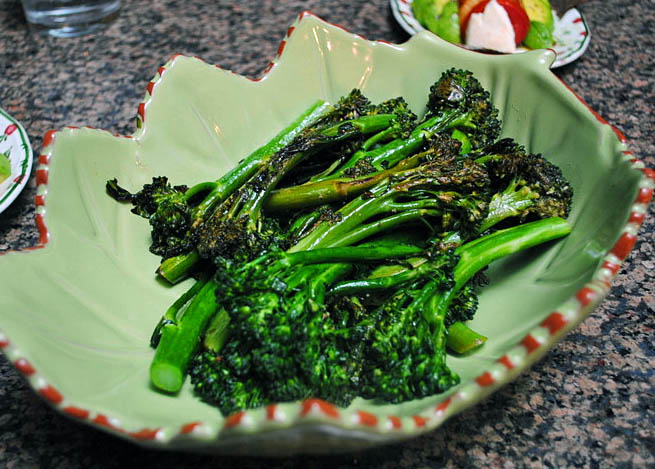
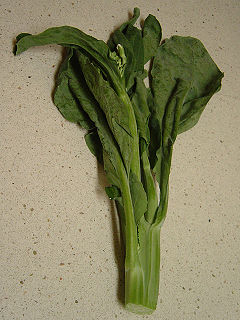
Ah, the bliss, the joy, the thrill of a stove with hot burners!  Stir frying, and any  other cooking style that imparts a wonderful, golden brown color – promises of great flavor ahead – just can’t materialize without intense heat.  I look at the powerful flame on our stove, and discreetly wipe a tear from my eye … Some things get to me.  A big sink to wash dishes.  An oven with three racks and the capability of 500 F.  Stuff like that.  But, back to food.  I found  some organic broccolini at the grocery store.  It’s a great veggie, a perfect side dish for anything from poultry to seafood.  BTW, it’s not baby broccoli,  but a cross between broccoli and  kai-lan, a Chinese leafy cabbage.  The cross mellows the broccoli character, almost yielding the flavor of asparagus, which explains one of its alternative names: asparation (I’m glad this name didn’t stick!  ;-))

My take on broccolini is a slight departure from the stove-top version of broccoli that I posted a year ago.

BROCCOLINI WITH GINGER AND LEMON
(from the Bewitching Kitchen)

2 small bunches of broccolini, preferably organic
2 tsp olive oil
red pepper flakes
1 tsp grated ginger
zest and juice of half a lemon
salt and pepper
splash of water (if needed)

Heat the olive oil in a large stainless steel skillet (that will hold the veggies without crowding), when smoking hot add the red pepper flakes, swirl for a couple of seconds and immediately add all the broccolini. Do not move them around, let them get a nice brown color at the bottom. Season with salt and pepper. After a couple of minutes, add the ginger and lemon zest, and shake the pan to move the broccolini and coat well all sides with the ginger, lemon zest, and oil.

Cover the pan, let it cook for 2-3 minutes more, then add the lemon juice – test the broccolini with a fork to see if it’s done to your liking.  If it’s not, and the pan is too dry, add a splash of water and cover the pan again, checking after a minute.  Once it’s cooked al dente, transfer to a serving dish and…

ENJOY!

to print the recipe, click here

Comments:  If you are anti-broccoli and think broccolini resembles it too much, please reconsider!  There’s absolutely none of the broccoli flavor/smell that many object to.  Avoid over cooking it, and buy young broccolini, with a bright green color and a firm flesh. This recipe is low in carbs and fat, but sky-high in flavor!  Lemon, ginger & red pepper flakes might very well be my favorite flavor mix right now: good on everything!

ONE YEAR AGO: Pizza! Pizza!

TWO YEARS AGO:  From Backyard to Kitchen

Add to FacebookAdd to DiggAdd to Del.icio.usAdd to StumbleuponAdd to RedditAdd to BlinklistAdd to TwitterAdd to TechnoratiAdd to Yahoo BuzzAdd to Newsvine

THE END OF GREEN BEAN CRUELTY

I’m talking about THIN green beans, of course…   😉

We learned about Michel Richard firsthand, at his wonderful, exciting restaurant Central in Washington DC.  What a delicious experience it was! The bread – that keeps coming to the table, always warm and impossible to say no to – and the gougeres alone are worth stopping by.  In his book Happy in the Kitchen, Michel Richard comments  that  most recipes for green beans cook them in boiling water, then quickly shock them in an ice-bath. However, he adamantly opposes this method when dealing with pencil-thin green beans. They are so delicate, so why would anyone furiously boil and shock the poor things, leaving them limp and lifeless?

I’ve been guilty of such green bean cruelty more than once, but I won’t ever do it again. When prepared  by Michel’s guidelines, they are simply irresistible, even served without any embellishments. However, pairing these beauties with small roasted tomatoes didn’t hurt them a bit.

GREEN BEANS WITH ROASTED TOMATOES
(from the Bewitching Kitchen)

for the green beans:
a bunch of pencil-thin green beans (amount enough for two)
1 Tbs olive oil
pinch of red pepper flakes
1/2 tsp orange zest
salt and pepper to taste

for the tomatoes
1 cup of grape tomatoes, cut in half
drizzle of olive oil
drizzle of balsamic vinegar
salt and pepper to taste

Start by roasting the tomatoes.  Spread them in a single layer on a small baking sheet lined with foil or parchment paper for easy clean up. Drizzle some olive oil and balsamic vinegar, shake them around, and season with salt and pepper.  Place in a 400 F oven until they get soft and start to brown around the edges, 20 to 25 minutes. Reserve, keeping warm.

Heat the olive oil in a non-stick skillet, add the red pepper flakes and the orange zest.  Keep in a gentle heat for a couple of minutes, until the mixture starts to get fragrant.  Increase the heat, add the green beans, and let them cook for a few minutes undisturbed, so that they get a little color where they make contact with the pan.  Stir them around to coat the beans with the flavored oil, and saute for a little while longer, until the beans are cooked through, but still al dente. Don’t overcook! Season with salt and pepper, add the roasted tomatoes on top, and mix gently.  Adjust seasoning, and serve right away.

ENJOY!

to print the recipe, click here

Comments: Michel Richard’s main message is to cook thin green beans straight by sauteing in a small amount of fat.  You can substitute butter or a mixture of butter and olive oil, or use a different type of oil, keep in mind that some – like walnut oil –  burn at a lower temperature, so it’s best to add them close to the end of cooking.

The combination of green beans and orange zest, worked quite well in this recipe,  with the touch of balsamic vinegar brought by the tomatoes.  It was a nice side dish for our grilled flank steak, but if you want a fully vegetarian meal, add some pasta or couscous, a big salad and a thick slice of grilled bread.  It’s  more than enough for a tasty dinner.  Just remember, be kind to the green beans!  😉

ONE YEAR AGO: Torta di Limone e Mandorle

Add to FacebookAdd to DiggAdd to Del.icio.usAdd to StumbleuponAdd to RedditAdd to BlinklistAdd to TwitterAdd to TechnoratiAdd to Yahoo BuzzAdd to Newsvine