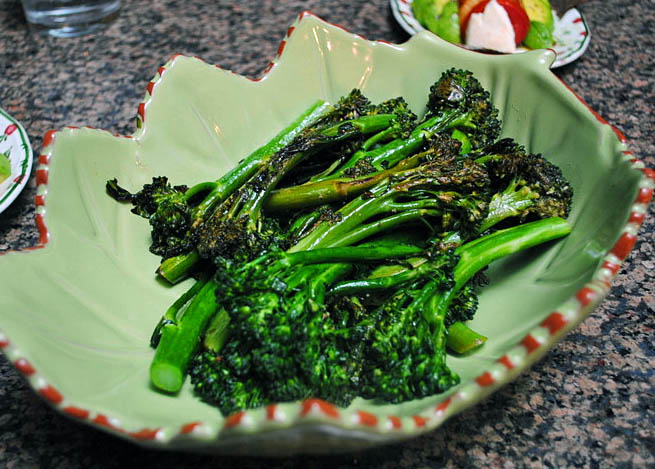
THE END OF GREEN BEAN CRUELTY

I’m talking about THIN green beans, of course…   😉

We learned about Michel Richard firsthand, at his wonderful, exciting restaurant Central in Washington DC.  What a delicious experience it was! The bread – that keeps coming to the table, always warm and impossible to say no to – and the gougeres alone are worth stopping by.  In his book Happy in the Kitchen, Michel Richard comments  that  most recipes for green beans cook them in boiling water, then quickly shock them in an ice-bath. However, he adamantly opposes this method when dealing with pencil-thin green beans. They are so delicate, so why would anyone furiously boil and shock the poor things, leaving them limp and lifeless?

I’ve been guilty of such green bean cruelty more than once, but I won’t ever do it again. When prepared  by Michel’s guidelines, they are simply irresistible, even served without any embellishments. However, pairing these beauties with small roasted tomatoes didn’t hurt them a bit.

GREEN BEANS WITH ROASTED TOMATOES
(from the Bewitching Kitchen)

for the green beans:
a bunch of pencil-thin green beans (amount enough for two)
1 Tbs olive oil
pinch of red pepper flakes
1/2 tsp orange zest
salt and pepper to taste

for the tomatoes
1 cup of grape tomatoes, cut in half
drizzle of olive oil
drizzle of balsamic vinegar
salt and pepper to taste

Start by roasting the tomatoes.  Spread them in a single layer on a small baking sheet lined with foil or parchment paper for easy clean up. Drizzle some olive oil and balsamic vinegar, shake them around, and season with salt and pepper.  Place in a 400 F oven until they get soft and start to brown around the edges, 20 to 25 minutes. Reserve, keeping warm.

Heat the olive oil in a non-stick skillet, add the red pepper flakes and the orange zest.  Keep in a gentle heat for a couple of minutes, until the mixture starts to get fragrant.  Increase the heat, add the green beans, and let them cook for a few minutes undisturbed, so that they get a little color where they make contact with the pan.  Stir them around to coat the beans with the flavored oil, and saute for a little while longer, until the beans are cooked through, but still al dente. Don’t overcook! Season with salt and pepper, add the roasted tomatoes on top, and mix gently.  Adjust seasoning, and serve right away.

ENJOY!

to print the recipe, click here

Comments: Michel Richard’s main message is to cook thin green beans straight by sauteing in a small amount of fat.  You can substitute butter or a mixture of butter and olive oil, or use a different type of oil, keep in mind that some – like walnut oil –  burn at a lower temperature, so it’s best to add them close to the end of cooking.

The combination of green beans and orange zest, worked quite well in this recipe,  with the touch of balsamic vinegar brought by the tomatoes.  It was a nice side dish for our grilled flank steak, but if you want a fully vegetarian meal, add some pasta or couscous, a big salad and a thick slice of grilled bread.  It’s  more than enough for a tasty dinner.  Just remember, be kind to the green beans!  😉

ONE YEAR AGO: Torta di Limone e Mandorle

Add to FacebookAdd to DiggAdd to Del.icio.usAdd to StumbleuponAdd to RedditAdd to BlinklistAdd to TwitterAdd to TechnoratiAdd to Yahoo BuzzAdd to Newsvine

CARROT AND SWEET POTATO PUREE

Potato puree is comfort food “par excellence”. One of my favorite menus on a chilly evening is braised short ribs served over mashed potatoes (I gained about 3 pounds just by typing that sentence! 😉 ) Sometimes I crave that type of side dish, but I’d be happier with a lighter caloric load.

Giada de Laurentiis devised a perfect alternative during her “Light and Fabulous” menu, that paired broiled tilapia filets with a creamy puree of carrots and yams. You can find the recipes for that episode here. The puree has a beautiful, bright orange color, and its taste complements many main dishes.

CARROT AND SWEET POTATO PUREE
(adapted from Giada de Laurentiis)

1/4 cup extra-virgin olive oil
1 medium shallot, diced
1 clove garlic, minced
2 pounds carrots, peeled and sliced
2 pounds sweet potatoes, peeled and cut into 3/4-inch pieces
1 teaspoon salt, plus extra for seasoning
1/2 teaspoon freshly ground black pepper, plus extra for seasoning
2 cups chicken (or vegetable) broth
2 cups water

Heat the oil over medium-high heat in a saucepan. Add the shallot and cook until tender, about 5 minutes. Add the garlic and cook for 1 minute until fragrant. Add the carrots, sweet potatoes, 1 teaspoon salt, and 1/2 teaspoon pepper. Cook for 5 minutes until slightly softened. Add the stock and water and bring to a boil. Reduce the heat and simmer until the veggies are tender, about 25 minutes. Drain the veggies, saving the cooking liquid. Transfer them to a food processor, and puree until still slightly chunky, adding some of the cooking liquid, until you reach the consistency you like. Taste and adjust seasoning with salt and pepper.

ENJOY!

to print the recipe, click here

Comments: Our grocery had sweet potatoes, but not yams, so that’s what I used. Next time I’ll add a touch of ginger to the puree, because it goes so well with sweet potatoes. Maybe a little orange zest too? But even without these additional touches, this puree was an excellent side dish for our grilled, butterflied pork tenderloin. Something about eating bright colored food instantly makes me feel healthy. This puree tastes good, it’s not too heavy, and it gives that  feeling of happy satisfaction at the end of the meal.

Want to make it even faster on a weeknight? Cut the veggies in the morning before work, and save them in the fridge. Small details make life a lot easier when you return home  feeling a little spent. 😉

ONE YEAR AGO: Impromptu Pasta Dinner


Add to FacebookAdd to DiggAdd to Del.icio.usAdd to StumbleuponAdd to RedditAdd to BlinklistAdd to TwitterAdd to TechnoratiAdd to Yahoo BuzzAdd to Newsvine

MOGO MOJO

A few weeks ago a reader left a comment on my post about “mandioca frita.” He told me about “mogo,” a common dish in Indian restaurants in the UK, that also starts from cooked manioc root, but instead of frying, the root is seasoned with a mixture of spices and roasted.   I was intrigued, and put google to work, searching for an authentic recipe.  Very quickly I realized there is no consensus about it.   The only common denominator in mogo recipes is that you start with cooked roots, prepared as I described in this post.  After that, some recipes call for roasting, some for frying  then roasting, others for gently cooking on the stove.   Some recipes use tomatoes, some only peppers, others add coconut milk.  Spices also vary a lot.   With all that complexity facing me,  I shutdown my computer and improvised.  So, here is my version of mogo, a delicious, hearty dish that will be showing up at our table on a regular basis.  Well, as regularly as I can find manioc root at the store…  😉

MOGO
(from the Bewitching Kitchen)

10-12 pieces of cooked manioc root
1 Tbs olive oil
1 shallot, finely diced
1 garlic clove, minced
1/4 tsp red pepper flakes (or more)
1/2 tsp curry powder
salt and black pepper
1 can diced tomatoes with their juices (14.5 oz, about 1 + 3/4 cups)
1/2 cup coconut milk
chopped cilantro leaves

Cook the manioc root until tender. Cut in serving pieces and reserve (cooked manioc can sit in the fridge for a few days, or be frozen for months).

Heat the oil in a saute pan, add the shallots, cook until soft and starting to develop some color.  Add the minced garlic and the red pepper flakes, cooking for a minute or two. Season with salt and pepper, add the tomato with the juices, cook on gentle heat for 5 minutes, stirring a few times.  Add the coconut milk, curry powder, cook for a couple of minutes, add the cilantro leaves, taste the seasoning and adjust to your taste.  You can add some hot pepper sauce if you like it really hot.

Spread the cooked manioc on a baking dish, pour the tomato-coconut sauce on top, cover with aluminum foil and bake at 375 F for 45 minutes.  Remove the foil, and serve or, if you prefer less sauce and some browning on the cassava root, increase the heat to 400 F to finish roasting.

ENJOY!

to print the recipe, click here

Comments: I will be forever in debt with Jack for the heads up about this recipe.  We enjoyed it with roast chicken, but next day it was a meal in itself re-heated in the microwave and served over Israeli couscous.  Wonderful!   Change this basic recipe around by adding roasted bell peppers to the sauce, increasing the heat level with a hot sauce, maybe some smoked hot paprika.

I hope my Brazilian readers will give mogo a try, as they have access to excellent quality manioc root in farmers markets and grocery stores everywhere. Manioc root is not a very popular item in the US, but hopefully that will soon change!   😉

ONE YEAR AGO: Slow-roasted chicken thighs

Add to FacebookAdd to DiggAdd to Del.icio.usAdd to StumbleuponAdd to RedditAdd to BlinklistAdd to TwitterAdd to TechnoratiAdd to Yahoo BuzzAdd to Newsvine

MUSHROOM SOUFFLE FOR TWO

One of the lessons we’ve learned in four months of cooking in the nano-kitchen is to keep our meals simple, even on special occasions. To bid 2010 goodbye we settled on grilled T-bone steaks and a Caesar salad.  We also sought an additional side dish with a celebratory aura, but we struggled with various options until my beloved said “I’ve got an idea for you: mushroom souffle!”

Back home we have three different sizes of souffle dishes,  but none here. And, to further complicate matters, our electric oven is not very tall, so anything rising to full deliciousness might burn on the upper heating element (don’t ask me how I became aware of this problem… ;-)).  Still, once the idea of a mushroom souffle got in our heads, it was impossible to resist.

Starting with Julia Child‘s basic master recipe, I down-sized it for a small baking dish, gathered the ingredients and went to work, with fingers crossed for a great New Year’s Eve meal!


MIXED MUSHROOMS SOUFFLE

(from the Bewitching Kitchen)

bread crumbs and butter to coat the dish

1 T olive oil
1 shallot, minced
10 ounces of a mixture of mushrooms, diced
(I used 3/4 of fresh shiitake, 1/4 of cremini)
salt and pepper

for the bechamel base
2 + 1/2 T butter
2 + 1/2 T flour
3/4 cup whole milk, warmed in the microwave
salt, pepper, dash of ground nutmeg
3 egg yolks
1/4 to 1/3 cup of grated gruyere cheese

4 egg whites + pinch of salt

Prepare your baking dish (8 inch diameter, 3 inches tall; about 6 cups volume) by coating it with butter and sprinkling bread crumbs inside, tapping out the excess.

Break the eggs and separate yolks and whites – allow the whites to sit at room temperature while you prepare the souffle base.

Heat the olive oil in a skillet, add the shallots, cook until translucent and starting to get golden. Add the mushrooms, season with salt and pepper, and cook stirring a few times, until they release all their liquid and it completely evaporates. It is important to have the mushrooms without excessive moisture. Transfer to a plate to cool slightly, trying to spread them out as much as possible to release steam.

Prepare the bechamel sauce by melting the butter in a saucepan, adding the flour and cooking for a few minutes, stirring constantly. Add the warm milk all at once, season with salt, pepper, and nutmeg, and cook until it thickens (about 5 minutes on low heat). Remove from the heat, let it cool slightly, then add the egg yolks, one at a time. Reserve.

When it’s time to bake the souffle, add the sauteed mushrooms to the bechamel sauce, mix well. Add the grated cheese, a little at a time, mixing to incorporate (you may not need to use it all, don’t make the batter too heavy).

Beat the egg whites with a pinch of salt in a very clean bowl using an electric mixer until they form soft peaks. Add 1/4 of the egg white mixture to the mushroom/cheese base, and mix well. Now, working gently, incorporate the rest of the beaten egg whites, carefully folding it, trying not to loose too much volume. Pour the batter into the prepared dish and bake in a heated 420 F oven for 30-35 minutes, reducing the temperature to 375 F as soon as the dish goes in.

Remove from the oven and serve right away – it will collapse quickly, but it won’t lose its “wow” factor…

ENJOY!

to print the recipe, click here

Comments: My husband commented that “this souffle should be a regular side dish in every classic American steak house.” How’s that for endorsement? It was  unexpectedly excellent, considering that I improvised every step of the way through it. Shiitake mushrooms have an assertive taste, and adding some cremini to the mix mellowed the flavor a bit.

If you have individual souffle molds, simply pour half the batter in each, and bake for slightly less time – say, 25 to 30 minutes. It’s a perfect amount for two (hungry) people; a perfect way to close a wonderful year!

ONE YEAR AGO: Stollen

Add to FacebookAdd to DiggAdd to Del.icio.usAdd to StumbleuponAdd to RedditAdd to BlinklistAdd to TwitterAdd to TechnoratiAdd to Yahoo BuzzAdd to Newsvine

LEMONY ASPARAGUS

asparagus

By the time Summer hits with full force, there is no denying that the best of asparagus is over. For asparagus lovers such as myself this is a sad turn of events, but I still buy it whenever I see some that look tasty enough. There are so many ways to prepare asparagus, either as a side dish or incorporated in pastas, risottos, soups, savory tarts. I will share one of my favorite recipes: simplicity itself. I wish I knew where I got it from to give proper credit, but unfortunately I don’t remember. Only three ingredients (plus salt and pepper), and less than five minutes of your time. Have I convinced you to try it yet?  😉

IMG_1488

LEMONY ASPARAGUS

1 bunch of asparagus, not too thin, not too thick, just right
zest of 1 lemon
olive oil, best possible quality you can find
salt and pepper

In a small bowl, mix the olive oil with lemon zest and allow it to sit while you prepare the asparagus.

Cut the asparagus on a diagonal, reserving the tough ends for your veggie stock or your compost pile.  Add the asparagus pieces to slightly salted boiling water and boil for 2 minutes. Yes, only two. Trust me. Drain them in a pasta colander and run cold water from the faucet briefly over them. You just want to stop the cooking, but don’t allow them to get cold.

Add the asparagus to a serving dish, pour the olive oil/lemon zest mixture on top, toss, season with salt and pepper. Serve and wait for compliments.

Measurements for this recipe are not precise, in fact I often just eye-ball it.The amount of olive oil, for instance, I just use what it seems to be enough to lightly coat the asparagus pieces, and use enough lemon zest to make sure it will end up with a bright, nice, lemony taste. Sometimes I squeeze some lemon juice together with the olive oil, sometimes I add fresh thyme, but for the most part I keep it simple.

IMG_1489

It is important that the asparagus is still warm when you add it to the olive oil mixture. But you can enjoy this dish warm or at room temperature. Leftovers keep quite well, I love to have them in my bento box for lunch, with grape tomatoes, maybe some couscous or a slice of bread.

para receita em portugues, proxima pagina