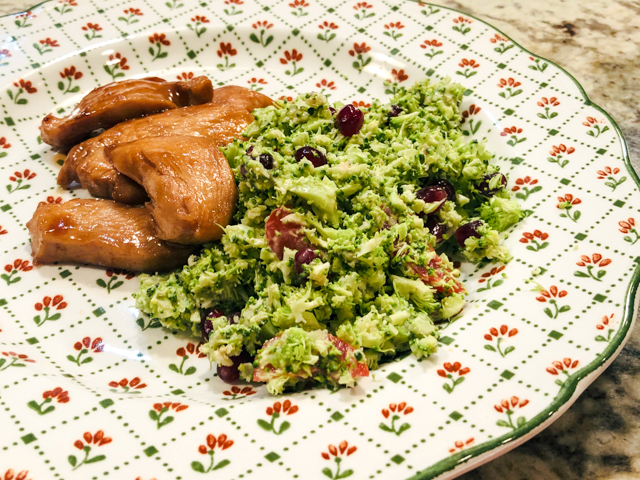

In My Kitchen posts are hosted by Sherry, from Sherry’s Pickings. Please visit her site to see what everybody else is sharing this month. I join four times each year, on the first day of January, April, July and October. If you are a food blogger, considering taking part of this fun event. It is chance to share those little things you bought or received as gifts and that make your life in the kitchen easier.
Starting with gifts…
From my friend Courtnie…
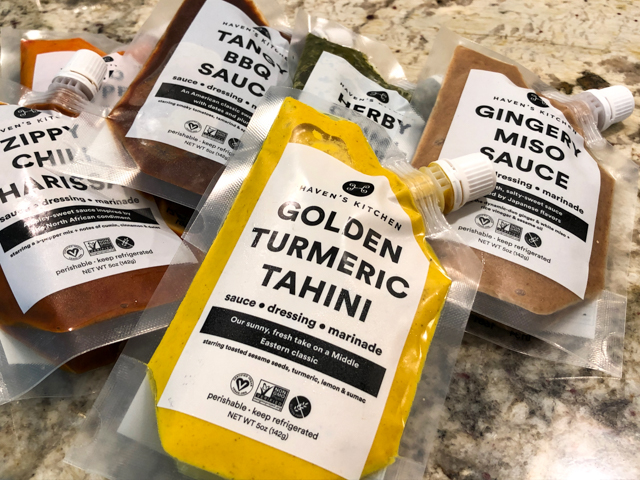
Courtnie, is my soon to be daughter-in-law (insert happy dance here). She sent us a set of sauces from the company she works on, Haven’s Kitchen. Their products are amazing and I loved each and every sauce. I hear they are becoming more and more available in other states of the country, so check their website and store locator and keep an eye for them in your favorite grocery store. My favorite way to use several of them was simply poured over zoodles. But they are great in meatloaf, turkey burgers, salmon. Thank you so much, Courtnie!
From my friend Louise…

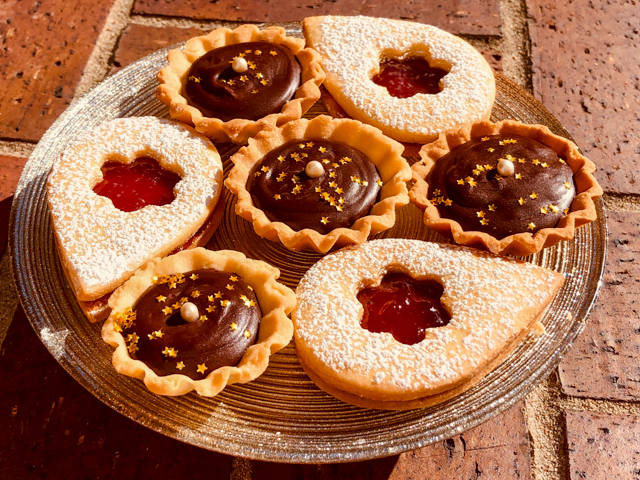
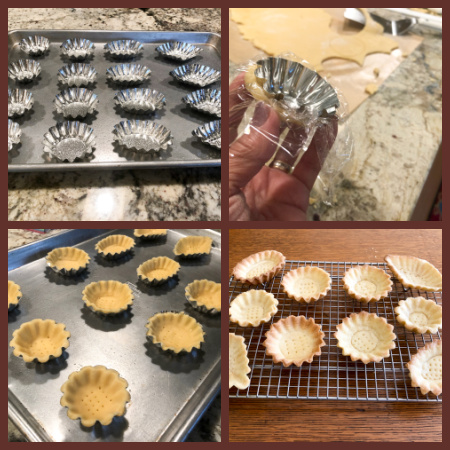
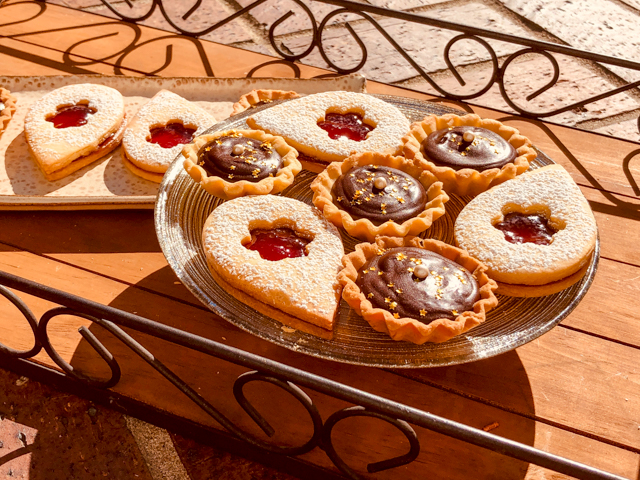
A set of mini-tins, which I put to use recently and made very tasty little chocolate ganache tartlets. If you’ve missed the post, just jump over there with a click here. I still cannot believe I am the owner of such a great collection of baking tins…. Thanks a million, Louise!
From my amazing husband…
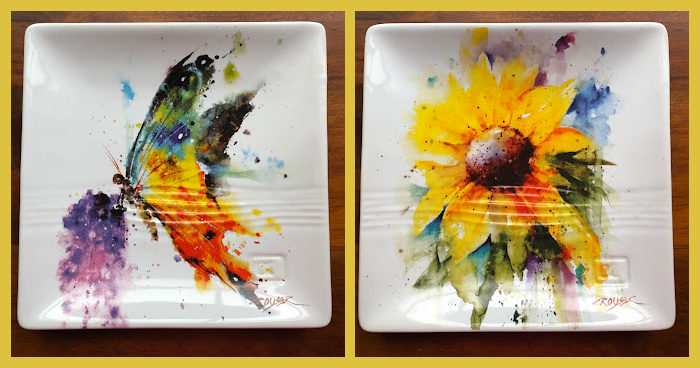
These were in a store in Colorado we visited during our trip last month. I fell in love with them and next think I knew, the hubby got them for me… A keeper, I tell ya!
In our kitchen…
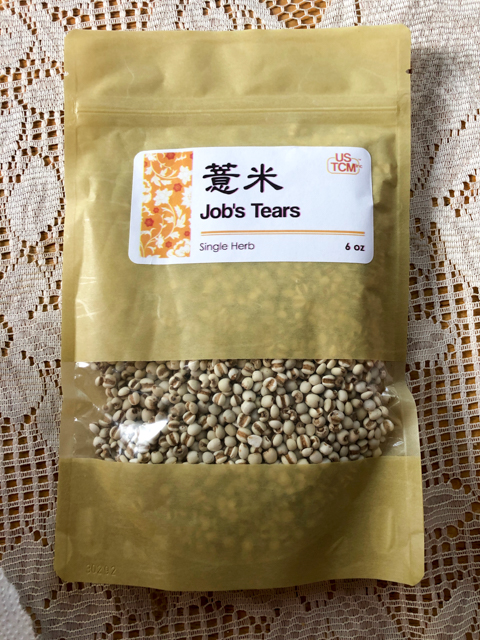
A new ingredient, at least new to me, Job’s Tears. I heard about it in the cookbook by Heidi Swanson, Super Natural Simple. I have a weakness for all kinds of grains and this one will be on our menu soon.
In our kitchen…
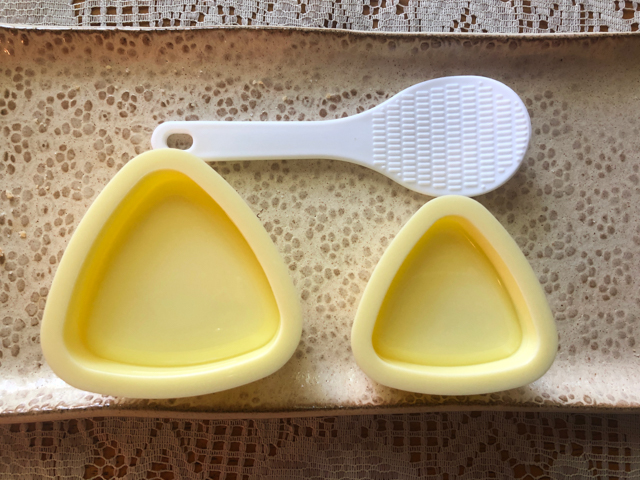
Little gadgets to make Japanese-style rice cakes. Another idea I got from Heidi Swanson’s cookbook, you can read all about this cookbook in Lisa’s review.
In our kitchen…
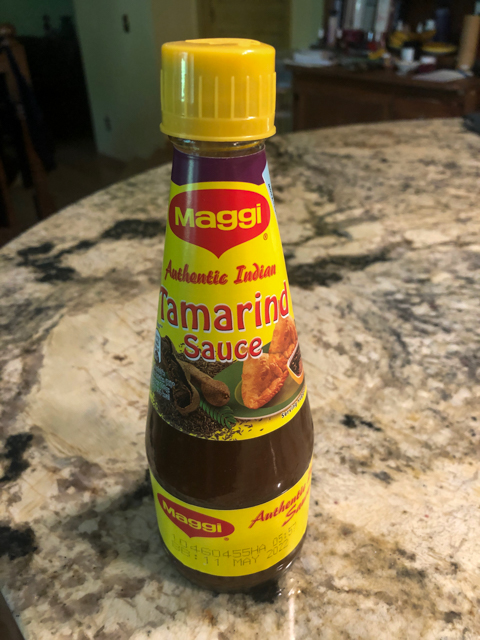
Tamarind Sauce, brand from Maggi, highly recommended in one of my cookbooks, I have not yet tried it. Apparently, mixed with yogurt and a few spices, it makes a killer little sauce…
In our kitchen…
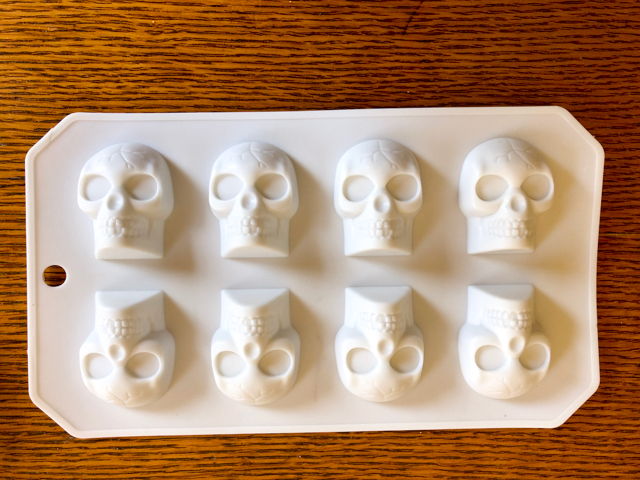
With Halloween approaching, one needs to get ready. These are ice cube molds but also work well in cookie baking, as I learned from Marlyn (Montreal Confections). I will put that idea to test soon. This was found at a Dollar Store.
In our kitchen…
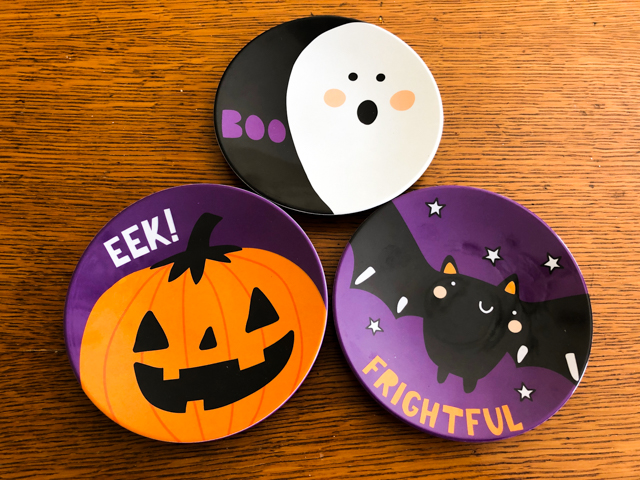
Speaking of Halloween, I could not resist getting this trio of small plates to help set the right atmosphere around the house… They were available at our grocery store, Dillons.
In our kitchen…

As you know, cookie baking is a constant thing in our kitchen. This spatula from Ateco is the best one to move cut dough and freshly baked cookies. Nice area, not too big, not too small.
In our kitchen…
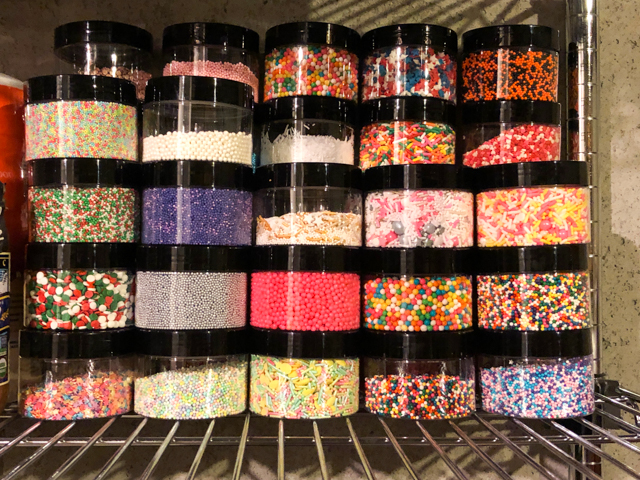
Finally organized my collection of sprinkles in the basement. When they are in stackable containers with the contents easy to visualize, the life of a baker is so much easier!
In our kitchen…
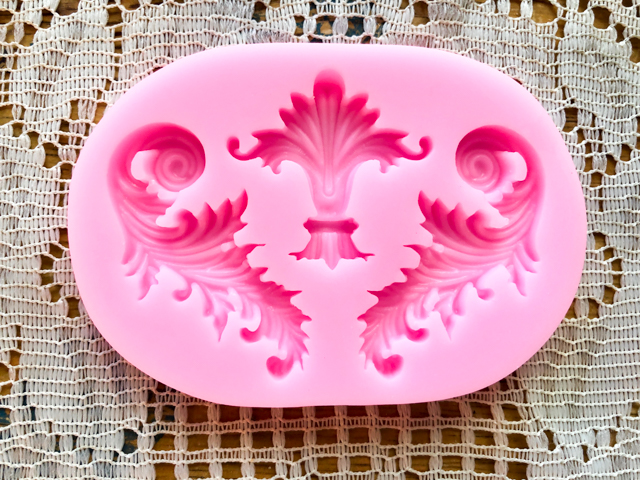
Silicone mold to make special filigree decorations for cookies… I have a few projects in mind for this baby… It is part of a very cool set, found in amazon.
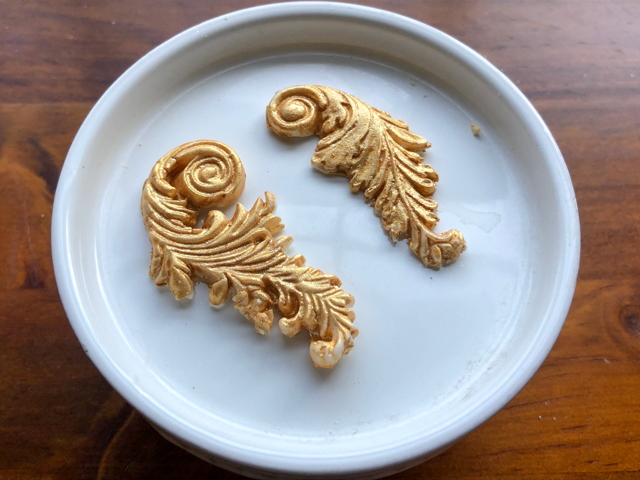
In our kitchen…
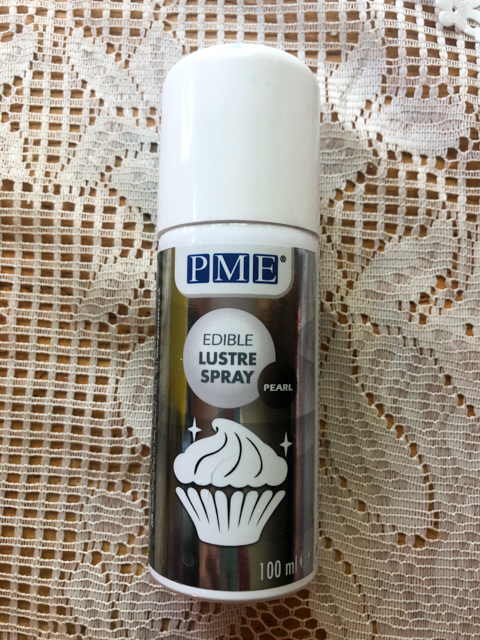
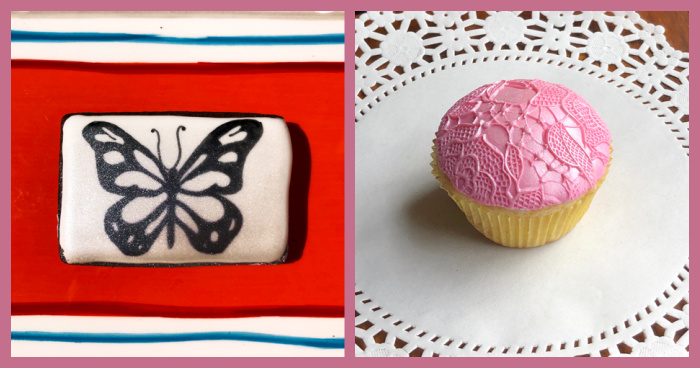
PME luster spray… probably one of my favorite finishing touches for some types of cookies. A very light spray is all you need. It gives it a pearly shine, smells wonderful and if you happen to have a little boo-boo on the surface of your icing, it makes it harder to notice. Below you see it on a cookie and a cupcake I made recently. Available at amazon, I bought it at ebay but it is not available right now.
In our kitchen…
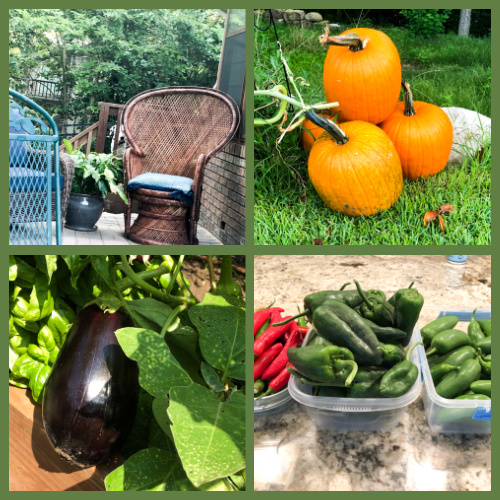
Our backyard, after a ton of work from my beloved husband, turned out to be one favorite spot of our home. The corner chair is perfect to sit and enjoy the view of the woods, or to do some reading and studying. We got nice pumpkins, eggplants, tomatoes and plenty of peppers this year. Not to mention basil, lavender, oregano and dill.

Preparing lectures is a lot easier in this setting! I will miss it when the cold weather makes its appearance.
In our kitchen…
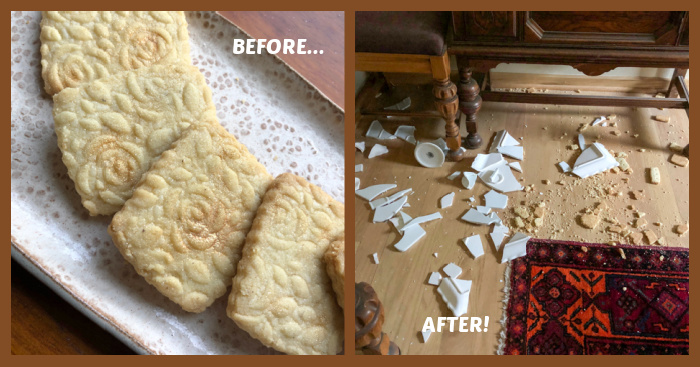
I made a nice batch of shortbread, flavored with a combination of cardamon, cloves and lavender. Placed the platter on top of a high cabinet so that a certain quadruped could not reach it. I did not realize it was not leveled, and just heard the crashing noise as I was leaving the room. Which – as Murphy’s Law would have it – I had vacuumed 37 minutes earlier. I lost two of my favorite white platters, and of course the full batch of cookies that were going to be donated next day. You win some, you lose some. Such is life.
In our kitchen…

Talking about upsetting stuff, I trusted the recommendation of Mr. Kimball of America’s Test Kitchen fame, and bought a fancy ginger grater, shown on the left, right by the one I have and love (and featured in a previous IMK). I was intrigued after he described it as the best of the best. Well, it is pathetic. I did what Mr. Kimball himself loves to do, and made a side-by-side comparison with that gadget and my oldie-but-goodie. The same effort gives around 6 times more perfectly grated ginger in the ceramic one. The one recommended by CK is a pain to use, it liquefies the ginger in puddles that pretty much stick to the underside of the metal top. I have not hated a gadget as much as this one in a long time. No idea how he could recommend something so inefficient. And before I forget, it also sucks to grate lemon or lime peel.
But what’s the best antidote for disasters and grievances?
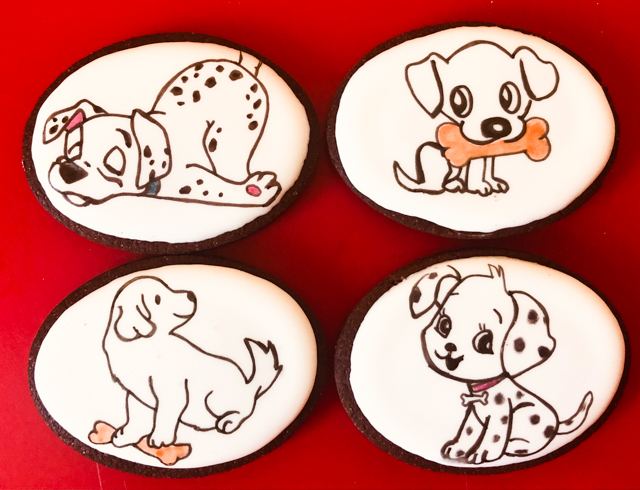
COOKIES! These were inspired by our furry friends, who are very excited, running in circles, hoping for a few minutes of fame in my blog. Because, let’s make this clear: it is MY blog. OK?

When we invite furry friends into our life, we never know how much time we will have with them, just that never seems long enough. I admit that the posts I write now about our pups carry a certain sadness in the background.
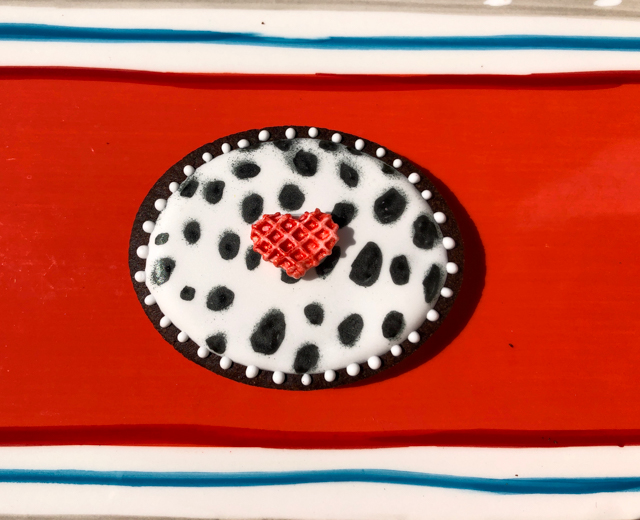
They are all aging and show clear signs that their prime is past. Buck, our oldest, is now almost completely deaf. We call his attention and direct him through clapping, which he can still hear a little bit. The thing I miss the most is his cute turning of the head when he used to hear a word he did not understand. I wish I had taken a few more pictures, maybe a video or two. I have the images in my memory, though. Vivid and clear. I adore this pup more than words can say.

Oscar had once again his share of struggles. He went for surgery last week to remove a tumor from his back leg. We hope they managed to remove most or all of it, and he seems to be recovering ok.
He wants to share his thoughts with you…
Hello, my many adoring fans!
I am recovering from a thing called surgery on my leg. I don’t remember much. After I chewed a leash and freed myself in a room I’d never been before, someone came with a HUGE thing called NEEDLE and it all got dark very quickly. I am not sure what happened next. All I know is that Dad came and rescued me from that surgery thing. And now I am very tired and sleepy. I guess I will have to wait until tomorrow to growl at my brothers and show them who’s boss.

BogeyQuitThatTM has issues with his back and neck, so he’s been through some courses of medication, and we are taking him to more regular walks, which – putting it mildly – goes a bit against his nature…
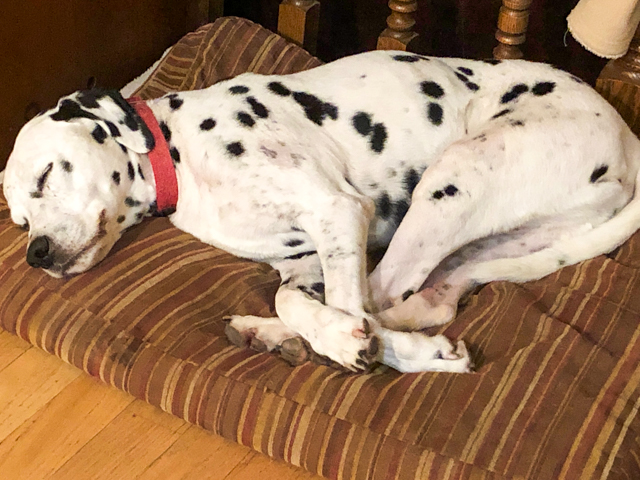
But apart from these unavoidable issues, life is the way it’s always been around the Bewitching Kitchen… The evenings almost always involve some fruit and TV watching. So here you have…
THE WATERMELON LINE
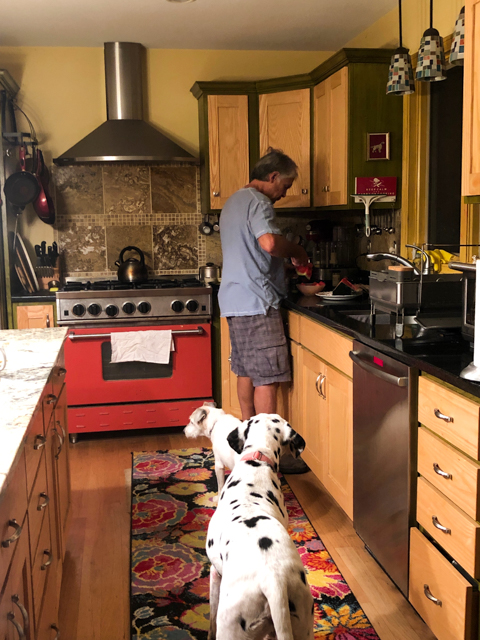
According to height, as any proper line requires. Where is Oscar, you may ask? He does not lower himself to lines or begging. But from close distance, he scrutinizes the scene. Trust me on this: he will make sure he gets his share.

And he also tries to make sure he gets more attention than that annoying TV screen…
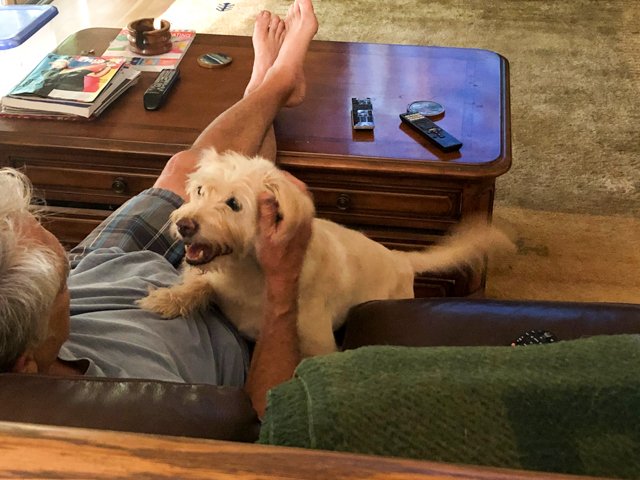
Buck gets his food outside, so every morning he sits in the patio patiently waiting… it is the sweetest thing…

Speaking of food, Oscar definitely has a very unique approach to bowl-manners. He will push the bowl to the corner of the room, and his body invariably ends covered by the curtains. Pretty pathetic.
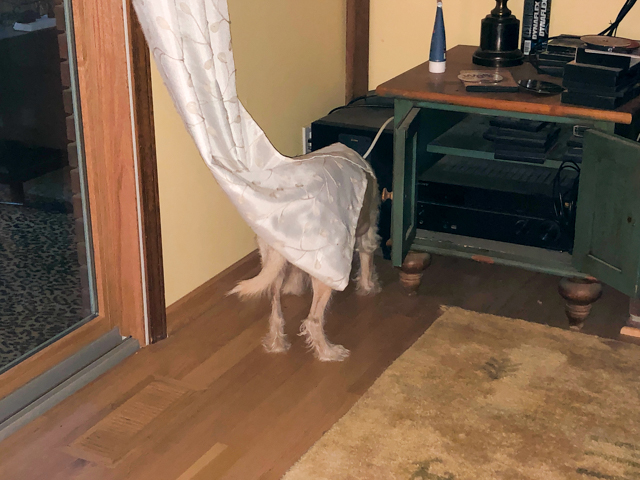

Buck wholeheartedly agrees…
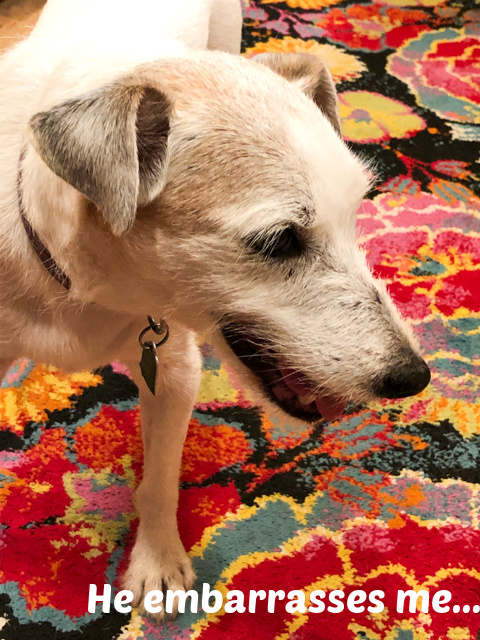
BogeyQT TM sometimes gets very sad if he wants to play but his favorite human player is not around…
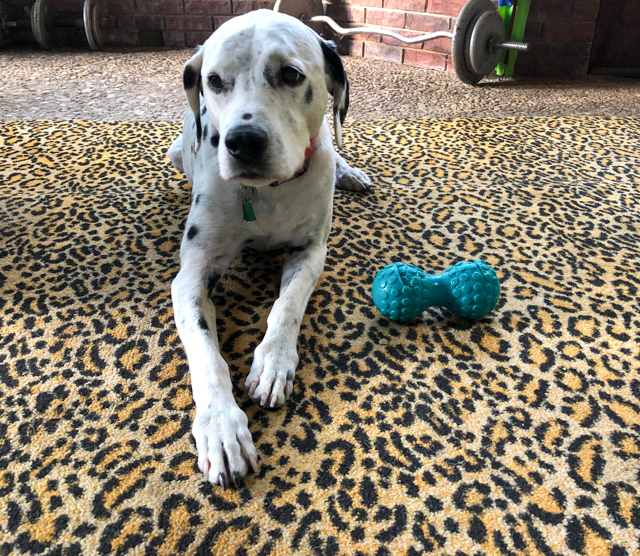
He’s been gone for AT LEAST three dog-eternities!
And the moment he hears the garage door opening… he positions himself in the best spot in the house!
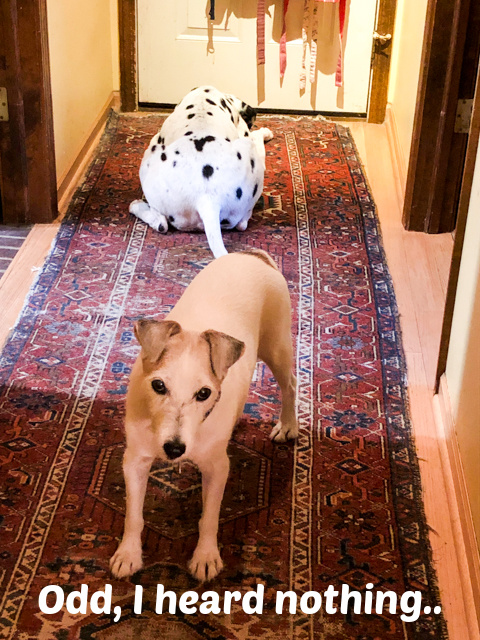
But even if I am a bit hard at hearing, I fulfill all my doggie-duties, one of them being the
Guardian of The Cookies.
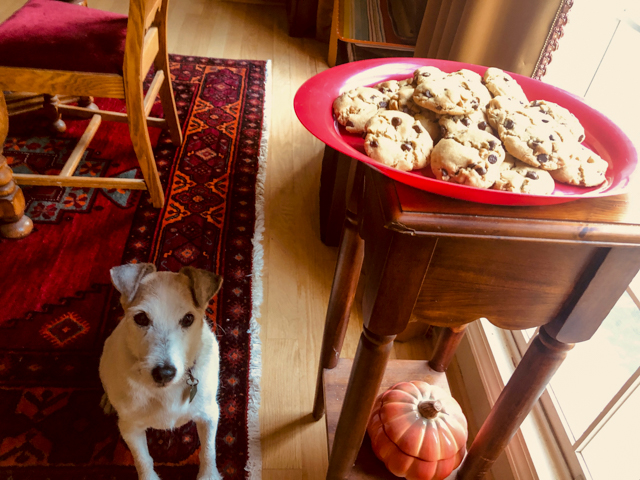
I also fulfill all my duties, they don’t involve cookies, for some reason I am not allowed near them. But Cuddling Humans? I am a pro!

As to Oscar, he believes duties are for sissies. He is the Alpha. And has the best hairdo to boot (cough, cough). BogeyQT is here barking about dirty beards. Oh, well… sibling rivalry.

As a good Alpha, you might remember he’d tried to attack Bogey but got my foot instead (see IMK last April). It’s been exactly 6 months. I suppose my foot will never lose the scars of that battle.

That’s all for now, folks! We will be back in January 2022 (is this year flying by or what?), to share our adventures in and around the Bewitching Kitchen.

ONE YEAR AGO: In My Kitchen, October 2020
TWO YEARS AGO: In My Kitchen (and Beyond), October 2019
THREE YEARS AGO: In My Kitchen, October 2018
FOUR YEARS AGO: In My Kitchen, October 2017
FIVE YEARS AGO: Little Bites of Paradise
SIX YEARS AGO: Coxinha de Galinha: A Brazilian Delicacy
SEVEN YEARS AGO: Prosciutto-Wrapped Shrimp Skewers
EIGHT YEARS AGO: A Simple Dinner
NINE YEARS AGO: Brown Butter Tomato Salad
TEN YEARS AGO: Spelt and Cornmeal Rolls
ELEVEN YEARS AGO: Roasted Potato and Olive Focaccia
TWELVE YEARS AGO: Multigrain Bread Extraordinaire