CUCUMBER SALAD WITH HARISSA-YOGURT DRESSING

Simplicity hit again the Bewitching Kitchen. I used rose harissa because it is one of those ingredients I fell in love with a couple of years ago and now I cannot live without. If you don’t have it, use regular harissa and it will be wonderful too, it’s all about the delicate heat coupled with the soothing yogurt.  Perfect side dish for those hot days of Kansas summer. Have I ever mentioned I cannot get enough of summer?

CUCUMBER SALAD WITH HARISSA-YOGURT DRESSING
(from the Bewitching Kitchen)

¼ cup full-fat yogurt
1 to 2 tsp rose harissa paste
drizzle of olive oil
salt and pepper to taste
Persian cucumbers, cut in rounds, then quarters
yellow or red grape tomatoes, cut in half
black sesame seeds

Mix the yogurt, oil, salt and pepper, add the harissa paste and mix gently. Add the cucumbers and tomatoes to a bowl, mix with the yogurt dressing. Let it sit in the fridge for 30 minutes (if you have the extra time), sprinkle with sesame seeds right before serving.

ENJOY!

to print the recipe, click here

Comments: I’ve shared quite a few recipes with rose harissa, one of my favorites involved chicken thighs. If you like to see the recipe, go back in time with a click here. I had never tried it in a salad dressing or any preparation in which it goes uncooked, so I am glad to report that it works well. You can adjust the amount according to your tolerance to heat. I find harissa quite pleasant, but you should play with it and see how it works best for you.

Surprisingly, leftovers were still quite good next day, I refreshed it with some additional black sesame seeds, and the flavors seemed to be even better. Cucumbers tend to release a bit of liquid, but not to the point of ruining the salad.   I hope you’ll give this recipe a try, it pairs well with salmon, chicken, pork, and if you have a nice bread, it can even stand alone as a light lunch.

ONE YEAR AGO: Sundried Tomato and Feta Cheese Torte 

TWO YEARS AGO: Hickory-Smoked Beef Tenderloin

THREE YEAR AGO: Spaghetti Squash, Revisited

FOUR YEARS AGO: Stir-fried Chicken and Cabbage in Spicy Almond Sauce

FIVE YEARS AGO: Fifteen Years!

SIX YEARS AGO: Light Brioche Burger Buns

SEVEN YEARS AGO: Sourdough Blues

EIGHT  YEARS AGO: Headed to Hawaii

NINE YEARS AGO: A yummy Brazilian cake: Bolo de Fuba’

TEN YEARS AGO:  Hidden Treasure

ELEVEN YEARS AGO: Avocado Three Ways


MARBLED CHARCOAL SOURDOUGH

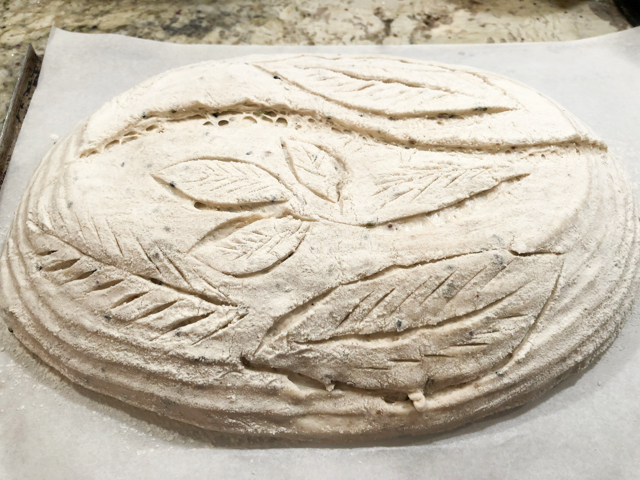
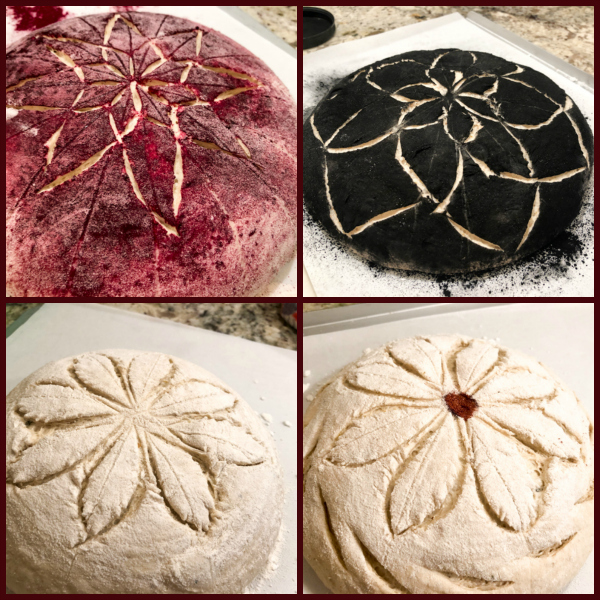
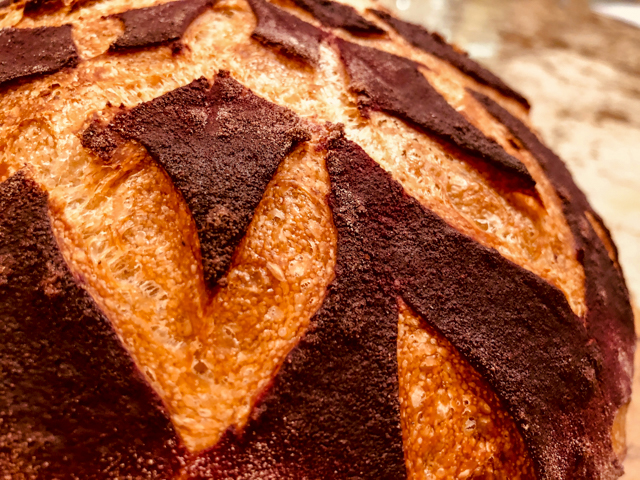
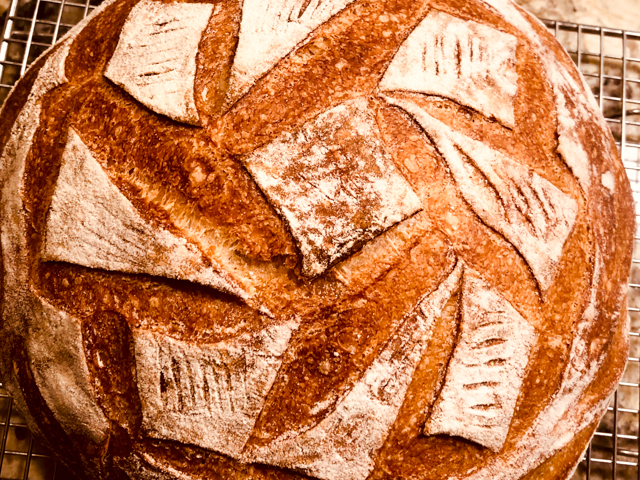
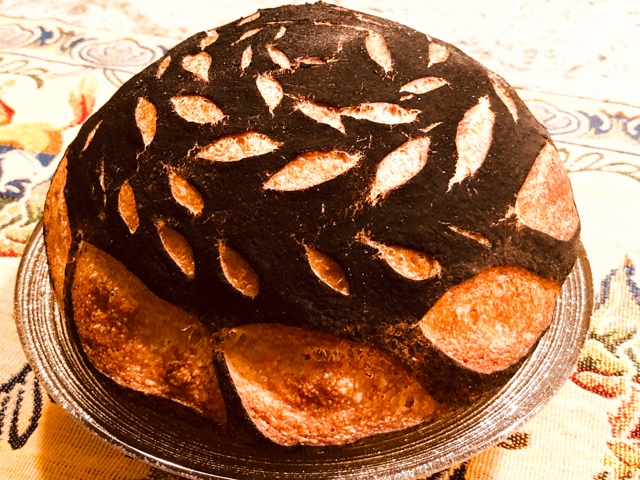
Lately a dramatic, marbled sourdough keeps popping everywhere in the blogosphere and Instagram world. I find marbling pretty cool in cakes, cookies, icings. So, why not take it into bread territory?  Most bakers opt for laminating the two doughs together. I have tried the lamination process and found it a bit too convoluted. To make matters worse,  I never get as much structure and gluten development as I like, so I just took my normal default recipe and used it as a starting point. Read the comments after the recipe, if you are interested in the details. Without further ado, here is my first bi-color sourdough.

MARBLED CHARCOAL SOURDOUGH
(from The Bewitching Kitchen, inspired by many sources)

475g bread flour
25 g whole-wheat flour
100 g sourdough starter at 100%
10 g salt
2 g activated charcoal
375 g water

Mix everything (except the charcoal)  with a KitchenAid in low speed with dough hook for about 3 minutes. Adjust consistency with additional bread flour if the mixture seems too loose. Divide the two in two parts, add the charcoal to half of it, knead until fully incorporated (you can do it by hand or place it back in the KitchenAid for a minute or so).

Transfer the two doughs to individual oiled bowls and bulk ferment for 4 to 4.5 hours at room temperature, folding the dough at every 45 minutes to 1 hour. On folding cycle number 3, incorporate the two doughs together, and continue with the bulk proofing. Fold one last time, shape the bread as a round ball, place in a banetton heavily floured, sticking it in the fridge overnight.

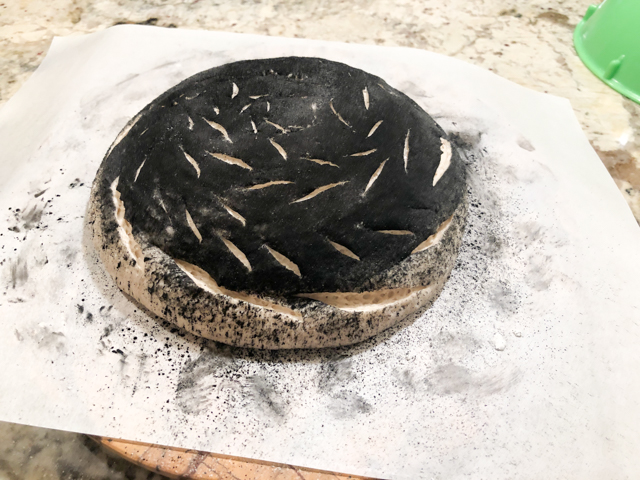
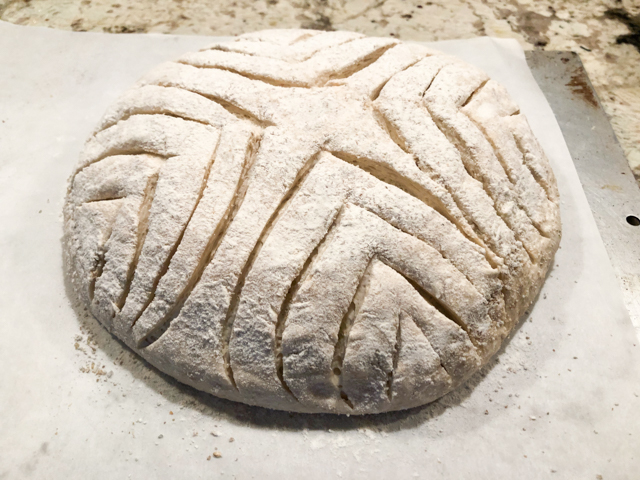
Next morning, heat the oven to 450F. Invert the bread straight from the fridge on parchment paper, dust the surface with a small amount of flour, and slash it with a brand new razor  blade.

Bake inside a covered Dutch oven for 30 minutes, remove the lid, leave it in the oven for additional 15 to 20 minutes, if necessary lower the temp a bit in the final 5 minutes. Cool completely before slicing.

ENJOY!

to print the recipe, click here

Comments: As I mentioned, bakers often use a lamination process to marble different colors of dough, or even to add components such as herbs or nuts. One of my issues with the lamination is that the process tends to be quite a bit longer. When I do my initial mixing in the KitchenAid for 3 to 4 minutes, the dough starts with a solid kneading that not only advances the process of gluten formation, but makes the whole thing quite a bit “cleaner.” The dough, once out of the KitchenAid, already handles quite smoothly for the subsequent folding by hand. And I can tell right away if I need any adjustment, just by the way it behaves during this initial step of mixing.

Most recipes that use lamination rely on a long (3 hours or more) autolyse step,  in which you just mix water and flour, then another pretty long proofing after the starter is incorporated. The hydration level of the dough is often higher (you need to add more water to be able to stretch the dough nicely and laminate it), and that forces you to go through more cycles of folding. I sometimes had to do 5 cycles and still felt the dough a bit weak at the end, but by then it was getting so late I had to call it a day and shape it. If you like to try, search youtube, there are countless videos showing the process.

To achieve this level of mixing between the two types of dough, I joined them at cycle 3 out of 4 total foldings. If you prefer both colors to be more uniformly mixed, join them at folding cycle number 2 instead of 3, and be more aggressive with the way you handle it. I can see a Halloween version with pumpkin and charcoal on my horizon…

ONE YEAR AGO: Sundried Tomato and Feta Cheese Torte

TWO YEARS AGO: Blueberry and Mango Curd Macarons

THREE YEARS AGO: First Monday Favorite

FOUR YEARS AGO: In My Kitchen, August 2016

FIVE YEAR AGO: Ka’Kat, a Middle Easter Snack Bread

SIX YEARS AGO: Spinach and Chickpea Curry

SEVEN YEARS AGO: Sautéed Zucchini with Sun-dried Tomatoes and Basil

EIGHT YEARS AGO: Orzo with Heirloom Tomato Relish

NINE YEARS AGO:  Headed to Brazil!

TEN YEARS AGO: The Rhubarb Brouhaha: Revelation Compote

ELEVEN YEARS AGO: Love me tender…


CASHEW SHRIMP CURRY

If you need a super quick recipe for dinner, look no further. The preparation is a bit unusual in the sense that you mix white vinegar (which has pretty high acidity) with some ground cashews and spices, use that to marinate the shrimp for a short while, cook it and you are basically done. The shrimp turns out fresh, bright, and with perfect texture. This goes to our regular rotation for sure. Give it a try and let me know what you think.

CASHEW SHRIMP CURRY
(adapted from 660 Curries)

¼ cup distilled white vinegar
1 tablespoon coriander seeds, ground
1 teaspoon cumin seeds, ground
1/2 teaspoon cayenne pepper
1/4 teaspoon ground turmeric
1 teaspoon kosher salt
1/3 cup raw cashew nuts, ground to a powder
1 pound large shrimp, peeled and deveined
2 tablespoons grape seed oil
juice of 1/2 lemon
water
finely chopped fresh cilantro leaves

Combine the vinegar, coriander, cumin, cayenne, salt, turmeric, and cashews in a small bowl, and stir to make a smooth paste. Pour this over the shrimp, toss well to coat the shellfish with the marinade. Refrigerate, covered, for about 15 minutes.

Heat the oil in a non-stick skillet over medium-high heat. Add the shrimp, arranging them in a single layer and reserving the residual marinade in the bowl. Sear the shrimp on each side, not more than 1 minute per side, so it does not get over-cooked. Pour in the residual marinade and stir once or twice. Lower the heat to medium add a bit of water, the lemon juice, and simmer until the sauce is reduced, about 5 minutes.

ENJOY!

to print the recipe, click here

Comments: I am usually not too fond of books that showcase hundreds of recipes, but 660 Curries is a beautiful exception. My friend Courtnie recommended and I can see why. It has no photos for the recipes, so it could be a drawback to many people, but the recipes are so varied, creative, that I truly don’t mind using my imagination.

You can definitely use peanuts or other nuts in place of cashews, and when I make it again (because I definitely will and very soon), I will add a few toasted cashews, whole, when serving.

We enjoyed it with sauteed broccoli and a simple rice with chickpeas.  A very simple but super delicious meal…

ONE YEAR AGO: Sundried Tomato and Feta Cheese Torte

TWO YEARS AGO: Blueberry and Mango Curd Macarons

THREE YEARS AGO: Michigan and Mackinac Island

FOUR YEARS AGO: In My Kitchen, August 2016

FIVE  YEARS AGO: Ka’kat, a Middle Eastern Snack Bread

SIX YEARS AGO: Spinach and Chickpea Curry

SEVEN YEARS AGO: Sautéed Zucchini with Sun-dried Tomatoes and Basil

EIGHT YEARS AGO: Orzo with Heirloom Tomato Relish

NINE YEARS AGO:  Headed to Brazil!

TEN YEARS AGO: The Rhubarb Brouhaha: Revelation Compote

ELEVEN YEARS AGO: Love me tender…

HOME BAKERS COLLECTIVE: JULY PROJECT

Every month me and several of my friends who shared the amazing experience of baking “in a certain tent” face a little group challenge. This month our challenge was set up by Marissa, a finalist in the Great American Baking Show. Her brief could not be simpler: BAKE YOUR STATE. We could do pretty much anything in all areas of baking, but the theme would be the state we grew up or live in. I coupled the state where I live with my usual state of mind. And the outcome was obvious: Macarons!  Kansas is The Sunflower State, so a bit of sunflower seed “flour” went into the shells. And black walnuts grow wild here, so the filling was a black walnut buttercream. A little dressing up, and here’s my contribution for this month:

KANSAS SUNFLOWER SEED AND BLACK WALNUT MACARONS
(from The Bewitching Kitchen)

For the shells:
200g Icing/powdered sugar
100 g almond flour
15 g sunflower seeds, ground to a fine powder
115 g egg whites at room temperature (approx. 4 eggs)
1/8 tsp of cream of tartar
100 g granulated sugar
1/4 tsp vanilla paste or extract
green food color (I used green, brown and black to get a forest type green)

for the filling:
4 ounces cream cheese (half a regular package), softened
1/2 stick (1/4 cup) butter, room temperature
1/4 teaspoon black walnut extract (or vanilla)
225 g powdered sugar
1/3 cup ground Black Walnuts

to decorate:
2 cups (about 1/2 pound) powdered sugar
2 tablespoons warm water
1 + 1/2 tablespoons meringue powder

Make the decorations, the day before. Beat all ingredients with a KitchenAid type mixer and the paddle attachment for about 7 minutes. Let the icing rest for 10 minutes, adjust consistency if needed. For piping rosettes, it must be thick but soft enough to squeeze through a small piping tip.

Color most of the icing yellow, color a small amount brown.  Use a small leaf tip to make the petals. Add the center with a small icing tip. Pipe your shapes over parchment paper and allow to dry. If desired, brush some of the petals with bronze dust.

Make the shells:
Line 3 heavy baking sheets with parchment/baking paper or Silpat mats. Layer the powdered sugar, and ground almonds in a food processor. Pulse until the mixture looks like fine meal, about 12 pulses. Pass through a sieve and transfer to a small bowl or to a sheet of parchment/baking paper. Set aside.

Place the egg whites and cream of tartar in the bowl of a stand mixer fitted with the whisk attachment. Make sure that the bowl and the whisk are impeccably clean. Starting on medium speed, whip the whites with the cream of tartar until they look like light foam. The whites should not appear liquid. The foam will be light and should not have any structure.

Slowly rain in the granulated sugar in five additions, trying to aim the stream between the whisk and the side of the bowl. Turn the speed up to high. Continue to whip the meringue until it is soft and shiny. It should look like marshmallow creme (marshmallow fluff). Add the vanilla and the food color. Whip the egg whites until the mixture begins to dull and the lines of the whisk are visible on the surface of the meringue. Check the peak. It should be firm. Transfer the whites to a medium bowl.

Fold in the ground almond/almond meal mixture in two increments. Paint the mixture halfway up the side of the bowl, using the flat side of a spatula. Scrape the mixture down to the center of the bowl. Repeat two or three times, then check to see if the mixture slides slowly down the side of the bowl. Put the mixture in a piping bag fitted with your choice of piping tip. Pipe shells, I like to count numbers in my head and use the same count for each shell so they end up similar in size.

Slam each sheet hard four to six times on the counter/worktop. Let the unbaked macarons dry until they look dull but not overly dry. Drying time depends on humidity. In a dry climate, the macarons can dry in 15 to 20 minutes; in a humid climate, it can take 35 to 40 minutes.

While the macarons are drying, heat the oven to 300 F. Bake one sheet at a time on the middle rack. Check in 11 minutes. If the tops slide or move (independently of the ‘feet’ when you gently twist the top), then bake for 2 to 3 more minutes. Check one or two. If they move when gently touched, put them back in the oven for 1 to 2 more minutes until they don’t move when touched. Let the macaroons cool for 10 minutes before removing from the pan. The macarons should release without sticking.

For the black walnut buttercream: Add the cream cheese, butter and vanilla to the bowl of a KitchenAid type mixer and beat until very smooth. Slowly add powdered sugar,  whisk until smooth and fluffy, then fold in the black walnuts.

Assemble the macarons: match two shells similar in size and add buttercream to the bottom of one of them. Place another shell on top and gently squeeze to take the filling all the way to the edge.

To decorate the macarons, add the Royal icing flowers on top using melted Candy melts or royal icing. Store the macs in the fridge for 24 hours for perfect texture.

ENJOY!

to print the recipe, click here

Comments:  I tried using exclusively sunflower seed as the component of the shell but it did not work. So I went with Plan B: added a small proportion to my regular recipe. It does bring a very interesting and noticeable flavor, I liked it a lot. As to the filling, black walnuts can be a bit of an acquired taste. They almost have a perfume quality to them. I am not too wild about extracts, but this one from Beanilla had nice reviews and worked well in the buttercream. If you cannot find or do not like black walnuts, use regular ones, slightly toasted.

The decorations were a lot of fun to make, although I realize the sunflower “look” is quite elusive. I used a very small leaf icing tip (this one) to pipe the petals, and a small icing tip (Ateco #2) for the center. It would be very hard to make the flowers without a little gadget to hold and rotate as you pipe. I made a template with parchment paper, clear acetate over it, and then glued squares of parchment on top with double-stick tape. Make a bunch of squares and have them ready, so you can pipe many flowers and then choose the best ones. Some will look like cabbages after a rabbit attack. Those you don’t use.


I find that the hardest part is getting the consistency of the Royal Icing right. It needs to be thick, but soft enough to flow smoothly without breaking, so it might take a few trials. Be patient. Once you get it all going, it’s quite mesmerizing to see each flower shaping up.

Marissa, thanks for choosing such a cool theme!  Amazing that we are publishing this on the 1st year anniversary of each of us stepping on a plane to the UK to start that incredible journey…

For my readers, make sure to stop by the Home Bakers Collective, to see what my friends baked for their states of choice… If the link is not yet published, try again a little later in the day.

ONE YEAR AGO: Curry Turmeric Sourdough

TWO YEARS AGO: Black Olive Tapenade and Deviled Eggs

THREE YEARS AGO: Blueberry Crumble Coffee Cake

FOUR YEARS AGO: Fresh Strawberry Yogurt Bundt Cake

FIVE YEAR AGO: Quinoa Salad with Red Grapes and Avocado

SIX YEARS AGO: Strawberry Coffee Cake

SEVEN YEARS AGO: Lemon-Poppy Seed Muffins

EIGHT YEARS AGO: Mascarpone Brownies

NINE YEARS AGO: Salmon Tacos

TEN YEARS AGOCinnamon Turban Bread

ELEVEN YEARS AGO: Summertime Gratin

PRUE LEITH’S SMOKED SALMON AND BEETROOT BLINIS

This recipe was chosen by Prue as a technical challenge for the Great British Baking Show last year. Of course, small details in the preparation are not shared with the contestants, but the online recipe tells you pretty much all you need to know to make them without stress in the comfort of your kitchen.

SMOKED SALMON AND BEETROOT BLINIS
(slightly adapted from Prue Leith’s recipe)

For the blinis:
170g all purpose-flour
2 tsp baking powder
pinch of salt
1 large egg, separated
1 tbsp olive oil
220ml whole milk

For the topping:
100g cooked beetroot
1 tsp hot prepared horseradish
pinch of crushed sea salt
125g cream cheese
smoked salmon, flaked
¼ lemon

Make the blinis. Sift the flour and salt into a bowl. Make a well in the centre, then add the egg yolk and the olive oil and whisk, drawing in the flour. Slowly add the milk, whisking to a smooth batter.

In a separate bowl, using a hand-held electric blender, whisk the egg white to stiff peaks, then gently fold them into the batter.

Heat a non-stick frying pan over a medium heat. Once the pan is hot, spoon 1 tablespoon of the batter into the pan and cook for 1–2 minutes, until the edges are set and the mixture is bubbling. Turn the blini over and cook until golden brown on the other side, then place on a wire rack to cool. Cook in batches using the remaining batter until you have 12 blinis. Set aside to cool.

For the topping, place the beetroot, horseradish cream, salt and 50g of the cream cheese in the bowl of mini food processor and blitz until smooth. Spoon the beetroot mixture into a clean bowl and fold in the remaining 75g of cream cheese, until evenly combined, thick and smooth. Spoon the mixture into a piping bag fitted with a medium piping tip.

Pipe a swirl of beetroot mixture onto each blini, then top with flakes of the hot smoked salmon. Squeeze the lemon juice over the top, then garnish with fresh dill.

ENJOY!

to print the recipe, click here

Comments: These were very delicious!  I made them as an appetizer for our Valentine’s dinner but as you know, I can be pretty slow to blog on stuff, so you only got to see them as July is coming to an end. Such is life.

The main issue the contestants had with the recipe was cooking the blinis. Many added oil to the pan, and that’s a mistake. Even if it seems like it cooking them on a dry pan will end in tragedy,  that’s how you get the right searing, proper texture and no excess oil as you bite into them. They are delicate, soft, and I find the addition of beets to the cream a real touch of class. Cannot beat that color. Or…should I say cannot “beet” that color?  (ouch!)

ONE YEAR AGO: Mandioca Frita 101

TWO YEARS AGO: White Chocolate Raspberry Dome Cake

THREE YEARS AGO: Blueberry Crumble Coffee Cake

FOUR YEARS AGO: Pickled Red Onions

FIVE YEARS AGO: Strawberry Chocolate Chip Cake

SIX YEARS AGO: Mini-Chocolate Cheesecake Bites

SEVEN YEARS AGO: Whole-Wheat Spaghetti with Grated Tomato Sauce

EIGHT YEARS AGO: A Taste of Yellow to Honor Barbara

NINE YEARS AGO: Gratin of Beefsteak Tomatoes

TEN YEARS AGO: Tour de France Final Stage: PARIS

ELEVEN YEARS AGO: Snickerdoodles with a Twist