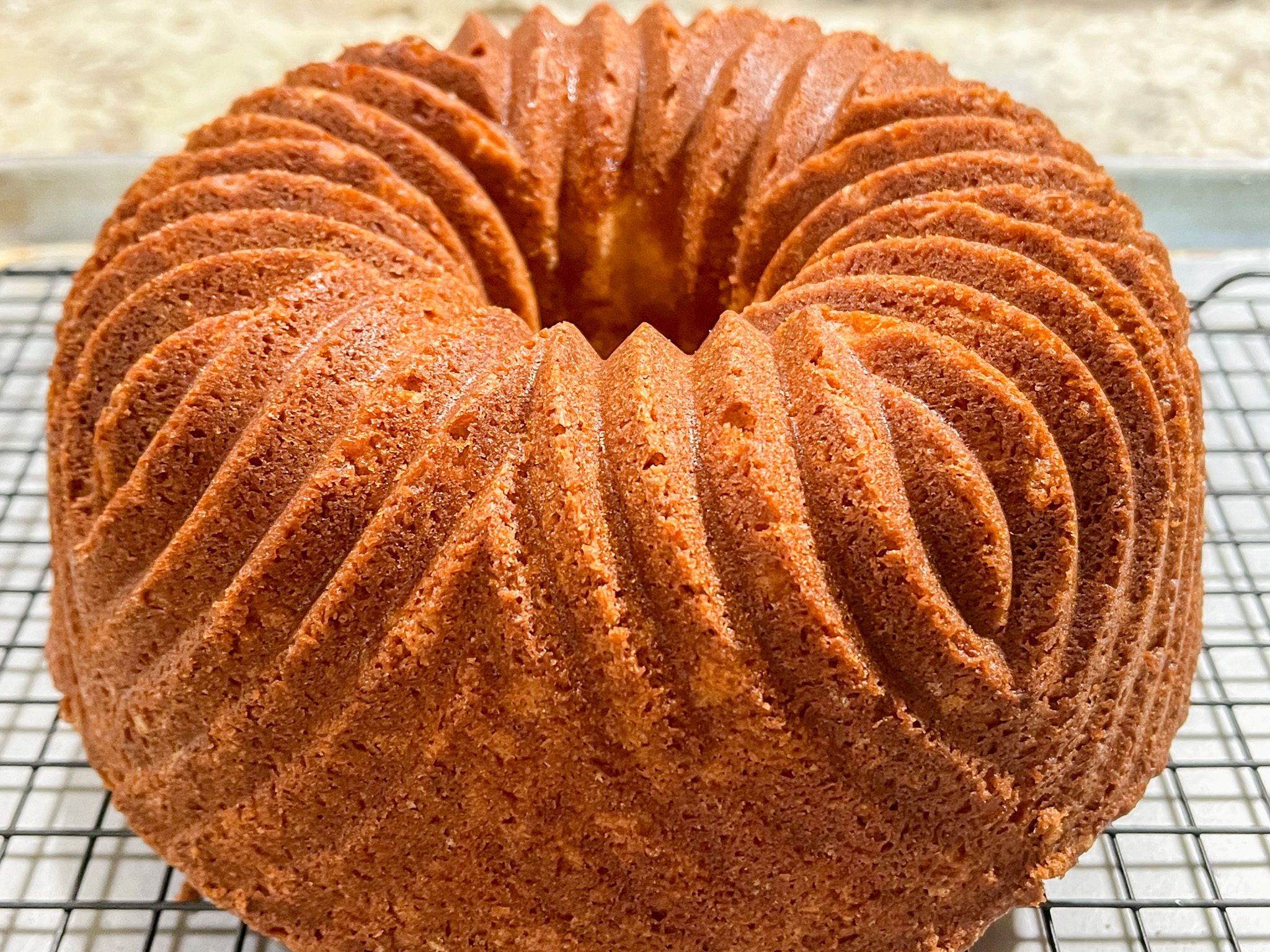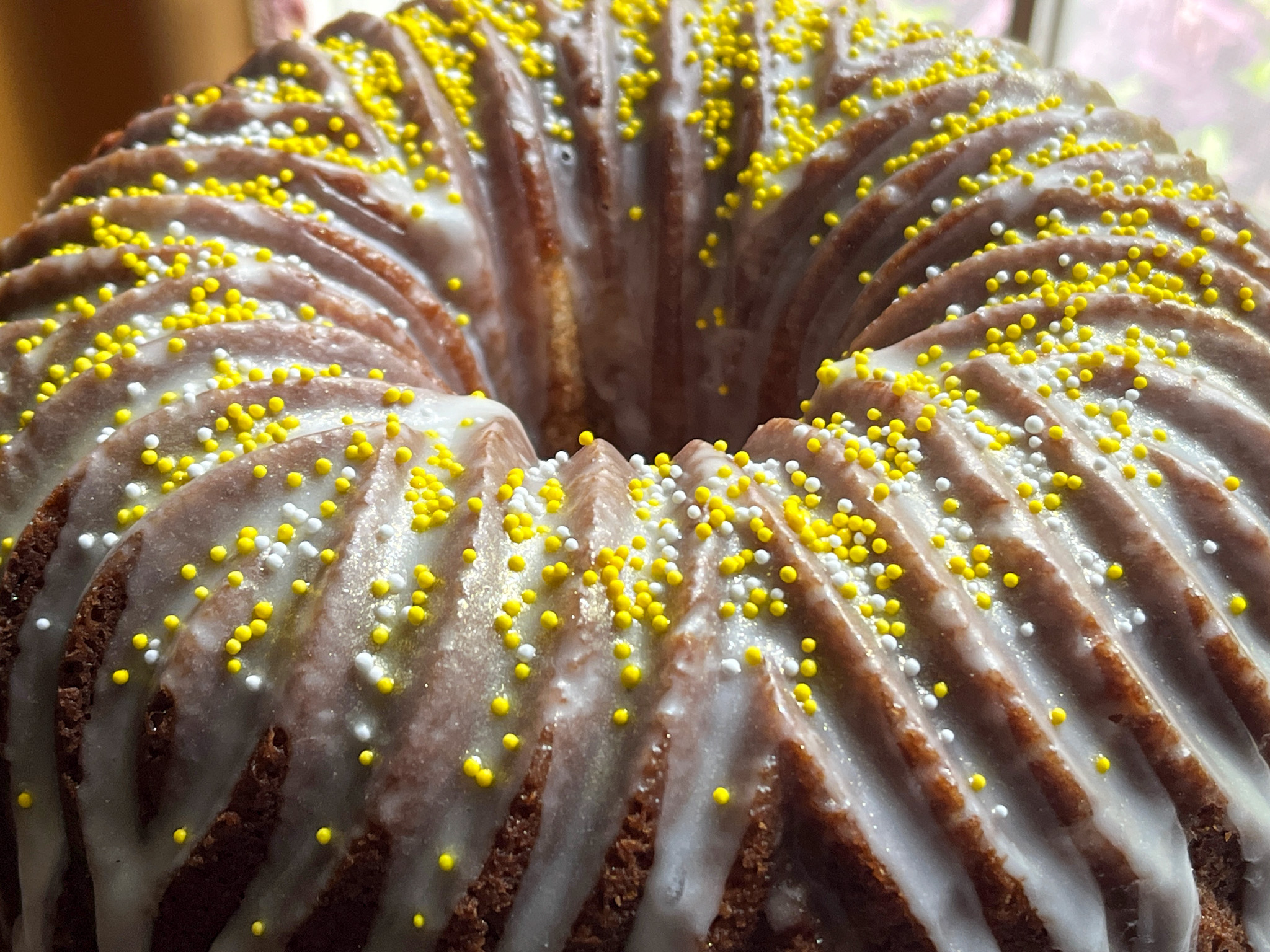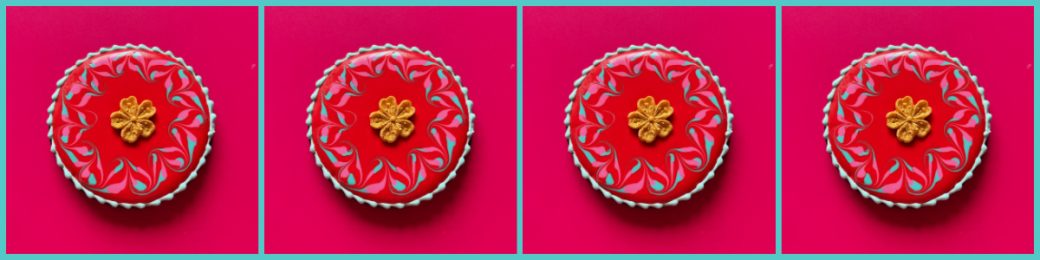
Lemon Cakes can be a bit tricky as far as flavor goes. I have made a cake from a super reputable source that promised to deliver the most intense, most lemony flavor coupled with a moist and tender cake. It was tremendously convoluted, a ton of work and to be absolutely honest with you, the America’s Test Kitchen version delivered it all for 1/10 of the trouble. Which is saying a lot, as they are known for never cutting corners.
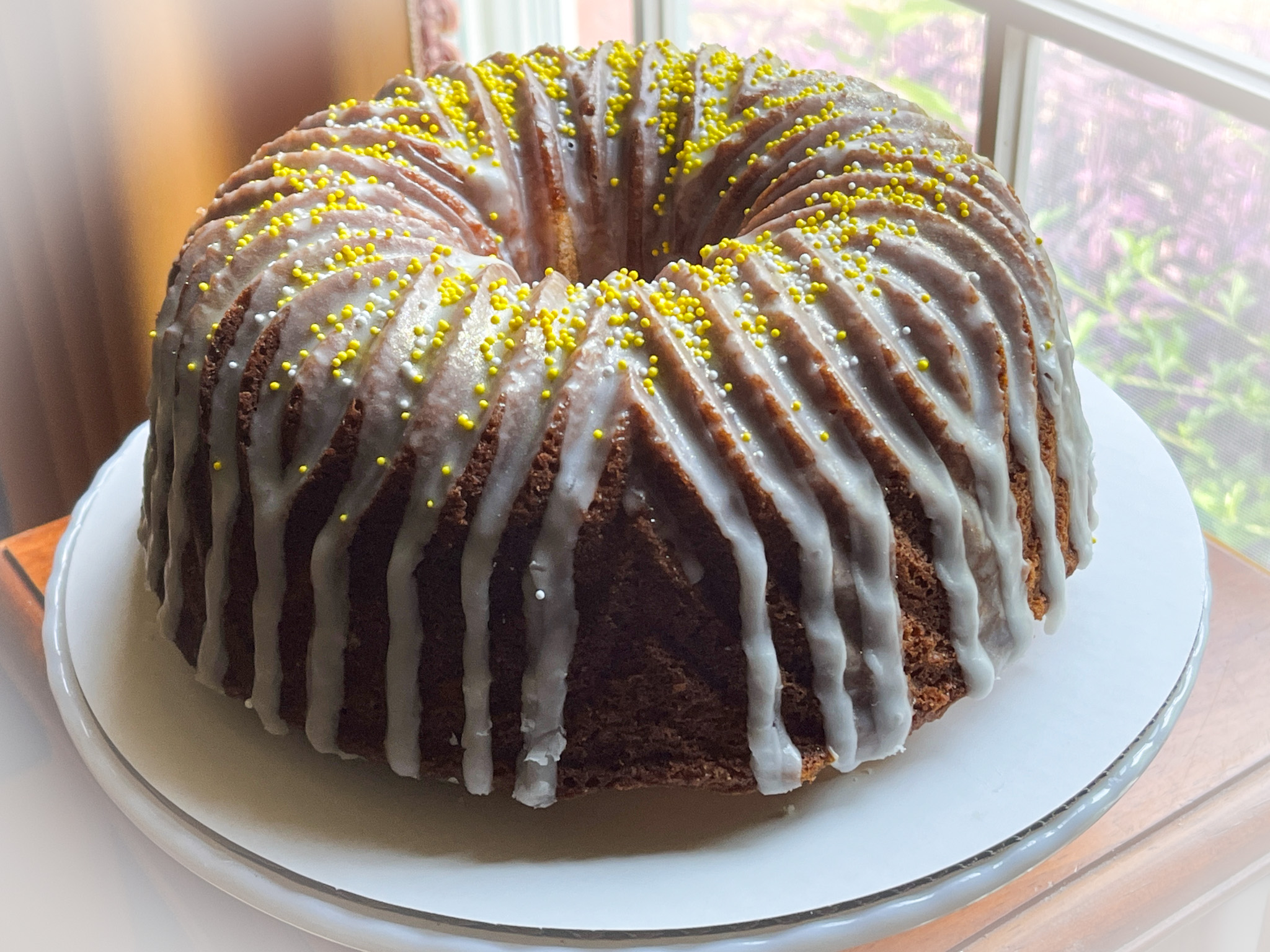
They are super strict about copyright issues, and rarely reply to requests asking permission to publish their recipes, however I was able to find this one online. If you’d like to make this deliciously lemony cake, pay a visit to this site. No difference from the recipe found in The Perfect Cake (2018), a cookbook I highly recommend. To bake this particular version, I used the Bavaria Bundt pan from Nordicware, but any pan with 10 to 12-cup capacity will do the job. I just love the way they un-mold like a dream!
When I make a Bundt cake, I donate it whole, so I cannot share a picture of the crumb, but I’ve had excellent feedback about this baby. In fact, I’ve made it three times already, using different Bundt pan shapes. Always a winner!
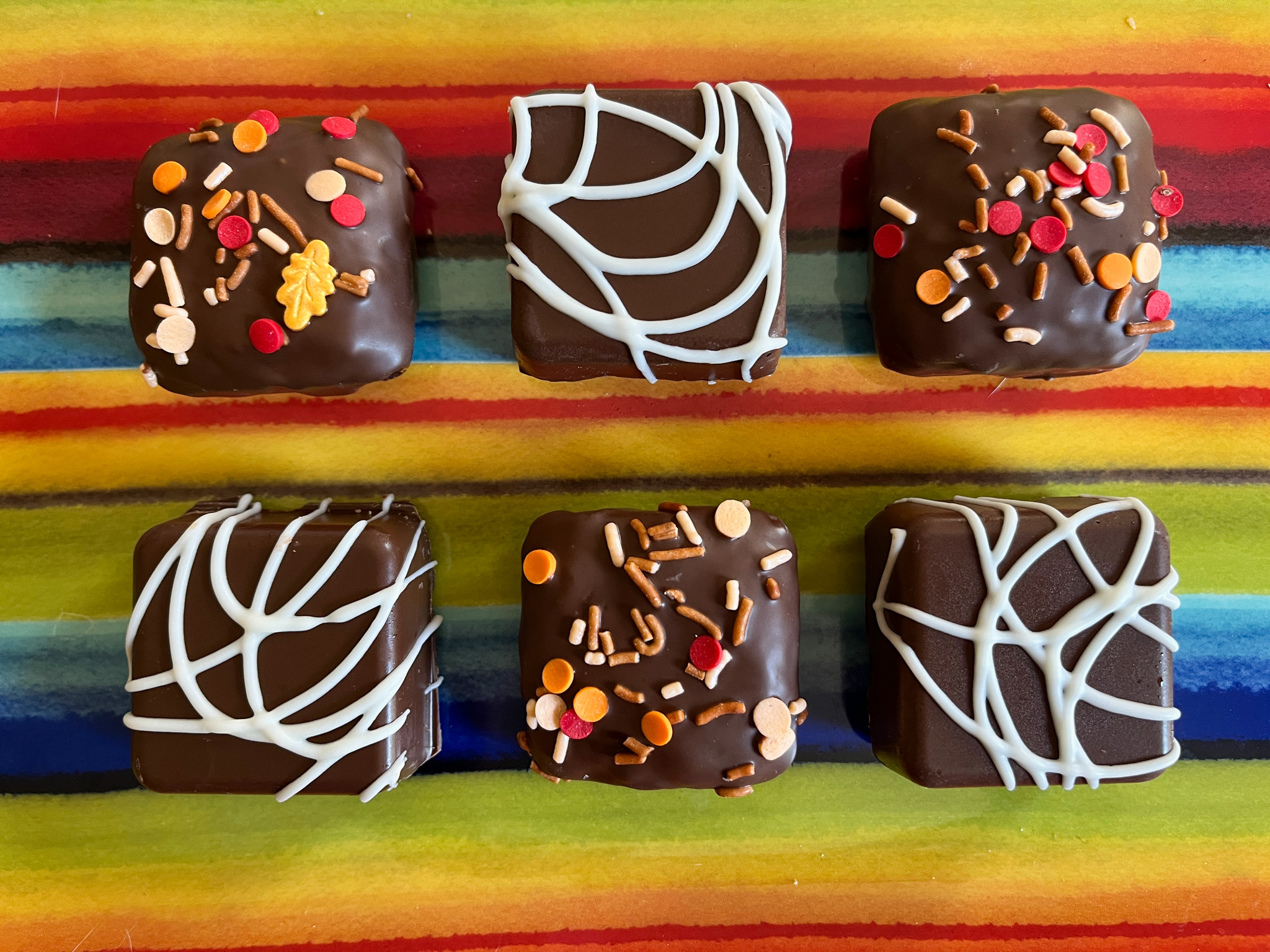
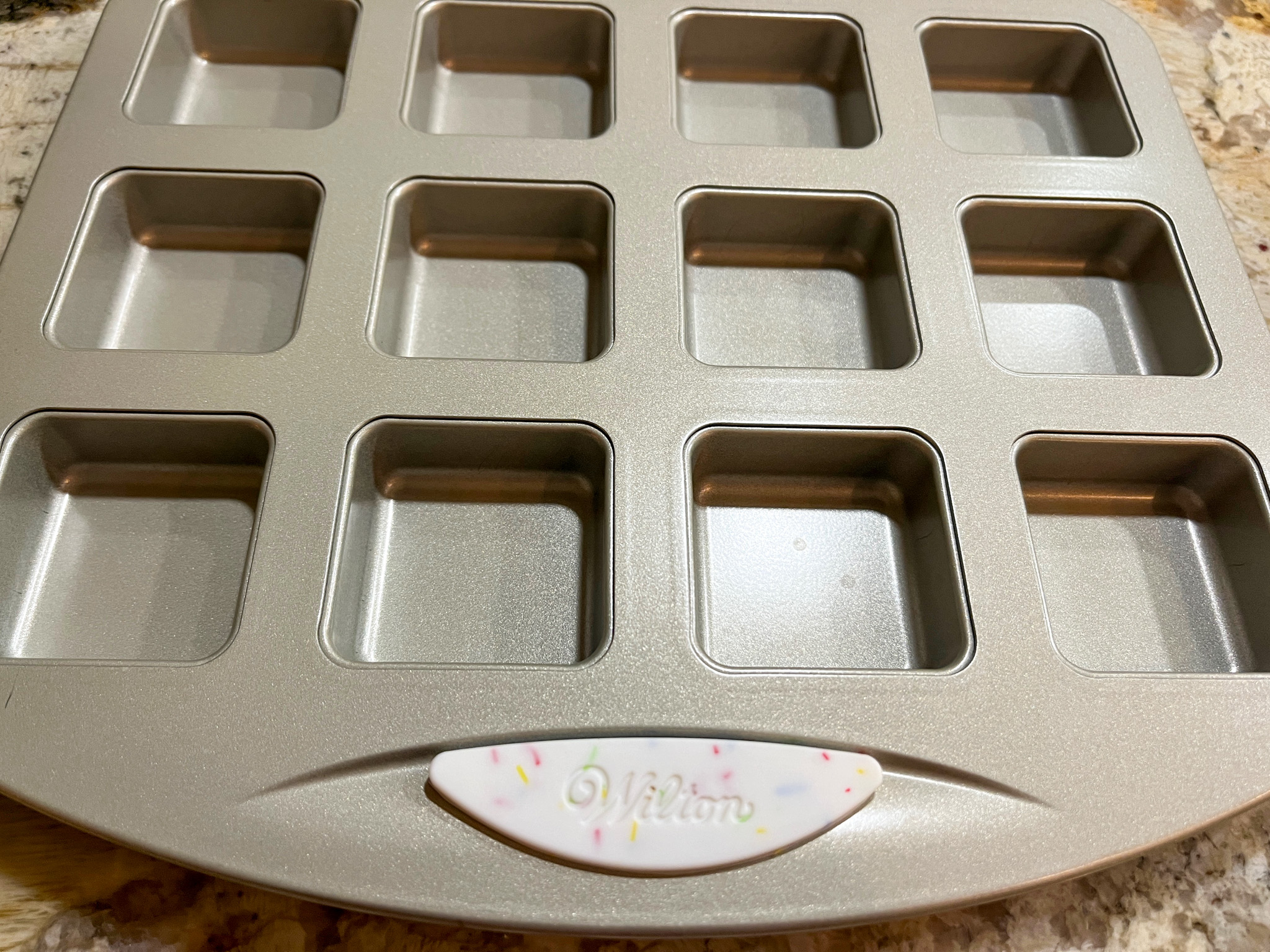
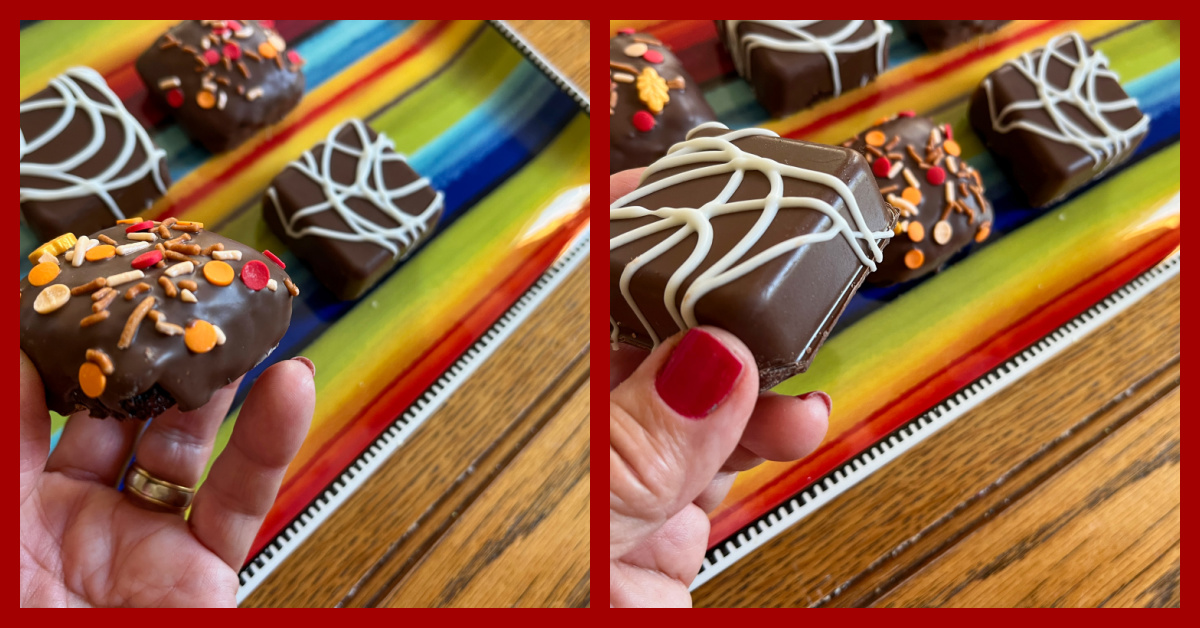
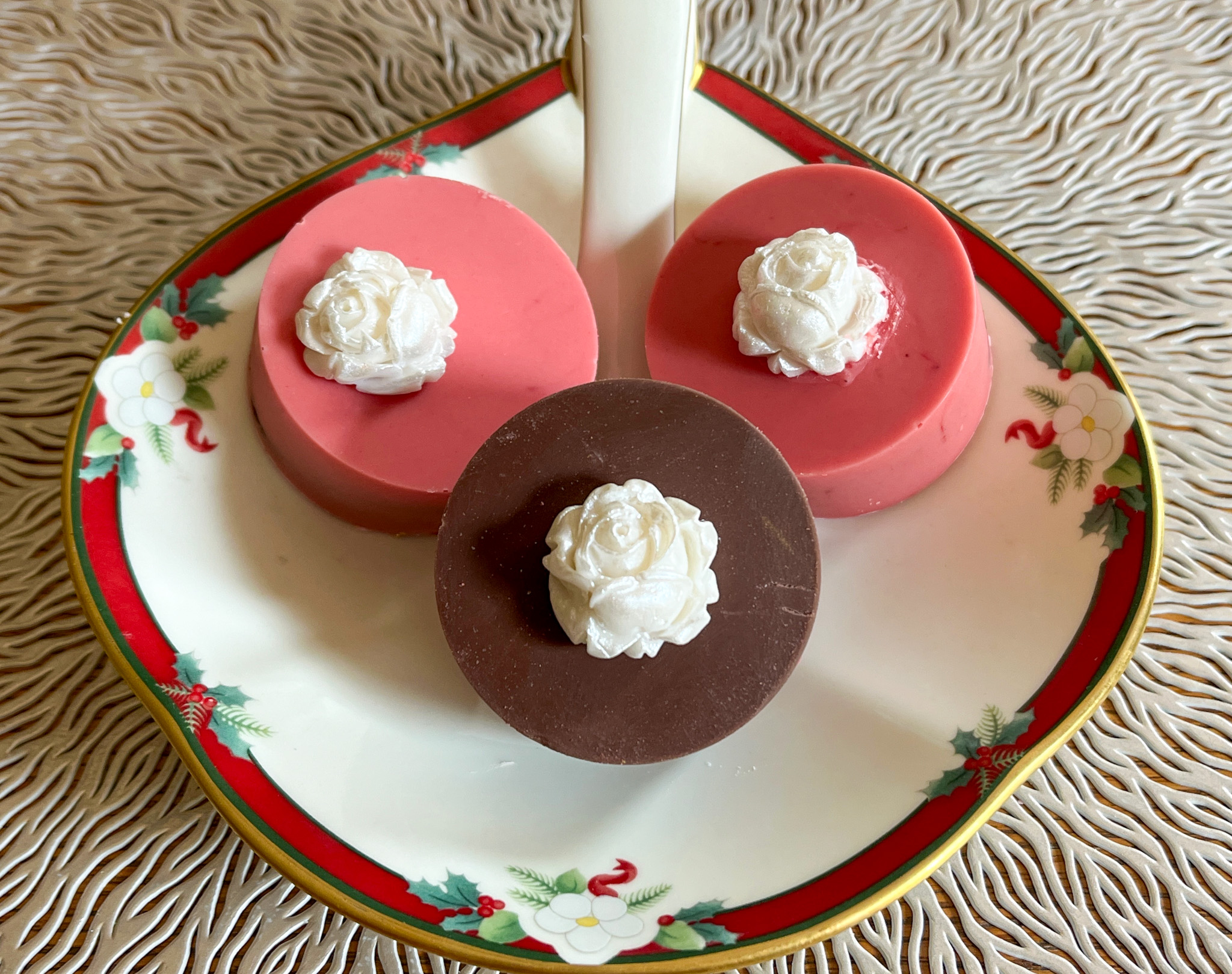
My first time making these, after flirting for a long time with the concept, while staring at my molds in a state of paralysis. In a way, they are not too different from Chocolate-Covered Oreos – that I make often – but the level of complexity goes up a bit. With cake pucks, you can use all flavors and kinds of cakes, as well as cookie dough, rice crisps, as long as you adjust the consistency to make…. the PUCK component. I see many of those in my future… For my first time, I chose Red Velvet with a thin Oreo inside. Check them out!
RED VELVET CAKE PUCKS WITH THIN OREOS (adapted from this recipe)
1 red velvet cake mix 1 cup water 1/3 cup oil 2 eggs 1tsp vanilla Oreo thins 1/2 cup buttercream Ghirardelli melting wafers, dark chocolate
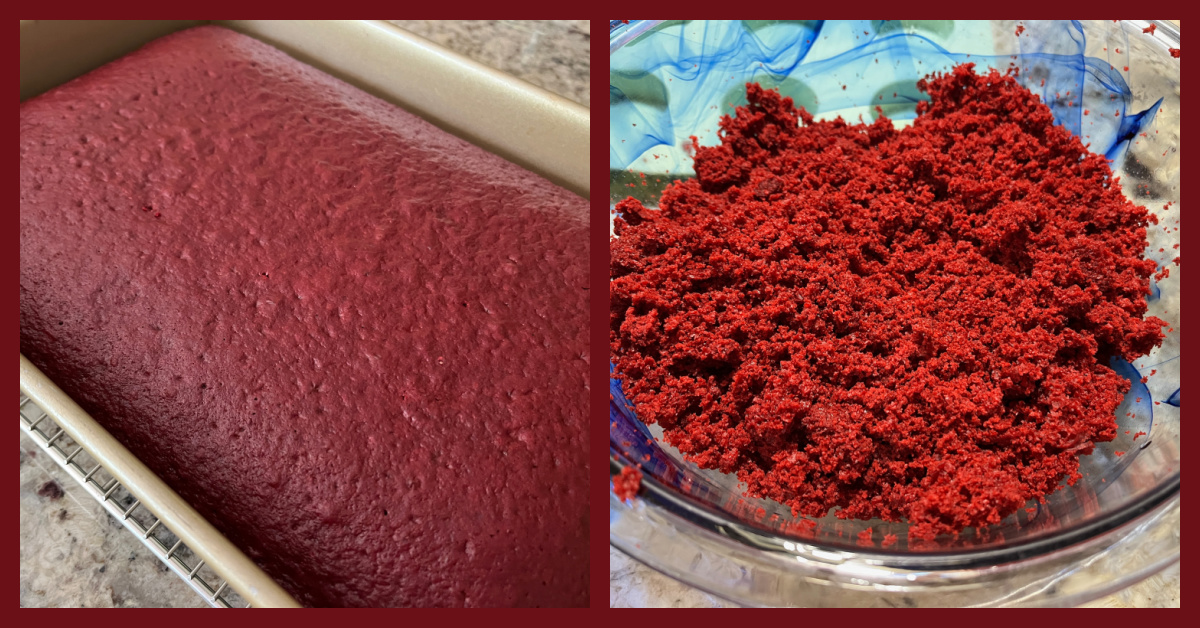
Combine cake mix, eggs, water, oil and vanilla until fully mixed. Pour mixture in a greased 9×13 baking pan and bake at 350 F until done, with toothpick coming out clean as tested in the center of the cake (about 25 minutes).
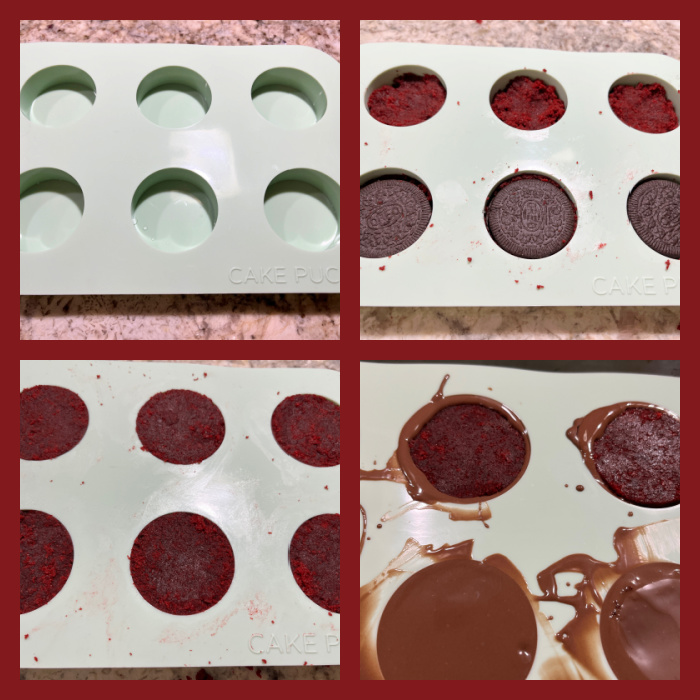
Allow cake to cool, then crumble and mix in buttercream. Add about a tablespoon of cake mix to your small cake puck mold. Place one Oreo thin on top of the mix and then continue to fill the mold with cake mix. Use bottom of a measuring cup to gently pat the top of the cake puck centers down so they are level with the mold. Scrape off any excess mix.
Place mold in the fridge for 3 hours or freezer (45 min) to chill.
Melt 17 ounces chocolate (or the amount compatible with the number of cakes you will make) with one tablespoon of refined coconut oil for 1 minute. Continue to microwave in increments of 20 seconds until chocolate is smooth and fully melted.
Fill cavities of larger mold with chocolate a little less than half-full. Place chilled center on melted chocolate. Gently apply even pressure as you slowly press the center down until chocolate comes up from the sides and covers the top of the center. Scrape off any excess chocolate. If there is not enough chocolate to cover the center. Add chocolate and scrape away excess. Tap the mold tray on the counter to eliminate air bubbles.
Place mold in freezer for 10 minutes, they should set quickly because the cake component is very cold. Un-mold and have fu decorating your little cake pucks!
Comments: Before I started this new adventure, I joined this group on Facebook to see what others were doing and learn from their shared experiences. For the most part they use cake mixes for the “puck” component because home-made cakes can be overly moist. I decided to take that approach for my first time, as I was absolutely clueless about the whole thing. So I started from a boxed Duncan Hines Red Velvet, adapting the recipe as advised by the experts. Bake, let it cool, and crumble it. Mix with buttercream (I had some leftover from another project made with butter & cream cheese), add to the puck mold.
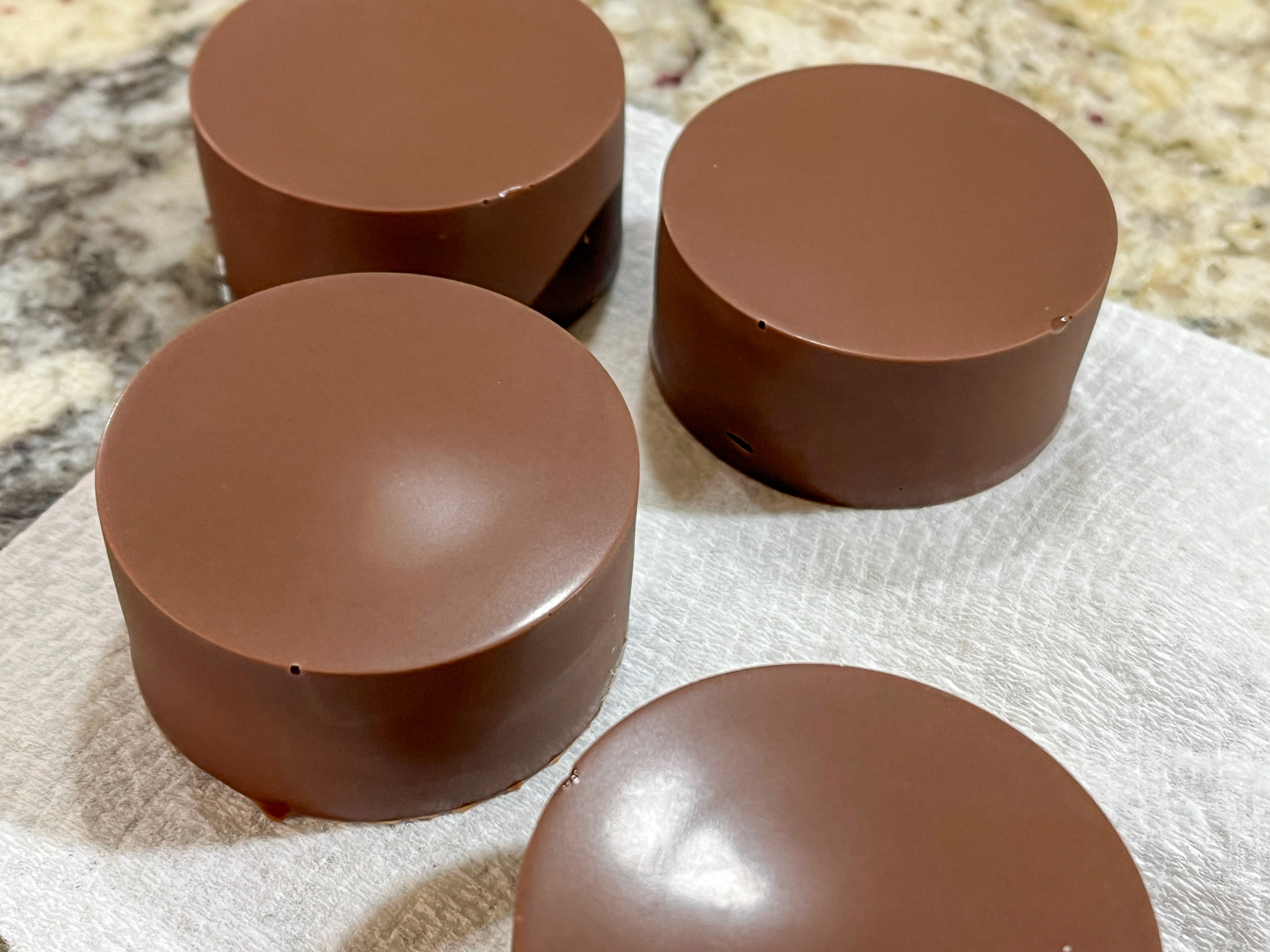
Once that part is done, marvel at how well they un-mold to reveal the smoothest little cake puck!
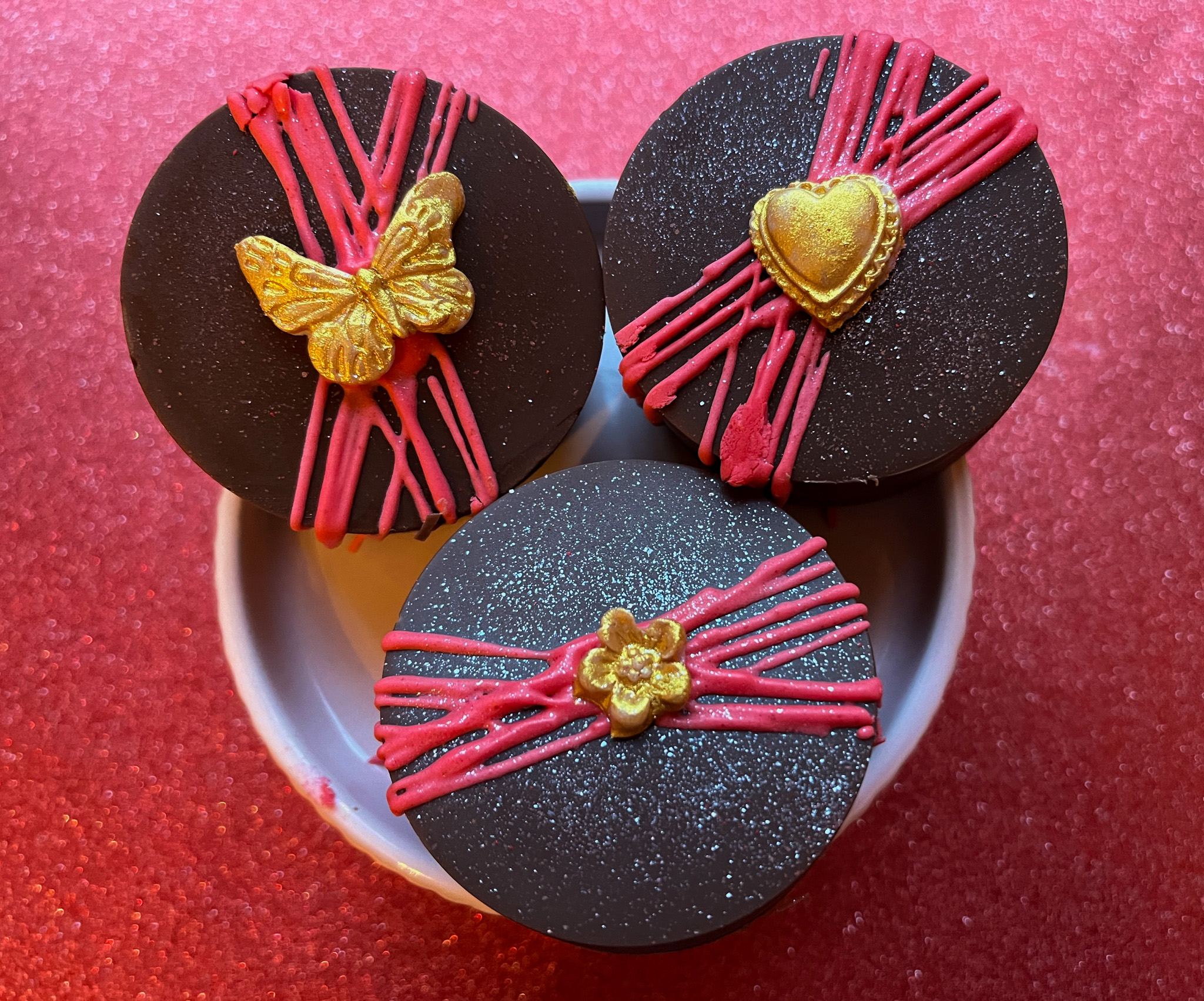
For the set covered with dark chocolate, I opted to decorate with Royal icing drizzle and molded fondant painted with luster powder gold + vodka.
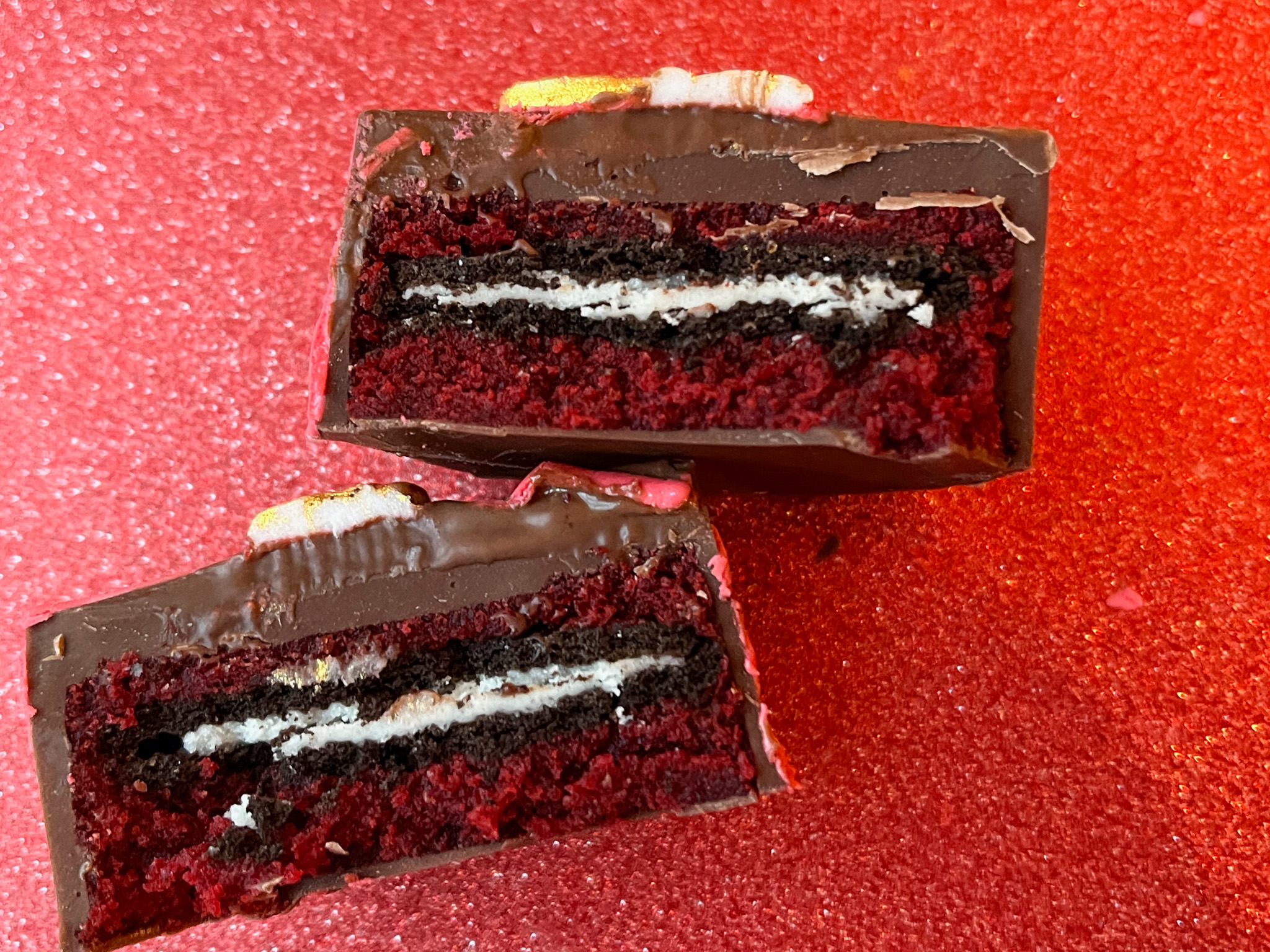
Once you cut through, the little Oreo inside adds a lot of cute to the equation… and of course, a bit more contrast in texture.
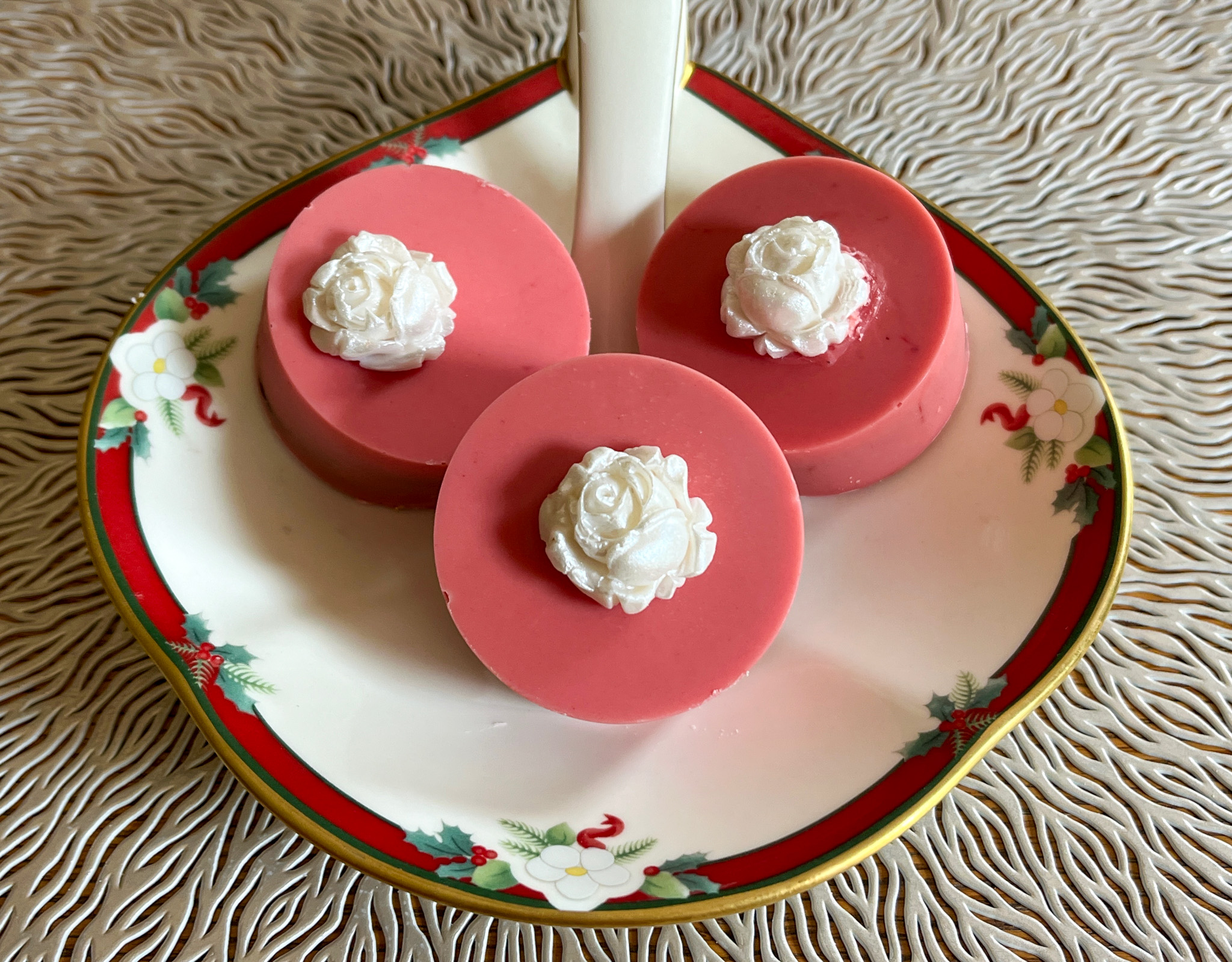
The ones covered with white chocolate dyed pink, got a simpler decoration, just the white fondant sprayed with PME luster pearl.
That decoration also works well on a dark chocolate background…
Of course, the possibilities to make other types of cake pucks are endless, and I am just getting started. My next goal is to use warm cake crumbled without adding buttercream, as I heard it can work well, and of course opens the horizons to cakes made from scratch. Stay tuned for more “pucking” adventures!
Please consider skipping fireworks, they bring chaos to so many! How about cupcakes instead?
RED WHITE AND BLUE CUPCAKES (from The Bewitching Kitchen)
150g granulated sugar 60g butter 1 egg 10g cocoa powder red food gel 150g all-purpose flour 1/2 tsp salt 120ml buttermilk 1 tsp white vinegar 1/2 tsp baking soda 1/2 tsp red velvet emulsion (or vanilla extract)
Heat the oven to 350F.
Mix the flour with the salt. Reserve. Those are your dry ingredients.
Cream butter and sugar in a stand mixer with the paddle attachment, until light and fluffy, about 3 minutes in high-speed. Add the egg, beat until the mixture is fully incorporated and light. Add the cocoa and the red food dye.
Add 1/3 of the dry ingredients, then 1/2 of the buttermilk, 1/3 more of the dry ingredients, followed by the rest of the buttermilk. Add the rest of the dry ingredients. Mix well. In a small bowl whisk the baking soda with the vinegar. Add to the cake batter and mix for a few seconds on high-speed. Finish by mixing the batter by hand, then add portions to regular cupcake tins, do not fill more than half the volume.
Bake for about 15 minutes until a toothpick comes out mostly clean. Cool completely before decorating.
BASIC BUTTERCREAM FOR CUPCAKES (from The Bewitching Kitchen)
226g butter, unsalted, softened 452g powdered sugar pinch of salt Vanilla extract, about 1 tsp or more to taste a couple or more tablespoons of milk (to adjust consistency)
Place the softened butter in the bowl of a KitchenAid type mixer with the paddle attachment, add the pinch of salt, and whip at high speed for about 7 minutes. It needs to be really soft and lighter. Stop the mixer. Eyeball the amount of powdered sugar, add 1/3 and mix at low speed at first, once the sugar is starting to get incorporated, increase the speed to medium-high.
Add the second portion of the sugar, and incorporate the same way. Add the final portion, start at low speed, clean the sides of the bowl well with a spatula, add the vanilla and increase the speed slowly all the way to high. Whip it until very smooth. Add milk to desired consistency. Divide the buttercream into three bowls and dye one with red, one with blue, leave the third one clear.
Fill piping bags fitted with the icing tips of your choice. Ice fully cooled cupcakes.
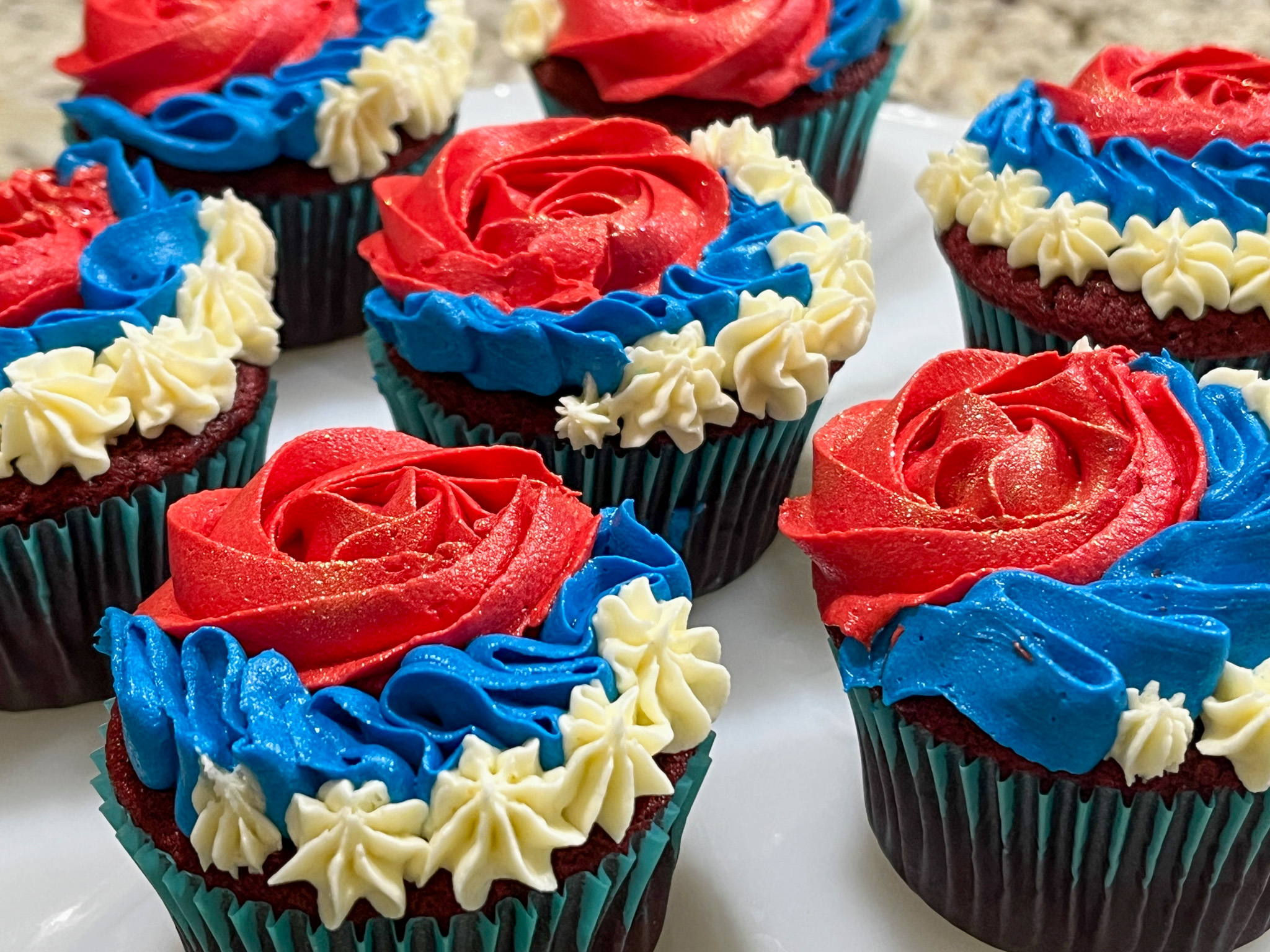
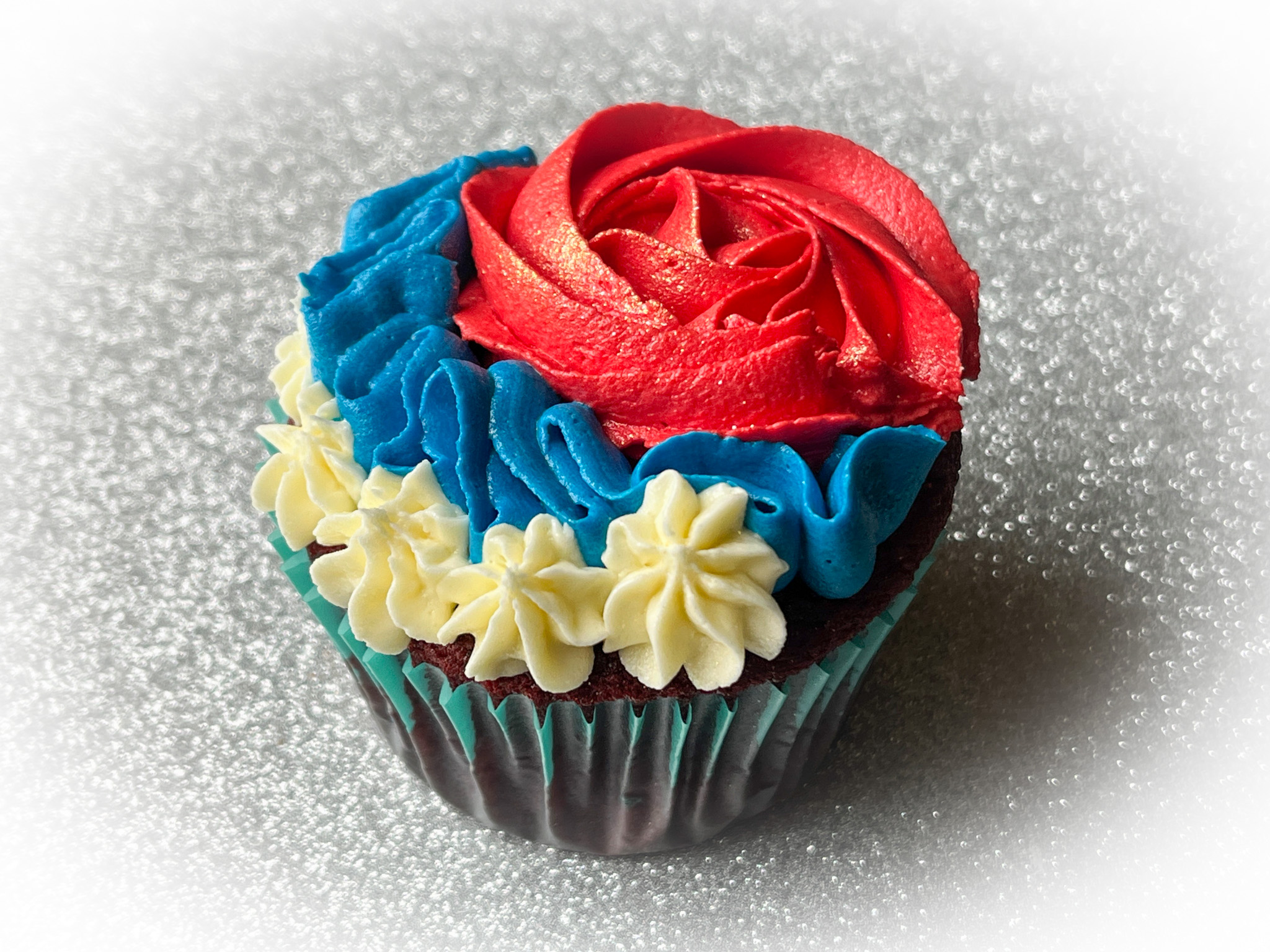
Comments: For these cupcakes I used a 1M tip for the red rose, a 102 petal tip for the blue swirl, and an open star tip 4B for the white decorations. All cupcakes were donated, so I don’t have a picture of the cake crumb but I got nice feedback about them. I think red velvet goes perfectly well for the 4th of July theme…
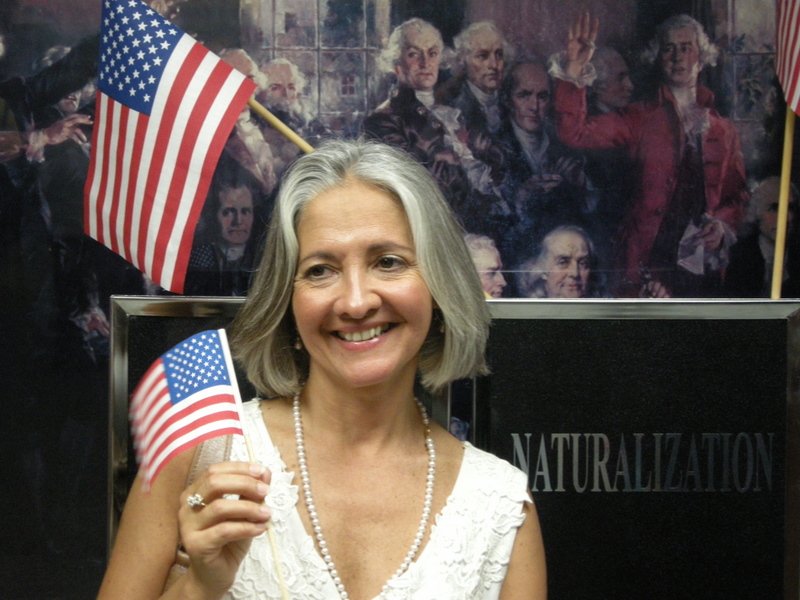
Just a couple of days ago I celebrated 15 years as an American citizen!
Wow! Just WOW! Talk about a blogging milestone, I am having a hard time believing that for 15 years I’ve been cooking, baking, taking pictures, writing posts, and hitting PUBLISH, without a break… Last year I was feeling a bit discouraged and debating whether to quit, but I don’t feel the same way now. My love for blogging is renewed, maybe even a bit stronger. But what matters most in the anniversary of a blog is how to celebrate it. That brings cake to mind. And cake is what I have for you!
CONFETTI CAKE WITH RANUNCULUS BUTTERCREAM PAINTING (cake from Sally’s Baking Addiction, buttercream and tutorial for cake painting from MyCakeSchool)
for the cake: 207g cake flour (1 + 3/4 cup) 3/4 teaspoon baking powder 1/4 teaspoon baking soda 1/4 teaspoon salt 113g unsalted butter, softened to room temperature (1/2 cup) 200g granulated sugar (1 cup) 3 large egg whites, at room temperature 120g full-fat sour cream, at room temperature (1/2 cup) 2 teaspoons pure vanilla extract 120ml whole milk, at room temperature (1/2 cup) 1/2 cup rainbow sprinkles
for the buttercream: 910g confectioners’ sugar (2 pounds) 113 g unsalted butter softened (1/2 cup) 286 g solid vegetable shortening such as Crisco (1 + 1/2 cup) 2 Tablespoons clear vanilla extract ¼ cup milk 57 g full-fat milk (1/4 cup) ½ teaspoon salt to cut the sweetness
Heat the oven to 350°F. Grease three 6-inch cake pans, line with parchment paper rounds, then grease the parchment paper. Whisk the cake flour, baking powder, baking soda, and salt together. Set aside. Using a handheld or stand mixer fitted with a paddle or whisk attachment, beat the butter and sugar together on high speed until smooth and creamy, about 3 minutes. Beat in the egg whites on high speed until combined, about 2 minutes, then beat in the sour cream and vanilla extract. Scrape down the sides and up the bottom of the bowl as needed.
With the mixer on low speed, add the dry ingredients just until combined. With the mixer still running on low, pour in the milk and mix just until combined. Gently fold in the sprinkles. The batter will be slightly thick.
Pour batter evenly into cake pans. Bake for around 18-21 minutes or until the cakes are baked through. To test for doneness, insert a toothpick into the center of the cake. If it comes out clean, it’s done. Allow cakes to cool completely in the pans set on a wire rack.
Make the buttercream: Cream butter, shortening , salt and extracts until creamy and smooth. Add powdered sugar and milk. Mix thoroughly on medium speed for approximately 8 minutes. For the last two minutes decrease the mixing speed to very slow until creamy and smooth. Scrape the sides of the bowl occasionally during the mixing process. Frost the cake fully with white frosting, make portions of buttercream with the colors needed, and follow the instructions on the video to decorate the cake.
Comments: I wanted a colorful cake for the 15th anniversary of the Bewitching, and felt that this Springtime motif would be perfect… Now for a little bit of “behind the scenes” disclosure: while you read this post, we will be in Europe, in fact almost getting ready to fly back home. It turns out that before we left I prepared a bunch of posts to be published while we were away, but thought the anniversary of the blog was later in the month. I noticed my mistake just a few days before our departure… My first reaction was to forget all about it, deal with it later, but Phil said “you’ve been in the tent, you can do this! pretend it is a technical challenge”. What can I say? He definitely knows me well, so the outcome is this blog post… This was a cake baked in full frantic mode, my friends… what won’t I do for the love of blogging?
Is it a cake? Is it a sweet bread? Is it heaven on a plate? Yes to all! Another amazing recipe from Helen Fletcher, this is a bit involved but absolutely worth it… Slicing through it to reveal the coiled pattern inside is just too cool!
¾ cup unsalted butter (170 grams) 1 teaspoon active dry yeast 3 tablespoons warm water Pinch granulated sugar 2 ¼ cup bread flour (315 grams) 1 ½ tablespoons granulated sugar ½ teaspoon salt 3 large eggs, room temperature ¼ cup half and half (or heavy cream)
Filling ¾ pound dried apricots 1 cup water 5 tablespoons butter (75 grams) ½ cup powdered sugar (65 grams) 1 ½ teapoons vanilla 2 teaspoons cocoa
Almond Paste Crumb Topping 1 cup cake flour (125 grams) ½ cup almond paste (125 grams) ⅔ cup granulated sugar (130 grams) ½ cup unsalted butter (114 grams)
Assembly 1 large egg, well beaten
Make the brioche dough: Cut the butter into small pieces by cutting the stick in half lengthwise, the cutting it into half inch pieces. Place it back in the refrigerator to keep cold. Make a sponge by dissolving the yeast and pinch of granulated sugar in the 3 tablespoons warm water. Add 3 tablespoons flour from the measured amount of 2 ¼ cups flour. Stir together to completely mix the ingredients. Cover with film and set aside to double or more while preparing the rest of the ingredients.
In the processor bowl fitted with the steel blade, place the remaining flour, salt and sugar. Process 5 seconds to mix. Place the cold butter in a circle over the flour. Process the butter until it is indistinguishable, about 20 seconds. Scrape down and process about 5 seconds more. Place the eggs in a circle over the dry ingredients, pour the half and half or cream over the eggs, and add the sponge, also in a circle. Process approximately 20 to 25 seconds until the ball which initially forms breaks down into a creamy, evenly dispersed batter in the processor bowl. Do not stop processing until the batter is formed, as the motor may stall when you try to restart it. If the ball doesn’t break down, that’s fine as long as everything is mixed well.
Remove from the processor bowl and place in an ungreased bowl. Cover securely with plastic wrap and allow to rise until double in bulk about 2 to 2 ½ hours. Stir down and refrigerate overnight. Punch down and use as directed. It can stay in the refrigerator for up to 3 days before using.
for the filling: Place the apricots and water in a small saucepan and bring to a boil. Reduce to a simmer and, stir frequently until most of the water is gone. Place the apricots and remaining ingredients, except the cocoa, in a processor bowl and process until smooth. Set aside to cool. Stir the cocoa in. This may be made a week ahead and stored in the refrigerator. Remove to room temperature before using.
for the crumb topping: Place the flour and almond paste (either home made or bought) in the bowl of a processor. Process until the almond paste is indistinguishable. Add the sugar and butter and process until it begins to form crumbs. Switch to pulses and pulse only until large crumbs form. Remove them to a bowl and refrigerate until needed.
To assemble the coffee cake: Spray a 9×3″ cheesecake or springform pan with a non-stick baking spray. Set aside. Remove the brioche from the refrigerator, punch down, pat into a rectangle on a lightly floured surface and roll into a 20×11 inch rectangle so the long horizontally in front of you to make rolling up easier. Spread the filling evenly over the brioche within ½” of the edges. Roll up tightly from the 20″side and pinch the seam securely together. Roll and gently stretch it until it is 30″ long. If it is very soft at this time, coil it up on a parchment line baking sheet and chill to firm up. Do not let it freeze.
Starting in the middle of the pan, coil the roll around towards the outer edge of the pan. Press it down to flatten and fill the pan. Cover with a towel and let rise until doubled in bulk. Because everything is cold, this could take 4 to 4 ½ hours to rise.
Heat the oven to 375F. When the coffee cake is full risen, brush it with the beaten egg and distribute the almond paste crumbs evenly over the brioche. Bake for 45 to 55 minutes until the top is browned. A tester is difficult here because the filling stays moist and clings to the tester. If the top begins to brown too quickly, tent it with foil. Cool until barely warm and release the cake. Dust with powdered sugar to serve.
Comments: Helen’s method to make a brioche in the food processor is something I’ve been meaning to try for the longest time, and it works so well, I will keep it as my method of choice from now on. It considerably speeds up the preparation of the dough, and you cannot beat the texture. A pleasure to work with. I could have done a better job keeping the coil leveled on all sides of the pan, if you look at the bottom left photo of the composite above, you’ll see that my coil got a bit lopsided. Other than that, no issues. I highly recommend you visit Helen’s site (click here) because she goes over every little step with pictures and you get a better idea of what to expect as you make this recipe.
The crumb topping is irresistible, so I advise you to stop nibbling on it and use it exclusively to top the cake. I made my own almond paste, following Helen’s detailed recipe, and it turned out perfect! I used her simple syrup method. You can read her post about it clicking here. My little concoction looked exactly like hers – or the ones you can buy at the store – but my picture was badly out of focus, so you will have to take my word for it. I loved making this crumb cake, now I dream of variations, maybe some black sesame paste in the filling could be fantastic also!