I love cole slaw, but prefer a dressing without mayonnaise. Something fresh, light, and bright. This version couples orange juice with sesame oil. I add just a little squirt of lemon juice at the very end because I crave that extra acidity. Some might try to convince me that incorporating the lemon juice in the dressing would do the same job, but I beg to differ. In fact, when I ate the leftovers, I did a little lemon juice encore, and loved it even more.
ORIENTAL-STYLE SESAME SLAW (adapted from several sources)
for the dressing: ¼ cup soy sauce ¼ cup fresh orange juice 2 tablespoons extra-virgin olive oil 1 tablespoon toasted sesame oil 2 teaspoons minced fresh ginger 1 teaspoon salt 1/2 teaspoon black pepper 1/2 to 1 teaspoon Sriracha sauce
for the salad: 3 cups shredded napa cabbage 2 cups shredded green cabbage 1 cup shredded red cabbage 1 cup shredded carrots fresh cilantro leaves, amount to taste black sesame seeds to serve fresh lemon juice to serve
Start by making the dressing. Combine all ingredients in a measuring cup or flask with a lid, and whisk or shake to emulsify. Reserve.
In a large serving bowl, add all ingredients for the salad except the black sesame seeds, combine tossing gently, then pour the dressing on top. Toss again and leave in the fridge for 30 minutes before serving. Sprinkle with black sesame seeds, add lemon juice, adjust seasoning if needed, and serve.
Comments: f you like cole slaw but mayonnaise is not your thing, this will for sure please you. It gets even better next day, as all components are so sturdy. I made it twice already, the second time I added fresh orange zest together with the black sesame seeds before serving and that was a nice extra touch of flavor. Avocado goes quite well with it, keep that in mind. Not much else is needed to make this a complete meal. We enjoyed ours with a rotisserie chicken, so that was a super easy dinner to put together. The recipe can be easily adapted to a Whole30 system, if you don’t use soy sauce, and replace it with coconut aminos.
Five days without our faithful goofy companion. I want to thank for all the comments in my previous post. I read each one, but cannot bring myself to answer them. Please consider yourself hugged.
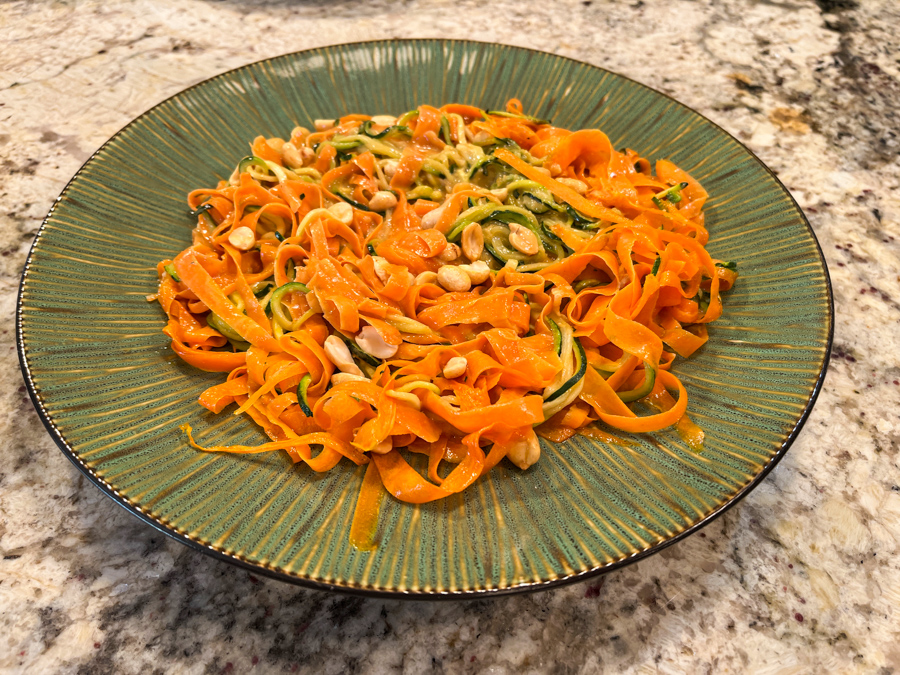
This key to this recipe is slicing the carrots in ribbons, which is a bit of a labor of love, but worth it. Couple that with spiralized zucchini, and you’ll hit a jackpot. If you do not have a spiralizer, slice the zucchini very thinly and that will do. It is surprisingly hearty, and would be a great vegetarian meal if you add perhaps some farro and a slice of bread.
CARROT AND ZUCCHINI STIR-FRY WITH PEANUT SAUCE (inspired by many sources)
3 carrots, sliced in ribbons (with a large veggie peeler) 2 large zucchini, spiralized fine 1 tablespoon grapeseed oil grated ginger to taste 1 shallot, minced salt and pepper
for the sauce: 2 tablespoons smooth peanut butter 2 tablespoons soy sauce 2 tsp sesame oil 1 tsp or more Sriracha sauce drizzle of agave nectar juice of 1/2 lemon water to adjust consistency
Heat the oil in a non-stick large wok. Sautee the ginger and the shallot until fragrant. Add the veggies, stir-fry for a couple of minutes in high heat. Drizzle the sauce, you might not need the full amount, so that the veggies are not drenched. Cook for a couple of minutes more, stirring constantly to distribute the thick sauce well into the veggies.
Comments: If you want to make a bigger amount, you might have to stir-fry the veggies in two batches, then join them and finish with the sauce. As I mentioned, slicing the carrots is not the most enjoyable activity in the world, but it is a game changer. Just incorporate the Zen and go for it. The sauce is pretty delicious and would be awesome added on top of grilled pork tenderloin, which I intend to do soon.
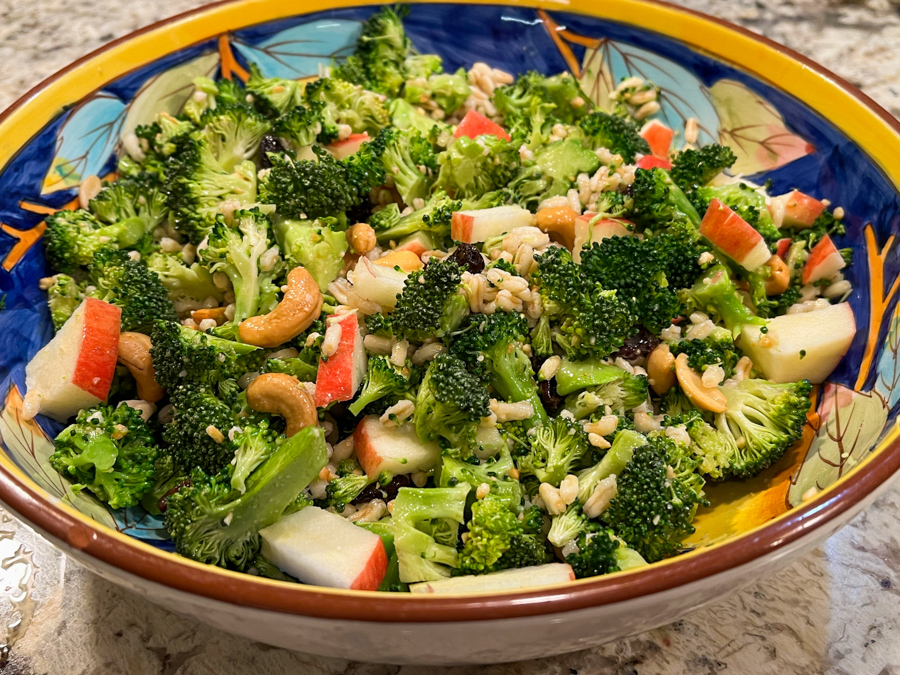
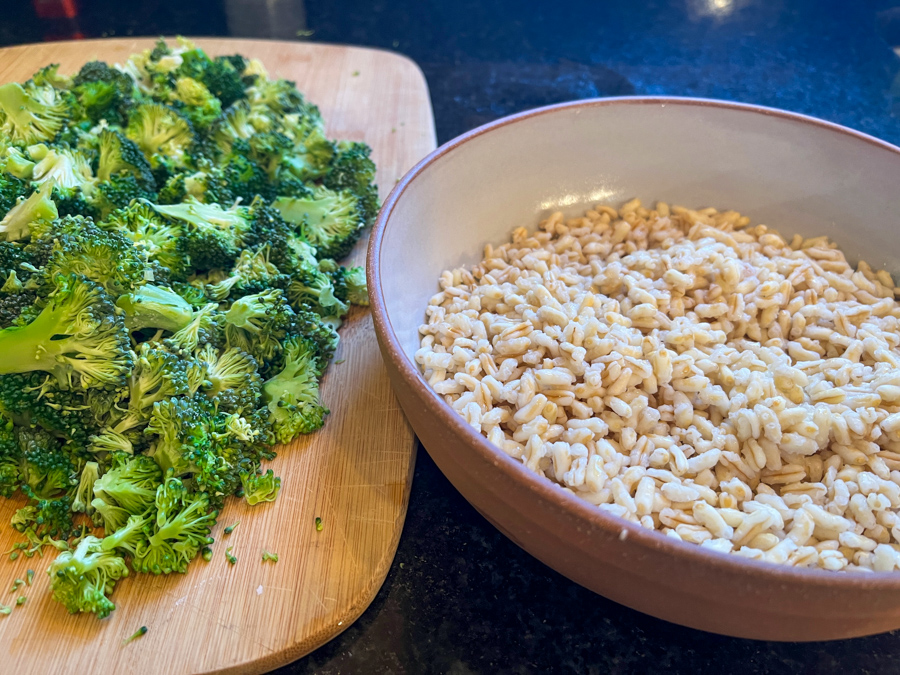
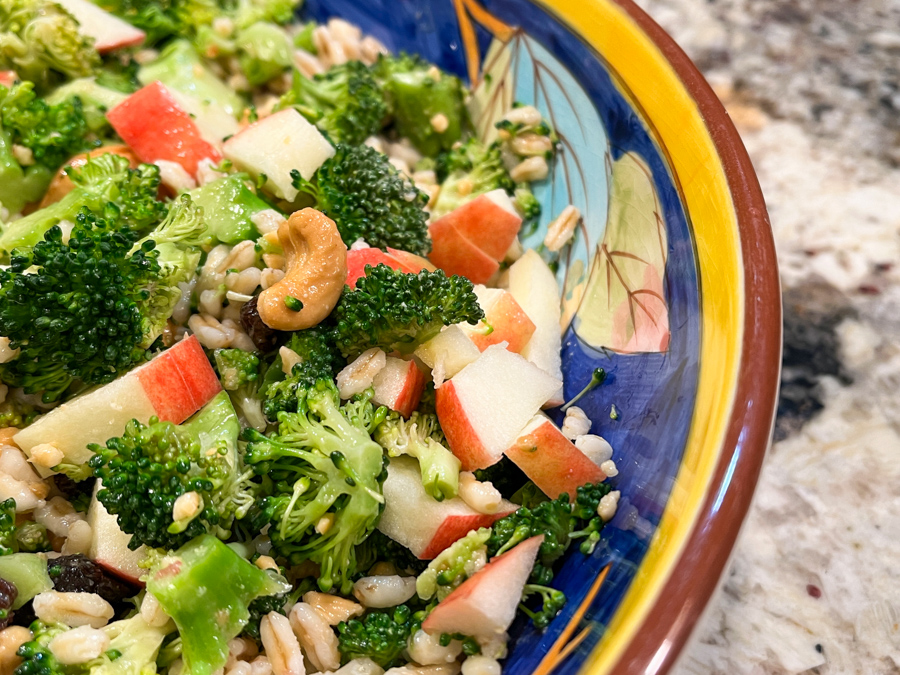
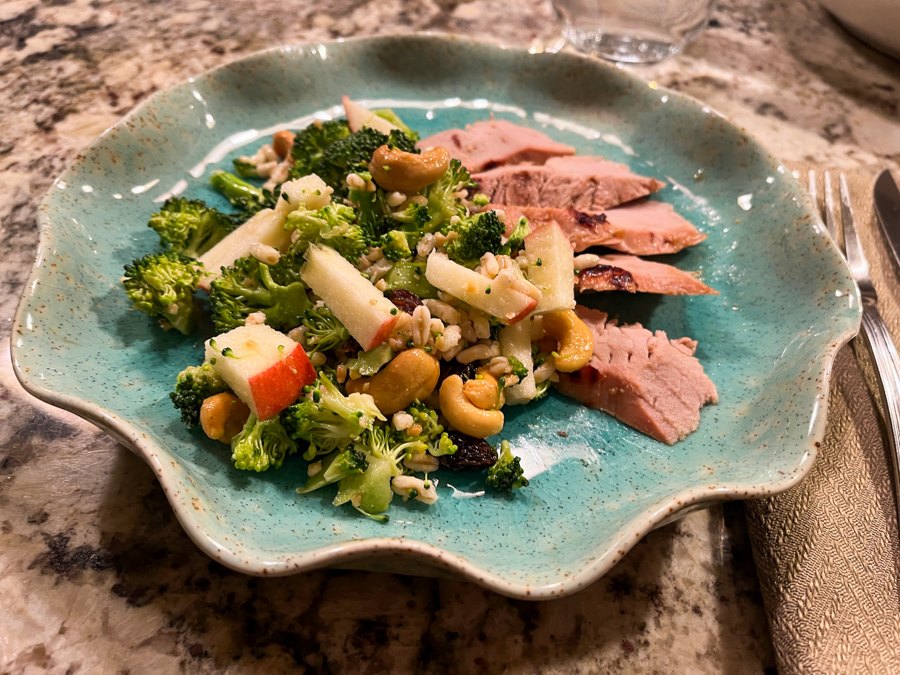
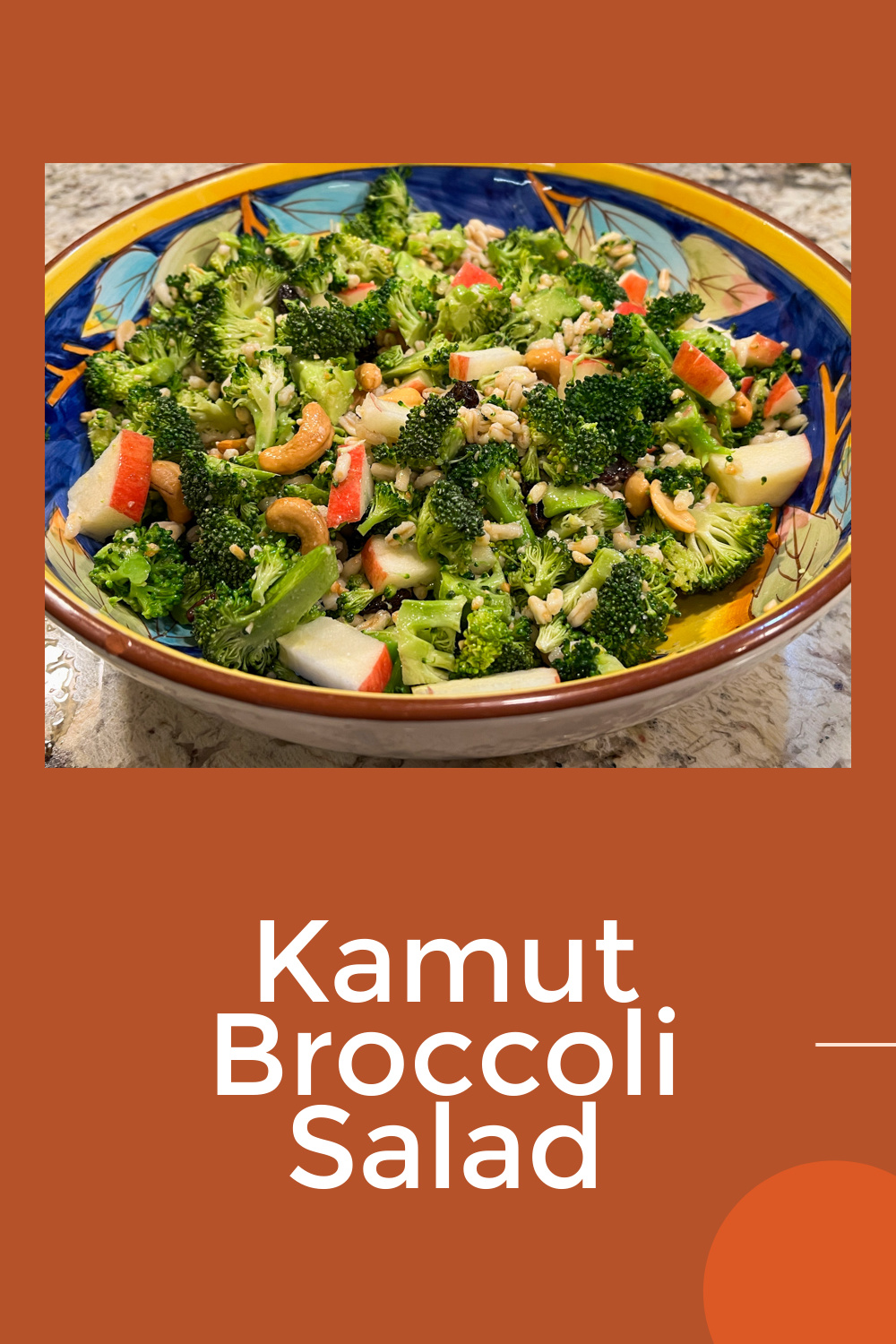
If I am going to have a salad, my preference is a salad with substance, and a variety of textures and colors. No need to go all the way into a Chicken Caesar or a Steak Salad, but the addition of grains is more than welcome. I used quick-cooking kamut, but any type will work, just pay attention to the timing. Also, any other will be fine: barley, cracked wheat, or the beautiful farro.
KAMUT & BROCCOLI SALAD (adapted from many sources)
1 cup cooked kamut, or amount to taste 2 broccoli heads, or amount to taste 1/2 cup roasted, salted cashews 1/4 cup raisins 1/2 apple, cut in pieces (I used Pink Lady) 1/4 cup olive oil juice and zest of 1 lemon grated ginger to taste salt and pepper to taste
The kamut can be prepared a day in advance if you like. Make sure it is cold when you make the salad. If you make it in advance, drizzle just a touch of olive oil to prevent the grains from sticking together. Separate the broccoli into florets and steam them for 3 minutes. Immediately run very cold water to stop the cooking. Cut the steamed broccoli into pieces. Reserve.
Make the dressing by whisking the olive oil with lemon juice, add ginger, salt and pepper.
In a large serving bowl, add all the ingredients for the salad, pour the dressing and mix gently. Adjust seasoning with salt and pepper if needed. Allow the salad to sit for 30 minutes before serving, if possible.
Comments: The main inspiration for this recipe came from a cookbook I own, but that version served the broccoli raw and passed by the food processor. The pieces of raw broccoli were very small and lost in the middle of the grain, all acquiring the same green color. The way I chose to make it, was barely steaming the broccoli. This simple step tames its raw sharpness. Next, I cut the pieces with a knife, in small chunks. In my opinion, this makes the final product much more appealing not only visually, but as far as texture goes.
The apples and raisins are a must, and the cashews give that extra crunchiness that will leave you smiling… peanuts, walnuts, or pecans, can be used instead.
The added bonus of this salad: it holds quite well in the fridge. I made such a big portion that in fact it lasted two days, and on the second day I decided to warm it in the microwave for a minute. Perfect! A light lunch that needed absolutely nothing else to go with it.
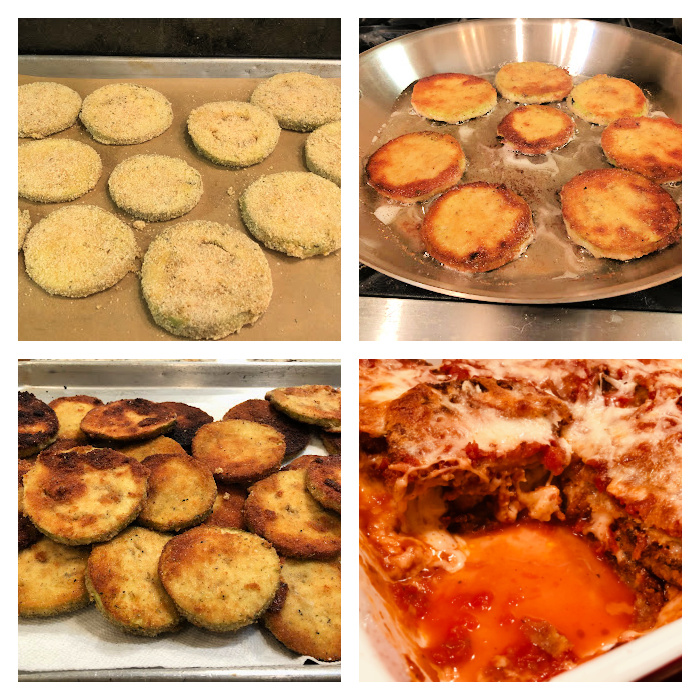
Am I breaking my own rule of never ever stating that a recipe is the best ever? Apologies for the convoluted phrase. But to answer my own question, no I am not. Because I was NOT the one who chose the name. It was published as such in Saveur magazine. You can read the interesting article clicking here. My beloved husband found it, showed it to me and said “we should probably give it a try.” Even though we alternate cooking dinner – one day he cooks, next day I do – he thinks I should be the one venturing in new territories. Which is totally fine with me. The problem with this recipe is that it will have you fry countless slices of breaded eggplant. It seemed like an ordeal and with a high chance of disappointment in the end: a heavy portion of greasy eggplant loaded with cheese. But after reading the article, I decided to humor the husband and give it a go. I tell you one thing: I was wrong. This was one OUTSTANDING eggplant parmigiana, and worth all the work.
For the sauce: 2 (28-oz.) cans plum tomatoes with their juices 3 Tbsp. extra-virgin olive oil 6 large garlic cloves, peeled (I used finely minced celery in its place) Kosher salt Freshly ground black pepper
For the eggplant: 3 large eggs Kosher salt 1¼ cups dried plain fine bread crumbs 1 Tbsp. dried Italian seasoning, or equal parts dried basil, dried rosemary, and dried oregano 3 medium eggplants (about 3 lb. total), mostly peeled except for a few strips of skin, sliced into thin rounds slightly thinner than ¼ in. About 1 cup extra-virgin olive oil 1½ cups (about 10½ oz.) shredded mozzarella cheese (not fresh) 3 Tbsp. finely grated Pecorino Romano
Make the sauce: In a blender, pulse the tomatoes and their juices until just slightly chunky. In a pot over medium-low heat, add the oil and garlic (or celery), and cook, stirring occasionally, for a couple of minutes. Pour in the puréed tomato mixture and season with a generous pinch each of salt and pepper. Bring to a gentle simmer and cook, stirring frequently, until thickened slightly, at least 1 to 1½ hours. The sauce can be cooled and refrigerated for up to 2 days.
Bread the eggplant: In a wide shallow bowl, beat the eggs with 1 tablespoon water. Season with a generous pinch of salt. In a second baking dish or bowl, stir together the bread crumbs, Italian seasoning, and 1⁄2 teaspoon salt. Working with one or two at a time, dredge the eggplant slices in the egg wash and let the excess drip back into the bowl. Transfer to the bread crumbs and coat very lightly on each side. Line a large baking sheet with a few layers of paper towels and set by the stove. In a large high-sided skillet over medium-high heat, heat ½ cup oil until shimmering. Turn the heat down to medium and add some eggplant slices in a single layer until the skillet is full. Cook, turning once, until well browned on each side, about 6 minutes total. Transfer to the prepared baking sheet. Repeat with the remaining eggplant, working in batches as needed and adding a little more oil every other batch, or as needed.
Heat the oven to 400F.
In a 9-by-13-inch baking dish, ladle ½ cup plus 2 tablespoons sauce into the bottom. Cover the sauce with a single layer of eggplant (start with the thickest ones on the bottom and save the prettiest slices for the top). Ladle another ½ cup sauce on top, spreading it evenly. Sprinkle with about 1⁄3 cup plus 2 tablespoons mozzarella and 1 tablespoon Pecorino. Add another layer of eggplant and repeat this process until you’ve reached the final layer of eggplant. Top this layer only with ½ cup sauce, a final thin layer of mozzarella, and some Pecorino. (Reserve any remaining sauce for another use.) At this point, the eggplant parmigiana can be refrigerated, covered, for up to 1 day.
Bake, uncovered, until the cheese is melted and bronzed in places and the sauce is bubbling around the edges, about 20 minutes (add about 10 minutes if your dish was previously assembled and chilled). Remove and let cool slightly. Slice into squares and serve warm.
Comments: I am normally a lot more lax when I follow a recipe, and don’t worry about careful measurements (unless it is baking). But in this particular case I decided to follow it to a T and measured every component. Once the baking dish was fully assembled with the eggplant, sauce and cheese, I was quite skeptical about the outcome, because it did not look luscious enough. But I have to agree, when you follow the recommended amounts of sauce and cheese, and deal with the eggplant slices exactly as advised, the final dish is pretty amazing. The taste of the eggplant comes through without being “suffocated” by sauce and cheese. It is satisfying but not heavy. We are still talking about how good it was. Added bonus: leftovers kept frozen for a week tasted almost better with a slow defrost in the fridge and a brief warming in a low oven…
If you have a vegetarian friend to entertain, look no further. The main dish of your menu is decided!
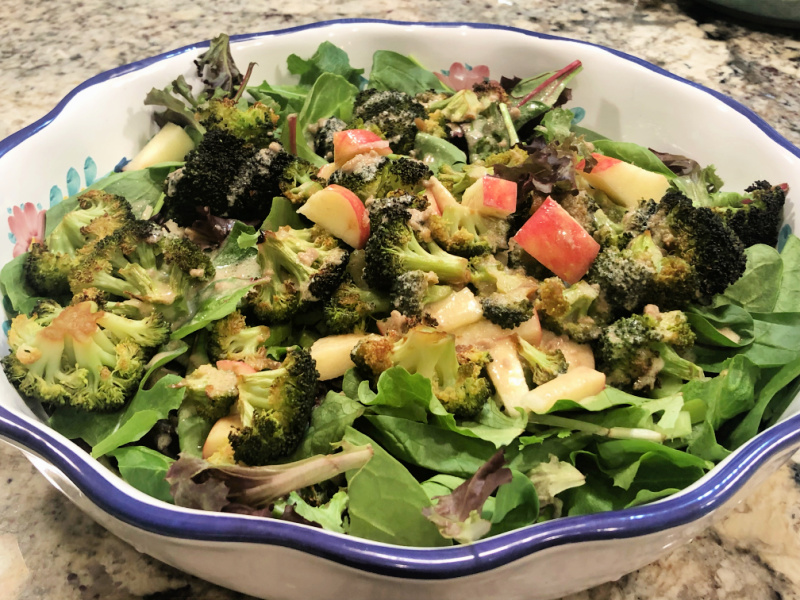
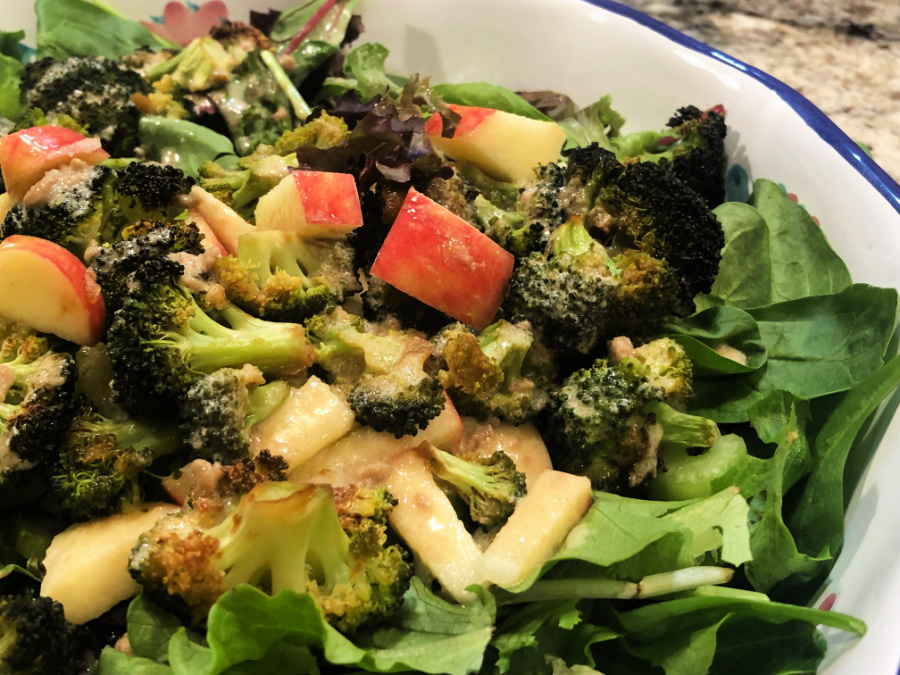
Easily makes it into the OMG FILES. Everything goes together in perfect harmony, so my advice is not to skip any of the ingredients. Broccoli has that funky nature that people love or hate, but even if you are in the latter group, the apples act as the perfect partner. Like couples that make each other shine a little brighter. I don’t really have a broccoli issue, but maybe some of my readers do, so don’t let that stop you from trying this recipe.
ROASTED BROCCOLI AND APPLE SALAD WITH TAHINI DRESSING (from the Bewitching Kitchen, adapted from several sources)
for the broccoli: Broccoli florets, enough to cover a quarter-sheet pan 2 tablespoons soy sauce 1 tablespoon maple syrup salt and pepper to taste
for the dressing: 1 tablespoon grapeseed oil 3 tablespoons lemon juice 1 to 2 tablespoons tahini 2 tablespoons apple cider vinegar 2 teaspoons maple syrup 1 teaspoons Dijon mustard
for the salad: greens of your choice (baby spinach, spring mix, baby arugula) apples, cored and diced (I used Honeycrisp)
Heat the oven to 420°F. Line a baking sheet with parchment paper or non-stick aluminum foil. Place the broccoli in a bowl, toss with the soy sauce and maple syrup, season with salt and pepper. Spread on the baking sheet and bake for about 25 minutes, moving them around half-way through roasting. Remove from the oven and let it cool still spread out, so they don’t steam and get mushy.
In a small bowl, whisk together the dressing ingredients. Set aside. Assemble the salad: add all the ingredients to a large bowl, drizzle the dressing and toss gently. Adjust seasoning with salt, if needed.
Comments: We had this salad twice already, the second time I’ve added roasted slivered almonds and dried cranberries, and it was even better, so I recommend you include them if you like. The inclusion of broccoli makes it more substantial and if you are vegetarian or vegan, a hearty piece of bread will be all you need to call it dinner. Sourdough dipped in balsamic vinegar plus olive oil would be a match made in Vegan Heaven.





 Bewitching Kitchen