YOGURT AND PISTACHIO SOURDOUGH

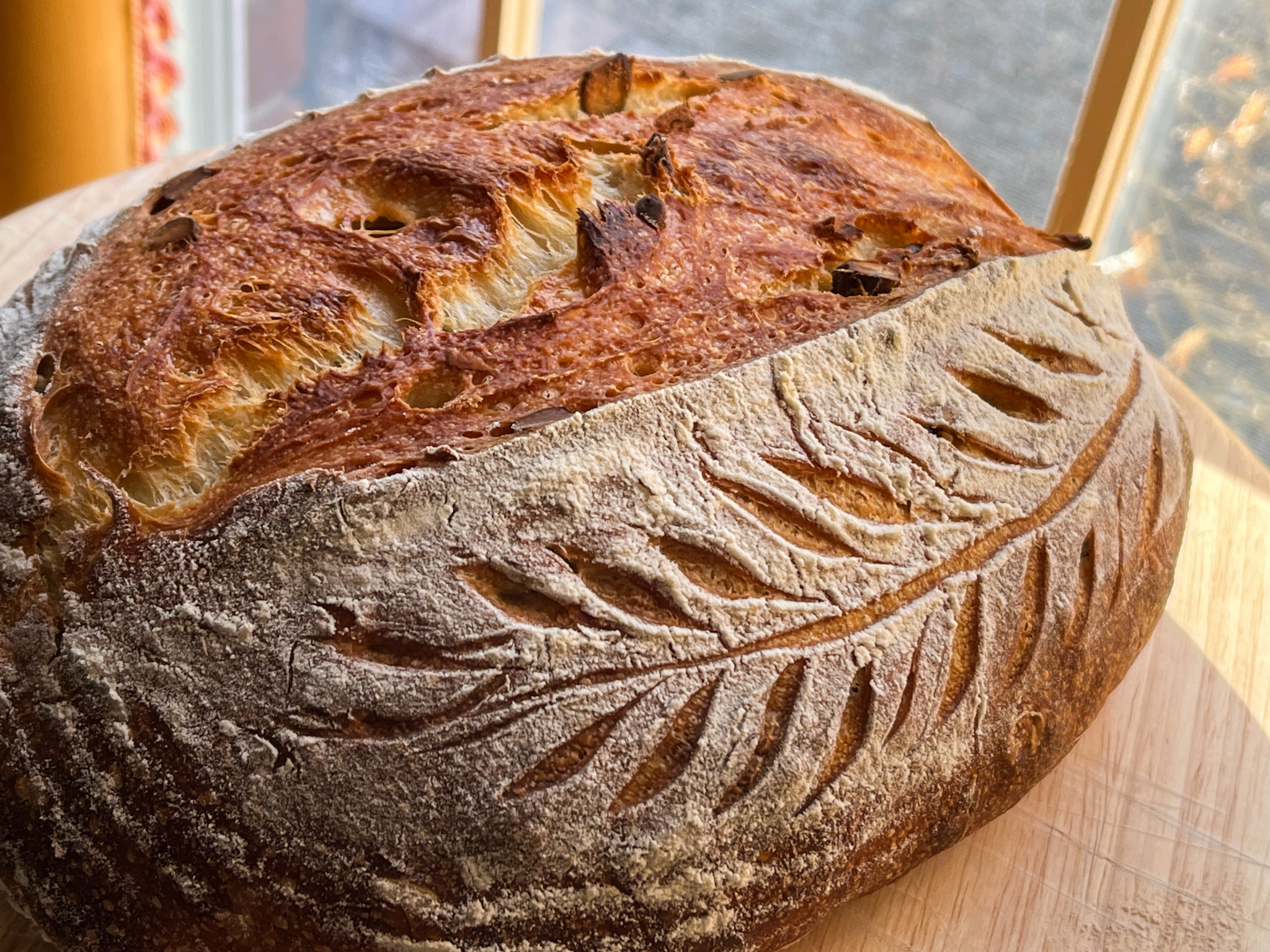
Inspiration for this delicious bread came from the one and only Elaine Boddy, through her book called EVERYDAY SOURDOUGH which you can find here. I made just a few modifications in the formula (she used walnuts, I wanted to incorporate pistachios), and the method, because I always leave the dough in the fridge overnight and bake first thing in the morning. Her book is absolutely full of great ideas, and I have reviewed it right after publication (check it out in this post).

YOGURT AND PISTACHIO SOURDOUGH
(slightly modified from Everyday Sourdough)

75 g sourdough starter at 100% hydration
240g water
125 g low-fat yogurt
500 g white bread flour
50 g pistachios, coarsely chopped
10 g salt

Mix all ingredients in the bowl of a KitchenAid type mixer fitted with the dough hook. Knead on low speed for about 4 minutes. Transfer to an oiled bowl and let proof at room temperature for 4 and a half hours, with folds every 45 minute or so, no need to be precise.

After the last fold, keep it at room temperature for a full hour, shape as a round boule or batard, and place in a banetton. Leave for another hour at room temperature, then retard it in the fridge.

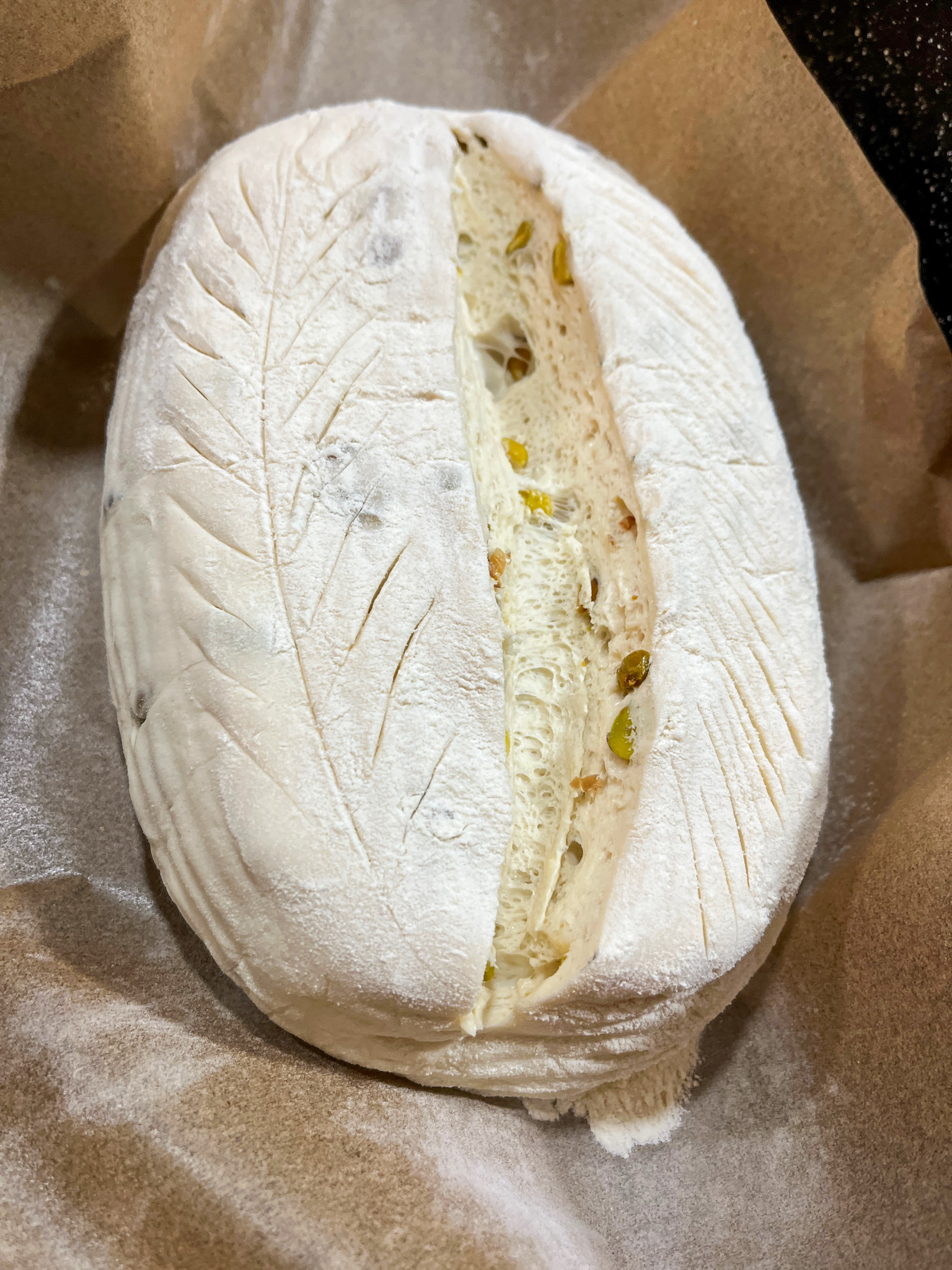
Next morning, bake at 450F straight from the fridge, slashing right before baking. Bake covered for 30 minutes, remove lid and bake for 15 minutes more. Allow to cool completely before slicing.

ENJOY!

to print the recipe, click here

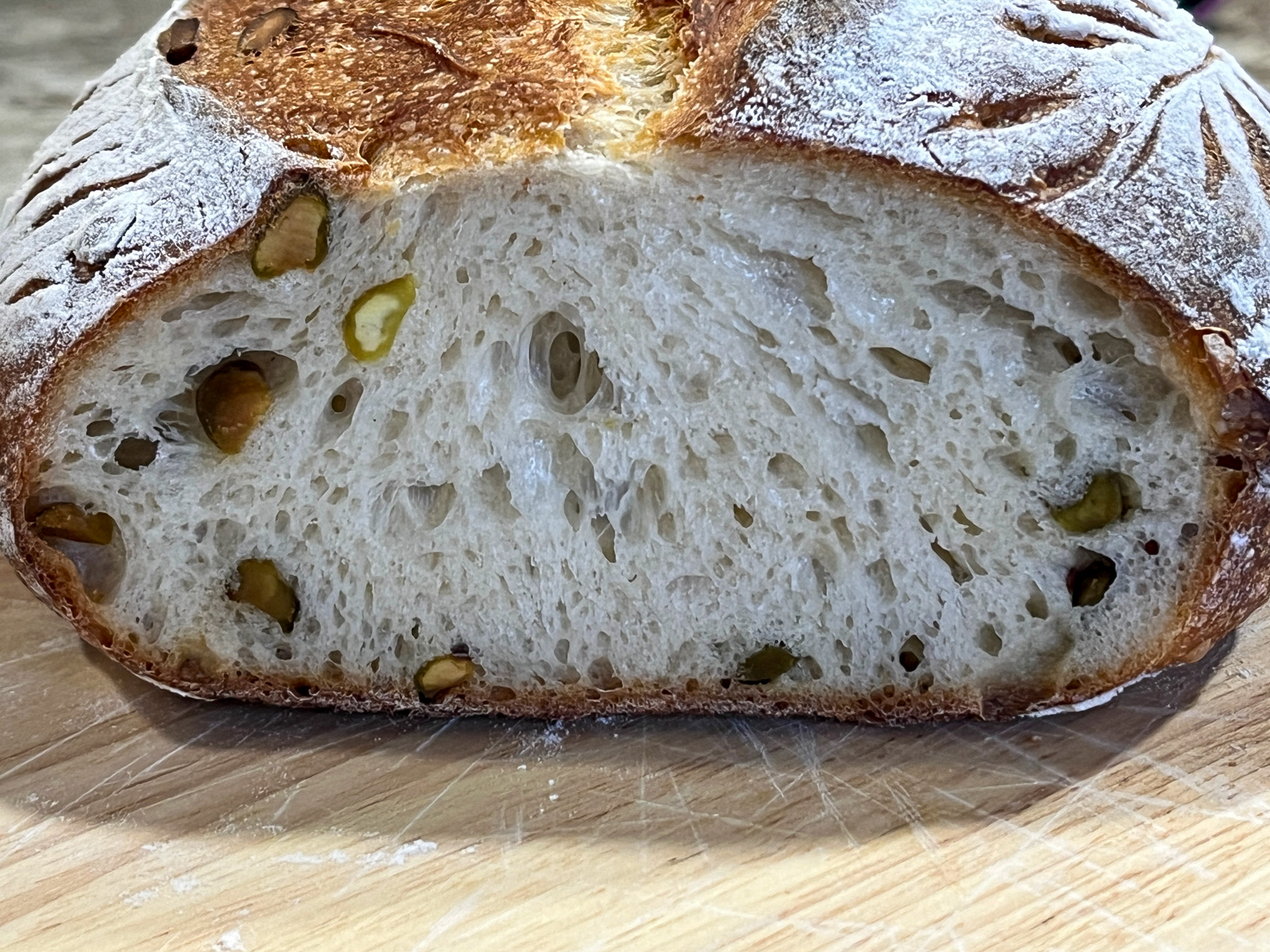
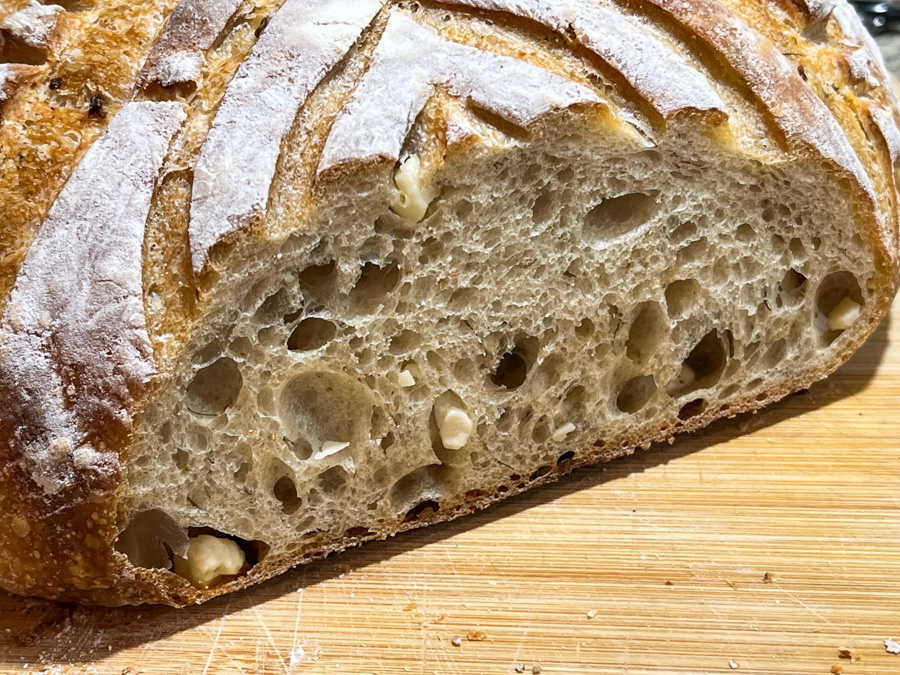
Comments: This is one tasty bread! The yogurt makes the crumb softer, with a nice taste that goes well with the pistachios. Husband adored it, and so did I… Huge thank you, Elaine, for allowing me to publish this little variation of your recipe!

ONE YEAR AGO: Chinese-Style Orange Chicken goes Light

TWO YEARS AGO: Roasted Cauliflower with Chickpeas and Quinoa

THREE YEARS AGO: A Savory Phyllo Pie

FOUR YEARS AGO: Nut-Free Lady Grey Macarons

FIVE YEARS AGO: Mini-Heart Cakes for your Valentine

SIX YEARS AGO: Blue Moon Milk

SEVEN YEARS AGO: Slow-Cooked Chicken Meatballs

EIGHT YEARS AGO: Zesty Flourless Chocolate Cake

NINE YEARS AGO: Maple Pumpkin Pecan Snacking Cake

TEN YEARS AGOSilky Gingered Zucchini Soup

ELEVEN YEARS AGO: Sweet Fifteen!

TWELVE YEARS AGO: Sesame and Flaxseed Sourdough

THIRTEEN YEARS AGO: Green Beans with Miso and Almonds

FOURTEEN YEARS AGO: Saturday Morning Scones

FIFTEEN YEARS AGO: White Bread

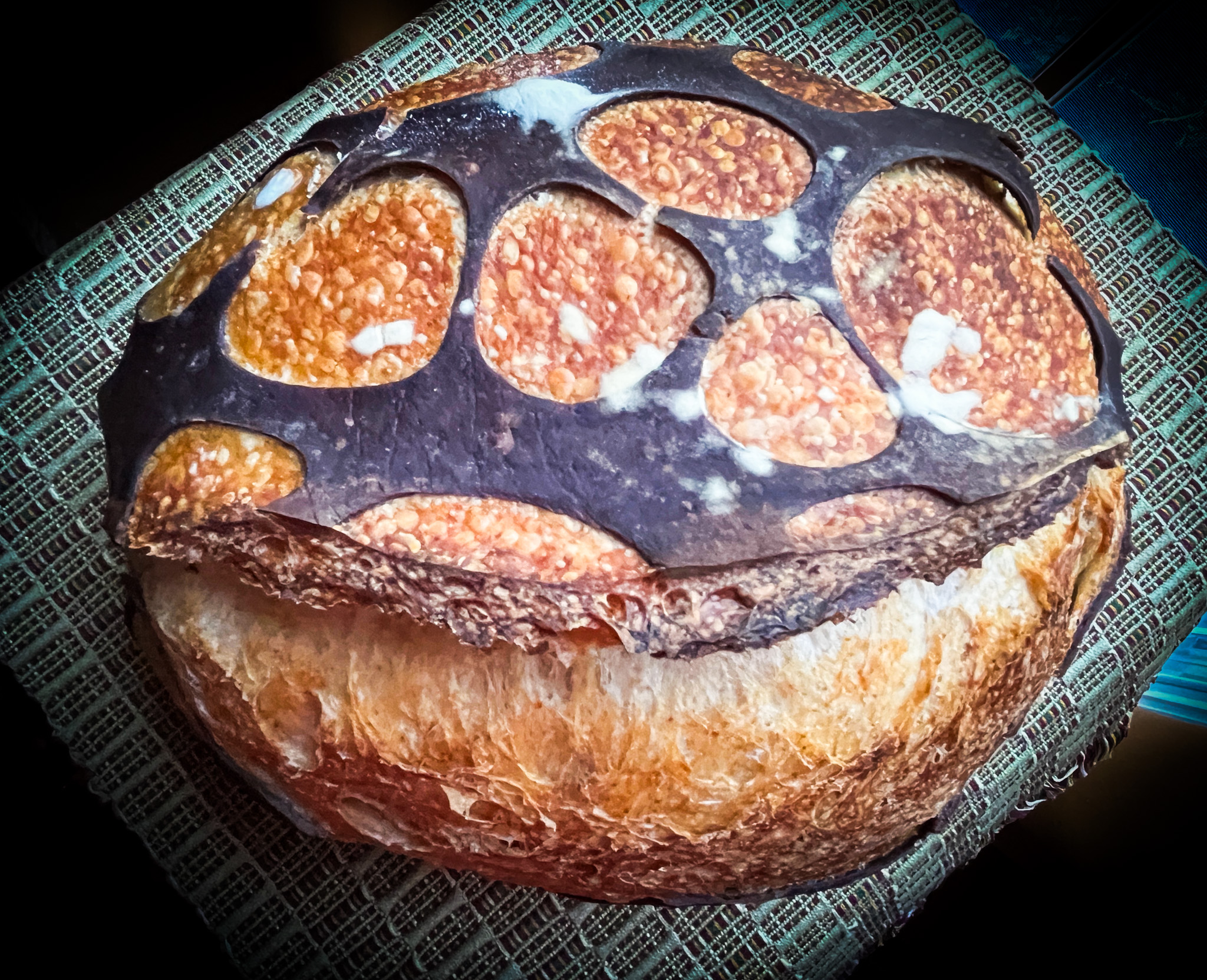
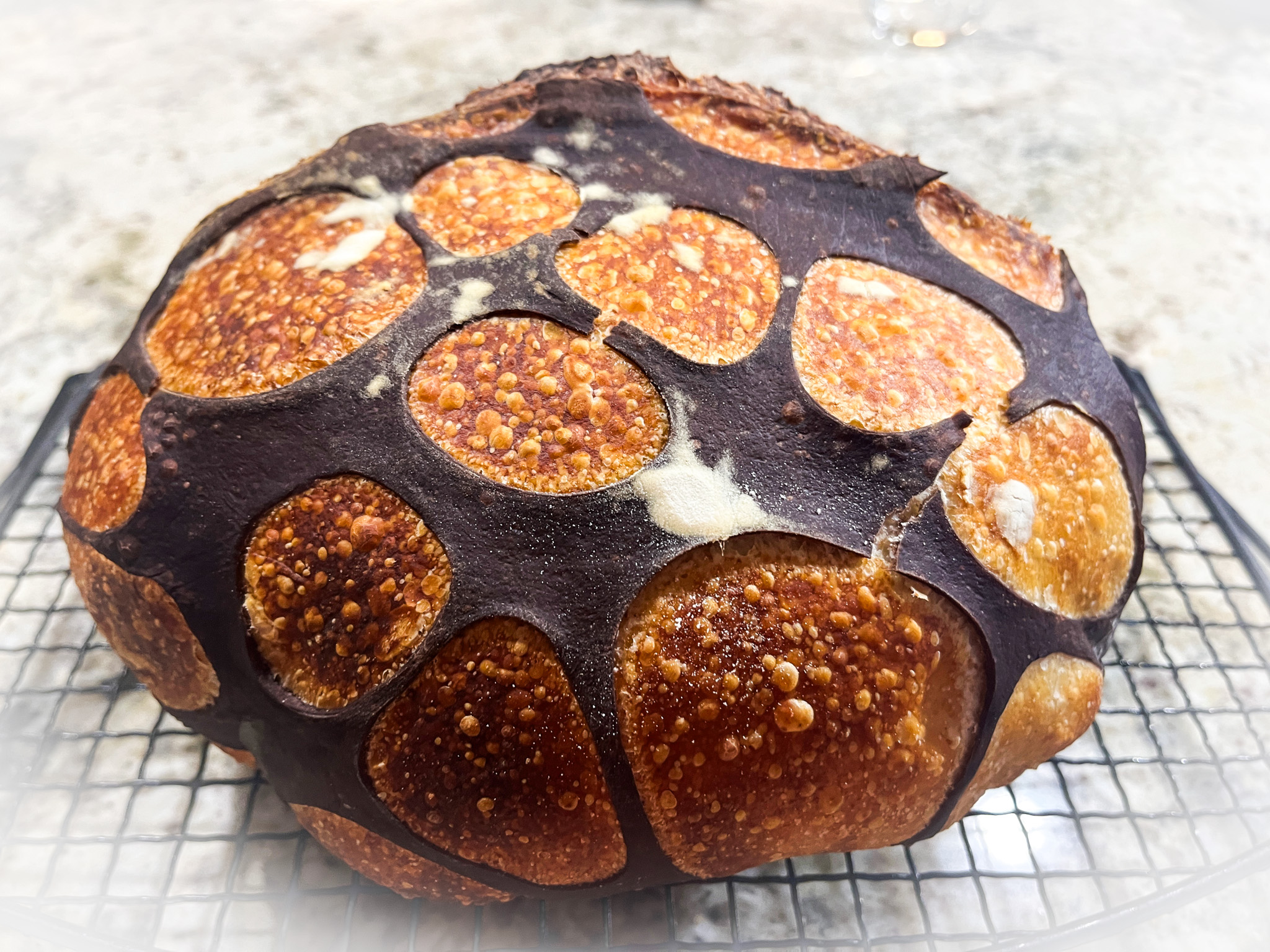
SOURDOUGH BUBBLE BREAD

This is my third attempt at covering sourdough with a thin layer of a cocoa-dyed wrap. I stumbled by accident on a youtube site that got me lost for a while in the many possibilities of sourdough fun. She does incredibly beautiful loaves, pushing the envelope with gilding the lily. This is my first adventure following her overall method. The Bubble Bread.

Contrary to my usual method, which I consider simple and straightforward, this one involved autolysis, adding the starter and salt at different stages, and a lamination step. I followed her recipe to a T, although I opted for making only one loaf instead of two. The real game changer was the way she handled the cocoa-dyed dough. That is a must!

SOURDOUGH BUBBLE BREAD
(slightly modified from Hungry Shots)

for the main dough:
88g sourdough starter (100% hydration)
388g bread flour
50g spelt flour
270g water
9g salt

for the cocoa-wrap:
85g discarded sourdough
85g all-purpose flour
30g water
7g cocoa powder

Mix water with the two types of flour until combined. Leave at room temperature, covered, for one hour. Add the starter and mix until combined. Leave for 1 hour at room temperature. Add the salt and mix by kneading gently for about 4 minutes until incorporated. Leave at room temperature for 1 hour.

Spray a little water on your countertop and place the dough over it. Do a set of stretch and folds, and let it proof for one more hour at room temperature.

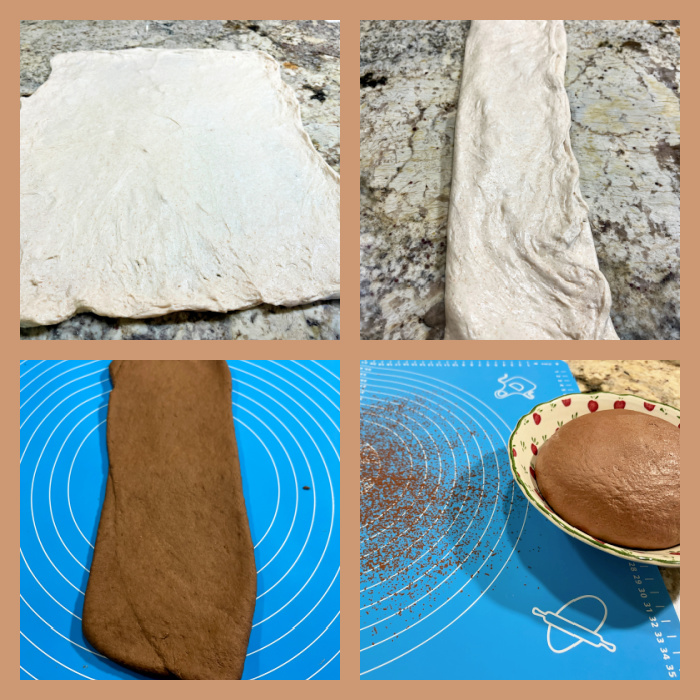
Laminate the dough (you can watch her youtube video if you have never done it). Allow it to rest for 90 minutes. Right after lamination, make the cocoa-dyed dough by mixing all the ingredients and kneading until fully smooth. To help with flexibility of the dough, roll it thinly with a rolling pin, fold it, and knead it again. Make sure the dough is very smooth and pliable before you form is into a ball and let it ferment at room temperature until you are ready to cover the dough with t.

Go back to the main dough: Do three sets of gentle foil colds (watch her video for details). Do the first one, wait 30 minutes to do the second one, 1 hour to do the third one. One hour after the third coil fold is done, you are ready to shape the dough and cover it with the cocoa wrap.

Roll out the cocoa dough to an extension that allows you to wrap the whole bread. Cut circles of different sizes with a cookie cutter. Shape the main dough as a batard (or round if you prefer), cover it with the cocoa dough, and place in the banneton. Proof for 30 minutes at room temperature, then place in the fridge overnight.

Next morning, heat oven to 450F. Invert the dough over parchment paper, make a deep slice off-center, and bake covered in a Dutch oven for 30 minutes, remove the cover and bake for 20 minutes more. Allow it to cool completely before slicing.

ENJOY!

to print the recipe, click here

.

Comments: This was so much fun to make! I have tried to cover sourdough with a dark wrap using the pie lattice cutter, but I did not care for the way it turned out (see it on this post of my past). However, the key is making the dough extensible enough, and that is achieved by thorough kneading, rolling, kneading again. If you go through the process, your outcome will be much better.

I would cut holes of different sizes next time, some a lot smaller, like she did, but this time I was a bit too anxious and nervous about the whole thing, so I kept is simple. Used only two sizes of circles. I could not take pictures of the wrapping of the dough, as I was alone in the house and it was impossible to do it on my own, but her videos show it all in great detail. Check the bubble bread video here.

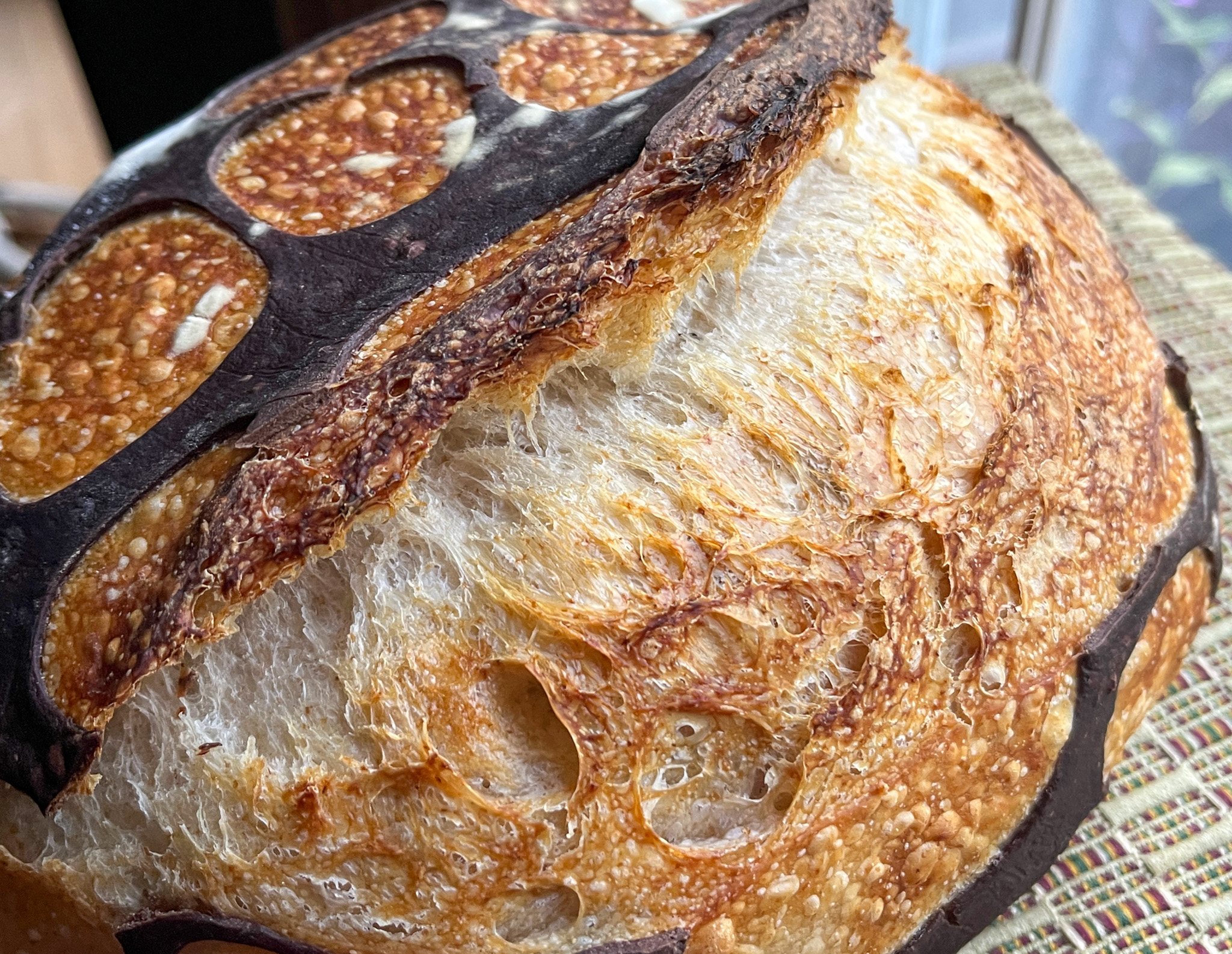
The bread had amazing oven-spring, particularly considering that the wrapped dough constrains it quite a bit. As to the crumb, it was very moist and tender, in fact the husband professed it to be his very favorite of this year! Can you say mission accomplished?

I am not convinced that the lamination and coil-folding are absolutely necessary to bake this type of bread, but definitely the handling of the cocoa dough will be key. I hope you give this method a try, it is so cool to see the outcome when you get that lid open after 30 minutes!

ONE YEAR AGO: Watermelon Salad

TWO YEARS AGO: Kashmiri Chicken Thighs

THREE YEARS AGO:  A Vegan Trilogy

FOUR YEARS AGO: The Mystifying Hurricane Roll

FIVE YEARS AGO: Pop-Tarts with Strawberry Balsamic Jam

SIX YEARS AGO: Ptichye Moloko, a Russian Dessert

SEVEN YEARS AGO: Cheesy Low-Carb Zucchini Tarts

EIGHT YEARS AGO: Blogging Hiatus

NINE YEARS AGO: Apricots, Three Ways

TEN YEARS AGO: Up Close and Personal with Kale

ELEVEN YEARS AGOBlack Berry Cherry Sorbet

TWELVE YEARS AGO: Asparagus Pesto

THIRTEEN YEARS AGO: Chocolate and Chestnut Terrine

FOURTEEN YEARS AGO: Under the spell of lemongrass

FIFTEEN YEARS AGO: Greens + Grapefruit + Shrimp = Great Salad!


FRESH DILL AND FETA SOURDOUGH

A match made in heaven and materialized in the Bewitching Kitchen! We were lucky to get a huge bag of fresh dill from a departmental colleague and I had some feta cheese hanging in the fridge. One thing led to another and here we are!

FRESH DILL AND FETA SOURDOUGH
(from the Bewitching Kitchen)

475g white bread flour
25g whole-wheat flour
9g salt
350g water
65g sourdough starter at 100% hydration
2 tablespoons fresh dill, minced (or amount to taste)
50-100g feta cheese, crumbled

Make the levain mixture about 6 hours before you plan to mix the dough. It should be very bubbly and active.

When you are ready to make the final dough, place the water in the bowl of a KitchenAid type mixer and dissolve the starter in it, mixing with a spatula briefly, then add the two types of flour, and the salt. Turn the mixer on with the hook attachment and knead the dough for 3 minutes at low-speed all the time. Add the dill, knead for another minute to incorporate. If the dough is too sticky, add 1/4 cup flour, you want the dough to start clearing the sides of the bowl, but still be sticky at the bottom.

Remove from the machine, and transfer to a container lightly coated with oil, add the feta and gently mix it in. Don’t worry about incorporating it, it will all go into the dough as you fold it. Cover lightly with plastic wrap and allow it to ferment for 4 hours, folding every 45 minutes or so. After four hours bulk fermentation, shape the dough as a ball, and place, seam side up, in a lightly floured banetton. Leave at room temperature one hour, and then place in the fridge overnight, from 8 to 12 hours.

Next morning, heat the oven to 450F. Invert the dough over parchment paper, rub gently tapioca flour on the surface. Score with the pattern of your choice and bake at 450F for 45 minutes, preferably covered for the first 30 minutes to retain steam. Cool completely over a rack before slicing.

ENJOY!

to print the recipe, click here

Comments: For the scoring of the surface I used a combination of razor blade and scissors. The bread had impressive oven spring, but I liked the way the design ended up. As to the flavor, I noticed that the dill came through stronger on the second day of the loaf sitting at room temperature. Usually in the evening of day #2 we slice what is left and freeze for later, so that’s what we did.

Really nice to bite into a little piece of feta cheese…..


ONE YEAR AGO: Marinated Chickpeas with Slow-Roasted Red Peppers

TWO YEARS AGO: Passionfruit Millionaire’s Shortbread

THREE YEARS AGO: Chai-Mango Rosette Macarons

FOUR YEARS AGO: Common Table, Something New in My Life

FIVE YEARS AGO: The Daisy, a Bread with Brioche Alter-Ego

SIX YEARS AGO: Pork Tenderloin, Braciole Style

SEVEN YEARS AGO: Raspberry Buckle

EIGHT YEARS AGO: Seafood Gratin for a Special Dinner

NINE YEARS AGO: Cooking Sous-Vide: Sweet and Spicy Asian Pork Loin

TEN YEARS AGO:  Farewell to a Bewitching Kitchen

ELEVEN YEARS AGO: In My Kitchen. June 2012

TWELVE YEARS AGO: Goodbye L.A.

THIRTEEN YEARS AGO: 7-6-5 Pork Tenderloin

CURRY SOURDOUGH WITH SESAME SEEDS

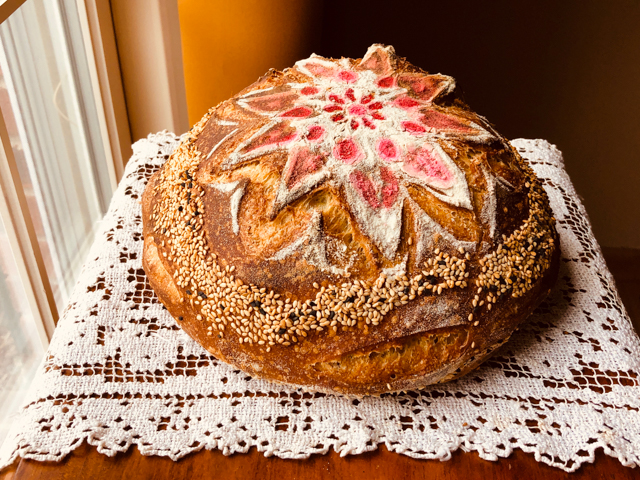
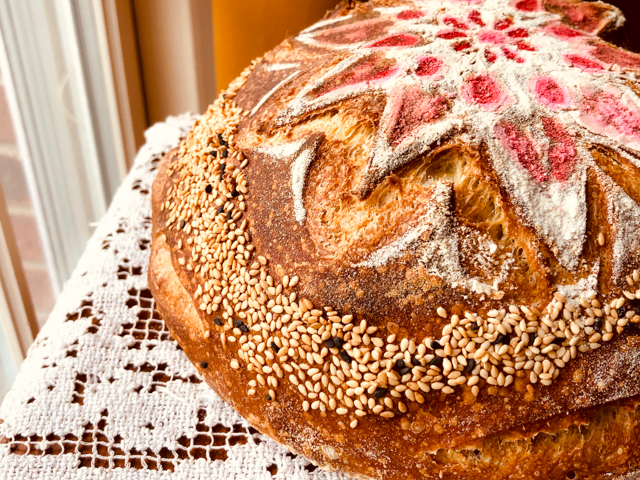
Vadouvan Curry once again joined our sourdough bread. This time I went a little crazy and tried two new things in the same loaf. Inspired by amazing stuff I see on Instagram, I decided to use a stencil, some luster powder, a razor blade, and a little edge decoration with sesame seeds.

PAINTED CURRY SOURDOUGH WITH SESAME SEEDS
(from the Bewitching Kitchen)

385g white bread flour
16g spelt flour
1/2 tsp Vadouvan curry (or any curry you like)
8g salt
280g water
65g sourdough starter at 100% hydration

optional for decoration:
egg white + a little water (egg wash)
sesame seeds (I used a mixture of white and black)
luster powder + vodka

Make the levain mixture about 6 hours before you plan to mix the dough. It should be very bubbly and active.

When you are ready to make the final dough, place the water in the bowl of a KitchenAid type mixer and dissolve the starter in it, mixing with a spatula briefly, then add the two types of flour, the curry and the salt. Turn the mixer on with the hook attachment and knead the dough for 4 minutes at low-speed all the time. If the dough is too sticky, add 1/4 cup flour, you want the dough to start clearing the sides of the bowl, but still be sticky at the bottom.

Remove from the machine, and transfer to a container lightly coated with oil, cover lightly with plastic wrap and allow it to ferment for 4 hours, folding every 45 minutes or so. After four hours bulk fermentation, shape the dough as a ball, and place, seam side up, in a lightly floured banetton. Leave at room temperature one hour, and then place in the fridge overnight, from 8 to 12 hours.

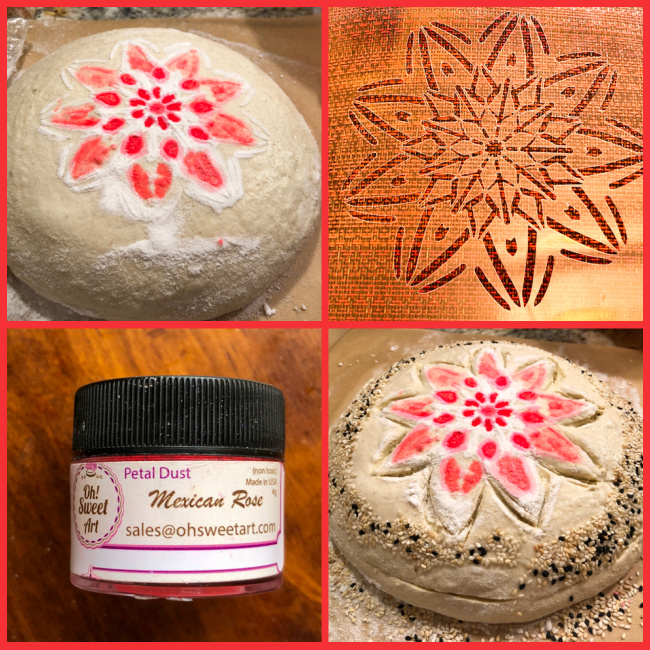
Next morning, heat the oven to 450F. Invert the dough over parchment paper, place your chosen stencil over it, and rub gently white flour on the design. Paint the details with a bright color using luster powder diluted with vodka. You need it to be a bit on the thick side, and don’t worry about precision, it will more or less mix with any flour bits around it. Do not worry. Paint a band around the perimeter of the bread with egg wash and gently press sesame seeds all over it. Slash quickly with a razor blade according to the design of your stencil, so that when it expands in the oven it won’t affect too much the design.

Bake at 450F for 45 minutes, preferably covered for the first 30 minutes to retain steam. Cool completely over a rack before slicing.

ENJOY!

to print the recipe, click here

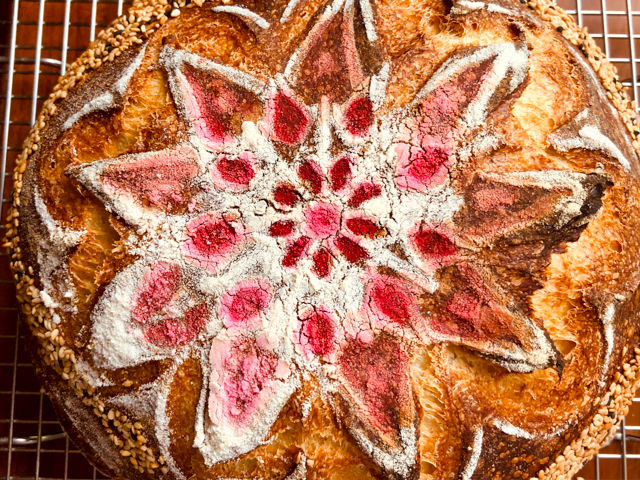
Comments: The trick about painting the surface of the bread is keeping in mind the color will considerably change during baking. If you start with a brown, soft red, or golden, chances are they will almost disappear once the bread bakes. So if you like some contrast, pick something that will be super bright to start with. I used a luster powder called Mexican Rose, and it is wild. But it did bake to a shade I liked and very visible in the bread. Water alone won’ t be enough to stick the sesame seeds in a defined pattern, so use egg white instead.

Next I want to try a simple design made with a razor blade and couple it with the luster powder. It was a little tricky to join the stencil (with the required extra amount of flour on the surface) with the paint. But I am still pretty happy with the way it turned out for a first time.

ONE YEAR AGO: Chocolate-Crusted Passion Fruit Tart

TWO YEARS AGO: Lemony Shredded Brussels Sprouts with Almonds

THREE YEAR AGO: Savory Oatmeal with Bacon and Cheddar

FOUR YEARS AGO: Air-Fried Carrots, Two Ways (most popular post on my blog!)

FIVE YEARS AGO: Five Minutes in L.I.T (a tour of our laboratory!)

SIX YEARS AGO: Chicken Thighs with Artichokes and Capers

SEVEN YEARS AGO: Pea Pancakes with Herbed Yogurt

EIGHT YEARS AGO: Mushroom Stroganoff

NINE YEARS AGO: Tomato Sourdough

TEN YEARS AGO: Gamberetti con rucola e pomodori

ELEVEN YEARS AGO: Flirting with Orzo

FOR THE LOVE OF SOURDOUGH

It is amazing how a bread formula can be tweaked slightly and result in totally different outcomes. I share today nine versions of sourdough. They all start with the same composition (90% white bread flour; 10% whole-wheat, salt and sourdough starter). From this starting point, some get added flavor components, and the final outcome depends on how they were handled for scoring.

BASIC SOURDOUGH FORMULA
(from the Bewitching Kitchen)

470g white bread flour
30g whole-wheat flour (regular whole-wheat, spelt or rye)
10g salt
75g sourdough starter at 100% hydration
375g water

Make the levain mixture about 6 hours before you plan to mix the dough. It should be very bubbly and active.

When you are ready to make the final dough, place the water in the bowl of a KitchenAid type mixer and dissolve the starter in it, mixing with a spatula briefly, then add all flours and salt.  Turn the mixer on with the hook attachment and knead the dough for 4 minutes at low-speed all the time. You will notice the dough will gain quite a bit of structure even with just 4 minutes in the mixer. Remove from the machine, and transfer to a container lightly coated with oil, cover lightly with plastic wrap and allow it to ferment for 4 hours, folding every 45 minutes or so. Because the dough is already a bit developed from the initial time in the mixer, you should get very good structure after 3 and a half hours, or even sooner than that.

After four hours bulk fermentation, shape the dough as a ball, and place, seam side up, in a lightly floured banetton. Place in the fridge overnight, from 8 to 12 hours.

Next morning, heat the oven to 450F.

Invert the dough on a piece of parchment paper and score with a new razor blade, if so desired, or simply make a cut on the surface in the shape of a cross with a very sharp knife.

Bake at 450F for 45 minutes, preferably covered for the first 30 minutes to retain steam. You can generate additional steam by spraying the inside of the lid with water before closing the pan.  Cool completely over a rack before slicing.

ENJOY!

to print the recipe, click here

PANCH PHORON SOURDOUGH

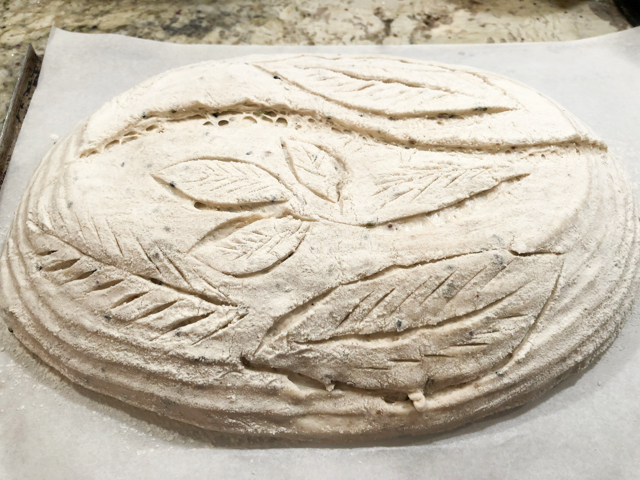
To the basic recipe above, add 1 to 2 tsp Panch Phoron, a five spice mixture from Eastern India, often used in Bengali cuisine. It is a mixture of equal parts of seeds of fenugreek, nigella, cumin, black mustard and fennel. I shaped this bread as an oblong loaf, and scored a pattern of leaves.

We loved this bread, in fact it was the first loaf that got us into a path of sourdough flavored with Middle Eastern spices.

VADOUVAN CURRY SOURDOUGH

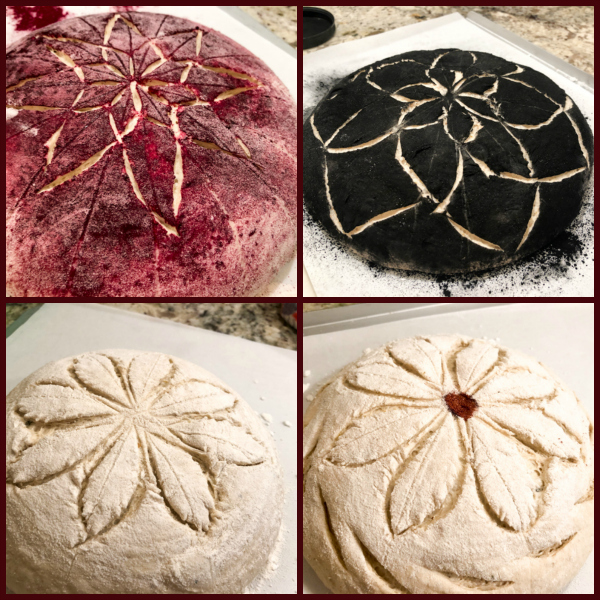
In these three loaves, 1 + 1/2 tsp of Vadouvan curry mix was added together with the flour and incorporated in the dough. The bread in the center had spelt as the minor flour component, the other two regular whole-wheat.

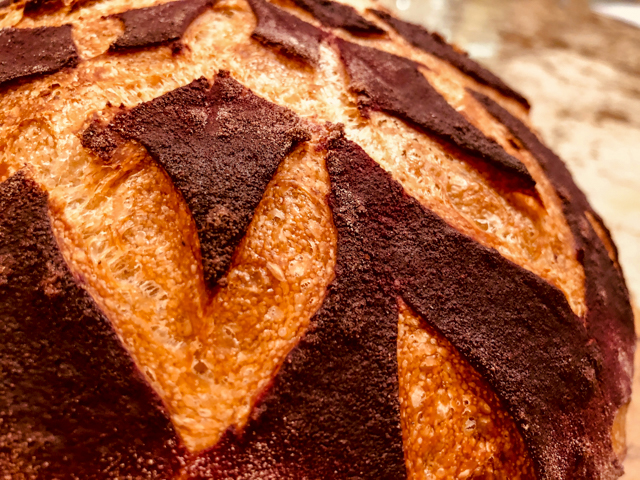
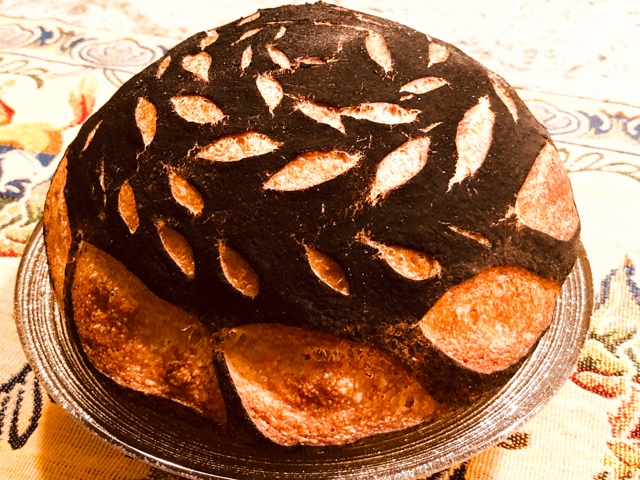
For the final decoration, I covered the first loaf with red beet powder, marked with a string a symmetry of 8 guide lines and then scored as shown. The beet color faded a bit during baking but still gave it a little hint of purple. The second loaf got a dusting with charcoal powder, the string marked 6 guide lines to create a slightly different type of design. Finally, the third loaf was dusted with flour, marked with 8 lines and scored as a flower. A little center of pearl dust was added but the color faded during baking (is that a recurring pattern for this baker?).

I love the charcoal and the beet powder effects, but be warned: they stain your fingers as you handle the bread, so when you cut a slice, make sure you don’t touch your face right after. No further questions on this subject. Please and thank you.

RAS-EL-HANOUT SOURDOUGH

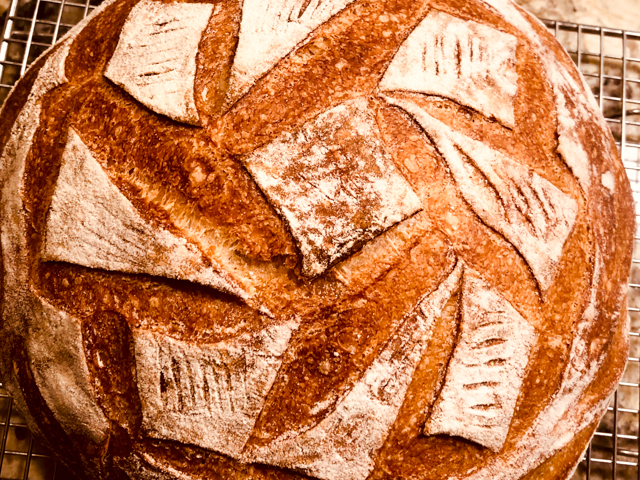
Exact same recipe using rye as the minor flour component, and 1+1/2 tsp Ras-El-Hanout in the formula. One of our favorite breads in this series. I should give credit to a baker from Israel who is a true magician with scoring. I follow him on Instagram (check him out here) and often try to make one of his cool designs. This is one example, that starts with a little square as shown below.

I am very fond of geometric-type scoring. I find it easier to do if I make a drawing on a piece of paper with the different steps because once that razor blade hits the surface of the bread… is game over! There is no “erasing” possible. Of course, during baking the design will be affected in unpredictable ways. I am still trying to figure out ways to minimize explosions.

ZA’ATAR SOURDOUGH

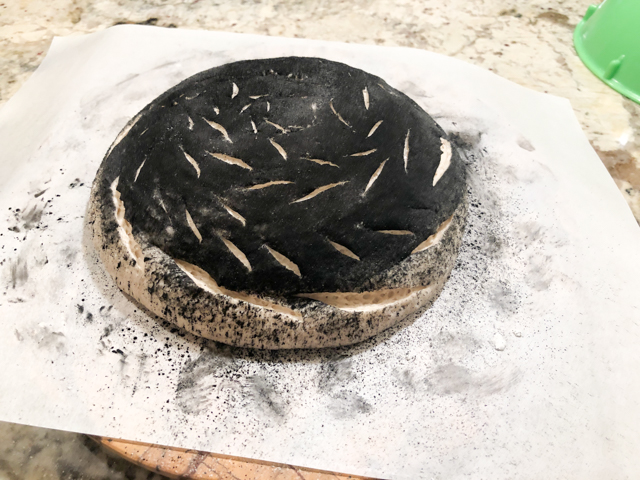
Basic recipe using spelt flour as the minor component and 1 + 1/2 tsp za’atar. The bread was coated with charcoal and I followed one of Mogi’s Dough Engineering scoring designs which he calls “reverse spiral”. Mine did not turn out as beautiful as his, but I still like it a lot. Here is what it looks like before baking.

He uploaded a video showing how to do it. It goes very fast, but after watching it (in awe) a few times, I felt ready to do it.

TAHINI SOURDOUGH

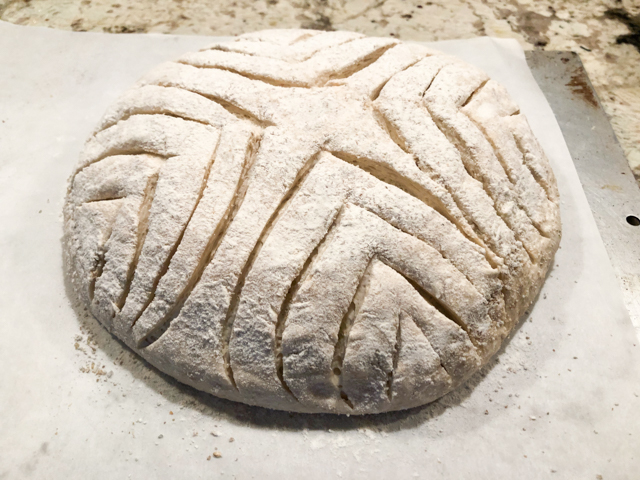
To the basic formula (with whole-wheat flour as minor component), I added 25g tahini, and adjusted the consistency with a little more flour after the initial mixing with the Kitchen Aid, as the tahini I used was reasonably fluid. The tahini gives a wonderful flavor. The scoring made the round loaf end up with a square shape after baking, pretty interesting.

You can see it starts pretty round, but the way the slashing opens up during baking substantially affects the final shape. I love using nut butters in sourdough, they bring a bit of fat to the composition and the crumb feels moist and tender. Along those lines I share another favorite version….

PEANUT BUTTER SOURDOUGH

Basic formula with spelt flour and 25g creamy peanut butter. This was one delicious bread, the smell during baking is something! The scoring was once again inspired by Mogi’s Instagram feed, and this time I used a powder red food dye that is fat-soluble (appropriate for chocolate work). That seemed to stand better during baking.

Very simple scoring, I used 8 guide lines made with a string, but you could definitely just improvise.

CELEBRATION OF LOVE SOURDOUGH

My final adventure following the footsteps of Mogi. This is a bread called Tu B’av (ט״ו באב), the Jewish holiday of love, similar to our Valentine’s Day. I made a simple sourdough with full white flour, and 1 tsp turmeric in the dough. The surface was dusted with white flour, a shower of turmeric, and the center was dyed with pitaya powder, which next time will be replaced by red dye powder. A round cookie cutter comes in very handy to contain the red dot. I am still struggling with how heavy a hand to use when adding colors, particularly the subtle ones as turmeric that might end up too similar to the crust. Once again my results are not as gorgeous as Mogi’s, but there is always next time!

So that’s all for now, my friends… This post, entitled For the Love of Sourdough, had to end with a bread to celebrate love, that feeling that keeps us together, staring at the future without fear.

ONE YEAR AGO: Brazilian Pao de Mel

TWO YEARS AGO: Stir-Fried Chicken in Sesame Orange Sauce

THREE YEARS AGO: Monday Blues

FOUR YEARS AGO: A New Way to Roast Veggies

FIVE YEARS AGO: Two Takes on Raspberries

SIX YEARS AGO: Spice Cake with Blackberry Puree

SEVEN YEARS AGO: Own Your Kitchen with Cappuccino Panna Cotta

EIGHT YEARS AGO: Chicken Parmigiana, the Thriller

NINE YEARS AGO: Wild Mushroom Risotto

TEN YEARS AGO: Tartine Bread:  Basic Country Loaf 

ELEVEN YEARS AGO:  Pugliese Bread