7-6-5 GRILLED PORK TENDERLOIN

Note added Feb 22nd, 2021: If you own a Weber type grill, it might get a lot hotter than other brands, and this method won’t work for you, unless you are able to control the heat down to 500F-550F. My friend Gary recommends a surface thermometer in case you’d like to monitor the temperature of your grill, and find hot spots.

The Boeing 777 is my favorite airplane, but the number to keep in mind when grilling pork tenderloin is 765, referring to the time it takes to grill it (7 + 6 + 5  minutes).   The original recipe was from an issue of Fine Cooking magazine (June 2002)  published as a general method to grill pork tenderloin, that’s adaptable to many different flavor profiles.  I’ve been making it ever since.

7-6-5- GRILLED PORK TENDERLOIN
(very loosely adapted from Pam Anderson)

2 pork tenderloins
1/4 cup olive oil
juice of 1/2 lemon
1 tsp aleppo pepper
salt

For the glaze:

1/2 cup orange marmalade
2 Tbs white wine vinegar
a little water
salt and pepper

Mix the olive oil, lemon juice, and aleppo pepper, rub all over the meat and let it stand in the fridge overnight or several hours.

Prepare the glaze by melting all ingredients in a small sauce pan. You want a reasonably thick consistency, so adjust the amount of water accordingly. Let it cool (you can prepare the glaze the day before).

Prepare a hot grill. Remove the meat from the marinade, brush it all over with the glaze, and season with salt. Place the meat on the grill, close the lid and grill for 7 minutes. Turn the pork tenderloin over, close the lid again, and grill for 6 minutes.  Don’t open the lid, just turn off the heat and keep the meat inside for 5 minutes. The internal temperature should be 145F to 150F. If not, close the lid and leave the meat for a few more minutes.  Remove the meat to a serving platter and let it rest for 5 minutes before slicing.

You can prepare the same recipe on a charcoal grill, just place the coals to one side, and when it’s time to turn the heat off, simply move the meat to the opposite side of the grill, with no coals underneath.

ENJOY!

to print the recipe, click here

Comments: The published recipe suggested brining the meat first, then brushing it with the glaze of your choice. I opted for a lemony marinade instead.  Pam Anderson offered three options on the glaze,  all using frozen fruit juice concentrate as the starting point.  We usually don’t stock those in the freezer, so I went with melted orange marmalade instead, adding a little vinegar to cut any excessive sweetness.   During grilling the sugar will impart a deep copper color to the meat, something that we all associate with great taste… and it had that for sure!   I served the meat over plain white rice, without any sauce, but with crisp-tender green beans and almonds, one of our favorite side dishes. Leftovers are great for sandwiches, fajitas, or simply re-heated in the microwave.  Give this recipe a try, and it might become one of your favorite weeknight options!

FARFALLE, FARFALLE

“Fahr-fah-lee.”  I love this word! So uplifting, it makes me smile… In my next life I want to be Italian. 😉

This recipe comes from The Splendid Table, from which I recently posted another recipe .  I don’t know about you, but even though I own a big collection of cookbooks, when I pick a recipe from one of them the chances are that I’ll make two or three in a row.

SWEET ROASTED BUTTERNUT SQUASH AND GREENS OVER BOW-TIE PASTA
(from The Splendid Table)

5 qt salted water

For the roasted veggies
3 pounds butternut squash, peeled, seeded, and cut into bite-sized chunks
1 medium onion, cut into chunks
2 big handfuls of escarole or spring mix of your choice
1/3 cup basil leaves, torn
16 large sage leaves, torn
2 garlic cloves, chopped
1/3 cup olive oil
1/4 tsp red pepper flakes
1 Tbs brown sugar
salt and freshly ground black pepper

For pasta finish
1 pound bow-tie (farfalle) pasta
1/2 cup half and half
6 ounces asiago cheese

Turn the oven to 450F and bring water to boil.  Toss all the ingredients for the roasted veggies in a big bowl, place them in a shallow roasting pan (preferably in a single layer), and place in the oven for 25 minutes, or until the squash is tender.  Toss the veggies around a couple of times during roasting.

Cook the pasta until al dente, drain in a colander.  Once the squash is tender, turn the broiler on for a few minutes if you want to brown it slightly. The greens will be fully wilted, and almost crisp.

Scrape everything into a serving bowl, add the half and half, hot pasta and 1 cup of the cheese.  Toss to blend, adjust seasoning, and serve, adding more cheese on top if you want.

ENJOY!

to print the recipe, click here

receita em portugues ao final da segunda pagina

Comments: This preparation perked my interest for two reasons. First, anything that joins pasta and butternut squash turns me on, gastronomically speaking. 😉 Secondly, I was curious about roasting greens together with the squash, something I’d never done before.  Since the same book had me frying a boiled egg with a happy ending, why not roast a few pieces of frisee?

We both loved this pasta – even leftovers next day were still tasty.  To speed things up, I peeled and cut the squash early in the morning, so when we arrived from work all I had to do was put the pasta water to boil, turn on the oven and dinner was ready in 35 minutes. I gave myself a pat on the back!

Add to FacebookAdd to DiggAdd to Del.icio.usAdd to StumbleuponAdd to RedditAdd to BlinklistAdd to TwitterAdd to TechnoratiAdd to Yahoo BuzzAdd to Newsvine

Jump to the next page for a little story about butternut squash and the North Shore of Oahu….

Continue reading

HOISIN EXPLOSION

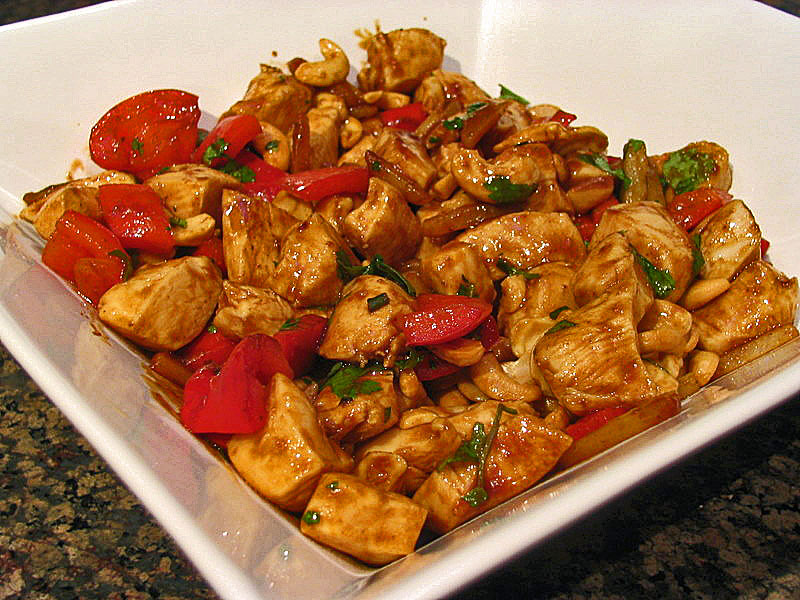
Last week I finished my third year of Mandarin, a challenging but rewarding journey!   To celebrate, I prepared a Chinese recipe for our dinner.   Cookbooks and websites sometimes mistreat ethnic cuisines: too often it’s  enough to finish a stir-fry with some soy sauce, cornstarch and then label it Chinese.   For the alternate, informed approach I reached for  Barbara Tropp, who was to Chinese cooking what Julia Child was to French cuisine: she studied it to the point of becoming an expert, and shared her knowledge through excellent writing.    Barbara Tropp’s “Modern Art of Chinese Cooking”  is a culinary masterpiece like no other on the subject, and if you have genuine interest in learning to prepare authentic Chinese dishes, you’ll need this book.

Here is what Tropp said about the recipe I chose:

Subtly sweet and rich, with a classic contrast of velvety chicken, slippery-crisp vegetables and crunchy nuts, it combines every technique you need to know to produce elegant, restaurant-style stir-frys. The taste explosion that makes this dish so appealing is a multi-regional affair.  Hoisin is a predominantly north Chinese condiment, chili is a Szechwanese touch, while wine used as it is here is an Eastern taste.”

I love it when a cookbook writer goes beyond providing recipes.  I am still saddened by her unfortunate death  when she was only 53 years old.

HOISIN-EXPLOSION CHICKEN
(adapted from Barbara Tropp)

1 pound chicken breast, cut in bite size pieces
1 large egg white
1 Tablespoon Chinese rice wine
1 tsp Kosher salt
4 cups water + 2 tsp peanut oil

1/2 cup whole blanched almonds or cashews
1 medium red bell pepper
6 ounces bamboo shoots, sliced
fresh cilantro leaves

Aromatics
2 tsp garlic, finely minced
1 Tablespoon minced ginger
1 Tablespoon finely minced green onions
1/4 tsp dried red chili flakes

Liquid seasoning
3 Tablespoons hoisin sauce
1 + 1/2 Tbs Chinese rice wine
2 tsp soy sauce

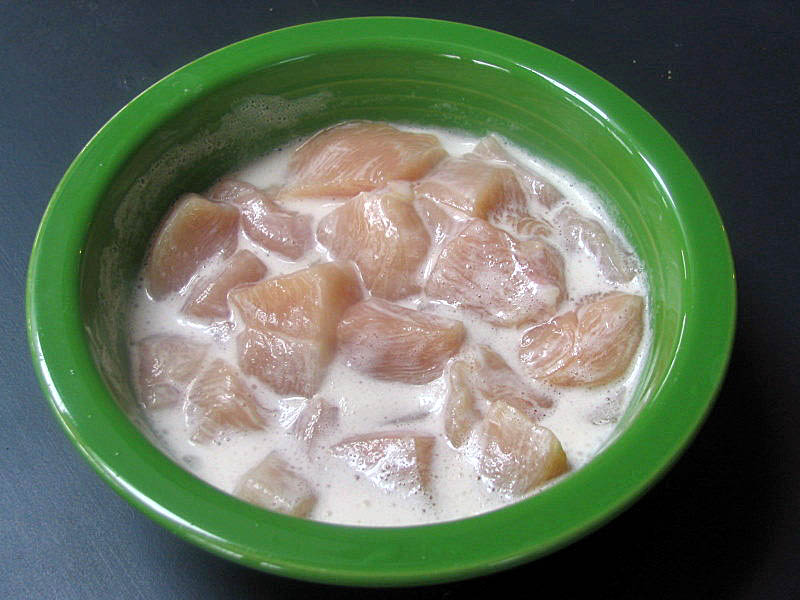
Mix the egg white, wine and salt and process until smooth and thick (30 to 60 seconds) in a food processor or blender.  Place the chicken in a bowl and add the egg white marinade over it, tossing well to completely coat the pieces. Refrigerate from 8 to 36 hours, the longer the better.

Toast the nuts in a 350F oven, or by gently frying them with a little bit of peanut oil on a non-stick skillet.  Do not allow them to burn. Reserve.

Cut the seeded red bell pepper into squares.  If using canned bamboo shoots, rinse them well and blanch for 10 seconds in boiling water – this will refresh their taste.  Cut in thin slices. The veggies and nuts can be prepared one day in advance. Mince the cilantro right before finishing the dish.

Combine all aromatics and mix well in a small bowl.  Mix all the liquid seasonings in another small bowl.  Reserve both.

Velveting the chicken:
Bring the water/oil to a simmer, do not allow it to go into full boil.  You want to see small bubbles forming around the rim of the water.  Stir the chicken to loosen the pieces slightly, and drop them in the water, stirring to separate them.   Simmer until they are about 80% cooked  – this should take about 20 seconds.  It’s important not to over cook the meat.  When in doubt, cook less.   Remove the pieces  to a plate with a slotted spoon.   Once velveted, the meat must be stir-fried right away.

Finishing the dish…
Heat a wok over high heat until hot enough to evaporate a bead of water on contact.  Add 2 tablespoons of oil and swirl it to glaze the bottom of the pan. When the oil is hot enough to sizzle one piece of bell pepper, add the peppers and the bamboo shoots to the pan, stir frying them briskly until they are evenly glossed with oil and heated through, about 1 minute.  Remove the vegetables to a dish.  Return the wok to the stove, add the remaining tablespoon of oil and swirl to coat the pan.  Add the aromatics, stir until fragrant, 15-20 seconds, add the liquid seasonings, and stir to combine.  Add the velveted chicken pieces and the vegetables, toss quickly to cook through, about 30 seconds.   Turn off the heat, add the nuts and the cilantro.   Adjust the seasoning and serve over white rice.

ENJOY!

(receita em portugues na proxima pagina)

to print the recipe, click here

Comments: This recipe calls for an important step in the meat preparation for stir-frying: “velveting.”   Tempting as it might be to skip it, don’t do it: the improvement in the texture will shock you! You’ll use an extra pan and spend a few more minutes in the overall preparation, but it is a small price to pay for textural perfection.  Barbara Tropp’s recipes are quite detailed, often extending over several pages, which some people may find a bit excessive.   I have a small dry-erase board on which I write down a condensed version of the recipe to take to the kitchen.  Interestingly enough, I originally got the board to practice writing Chinese characters, so using it for Chinese cooking seems like a natural move… 😉

I’ve made this recipe with water chestnuts instead of bamboo shoots, snow peas in addition to bell peppers, and peanuts instead of cashews. You can adapt it to what you have available, as long as you preserve the basic techniques. Like all stir fry recipes, once the ingredients are prepared, the cooking happens at lightening speed,  which is music to my ears on busy weekdays…

Add to FacebookAdd to DiggAdd to Del.icio.usAdd to StumbleuponAdd to RedditAdd to BlinklistAdd to TwitterAdd to TechnoratiAdd to Yahoo BuzzAdd to Newsvine

para portugues, siga o link

FLIRTING WITH ORZO

My Brazilian nature often predisposes me towards rice, but the more I cook orzo, the more I like it.   It might be more versatile than rice,  it cooks faster, and it’s  absolutely fool proof, all of which adds to its charm. The inspiration for this recipe came from an old Fine Cooking magazine, but I simplified it quite a bit  because the original seemed a tad too busy:  too many flavors fighting for attention.   This pared-down version was a winner!


ORZO WITH SHIITAKE MUSHROOMS AND SPINACH
(very loosely adapted from Fine Cooking magazine)

1 cup orzo
2 Tbs olive oil
1 shallot, finely diced
8 oz spinach leaves, stemmed, and coarsely chopped
4 oz fresh shiitake mushrooms, sliced (or dried, reconstituted with hot water)
1/2 lemon, juice and zest
salt and pepper
parmiggiano-reggiano (optional)

Start cooking the orzo on a large pot with salted water (it should take around 9 minutes).
Heat the olive oil on a large skillet and saute the shallots, lightly seasoned with salt and pepper.  Add the sliced shiitake mushrooms, saute until they start to get golden brown.   Add the chopped spinach, cook until it begins to wilt.  At this point, if the orzo is not cooked yet, turn the heat off and reserve.

When the orzo is almost cooked, remove 1/4 cup of the cooking water and reserve it.   Turn the heat back to medium on the skillet with the spinach mix, squirt lemon juice and zest, season with salt and pepper.  Drain the orzo and add it to the skillet, mixing well.  Add some of the pasta water if necessary.  Adjust seasoning with salt and pepper.  If desired, sprinkle parmiggiano-reggiano on top.

ENJOY!

to print the recipe, click here

Comments: For years I’ve made quick pan sauces for pasta with  the cooking water and some sauteed veggies.  Spinach is a constant player in such dishes, but this was the first time I chopped the leaves before sauteeing.   Voila‘:  it was much better!  Somehow, even with baby spinach, the whole leaves had a tendency to clump instead of reaching a nice distribution.   Live and learn.   😉

This was a quick dish to put together! It will drop into my regular rotation of meals for busy weeknights, keeping the orzo/spinach/lemon foundation and playing with other options: black olives, sundried tomatoes, roasted red bell pepper, artichoke hearts….

Add to FacebookAdd to DiggAdd to Del.icio.usAdd to StumbleuponAdd to RedditAdd to BlinklistAdd to TwitterAdd to TechnoratiAdd to Yahoo BuzzAdd to Newsvine

receita em portugues na proxima pagina….
proxima pagina

IMPROMPTU PASTA DINNER

It was a dark and stormy night… no, not really, but it was a busy day at work and we wanted to go home, get some comfy clothes, kick back and relax.  My night to cook: I pulled out a cookbook, but even browsing for recipes seemed like an herculean effort, so I opened the fridge searching for inspiration. Voila’: half a bunch of asparagus! In the pantry, I spotted a can of Muir fire-roasted tomatoes (love that stuff!).  It was all that I needed.  Dinner took shape in less than 20 min, resulting in two happy humans and an enjoyable evening ahead of us.

PASTA WITH ASPARAGUS COINS and TOMATOES
(from the Bewitching Kitchen)

1 shallot
1 T olive oil
fresh asparagus
1 small can Muir fire-roasted tomatoes
salt and pepper
grated parmiggiano-reggiano cheese
pasta of your preference

Set a large pot with salted water to boil.

Using a sharp knife, cut the asparagus into small coins, trying to get them in similar sizes, about 1/4 inch thick.  Dice the shallot.  Open the can of tomatoes.

Heat the olive oil in a large skillet, saute the shallots until translucent, immediately add the asparagus coins, and cook them in medium-high heat, moving them around. Season with salt and pepper, and try a bite after a couple of minutes.  They should be still very firm.   Add the tomatoes, cook for a few more minutes, adjust seasoning.

Meanwhile, cook the pasta until al dente.  Drain and add to the skillet with the asparagus/tomato sauce.  Cook them together for a minute or so, add parmiggiano on top and serve.

ENJOY!

to print the recipe, click here

Comments: Slicing asparagus in little coins is a fun way to enjoy it.  In Secrets of a Restaurant Chef, Anne Burrell made a salad of raw asparagus cut this way – I’ve been saving the recipe to try it when Spring comes.  Time for a little disclaimer:  we understand that buying asparagus in mid-winter is politically incorrect.  Yes, they traveled a long distance.  But, we needed an asparagus-fix. It might even speed the arrival of Spring!   😉