ASIAN STYLE SHORT RIBS

Vegetarians & vegans, avert your eyes!

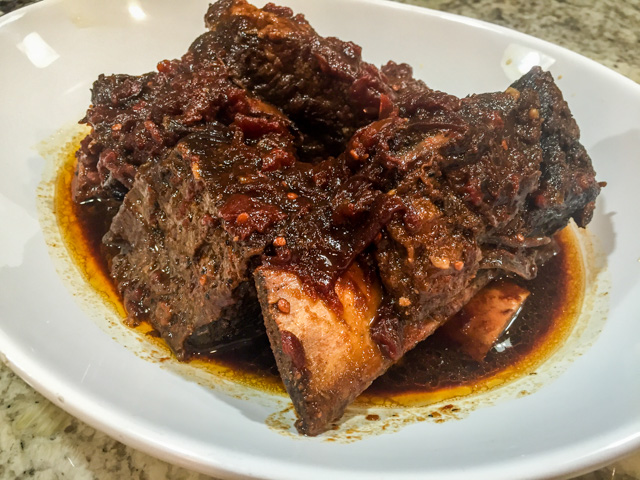
This is a post for those who appreciate indulging in beef in all its glory, and we are part of this team. We need to have our beef-fix at least once a week, and do so with gusto… I was a bit surprised when I realized that this recipe from Fine Cooking was not in the blog, because I’ve been making it for years, ever since it was published in the magazine back in 2003.  It is so simple to make, the only work involved is browning the ribs, but once you are done with that, it is cake. Actually it is braise. Three hours of the oven working for you, as the house smells better and better.  Star anise is probably the only ingredient you might not have in your pantry.  However, you should really get it because it turns this dish (and many others) into a complete winner. We enjoyed it on Valentine’s Day, which this year fell conveniently on a Sunday. Perfect day for this kind of cooking. I got started early in the morning, put the pan in the fridge so that the fat congealed to the surface, and skimmed most of it off before serving.  Comfort food by definition. If you are a beef lover, you must make this before winter is over (and typing these words made me get up and do a happy dance).

Asian Style Short Ribs2Steaming beauty…

ASIAN STYLE SHORT RIBS
(adapted from Fine Cooking magazine)

1 + 1/3 cups drained canned whole tomatoes, coarsely chopped
1/2 cup soy sauce
2/3 cup water
1/2 cup dry vermouth
2 tablespoons light brown sugar
4 whole star anise
6 to 6-1/2 pounds beef short ribs on the bone
Freshly ground black pepper
1-1/2 tablespoons vegetable oil; more as needed
1-inch piece fresh ginger, peeled and cut into 8 slices
6 large scallions (white and green parts), cut into 2-inch lengths

Position a rack in the center of the oven and heat the oven to 325°F. Put the tomatoes, 2/3 cup water, the soy sauce, vermouth, and brown sugar in a bowl and stir. Add the star anise.

Pat the short ribs dry with paper towels and season them with pepper. In a pot that’s large enough to hold all the ribs in no more than two layers, heat the oil over medium-high heat. Put as many ribs in the pot as will fit without crowding and brown them on all sides. Transfer to a platter. Brown the rest of the ribs, adding more oil if needed, and transfer to the platter.

Pour off the fat from the pan, reduce the heat to low, and add the ginger and scallions, stirring and pressing them against the pot, for 1 to 2 minutes to bring out their flavor. Return the ribs to the pot and pour the tomato and soy sauce mixture over them. Bring to a simmer and cover. Transfer the pot to the oven and braise the ribs, lifting and turning them about every half hour, until the meat is very tender and starts to fall off the bone when pulled with a fork, about 3 hours.

Transfer the ribs to a serving platter (or if you’re working ahead, transfer them to a baking dish; refrigerate, covered, when cool). Pick out and discard the ginger and star anise from the pot and pour the remaining sauce into a large, clear measuring cup. When the fat rises to the surface, after about 5 minutes, spoon it off and discard. If you’re working ahead, cool the sauce in the pot, refrigerate it, and skim the solid fat off the top. When it’s time to reheat the ribs, return them to the pot and heat gently in the oven.

Adjust seasoning, and serve.

ENJOY!

to print the recipe, click here

Asian Style Short Ribs

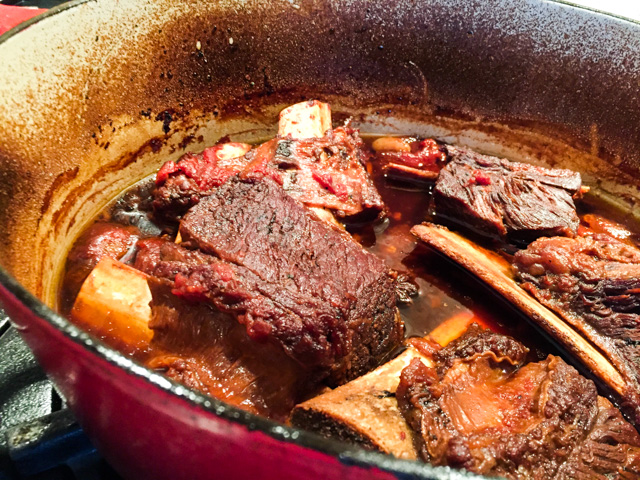
Comments: The picture above shows you what to look for at the end of braising. Bones almost completely exposed, and the meat begging to be pulled off, literally melting away from it. Fine Cooking says from 2.5 to 3 hours, I went for 3 full hours, then turned off the oven and left the pot inside for a little while, maybe 15 minutes more.  I did have to add a bit more water 2 hours into the braise, make sure you pay attention to that.

served2

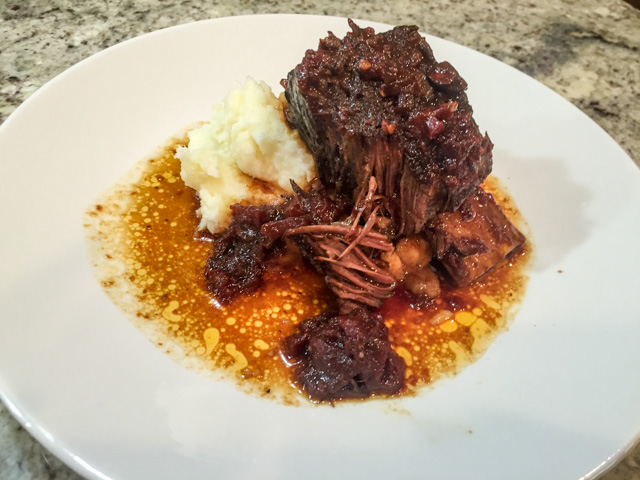
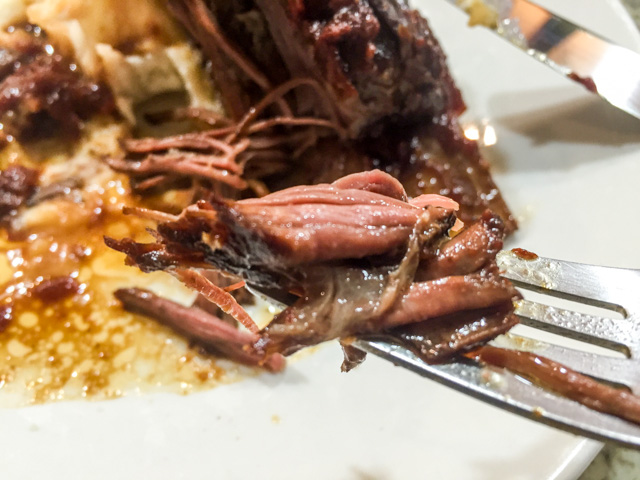
The star anise gives this sauce a very unique and wonderful flavor. We thought this dish would feel comfy in a restaurant run by Thomas Keller. It was that great! Meat super tender, luscious sauce, perfect match for mashed potatoes (or any other root veggie puree). Of course, cauliflower mash or polenta would be amazing too.  A great option for entertaining, as you can make the whole thing a couple of days in advance, it will only get better as it sits in the fridge.  A rustic loaf of bread to soak up the fantastic sauce is recommended.

tenderHappiness on a fork!


ONE YEAR AGO:
Herbed Goat Cheese Souffles

TWO YEARS AGO: Barley Risotto with Peas

THREE YEARS AGO: Jammin’ Blueberry Sour Milk Pancakes

FOUR YEARS AGO: Scallops with Black Pasta in Orange Cream Sauce

FIVE YEARS AGO: Stir-fried Chicken with Creamed Corn

SIX YEARS AGO: Potato, Cheddar, and Chive Torpedo


ALL-AMERICAN POT ROAST FROM THE FOOD LAB

If you like a scientific approach to cooking, this new cookbook is a must-have:  The Food Lab, by J. Kenji López-Alt. I am quite fond of his blog Serious Eats, so of course I had the book pre-ordered and was anxiously waiting for its electronic delivery. Since I have no space in any bookshelf at home to store cookbooks, Kindle became my helpful friend.  The book is delightful to read, as the amount of “dry” information associated with perfecting a recipe is well-balanced by jokes and short stories.  In one of my favorite chapters (Soups, Stews and the Science of Stock) he shares a great recipe for Creamy Mushroom Soup.  In that recipe, Kenji tackles the persistent WRONG statement that they should not be washed under running water because “mushrooms are like sponges.”  I swear, every time I hear a reputable chef spitting this non-sense I scream at the screen. Who on Earth came up with that idea, and why, oh why it gets repeated over and over?  Kenji patiently goes over his experiments washing mushrooms and weighing them. Actually, you can soak them and after draining they will retain between 1 and 2% water, all on the surface. If you are paranoid about watering down your mushroom saute (keep in mind you don’t water down anything with 2% water), dry them slightly with a paper towel, or cook them 10 seconds longer…. Wash your mushrooms, folks! Toss that silly mushroom brush, it’s one big gadget scam. Ok, I feel better now.  So  much better that I will step off my soap box and share with you a great recipe for All-American Pot Roast, perfected in The Food Lab.

All American Pot Roast

ALL-AMERICAN POT ROAST WITH GRAVY
(from The Food Lab, published with permission from J. Kenji López-Alt)

1 boneless chuck roast (about 5 pounds), pulled apart at the seam into 2 large chunks
Kosher salt and freshly ground black pepper
2 tablespoons vegetable oil
4 anchovy fillets
2 medium cloves garlic, finely minced or grated on a Microplane (about 2 teaspoons)
1 teaspoon Marmite
1 tablespoon soy sauce
2 tablespoons tomato paste
2 large carrots, peeled and cut into 1- to 2-inch chunks
2 stalks celery, cut into 1-inch chunks
2 large onions, finely sliced (about 4 cups)
2 tablespoons all-purpose flour
1 bottle (750-ml) dry red wine
4 cups homemade or low-sodium canned chicken stock
¼-ounce (1 packet) unflavored gelatin
2 bay leaves
4 sprigs fresh thyme
1 pound russet baking potatoes (about 2 large), peeled and cut into 1- to 2-inch chunks

Adjust an oven rack to the lower-middle position and preheat the oven to 275 ° F. Pat the chuck roast dry and season it with salt and pepper. Tie kitchen twine tightly around each piece at 1-inch intervals to help it retain its shape. Heat the oil in a large Dutch oven over high heat until lightly smoking. Add the chuck and cook, turning occasionally, until well browned on all sides, about 8 to 10 minutes. Transfer the beef to a large bowl.

Meanwhile, combine the anchovy fillets, garlic, Marmite, soy sauce, and tomato paste in a small bowl and mash with the back of a fork until a smooth, homogeneous paste is formed. Return the pot to medium-high heat, add the carrots and celery, and cook, stirring frequently, until the vegetables begin to brown around the edges, about 5 minutes. Add the onions and cook, stirring frequently, until very soft and light golden brown, about 5 minutes. Add the anchovy mixture and cook, stirring, until fragrant, about 1 minute. Add the flour and cook, stirring, until no dry flour remains, about 1 minute. Increase the heat to high and, whisking constantly, slowly add the wine. Bring to a simmer and cook until the wine is reduced by half, about 15 minutes.

Pour the chicken stock into a large liquid measuring cup or a bowl and sprinkle the gelatin on top. Allow it to hydrate for 10 minutes. Add the gelatin and chicken stock, bay leaves, and thyme to the Dutch oven, return the beef to the pot, and bring the liquid to a simmer. Cover, place in the oven, and cook until the beef is completely tender (it should offer little to no resistance when you poke it with a cake tester or thin knife), about 3 hours; add the potatoes to the pot about 45 minutes before the beef is done. Remove the pot from the oven and allow to cool for 1 hour.

Transfer the whole pot to the refrigerator and let rest at least overnight, or up to 5 nights. When ready to serve, carefully remove the hardened layer of fat from the top of the cooking liquid and discard. Transfer the meat to a cutting board. Discard the bay leaves and thyme sprigs. Bring the liquid to a boil over high heat and reduce it until coats the back of a spoon but doesn’t taste heavy. Season to taste with salt and pepper.

Meanwhile, remove the twine from the beef and slice it against the grain into ½-inch-thick pieces. Place the pieces in overlapping layers in a 12-inch skillet and add a few ladles of sauce to moisten them. Cover the skillet and set over medium-low heat, shaking occasionally, until the meat is heated through, about 15 minutes. Transfer the meat to warmed serving plates or a large platter and top with the cooked vegetables and more sauce. Serve immediately.

ENJOY!

compositeflavor

Comments: The whole idea behind this recipe is to boost the amount of glutamates, creating what he calls a ‘umami flavor bomb.”  Kenji noticed that components that bring umami to a dish act in fact synergistically, so by adding several of them to the dish, you’ll get a real boost in flavor.  In this version, two very unexpected items are included: anchovies and Marmite, the “love it or hate it” ingredient more commonly found in light smears over buttered toast.

composite2

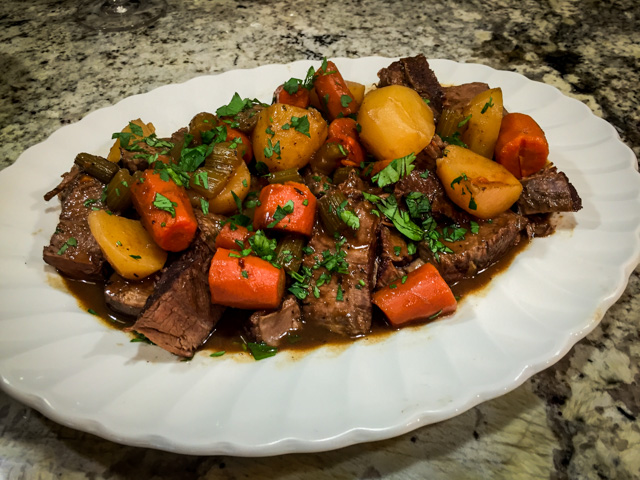
I confess to modifying his basic recipe a little. For starters, I added a lot more carrots because we adore them in our pot roasts. And I used only half a bottle of wine and half the amount of chicken stock/gelatin.  It covered the meat from the beginning and seemed perfect in the reduction stage of the sauce.  I also cooked the roast longer, for a total of 4 hours. By that time the meat was really tender the way we like it. My only other modification was to finish the dish with fresh parsley added right before serving.  It was absolutely wonderful. comfort food at its very very best!

served3

Dinner is served!  Pot Roast with Golden Cauliflower Puree….

 Kenji, thank you so much for giving me permission to blog on this luscious pot roast… I have way too many things I’d like to make from your book, like the Lemon Ricotta Pancakes. They are calling my name super loud! Of course, I will have to follow your instructions to make my own ricotta, which is a project I’ve been flirting with for a long time.

If you want to order the book or read more about it, click here.

ONE YEAR AGO: Chicken Marsala Meatballs with Mushroom Sauce

TWO YEARS AGO: PCR and a Dance in the Mind Field

THREE YEARS AGO: October 16th: World Bread Day!

FOUR YEARS AGO: San Francisco Sourdough

FIVE YEARS AGO:  A Real Oscar Winner   (Oscar joins our home!)

SIX YEARS AGO: Pane Siciliano

BOEUF BOURGUIGNON ON A SNOWY EVENING

Phil rarely requests a specific recipe for dinner, with the exception of my chicken parmigiana, that he craves on a regular basis.  Last weekend, though, he did not even blink when I asked for ideas.  Boeuf Bourguignon.  Clearly, a man of fine tastes! It was my turn to cook on Sunday, so that was a perfect suggestion.  With all our grocery shopping done the day before, I indulged in the preparation of this French classic all afternoon.  The snow falling outside was a perfect setting for our dinner…
served1

BOEUF BOURGUIGNON
(adapted from Julia Child)

6 oz bacon
2 Tbsp olive oil
4 pounds beef chuck, cut into 2-inch cubes
Salt and freshly ground pepper
1 cup sliced onions
2 cups sliced carrots
1 bottle of red wine
2 cups beef broth
1 cup chopped tomatoes
1 bouquet garni (tie 8 parsley sprigs, 1 large bay leaf, a few sprigs of dried thyme and wrap in cheese cloth)
24 pearl onions
2 tablespoons butter, divided
1 teaspoon sugar
Chicken stock
1  pound cremini mushrooms, cut in large pieces

Blanch the bacon to remove its smoky taste by dropping the slices into 2 quarts of cold water, bringing to a boil, and simmering for 6 to 8 minutes. Drain, rinse in cold water, and dry on paper towels.

In a large frying pan, sauté the blanched bacon to brown slightly in a little oil; set them aside. Brown the chunks of beef on all sides in the bacon fat and some olive oil, season with salt and pepper, and put them into a heavy casserole pan with a lid. Cut the bacon into 1-inch pieces and add to the browned beef.

Remove all but a little fat from the frying pan, add the sliced vegetables and brown them.  Add the veggies to the casserole containing the beef and bacon. Deglaze the frying pan with the wine, mixing it well to dissolve all the browned bits left from browning the meat and veggies. Once it’s all deglazed, add the wine into the casserole along with enough stock to almost cover the meat. Stir in the tomatoes and add the herb bouquet. Bring to a simmer, cover, and place in a 325°F oven, until the meat is tender, about 3 hours.

While the stew is cooking, prepare the onions. Blanch them in boiling water for 1 minute. Drain and rinse in cold water to stop the cooking. Peel the onions and score the root end with 1/4 inch cuts. Sauté onions in a single layer in a tablespoon of butter until lightly browned. Add chicken stock or water half way up the sides of the onions. Add a teaspoon of sugar, and season with salt and pepper. Cover and simmer slowly for 25 minutes or until tender. The onions should absorb most of the water. If there is water remaining after cooking, drain the excess. Set aside.

A few minutes before serving the stew saute’ the mushrooms in butter until browned and cooked through.

When the meat is tender, remove the bouquet garni from the cooking liquid, if necessary cook longer without the lid to reduce it further. Add the onions, mushrooms, and serve.

ENJOY!

to print the recipe, click here

plated1-001

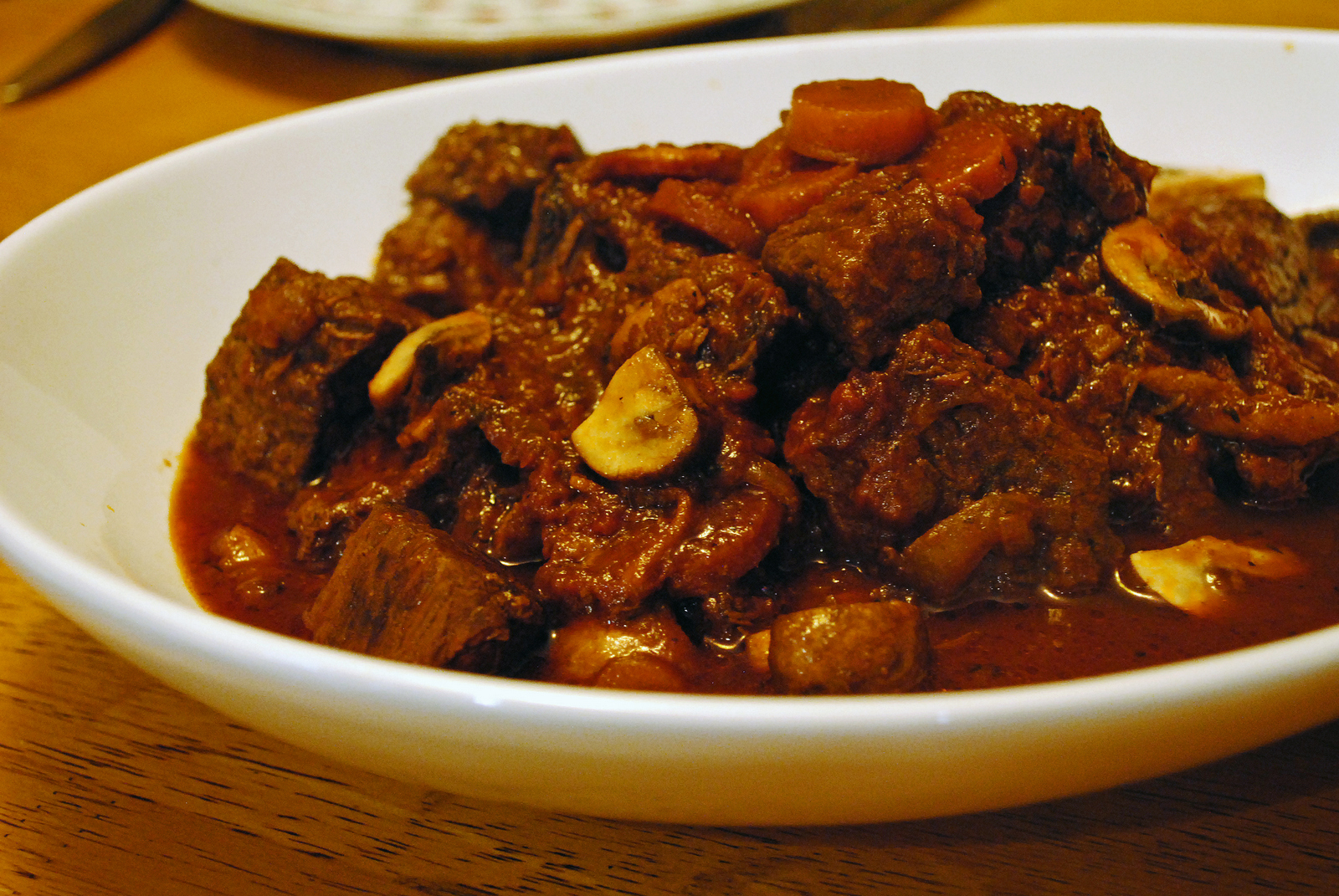
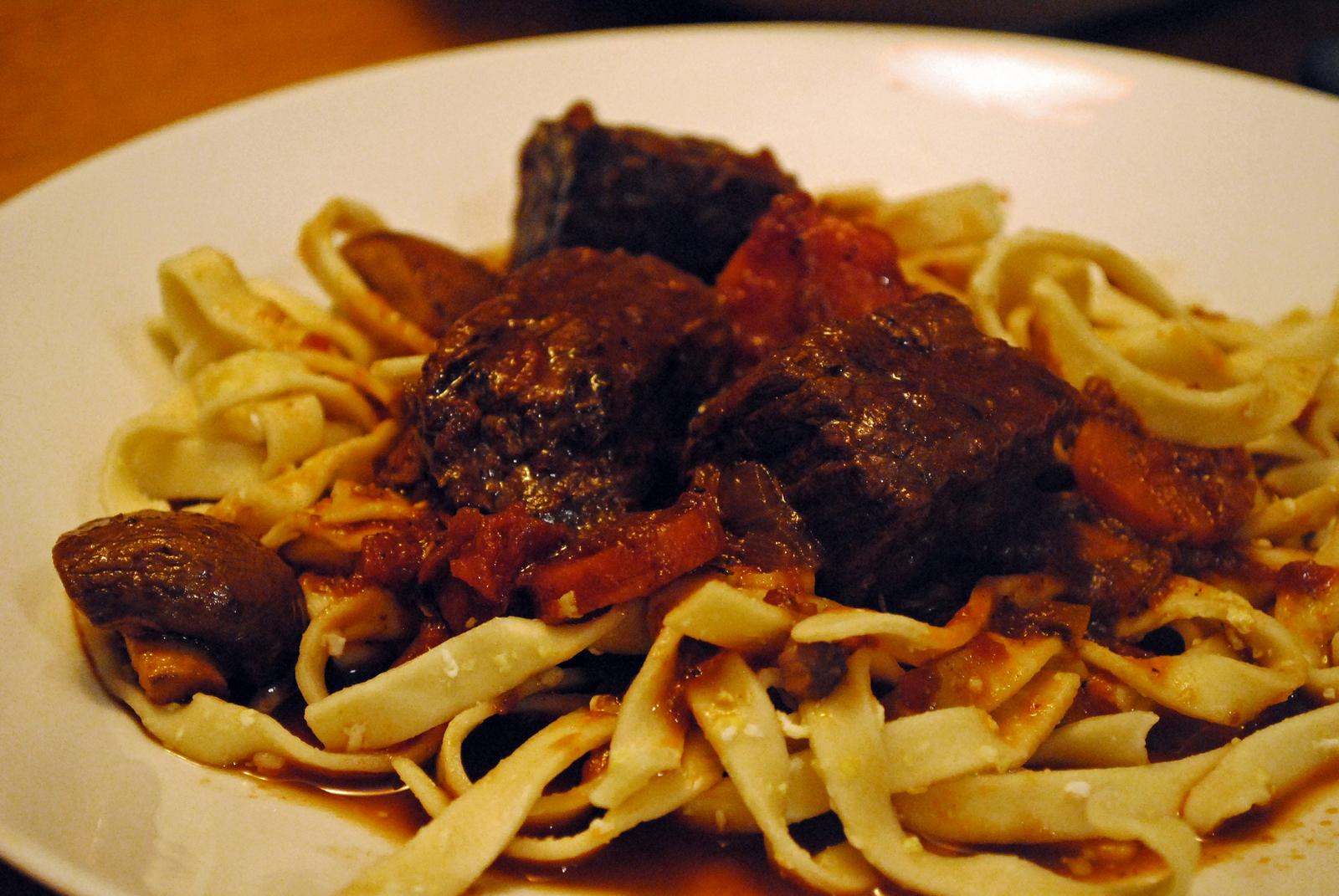
This is comfort food at its best!  The big batch I made lasted us for three meals, and it was better and better each day.  My only modification of the classic was omitting a beurre manie’ step at the end.  Julia thickens her sauce with a mixture of butter and flour, but instead I cooked the meat longer in the oven, reducing the sauce without any need for thickening agents.  It was luscious and plenty thick for our taste. In fact, on the last evening I had to add some water to the leftovers to thin it slightly.

When you make this dish, I’d say the most important step is browning the meat.  You’ll need all that caramelization on the outside to give maximum flavor and a perfect texture at the end of the cooking time.  It makes me think of a Zen proverb, full of the wise simplicity often associated with them:  “When walking, walk. When eating, eat.”    Not to make light of the Chinese wisdom, I’d like to add:  “When browning the meat, brown the meat.”   😉  Do it slowly, do it mindfully, do it well.  No crowding the pieces in the oil, no moving them around until they are properly seared.  Enjoy the process!

ONE YEAR AGO: Chickpea Salad

TWO YEARS AGO: Soft Spot for Chevre

THREE YEARS AGO: Roasted Onion and Asiago Cheese Miche (this bread is simply outstanding!)

CARROT AND SWEET POTATO PUREE

Potato puree is comfort food “par excellence”. One of my favorite menus on a chilly evening is braised short ribs served over mashed potatoes (I gained about 3 pounds just by typing that sentence! 😉 ) Sometimes I crave that type of side dish, but I’d be happier with a lighter caloric load.

Giada de Laurentiis devised a perfect alternative during her “Light and Fabulous” menu, that paired broiled tilapia filets with a creamy puree of carrots and yams. You can find the recipes for that episode here. The puree has a beautiful, bright orange color, and its taste complements many main dishes.

CARROT AND SWEET POTATO PUREE
(adapted from Giada de Laurentiis)

1/4 cup extra-virgin olive oil
1 medium shallot, diced
1 clove garlic, minced
2 pounds carrots, peeled and sliced
2 pounds sweet potatoes, peeled and cut into 3/4-inch pieces
1 teaspoon salt, plus extra for seasoning
1/2 teaspoon freshly ground black pepper, plus extra for seasoning
2 cups chicken (or vegetable) broth
2 cups water

Heat the oil over medium-high heat in a saucepan. Add the shallot and cook until tender, about 5 minutes. Add the garlic and cook for 1 minute until fragrant. Add the carrots, sweet potatoes, 1 teaspoon salt, and 1/2 teaspoon pepper. Cook for 5 minutes until slightly softened. Add the stock and water and bring to a boil. Reduce the heat and simmer until the veggies are tender, about 25 minutes. Drain the veggies, saving the cooking liquid. Transfer them to a food processor, and puree until still slightly chunky, adding some of the cooking liquid, until you reach the consistency you like. Taste and adjust seasoning with salt and pepper.

ENJOY!

to print the recipe, click here

Comments: Our grocery had sweet potatoes, but not yams, so that’s what I used. Next time I’ll add a touch of ginger to the puree, because it goes so well with sweet potatoes. Maybe a little orange zest too? But even without these additional touches, this puree was an excellent side dish for our grilled, butterflied pork tenderloin. Something about eating bright colored food instantly makes me feel healthy. This puree tastes good, it’s not too heavy, and it gives that  feeling of happy satisfaction at the end of the meal.

Want to make it even faster on a weeknight? Cut the veggies in the morning before work, and save them in the fridge. Small details make life a lot easier when you return home  feeling a little spent. 😉

ONE YEAR AGO: Impromptu Pasta Dinner


Add to FacebookAdd to DiggAdd to Del.icio.usAdd to StumbleuponAdd to RedditAdd to BlinklistAdd to TwitterAdd to TechnoratiAdd to Yahoo BuzzAdd to Newsvine

A CLASSIC ROAST CHICKEN

From Thomas Keller’s Ad Hoc at Home

roastchx

I confess to a love-hate relationship with roasted chicken: Love to eat it, hate to make it, because some recipes that promised “the best roast chicken you’ll ever eat” gave me only grievance instead.   Here are two examples.  One famous recipe calls for blasting the bird in a 500F  oven, which made an unbelievable mess, set off every smoke alarm in the house, and left a lingering smell of roast chicken for days.   I also fell for a recipe that insisted the best way to roast a chicken is to first sear it in a frying pan, and then move  it into a hot oven.  That method resulted in both the stove AND the oven covered in oily splatter.  I dealt with it in the hope of  “… the best ever“, but… it wasn’t.

Every recipe in Keller’s book makes me want to jump to the kitchen to start working on it, so I couldn’t resist his take on roast chicken.   I’m glad that I didn’t, it was simple to prepare and finished with a happy ending.  This recipe is a full  meal in itself:  you’ll have a nice roast chicken, crispy and moist, with a bonus side dish accompanying it.  It was satisfying home-cooking at its best.

(para receita em portugues, clique aqui)

ROAST CHICKEN WITH ROOT VEGETABLES
(adapted from Thomas Keller’s Ad Hoc)

1 whole chicken, preferably organic (4 – 4.5 pounds)
2 cloves garlic, mashed
fresh thyme sprigs
salt and pepper
3 rutabagas
2 turnips
6 carrots
12 small yellow or red new potatoes
1/3  cup canola oil
4 T butter at room temperature or 2 T duck fat
1/2 lemon

If you are particularly fond of crispy skin, leave the bird uncovered  in the fridge for a couple of days.  Remove the chicken from the refrigerator 1.5 hours before roasting (important step, don’t skip it).

Heat the oven to 475F.

Season the chicken inside and out with salt and pepper, add the garlic, 4 thyme sprigs, and the lemon half in the cavity.  For a nicer presentation, truss the chicken (see how to do it here, but you may omit this step if you prefer – read my comments).

Cut the rutabagas and turnips in similar sized pieces, about 3/4 inch wedges. Cut the carrots in half crosswise and again lengthwise. Keep the young potatoes whole, or, if they are a bit too big cut them in half.  Place all veggies in a large bowl, add  1/4 cup of canola oil,  2-3 thyme sprigs, salt, pepper, and toss well.  Transfer them to a roasting pan, make a small space in the center to place the chicken.  Rub the remaining canola oil all over the skin of the chicken, seasoning it again with salt and pepper.

Just before roasting, add pats of butter over the breast, or brush with some duck fat (it gives a deeper flavor to the chicken,).

Roast at 475F for 25 minutes, lower the temperature to 400F and roast for 1 hour, but check the internal temperature after 45 minutes, if it reaches 160F remove the chicken from the oven.  Allow the chicken to rest under an aluminum foil tent for 20 minutes before carving.

A few minutes before serving, place the roasting dish on the stove and heat the vegetables, moving them around to coat with the juices accumulated during roasting.

Enjoy!

to print the recipe, click here


Jump for final comments and additional photos

Continue reading