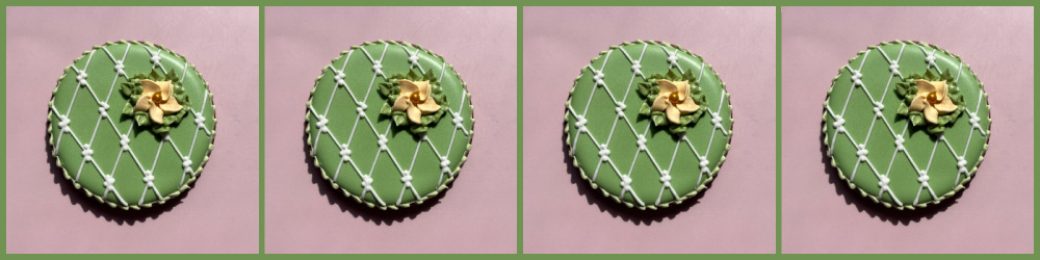
PUMPKIN SOURDOUGH

I admit, I caved into the recent trend of shaping bread as a pumpkin. Thanksgiving is right at the corner, and this bread would be perfect to celebrate the occasion. You can use any bread dough you like, but to keep with the seasonal atmosphere, some canned pumpkin puree found its way into my recipe. I kept hydration a bit lower, as I did not want the bread to expand too much. It was a wild experiment (got it? wild yeast involved), and I am a bit surprised that it worked so well on my first attempt. Beginner’s luck?

PUMPKIN SOURDOUGH
(from the Bewitching Kitchen, inspired by photos everywhere)

400 g bread flour
100 g spelt flour
300 g water
120 g canned pumpkin puree
120 g active sourdough starter
12 g  fine sea salt 

Mix all ingredients in a large bowl, no need to make it very smooth at this point. Just form a shaggy mixture and leave it at room temperature for 30 minutes.

Ferment the dough for 4 hours at room temperature, folding a few times during this period. I did 4 cycles of folding, at about 45 min intervals, allowing the dough to rest untouched after the 4th folding cycle. Shape it as a ball, place in a well-floured banetton and leave it in the fridge overnight.

Next day, place pieces of kitchen twine as shown in the composed picture over parchment paper. Grease the kitchen twine slightly so it won’t glue to the bread. Place the bread on top, seam side down, and cover it slightly with flour, rubbing it with your hands to form a nice coating. Tie the twine around it to form the wedges of a pumpkin. If desired, add a pattern with a very sharp razor blade, held in your fingers (be careful).

Immediately place the shaped bread in a Dutch oven, cover it, and place into a 450 F oven for 30 minutes. Uncover, and bake for 15 minutes more, until golden brown. Let it cool completely, remove the twine, and slice.

ENJOY!

to print the recipe, click here

Comments:  This bread was a complete impulse bake. I need to tell you a little secret, though. I was contacted by our newspaper in town to be part of their Monday feature called “Our Neighbors.”  They feature someone in town that does something cool, or special, or fun. And for some reason they thought that a scientist who works with bacteria at KSU during the day and blogs on the side, could be featured. They stopped at home to take pictures and I quickly assembled this dough, having refreshed my Star starter in the morning. You know, the ultra-active starter I got from my friend Elaine. They took a ton of pictures of me kneading the dough, I was hoping they would include one in the article, but they picked a different one, in which my pumpkin bread dough is already covered for its final fermentation.

If you like to read the article, click here. If the link is blocked where you live, click page 1 and page 2 for PDF versions.
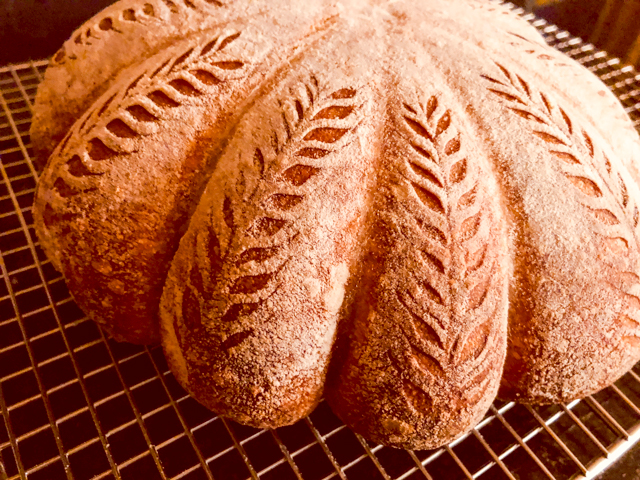
But back to bread. This was so easy to shape, main thing is to make sure the strings stay put where you want them as you move the bread to the Dutch oven. Since I use a cold pot, it’s easier to go back inside and tweak the twine (I was really hoping to use this phrase). The pumpkin flavor is not evident, you won’t say it’s pumpkin, but it gives the sourdough a softer texture (crumb included) and a sweeter taste, a lot of the sourdough character will be toned down. We really liked it.
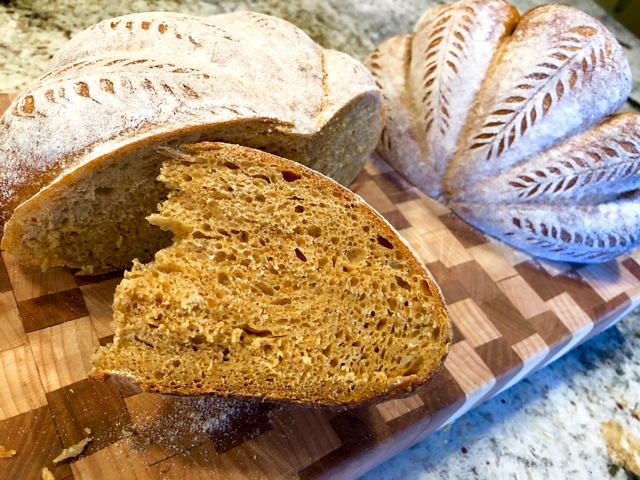
I hope you give this bread a try. Evidently, no need to use a sourdough, any formula will work, just adapt the fermentation time and go for it. You can also use roasted pumpkin made from scratch. Honestly, I don’t know how that will compare with canned pumpkin in terms of hydration. I prefer to use canned because it’s pretty reproducible, but I am sure the bread tolerates a certain range of hydration values without too many issues. Worth experimenting with. It’s just a little flour, water, and yeast, after all…

ONE YEAR AGO: First Monday Favorite

TWO YEARS AGO: Secret Recipe Club: Paalak Paneer, a Farewell Post

THREE YEARS AGO: In My Kitchen, November 2015

FOUR YEARS AGO: Helen Fletcher’s Oatmeal Cookies

FIVE YEARS AGO: Thai-Style Pesto with Brown Rice Pasta

SIX YEARS AGO: Shrimp with Spicy Orange Sauce

SEVEN YEARS AGO:  A Simple Appetizer (Baked Ricotta)

EIGHT YEARS AGO: Sour Cream Sandwich Bread

NINE YEARS AGO: Pasta with Zucchini Strands and Shrimp

THE CHIGNON

No, my blog is not turning into a hairdressing site. Not that I don’t appreciate a well-made chignon, but I’ve never had the skill to do anything remotely fancy to my hair. Now, if we’re talking flour and yeast, I’m game.

THE CHIGNON
(adapted from Craftsy.com)

makes one loaf

270 g bread flour
30 g spelt flour
195 g water at room temperature
1.5 g instant yeast
6 g fine sea salt

Mix all the ingredients on low-speed in a mixer fitted with a dough hook for 4 minutes. Make sure no big clumps of flour are sticking on the sides, scrape the bowl if needed. 

Increase speed to medium and mix for about 6 more minutes. Dough should be very smooth and elastic at this point.  Take the dough from the mixer and place in a bowl lightly sprayed with oil.  Leave the dough at ambient temperature for 20 minutes, then refrigerate the dough overnight.  After two hours, punch the dough slightly down, cover it and let it stay in the fridge until next morning.

Remove the dough and allow it to sit at ambient temperature for 20 minutes. 

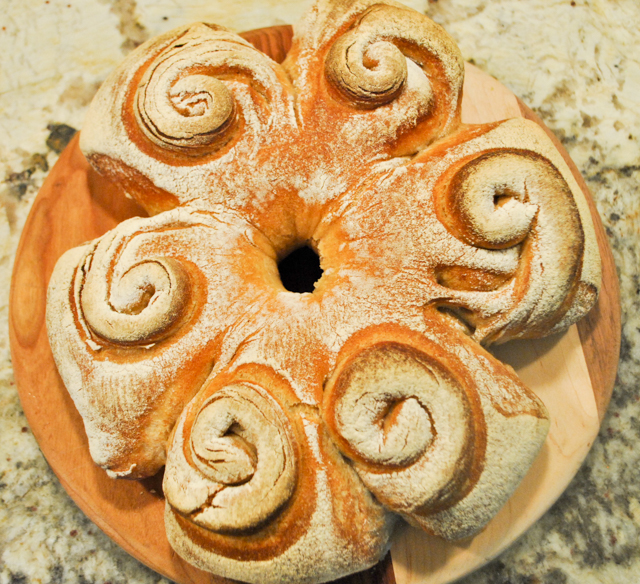
Shape as desired. If doing the chignon, right after shaping coat the surface with flour, then allow it to proof for 90 minutes, covered with a cloth.

 Bake at 470 F (245 C) in an oven with initial steam for 35 to 45 minutes, until golden brown. 

Cool on a rack.

ENJOY!

to print the recipe, click here

Comments: This bread shaping was part of the Craftsy class taught by Mr. Ciril Hitz , which I recommended in the past. His instructions are very clear and easy to follow, so don’t hesitate to get the lesson online for all the details and advice.  The only tricky part of this shaping is rolling the little ropes without breaking their connection to the main dough. The dough has a natural tendency to resist shaping, so work slowly, do a little stretching one rope at a time, going around the bread. Once they get long enough to roll as a chignon, you are good to go.  Immediately dust the whole shaped bread with flour, so that as the dough rises for the final 90 minutes, it exposes regions without the flour coating. That will ensure a nice double tone to the baked bread.

When I made this bread, I made the full batch as included in Craftsy class. Then I realized that Ciril shaped two loaves instead of one. So I divided the dough in two and did a simpler shaping with the second half. The recipe I included here, is for ONE chignon only.

Whenever I make one of the breads from Ciril’s class, I tell myself to try a higher hydration formula next time. And of course, I keep forgetting to do so. This recipe is at 65% hydration, I would like to go to 68-70% and see what effect it does on shaping and crumb. Note to self: try that. For real, not just in your imagination… (sigh).

ONE YEAR AGO: Rack of Lamb Sous-Vide with Couscous Salad

TWO YEARS AGO: Focaccia with Grapes, Roquefort and Truffled Honey

THREE YEARS AGO: Moroccan Carrot Dip over Cucumber Slices

FOUR YEARS AGO: White Chocolate Macadamia Nut Cookies

FIVE YEARS AGO: Cilantro-Jalapeno “Hummus”

SIX YEARS AGO: A Moving Odyssey

NINE YEARS AGO:
 
Shrimp Moqueca

SaveSave

SaveSave

SaveSave

SaveSave

SaveSave

SaveSave

SaveSave

SaveSave

SaveSave

SaveSave

SaveSave

SaveSave

FUJISAN BREAD

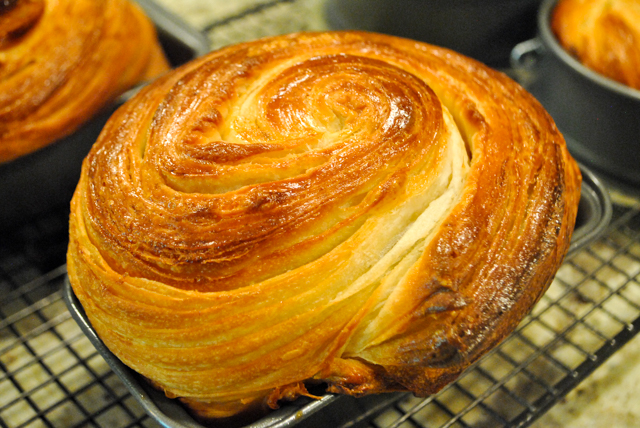
One day a handsome croissant was minding his own business when he spotted this gorgeous brioche in a French boulangerie. It was love at first sight. Marriage was a natural move, and being a very adventurous couple, they chose Japan for their honeymoon. Their first baby was named Fujisan Bread. Little Fujisan turned out as a real showstopper. Layers and layers of buttery sweetness, perfect mixture of Mr. Croissant and Ms. Brioche. Depending on how you shape it, it will indeed remind you of Mount Fuji…

FUJISAN BREAD
(from BakeStreet)

400 g strong/bread flour
100 g cake flour
220-250 g water (you will use 220 to begin with, hold the rest)
75 g sugar
50 g tangzhong (recipe below)
1 egg
20 g milk powder
30 g condensed milk
40 g unsalted butter at room temperature
5 g dry yeast
7 g salt
250 g cold unsalted butter (to laminate)

for tangzhong (water roux):
9 g plain flour
44 g water

DAY ONE:
Make tangzhong. In a small saucepan pour the water together with the flour, place on low heat and stir with the help of a whisk. Cook, stirring constantly, until it thickens slightly. Remove from heat and pour into an airtight container. Cover and let cool completely. Once the tangzhong is completely cold, make the dough. Tangzhong is a Japanese method of adding cooked flour to bread dough. It provides a creamy texture and allows the bread to stay fresh longer.

Set aside a tablespoon of water to dissolve the yeast. In the bowl of the stand sift both types of flour, along with 220 g of water, egg , milk powder, prepared (cold) tangzhong, condensed milk, sugar and salt. Knead with the dough hook at low-speed until the dough is well-developed, about 15 minutes.

Add half of the butter and knead again until completely integrated. Add the remaining butter and the yeast dissolved in the tablespoon of water, and again knead until fully incorporated.  At this point, if you think the dough can absorb more water, add a bit more up to a maximum of 30g. My dough was good without it. The dough should feel very soft but slightly sticky to the touch.

Remove the dough from the bowl, make a ball and place it in an airtight container, previously greased, until it grows by one-third of the volume, about 2 hours.  Retard it in the fridge overnight.

DAY TWO:
Make the butter sheet.
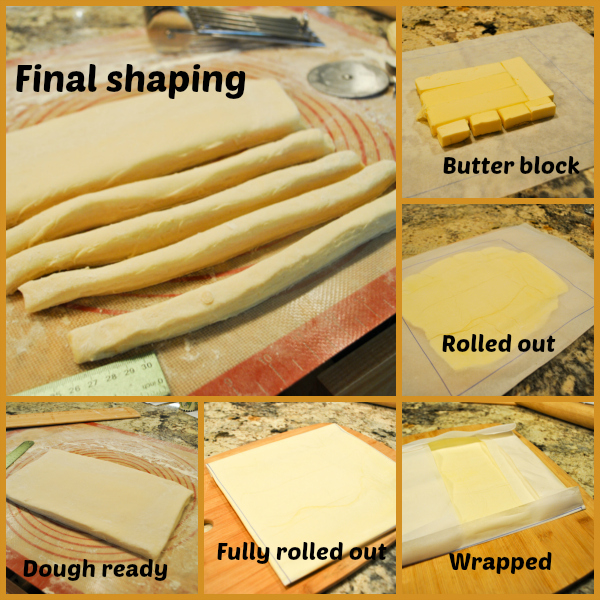
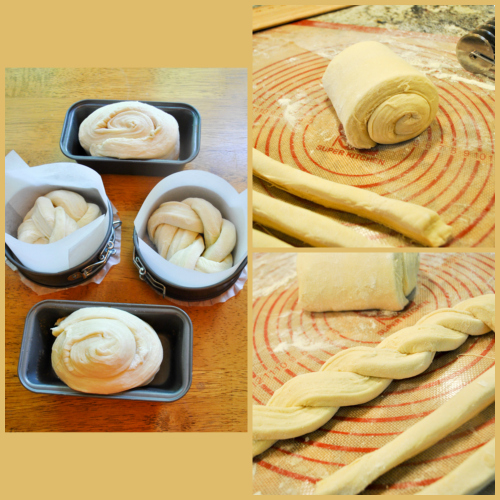
Prepare a sheet of parchment and draw a square of 9 inches in the center. Flip the parchment around so that the drawing is at the bottom. Place the butter cut in flat pieces in the center of the square as shown in the composite photo. Add a sheet of parchment on top, and beat the butter with a rolling-pin. Your goal is to stretch it a little, but don’t worry yet about filling the space of the square. As the butter stretches a bit, fold the parchment sheets together using the dimensions of the square you drew. Now roll the butter with the rolling-pin until it covers that exact area, as uniformly in thickness as possible.  Freeze if while you roll the dough out.

Take the dough out of the fridge and roll it over a lightly floured surface to a rectangle of 18 by a little over 9 inches (you want to enclose the dough in it, so make it a bit wider than 9 inches. Remove the butter from the freezer. If it is too hard, wait a few minutes until it is a bit flexible (if you roll it around the edge of your table, it should not break, but bend nicely).

Place the butter in the center of the dough, so that the width of the butter and the width of the dough is about the same, with just a bit of dough hanging at the edge. Fold the ends of the dough on the butter, bringing them to meet in the center (you should have about 4.5 inches on each side of the butter block. Pinch the dough to enclose the butter, in the center and all around the upper and lower edges. Roll the dough again to 18 by a little over 9 inches.  Fold in thirds, like an envelope, with the long edge facing you. This is the first fold. Refrigerate for 20 to 30 minutes. Roll the dough again to 18 by 9 inches. Use flour on the surface, but not too much. Move the dough around to make sure it does not stick.

Do two more folds exactly the same way, refrigerating after each one.  After the third and last fold, refrigerate the dough for 30 to 40 minutes, then roll out to a rectangle of 14 by 8 inches. Use a pizza roller to cut the edges so that you expose the lamination, and correct any problems with the dimensions.

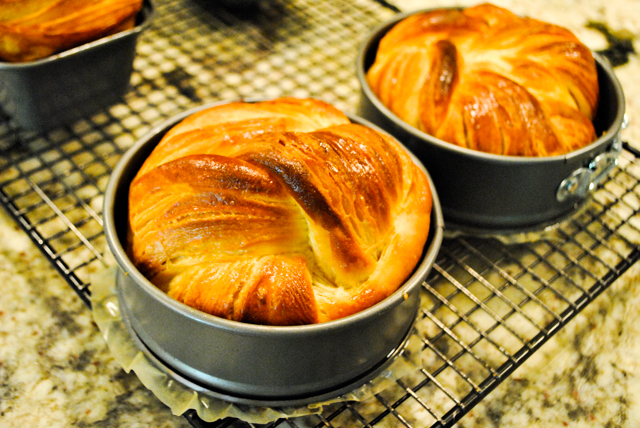
To make the smaller rolls, cut strips that are about 1.2 inches thick, then use two strips to make a braid. As you form the braid, keep the laminated part facing always up (see the photo).  Roll the braid keeping the ends underneath, and place inside any baking container that will fit them snuggly. I used 4 inch springform pans lined with parchment.

To make the loaves, roll the dough tightly, jelly-roll style, then cut slices. Add them to any container that will seem a bit tight to hold them. This will force the dough to expand up during baking, giving the bread its characteristic look.

Let the shaped breads proof for 3 hours at room temperature, then bake in 400 F oven for 10 minutes, reduce the temperature to 375 F, and bake for 20 more minutes.

Cool for 10 minutes before removing from the baking pans, and cool completely before slicing.

ENJOY!

to print the recipe, click here

Comments: Laminated dough can be a bit scary to tackle, but as long as you pay attention to a few details, all should go reasonably smoothly. First, keep in mind the dimensions. I find it helpful to keep a big wooden ruler laying right on the surface I’m working on, so that even before I take precise measurements, I can judge if I am almost there. Second, make sure to lock the butter inside the dough by checking that every single bit of the two layers of dough are properly sealed. Third, do not rush any part of the process. Allow the dough to cool down after each folding cycle, that is what ultimately will give you the nice layers you are hoping for. Melted butter will work against you. And speaking of butter, I highly recommend the trick of rolling it inside the folded package of parchment. Make the fold tight, and you will end up with a perfect square of butter, with uniform thickness. You can make a rectangle if it fits your method of lamination better. 

You can shape the dough in many ways, I tried two different methods. In the first, the braided dough is rolled and lodged inside a round baking dish. When you form the braid, make sure the laminated side of the dough is kept exposed. Obviously, as you roll it in a coiled structure, some of it will be hidden, but try to allow some bits out there on the surface of the shaped bread.

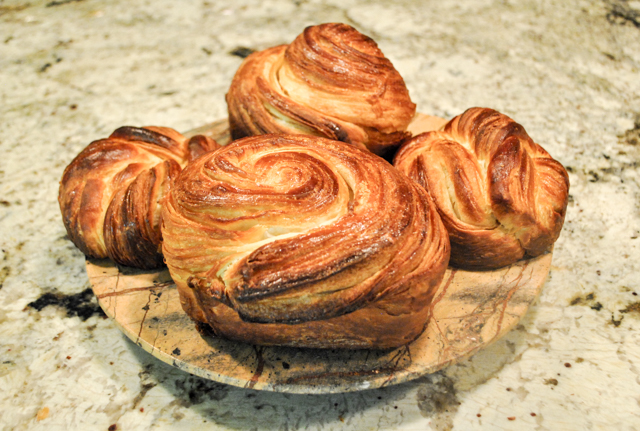
The Mount-Fuji-shape was my favorite, by far. Since the lamination is fully exposed, the dough explodes up in a very impressive way. Such a pleasure to see it in the oven. Yeah, I was kneeling in front of it for a while, which left the pups quite amused.

This amount of dough made enough for four breads. It could be fun to bake the full amount in a single, large round pan, perhaps shaped in four separate regions, each exploding up according to their mood…  So many possibilities!

As far as taste, this is really a very rich croissant-type bread, the high sugar content (given by the condensed milk and sugar) makes it reach a golden brown tone quite quickly. Be prepared to reduce the temperature of the oven and/or protect the surface with a bit of foil, if needed.

The crumb is moist and flavorful enough for Fujisan to be enjoyed without any adornments, but a nice smear of your favorite jam could be a winning combination.

This bread is a perfect project for a weekend. I think that the final proofing (of the shaped loaves) could conceivably be retarded in the fridge overnight, so that you could have Fujisan for a special breakfast or brunch. I have not tried that, but it’s definitely worth experimenting with.

ONE YEAR AGO: Air-Fried Tomatoes with Hazelnut Pesto and Halloumi Cheese

TWO YEARS AGO: Red Velvet Layered Cake

THREE YEARS AGO: Lemon-Lavender Bars

FOUR YEARS AGO: Quinoa Fried Rice

FIVE YEARS AGO: Carrot Flan with Greens and Lemon Vinaigrette

SIX YEARS AGO: The Secret Recipe Club: Granola Bars

EIGHT YEARS AGO:  Awesome Broccolini

NINE YEARS AGO:  A Twist on Pesto

EIGHT YEARS AGO: Ciabatta: Judging a bread by its holes


SaveSave

SaveSave

SaveSave

SaveSave

SaveSave

SaveSave

SaveSave

SaveSave

SaveSave

SaveSave

SaveSave

SaveSave

SaveSave

SaveSave

SaveSave

SaveSave

SaveSave

SaveSave

SaveSave

SaveSave

SaveSave

SaveSave

SaveSave

THE DAISY: A BREAD WITH BRIOCHE ALTER EGO

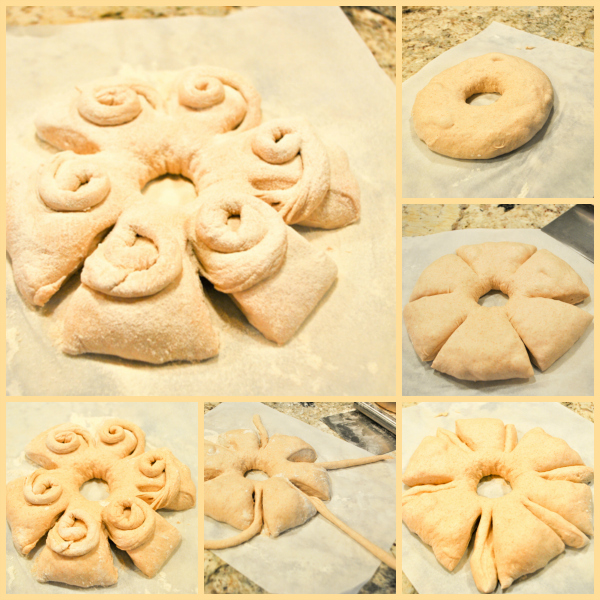
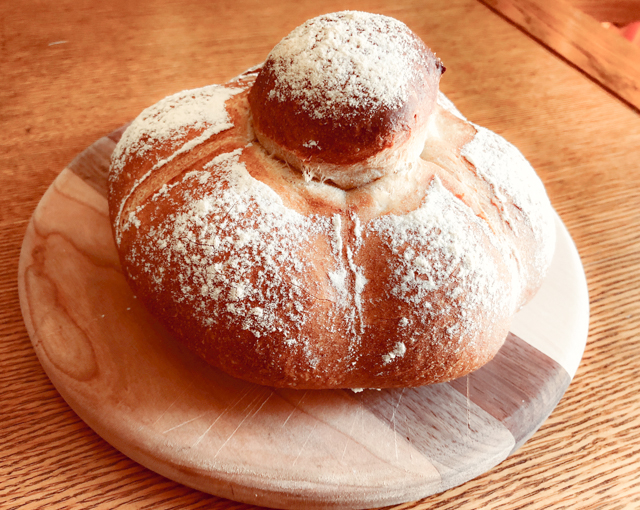
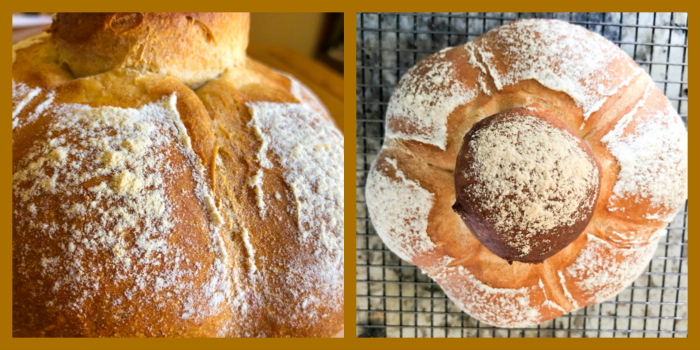
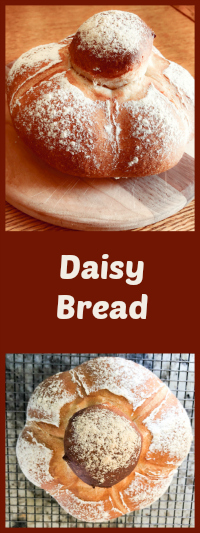
This bread is made with a very simple dough. No wild yeast, no extensive cycles of kneading, just your trusty commercial yeast, a few minutes in the Kitchen Aid, and a nice sleep in the fridge. It’s all about the shaping, that results in a flower-shaped bread. Think daisy. But both times I’ve baked it, the oven-spring was so spectacular that I thought I had made a brioche instead.

THE DAISY BREAD
(adapted from Craftsy online class by Ciril Hitz)

430 g bread flour
50 g spelt flour
320 g water
2.5 g instant yeast
10 g salt

Mix all the ingredients on low-speed in a stand mixer fitted with a dough hook. Start at low-speed for a couple of minutes, increase to medium-speed and mix for 6 minutes more.

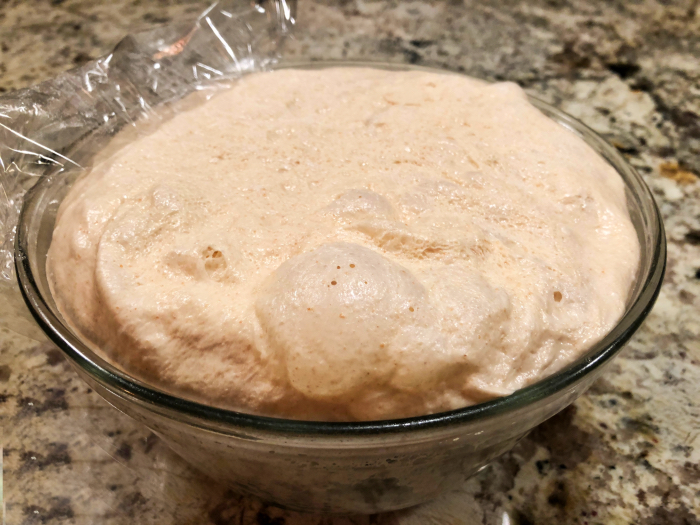
Transfer the dough to a lightly oiled bowl, cover loosely with plastic wrap, and leave at room temperature for 30 minutes.  Place the bowl in the fridge overnight, but after two hours, punch the dough down, and cover again.

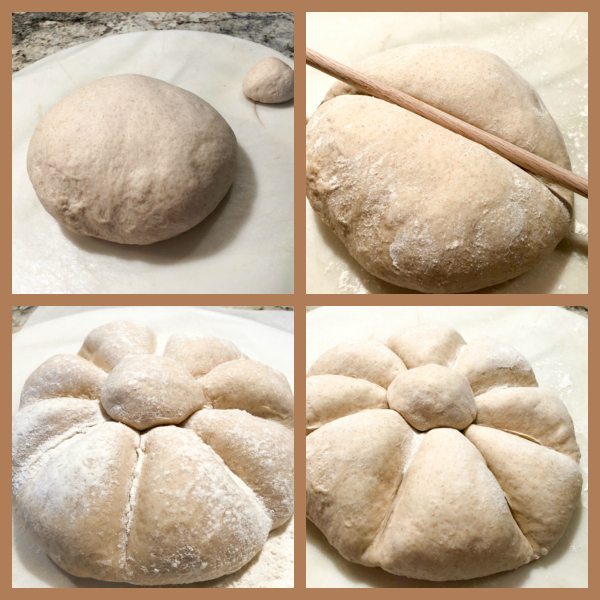
Next morning, remove the dough from the fridge and let it sit at room temperature for 30 minutes. Remove a small portion of about 35 g of dough and roll as a ball.  Shape the rest of the dough as a large ball.

Use a wooden dowel to press down the sections of a daisy flower. Add the small ball to the center.  Sprinkle a nice coating of flour, and let the dough proof for 60 to 90 minutes.

Bake at 470 F  in an oven with initial steam for 30 to 35 minutes. Cool completely before slicing.

ENJOY!

to print the recipe, click here

Comments: This is another nice shaping I learned taking the online class offered by Craftsy with Ciril Hitz (link under the recipe title, in case you missed it). I still have one more bread from that class to tackle, but that one is a bit more involved. The Daisy shaping is simple and fun. However, his bread was happy to be a flower, had no hidden intentions of imitating a brioche. He told me that perhaps a longer proofing after shaping would take care of that. I haven’t re-visited the issue. There are so many breads out there waiting for me…. But if you try it, keep that in mind.

I love Ciril’s class, he has a very serene personality, which goes well with bread baking. Come to think of it, it’s a bit of a stretch to apply serene to my own self, but that might explain why you don’t see me making videos of what happens as I bake. If you are over the fence about getting Craftsy classes, give them a try.  I think they are fantastic. Just make sure you read the reviews about each one. Also, they often have specials with huge discounts. I wait for those before  indulging.

The crumb is on the tight side, as expected for a lower hydration dough. It is a delicate balance to achieve when you want to focus on shaping. Higher hydration bread gives you a lighter texture, but it will be tricky to make them hold the shape.  I think both kinds of bread have their spot in the kitchen. And, between you and me, a tighter crumb is perfect to grab the last bit of a lusciously flowing egg yolk…

ONE YEAR AGO: Pork Tenderloin, Braciole Style

TWO YEARS AGO: Raspberry Buckle

THREE YEARS AGO: Seafood Gratin for a Special Dinner

FOUR YEARS AGO: Cooking Sous-Vide: Sweet and Spicy Asian Pork Loin

FIVE YEARS AGO:  Farewell to a Bewitching Kitchen

SIX YEARS AGO: In My Kitchen. June 2012

SEVEN YEARS AGO: Goodbye L.A.

EIGHT YEARS AGO: 7-6-5 Pork Tenderloin


SaveSave

SaveSave

SaveSave

SaveSave

SaveSave

SaveSave

SaveSave

SaveSave

SaveSave

FRENCH STYLE BAGUETTES

I have never met any person living in France who worries about baking baguettes at home. Why would anyone do so, when they can walk a few steps from the front door and find the very best examples, fresh from the oven? But when you live in the US the situation is totally different. The stuff you see sold as “baguettes” could bring Paris back to 1789. Some, if held up, will fold. Wrap your mind around that. A baguette with such poor inner structure, with so much stuff added to the dough to prolong its sorry life, that it folds under its own weight. I have a few recipes for baguette in the blog already, but decided to bite the bullet and try America’s Test Kitchen version. I say bite the bullet because, as my friend Cindy always says, their recipes ensure that you will dirty every single pan, bowl, utensil you have. They don’t cut corners. They create them. In the case of their baguettes, the issue is not so much messing up stuff, but the timing and super detailed instructions. You can find the full recipe in their site, I will give just a very minimal overview, as I could not get permission to publish their method.

FRENCH BAGUETTES
(from America’s Test Kitchen)

¼ cup (1⅓ ounces) whole-wheat flour
3 cups (15 ounces) all-purpose flour
1 teaspoon instant yeast
1 teaspoon diastatic malt powder (optional)
1½ teaspoons salt
1½ cups (12 ounces) water

OVERVIEW OF THE METHOD

Make a dough with all ingredients by kneading with a mixer for about 7 minutes. Leave it at room temperature and knead by folding three times, letting the dough rest for 30 minutes in between folding cycles. Refrigerate overnight.

Remove dough from fridge, divide in half, work with half the dough at a time. Follow their precise measurements to obtain four portions of dough.


They will instruct you to pre-shape the dough, minimizing how much you handle it, and with a lot of waiting time in between each manipulation, including the final shaping and stretching to a size compatible with home ovens.

After a final rise of 45 to 60 minutes, the baguettes will be ready for a 500F oven, baked for 5 minutes covered with a disposable aluminum baking pan (excellent method to create steam), and uncovered for the final 15 minutes for proper browning.

for full recipe, visit this site

You will be able to bake two baguettes at a time. I did not bother retarding the two last baguettes in the fridge, as the baking takes a reasonably short time.  Overall, it is a good recipe, just pretty convoluted in terms of all the instructions given for handling the dough.

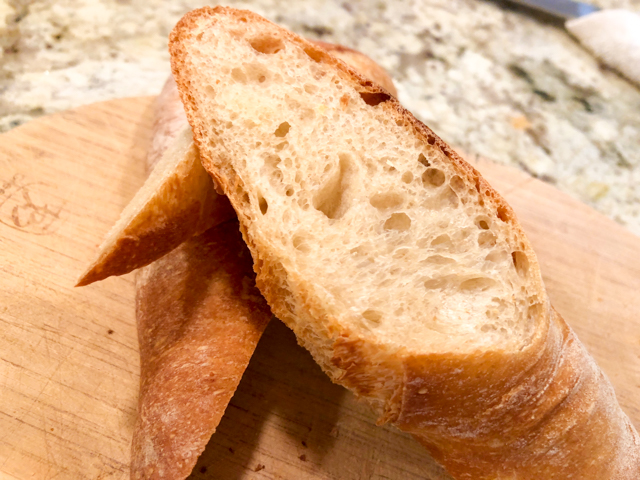
The inner crumb had the uneven holes that are the mark of a good baguette, but I expected a slightly more open structure. Taste was pretty spectacular, I think the proportion of whole wheat and all-purpose flour is perfect.  I will probably do a few changes in the way I shaped it, because I suppose a bit more surface tension could be better, two of the baguettes were not as round as I would like.

America’s Test Kitchen insists they should be consumed within 3 to 4 hours. I beg to differ, and find that they freeze quite well and a small visit in a toaster oven brings them back to life…

ONE YEAR AGO: Sad Times

TWO YEARS AGO: Slow-Cooker Carnitas Lettuce Wraps and Paleo Planet Review


SaveSave

SaveSave

SaveSave

SaveSave

SaveSave

SaveSave

SaveSave

SaveSave

SaveSave

SaveSave

SaveSave

SaveSave