7-6-5 GRILLED PORK TENDERLOIN

Note added Feb 22nd, 2021: If you own a Weber type grill, it might get a lot hotter than other brands, and this method won’t work for you, unless you are able to control the heat down to 500F-550F. My friend Gary recommends a surface thermometer in case you’d like to monitor the temperature of your grill, and find hot spots.

The Boeing 777 is my favorite airplane, but the number to keep in mind when grilling pork tenderloin is 765, referring to the time it takes to grill it (7 + 6 + 5  minutes).   The original recipe was from an issue of Fine Cooking magazine (June 2002)  published as a general method to grill pork tenderloin, that’s adaptable to many different flavor profiles.  I’ve been making it ever since.

7-6-5- GRILLED PORK TENDERLOIN
(very loosely adapted from Pam Anderson)

2 pork tenderloins
1/4 cup olive oil
juice of 1/2 lemon
1 tsp aleppo pepper
salt

For the glaze:

1/2 cup orange marmalade
2 Tbs white wine vinegar
a little water
salt and pepper

Mix the olive oil, lemon juice, and aleppo pepper, rub all over the meat and let it stand in the fridge overnight or several hours.

Prepare the glaze by melting all ingredients in a small sauce pan. You want a reasonably thick consistency, so adjust the amount of water accordingly. Let it cool (you can prepare the glaze the day before).

Prepare a hot grill. Remove the meat from the marinade, brush it all over with the glaze, and season with salt. Place the meat on the grill, close the lid and grill for 7 minutes. Turn the pork tenderloin over, close the lid again, and grill for 6 minutes.  Don’t open the lid, just turn off the heat and keep the meat inside for 5 minutes. The internal temperature should be 145F to 150F. If not, close the lid and leave the meat for a few more minutes.  Remove the meat to a serving platter and let it rest for 5 minutes before slicing.

You can prepare the same recipe on a charcoal grill, just place the coals to one side, and when it’s time to turn the heat off, simply move the meat to the opposite side of the grill, with no coals underneath.

ENJOY!

to print the recipe, click here

Comments: The published recipe suggested brining the meat first, then brushing it with the glaze of your choice. I opted for a lemony marinade instead.  Pam Anderson offered three options on the glaze,  all using frozen fruit juice concentrate as the starting point.  We usually don’t stock those in the freezer, so I went with melted orange marmalade instead, adding a little vinegar to cut any excessive sweetness.   During grilling the sugar will impart a deep copper color to the meat, something that we all associate with great taste… and it had that for sure!   I served the meat over plain white rice, without any sauce, but with crisp-tender green beans and almonds, one of our favorite side dishes. Leftovers are great for sandwiches, fajitas, or simply re-heated in the microwave.  Give this recipe a try, and it might become one of your favorite weeknight options!
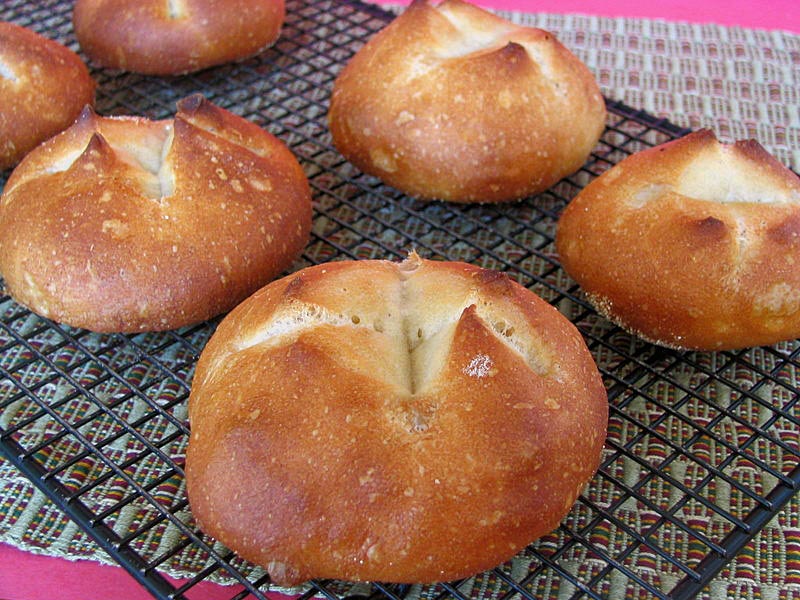
FRENCH-STYLE ROLLS

Avert your eyes, bread baker purists!    The dough for this bread is made in a food processor, and takes about 5 minutes to prepare,  from measuring the ingredients to setting the dough to rise. The recipe comes from Pam Anderson’s “The Perfect Recipe“, and I’ve made it many times in my pre-sourdough starter days. I still make it, when I want homemade bread but don’t feel like slaving over the  preparation. Simple, straightforward, quick, and best of all: works every time!

BASIC FRENCH BREAD
(from Pam Anderson)

1/2 cup warm water
1 envelope ( 2 + 1/4 tsp) active dry yeast
1 cup cold water
4 cups bread flour
2 tsp salt

Sprinkle yeast over the warm water, let stand while you measure the other ingredients.

Add the flour and salt to the bowl of a food processor and process a few seconds to mix.

Add the cold water to the yeast mixture, and with the motor running, pour it into the processor, allowing it to mix until it starts to form a ball. Adjust with water or flour if it feels too dry or too sticky. Process for 30 seconds.

The dough should look like this at the end of processing…

Remove it from the processor, knead it a few times by hand, and place it in a warm spot to rise until doubled in size (1 to 3 hours, depending on the type of yeast and temperature of your kitchen – mine doubled in only 55 minutes).

The dough makes enough for 2 loaves or 12 rolls. Shape them whichever way you like, I made half the recipe as rolls, and formed a loaf with the rest of the dough. Set them to rise for 45 minutes to 1 hour, until almost doubled in size.

Make a deep cross-cut on top of the rolls using scissors;  slash the loaves with a blade or very sharp knife.  Bake the breads  in a 450F oven: rolls for 20 minutes, loaves for 40 minutes.   I bake my breads covered by a roasting pan for 3/4 of the baking time, then remove the cover  to get a nice dark golden crust.

ENJOY!

to print the recipe, click here

I am submitting this post to Susan’s Yeastspotting…  Make sure you drop by to enjoy the weekly collection of breads she offers every Friday.

Add to FacebookAdd to DiggAdd to Del.icio.usAdd to StumbleuponAdd to RedditAdd to BlinklistAdd to TwitterAdd to TechnoratiAdd to Yahoo BuzzAdd to Newsvine

receita em portugues na pagina seguinte….
Continue reading

“LIFE IS A MATTER OF TASTE…”

That was David Rosengarten’s closing line in his wonderful show “Taste,” years ago on FoodTV. Each episode centered around one dish, prepared by David while he talked about its origins, variations, and ultimately, his method to flawlessly reproduce it in your own kitchen. It was a simple format, but it delivered everything I expected from a cooking show. He almost always remained true to the classics. For instance, his shows on quiche Lorraine, cheese souffle and croissants were all based on recipes from Julia Child’s Mastering the Art of French Cooking. But sometimes he would wander off in new directions: his interesting show on “Compromise Clam Chowder” was an example of his gastronomic rebellion. After explaining the differences between the New England and Manhattan methods for chowder, he offered his own version, borrowing a little bit from each. Similarly, his macaroni and cheese included a few “extras” to make the dish less monotonous, and it was absolutely delicious.

Through his show I learned about many exotic dishes such as laarb, before I even had a chance to try it in a restaurant. And, I stopped twisting my nose at offal, because David Rosengarten’s recipes were perfect for any palate. From him I learned how to cook pork ribs in a stove-top smoker, mimicking as closely as possible the best ribs of Memphis, one of the homes of barbecue. I loved watching him prepare Brazilian moqueca, even if his pronunciation of the state of its origin (Bahia) was a little off ;-). His show was classy, informative and fun, and I was sad to see it end.

So, I guess you can imagine how I felt when I received an email from Daniel Boneville, who just produced a video with David, and sent me the link. If you’ve also been suffering from Rosengarten-withdrawal syndrome, allow me to ease your pain, and I cross my fingers that this is just the first of a very long series!

Click here for the one and only David Rosengarten, on a quest to re-create his favorite tomato sauce…

With many thanks to Daniel Boneville….

Add to FacebookAdd to DiggAdd to Del.icio.usAdd to StumbleuponAdd to RedditAdd to BlinklistAdd to TwitterAdd to TechnoratiAdd to Yahoo BuzzAdd to Newsvine

MELLOW BAKERS: CORN BREAD

Have you ever had to run from one side of the airport to another to catch a flight, and managed to enter the plane just before they shut the doors?    That’s how I’m feeling about this bread – the last one to complete the May series of Mellow Bakers!   With only one day to spare,  here I am, bringing you corn bread…

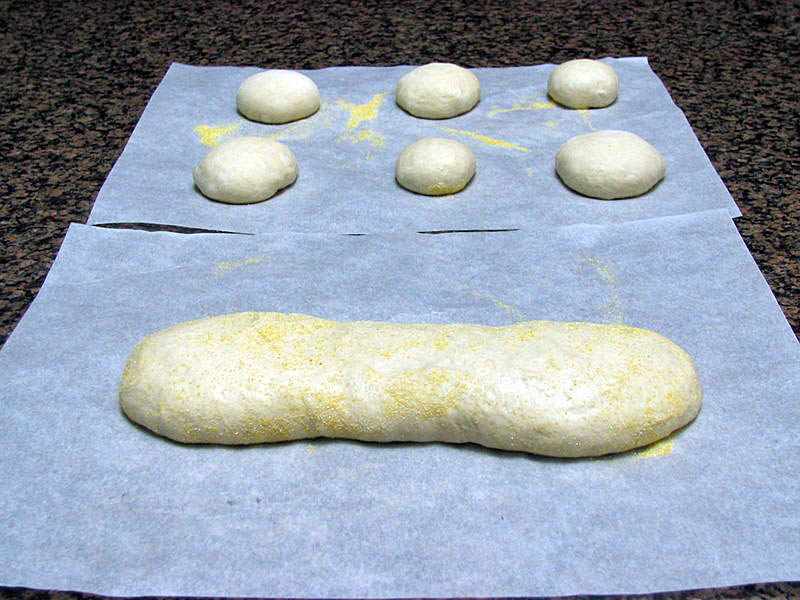
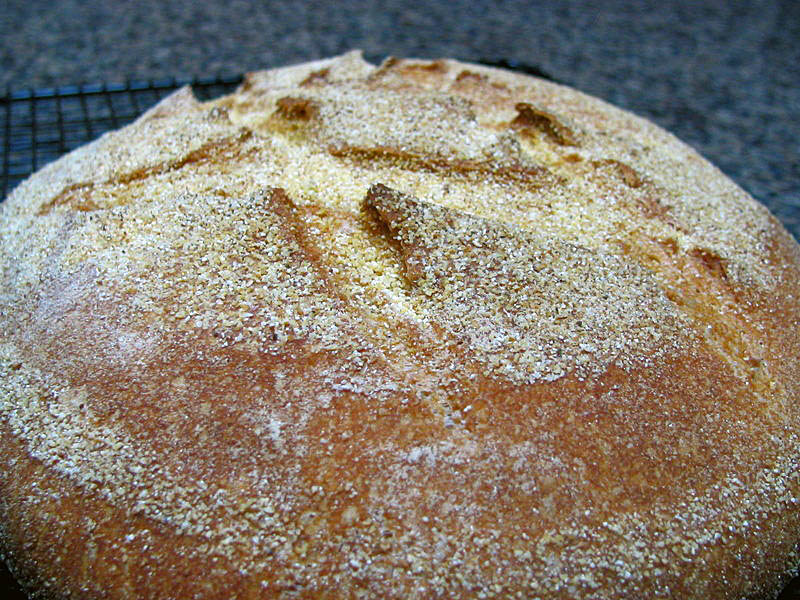
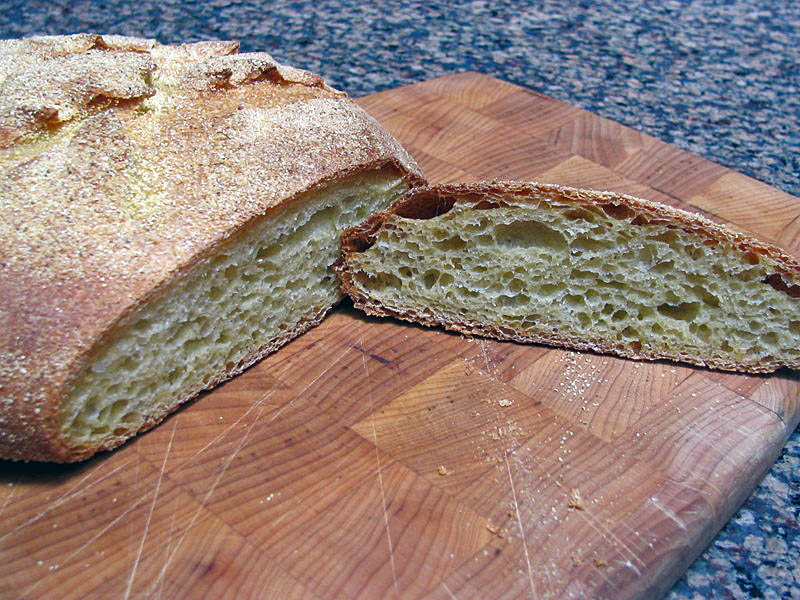
When thinking about corn bread my mind floats towards iron skillets and bacon.    However, Hamelman’s corn bread has nothing to do with that American classic. It is in fact a “regular”, yeast-leavened bread, with corn meal in the dough.   The dough is also leavened with a poolish, a mixture of flour, water, and yeast that pre-ferments for 12 hours.   In typical Hamelman’s fashion, the dough is mixed very briefly, then folded once before the final shaping.    The corn meal imparts a nice yellow tone to the dough, but also makes it feel a little rough.

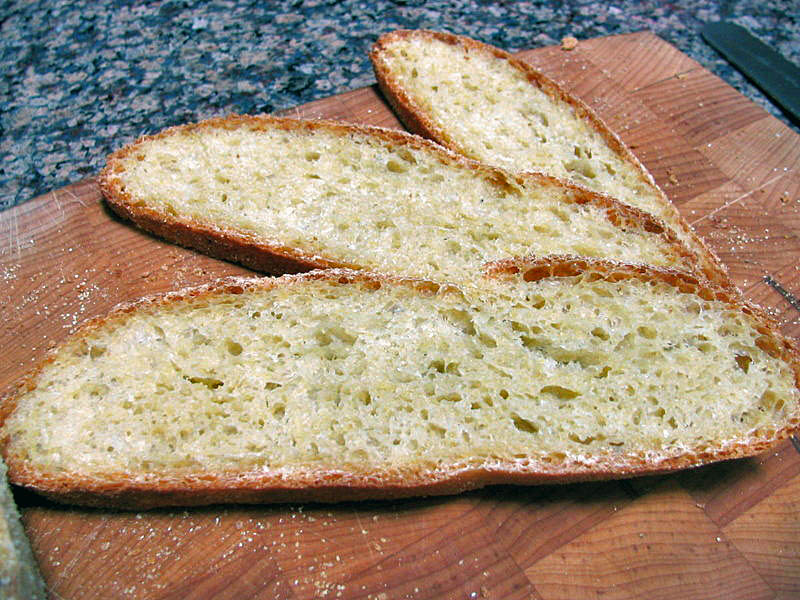
This is a very nice bread, open crumb, delicate flavor… Two thumbs up!

If you want to see all other bakers’ take on Hamelman’s corn bread, click on this link

For those following the Mellow Bakers adventures,  the month of June brings Vermont Sourdough (my default bread),  pizza (I definitely look forward to comparing Hamelman’s dough with my favorite),  and a bread made with beer and roasted sprouted barley (no idea where I’m going to find that :-(). Stay tuned, or… join the fun and bake with us!

ICE CREAM MELTS FOR MANGO

I grew up watching my family members eating mangos and making a huge mess in the process.  Some varieties of Brazilian mango are so fibrous that the “correct” way to eat them is to cut a small hole in the top and suck out the juices while compressing the fruit, which leaves your mouth, face, hands, and possibly even your clothes covered with juice and sticky mango bits.  Some people view this process as part of the fun, but both me and my Dad had nothing to do with it, and only enjoyed a mango if it was laying on a pristine plate, dissected by a knife and fork, with a napkin alongside.

This simple dessert would certainly receive the seal of  approval from my Dad.

MANGOS FLAMBE  (MANGAS FLAMBADAS)
(inspired by my friend Vanda)

4 ripe mangos
1 Tbs butter
2 Tbs granulated sugar (or more)
pinch of salt
1/4 cup rum (or Cointreau or a mix of both)
2 tsp fresh lemon juice

Cut the mango in medium-sized pieces.  Go take a quick shower (optional).  Come back and melt the butter in a large skillet over medium heat.   Add the diced mango, sprinkle sugar all over it, add the salt, and cook gently until the mango starts to get soft.   Taste a piece and decide if you need more sugar.

Carefully add the rum, heat it for a few seconds, and ignite with a match.  Wait until the flames die down, sprinkle a little lemon juice, taste again.   Serve over vanilla ice cream.

ENJOY!

to print the recipe, click here

Comments: You can change this basic recipe in many ways.  For example, you may first caramelize the sugar, and then add the fruit on top.  But, I prefer this preparation I’m posting because it’s simpler and the taste of the fruit is more pronounced.  You may also skip the alcohol with no major harm, but I like the extra flavor it imparts.   If you have leftovers (highly unlikely), they are delicious in the morning with yogurt and a little granola sprinkled on top.   You can prepare bananas in almost exactly the same way, or even along with the mango, but when making bananas flambe, I like to caramelize the sugar first.     My friend Vanda,  who makes risottos and souffles with her eyes closed and one hand tied behind her back, loves to prepare mangos this way.  After dicing the fruit, she usually grabs the pit and takes great pleasure in sucking all the mango-goodness clinging to it, standing next to the sink.   Unfortunately, I never seem to have my camera ready when that happens.  😉

Add to FacebookAdd to DiggAdd to Del.icio.usAdd to StumbleuponAdd to RedditAdd to BlinklistAdd to TwitterAdd to TechnoratiAdd to Yahoo BuzzAdd to Newsvine