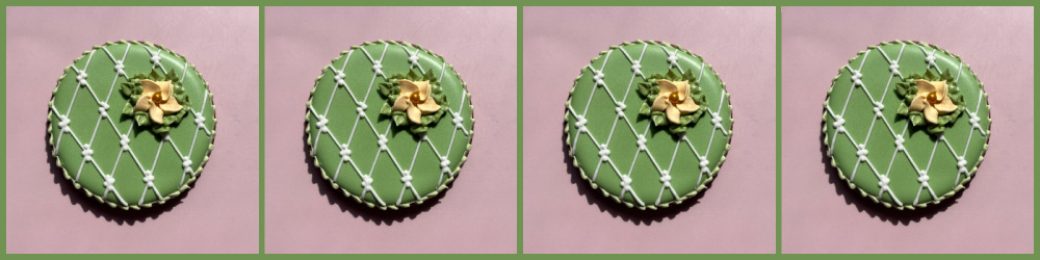
BEWITCHING BIRTHDAY!

One year of blogging! It passed with astonishing speed, proving that time flies when you’re having fun!   It’s surely been fun, sharing what happens in our kitchen with friends, family and lots of other folks, and getting acquainted (at least virtually) with new people and bloggers through comments and emails.

A cake is a mandatory birthday celebration!  Unfortunately,  cake and Sally don’t make a good match.   But in the name of this special occasion I faced my demons and baked a cake. Choosing the recipe wasn’t easy, but I decided by elimination: genoise was out of the question, I’d rather be tortured.   Any recipes involving the instructions “cream the butter with the sugar” were also excluded.  Then, browsing the latest issue of Bon Appetit, I spotted a layered chocolate raspberry cake and I was smitten: that was it! Luscious, beautiful, perfect… would you believe  that the recipe didn’t need an electric mixer?  Instead, two bowls and a whisk…. my kind of recipe!  Even the layering didn’t bother me (although it should have, … but  ignorance is bliss).

So, here it is, my first layered cake, in honor of my baby blog…
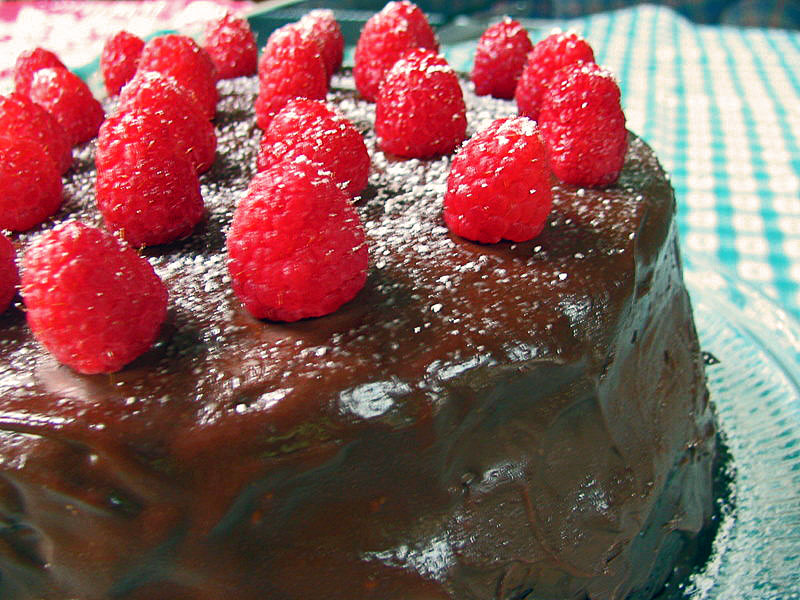
CHOCOLATE-RASPBERRY LAYERED CAKE
(from Bon Appetit, June 2010)

2 cups unbleached all purpose flour
1 + 3/4 cups sugar
3/4 cup unsweetened cocoa powder
2 teaspoons baking soda
1/4 teaspoon salt
1 cup water
3/4 cup buttermilk
3/4 cup vegetable oil
3 large eggs

18 ounces bittersweet chocolate (maximum 61% cocoa), chopped
2 + 1/4 cups whipping cream
6 tablespoons seedless raspberry jam, divided
resh raspberries
powdered sugar

Heat the oven to 350°F. Coat two 9-inch-diameter cake pans with nonstick spray. Line their bottoms with parchment paper rounds and spray the rounds. Sift the flour, sugar, cocoa powder, baking soda, and salt into a large bowl; whisk to blend and form a well in the center. Whisk 1 cup of water, buttermilk, oil, and eggs in a medium bowl to blend. Pour the wet ingredients into well in dry ingredients; whisk just to blend. Divide the cake batter between the prepared pans.

Bake the cakes for 30 minutes or until a toothpick inserted into center comes out clean.  Cool completely in pans on cooling racks.

for the ganache and raspberry topping;
Place the chopped chocolate in a medium bowl. Bring the cream to a boil in a heavy medium saucepan. Pour it over the chocolate.  Let stand for 1 minute, then stir until the ganache is melted and smooth. Transfer 1 + 1/4 cups of the ganache to a small bowl. Cover and refrigerate until the ganache is thick enough to spread, stirring occasionally, about 1 hour. Let the remaining ganache stand at room temperature to cool until  lukewarm.

Invert one cake onto a cardboard round or the bottom of 9-inch-diameter tart pan. Peel off the parchment paper and spread 3 tablespoons of raspberry jam over the top, then spoon dollops of chilled ganache over the surface, spreading it around.   Invert the second cake onto another cardboard round or tart pan bottom.  Peel off  its parchment paper. Carefully slide the cake off its round and onto the frosted cake layer.  Spread the remaining 3 tablespoons of raspberry jam over top of the second cake layer, and pour half of the lukewarm ganache over the cake, spreading it over the sides to cover.  Place the cake in the freezer until the ganache sets, about 30 minutes. Pour the remaining ganache over the cake, allowing it to drip down sides and spreading over the sides if needed for even coverage and smooth edges. Freeze again to set the ganache, about 30 minutes.

Arrange the raspberries in concentric circles atop the cake, then sift powdered sugar lightly over raspberries and serve.

ENJOY!

to print the recipe, click here

Comments: I wish that my cake-phobia was cured, but now I have a few more reasons to stick with breads and pizzas.   At first  my confidence grew as the batter behaved exactly as anticipated, filling two 9-inch cake pans and baking into beautiful brown cakes with only a slight dome in the center.  But the Cake Gods  weren’t quite finished with their conspiracy against me.   Spreading the ganache was nightmarish, to put it mildly. Thinking back, I realize that it wasn’t quite  hard enough to spread, so instead of forming a nice thick layer, it ran down the sides, but my cake-naivete made me go on, thinking  that eventually everything would be OK.

When I placed the second cake on top of the first, once all the slippage-fiesta stopped, the ganache layer had a big gap all around the edges, that stubbornly resisted my attempts to fill it.  In despair, I checked my cake pans, and was shocked and appalled to realize that they were not identical in size – a small difference from one brand of pan to another, which made my layers unequal. My last hope was that the “lukewarm icing” would solve all the problems and make a beautiful, smooth covering of all the boo-boos. But, this was not the case.  Not a chance.  To make a  long story short, my cake ended a bit like the Leaning Tower of Pisa in Italy.  Its sides had nothing to do with the “picture perfect” look in the magazine.    I had hoped to post a picture of my cake on a gorgeous stand with a nice candle in the center, but I settled instead for the only photo that showed more cake than boo-boos.

Cake, my friends, is not for sissies…But, even if its looks were not picture-perfect, it disappeared in an afternoon, devoured with gusto by hungry grad students!  The flavor was amazing: deep chocolaty, with a tangy background of raspberries, not overly sweet, but decadent.  I guess there might be hope for next year… 😉

Add to FacebookAdd to DiggAdd to Del.icio.usAdd to StumbleuponAdd to RedditAdd to BlinklistAdd to TwitterAdd to TechnoratiAdd to Yahoo BuzzAdd to Newsvine

One year ago…. Welcome to my blog!

CAIPIRINHAS 101

THE WORLD CUP IS FINALLY HERE!

The World’s Most Adorable Dog….
printed with permission from Life of Jalo

I grew up watching all the games, and I still remember well when Brazil won (for the third time) in 1970, with a team that joined the one and only Pele’,  Rivelino, Tostao and Gerson, to name four of my favorites.  Most people in Brazil have their own routine  to watch the games and the whole country pretty much freezes when Brazil plays. Our family gathered at my parents’ home,  with my Mom sitting in her favorite chair, always wearing the same robe. It turns out that she wore it in the final game of 1970, when Brazil beat Italy in a nail-biter to capture the World Cup.   That outfit became, and remains to this day the “World Cup robe.”   It was carefully washed and stored away, only to appear every 4th year after that 1970 game.

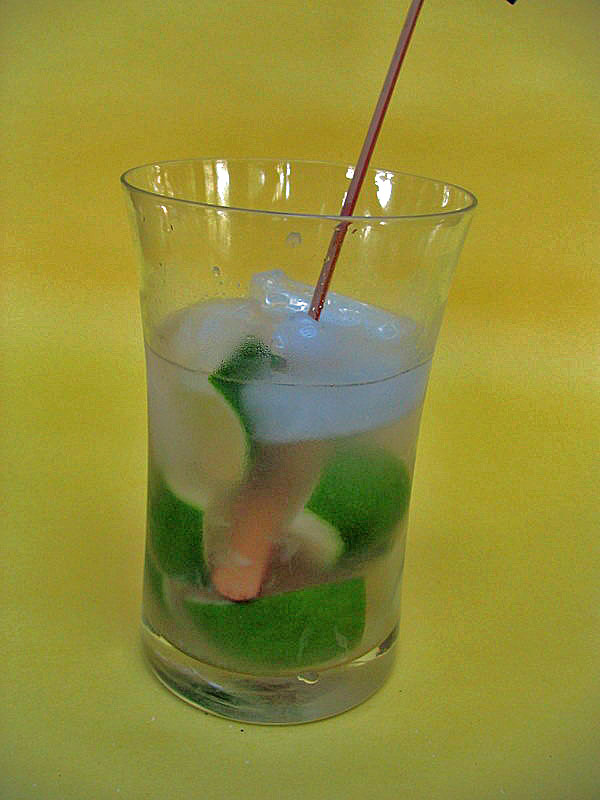
Since I left the country watching the games hasn’t been the same, but  to bring the right spirit to the festivities I like to make “caipirinhas“, Brazil’s national drink.  It’s a blast of refreshing lime with “pinga” – a sugar cane distillate  not too hard to find in the US.
caipirinha1

CAIPIRINHA
(the authentic way, prepared one drink at a time)

1 thick-bottomed glass
1 large lime
1 Tbs granulated sugar
ice cubes (enough to fill the glass)
pinga (aka cachaca, aguardente de cana)

Wash the limes, cut both ends. Quarter the lime lengthwise, removing the central white pith which is bitter. Cut each quarter in half crosswise and place the lime pieces in the glass.

Add the granulated sugar, and working with a wooden pestle , crush the limes with the sugar.  Crushing the fruit with a wooden pestle is essential to the authenticity of this drink, but such tools are hard to find in the States.  If you don’t have one, maybe the handle of a heavy wooden spoon will suffice.   Once you’ve crushed the limes fill the glass with ice cubes or crushed ice. Pour pinga to the top, mix with a spoon and serve.

ENJOY!

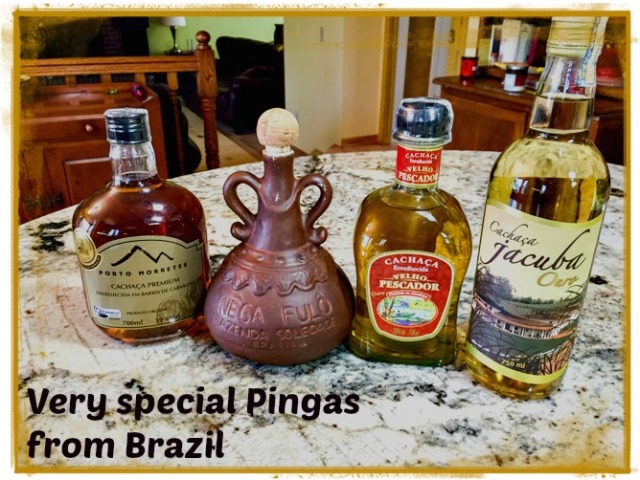
pingas222


Comments: There are many types of pinga around.  Some are clear, some are aged,  turning yellow or  light brown.   Those are smoother, with less bite, and besides in capirinhas they may also be enjoyed by sipping.   In the US, the chances are that you will only find clear pinga, among which the most popular brands are “Ypioca”, “51”, and “Pitu”.

Recently in Food and Wine magazine the well-respected chef Daniel Bouloud shared his take on caipirinhas, and served them in wine glasses. My jaw dropped in disbelief when I saw the photos of this crime!  Mr. Boloud would certainly not approve of Champagne served in a teacup, and drinking  caipirinhas from wine glasses is just as bad.  So please, stick to these basic rules: prepare them in a large, strong glass, one drink at a time  using granulated sugar (no simple syrup, no agave nectar, no mint).

Brazilian-approved variations: You can use vodka in place of pinga, for a drink called “caipiroska“.  They’re delicious too, and probably a little easier next day ;-).   Some of my friends have been trying to convince me that “kiwi caipirinhas” are as good as the real thing, but I am a purist and I haven’t made them.  They do sound tasty, plus you get to eat the kiwi at the end.  Go lighter on the sugar if using kiwis, though.     And let me know if you try it, I might just relax my standards and go for it.  😉

Finally,  a few sound files to help you with Brazilian words…

Caipirinha click here  

Pinga… Cachaça… 

Add to FacebookAdd to DiggAdd to Del.icio.usAdd to StumbleuponAdd to RedditAdd to BlinklistAdd to TwitterAdd to TechnoratiAdd to Yahoo BuzzAdd to Newsvine

WATERMELON-INDUCED DAZE

I guess a picture can be worth a thousand words… 😉

Add to FacebookAdd to DiggAdd to Del.icio.usAdd to StumbleuponAdd to RedditAdd to BlinklistAdd to TwitterAdd to TechnoratiAdd to Yahoo BuzzAdd to Newsvine

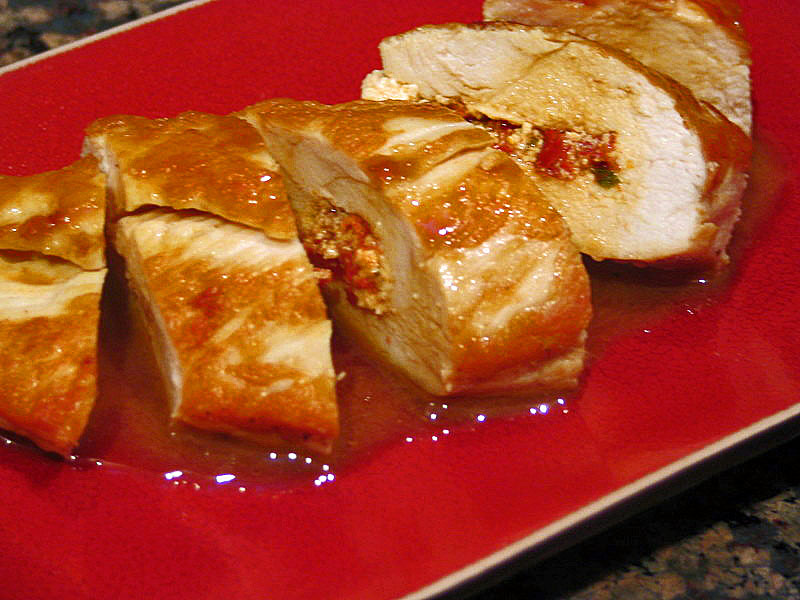
GOAT CHEESE-STUFFED CHICKEN BREASTS

Chicken breasts are often part of our week-night menu, so I’m constantly searching for new ways to prepare them. I adapted this recipe from Cooking New American, a compilation of Fine Cooking recipes that never seems to leave my kitchen.  Dinner was ready in less than 30 minutes, with an aura of sophistication and great flavors.  Not a bad to ending for a very frantic Wednesday…

CHICKEN BREASTS STUFFED WITH GOAT CHEESE AND SUNDRIED TOMATOES
(adapted from Fine Cooking)

3 oz. fresh goat cheese
1 Tbs. milk
1 clove garlic, minced
pinch of red pepper flakes
1 Tbs. chopped sundried tomatoes
fresh oregano leaves (or herbs of your choice), minced
Salt and freshly ground black pepper
4 boneless, skinless chicken breast halves

2 Tbs. olive oil
1/2 cup dry white wine

In a small bowl, mash the goat cheese and milk together until smooth. Mix in the garlic, red pepper flakes, sundried tomatoes, and the oregano.  Season the mixture with salt and pepper.

On the thickest side of each breast, cut a long pocket. Using your fingers, stuff the goat cheese mixture inside,  closing by pressing the flesh together.  If you want, close with a toothpick.

In a large frying pan, heat the oil over medium-high heat.  Cook the chicken on one side until golden brown, 5 to 6 min. Turn the breasts over, season with salt and pepper, and set a small lid on top of them (use a lid that is too small to cover the whole pan, but large enough to enclose the meat).  Continue to sauté until the chicken is cooked through, 8 to 10 more minutes.

Transfer the chicken to a warm serving plate. De-glaze the pan with the wine, scraping up any sticky bits until the liquid reduces to a glossy syrup. Drizzle the reduction over the chicken and serve.

ENJOY!

to print the recipe, click here

Comments: Joanne Weir, the author of the original recipe, says that “this recipe is fun to play with.”   She definitely has a point:  just keep the basic method of thinning the goat cheese with a little milk, then flavor this mixture in any way that you desire.   The presence of the filling, and the fact that the meat cooks under a lid for most of the time, prevents the delicate chicken from drying out.

Sometimes I browse forums in which single guys and girls with little cooking experience ask advice on what to prepare  for that special someone coming over for dinner.   This recipe is a perfect choice: simple, elegant, and light. A little pasta, a green salad, not much else is needed. Of course, wine, candles, and good music… 😉

Add to FacebookAdd to DiggAdd to Del.icio.usAdd to StumbleuponAdd to RedditAdd to BlinklistAdd to TwitterAdd to TechnoratiAdd to Yahoo BuzzAdd to Newsvine

receita em portugues na pagina seguinte…..
Continue reading

MELLOW BAKERS: VERMONT SOURDOUGH

This bread was my choice to begin the  month of June in the Mellow Bakers group project.  It’s also one of our favorite breads, that I bake several times per month.  Hamelman’s book has three variations for this recipe,  all  delicious and easy to make, as long as you are not sourdough-starter-phobic.    😉  One of the great things about this group project is its only rule:  be mellow.   At first, I was wondering  should we bake all  three variations plus the two other breads this month?   But Paul, the wise originator of the group,  reminded me that when in doubt, ask yourself “what’s the mellow thing to do?”     So, I picked one, the Vermont Sourdough with Increased Whole Grain, which is similar to a bread I’ve  already described here.      No matter how many times I make one of Hamelman’s Vermont sourdoughs,  whenever I open the oven and see the loaf, I feel like a teenager whose first boyfriend just rang  the front doorbell…

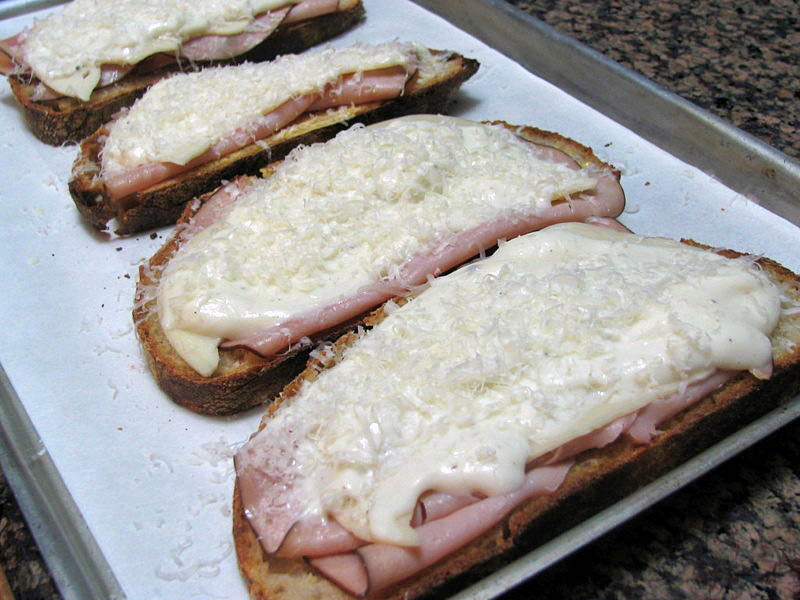
This type of bread is absolutely perfect for a Croque Monsieur….

But, complying with the mellow aspect of this post,  no photos were taken after the croque monsieur was ready…   we were too busy enjoying them and thinking about our times in Paris… Good memories!   I promise to post about my favorite Croque Monsieur & Croque Madame recipe in the near future, consider this just a teaser…

Check my friends’ take on Hamelman’s sourdough by following these links:

Oggi…..

Kuchelatein….

Paul

Joanna’s blog...

Steve’s blog

Anne Marie’s blog…

and Cathy’s site….

Add to FacebookAdd to DiggAdd to Del.icio.usAdd to StumbleuponAdd to RedditAdd to BlinklistAdd to TwitterAdd to TechnoratiAdd to Yahoo BuzzAdd to Newsvine