BRIGADEIROS FOR THE FOURTH OF JULY

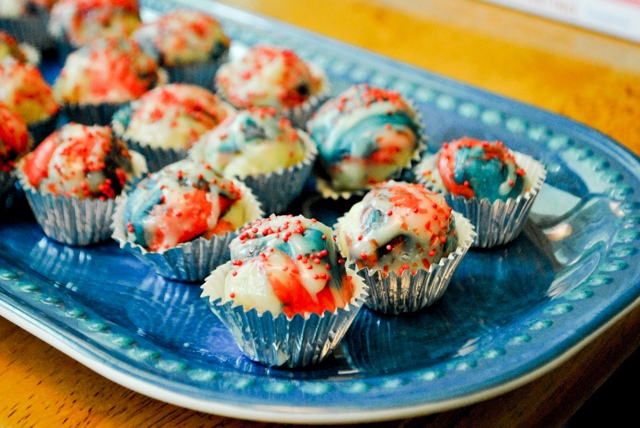
Brazil meets USA, big time! A traditional Brazilian delicacy dresses up in American colors for one of the biggest holidays celebrated here, Independence Day. We were invited for dinner and fireworks over at a friend’s home, and on a last-minute move, I prepared these babies to take with us. They are a departure of the classic Brazilian brigadeiros, made with cocoa powder. In this case, I flavored them with a touch of coconut extract, but probably should have added more than I did, the flavor was barely noticeable.


PATRIOTIC BRIGADEIROS
(from Easy and Delish)

2 (14-oz) cans sweetened condensed milk
1 1/2 Tablespoons unsalted butter
1 teaspoon pure vanilla extract (or substitute 1/2 teaspoon coconut extract)
food coloring (Red and Blue)
red/white/blue sprinkles (optional)
white chocolate ganache to drizzle (optional)

Combine sweetened condensed milk with unsalted butter in a wide, no stick pan over medium heat. Cook, stirring constantly, until smooth.
Mixture is ready when it thickens and starts to peel away or show the bottom of the pan when you scrape it with your wood spoon (about 10-15 minutes). The fudge mixture should be thick enough to reveal the bottom of the pan for a couple of seconds before the mixture levels out again.
When the fudge mixture is ready, remove from the stove top and stir in the vanilla or coconut extract. Next, spread 1/3 of the mixture in the center of a half-sheet pan coated with a little butter so that it won’t stick. 
Place another 1/3 of the mixture in a bowl and stir in  blue food coloring.  Place the remaining 1/3 of the fudge mixture in another bowl and stir in red food coloring. Transfer both the blue and red mixtures to the greased baking sheet, spreading them around side by side. Allow to cool completely.
Using a tablespoon as measurement, scoop out one spoon of the white/red/blue mixture (starting from the center to the edge of the plate) and with greased hands, roll out into balls. Place each little ball into a small paper liner  and decorate the way you want.  They can be kept in the fridge until serving time. 
ENJOY!
to print the recipe, click here

Comments: If you’ve never made traditional brigadeiros, or worse yet – have not even heard about them, please read my old blog post to fix this major gap in your culinary knowledge. It’s important. It was really fun to make these, I advise you to use two cans of condensed milk, so that you have enough to play with. With this amount, I made 26 brigadeiros. They are rich and sweet, so one or two is all you’ll need. But they bring me so many nice memories of my home country, I usually have a bit of a hard time stopping at two. So I accept my weakness, and move on. And jog on. Weight lift on. Kickbox on… you get the picture… damage control.

You can definitely use different colors to celebrate your favorite team, your school, your mood. Halloween Black and Orange brigadeiros might be the rage this year (wink, wink).

SaveSave

SaveSave

SaveSave

SaveSave

SaveSave

SaveSave

SaveSave

SaveSave

SaveSave

SaveSave

SaveSave

IN MY KITCHEN: JULY 2018

I am a creature of habit. Every three months I invite you for a virtual tour of our kitchen, and that time has arrived. In My Kitchen is a fun tradition started by Celia and now hosted by Sherry, from  Sherry’s Pickings. Stop by their virtual spots to say hello…

I like to start by sharing the gifts that found their way into our kitchen….

From Somnath and Aritri, a gift brought by her Dad all the way from India…
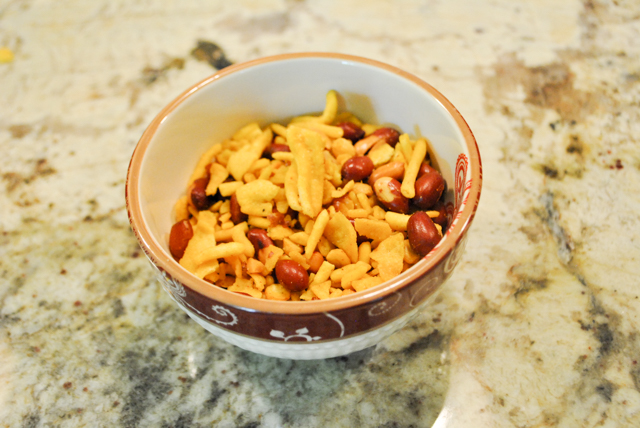
This is Chanachur…  a mixture of peanuts with some incredibly tasty and spicy (but not too hot) fried little thingies made from lentils and chickpea flour. You can read all about it here. Apparently this is very popular in Bengali region. The batch they offered us is considered the very best, sold in one spot only, people form lines to get it. Yeah, lucky me. It is addictive. We usually put just a small bowl with it and keep the rest away. They gave us a lot!  Now, you know what I did, and I hope they won’t hold it against me?  I processed a bit of it in the food processor and used together with bread crumbs for eggplant parmigiana. Oh, my….

From our departmental colleague Dr. P….
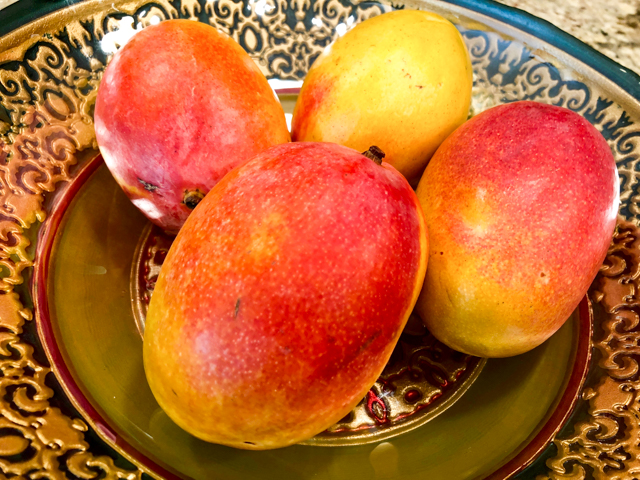
Amazing mangoes! He knows an importer in Kansas City, these beauties arrived from India and were at the peak of their juiciness… The smell! Brazil has delicious mangoes, but I must say these are hard to beat.  Some of their flesh went straight into macaron filling, remember my recent post?

From my beloved hubby…

Can I call it a gift? Well, he makes me coffee every single morning, and sometimes a second one at lunchtime (weekends only, I am a creature of habit as I told you).  He is my favorite barista. The cappuccino he makes beats any other made in the world! It is a daily gift that I cannot be without.

In our kitchen….

A foamer thingie, which I learned about last year in Kelly’s blog. She raved about it, but only recently I caved and got one. It works wonders, making a super creamy foam in a minute. According to Kelly, it also works on cold milk, and you can also foam liquids like coconut milk for a change. Imagine the possibilities!

In our kitchen…
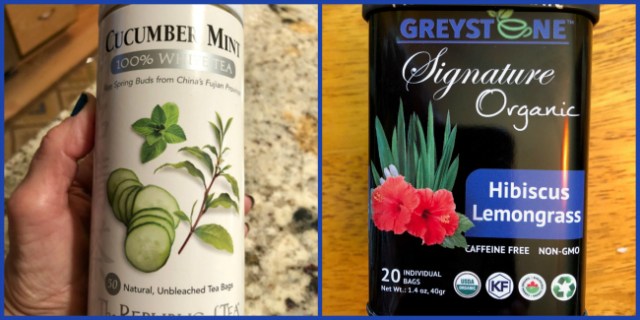
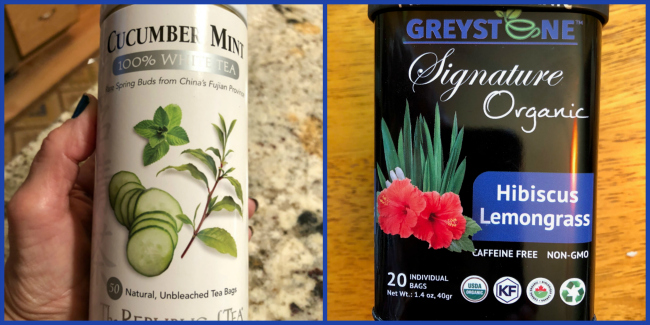
Special tea blends that are perfect for the summer months. Cucumber-mint, super refreshing, and Hibiscus-Lemongrass, a beautiful color and very exotic taste. Love them both, either straight, or diluted with carbonated water with a glass cube or two.

In our kitchen….
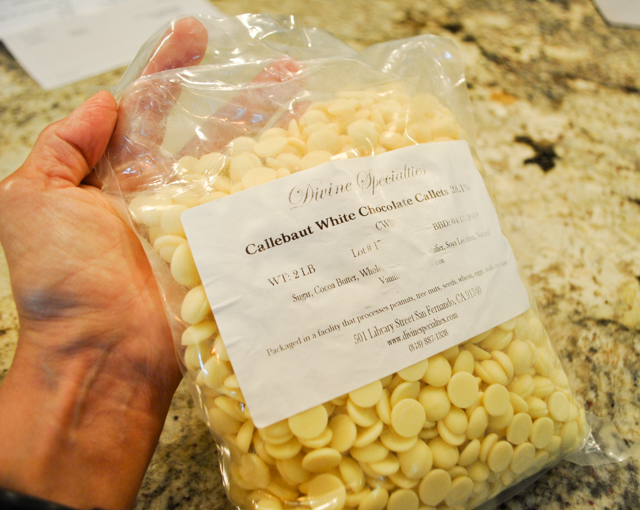
As you know, I’ve been baking a lot lately, so I decided to invest in a real good white chocolate and ordered this bag before the weather got so hot that shipping would be problematic. It is absolutely delicious! The only problem is not grabbing a handful or three every time I bake with it. I adore white chocolate… it is truly one of my weaknesses.

In our kitchen…

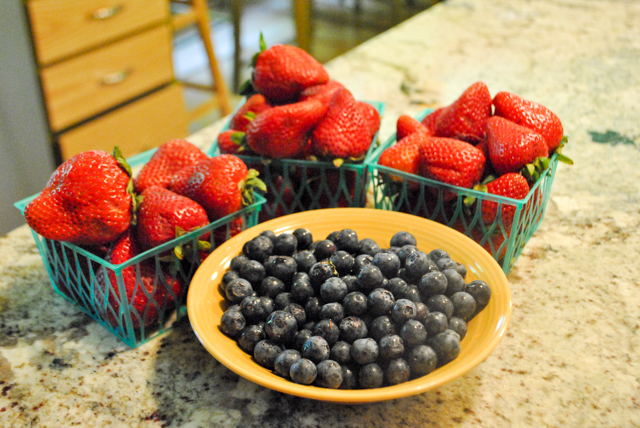
Great fruit from one of the markets in town. Strawberries are in fact from California. We eat local here. Everything comes from Planet Earth. Absolutely everything (wink, wink).

In our kitchen…

Haven’t tried these yet, but found them at Hobby Lobby and well, they jumped into my shopping cart. I tried to negotiate with them, “please, leave me leave me”, but they refused. I now must absolutely learn how to temper chocolate so I can play with my new toys. I imagine the learning curve to be a bit steep. But that’s part of the fun.

In our kitchen…

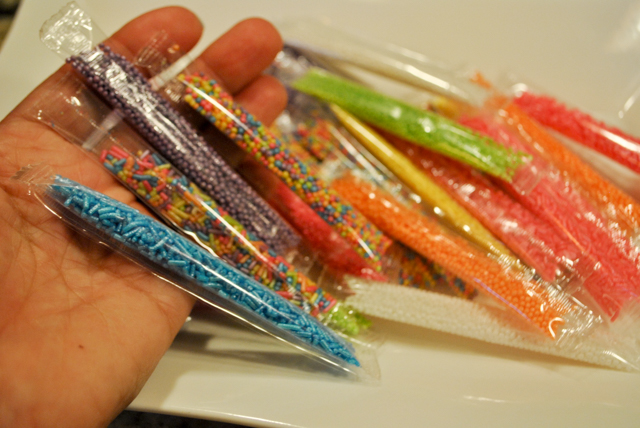
Also from Hobby Lobby. Can you resist these little packages? They are so adorable, each has just a small amount of sprinkles which will be perfect for certain French cookies called macarons. In case you suffer from Macaron-Obsession. Like some people.

In our kitchen…

A knife sharpener recommended by America’s Test Kitchen. We are divided in our opinion about this gadget. I really like it. Phil won’t use it. He always grabs that sharpening file that comes with knife sets, ours is probably over 10 years old, but he loves it. Oh, well.

In our kitchen…
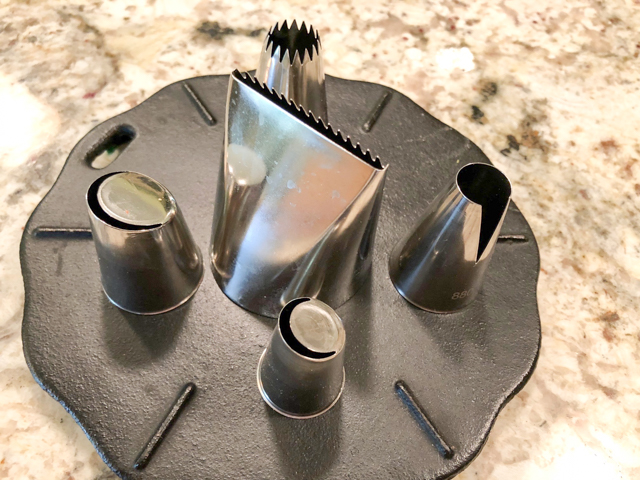
A few special piping tips. Large star tip, great for meringues, the one with the cut on the side is a St. Honoré tip, perfect for that beautiful cake, but also great in topping pies with swiss meringue, for instance. The two medium-sized can be used to pipe leaves and also some exotic flowers. I am not even close to attempting those yet.The larger one in the center is perfect to add buttercream to cakes, as it covers a nice surface quickly. You can then work the offset spatula to make things perfect. Or almost. I am a beginner. Enthusiastic, but beginner regardless.
In our kitchen…
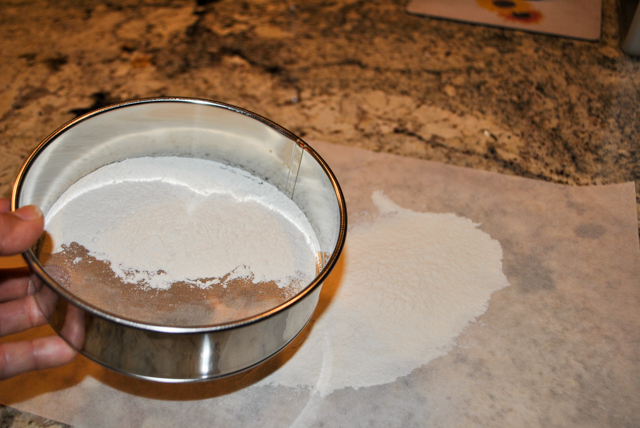
A 6-inch metal sifter. This thing is money. It is the perfect size for any job, and the mesh is fine enough that you can use to sprinkle a light coating of flour on breads, for instance. I am totally in love with it.

In our kitchen…


Liquid glucose. This is a very special ingredient used in concoctions like the famous mirror glaze. I won’t lie to you, it is a pain in the butt to measure, it is the messiest ingredient in the known universe, but sometimes you need to go through clouds to see the light. Like in a mirror. Mirror glaze. See what I did?  (I am easily amused).

In our kitchen…

An assortment of stencils that come in handy to decorate certain cookies. But of course, they can be used on all sorts of productions, from cakes to… breads!  Why not, right?

In our kitchen…
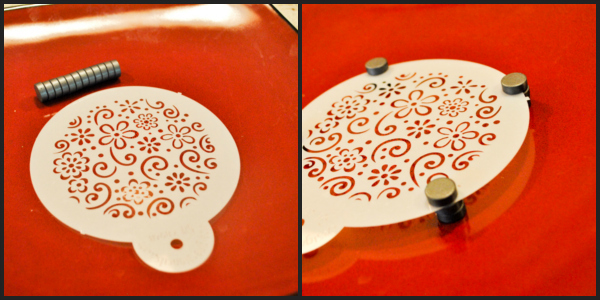
These are too cool for words! A set of small but powerful magnets. You can use them to firm your stencil in place, and then all you have to do is slide the cookie underneath to use the air-brush, or a regular brush. Very cute idea, amazing what people come up with.

In our kitchen…
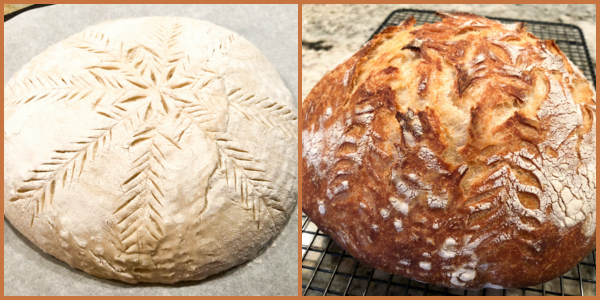

A not so successful attempt at artistic bread slashing. This was a sourdough bread made with a small amount of sprouted wheat flour. It definitely had a mind of its own as far as slashing goes… Still tasted great, so we were fine with it.

In our kitchen…
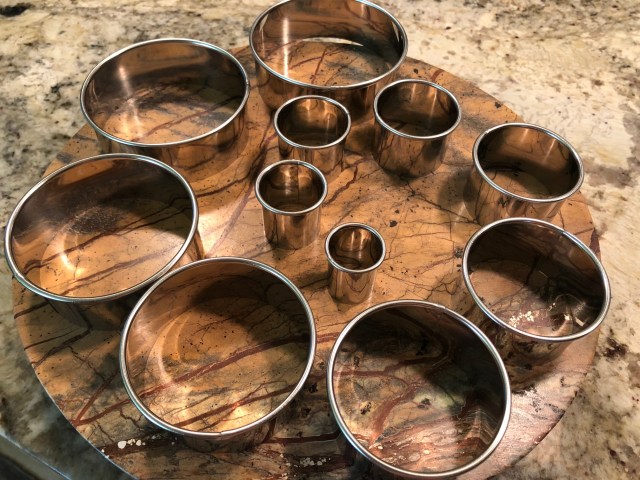
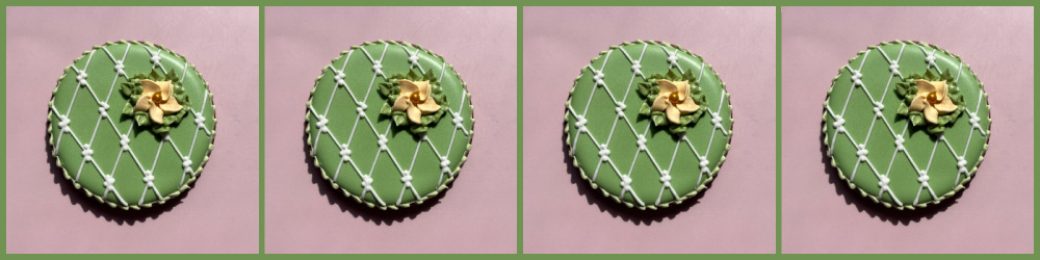
A set of Ateco round cookie cutters, in all sizes you might need. Love them… And they don’t work only for cookies either (stay tuned).

In our kitchen…

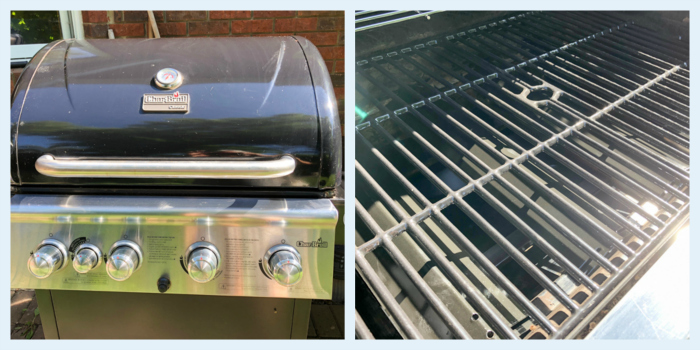
Thanks to the labor of love of my beloved husband, our grill is totally refurbished. He put new burners and burner covers, new grill grates, new gas tubing. All that while wearing a sling on his right arm due to shoulder injury. Awesome is his middle name…

BUT, BUT, WAIT!

What’s this incessant noise I hear? Seems like whining, moaning, mixed with… yes, barking… quite a bit of barking, actually. Pups are impatient. Say that I’ve been wasting the time of my readers for too long.  Fine. Let them bark their piece.

Buck and Bogey firmly believe that a big nose is a must. Big noses sniff better, inspect the food bowl better, and are easier for Mom and Dad to hold and admire.


Oscar, however… is not buying it.

Truth is, we love them equally, no matter the size of their sniffers.
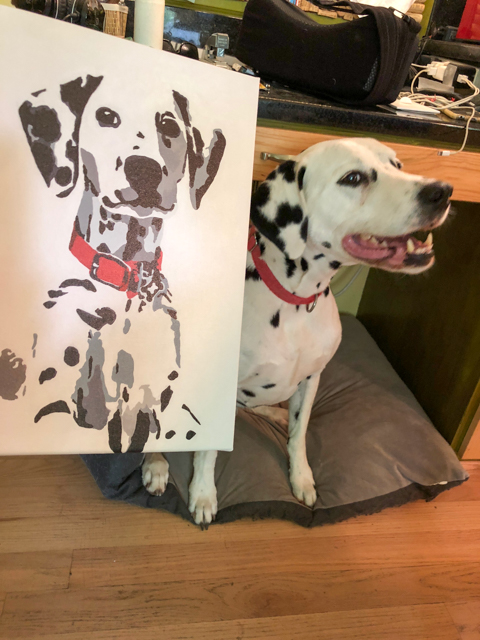
Each got their own chance to shine and be immortalized in our kitchen wall.

Handsome and I know it…


Cute, and I know it…

Here they are, The Magnificent Trio!
(artwork from iCanvas.com)

Unfortunately, they are not always on the top of their game. Mom and Dad were excited about Movie Night, but The Magnificent Trio was not particularly interested in the plot. They demand a different genre next time. Featuring some squirrels, and perhaps a mailman chase with a real happy ending.


Bogey works on his paranormal activities…

That does not seem to work very well, so he often gives up and takes a nap instead.

Which clearly gives him the needed energy to destroy what was sold as a “super-long-lasting ball for the strongest doggie in your loving home.”  Yeah, right.

But even the cutest pups in the world have some Karma going their way….

Bath? Did anyone say bath? What for? I smell awesome! I worked so hard to develop my unique fragrance… and now this!

That does it. I am not having anything to do with ANY of you.
You can all TALK TO THE TAIL!
(special thanks to Dorothy from Shockingly Delicious  for the “talk to the tail” caption).


You think THAT’s Karma? 

I need a doggie lawyer! Please send help!

Osky definitely seeks revenge by rubbing his freshly shaved body into Mom’s precious yoga mat…

Never a dull moment, folks…

Oscar insists he is not interested in bananas, even if he sees his brothers going crazy for a little piece. I am not a monkey. So do not expect me EVER to eat this fruit.  And please, remove it from my resting area. The sooner, the better.

Obviously, I am very selective as far as my food intake. And no, I would never eat grass.
What makes you think otherwise?

The pups adore their Daddy, and compete for his attention…

Truth is, they all believe to be the center of the universe, and think they can prove it.

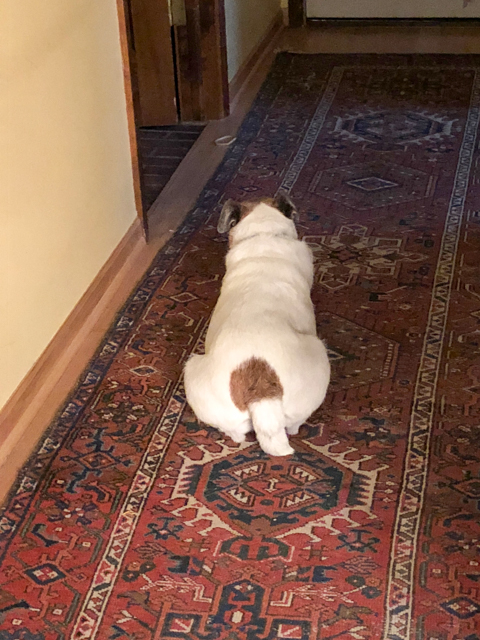
Of course I am The One! They got this rug to match my fur…
See? I can make my tail disappear in it!

What’s the big deal in matching a rug? I am The One! I match Mom’s coolest looks!


Need I say anything?

That’s all for now, folks…  We hope to see you again soon!

 

ONE YEAR AGO: In My Kitchen, July 2017

TWO YEARS AGO: Secret Recipe Club: Falafel and a Bonus Recipe

THREE YEARS AGO: Chocolate Toffee Banana Bread

FOUR YEARS AGO: In My Kitchen, June 2014

FIVE YEARS AGO:  Strawberry Frozen Yogurt

SIX YEARS AGO: Baked Coconut and “The Brazilian Kitchen”

SEVEN YEARS AGO: Honey-Glazed Chicken Legs

EIGHT YEARS AGO: French-Style Rolls

NINE YEARS AGO: Chicken Breasts, Coffee, and Serendipity

SaveSave

SaveSave

SaveSave

SaveSave

SaveSave

SaveSave

SaveSave

SaveSave

SaveSave

SaveSave

SaveSave
SaveSave

SaveSave

SaveSave
SaveSave

SaveSave

SaveSave
SaveSave

SaveSave
SaveSave

SaveSave
SaveSave
SaveSave
SaveSave

SaveSave
SaveSave

SaveSave
SPRINKLED MERINGUES

This is a fun recipe to make with kids. So simple! The idea was in a very nice cookbook, called Sweetapolita, which I very highly recommend for those who have been bitten by the Baking Bug. I haven’t asked for permission to share her recipe and method to make meringues (she has a few little tricks up her sleeve), but you can definitely use any meringue recipe out there. The secret is to bake them slow and low, and allow them to dry for a while inside the closed, turned off oven. I used a closed star tip to pipe mine, but you can go with a regular piping tip, or even just use a spoon.

For a classic meringue recipe using the French method click here.

After they are done, you melt some white chocolate, and add your favorite type of sprinkles into a small bowl. Dip the bottoms of the meringues in chocolate, then coat with sprinkles.  It is a bit tricky to get the amount just right, but no matter what you do, they will be a ton of fun to make and eat.

You can customize the color of your sprinkles too, of course. Maybe your favorite team is playing in the World Cup? Or your kid’s team will have a nice baseball match and you are the one in charge of loading them with sugar after?

Any kid will love these!

ONE YEAR AGO: Incredibly Simple Times Three

TWO YEARS AGO: Dan Lepard Simple White Loaf

THREE YEARS AGO: Maureen’s Fabulously Fudgy Brownies

FOUR YEARS AGO: Wheat Berry Caraway Bread

FIVE YEARS AGO: Mexican Focaccia 

SIX YEARS AGOSunny Kamut Salad with Roasted Lemon Vinaigrette

SEVEN YEARS AGO: Pane de Casa & Crostini

EIGHT YEARS AGO: Down-home Dig-in Chili

NINE YEARS AGO:  Cinnamon Rolls

SaveSave

SaveSave

SaveSave

SaveSave

SaveSave

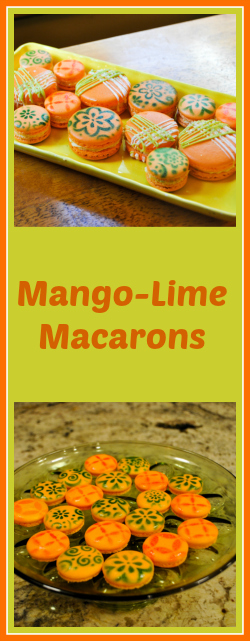
MANGO-LIME MACARONS

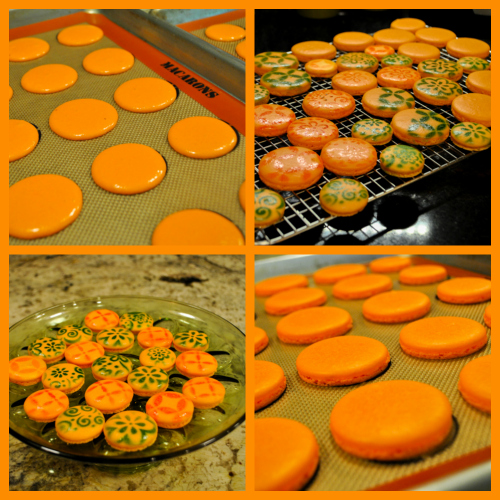
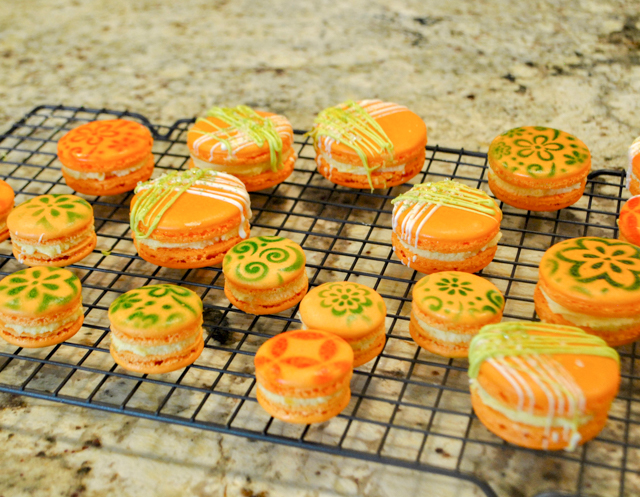
Brazil meets France, big time. If I was talking soccer, that would be pretty unsettling, but since I mean macarons, it’s all good! Macarons shells are considered overly sweet by many people, so a filling that balances that is my favorite option. Do not skimp on the lime zest, it is absolutely mandatory in this recipe.  I put my air-brush to work, but in case you do not have one, a simple drizzle of white chocolate will do just fine.

MANGO-LIME MACARONS
(shells from this post, filling inspired by Joanne’s blog)

for the shells:
198 g powdered sugar
113 g almond meal
113 g egg whites at room temperature
a pinch of cream of tartar
100 g granulated sugar
Orange Gel color from AmeriColor
2 drops vanilla extract

for the filling:
230 g white chocolate, coarsely chopped
¾ cup heavy whipping cream
2 tbsp unsalted butter
¼ cup mango puree
zest of one lime or a bit more (taste and decide)

to decorate: white chocolate, melted, white and tinted with lime green (optional)

Line 2 or 3 heavy baking sheets with parchment paper or Silpat mats. Layer the powdered sugar and almond meal   in a food processor. Pulse until the mixture looks like fine meal, about 15 seconds. Pass through a sieve and transfer to a small bowl. Set aside.

Place the egg whites and pinch of cream of tartar in the bowl of a stand mixer fitted with the whisk attachment. Make sure that the bowl and the whisk are impeccably clean. Starting on medium speed, whip the whites with the cream of tartar until they look like light foam. The whites should not appear liquid. The foam will be light and should not have any structure.

Slowly rain in the granulated sugar, trying to aim the stream between the whisk and the side of the bowl. Turn the speed up to medium-high. Continue to whip the meringue until it is soft and shiny. It should look like marshmallow creme. Add the gel color and the vanilla. Staying at medium-high speed, whip the egg whites until the mixture begins to dull and the lines of the whisk are visible on the surface of the meringue. Check the peak. It should be firm. Transfer the whites to a medium bowl.

Fold in the almond meal mixture in three increments. Paint the mixture halfway up the side of the bowl, using the flat side of a spatula. Scrape the mixture down to the center of the bowl. Repeat two or three times, then check to see if the mixture slides slowly down the side of the bowl. Put the mixture in a piping bag fitted with one of the tips listed above. Pipe on the prepared baking sheets.

Slam each sheet hard four to six times on the counter. Then fist bump each end of the sheet’s underside twice. Let the unbaked macarons dry until they look dull but not overly dry. Drying time depends on humidity. Ina dry climate, the macarons can dry in 15 to 20 minutes; in a humid climate, it can take 35 to 40 minutes.

While the macarons are drying, heat the oven to 300 F. Bake one sheet at a time on the middle rack. Check in 11 minutes. If the tops slide, then bake for 2 to 3 more minutes. The macarons should release without sticking. Check one or two. If they stick, put them back in the oven for 1 to 2 more minutes. Let the macaroons cool for 10 minutes before removing from the pan.

Decorate shells before filling using an air-brush and stencils, or if you prefer to decorate with a drizzle, do it after pairing and filling the macarons.

For the mango white chocolate ganache, place the chocolate in a heat-resistant bowl. Bring the heavy cream to a to a simmer in a heavy-bottomed pot over medium heat. When bubbles start to form along the sides, remove from the heat and pour over the white chocolate. Allow to sit for a minute before stirring to combine. Whisk in the butter until completely melted. Stir in the mango puree and the lime zest until combined. Refrigerate overnight, or until set.

Remove from the fridge and whip until slightly thickened, about 3-4 minutes. Pipe onto half of the macaron shells and then sandwich with a second shell. Allow to chill overnight so that macarons will mature and have a perfect consistency.

ENJOY!

to print the recipe, click here

Comments: I am quite smitten with my air-brush thingie… It takes just a little bit of getting used to, the main thing is to make sure you keep the spray 6 inches away or farther from the target. Otherwise the ink blotches and you don’t get the real nice effect of air-brushing.  Obviously, this means it can be a bit messy, but the dyes wash out very easily. I just place a parchment paper under the shell I’m painting.  There is one super cool gadget to help with stenciling cookies, though. I will be featuring it on my next installment of In My Kitchen, in a few days.  Don’t miss it.

The filling for these macs was very tasty. The lime zest brightens it up, and counteracts the sweetness of the white chocolate ganache.

I suppose I must add a new category to my blog. Macarons.
Since I cannot fight my obsession, I shall embrace it.

ONE YEAR AGO: Honey-Glazed Sriracha Meatballs

TWO YEARS AGO: Slow-cooker Braised Lamb Shanks

THREE YEARS AGO: How about some coffee with your steak?

FOUR YEARS AGO: Celebrate Wednesday with a Spiral Kick

FIVE YEARS AGO: Carrot Flan with Greens and Lemon Vinaigrette

SIX YEARS AGO: Granola Bars

SEVEN YEARS AGO:  Awesome Broccolini

EIGHT YEARS AGO:  A Twist on Pesto

NINE YEARS AGO: Ciabatta: Judging a bread by its holes

FUJISAN BREAD

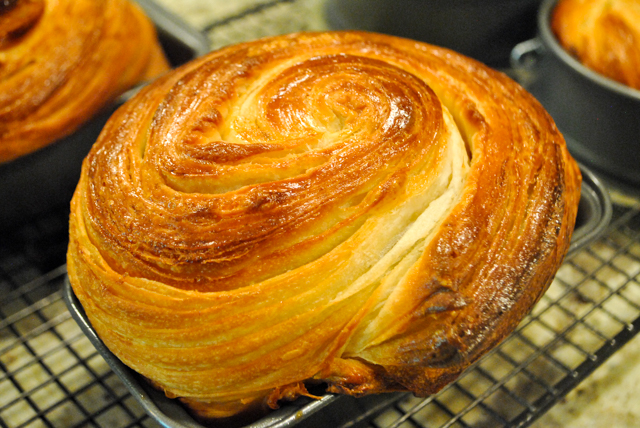
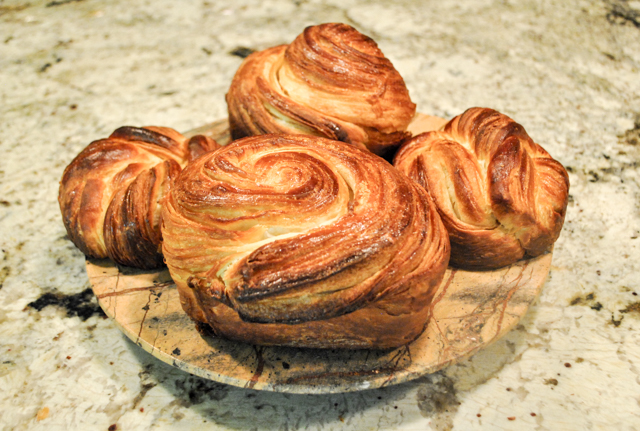
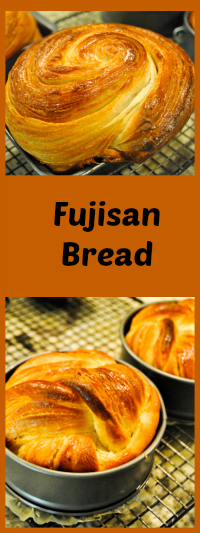
One day a handsome croissant was minding his own business when he spotted this gorgeous brioche in a French boulangerie. It was love at first sight. Marriage was a natural move, and being a very adventurous couple, they chose Japan for their honeymoon. Their first baby was named Fujisan Bread. Little Fujisan turned out as a real showstopper. Layers and layers of buttery sweetness, perfect mixture of Mr. Croissant and Ms. Brioche. Depending on how you shape it, it will indeed remind you of Mount Fuji…

FUJISAN BREAD
(from BakeStreet)

400 g strong/bread flour
100 g cake flour
220-250 g water (you will use 220 to begin with, hold the rest)
75 g sugar
50 g tangzhong (recipe below)
1 egg
20 g milk powder
30 g condensed milk
40 g unsalted butter at room temperature
5 g dry yeast
7 g salt
250 g cold unsalted butter (to laminate)

for tangzhong (water roux):
9 g plain flour
44 g water

DAY ONE:
Make tangzhong. In a small saucepan pour the water together with the flour, place on low heat and stir with the help of a whisk. Cook, stirring constantly, until it thickens slightly. Remove from heat and pour into an airtight container. Cover and let cool completely. Once the tangzhong is completely cold, make the dough. Tangzhong is a Japanese method of adding cooked flour to bread dough. It provides a creamy texture and allows the bread to stay fresh longer.

Set aside a tablespoon of water to dissolve the yeast. In the bowl of the stand sift both types of flour, along with 220 g of water, egg , milk powder, prepared (cold) tangzhong, condensed milk, sugar and salt. Knead with the dough hook at low-speed until the dough is well-developed, about 15 minutes.

Add half of the butter and knead again until completely integrated. Add the remaining butter and the yeast dissolved in the tablespoon of water, and again knead until fully incorporated.  At this point, if you think the dough can absorb more water, add a bit more up to a maximum of 30g. My dough was good without it. The dough should feel very soft but slightly sticky to the touch.

Remove the dough from the bowl, make a ball and place it in an airtight container, previously greased, until it grows by one-third of the volume, about 2 hours.  Retard it in the fridge overnight.

DAY TWO:
Make the butter sheet.
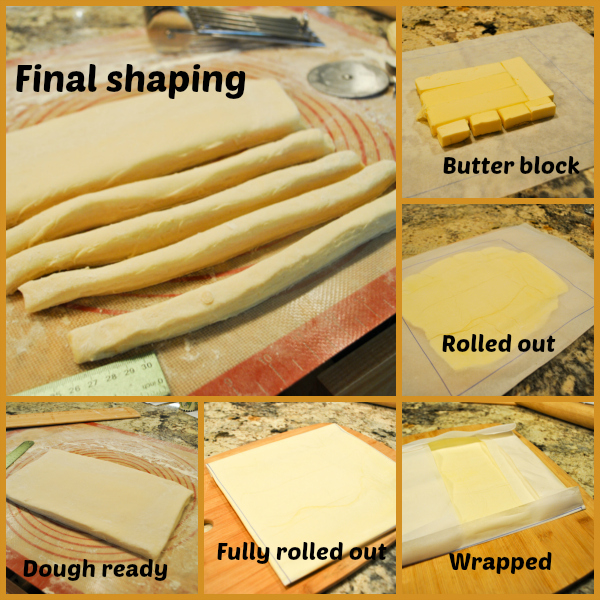
Prepare a sheet of parchment and draw a square of 9 inches in the center. Flip the parchment around so that the drawing is at the bottom. Place the butter cut in flat pieces in the center of the square as shown in the composite photo. Add a sheet of parchment on top, and beat the butter with a rolling-pin. Your goal is to stretch it a little, but don’t worry yet about filling the space of the square. As the butter stretches a bit, fold the parchment sheets together using the dimensions of the square you drew. Now roll the butter with the rolling-pin until it covers that exact area, as uniformly in thickness as possible.  Freeze if while you roll the dough out.

Take the dough out of the fridge and roll it over a lightly floured surface to a rectangle of 18 by a little over 9 inches (you want to enclose the dough in it, so make it a bit wider than 9 inches. Remove the butter from the freezer. If it is too hard, wait a few minutes until it is a bit flexible (if you roll it around the edge of your table, it should not break, but bend nicely).

Place the butter in the center of the dough, so that the width of the butter and the width of the dough is about the same, with just a bit of dough hanging at the edge. Fold the ends of the dough on the butter, bringing them to meet in the center (you should have about 4.5 inches on each side of the butter block. Pinch the dough to enclose the butter, in the center and all around the upper and lower edges. Roll the dough again to 18 by a little over 9 inches.  Fold in thirds, like an envelope, with the long edge facing you. This is the first fold. Refrigerate for 20 to 30 minutes. Roll the dough again to 18 by 9 inches. Use flour on the surface, but not too much. Move the dough around to make sure it does not stick.

Do two more folds exactly the same way, refrigerating after each one.  After the third and last fold, refrigerate the dough for 30 to 40 minutes, then roll out to a rectangle of 14 by 8 inches. Use a pizza roller to cut the edges so that you expose the lamination, and correct any problems with the dimensions.

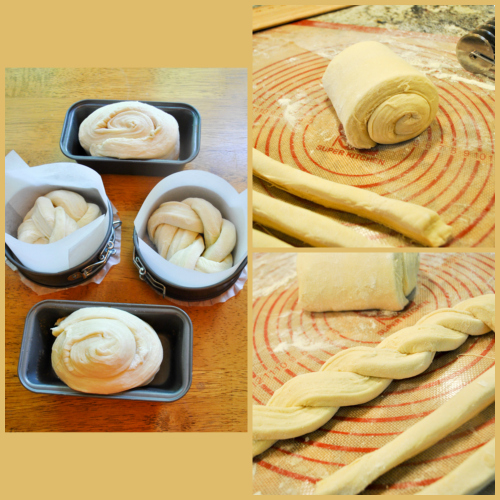
To make the smaller rolls, cut strips that are about 1.2 inches thick, then use two strips to make a braid. As you form the braid, keep the laminated part facing always up (see the photo).  Roll the braid keeping the ends underneath, and place inside any baking container that will fit them snuggly. I used 4 inch springform pans lined with parchment.

To make the loaves, roll the dough tightly, jelly-roll style, then cut slices. Add them to any container that will seem a bit tight to hold them. This will force the dough to expand up during baking, giving the bread its characteristic look.

Let the shaped breads proof for 3 hours at room temperature, then bake in 400 F oven for 10 minutes, reduce the temperature to 375 F, and bake for 20 more minutes.

Cool for 10 minutes before removing from the baking pans, and cool completely before slicing.

ENJOY!

to print the recipe, click here

Comments: Laminated dough can be a bit scary to tackle, but as long as you pay attention to a few details, all should go reasonably smoothly. First, keep in mind the dimensions. I find it helpful to keep a big wooden ruler laying right on the surface I’m working on, so that even before I take precise measurements, I can judge if I am almost there. Second, make sure to lock the butter inside the dough by checking that every single bit of the two layers of dough are properly sealed. Third, do not rush any part of the process. Allow the dough to cool down after each folding cycle, that is what ultimately will give you the nice layers you are hoping for. Melted butter will work against you. And speaking of butter, I highly recommend the trick of rolling it inside the folded package of parchment. Make the fold tight, and you will end up with a perfect square of butter, with uniform thickness. You can make a rectangle if it fits your method of lamination better. 

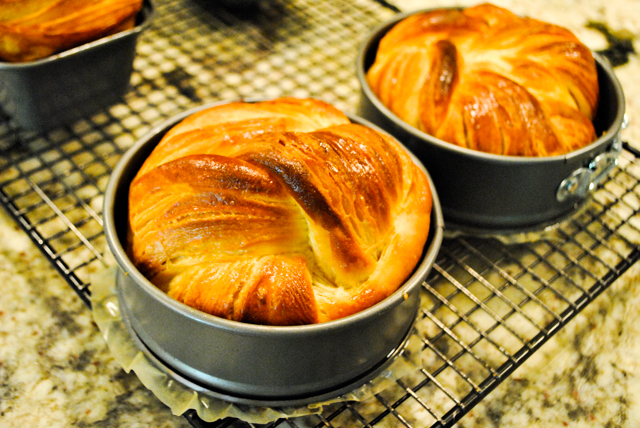
You can shape the dough in many ways, I tried two different methods. In the first, the braided dough is rolled and lodged inside a round baking dish. When you form the braid, make sure the laminated side of the dough is kept exposed. Obviously, as you roll it in a coiled structure, some of it will be hidden, but try to allow some bits out there on the surface of the shaped bread.

The Mount-Fuji-shape was my favorite, by far. Since the lamination is fully exposed, the dough explodes up in a very impressive way. Such a pleasure to see it in the oven. Yeah, I was kneeling in front of it for a while, which left the pups quite amused.

This amount of dough made enough for four breads. It could be fun to bake the full amount in a single, large round pan, perhaps shaped in four separate regions, each exploding up according to their mood…  So many possibilities!

As far as taste, this is really a very rich croissant-type bread, the high sugar content (given by the condensed milk and sugar) makes it reach a golden brown tone quite quickly. Be prepared to reduce the temperature of the oven and/or protect the surface with a bit of foil, if needed.

The crumb is moist and flavorful enough for Fujisan to be enjoyed without any adornments, but a nice smear of your favorite jam could be a winning combination.

This bread is a perfect project for a weekend. I think that the final proofing (of the shaped loaves) could conceivably be retarded in the fridge overnight, so that you could have Fujisan for a special breakfast or brunch. I have not tried that, but it’s definitely worth experimenting with.

ONE YEAR AGO: Air-Fried Tomatoes with Hazelnut Pesto and Halloumi Cheese

TWO YEARS AGO: Red Velvet Layered Cake

THREE YEARS AGO: Lemon-Lavender Bars

FOUR YEARS AGO: Quinoa Fried Rice

FIVE YEARS AGO: Carrot Flan with Greens and Lemon Vinaigrette

SIX YEARS AGO: The Secret Recipe Club: Granola Bars

EIGHT YEARS AGO:  Awesome Broccolini

NINE YEARS AGO:  A Twist on Pesto

EIGHT YEARS AGO: Ciabatta: Judging a bread by its holes


SaveSave

SaveSave

SaveSave

SaveSave

SaveSave

SaveSave

SaveSave

SaveSave

SaveSave

SaveSave

SaveSave
SaveSave

SaveSave

SaveSave

SaveSave
SaveSave

SaveSave
SaveSave

SaveSave

SaveSave
SaveSave
SaveSave

SaveSave