PLAYING WITH PECTINASE

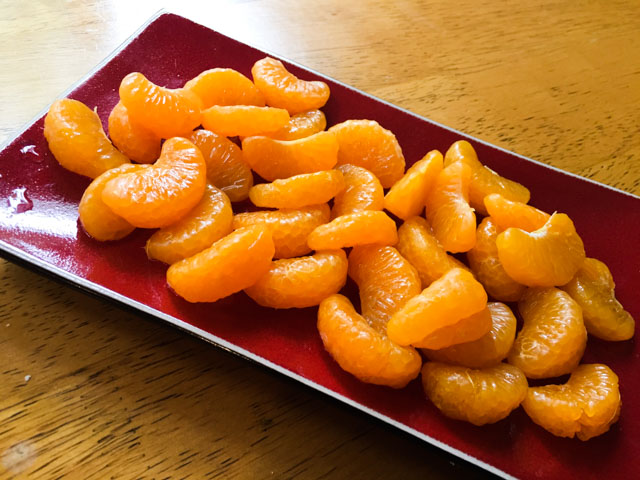
I subscribe to a site called Chefsteps.com that deals with stuff going from molecular gastronomy to sous-vide, but also covers more mundane topics, like making the most of your mandoline or brewing that perfect cup of coffee. A few weeks ago they featured the use of pectinase to turn clementine segments into the sweetest gems similar to those you can buy canned, but are extensively processed to taste so great. The method couldn’t be simpler: you peel the fruit, separate the segments and place them in a bowl with water containing a few drops of pectinase. What is pectinase? First, a very brief lesson in biochemistry. All enzymes are proteins with a specific activity on a component referred to as its “substrate.” They usually follow a nomenclature with the suffix “ase” to indicate which substrate the enzyme acts upon. Proteases degrade proteins and are of course part of our digestive system. DNase destroys DNA, and it is a nightmare for those working in molecular biology. We need to be always protecting the DNA we work with from being degraded. Pectinase destroys pectin which is the main component that forms that white pith around citric fruit segments. The pith is not only harsh in texture, but also in taste, quite bitter.  By allowing pectinase to work, that outside layer is removed, and you’ll end up with perfectly smooth pieces of fruit that will taste considerably sweeter. Even though pectinase is not toxic, once you get the fruit the way you want it, simply rinse the water containing pectinase out, blot the pieces dry and enjoy them.

clementines

Aren’t we awfully cute?

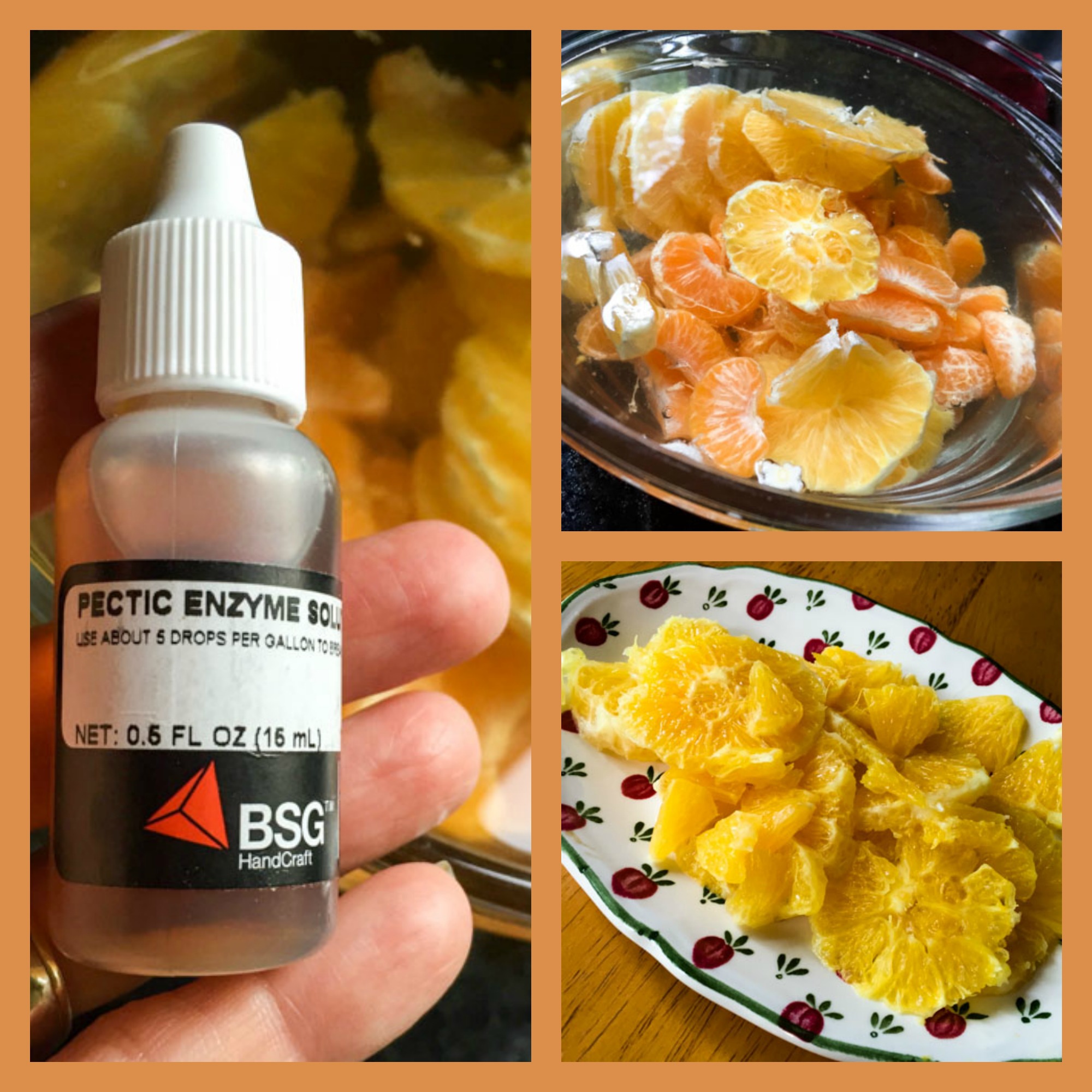
Pectinase is sold – like almost everything you can dream of – by amazon.com, and it’s pretty affordable, plus a little bit goes a loooong way. One of the interesting things about enzymes is that they are not consumed in the reaction, so like the Energizer Bunny, they just keep going and going. Adding five drops works, but adding one works too, it will simply take a little longer. I added about 4 drops to the bowl and left the fruit at room temperature for a couple of hours, then stuck it in the fridge for 6 more hours until we were ready to use them. You can leave the fruit in water longer, for a day or so, no problems.

pectinasecomposite
Pectinase, like most enzymes, will work faster in warmer temperatures, so it is conceivable to use sous-vide (or even a simple water-bath) to speed up the reaction without cooking the fruit in the process. Think anything around 100F for 30 minutes to one hour.

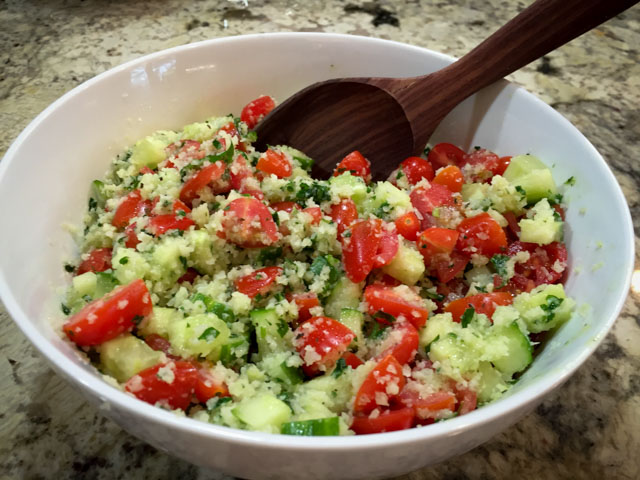
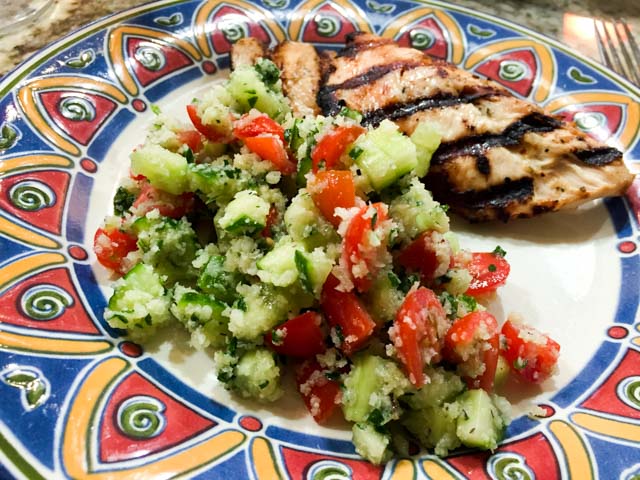
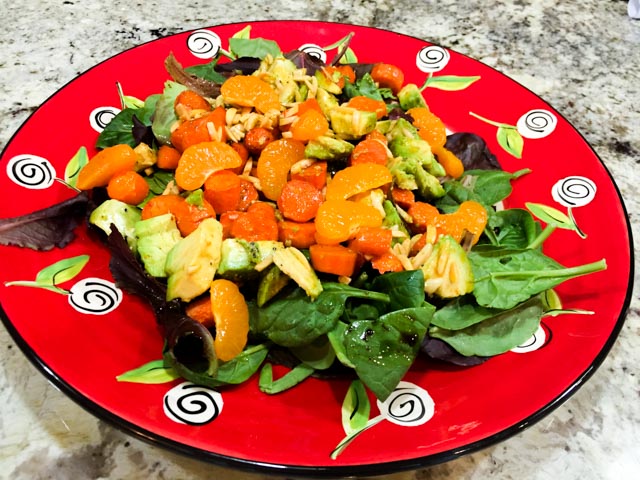
The clementines were delicious to nibble on while binge-watching “How I met your mother” late at night, but when added to this favorite salad of our recent past, it made for a LEGEND… wait for it… LEGEND… wait for it… LEGENDARY MEAL!


salad

Use this recipe, but substitute clementines for grape tomatoes…


ONE YEAR AGO: Poached White Asparagus with Lemon and Pistachios

TWO YEARS AGO: Dan Lepard’s Saffron Bloomer

THREE YEARS AGO: Fesenjan & The New Persian Kitchen

FOUR YEARS AGO: Quinoa Salad with Roasted Beets

FIVE YEARS AGO: Pasta Puttanesca

SIX YEARS AGO: Miche Point-a-Calliere


SWEET POTATO CRUST QUICHE

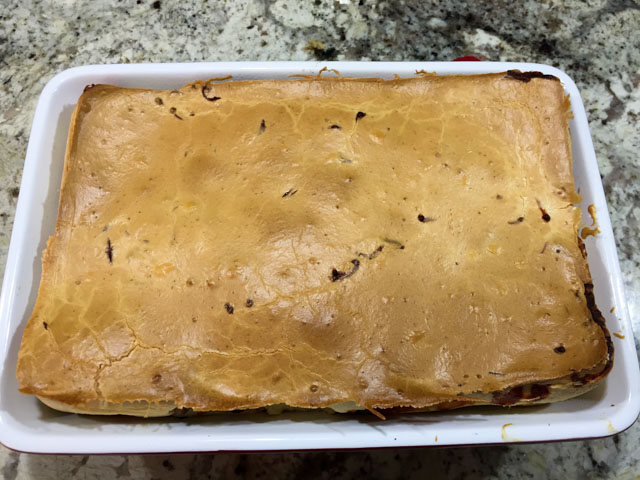
This recipe captured my imagination the moment I saw it in Cooking Light and I could not wait to make it, because c’mon, we are talking quiche… I don’t know a single person who doesn’t like it. Ok, I take it back. My first husband didn’t. Obviously, things could not have ended well in that relationship. One wonders. Back to culinary issues, quiche is such a great recipe: it has elegance, it has substance, and you can come up with all sorts of variations for the filling. The only thing that gives me pause about making it is the pastry part, since it needs to be refrigerated, rolled out, etc etc. Not a huge deal breaker, but it definitely makes this delicacy less likely to show up at our table on weeknights.  This variation takes care of that problem. Instead of dealing with the dough, you grab a couple of sweet potatoes, peel them, slice them thin and call it a day. It also has the added bonus of being quite a bit lighter. What’s not to like?

Sweet Potato Crust Quiche

SWEET POTATO CRUST QUICHE
(adapted from Cooking Light magazine)

2 medium sweet potatoes
a few sprays of coconut oil
1 (5-ounce) bag baby spinach
1/2 cup full-fat milk
1/2 teaspoon kosher salt
1/4 teaspoon freshly ground black pepper
dash of freshly ground nutmeg
1/4 teaspoon crushed red pepper
4 large eggs
2 large egg whites
1.5 ounces feta cheese, crumbled

Heat the oven to 350°, then peel and slice sweet potatoes. Coat a pie dish with coconut cooking spray, then fill the bottom of the dish with a layer of sweet potato slices. Once the entire dish is filled, spray one more time with cooking spray and season lightly with salt. Bake for 20 minutes. Turn heat up to 375°.

For the filling, heat a nonstick skillet over medium heat. Add spinach; sauté 3 minutes. Remove from heat; cool. Combine milk with all the spices and eggs in a bowl, stir well with a whisk. Arrange spinach mixture in crust; pour egg mixture over spinach. Sprinkle with feta. Bake at 375° for 35 minutes. Let stand for at least 10 minutes; cut into wedges.

ENJOY!

to print the recipe, click here

quichecompotsite

Comments: I loved this recipe! To me it was close to perfection because I liked the slight sweetness offered by the potato crust in contrast with the sharp feta cheese. However, Phil would prefer the crust to be harder, and due to the nature of sweet potatoes, that is not an easy task. He thought maybe if I baked the crust longer and at a higher temperature it could work better. It’s definitely worth experimenting. One of the issues is “shrinkage.”  Baking for the time specified in the recipe already caused the sides to shrink down considerably. I guess I could add a bit more slices to the sides and see how it goes. But, even with a slightly soft crust Phil thought the quiche was flavorful and made for a delicious side dish for our dinner. I know most people would serve it with a light salad, but we are meat lovers and savored a nice T-bone steak with it, medium-rare in all its glory. My apologies to all our vegetarian friends and two of my nieces in Brazil.

slice2

So many flavors going well together here!


ONE YEAR AGO: Chicken Thighs with Artichokes and Capers

TWO YEARS AGO: Pea Pancakes with Herbed Yogurt

THREE YEARS AGO: Mushroom Stroganoff

FOUR YEARS AGO: Tomato Sourdough

FIVE YEARS AGO: Gamberetti con rucola e pomodori

SIX YEARS AGO: Flirting with Orzo

CASHEW CREAM SAUCE

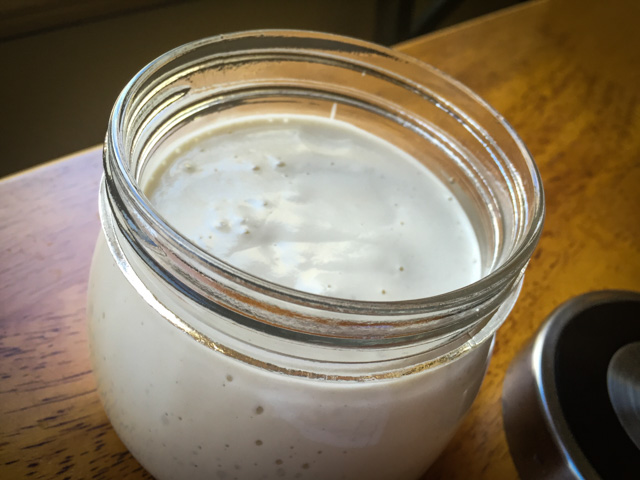
You know how every single Paleo-lover food blogger goes on and on about the wonders of cashew cream and how it will replace melted cheese in a way you won’t believe until you try it?  Well, those statements always put me into eye-rolling mode. I cannot help but mentally associate cashew cream sauce with those gluten-free donuts that look like sawdust shaped into rounds and make me want to run away screaming.  Of course, I have the utmost respect for those with non-imaginary gluten allergies. But I doubt they would like those donuts. In some cases, if you cannot have the real thing, better skip it altogether.  But, back to the cashew cream.  I am here to say I was absolutely wrong in my assessment. The stuff is awesome. Awesome. I made it, and could not stop sampling a little teaspoon here and there, I drizzled it over everything. Then, when I considered dunking a chocolate cookie into it, Phil pointed out that maybe I was getting a bit carried away. Fine. My next batch will be divided in two, and one of them will have coconut sugar in it. Or maybe maple syrup. And I shall dunk a cookie into it. You better believe it. Whatever your take on Paleo nutrition, open your gastronomic horizons, and made this sauce.

Cashew Cream

CASHEW CREAM SAUCE
(adapted from many sources)

1 cup raw cashews
Water
1 teaspoons lemon juice
1 teaspoon apple cider vinegar
salt and pepper to taste

Place raw cashews in a bowl and add cold water to cover by 1 inch. Soak cashews at room temperate for 8  to 24 hours. Drain and rinse  very well.

Add drained nuts to a powerful blender with 3/4 cup cold water, the lemon juice and apple cider vinegar. Process until very smooth, about 2 minutes, scraping down sides of bowl as needed. Adjust consistency with extra water if you like. Season with salt, pepper, and extra lemon juice to taste.  Sauce will keep in the fridge for a few days, and it can also be frozen.

ENJOY!  (I know you will…)

to print the recipe, click here

Comments: What can I say?  I regret it took me so long to finally try this recipe. If I have one criticism about it is that cashews can be pricey, but if that was not the case, I would make it regularly.  I can now understand why so many people make fake Alfredo sauce with it. You can find quite a few variations online, some add nutritional yeast to take it on a slightly more “cheesy” path, but I decided to keep it simple. Basically you must soak the cashews for a few hours, discard the water. Process with a slightly acidic ingredient, sometimes a little olive oil is also added, season with salt and you are done. Variations with sugar can be used to drizzle over fresh fruit, and I’m dying to try that soon. For the moment though, I leave you with a photo of a recent lunch which was enjoyed three days in a row. Ground chicken sautéed with mushrooms, green curry paste, garam masala, and ginger. Spooned over butter lettuce leaves. And topped with this magical sauce…

Lettuce Cups

 Cashew Cream Sauce…. It’s been a  pleasure to meet you! 

ONE YEAR AGO: Blood Orange Margaritas

TWO YEARS AGO: Smoked Salmon Appetizer

THREE YEARS AGO: Clementine Cake

FOUR YEARS AGO: Springtime Spinach Risotto

FIVE YEARS AGO: The end of green bean cruelty

SIX YEARS AGO: Torta di Limone e Mandorle

CAULIFLOWER CRUST PIZZA

I might very well be the last food blogger to try it, but after reading about cauliflower crust pizza for a couple of years, here I am to report on my first attempt at turning a classic into its lighter, gluten-free cousin. First, let me say that I don’t see it as a way to replace the “real deal.”  All those glorious characteristics of the authentic pizza crust will always have a place in our kitchen. But, if you are in the mood for something lighter or if you need to cook for someone who suffers from celiac disease, this recipe will please you more than you imagine.  I wolfed down a little more than half a pizza (!!!!) and instead of heading straight to the couch to lay down and wait for that carb-induced coma, here I am typing this post to share with you.  Behold the power of the cauliflower crust!

baked

(Broiling issues, courtesy of a Jack Russell named Buck)


CAULIFLOWER CRUST PIZZA
(slightly modified from Chef in Disguise)
.
Yield one pizza crust
.
1 small to medium-sized head of cauliflower (about 1 cup after squeezed to remove liquid)
2 egg whites
1/4 teaspoon kosher salt
1 teaspoon dried herbs (I used dried thyme)
1/2 cup shredded cheese (I used 1/4 cup Parmigiano cheese and 1/4 cup mozzarella cheese)
tomato sauce
toppings of your choice

Place a pizza stone in the oven, or turn a baking sheet upside down and use it if you don’t have a pizza stone. Heat oven to 450 degrees. Prepare a large piece of parchment paper and spray it with nonstick cooking oil.

Wash and thoroughly dry the head of cauliflower. Cut the cauliflower into small florets, and process until they are the size of rice. Place the cauliflower rice in a pot and add enough water to fill the pot 2/3 of the way up. Bring the water to a boil, lower the heat and simmer for 3 minutes. Drain the cauliflower. Once cauliflower is cool enough to handle, wrap it up in the dish towel and twist the towel around the cauliflower and wring it. You want to squeeze out as much water as possible. This will ensure you get a pizza like crust.

In a medium bowl, combine the cauliflower, egg whites, cheeses, dried herbs and salt,  and mix by hand, you sort of knead the dough together. Transfer the crust to your parchment paper. Press evenly forming a circle. Make sure it is as tight as you can make it. You also don’t want it to be too thin or too thick.  With the help of a cutting board, transfer the parchment to the oven. Bake at 450 degrees for 12-15 minutes. Keep an eye on it after the 10 minute mark. When it starts turning golden brown, it’s done.

Remove the pan from the oven. Add your sauce, toppings and cheese. Place under a broiler till the cheese melts and bubbles. Watch it carefully or it will bun.


ENJOY!

to print the recipe, click here


caulicrustcollage

Comments: Two things are very important when making pizza crust out of cauliflower. First you absolutely must minimize the amount of water present in the processed cauliflower or the binding agents (egg whites and grated cheese) will not be able to hold it together. When you think you squeezed enough water out, squeeze some more.  Made me think  of David Rosengarten decades ago when demonstrating a recipe for tabouli. Mince the parsley, when you think you minced it enough, mince some more. You simply cannot over-squeeze the cauliflower. Capisci? Second thing, once you place it under the broiler, watch it like a hawk. Sawsan says clearly in her blog “it will burn quickly.”  Which makes you wonder why yours truly would place it under the super powerful broiler of our oven, and then decide that Buck seemed too agitated and needed to go out to the backyard. I said to myself “this will only take a minute.” Indeed. Problem is that it also only took a minute to almost burn part of my beautiful pizza.  Lesson learned.  Do as I say, not as I did. Watch the pizza, move it around, especially if your broiler is very powerful.

charred


Will I be making it again? No doubt.  But probably not as the single item in our dinner, because making one pizza was already quite involved, and it would not be enough for the two of us, since it’s so light.  But I can see us having two pizzas, one “authentic” and one cauli-crust version. Or the cauli-pizza and a huge salad with barbecued ribs on the side… (just kidding).

I made this version a couple of days after having our entire lab over for a “regular” pizza party. There was one small pizza leftover, and some toppings like grilled zucchini, cheese and tomato sauce. The leftover pizza was warmed up in the oven and made Phil a happy man. The cauli-crust was embellished with the toppings that were ready and waiting in the fridge, and made Sally a happy woman. Don’t you love happy endings?

Sawsan, thanks for your great tutorial on the pizza crust! 
Next time I’ll be a better virtual student…
(sigh)

ONE YEAR AGO: Silky Rutabaga Puree

TWO YEARS AGO: Bon Bon Chicken: Light and Spectacular

THREE YEARS AGO: Red Wine Sourdough Bread with Cranberries

FOUR YEARS AGO: Award-Winning Sourdough Baguettes

FIVE YEARS AGO: Country Rye (Tartine)

SIX YEARS AGO: Penne a la Vechia Bettola

TOMATO TATIN

One of my favorite desserts is the classic Tarte Tatin, a delicious upside-down apple pie originated in France in the 1880’s. I made it quite a few times before my blogging days, and often tell myself that I should bake one “for the blog.” You know, I am unselfish that way. But after reading a cooking forum in which people raved about a savory version of the classic, I had to make it. Roasted tomatoes with a touch of herbs and cheese are covered with a buttery dough, baked, and inverted on a platter for a stunning presentation… If some tomatoes  stick to the pan, no need to use crass language, gently scoop them out and coach them into the original position. After all, it is supposed to be rustic, so small boo-boos are forgiven…

Tomato Tatin
TOMATO TATIN
(adapted from Whip +  Click)

for the dough:
205 grams (1+1/3 cup) flour
1/2 teaspoon sea salt
118 grams (8 tablespoons) chilled butter, cut into cubes
1 egg

for the filling:
940 grams (2 pounds) plum tomatoes
olive oil
Herbes de Provence to taste
sea salt and pepper to taste
1 large leek, washed and thinly sliced
grated Parmigiano cheese

Make the dough: Sift the flour into a bowl. Add salt and cubed butter and work into the flour with your fingers until the butter pieces are no bigger than lentil size. Add the egg and mix until just combined. If it is too dry, add cold water one teaspoon at a time. Chill for 30 minutes.

Prepare the leeks. By sautéing the slices in a little olive oil, season with salt and pepper. Cook it in a very low heat, stirring often until golden brown. Reserve.

Heat the oven at 350 F. Cut tomatoes in half, core and remove the seeds. Coat the bottom of a 10 inch round dish with olive oil and place the tomatoes skin side down all around the pan. Season with salt, pepper, herbes de Provence and drizzle with olive oil. Bake for approximately 30 minutes or until soft.

Before you take out the tomatoes, roll out your dough to a 10 inch round. Spread the leeks on top of the tomatoes, then add an even layer of grated parmesan. Add the dough on top and tuck the edges in. Bake for another 30 minutes or until the dough is golden brown. To unmold, run a knife around the edges and flip onto a serving dish.

ENJOY!

to print the recipe, click here

composite
Comments: This was my first time making this recipe, and I think there is room for improvement. I added a little bit too much olive oil to the tomatoes before placing the dough on top, and the dough itself turned out a tad too oily for my taste.  I also think that for the size of my pan, one or even two more tomatoes cut up would have been better.  They shrink a little during roasting, keep that in mind when you make it and aim for full coverage of the pan. I hope you do try this recipe, by the way. It is very elegant and quite simple to prepare. Perfect to open a dinner as a first course, or to serve for brunch. It is nice at room temperature too, making it possible to prepare it in advance. My kind of recipe, all the way.  I intend to try a lighter version using phyllo dough just for fun… What do you think?

ONE YEAR AGO: Headed to Colorado!  (and there we are again this year…  😉

TWO YEARS AGO: Farofa Brasileira

THREE  YEARS AGO: Thai-Inspired Pork Tenderloin

FOUR YEARS AGO: A yummy Brazilian cake: Bolo de Fuba’

FIVE YEARS AGO:  Summer’s Tomatoes

SIX YEARS AGO: Leaving on a jet plane…