FOR THE LOVE OF BREAD

A few years ago, a small revolution  took place among American bakers  after the publication of the no-knead bread recipe.  It was hard to surf the internet food world without daily encounters of posts about it.  Like many other people, I boarded that train, which I do not regret.  As a result of the “no-knead” recipe, I baked good bread at home, which was something I’d struggled with for years.  Also thanks to the “no-knead” recipe, I gained the self-confidence to attempt more elaborate breads, until my travels took me to an unforgettable turning point:  the “Handmade Loaf“, by Dan Lepard.

I now have too many bread-baking books,  but  The Handmade Loaf is the one that I cherish, in part because his respect and love for everything about bread shines through in every sentence.  Technically, his instructions are flawless and his photography is superb.  Sure, I can make and enjoy a loaf of bread that was mixed in five minutes, but that’s not the bread that I fell  in love with.  Rather, this is it….

WHITE THYME BREAD
(Dan Lepard’s  Handmade Loaf)

350 g bread flour
1 tsp sea salt
150 g water
150 g sourdough starter
1/2 tsp fresh yeast (I used instant)
25 g olive oil
100 g pitted green olives
1 tsp fresh thyme leaves, chopped
cornmeal

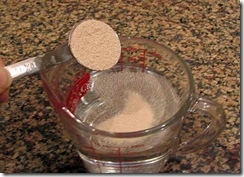
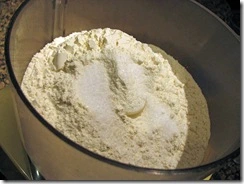
Combine the flours with the salt in a large bowl. In another bowl, whisk the water, starter, yeast, olive oil, olives, and thyme.  Add the liquid to the flour, then stir with your hands. Form a loose ball with the ingredients and allow it to rest for 10 minutes.

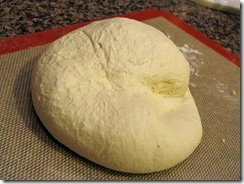
Proceed to kneading the dough three times at 1o minute intervals. Each kneading cycle will last only 10-15 seconds.  After the last kneading cycle,  let it rest for 10 minutes and form it into a rectangle.  Fold it by thirds like a letter, let it rest for 1 hour.  Stretch the dough again, fold it by thirds, allow it to rest for another hour.  Shape the dough very gently into a rectangle and pat the surface with your fingers  to flatten it slightly.   Sprinkle cornmeal on the surface, cover with a cloth and allow it to rise for 45 minutes.

Bake in a 425F oven for about 40 minutes.

ENJOY!

I am submitting this post to Susan’s Yeastspotting….

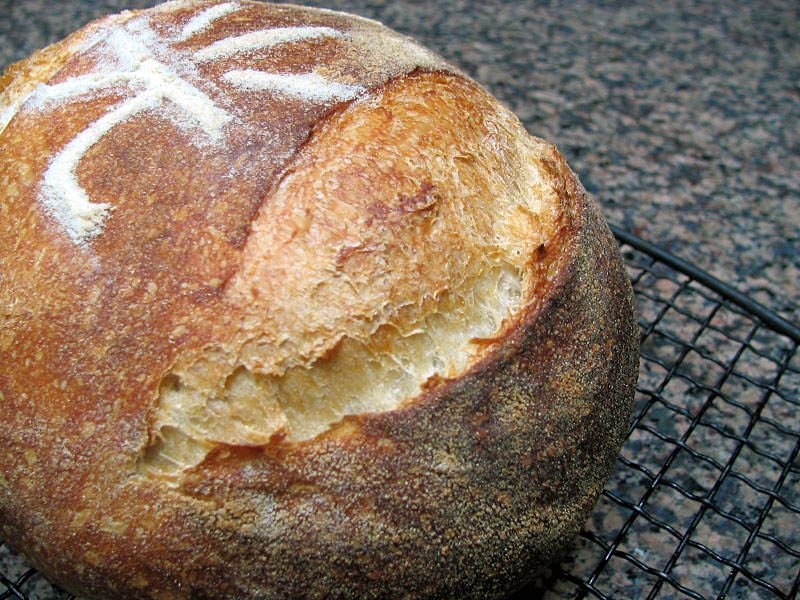
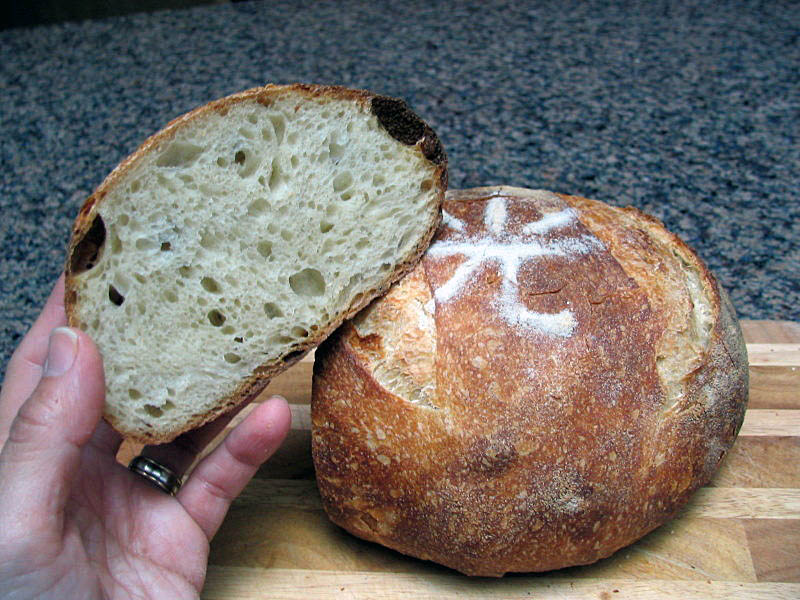
Comments: I’m not sure why this bread wasn’t called “White Thyme Bread with Green Olives,” as they are so obvious in the loaf.  Make sure to use best quality green olives;  Dan suggests piccolini olives from France, even if you have to pit them yourself.

The bread is supposed to be quite flat, but I decided to form a more rounded shape.   I could have slashed the surface,  but I didn’t expect as much oven bounce as it achieved during baking.

This bread is a departure from his white levain, because it calls for a small amount of commercial yeast in the dough.  That adjustment reduces the fermentation time, and creates a slightly less “creamy” crumb.  The addition of olive oil allows the flavor of thyme to permeate  the crumb, imparting an assertive, but not overpowering taste.

It’s bread as bread should be.  Thank you, Dan!

Here are some photos of the process…  Keep in mind that I gave only a short, summarized version of the recipe.  In the book, Lepard goes through all the steps in detail.  So, if you want to make  a loaf of bread in your own home that you can write a poem about later, then consider buying The Handmade Loaf.   It’s worth every penny.

Easy to fall in love…

BBA#27: PORTUGUESE SWEET BREAD

This type of bread was a favorite of mine as I grew up,  but  back in Brazil it goes only by “sweet bread”  (pao doce) and is sold as a very small roll.  When I came to the US for the first time, I saw bags of “Hawaiian bread” that looked similar to the “pao doce” from my childhood.   Only a few years later I learned that indeed those are all the same, brought both to Hawaii and New England by Portuguese immigrants.  So, here we have  a bread that ties Portugal (the birth country of my grandparents), Brazil, and the United States (and for sure other countries influenced by the Portuguese culture).  Of course, I was more than excited to make this bread!
sliced

I remind my  readers that all recipes for the breads from “The Challenge”, cannot be published, so if you want to make any of these breads, buy Peter’s book.

His version of Portuguese sweet bread calls for a sponge made with a large amount of yeast, that ferments for two hours and is then incorporated in the dough.

Even though I work with microorganisms on a daily basis, it never ceases to amaze me how quickly they go to work once food is around…  Water, flour, sugar, and yeast, 90 minutes together…

sponge1sponge2

sponge3

The dough does not rise that much, after 3 hours it had barely doubled in size, but it seemed light and almost airy.  Into the oven it went…

beforerise

afterrise

The bread did not have much oven spring, but tasted very good, had a moist, soft crumb, a gentle hint of citrus, not too sweet, just right.

IMG_2795

Verdict: a nice, simple bread, not exactly like that of my childhood, but it’s ok, some memories are impossible to match… 😉

Check the Portuguese breads from my fellow bakers:

Txfarmer made a very cute version, shaping them as doves…. click here

Emily from Ready to Wait…. click here

Next on the list: Potato Rosemary Bread……   Stay tuned….

BBA#26: POOLISH BAGUETTES

These days the the wonderful aroma of bread is wafting through the Bewitching Kitchen  …   For those who don’t know about “The BBA Challenge“, a few months ago Nicole, of  “Pinch My Salt“, decided to bake every  bread from Peter Reinhart’s   book  “The Bread Baker’s Apprentice“, and sent out a virtual invitation to anyone interested in joining her.    It involves forty-three breads in all,  made in the order that they appear in the book.  Over two hundred people accepted the challenge, including me.  It’s been a ton of fun so far, with ups and downs, successes and failures.

Here we are, at recipe number 26: Poolish Baguettes

twobaguettes1cut

Poolish is a soft mixture of flour, water and yeast that ferments overnight (or longer) and then gets incorporated into a bread dough.  In this recipe, the dough contains both white and whole wheat flour, but the whole wheat is first sifted to remove some of the bran.  It’s an interesting method, and here’s all the bran left behind after sifting a few ounces of flour:

sifted

Reinhart’s recipe calls for kneading the dough.  I prefer folding instead of kneading, so that’s what I did: 3 folding cycles during the initial 2 hours of fermentation.  After cutting the dough into three pieces, I shaped each one as a baguette.  After two more hours rising, the baguettes were slashed with sharp razor blade, and placed in the oven.

Notice how bubbly the dough was…

compositeEven though  my slashing skills still need improvement, this time my shaping wasn’t too bad.   There are many online videos showing how to shape a baguette;  maybe one day if I get really good at it… I’ll post my own  😉

In the meantime, you can watch a particularly instructive video here….

These baguettes were delicious!   I’d probably reduce the proportion of whole wheat in the dough, but this recipe is already a winner for me and my husband.

twobaguettes

BBA#25: PIZZA NAPOLETANA

pizza2

I was looking forward to this recipe, because for years I’ve been making pizza dough from a recipe published in Fine Cooking;  the BBA Challenge gave me the impetus to try something different.   Interestingly enough, my usual method is similar to Peter Reinhart’s, but it takes a little less olive oil, and is made in seconds (literally) in the food processor.

Reinhart’s recipe uses a regular mixer (or hand kneading) to make the dough, that then goes into the refrigerator for 1 day.  Two hours before making the pizza, he brings the balls of dough to room temperature.  In the book you’ll see a photo of Peter himself throwing the dough up in the air like a pro. I was looking forward to giving it a try, but my dough was just too uncooperative.   As I prefer to avoid  wearing the food that I’m cooking, I stretched it with my hands instead. 😉

Without further ado, some pictures of my pizza adventure!

The dough is supposed to stick to the bottom of the mixer, never clearing it completely…

dough1

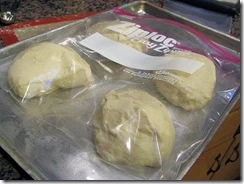
I made four balls of dough with the full recipe….

dough2

And after spending the night in the fridge, they came back for a final rise at room temperature…  very soft and bubbly-looking…

ballsdough

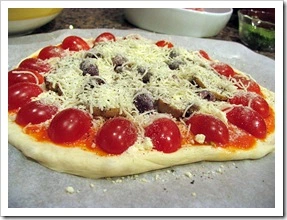
Some of the ingredients we chose: mushrooms, tomatoes, black olives, sliced ham, fresh basil…  plus the usual suspects (homemade tomato sauce & mozzarella cheese)

ingredients

Ready for the oven, a mushroom and black olive concoction….

readyoven

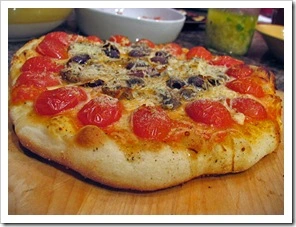
The pizza was good, but both me and my resident food critic prefer the Fine Cooking recipe, which I’ll describe on my blog in the near future.

IMG_2664

I should point out that most of the bakers loved this recipe, and you can check two of them at these links:

for “The Other Side of Fifty”, click here….

For TxFarmer and her take on a pine nuts pizza, click here….

Twenty-five recipes down, only eighteen to go!

YES, WE BAKED!

Remember World Bread Day? You can see the breads baked all over the world by going to Zorra’s website. They are all organized by countries, in four different groups. Lots of wonderful loaves of bread!

Check it out here….