When I married Phil, an avid runner, I started running too, and I got hooked on it. Back in 2006 we both ran a marathon (my first, his second). I felt like a million bucks and I hoped to do it again and again… and again. But, my left knee had a different opinion, and after a few fights with it I had to accept that my days of long distance running were over. What a bummer.
Sometimes, though, one door closes and another opens. While struggling with my running blues, I heard a grad student in our lab talking about this ultra-fitness program called P90X. I though it could be something fun to try for a change. Two years and 3 months later its become my main weapon to keep in shape, and to be able to enjoy all the food I like to cook, particularly the breads. 😉 So, if you’ve seen and wondered about the infomercials of Beachbody.com featuring Tony Horton, the guru behind P90X (Power-90 days-Extreme), I invite you to join me for a virtual walk through the system.

First of all, is the system appropriate for anyone?
I’ll say upfront that P90X is not suited for those who haven’t exercised in a long time. From my experience, to go for it you should be able to jog for 20 minutes, to be capable of at least 20 sit-ups, and to reach the average number of push-ups for your age and gender (consult this table for the general idea). It will also help to have some flexibility, but it’s not essential. I had none to speak of when I started.
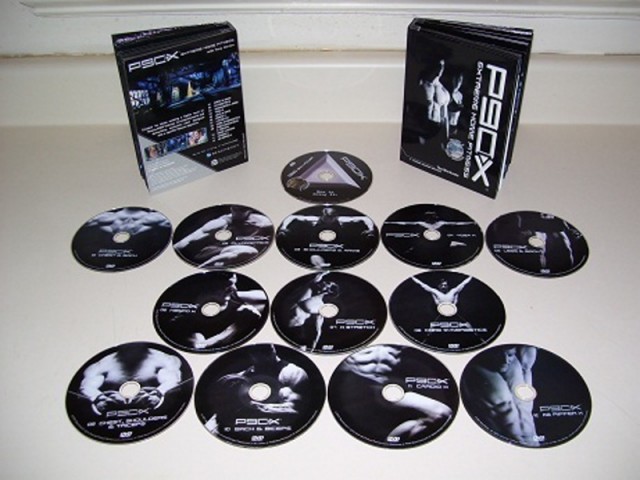
P90X comes as 13 DVDs, a couple of booklets describing the full nutrition program, and a transcript of each video. The exercises progress through Phases I, II, and III, each lasting 4 weeks. They differ in the nutrition aspect, and also the exercises. I’ll review the exercises of Phase I, which covers the basics; phase 2 involves heavier weight training and more complex push-ups and pull-ups. If you are interested then the first thing you must decide is which of the three programs to follow. I went with the “Classic”, geared for people who are not necessarily looking to lose weight, only get stronger. Alternatives are the “Lean” routine (less emphasis on weight training), and “Doubles” (with two exercise sessions daily). Doubles is obviously for those endowed with supernatural powers.

DAY ONE: CHEST AND BACK
(58 minutes + 15 min Ab-Ripper)
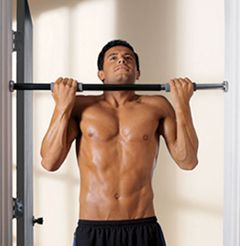
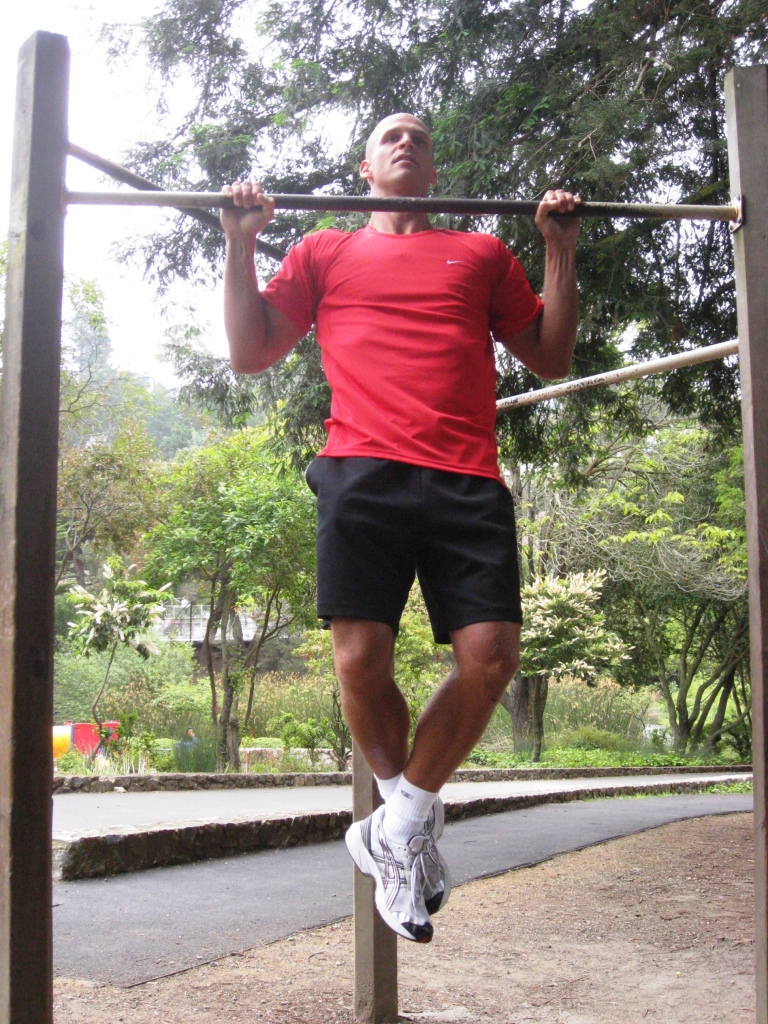
This is a great routine: a balanced mixture of push-ups, pull-ups and exercises with weights. A pull-up bar is not essential, you can use elastic bands instead, but I tell you that nothing beats pulling up the whole weight of your body, so consider investing in a bar as you improve your fitness level. Women can do pull-ups by pushing off the back of a chair with one foot to help support the body until they (I mean… we!) develop enough strength to do a few without.
“Don’t say “I cannot do pull-ups…”
say “I presently struggle with“
(Tony Horton, in Chest and Back)
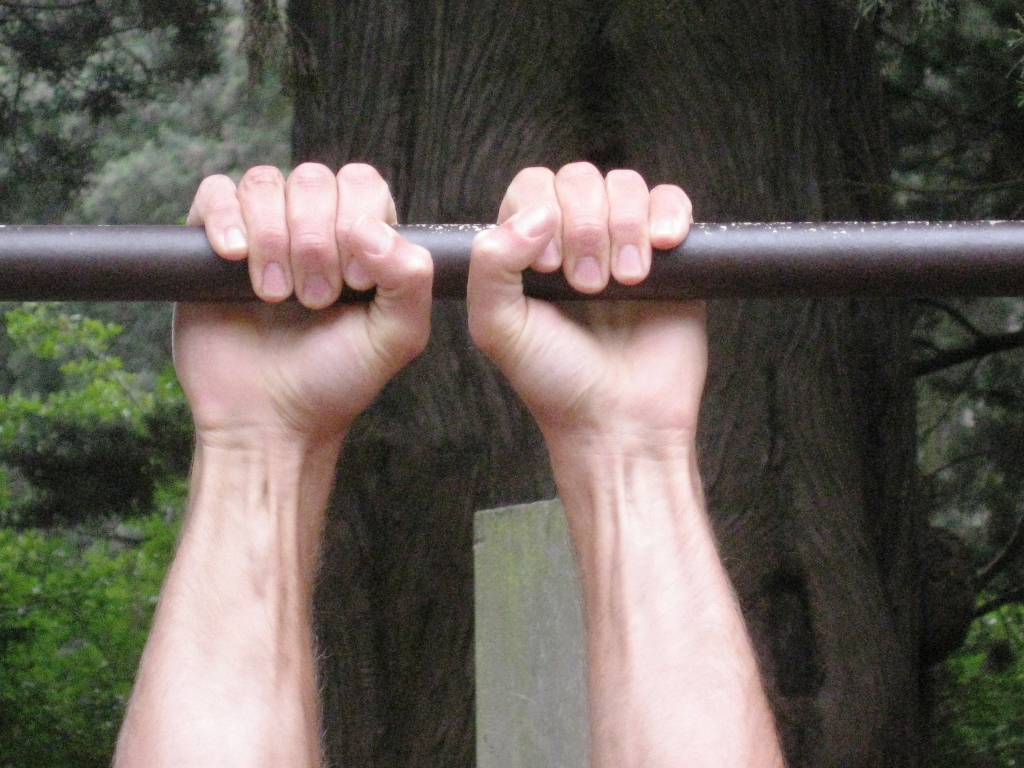
You’ll be doing several styles of push-ups, including diamonds (my personal favorite!), and dive-bombers (hard but fun). In between them you go to the pull-up bar and do what you can, using different grips, which targets different muscles on your back, shoulders and arms (chin-ups, wide front pull-ups, closed-grip pull-ups). When the 58 minutes are over the DVD takes you straight to the abdominal routine, Ab-Ripper X (discussed at the end of my review).

DAY TWO: PLYOMETRICS
Plyometrics is jump training. This workout took me by surprise, because as a runner I thought that any other aerobic exercise would be cake. Instead, some of the moves (jumping knee-tucks, guitar jumps, just to name a couple) left me begging for mercy. The exercises are grouped in sets of 4; the first three you do for 30 seconds, the fourth exercise is one-minute long. Each sequence of 4 exercises is repeated once right away, then comes a little break to collect your lungs from the floor, and a new 4-move routine starts, for a total of 5 different sets.
You can do ANYTHING for 30 seconds, right?
(Tony Horton, in Plyometrics)
Children jump all the time as they play, but as we get older, we stop jumping. We might walk fast, jog, even run, but jumping is one activity that disappears from our repertoire. With plyometrics, you slowly bring that skill back, and your level of fitness will increase quite a bit from doing it. Plyo is quite a strenuous routine for the back, knees, and ankles, so if you have back or leg problems, then consider modifying all the moves to a lower impact version, demonstrated in the video by the beautiful Pam. A great review of all exercises in plyometrics can be found here.
DAY 3: SHOULDERS, BICEPS, TRICEPS
(59 minutes + 15 min Ab-Ripper)
This is the easiest of all the series. My advice for the ladies: don’t be afraid of using a heavy weight. Women are in no risk of bulking up, we don’t have enough testosterone to turn into a She-Hulk. Get a weight that makes the 3 last repetitions really hard to complete. And once you get comfortable with those dumbells, move to heavier ones.
The exercises are varied, fun, and challenging if you use the right weight. At the end of this routine, you move to Ab-Ripper, for 15 minutes of final bliss… 😉

DAY 4: YOGA
(1 h 32 min)
P90X yoga kicked my butt, shoved my face in the mud and made me feel miserable. I vividly remember the beginning, when I had to stop and just stare at the screen, shaking my head in disbelief that those people could bring their bodies into those positions and hold them for 30 seconds or longer. I had little flexibility, and not enough core strength and balance to face any of the moves after the 30 minute mark. I intensely hated it. Hard to believe it became one of my favorites!
This is not a competition: do your best, and forget the rest!
(Tony Horton, in YogaX)
If you are into “real yoga,” you may not like the P90 version of it, because Tony takes a few liberties with the concept. I do it for the physical challenge, and I don’t let the absence of meditation and relaxation components bother me. It helped me tremendously in overall strength, flexibility, and balance.
DAY 5: LEGS AND BACK
(52 min + 15 min Ab-Ripper)
Three words: Not for sissies. 😉 Tony brings back the pull-ups, and you’ll do four different kinds, together with many hard exercises for the legs: lunges, balance lunges, “sneaky lunges” (performed on the tip of your toes for what seems to last an eternity), wall sits (regular and the cruel single-legged variation), and a few aerobic moves similar to those from plyometrics. Next day you won’t be able to take Mr. Horton off your mind. His words will still be burning your ears, but not nearly as much as the burning in your leg muscles, I’m afraid…
As if that wasn’t enough, Ab-Ripper closes the deal. When I do this complete routine I start with the Ab-Ripper because it’s just too hard to do it following Legs & Back. Keep that in mind, maybe this small adaptation will help you out too.

DAY 6: KENPO
(58 min)
Kenpo is kickboxing. The more I did it, the more I liked it! Apart from a long warm up that I skip without even feeling guilty, I love everything about it. Kenpo starts with simple moves involving the upper body, four different kinds of hits, performed 25 times with each arm, but the whole body is engaged at some level, as you are supposed to hit with your hips too. Next come the kicks, in several directions and speeds, and other moves mixing upper and lower body. When you do Kenpo with enthusiasm – and it’s hard not to, with the music to pump you up – you’ll experience a full body workout that is fun, intense, and will leave you pleasantly sore next day.
No rest with Kenpo. The five sets of moves are separated by a “break” that is anything but: you’ll jog in place, jump rope, and do jumping jacks to loosen up before the next group of exercises.

AB-RIPPER X
(15 minutes)
I don’t have enough adjectives to praise this one! I am addicted to the Ab-ripper, having tried many ab-programs before. In my opinion, no other routine is equally effective. Tony planned 11 exercises, each performed 25 times, that hit the muscles from different angles, for a fantastic mid-waist workout that will also target your legs.
Hit the pause button if you need it, stick with us if you can….
(Tony Horton, Ab-ripper)
Since during the program you will be facing the Ab-ripper at the end of other series, it will never be easy, but if you do it barefoot, it’s a little less gruesome. Sorry, Tony… I still do my best each time, but my best comes easier without shoes! 😉
A ZEN APPROACH TO P90X
It is easy to start the program obsessing about wrapping it up in 90 days, a task that is not easy, both physically and mentally. The way I see it now, after doing it for more than 2 years, P90X can be your exercise of choice in the long run. By following the routines in a more relaxed pace you can get all the benefits from it without inflicting excessive pain to your body. Take breaks. Allow your muscles to fully recover, and enjoy the ride.
After completing two series, I now pick and choose the routines more or less according to my mood and what feels “right” that day, with the goal of training 4 times per week, sometimes I might go for 5, depending on other activities like running. For added variety, I also like the 10 minute-trainer with Tony Horton, a life-saver in very busy days.
But, I’m saving the best for last: Beachbody.com will release P90X2 in December, and I HAD to pre-order it! I couldn’t resist it, after reading this review. I intend to follow my own advice and take a Zen approach to it. Take it easy, and enjoy the ride! Stay tuned… 😉
ONE YEAR AGO: Protocol for a 15 minute dinner
TWO YEARS AGO: Cauliflower au Gratin





 Bewitching Kitchen