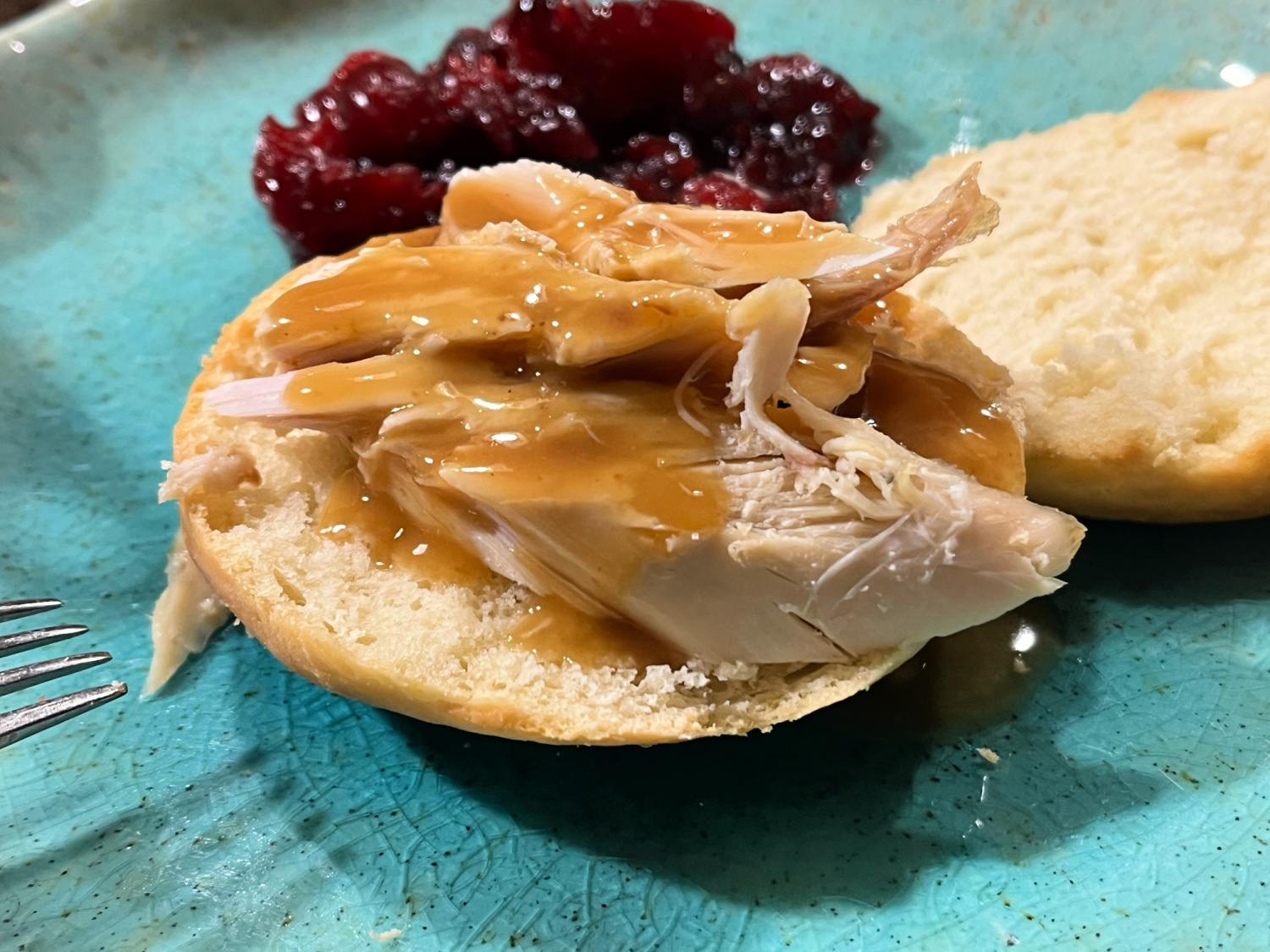
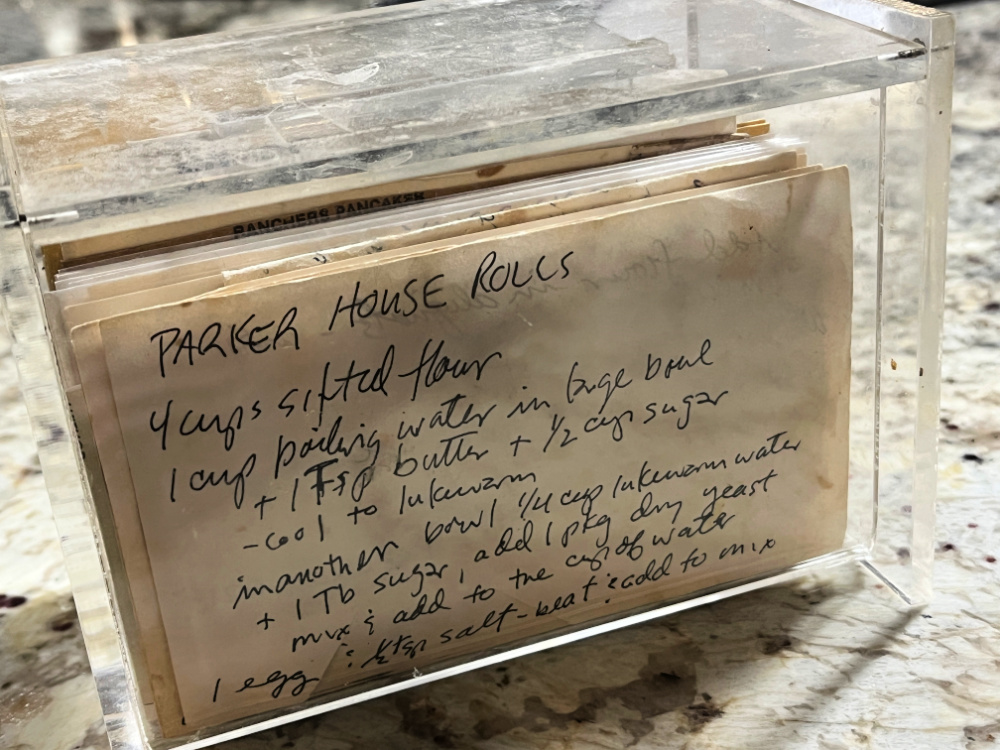
Inspired by the traditional Parker House Rolls, this is the recipe Phil’s Mom used to make every Thanksgiving. Phil keeps a bunch of recipes handwritten in small cards, held inside an acrylic box that is very likely older than his grownup kids. I learned to love and cherish that little box of recipes because they were all part of his childhood, teenage, and hippie years. His past.
KLEBBA HOUSE ROLLS (from Louise Wilhelmina Klebba)
One 1/4-ounce package active dry yeast 1 + 1/4 cup warm water 1/2 cup sugar 4 tbs unsalted butter, melted and cooled 1 large egg, lightly beaten 1/2 tsp salt 4 cups all-purpose flour, or more if needed
Make the dough. In a stand mixer mix the yeast with the water, sugar, butter, egg and salt.
Fit it with the dough hook, and add the flour in two increments, kneading it at low-speed. Knead the dough for about 4 minutes, until smooth. Remove from the mixer, transfer to a buttered bowl, cover and let it rise until doubled, about 2 hours.
Roll the dough with a rolling pin, cut in circles with a 3-inch biscuit cutter. Place over a baking sheet lined with parchment paper and let it rise again for 1 to 1.5 hours. Brush with melted butter before baking at 375F for 15 minutes or until golden. Brush again with butter as soon as they are out of the oven.
Comments: The traditional Parker House Rolls are shaped differently, they are shaped as rounds, then flattened and folded. I used the method that Phil’s Mom used, which is different, so if you want to check how it was originally made, read this article. I am so glad I made them with very minor modifications from Phil’s family recipe. In those days there was no instant yeast, so the whole method was slightly more convoluted. Most important thing, our Thanksgiving meal this year had a touch of loving memories from a distant past. And that made me very very happy.
This will certainly break all the records as far as taking my sweet time goes. I first heard of this amazing recipe in the show Taste hosted by David Rosengarten from 1994 to 2001. Those were truly the golden years of FoodTV, before it became centered on cooking competitions. I was fascinated by the recipe and always considered trying it. However, we never wanted to take a risk making this quite unusual recipe for guests, not knowing if it would work as expected. But, if there is one year that calls for all craziness to come out and play, 2020 is it. Big time. Plus, being just the two of us, we could always laugh at the disaster and chalk it to experience. Without further ado, I share the strangest, and most convoluted recipe I’ve ever made.
1 turkey, 16-22 pounds, with giblets For basting: 5 ½ cups water Salt, freshly ground pepper, vegetable oil 1 large bay leaf 1 teaspoon each: paprika, salt ½ teaspoon ground coriander 1 qt apple cider (hard cider if you prefer)
for stuffing: 1 Granny Smith apple, cored, unpeeled, diced 1 medium orange, diced 1 can (20 ounces) crushed pineapple, undrained zest of 1 lemon 1 can (8 ounces) water chestnuts, sliced, drained 6 ribs celery, minced 2 Vidalia onions, minced 1 red bell pepper, seeded, chopped ¼ cup minced fresh parsley 1 tablespoon celery seed 2 tsp dried sage 2 tsp dried thyme 2 tsp dried oregano 2 tsp each dry mustard (Coleman’s) 2 tsp caraway seeds 2 tsp poppy seeds 1 tsp sesame seeds 1 tsp freshly ground black pepper ½ tsp turmeric ½ tsp dry summer savory 2 dashes hot red pepper sauce (I used Sriracha) 2 + 1/2 cups bread crumbs 1 pound ground pork 1 stick (½ cup) butter, softened
for paste: 8 egg yolks 1 tablespoon dry mustard 1 tablespoon onion juice 1 tablespoon lemon juice, or more as needed 1 teaspoon salt ¼ teaspoon ground red pepper 1/3 to ½ cup flour
Rub turkey inside and out with salt and pepper. Spray turkey skin thoroughly with vegetable oil. Set liver aside. Chop gizzard, neck and heart; put in saucepan with 5 cups of the water, bay leaf, garlic, paprika, salt and coriander. Simmer, uncovered, about 1 hour, while proceeding with rest of recipe.
For stuffing, combine apple, orange, pineapple, lemon zest, and water chestnuts in medium bowl; set aside. Mix celery, onions, cloves, bell pepper, parsley, celery seed, oregano, dry mustard, caraway seeds, poppy seeds, sesame seeds, black pepper, turmeric, summer savory, and hot red pepper sauce in another bowl; set aside. In a third (very large) bowl, mix bread crumbs, pork, and butter; incorporate them well. Add contents of the other two bowls; mix by kneading well.
(Thompson advised: “Mix it with your hands. Mix it until your forearms and wrists ache. Then mix it some more. Now toss it enough so that it isn’t any longer a doughy mess.”)
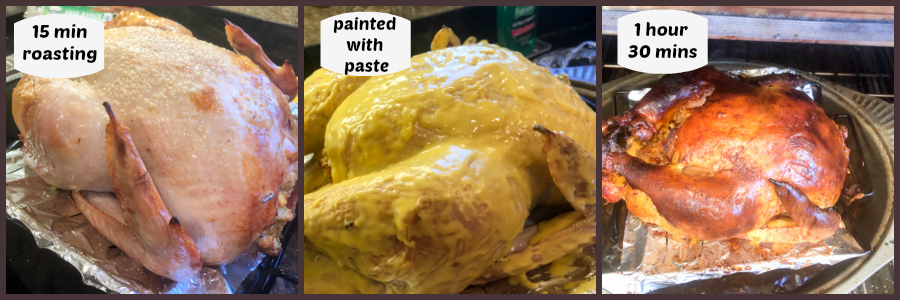
Remove battery from smoke detector. Heat oven to 500 degrees. Lightly fill turkey body and neck cavities with stuffing. Skewer closed. (Place remaining stuffing in a 3-quart greased casserole; cover. Refrigerate; bake later at 325 degrees until it registers 165 degrees on a thermometer, about 1 hour.) Place turkey, breast down, on rack in large roasting pan. Cook about 15 minutes. Remove; turn breast-side up. Cook 15 minutes. Meanwhile for paste, combine egg yolks, mustard, onion juice, 1 tablespoon of the lemon juice, salt and red pepper. Add enough of the flour to make a paste.
Turn oven down to 325 F. Paint turkey all over with the paste, using a kitchen brush. Return turkey to oven 3-5 minutes, until paste sets. Paint again; return to oven. Repeat this painting every 3-5 minutes, adding lemon juice to the paste as necessary to keep from drying out, until paste is used up. Meanwhile, add the reserved turkey liver and 1 cup of the cider to the simmering basting liquid. Cook until liver is no longer pink, about 30 minutes; remove liver. Pass liquid through a sieve, discard giblets. Keep liquid on simmer.
Roast turkey, basting every 15 minutes and adding more cider to basting liquid as needed, until a meat thermometer reads 180 degrees in the thigh, 170 degrees in the breast, about 4 hours. Let turkey stand at room temperature 30 minutes before carving. Remove blackened paste coating from turkey using a spatula or tweezers. Remove stuffing to serving bowl. Carve turkey; serve.
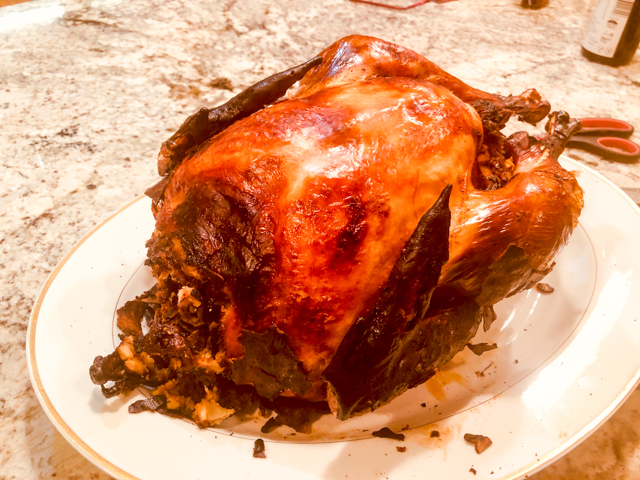
Comments: If you want to know more about Thompson’s Turkey, I suggest this article. Essentially, you make a stuffing that requires using every single spice available in a well-stocked pantry, and proceed to paint the bird with a paste that will turn absolutely black and hard once roasting is over. By the time you remove it from the oven, you will be sure it’s not fit for consumption. But then, you break that crust and reveal the most beautiful roasted bird, with a dark copper tone in the skin, and a stuffing that is out of this world delicious. Tosee the big reveal, click here
The best part of the turkey for me was the stuffing. The pineapple comes through as the most prominent taste, but then it gets all complex on you, and different from any stuffed turkey I’ve ever enjoyed for Thanksgiving. It made our Christmas Day meal quite special and festive.
Breaking the crust is quite exciting! I read a few articles written by those who attempted this culinary marathon, and some said that the crust can glue to the skin and get it removed with it, which is a shame. The way to avoid that is to oil the skin before applying the paste, and I incorporated that in the recipe. Also some methods tell you to keep turning the bird breast-up then down as you paint it and place it in the oven to set for a few minutes. Don’t do it, it is not necessary and it is a messy job. The only thing I missed about the turkey was gravy. Husband is the gravy maker and he did not think the juices accumulated in the bottom of the roasting pan were particularly fit for it. I might have allowed it to get a bit too burned, so maybe next time I can plan accordingly.
So, if you want to have a very unusual and exciting meal for your next big celebration, consider making this one. It is very labor-intensive, but also a lot of fun to bring to the table. I would definitely serve it for guests, knowing now that there is a nice bird underneath that darkness…
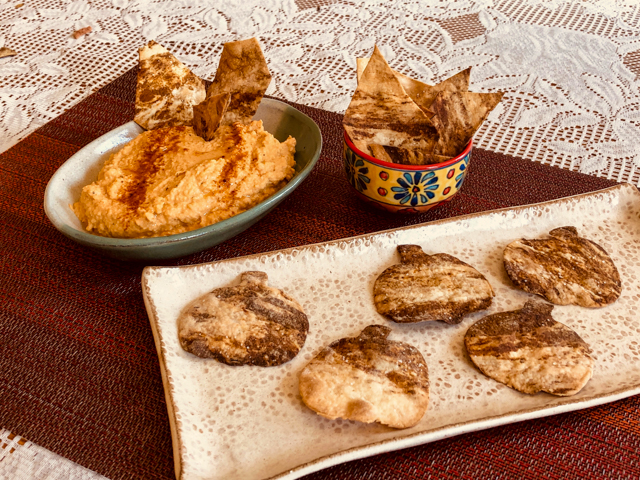
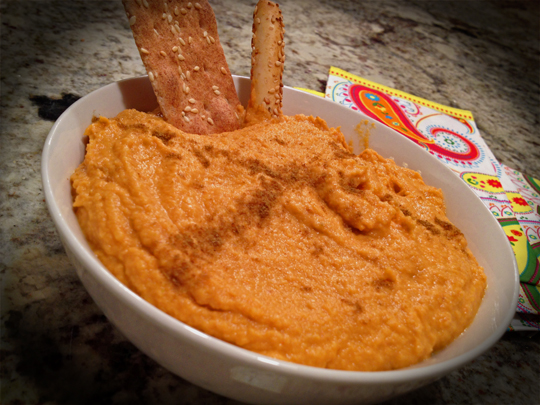
If you are like me, and learned how to ski as an adult, you are familiar with that fear as you slide downhill catching speed and see curves coming up, trees on both sides, overwhelmed by that feeling of “this might not have a happy ending.” That is pretty much what 2020 feels like. Eleven months and counting of sliding downhill feeling out of control. But 2020 cannot rob us of Thanksgiving. There are many things to be grateful for, including the fact that we are still hanging on to the ski poles, and braving the elements. To warm us all up for my favorite American holiday, the Home Bakers Collective got together to share a few recipes inspired by the season. Here is my little contribution. Pumpkin Crackers and hummus. To start your meal on a festive note.
PUMPKIN CRACKERS (from the Bewitching Kitchen)
for the white dough: 60g all-purpose flour 1 cup all purpose flour 1/4 tsp salt 1 tsp olive oil about 2 tablespoons water
for the pumpkin dough: 50g all-purpose flour 10g pumpkin flour (or all-purpose) 1 tablespoon pumpkin puree (canned) 1/4 tsp salt 1 tsp olive oil about 1 tablespoon water
Hheat the oven to 400 degrees. Prepare a baking pan by lining with parchment paper.
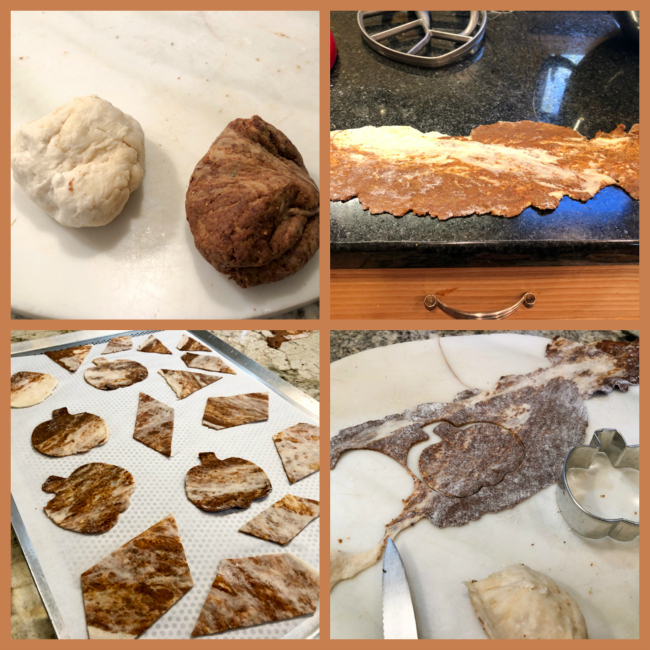
Make the white dough: in a small bowl, combine all ingredients and knead by hand to form a dough. Adjust water, you don’t want the dough to be too sticky. Reserve.
Make the pumping dough by mixing all the ingredients, again adjusting with more all-purpose flour in case it is too sticky (the pumpkin puree will add quite a bit of moisture). Reserve.
Allow both balls of dough to sit at room temperature for about 20 minutes. Divide each dough in two and marble the two colors. Roll each piece very thinly, the best way is using a pasta rolling machine or Kitchen Aid attachment, but you can definitely do it by hand. Cut in pumpkin shapes using a cookie cutter or simply in small pieces.
Bake for about 10 minutes, depending on how thin you rolled them, until they start to get brown and crisp. They will get slightly harder as they cool. Serve with your favorite dip.
Comments:Pumpkin flour is a great ingredient when you want to get flavor without adding too much moisture. It works well in cookies also. Since it contains no gluten, it behaves completely different from all-purpose flour. You will have to play a bit with the dough to get a similar texture in both the white and pumpkin components. As usual when you marble two colors, the dark will be dominant, so keep that in mind. You can always use more of the white dough and marble with 1/4 of the amount of dark. The recipe I shared makes a small batch of crackers. Since it is just me and the husband around, I did not want to make a huge amount. The recipe will double easily.
For the pumpkin hummus, visit my old blog post with a click here. And of course, stop by The Home Bakers Collective to see what everyone else decided to share. One blink of the eye and Thanksgiving will be here. Make sure you keep you and your loved ones safe.
(post might take a couple of hours to be published in the Collective, check later if not yet there)
My first Thanksgiving was in 1986, the date that also marks my first encounter with a pumpkin pie. Not knowing exactly what to expect, I overindulged in the turkey, the dressing, the mashed potatoes AND the gravy, so that by the time dessert arrived, I was absolutely full. Not to be rude to my hosts, I accepted a small piece, but even that was not easy to negotiate, as the pie was heavy and sweet. For years I avoided pumpkin pie, until my husband convinced me to give it another chance. He makes it from the recipe in the second edition of the Joy of Cooking, but he’s adamant about the use of fresh pumpkin in the filling.
This year was the first time I made it all by myself. If you think “light-as-a-feather pumpkin pie” is an oxymoron, then think again and give this one a try. Now I can’t conceive of a better way to finish Thanksgiving dinner.
PUMPKIN PIE (adapted from Joy of Cooking, second edition)
2 cups cooked pumpkin (see comments)
1 + 1/2 cup evaporated milk
1/4 cup brown sugar
1/2 cup white sugar
1/2 tsp salt
1 tsp cinnamon
1/2 tsp ground ginger
1/4 tsp ground nutmeg
2 slightly beaten eggs
Heat the oven to 425F.
Mix all the ingredients very well and pour the mixture into a pie shell. Bake for 15 minutes, reduce the heat to 350F and continue baking for at least 45 minutes longer, until a toothpick or a knife blade inserted in the center comes out clean. Serve with slightly sweetened whipped cream.
2 1/2 cups all-purpose flour
1 tsp salt
2 Tbs sugar
12 tablespoons very cold unsalted butter, cut into small cubes
1/2 cup cold vegetable shortening, cut into 4 pieces
1/4 cup cold vodka
1/4 cup cold water
Mix the flour, salt, and sugar in a large bow. Place the very cold butter and shortening on top and quickly incorporate them into the flour using a pastry cutter, until they have the size of small peas. Add the vodka and water over the mixture and with a rubber spatula fold the mixture pressing it down to form a dough that sticks together. Divide the dough into two balls, flatten them into a 4-inch disk, wrap them separately in plastic and refrigerate for at least 45 minutes, or up to 2 days.
Remove one of the disks from the fridge, roll it out in between two plastic sheets, place it inside a pie dish. For the pumpkin pie, only one disk will be used, the remaining can be frozen.





 Bewitching Kitchen