ZAKARIAN’S PROSCIUTTO-WRAPPED CHICKEN BREAST

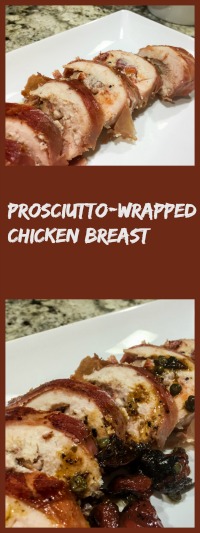
One of the only shows I watch on FoodTV these days is The Kitchen, with Marcela Valladolid, Sunny Anderson, Katie Lee, Jeff Mauro,  and the one and only Geoffrey Zakarian. The crowd has great chemistry together, each person bringing something different and fun to the show. Zakarian offers that touch of class and knowledge, sophisticated without ever being obnoxious, a tricky line to negotiate. Recently he shared a recipe with his characteristic signature: elegant, complex, but not overly fussy.  Chicken breasts filled with ricotta,  wrapped in prosciutto, crisped up on the stove top and finished in the oven. A quick pan sauce beautifully crowned the dish, bringing capers to the party. I have a weak spot for capers, in case you did not notice yet…  As I watched him prepare the recipe, I could not stop thinking that the whole thing would be perfect for sous-vide.  And sous-vide was the path I took. It was O.M.G. delicious. With the most enthusiastic happy dance to go with it.  Of course, if you don’t have the Anova gadget, don’t let that stop you.  I give you the exact method used by Zakarian in the show. However, I tell you, the texture of the meat cooked at that magical 141 F for hours… was superb. Superb!

zakarian-chicken-breast

PROSCIUTTO-WRAPPED CHICKEN BREAST
(adapted from G. Zakarian)

3 boneless, skinless chicken breasts
1 cup (about 60g)  sun-dried tomatoes, chopped (divided)
150g ricotta cheese
4 tablespoons chopped walnuts
1 tablespoon finely minced fresh sage
1 large egg yolk
salt and freshly cracked black pepper
9 slices prosciutto
1 tablespoon canola oil
2 tablespoons capers, rinsed
1 shallot, finely diced
1/4 cup (60 mL) Verjus (or white wine)
1/2  cup (120 mL) chicken stock
1 tablespoon butter

If using regular cooking, heat the oven to 375 degrees F.

Using a small knife, make an incision in the top rounded end of a chicken breast, cutting through the center and to the ends without breaking the sides, to form a pocket for the stuffing.

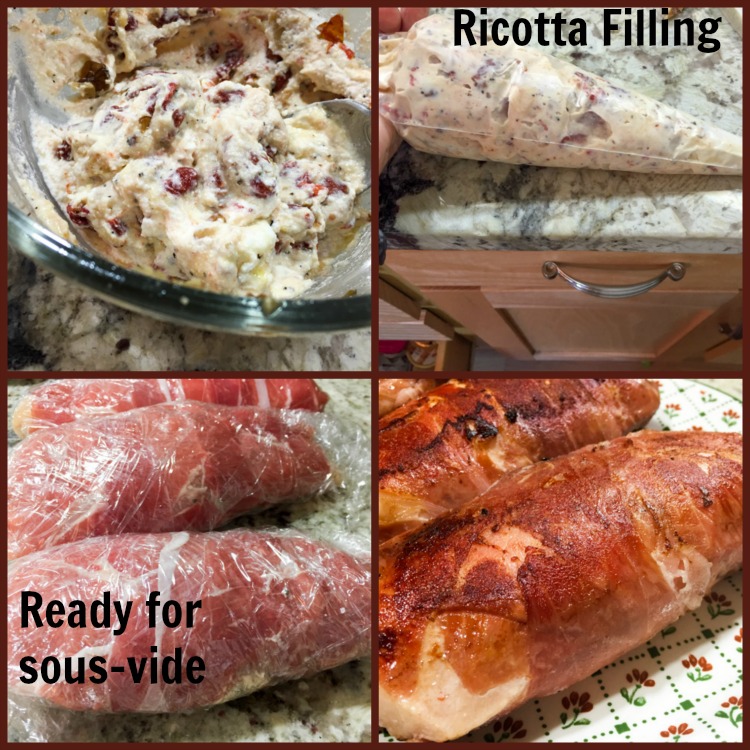
Combine 1/2 cup of the tomatoes, ricotta, walnuts, sage and egg yolk in a small bowl and season with salt and pepper. Using a spoon (or place the filling into a piping bag without a tip), stuff each chicken breast with 1/3 of the ricotta mixture. Season the chicken with salt and pepper, then lay the prosciutto into sheets of three pieces each, and roll around each stuffed breast. Heat the canola oil in a large, ovenproof saute pan until almost smoking. Sear the chicken breasts on the seam side of the prosciutto, then flip and sear the other side.Transfer the whole pan to the hot oven until the center of the chicken registers 160 degrees F, about 15 minutes.

If using sous-vide method: wrap each piece in plastic, then seal in a foodsaver type bag. Submerge in a water bath set to 141 F for 4 hours. When the time is up, remove the meat from the package, dry well and proceed to browning both sides on the stove top.

For both types of cooking, continue to make a pan sauce:  remove the chicken from the pan, add 1/2 cup of the sun-dried tomatoes, capers and shallots and cook over medium-high heat for 1 minute to soften the shallots. Add the Verjus to deglaze the pan, the chicken stock and cook until reduced by half, then swirl in the butter. Adjust seasoning with salt and pepper.

Slice the chicken and serve with the sauce.

ENJOY!

to print the recipe, click here
composite

Comments: I had a bit of a tough time filling the chicken. First I tried it as recommended, without a tip in the piping bag, but my bag was too thin, not sturdy enough to force the filling in. I tried with a tip, but the largest one I had was not wide enough and kept plugging with the pieces of walnuts. Since I was going to wrap the pieces with plastic anyway, I ended up cutting a slit around the side, opening the meat like a book, then rolling the prosciutto around. During the sous-vide cooking, it all turned into a perfectly shaped package. If you have a sturdy piping bag, it should work well.

What I love about sous-vide is how flexible you can be with timing. I served this meal for dinner on a super busy Sunday, in which we had no idea when we would be ready to finally sit down to eat. I set the water bath at 3pm and knew that whenever we wanted to have dinner, it would be a matter of 10 minutes to sear the pieces, and make the pan sauce. I had side dishes already made, just waiting to be re-heated. Easy but very impressive dinner.  Meat was perfectly cooked, the prosciutto gets all crusty and salty and tasty. And the sauce… capers are the perfect addition.  Zakarian really knows his way around food, Iron Chef that he is. And his beautiful gray hair only adds to his charm. Partial? Me? You’d think?   😉

About that Verjus: If you don’t have it, use white wine or simply chicken stock.  I am getting more and more fond of its subtle flavor, the way it brings mild acidity to a sauce or dressing.  And, by the way, did you know that a little Verjus mixed with carbonated water is a fantastic drink? Elaine tried it first and raved about it. Some people add sweetener, but we both like it straight. I am very fond of carbonated water with drops of bitters such as Angostura, so I’m not surprised that Verjus pleased me so much.

But, I digress. This is about the Zakarian’s recipe, and you definitely need to try it!  Perfect for a dinner party, you can assemble the chicken before, sear it quickly and bake it. Your guests will be impressed, thinking you slaved away for hours. But truth is, you did not…
prosciutto-wrapped-chicken-breast-from-bewitching-kitchen

ONE YEAR AGO: Amazing Apricot Bars

TWO YEARS AGO: Spiralizer Fun

THREE YEARS AGO: Linguine with Cauliflower Pesto

FOUR YEARS AGO: Carriage House Apple-Walnut Pie

FIVE YEARS AGO: Chicken Marsala

SIX YEARS AGO:  Home, sweet home

SEVEN YEARS AGO: Levain Bread with Caramelized Onions


PERFECT SOY-GRILLED STEAK

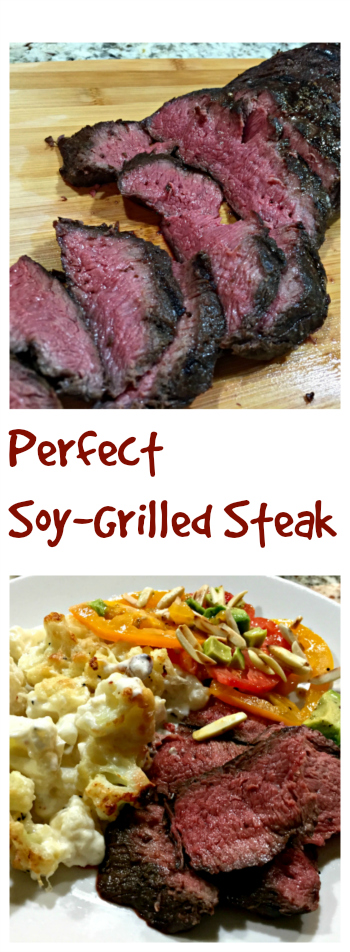
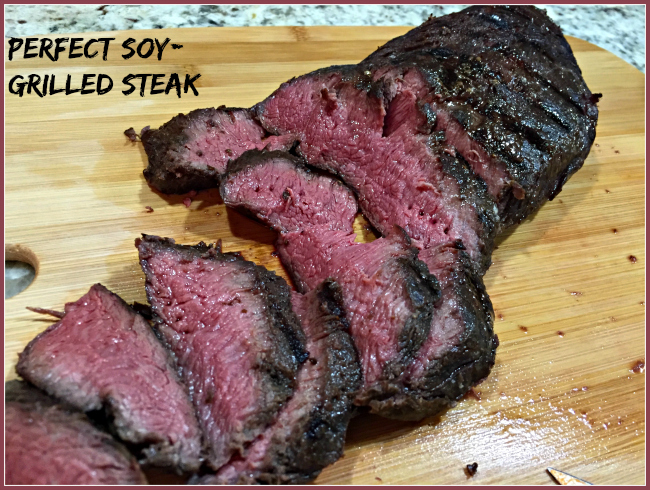
I am not too fond of superlatives when it comes to cooking, as what I might consider perfect won’t necessarily hit the jackpot for everyone else. But that’s the title of the recipe by Mark Bittman that happened to be one of the most popular according to a recent round-up by New York Times. If you don’t subscribe to their cooking newsletter, consider doing so. Oddly enough, Phil was the one who drew my attention to it. I joked that we have hundreds of cookbooks in the house, but he never opens a single one to look for inspiration. However, he gets mesmerized by the New York Times collections, and if I resist reading the page, he will drag me in front of his computer to point out all the ones “we should make soon.”  We. You know, that pronoun that means more than one person doing something together. So, yes, that’s how I ended up making this recipe.  I opted for the sous-vide route because it makes the best flatiron steak in the known universe. How about that for disliking superlatives?

Soy Grilled Steak


PERFECT SOY-GRILLED STEAK
(adapted from Mark Bittman)

¼ cup soy sauce
1 teaspoon peeled and minced ginger
½ teaspoon peeled and minced garlic (I omitted)
1 tablespoon agave nectar
Freshly ground black pepper to taste
Juice of 1/2 lime
1 flatiron steak
salt to taste

Mix together the first 6 ingredients in a bowl. Place the steak in a plastic bag or tight container and add the sauce. Marinate while you heat the grill, or if possible, longer. Season lightly with salt right before grilling.

For rare meat, grill about 3 minutes a side for steaks less than an inch thick. For larger or more done steak, increase the time slightly.

Sous-vide preparation: after marinating the steak, remove it from the soy-based sauce and place in a vacuum bag. Seal it and place it in a water-bath set to 134 F for three hours. Remove from the bag, discard any accumulated liquid and sear on a very hot grill for a minute each side.

Let it rest for a few minutes before slicing and serving.

ENJOY!

to print the recipe, click here

Comments: You definitely don’t need a sous-vide gadget to make this steak. But I tell you, if you have one, it is so worth putting it to use here!  I make the marinade early in the morning, add the steak into a bag with it. When we are home for lunch I discard the marinade, vacuum-seal the meat and place it in the water-bath until dinner.  Timing is so flexible that I don’t even worry about being late.  A quick side dish of sautéed veggies and a simple salad, maybe some bread, that’s all we need to be happy campers.  For this particular dinner, we paired the flatiron steak in all it’s medium-rare glory with cauliflower gratin (leftover from the evening before) and sliced heirloom tomatoes with avocados and almonds. Pure gastronomical joy, I tell you…

served11
Now, going back to that collection of 10 most-popular NYT recipes. Several gems in there. We are both very interested in the Skewered Chicken with Peanut Sauce,  Phil says he wants to make the Pork Chops with Brandied Cherries, I will definitely be making the Flattened Chicken Thighs with Roasted Lemon Slices (wow!)… As far as sweets, the Almond Cake makes me dream… and Julia Child’s Berry Flan goes to the top of my beloved’s list. In summary, out of 10 recipes 6 are definite keepers. Not too shabby at all…

Perfect Soy-Grilled Steak

ONE YEAR AGO: The Devil’s Bread

TWO YEARS AGO: Heart of Palm Salad Skewers

THREE YEARS AGO: Potluck Frittata and Lavoisier

FOUR YEARS AGO: Home-made Corn Tortillas

FIVE YEARS AGO: Whole-Wheat Spaghetti with Peanut Sauce

SIX YEARS AGO: Brigadeiros: A Brazilian Party!

SEVEN YEARS AGO: Lemony Asparagus

DUCK CONFIT FOR A SPECIAL OCCASION

It is hard to beat duck confit when you want to have a memorable meal. I will never forget the first time I had it, actually. I was all alone in Paris (my first trip to Europe!), having flown from Brazil to take part of a scientific workshop sponsored by The World Health Organization. The 2-week workshop launched the sequencing of the whole genome of Mycobacterium leprae. In those days, sequencing DNA was a cumbersome, slow, and painful process, nothing to do with what it is today. I was one of the lucky people invited to participate of that initial workshop. I knew very little about automated DNA sequencing, but even less about duck confit. On my first evening, very tired and a bit insecure to walk around town, I crossed the street and bravely entered a restaurant near Institut Pasteur (Le Pot au Feu). The special of the day was duck confit, so that’s what I ordered. I thought I had died and gone straight to heaven, arriving at dinner time. Unforgettable experience, even if all alone sitting at my table, staring at couples in love all around me. Or so it seemed…  Paris and romance go always hand in hand.

I made duck confit twice in the past, before my blogging years. Even though both meals turned out great, the process was not very pleasant: a lot of fat to deal with, and a pretty intense smell lingering in the house for way too long.  This time, I used sous-vide to cook the duck legs and I have one word to describe it: WOW! I go as far as saying that buying the Anova circulator is worthy it just to make duck confit.  Easy, very little fat needed, no lingering smell, and once the duck legs are cooked, they can go still in the bags to the fridge and stay there for 2 to 3 days until showtime.  Cannot get much better than that…

Duck Confit1


DUCK CONFIT
(from the Bewitching Kitchen)

3 tablespoons salt
2 cloves garlic, smashed (optional)
1 shallot, peeled and sliced
6 sprigs thyme (I used dried thyme)
4 sage leaves
Coarsely ground black pepper
4 duck legs with thighs
4 tablespoons duck fat

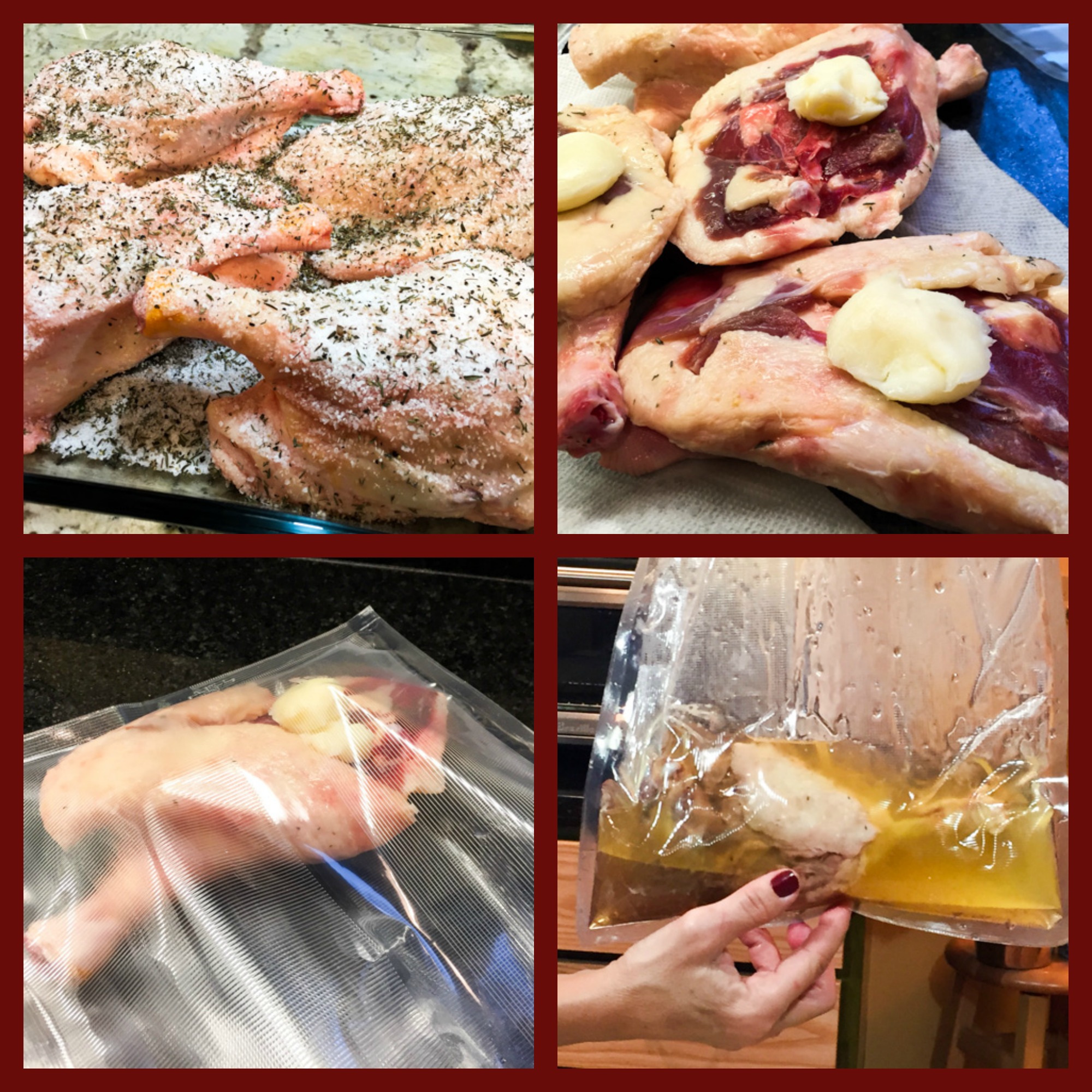
Sprinkle 1 tablespoon of salt in the bottom of a dish or plastic container large enough to hold the duck pieces in a single layer. Evenly scatter half the garlic, shallots, and thyme in the container. Arrange the duck, skin-side up, over the salt mixture, placing one sage leaf underneath each piece of duck. Sprinkle with the remaining salt, garlic, shallots, and thyme and a little pepper. Cover and refrigerate for 24 to 48 hours.

Rinse the duck pieces well, to remove the coarse salt. Dry the meat with paper towels. Place each piece in a plastic bag, adding 1 tablespoon of very cold duck fat inside, vacuum-seal the bags.  Submerge the sealed bags in a water-bath set at 82 C (180 F) for 10 hours.  When the time is up, chill the pieces in an ice bath and place in the fridge, still sealed.

About 45 minutes before dinner time, remove the duck from the fridge, open the bag and scrape off most of the congealed fat. Place in a roasting pan, skin side up, cover with aluminum foil and warm up in a 375 F oven for about 30 minutes. Before serving, place the pan under the broiler to crisp up the skin. Alternatively, you can warm up the pieces and then sear the skin on a blazing hot skillet.

ENJOY!

to print the recipe, click here


DuckConfitcomposite

Comments: I made this recipe for a very special dinner. First, it was my beloved’s Birthday, and since it falls very close to Christmas, it’s tricky to have a party for him.  Most people are away visiting family, or too busy with the holidays. But, it turns out that two VERY special friends made a trip all the way from Brazil to be here with us on that special day!  And they are amazing cooks, so the pressure was high on me to deliver a nice meal. Needless to say, I did a lot of research on duck confit sous-vide before settling on the method I shared here.

Several things are important. The duck itself. The best kind to get is Moulard duck, so I special ordered it from d’Artagnan (remember my latest IMK post?). Then, the salting to cure the meat before cooking. Some sous-vide methods advise you to do that step in vacuum-sealed bags, but the meat can turn out overly salty. I decided to salt the pieces in a baking dish in the fridge for 36 hours, then rinse the meat well before cooking it. The sous-vide step is another major consideration. I visited a discussion forum (eGullet), and read everything I could find on duck confit before settling on my choice of 10 hours at 82 C (180 F).  As to the amount of fat to use, one tablespoon is enough, but you could even omit adding any extra fat. If you look at the last photo on the composite picture above, you’ll notice that there was a lot more than one tablespoon of fat in each bag. The fat rendered from the leg itself will be more than enough to properly coat it during cooking. So, if you rather  not render duck fat or buy pre-rendered fat, simply go from the salting step to vacuum-sealing. It will work like a charm. Of course, you could get by with olive oil too. The main goal is to cook the meat submerged in some type of fat, duck fat being the best one for flavor.

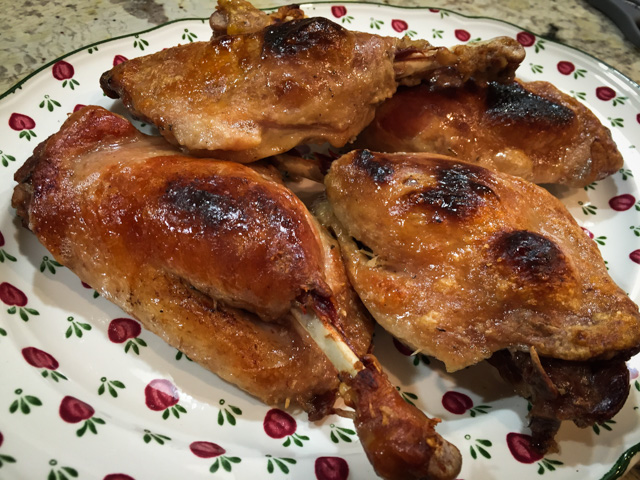
I feel that I hit the jackpot with that combination of time and temperature, would not change it in the future.  Finally, the last consideration is how to warm up the meat before serving.  I did not want to deal with a hot skillet and searing the skin, making a huge mess right before our meal, so I went with a regular oven. First 375 F for about 30 minutes, then running the pieces under the broiler to crisp up the skin.  Would not do it any other way, it was spectacular!  The meat had the exact texture I remember from my first duck confit enjoyed in Paris! Not too salty, not too greasy, simply perfect!

plated2

Dinner is served!  Duck confit and gratin of potatoes…
Life is good!

bday

ONE YEAR AGO: Ken Forkish’s Warm Spot Sourdough 

TWO YEARS AGO: Bran Muffins, Rainbows, and a wonderful surprise!

THREE YEARS AGO: Salmon Wellington

FOUR YEARS AGO: The Green Chip Alternative

FIVE YEARS AGO: Weekend Pita Project

SIX YEARS AGO: Let it snow, let it snow, eggs in snow

HOW ABOUT SOME COFFEE WITH YOUR STEAK?

Have you missed the 6th anniversary of my blog?
Only a few days left to enter my giveaway!
Click here to join…

If you’ve never used coffee in marinades or dry rubs for meat, you are missing a great opportunity to enjoy its mysterious flavor added to usual suspects such as herbs, peppers, and spices.  I’ve blogged before on a take on pork tenderloin that I still think is one of the best recipes I have in the blog, and that uses coffee as one of the ingredients.  But today I’ll switch gears and apply a coffee-based dry rub to beef. The recipe, published by The New York Times,  was recommended by our very dear friend, Marijo, who happens to be a great cook, so when she raves about something, I am all ears. And taste buds. It did not take me too long to jump on it, although it is taking me a long time to share it here.  What else is new?  That’s the way Sally rolls…

Steak_Coffee

ALL-PURPOSE CALIFORNIA BEEF RUB
(as published in The New York Times)

2 tablespoons finely ground coffee
1 ½ tablespoons kosher salt
1 ½ tablespoons granulated garlic
1 heaping teaspoon black pepper
1 tablespoon brown sugar
¼ teaspoon cayenne pepper
¼ teaspoon ground cloves
¼ teaspoon cinnamon

Combine all ingredients and store in an airtight container.

Rub on the meat you intend to grill and leave it for at least one hour, overnight works too.

Grill to medium-rare, or to the level of your choice (hopefully not well-done!)

Allow the meat to rest for 10 minutes before slicing.

ENJOY!

to print the recipe click here

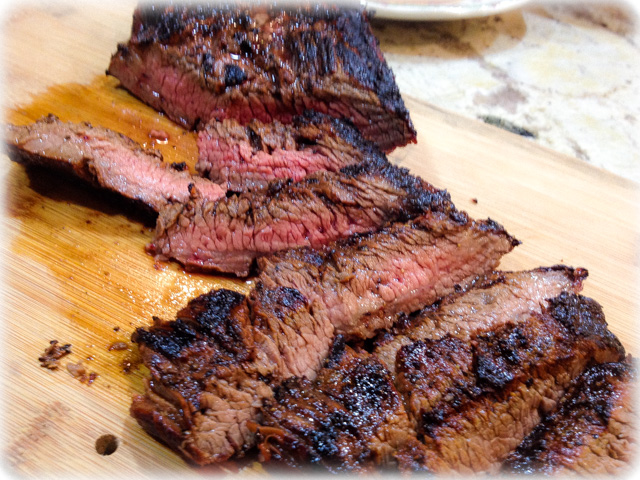
Comments: I’ve made this recipe quite a few times, with flank steak, flatiron steak, tri-tip, and even bison rib eye steaks. For the bison rib eye, I adapted it to sous-vide and it turned out spectacular, but the photos not so much, so I won’t dedicate a special blog article for it.

SOUS-VIDE METHOD: Apply the rub, and seal the meat in a plastic bag (vacuum is fine, water replacement method will work too). Leave the meat in the fridge for one hour or more, whatever is convenient with your schedule.   Place the bag in the water-bath set for 134 F (medium-rare) for a minimum of 3 hours.  I left mine for almost 6 hours, as I started cooking it at lunch time and we enjoyed the meat at dinner time that evening.  Once the meat is cooked, open the bag, discard the liquid accumulated inside, pat-dry the surface with the meat with paper towels.  Sear on a blazing hot grill or cast iron pan.

To our taste, the sous-vide was by far the best method for bison steaks. Same applies to flatiron. For flank and skirt steak, we think there is not much improvement by going the sous-vide route, both cuts of meat cook perfectly fine on the grill. Whatever your method of cooking, this rub is money!  Give it a try…

Marijo, thanks for sending this recipe our way,
looking forward to many more!

ONE YEAR AGO: Celebrate Wednesday with a Spiral Kick!

TWO YEARS AGO: Carrot Flan with Greens and Lemon Vinaigrette

THREE YEARS AGO: Granola Bars

FOUR YEARS AGO: Awesome Broccolini

FIVE YEARS AGO:  A Twist on Pesto

SIX YEARS AGO: Ciabatta: Judging a bread by its holes

CHICKEN IN GREEN PIPIAN SAUCE, SOUS-VIDE STYLE

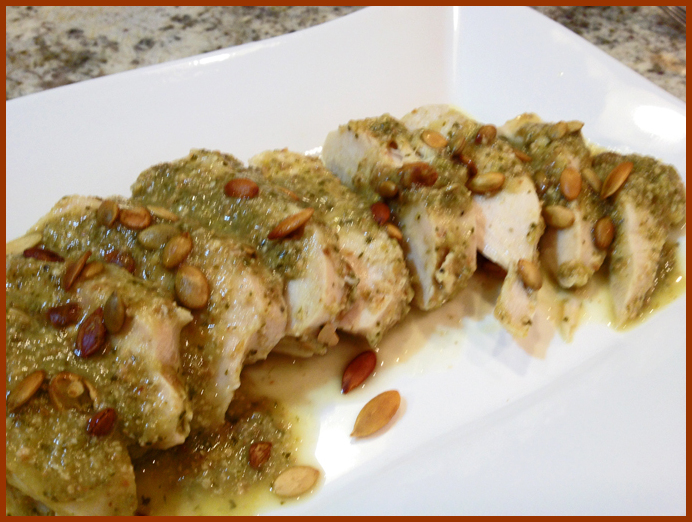
This classic Mexican recipe was featured in Marcela Valladolid‘s show on Food TV, Mexican Made Easy. It pairs a delicious sauce of cooked tomatillos and pumpkin seeds with boneless chicken breasts.  I decided to adapt her recipe for sous-vide cooking, and was very happy with the outcome.  The meat ended up perfectly cooked, not a hint of dryness.  The sauce is simply to die for, if you are a vegetarian, skip the bird, but make the sauce. Roasted cauliflower would be amazing paired with a little pipian…

ChickenPipianSauce2
CHICKEN SOUS-VIDE WITH GREEN PIPIAN SAUCE
(adapted from Marcela’s Mexican Made Easy)

for the chicken:
4 boneless chicken breasts
4 little pats of butter (probably ok to skip it)
1 large lemon, sliced
Salt and freshly ground black pepper

for the sauce:
1 + 1/4 cup green pumpkin seeds (pepitas)
1 pound tomatillos, husked and rinsed
1 Serrano chile, stemmed
1/2 medium white onion, roughly chopped
1 + 1/2 cups chicken broth, warmed (I used a lot less)
1/4 cup loosely packed fresh cilantro leaves
1 teaspoon sugar
Salt and freshly ground black pepper

Season the chicken breasts with salt and pepper, place them in sealable plastic bags, add a tiny pat of butter and a few slices of lemon over each breast. Seal the bags. Place in the water-bath set at 140 F for three hours.

While the chicken cooks, prepare the sauce (can be made a couple of days in advance). Preheat a large, heavy skillet over moderate heat until hot. Toast the pumpkin seeds, stirring constantly, until they have expanded and begin to pop, 3 to 5 minutes. Transfer the seeds to a plate to cool. Reserve 2 tablespoons for garnish.

In a medium, heavy saucepan, simmer the tomatillos, Serrano and onions in salted water to cover until the tomatillos turn a dark green color, about 10 minutes. Using a slotted spoon, transfer the tomatillos, Serrano and onions to a blender and puree with the chicken broth, cilantro, sugar and toasted pumpkin seeds until smooth (the sauce will be a little coarse). Season with salt and pepper.

To serve, slice the chicken crosswise on the bias. Transfer to a serving plate. Spoon the green pipian sauce on top and garnish with the reserved toasted pumpkin seeds.

ENJOY!

to print the recipe, click here


composite

Comments: I am having a great time with my Anova sous-vide gadget. Most recipes I tried were big hits, a few disappointed me, but isn’t that true for any type of cooking?  You cannot win them all. For boneless chicken breasts, it is hard to come up with a better cooking method. I included butter in the bag, but it would probably be just as nice and tender without it. With sous-vide, you will never get the beauty of grill marks or that copper, enticing tone that roasting or broiling would offer.  But, in a recipe such as this one, in which the meat will be served under a sauce, the cosmetic aspect will be taken care of.  Imagine a very delicately poached chicken, boosted with the flavor of a spicy sauce with the crunchy pepitas on top: Mexican heaven, in sous-vide form! No sous-vide around?  Check Marcela’s original recipe using a regular oven.  I am sure it will be amazing too…

ONE YEAR AGO: Classic Shrimp Gobernador Tacos (another Marcela Valladolid’s recipe!)

TWO YEARS AGO: A Walk Towards the Sunset

THREE YEARS AGO: In My Kitchen

FOUR YEARS AGO:  Heavenly Home-made Fromage Blanc

FIVE YEARS AGO:  A Perfect Sunday Dinner