A STICKY SITUATION

That is, sticky as in yummy!   Here’s yet another recipe from Fine Cooking that regularly returns to the Bewitching Kitchen.   Thighs are not the favorite piece of chicken for most Americans, but they rank high in my book because they’re always flavorful and tender.   Plus, any recipe by Joanne Weir gets my attention, and this one is a winner:  simple to prepare and packed with sticky, gooey  goodness.  Steam some white rice to go with it, and you’re all set!

SWEET AND SPICY STICKY CHICKEN
(from Joanne Weir, published in Fine Cooking, Nov 2001)

1/2 cup dark brown sugar
1/4 cup fish sauce
1/3 cup water
3 Tbs. rice-wine vinegar
2 Tbs. soy sauce
1 Tbs. minced fresh ginger
1 clove garlic, minced
1/2 tsp. freshly ground black pepper
1/2 tsp. crushed red pepper flakes
1 Tbs. peanut or vegetable oil
3 scallions  thinly sliced
8 chicken thighs, fat and skin removed  (bone in or boneless)
Cilantro sprigs for garnish

In a bowl, whisk the brown sugar, fish sauce, water, vinegar, soy sauce, ginger, garlic, black pepper, and red pepper flakes.

Heat the oil in a large frying pan over medium heat. Add the scallions and cook until soft, about 3 min. Add the thighs and the brown sugar mixture. Turn the heat to high and bring to a boil. As soon as it does, reduce the heat to low and simmer, covered, turning the thighs occasionally, for 30 to 35 minutes.

Remove the thighs from the pan and cover with foil to keep warm. Increase the heat to high and reduce the sauce until it slightly thickens and resembles a bubbling caramel sauce. Pour the sauce over the chicken on a serving platter, add cilantro sprigs to decorate, and serve with white rice.

ENJOY!

to print the recipe, click here

Comments: Our grocery store always has organic, boneless chicken thighs for sale at great prices  because not many people buy them, so I usually pick up a package once a week. When I’m in a huge hurry for dinner (say, on Tuesday evenings…) I opt for grilling  (expect my favorite recipe soon!).   But if dinner is proceeding at a more relaxed pace, then this recipe is just what the doctor ordered.

If you’re new to fish sauce, that powerfully smelling liquid sold in large bottles, don’t be afraid to bring some home – just don’t break the bottle in your car (it didn’t happen to me, but I read a sad tale about it years ago, and still live in fear of it).  Just like Worcestershire sauce in Caesar dressing, fish sauce gives complexity to many marinades and sauces. Some say it makes the best hamburger in the world, but unfortunately my beloved husband doesn’t agree …  😉

ONE YEAR AGO:   THE GARDEN

Add to FacebookAdd to DiggAdd to Del.icio.usAdd to StumbleuponAdd to RedditAdd to BlinklistAdd to TwitterAdd to TechnoratiAdd to Yahoo BuzzAdd to Newsvine

7-6-5 GRILLED PORK TENDERLOIN

Note added Feb 22nd, 2021: If you own a Weber type grill, it might get a lot hotter than other brands, and this method won’t work for you, unless you are able to control the heat down to 500F-550F. My friend Gary recommends a surface thermometer in case you’d like to monitor the temperature of your grill, and find hot spots.

The Boeing 777 is my favorite airplane, but the number to keep in mind when grilling pork tenderloin is 765, referring to the time it takes to grill it (7 + 6 + 5  minutes).   The original recipe was from an issue of Fine Cooking magazine (June 2002)  published as a general method to grill pork tenderloin, that’s adaptable to many different flavor profiles.  I’ve been making it ever since.

7-6-5- GRILLED PORK TENDERLOIN
(very loosely adapted from Pam Anderson)

2 pork tenderloins
1/4 cup olive oil
juice of 1/2 lemon
1 tsp aleppo pepper
salt

For the glaze:

1/2 cup orange marmalade
2 Tbs white wine vinegar
a little water
salt and pepper

Mix the olive oil, lemon juice, and aleppo pepper, rub all over the meat and let it stand in the fridge overnight or several hours.

Prepare the glaze by melting all ingredients in a small sauce pan. You want a reasonably thick consistency, so adjust the amount of water accordingly. Let it cool (you can prepare the glaze the day before).

Prepare a hot grill. Remove the meat from the marinade, brush it all over with the glaze, and season with salt. Place the meat on the grill, close the lid and grill for 7 minutes. Turn the pork tenderloin over, close the lid again, and grill for 6 minutes.  Don’t open the lid, just turn off the heat and keep the meat inside for 5 minutes. The internal temperature should be 145F to 150F. If not, close the lid and leave the meat for a few more minutes.  Remove the meat to a serving platter and let it rest for 5 minutes before slicing.

You can prepare the same recipe on a charcoal grill, just place the coals to one side, and when it’s time to turn the heat off, simply move the meat to the opposite side of the grill, with no coals underneath.

ENJOY!

to print the recipe, click here

Comments: The published recipe suggested brining the meat first, then brushing it with the glaze of your choice. I opted for a lemony marinade instead.  Pam Anderson offered three options on the glaze,  all using frozen fruit juice concentrate as the starting point.  We usually don’t stock those in the freezer, so I went with melted orange marmalade instead, adding a little vinegar to cut any excessive sweetness.   During grilling the sugar will impart a deep copper color to the meat, something that we all associate with great taste… and it had that for sure!   I served the meat over plain white rice, without any sauce, but with crisp-tender green beans and almonds, one of our favorite side dishes. Leftovers are great for sandwiches, fajitas, or simply re-heated in the microwave.  Give this recipe a try, and it might become one of your favorite weeknight options!

GRILLED LETTUCE SALAD

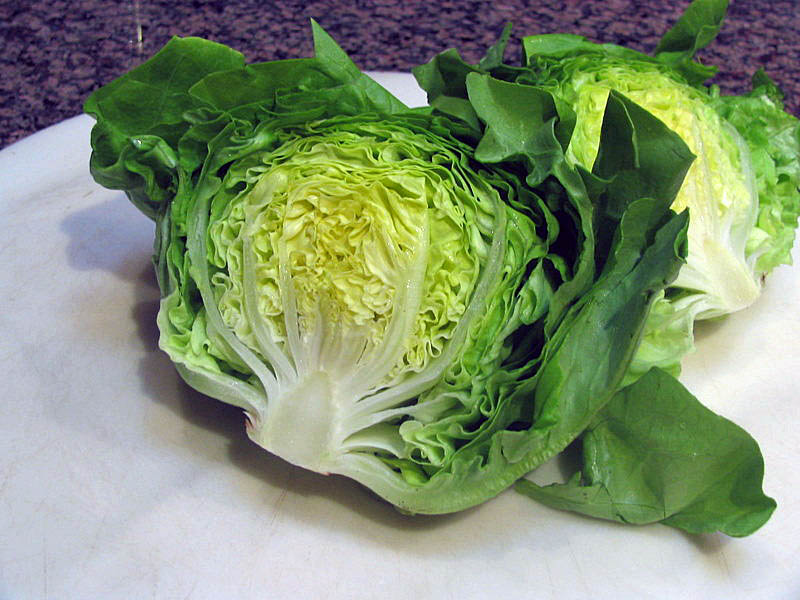
The slightly unusual food preparations continue to take place in our kitchen… After frying a boiled egg and roasting greens, I grilled some lettuce . This  3-minute preparation delivers a punch of flavor, leading the humble butter lettuce to its best performance. From the latest Fine Cooking magazine  which, by the way, is an awesome issue, I’d love to make almost every recipe from it!

GRILLED BUTTER LETTUCE SALAD WITH BUTTERMILK-CHIVE DRESSING
(adapted from Fine Cooking #105)

1 butter lettuce, cut in half lengthwise
1/4 cup buttermilk
1/8 cup creme fraiche (I substituted sour cream)
1 Tbs olive oil
1 Tbs thinly sliced chives
1/2 Tbs freshly squeezed lemon juice
salt and pepper to taste
vegetable oil for the grill

Prepare a gas or charcoal grill at medium-high heat.

Whisk the buttermilk, creme fraiche, olive oil in a bowl. Add the chives, lemon juice and mix well. Season with salt and pepper. Reserve.

Brush the grill with a light coating of vegetable oil, place the lettuce, cut side down, and grill for 2 to 3 minutes. Transfer the grilled lettuce to a serving plate, cut side up, and drizzle the dressing over it. Sprinkle with a little more salt and pepper, and serve.

ENJOY!

to print the recipe, click here


Comments: Sometimes the idea of washing, drying, slicing…  the whole “prep work” associated with making a good salad makes me a bit tired.   However, this recipe delivers a delicious, and quite elegant salad in – literally – 6 minutes.  All you need is the most gorgeous, preferably organic butter lettuce available, and a few ingredients for the dressing. My beloved suggested adding a little blue cheese  – “it will make it perfect”! – so, keep this in mind if you make it.

Grilling the lettuce intensifies its flavor, and changes the texture ever so slightly, making each bite have its own character: closer to the edge a bit smokey, a crisper and brighter taste as you indulge deeper. The buttermilk dressing is very flavorful – it will certainly go well over other roasted or steamed veggies. I can see myself grilling lettuce during the whole Summer!

KOREAN-STYLE PORK WITH ASIAN SLAW

Korean food is wonderful, and in my opinion, under-appreciated. When I lived in Sao Paulo, I loved a restaurant that specialized in Korean barbecue, a gastronomic experience not to be missed.   Unfortunately, our current location is less blessed with good restaurants, and Korean food is nowhere to be found.  The only way to satisfy my cravings is to cook it at home! I’ve made this dish many times since it was first published in Fine Cooking, and it’s become one of our favorites.

(receita em portugues na pagina seguinte)

KOREAN-STYLE PORK WITH ASIAN SLAW
(adapted from Fine Cooking #78, April 2006)

2 small pork tenderloins (about 1-1/4 lb.)
1/3 cup soy sauce
2 Tbs rice vinegar
2 Tbs. brown sugar
1 cloves garlic, minced
1-1/2 Tbs. minced fresh ginger
1/2 Tbs. Asian sesame oil
1/2 Tbs.  Asian chile sauce (like Sriracha)
2 to 4 Tbs canola oil

for salad
1 lb. napa cabbage, thinly sliced (about 6 cups)
1 cup grated carrot
4 scallions (both white and green parts), trimmed and thinly sliced
1 Tbs. canola or peanut oil
1/2 tsp sesame oil
2 Tbs. rice vinegar
1 Tbs brown sugar
Kosher salt

Trim the pork of any silverskin and excess fat, and cut on the diagonal into 1/2-inch-thick medallions. Pound each slice gently with a meat mallet, protecting it with plastic wrap as you pound it.

In a small measuring cup, whisk together the soy sauce, 2 Tbs. of the rice vinegar, 2 Tbs. of the brown sugar, the garlic, ginger, 1/2 Tbs. of the sesame oil, and 2 tsp. of the chile sauce. Toss 1/2 cup of this mixture with the pork medallions in a large bowl; reserve the remaining mixture to use as a sauce, if you want.  Let the pork sit at room temperature for 25 minutes or refrigerate for up to 12 hours.

Meanwhile, in another large bowl, toss the cabbage and the carrot with half of the scallions, 1 Tbs. of the canola oil, 1 tsp. salt, and the remaining 2 Tbs. rice vinegar, 1 Tbs. brown sugar, 1/2 Tbs. sesame oil, and 1 tsp. chile sauce. Let sit for 15 minutes, toss again, and transfer to a large serving platter.

Heat 2 Tbs. of the canola oil in a 12-inch, heavy-based skillet over medium high heat until very hot. Remove the pork from the marinade, shaking off the excess, and transfer the pork to a clean plate. Discard the marinade. Add half of the pork medallions to the skillet, spacing them evenly. Cook them without touching until well browned, about 2 minutes. Flip and cook until the pork is just cooked through about 2 more minutes. Set the pork on top of the slaw. Pour out the oil and wipe the pan with paper towels (if the drippings on the bottom of the pan look like they may burn, wash the pan). Return the pan to medium-high heat. Add the remaining 2 Tbs. canola oil, and cook the remaining medallions in the same manner. Top the slaw with the remaining pork, and pour the reserved soy-ginger sauce over the medallions. Serve immediately, sprinkled with the remaining scallions.

to print the recipe, click here

CommentsNapa cabbage is best in this recipe, but I’ve made it with regular green cabbage too.  In that case,  it’s important to slice it thin, otherwise it can be a little too crunchy.   This dish surprised us because it’s tastier than  expected from the ingredients and preparation.  I usually marinate the meat in the morning, and leave it in the fridge the whole day, for a super-easy dinner after work.  Don’t be alarmed by the state of the frying pan when you finish cooking the meat: the high sugar content in the marinade tends to cause it to stick  to the pan, but it rinses off quite easily… no elbow grease needed.  😉

Instead of adding the reserved marinade on top of the meat, I advise you to try a little on your plate – some people might find it too strong.  I often skip the additional sauce, particularly when the meat was marinated for several hours.

para receita em portugues…

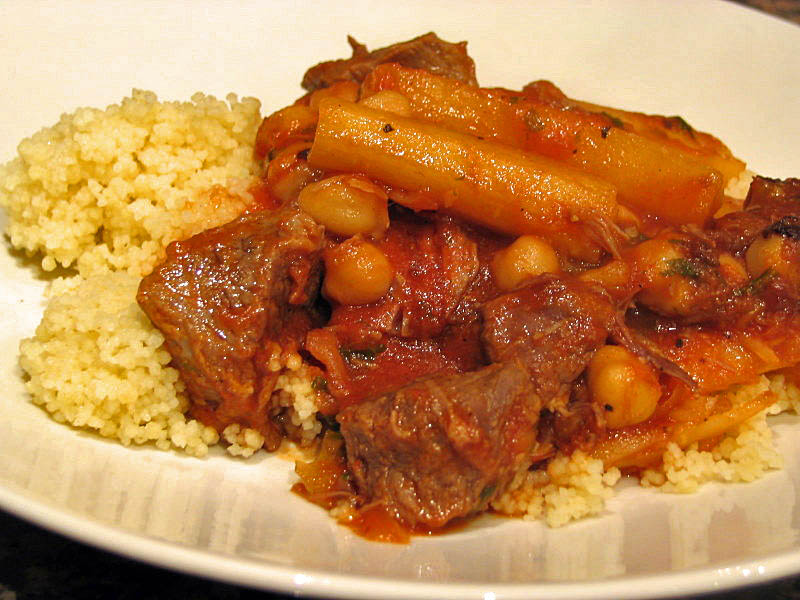
MAGICAL LAMB STEW with PARSNIPS, PRUNES, and CHICKPEAS

This recipe goes into the category of  “Perfect Saturday Night Dinner.”  From the recent issue of Fine Cooking magazine (number 102), contributed by David Tanis,  it has a  sexy flavor with a North African flair. The many tastes in this meal reminded me of the exotic couscous we used to savor on cold Parisian evenings by the Seine.
plate2

LAMB STEW WITH PARSNIPS, PRUNES, AND CHICKPEAS
(adapted from Fine Cooking magazine # 102)

For the Lamb
3 lb. boneless leg of lamb, cut into 1-inch cubes
Kosher salt and freshly ground black pepper
2 medium carrots, cut into 3-inch pieces
1 medium yellow onion, peeled and stuck with 1 whole clove
1 three-inch cinnamon stick
1 bay leaf

For the stew
2 Tbs. olive oil
1 large yellow onion, cut into small dice
Kosher salt and freshly ground black pepper
1 medium clove garlic, roughly chopped
1 Tbs. paprika
2 tsp. cumin seed, toasted and ground
2 tsp. coriander seed, toasted and ground
1/2 tsp. cayenne pepper
2 cups canned chickpeas, rinsed
12 pitted prunes, halved
1/2 cup tomato purée
1 lb. medium parsnips, peeled, cut into 2-inch pieces
1 Tbs. chopped fresh cilantro

Heat the oven to 350°F.

Season the lamb with 2 tsp. salt and 1/2 tsp. pepper. In a large Dutch oven combine the lamb, carrots, onion, cinnamon, bay leaf, and add water to cover. Bring to a gentle boil, cover and cook in the oven until the meat is very tender, about 2-1/2 hours. Strain the mixture through a fine sieve over a large bowl. Discard the vegetables and spices. Cool the lamb and broth, and refrigerate separately. Skim the fat from the broth before continuing.

Heat the olive oil over medium-high heat in a large pan. Add the diced onion, a pinch of salt, and a few grinds of black pepper and cook, stirring occasionally, until softened and lightly browned. Add the garlic, paprika, cumin, coriander, and cayenne and cook, stirring for a couple of minutes.

Stir in the chickpeas, prunes, tomato purée, and a pinch of salt. Add the reserved lamb and 4 cups of the broth and bring to a boil. Boil for 5 minutes and then turn the heat to low. Cover and simmer for 10 minutes. Add the parsnips and cook until tender, about 10 minutes. Season to taste with salt and pepper, and serve sprinkled with cilantro.

to print the recipe, click here

Comments – this is an unusual stew in the sense that the meat wasn’t browned before braising.    If David Tanis wasn’t the man responsible for the recipe, I’d have had second thoughts about trying it, but he is one of the chefs devising the dishes at Chez Panisse,  the famous Berkeley restaurant.   If he skips the browning, I’ll skip it too. 😉   But, after the 2.5 hours of  braising in the oven, I wasn’t too optimistic.  The meat looked pale and bland, like hospital food.  Without much choice (apart from dialing for pizza),  I finished the stew, and it was like a Phoenix born from the ashes…. the dish beautifully came together!   The lamb was super tender, and the spices permeated the meat, perhaps better than when it’s browned in advance.

We enjoyed it with couscous and a little naan bread.

I had visions of a magic carpet ride!  Maybe it will happen to you too…  😉

para receita em portugues, siga ate’ a proxima pagina