COME MELLOW WITH US!

As more and more fellow bakers finished the BBA Challenge, a net-gossip started: what should we do next?   It was so much fun to bake together, cheering each others’ successes and commiserating over the failures, that we all felt a void when the party was over.

The idea of baking another complete bread book, from beginning to end, didn’t appeal to me because of the tight scheduling required.    So when Paul proposed “Mellow Bakers,” it was just what I was looking for:  we’ll bake Hamelman’s “BREAD”  at a leisurely pace, and I’ll even emphasize the “mellowness,”  by skipping some of  breads.   In fact, they already made hot cross buns while I only watched from a safe distance… 😉

So here is an invitation for you:   for a nice bread project  that will expose you to delicious recipes by a great author,  Jeffrey Hamelman,  first jump to Paul’s site to read all about it, and then to the Mellow Bakers forum to introduce yourself and join the party!

I’ll see you in the forum!

SPRING ROLLS on a SPRING DAY

March is a wild month. It’s the beginning of Spring in the Southwest, but Winter still occasionally shows its teeth, bringing low temperatures, freezing rain, snow and nasty winds.   It’s enough to make a tropical creature sob.    This past Saturday I fought back,  ignoring the cloudy skies, the intermittent rain and the 25mph winds…  I went ahead and brought a burst of Spring air into the house.

VIETNAMESE-STYLE SPRING ROLLS
(from the Bewitching Kitchen)

4 rice paper rounds
1 oz dry bean threads or rice vermicelli
cooked shrimp, cut in half lengthwise
carrots, cut in long julienne strips
cucumbers, cut in long matchstick pieces
lettuce, cut in strips
cilantro leaves

for dipping sauce
6 Tbs soy sauce
2 Tbs water
2 Tbs rice wine vinegar
2 Tbs brown sugar
1 tsp sesame oil
1 tsp grated fresh ginger

Cut the vegetables, cook the shrimp,  and have everything ready to use on your kitchen counter. Prepare the dipping sauce by mixing well all its ingredients.

Cook the noodles according to the directions on the package (they vary according to type). Rinse them in cold water and set aside (you can add a tiny bit of sesame oil or olive oil to prevent them from sticking, but it’s not absolutely necessary if you rinse them well).

Fill a bowl large enough to hold the rice paper with very warm water. Open a damp cloth over your work surface. Soak the rice paper in the warm water until it is soft and pliable. Carefully lift it and place it over the damp cloth. Line your ingredients, starting with the cut shrimp, then the noodles, veggies, herbs. Add 1/2 tsp of dipping sauce (or just a few sprinkles of soy sauce) to the filling, and roll the paper around them. Repeat with the remaining rice papers. To serve, cut each roll at an angle and serve with a small bowl of dipping sauce.

Think about birds chirping, flowers blooming, and ENJOY!


to print the recipe, click here


Comments: What I love about these rolls is that you can improvise and use lots of different things in the filling.  Granted, this practice might compromise their authenticity, but unless you’re having a Vietnamese guest for lunch, no harm done.   Keep in mind that you can have too much of a good thing: avoid using 6 different veggies, two types of meat, 5 herbs, and a smear of peanut butter inside.  😉 These rolls are supposed to be delicate, fresh, and light.   Perfect for the warm weather that is certainly peeking at us  (fingers crossed).

Click here for a quick tutorial on how to prepare them (plus a cool song in the background!)…

Add to FacebookAdd to DiggAdd to Del.icio.usAdd to StumbleuponAdd to RedditAdd to BlinklistAdd to TwitterAdd to TechnoratiAdd to Yahoo BuzzAdd to Newsvine

PORK TENDERLOIN and BLUE CHEESE

…. so Happy Together!

Here’s a great combination, in a recipe from Bauer’s Secrets of Success, a cookbook quite popular in this bewitched place

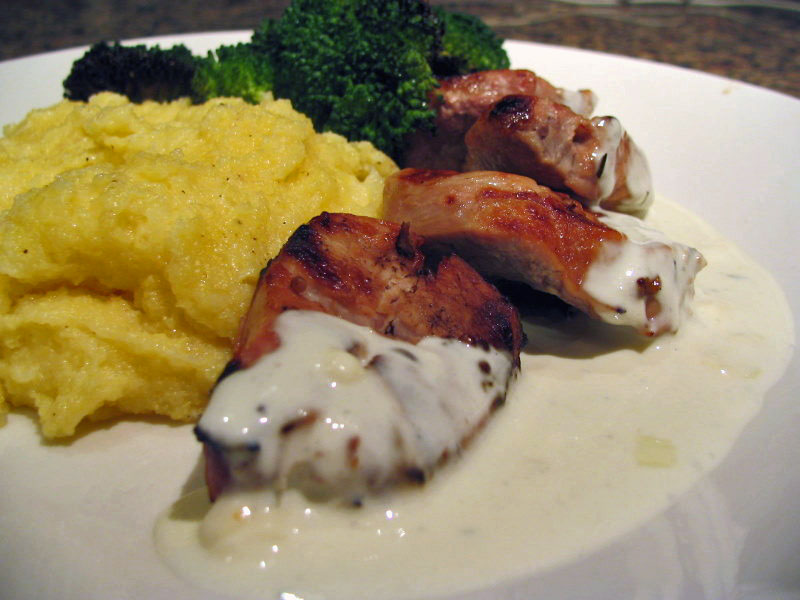
GRILLED PORK MEDALLIONS with BLUE CHEESE SAUCE
(cookbook Secrets of Success, original recipe from chef Ruggero Gadaldi)

1 qt water
1/2 cup brown sugar
1/4 cup pickling spices
1/4 cup cider vinegar
1 carrot, chopped
1 celery stalk, chopped
1/2 onion, chopped
1 tsp kosher salt
2 pork tenderloins
6 large skewers (metal or bamboo)
olive oil

for sauce:
1/2 cup heavy cream
3 ounces Gorgonzola cheese, crumbled
salt and pepper

Make the brine for the pork by bringing the water to a boil, adding the brown sugar, spices, vinegar, carrot, celery, onion, and salt. Simmer gently for 20 minutes, allow it to cool to room temperature. Cut each tenderloin in 10 medallions, and submerge the pieces in the brine (you can use a plastic bag). Refrigerate from 4 hours to overnight.

Turn your grill on high, remove the pieces of pork from the brine and pat dry. Thread the pieces onto skewers (if using wood skewers, allow them to soak in water for several hours to prevent burning). Season lightly with salt and pepper and brush the meat with a little olive oil. Grill for about 5 minutes per side, until medium-cooked.

Make the sauce by pouring the cream in a small saucepan. Simmer over medium heat until it starts to thicken (5-10 minutes), add the gorgonzola cheese, and stir until dissolved.

Serve alongside soft-cooked polenta.

ENJOY!

to print the recipe, click here

Comments: This is a perfect recipe for weeknights, as the pork can brine during  the day.  I normally prepare the brining component  in the evening, and submerge the tenderloin early next morning, before leaving for work.   The brine does two great things for the meat:  it imparts a subtle sweet flavor, and it promotes browning on the grill, thanks to its sugar content. The gorgonzola sauce couldn’t be easier to prepare;  it comes together in minutes.  In his restaurant, chef Gadaldi’s serves the medallions alongside soft-cooked polenta.  I did the same, but also included broccoli.  It was  nice dinner in less than 30 minutes (and I’m not even Rachael Ray…  ;-)).

(if prepared without the polenta, this meal is appropriate for people on low-carb diets)

Add to FacebookAdd to DiggAdd to Del.icio.usAdd to StumbleuponAdd to RedditAdd to BlinklistAdd to TwitterAdd to TechnoratiAdd to Yahoo BuzzAdd to Newsvine

COTTAGE LOAF and YEASTY DOGS

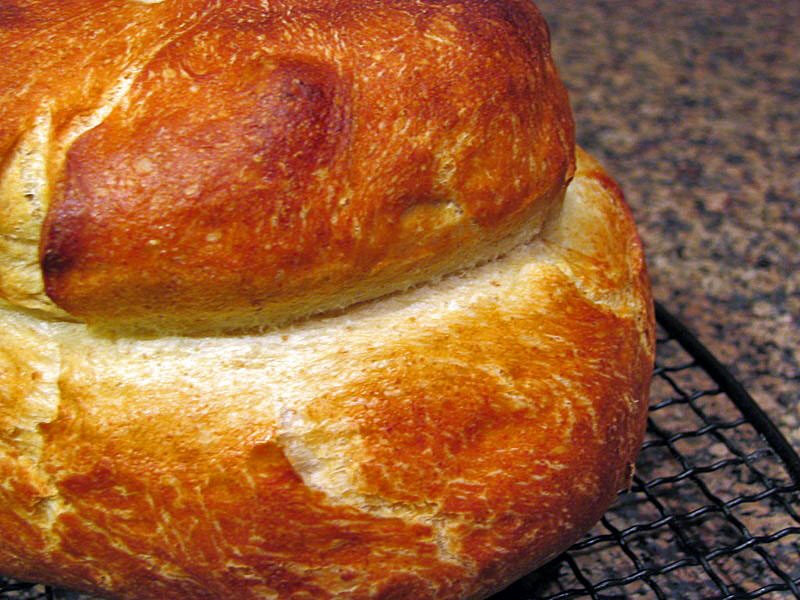
A couple of years ago, as I started regularly baking bread, a dear English friend of ours asked if I’d ever heard of “cottage loaf.”  I had not.   He explained that it was a bread he enjoyed as he grew up, that was baked in a special shape: two loaves together, the smaller one sitting happily on top of a larger one.   It had a soft crumb, perfect for indulgences with butter, jam, or fruit preserves.

Listening to him, eyes glowing with his childhood memories, I couldn’t help but set off on a mission to find the recipe.   None of my bread books helped, and  I posed questions in bread baking forums, but no one knew exactly what dough and what shaping were behind the elusive “cottage loaf”.   After a while I gave up hope, until last week I was thrilled to receive a comment from Zeb, who invited me to join a group of bakers to make – ready for this? –  cottage bread (!!!!).   As we say in Brazil, “… it was like asking a monkey if he wanted  some bananas”.   😉

Without further ado,  I share my first attempt at  this  traditional English bread.


COTTAGE LOAF

(adapted from Celia’s blog; dough recipe from Peter Reinhart’s Pain de Campagne)

Preferment
140g all purpose flour
140g bread flour
2/4 tsp sea salt
1/2 tsp instant yeast
170g water

Mix the two kinds of flour, salt, and yeast in a bowl. Add the water, mix briefly and let it rest for 10 minutes. Knead the dough briefly, allow it to rise for 1 hour at room temperature, then stick it in the fridge overnight.

Final dough:
All the preferment
225g bread flour
45g rye flour
3/4 tsp sea salt
1 tsp instant yeast
170g water, at room temperature

Remove the preferment from the fridge 1 hour before making the dough, cutting it into pieces to speed up warming up to room temperature. Place in a large bowl. Cut it into pieces with a knife or pastry cutter, and place them in a large mixing bowl.

Add the water and yeast, and stir together, then add the flours and salt. Combine everything into a shaggy mass, allow it to sit for 20 minutes undisturbed. Let the dough rise for 90 minutes, folding the dough at 20 and 45 minutes. Dough should rise not more than double its original size.

Weigh the dough (it should be around 900g), divide in two pieces (600g and 300g each), form each piece into a tight round. Allow them to sit for 15 minutes at room temperature, then coat the large ball with a little olive oil, cut a cross on top. Cut a cross on the bottom part of the smaller ball, and place it on top of the large one, like in this photo.

Now insert your finger or chopsticks in the center of the round, going almost all the way to the bottom, opening the whole outwards slightly to join both loaves. Allow them to rise for 10-15 minutes more before baking.

Slash the dough all around (which I forgot to do), cutting through both levels. Place the bread in a the oven (430F), cover it with an inverted roasting pan moist with hot water, bake it for 30 minutes, uncover and allow it to bake for another 15 minutes (if top layer is browning too much, protect it with aluminum foil). If you don’t have a roasting pan large enough to cover the dough, follow the baking method explained here.

Allow to completely cool on a rack before slicing through.

ENJOY!

to print the recipe, click here

Comments: One of the members of this bake-off group (Joanna), had great results starting the bread in a cold oven, turning it on just when the bread went in. If anyone is interested, drop me a line and I’ll put you in touch with her for specifics. The idea is to prevent over-rising of the top layer, which can pose problems…

Having made Reinhart’s Pain de Campagne for the BBA Challenge, I knew we’d love the taste of this bread, but the shaping seemed tricky.   No problems, though. Well, at least not with the bread itself. But, as I was putting my large container of instant yeast back in the freezer, it slipped from my hand, and in surreal slow-motion fashion,  I saw the lid flying in one direction, and the bottle slowly turning upside down in mid-air during its descent to the floor, spilling  yeast everywhere, faster than wildfire.   Of course, our almost-deaf dalmatian went at the yeast with a passion, and my hysterical screaming to stop him only alerted our Jack Russell to join the (microbiological) feast.   I’m happy to inform that yeast is not harmful to dogs.

Notes to self:
1. place an order at King Arthur’s Flour for instant yeast. ASAP.

2. bake a loaf of Cottage Bread for our friend. ASAP. 😉

I am submitting this post to Susan’s Yeastspotting!

Add to FacebookAdd to DiggAdd to Del.icio.usAdd to StumbleuponAdd to RedditAdd to BlinklistAdd to TwitterAdd to TechnoratiAdd to Yahoo BuzzAdd to Newsvine

SUN-DRIED TOMATO AND FETA CHEESE TORTE

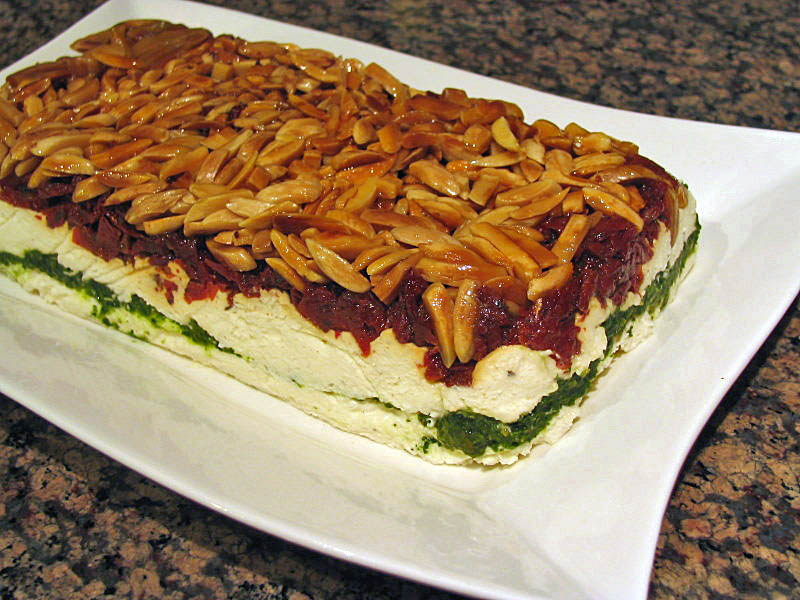
I first made this torte in 2001, for a large cocktail party to celebrate  my beloved’s Birthday.  We’d  never hosted quite so many people  (perhaps 60),   and this layered appetizer was one of the highlights of that memorable night.   The recipe came  from  Chiqui, a caterer from New Orleans, whom I “net-met” many years ago.    I hope you’ll consider it for your next dinner party, or for a potluck.  I recently made it again for another birthday party, so I might have to start calling it “Birthday Torte”.   😉

FETA CHEESE TORTE
(adapted from Chiqui)

1/2 cup slivered pine nuts, toasted (I substituted slivered almonds)
1 cup sun-dried tomatoes, packed in oil
1/2  garlic head, roasted
8 ounces feta cheese
1/2 stick unsalted butter
8 ounces cream cheese
1 tsp white pepper, ground
2 Tbs vermouth
1/2 cup arugula pesto (or regular basil pesto, preferably homemade)

Prepare the ingredients for all layers:  toast the nuts in a dry skillet or in the oven, being careful not to burn them.  Coarsely chop the sun-dried tomatoes, drain of most of their oil, and mix them with 1/2  of the roasted garlic.  Mix the feta cheese at room temperature with the butter, cream cheese, pepper, vermouth, and the remaining roasted garlic.  Add to the bowl of a food processor and process until smooth and fluffy.  Adjust seasoning if necessary. If using commercial pesto, drain it to reduce the amount of oil.  If using homemade, make it with less oil than the recipe calls for.

Line the mold of your choice with plastic wrap, leaving 6 inches overhang on all sides.
First layer:   toasted nuts.
Second layer: Sun-dried tomato mixture.
Third layer: Half the cheese mixture. Spread it gently over the tomatoes.
Fourth layer:  Pesto sauce.
Fifth and final layer: Remaining cheese mixture.   Spoon gently, and smooth the surface well.

Cover it with the plastic wrap, and place in the fridge for at least 4 hours, overnight is best.  Unwrap it, invert the torte on a serving dish.  Serve with crackers of your choice.

ENJOY!

to print the recipe, click here

Comments: You can make this layered torte in any kind of container.  Sometimes I prepare it in mini-loaf pans:  the full recipe is enough for two completely full mini-loaves, or three smaller (shorter) ones.   For a Valentine’s dinner, a heart-shaped container sounds interesting, but keep in mind that the dish is rich, so the full recipe is way too much for two people.

Add to FacebookAdd to DiggAdd to Del.icio.usAdd to StumbleuponAdd to RedditAdd to BlinklistAdd to TwitterAdd to TechnoratiAdd to Yahoo BuzzAdd to Newsvine

(receita em portugues na proxima pagina)

Continue reading