BLOOD ORANGE ENTREMET CAKE


Entremets seem to be the rage at the moment. Originally, entremets were small portions of sweet concoctions served in between savory items in a multi-course banquet type meal. We are talking royalty stuff, from the Middle Ages to the overindulgence that was happening in France before 1789 (wink, wink). Nowadays, the term is applied to cakes that involve multiple layers with different textures and flavors. Basically it is a layer cake with severe superiority complex. My version was closely based on a Craftsy class taught by Kathryn Gordon, Contemporary Layer Cakes.  I don’t have permission to publish the recipe but will share an overview.

BLOOD ORANGE ENTREMET CAKE
Recipe Overview
(from Craftsy)

For the cake component, a Jaconde sponge is prepared using the following ingredients:
6 egg yolks beaten with 90g sugar
110g  almond flour sifted with 60g cake flour
a touch of vanilla and salt
60g melted butter
meringue made with 6 egg whites and 90g sugar

The cake batter will be enough to bake one round 8 inch cake and you will have leftover batter to spread as a thin rectangle for the sides (for lack of a better term) of the cake. The round cake will be halved crosswise so that you’ll have two layers for the entremet. To line the pan, make sure you will have 2 pieces that will cover its whole circumference. You can use the mathematical formula C = π x D or cut a piece of string that goes around the pan, and measure it. In any case, you will arrive at the need for two pieces of cake 13 inches long. The height depends on how tall your cake will be in the end. Make it around 6 inches so you have some flexibility. The top can be trimmed once assembled. I placed a Silpat on top of the paper and spread the cake batter on it, using the drawing underneath to guide me.
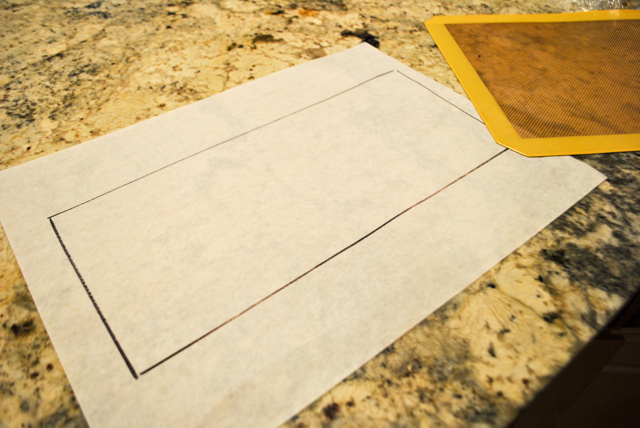
For the marble effect you have two options: paint some food color on the Silpat and pour the batter on top, or divide the batter in two portions, add orange food color to half, and pour the two batters together, spreading them gently so that the color is not fully distributed.  I prefer the second method because it gives a much more subtle effect.  But, if you are in a Pollock frame of mind, go wild with a brush.

In the center you see the full rectangle of very thin cake, that was split in half lengthwise and placed inside the ring. Those are technically called “sponge strips” and I thank Gary, patissier extraordinaire for enlightening me. Please keep in mind that the photos are not on the same scale. The cake is assembled inside an 8-inch ring. First the sides are set in place, with the swirl facing the outside. Then the bottom layer.

Filling components:
Blood Orange Cremeux:  cream made with 8 egg yolks tempered and cooked with 360mL heavy cream previously infused with the zest of two blood oranges and 3/4 cup of blood orange juice.  Once the mixture coats the back of a spoon, it is poured over 200g white chocolate and 6g sheet gelatin, softened in cold water.
Caramelized rice cereal: 1/4 cup sugar is heated in a heavy pan until amber. To that 1/2 cup popped rice cereal is added, quickly mixed and poured on a Silpat or parchment paper.
Caramelized blood orange segments: Make a syrup with 100g sugar and 4 tablespoons water. Heat until fully dissolved, then pour over the segments of one blood orange. Let the fruit sit in the syrup until cold, drain before using in the cake.

To the bottom cake layer, a little cremeux is added and spread. Then pieces of caramelized puffed rice. A bit more cremeux, caramelized orange segments, and more cremeux on top. The second piece of cake goes over it, pushing down to make sure it’s all well compacted.

The top of the cake is brushed with a bit of melted white chocolate and oil, to seal the layer. The whole thing is frozen for several hours, then the cake is covered with a very thin layer of white chocolate mirror glaze, made with sugar (50g dissolved in 2 T water), heavy cream (2 T), corn syrup (1 T) and white chocolate (150 g). Kathryn explains exactly how to do it in a way that the top will be very smooth.

The cake is then removed from the ring, the top edge is trimmed, if so desired, and the top is decorated with bits of caramelized rice cereal and blood orange zest.
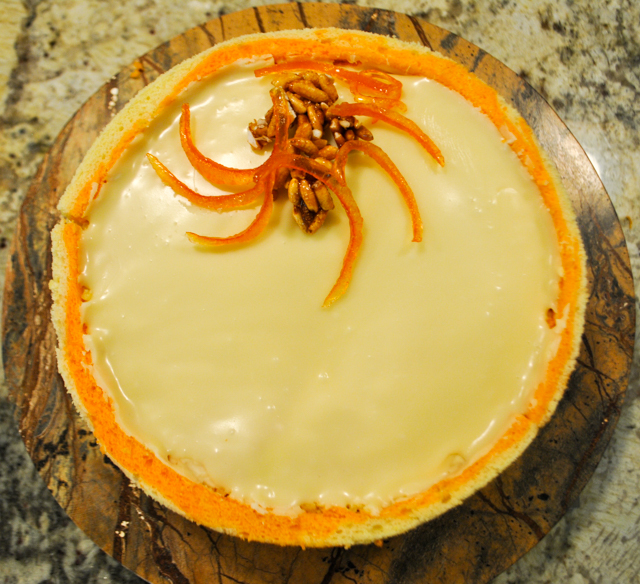
Comments: First of all, my apologies for not posting the full recipe, but without permission to do so, I cannot do it. You can find the basic method of preparing a Jaconde sponge, as well as all other components online. In fact, many different cake formulas and fillings will work to produce a similar entremet cake. All you need to keep in mind is a contrast of textures and flavors.

The blood orange cremeux turned out very refreshing, so even considering this is a rich, indulgent dessert, it had a light and bright quality to it. Rice puffed cereal is a good alternative to the famous Gavottes cookies that were part of my recent Gateau Royal. You can definitely caramelize it and  use it to add crunch to any layer cake. Those things are sold in huge bags, and we don’t eat puffed rice as a cereal, so I see a few aventures with this caramelized version in my future.

This Craftsy class by Kathryn is really wonderful, because not only she explains every single step of the recipe in real-time, but she encourages you to plan and make your own version of this elaborate cake. Although it might seem a bit too involved, each component can be made in advance. I actually baked the cakes and made the cremeux on a Saturday, the other components Sunday morning, assembled the cake, froze it, and added the mirror glaze in the end of the day. Piece of cake! (Literally).

Just like macarons are my favorite cookies, I suspect entremets are quickly becoming my favorite type of cake. The possibilities of cake, fillings, textures, and icing are endless.

ONE YEAR AGO: Flourless Chocolate Pecan Cake

TWO YEARS AGO: A Tale of Two Macarons

THREE YEARS AGO: Chocolate Chip Shortbread Cookies

FOUR YEARS AGO: Chicken in Green Pipian Sauce, Sous-vide Style

FIVE YEARS AGO: Classic Shrimp Gobernador Tacos

SIX YEARS AGO: A Walk Towards the Sunset

SEVEN YEARS AGO: In My Kitchen

EIGHT YEARS AGO:  Heavenly Home-made Fromage Blanc

NINE YEARS AGO:  A Perfect Sunday Dinner
SaveSave

SaveSave

SaveSave

SaveSave

SaveSave

SaveSave

SaveSave

SaveSave

SaveSave

SaveSave

SaveSave

SaveSave

SaveSave

SaveSave

SaveSave

SaveSave

SaveSave

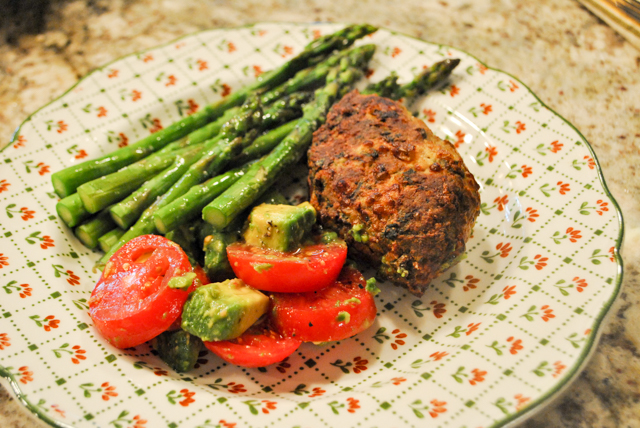
AIR-FRIED MEXICAN MEATLOAF

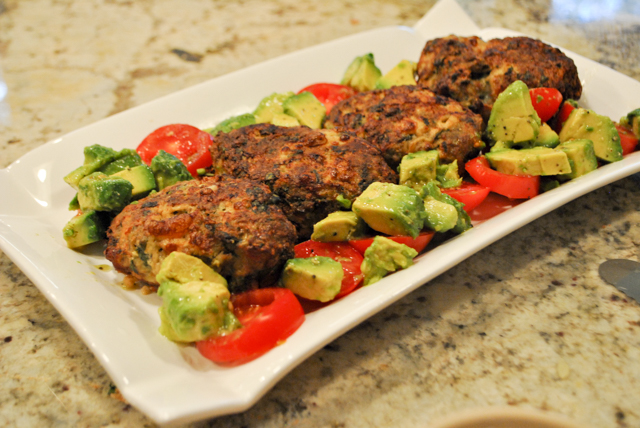
Don’t run away, you can make this tasty recipe in any oven, but let me tell you that the air-fryer shines on this preparation.  My friend Dorothy blogged about it not too long ago and urged me to give it a try. I made it three times in consecutive weeks. Yes, that’s how much we loved it. Simple to put together, and ready in 20 minutes thanks to the air-fryer environment, a blast of very intense heat concentrated in that small chamber. Pure awesomeness. It gets a nice crust, the meat inside is moist, with just the right amount of spicy heat. We inhaled them. Leftovers are wonderful too, by the way.

MEXICAN TURKEY MEATLOAF
(adapted from Shockingly Delicious)

1 egg
1 pound ground turkey
1 onion, chopped (I omitted)
1/3 cup almond flour
1 cup (about 4 ounces) grated Mexican blend cheese
1/4 cup green salsa (I used La Victoria)
1 cup finely sliced spinach leaves
2-4 tablespoons chopped fresh cilantro
1 teaspoon chili powder
1/2 teaspoon ground cumin
1/2 teaspoon ground oregano
1/2 teaspoon fine sea salt
A few grinds of black pepper

Spray the basket of the air fryer with nonstick spray. If you have a perforated parchment sheet protector, lay it on the screen.

In a large mixing bowl, crack the egg and use a fork to beat it lightly. Add the turkey, onion (if using), almond flour, cheese, salsa, spinach, cilantro, and all spices. Gently mix with your hands.

Shape the turkey mixture into 4 loaves.  Place them in the air fryer, turn the heat to 390F degrees, and set the timer for 20 minutes.

Remove basket from oven, and place each meat loaf on a dinner plate. Top with additional salsa — either green or red salsa,  if you so desire.

You may also shape this into a single loaf and bake it in the oven for about 45 minutes.

ENJOY!

to print the recipe, click here

Comments: The first time I made this recipe, I completely forgot to spray the basket of the air-fryer with some oil. I had the most epic mess to deal with later, as bits and pieces of crusty cheese bonded happily with the screen. I tell you, it was not fun. Having learned a painful lesson, I made it again and not only greased the basket, but I also protected it with a special perforated parchment liner that works like a charm both for bamboo steamers and air-fryers.  I highly recommend those, although you could improvise with parchment paper and scissors. I am not very gifted with this type of DIY stuff, so I rather amazon-it.

My main modification of Dorothy’s version was to use almond flour instead of bread crumbs, which reduces the carbo-load a bit, and gives a slight nutty flavor which I love. You can definitely go for the traditional bread crumb option, in this case you should add about 1/2 cup.

Dorothy, thanks for the inspiration! Glad you are having fun with your air-fryer, I hope we’ll go on inspiring each other!

Note added after publication: it was brought to my attention a nice review on different brands of air-fryers. If any of my readers is considering such purchase, take a look here before you decide which one to get.

ONE YEAR AGO: Mimi’s Sticky Chicken, a Call from my Past

TWO YEARS AGO: Perfect Soy-Grilled Steak

THREE YEARS AGO: The Devil’s Bread

FOUR YEARS AGO: Heart of Palm Salad Skewers

FIVE YEARS AGO: Potluck Frittata and Lavoisier

SIX YEARS AGO: Home-made Corn Tortillas

SEVEN YEARS AGO: Whole-Wheat Spaghetti with Peanut Sauce

EIGHT YEARS AGO: Brigadeiros: A Brazilian Party!

NINE YEARS AGO: Lemony Asparagus

SaveSave

SaveSave

SaveSave

SaveSave

SaveSave

SaveSave

SaveSave

SaveSave

SaveSave

SaveSave

SaveSave

SaveSave

SaveSave

SaveSave

SaveSave

SaveSave

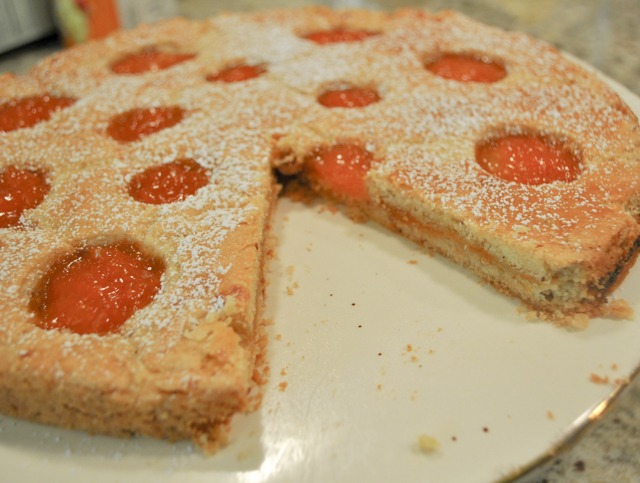
APRICOT LINZER TORTE

Do you know Anna Olson? I don’t remember how I got hooked into her shows, but I think it was one of those suggestions that pop in the amazon page. At any rate, she is big on Canadian Food TV. As far as I can tell, the Canadian food TV is far superior to our own. I watched every single episode I could find online. Basically a full season of “Sugar“, and a full season of “Baking with Anna Olson.”  They are organized by ingredient (chocolate, blueberries, pecans),  or basic component (say, pastry cream, or pie dough), and she usually shares three recipes with increasing level of difficulty.  I like her a lot. She is the type of baker who is clearly talented, but also down to Earth. Some professional bakers make you think that unless you can find the vanilla bean harvested on the Sava region of Madagascar under a moon 100% full, please don’t bother making the recipe. Not the case with Anna. You’ll feel less constrained and even encouraged to try something a little different. Sometimes she might even have a little powdered sugar flying moment in her KitchenAid, which in my mind just makes her even more special.  Of course, that type of moment is not a rare event in the Bewitching Kitchen, quite the opposite (sigh). When I watched her show on apricots, I knew I had to try her Linzer version. I am glad I did…

APRICOT LINZER TORTE
(from Anna Olson)

for filling:
2 cups fresh apricot, washed and pitted
⅔ cup apricot jam
¼ cup sugar
zest of one orange

for dough:
3 hard-boiled egg yolks
1 ¼ cup unsalted butter, room temperature
½ cup icing sugar
dash of vanilla extract
½ cup ground hazelnuts, lightly toasted
¾ tsp salt
¼ tsp baking powder
2 ¼ cups all-purpose flour
1 egg, mixed with 2 tbsp cold water

Cook all ingredients for the filling in a big saucepan until apricots are tender. Remove from heat, puree and cool completely before using.

Push cooked egg yolks through a sieve and set aside. Cream together butter and icing sugar until smooth. Stir in vanilla extract. Add hazelnuts and cooked egg yolks and blend in. Sift together salt, baking powder and flour and add to butter mixture. Blend until dough comes together (it will be quite soft). Divide dough into 2 discs, wrap and chill for at least one hour, until firm.

Heat oven to 350 F.

On a lightly floured surface, roll one disc of dough to 3/4- inch thick. Using the bottom of a 10-inch removable-bottom tart pan as your template, cut out a disc of pastry. Repeat this with the second disc of pastry.

Using the tart pan bottom as a lifter, transfer the first disc of pastry to a parchment-lined baking sheet. Spread the apricot filling over the entire surface of the dough. If the dough is very soft, I like to flash it in the freezer for 5 minutes, to make spreading the filling easier.

Using a 3/4 -inch round cutter cut decorative circles around the dough. Use a slightly smaller cutter to make a second series of smaller openings. While still on the cutting board, brush the top of the disc generously with egg wash. Place gently on top of apricot filling. Place ring of a springform pan around torte to help it hold shape while cooking.

Bake for 35-40 minutes, until a rich golden brown in colour. Allow to cool before cutting. If desired, sprinkle with a dusting of powdered sugar before serving.

ENJOY!

to print the recipe, click here

Comments: It was a lot of fun to make this recipe, it is a real soft though, and I decided to roll it out in between two sheets of parchment paper. Works much better for me that way. The filling is delicious, I had to hold myself back not to use it in macarons next day, it would be great added to some chocolate ganache, I think. Apricot and chocolate are a match made in heaven.

The dough is on the crumbly side as expected for a Linzer concoction. Her use of hazelnuts instead of almonds makes it quite unique and special. Everyone in the department loved this little treat, which brightened up one very summery Monday.


Make Sally happy, grab a pin!


ONE YEAR AGO: A Trio of Air-Fried Goodies

TWO YEARS AGO: Focaccia with Grapes, Roquefort and Truffled Honey

THREE YEARS AGO: Moroccan Carrot Dip Over Cucumber Slices 

FOUR YEARS AGO: White Chocolate Macadamia Nut Cookies

FIVE YEARS AGO: Cilantro-Jalapeno “Hummus”

SIX YEARS AGO: A Moving Odyssey

NINE YEARS AGO:
 Shrimp Moqueca

SaveSave

SaveSave

SaveSave

SaveSave

SaveSave

SaveSave

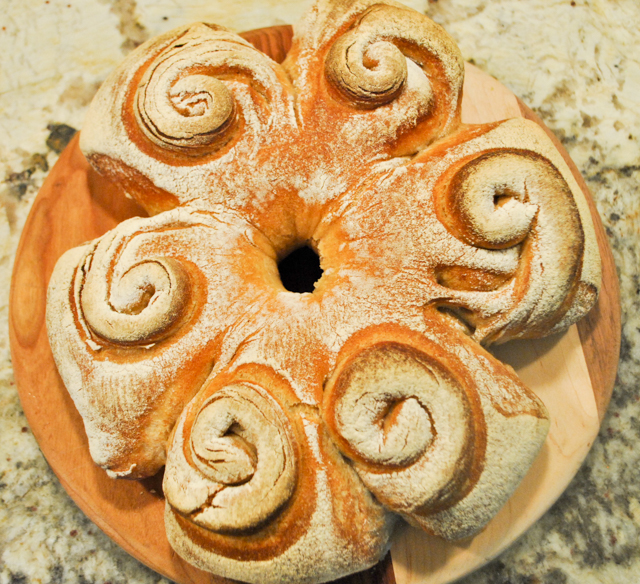
THE CHIGNON

No, my blog is not turning into a hairdressing site. Not that I don’t appreciate a well-made chignon, but I’ve never had the skill to do anything remotely fancy to my hair. Now, if we’re talking flour and yeast, I’m game.

THE CHIGNON
(adapted from Craftsy.com)

makes one loaf

270 g bread flour
30 g spelt flour
195 g water at room temperature
1.5 g instant yeast
6 g fine sea salt

Mix all the ingredients on low-speed in a mixer fitted with a dough hook for 4 minutes. Make sure no big clumps of flour are sticking on the sides, scrape the bowl if needed. 

Increase speed to medium and mix for about 6 more minutes. Dough should be very smooth and elastic at this point.  Take the dough from the mixer and place in a bowl lightly sprayed with oil.  Leave the dough at ambient temperature for 20 minutes, then refrigerate the dough overnight.  After two hours, punch the dough slightly down, cover it and let it stay in the fridge until next morning.

Remove the dough and allow it to sit at ambient temperature for 20 minutes. 

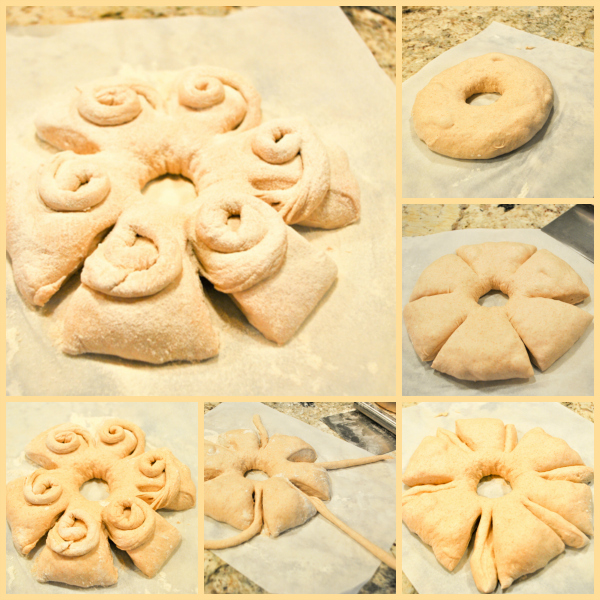
Shape as desired. If doing the chignon, right after shaping coat the surface with flour, then allow it to proof for 90 minutes, covered with a cloth.

 Bake at 470 F (245 C) in an oven with initial steam for 35 to 45 minutes, until golden brown. 

Cool on a rack.

ENJOY!

to print the recipe, click here

Comments: This bread shaping was part of the Craftsy class taught by Mr. Ciril Hitz , which I recommended in the past. His instructions are very clear and easy to follow, so don’t hesitate to get the lesson online for all the details and advice.  The only tricky part of this shaping is rolling the little ropes without breaking their connection to the main dough. The dough has a natural tendency to resist shaping, so work slowly, do a little stretching one rope at a time, going around the bread. Once they get long enough to roll as a chignon, you are good to go.  Immediately dust the whole shaped bread with flour, so that as the dough rises for the final 90 minutes, it exposes regions without the flour coating. That will ensure a nice double tone to the baked bread.

When I made this bread, I made the full batch as included in Craftsy class. Then I realized that Ciril shaped two loaves instead of one. So I divided the dough in two and did a simpler shaping with the second half. The recipe I included here, is for ONE chignon only.

Whenever I make one of the breads from Ciril’s class, I tell myself to try a higher hydration formula next time. And of course, I keep forgetting to do so. This recipe is at 65% hydration, I would like to go to 68-70% and see what effect it does on shaping and crumb. Note to self: try that. For real, not just in your imagination… (sigh).

ONE YEAR AGO: Rack of Lamb Sous-Vide with Couscous Salad

TWO YEARS AGO: Focaccia with Grapes, Roquefort and Truffled Honey

THREE YEARS AGO: Moroccan Carrot Dip over Cucumber Slices

FOUR YEARS AGO: White Chocolate Macadamia Nut Cookies

FIVE YEARS AGO: Cilantro-Jalapeno “Hummus”

SIX YEARS AGO: A Moving Odyssey

NINE YEARS AGO:
 
Shrimp Moqueca

SaveSave

SaveSave

SaveSave

SaveSave

SaveSave

SaveSave

SaveSave

SaveSave

SaveSave

SaveSave

SaveSave

SaveSave

A DREAM THAT DID NOT COME TRUE

Do you remember the Great British Baking Show? I watched every season. It quickly became my favorite cooking show because contrary to other productions, the overall atmosphere is friendly, and the judges, Mary Berry and Paul Hollywood work together flawlessly to evaluate the contestants, bringing a perfect balance of criticism and praise. The show was so successful that an American version popped up a few years ago (2015), using a very similar format. Season 3 got canceled after just a few episodes but a new season is coming up probably later this  year.

(Word cloud, courtesy of my dear friend Denise – do I have cool friends or what?)

I am not allowed to share any specific details. All I can say is that I got very close from being a contestant in this upcoming Great American Baking Show. I passed all hurdles, except the last one.  It was a stressful process, with quite a bit of anxiety but also a ton of excitement. Probably the most amazing experience I’ve been through.  For a while I was living in a kind of a daze, not quite sure it was all really happening.

I confess that I day-dreamed a lot about meeting Paul Hollywood, Mary Berry (if they would be the hosts), and ‘the tent.” I confess I day-dreamed about getting a handshake on Bread Week (hey, dreams are free, and sometimes wild). I confess that no matter how much I try to tell myself it was a long shot, that the competition was fierce and the contestants I met were better than me, I am disappointed and sad for not being chosen.

I guess what makes me most disappointed is that I feel I did not do my best on some levels. That is what bothers me. And I will have to find ways to deal with it. But it’s all water under the bridge. Life goes on, and my plan is to continue trying to improve my baking skills.  I have a long list of things I want to learn and a long list of skills I want to get better at.  It would have been so nice to be on the show, but unfortunately, not every dream in life comes true.


SaveSave

SaveSave

SaveSave

SaveSave

SaveSave

SaveSave

SaveSave

SaveSave

SaveSave

SaveSave