
THE SECRET RECIPE CLUB: A TRIBUTE TO DANIEL

Food bloggers love to organize group events. You have Yeastspotting, World Bread Day, Sourdough Surprises, In My Kitchen, Daring Bakers, Meatless Mondays, Black and White Wednesdays, and of course, The Secret Recipe Club, of which I am a participant.   Unfortunately, sometimes tragic events take place, and a cloud of deep sadness contaminates what until then was all about fun.   Recently we learned that one dear member of The Secret Recipe Club passed away. Daniel, a young father of two kids, married for only 6 years, died shortly after cooking a nice barbecue dinner for his whole family.   You can read the heart-breaking tribute written by his wife Meredith (who is expecting their third child) by clicking here.  A couple of beautiful articles written by his brother  can also be found here and here.

To celebrate Daniel’s life, SRC members picked one recipe from his blog (The Haggis and the Herring)  to cook and blog about. As we always do on this group event, everyone publishes the article at the same time. Here is my contribution, a cider-glazed chicken with the colors and the taste of Autumn.
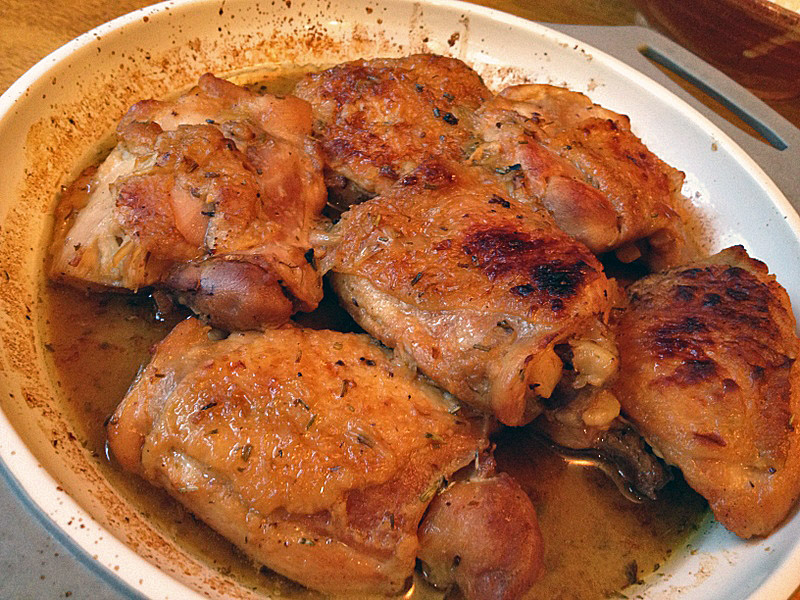
CIDER-GLAZED CHICKEN THIGHS
(adapted from Daniel’s recipe)

6 chicken thighs
salt and pepper
3 Tablespoons grapeseed oil
1 shallot, finely diced
1 Tablespoon mustard
3 Tablespoons cider vinegar
1 teaspoon herbes de Provence
1 cup apple cider

Trim excess fat and skin from the chicken thighs. Dry them well and season with salt and pepper.  Heat the oil on a cast iron pan or other large skillet with a lid, and brown the chicken pieces, skin side down first.  Make sure they are golden brown before flipping them over.  Remove the pieces as they brown, discard excess fat from the skillet, leaving one tablespoon behind.  Saute the shallots until translucent. While they are cooking, mix the mustard with the cider vinegar and the herbes de Provence in a small bowl.  Add the mustard mixture to the skillet, cook with the shallots for a  minute or two.  Add the cup of apple cider, return the chicken to the skillet and cook for 45 to 55 minutes, until very tender.  Flip the pieces occasionally, but keep the pan closed and with very gently heat.

To serve, remove the chicken pieces to a platter, and reduce the cider cooking liquid until it forms a glaze.  Spoon over the chicken.

to print the recipe, click here

It is a strange experience to go on someone’s blog and look for a recipe, when you know that person is no longer with us.  Daniel was so full of projects and so excited about his family, about raising his kids, it’s very difficult to accept that a life could end so abruptly, with so much yet to experience and enjoy. The truth is, we never know how much time we have, so we must try to make the best of each day.

My profound condolences to Meredith and Daniel’s whole family. 

(comments are shutdown for this post)

To see other recipes from Secret Recipe Club members made in Daniel’s memory, visit the links below.



GRILLED CHICKEN PAILLARDS

Even during my pre-blogging days, repeating a recipe more than twice a month was quite unusual.  I’ve always enjoyed trying new recipes, and reserved the “oldies but goodies” for those extra-busy days in which I need something I can almost make in my sleep (chicken parmigiana is a good example).  Having said all that, here comes the shocker:  in the past month, I’ve made this chicken six times.  Six. Obviously, this new found friend is on the fast track to become an “oldie but goodie”.    😉

GRILLED CHICKEN PAILLARDS
(from the Bewitching Kitchen)

3 chicken breasts, boneless, sliced in half lengthwise
1/4 cup lemon juice + zest
1/8 cup lime  juice
1/4 cup olive oil
3 tsp grated ginger
1 tsp red pepper flakes (or less)
1 Tbsp honey
salt and coarsely ground black pepper

After slicing  each chicken breast in half, pound them carefully with a meat mallet (protecting the meat with some plastic wrap), until you have a thin filet, preferably less than  1/2 inch thick. You can see photos of the process here.

Mix all the ingredients for the marinade (lemon juice + zest, lime juice, olive oil, honey, ginger, and red pepper flakes), whisk well.  No need to try and form a stable emulsion,  just mix well and add the marinade to the chicken, coating the meat well.  Place in the fridge for a few hours or overnight.

When you are ready to cook it, remove it from the fridge  and leave the filets in a single layer on a baking dish for 30 minutes to bring to room temperature.  Right before grilling,  season with salt and pepper on both sides.

Cook on a hot grill for 6-8 minutes total time, flipping the filets halfway through cooking time, and serve it with lime or lemon slices.

ENJOY!

to print the recipe, click here

Comments: I love many things about this recipe: the citric flavor, boosted by the ginger, the way the small amount of honey ensures gorgeous grill marks with a deep brown tone, how quickly it comes to the table, and how it shines next to many side dishes, from salads to pasta, from rice to couscous.

Since I use a high proportion of citric juice to olive oil, at first I was worried that a long marinating time could hurt the meat.  This recipe was put to test when I had to change plans for our dinner, and my marinating chicken breasts stayed in the fridge for 2 days!   No problem whatsoever, the meat turned out great, with a slightly more intense citric flavor, but no unpleasant “mushiness” from excessive interaction with acidity.

Leftovers are perfect as part of a high protein lunch, if you are into that sort of meal.  I make my little yogurt-oatmeal pancake, a hard-boiled egg to go with it, and call it a day…

You can vary this recipe in countless ways.  Use white wine as part of your marinade, use orange juice instead of lemon juice, or orange marmalade in place of honey.  The idea is to have acidity plus sweetness (from honey or agave nectar, or even brown sugar), and a little oil to make sure the thin cutlets won’t end up all dry and tasteless. Of course, do not over-cook the meat, keep an eye on it, the temperature of grills may vary a lot, ours tries to mimic the surface of the sun.  😉

Note added after publication:  I just saw a blog by Greg for Asian Fusion chicken, and he adds Sriracha to his marinade.  Genius!  Check it out here.  I’ll be trying it next time.

ONE YEAR AGO: Slow-baked Salmon

TWO YEARS  AGO: Hoisin Explosion

Add to FacebookAdd to DiggAdd to Del.icio.usAdd to StumbleuponAdd to RedditAdd to BlinklistAdd to TwitterAdd to TechnoratiAdd to Yahoo BuzzAdd to Newsvine

BLOOD ORANGE DUCK: A WORK IN PROGRESS

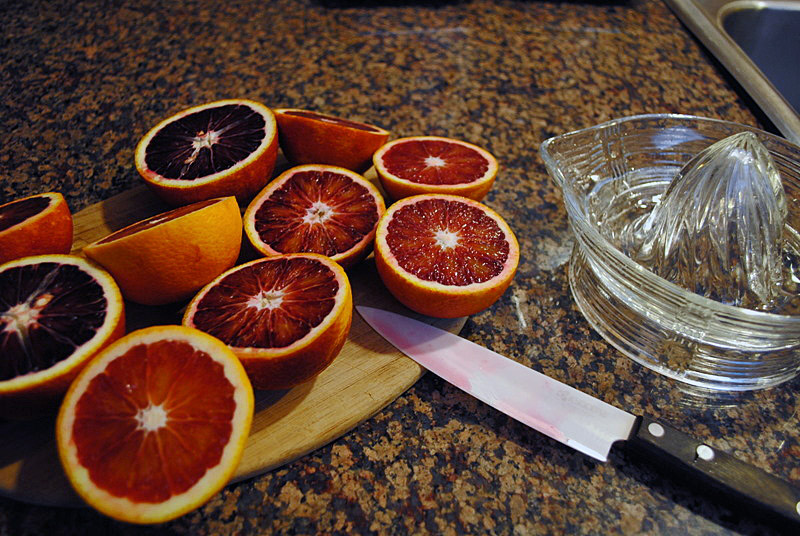
For the longest time I admired photos of blood oranges, without being able to find any around.  Now that they are available on a regular basis, I am a happy camper, bringing a few home with me whenever I spot them at the grocery store.  What I love about blood oranges the most is their mysterious nature: you never know how red they will be inside.  The skin tries to give you a hint, but… it can be very deceiving.  For this particular recipe from Donna Hay, I needed a fairly large amount of their juice, so I went to work on my oranges, each with their unique shade of red. Gorgeous!

I had a few problems with the recipe, explaining why the “work in progress”. To start with, the orange juice must be reduced by boiling (together with orange marmalade, sugar and vinegar), for what Donna says it will be 12 to 15 minutes, until thickened. Since you must brush the skin of the duck with the resulting sauce, trust me: 15 minutes simply doesn’t do the trick. It took me over 35 minutes, and I had to watch the pan like a hawk, because it boiled over quite quickly.

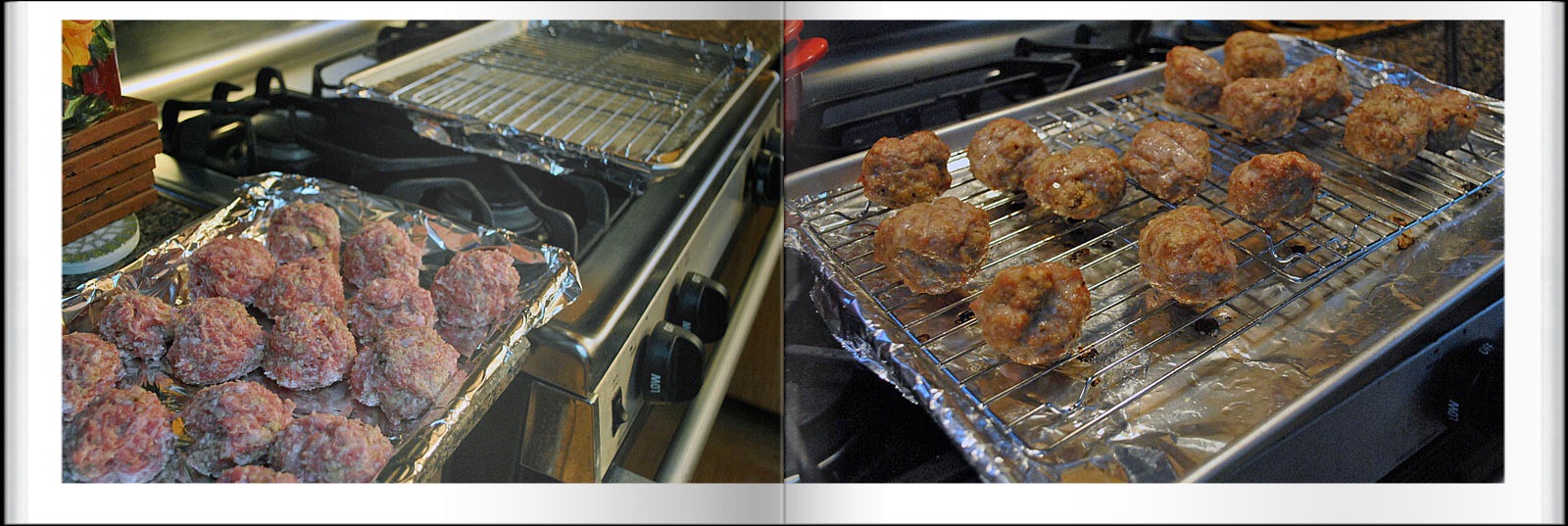
In preparation for roasting, the duck’s skin is pricked with a skewer, and the bird is dropped in boiling water for 10 seconds. Think carefully about the whole strategy, because you will be placing a reasonably large piece of meat in boiling water, and removing it 10 short seconds later. The duck will have a very high tendency to slide. Boiling water. Slippery bird.  Not a good match.  Be prepared. Once that part is taken care of, you’ll brush its surface with the blood orange reduction sauce, placing it over a rack on a baking dish protected with foil, as you see here.

My next problem with the instructions was the roasting temperature and time.  According to the recipe, roast at 350 F for about 1 hour, then cover the duck with foil and roast for a further 20 to 30 minutes.  The photo in her book is a mouth-watering masterpiece of golden brown crispy skin. Not sure how she would get there in those conditions, I had to increase the temperature and cook my duck a lot longer, even though my duck was almost exactly the weight she recommends in her recipe.  In the end, the meat was not very flavorful, and definitely not tender the way I would like it to be.

The best part of the meal was the side dish I chose to go with it: shredded Napa cabbage, very simply dressed with lime juice, olive oil, salt, and pepper, prepared 15 minutes before serving. Very refreshing, perfect to cut through the fatty duck.

So, it’s back to the drawing board on this one. I liked the flavor of the sauce, and feel that the recipe has the potential to be a winner. Knowing myself, though, I know it will take me a while to try it again. If anyone has suggestions, advice, tried and true methods, please post them in the comments or send them to me by email. I am all ears!

ONE YEAR AGO: Mahi-Mahi

TWO YEARS AGO: Memories of Pasteis (one of my favorite blog posts…)

Add to FacebookAdd to DiggAdd to Del.icio.usAdd to StumbleuponAdd to RedditAdd to BlinklistAdd to TwitterAdd to TechnoratiAdd to Yahoo BuzzAdd to Newsvine

SPANAKOPITA MEATBALLS: NO SECRET!

Four months ago I joined “The Secret Recipe Club”, and my first assignment was making a recipe from the moderator of our group, Tami’s Kitchen Table Talk.   I picked this recipe as my first choice, but her “Spanakopita Meatballs” were a serious contender.  First, the meatballs seem perfect for a light dinner or even for an appetizer, if made small and served with toothpicks. Plus,  I love the name spanakopita…  spanakopita…  a happy word, always makes me smile! 😉
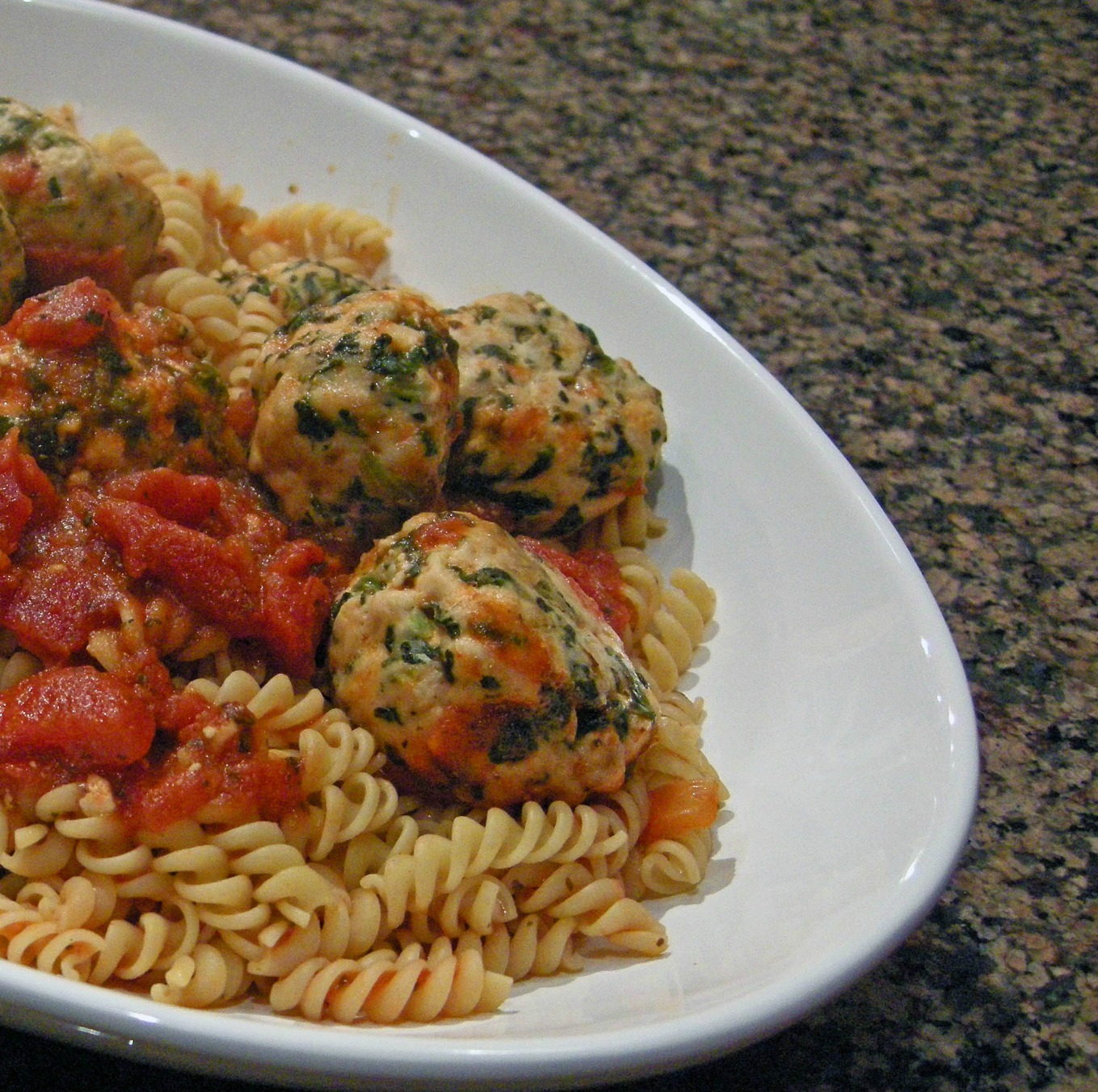
I  combined Greece with Italy and enjoyed them with pasta in tomato sauce perfumed with orange zest.
SPANAKOPITA MEATBALLS
(adapted from Tami’s Kitchen Table Talk)

1 tbsp olive oil
1/2 onion, grated
1 clove garlic, minced
1 box frozen chopped spinach, defrosted
3/4 cup crumbled feta cheese
1 lb ground turkey
1/2 tsp fennel seeds, ground

Preheat oven to 400 degrees.

Defrost the spinach in the microwave, then place in a kitchen towel and squeeze to remove all the excess water. Place in a large mixing bowl with the rest of the ingredients and mix well, but don’t over mix, or the meatballs will get tough.

Roll into balls the size you prefer (I made 16 balls 1.5 inches in diameter), and place on a cookie sheet lined with parchment paper (or foil lightly sprayed with olive oil).  Bake for 12 minutes, turn them around and bake for 15 more minutes, or until cooked all the way through (it will depend on the size of the meatballs).

ENJOY!

to print the recipe, click here

Comments: I don’t even remember the last time I fried a meatball.  Using the oven is soooo much easier, all meatballs are ready at the same time, there’s no extra oil added to the recipe, and clean up is a breeze if you protect your baking sheet with foil.  Sometimes I use a rack like you see in this photo (these are pork meatballs with fennel, by the way), to encourage browning all around, but it’s not mandatory.  I’ve been on a meatball kick lately, trying all sorts of recipes and improvising a bit too.   But the “Happy Spanakopita” are still at the pole position. And, by the way, did you know that the term pole position originated in horse racing?  Live and learn…

ONE YEAR AGO: Saturday Morning Scones

TWO YEARS AGO: Pain de Mie au Levain

Add to FacebookAdd to DiggAdd to Del.icio.usAdd to StumbleuponAdd to RedditAdd to BlinklistAdd to TwitterAdd to TechnoratiAdd to Yahoo BuzzAdd to Newsvine

ORANGE POMEGRANATE CHICKEN: A WORK IN PROGRESS

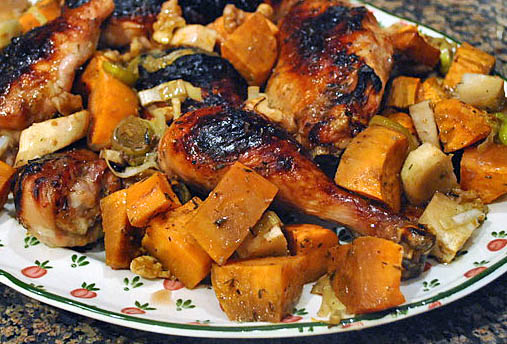
This recipe, from a recent compilation in Fine Cooking called “One Pot Meals”, went from the page to a pot in the blink of an eye.  It called for all kinds of goodies that I love: chicken, root veggies, pomegranate and the perfect spices to tie them together.  The glaze roasted into a sexy ruby color, and the skin of the chicken will make anyone smile.  So, why is it a work in progress, you might ask?   Read on….

ORANGE POMEGRANATE CHICKEN
(adapted from Fine Cooking magazine)

1 large orange, zested and juiced
1 cup pomegranate juice
1-1/2 tsp dried thyme leaves
1/8 tsp. ground cinnamon
Freshly ground black pepper
6 tsp. olive oil
Kosher salt
3/4 cup chicken broth
2 sweet potatoes, peeled and cut into 1-inch pieces
2 medium parsnips, peeled and sliced 1/4 inch thick
2 leeks, white part only, cut in 1/4 inch slices
4-lb. chicken, cut into 8 serving pieces
1 cup coarsely chopped walnuts

Heat the oven to 400°F.

In a medium saucepan, Combine the orange juice and pomegranate juice in a saucepan, bring to a boil and reduce it to 1/4 cup (about 20 minutes). Add half of the thyme (eye balling is fine), all the cinnamon, and black pepper (about 1/4 tsp or according to your taste). Divide the mixture between two small bowls. To one bowl add 2 tsp. of the oil and 1/2 tsp. salt. To the other add the chicken broth, all but 1 tsp. of the orange zest, and 1/4 tsp. salt.

Scatter the sweet potatoes, parsnips, and leeks over the bottom of a dish that measures about 10 x 15 x 2 inches. Toss with the remaining 4 tsp. of oil and the rest of the thyme.  Arrange the chicken pieces, skin side up, on top of the vegetables and brush with all of the juice-oil mixture. Roast for 30 minutes.

Remove the pan from the oven and reduce the temperature to 375°F. Pour the reduced pomegranate-chicken broth mixture around the chicken pieces and scatter the walnuts around them.  Return the pan to the oven and roast until the vegetables are tender and an instant-read thermometer registers 165°F in several pieces of chicken, 20 to 30 minutes.

Transfer the chicken to a serving dish.  Remove the veggies and walnuts with a slotted spoon, season them lightly with salt, sprinkle the remaining orange zest all over the meat and veggies. Pour the liquid from the roasting pan in a pyrex type container, remove as much fat as possible.  Season the sauce to taste with salt and pepper and pour into a pitcher to serve with the food.

ENJOY!

to print the recipe, click here


Comments:  Make sure you use pure pomegranate juice (yes, it is expensive compared to blends, but  worth it in this case, because you will concentrate it quite a bit).  I’d love to give this recipe two thumbs all the way up, but it had some problems.  Many of the pieces of sweet potatoes and parsnips were not completely cooked: their centers were still hard.  I tested some with a fork before removing from the oven, but as Murphy’s Law would have it, those were perfect… (sigh).  Next time I’ll cover the dish with foil during the first 30 minutes, then pour the liquid all over it and roast it uncovered, perhaps adding a little more water if the veggies dry up during the final roasting.  I suspect that with this minor change it will be a winner.

One pot meals are such life-savers for a busy cook, and this recipe, apart from reducing the pomegranate/orange juice, doesn’t require much work. Even better, the reduction could be made a couple of days in advance.  With a nice loaf of bread or a green salad, dinner is ready!

ONE YEAR AGO: A Message from WordPress

TWO YEARS AGO: Turkish Chicken Kebabs

Add to FacebookAdd to DiggAdd to Del.icio.usAdd to StumbleuponAdd to RedditAdd to BlinklistAdd to TwitterAdd to TechnoratiAdd to Yahoo BuzzAdd to Newsvine