HOME IS WHERE THE HEARTH IS

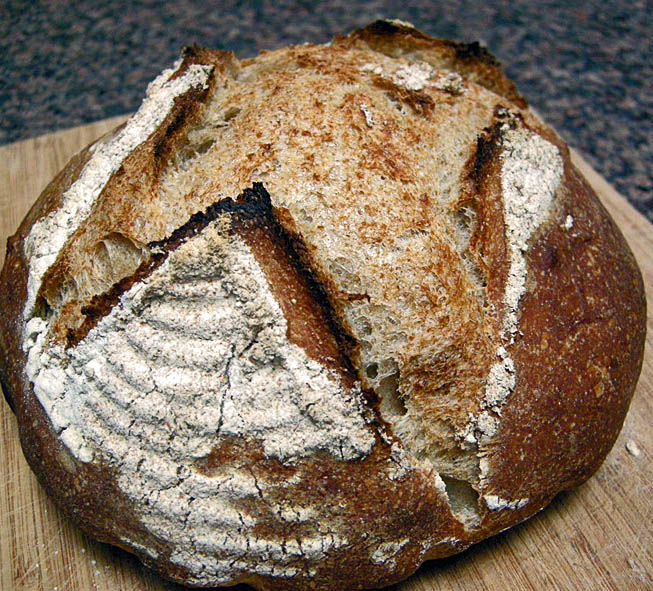
We spent last week in Oklahoma, which gave me the opportunity to bake bread in a normal oven.  After some severe brainstorming over the recipe, I settled on a country rye from Tartine, one of my favorite bread books.  It calls for a sourdough starter with a 50:50 mixture of white and whole wheat flours, and the dough itself has a small amount of rye. Usually I’d retard the loaf overnight in the fridge (as recommended), but this time I baked it just 3 hours after the final shaping.   The oven rise was impressive, the bread almost exploded out of the slashes!  It’s a vision that makes me so happy…   😉
COUNTRY RYE
(adapted from Tartine)

For the leaven (8 hours before making the dough):
1 Tbs sourdough starter, very active
140ml water
70g white bread flour
70g whole wheat flour

For the dough:
100g of leaven (save the rest)
400ml water at 75 F
415g bread flour
85g rye flour
10g salt

Pour the water in a large bowl, add the leaven (only 100g of it) and mix to dissolve.  Add the two different flours, mix with your hands to form a shaggy mass. Cover and let it sit at room temperature for 40 minutes.  Sprinkle the salt on top of the dough and knead to mix it.

Let the dough go through a bulk rise of 3 hours, folding the dough at every 30 minutes.  Pre-shape the dough as a ball, let it rest undisturbed for 20 minutes, then shape it in its final round shape, place it in a round container with the seam up for 3 hours  (you can also retard the dough in the fridge for 12 to 16 hours).

Bake for 45 minutes in a 450 F oven,  with steam during the first 25 minutes.  Allow it to completely cool before slicing.

ENJOY!

to print the recipe, click here

Comments: For the first time I baked this type of bread without weighing the ingredients, because my balance stayed in the nano-kitchen.  I was a bit nervous, but I used a conversion table and it worked just fine. The more I bake with wild yeast, the more convinced I am that technique trumps the proportions of ingredients. For example, folding the dough enough times during fermentation, and creating proper surface tension in the final shaping have a huge impact on the final product.   My advice is to practice, practice, and practice some more. I still struggle with scoring the bread, never feeling confident with the razor blade in my hand. What bothers me is that the scoring is so… final!  Once you slash the surface, you can only hope you did it right.  😉

The crumb was a little less open than that of a bread exclusively made from white flour,  and the taste reminded me of a Poilane miche, but less dense.  It’s a bread for a ham sandwich, or one with which you can mop up the juices of a hearty pot roast, or perfect to toast and enjoy with a little Brie cheese.

I am submitting this post to Susan’s Yeastspotting event… make sure to stop by and amaze yourself with all the tempting breads.

ONE YEAR AGO: My New Favorite Tomato Sauce

Add to FacebookAdd to DiggAdd to Del.icio.usAdd to StumbleuponAdd to RedditAdd to BlinklistAdd to TwitterAdd to TechnoratiAdd to Yahoo BuzzAdd to Newsvine

MEET OUR LAB

Every once in a while I get emails asking about the type of research I do. I started working with bacterial genetics when I was only 20 years old in a lab in Sao Paulo during my college years, then worked at Stanford on biotechnology of vaccines, a very exciting period in my professional life, and the beginning of me falling in love with beautiful California. Went back to Brazil, had my own lab for a few years, left to work at Institut Pasteur in France, where I met the scientist who years later would become my husband. We’ve been working as a team for almost 17 years now, trying to figure out the mechanism of a transport reaction in bacteria.

We study how bacteria such as Escherichia coli and Listeria monocytogenes get iron from the environment and “swallow it up.” The metal is indispensable for bacteria as well as all other living organisms to survive, but it is very tricky to obtain. Iron can be compared to money in the sense that everyone who has it tries to protect it from being taken away. However, bacteria developed sophisticated systems to do just that: steal the iron from you and use it to survive. Since all pathogenic bacteria need to obtain iron to cause disease, we hope that our research will lead to the discovery of new weapons to fight infections.

If you want to read more about it, visit our lab website, still under construction, but already in good enough shape to give you a general idea of what we do.

Here at UCLA we are studying a different transport system, that allows bacteria to take up a sugar called lactose. A lot of what we are learning in this system will help our own research in Oklahoma in the future.

Add to FacebookAdd to DiggAdd to Del.icio.usAdd to StumbleuponAdd to RedditAdd to BlinklistAdd to TwitterAdd to TechnoratiAdd to Yahoo BuzzAdd to Newsvine

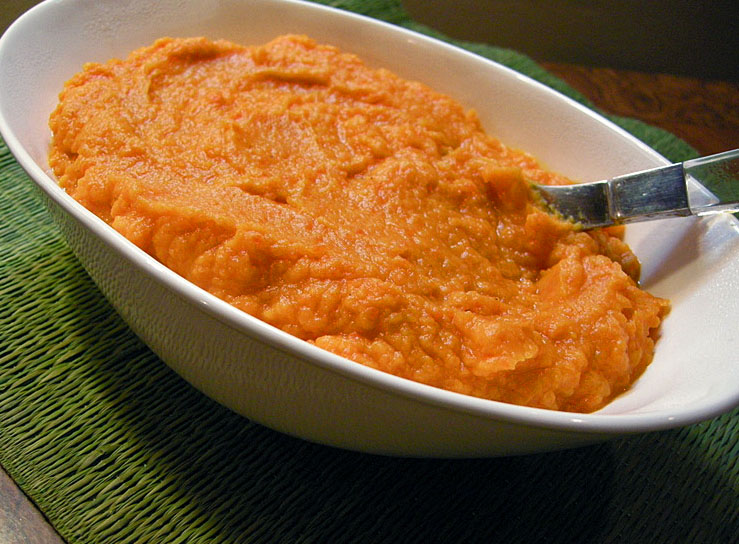
CARROT AND SWEET POTATO PUREE

Potato puree is comfort food “par excellence”. One of my favorite menus on a chilly evening is braised short ribs served over mashed potatoes (I gained about 3 pounds just by typing that sentence! 😉 ) Sometimes I crave that type of side dish, but I’d be happier with a lighter caloric load.

Giada de Laurentiis devised a perfect alternative during her “Light and Fabulous” menu, that paired broiled tilapia filets with a creamy puree of carrots and yams. You can find the recipes for that episode here. The puree has a beautiful, bright orange color, and its taste complements many main dishes.

CARROT AND SWEET POTATO PUREE
(adapted from Giada de Laurentiis)

1/4 cup extra-virgin olive oil
1 medium shallot, diced
1 clove garlic, minced
2 pounds carrots, peeled and sliced
2 pounds sweet potatoes, peeled and cut into 3/4-inch pieces
1 teaspoon salt, plus extra for seasoning
1/2 teaspoon freshly ground black pepper, plus extra for seasoning
2 cups chicken (or vegetable) broth
2 cups water

Heat the oil over medium-high heat in a saucepan. Add the shallot and cook until tender, about 5 minutes. Add the garlic and cook for 1 minute until fragrant. Add the carrots, sweet potatoes, 1 teaspoon salt, and 1/2 teaspoon pepper. Cook for 5 minutes until slightly softened. Add the stock and water and bring to a boil. Reduce the heat and simmer until the veggies are tender, about 25 minutes. Drain the veggies, saving the cooking liquid. Transfer them to a food processor, and puree until still slightly chunky, adding some of the cooking liquid, until you reach the consistency you like. Taste and adjust seasoning with salt and pepper.

ENJOY!

to print the recipe, click here

Comments: Our grocery had sweet potatoes, but not yams, so that’s what I used. Next time I’ll add a touch of ginger to the puree, because it goes so well with sweet potatoes. Maybe a little orange zest too? But even without these additional touches, this puree was an excellent side dish for our grilled, butterflied pork tenderloin. Something about eating bright colored food instantly makes me feel healthy. This puree tastes good, it’s not too heavy, and it gives that  feeling of happy satisfaction at the end of the meal.

Want to make it even faster on a weeknight? Cut the veggies in the morning before work, and save them in the fridge. Small details make life a lot easier when you return home  feeling a little spent. 😉

ONE YEAR AGO: Impromptu Pasta Dinner


Add to FacebookAdd to DiggAdd to Del.icio.usAdd to StumbleuponAdd to RedditAdd to BlinklistAdd to TwitterAdd to TechnoratiAdd to Yahoo BuzzAdd to Newsvine

WINTER STRIKES BACK, IT’S TIME FOR SOUP!

Recently I read a very interesting article by Marcella Hazan,  in which she rants against the current trend of under-cooking vegetables and pasta in many restaurants.  You can find the article here.  I couldn’t agree more, there is a fine line of perfectly cooked food – particularly veggies –  that preserves some bite and freshness.  Err in either direction and you’ll get mushy, gray food or  warm crudites. Not sure which would be worse.  😉

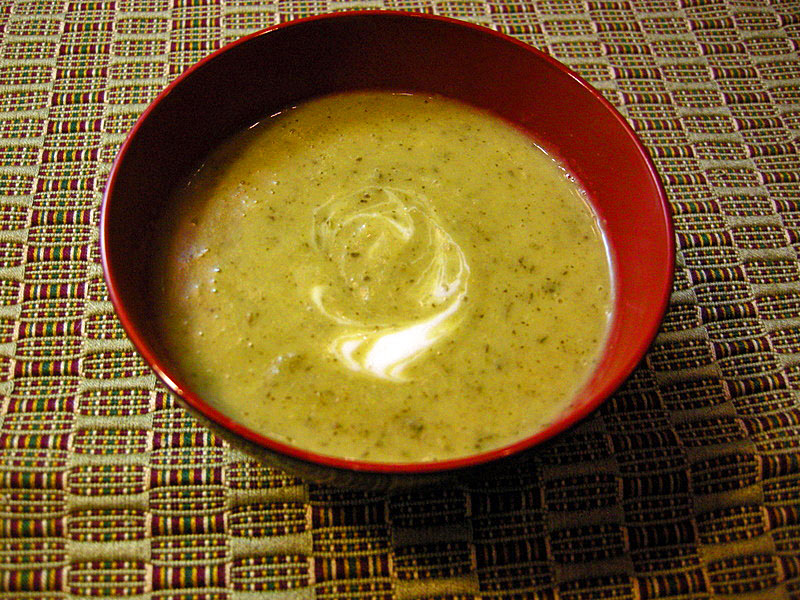
With that thought in mind, it is surprising that a soup that simmers zucchini for 45 long minutes could be so perfect, but it is.   Until now, my default zucchini soup was from Chocolate and Zucchini, a version that adds a touch of sesame in the form of tahini paste.  With this curried zucchini recipe, I found a serious contender for the number 1 spot. I will consider that a tie, and enjoy them both!

CURRIED ZUCCHINI SOUP
(adapted from The Essential New York Times Cookbook)
receita em portugues na proxima pagina

4 small zucchini, cut into chunks
1 medium shallot, minced
1 tsp curry powder
1 tsp ground fresh ginger
1/4 tsp dry mustard
2 cups chicken broth
2 Tbs raw rice
salt and pepper
1/4 to 1/2 cup heavy cream

Add the zucchini chunks, shallots, curry, ginger, and mustard into a saucepan.  Pour the chicken broth over it, add the raw rice, and bring to a boil.  Cover the pan and simmer for 45 minutes.  Puree the mixture using a hand held blender, or pass it through a food mill. Season with salt and pepper. Add 1/4 cup of heavy cream, taste it and add more if you like it richer.

The soup can be served hot or chilled.

to print the recipe, click here

Comments: Until I tasted it, I wasn’t sure I would like this soup, thinking the zucchini would have lost all its brightness from the long simmering.  The first spoonful got my silent appreciation, suddenly interrupted by Phil’s words “wow, this soup is really good!”   With heavy emphasis on the “really.”  The curry and the ginger perform some kind of magic to restore a sense of freshness to the zucchini, which retains a nice green color.  I reduced quite a bit the amount of heavy cream called for in the original recipe, but indulge if you prefer, and go for one and a half cups of it.

ONE YEAR AGO: Chocolate Bread (this one melts in your mouth….)

Add to FacebookAdd to DiggAdd to Del.icio.usAdd to StumbleuponAdd to RedditAdd to BlinklistAdd to TwitterAdd to TechnoratiAdd to Yahoo BuzzAdd to Newsvine

para receita em portugues, veja a pagina seguinte

SOFT SPOT FOR CHEVRE

Phil and I influence each other’s gastronomic likes and dislikes.  Before we met I wasn’t fond of sushi,  couldn’t understand all the passion for guacamole, and twisted my nose at maple syrup.  Now I’m addicted to sushi (with no intentions of rehab), I’ll eat guacamole any time,  and I can’t imagine a blueberry pancake without the heavenly nectar drizzled on top.

Phil, on the other hand,  wouldn’t touch a raw tomato, felt queasy around foie gras, and didn’t like the smell of goat cheese.  Those days are over, which is  great, because I didn’t want to skip this pasta, with creamy goat cheese enveloping cremini mushrooms and arugula.   You can use any pasta shape you prefer,  but pick a mild goat cheese that will quickly melt in the hot pasta.

CREMINI MUSHROOM PASTA WITH GOAT CHEESE AND ARUGULA
(adapted from The Essential New York Times Cookbook)
receita em portugues na pagina seguinte

1 pound spaghetti (or another shape of your choice)
2 pounds cremini mushrooms, thinly sliced
2 Tbs olive oil
1 Tbs butter
1 clove garlic, minced
salt and black pepper to taste
2-3 cups baby arugula
3/4 pound soft goat cheese, crumbled (room temperature)
freshly minced parsley

Bring a large pot of salted water to a boil, and cook the pasta until al dente.  Heat the olive oil and butter on a non-stick skillet, add the garlic and saute for a couple of minutes.  Add the sliced mushrooms, season lightly with salt and pepper. Cook the mushrooms until they release liquid and it almost completely evaporates.  Reserve, keeping warm.

When the pasta’s ready, reserve about 1/2 cup of the cooking water, drain the pasta, return to the pot and add the cremini mushrooms, arugula, goat cheese, and parsley. Gently toss everything to wilt the arugula, add some of the pasta water to get a smooth consistency, adjust the seasoning, and serve.

(makes 4 substantial servings)

ENJOY!

to print the recipe, click here

Comments: If you don’t like goat cheese, then this pasta is not for you, just skip it, because the “flavor of the barnyard”  (as Phil calls it) is pronounced in the sauce.  The original recipe called for regular arugula, but instead I used baby arugula because the sharpness of the goat cheese pairs better with a milder green.  If you want to tone it down even more then use baby spinach, or even Swiss chard, although you’ll have to saute it first.  My other adaptation was to skip the 1/2 cup of olive oil that was intended as its  “finishing touch.”  Despite my love for olive oil, I’d never add 955 calories of fat to a pasta that’s perfectly fine without it.  I am not a fat-o-phobe, but have my limits.

We like to go vegetarian one day during the week, and this is a great option if you’re trying to skip meat whether occasionally or permanently.   It’s delicious!

Note to self: to make it even faster, saute the mushrooms in advance, and  re-warm them right before adding to the pasta.

ONE YEAR AGO: Seared Tuna is my Private Idaho

Add to FacebookAdd to DiggAdd to Del.icio.usAdd to StumbleuponAdd to RedditAdd to BlinklistAdd to TwitterAdd to TechnoratiAdd to Yahoo BuzzAdd to Newsvine

receita em portugues na proxima pagina