WEEKEND PITA PROJECT

I grew up enjoying one of my favorite breads,  pita, on a weekly basis.  In Brazil  it’s called “pao sirio” (Syrian bread).  As I’ve mentioned before,  Middle Eastern food is very popular in Sao Paulo, so my weekends often included visits to a particular spot that sold bags of freshly baked flat bread.  It was similar to what we call  “pita” here in the US,  and usually associate with Greek food.    The current bagged stuff at grocery stores pales in comparison to freshly baked pita, and it’s so easy to make that once you master this technique,  I doubt you’ll go back to the commercial versions.   Unless, of course, you’re lucky enough to have a Middle Eastern bakery right in your neighborhood…   😉

This recipe comes from Dan Lepard, and you can find it  by  clicking here. You can also read a discussion about it in his forum by following this link.

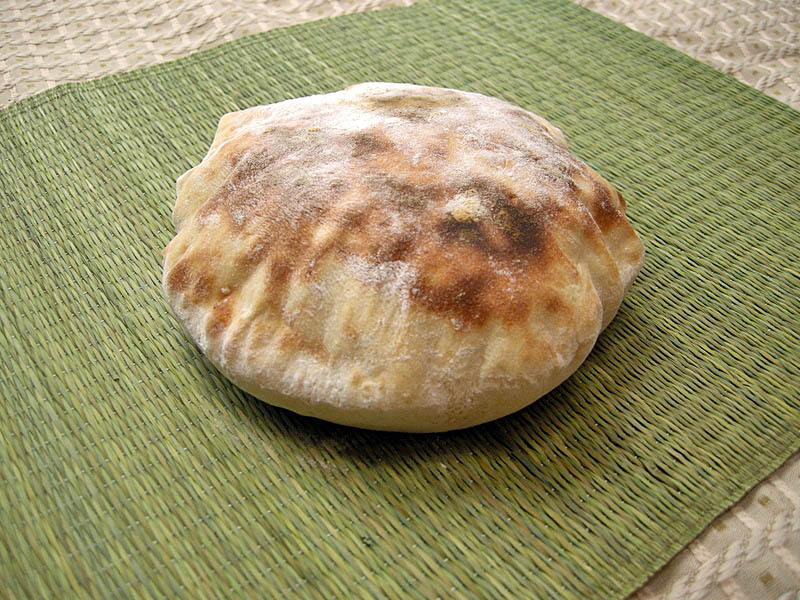
Dan’s method involves a simple dough (flour, yeast, sugar, olive oil, a little salt) prepared with his minimal kneading procedures, divided into 8 portions, and each one rolled into an oval or circle about 5mm (1/4 inch) thick.   The flat breads bake over a blazing-hot baking sheet for a few minutes, until they puff (or not, depending on how well you hit the correct thickness) and acquire a hint of color.

When you hit the jackpot – the slightly elusive, “just-right”  thickness,  you’ll be rewarded with a beautifully puffed up balloon in your oven!
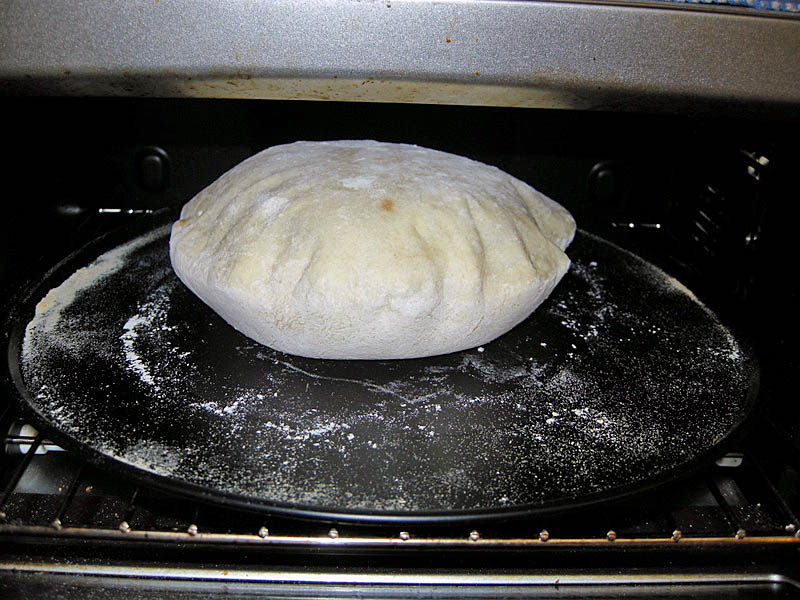
Comments: Whenever I succeed in baking bread with my electric oven, I wear a smile and walk  on top of the world for a few days!  Baking 8 pita circles took some patience and fiddling with the oven.  Besides baking one at a time, I had to start with the rack in the center, and as the bread puffed up I quickly moved it to the lower position.  Against all odds, I didn’t burn myself!   It took me more than an hour to bake the full batch, which told me that the dough can sit at room temperature for a long time and still produced great pita!  😉

By the way, if your pita doesn’t inflate as a balloon, it will still be delicious.  In fact, I like to roll a few slightly thicker, because they produce a softer bread, with more crumb and a chewy texture.  It’s a nice change from the “pocket” version, that also re-heats a little better next day.
I am thrilled to submit this post to Susan’s Yeastspotting, my first this year!

ONE YEAR AGO: Tried and Tasted Round-up

A SOUP FOR WHAT AILS YOU

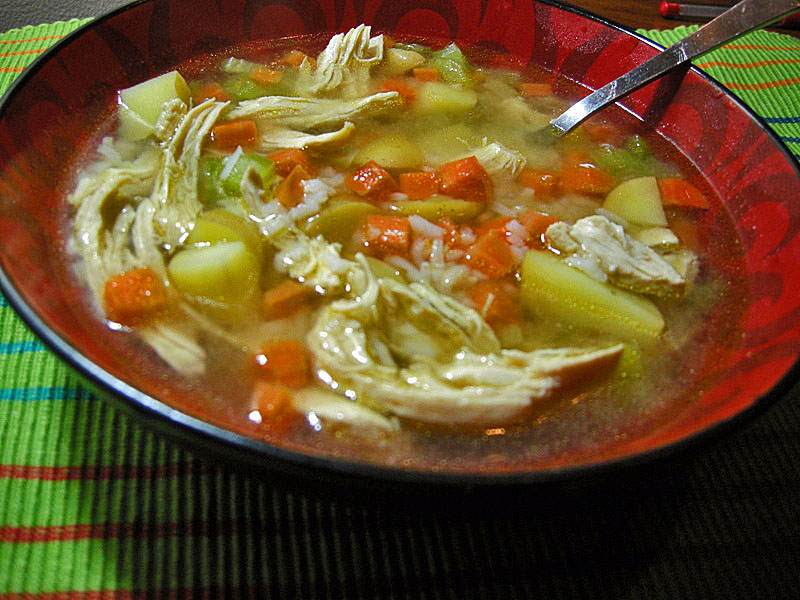
A Brazilian take on a Portuguese classic, “canja de galinha” may be translated as chicken soup, but not just any chicken soup.  Canja is always made with rice, no noodles allowed in it.   It is a soothing soup that warms body and soul – the gastronomic counterpart of your Mom’s embrace when you have a sore throat, or a tummy ache.  However, even when you are perfectly fine, it’s hard to beat a bowl of canja on a chilly evening with a slice of crusty bread next to it. End the night by cuddling with your loved one on the sofa watching a movie, preferably one that won’t be compromised by a few snoozing time-outs…  😉

CANJA DE GALINHA
(from the Bewitching Kitchen)

2 boneless, skinless chicken breasts
1/2 cup soy sauce
3 slices of ginger (1/4 inch thick), slightly crushed
1 Tbs canola or corn oil

1 shallot, mined
3 medium carrots, diced
2 celery stalks, diced
salt and pepper
6 cups chicken stock (or water)
8 new waxy potatoes (red or yellow), quartered
10 oz  cooked white rice
squirt of lemon juice
salt and pepper to taste

Poach the chicken breasts:  in a sauce pan, bring to a gentle boil the soy sauce, ginger pieces, and enough water to just cover the meat.  Once the water starts to boil, immediately turn off the heat, cover the pan, and let it sit for 20 minutes.  Lift the chicken breasts from the liquid, and once they are cool enough to handle, shred the meat using two forks or your fingers.  Reserve.

Heat the oil in a heavy pan, saute the shallots until barely soft, don’t let them get golden.  Add the carrots and celery, season with salt and pepper, cook for about 5 minutes over medium-low heat, stirring every now and then.  Add the chicken stock (or water), the potatoes, cover the pan and simmer until the potatoes are beginning to get tender.  Add the cooked rice and the chicken, cover the pan again and simmer everything together for 10 minutes over medium-low heat.   Squirt a little lemon juice, adjust seasoning, and serve.

ENJOY!

to print the recipe, click here

Comments: If you search for “canja” recipes in the net, many will instruct you to cook the chicken and the rice in the soup instead of separately.  I strongly oppose either of these shortcuts, because they will make your soup cloudy, with a slightly heavier mouth feel.  Cooking the waxy, new potatoes in the soup doesn’t pose a problem.  For a lighter version – my Mom’s favorite – you can  omit the potatoes, but I like the extra substance they provide. Sometimes I add fresh parsley or fresh mint in the final minutes of cooking,  both very common additions in traditional “canja.”

Poaching the chicken very gently in the mixture of soy and ginger makes the meat tender, juicy, with just a hint of ginger flavor. If you like a more assertive ginger taste, grate some and add to the carrots/celery mix.  And, speaking of carrots and celery, they will be very evident in the soup, so take the time to beautifully dice them.  It is a simple soup, but small details make it special. I like to add freshly ground black pepper and a little more lemon juice in my own bowl right before indulging in it. 

Leftovers are delicious for a few days, in fact I always make a large batch because after the first meal, I find myself craving for more on the following days.  One may think that the rice would absorb too much liquid sitting in the fridge, but it’s never been a problem for us.  I use jasmine rice, perhaps other types behave differently.   January is a month that screams for soup, and I’m more than happy to oblige…   😉

ONE YEAR AGO: Eggs in Snow (one of our favorite desserts!)

Add to FacebookAdd to DiggAdd to Del.icio.usAdd to StumbleuponAdd to RedditAdd to BlinklistAdd to TwitterAdd to TechnoratiAdd to Yahoo BuzzAdd to Newsvine

MUSHROOM SOUFFLE FOR TWO

One of the lessons we’ve learned in four months of cooking in the nano-kitchen is to keep our meals simple, even on special occasions. To bid 2010 goodbye we settled on grilled T-bone steaks and a Caesar salad.  We also sought an additional side dish with a celebratory aura, but we struggled with various options until my beloved said “I’ve got an idea for you: mushroom souffle!”

Back home we have three different sizes of souffle dishes,  but none here. And, to further complicate matters, our electric oven is not very tall, so anything rising to full deliciousness might burn on the upper heating element (don’t ask me how I became aware of this problem… ;-)).  Still, once the idea of a mushroom souffle got in our heads, it was impossible to resist.

Starting with Julia Child‘s basic master recipe, I down-sized it for a small baking dish, gathered the ingredients and went to work, with fingers crossed for a great New Year’s Eve meal!


MIXED MUSHROOMS SOUFFLE

(from the Bewitching Kitchen)

bread crumbs and butter to coat the dish

1 T olive oil
1 shallot, minced
10 ounces of a mixture of mushrooms, diced
(I used 3/4 of fresh shiitake, 1/4 of cremini)
salt and pepper

for the bechamel base
2 + 1/2 T butter
2 + 1/2 T flour
3/4 cup whole milk, warmed in the microwave
salt, pepper, dash of ground nutmeg
3 egg yolks
1/4 to 1/3 cup of grated gruyere cheese

4 egg whites + pinch of salt

Prepare your baking dish (8 inch diameter, 3 inches tall; about 6 cups volume) by coating it with butter and sprinkling bread crumbs inside, tapping out the excess.

Break the eggs and separate yolks and whites – allow the whites to sit at room temperature while you prepare the souffle base.

Heat the olive oil in a skillet, add the shallots, cook until translucent and starting to get golden. Add the mushrooms, season with salt and pepper, and cook stirring a few times, until they release all their liquid and it completely evaporates. It is important to have the mushrooms without excessive moisture. Transfer to a plate to cool slightly, trying to spread them out as much as possible to release steam.

Prepare the bechamel sauce by melting the butter in a saucepan, adding the flour and cooking for a few minutes, stirring constantly. Add the warm milk all at once, season with salt, pepper, and nutmeg, and cook until it thickens (about 5 minutes on low heat). Remove from the heat, let it cool slightly, then add the egg yolks, one at a time. Reserve.

When it’s time to bake the souffle, add the sauteed mushrooms to the bechamel sauce, mix well. Add the grated cheese, a little at a time, mixing to incorporate (you may not need to use it all, don’t make the batter too heavy).

Beat the egg whites with a pinch of salt in a very clean bowl using an electric mixer until they form soft peaks. Add 1/4 of the egg white mixture to the mushroom/cheese base, and mix well. Now, working gently, incorporate the rest of the beaten egg whites, carefully folding it, trying not to loose too much volume. Pour the batter into the prepared dish and bake in a heated 420 F oven for 30-35 minutes, reducing the temperature to 375 F as soon as the dish goes in.

Remove from the oven and serve right away – it will collapse quickly, but it won’t lose its “wow” factor…

ENJOY!

to print the recipe, click here

Comments: My husband commented that “this souffle should be a regular side dish in every classic American steak house.” How’s that for endorsement? It was  unexpectedly excellent, considering that I improvised every step of the way through it. Shiitake mushrooms have an assertive taste, and adding some cremini to the mix mellowed the flavor a bit.

If you have individual souffle molds, simply pour half the batter in each, and bake for slightly less time – say, 25 to 30 minutes. It’s a perfect amount for two (hungry) people; a perfect way to close a wonderful year!

ONE YEAR AGO: Stollen

Add to FacebookAdd to DiggAdd to Del.icio.usAdd to StumbleuponAdd to RedditAdd to BlinklistAdd to TwitterAdd to TechnoratiAdd to Yahoo BuzzAdd to Newsvine

THE GETTY MUSEUM

After our move to Los Angeles many people we encountered asked “have you been to The Getty?” Our answer was “not yet, but we are planning on it before we leave next year.” Living in a place with so many touristic attractions is a double-edged sword: you’re never in a hurry to visit must-see places, because there’s always a another weekend approaching. Then, suddenly you realize that half of your stay is over, and the clock starts ticking… We didn’t want to miss it, so last week we took an afternoon off to visit the Getty Museum, located just 10 minutes from our home.

Majestic, marvelous architecture, with breathtaking views of Los Angeles below. The Impressionist collection includes a masterpiece by my favorite painter, Vincent Van Gogh… and the museum’s garden is itself a work of art!

This slideshow requires JavaScript.

We took two guided tours, the first of which highlighted the major artworks (paintings, sculptures, furniture, tapestry), and the second of which explained the design of the Central Garden . The latter masterpiece was conceived and executed by Robert Irwin. It adds a dreamy element to The Getty, from the delicate stream of water flowing down to the constant change in shape and colors of the plants. Irwin once called it “a sculpture in the form of a garden aspiring to be art.” To remind visitors of the ever-changing nature of his compostion, he engraved these words at the bottom of the central stairway: “Always changing, never twice the same.” It was unforgettable.

I highly recommend the guided tours. Just like admission to the museum, the tours are free, and they add to the whole experience.

For opening hours, current exhibits, and general info click here

ONE YEAR AGO: Crowd-pleasing Pulled Pork (an American classic not to be missed!)

Add to FacebookAdd to DiggAdd to Del.icio.usAdd to StumbleuponAdd to RedditAdd to BlinklistAdd to TwitterAdd to TechnoratiAdd to Yahoo BuzzAdd to Newsvine

A MESSAGE FROM WORDPRESS

The stats helper monkeys at WordPress.com mulled over how this blog did in 2010, and here’s a high level summary of its overall blog health:

Healthy blog!

The Blog-Health-o-Meter™ reads Wow.

Crunchy numbers

Featured image

The Louvre Museum has 8.5 million visitors per year. This blog was viewed about 95,000 times in 2010. If it were an exhibit at The Louvre Museum, it would take 4 days for that many people to see it.

In 2010, there were 150 new posts, growing the total archive of this blog to 252 posts. There were 694 pictures uploaded, taking up a total of 124mb. That’s about 2 pictures per day.

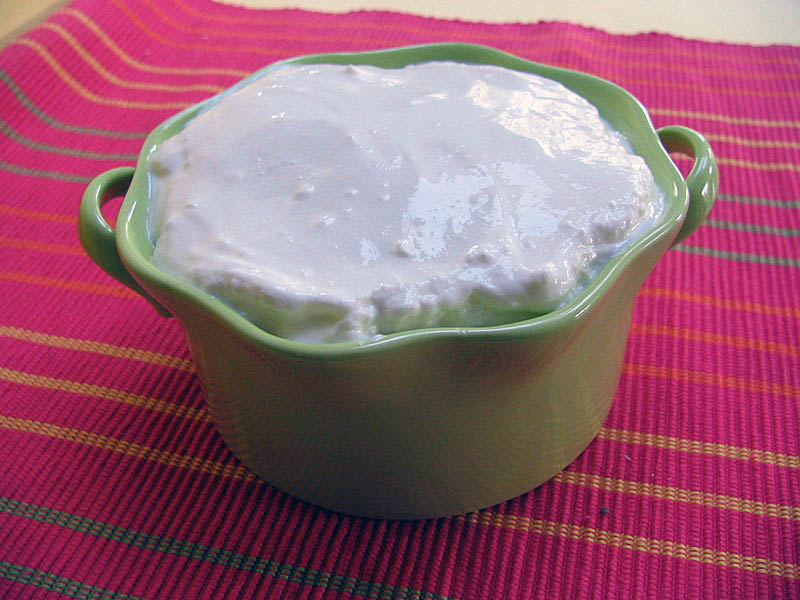
The busiest day of the year was August 12th with 782 views. The most popular post that day was HEAVENLY HOMEMADE FROMAGE BLANC .

Where did they come from?

The top referring sites in 2010 were wildyeastblog.com, thefreshloaf.com, thedeliciouslife.com, simplyrecipes.com, and stumbleupon.com.

Some visitors came searching, mostly for kibbe, bewitching kitchen, endivias, tartine bread, and 4th of july pie.

Attractions in 2010

These are the posts and pages that got the most views in 2010.

1

HEAVENLY HOMEMADE FROMAGE BLANC July 2010
5 comments

2

A CLASSIC ROAST CHICKEN October 2009
14 comments

3

BRAZILIAN PAO DE QUEIJO: Love at first bite! October 2009
14 comments

4

TARTINE BREAD: BASIC COUNTRY LOAF November 2010
12 comments

5

PAIN DE MIE AU LEVAIN February 2010
25 comments

ONE YEAR AGO: Turkish Chicken Kebabs