Time for another traditional Brazilian recipe! Heart of palm (“palmito” in Portuguese), is, as the name suggests, the core of a palm tree sapling: it’s very delicious, but their harvest came at a huge price: to obtain the “palmito“, the whole tree was killed. Brazil was the greatest producer until the 90’s, but the population of palm trees decreased to near extinction. Other varieties of trees that are perennials are now cultivated to take the place of palmito; the most promising is called “pupunha“. To listen to the correct pronunciation of those words, click the sound wave below. “Pupunha” might be a challenge for Americans, but practice makes perfect! Go ahead and give it a try…
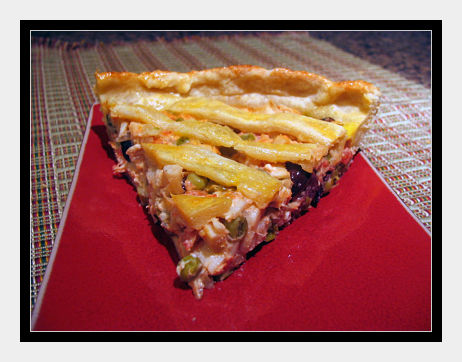
Heart of palm is often associated with salads (as the classic “millionaire’s salad”), but I want to expand your palmito-horizons to cooked dishes, like this wonderful pie. It is great warm or cold, by the way. Make sure to read my comments after the jump for some more thoughts on “palmito“.
HEART OF PALM PIE(Torta de Palmito)
(slightly modified from this recipe, taken from one of my favorite websites, “Chucrute com Salsicha”)
Clique no link acima para a receita em portugues….
Dough
2.5 cups all purpose flour
1/2 cup butter (1 stick), cold, cut in pieces
3/4 cup yogurt
1 t salt
1 egg yolk
Filling
2 T olive oil
1 onion, diced small
2 large tomatoes, diced
1 can hearts of palm, diced
1/2 cup olives, diced (I used a mixture of kalamata and green olives)
1/2 cup green peas (frozen is fine)
green onion and Italian parsley, to taste (minced)
4 – 5 oz cream cheese
1 T flour
salt and pepper to taste
Make the filling first, because it needs to be used cold. Saute’ the onion in olive oil until translucent, add the tomatoes, allow them to release some liquid, then add the diced heart of palm, olives, salt and pepper. Cook a couple of minutes, add the cream cheese, parsley, green onions, and flour, cook for a couple more minutes until the cheese melts and the texture turns creamy. Transfer it to a bowl and allow it to cool to room temperature. You can prepare the filling the day before and keep it refrigerated.
For the dough: add almost all the flour (2 + 1/4 cups) and the salt to a large bowl, work the butter into the flour with your fingers or a pastry fork, then add the yogurt (cold). You may or may not need to use the rest of the flour. Do not overwork the dough. Allow it to rest in the fridge for 20 minutes (you can also prepare the dough the day before).
Open half of the dough in a circle and cover the bottom and sides of your pie dish, making sure the dough is not rolled too thin. Add all the filling, open the second half of the dough, and either cover the pie completely, or cut strips, forming a simple grid over or a more elaborate lattice pattern. Brush the dough with egg yolk mixed with a little water to thin it. Cook in a 375F oven for about 40 minutes (please see my comments for variations on this).
Allow the pie to sit for 15 minutes before slicing.
The week is not complete unless I visit the farmers market on Saturday. My favorite vendors are now used to seeing me early, in my running outfit. Indeed, “as early as possible” is the only way to exercise this time of the year, but, the farmers market is my first priority: how else would I get the best possible zucchini? Or ANY eight-ball zucchini, or the cinnamon rolls? All those disappear quickly. At the farmers’ market the early bird definitely gets the worm (no need to remind me that only the late mouse grabs the cheese…) 😉
I usually buy more than I should, anything that looks great goes into my bag, as part of the fun is getting home and deciding what to make with the beauties. Last week both the golden and magda zucchini were spectacular. I considered many different options, but settled on an “oldie but goodie” from Fine Cooking magazine, June 1999. I remember making it for the first time just after the issue arrived in the mail (hard to believe it’s been 10 years!). You can use any summer squash in the recipe, Japanese eggplant also works quite well.
(receita em portugues na pagina seguinte)
ZUCCHINI AND SUMMER SQUASH GRATIN
(recipe adapted from Fine Cooking, originally written by Susie Middleton)
For caramelized onions:
2 Tbs. olive oil
2 medium onions, thinly sliced
salt to taste
For gratin:
1 + 1/4 lb ripe tomatoes, cut into 1/4-inch slices
2 small zucchini cut into 1/4 inch slices on the bias
2 small golden zucchini, cut into 1/4-inch slices on the bias
3 T olive oil
1/4 cup fresh thyme leaves (I used lemon thyme from our garden)
1 tsp coarse salt
1/2 cup grated cheese (I used a Mexican fresh cheese)
freshly ground black pepper to taste
lemon juice
First, caramelize the onions: heat olive oil in a skillet, add the onions, salt, and saute’, stirring often, until golden. Don’t let it burn: use medium-heat and pay attention to it. The difference between caramelized and burned is small in time, but huge in taste. You can do this step in advance, as it will take you at least 20 minutes (see my comments after the jump).
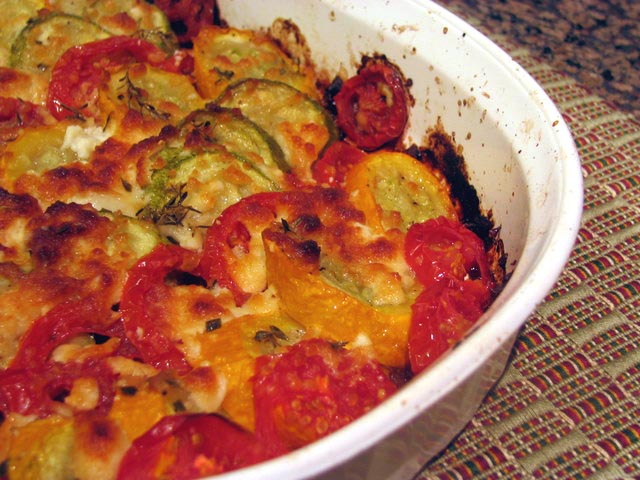
Heat the oven to 375F. Put the tomato slices to drain if they are too juicy, discard the juices. In a small bowl, toss the zucchini with 1.5T olive oil, some of the thyme, salt, and black pepper. Layer the cold caramelized onions inside a gratin dish. Now distribute the tomato slices and two colors of zucchini on top, sprinkling some cheese and thyme as you go (see my photo after the jump). Arrange all the slices until the dish is full. Season the ingredients with salt and pepper, add cheese on top, the remaining thyme, and drizzle the dish with 1.5T olive oil and a little lemon juice. Cook uncovered until well-browned, with the juices well reduced. It will take between 50 and 60 minutes. Let cool for at least 15 minutes before serving.
A reminder to readers: recipes for all the breads from “the BBA challenge,” are found in Peter Reinhart’s book.
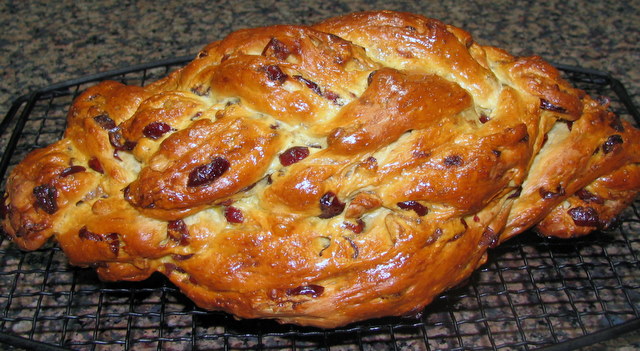
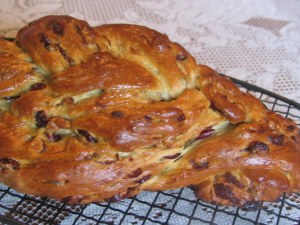
My hopes were not high for this one. It’s a bit too festive for my taste, and I had trouble with a previous braided loaf (Challah), which made me a little worried. However, much to my own amazement, this loaf was not difficult and turned out very well. My only remark is that the water called for in the recipe (1/4 to 1/2 cup) seems excessive. I did not add any water, and the dough was already almost in need of a little flour. Be careful if you make it, and hold back on the liquid (thanks, Susie! If it wasn’t for your heads up, I would’ve probably ended up with trouble in my hands… :-))
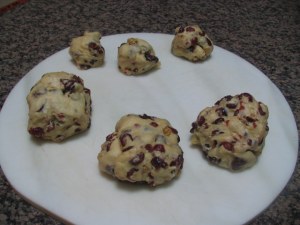
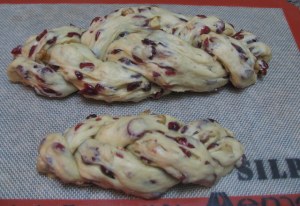
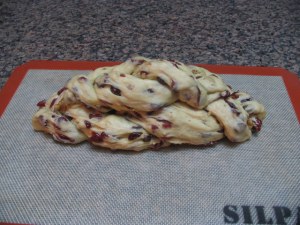
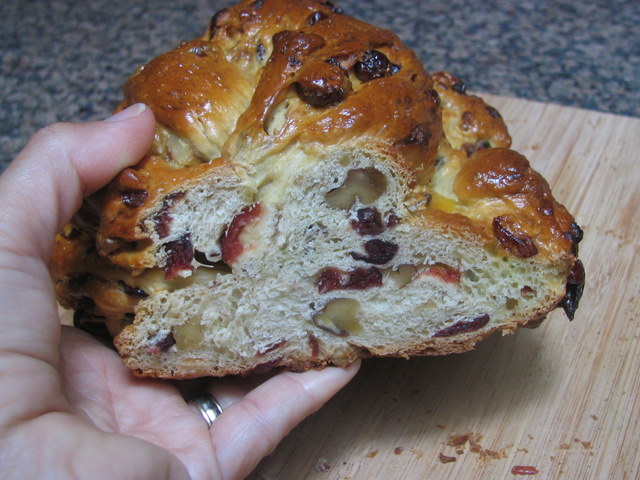
The dough contains eggs, milk, cranberries and walnuts; it is leavened by commercial, instant yeast. After rising for 2 hours it is cut in 6 pieces (3 large, 3 small), that are shaped into logs, and braided. The small braid is placed on top of the big one, forming a double-braided loaf, quite impressive!
… a final shot of the crumb….
We both loved the bread! It’s rich, but not overly sweet due to the tartness of the cranberries, and great toasted. The orange extract complements the cranberries, but if I made it again I’d use orange zest instead.
Two food items that I can’t survive without are bread and cheese. When I lived in Paris I had a permanent smile on my face because it seemed like every street corner had a fantastic boulangerie, with wonderful fresh bread. Often, not far away was a strategically placed fromagerie wafting the intoxicating smells of cheese through the neighborhood, the best possible form of advertisement.
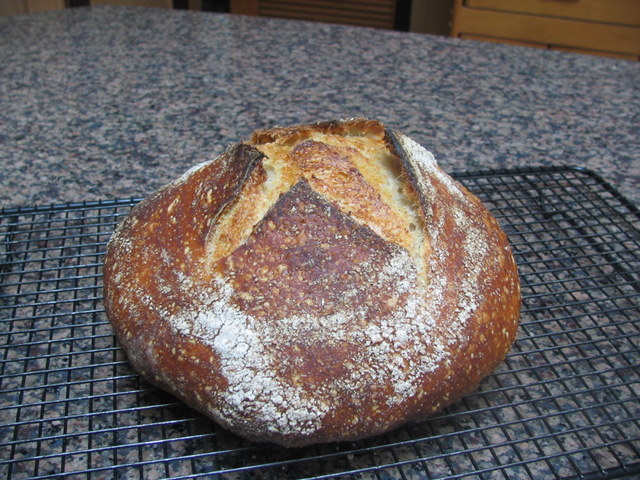
My favorite bread is a sourdough loaf with delicate flavor, a hardy crust, and a creamy crumb with open, uneven holes. Simple to say, but a little harder to accomplish. After more than a year of experimenting with different recipes I’m ready to share one of my favorites, not only because it delivers on all these counts, but because it’s excellent when prepared in the evening and baked the next morning. To me, it’s the perfect way to make bread during the hot Summer months.
The recipe comes from a book that should be part of any bread baker’s library, called quite simply: “BREAD: A baker’s book of techniques and recipes,” by Jeffrey Hamelman. You can find it here. This post will be my first submission to Yeastspotting.
VERMONT SOURDOUGH WITH WHOLE WHEAT
(adapted from Hamelman’s “Bread”)
Liquid Levain
2.4 oz bread flour
3 oz water
1 oz mature liquid levain (see comments at the end of the post)
Final dough
12 oz bread flour
1.6 oz whole-wheat flour
7.4 oz water
5.4 oz Liquid levain
0.6 oz salt (1/2 T)
Make the liquid starter (levain) 12 to 16 hours before preparing the dough, and let stand uncovered at room temperature. If you don’t have a sourdough starter, follow this link for a great lesson on how to make it.
Add all the ingredients for the dough (except the salt) in the bowl of an electric mixer. Mix on first speed (or by hand) just until they are combined into a shaggy mass. Cover the bowl and let it sit at room temperature for 20 minutes to 1 hour (this is called autolyse). At the end of autolyse, sprinkle salt all over and mix with the dough hook on second speed for 1 to 2 minutes (or knead by hand about 4 minutes).
Let it rise (ferment) at room temperature for 2.5 hours, folding the dough at 50 and 100 minutes (see my photos after the jump).
Shape the dough into a ball ( “boule”; great youtube video for shaping all kinds of bread can be found here), place it with the seam up in a round container (banettons are your best option) lined with a fine cloth and transfer to the refrigerator for 8 to 12 hours. Remove from the fridge a couple of hours before baking (Hamelman says it is not necessary, that you can bake it straight from the fridge).
If using a clay baker (my favorite way), place the baker in the cold oven and turn it on to 440F. Allow the oven to warm to that temperature for at least 10 minutes. Using mittens, open the lid and quickly transfer the dough to the baker, so that the seam is now down, then slash the surface according to your liking, and close the lid.
Bake covered for 30 minutes, open the lid (don’t forget the mittens), and allow it to bake for at least 15 more minutes. You want a dark crust and internal temperature of at least 200F. Allow it to completely cool on a rack before cutting the bread (2 hours should be enough).

 Heart of palm, that is…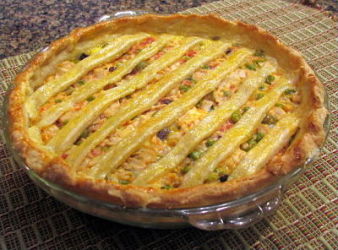


 Bewitching Kitchen
