BBA#42: POTATO, CHEDDAR AND CHIVE TORPEDO

With my heart beating fast in anticipation, I am thrilled to say:   forty-two breads down,  ONE to go!

This bread is definitely one of my favorites, for several reasons. First,  it uses a sourdough starter, which already makes me pretty excited about it.  Second, it contains potatoes, a great addition to this kind of bread,  as they give it moisture and a texture hard to reproduce in any other way.    Third, it takes cheese rolled in the middle of the loaf.  No need to explain the positive aspects of this.  Too obvious for words.   Did the recipe rise to my expectations?

Oh, YESSSS!  😉

This was not a difficult bread to make.  Because the dough takes a mixture of sourdough starter and commercial yeast, it rises quite fast: the whole process – from mixing the dough to baking – took just a little over 3 hours!   I used the full amount of potato water called for, hoping for a more open crumb.   Instead of kneading, I folded the dough twice, at 20 and 40 minutes, then allowed it to rise undisturbed for another hour.

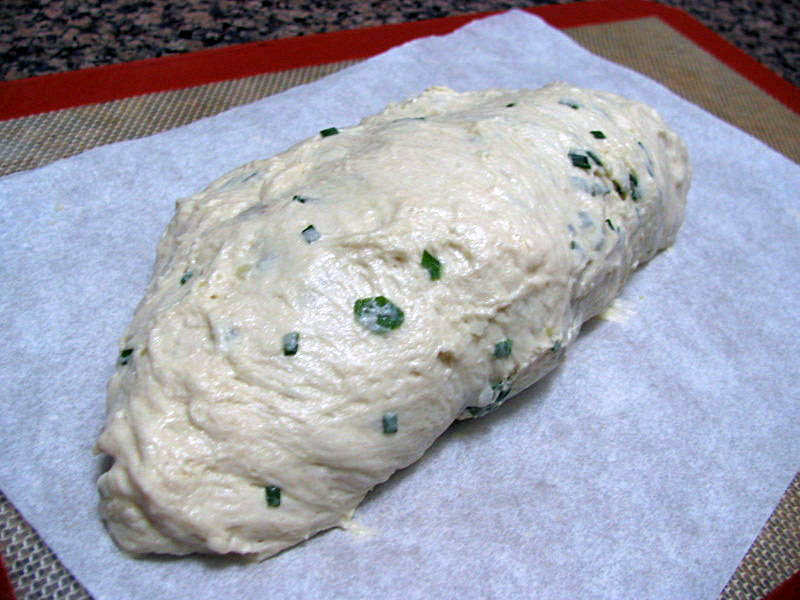
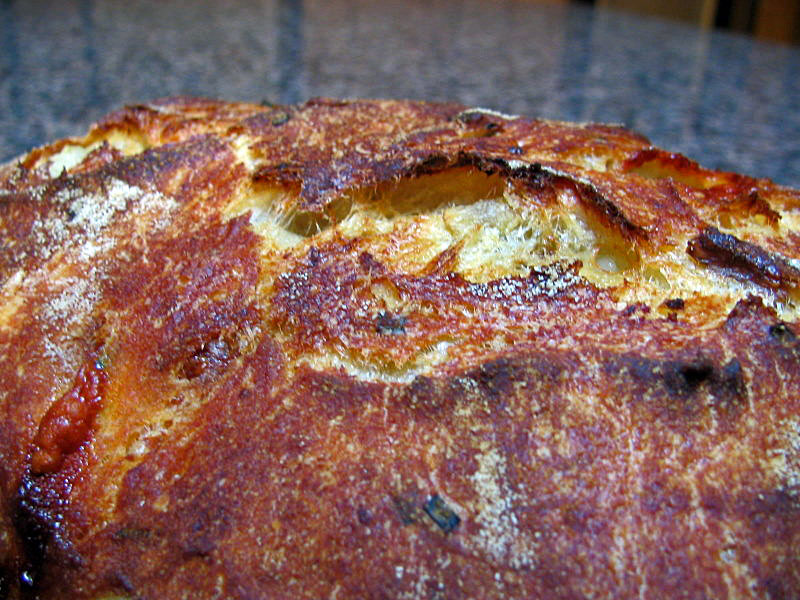
Here are a couple of shots from the loaf right after shaping, and before going into the oven.

I am sure I’ll be making this bread again and again.  At first, my husband said he would prefer it without chives, but after a few bites,  he agreed that they add a special flavor, quite unique.  This is an impressive loaf, that would be perfect with an Italian-inspired meal.

Please visit these links to see my fellow friends who already baked #42:

For Oggi’s blog, click here.

For Paul’s blog, click here.

I am submitting this post to Susan’s Yeastspotting event, Special Holiday Edition.

CORNISH HENS FOR A SUNDAY DINNER

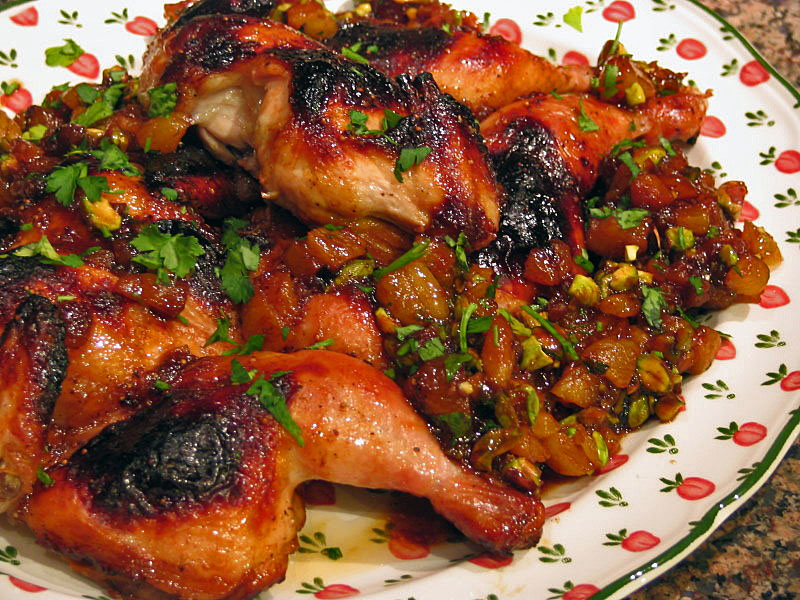
Cornish hens always create a special occasion: they are festive and elegant, but simple to prepare.  After a long session of browsing through cookbooks the pistachio dressing in a recipe from Pam Anderson grabbed my attention.  Pistachio nuts.  I adore them so much that I actually avoid buying them, because after opening the bag with the intention of having just three or four, I usually end up eating them until my fingers are bruised from opening the shells! They are the antithesis of “Everything in moderation”.   Now, imagine a recipe that pairs pistachio nuts and dried apricots… Irresistible!
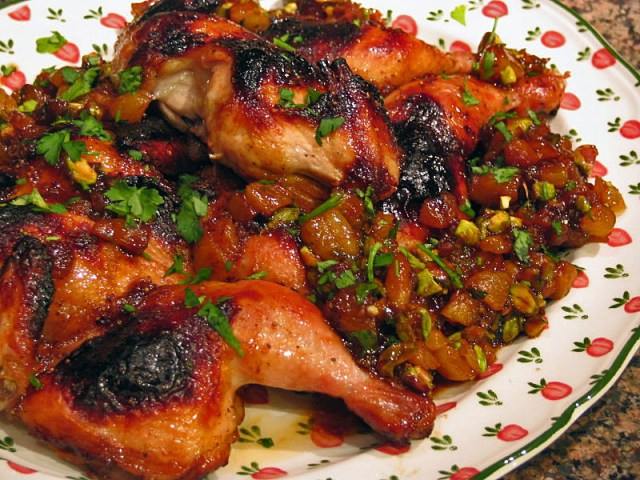
BUTTERFLIED CORNISH HENS with APRICOT-PISTACHIO DRESSING
(adapted from Pam Anderson)

2 Cornish hens
1 cup kosher salt
salt and pepper for seasoning
2 T olive oil
1 large onion, diced
1 cup dried apricots, diced
1/4 cup apricot jam (I substituted fig jam)
1/8 cup balsamic vinegar
1/2 cup pistachio nuts, chopped
1/2 cup minced parsley

Heat the oven to 450F.

Butterfly the hens but cutting through the middle of the backbone and removing it.  Lay the hens on a cutting board, breast side up, and flatten them using the palm of your hand.

Dissolve the kosher salt in 2.5 quarts of cold water to make a brining solution.  Brine the birds in the fridge for 1.5 hours.   Remove them from the brine, rinse, and dry them.

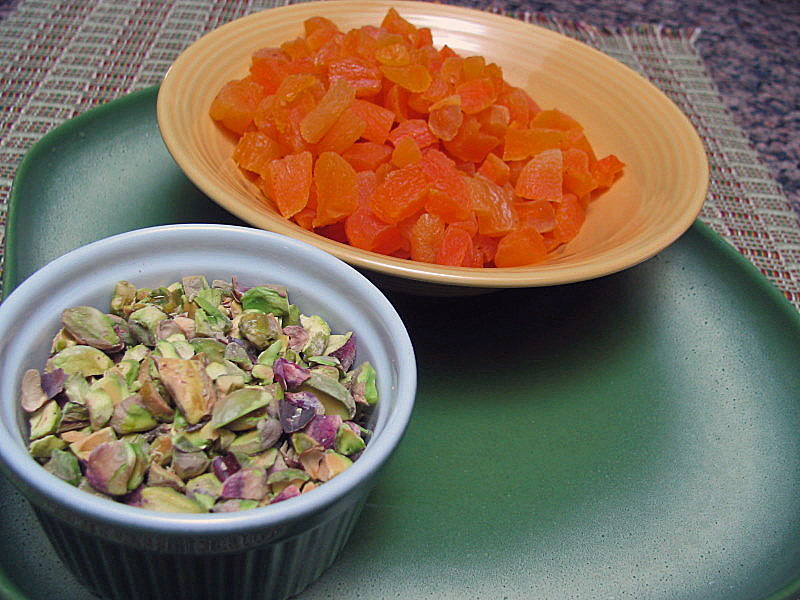
Sautee the onions in oil until very soft. Stir in the apricots, then spread the apricot-onion mixture in a baking dish.  Season the hens with black pepper, and lay them on top.  You may tie the legs together to keep them in a nice shape.

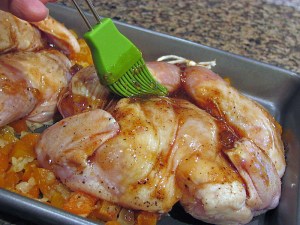
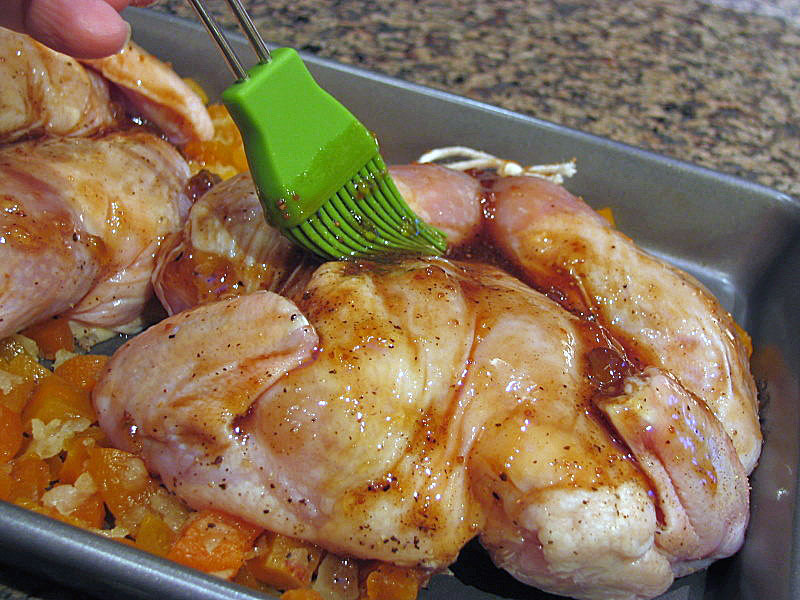
Mix the jam and balsamic vinegar in a small bowl, then brush most of the mixture on the hens.  Place them in the oven, add a little water to the baking dish to prevent burning the apricot mixture.  Bake for about 45 minutes, brushing with the leftover jam mixture as well as the liquid accumulating in the roasting pan.  After 45 minutes turn on the broiler to crisp the skin, but watch closely, because the sugar in the jam will easily burn.

Remove the hens, tent them with aluminum foil, and if you find the apricot mixture too watery, then return it to the oven or transfer it to a pan and reduce it slightly on top of the stove.  Stir in the pistachios and parsley, and serve with the hens.

ENJOY!

to print the recipe, click here

Comments: A few weeks ago I bought a pair of kitchen shears, and wish I’d done so long, long ago… Butterflying hens (or chickens) with a chef’s knife has always been too difficult, but my new toy made this step fast and easy. The backbones and wing tips are in the freezer awaiting their opportunity in my next batch of homemade stock.

Many side dishes jive with this recipe: mashed potatoes, soft cooked polenta, saffron rice or couscous, but this time I just cooked some orzo, served with a light olive oil and lemon dressing. Homemade crusty potato bread was a perfect complement.
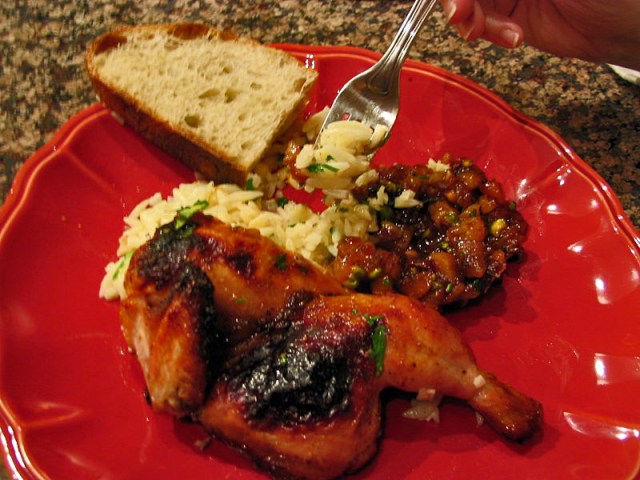
Word of caution: the dressing is quite sweet, so go light on the amount you spoon alongside the meat. I intend to play around with the recipe a little, to come up with a slightly less sweet version.

Apart from shelling the pistachios (a tough job when you need 1/2 cup but they keep disappearing in thin air), the recipe is a breeze to make, and will certainly impress whoever is sharing the meal with you…

para a receita em portugues, visite a pagina seguinte
MOROCCAN COOKED CARROT SALAD

Simple. Quick. Delicious.  From a cookbook that I highly recommend, Mediterranean Fresh, by Joyce Goldstein.   The secret is in the dressing, that pairs citrus and cumin, giving the carrots a very subtle background of heat.   Do not skip toasting the cumin seeds.  In recipes with so few ingredients, you need to bring out the best in each of them, and toasting spices does just that, makes them talk to you loud and clear.


MOROCCAN COOKED CARROT SALAD

(adapted from Mediterranean Fresh)

1/2 cup mixed citrus dressing (recipe follows)
1/8 tsp cayenne pepper
1/2 tsp toasted cumin seed, ground
2 Tbs sugar
1 pound carrots
salt to taste
fresh parsley, minced

Mixed citrus dressing
Whisk together all these ingredients:
1/2 cup olive oil
zest of 1 orange
1/4 cup freshly squeezed orange juice
2 Tbs fresh lemon juice
1/2 tsp sugar, if needed (I omitted)
salt and pepper

Toast whole cumin seeds using a small non-stick skillet over medium heat, moving them constantly to avoid burning. Let them cool slightly, and grind them. Mix the citrus dressing with the spices and sugar.

Peel the carrots and cut in thin slices. Cook in boiling salted water for 5 minutes, or until they start to get tender, but do not overcook. Drain and toss with the dressing. Adjust the seasoning, and add minced parsley just before serving.   Serve warm or at room temperature.

ENJOY!

to print the recipe, click here

Comments: If this salad does not appeal to you because you are not fond of carrots, consider making the dressing, because it will go quite well on many veggies as well as composed salads. I can envision my default method to cook asparagus getting a boost from this mixed citrus dressing at the end. The original recipe called for three tablespoons of sugar, I used only two, as carrots are naturally sweet already.

The recipe serves 4 to 6 people, I scaled it down for the two of us, but next time I’ll make a full batch to have leftovers. We had just a tiny bit left, which was still wonderful next day, but left me craving for more.

BBA#41: WHOLE WHEAT BREAD

With only two breads remaining at the end of the BBA Challenge, I was hoping for something wonderful to say about Reinhart’s version of whole wheat bread.   But unfortunately, this bread fought hard for last place with the now infamous 100% sourdough rye.

I wasn’t the only participant to have problems with this recipe; you can jump to Oggi’s blog for her comments about it.  At some point I’d like to improve at breads with low to no white flour, because they consistently provided lessons on humility.   So, without further ado, here are the proofs of my crime, with apologies to Mr. Reinhart.

The dough was sticky, grainy and generally unpleasant to work with. The crumb was tight, as expected for this variety, but the taste was just plain bland.   Even my husband, who eats all my failures with a smile (while saying that I’m too hard on myself…violins playing, please) told me “if a bread isn’t even good with butter and this awesome fig jam, then something’s seriously wrong with it”.

I will be making croutons… (sigh)

Life goes on, so does the challenge. I’m anticipating the final two breads, which look like masterpieces… Stay tuned!

TORTA DI ZUCCHINI

I sincerely hope that I’m below the radar of the food-blog-police, or I may be in trouble for posting too many zucchini recipes.  Without a doubt, to my mom’s shock and disbelief, zucchini is one of my favorite vegetables. While growing up I wouldn’t even try it, little did I know my how much my tastes would change!

The first time I tried this recipe was more than 20 years ago; it comes from an old, out of print cookbook by Giuliano Bugialli.   It’s unusual because this “torta”  takes no flour.  It also contains zucchini cut in two different ways: grated and sliced.  The grated component becomes creamy during baking, surrounding the more defined slices to form a light, refreshing, sort of crust-less quiche. By skipping the breadcrumbs, this recipe is also low in carbohydrates, for those who are counting.

TORTA DI ZUCCHINI
(from Giuliano Buggiali)

1 pound zucchini (2 medium-size), grated
1 pound zucchini, sliced thin
4 eggs, beaten
zest of 1 lemon
1/4 cup grated parmiggiano cheese
salt and pepper
fresh parsley, minced
fresh bread crumbs (about 1/2 cup)

Grease a pyrex pie dish with butter. Sprinkle some bread crumbs to coat.

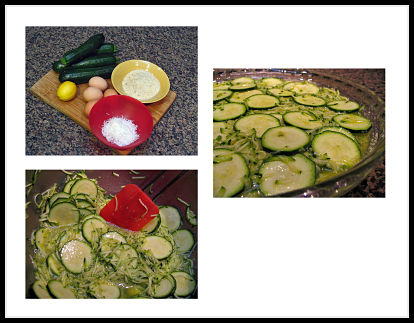
Mix the beaten eggs with the lemon zest, parmiggiano cheese, 1/4 cup of bread crumbs, parsley, salt and pepper.  In another bowl, place the grated and sliced zucchini. Shake the dish carefully to distribute the slices more or less evenly. Add the egg mixture to it, mix gently, and pour into the prepared pie dish.  Sprinkle the remaining 1/4 cup of bread crumbs on top, forming a very light coating.

Bake in a 375F until set and golden on top.   Allow it to cool for at least 15 minutes before serving.   Serve warm or at room temperature.

ENJOY!

to print the recipe, click here


Comments: This “torta”  makes a nice light meal, possibly served with soup or a salad.  In the summer I like to match it with tomatoes from the garden or from the farmer’s market.   Leftovers are best re-heated in the oven, because microwaving tends to make it watery.

On a side note… in Brazilian Portuguese, if someone says things that make no sense, either because they are wrong or have no relevance whatsoever,  the favorite expression is “to talk zucchini”  (falar abobrinhas).   I have absolutely no idea where the expression comes from, but maybe it helped shape my negative childhood view of zucchini.   Glad I got over it.   😉